Wanderlust — Montenegro Dreams

As a child, I was captivated by people who lived lives very different from my own, and by the sounds of words spoken to a different cadence. The pull of the unfamiliar was strong. I do not remember a time when I didn’t want to experience far away places.  I never outgrew the wanderlust. Today, the rhythm of a foreign language is music to my ears and the promise of a trip is reason enough to pack up.

And those strange-sounding names; oh, yes!

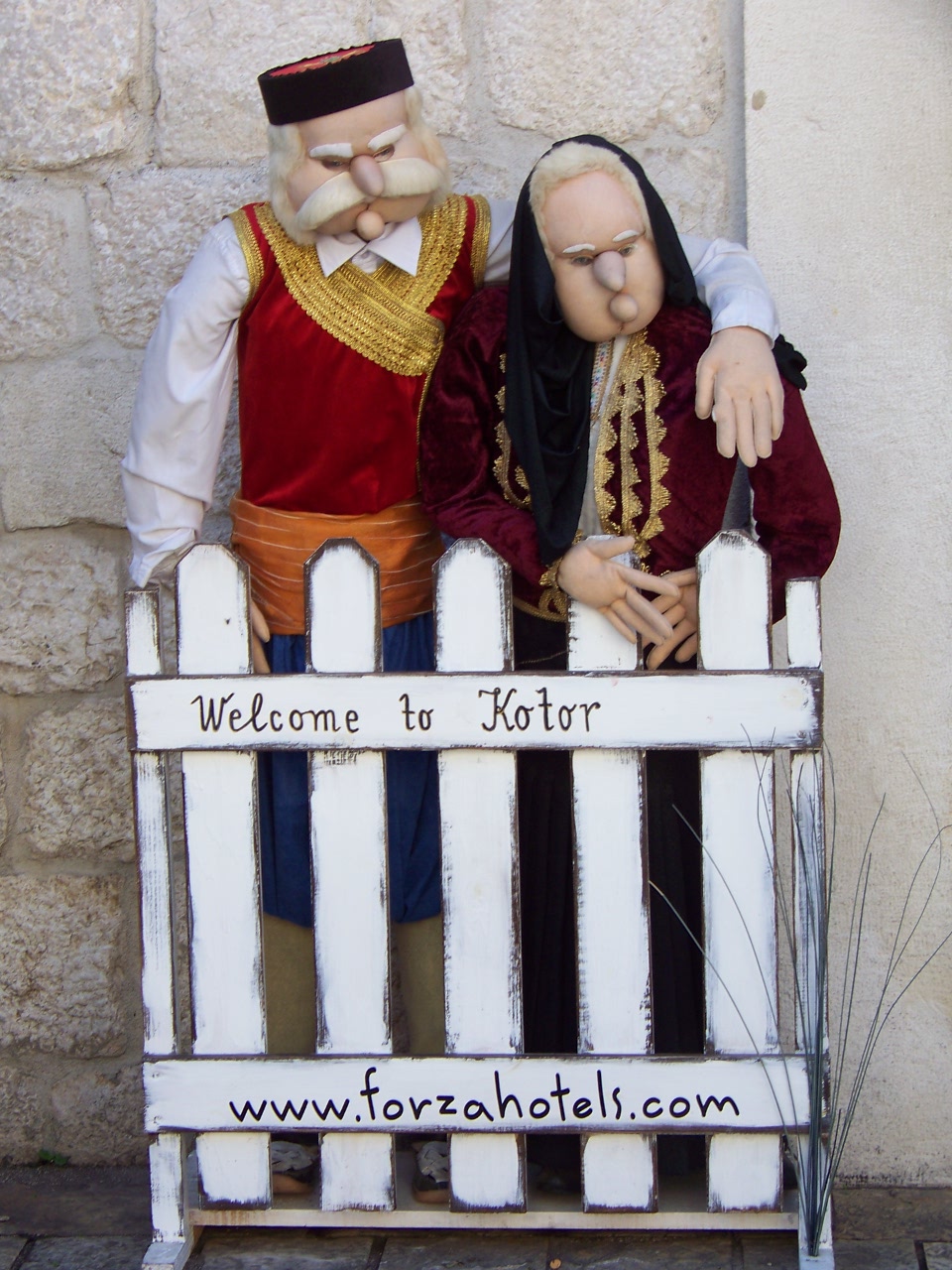
The pull of unknown places is strong. So, when Kotor, Montenegro, was one of the ports on a Princess cruise itinerary, it was almost impossible to resist. I knew next to nothing about Montenegro; in fact, I had to pull out my atlas to locate it.

We were in port for only one day. That was 2017, in the fall. Today, as I think about that visit, I find it hard to believe that all those good memories were formed in the course of one afternoon. Now I want to return again!

The place, the people, the history speak loudly of life well-lived and fine experiences just waiting to be had. Even more seems promised on a second visit than I experienced during the original. But that first visit could hardly have been better! The scenery, both the ancient city buildings and the surrounding limestone cliffs, is stunning, with hand-built stone walls stretching for more than three miles above the town. The scene is both awesome and forbidding.

Arriving in the City

Our day began with a quick tender ride between our ship and the city dock. Once on land, we were efficiently directed to a guide who was to accompany us on a stroll through Kotor’s marketplace prior to joining a local chef to hear about traditional Montenegrin dishes. We were to sample a variety of regional favorites.

We don’t normally sign up for ship’s tours — we don’t do groups well, preferring instead to walk at our own pace and make our own discoveries. But this one was different.

The stroll turned out to be more of a brisk walk as our group skirted the walls of the ancient city before arriving at the

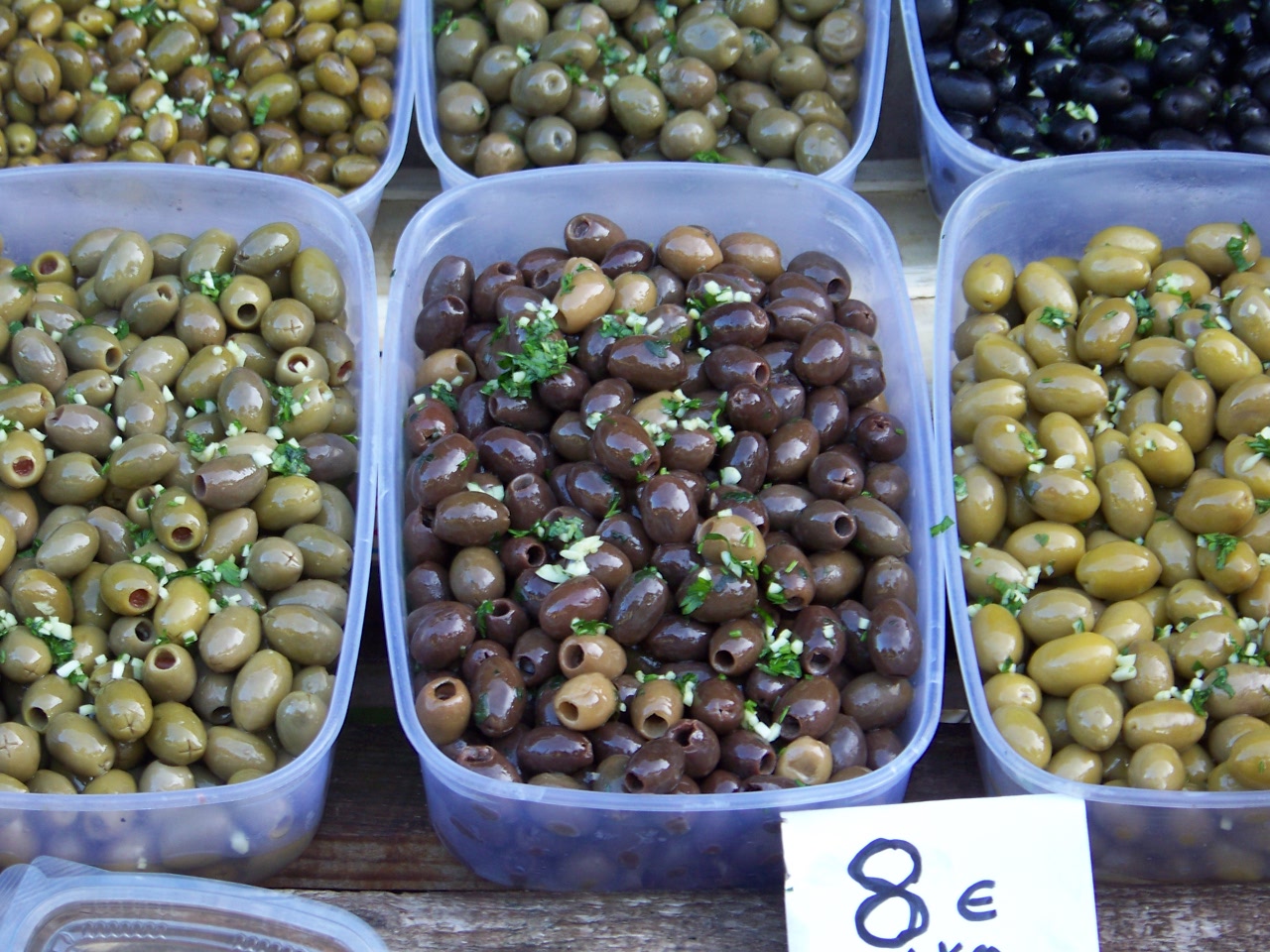
market. Stalls were filled with olives and cheeses, figs and dried apricots, colorful produce, plump breads, pastries and chocolates, sausages, ham and fresh fish – vendors offered samples, encouraging us to try unfamiliar fruits, to sample various figs and olives, to buy spices and olive oil. It was tempting, to be sure.

Welcome Freely Offered

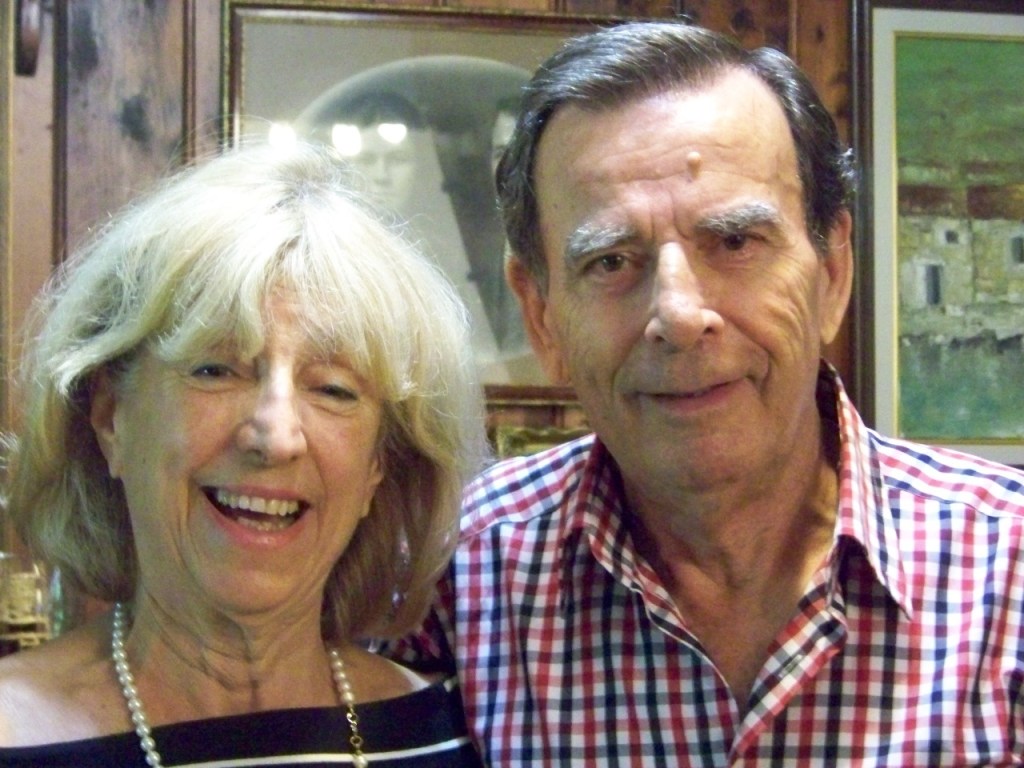
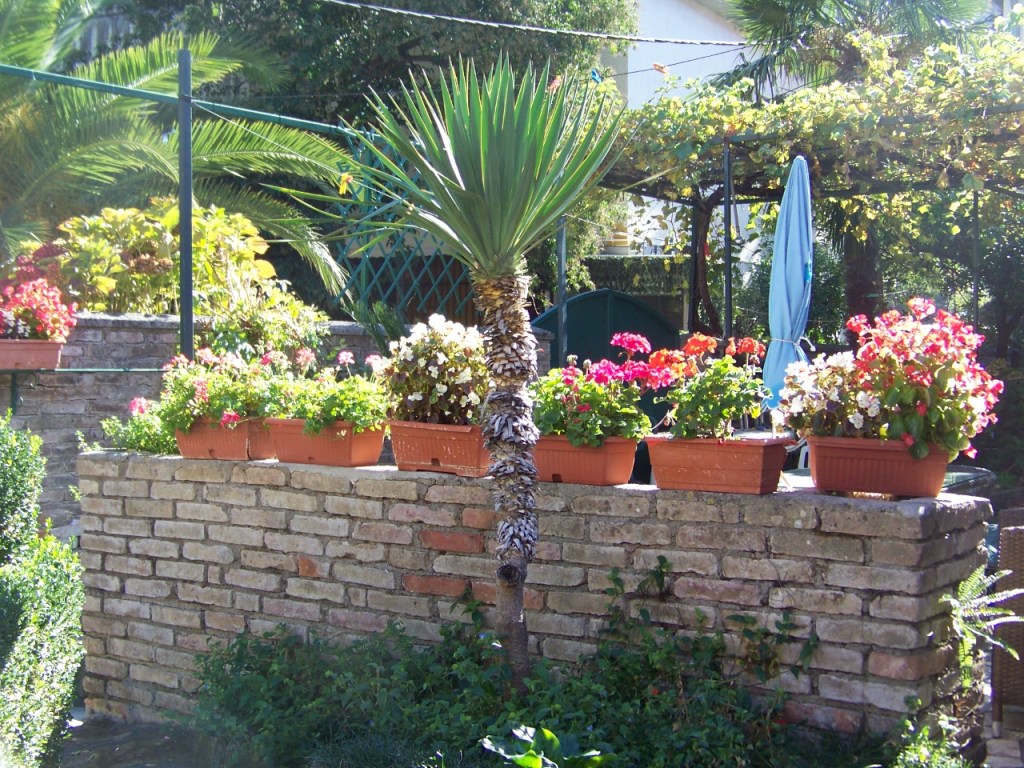
But, we had a schedule to keep, and we pushed on to the end of the harborside thoroughfare before taking a turn onto a tree-lined lane bookended with private gardens. While our group had envisioned gathering in a local café, we were delighted to be ushered through a courtyard and into a cozy home, greeted by a vivacious blonde who wore pearls with her casual slacks and tee.
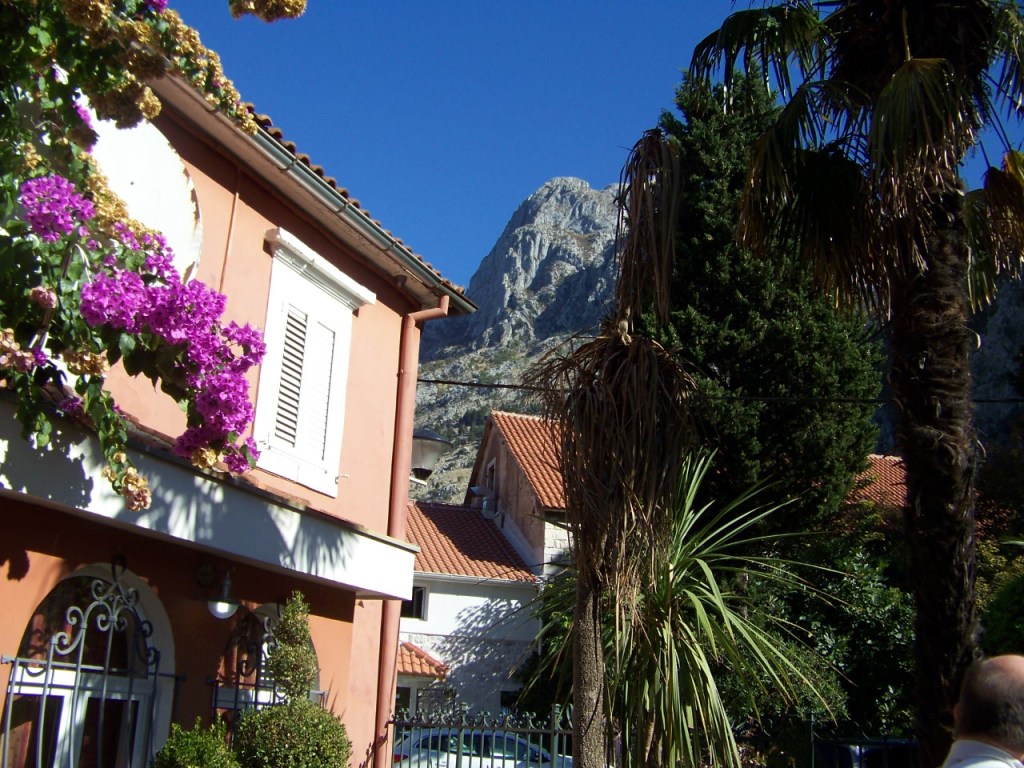
She greeted us warmly in only-slightly accented English, and introduced her husband, a former sea captain, who stood ready to pour each of us our choice of strong aperitif even though it was not quite 10 a.m. But, when one is on vacation and a guest in someone’s home . . .

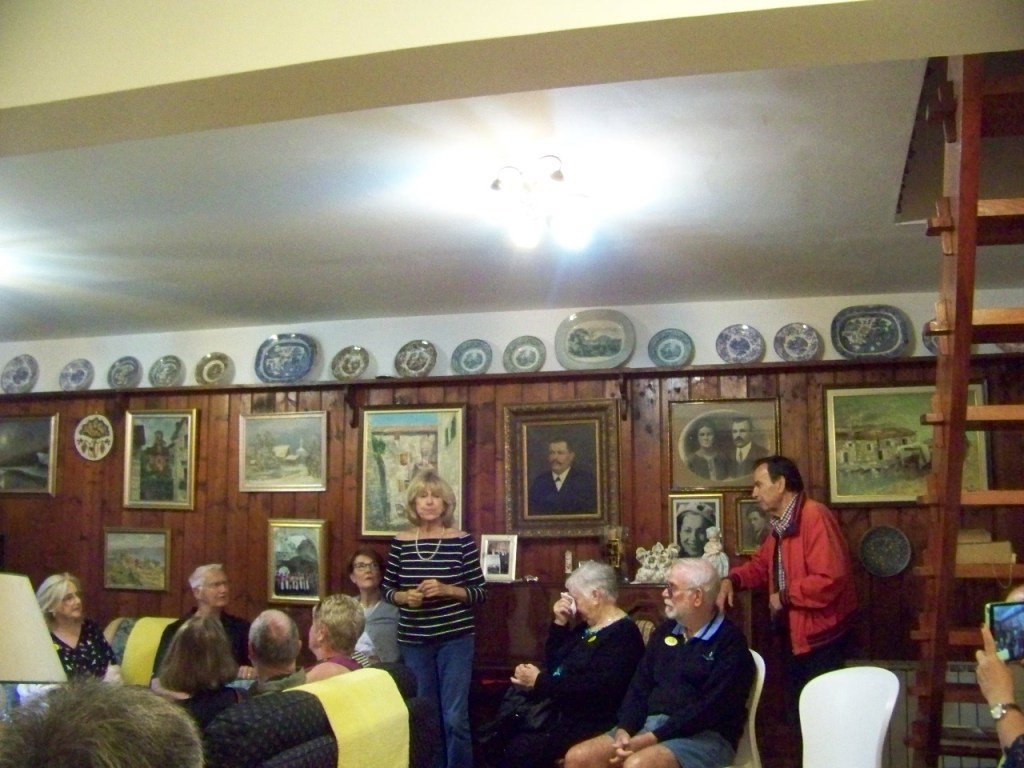
Each of us accepted a glass, then followed our hostess’s lead and raised our glasses in a mutual toast — to new friendships, good food and good times. She encouraged us to feel at home in her home. Each of us found a comfortable seat in the art and antique-filled sitting room. I chose a spot around a diminutive lace-draped round table.

We learned about the life experiences of this lady and her husband. Her many-faceted career, as author, cook, lecturer, tour guide, and who knows what else, was a bit of a surprise, proving that reinventing oneself knows no cultural or geographic boundaries. We also learned about her husband’s exploits at sea and of his ancestors whose portraits hung on the walls.

After a bit, she disappeared for a few moments into the kitchen. We were invited to take seats at a long banquet table that nearly overfilled a well-proportioned dining room with a view of the garden.

Sharing Food, Building Bridges

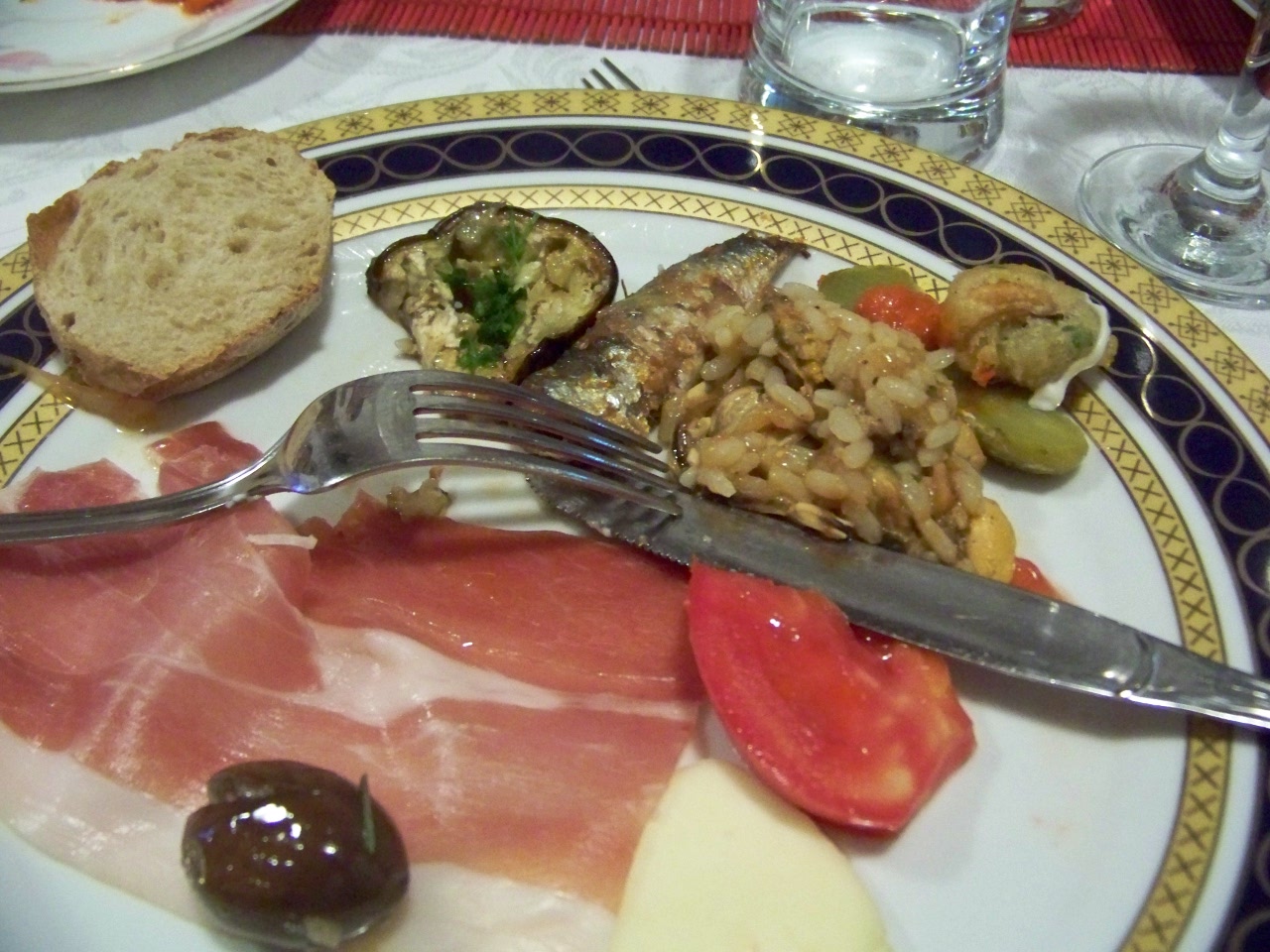
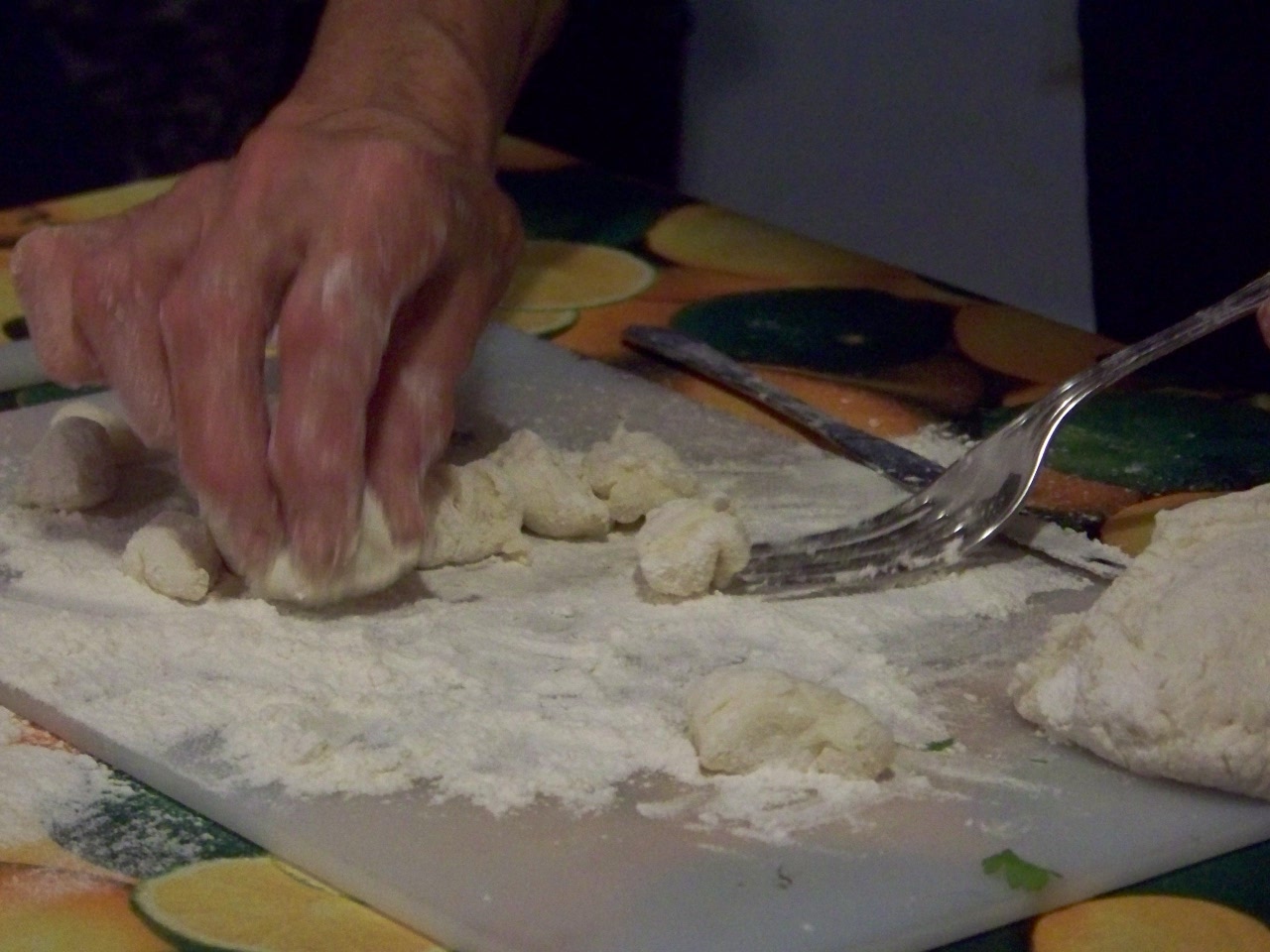
Treated like honored guests, we sampled plate after plate of appetizers, a delicious soup, a traditional entree, and, finally, a rich dessert, all accompanied by a parade of local wines. We listened with rapt attention as she demonstrated how to prepare a traditional Montenegrin recipe.

We were not really prepared for Montenegro. Yes, we knew some of the history: Kotor is a unique medieval fortress town, with an array of buildings that span from the 12th through the 16th Centuries. It’s impossible to walk through the old town without visualizing pirates along with priests, noblemen and beggars, monks and blacksmiths, painters and writers, physicians and printers.

The small city, with a population of approximately 13,000, is situated in a secluded portion of the long Bay of Kotor on Montenegro’s Adriatic Coast. Less than 1,000 people actually live within Kotor’s historic walls, and its earliest history is a bit muddied; it is first mentioned in ancient literature in about 168 BC, but some authorities believe it was founded as early as the 5th Century BC. It was known at one point in history as Acruvium, part of the Roman province of Dalmatia. No matter the date, Kotor now holds the status of a UNESCO World Heritage Site, and the city’s fortifications testify to a succession of foreign occupations and battles. Once allied with Dubrovnik, it gained independence from Byzantium until it was later occupied successively, and repeatedly, by the Serbian Empire, the Republic of Venice and the Ottoman Empire, the Hapsburg Monarchy and, finally, the Napoleonic Kingdom of Italy. It played significant roles in both World Wars.

After 1918, the city that saw some of the fiercest battles of the war became part of Yugoslavia, and gained its new name of Kotor. It was not until 2006, however, that Montenegro, part of the former Yugoslav Republic, become truly independent

With that much turmoil and turnover in its history, it may be surprising that Kotor endured. But endure it did, and today it boasts one of the best-preserved old towns in the region, along with its impressive fortified old city walls and its stunning Cathedral, built in 1166.

The Cathedral of Saint Tryphon is a major tourist site, one of two cathedrals in this unique small city that was formerly known as Cattaro. Saint Tryphon has a collection of beautiful art and artifacts, in addition to its notable architecture.

What else sets Kotor apart from its neighbors? There is a distinguished maritime museum and the Kotor Festival of Theater for Children has attracted throngs of visitors from throughout Europe for the 30 years it has been held. Citizens of Kotor are also protective of their cats, symbols of the city. Food and water, along with boxes that serve as shelter, are left throughout the city. Kotor Kitties is a chartable services that provides spay and neutering services in an attempt to limit the population, but the cats are as much a part of the city as the smiles of its citizens. Don’t miss Cats’ Square if you visit, and be sure to take home a cat-themed souvenir.

I hold fading memories of the cats, the cathedral, the city walls, and the sparkling sea. But I have a clear recollection of the taste of fresh olives and figs from a vendor in the city’s market, and of the stories told and the laughter shared around a dining table in the home of a charming couple in Kotor!
Traveling solo can be fun when you’re old enough to be somebody’s grandmother!

I recently had an opportunity to be on the road alone — partly for pleasure, to be sure, but with a business connection. I had a professional conference to attend in Fairbanks, Alaska. Instead of booking a round-trip flight from my home in Arkansas to the conference city I opted to cruise north to Alaska from Vancouver, British Columbia. I then spent a few days sightseeing near Denali National Park, finally arriving in Fairbanks the evening before my conference began.

After many years of marriage, my husband and I are well aware that our interests, priorities, enthusiasms, and commitments sometimes differ. That’s all good, and on several occasions over the years, we have kissed each other goodbye and wished one another safe travels. It’s just the way we do things. This was one of those times.

I simply could not resist the appeal of a seven-day cruise followed by a three-day land tour to Denali National Park. My husband, for his part, was not ready to embark on another cruise so soon after our epic Antarctic adventure earlier this year. So, for 16 days, my husband and I led separate lives. In addition to a memorable vacation experience, I told myself that this particular journey could be counted as a business trip, providing valuable background for future posts about traveling solo as a senior woman. And, yes, those planned posts are in their early stages as I write this.

The cruise was truly enjoyable, made even better by spending two days in Vancouver to visit with old friends — my own superb tour guides! I found solo cruising to be totally enjoyable, and not at all intimidating. In fact, I look forward to another solo travel experience should an opportunity arise. The land portion of the trip was almost exactly as I expected. Travel arrangements for the land portion of the trip were part of the cruise package, well-planned and executed by Princess Cruise Line. Even though May is the beginning of the season in Alaska, and local staff members were still learning their specific duties, transfers, tours and accommodations were perfectly choreographed.
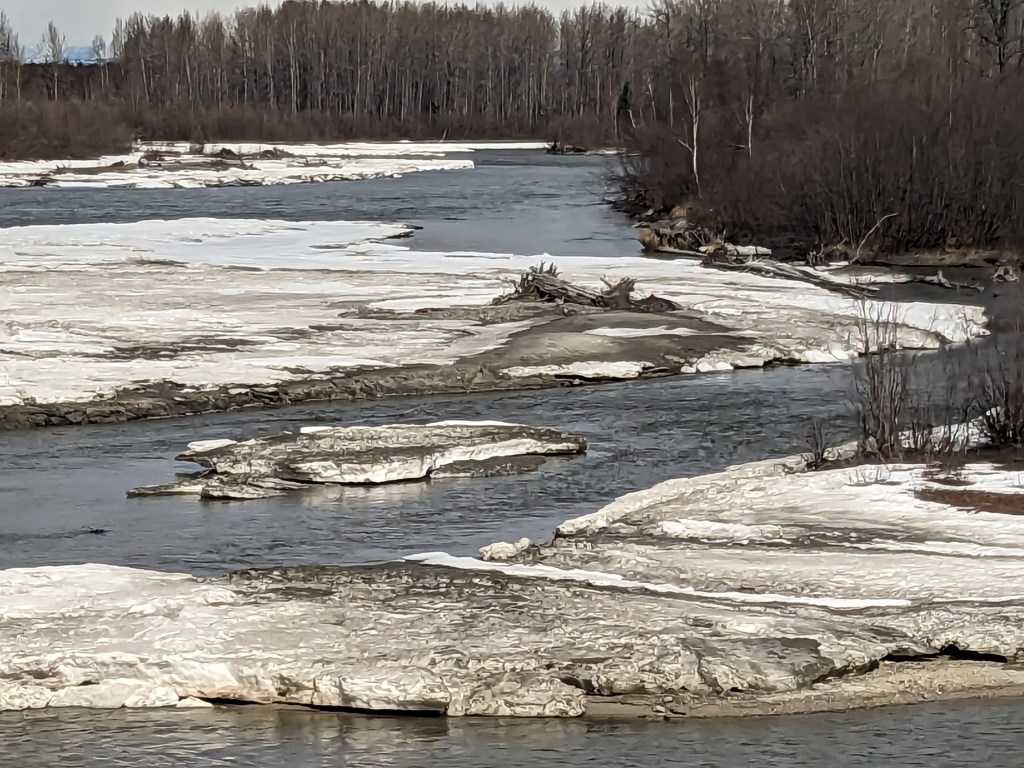
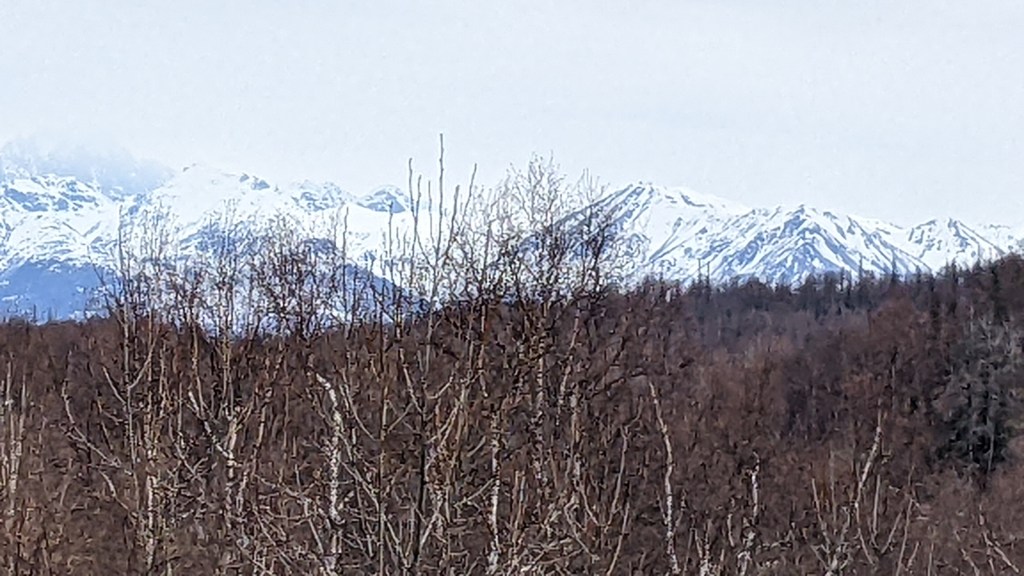
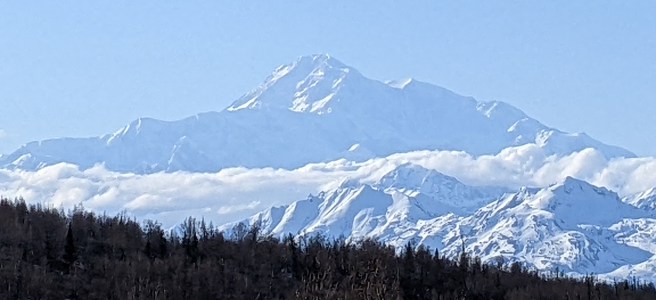
We disembarked in a grey drizzle in the port city of Whittier and boarded a bus for the trip north to the mountains and the national park, stopping briefly in Anchorage. On the way north, the scenery becomes more dramatic and our driver was happy to point out our first view of Denali in the distance. We passed through small towns, including Wasilla and Talkeetna, and viewed the still-snow-covered terrain and ice-clogged rivers. Originally named for President McKinley in 1897, the name of this largest mountain in North America was changed in 2015 to Denali. In the indigenous language of early tribes in the area, the name means “the tall one,” or “the high one.”

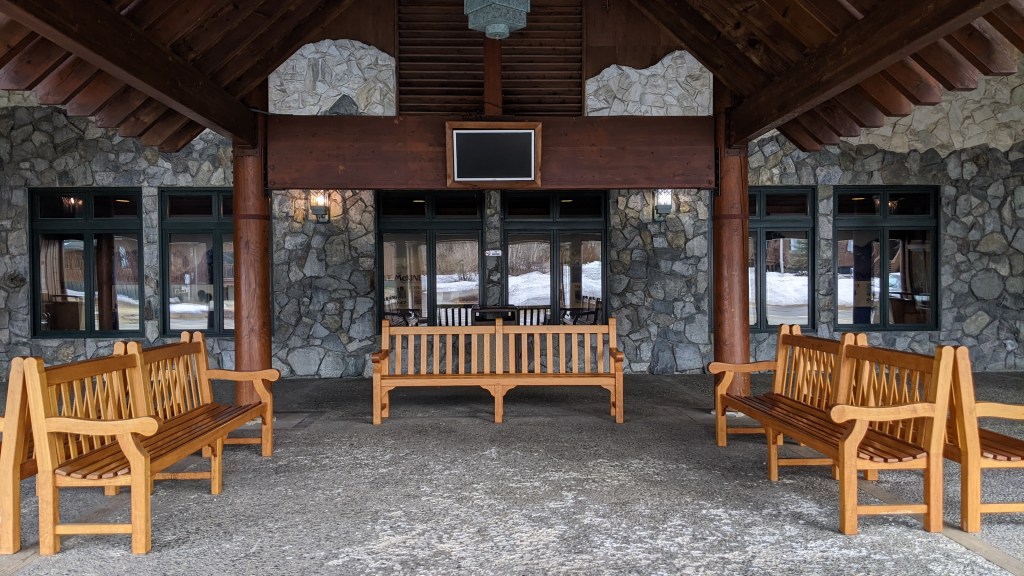
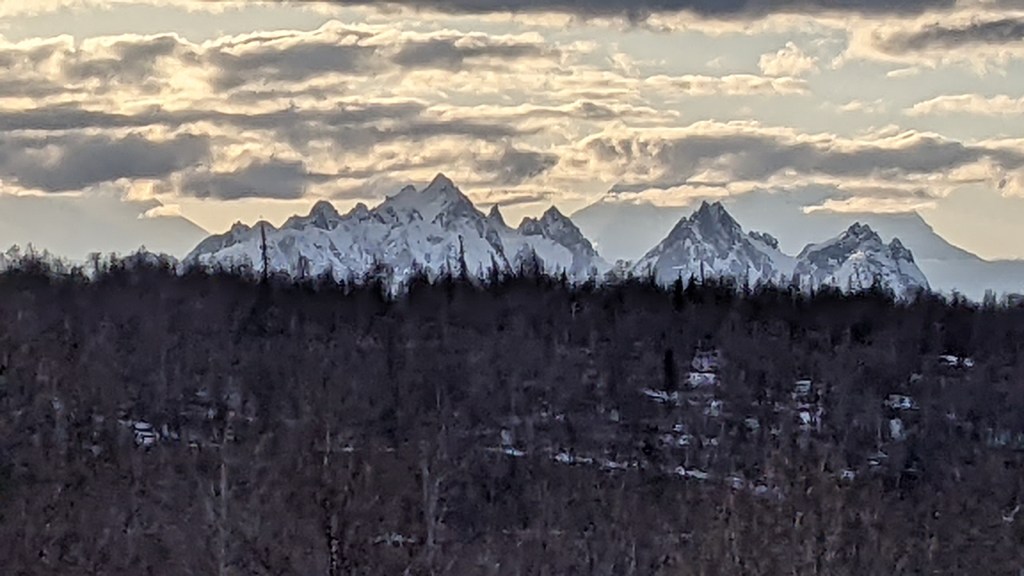
Once we arrived at the Princess Mount McKinley Lodge, a beautiful facility with a “knock-your-socks off” view, I spent my first few hours warmed by the sun on the lodge’s wraparound deck. I was enthralled by the drama of clouds which parted only periodically to provide breathtaking views of the mountain known as “the great one.” It truly is.

I snapped far too many photographs of the changing vista as the late afternoon sun sank lower on the horizon. Denali, at an elevation of 20,310 feet, dwarfs surrounding peaks, but they are not mere foothills, and they have their own allure. Finally, when the clouds seemed to be massing to surround the mountain for the evening, I decided to make my way inside.

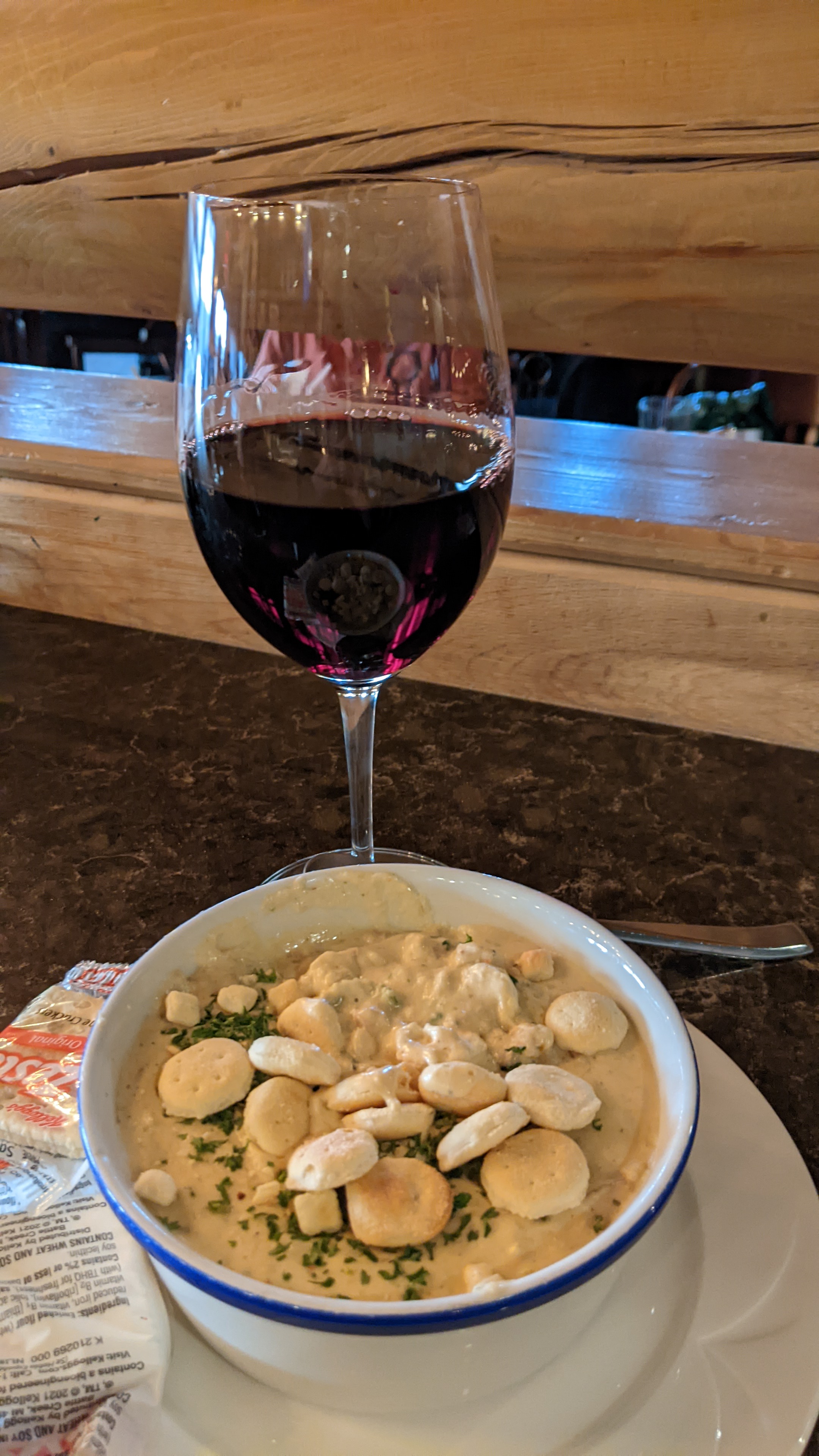
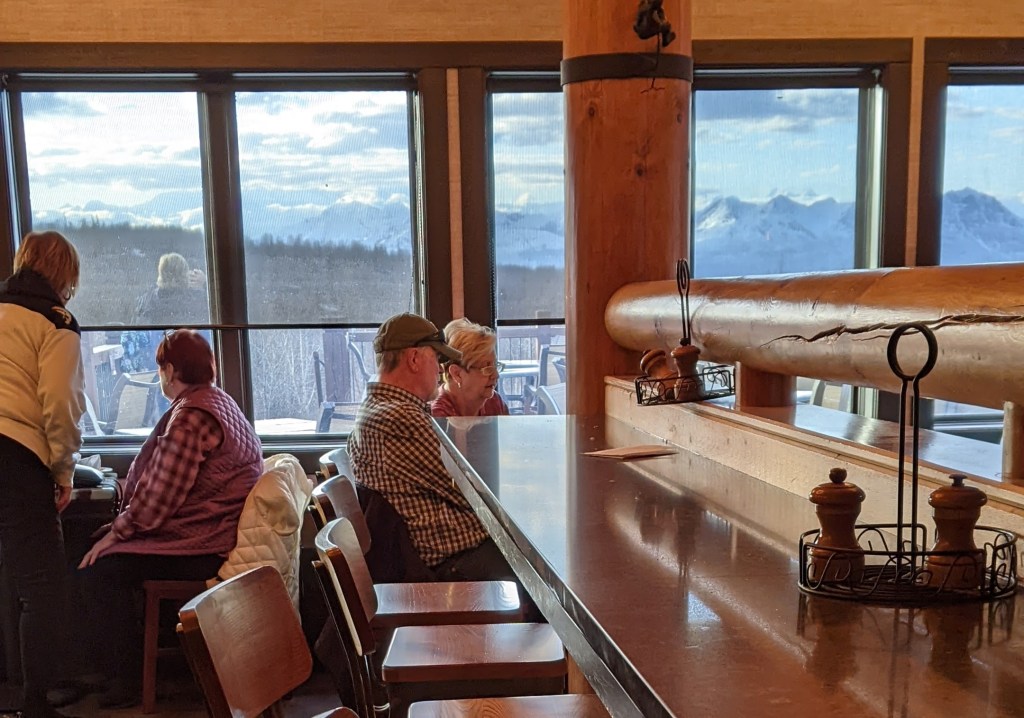
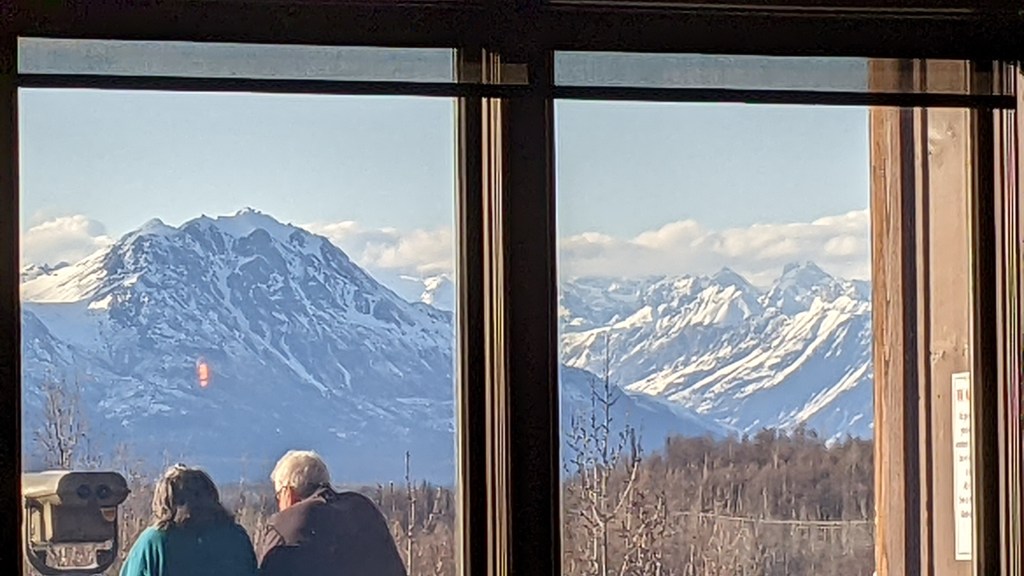
I found an unoccupied seat at a bar counter in the casual lounge. My seat still offered a commanding view of the faraway mountain ranges through the great room’s wall-to-wall windows. Tired from a day of traveling, I ordered a glass of wine, content to simply relax in comfortable surroundings.

My attentive server asked if I wanted to order dinner and suggested I begin with a bowl of hot fish chowder. Happy to not have to make a decision, I agreed that would be good. We chatted a bit as I waited.

He had returned to Alaska the previous week to work at this lodge for a second summer. A university student in the lower 48, he said that his experience the previous year hadn’t seemed quite long enough. This year, his girlfriend had signed on for summer work as well.

This was the first of many conversations I would have over the next few days with the summer employees who arrive in Alaska eager for adventure. Must of the seasonal employees are U.S. or Canadian students. All are happy to have the opportunity to earn money working in one of the top vacation destinations on the globe. Many have returned year after year. Most try to save the bulk of their earnings for the coming school year. Not a one complained about the hours or the work load. And every one admitted to seizing every possible opportunity to hike or camp in the adjacent national and state parks or to explore nearby towns and villages. Almost all planned to return to the lower 48 at the end of the summer to continue their schooling.

I listened willingly to the stories of other servers and staff. I joked with the bartender, and I exchanged smiles with other guests. When my chowder arrived, they all gave me “space” to enjoy my light meal. Suddenly hungry, I ate, sipped my wine, and thought how lucky I was to be in this place at that time. But, in that moment, sitting in a crowded bar in the shadow of a great mountain, I also had to admit that I missed my husband. It was an experience I would have enjoyed sharing with him.

In Alaska, in May, it’s light late into the evening and as I finished my chowder, Denali’s snow-covered summit was once again visible. Despite the many previous pictures I had taken, I wanted just a few more in the twilight of the day.

I was eager to make my way out to the deck once again, and I signaled for my check. As we settled up, this young server and I agreed that getting to know one another was a highlight of the evening. As I stood to leave, he looked at me and asked if he could give me a hug. Somewhat taken aback, I hesitated for just a moment.

He confessed, “You remind me of my grandmother, and I miss her.”

Of course we hugged, and I believe we both treasured that brief connection in a place far away. This time, the human connection was more memorable than the food. And this brief encounter with a stranger was at least equal to my last view of Denali on that day.

Times beyond forgetting . . .

Striking up a conversation with a stranger, especially when one is away from home turf — in another state or halfway across the globe — always leads to new insights. Somehow, sharing seems easier, and there is a double-edged desire to understand one another. Talking about history and the past, hopes and dreams for the future, life, expectations, favorite places, fears and hardships, war and peace, children and ancestors, puppies and good food — it seems easy to cross cultural borders in those times. Such encounters happen quite naturally while waiting for a flight, browsing a bazaar, standing on a cruise ship deck, or sitting in a crowded cafe almost anyplace in the world. It’s real, easy, and spontaneous.

The truth is that people throughout the world are eager to talk about all of these things — to me and to you. And we’re all eager to talk about our homes and our families. We form quick friendships with others we have just met. Sometimes they are short, quick encounters, and they end just as quickly. Occasionally, those chance meetings lead to lasting memories. They can also foster new friendships that easily survive decades and distances. There is promise in that fact.

So, because travel has once again become a welcome reality, I look at the empty pages of my desk calendar for the coming year, thinking about the destinations that will be penciled into those pages. I cannot help but think of the people I might meet in those faraway places. And I think of the trip from which I recently returned. For nearly three weeks, I was a solo traveler. It was not my first trip alone, but it was a uniquely fresh adventure. For many years, I have enjoyed the company of a willing travel partner. When my spouse and I each had busy and fulfilling careers, we were not infrequently apart due to work schedules and business trips. We sometimes enjoyed the company of individual friends and family members on our travels, but we traveled as a couple for most of our most memorable vacations.

Booking a solo cruise for May of 2023, followed by attendance at a professional conference, was in many ways new territory for me at this stage of my life. And, I must report that it was better than I had hoped. I also have to say that, for me at least, it was nice to return home and resume my by-now-familiar pattern of life. Will I leave again as a solo traveler? At this point, I am not certain that I will, but I would not hesitate should the right opportunity present itself.

That’s the joy of traveling. The art and the architecture, the vistas and the crowded piazzas, the food and the wine, the excursions and the unexpected experiences all may be the stuff of dreams, but nothing beats the privilege of sharing “quality time” with real people, no matter how fleeting that time might be.

That’s what I missed most during the pandemic. Interacting with real people is the one thing that makes travel so enjoyable, so unforgettable, so necessary, to my mind. That’s what I anticipate most with each trip I take. My recent journey seemed almost like too much frosting on the cake. It included another chance to step across the latitude line in northern Alaska that allows me to say that I have been north of the Arctic Circle once again. The first time was a Nordic cruise to “the top of the world” last September. Coupled with a trip to Antarctica in January of this year, this time was a new thrill.

Where to next? At this point, I have no idea. Much to our disappointment, a planned February 2024 cruise that we had booked with a sizable group of friends and family was just canceled by the cruise line due to ship redeployment. But, I am sure we will find another journey that lures us to “take flight.” Once again, it will mean a potential to meet and interact with interesting people in addition to a distinctive itinerary, that will lead us to book another trip.

Looking forward also entails looking back.

Several years ago, my husband and I had a free afternoon in a Mediterranean port city. We had seen enough churches and museums, eaten enough lunch, walked too much. We found a cabbie near the port who, for a set fee, was willing to take us on a drive around “his” city. We wanted to visit a market to buy some fresh fruit, perhaps some cheese and olives, and a local bottle of wine. We wanted to see the view from the bluffs above the city. Most of all, we wanted to relax and hear about life in a unique and beautiful part of the world.

We got all of that and more. Our congenial driver spoke in halting English about his family, his wife, his life. He told us how proud he was of his children, a son studying medicine in London; a daughter pursuing dreams of her own in America. He told us how much he missed them, and what he wished for them in the future. We practiced our Italian, asking about the cost of living, about the political situation in his country and throughout the EU, about the past and the future, about the weather, and about the cost of gasoline and the price of olives.

He brought us to a favorite lookout with an incredible view of the sea, where we stood in the wind and drank in the beauty of the setting. And then he brought us to a small cafe where we drank small cups of strong coffee as a fitting end to our excursion. He dropped us back at the dock and we re-boarded our ship, knowing that we would never see him again but that we would never forget him. The world grew just a bit smaller that afternoon, and our hearts were full.

It is experiences like that that will keep me on the road as long as I am able.

Follow me here @goodfoodandfarwayplaces.com to learn more about strangers I have met and befriended across the globe and through the years. Read more stories about travel, history and my random musings about life in today’s world @rightoffmain.com, follow me at facebook.com/cohenadrienne/ and on Instagram @adriennecohen221.

A dose of good cheer . . .

There’s something about Americans.

They are everywhere, it seems. Sometimes by choice; sometimes by happenstance, often on orders and sometimes unwillingly. Americans travel the globe. Occasionally, they’re “ugly.” Almost always, when Americans “discover” a place, it is changed. And many would argue that change, though inevitable, is less than desirable.

There are other nationalities that also travel the globe; many of them English-speaking — Brits, Canadians, Australians. But there are French-speakers, Spanish-speakers, Scandinavians, Asians, and Africans. In fact, today, all nationalities travel extensively. Most travel rather inconspicuously.  Americans tend to stand out and are occasionally the brunt of jokes and the subject of pervasive and less-than-flattering stereotypes. 

But, there’s something about Americans.

On Christmas Day morning, on a beach in Puerto Vallarta, Jalisco, Mexico, a group of Americans gathers to hang stuffed animals, matchbox cars, soccer balls, footballs, Barbie dolls, and an assortment of other toys from the palapas and beach umbrellas of a local hotel. They wear Santa hats, blinking reindeer noses and silly, floppy reindeer antlers, candy cane shirts, and an assortment of other red and green attire with their swimsuits and shorts.

The beach chairs and lounges are circled to keep the public at a distance. No one really seems to be in charge. At 8:30 am on Christmas Day, it is quiet on the beach. And then more people arrive, some with armloads of stuffed animals, some with plastic bags from the Walmart on the other side of the Mexican city. Some come with one or two toys. Many dropped off their “goodies” earlier in the week. Word spread about the event, and the crowd steadily grew larger.

Volunteers bring ribbons and scissors. There is a festive spirit. Onlookers gather.

Soon, a group of children begin to form a line, off to one side. Quiet, and well-behaved, they stand with their parents and older siblings. They watch. They wait.

This ritual began more than 20 years ago. On Christmas Day 2004, I was on that beach that Christmas Day. A woman named Marge from Nashville, TN, one of the original group of Santa’s helpers, asked volunteers to walk down the beach to find more children. “This is the best year ever,” she said, “and I’m not sure we have enough children for all the gifts.”

There is no publicity. This is not an organized effort. There is no tax deduction attached to these gifts. There were lots of pictures taken. There are big smiles on the faces of the adults. The children look on with wide-eyed wonder. There are tears. There are hugs. There is a sense of excitement. There are cookies and soft drinks and music on a beach in Puerto Vallarta on Christmas Day. And there is a sense of community.

Even though most of the children speak no English, and most of the adults speak little Spanish, there is no language barrier.

One man with a distinctively British accent and a camera pauses to ask what is happening. When it is explained, he makes no comment. But he remains to take pictures, staying on the fringes but joining in the palpable spirit of goodwill.

At precisely 11 am, four Mexican children are allowed to enter the “garden” of hanging toys, each one accompanied by an adult American volunteer with a small pair of scissors. As each child walks through, he is allowed to take his time to look, and then his selection is snipped from its ribbon hanger and handed to him. It is almost silent. There is no screaming, no running. There is a sense of reverence as the child clutches his selection to his chest and then is escorted to the other edge of the toy-filled enclosure.

Children of hotel employees, youngsters whose parents are beach vendors, and children who have come to the beach for a day near the water and the sun with their extended families are the honored guests. They are all Mexican children. That is the only requirement.

It is not their tradition. Christmas, in Mexico, is a deeply religious holiday, with a family-oriented emphasis. Santa Claus does not visit most Mexican children.

But where there are Americans, there are some traditions that are hard to break. In the United States, there are toys for children. So, where Americans gather at Christmas, there will invariably be toys.

There is something about Americans.

Note: I first wrote this nearly two decades ago for an online publication that no longer exists. I was thinking today about that long ago Christmas on the beach, and it seemed appropriate to repost this piece this year, at a time when the world seems to need a large dose of goodness and cheer. I don’t know if the tradition continues in Puerto Vallarta. I hope it does. But, whether the beach party is still held or not, it is a wonderful memory. I wish Happy Holidays to all, no matter what holidays you celebrate or where you celebrate them. And may 2023 be a good year for us all!

Long may it wave. . .


Today is a day for waving the flag. It always has been. On this most American of American holidays, Old Glory — the red, white and blue — is displayed prominently everywhere. Along with the fireworks, the hot dogs and brats, sauerkraut and beans, potato salad and beer, it is a quintessential American holiday. I love it, and so do most people I know.

Other countries also have national holidays, and they’re wonderful as well. But this one is mine. I am an American, above all, and I celebrate the history of my country and the heritage of my forebears who worked to build and preserve this nation.

This weekend I will celebrate! With outdoor concerts and picnics, with old friends and new acquaintances, on the lake and in the park, I will celebrate. Here in Hot Springs Village, the celebration has continued since Friday, culminating in a “beach party” and fireworks over Lake Balboa tonight. I have enjoyed it all, but at some point in the celebration, I will pause to remember why.

I will celebrate the freedom that was proclaimed for us all 255 years ago, and won anew in skirmishes that extended for years, until a decisive battle was won against the British in September of 1814. It was the battle that led to the penning of the poem that was to become our National Anthem.

And it was the tattered American flag flying over Fort McHenry in Baltimore Harbor “in the dawn’s early light,” that inspired Francis Scott Key to write those words. How different history would have been had it been the Union Jack that he saw.  However, it was not until 1931 that The Star-Spangled Banner was adopted as our national anthem.

Have a wonderful Fourth of July everyone.


Time-tripping: A new perspective

My husband and I took a journey [this past week], a trip into our past.

The miles were few; and the travel time far less, because of a new highway, than it had been 30-some years ago when we made the trip regularly. We recognized some scenes along the way, and when we turned into the little town square for a drive through our memories, it looked pretty much the same, only slightly more forlorn now than then. The same shuttered buildings still seemed in danger of falling inward during the next big storm.

This is not a thriving, bustling population center. It is a very small, simple, rural area adjacent to a lake which, for the past several years at least, has faced debilitating effects of the drought and the economy. People here, from the looks of it, are not yet feeling the benefits of a recovery. And, on a rainy day in February, in Texas, there are no fragrant blossoms or green leaves to signal the promise of spring.

Experiencing life in the rear-view mirror

But we drove on. We had returned only once before, in more than 20 years, to see the retreat we had owned for more than a decade beginning in 1981. We had spent many a happy, sunny, activity-filled day there when our son was young. I have trouble, even today, calling it a “lake house.” It had floor, walls and roof. It had a kitchen, and a bath, one bedroom, and another small sleeping area. It was filled with mismatched furniture and cabinetry. We applied gallons of white paint to freshen its old wall paneling. It had air conditioning only in one room. We added a screened activity porch, floored with cast-off multicolored tile, and graced by one banging screen door.

Oh, the times we had there in the one large room with a view of the water. We laughed; we cooked and read and played board games on the floor as a family of three. We watched mourning doves hatch in their nest outside our window, and we shuddered when a swarm of bees made a home for a night in the same tree. We did much the same — laughing, cooking, talking and playing, indoors and out, in and out of the water, on and off the boat — when we invited a crowd.

In the summer, we all cooled off under an outdoor shower plumbed to the trunk of a big tree, before putting hot dogs and burgers on the grill. On July 4th, we spread IMG_0679blankets on the lawn to watch fireworks explode over the water.  It was a place for all seasons, and during the heat of summer we occasionally slept in hammocks and deck chairs.  Occasionally the allure of the place meant we packed up our sweaters and boots, and brought lots of hot chocolate just so we could watch migrating ducks and angry skies. In the winter, we slept soundly under warm quilts, lulled by the sound of lapping waves.
We loved the place. Our son — and our dog — learned to swim at “Camp Swampee.” Our son learned to sail, and to steer the motorboat. He learned to love fishing, and to dissect frogs, and to chase butterflies. He learned which snakes to avoid, and to watch for spiders under rocks. He learned to occupy himself alone in the great outdoors. He learned to steer the truck down the long, straight, bumpy road to the compound. We all learned to deal with the Texas heat during the searing days and to marvel at the star-filled sky at night.

We learned that the alternative to our day-to-day busy lives in the city, filled with school and jobs, meetings and friends, planned activities and regular schedules, is a cadence of life far different. We had “lake neighbors” who were equally happy to trade busy everyday lives for weekend peace and simplicity.

Our son grew up. We moved on and we moved away, but we carried with us a peculiar nostalgia for that place and time, across the miles and over the years.

Some journeys teach unexpected lessons

So, given opportunity and no set schedule, we set out to visit the past.

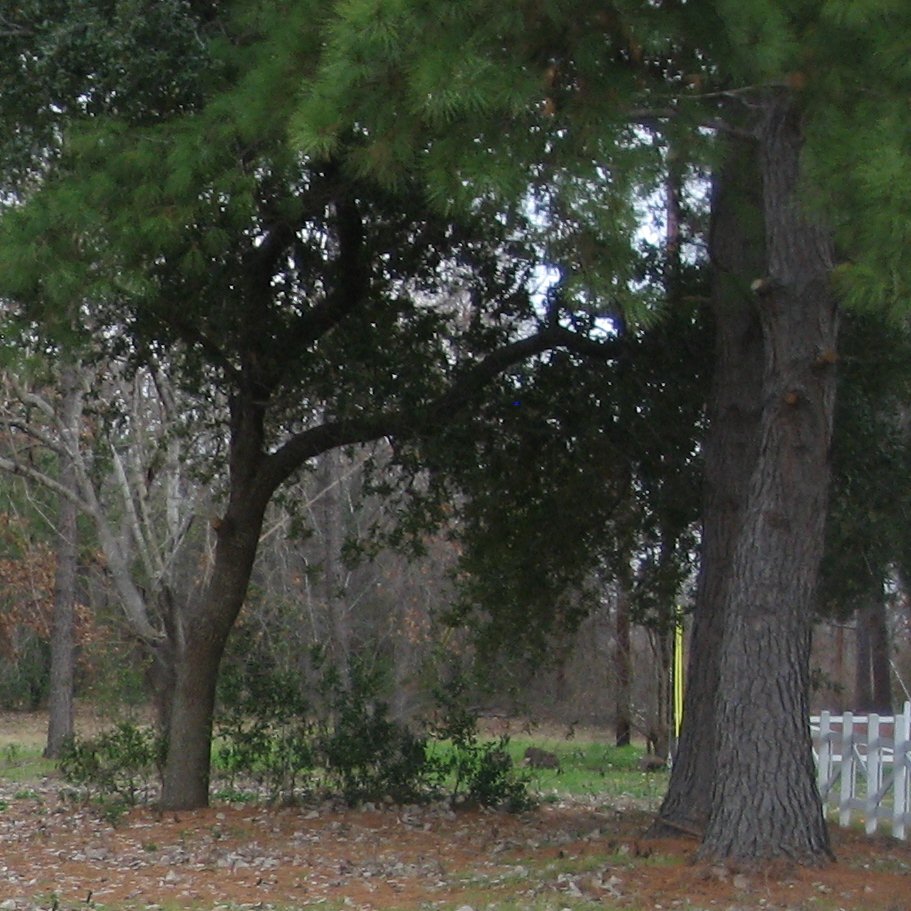
But it’s not there.IMG_0674IMG_0678IMG_0670IMG_0676It was almost a physical pain: My husband and I exchanged glances, without speaking. We, both of us, took slow steps onto the lot, walking with a hesitant, measured pace to where our house once stood.
Grass has begun to grow, and falling leaves camouflaged bare ground. The dock still stands, but just barely. And, because of the lake level, it would be impossible to pull a boat into the sling under the shaky roof.

The shock was not so much that the building was gone. It had been old and worn when we owned it. The surprise is, rather, that what still shapes the way we are and think and feel in numerous, important ways has no physical presence in this world. We have left no lasting impression on that particular spot of earth.

We move on through life; we learn from each experience, sometimes in graphic, poignant and unexpected ways.

As we strolled back to our car, the lesson we both have learned:

Savor the present time

Note: This story was originally published on February 10, 2013 on Yahoo Contributor Network. That creative virtual magazine was taken down several years ago, but I ran across this post recently, and thought it worthy of a reprint. Except for a few minor revisions, it is as originally written. 

We think often of the good times we had on that little slice of earth on the shores of Cedar Creek Lake, and we remember the place fondly, even though it no longer exists. We graced the house with a handcrafted sign. There was no longer any sign of that, either. Perhaps, now that more than five years have passed since our visit, we will take another ride to see if someone has built a new home on the site.

In a way, I hope so. The lake and its lakeside communities have changed now, populated with full-time residents, and much grander weekend and summer homes. Perhaps the spot is enjoying a new incarnation with another family.

Somehow, though, in our minds Camp Swampee will remain frozen in time just as we knew it.

It’s the people, not the places . . .

It’s good to get away, and sometimes it doesn’t seem to matter where the journey takes us; it’s the break from routine that’s important.

This time, though, it was all about the place. My husband and I, as those who know us (and those of you who read the previous post) know, spent the better part of a summer in Alaska 13 years ago. We traveled the Marine Highway of Southeast Alaska and numerous watery byways that led us to out-of-the-way villages and secluded coves. We went north to Skagway and Haines, west to Glacier Bay and Sitka, spent delightful days in Hoonah and Petersburg and bobbed gently “on the hook” with only stars and lapping waves for company. We visited Juneau, the capital, several times, and we had good times in Ketchikan, Alaska’s “first city.”

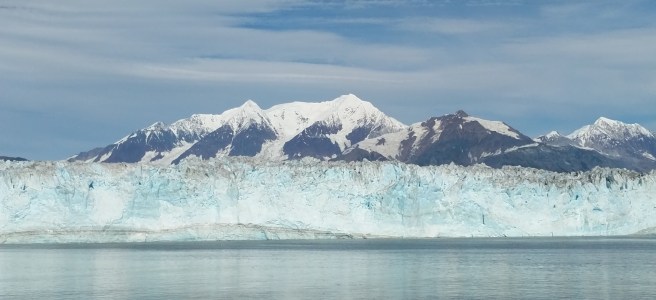
At the end of August we returned to the 49th state, arriving in Anchorage on a Friday evening to spend a few hours prior to embarking the next day on a seven-day voyage aboard Golden Princess. The trip would take us past impressive Hubbard Glacier and into Glacier Bay before visiting Skagway, Juneau and Ketchikan on a journey slated to end in Vancouver, British Columbia, the following Saturday morning.

It was not a trip we spent a lot of time planning. It was, in fact, a snap decision, made with a “why not” attitude, but with low expectations. We sandwiched it in between short trips to other destinations during August.

Some initial observations:

What we experienced surprised us. We were less than enamored by Anchorage, home to fully 40 percent, if not more, of Alaska’s residents. But, to be fair, we spent only a few hours there and during our brief visit we encountered delightful people. The city, however, is not pretty, apart from its surroundings.

Our appreciation for the spectacular natural beauty of Alaska emerged fully intact. Looking down on the Anchorage area from our airplane and seeing snow-capped distant peaks towering above the clouds was duly impressive. The water and the coastal vistas are incredible and the vast land seems to extend forever.

And the flowers — before I visited Alaska, I would not have believed there were flowers in what I considered a cold and desolate place. How wrong I was. They were — and still are — everywhere. Wild flowers and flowers in public parks; flowers on window sills and in shops, flowers filling huge municipal planters; flowers in airports and on the docks. Wildflowers along the highway. Gorgeous, colorful flowers. Everywhere!

On Saturday, we boarded a bus for the short drive to Whittier, a year-round deep-water port at the head of Prince William Sound. The trip allowed us a glimpse of white Beluga whales in the waters of Turnagain Arm and a herd of Dall sheep navigating a craggy bluff on the other side of the highway.

It’s exciting, to be sure, to wear jackets and knit caps in August, even if we did have to don rain gear as well. We visited the Alaska Wildlife Conservation Center to see wood bison and musk ox, wolves and porcupines, bear and moose, deer and foxes.

We continued on through the engineering marvel of a tunnel that gives the only land access to Whittier. It is shared (on a one-way basis) by passenger vehicles, buses, trucks and the train!

A floating city . . .

Once aboard, we began to settle in to the life of a floating city with 2,600 other people — not difficult, actually, with the wealth of activities and the pleasant mix of public and private spaces. Every day seems a celebration on board a modern cruise ship.

What we knew we would miss was the feeling of being close to the water — the sound of the waves, the experience of cold fingers and blasts of wind as we dropped anchor or secured the lines of our vessel to the metal cleats of well-worn wooden docks. We missed the camaraderie we felt with fishing boat captains as they put away their gear after a long day; and we missed the hot coffee and good conversation that was always available in cluttered dockmasters’ offices.

We also missed seeing whale spouts and fish jumping just above the swells, gulls and eagles trailing fishing boats and circling above small docks, the occasional family of sea otters looking for refuge in a marina, and eye-level contact with those splashing waves and floating chunks of ice. Looking down on the water from a deck 70 or more feet above it, or searching for native wildlife through binoculars and behind protective glass has nowhere near the same effect.

This slideshow requires JavaScript.

What we enjoyed was the companionship of other passengers, especially our delightful dinner tablemates, talking with fellow travelers from not only other states, but from Australia and New Zealand, from Germany and England, from Mexico and from Asia. We appreciated the perfectly prepared fresh fish and seafood that was offered at every meal, the smiling service of bartenders and waiters, the helpfulness of the crew, the variety of outdoor deck space from which to view changing vistas of glaciers and icebergs, mountains and clouds.

We were blessed with sunshine for at least a part of every day, somewhat unusual for this part of Alaska.

We also appreciated having the assistance of other eyes to help spot whales and otters, eagles, bears, seals and porpoises. And, yes, we did spot some, although we yearned to see more! The ship reverberated with a chorus of delight for each occurrence. We were thrilled once again to visit Glacier Bay. The naturalists and Park Rangers who came aboard were interesting and knowledgeable. It was a learning experience, and it was good to have their input.

We heard the “thunder” of glaciers as they calved, and realized anew that listening to the natural sounds of Alaska is mesmerizing.

‘Tis the season . . .

We could have done without the proliferation of t-shirt and key chain shops, furriers and jewelry stores, harborside kiosks and lines of tour buses and waiting guides. But then we realized that they were very much a part of port life 13 years ago as well.

As Alaska residents acknowledge, the season is short and it’s tourism that turns the wheels of commerce in the ports of Southeast Alaska. Life after October settles back into familiar patterns and the majesty of the land becomes once again the personal domain of those who call Alaska home.

Travel is enlightening in many ways. But it’s not the places; it’s the people one meets.

We sought out those people on this trip. And we were rewarded tenfold! Friendly residents are more than willing to talk about their lives, their cities, their families and their experiences. As always, we were fascinated to learn about daily life as it is lived outside the pages of guidebooks.

We always asked for local recommendations for food. In Anchorage, we were directed to a popular local brew pub, and were immediately befriended by a local resident only too willing to share his views on everything from oil drilling to recreational cannabis, from the Northern Lights to politics. The next morning we had cafe au lait and warm croissants at the charming Paris Cafe, a short stroll from our hotel.

In Skagway, there was a wait at “the best place in town to eat,” but the wait was worth it — and we were notified by text message when our table was ready. Skagway may be small and remote, but there’s no shortage of technology! WP_20180821_12_44_28_ProWe were rewarded with perfectly prepared fish, crispy chips and superb local brew.

We took a short bus ride to White Pass, following the path traversed by miners with gold fever, and snapped photos at the border between the United States and Canada, “Gateway to the Klondike.” We walked around Skagway for just a short time before retreating back to our ship as it began to rain. Skagway has changed little, but with four cruise ships in town, it was crowded!

That afternoon, before slipping lines and heading south to Juneau, a program by “real Alaskan” Steve Hites, one of the 1,057 full-time Skagway residents, was a highlight of the trip. Accompanied by guitar and harmonica, the 64-year-old songwriter, storyteller and tour operator charmed listeners with a 40-minute history of “his” Alaska, and the small town he knows so well.

In Juneau and Ketchikan, once again we asked for local food tips and were given the names of two eateries slightly beyond the tourist mainstream. At both, The Flight Deck in Juneau, and again in Ketchikan at The Dirty Dungee, we devoured fresh-caught Dungeness crab, and couldn’t have been happier!

About traveling to Alaska . . .

My heartfelt advice to anyone considering an Alaska cruise?

GO!

My husband and I realize that we were privileged to be able to experience the state as we did — on our own — and that trip will remain in our hearts as a unique experience.

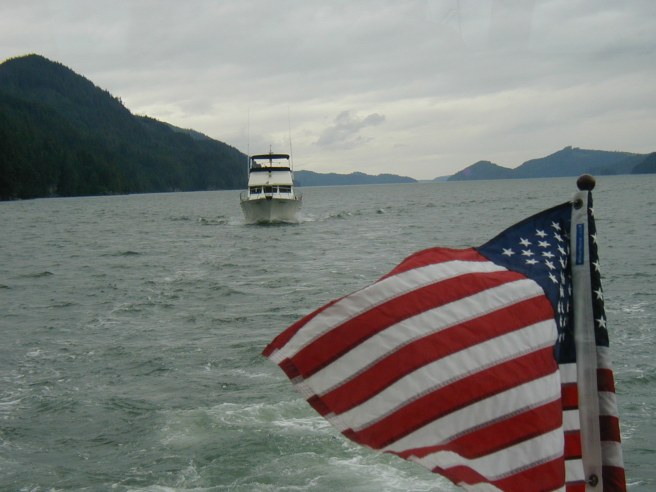
We remember how small we felt while on our boat, especially one morning in Juneau as we awoke to the presence of a massive cruise ship snuggled against the dock directly in front of our vessel.

101_0747As luck would have it, on this trip Golden Princess occupied that slip, and we wondered if the private yacht owners felt as dwarfed as we had that long ago morning.

The allure of Alaska has not diminished for us. We shared the excitement of first-time visitors on this cruise. And we understand clearly the sentiments of those who return again and again. There are many ways to travel to this unique state, from “big-ship” cruises to private vessels, land-sea combos, fly-in fishing or sightseeing trips and active expedition cruises. The Alaska State Ferry runs north from Bellingham, Wash., year round, and the Al-Can Highway provides an unparalleled opportunity for those who love road trips. There are summer work opportunities for college students, and the tourist industry brings part-time residents every season. There is no one-size-fits-all recipe for visiting Alaska.

Absolutely, go to experience the place — the stunning scenery with majestic peaks and pristine water, the wilderness, the waterfalls and the icy blue glaciers. Look for wildlife, of course, and marvel when you spot a whale or a group of bears on shore, eagles in the trees, or otters in the sea. Eat your fill of freshly-caught fish and seafood. Snap Selfies. Take tours. Buy trinkets.

But go especially to meet the people! Dinner companions often become lasting friends. At the very least, casual encounters with shopkeepers, restaurant servers, tour guides, ship’s staff, and the people you stop to talk with on the street linger as lasting reminders of the trip  even when memories of specific sights begin to fade.

Cruising is invariably a pleasure, no matter what the ports.  And Alaska still lives up to its moniker as the American “last frontier.” It’s a big adventure!

So, yes, go to Alaska!   

Will we return? Perhaps not. But we would not hesitate to do so. It’s that good!

Good food is all about . . .

100_5366 (2)

I met a 10-year-old a couple of weeks ago who told me in all seriousness that if he were offered a choice between doughnuts and salad, he would have to go with salad. He volunteered that tidbit after telling me that he liked all vegetables, especially salad greens. I had asked about his favorite lettuce, and he answered “Romaine” with no hesitation.

We were standing in the demonstration greenhouse of DFW Aquaponics Farms in Burleson, Texas, where I was photographing lettuces, chives, kale, Swiss chard and tomatoes in various stages of development. I had heard the young boy talking with his dad about how delicious the produce looked, even though many of the plants weren’t yet mature and the tomatoes were still green.

I’m not sure that at age 10 I even realized that there were different varieties of lettuce. I ate salad, I think, because at that age I ate most of what was put in front of me. It was simple food. I grew up during the days of family meals served at home, punctuated by an occasional sandwich at the downtown drug store soda fountain as a Saturday treat.

I vividly remember the taste of those sandwiches, and the special delight of a fountain Coke! To this day I occasionally long for a real fountain drink, rich with syrup and bubbly from the seltzer.

I also remember that home-cooked food varied by the season. Winter brought soups and stews, spring and summer were filled with fresh salads, bright peas and juicy watermelon, and fall was full of crunchy apples, and tasty pumpkin, squash and spices.

Because I was a city girl, I knew little about growing food. But I knew that when the right season rolled around, there were ways to judge the ripeness of fruit and vegetables.

However, had I been given a choice, I am certain I would have opted for a chocolate chip cookie, a scoop of ice cream, or even a just-picked strawberry over a ripe carrot or a stalk of fresh romaine, no matter what the season.

Today, like that 10-year-old, I too prefer salad over doughnuts, although ice cream is still as tempting as that fountain Coke.

I have learned what I am sure my farm-raised grandparents knew: Freshly-picked and locally-harvested food tastes good. It’s that simple. It’s immensely satisfying to create a salad or an entire meal from what one has grown.

This slideshow requires JavaScript.

Today, because of greenhouses and modern technology, it’s possible to grow fresh food — including salad greens and seasonal produce, year-round in many different locales.

I am not still not committed to growing my own food, but I certainly understand the motivation. Luckily, at least in my area, farm stands, local markets and community-supported agriculture (CSAs) are increasingly popular. Fresh, seasonal, locally-grown, non-processed food is available. It’s a good time to experience the joy — and the flavor, texture, color and fun — of good, fresh produce any time of year. It’s simply better.

I am delighted when spring arrives and local farmers markets spring to life with colorful carrots, new potatoes, bulbous onions, butterhead lettuce and showy Swiss chard. Later I wait for the melons to ripen and still later I search out the most beautiful eggplant and squash — as much for their vibrant color as for their taste!

Food is always an adventure — whether picked from the garden and prepared at home, created by an award-winning chef at a renowned restaurant, or purchased from a trendy food truck at a community festival. I continue to learn new things about food and about people, no matter what the occasion or where in the world.

It was here at home that I learned another lesson about food. Kudos to my 10-year-old “teacher,” and to his dad for showing him the way.

Teach them young, they say . . .