Independence . . . a few thoughts

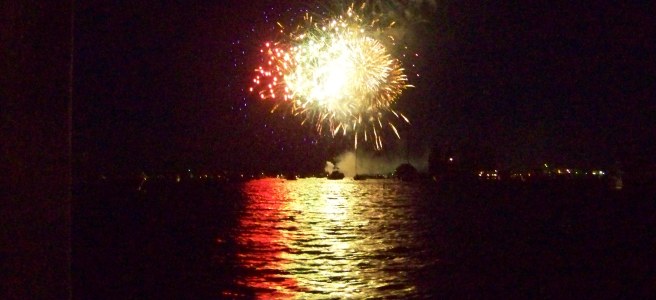
Fireworks over the water are a traditional part of July 4th celebrations in many parts of the country. Fire risk seems lessened, and exploding colors and sounds seem magnified by rippling water below and starry skies above. We have enjoyed such displays many times, watching with as much awe as any child.101_3074

A bit of background

Several years ago, as we made our way by boat across Chesapeake Bay and into Baltimore Harbor, we noticed an unusual buoy — not the normal red or green of navigational markers, not a warning orange — but rather red, white and blue.  At the same time, we couldn’t help but see the flag fluttering in the breeze at historic Fort McHenry, situated on a peninsula that intrudes into the Patapsco River not far away.

We later learned that the U.S. Coast Guard sets a ceremonial marker annually to mark the approximate spot where the words to the Star Spangled Banner were first written.
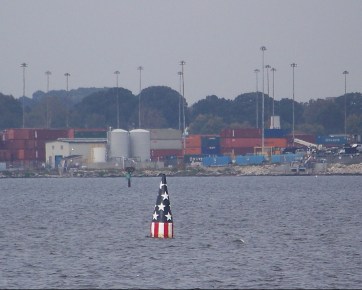
Gypsy-new camera-NJNYMDDC 517 (2)The unique buoy and an oversize flagpole brought home to us that year the reality of the battle that shaped the destiny of a young nation. History is like that — it sometimes takes being there to make it real.

The War of 1812, which began because of trade disputes and issues surrounding westward expansion, escalated when ongoing battles between Britain and France waned. It was a devastating time for a young country, and there were serious doubts about the ability to survive as an independent nation.

Much of New England never joined the fight. And, by the time it was over, the “second War of Independence,” as it is sometimes known, resulted in the deaths of 15,000 Americans, nearly as many as perished during the Revolutionary War. The War of 1812 actually lasted for two years and eight months.

Putting it in perspective

The fighting at Fort McHenry took place September 13, 1814. By the time the battle was brought to Baltimore, the war was all but lost. Washington, D.C., including the White House, the Capitol and other government buildings, had already been burned. Gypsy-new camera-NJNYMDDC 519 (2)

This past May, on a trip to Bermuda, those events of 1814 became even more real. It was from this Atlantic island some 600 miles offshore that a fleet of British warships was launched on August 1, 104 years ago, carrying 5,000 British Army and Royal Marines troops. Even though the colonies had declared independence nearly 40 years earlier, the British had not yet given up.

It was at Fort McHenry in Baltimore Harbor that the tide of war changed; defenders fought off the British during more than 25 hours of intense bombardment.

During the fighting, a young attorney was detained on a British ship in the harbor, along with a physician whose release had been promised. Francis Scott Key, sometime poet as well as a lawyer, had negotiated a prisoner exchange with the British, set to occur after the battle. As the fighting ensued, he was inspired to write the words to a poem which was set to music, with the title Defence of Fort McHenry. Later Francis Scott Key added three more stanzas, all but forgotten today.

The Star-Spangled Banner, although popular, was not used ceremoniously for another 75 years. In 1890, it was adopted by the U.S. military for play during the raising and lowering of the colors.

This slideshow requires JavaScript.

Touring the Royal Naval Dockyards this spring on the island known to its residents as “the Rock” or “Gibraltar of the West,” we actually thought little about Baltimore or the War of 1812. Instead we were focused on British history and maritime supremacy, until a chance remark brought back the memory of Fort McHenry, the flagpole and the buoy.  We toured the grounds of the British naval compound, walked the ramparts, and imagined those ships sailing towards Baltimore to quash yet another rebellion. With that clarity of perspective, we realized once again that we are still a very young country!

And so we celebrate . . .

It surprised me to learn that Independence Day was not even a holiday to celebrate until 1870, nearly 100 years after the Declaration of Independence was drafted, and long after its authors had passed on.

It surprised me equally as much to learn that the song written by Francis Scott Key was only adopted as the National Anthem by presidential order in 1916, just more than 100 years ago. Congress made it official only in 1931. The anthem made its official debut at a sporting event, a baseball game played in Chicago in 1918, during the turmoil of World War I.

And the fireworks? Well, that part of the celebration was added only after the poem was written and the song was performed.

None of that, however, diminishes the fun — or the spectacle. No matter what else occurs on the 4th of July, whether there are parades or solemn ceremonies, barbecues or backyard picnics, swim parties, bicycle runs or Days at Six Flags, it’s the fireworks that encompass the spirit of the celebration.

But, lest we forget, independence had a cost. It still has. The fireworks that are so much fun today were deadly serious in 1814. So, as we celebrate, perhaps we should also consider just what independence means, and what price each of us is willing to pay to preserve it.

Stay safe, everyone, on this 4th of July, and enjoy your celebration, no matter what it is!

If you’d like to learn more, here are some resources:

http://www.sacredclassics.com/keys.htm

https://www.history.com/topics/the-star-spangled-banner

https://www.constitutionfacts.com/us-declaration-of-independence/fourth-of-july/

https://www.bermuda-attractions.com/bermuda_0002c2.htm

https://www.bayjournal.com/article/us_anthem_flag_arent_the_only_stars_at_fort_mchenry

Elevator Philosophy

There is something immensely satisfying about traveling — even if it’s a kind of working vacation. But there is also a sense of relief, and enormous comfort in coming home, no matter how rewarding the journey has been.

That’s the state I find myself in now — in the middle of November — with business to attend to, goals to accomplish, stacks of notes to make sense of, scores of ideas to develop and hundreds of stories to tell.

Yet, here I sit at my computer, poring over trip photos and marveling at the wonders of  Mediterranean ports. Following two weeks of non-stop travel activity, we enjoyed a calm and rejuvenating week at sea. The Atlantic Ocean seemed to spread out in calm ripples in every direction, welcoming us daily with superb sunrises and spectacular sunsets. We couldn’t have asked for a calmer crossing, unlike some in the past, nor for more companionable shipmates.

Likewise, the varied cities we visited — full of profound history, beautiful sights, friendly people, enticing food, good wine, interesting excursions and fine weather. As Americans, we encountered no hint of hostility or malice; instead, we were greeted with friendly smiles and an eagerness to talk, even though our command of local languages was decidedly limited.

We never felt unsafe, unwelcome or threatened, whether we were on our own or part of a touring group. To be fair, we ventured off on our own more often than we joined organized groups. We occasionally heard some minor grumbling from fellow travelers, but not often, and mostly about logistics, not the people or the places.

We witnessed a calm and well-organized student protest (its purpose unknown) in Messina, Sicily, and we were in Barcelona the week before the Catalan parliament voted to declare independence. Tensions were running high. Catalan separatism was evident, with competing flags and signs everywhere. Now, there is scant news about what will happen. But I think the movement has not died so easily.

Our time there was limited; we were disoriented by the traffic and the sheer size of the city, and I have to admit that we were cautious among crowds in light of recent terrorist attacks. But we walked the streets, rode city buses, joined thousands of children and parents to attend an event at the former Olympics Stadium, and were willingly assisted by locals who helped us find our way about. I would not hesitate to return — to Barcelona and to any other place we visited.

As a side note, high school Spanish was of little use in Catalonia!

No matter what happens,

travel gives you a story to tell.

In coming weeks, I’ll tell many more stories about the trip, share other insights and detail personal observations about the places we visited, the meals we shared, the people we met, the experiences we were privileged to enjoy.

I’ll also refer again and again to the snippets of travel philosophy that were boldly displayed on elevator carpets throughout Royal Princess, the elegant cruise ship that became our home for this journey. Each one is a gem, and although I tried to ride each of the ship’s numerous elevators at least once, I’m sure I missed some. Therefore, I know I missed out on some of the wisdom that is so uniquely displayed.

For now, though, an observation by Mark Twain seems in order:

“Travel is fatal to prejudice, bigotry, and narrow-mindedness, and many of our people need it sorely on these accounts. Broad, wholesome, charitable views of men and things cannot be acquired by vegetating in one little corner of the earth all one’s lifetime.”

Samuel Clemens wrote those words in 1869, for “The Innocents Abroad.” He said it pretty well, didn’t he? His point, I think, is as pertinent today as it was when his chronicle of “the great pleasure voyage” was published.

A unique mystique . . .

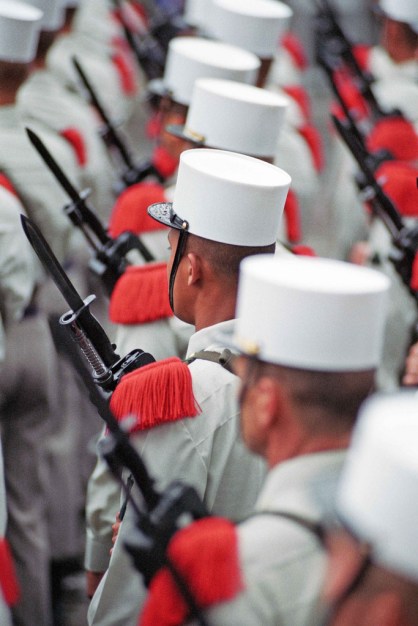
4802076860_ce7d2a1221_bLegionnaires of the 3rd Foreign Infantry Regiment based in French Guiana were transported on September 11 to the Caribbean island of Saint Martin to help with rescue and clean up operations following Hurricane Irma. I would bet that others were on high alert as Maria turned toward Guadeloupe and Martinique just days ago.

I heard the news reports of France’s quick response, and I was once again entranced with thoughts of this band of men with a long history, a somewhat dubious reputation and a unique mystique.

Somehow, the desert and the sea always figured in my childhood dreams, along with a thirst for adventure, the appeal of colorful uniforms, and the sound of military marches.

The French Foreign Legion

This elite fighting force has always held inexplicable fascination. I once had a romantic notion that I could run away to North Africa and be a Legionnaire. 4566626508_a28b277564_bI pored over pictures of the bearded Sappers with their white kepis and leather aprons, and I listened endlessly to traditional marches, and to Edith Piaf singing “Mon Legionnaire” and “La Marseillaise.”

Strange, I know. But, truth be told, the same things thrill me today,

I wanted to know someone who joined up. I fancied myself fitting in to the hard life, seeing the world, and participating in endless adventure.

There is at least one major problem, however. First and most important, it seems, is that I was born female and, to this day, the Foreign Legion is a men’s club. Only a men’s club!

Actually, one British woman joined during World War II and served with distinction in North Africa. There have been no others.

And, yes, as outdated as it may seem, The French Foreign Legion still exists.

In fact, it thrives. The Legion has changed, but it is still an elite force. Only about 1000 men are admitted to the ranks each year.

Here’s how it works:

First, if you are male, between the ages of 17 1/2 and 39 1/2, you must get yourself to the door of a Foreign Legion facility within France. Literally, you must knock on the door of the Centre de Preselection in Paris or at the gate of Legion Headquarters in the hills above Marseilles; or at one of nine “recruiting offices” scattered in cities throughout the country. They are officially open 24 hours a day, 365 days a year. 6550986765_d4ae3024d0_b In truth, however, showing up during normal daytime business hours would be wise.

Potential recruits must have valid documentation from their country of origin, either a passport or government-issued ID, and a verified copy of their birth certificate obtained within the last six months. Aliases and anonymity are no longer an option.

And they must not be on Interpol’s wanted list!

Although it is expected that recruits will arrive with three sets of underwear and socks, sneakers, personal toiletries, and between 10-50 Euros, those who make it in the door are immediately provided food, lodging and uniforms.

That’s it; nothing else matters

Well, almost nothing else: Language doesn’t matter; there is no requirement to speak French. Marital status is unimportant: All recruits are treated as single men. There is no discrimination on the basis of citizenship, background, race, religion, education, training, previous military service, profession or expertise.

There are some “must nots” and some “should nots.” Among prohibited items are knives, weapons of any kind, and keys — no vehicle or personal house keys are allowed! Large amounts of cash, credit cards, jewelry and other valuables are highly discouraged. Cameras, personal computers and electronic devices must be left at home or abandoned.

Recruits must take IQ and personality tests, must pass sports and fitness tests, and must meet specific medical and physical standards. Only about one in eight candidates is accepted.4566623898_3897607b2f_b

Within a few days, those who “survive” an initial interview at a satellite center will be enlisted and transferred to one of the Legion’s two pre-selection centers, either in Paris or in the south of France. Finally, those who make it through the three to 14-day pre-selection testing are transferred to Legion Headquarters in Aubagne to complete the rigorous training process. And it is rigorous.

The initial commitment is for a five-year enlistment, and the entire pre-selection and selection process spans up to five weeks. After that there is training, and more training, then perhaps specialized training. And then duty assignments; often within France today,  sometimes in French territories, but truly all over the globe. The Legion has fought not only in French wars and in two World Wars, but in most of the world’s hot spots, including Vietnam, Cambodia, Bosnia, Kuwait, Iraq, Somalia and Afghanistan.

This year, on July 14, I watched with fascination as the new French president and the new American president beamed with pride as the Bastille Day parade along the Champs Elysees in Paris reached its conclusion.  As always, a detachment of Legionnaires participated and, as always, this unique fighting force constituted the final unit in the parade. The marching cadence of the Foreign Legion is measured and impressive (88 steps per minute rather than the normal 120) and a fitting finale to a day full of military pomp and tradition. 7467186668_61d2457d6b_z

The mystery and the magic of this special force still exist. The Pioneers with their leather aprons and axes seem throwbacks to another era as they march with pride and precision; and the band sounds the familiar somber beat.

But, across the globe, other Legionnaires stand ready, as necessary, to don their fatigues and get to work to put a devastated island nation back together. Or to fight, if called. It’s good to know they still exist.

If you’re interested in learning more about the French Foreign Legion, visit Uniforms, History, or 2016 News.

All Photos via Flickr (1) Brian Farrell, 2010; (2 & 4) Marcovdz, 2010; (3) Maglegion, 1993; (5) Archangel 12, 2012


A time to be silent . . .

When the tourist buses leave, quiet descends and shadows begin to fall over the battlefields. A hush falls over the land, and it’s hard not to speak in whispers. It is also difficult to fight back the tears. Gettysburg is a stark reminder of another time, when the air was filled with smoke and cries echoed on the wind.

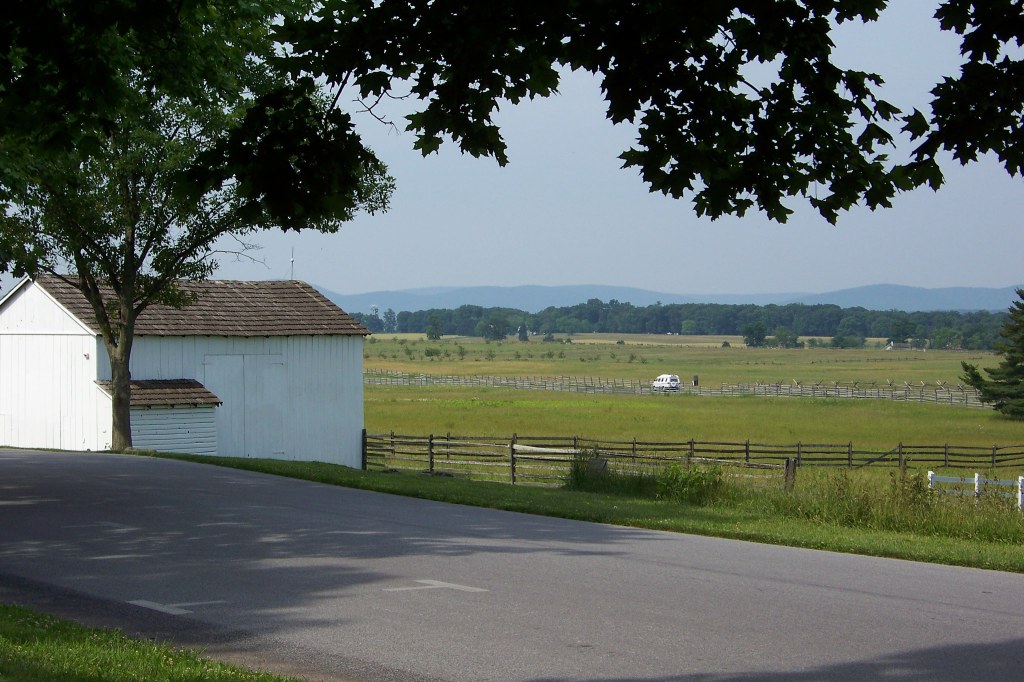
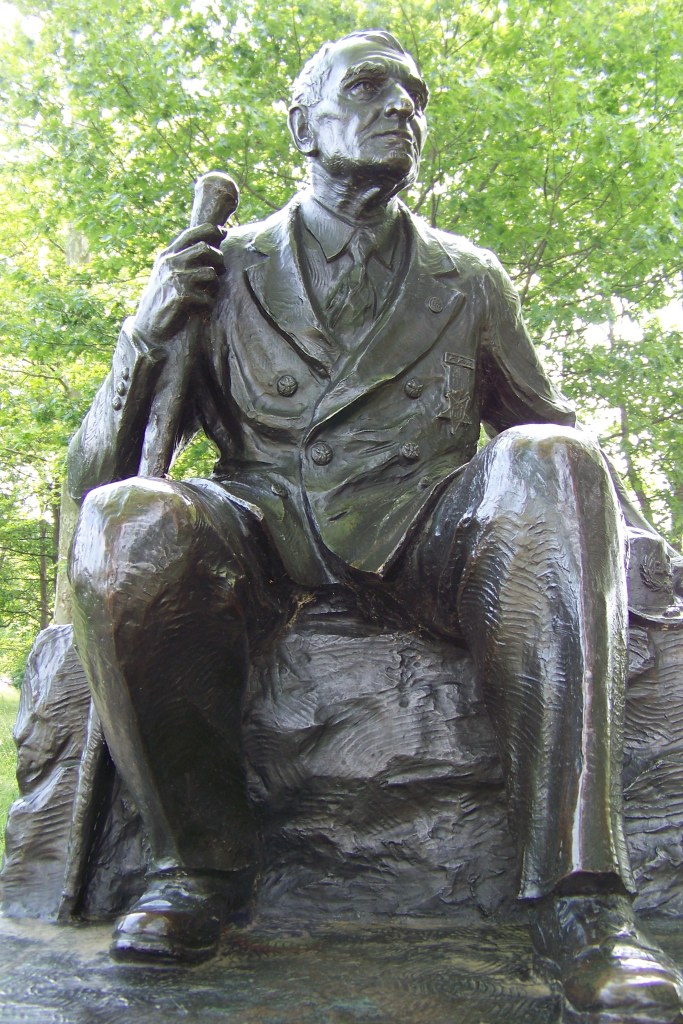
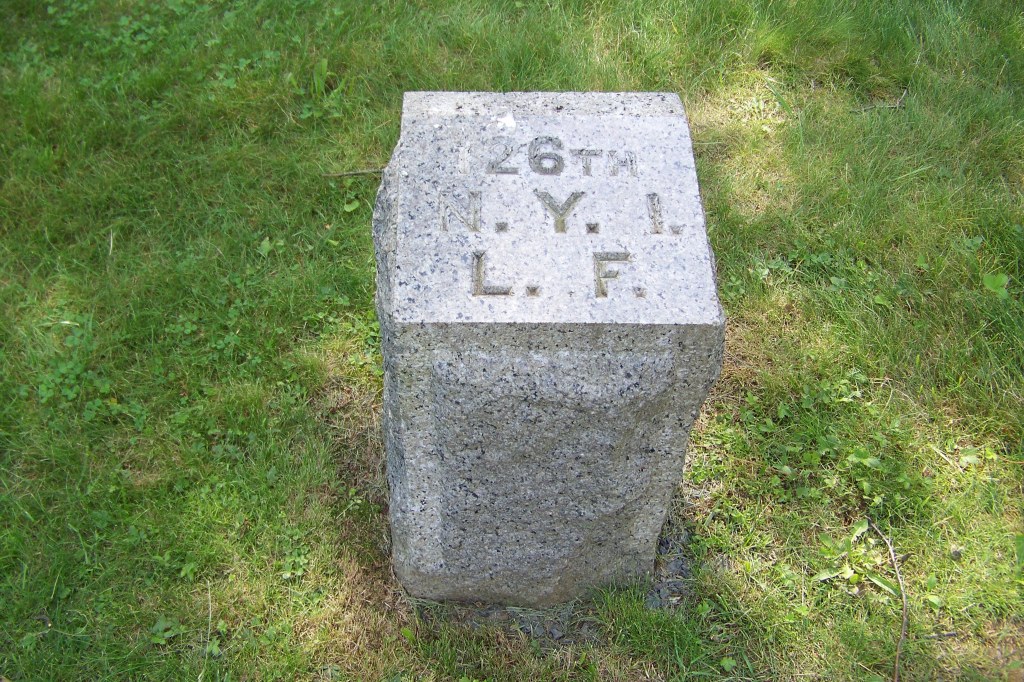
At least that’s how I imagine it. And those were my feelings last year in Gettysburg. The land was beautiful then, alight with the new growth of young grasses waving in the breeze and flowers blooming in the sun. And monuments. The monuments are both small and grand, sited haphazardly, it seems, on plots of ground that must have great meaning to the survivors of the men who fought here.

It’s a somber place in the late afternoon as the sun begins to move low over the western horizon. Battlefields are always somewhat difficult to visit. Civil War battlegrounds are especially sobering. They are smaller than expected, making it easy to imagine facing an enemy up close and personal and terrible to think about that reality.

The fields of Gettysburg, though, are expansive; the hills roll on into the distance; split timber fences delineate the fields, defining various encounters between Union and Confederate forces, and even driving through the area takes time. I felt compelled to walk among the monuments, to read the inscriptions, to wonder about the units they honored, and to think about the men who died on that ground.

Battlefields have a peculiar pull, no matter where I encounter them, and I have walked silently among the ghosts on battle plains across the globe, from the Little Big Horn to the beaches of Normandy, from the Golan Heights to Glorieta, New Mexico. I have also meandered among the headstones of military cemeteries in this country and in other nations, wondering about the lives of the men buried there, and about their survivors.

I always come away from battlefields with a sense of wonder that no matter how bloody the battle, the earth itself recovers from war relatively quickly. It is much more difficult for the people.

So today – Decoration Day was first celebrated on May 30, 1868 – at 3 p.m., the traditional hour of remembrance, I remember that battle fought long ago in Pennsylvania, and all the other battles of the Civil War and the wars that followed. Whether it’s now called Memorial Day or Remembrance Day or Poppy Day, I like to think that we are moving toward a time when battles will no longer be the way to resolve differences, when our children’s children can walk confidently into a future that only honors servicemen and women who died long-ago.

I thought about all of that yesterday as I enjoyed burgers and bratwurst, potato salad and apple pie with a small group of friends. It was a long weekend, after all, and it’s always good to be with friends and to share good food.

But today, because this is the real Memorial Day, I once again remember the fallen soldiers and those members of the armed services who still are called to give their lives in the service of their country.

The Civil War took more lives than any other this country has fought. We can debate, from the comfort of our time a century and a half removed, the issues that led to that war and that provoke other wars, but we cannot deny the consequences. And we must not forget that good and noble men fought on both sides. Warriors have left grieving families in all the battles since. It is good to pay homage to sacrifice like that.

Now, more than ever before, it seems imperative that we learn from our past. We can then move on to the task of writing the future the way we want it to be.

Portovenere: Poetry in any language

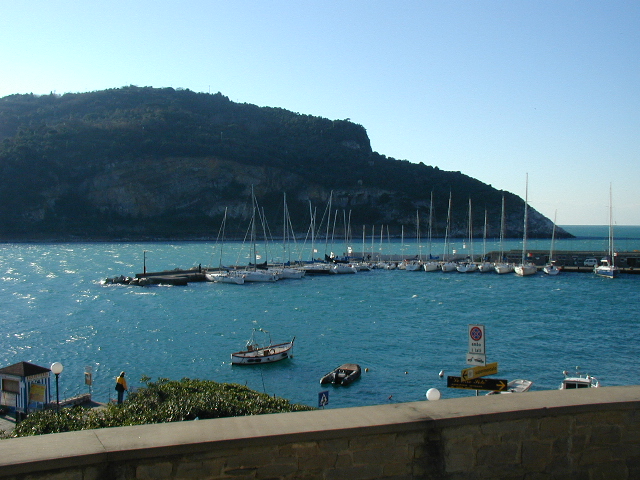
My husband and I hadn’t really intended to be in Portovenere. We were driving through Italy with no particular destination in mind. At a small gas station in the port of Genoa, we stopped to ask general directions to the waterfront, with every intention of finding a charming out-of-the way inn along the way, perhaps one with a view of the harbor and a trattoria within walking distance.

We had no timetable. It was chilly. It was the end of January, not the height of tourist season along the Mediterranean coast. The prospect of a good glass of red wine, a simple pasta and a comfortable bed beckoned. OLYMPUS DIGITAL CAMERA

The station attendant pointed — Portovenere, he repeated — along with a rapid stream of Italian, most of which was lost on us. “Portovenere, Portovenere, Portovenere. . . ,” accompanied by hand waving, curliques in the air, motor sounds, big smiles and, once again the repeated word: “Portovenere!”

It was decided. We pulled out the map, pinpointed the location and the route, smiled at our benefactor and trip planner, and were off to Portovenere.

What a Delight!

The little city is nestled into the craggy cliffs that line the sea; it has all the charm and colorful beauty of better-known Cinque Terre villages. Along with them, Portovenere is on UNESCO’s list of World Heritage Sites. They are all magnificent. OLYMPUS DIGITAL CAMERA

Portovenere is ancient, and it retains the homey aura of a small fishing village, with terraced hillsides above.

Perhaps it was just because we arrived at dusk during a very slow season, but everyone we met, from the hotel desk clerk to local workers on their way to the trattoria, greeted us cordially and made us feel like long-lost friends.

The feeling was not diminished the next day, nor the next. We stayed on, enchanted by everyday life in this beautiful village. We walked the streets, sauntered along the docks, ventured up the steep, hillside cliffs when we felt like it. We breathed deeply of the fresh seaside air, and looked out on the waters of the Med, but felt no need to take the sightseeing boat to the nearby trio of islands that are major tourist destinations.

Familiar Comforts

The truth is that Portovenere wrapped us in the comfort of normal lifestyle, at a point in our three-week trip when we had tired of tourism. In some ways, it felt like going homeOLYMPUS DIGITAL CAMERA

We sipped aperitivos at the local bar, and watched local television with residents relaxing after work, and then we ambled down the street to enjoy fresh seafood, good wine and spirited, if awkward conversation with other diners in the sparsely-occupied room. I’ve forgotten the dishes and the details, but the warmth of the experience, and the certainty that it was a good one, remain. I don’t know the name of the restaurant, but I like to think it is still there, awaiting my return.

It’s a fanciful thought, I know, appropriate in some odd way for this Thanksgiving week. Going home for Thanksgiving is deeply ingrained in our consciousness, whether that trip is to Grandma’s house or simply a gathering that brings family and friends together for shared experience, wherever it may be.

Special Places and Times

That first and only visit to Portovenere was more than a decade ago and it still stands out in my memory as one of those places I would return to on short notice! That’s what I have been thinking about this week — the prospect of revisiting favorite spots across the globe, an irresistible urge to experience old delights once again. OLYMPUS DIGITAL CAMERA

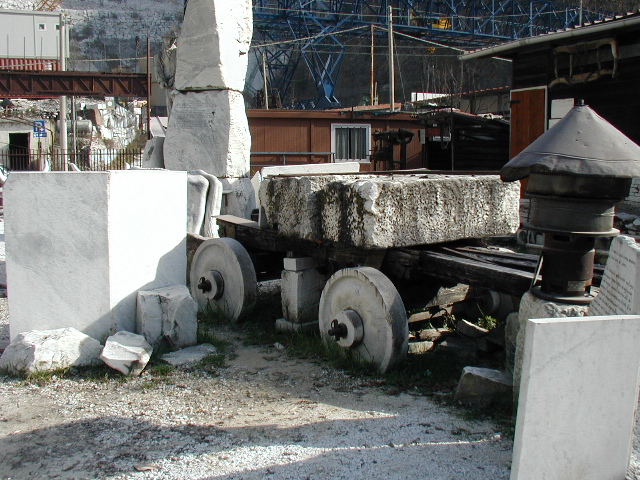
Pisa is on the list, and Assisi, along with Carrara, where Michelangelo found his stone. The tops of the mountains shine white in the distance, chipped away over the centuries to expose the shining white cores. Counter tops are still quarried here, some of them by old methods. It’s quite an experience to drive to the summit of a marble mountain!

There are other places, too, to revisit, most of them not the subject of travel guides and magazine articles. But that’s what makes travel special, isn’t it? Finding those places that speak to the soul is not something a traveler plans.

If it happens, it’s hard to deny. Portovenere is like that.

Savor the Good Times

In my mind, I can picture my return, just as I picture returning to my former home city of Santa Fe this year for a large family Thanksgiving.

May all of you find a special place in the heart this Thanksgiving. Maybe we can all search out those delightful spaces and places at other times of year as well.

If it’s impossible to return home in a physical sense, however, at least make a point to revisit those special places periodically in spirit. Savor those experiences.

Bucket lists and traveling plans

Do you have a bucket list?

I have to confess that, until now, I never did. But I have been making one of late.

I have also been thinking about the next trip. A lot. And part of the thinking involves talking to friends and family about sharing it, a sort of old-friends-and-distant-relatives-reunion that would have our gang of crones and curmudgeons laughing it up and proving to younger people how the old folks can still “party on.”

The idea has been brewing for a while now. I’ve been poring over itineraries, and researching cruise lines, thinking about possible dates and ports, and wondering whether a summer or winter getaway would be better for most of the people I could hope to have join us.

And then it dawned on me. It’s not necessarily a one-time opportunity.

So, in case you’re wondering exactly where this is leading —

For me,  it’s leading to the Panama Canal — a journey from the Atlantic to the Pacific. I hope that a core group of compatible travelers joins in. It takes more time and energy than I seem to have to add “trip organizer” to my resume at this point, but I have put out the word.

The Map on the Wall

There was a time, several decades ago, when a group of young friends thought it fun to throw a dart at a wall map, and take off for a long weekend of sightseeing. Our group tasted several European capitals in that manner, motored through beautiful countryside along back roads, spent as little as possible because we had little, and savored every minute of every experience.

Later my husband and I traveled with other couples and other groups, on planned vacations, for spur-of-the-moment getaways, and sometimes just because we had free time and the urge to be gone.

I recently looked at another wall map and realized that, even though I have visited a fair number of cities, states and countries during my time on the home planet, there are still a huge number of places to explore.

Travel has become more complicated and much more expensive. As the world shrinks, its differences become less obvious — or more exaggerated, depending on your point of view. Personal devices allow popular music and movies to be delivered anywhere at any time, and travelers do not find it necessary to interact with one another or with strangers.

It’s a shame. So, I’m embarking on a modern crusade of sorts.

I don’t remember a time when I wasn’t eager to go somewhere new, taste new foods, meet new people and view life from a different perspective. Time, responsibility, finances and “respectability” may have gotten in the way along the way. I think it’s now time to rectify all that. The Panama Canal trip is not the result of throwing a dart and finding a way to get there.

It is more of a response to a fascination with the still-unfolding history of the canal. I’m really looking forward to seeing it with my own eyes. I’m sure I’ll be writing more about “the big ditch.”

But I’m not giving up dart-throwing either.

Flickr photos of Panama Canal by LyunGateley (2004) and Meghan Jones (2010 – evening shot)