As a child, I was captivated by people who lived lives very different from my own, and by the sounds of words spoken to a different cadence. The pull of the unfamiliar was strong. I do not remember a time when I didn’t want to experience far away places. I never outgrew the wanderlust. Today, the sound of a foreign language is still music to my ears and the promise of a trip is reason enough to pack up.
And speaking of music . . .
I knew the words to this popular song from the 1940s from an early age, and I still hum the tune occasionally.
“Far Away Places” has been a kind of theme song for me for as long as I can remember. That shouldn’t surprise anyone, given the name of of my blog!
And those strange-sounding names; oh, yes! They still beckon, more now that I realize my traveling days have been temporarily suspended by the nasty Coronavirus.
A chance mention recently of Dame Vera Lynn brought back all those early memories. The wartime “darling” of servicemen and their families during WWII just celebrated her 103rd birthday. She used the occasion to take to the airwaves, releasing a video urging British citizens to “keep smiling and keep singing.”
The haunting melodies and poignant words of her music characterized wartime separation, with words such as “Please say hello to the folks that I know. . .” and “don’t know where, don’t know when, but I know we’ll meet again.” Also, “It’s so hard to say goodbye.”
Classics of the time include “The White Cliffs of Dover” and “A Nightengale Sang in Berkeley Square,” “When the Lights Go On Again All Over the World,” along with “We’ll Meet Again,” “Far Away Places,” “Lili Marlene” and many others. So, today, when we face a future with a different kind of uncertainly, and we are newly and unhappily physically separated from family and friends, it seemed appropriate to play a lot of Vera Lynn melodies as I sit working from home — alone — at my computer.
Vera Lynn is still strikingly attractive and, from all reports, still healthy. She’s a remarkable lady, as I learned, topping the UK Albums Chart at the age of 92 with a new release of old favorites entitled “We’ll Meet Again.” At the age of 97, in 2014, her music once again scored a Number One hit with the collection “Vera Lynn, National Treasure.”
During the war years, Vera Lynn had a radio program and toured India, Burma and Egypt to entertain British troops. In later years, she became involved with various charities, including those benefiting ex-servicemen, disabled children and breast cancer. Her last public performance was outside Buckingham Palace in 1995 as part of the golden anniversary celebration of VE Day, and she sang again that evening at a public performance in London’s Hyde Park.
If you want to see her in action at a 1990 Royal Variety Performance, just click here.
In addition to a long list of honors for her efforts, in 1975 she was named a Dame Commander of the Order of the British Empire by Queen Elizabeth.
So, here’s to Dame Vera Lynn for taking me on a trip today, not only down memory lane, but also into a world of hope, just as she did for so many during those long ago war years. Let’s all act with the conviction that all will turn out well, and that we’ll all meet again in better days, to share good times and good food in faraway places.
Our Boater’s Diary, dated Sunday, April 12, 2009, contains the following entry:
We did 512 [nautical] miles in the Abacos from the time we left here — quite something! We’re back where we started one month and two days ago — oh, the stories we can tell.
The “here” in that entry was Old Bahama Bay Marina, West End, Grand Bahama Island, then a frequent first stop for Bahamas-bound boaters. Our journey had begun in Palm Beach on March 10, as we set a course east across the Gulf Stream at 7:30 a.m. and left the beachfront high-rise condos of Palm Beach behind. We arrived a little after 3 p.m., and our adventure in a completely different world began.
It has been more than a decade now since my husband and I cruised the northern waters of the Bahamas. Our history with the island chain extends back further than that, however, and our memory bank is full of the good times we had, the places we traveled, the people we met.
And then Dorian pummeled those places that we enjoyed so much and remember so well.
I cannot even imagine the force, power, and destructive energy that accompany a Cat 5 hurricane. We were there during some heavy rainstorms; we weathered some rough seas, with stronger winds than were really comfortable, even on a sturdy motoryacht. But never did we face hurricane force gusts; no storms pounded us with heavy rain for more than 30 hours without a break, nor did we encounter flooding.
I have never personally experienced a major disaster, natural or otherwise. But over the course of many years spent on the water, in vessels small and large, I have seen weather in many forms, and I know how quickly conditions can change. I have known fear, and weathered unexpected squalls with high winds, rough seas and accompanying discomfort. But I have never experienced raw terror.
The sparsely populated, small northern islands of the Bahamas are isolated and uniquely beautiful. Surrounding seas have unpredictable currents, and are generally shallow. Boaters must be diligent when plotting courses, selecting anchorages, and navigating shoals. And then there is the weather. Squalls form quickly in the islands. Typically, they pass quickly as well, but not always.
And, sadly, islands have distinct limitations for leaving quickly when weather conditions turn threatening.
Today, hearing the names of the cities and towns, cays and harbors that have been largely destroyed brings tears: Green Turtle Cay, Treasure Cay, Great Guana Cay, Baker’s Bay, Hope Town, Marsh Harbour, Freeport, West End. And then there are the outlying islands whose names I did not note in the log. Which, if any, of those have survived unchanged?
The wonder of it all is that other islands of the chain suffered minimal damage. Nassau, the capital and currently the staging center for evacuation, damage assessment and recovery efforts, was spared the brunt of the storm. The world is responding to the need for assistance.
Chef Jose Andres has set up shop in Nassau to prepare meals needed by survivors and rescuers. As we have witnessed following other natural disasters, generosity is once again apparent], with private vessels, individuals, governmental agencies, and non-profits all offering aid in diverse forms and limitless amounts.
The U.S. Coast Guard, as always, is on the scene, and major cruise lines have pledged not only money, but ships and crew to help deliver relief supplies, food and medical necessities.
As news photos of the destruction become available, I cannot help but review some of my pictures of the time we spent cruising those waters. The sadness grows as I realize that my images reflect a time that may never come again. But, Bahamian citizens are strong and resilient and I am certain that, in time, the cities and towns will be rebuilt. I look forward to the time when, once again, marinas will be filled with private vessels and smiling people enjoying life and good times in one of the most beautiful places on earth.
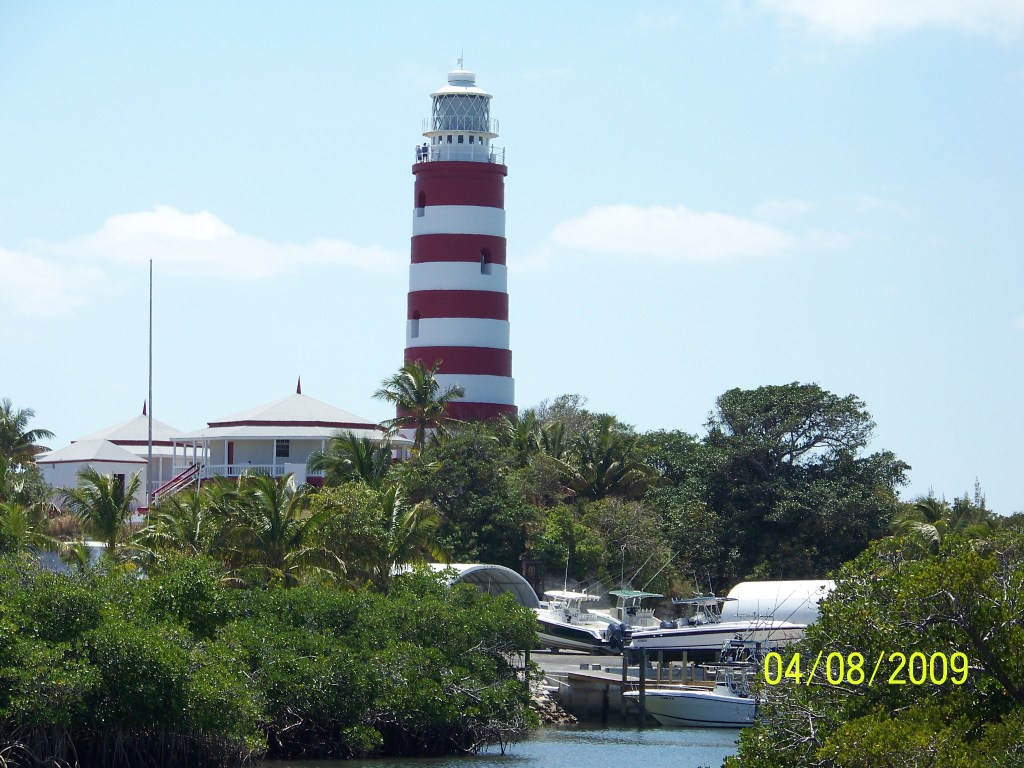
I understand the sun is shining once again in Marsh Harbour on Great Abaco Island, and that tiny Hope Town once again may live up to its name. I have not learned the fate of the red and white lighthouse that has stood there since 1862, one of the last kerosene-fueled, manually-operated navigational lighthouses in the world. I climbed to the top of it 10 years ago and savored the view surrounding Elbow Cay. I hope it will still be there if, and when, I am lucky enough to return.
Prime Minister Hubert Minnis expects the death toll to rise over the coming days, and notes that up to 60 percent of the homes in Marsh Harbour, the largest city in the area, have been destroyed. Airports are unusable and life will not return to “normal” for a long while, if ever.
And now, the massive, slow-moving hurricane has turned toward the Outer Banks along the eastern shore of the United States. We can only hope that residents heeded the calls to evacuate and that damage will not be as extensive as currently feared.
Just as a postscript, our return to Florida 10 years ago was delayed for three full days because of stormy weather. We were relatively comfortable at Old Bahama Bay Marina, surrounded by other mariners who also longed to set sail for other places. Finally, on April 15, we did just that. On the crossing, we were boarded by the U.S. Coast Guard; but that’s another story entirely.
The log notes:
“It was quite a crossing. After last night’s storm, it was a bit nervewrackng to check the weather forecast this morning and find that the prediction was for stronger winds from a different direction and more chop than we would have liked. But the weather is supposed to deteriorate again for the next several days, so we are taking our ‘window’ and leaving — as are most other boats, whether they’re heading east or west. We made the cabin secure and watched the power boat ahead of us bob and sway — and we followed.”
Our journey back to Florida spanned eight full hours, until we dropped anchor in the calm waters of Manatee Pocket in Stuart.
There is something infinitely exciting — energizing and dream-worthy — about standing on those spots that have been associated with the ends of the known world, the jumping off places for exploration, or the remote repositories of forgotten knowledge.
There are enough of those sites on our globe to satisfy even the most inveterate traveler; I confess that I harbor a penchant for visiting those spots. I especially like standing by the sea and looking into the distance, imagining what it must have been like to step into a journey beyond the boundaries of existing knowledge.
Finding the faraway
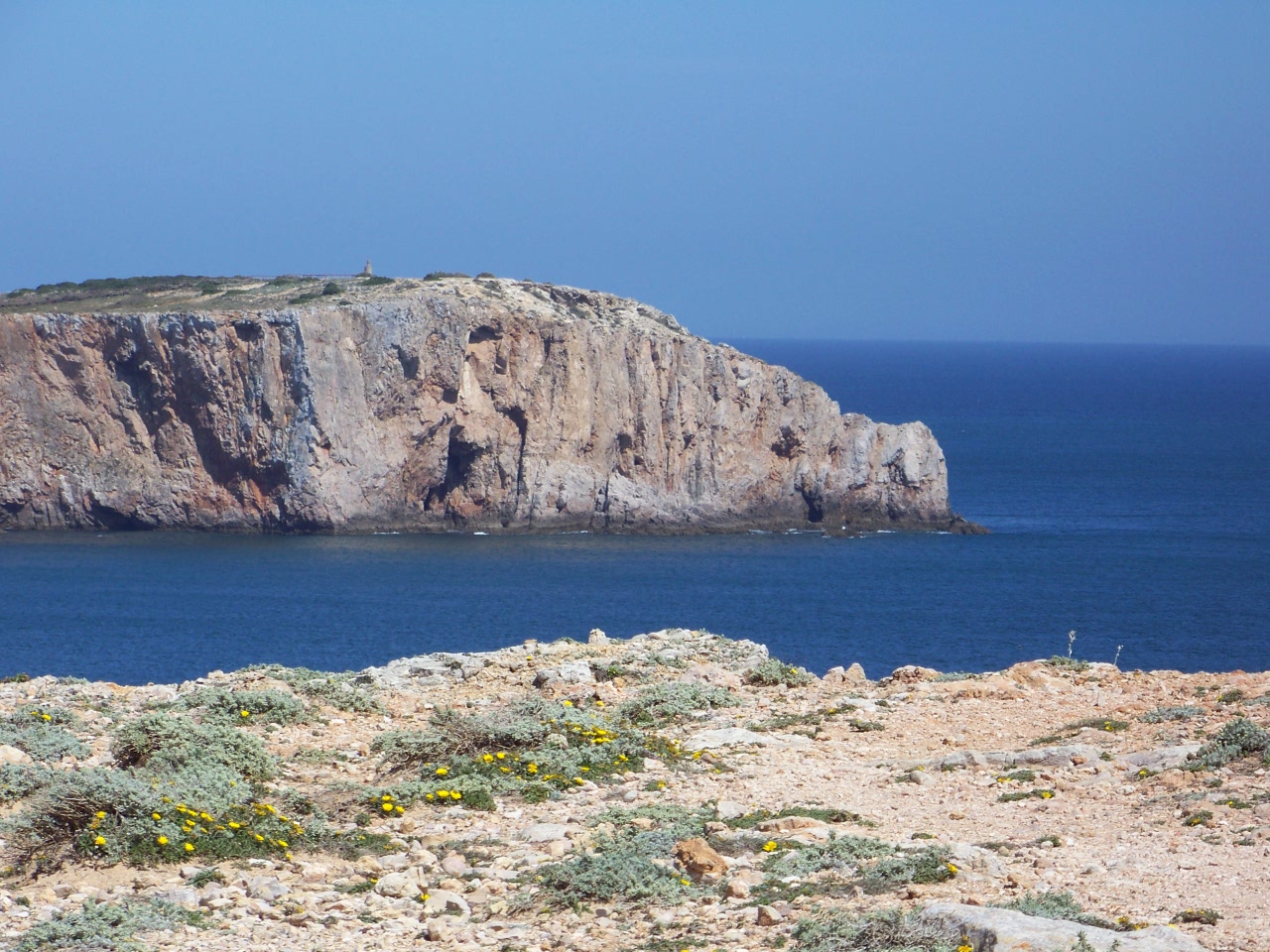
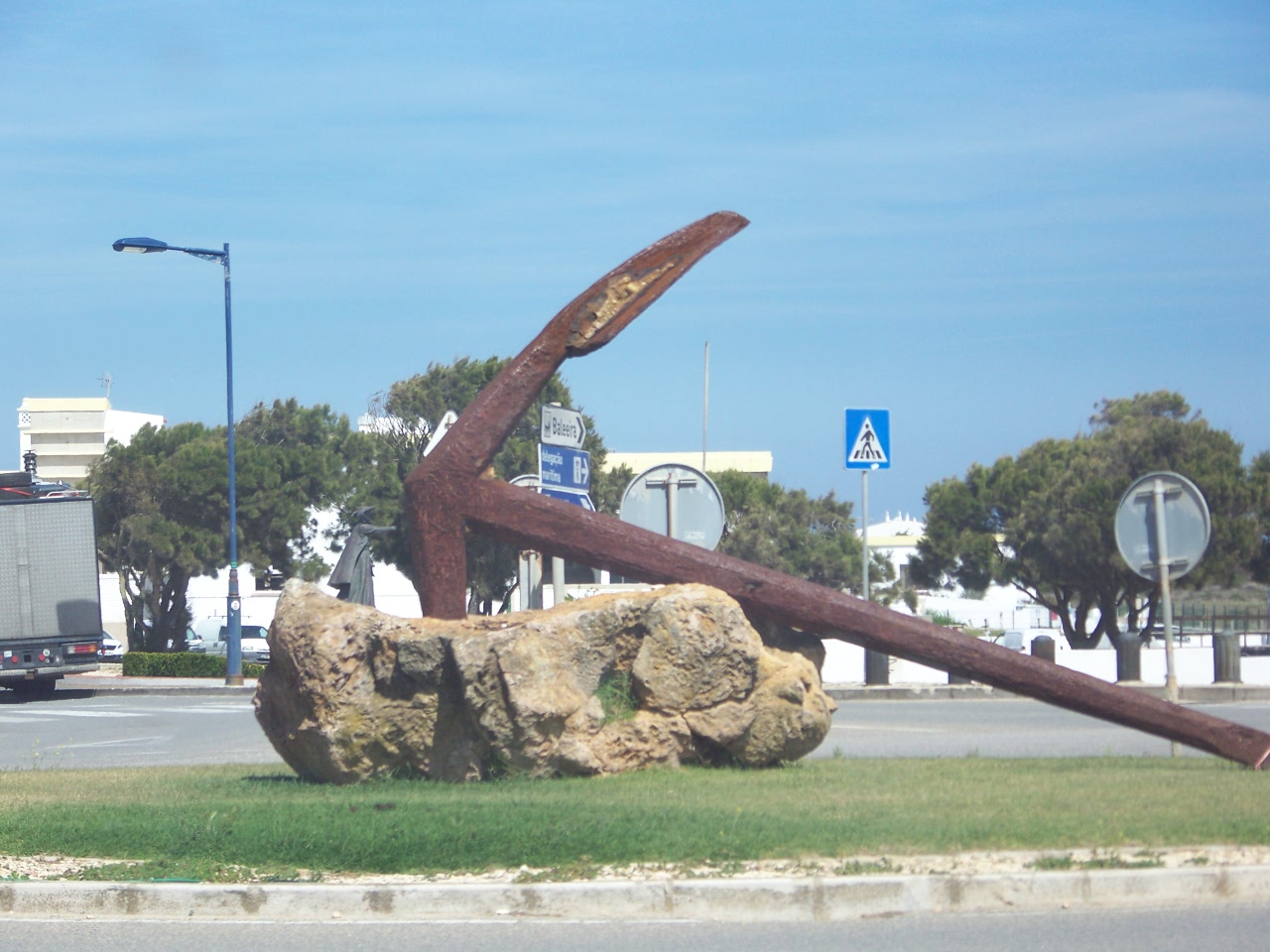
It was with that in mind that our group set off from our rental villa in Albufeira, Portugal, to visit the small town of Sagres. Located at the very tip of the Iberian peninsula, Sagres is a storied gateway to the beyond. Once home to a school run byPrince Henry the Navigator, a lighthouse now operates on a nearby point that is the most southwestern tip of land in all of Europe. In Prince Henry’s day, the navigational guiding light was still far in the future; at the time, there was a Franciscan monastery.
It’s my my kind of place, and I can imagine all the voyages, and voyagers, who have passed by over the centuries. As the waves of the Atlantic far below pound the cliffs, I thought of the dreams those early explorers must have held, and the motivation that propelled them to sail on.
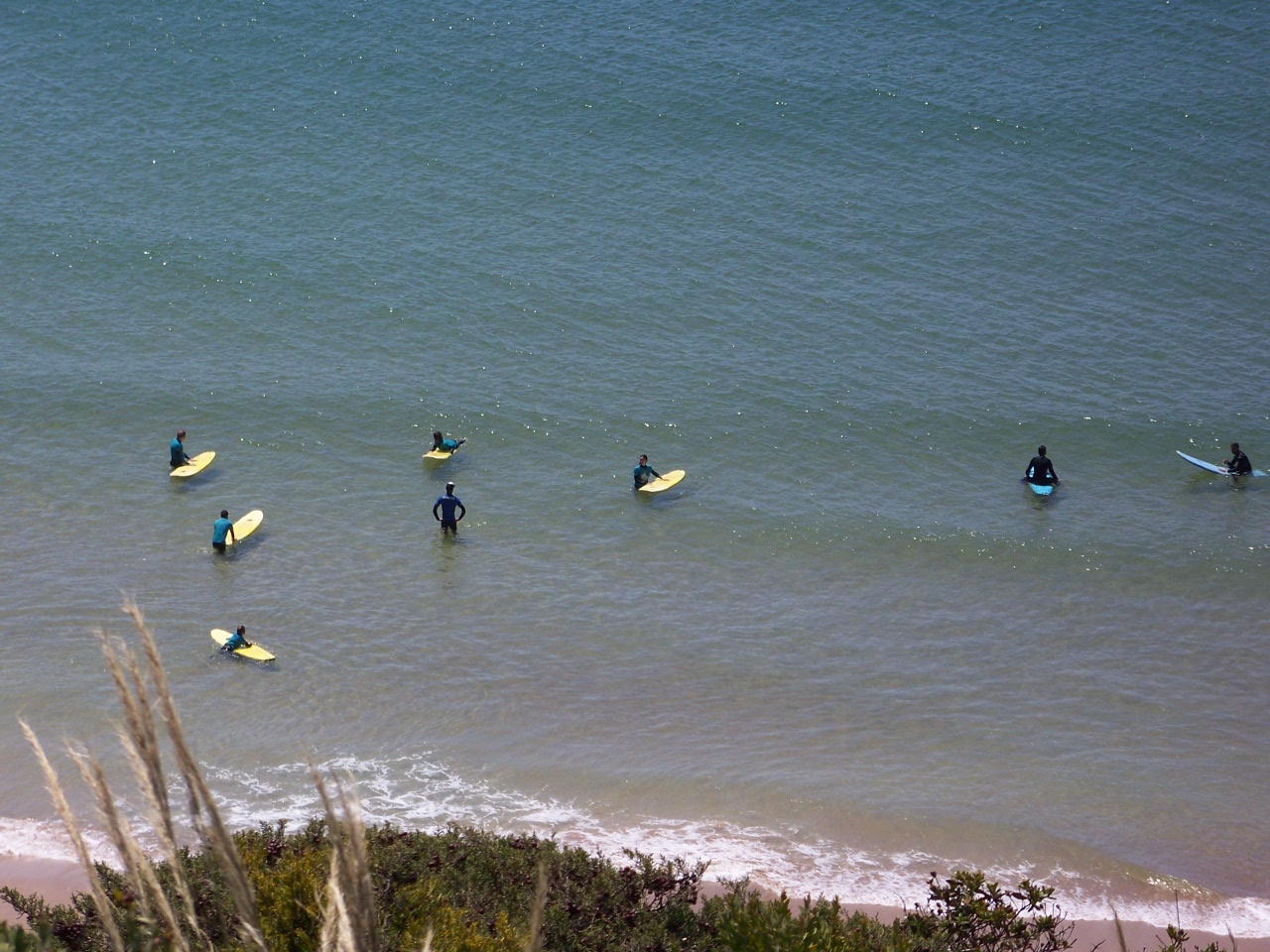
The drive from Sagres to the lighthouse is a short one, and there are throngs of visitors, even on windy days. Enthusiastic, able-bodied adventurers make their way to the bottom of 60-foot cliffs to surf the crashing waves. There is little else to see, except for the crumbling walls of a long-abandoned fortification. Near the lighthouse, souvenir sellers set up temporary booths to hawk key chains, postcards, t-shirts, pottery, bottle stoppers, sweaters, baseball caps and assorted “end of the earth” souvenirs. It’s quite a spectacle.
Cabo Sao Vicente
As the travel brochures attest, the spit of land where the lighthouse sits is wild and windswept, and high above the sea. Views are mesmerizing. Built in 1846 on the lonely promontory, it is said that the light itself can be seen from approximately 50 kilometers out to sea. Today, it is automated, and the beacon still guides commercial tankers, shipping vessels, cruise ships and fishermen arriving from far away, those who travel the coastline of Europe and Africa, and those bound for Gibraltar and the Mediterranean. The former monastery was badly damaged by earthquake in 1755 and never rebuilt.
It was chilly and breezy the day we visited, but we gazed in every direction out to sea, before taking our leave. Somehow, it felt as if we had actually arrived at one end of the world!
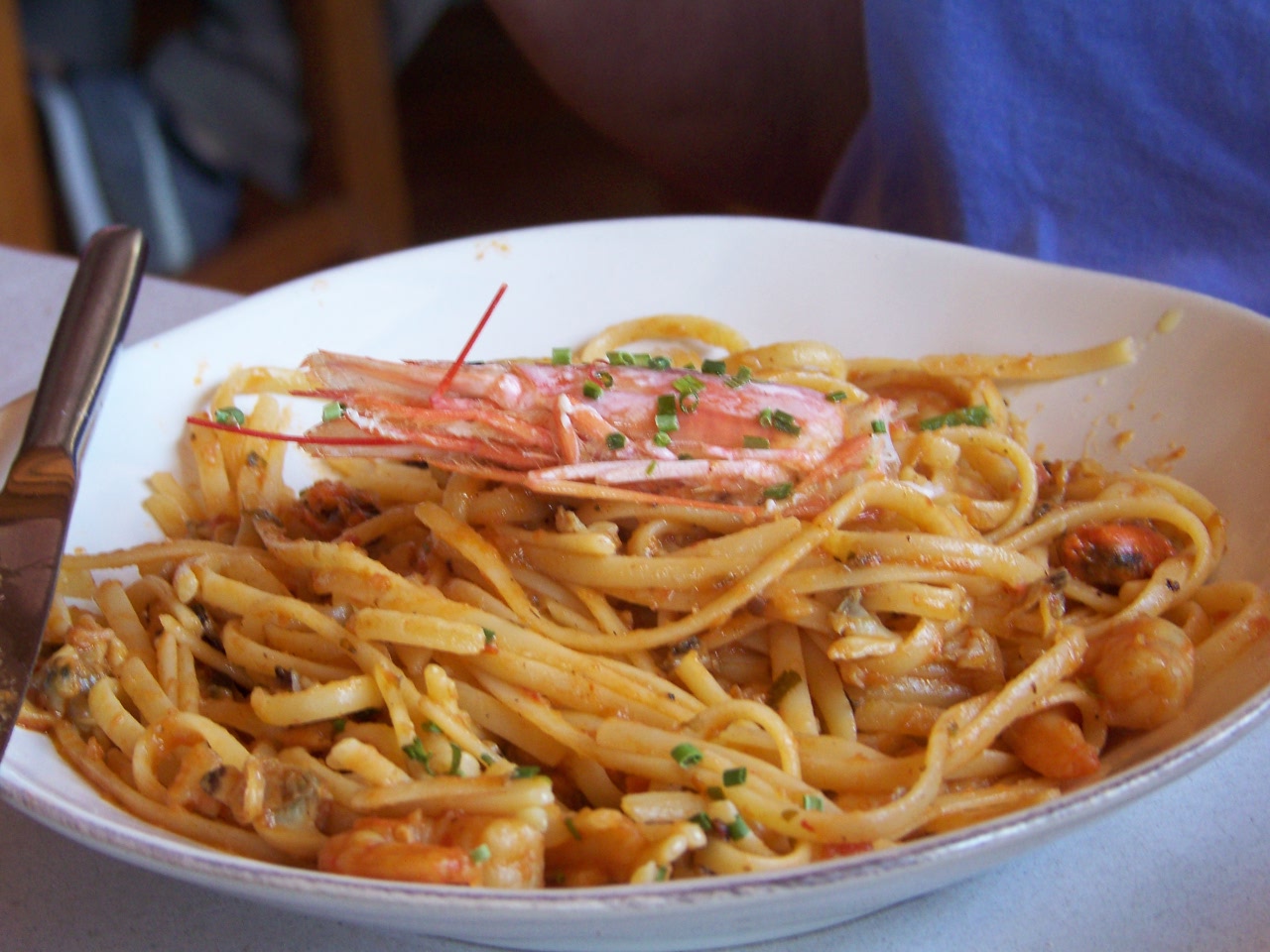
Back in Sagres at midday, our hunger demanded that we seek out a local eatery. Once again, as always in Portugal, we were in no way disappointed by our choice! ASagres Restaurante offered just the right kind of welcome, with a casual ambience, smiling proprietors, delicious food and a friendly mix of locals and tourists. We sampled local wines, filled up on fresh-caught seafood, and had a wonderful time, perfectly happy to let lunch go on for hours!
Afterward, we wandered the small town for a bit, before heading back to our temporary home base in Albufeira.
Cabo da Roca
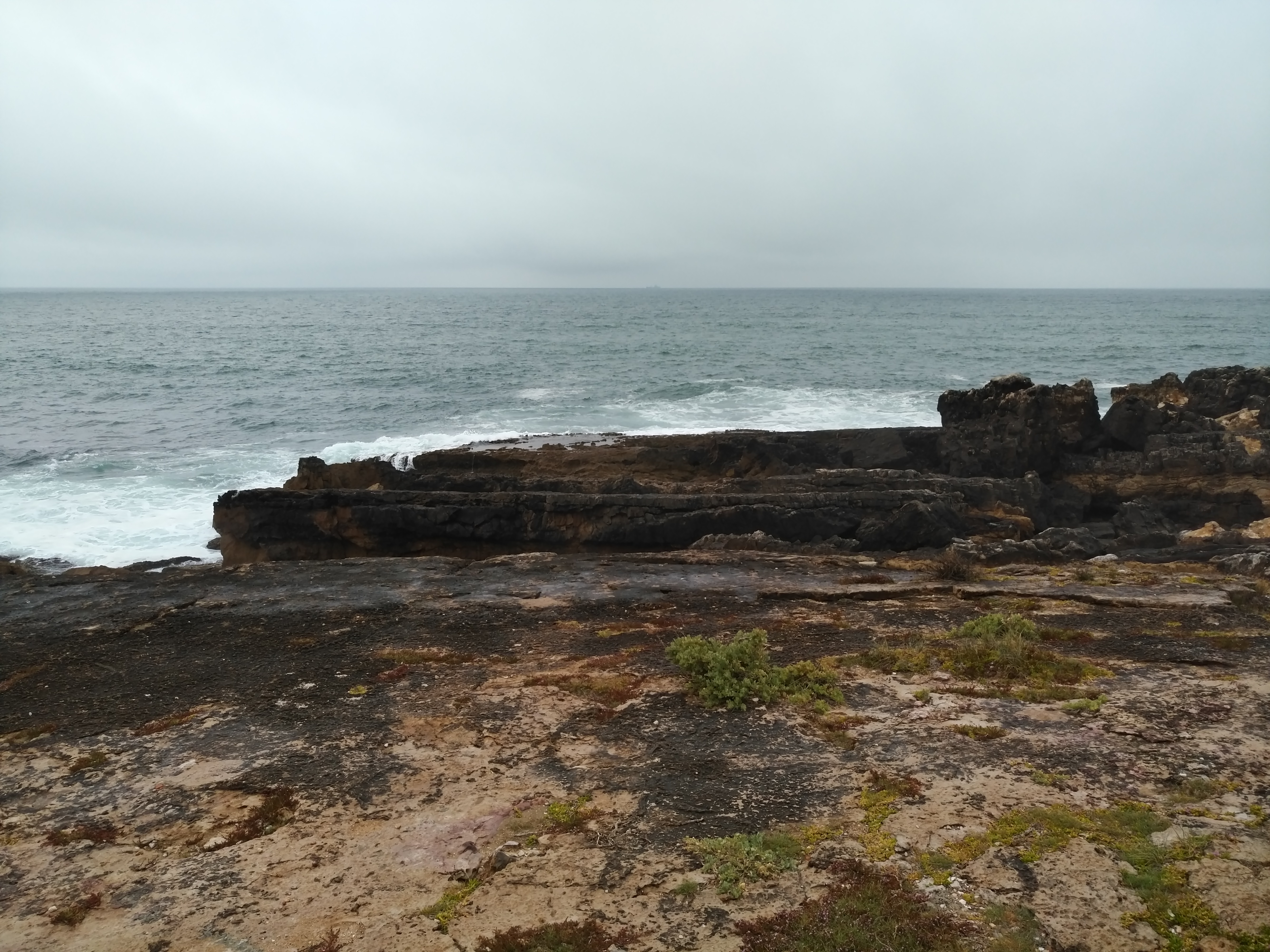
Later in our journey, and further north in Portugal, west of Lisbon, we had another occasion to venture out from Cascais to a different edge-of-the-world location. We went with the intent of visiting Cabo da Roca, the westernmost point of continental Europe. Unfortunately, the day was cool and drizzly. By the time we made our way along the narrow, winding coastal road, the fog was so thick we could barely see 20 feet in front of our vehicle.
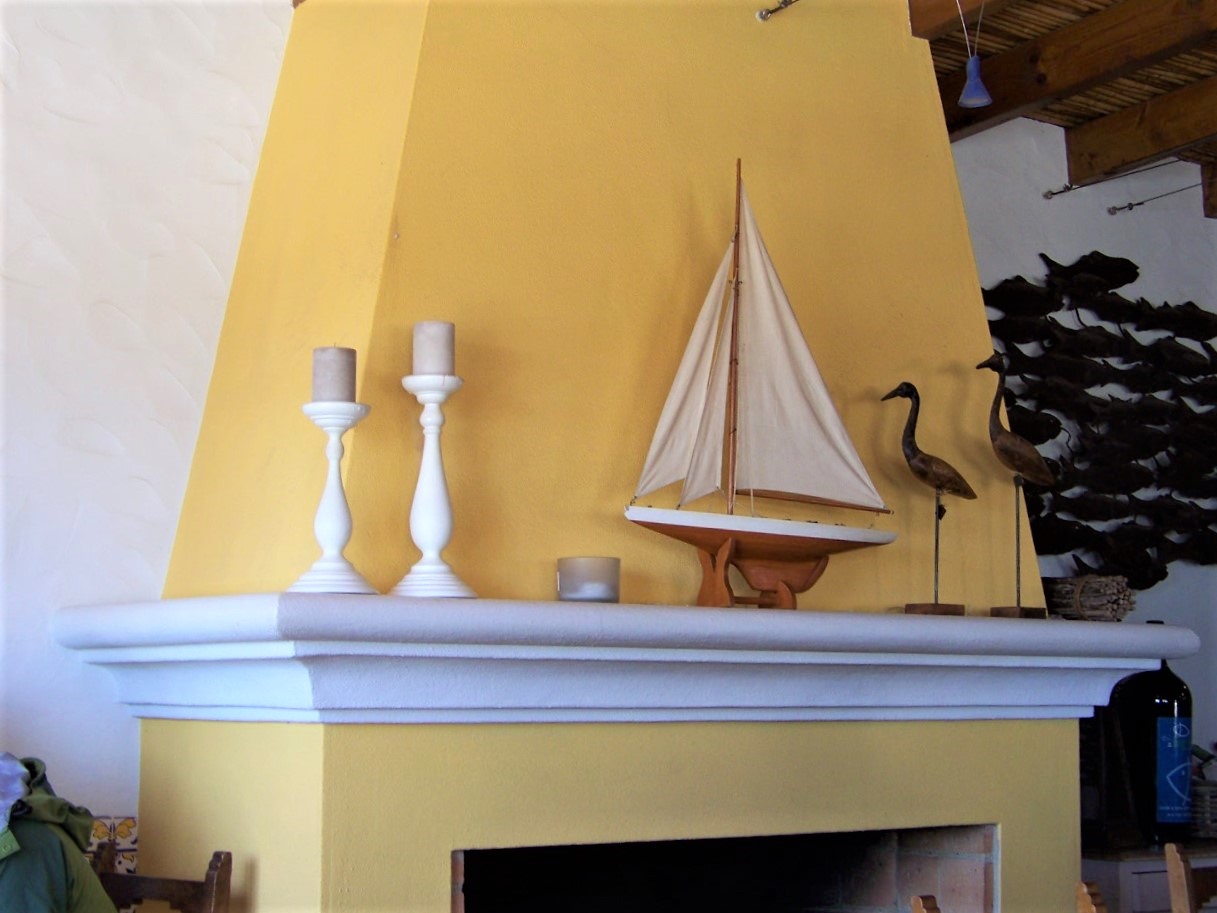
We did see the sign pointing to the lighthouse and the Cape, but because we were unfamiliar with the road, and because we knew the point lay on another high headland above the sea, we decided to forego that particular adventure. Instead, once again, we were drawn to a tempting small cafe situated right on the highway. Again, we made a fortuitous choice. At 3 Gomes Restaurante, we enjoyed a longer-than-planned lunch, warmed by a blazing fire and a roomful of people enjoying good times and good food together.
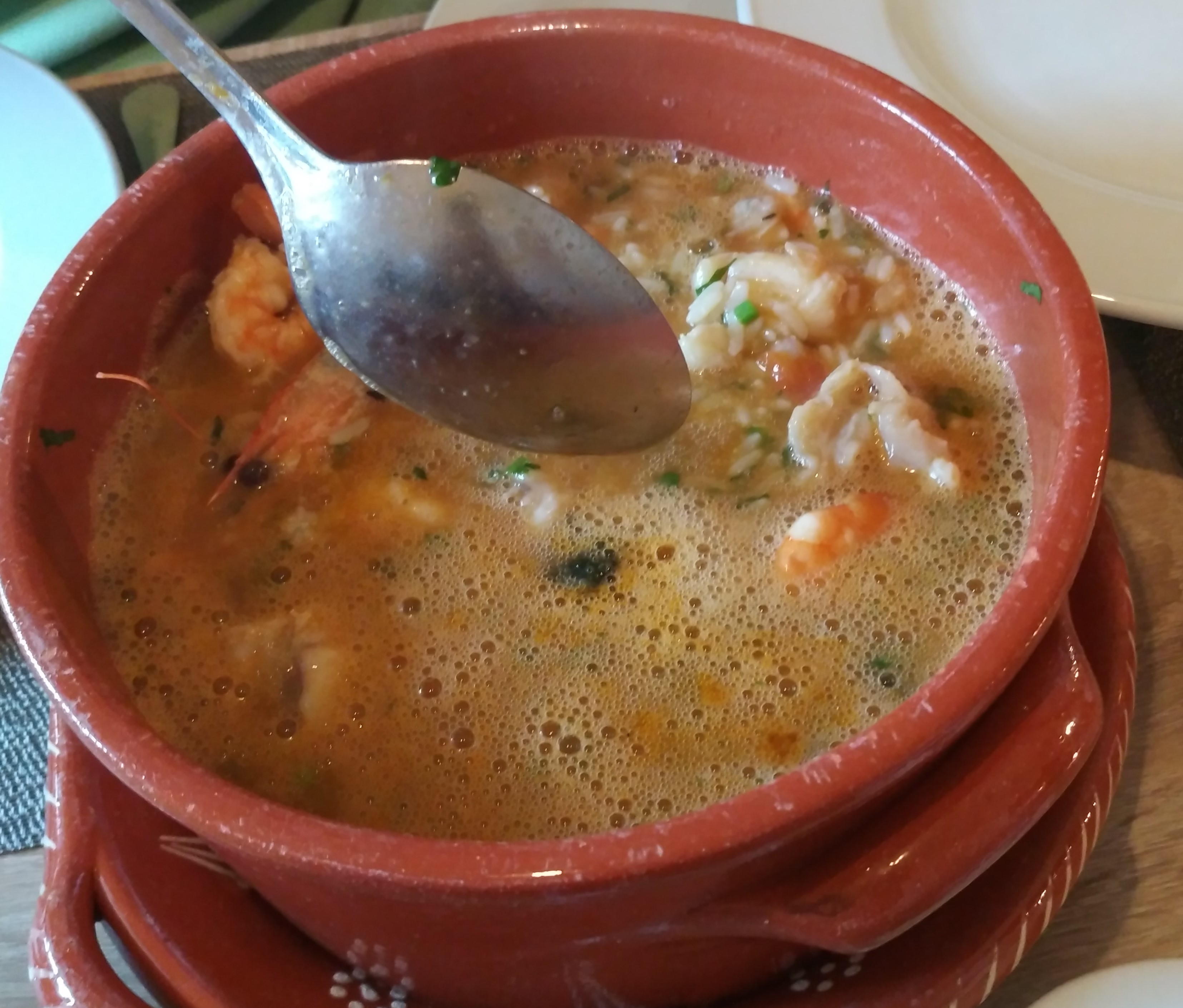
Often, it’s the unexpected choices that are, by far, the most memorable. I had a chance to sample fresh-caught octopus, and traded bites for samples of the grilled lamb and seafood stew that my traveling companions had ordered. It was actually another perfect day, despite the fog. And it was another time we felt no need for dinner!
Note: Today is Election Day; the midterm elections in the United States have been much in my mind over the last week as I attempted to gather my thoughts about my recent short visit to Havana. On my way to vote this morning, I remembered how one young Cuban attempted to explain his country’s elections. They are very different from ours. This CGTN America explanation of the recent Cuban election (and an overall view of the electoral process in Cuba) is an interesting overview. CGTN is one of many international news channels run by China Media Group.
“It’s complicated.”
I can’t count the number of times we heard that phrase during our 12 hours in Havana.
Since returning from this eye-opening trip two weeks ago, I have been talking about it frequently, thinking about it constantly, trying to organize my experience into an orderly patchwork quilt of impressions.
It isn’t anywhere near complete.
The pervasive reality is that Cuba is at a crossroads, buffeted by winds not of its making. Change is in the air, even though there is no consensus about the direction of that change, or about how and when it will manifest to create a new climate for the country and its 11.5 million people.
We asked a lot of questions. We were, in many ways, surprised by the answers, even more surprised that those we met were open about their views and willing to answer all our questions.
They were eager to speak with Americans. We were eager to listen.
But, it’s complicated.
We wanted a capsule view of what daily life is like in Cuba. We didn’t get that. What we realized is that individual lifestyles vary within Cuba just as they do in the United States. Somehow, I had not expected that. I was hoping my impressions of Cuba would be easier to sort through. I expected a sort of sameness from this Communist country. That is not at all the case.
Much of the city is beautiful, if old and somewhat unkempt. Other areas are modern. City squares and broad avenues boast art and sculpture, color and design. There are parks, and people flock to them. It’s a city made for walking; however, old cobblestones, narrow streets and many people can make it difficult. There are construction cranes, scaffolds and workers everywhere; and much of the work involves modernizing historic buildings.
The cadence of life
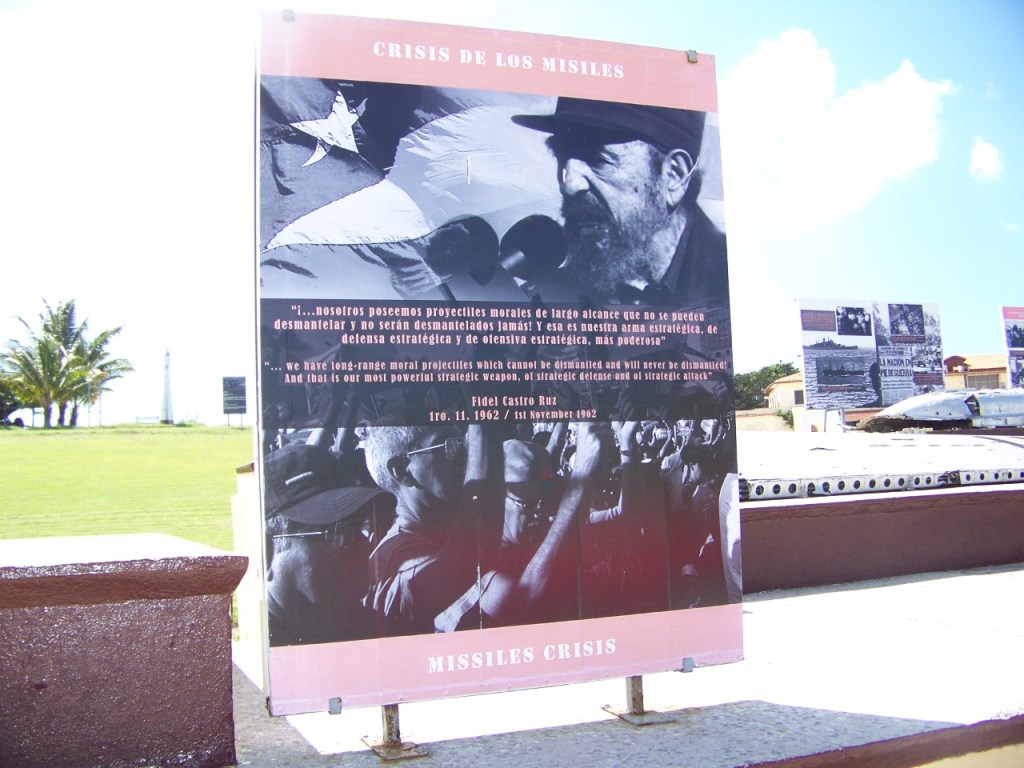
Fidel Castro, we learned, is still very much a force of daily life, even though he died two years ago, November 25, 2016. It was eight years earlier that he resigned as president, ceding the reins of power to his brother Raul. Now, Raul has stepped down and there is a new president, elected just last year. He had no opposition.
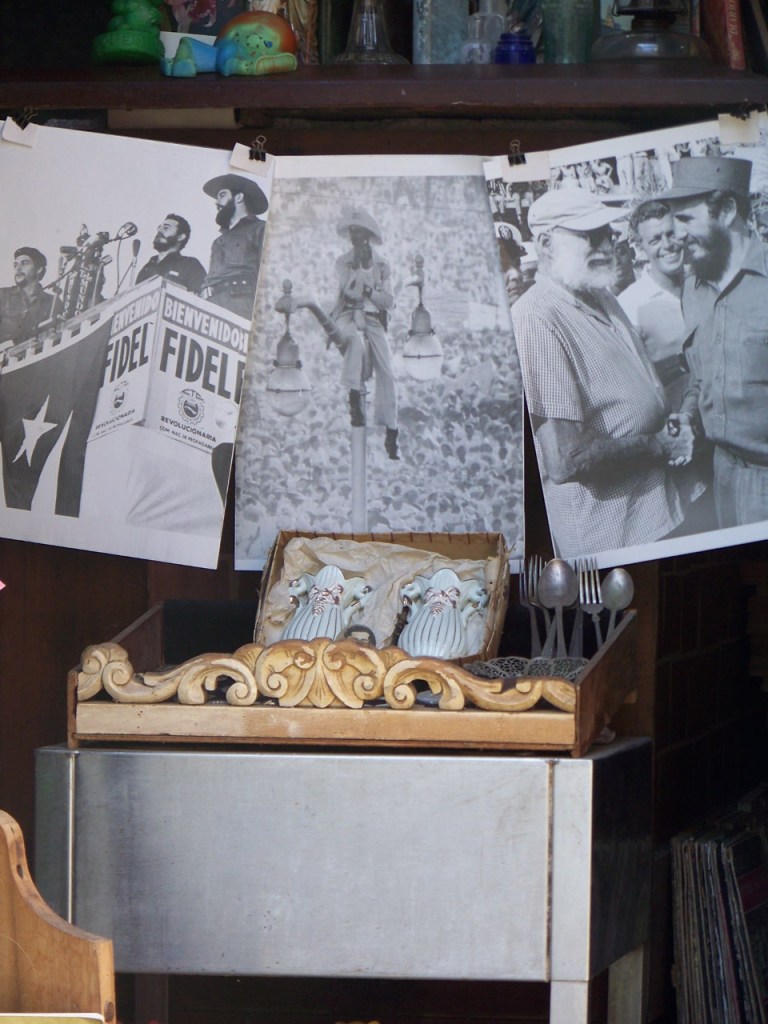
Fidel posters and other reminders of the revolution are still everywhere. Fidel — yes, first name only — is spoken of as a sort of kindly uncle by some who were born after the revolution and grew up in his shadow. His presence was — and still is — pervasive. We heard alternately that he was a “tough” man, and the “savior” of his country. But his name is spoken with a mixture of awe and fondness.
We were told that he enriched the lives of farmers and city dwellers alike. We were told that he cared about the poor people, and that Cuban citizens would not be as well off today had it not been for the influence of Fidel Castro. We were told that although they are poor, the Cuban people have health and family, food, shelter and education because of Fidel.
We were told that Fidel did not seek power for himself; and it has been written that he did not want a “cult of personality” to surround his memory.
His ashes are entombed in a simple, but impressive 10-foot-tall boulder in Santiago, in a cemetery that he shares with the first president of Cuba, along with other well-known citizens. It is at the eastern end of the island near his family home, and there is a metal plaque that reads simply “Fidel.”
However, Cuban citizens, tourists and world leaders alike visit the site regularly, sometimes as many as 4,000 a day. Every 30 minutes, there is a military ceremony, a changing of the guard, that honors both Fidel Castro and 19th-Century Cuban patriot and revolutionary Jose Marti.
The reality of Cuba today
Young people we met recount the history of their country accurately and easily. Events from two or three decades before their births seem very real to them. They also speak of Cuba’s earlier history with pride, and most argue that, despite its imperfections, life is better today than it was prior to Fidel, even though those we met did not live through their country’s revolution.
Some older citizens were perhaps a bit more guarded in their responses to our questions, but still quite forthcoming about their lives.
Cuba is a poor country, as they freely acknowledge, but a proud one. Food, shelter, medical care and education are provided. Family is important. Material wealth, they claim, is not. Crime is almost non-existent; drug use is low, but punishment can be stiff.
Tourist trade in Cuba is big business. Today, we were told, Americans constitute the majority of foreign visitors. Surprised? We were! Everyone we met was welcoming — helpful and congenial, often greeting us with smiles and wishes for a good day.
One older woman asked, in Spanish, if I was American. When I answered yes, she took my hand and thanked me for coming.
It’s complicated.
Reuters reported this week that Cuba’s economic growth forecast has been lowered to just one percent for the year, and that austerity measures are to be instituted. Lower than expected revenues from tourism are partially responsible, but so is a decline in GDP income from sugar and mining. Trade uncertainties exist between Cuba and Venezuela, and economic growth is uncertain.
Additional observations and insights
English is taught in school to even the youngest children. We neglected to ask about other languages. There is no obvious language barrier.
News is filtered, according to our guides, even though it may not be directly censored. “We hear only bad news about the United States,” said one. Another told us of a relative who lives in Houston, and of how he would like to visit. Although it is not prohibited, he added, visas and monetary regulations make travel cumbersome, expensive and unlikely. Still, he said, he hopes one day to be able to travel beyond Cuba’s borders.
Cubans have cell phones, but they may often be without toilet paper. They enjoy afternoon mojitos , but they may have to do without water, for both drinking and other household use. A trip by bus between Havana and the eastern end of the island can take 20 hours.
“We do not have cars,” explained our guide when we asked about finding parking places in crowded Havana. And those vintage American cars: They are not often privately owned, said our driver. There are many ways to get around, though.
In fact, the red Thunderbird that we enjoyed during our afternoon tour is normally a taxi and will be out of service next month for repairs. That, unfortunately, means that our driver will be out of a job until the refurbishment is completed. He is not worried; his basic needs will be taken care of as always.
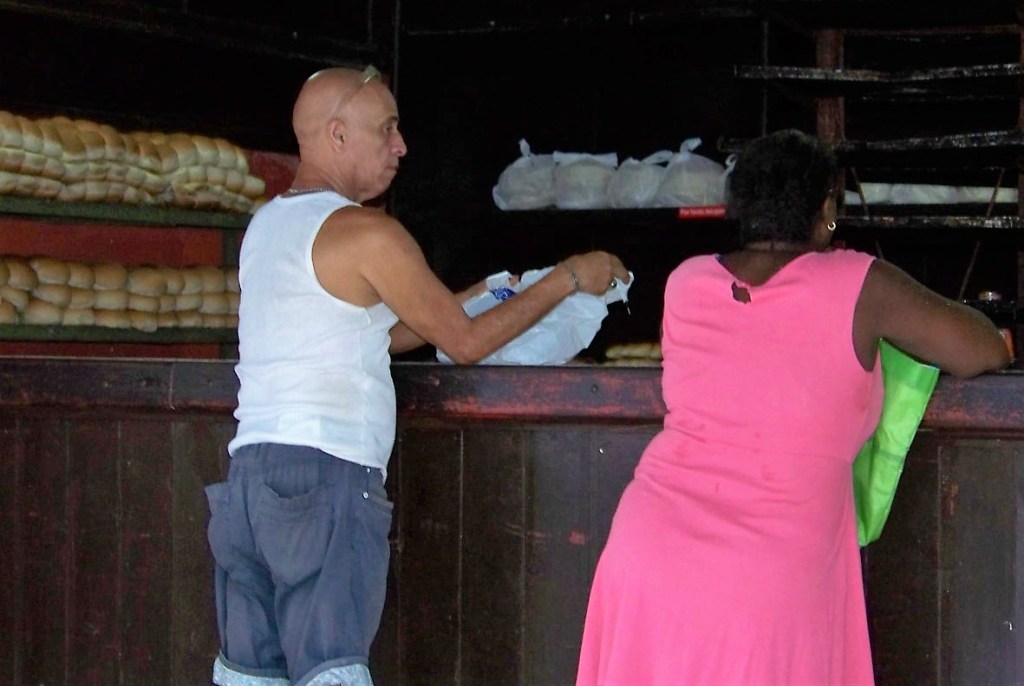
The state provides for those basic needs, but shelves are often devoid of even routine products to meet those needs. Rationing of food staples is a way of life. Foreign goods are rare, said another person: “What we buy is produced here in Cuba.“
A number of products are exported. Rum, cigars, coffee and sugar, for sure; we guessed at the rest — citrus fruits, rice, corn and beans; fish and shellfish. However, the trade deficit is significant.
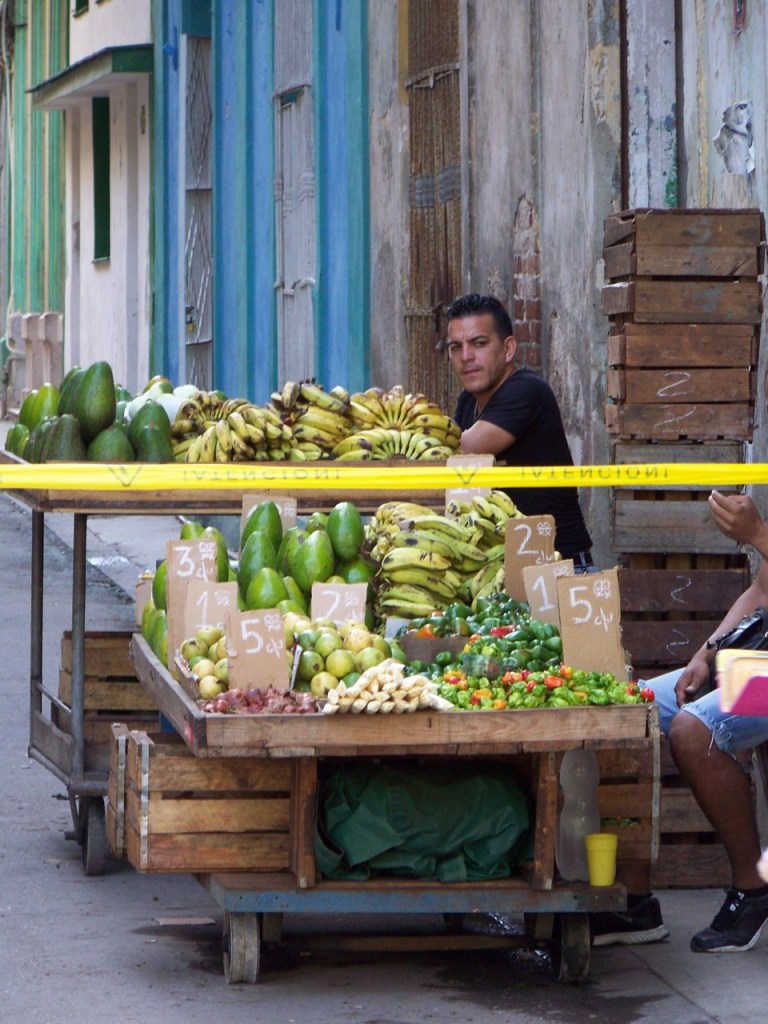
We encountered only one small street market, and a single flower seller. But we did not have a lot of time to explore.
There are few luxury goods in Cuba. Even though smart phones are common, widespread internet is not.
The Cuban people are not exactly isolated from the rest of the world, but they are definitely not affected in any obvious way by the culture of a country only 90 miles away. Cuban culture is unique; in my short experience, it is totally different from anyplace else on the globe.
Life moves at a different pace in Havana.
Our day in the city brought us many new insights, and a lot more questions. We left with the conviction that the “cultural exchange and understanding” requirements are in place for a very good reason. Indeed, that may be the best part of the Cuban experience for Americans. Maybe it should be a worldwide travel requirement. If you’re interested in visiting Cuba on your own, there is a wealth of information available to help you plan a trip. Will we be returning? Perhaps.
My husband and I took a journey [this past week], a trip into our past.
The miles were few; and the travel time far less, because of a new highway, than it had been 30-some years ago when we made the trip regularly. We recognized some scenes along the way, and when we turned into the little town square for a drive through our memories, it looked pretty much the same, only slightly more forlorn now than then. The same shuttered buildings still seemed in danger of falling inward during the next big storm.
This is not a thriving, bustling population center. It is a very small, simple, rural area adjacent to a lake which, for the past several years at least, has faced debilitating effects of the drought and the economy. People here, from the looks of it, are not yet feeling the benefits of a recovery. And, on a rainy day in February, in Texas, there are no fragrant blossoms or green leaves to signal the promise of spring.
Experiencing life in the rear-view mirror
But we drove on. We had returned only once before, in more than 20 years, to see the retreat we had owned for more than a decade beginning in 1981. We had spent many a happy, sunny, activity-filled day there when our son was young. I have trouble, even today, calling it a “lake house.” It had floor, walls and roof. It had a kitchen, and a bath, one bedroom, and another small sleeping area. It was filled with mismatched furniture and cabinetry. We applied gallons of white paint to freshen its old wall paneling. It had air conditioning only in one room. We added a screened activity porch, floored with cast-off multicolored tile, and graced by one banging screen door.
Oh, the times we had there in the one large room with a view of the water. We laughed; we cooked and read and played board games on the floor as a family of three. We watched mourning doves hatch in their nest outside our window, and we shuddered when a swarm of bees made a home for a night in the same tree. We did much the same — laughing, cooking, talking and playing, indoors and out, in and out of the water, on and off the boat — when we invited a crowd.
In the summer, we all cooled off under an outdoor shower plumbed to the trunk of a big tree, before putting hot dogs and burgers on the grill. On July 4th, we spread blankets on the lawn to watch fireworks explode over the water. It was a place for all seasons, and during the heat of summer we occasionally slept in hammocks and deck chairs. Occasionally the allure of the place meant we packed up our sweaters and boots, and brought lots of hot chocolate just so we could watch migrating ducks and angry skies. In the winter, we slept soundly under warm quilts, lulled by the sound of lapping waves.
We loved the place. Our son — and our dog — learned to swim at “Camp Swampee.” Our son learned to sail, and to steer the motorboat. He learned to love fishing, and to dissect frogs, and to chase butterflies. He learned which snakes to avoid, and to watch for spiders under rocks. He learned to occupy himself alone in the great outdoors. He learned to steer the truck down the long, straight, bumpy road to the compound. We all learned to deal with the Texas heat during the searing days and to marvel at the star-filled sky at night.
We learned that the alternative to our day-to-day busy lives in the city, filled with school and jobs, meetings and friends, planned activities and regular schedules, is a cadence of life far different. We had “lake neighbors” who were equally happy to trade busy everyday lives for weekend peace and simplicity.
Our son grew up. We moved on and we moved away, but we carried with us a peculiar nostalgia for that place and time, across the miles and over the years.
Some journeys teach unexpected lessons
So, given opportunity and no set schedule, we set out to visit the past.
But it’s not there.It was almost a physical pain: My husband and I exchanged glances, without speaking. We, both of us, took slow steps onto the lot, walking with a hesitant, measured pace to where our house once stood.
Grass has begun to grow, and falling leaves camouflaged bare ground. The dock still stands, but just barely. And, because of the lake level, it would be impossible to pull a boat into the sling under the shaky roof.
The shock was not so much that the building was gone. It had been old and worn when we owned it. The surprise is, rather, that what still shapes the way we are and think and feel in numerous, important ways has no physical presence in this world. We have left no lasting impression on that particular spot of earth.
We move on through life; we learn from each experience, sometimes in graphic, poignant and unexpected ways.
As we strolled back to our car, the lesson we both have learned:
Savor the present time
Note: This story was originally published on February 10, 2013 on Yahoo Contributor Network. That creative virtual magazine was taken down several years ago, but I ran across this post recently, and thought it worthy of a reprint. Except for a few minor revisions, it is as originally written.
We think often of the good times we had on that little slice of earth on the shores of Cedar Creek Lake, and we remember the place fondly, even though it no longer exists. We graced the house with a handcrafted sign. There was no longer any sign of that, either. Perhaps, now that more than five years have passed since our visit, we will take another ride to see if someone has built a new home on the site.
In a way, I hope so. The lake and its lakeside communities have changed now, populated with full-time residents, and much grander weekend and summer homes. Perhaps the spot is enjoying a new incarnation with another family.
Somehow, though, in our minds Camp Swampee will remain frozen in time just as we knew it.
Thirteen years ago (June 28, 2005) my husband and I embarked on a journey that, at the time, we simply called the “Big Adventure.”
It turned out to be a seminal event in our life together. Indeed, it has influenced almost every decision we have made since.
On that overcast day more than a decade ago, we left the safety of Squalicum Harbor in Bellingham, Wash., and set out on the first tentative leg of a trip to Alaska. By ourselves. On a private motoryacht. With minimal boating experience.
Oh, yes, we had previously spent time on boats, from small individual sailing rigs to fast motorboats, offshore fishing boats and even substantial yachts. We had owned a few boats of varied types and sizes over the years, and we were confident about operating them.
The allure of the sea
Our cruising grounds for the past couple of years had been the San Juan Islands of Northern Washington and the Gulf Islands of British Columbia, on a comfortable power cruiser owned jointly with another couple. It was a boating paradise. We were happy. We were self-assured about our abilities and our safety in those waters.
We loved the calm and the quiet of the sea, but we also loved arriving at other piers and the experience of going ashore to meet people, see the sights and enjoy the flavor of seaside towns and boating communities. We enjoyed fishing and trapping crabs, but we had no need to depend on those skills for our dinner. We had been seduced, in effect, by what we viewed as a lifestyle of endless freedom and few worries.
We escaped to our boat as often as we could, but rarely for longer than a week or 10 days at a time. For several months, we considered a longer trip, planning to head north to Desolation Sound, approximately 90 miles up the inland passage from Vancouver, BC. Known as the province’s Sunshine Coast, it is even today primarily a pristine area with only a few rustic resorts and fishing camps. The waters are protected and usually calm; it is a prime destination for private boaters and kayakers. Thirteen years ago, it was about as isolated as we thought we wanted to be.
Then one day, someone offhandedly spoke about Alaska. I can’t say that’s all it took. In fact, it took a great deal more than that! But we could not shake the question.
Why don’t we go to Alaska?
The more that refrain echoed in our heads, the more we began to seriously consider it. We pored over maps and charts; we read books and talked to other boaters. We found a handful of sailors who had made the trip, some of them solo. On one of the wettest days in Seattle history, we signed a purchase agreement for a newer motoryacht. We registered for a seminar entitled “Taking Your Own Boat to Alaska, scheduled the next month. We were, at the time, far from committing.
Ocean Spirit, a sleek twin-engine pilothouse motoryacht, was new to us. We had not spent much time aboard. She felt unfamiliar; she seemed enormous.
We knew how to “point and steer” her, how she performed on the water, how to return gently to our dock, and how to secure the lines. But we had never ventured more than a day or two away from home port. At the time, we had never dropped anchor to spend a night on the hook with only lapping waves and stars for company. Not on Ocean spirit; not on any vessel!
Are we really going to Alaska?
Looking back, perhaps the die had already been cast. At the time, we looked upon the whole exercise as an excuse to get us to the water from our home in the Desert Southwest at times we needed a break from daily routine.
OLYMPUS DIGITAL CAMERA
OLYMPUS DIGITAL CAMERA
OLYMPUS DIGITAL CAMERA
OLYMPUS DIGITAL CAMERA
OLYMPUS DIGITAL CAMERA
OLYMPUS DIGITAL CAMERA
OLYMPUS DIGITAL CAMERA
OLYMPUS DIGITAL CAMERA
OLYMPUS DIGITAL CAMERA
OLYMPUS DIGITAL CAMERA
OLYMPUS DIGITAL CAMERA
OLYMPUS DIGITAL CAMERA
Now? Now we know that, had we not chosen to go that summer, we would most likely never have gone. We may have chosen to take a “big ship” cruise sometime during the next decade, but we’re not sure. And we would have missed what we still consider to be one of the most exciting, memorable and rewarding summers of our lives.
It was an epic trip, one of those once-in-a-lifetime events that one looks back on with awe. Counting a few days in port at either end of the voyage, the trip spanned 72 days. It led us into a whole new era, taught us things we could have learned in no other way, fueled our thirst for new adventures and our ability to move in different directions. We consider it a gift that we will always treasure.
Part II: The Return
On Friday we fly to Anchorage. It will be new to us. On Ocean Spirit we did not venture that far into the Gulf of Alaska, even though we did spend a wonderful few days in Sitka, looking westward with longing toward the Aleutian Islands. On Saturday, we will board the Golden Princess, a modern cruise ship with about 2,600 other passengers, for a seven-day southbound voyage to Vancouver, B.C., leaving the navigation — and the driving! — to another captain.
And why now?
Well, the truth is that Alaska is the kind of place that is hard to forget; it’s difficult to shake the allure of pristine waters, starry skies, whales and eagles, icebergs and glaciers. This trip was a whim, a spur of the moment booking because, quite honestly, the price was right — actually, better than that. It was truly so good we couldn’t resist!
Also, quite honestly, we want to compare the experience of being close to the water and totally in charge of our own destiny with the prospect of having nothing to do other than drink in the sights, enjoy the food and service, meet fellow passengers, and relax. Over the years, we have come to love big-ship cruising almost as much as we savored the lifestyle aboard our own vessels.
This slideshow requires JavaScript.
On our previous trip we developed an abiding respect for the U.S. Coast Guard, on duty patrolling the “marine highway” of Southeast Alaska. We have vivid memories of the flowers that brighten every Alaskan town, of icebergs and sunsets, of cloudy skies and chilling rain, of gorgeous water and spectacular vistas, of eagles and bears and whales, of fish on our lines and crab in our traps. We are eager to be on the water once again.
It will also be interesting to see if, and how much, the Alaska we remember has changed in the past 13 years. We know it will be crowded with tourists. But statistics tell us that tourism numbers to the ports of Southeast Alaska are actually not that much higher today than they were then. Even in 2005, there were a lot of cruise ships sharing dock space in Skagway, Juneau and Ketchikan.
We have been to these ports, but the vantage point this time will be different. I expect the memories will be vivid, both of the trip that now seems long ago and of the coming week.
No, it was not in a galaxy far away and, measured by most standards, it was not even so very long ago. But five decades is a long time for two people. That milestone just seemed to beg for special recognition.
So it was with a sense of wonder and mixed expectations that my husband and I set off in late January to revisit the city where we met some 51-plus years ago and married a year and a half later. As it turned out, our wedding date fell on the same day of the week as it had 50 years previous. We were astounded.
Paris, France
Oh, yes. Mais oui! It was Paris that brought us together, Paris that we loved, and Paris that was the destination for our anniversary celebration. Even though we have traveled abroad over the course of our 50-year togetherness, even to France, we stubbornly refused to book a trip to Paris, although we had repeatedly considered it. We were concerned that, after years of absence, it would somehow disappoint.
We held to the mantra: We’ll return for our 50th anniversary, although it was often in jest.
But return we did!
Paris has changed a great deal in the intervening years. As have we. But in important ways, Paris has changed not at all. And perhaps we are not so different either.
We visited the city as tourists on this trip, because even though the city felt familiar, and much of it looks the same, Paris felt foreign somehow. No longer home, we viewed the monuments and the avenues, the food and the traffic, the rainy mist and the sparkling lights through new eyes, and heard the sounds of a language we no longer felt quite proficient in. But we were nonetheless entranced.
The Essence of Deja Vu
I now know with certainty what Thomas Wolfe expressed. No, you can’t go home again.
Revisiting a place once so familiar and well-loved is always a new experience. It can be wonderful. And Paris does not disappoint.
Returning to the synagogue where we exchanged vows was an emotional experience. Rabbi and Cantor welcomed us, complete strangers congratulated us, and we were greeted and embraced by a community we did not know at all, but somehow knew very well! We will treasure the memory of that evening.
We drove past the Mairie in Boulogne Billancourt where our union was solemnized and recorded under French law. We barely recognized it.
We engaged in numerous “Do you remember” conversations, walked back streets and photographed favorite Parisian landmarks from afar.
We felt no need to pay admission fees to revisit them. Nor did we set foot in any museums, pay the price for a gourmet meal at a renowned restaurant or spend a night “out on the town.”
Just as we had when Paris was our home, we savored the simplicity of life. Corner markets and flower stalls, changing light patterns, simple foods and table wine, parks and playgrounds are every bit as impressive as grand boulevards and monuments!
The Familiarity of Change
We did, however, make our way to Au Pied de Cochon, a landmark restaurant in the former district of Les Halles. It was once a regular late night gathering spot, and it has been open 24-7 since 1947. Onion soup and moules with frites are still good, but perhaps no better than at a local bistro. What is worthy of note is the redevelopment of this busy formerly bustling market area. It’s been a long time coming, but today the city’s major transportation hub has been transformed into an oasis of contemporary urban culture. It’s impressive to the max!
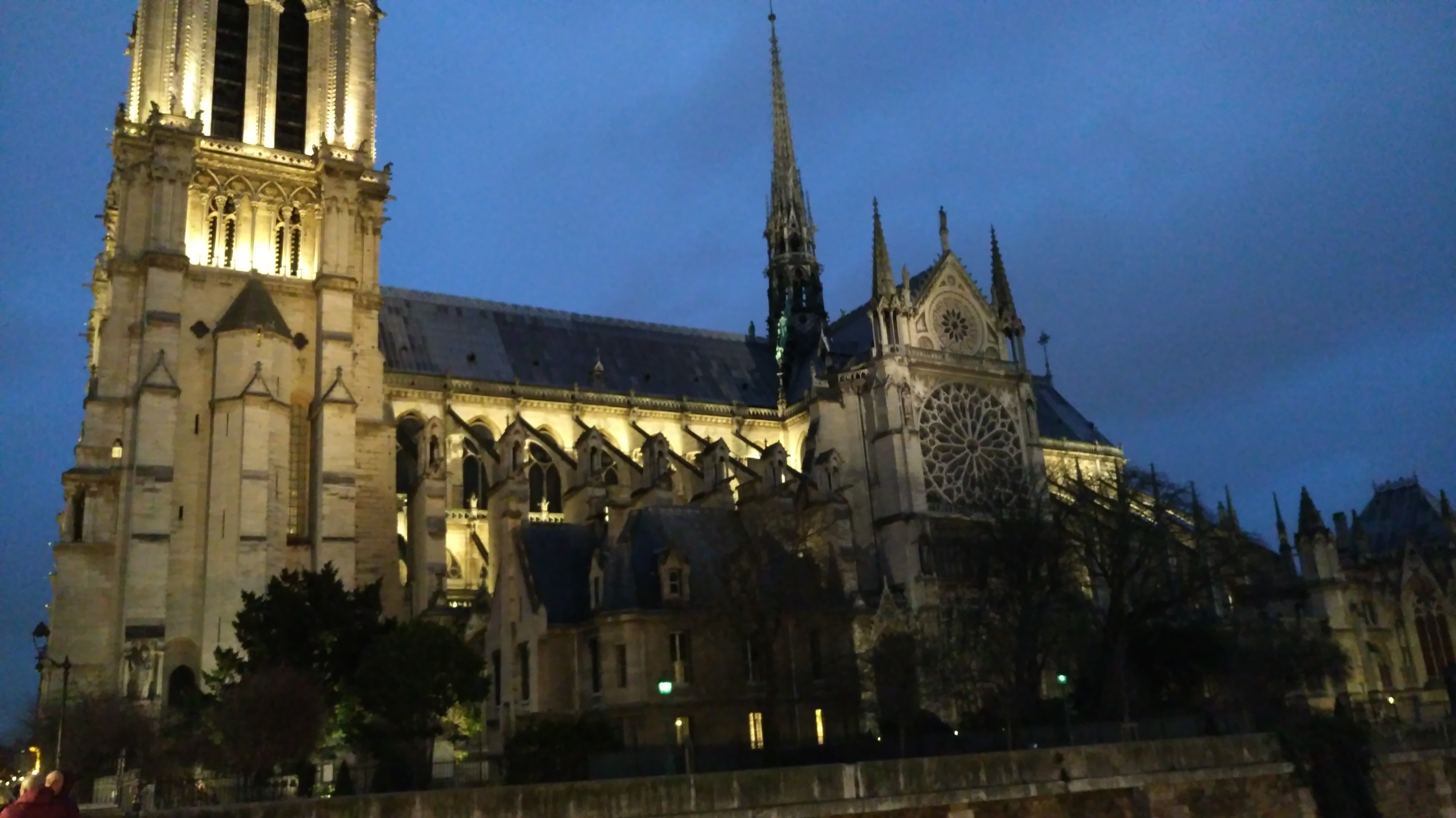
We stood in awe in the chilly dusk to hear the chimes of the Cathedral of Notre Dame, and then we hailed a cab to return us to our hotel near the Etoile. We enjoyed a simple dinner and a sinfully rich dessert at a small neighborhood eatery, charmed by the friendliness of everyone there: Italian chef, attentive server and fellow patrons alike. A couple at a nearby table could not fathom why we chose to stay away from Paris for 50 years. In the warmth of the moment, we didn’t understand it either.
We fell easily into our old appreciation for the cadence of life in this city. We walked in the drizzle, admiring the juxtaposition of centuries-old architecture and modern design. We marveled at the cleanliness and were confused by the automation of the modernized Metro system. We were impressed again by how small the core of historical Paris really is, and by the ever-expanding sprawl of the city and its suburbs. We were amused by the streetcorner sellers of crepes with Nutella fillings.
Memories to Hold
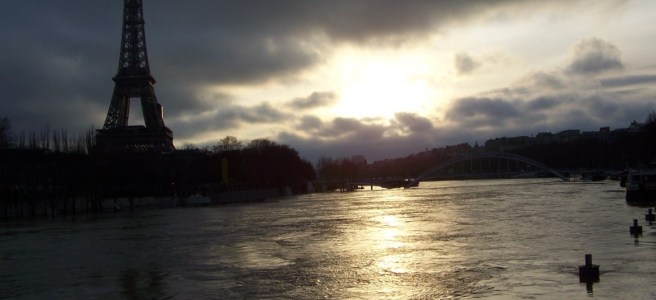
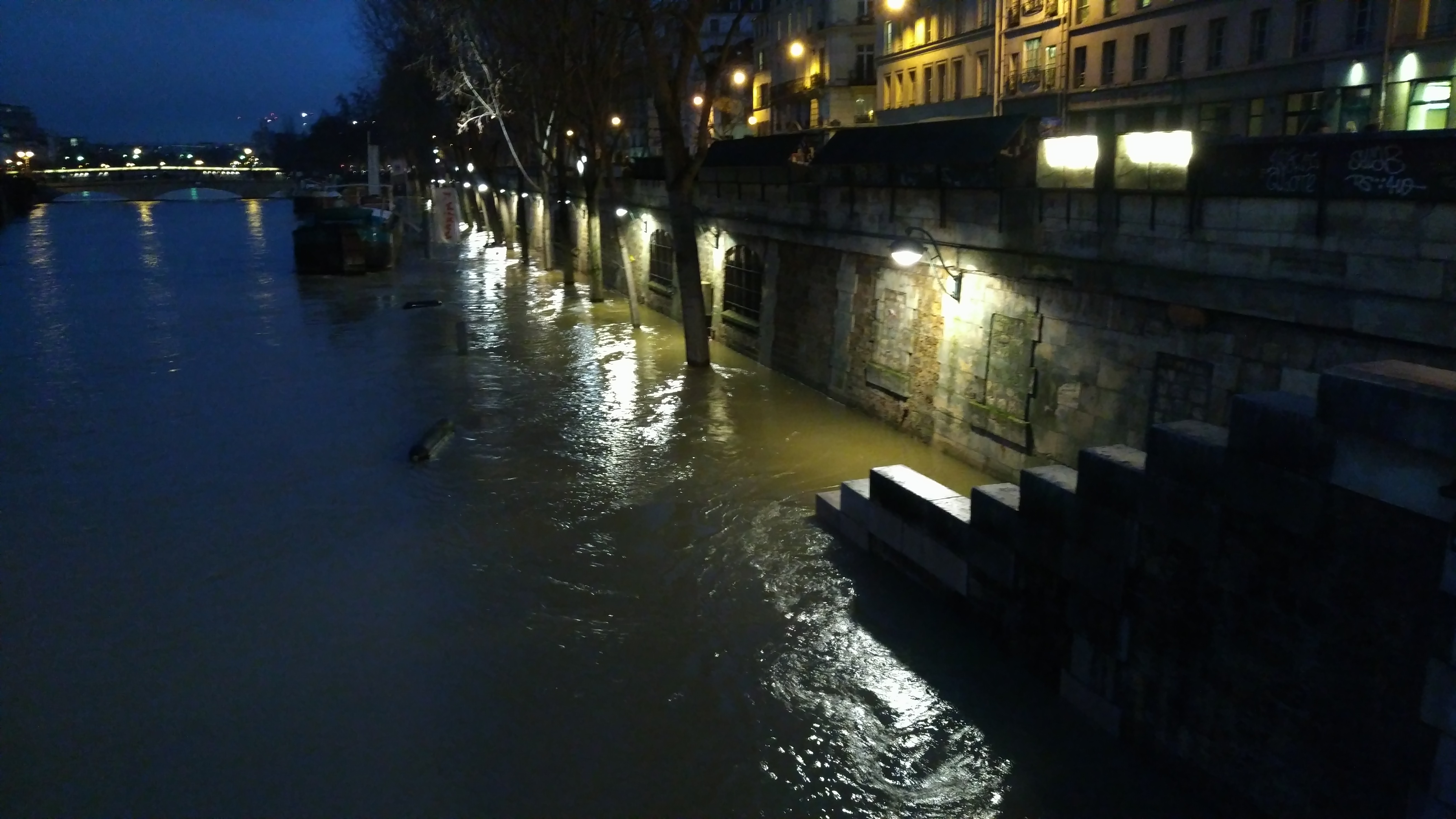
We photographed idled Bateaux Mouches excursion boats tied along the swollen Seine, picked out stairs, riverside walks and signs barely visible above the water line, and noted sandbags stacked to keep floodwaters out of nearby basements. Parisians flocked to the bridges and promenades to witness the swirling, fast-flowing water.
The Louvre relocated some of its priceless collection as a precaution. Ten days later, the city was paralyzed by record snowfall, and the Eiffel Tower was closed to visitors for safety reasons. We witnessed — and felt the effects — of both flood and snow! There was, in fact, some doubt that we would be able to drive back into the city after the blizzard! We flew out as the city still lay blanketed in white.
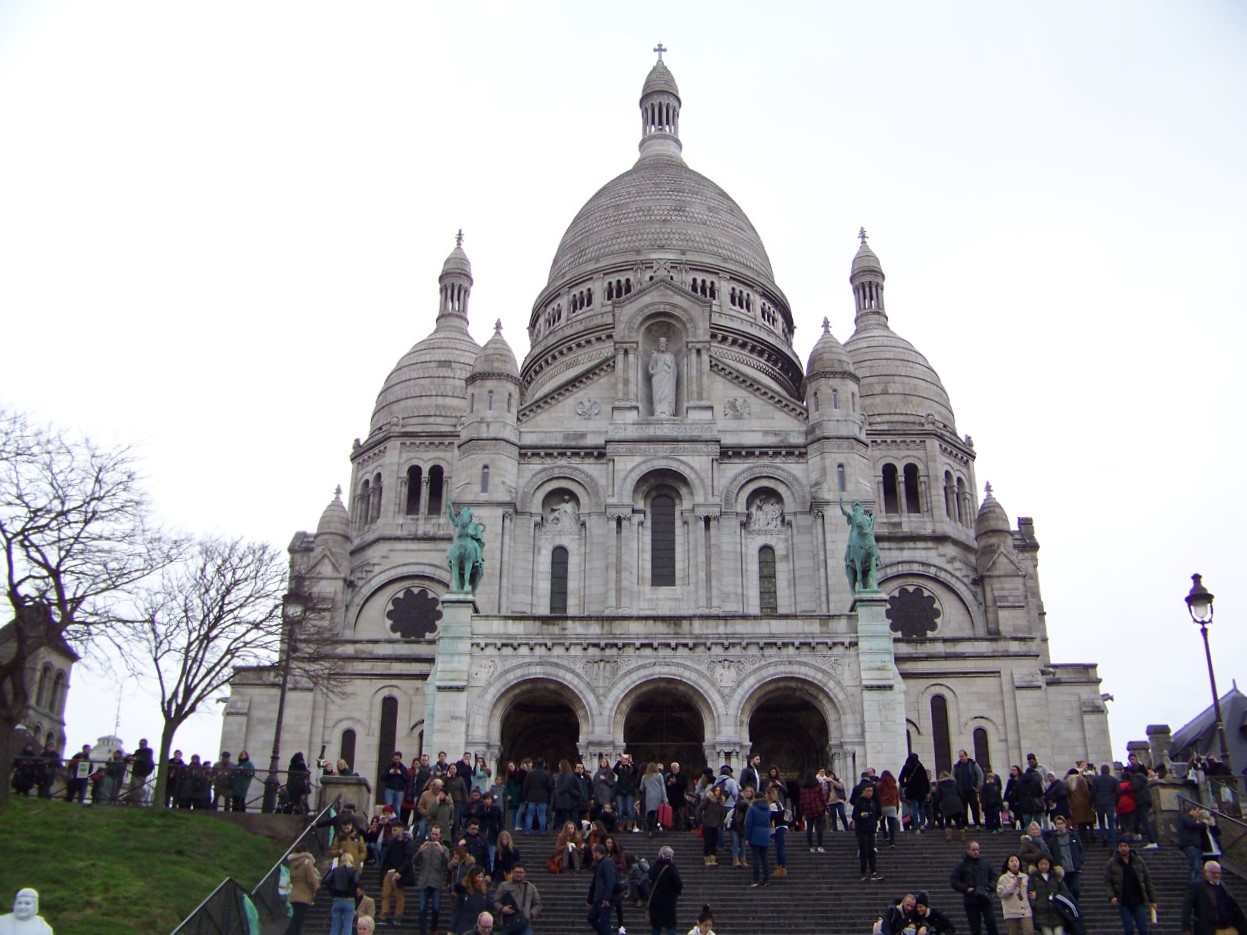
We visited the artists still painting caricatures and uniquely original art at Place du Tertre in Montmartre; the paintings we bought 50 years ago still hang in our home. We ducked out of the drizzle and into out-of-the-way brasseries for a warm cafe creme or a quick aperitif. The weather was damp, the skies were mostly grey. We were cold. And we loved every minute of the time we spent in the City of Light.
After three days, we left the city to explore new highways and byways in Normandy and Brittany. Yes, we’re happy we returned to Paris after all this time; we’re not sure why we waited so long.
High above the harbor, where the air is clear and the streets are filled with cars and people rather than warning signs and concertina wire, our cab driver pulled to the side and indicated a colorful sign and an open doorway. We had arrived at our destination, and a smiling waiter came out to greet us.
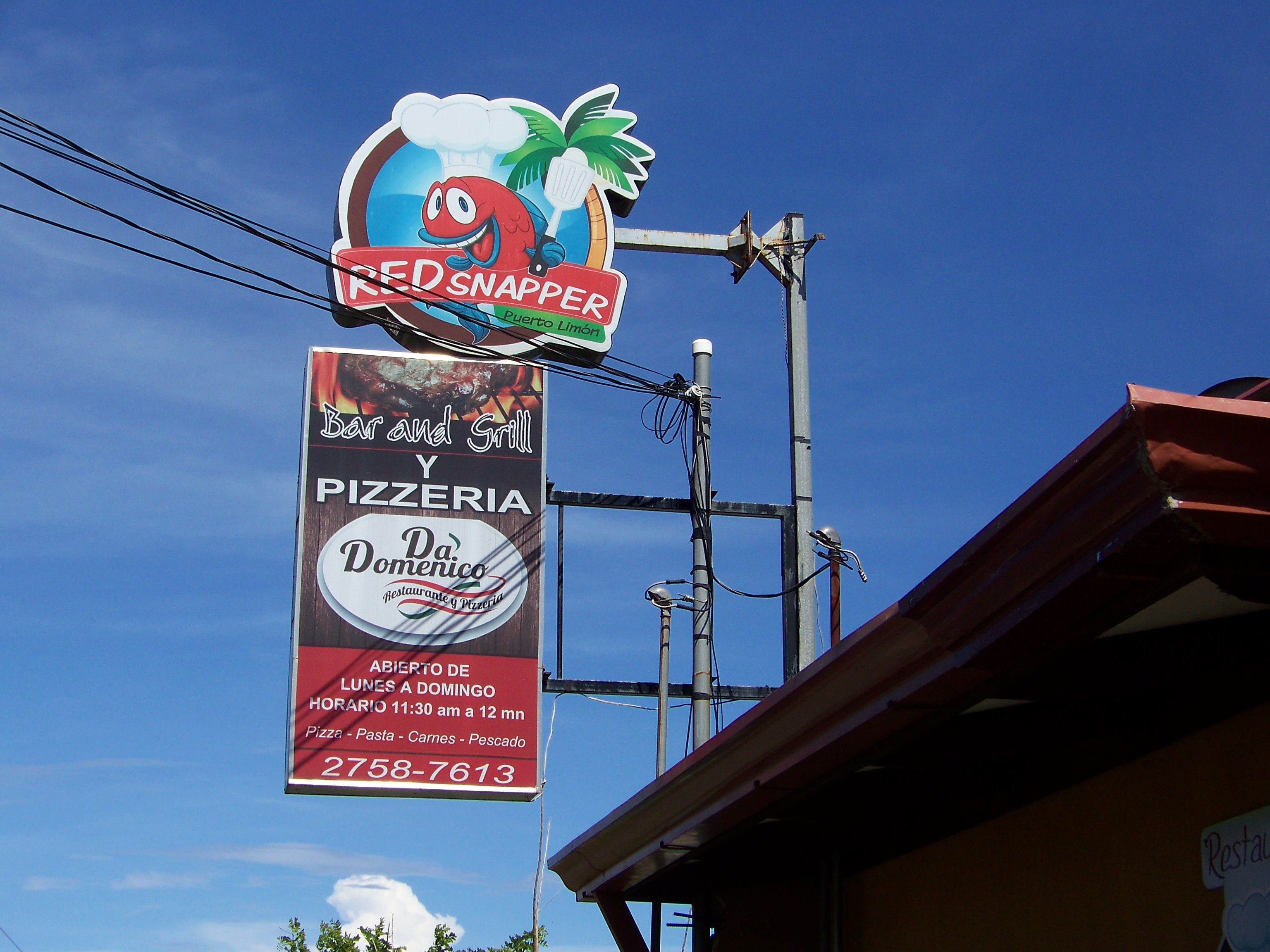
Crew members on board our cruise ship had said this was the place to go for lunch in Puerto Limon. We were early but it was comfortable enough to just sit and “be.” The big-screen TV that hung from the ceiling, thankfully, was not blaring, and the hum of quiet conversation from two or three adjoining tables was pleasant “background music.” We ordered cool drinks. We did not expect to be alone for long.
The ‘back side’ of Costa Rica
This is not the tourist’s Costa Rica. Puerto Limon, the busiest port in the country, has the look and the feel of a “real” town. Bananas, grains and other goods leave here bound for destinations across the globe, but it has not yet become a prime cruise ship destination. It retains its working class flavor, refreshing in a time when glitzy storefronts and undistinguished trinkets welcome disembarking passengers in most other ports.
This Caribbean port has island roots and they stretch all the way back to 1502, when Christopher Columbus set foot on the land. Beaches stretch in both directions, and the sea is beautiful, but the city itself is a bit disheveled and has suffered the ravages of earthquakes, storms and economic blight. Like much of Latin America, it is defined by gates and barricades, and the ever-present concertina wire.
Limon is not postcard pretty, but the people we met were gracious and friendly, although busy with their own pursuits and not impressed by cruise ship crowds. We had no desire to shop in town, but the fruits and vegetables displayed at the market looked lush, ripe and inviting.
My journal note from the day:
“The Red Snapper (or Da Domenico; we were never quite certain exactly where we were!) is unassuming from the street, pleasant enough within; with a friendly local ambience not unlike bars and restaurants elsewhere in the tropics. Sea breezes circulate under a soaring ceiling, wafting through open-air rooms like invited guests. Dark wood interiors punctuated with spots of bright color keep it cool, but lively. And the good-natured banter emanating from the kitchen makes us smile. So, too, does the sleeping dog that patrons are careful to step over or around!”
This slideshow requires JavaScript.
Views of the harbor — our glistening white cruise ship seemed far away and far below — were mesmerizing. We looked over the rooftops toward the horizon and were captivated. We drank in the beauty of the sea, ordered cool drinks, and knew we had been given good advice.
We also knew it was going to be a long and satisfying lunch! We were not disappointed.
Sampling the sea’s treasures
Because the best part of travel involves putting aside the familiar, we asked our waiter for lunch suggestions. We specified fish or seafood. Little did we know what a feast would be set before us, so we also decided to share a pizza marguerita “appetizer.” No way could we consider it a mistake in terms of flavor, but there is no way a starter course was necessary!
Our surprise dishes were delightful — and the three of us happily shared two distinctly different orders. The first, a whole fish served with fried plantain and a fresh green salad, was not only impressive to behold, but would have offered sufficient food for three on its own! And it was presented as beautifully as cruise ship fare.
The second house specialty included perfectly-prepared seafood steamed in a delicious sauce and served in its own foil pack hot from the oven. Overloaded with shrimp and mussels swimming in flavored sauce atop a bed of pasta, it was Caribbean in character, boasting plump cherry tomatoes, fresh parsley and subtle exotic spice, perfectly executed, but too much for one person!
When our congenial cab driver returned to pick us up, he obliged by taking us on a short tour through his town — a request we always try to make. As we made our way back to the dock, we were happy to have shared a great meal in Puerto Limon, sorry that we had no more time to explore this back side of Costa Rica more fully.
We will savor the experience we had, and we will continue to wonder about our young waiter who dreamed someday of joining a cruise ship crew to see the rest of the world.



















 blankets on the lawn to watch fireworks explode over the water. It was a place for all seasons, and during the heat of summer we occasionally slept in hammocks and deck chairs. Occasionally the allure of the place meant we packed up our sweaters and boots, and brought lots of hot chocolate just so we could watch migrating ducks and angry skies. In the winter, we slept soundly under warm quilts, lulled by the sound of lapping waves.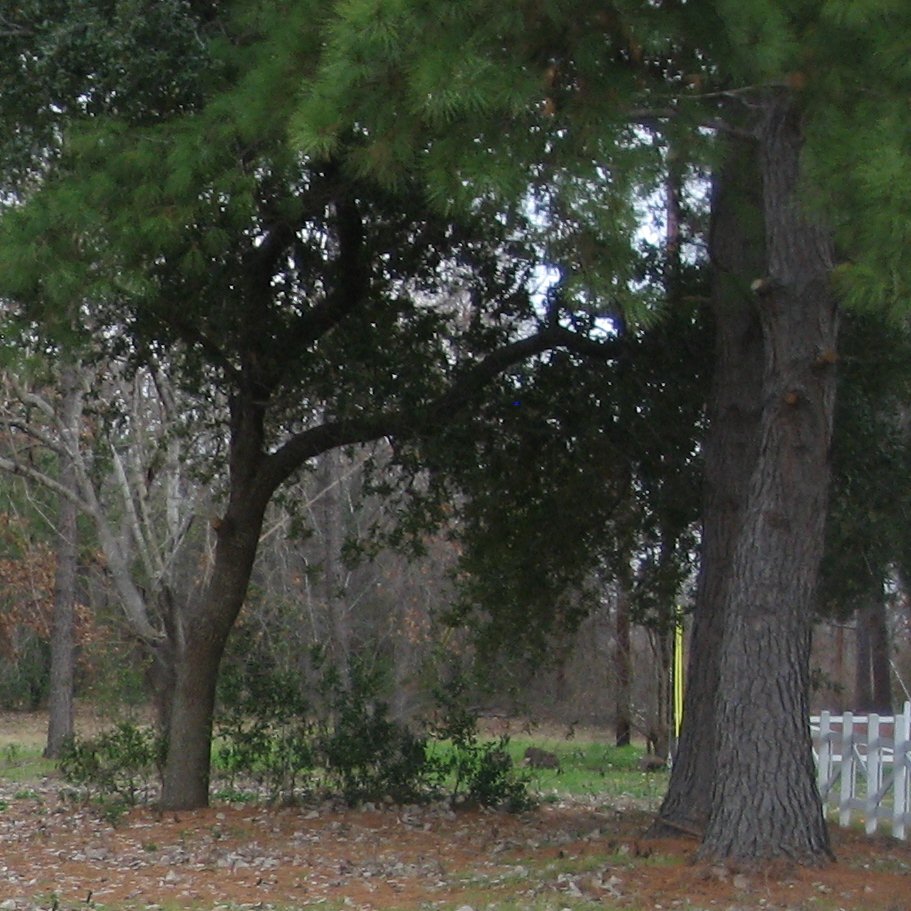


 It was almost a physical pain: My husband and I exchanged glances, without speaking. We, both of us, took slow steps onto the lot, walking with a hesitant, measured pace to where our house once stood.





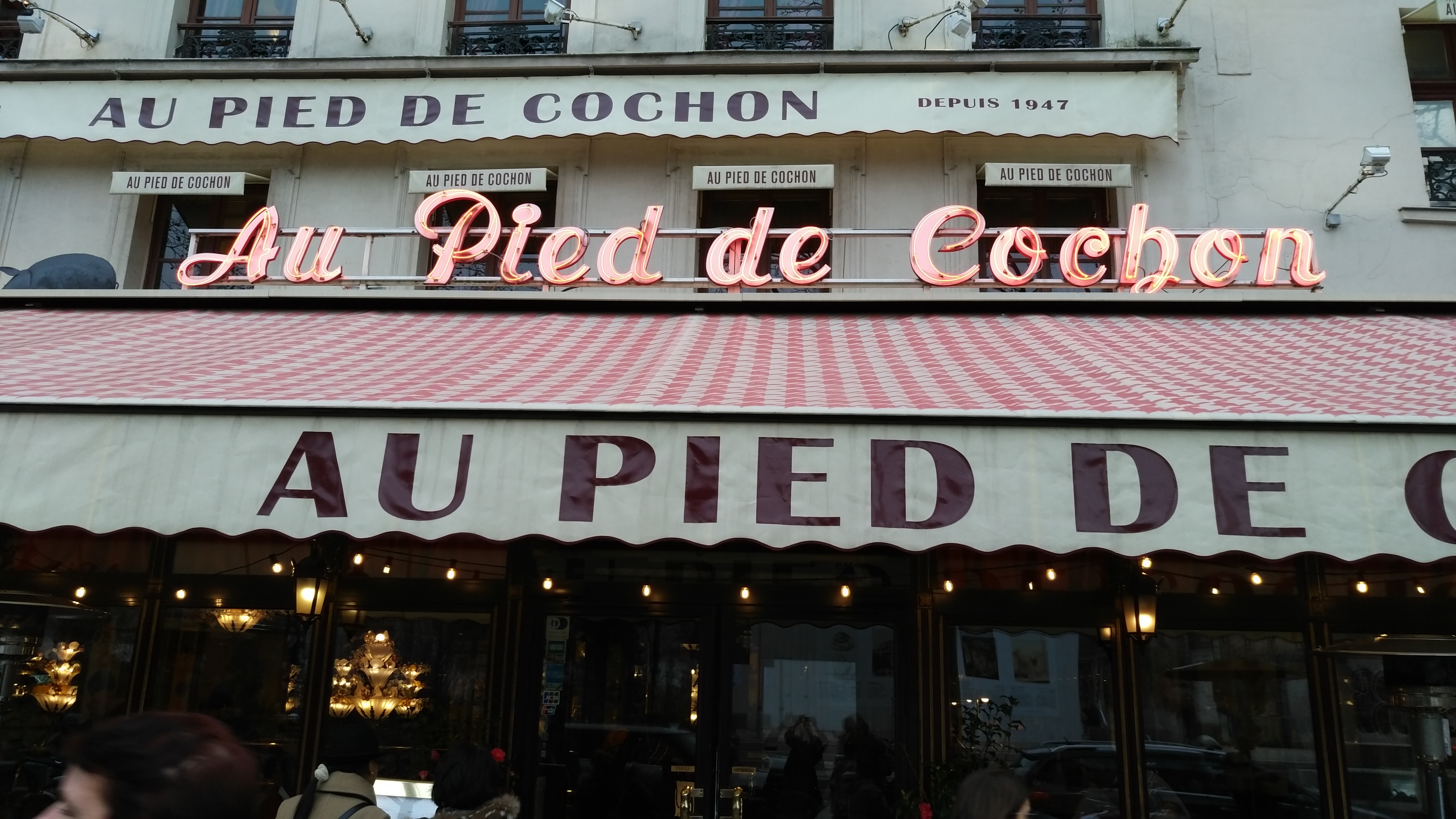 It was once a regular late night gathering spot, and it has been open 24-7 since 1947. Onion soup and moules with frites are still good, but perhaps no better than at a local bistro. What is worthy of note is the
  We enjoyed a simple dinner and a sinfully rich dessert at a small neighborhood eatery, charmed by the friendliness of everyone there: Italian chef, attentive server and fellow patrons alike. A couple at a nearby table could not fathom why we chose to stay away from Paris for 50 years. In the warmth of the moment, we didn’t understand it either.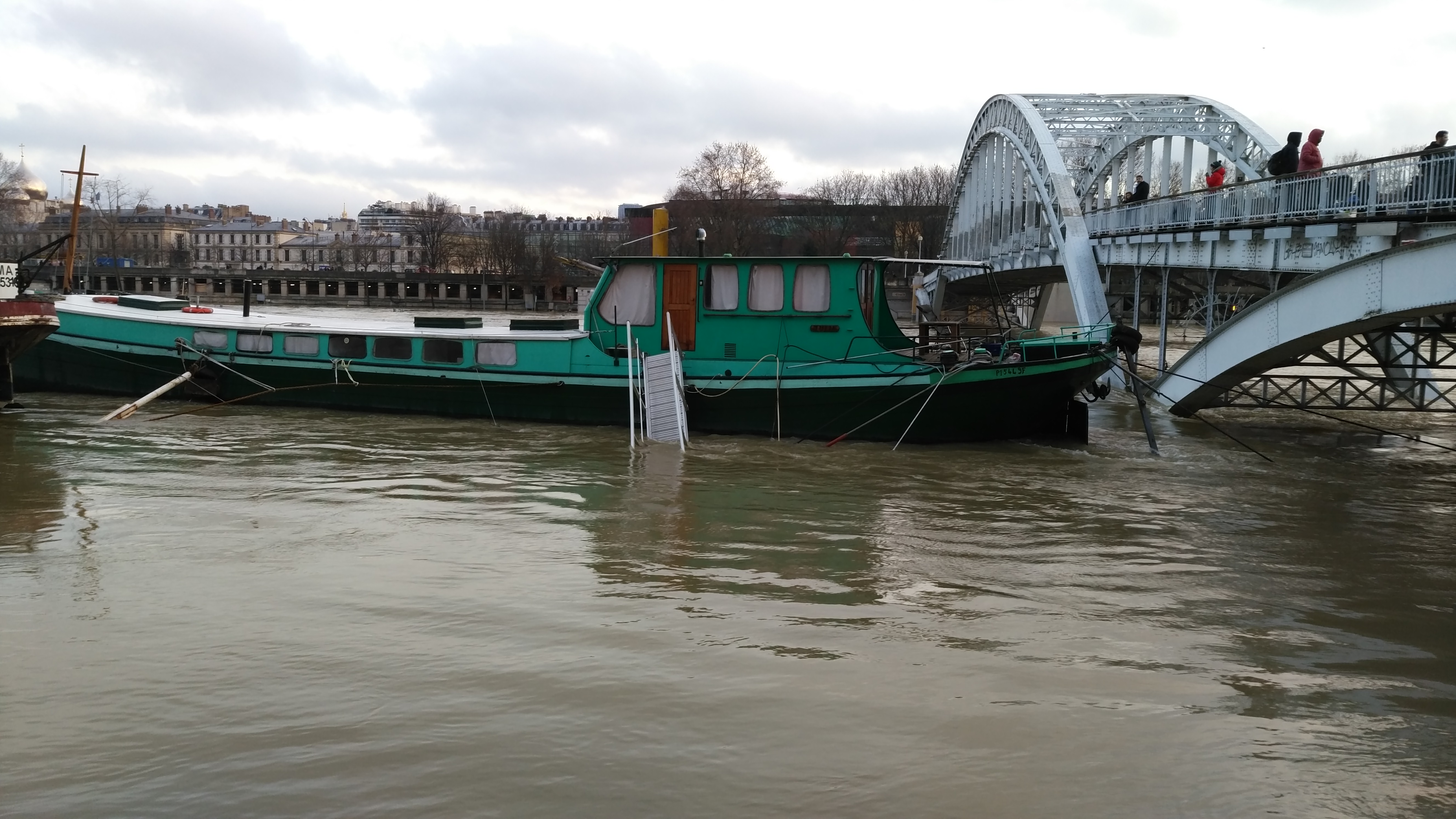

 We visited the artists still painting caricatures and uniquely original art at Place du Tertre in Montmartre; the paintings we bought 50 years ago still hang in our home. We ducked out of the drizzle and into out-of-the-way brasseries for a warm cafe creme or a quick aperitif. The weather was damp, the skies were mostly grey. We were cold. And we loved every minute of the time we spent in the City of Light.


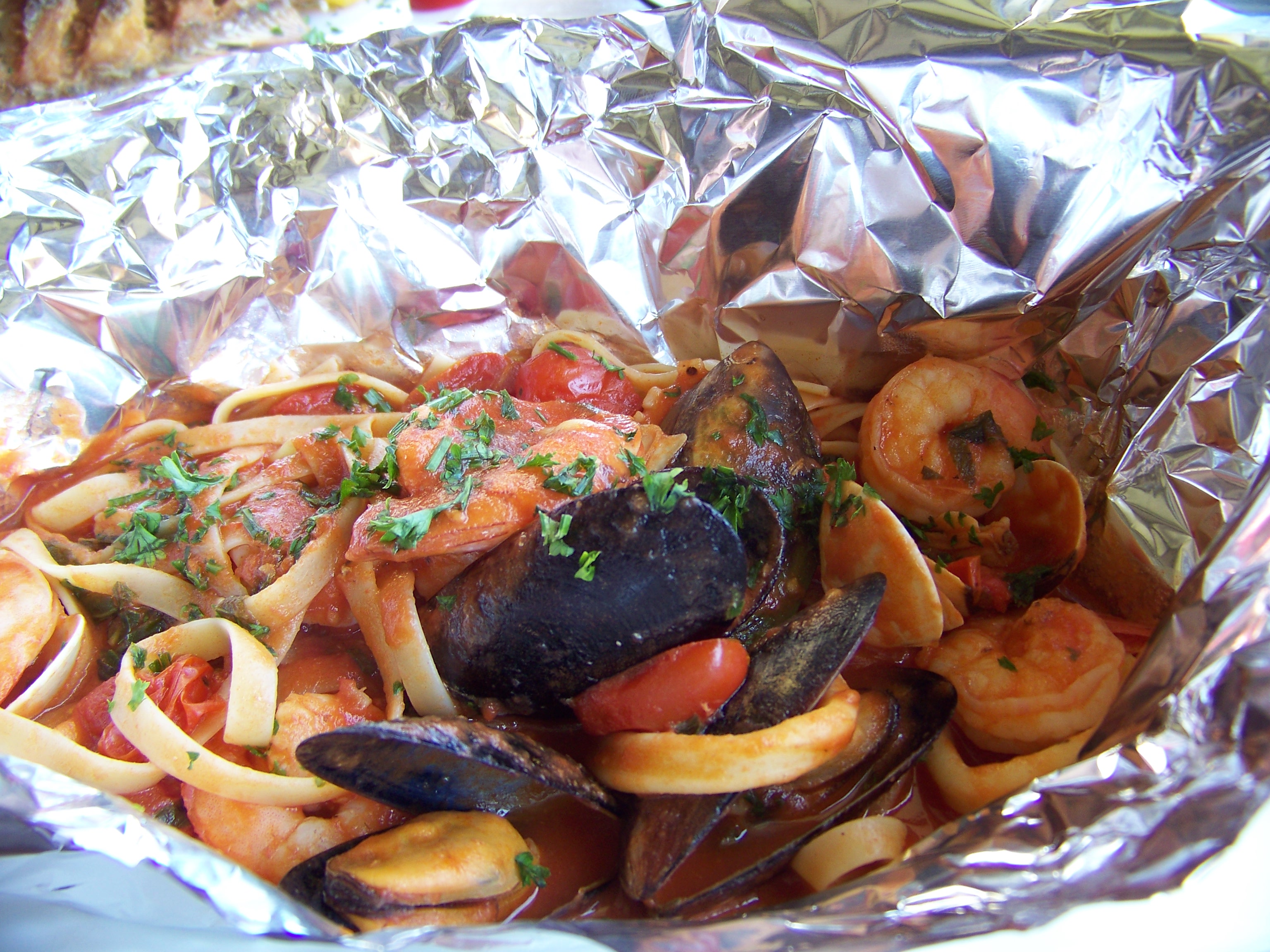 Overloaded with shrimp and mussels swimming in flavored sauce atop a bed of pasta, it was Caribbean in character, boasting plump cherry tomatoes, fresh parsley and subtle exotic spice, perfectly executed, but too much for one person!


 Good Food and Faraway Places