Gold earring and the Cape

David Stanley/Flickr

There are times when armchair travel is almost as rewarding as in-the-flesh excursions.

Even firsthand accounts of adventurous trips may not quite compare with the real thing, but sometimes words and pictures convey the spirit of a place in a way that is stunning and satisfying. Researching nautical lore became a stay-at-home voyage of discovery, an exciting experience that needed no packed bag and no advance planning.

A Virtual Voyage

In December, I took a month-long journey from Los Angeles, following the Pacific coastline of the Americas to the “bottom of the world” and back north once again on the Atlantic side of South America to Rio. It was a virtual voyage via modern cruise ship.

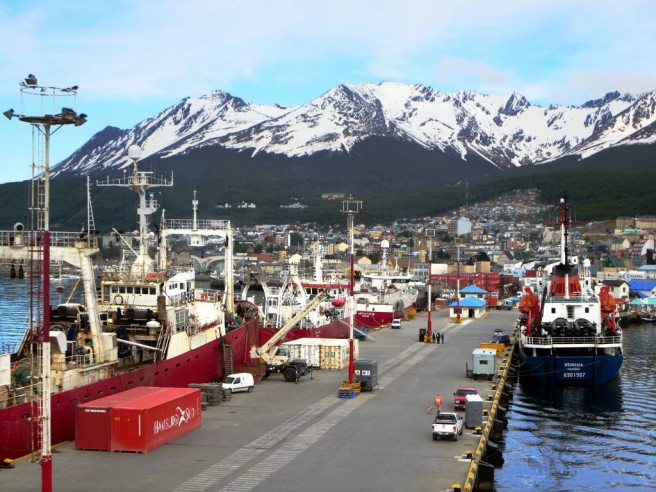
By frequently checking the vessel’s bridge cam, I was able to experience smooth seas and rolling waves, raindrops and marshmallow clouds, bright sun and midnights, the distant horizon and the nearby shore. I also got a feel for some of the ports and watched, mesmerized, as the fog cleared over the craggy mountainous backdrop of Ushuaia, the southernmost outpost in the world.

It was not the same as actually being there. But it was good; reading filled in some of the blanks. I’m planning for the future, and because of my virtual voyage and my research, I know better what to expect. Yesterday, on the solstice, I thought about Ushuaia again. It’s winter now at the bottom of the world, and I’m sure the air is frigid.

Planning Ahead

I’ll be reading more books and poring over more pictures of all the cities along the route prior to booking the trip. I’ll read more geography and history, more about past civilizations and current governments. I’ll learn more about local food and drink and culture. You can bet I’ll read more about the HMS Beagle before cruising through Beagle Channel at the bottom of South America.

I’ll also study up a bit more on nautical lore. That’s one of the reasons this particular voyage was so appealing: The itinerary included crossing the equator as well as rounding Cape Horn.

There was a time when sailing superstitions were honored, when nautical traditions held sway in everyday life, when seagoing ritual was honored on land as well as on the seven seas, in every corner of the globe.

Now, not so much.

Nautical Superstitions

But some customs are still practiced by modern navies; cruise ships indulge in time-honored ceremonies when crossing the equator or the international date line. Even “airships” mark those occasions with a nod to tradition — an announcement from the captain or, sometimes, a certificate. Today, it’s all strictly for fun. Or is it?

Old salts might tell you otherwise. More superstitious sailors wouldn’t think of eating a banana on board, never whistle while they work, dread sharks but welcome dolphins, and are careful to speak first to any redhead within earshot. There are also plenty of pleasure boaters who are wary of changing a vessel’s name and, curiously, never wish fellow travelers “good luck” before a planned journey.

We still live close to our mythology in other ways — throwing salt over a left shoulder, for instance; acknowledging a sneeze with “gesundheit,” not having a 13th floor in buildings, nor a Deck 13 on most modern cruise ships.

Nowhere is the mythology closer than at sea.

Sailing Tradition

Just as I am still searching for a tattered nautical chart with the notation “BHBD,” I also have a sort of “bucket list” that has more to do with half-forgotten habits than with destinations:

  • I want to wear a gold hoop earring in my left ear as testament to my voyage around Cape Horn. There are many versions of this tradition, and while I have no illusions about being able to qualify for the Amicale des Capitaines au Long Cours Cap Horniers (AICH),  I do intend to stand in Ushuaia, sometimes termed “the end of the world,” and look towards Antarctica.
  • I want to sail across the International Dateline, gaining (or losing) an entire day in an instant. I want a certificate to hang on my wall in commemoration of the feat.
  • For old salts, a sparrow tattoo marked a milestone of 5,000 nautical miles traveled. I have already earned the right to at least a couple of sparrows, and I still have more miles to travel. However, I’m a coward when it comes to ink on my skin. Maybe, when I qualify for a host of sparrows . . .

In 2017, I will be traveling in other directions, but I still have my eye on a spectacular gold hoop earring, and I’m already deep into research for 2018!

Photo of Harbor at Ushuaia, Terra del Fuego, Argentina, 2014, by David Stanley/Flickr

A time to be silent . . .

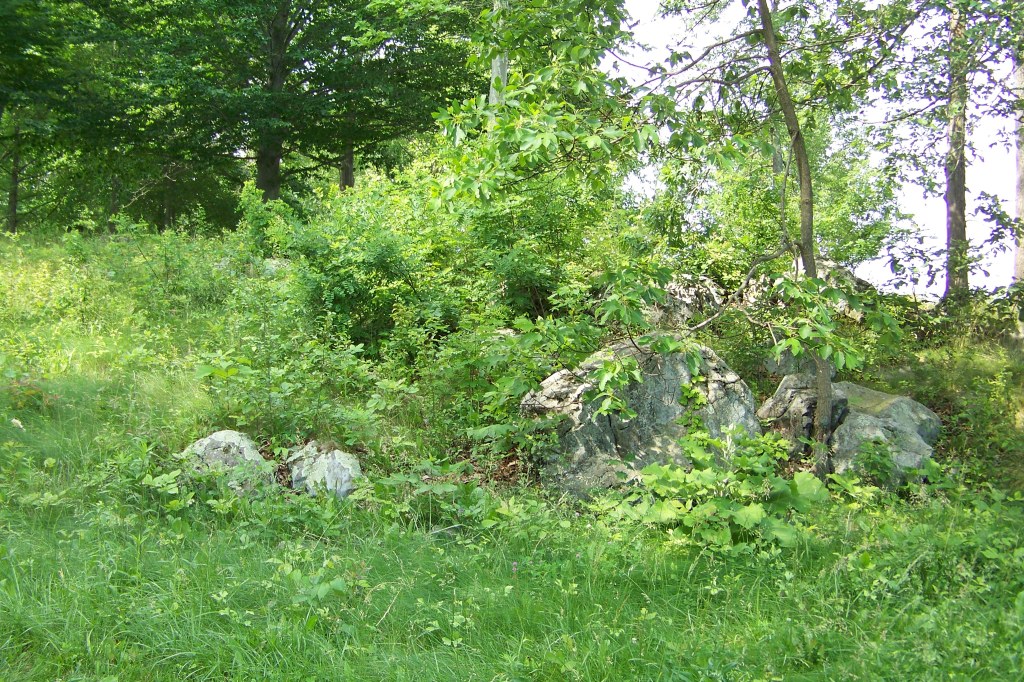
When the tourist buses leave, quiet descends and shadows begin to fall over the battlefields. A hush falls over the land, and it’s hard not to speak in whispers. It is also difficult to fight back the tears. Gettysburg is a stark reminder of another time, when the air was filled with smoke and cries echoed on the wind.

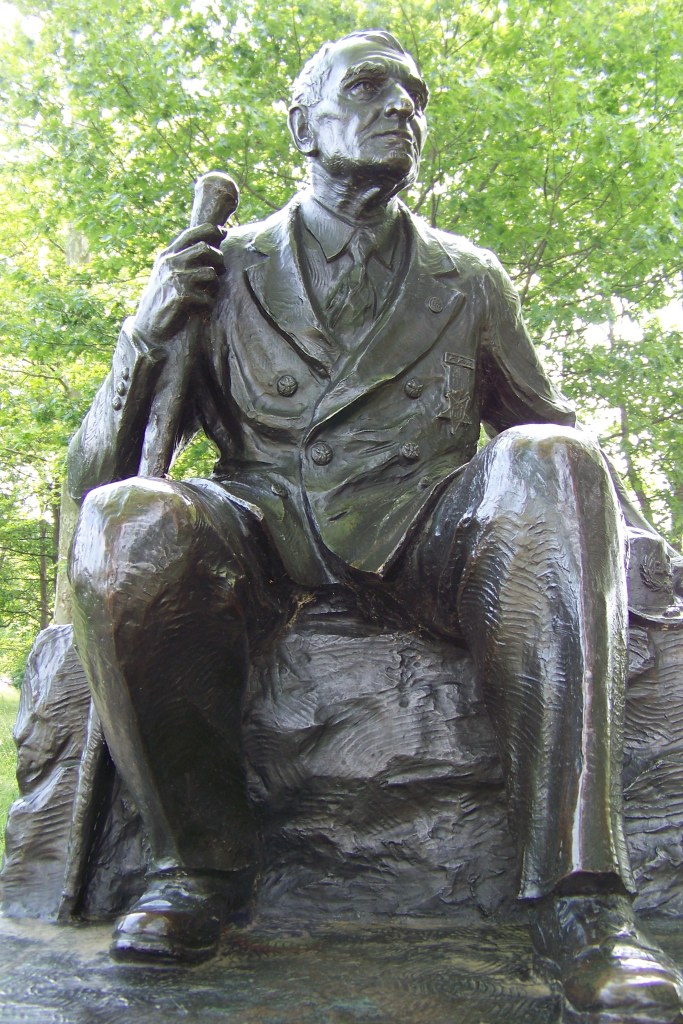
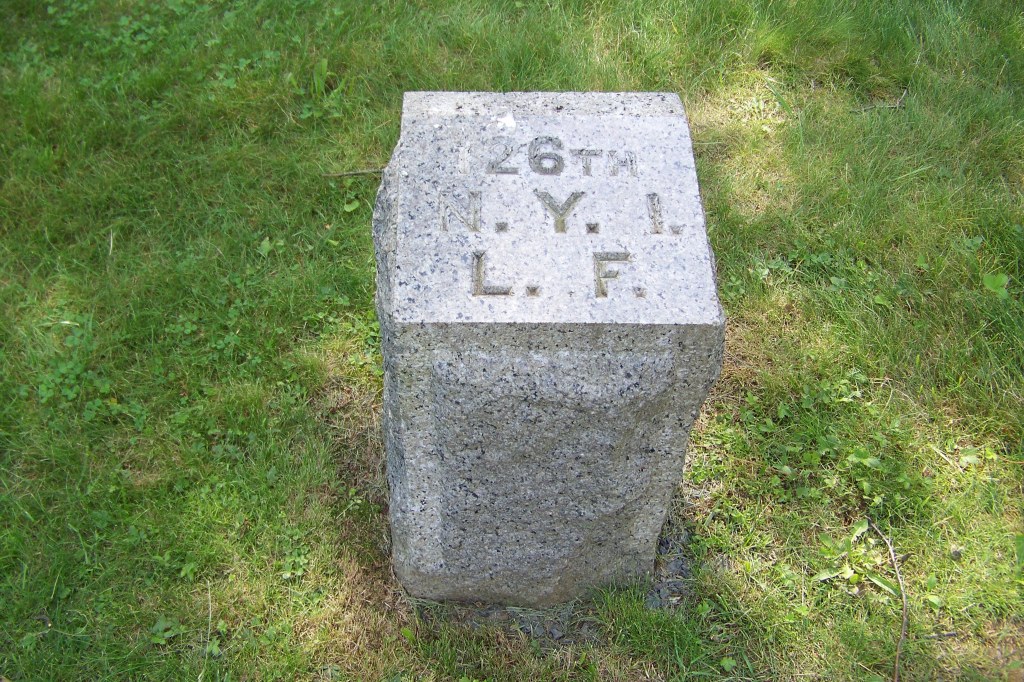
At least that’s how I imagine it. And those were my feelings last year in Gettysburg. The land was beautiful then, alight with the new growth of young grasses waving in the breeze and flowers blooming in the sun. And monuments. The monuments are both small and grand, sited haphazardly, it seems, on plots of ground that must have great meaning to the survivors of the men who fought here.

It’s a somber place in the late afternoon as the sun begins to move low over the western horizon. Battlefields are always somewhat difficult to visit. Civil War battlegrounds are especially sobering. They are smaller than expected, making it easy to imagine facing an enemy up close and personal and terrible to think about that reality.

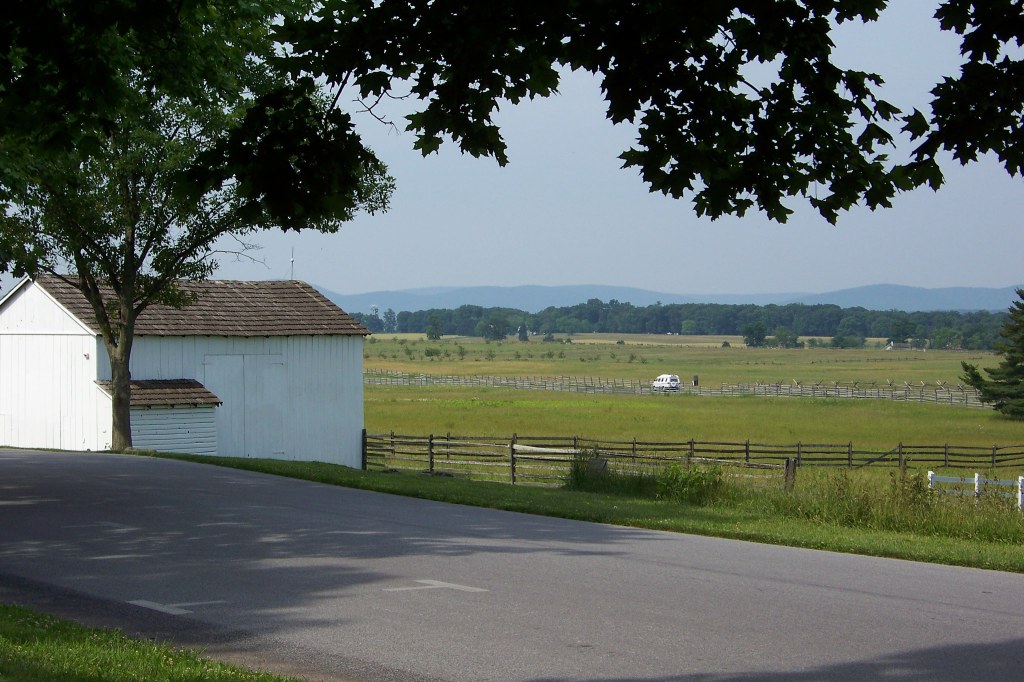
The fields of Gettysburg, though, are expansive; the hills roll on into the distance; split timber fences delineate the fields, defining various encounters between Union and Confederate forces, and even driving through the area takes time. I felt compelled to walk among the monuments, to read the inscriptions, to wonder about the units they honored, and to think about the men who died on that ground.

Battlefields have a peculiar pull, no matter where I encounter them, and I have walked silently among the ghosts on battle plains across the globe, from the Little Big Horn to the beaches of Normandy, from the Golan Heights to Glorieta, New Mexico. I have also meandered among the headstones of military cemeteries in this country and in other nations, wondering about the lives of the men buried there, and about their survivors.

I always come away from battlefields with a sense of wonder that no matter how bloody the battle, the earth itself recovers from war relatively quickly. It is much more difficult for the people.

So today – Decoration Day was first celebrated on May 30, 1868 – at 3 p.m., the traditional hour of remembrance, I remember that battle fought long ago in Pennsylvania, and all the other battles of the Civil War and the wars that followed. Whether it’s now called Memorial Day or Remembrance Day or Poppy Day, I like to think that we are moving toward a time when battles will no longer be the way to resolve differences, when our children’s children can walk confidently into a future that only honors servicemen and women who died long-ago.

I thought about all of that yesterday as I enjoyed burgers and bratwurst, potato salad and apple pie with a small group of friends. It was a long weekend, after all, and it’s always good to be with friends and to share good food.

But today, because this is the real Memorial Day, I once again remember the fallen soldiers and those members of the armed services who still are called to give their lives in the service of their country.

The Civil War took more lives than any other this country has fought. We can debate, from the comfort of our time a century and a half removed, the issues that led to that war and that provoke other wars, but we cannot deny the consequences. And we must not forget that good and noble men fought on both sides. Warriors have left grieving families in all the battles since. It is good to pay homage to sacrifice like that.

Now, more than ever before, it seems imperative that we learn from our past. We can then move on to the task of writing the future the way we want it to be.

9-11-2001: Years removed in time, but etched indelibly into our psyche . . .

Fifteen years: It’s the span from birth to teenager; young adult to middle age; active working adult to “old.”

It’s difficult to look 15 years into the future with any degree of accuracy, but looking back takes little effort. And, in some cases, 15 years — or 50, or only two  — disappear in an instant and we, in our minds, are returned to a time so hard to comprehend, so impossible to understand, so devastatingly brutal in memory that it brings us up short. The best we can do is retreat into our own silence, finding what solace exists with the passage of time.

Today is one of those days.

Fifteen years ago on a clear morning full of promise, the world was forever changed. For those of us old enough at the time to be aware of what happened in our world, it is a moment, a day, an era still frozen in time. There are other such days for many of us; actually, there are too many of those moments for some of us.

On days like this one, at a specific hour, whether the flag is lowered to half staff or we observe a moment of silence, whether there is a public ceremony or not, we cannot help but take a deep breath, suffer feelings of deep regret, and remember. Sadly, the list of those remembrances grows longer.

It is said that adversity make us strong. I wonder.

It is said that we must learn from the past. I am not certain we ever do.

It is said that we must not allow such things to happen again. Is that possible?

9-11-2001

Fifteen years ago.

Yes. I remember.

But I also remember other things about that day.

I recall standing silently with a group of coworkers, tears streaming down our cheeks, eyes trained on the television. I remember the need to talk with distant family members, to hear the voices of loved ones even though there were no words to soften the blow of that day. I remember the anguished — and accented — question of a recent immigrant: “How could they do this to our country?”

I have to think that Americans were one on that day, united in shock, and determined to face an uncertain future together.

Today, 15 years later, that oneness is no longer evident.

I wonder why we as a people are always at our best in crisis?

Actually, maybe that is the hope we should cling to.

No matter what our differences, no matter how much we disagree on most days — in thought and action and the ongoing exercise of our freedoms — maybe we can once again stand together when the next crisis occurs.

Not that I look forward to that day.

Also read my thoughts about a chance encounter on 9-11-2014.


The dream dies hard, but the memories live on

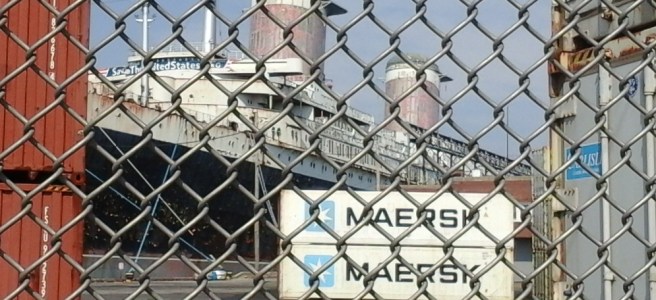
It looms large on the horizon, the hulk of the S.S. United States, as she lies in port in Philadelphia. Her stacks rise above the neighboring dock buildings, and it’s possible to use them as landmarks rather than following GPS directions as you chart a course to see the once grand ship in her current forlorn and decrepit state.

This ship — and the search for a traditional Philly cheesesteak — took us to the city of brotherly love this summer.

We found our ship with ease, and we lingered there. Remembering our first encounter with this vessel, my husband and I didn’t speak. We just gazed through the chain links at this once gleaming passenger liner with a history that is irrevocably intertwined with ours.

We met the S.S. United States, and one another, on the same day in August 50 years ago at the port in Le Havre, France. The ship was just a teenager at the time. We were young as  well, and impressionable.

She was a looker, massive and shiny and silent, but aswarm with crew going about their duties. We were impressed by her presence and by her glamor; she took our breath away. We had some other experiences with her, but her days at sea came to an end barely three years later.

Our story continues.

This summer, as we mapped our road trip north, it became a priority for us to see the grand old ship. Philadelphia was miles out of the way, but we took the detour. Our hearts were in our throats as we first spied those distinctive smokestacks. We were buoyed by the hope that this old lady might actually sail the seas once again.

Unfortunately, early this month, we learned that the plan to refurbish her as a cruise ship is not feasible. The S.S. United States has been out of service for 47 years; she has languished at the dock in Philadelphia for more than 20 years now, longer than she sailed! And, though she is deemed still structurally sound, the dream that she might again carry passengers has died.

There is still some hope that the S.S. United States will be saved from the scrap heap and turned into a floating “history book.” She is, after all, an engineering marvel; this last American flagship set a world speed record on her maiden voyage. It has never been broken. Is it so hard to believe that others could be inspired by looking up at her towering stacks, standing at her railing, or exploring her labyrinthian interior? Not for us.

The experience certainly stayed with me and my husband throughout our years!

As we again gazed at her with awe, she sat behind locked gates, no longer shiny and glamorous, but impressive nonetheless!

We left the docks finally, and found a Philly cheesesteak at a tiny Tony Luke’s on Oregon Ave., almost in the shadow of Interstate 95 South. There were only seven or eight tables inside, but the line snaked through the building and extended into the parking lot beyond. It took some time to reach the order window, but not long at all for our traditional beef and melted cheese sandwiches to be ready. Miraculously, there were two seats at a table. The wait was worth it; Philadelphia’s signature food treat was the second delight of the day!

We had come to Philly for the memories. And we left well satisfied.

Fishing in Waxahachie? Oh, yes!

WP_20160410_001

Sometimes the best places are close to home, just undiscovered.

And sometimes all that’s necessary to find great food is to listen to friends.

Both were true this past weekend as my husband and I took a pleasant drive to a small town just 30 minutes south of Dallas.

Getting off the highway is key to discovering the best Texas towns. I have known Waxahachie for many years as the site of the Scarborough Renaissance Festival, and I have been down that road several times. But I had never before gotten “off the road” to get into town.

WP_20160410_022

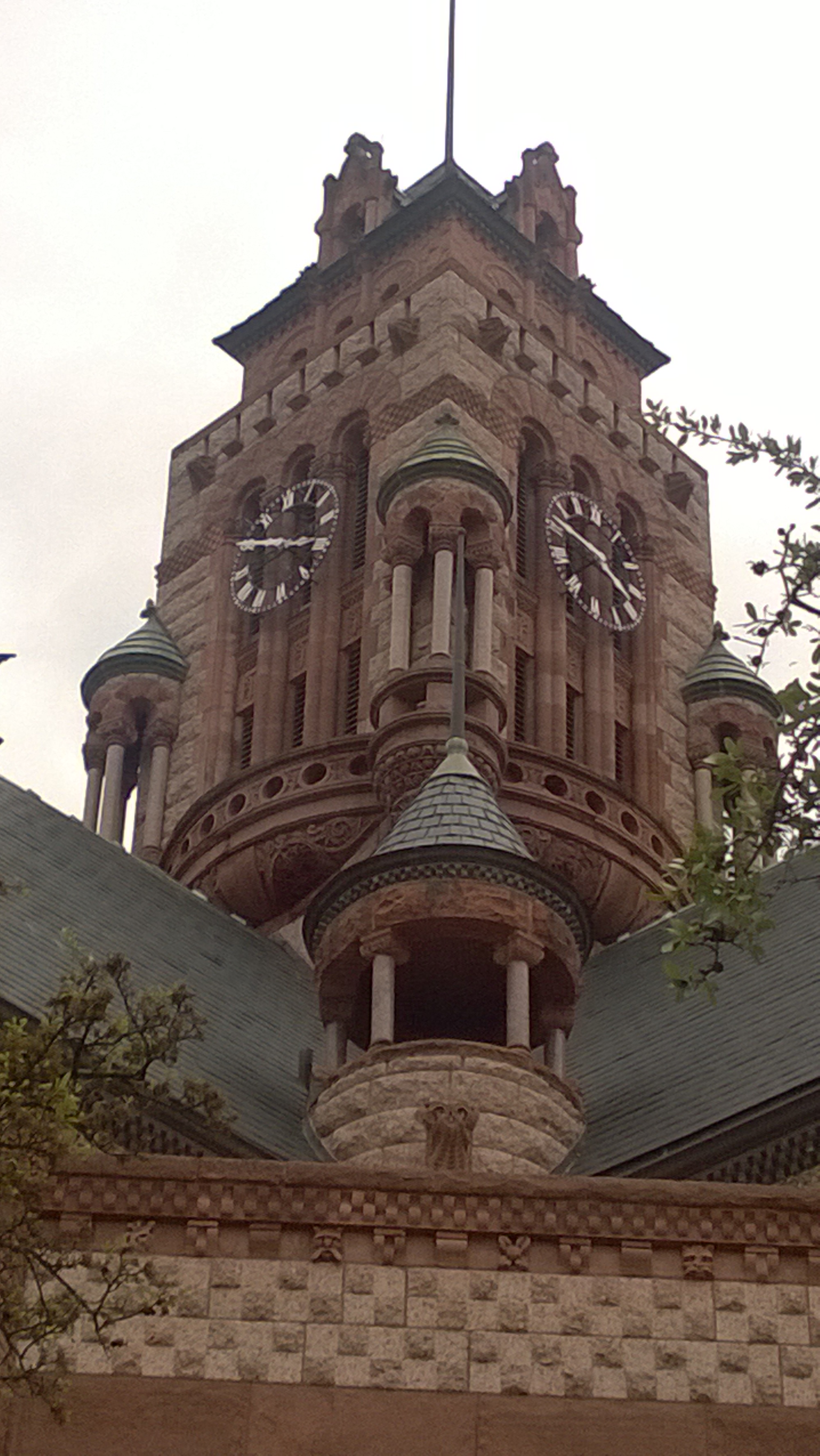
On this trip, however, the destination was Waxahachie’s downtown square, across the street from the historic Ellis County Courthouse.

The reason? A friend had recommended that we try a newly-opened restaurant. Actually, the friend and a partner own this newly-opened restaurant, and we were only too happy to be invited to sample the fare prior to the grand opening.

Both the restaurant and the town are unexpected treats.

Fresh and Local — and Seafood!

The Fish Grill is a labor of love many months in the making. Open for only seven days when we visited, it is sure to enjoy a long and healthy life. Retired architect Dana Wenzel partnered with Chef Christopher Stanford, a fifth-generation native Texan to bring a beautiful old bank building back to life as a charming and eclectic downtown eatery.

101_2149
The Fish Grill, Waxahachie

The building dates to 1900 when it was Citizens National Bank. It served at one time at the Ellis County Tax Office, but had stood forlorn and empty for a couple of years when Wenzel and Stanford found it. Well-known Dallas developer Jim Lake of Design District and Bishop Arts District fame, had already seen the potential for a restaurant in the space.

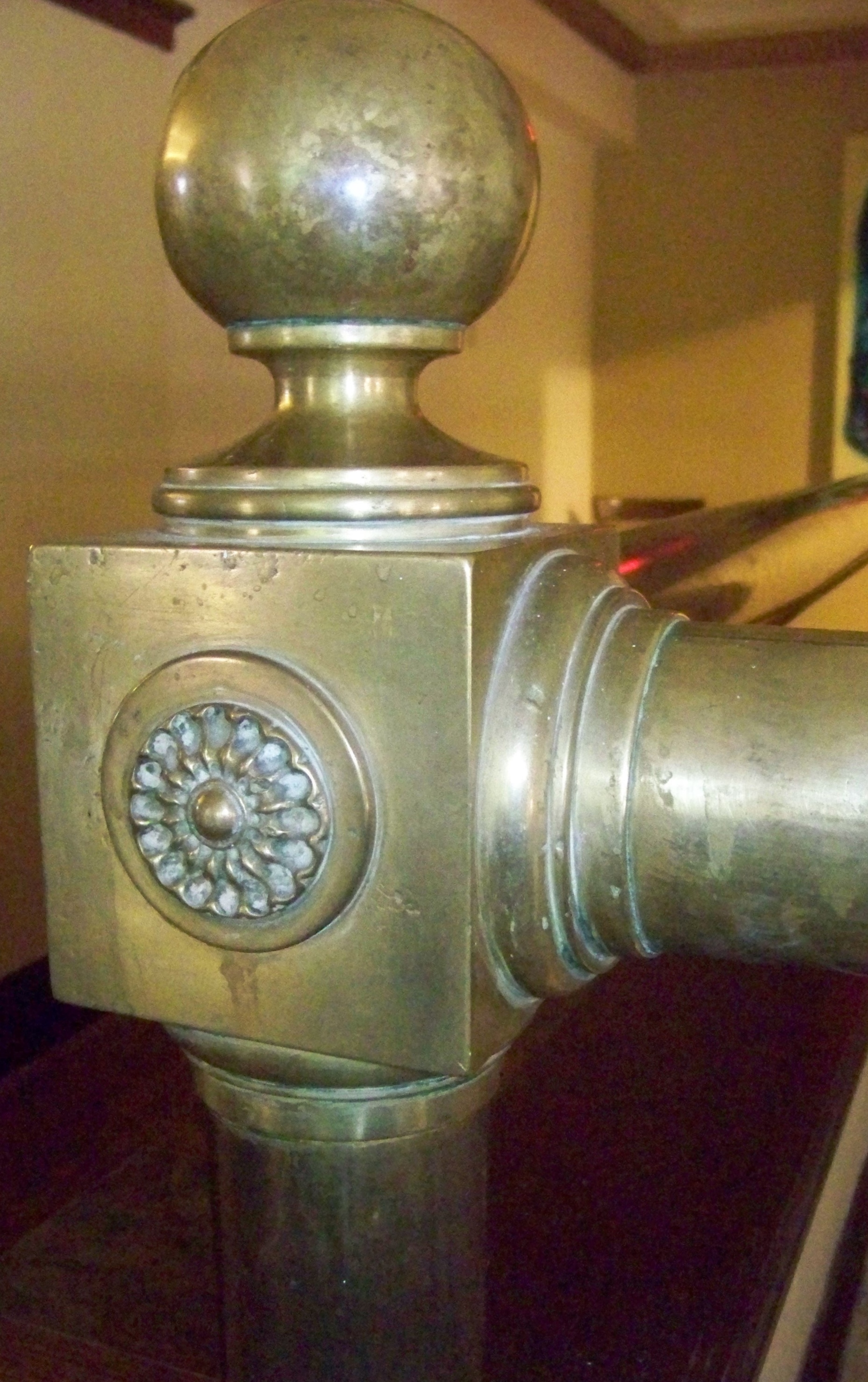
Features include the original vault doors, ornate brass 101_2138handrails, stunningly detailed wall and ceiling medallions, and native stone inserts in polished wood floors. A mezzanine and upstairs bar offer patrons spectacular views of the stately courthouse and other historic buildings.101_2147
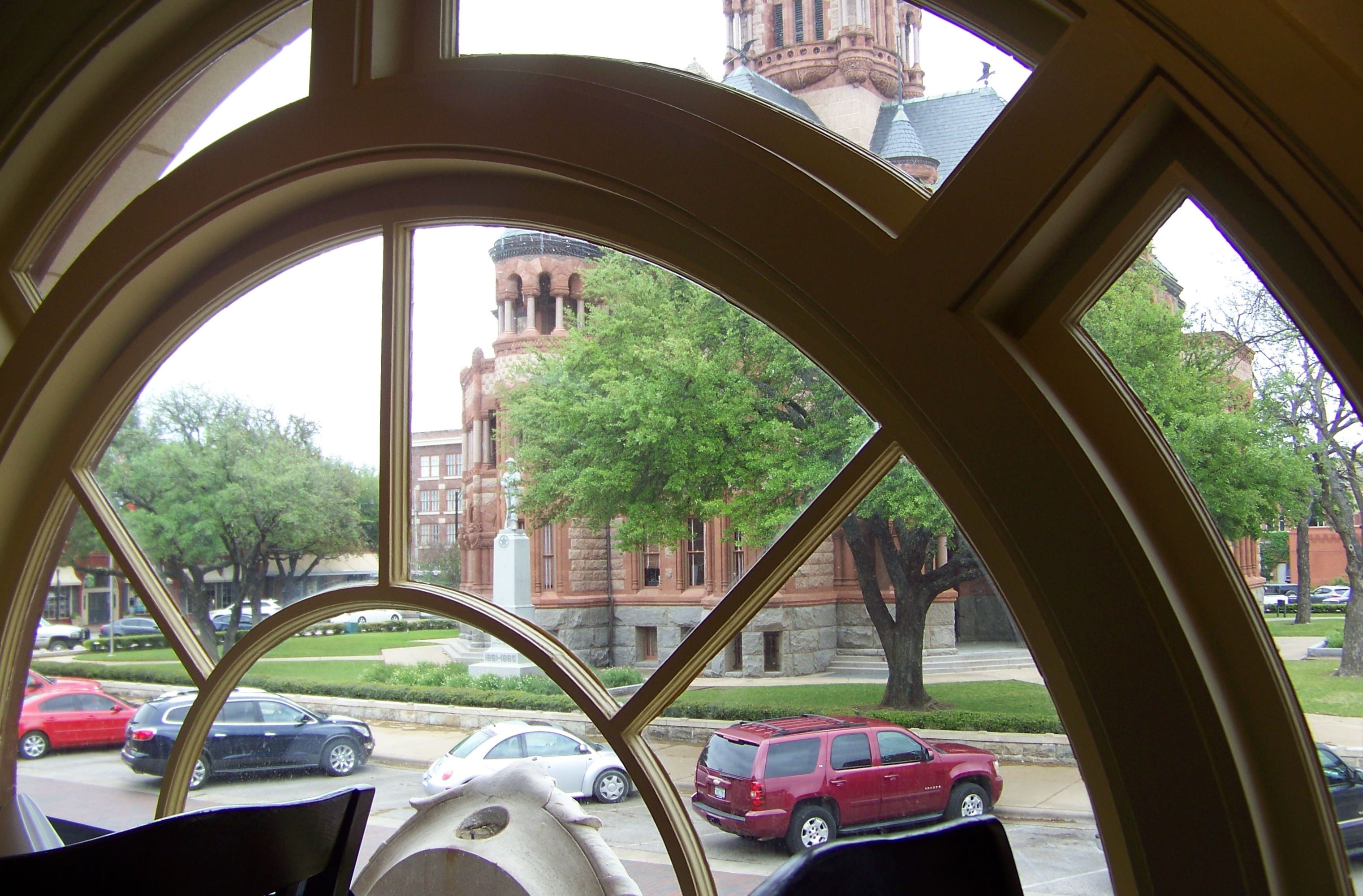
Large, arched windows let in lots of light, and etched glass doors both lead outdoors and can be closed to provide private dining areas.

There are vibrant red-orange walls, modern art, linen cloths and napkins, and a friendly vibe — it is immediately welcoming. And the menu is as special as the space.

Menu offerings are Stanford’s creation, with a layering of flavors that is at once satisfying and unique. The goal, according to Wenzel, is to produce “good food to get out to the world,” and the governing philosophy is “fresh and local.” All seafood is from the Gulf — none of it arrives frozen. Other menu offerings, including the catfish, pork and beef, vegetables and greens, are locally sourced.

The word is that if it’s not in season, you won’t get it at The Fish Grill — that includes the battered fried oysters and the Grilled Strawberries au vin rouge!

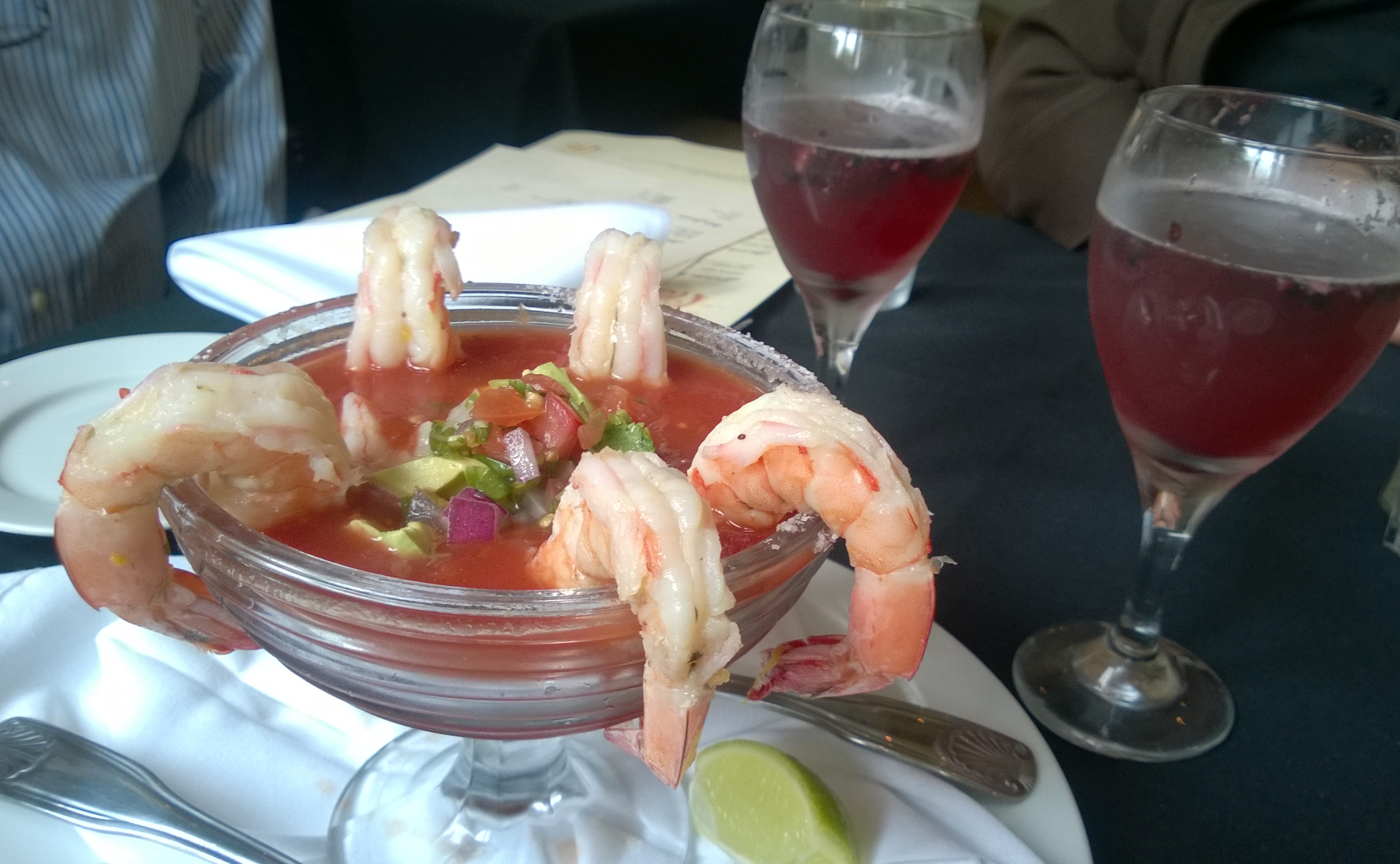
Our lunch began with an impressive Mexican Shrimp Cocktail, highlighted by a piquant tomato sauce  with bits of onion, pepper, avocado and just the right amount of spice. We followed that with Fish Tacos and the ultimate comfort food — Mac and Cheese, served with grilled shrimp.

The only appropriate comment? Delicious! The only downside? No room for dessert, tempting as those grilled strawberries were. The bonus? Enough food in “packed with a smile” to-go boxes for additional taste treats at home.

After leaving the restaurant, we took the time for a walk around the courthouse, a tour of WP_20160410_027the abundant antique shops on the square and its adjacent streets, and a leisurely drive past the impressive gingerbread homes that characterize this town. Waxahachie obviously takes pride in its past and looks toward its future. It has the feel of a gracious, cultured college town; actually it was once the home of Trinity University, but that’s another story.
Because there are other stories to be told about this interesting little Texas town, you can be sure I’ll be returning to Waxahachie, and I look forward to enjoying more — perhaps many more — meals at The Fish Grill.


Remembering when the earth rumbled

Botanica-Florida 2009 early 118 - Copy

STS 133.

I’ve been taking trips down memory lane — I don’t know why exactly. But planning new trips (which I do, it seems, every winter as the walls start closing in) somehow just naturally calls to mind previous adventures.

STS 133. The 133rd flight of a U.S. space shuttle. The last voyage of Discovery. The 35th mission to the International Space Station.

They called it an “Express.” As if others made interim stops! That makes me smile.

The backstory . . .

For as long as I can remember, I have looked up at the sky and dreamed of traveling into space. Spacecraft and rocket launches never fail to mesmerize and excite.

In February 2009, we were traveling south on Florida’s Intracoastal Waterway; we had hoped to be near enough to Cape Canaveral to witness a shuttle launch, but there were weather delays. Without a firm target date, we made no firm plans.

In early March, though, somewhere near Titusville, Florida, we witnessed the liftoff of a Jupiter 2 rocket, “at 2248 from Pad 17 Bravo,” according to the U.S. Coast Guard in a security zone broadcast alert to boaters that evening. We saw the flash on the horizon, bright and perfect, as we lay at anchor.Bahamas-March-April 2009 180

In mid-March of that year,  we were docked at Port Lucaya in the Bahamas. After weeks of continuing delays, STS 119, a flight of the Space Shuttle Discovery, was finally scheduled for launch at 7:43 p.m. the evening of March 15. From 60 or so miles away, we saw the light in the night sky that signaled another perfect launch.  A cheer went up from the mostly American crowd, from vessel decks throughout the marina, and we watched until the glowing cloud of light dissipated.

The real meaning of “earth-shaking”

Not quite two years later, the launch was scheduled for 4:50 p.m. Thursday, February 24, 2011. There was a 10-minute window; official NASA records put liftoff at 4:53:24. That’s pretty close to on time.

There were other boats all around; all gathered at a perfect vantage point to witness one of the last shuttle launches of the American space program. It felt like a block party. The day was calm and beautiful, and we had a “front-row seat” in a small cove a few miles east of Cape Canaveral with a clear view of Merritt Island and the Cape just beyond. We could see the busloads of tourists heading for viewing sites. The air of anticipation was palpable. Radios blasted the latest news as the minutes ticked down.

I remember the anticipation. I remember seeing the smoke; then hearing the sound; then FEELING the blast; in that order. Yes, even though we were cushioned by the water, we felt the earth tremble beneath us.

And then the shiny, slender white rocket rose steadily into the upside down bowl of blue sky to begin its journey into space.

Raw power of that sort is hard to describe. Words don’t do it justice.

Launch Day at Canaveral 058 (2)A moment in time

I remember the cheers. No one dared speak. Even breathing was difficult. All eyes, trained on binoculars or straining to focus through a camera lens, followed the arcing path over the Atlantic until the rockets and the shuttle were just a pinpoint with a trail of white that drifted back towards the home planet. It was gone in only minutes, but witnessing that launch was an experience not easily forgotten.

History was made that day. Discovery’s story was completed 12 days later, when it returned to Earth at Kennedy Space Center just before noon on March 9. Six men were on board that mission.

Between 1984 and 2011, Discovery flew a total of 39 missions, carried 252 crew members into space, launched the Hubble Telescope and, finally, was retired to the Smithsonian Institution where the public can view it. Discovery was the third of five shuttles built and the first to leave active service. Read more about Discovery’s last mission.

Space Shuttle Endeavor’s final launch was May 16, and Atlantis flew July 8 under the NASA designation STS 135, ending America’s shuttle program after 30 years.

The saga continues

I still look up at the sky. I still dream of traveling into space, although I know that, for me, it is only a dream. But for others .  . . . Let us not forget that the missions continue. The International Space Station orbits our Earth approximately every 90 minutes. You can look up and see it; or you can view your planet as the astronauts see it, in real time.

Note: My husband and I were liveaboard boaters at the time, traveling eastern U.S. waters on an almost three-year epic journey that took us from Florida north to Maine and the Canadian Maritimes, saw us in the Chesapeake and on the Potomac, in the Carolinas and Florida and the Bahamas, ending our journey finally in Mobile, Alabama, on the Gulf Coast. Our adventures on Gypsy Spirit, our 44-foot aft-cabin power vessel, were the stuff of dreams; we occasionally browse our log books to rekindle fond memories of those times.


Bucket lists and traveling plans

Do you have a bucket list?

I have to confess that, until now, I never did. But I have been making one of late.

I have also been thinking about the next trip. A lot. And part of the thinking involves talking to friends and family about sharing it, a sort of old-friends-and-distant-relatives-reunion that would have our gang of crones and curmudgeons laughing it up and proving to younger people how the old folks can still “party on.”

The idea has been brewing for a while now. I’ve been poring over itineraries, and researching cruise lines, thinking about possible dates and ports, and wondering whether a summer or winter getaway would be better for most of the people I could hope to have join us.

And then it dawned on me. It’s not necessarily a one-time opportunity.

So, in case you’re wondering exactly where this is leading —

For me,  it’s leading to the Panama Canal — a journey from the Atlantic to the Pacific. I hope that a core group of compatible travelers joins in. It takes more time and energy than I seem to have to add “trip organizer” to my resume at this point, but I have put out the word.

The Map on the Wall

There was a time, several decades ago, when a group of young friends thought it fun to throw a dart at a wall map, and take off for a long weekend of sightseeing. Our group tasted several European capitals in that manner, motored through beautiful countryside along back roads, spent as little as possible because we had little, and savored every minute of every experience.

Later my husband and I traveled with other couples and other groups, on planned vacations, for spur-of-the-moment getaways, and sometimes just because we had free time and the urge to be gone.

I recently looked at another wall map and realized that, even though I have visited a fair number of cities, states and countries during my time on the home planet, there are still a huge number of places to explore.

Travel has become more complicated and much more expensive. As the world shrinks, its differences become less obvious — or more exaggerated, depending on your point of view. Personal devices allow popular music and movies to be delivered anywhere at any time, and travelers do not find it necessary to interact with one another or with strangers.

It’s a shame. So, I’m embarking on a modern crusade of sorts.

I don’t remember a time when I wasn’t eager to go somewhere new, taste new foods, meet new people and view life from a different perspective. Time, responsibility, finances and “respectability” may have gotten in the way along the way. I think it’s now time to rectify all that. The Panama Canal trip is not the result of throwing a dart and finding a way to get there.

It is more of a response to a fascination with the still-unfolding history of the canal. I’m really looking forward to seeing it with my own eyes. I’m sure I’ll be writing more about “the big ditch.”

But I’m not giving up dart-throwing either.

Flickr photos of Panama Canal by LyunGateley (2004) and Meghan Jones (2010 – evening shot) 

Digesting art and history — good memories

Two menus occupy special places in my heart and in my home. They couldn’t be more different.
20160110_114516

When in Rome

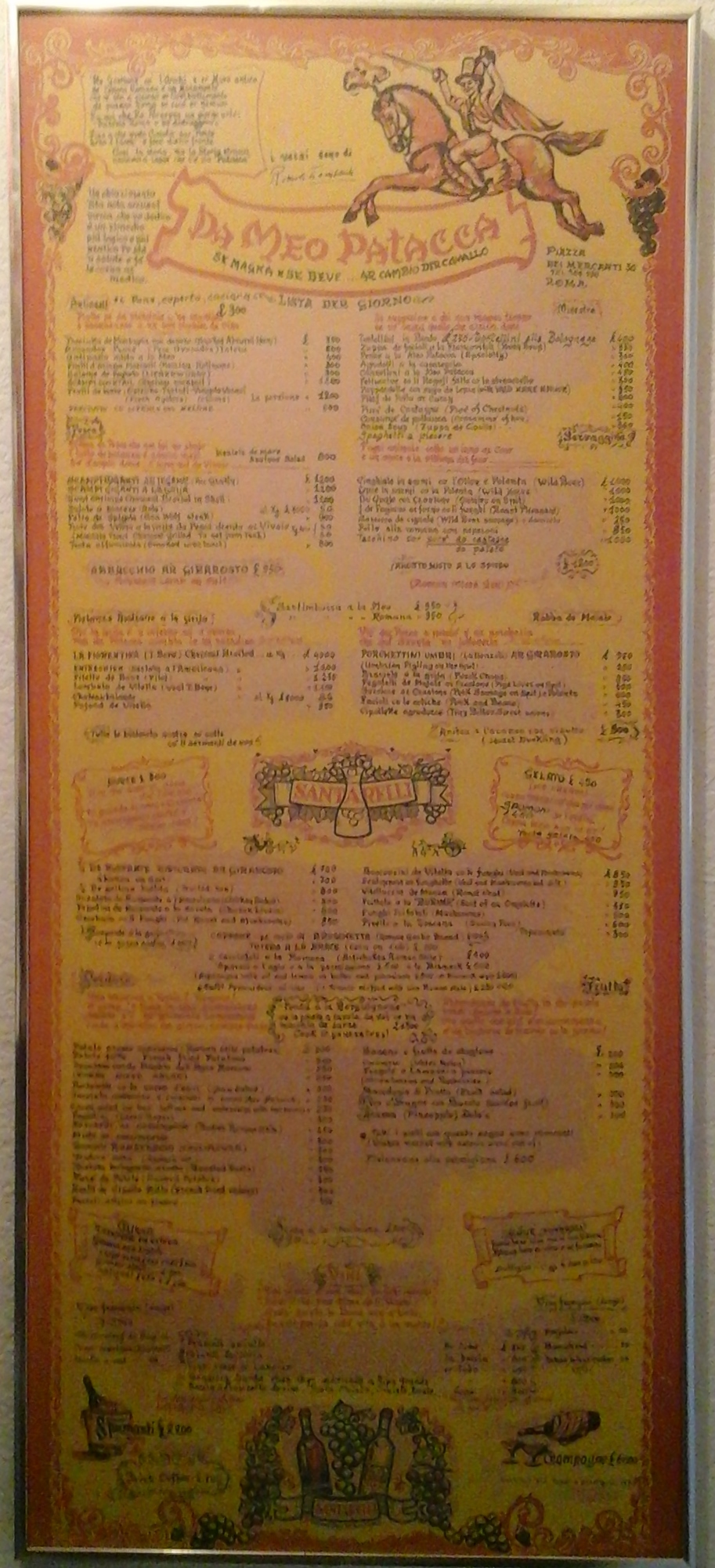
The first is a colorful, poster-size graphic from Da Meo Patacca, a memento from a first “Roman holiday” when I was 21. I still smile every time I look at it, remembering how impressed I was with the white-shirted waiter who unfurled the almost three-foot-long roll of paper with a deft flick of his wrist.  I don’t remember the food of that long-ago dinner table, but I can’t forget the experience, and the framed menu has graced my kitchens and pantries for longer than I care to admit.

The classic restaurant is still serving its traditional fare in Rome and, by all accounts, still delighting tourists from all over the globe. It is now possible to purchase the extravagant vintage menus on ebay or etsy, and I suspect that many, like mine, are still kept as keepsakes.20160110_120156

I treasure the memory; I also delight at the items priced in Lira. A mixed salad for 250, garlic bread at 100, saltimbocca a la romana at 950, gelato for 300 and a bottle of wine at 2500 – dinner easily required counting out bills running to multiple thousands! Truly, that was culture shock. However, the exchange rate at the time was around 600 Italian Lira to a single U.S. dollar. My dinner, I am sure, was quite a bargain! I returned to Da Meo Patacca a few years ago and came away with a later version of the menu, this time with prices in Euros. I also took away a renewed appreciation for this lively eatery that has served generations of diners during its five decades of operation. I know there is better food in this ancient city, and trendier trattorias. But this is a tradition of sorts and, on a pleasant evening, the patio is friendly, the wine is abundant, and the music can be fine!

Vive la France

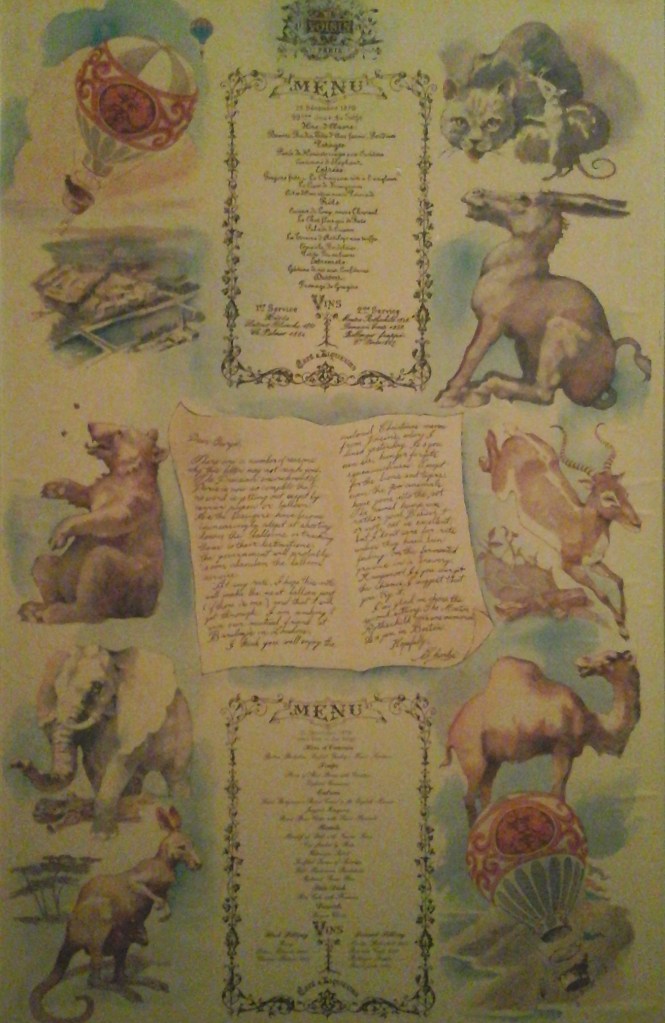
The second menu is not as vibrant in color, but it boasts fascinating pastel drawings of animals around its edge – elephant, bear, camel, kangaroo, cat and rat – along with frivolous hot air balloons floating over the countryside. It is dated “25 Decembre 1870 – 99eme Jour du Siege” from Voisin in Paris. It is in French. And, no, I did not eat there. Rather, I was entranced by the images and by the subject.

I have loved this menu for years, knowing it was not a real menu. I thought it was simply a quirky take on French culture and paid little attention to the actual items: Haunch of Wolf with Venison Sauce, Cat flanked by Rats. Jugged Kangaroo and Elephant Consomme20160109_171810Among the Hors d’Oeuvres: Butter, Radishes, Stuffed Donkey’s Head, Sardines. It includes other food choices as well: Wild Mushrooms Bordelaise and Rice Cake with Preserves. Again, I thought, a nod to French ingenuity, or an attempt to be entertaining. I thought nothing of the English translation at the bottom of the poster. I investigated no further, and simply enjoyed the artwork of my charming wall hanging. Until just recently.

The Back Story

Around Christmas, I happened across a blog post with an intriguing title. With an audible gasp, I realized that it was the story of my menu. I now know about the Franco-Prussian War, about the long and celebrated history of Voisin Restaurant, about how adaptable French cuisine can be, and about the suffering and endurance of a proud people during hard times. I know about how a renowned chef was truly creative and managed a Christmas dinner that must have been quite a treat for wealthy diners, and that at least one other restaurant routinely served equally bizarre dishes. By discovering the history of “my menu,” I have gained a new understanding of life, and of war and survival. During this siege, not even the well-to-do were spared hunger and deprivation.

The City of Light has known some very dark times. The French surrendered to the Prussians in 1871, when the citizens of the city were truly half-starved. I still love the depictions of the animals in their faded watercolor reality. But I will never again look at this menu in quite the same way. And I now view history very differently.

Learn more about the war, the zoo and the dinner.

Also included, between the French and English versions of the historic menu, is a letter to “Dear George,” signed “See you in Boston. Hopefully, Charles.” Perhaps it’s a figment of someone’s imagination. Or not.

Among other things, the letter states: “The Prussian encirclement of Paris is now so complete that no word is getting out except by carrier pigeon or balloon. As the besiegers have become increasingly adept at shooting down the balloons or tracking them to their destinations, the government will probably soon abandon the balloon service.”

It continues with the odd statement: “I think you will enjoy the enclosed Christmas menu from Voisin’s where I dined yesterday. As you can see, hunger forgets squeamishness.”