Let’s all remember our veterans

Poppy by Jenny Downing via Flickr

Today we are a long way in both space and time from the beaches at Normandy, the air fields of England and the islands of the Pacific, from the Gallipolli Campaign and the battlefields of Verdun, and from Gettysburg and Appomattox. We are also, too often, emotionally distant from the world’s current hot spots.

We have come a long way from those “great wars” that so gripped the spirit and the determination of a people. In the intervening century and a half, Americans have become war-weary, uncertain about the “just” causes we embark upon, and tired of it all. Today, fewer than one half of one percent (that’s 0.4%) of the population get up in the morning to dress in a uniform of the armed services. We still have troops around the world, however, and some of them are still dying for their country.

Veterans Day is November 11 and, because it falls on a Wednesday this year, I can’t help but wonder how many Americans will even think of its significance, or consider the millions of veterans who have served in our nation’s military services. At 11 a.m. on the 11th day of the 11th month, how many of us will stop what we are doing to give a moment’s thought or a silent prayer for those who serve in the military. It’s not a long weekend, after all, not really a holiday, and it’s easy to forget. But those who daily don a uniform, whether they serve at home or in a war zone, cannot forget.

At the World War I Memorial in Kansas City, an Assyrian Sphinx shields its eyes from the war horrors.
At the World War I Memorial in Kansas City, an Assyrian Sphinx shields its eyes from the horrors of war.

The date and time commemorate the World War I armistice that was signed in a rail car in the forest of Compiegne, east of Paris, at 5 a.m. on a cold morning in 1918. It became effective six hours later — at 11 a.m. local time — and was for a period of 30 days, subsequently renewed many times. It represented a “ragged” peace, made even more so because the final peace treaty was not actually negotiated and agreed upon by all parties to the Great War until June of the following year.

The day was originally known as Armistice Day, and it is celebrated in France and other European nations as well as in Canada and the United Kingdom, where it is also known as Remembrance Day or Poppy Day.

The world was ready for peace. Unfortunately, the peace that seemed so hard won did not last all that long. And there have been, since then, far too few moments of worldwide peace. Perhaps all the more reason to remember those who serve daily in our armed services.

Veterans Day Flag Ceremony - Photo by Loren Javler via Flickr
Veterans Day Flag Ceremony – Photo (2009) by Loren Javler via Flickr

Veterans Day is more than a day to honor the dead — that occurs, in somber tribute, on Memorial Day in the spring. Veterans Day is, rather, the time to think of those who wear the uniform in both peace and war, those currently alive and those who served in the past. Because it falls just after election day, it is a good time to talk to children about the duties and responsibilities of citizenship, and to speak about patriotism and pride.

If you live in a city or town that has any sort of military museum, monument or memorial, November is a good month to visit, to think about the rights and privileges we all enjoy due to the continuing service of our service men and women. It gives us all a chance to think about history, and to forge the future that will become our legacy.

SOS — Saving a Grand Old Ship

By Frederic Logghe [GFDL], via Wikimedia Commons
A long-ago time, and in faraway places, the S.S. United States was a bright and shining example of American ingenuity, achievement and spirit. She is still grand and imposing, but her shine has given way to age; her paint is peeling, her interiors are empty; she has suffered greatly from years of sitting still.

There are those of us who would dearly love to see her live on, to enjoy another incarnation so that present and future generations could be awed by the sight of her — her size, her beauty and her story.

But, I fear that is not to be.

Three news networks this week have told her story. Those who are desperately trying to save her say that the deadline is near – maybe less than two weeks away – when they will be forced to give up the fight. Rent alone at her dock costs $60,000 a month, and before Christmas this year, the money will have run out.

Susan Gibbs, executive director of the conservancy that is seeking a benefactor, says the end of October marks the deadline. After that, she notes, negotiations with a “responsible recycler” will begin. This is not a new development, but it is no less disturbing. The ship has faced the wrecking ball before. But she has, in the past, been granted a “stay.”

For Ms. Gibbs, it’s personal. She is the granddaughter of the ship’s designer, naval architect William Francis Gibbs.

It’s personal for me too.

In a very real sense, the U.S. United States was a matchmaker; she was the reason I met my future husband almost 50 years ago.

At that time, she had been called into service to help move American servicemen and their families out of Europe, and specifically to move them home from France. She was still carrying paying passengers as well, but in some cases, American military families made a five-day passage to New York aboard this swift liner. They ate in the elegant dining rooms, were served by impeccably uniformed staff, and experienced a lifestyle that only a few tourists of the time shared. Luxury ocean liner travel then was the domain, for the most part, of the rich and famous.

But when General DeGaulle of France decreed on March 10, 1966, that foreign military in his country must withdraw or submit to French control, a massive logistical effort began almost immediately to relocate military families. The one-year deadline loomed large; time was of the essence. Even though air travel could accommodate the humans, shipment of household goods and automobiles had to be by sea. At the time, utilizing available staterooms and the cavernous below-deck holds of this great ship made a lot of sense.

So it was that the paths of one young U.S. Army lieutenant and one young working journalist converged one day on a dock in Le Havre, France. He was newly-assigned to help meet the deadline, charged with the responsibility of scheduling military travel and moving belongings. I had a story to write about the huge effort.

No, it wasn’t romantic; we were not her passengers. But she loomed large on the docks in Le Havre as we looked along her more than three-football-fields length and up at her 12-stories above-the-water countenance.

Just a little more than one year later, when there were no military personnel left in France, it was largely due to the S.S. United States and the numbers of people and tons of belongings that she transported back to American shores.

Yes, she was impressive then.

She is still impressive now. Her peeling paint and her empty decks do not detract from her presence and her lines. She still looms larger than life, even though she has sat silent far longer than she ever plied the seas. She was in service only from 1952 through 1969, silenced when she was only 17.

My personal story continues with her. In another tale of endings, my parents considered themselves fortunate to be among her passengers on a scheduled North Atlantic crossing in November 1969. They enjoyed the experience immensely, and they disembarked in New York. The ship was bound for Newport News and a refurbishing “furlough,” but she never returned to service. My father thought it ironic, in his later years, that he had sailed on one of the last troop-carrying voyages of Cunard’s Queen Mary, as it ferried American servicemen home after World War II, as well as on the final crossing of the S.S. United States.

S.S. United States, Philadelphia, 2005

The rebirth of cruising vacations came too late.

Today, the irony is that more people than ever before take to the sea for vacations. Cruising ships have grown larger, accommodations more deluxe, and onboard amenities overwhelming. The S.S. United States was the last American-flagged passenger vessel afloat. She was also the largest ship ever to be built in the United States. She is substantial even by today’s standards, although her passenger load was not quite 2,000 in 692 staterooms, with a crew of just over 1,000. But, she had a distinctive look about her, with two stacks towering almost 65 feet above her decks. And she was fast. She remains the Blue Riband-Hales Trophy winner. She set the speed record for crossing the North Atlantic on her maiden voyage in 1952, snatching it away from the Queen Mary. It has not since been broken!

Both Cunard’s Queen Mary and the S.S. United States were known for elegance and speed. Both were designed for passenger comfort, but built to carry troops in case of need. Both served well. Both today are listed on the National Register of Historic Places.

View a slideshow of the S.S. United States.

There the similarities, unfortunately, end. The Queen Mary is now a popular hotel and tourist attraction in Long Beach, Calif. The S.S. United States rots at the dock in Philadelphia.

Surely, she too has value as a destination resort, a museum, an office building, a shopping center, or a funky condominium development. Or, am I just out of touch with reality?

As Susan Gibbs and others have stated in recent news interviews, “We have never been so close to saving her; and we have never been so close to losing her.” Save Our Ship (SOS) efforts are ongoing. But, hopes are beginning to fade.

I will continue to hope. Yes, it’s very personal.

Meeting the New Girl

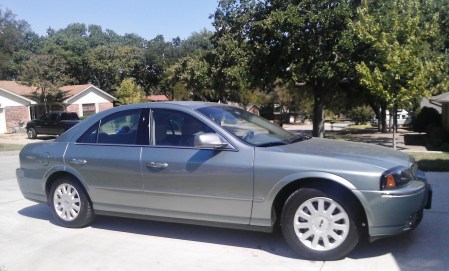
My new car sits in the driveway.
Well, let me clarify. The car that is new to me, the car that is to replace a vehicle that I loved, sits like a stranger in my driveway.
Oh, I know it’s a “thing.” But, this one is a “lady,” to be sure. She is shiny and pretty; polished and put together the way a debutante would be prior to her party. I liked her from the moment I saw her. She’s no spring chicken, but she’s got a great body and she doesn’t show her age!
Somehow, though, we haven’t yet been able to get beyond the “small talk” and the WP_002340awkwardness. I don’t even know her name!
All that will change, I’m sure.
Together, we will see to it.
It’s silly, I say to myself as I consider going to the grocery store, meeting a friend for lunch or just taking her on a spin around a few city blocks.
But I delay. It’s as if by embracing this new one I am somehow being disloyal to the “other one.” But, that one gave up on me. He — that’s right, he — simply decided one day to stop running. No argument, no warning, no comforting words at the end. Just. Stopped. Running.
Oh, yes, there was an interim vehicle. I didn’t simply give up driving waiting for a replacement. And I didn’t go on a hunt for the perfect replacement. In fact, I was less than enthusiastic about looking. Anything will do, I told myself. As long as it runs. I told my husband the same thing.
And so we replaced Reggie (yes, he was the one I loved!) with George. A workhorse, designed for hauling gear and heading for the back country, George (or Monty, short for Montgomery) is a gem, but he is also a proper British gentlemen. He seems reliable, but he’s older! Even though I drove him willingly for a couple of months, I wasn’t totally comfortable inviting him on a road trip.
Thus the dilemma. The remaining member of our vehicle family was also up in years. Sheila, a grand old girl, just wasn’t up to taking a trip.
As if by magic, opportunity knocked. My husband and I like to think that Reggie and Sheila met up somewhere in the old vehicle yard and are telling funny stories about the times they shared with us.
And here we are. This pretty, strange lady sits in the driveway, just waiting. In 10 days, she will take us through several states on a journey of close to 2,000 miles.
Maybe, before we take to the road, just maybe, she’ll tell me her name and I can give her a hug!

Originally posted by Adrienne Cohen on  Sept. 22, 2015, on freelancewriter.biz prior to the Road Trip