Kansas — living the dream

Today’s Kansas is not the one that Dorothy and Toto might easily recognize. The winds still blow hard across the state’s prairies. No doubt they still have the power to swirl some dirt around and can occasionally cause tall grass to bend almost horizontal to the ground. The state has endured its share of hard weather and hard times over the years, and not only in fiction.

Today, however, Kansas has its eyes on the future, and that future is bright. The past two and a half years of pandemic closures and uncertainty have in some ways been a catalyst for the growth and development that began before the shutdown. Change is “impatient” in the state today.

The focus is forward-facing and the vibe everywhere is hopeful and energetic.

In late September, I participated in a whirlwind three-day tour of southeast Kansas. As the region’s Travel Guide proclaims: “SOUTH of the stars, EAST of the sunset, smack dab in the heart of America.” This is not a part of Kansas I had previously visited, and I didn’t know quite what to expect.

From the air, the state resembles a patchwork quilt of color, with sinewy ribbons of rivers and roads winding across the prairies. Kansas is filled with small farming communities, each with a unique personality. There are many; we flew into Kansas City, visited Fort Scott, Humboldt, Chanute, Galena, Pittsburg, and Baxter Springs, and drove through others without stopping. Although all towns in Kansas are classified as “cities,” only five boast populations of 100,000 or more. Everywhere we went, we met locals who are in the process of redefining their past history and their future in distinctive ways. Make no mistake, history is intertwined with dreams here in southeast Kansas, and that contributes to the region’s infectious vitality.

To be fair, I was not completely unfamiliar with Kansas, known as the Sunflower State. I was grounded at the Kansas City Airport during a snowstorm many years ago — not one of my happier memories. But the flatland prairies calm me, and road trips always are interesting. The Cosmosphere in Hutchinson is not only fascinating but well worth an extended visit. Four years ago, I enjoyed an all-too-short visit to Wichita. I knew about Fort Leavenworth and Fort Riley, but Fort Scott was new to me.

However, I didn’t arrive for my recent visit to this “flyover state” anywhere near as enthusiastic as I was when it came time to leave. The trip was eye-opening, the people welcoming and the sights impressive in unique ways. It was invigorating to spend time on the ground in the heart of America.

I want to return. Sooner rather than someday!    

Today’s winds of change are especially strong in some of the state’s traditional farming communities. The New York Times chose Humboldt as one of its 52 best places to travel for 2022. After being there, I know why! The land may not have changed much, but its inhabitants have. It’s hard not to fall in love with this part of the state. Southeast Kansas is full of pleasant surprises and some quirky attractions, and its people seem to be moving at full throttle into a future even they cannot yet quite imagine.

Travel with me . . .

Over the next several weeks I’ll share more of my thoughts. We’ll start in Fort Scott and the jewel in its crown – the Lowell Milken Center for Unsung Heroes. Then, we’ll move on to the 13 miles of Route 66 that still cross this corner of the state and explore other Kansas byways, ending in Emporia, now the acknowledged center of two thoroughly modern sports – disc golf and gravel bicycle racing. We’ll visit the Martin and Osa Johnson Safari Museum in Chanute, a small city also known for its ties to railroading and early aeronautics.

All along the way, we’ll explore Kansas eateries, sampling traditional “comfort food” and new taste treats served by innovative chefs and restaurateurs. This was a trip that kept us on the move. Despite a rental van glitch that required a delayed start and an initial itinerary adjustment, our group of journalists crammed a week’s worth of experiences into the time we had, thanks to the extraordinary planning of Kansas Tourism and our local hosts.

Join me to learn more about the food we enjoyed along the way — it may surprise you! Then, if you should decide to see southeast Kansas for yourself, know that residents of its many charming communities will show you around and make you feel at home — visitors to Kansas don’t remain strangers for long!

71 10 21– and other points on the globe

Magnetic North, the point on the globe where all other locations lie to the south, is commonly known as the North Pole. But it’s moving, sometimes pretty rapidly, according to scientists.

Despite romantic notions to the contrary, the North Pole is not a physical point on the planet, but it’s also not a figment of the imagination.

It’s not where Santa Claus hangs out. It’s not a very hospitable place. And, no, I have not been there. In fact, I haven’t been even close. But, last summer I crossed into the Arctic Circle as a passenger aboard a lavish modern cruise ship, Princess Cruise lines Island Princess. It was a unique adventure, and the trip is spectacular. My husband and I were there during “polar day,” which lasts from about the time of the Spring Equinox in late March through late September. During those days the sun never completely falls beneath the horizon and one can read at midnight with no need for a lamp.

At 66 (plus a little bit) degrees north latitude, the Arctic Circle forms a ring around what is known as the Earth’s North Pole. The certificates we received to commemorate the crossing, signed by Ship’s Captain Paul Slight, attest that on “Friday, June 17, 2022 at 12:12 am,” we crossed that fabled line. In our minds, we had become Arctic explorers.

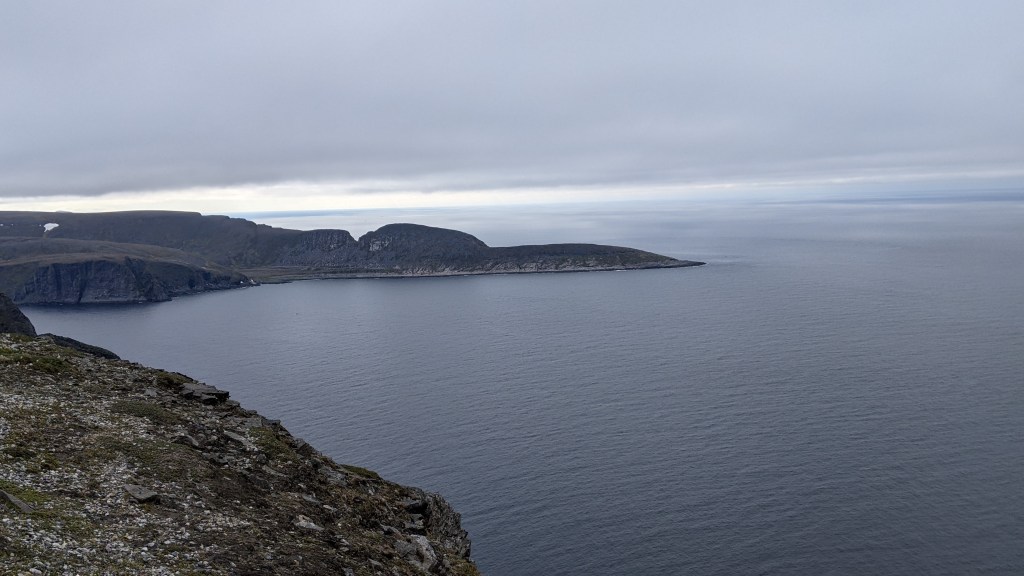
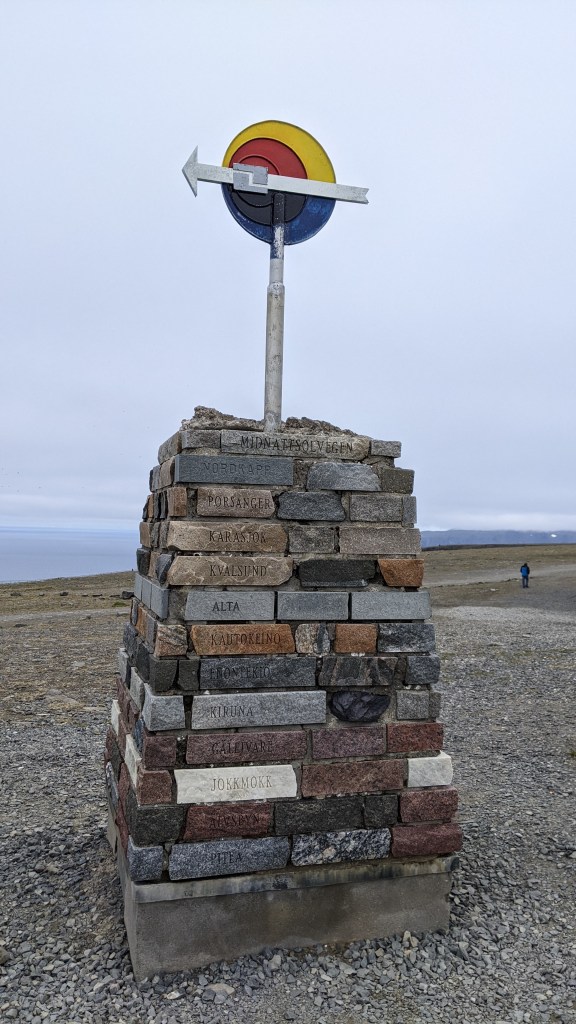
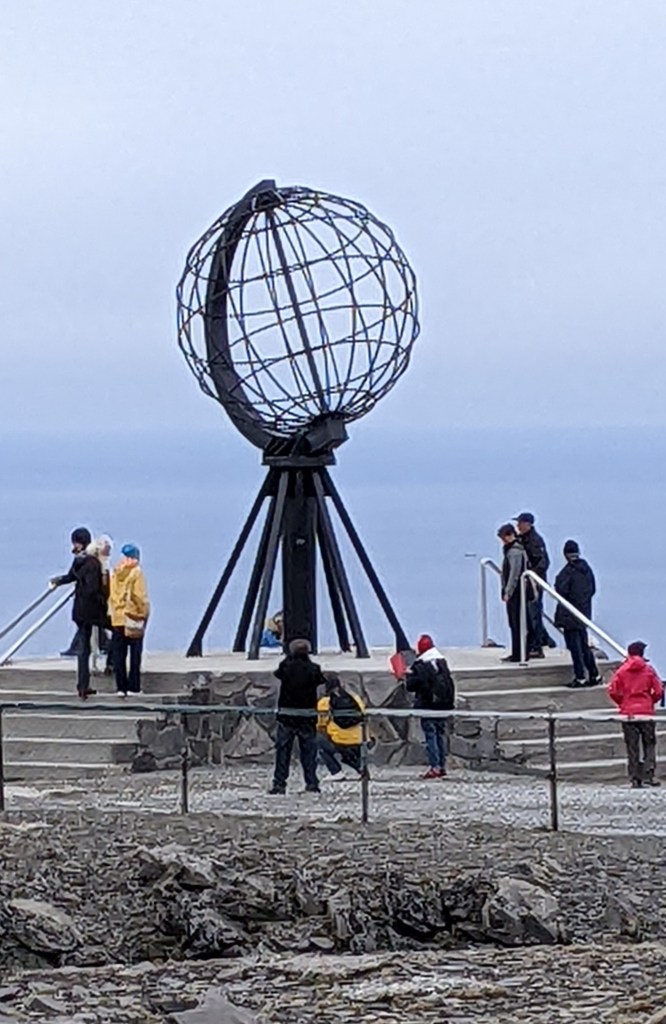
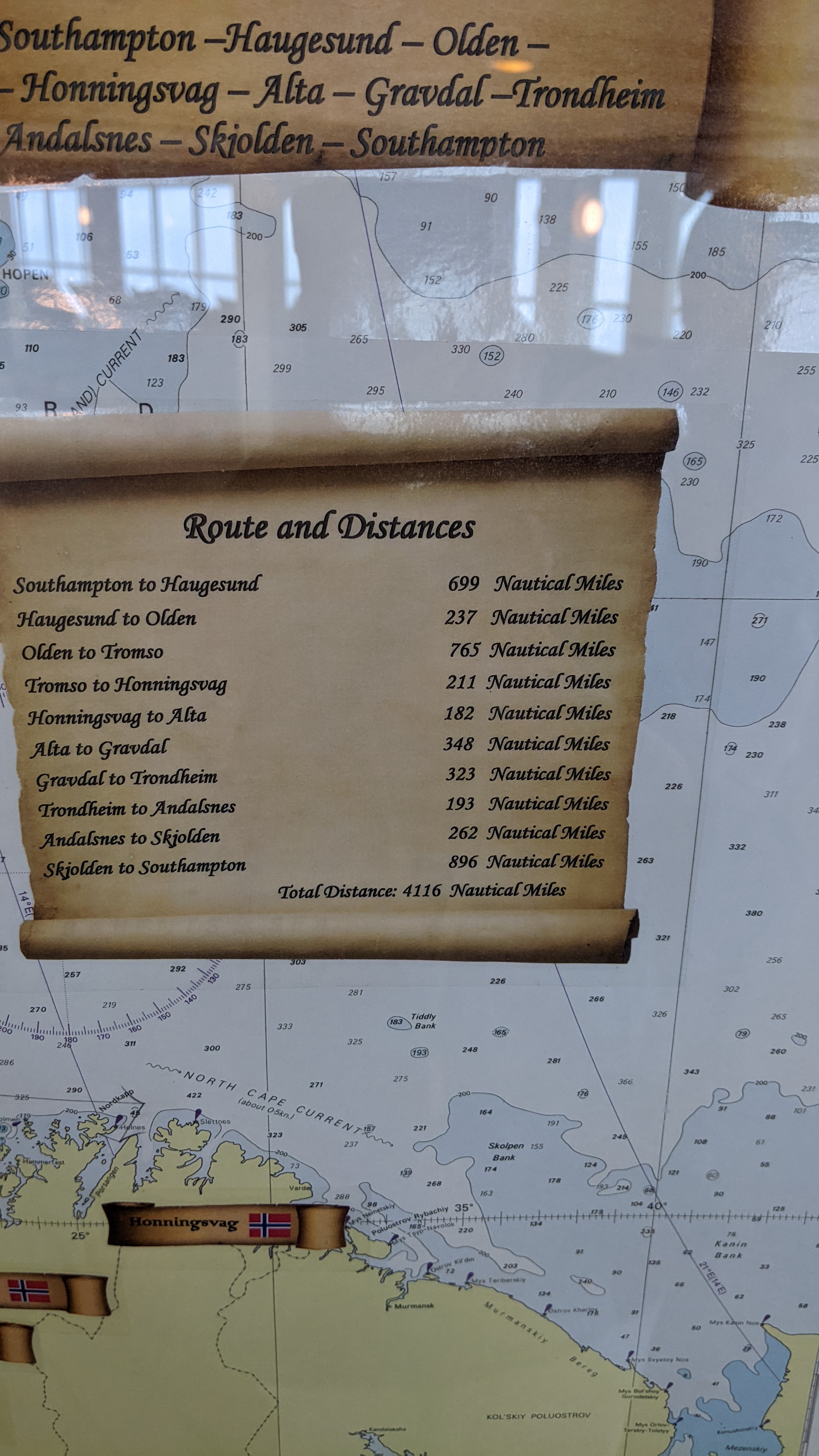
We traveled further north. Nordkapp lies at Latitude 71°10′21″ N, a high plateau on a spit of land that rises almost 400 feet above the swirling Arctic Ocean below. It is cold, windy and forbidding on the best of days. In the winter, the road to Nordkapp is often impassable, and not even reindeer remain on the surrounding fields.

The nearest town is approximately 22 kilometers distant. Oslo, Norway’s capital, lies about 2000 kilometers to the south, and the North Pole is about the same distance further north. At the easternmost end of the virtually uninhabited land, there is a 121.6-mile land border with Russia, established by treaty in 1826. But few travelers cross at the single border station, and the boundary between the two countries continues through the Barents Sea and the Arctic Ocean. As the furthest north point of land in continental Europe, Nordkapp attracts visitors who harbor the same dreams that have lured explorers to points unknown over the centuries. Their stories are captivating.

Early visitors had to arrive by boat on the sea below. They scaled steep, rocky cliffs to reach the point above. There was no visitor center then, and the path back down the cliff had to be even more difficult than the climb up.

Today, the draw of this stunning promontory is so powerful that tourist buses sometimes follow snowplows to bring visitors to the point. Our trip in June, however, entailed a pleasant drive along modern roadways, punctuated by native Sami settlements and the sight of reindeer grazing on the barren windswept land. They and their Sami masters invariably return to the mainland in the fall, prior to “polar night,” when the sun does not rise above the horizon for a period of months. We also visited a northern fishing village, which must feel terribly isolated during the winter.

Another northern port, sadly, was canceled. We had been scheduled to call at Svalbard, the island that houses the Svalbard Global Seed Vault, an underground facility that stores millions of crop seeds from throughout the globe, protecting them against disasters of all kinds, including global warming. We had anticipated visiting Longyearbyen, the largest settlement with a population exceeding 1,000 in the Arctic region, but the visit was canceled at the 11th hour.

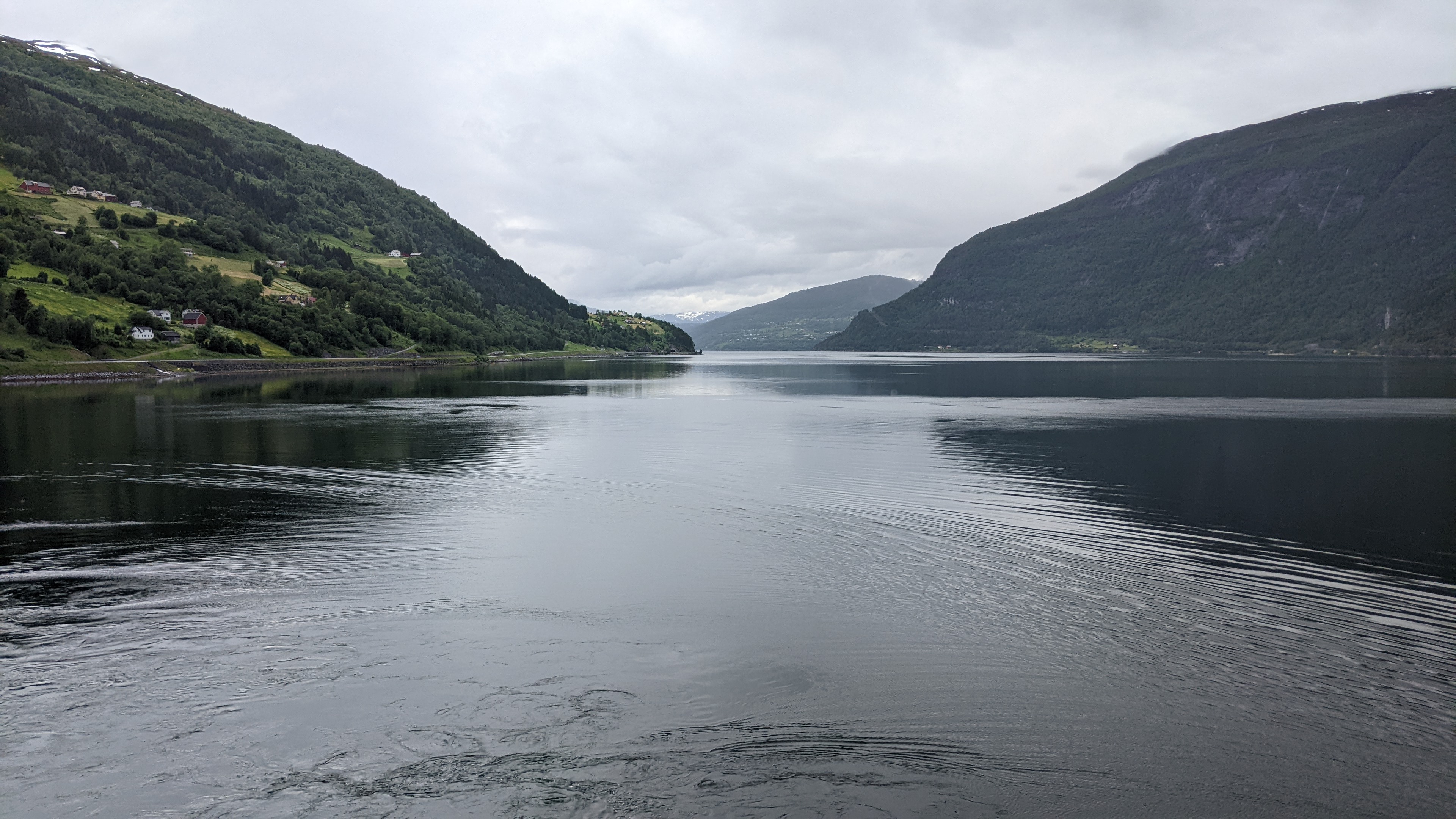
Our trip through the coastal fjords was spectacular, relaxing and enlightening. We are grateful to have had the opportunity to visit a far-away landscape that is awesomely beautiful, to drink in the natural beauty of the far North, and to meet the people who inhabit this extraordinary landscape. Those who live here are accustomed to strangers, but no one remains a stranger for long!
Now, another adventure awaits . . .

In January 2023, my husband and I — barring unforeseen circumstances — will experience another polar day. We will reach approximately 65 degrees south of the Equator and cruise among the ice shelves and along the shoreline of this unique continent. Our 16-day itinerary with the Sapphire Princess promises to be a unique adventure. We are not likely, given the size of our ship and current regulations, to cross Latitude 66°33′49.3″ which is the official Antarctic Circle. Only smaller expedition ships and scientific teams routinely venture further into this ice-covered environment.

We are scheduled to fly into Santiago, Chile, and embark from the port of Valparaiso for a journey that will take us to the southern reaches of Patagonia, and to Ushuaia, “the southernmost outpost in the world” at the tip of Argentina. We expect to sail in Beagle channel, as did Charles Darwin, and round Cape Horn just as previous generations of seafarers did on their voyages to the new world. Then, we look forward to spending four full days cruising the waters of the Antarctic Peninsula, leaving Ushuaia at the southern tip of Argentina and traversing Drake Passage, hopefully without incident, and with minimal turbulence from notoriously rough waters where the currents of three oceans collide. It’s a voyage I have long envisioned!

Just days ago, however, on December 2, 2022, I learned of the rogue wave that struck the Viking Polaris in nearby waters, resulting in the death of a passenger, injuries to four others, and damage to a well-equipped modern cruise ship. I realized once again that we humans have little control over the forces of nature, much as we would like to be the “powers that be.”

Does it concern me? Not enough to change our existing plans, but I cannot claim it didn’t give me pause. This trip to the bottom of the world, just as our trip to the Arctic Circle, will be during a polar day (or summer season) due to the inclination of the earth in relation to the sun. When my husband and I travel in late January to the southern reaches of the globe, will it be calmer in those waters? I do not know.

There are no permanent settlements in Antarctica, and the various research stations are located further south than our journey will take us. We will not set foot on Antarctica, the seventh of earth’s continents, but to gaze out at the barren expanses of snow-covered terrain and cruise past glistening icebergs, larger even than the ones we encountered in Alaska, will be enough. I, for one, am enthralled by the thought of being (relatively) close to another of earth’s legendary places — the South Pole. Like the North Pole, it is not a fixed point — it, too, shifts, even though there is a land mass below. If we are fortunate enough to spy seabirds, seals, penguins, albatross, and other wildlife in their natural habitat, we will count it as a bonus.

And, if our travel through Drake Passage is a calm one, I am certain we will be forever grateful. This trip to the “bottom of the world” is not only the culmination of a long-held dream, it also seems a fitting “second act” to last summer’s Arctic adventure.

On the road to Toad Suck

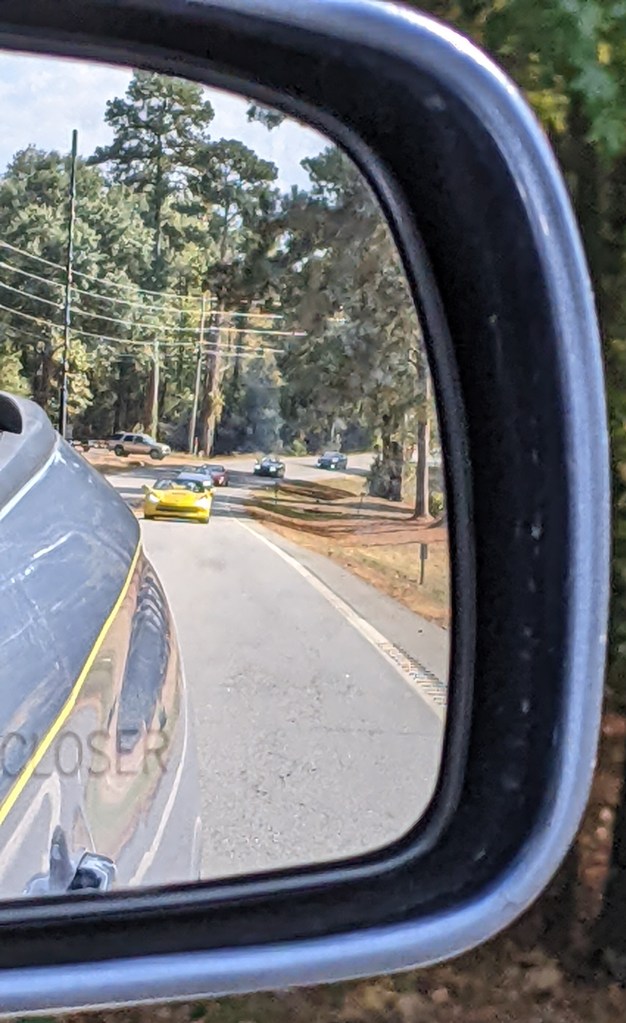
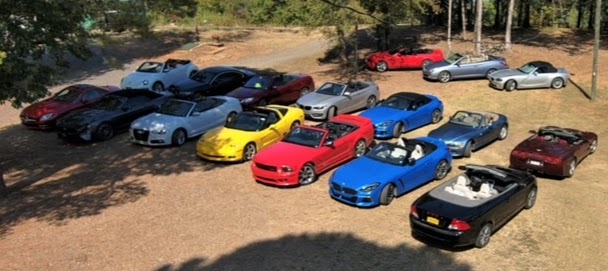
A string of convertibles – all with tops down — left last Saturday morning for a leisurely road trip from Hot Springs Village to Toad Suck, a little town in Arkansas with a name that invariably makes people laugh or shake their heads in disbelief. The excursion was a fall event for members of the loosely organized convertible-owners group “Escape the Gate.”

There may be a few “wannabe convertible owners” among the 190 names on the email list of this group, but on this day 52 people gathered in a parking lot just outside this planned, gated community. We departed in 26 shiny automobiles on an hour-long drive through scenic byways and fall foliage.

The planned destination was lunch at Toad Suck Bucks, a riverfront steakhouse with its own unique story, situated on a bluff overlooking the Arkansas River not far from the lock and dam that share the name.

The eatery is a lively place from Thursday through Sunday, featuring comfort food and good service, cold beer and good bourbon, as well as pool tables and shuffleboard inside and live music on the patio Friday and Saturday evenings. It’s lively and informal, and everyone there seems to know their neighbors.

Toad Suck Bucks has been drawing a crowd for 23 years. Except for a few more dollar bills stapled to the walls and columns today, it probably hasn’t changed much since it first opened. Toads – what else? – are a décor element.

The owner doesn’t normally fire up the grill until 2 p.m. on Saturday and at 4 p.m. Thursday and Friday.

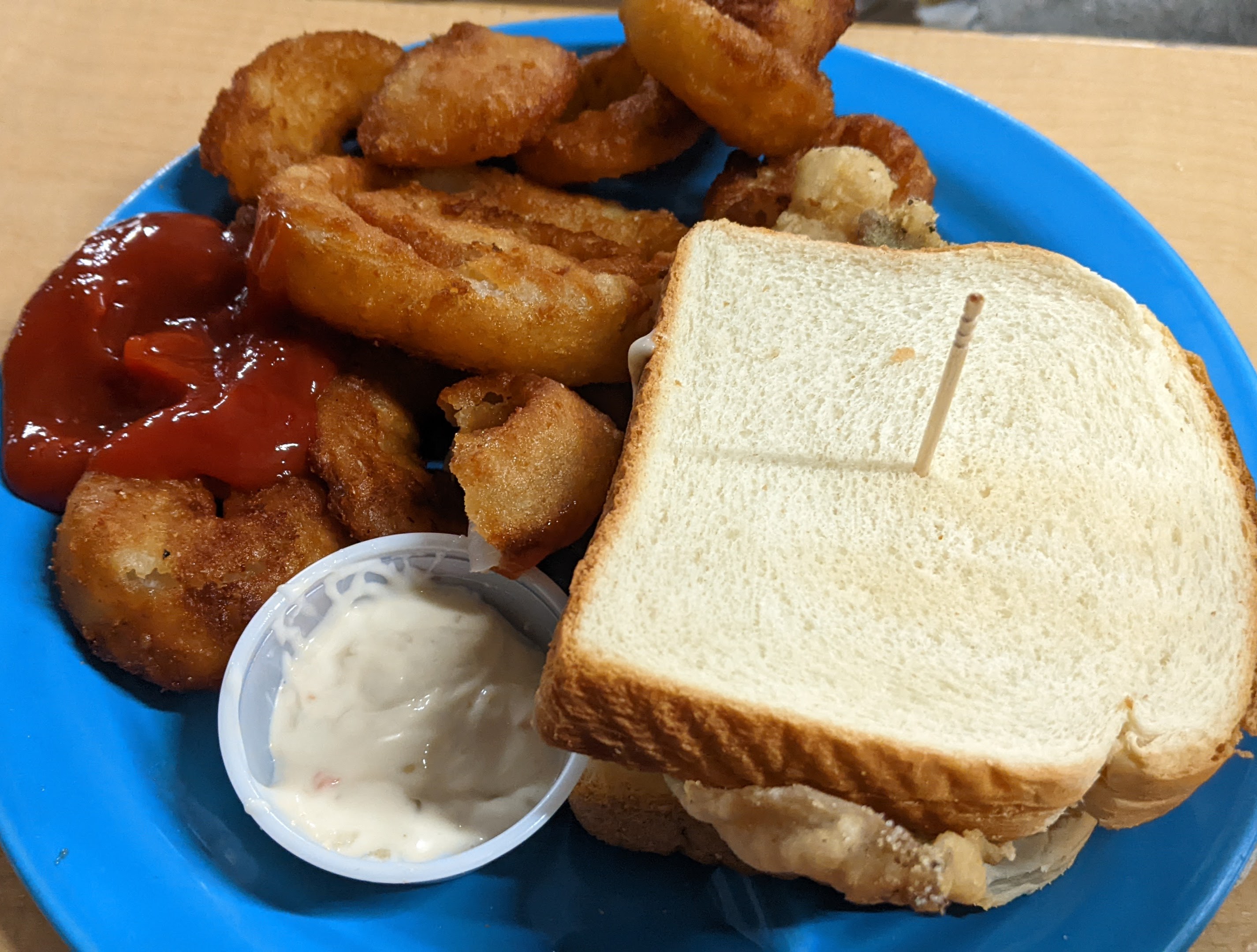
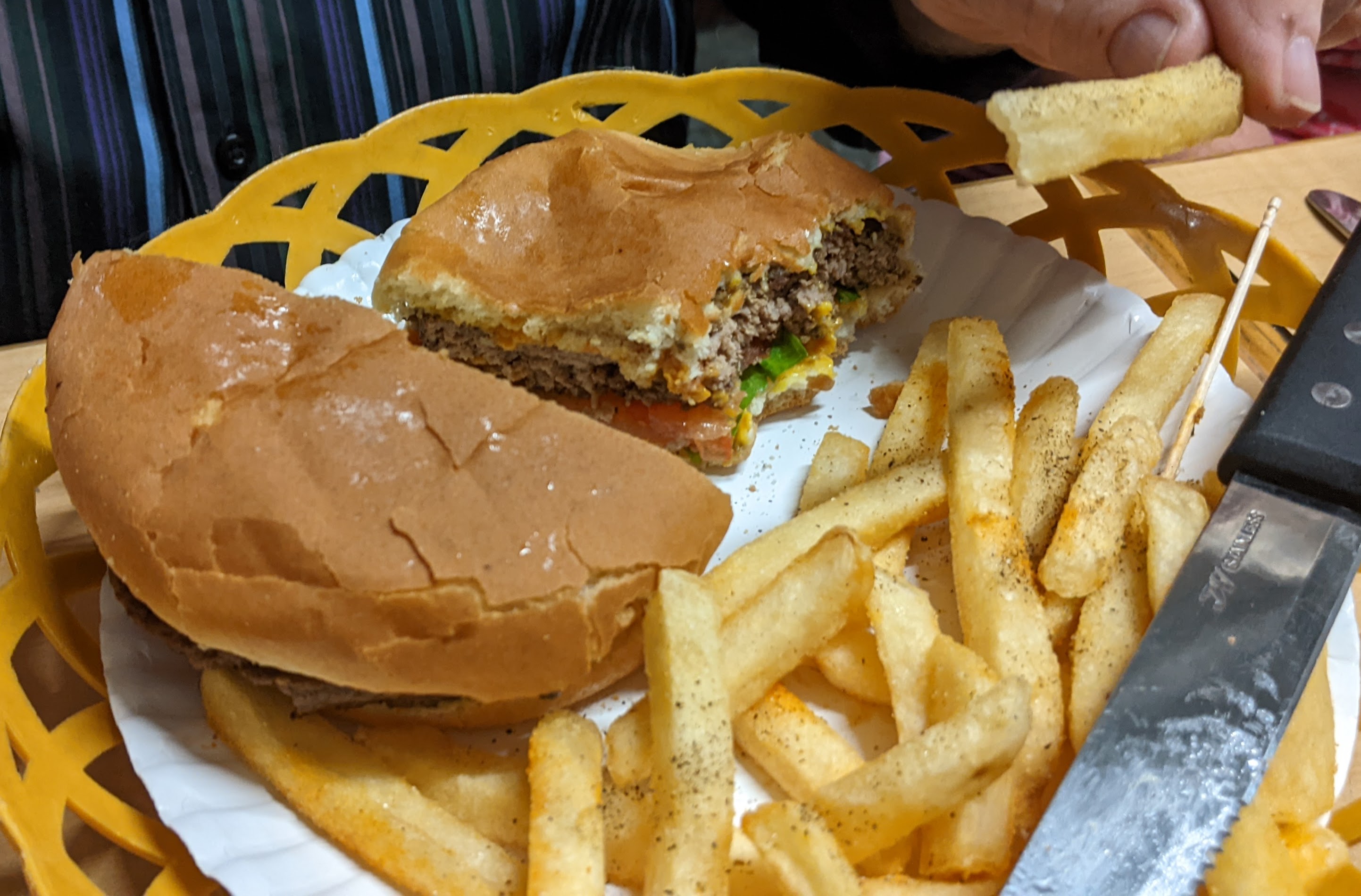
However, owner Ted Buck agreed to be there early to accommodate the convertible crowd on this Saturday. He was in the kitchen turning out burgers and fries, catfish sandwiches and fried bologna sliders, grilled shrimp and pork tamale bites, assisted by his wife and regular crew who pitched in to assure that the people-pleasing quality of this country-favorite diner was intact. Buck still found time to shake hands and explain the history of this quirky Arkansas treasure.

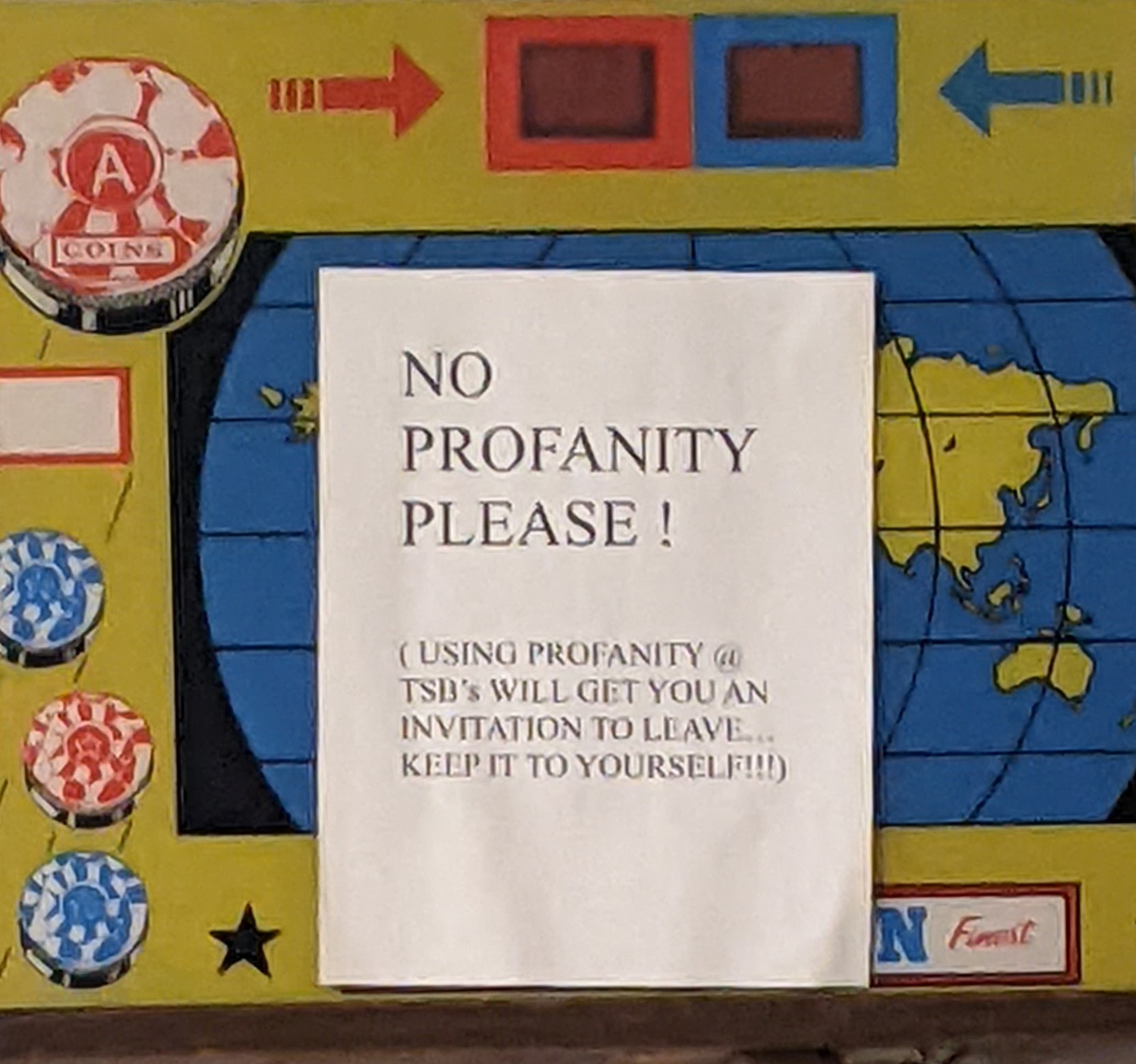
It’s a unique find, but it’s not at all unknown. Toad Suck Bucks boasts a Facebook following of 7.4K, with nearly as many likes! The interior is as quirky as the name, filled with mismatched tables and chairs that can be reconfigured at will to fill any need. There is a sign that proclaims: “No profanity, please,” and another hand-lettered sign hangs from the ceiling near the kitchen as the dessert menu. I’ll bet it changes often, based on what’s in season, or maybe just at the whim of the baker.

Parking isn’t a problem, and it’s obvious that when the weather allows, the “party” naturally spills onto a patio that’s filled with picnic tables and comfortable lawn chairs! Open bulbs are strung for evening illumination and there are no posted closing hours!

Buck returned to his native Arkansas following military service in both the U.S. Navy and Air Force – he laughingly agrees that’s unusual, and he eventually settled on this quiet spot in this peaceful part of the state. A couple of homes and several outbuildings exist on the property today, and a single sign at the head of a long driveway leads newcomers to the site.

He says he operated a flea market in the building that now houses the restaurant, then he bought a pool table to pass the time with friends. One pool table wasn’t enough, so he bought several more, and more friends arrived. Buck once served simple snacks, with BYOB get-togethers the norm. Then, he adds, “Someone suggested we grill some steaks.”

Toad Suck Bucks was born.

Getting there isn’t always easy. No billboards proclaim its existence. There was a several-mile stretch of dirt road that had drivers wondering if we had all taken a wrong turn. Our colorful convoy prompted other drivers to stop, wave, and let us pass as we made our way through small towns and turned across lanes of traffic. I’ll wager we could have asked directions from any one of the residents had we actually thought to do so. Despite the dust, our group arrived intact, and later Buck shared the “easy way” to keep us all on pavement on the way home.

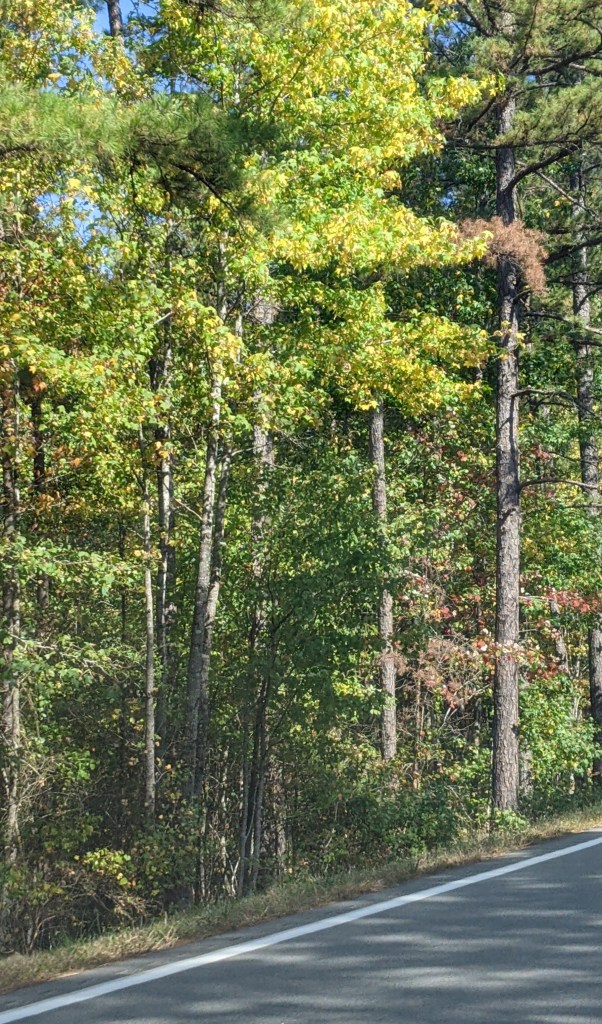
All in all, it was a perfect autumn day for a top-down drive along country roads, an excursion that makes for fond memories. Ken Buck has surely been doing something right for the past couple of decades, and many of our group vowed to return. Add 52 more “likes” to the total!

Big Brutus

It sits today on the Kansas prairie like a kind of mechanical orange dinosaur, but this giant electric shovel was once an operating mining machine used to extract coal from shallow veins that run through surrounding farmland.  In 1963, the parts were shipped on 150 rail cars to be assembled on the site. The behemoth stands 16 stories tall and weighs in at 11 million pounds. Its boom alone is 150 feet long, and each dip of its shovel could hold enough material to fill three rail cars – the equivalent of 90 cubic yards or 150 tons.

Sadly, Big Brutus performed its duties only for 11 years. It was used to unearth shallow veins of coal at depths down to about 65 feet. Smaller equipment was then used to fully extract and move the coal. By 1974, the process was no longer economical, but Big Brutus was left in place, deemed too expensive to move.

It’s not the biggest shovel ever built; the record-holder was three times its size, but Big Brutus is the largest to survive. Donated by the Pittsburg & Midway Coal Mining Company, it forms the core of the mining museum that was established in 1985. In 2018, it was listed on the National Register of Historic Places.

Today, visitors to the site marvel not only at the size of Big Brutus, but also at its story. One could spend several hours to view all the exhibits and actual machinery displayed at the non-profit center. It tells the story of mining in this part of the world, and it is fascinating. It also provides a glimpse into what life was like in Kansas in times past.

It is awesome to stand next to the metal tracks that tower over my head, and know that those gears once moved this machine across the landscape, albeit at a snail’s pace. Visitors may climb up to sit in the cab of Big Brutus, pose for photos on its platforms or in its shovel, and see small-scale models of other mining equipment in action in the Visitor Center. The Visitor Center in West Mineral, Kansas, is open seven days a week, except for Thanksgiving and Christmas.  

It may be an unlikely destination for a family vacation, but it’s captivating, to say the least! The truth is that Big Brutus is equally impressive for adults as for children!

Big Brutus was only one of the destinations that I visited recently on a three-day press trip through southeast Kansas. Read more of my stories and impressions in the coming days. As those of us on the trip agreed, “There’s a lot of Kansas in Kansas.”

Goats — and fun — galore!

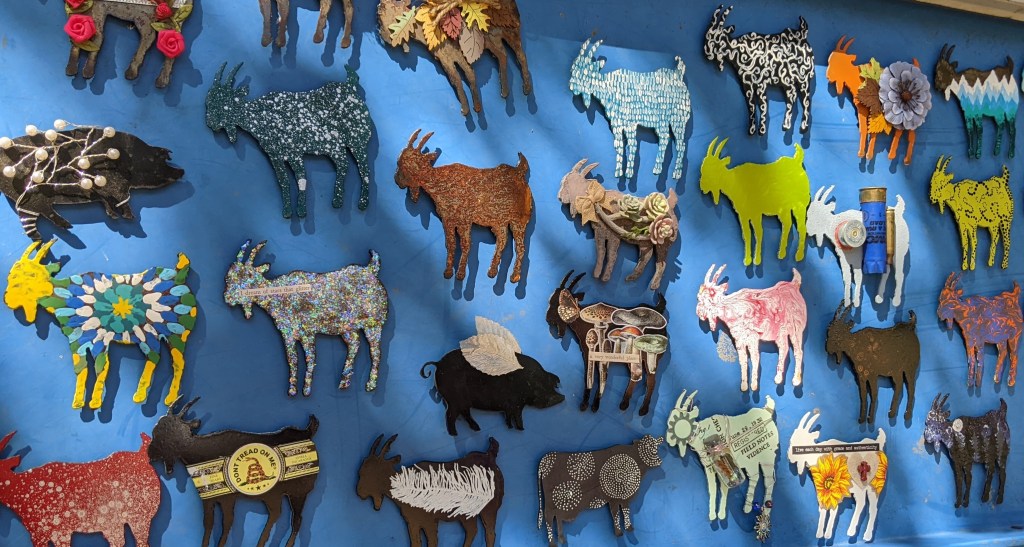
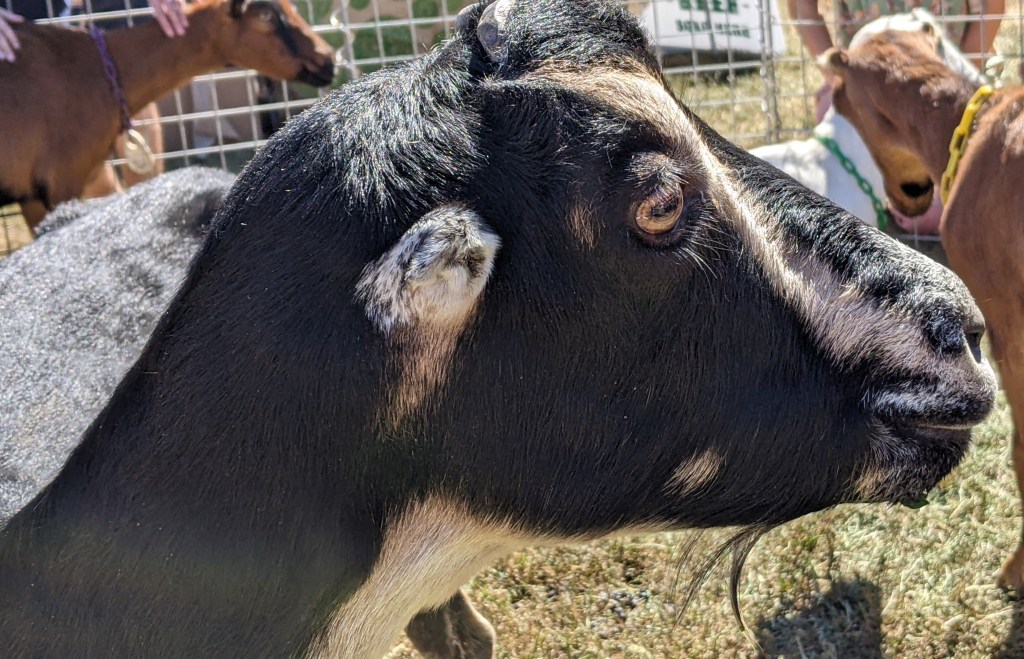
The population of Perryville, AR, swelled by several thousand October 1 for the first Arkansas Goat Festival held since the Coronavirus pandemic was declared in 2020. The quirky event, a long-standing tradition in this tiny central Arkansas community located only about an hour from the state capital of Little Rock, was expected to attract up to 8,000 visitors, according to organizers.

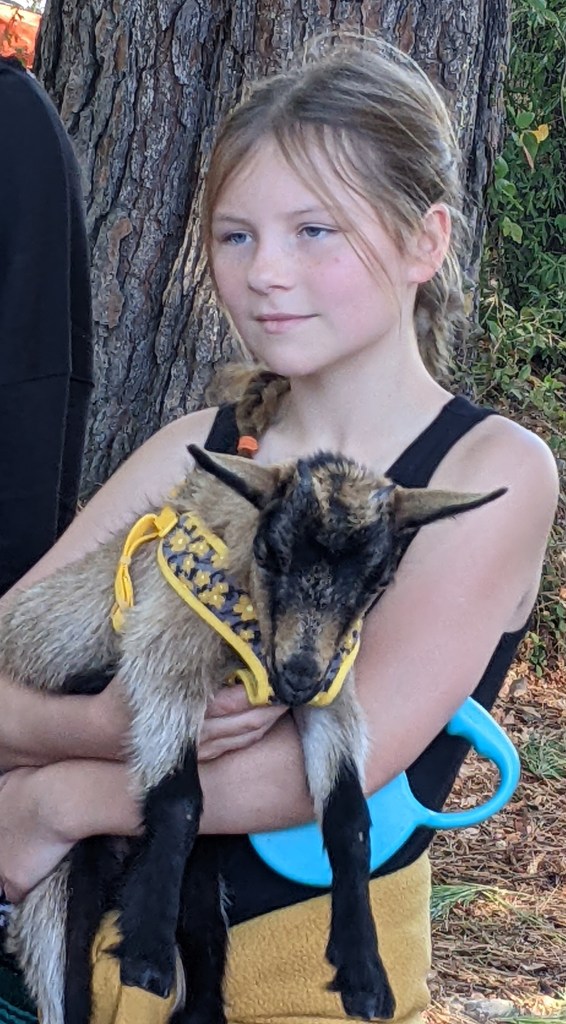
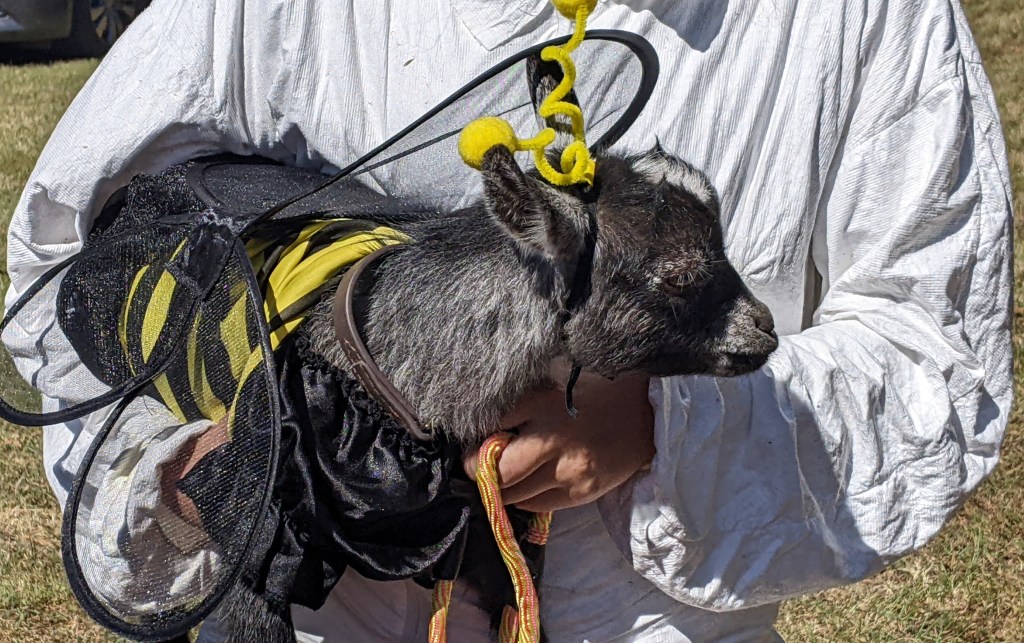
Seemingly, there is something for everyone at the Goat Festival — goat parades, of course — with animals “au natural, in costume, baby goats, and “big guys” — milking booths, goat playgrounds, and petting pens. A “Nannies at Night” lingerie show was also on the schedule! Goats are required to be leashed or tethered, but “mingling” is encouraged.

It was a perfect day for an outing. With scores of vendor booths, live music, and dozens of food trucks, it’s the kind of local folk festival that we love, one of the great American traditions that we hope never disappears from America. You can bet we’ll have it on our calendar for next year! There are other events like this, in Arkansas and elsewhere around the country, and they’re all worth visiting! Check out other Arkansas festivals planned for the rest of 2022.

There’s nothing like a day trip to a unique local celebration to add flavor to life and open your mind and your heart to new fun and adventure!

Living History

On a recent trip to coastal Norway and the Arctic Circle, my husband and I spent some time in Southampton before embarking on our cruise. The port city on England’s southern coast is delightful and welcoming, well worth a visit. As we discovered, it is full of history that we knew little about. It was the departure port for the ill-fated inaugural sailing of the Titanic, and it was also the port from which the Mayflower sailed in 1620 with its 102 passengers and 30 crew members.

It is a charming city, and there was an air of festivity when we were there, buildings festooned with the Union Jack and banners in the streets. Smiling likenesses of Queen Elizabeth II greeted us everywhere we went, and the mood was distinctively celebratory. The Queen’s Platinum Jubilee was officially proclaimed for the long weekend of June 2 through 5, with special events planned to continue for at least a month. We arrived in Southampton on Sunday, June 12, and the “party” was still going on!

When we returned to Southampton 17 days later, we found that little had changed. England was still celebrating the queen’s 70 years on the throne. We found that to be true even as we journeyed north to Suffolk and spent a few days in London before boarding our return flight to the United States on July 5.

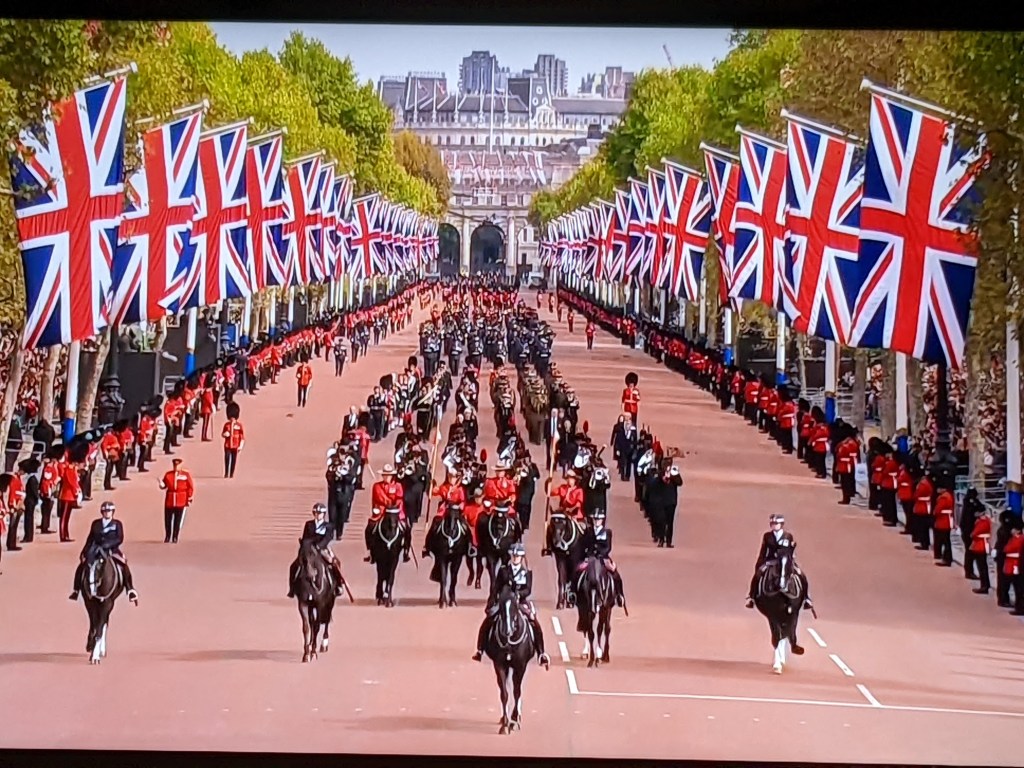
Little did we expect that only about two months later, we would hear the news of the queen’s death. And we could not imagine, at the time, the outpouring of grief from around the world that would greet that news. As I watched news coverage from around the world in the days before the state funeral on September 19, I was pleased that we had been fortunate enough to visit Elizabeth’s England while she was still queen. Sadly, we did not take a tour of Windsor while we were there. But, watching the funeral procession make its way through London, I recognized many of the streets we had so recently traversed.

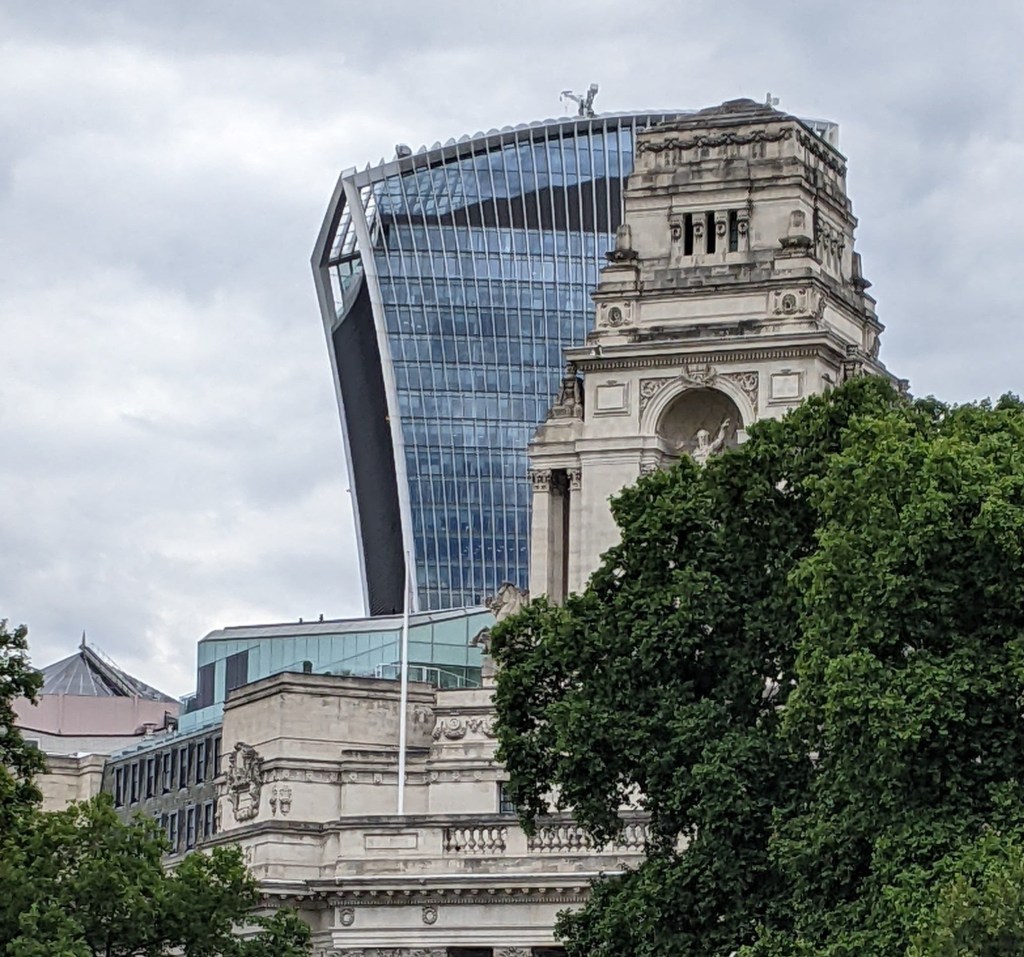
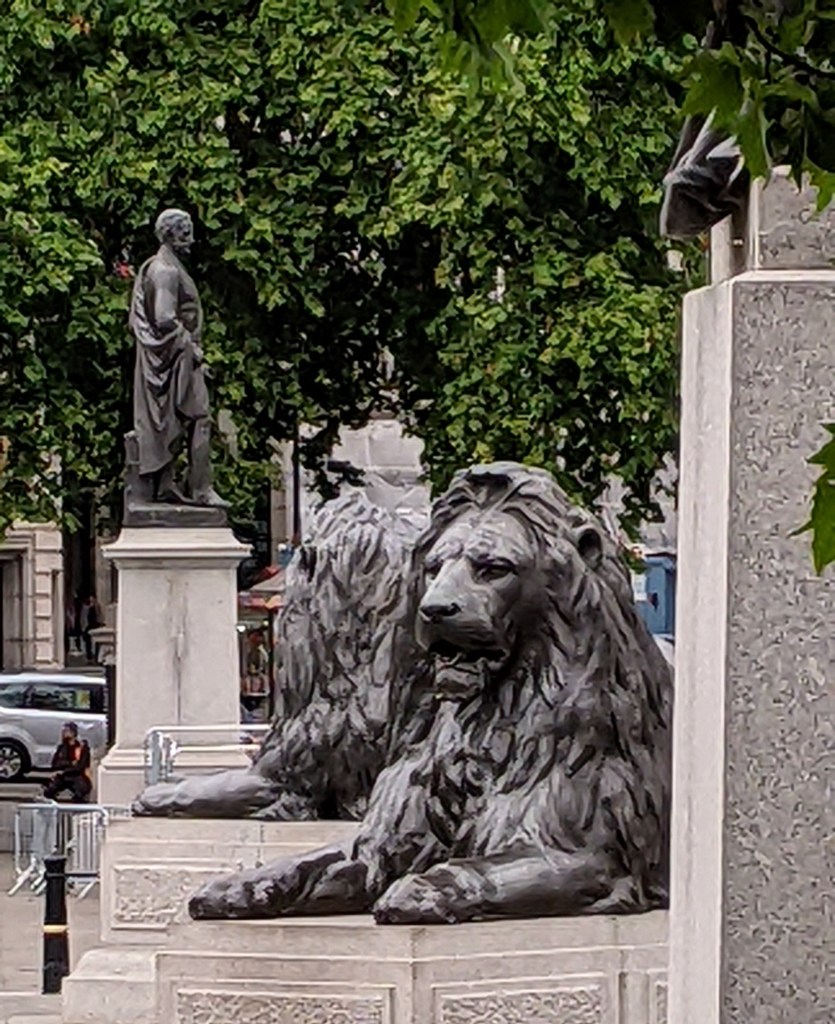
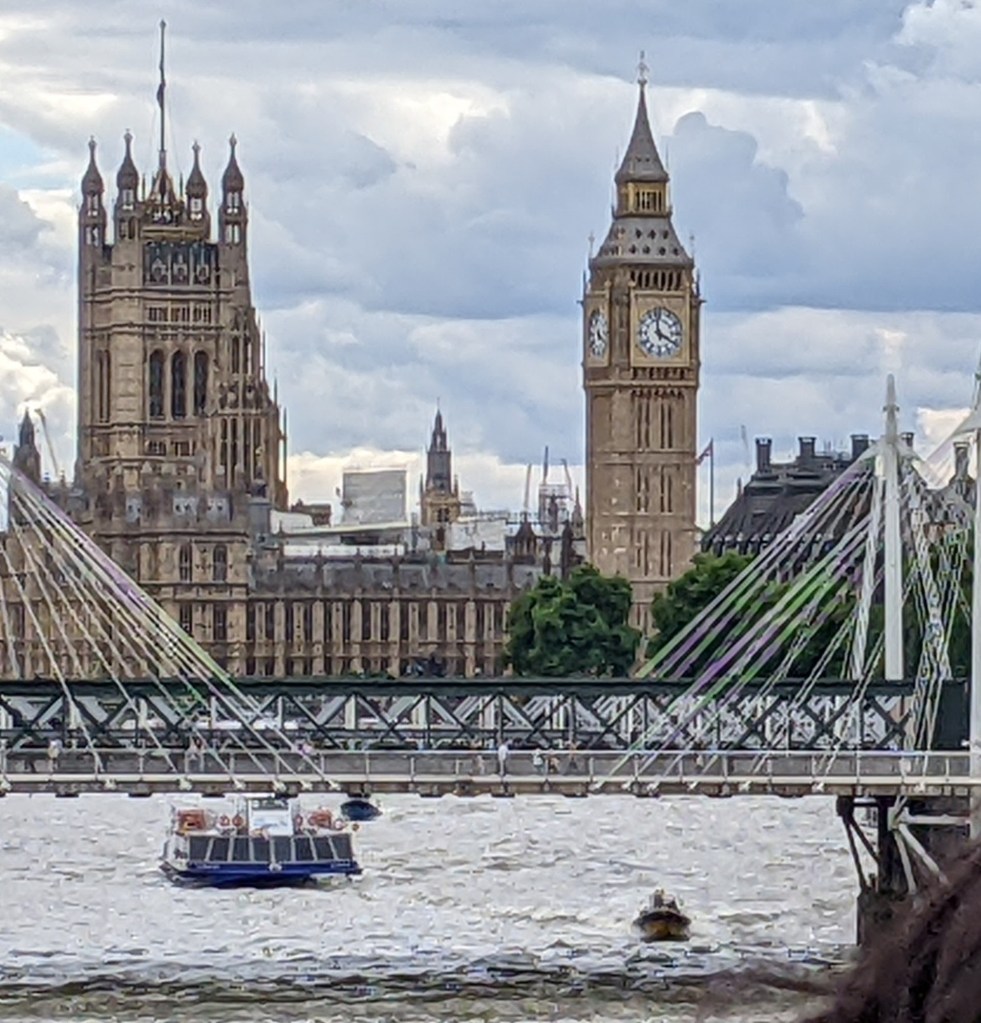
I felt, oddly enough, that I had been witness to history simply by being there. Forty years or so have passed since a previous trip to London. But, like Rome, Paris, Tokyo, Buenos Aires, and other world capitals, London is an eternal treasure. Much of it remains the same, but it is more diverse and infinitely more crowded than when I was last there. Modern steel and glass buildings, whimsical modern art, the London Eye and the London Shard, and both the cable cars that whisk passengers above the Thames and the RIB boats that carry passengers at high speed on the river somehow complement rather than compete with slow-moving river taxis. They have become nearly as iconic as double-decker buses and traditional black cabs.

London may be unique in the world. For one, it is the home of a monarchy that, by all accounts, seems alive and well, especially today after its record-setting ruling queen has passed the crown, along with the orb and sceptre of the title, to her son, King Charles III.

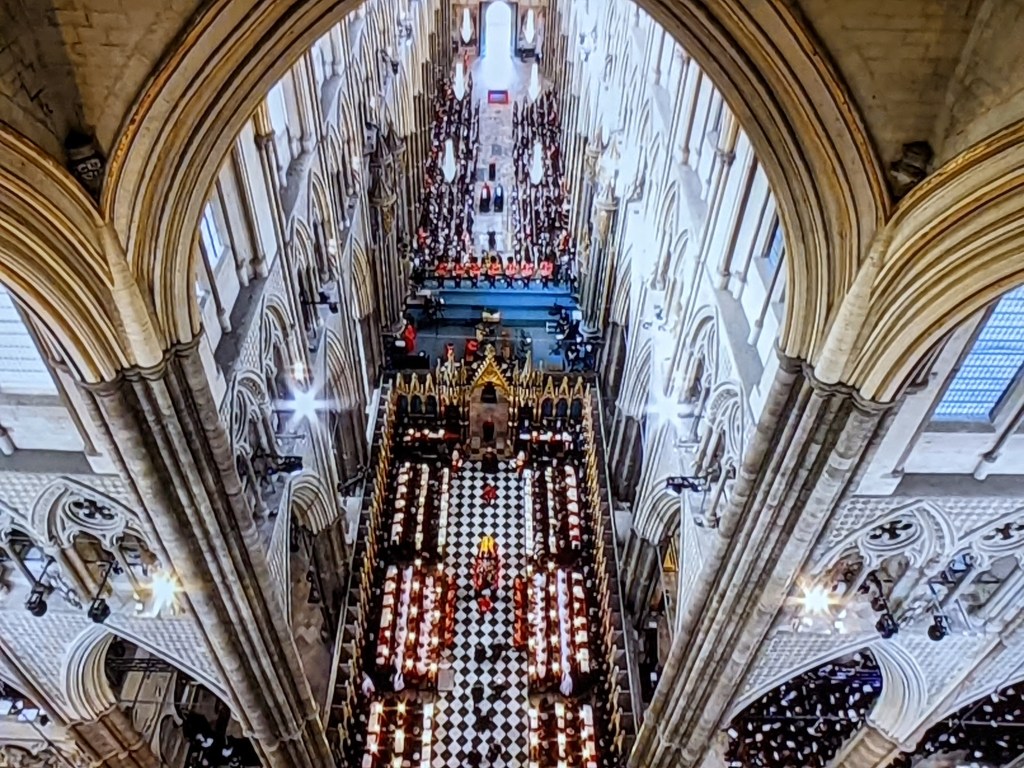
I watched the ceremonial events of the past week in awe, with an awareness that an event of this magnitude will not happen again in my lifetime, perhaps never again. I was up early to watch the funeral on my large-screen TV, along with an estimated four billion viewers worldwide, deemed to be the largest global television audience in history.

Some of us around the world watched the queen’s coronation on early black and white television; many more have tuned in to watch royal weddings and funerals of world leaders in real time and full color. But this was different, somehow.

More than one million Britons lined the procession routes to pay tribute as the cortege bearing the queen’s flag-draped coffin made its way from Balmoral, Scotland, to Edinburgh, and later from Buckingham Palace through London to Westminster and back, and, finally, to Windsor

There were poignant moments amidst the traditions and prescribed ceremony. The outpouring of public love and respect was acknowledged by the royal family as they greeted well-wishers who laid flowers outside various palaces. They endured public scrutiny and performed their prescribed roles tirelessly and flawlessly for 11 days. The military, church leaders, government officials, and representatives of other nations, rose to the demands of duty and tradition.

And now we will all move into a future that is still to be written, by a monarch who has waited a lifetime to become king surrounded by family members who have demonstrated that they are, in a very real sense, as human as the rest of us.

That’s something to be remembered, within and beyond the United Kingdom.  

Serendipity: Making Music, Standing Together

Magic sometimes happens when one is in the right place at the right time. In this case it was slightly before 9:30 a.m. Friday, March 25, when three local musicians set up to play a brief concert at a tiny post office in a shopping center adjacent to Hot Springs Village, Arkansas.

There was no advance notice given, the musicians weren’t collecting for a cause, and they didn’t pass the hat. Nor did they attract a large audience. Their reward was simply a smile or two, from those who came to mail packages, buy stamps, or check their postal boxes. The trio did it for the joy of making music together and to express, through that music, the concern they and many others feel right now for what is happening half a world away.

Dr. Millie Gore Lancaster, an accomplished clarinet player, published author and retired teacher, and her long-time clarinet-playing friend, Sharon Daughters, both of Hot Springs Village, were joined by Phillip Wilson, also a retired teacher and published author, of Tucumcari, New Mexico, on the baritone horn, for a performance that both began and ended with the Ukraine National Anthem. Wilson, known as “Papa,” is a lifelong friend of Mrs. Lancaster, in Hot Springs Village for an extended visit. While here, he also serves as guest conductor of the Village Strings.

The Totally Unauthorized Fully Vaccinated Post Office Pop-Up Band: from left, Phillip “Papa” Wilson, Dr. Millie Gore Lancaster, and Sharon Daughters.

It was the kind of serendipity that doesn’t often occur, and this small community with a large population of retirees is not really a place where the unexpected regularly happens. However, the Post Office Pop-Up Band is not a one-time phenomenon. According to Lancaster, it was an idea that sprung out of an incident three days before Christmas in 2018. Some people waiting in a long line for service were irritable, and a few at the postal service windows became abusive when they learned their packages would not arrive at destinations on time.

Lancaster spoke up: “I’m going to bring my clarinet and play music to remind everyone to be kind to each other,” she announced. She didn’t do it that season, but when spring arrived, she and Daughters, who is a fellow clarinetist, began playing happy music like “Supercalifragilisticexpialidocious” and “Bare Necessities,” just for the fun of it, outside the same post office.

That was in 2019.

They sat out 2020 due to the pandemic, she notes, but began playing again in the spring of 2021. It was time for good friends to “get out and play,” making music together once again. They became the “Totally Unauthorized, Fully Vaccinated Post Office Pop-Up Band.” However, the wind blew their sign down and their sheet music away one too many times, so by Christmas they were popping up once again inside the postal office. When “Papa” Wilson came to visit, they were a trio.

Why the miniscule U.S Post Office as a venue? Because, says Lancaster, she still remembers that Christmas when it was not pleasant to be there.  

In addition to the Ukrainian National Anthem, which is said to be the most popular piece of music in that nation, the trio played “You’ve Got a Friend in Me,” from Toy Story, “Can You Feel the Love Tonight?” from The Lion King, and a poignant Bob Dylan “Blowin’ in the Wind.” The concert could have been longer, but the musicians had another agenda. They were moving on to the main post office in Hot Springs, some 13 miles away, hoping to delight postal patrons there.

A simple sign, in Ukraine’s flag colors of blue and yellow, proclaimed simply, “Stand with Ukraine.”

Lancaster said, “We were inspired this time by the musicians in Ukraine whom we saw playing alone amidst the rubble, a cellist once, and a pianist another time. We thought we would join with our brother and sister musicians in solidarity a half world away.”

When it was adopted by the citizens of the independent Ukrainian National Republic following the 1917 Bolshevik Revolution in Russia, the anthem had three verses, and slightly different words. It was adopted in its present form, a single stanza with a repeating chorus, in 2003. The opening line proclaims: “Ukraine’s glory and freedom which haven’t perished . . .” Today, the emphasis is “on vanquishing the country’s enemies and the fresh breath of freedom that citizens so cherish, as they now seek to defend it.”

Indeed, it’s good to make music, to listen to that music, and to stand together.

Why Travel — Take Two

Today I’m sharing, with a bit of nostalgia, some of my favorite photos from the past three years; 2019 took us to Bermuda, Alaska, Maine, Cuba, on a Mediterranean cruise, and then on to a delightful road trip through Croatia, with a final couple of days in rainy, flooded Venice before flying home on Thanksgiving Day. We were thankful to be home, sharing turkey and reheated stuffing with family after a long journey.

This past November we spent a few brief hours on Thanksgiving Day with dear friends on Florida’s Gulf Coast. We met them years ago on Cabbage Key — but, that’s another story. What is pertinent and what seems fitting is that just as one chapter in our book of travel stories ended on Thanskgiving, the next began to take shape with a similar celebration. For us, it was another reason to be thankful, despite the somewhat complicated travel timing and logistics.

We are hungry for new experiences since the world shut down in March of 2020, and we have no fear of becoming satiated. This year, our travel plans — yes, we’ve made tentative plans through early 2023 — will take us to both familiar destinations and entirely new places.

Had previous plans jelled the way we hoped, we would now be packing for a voyage from Buenos Aires to Antarctica, followed by calls at Rio de Janeiro and several other Brazilian ports, before a trans-Atlantic crossing to Barcelona by way of Cabo Verde, off the coast of West Africa. But plans do not always work out the way we envision them. Sadly, that entire itinerary was scrapped more or less at the last minute because South American tourism has not yet fully rebounded from the global pandemic. As you know if you follow my blog, bookings were changed multiple times during the past two years, as (at last count) 16 cruises were canceled or altered so drastically that we decided to forgo them.

If we have learned anything through it all, it has been to embrace possibilities, to grab at every chance to be with family and friends, to not put off trips for no good reason, and to never give up on dreams. Opportunities to travel are sometimes fleeting, and there is no journey not to be savored.

I look forward to what is to come. But, during the past 20 months, I have also looked backward, back to past journeys as well as at some of the trips not taken. My husband and I are now reconsidering some of those itineraries. Our trips closer to home have been interesting and fulfilling, and we are happy to have had an opportunity to explore our new home state and its neighbors. We plan to do more of that!

It has been interesting. Not in any cosmic, earth-shattering way, but from a personal perspective. I came across a tattered, aging journal as I was sorting travel memorabilia, with notes from a driving trip through France and Spain many, many years ago. I was in Tarragona, a medieval Mediterranean port city in northern Spain. I was living in France at the time, and had not long before returned from a trip through the Middle East.

The entry is dated May 31, 1966. I read the words with wonder:

“I passed through Andorra, one of the smallest countries on earth, and thought, ‘I could be happy here.’ This happens often — the feeling passes in time, and even more quickly if I stay to try to shape reality from the dream. . . .”

It was just a brief entry, and it surprised me.

My younger self had not yet become a storyteller. I like to believe that the intervening years have taught me. Reading what I wrote then, I wondered about the circumstances. I cannot now recall them, except to say that I had hoped to return to Andorra briefly this spring, when a planned road trip through the Basque country of France and Spain would have put us close enough for a side trip to that intriguing small nation in the Pyrenees. That trip is one of those that has not yet materialized.

For many reasons, I am eager to be on the move again. Time seems to move faster today than it once did, and 24 months, for me at least, seems far too long to be essentially “at home.” My realization is that I am at least partially defined by the places I travel. Getting gone seems even more essential now. The road trips, brief flights and short cruises have simply been teases.

I have changed in the years since I first visited Andorra. I wonder if it has. Would I still be happy there, or was that the illusion of a younger me, a dream now withered and unimportant?

What about you? Are you ready to travel again? Do you yearn to meet new people, savor new sights, taste new foods and make new friends? I hope so, and I wish you safe travels and lasting memories, no matter where you choose to roam.

But, I hope you’ll continue to come along with me as I pack my bags for distant destinations.