Revisiting Rouen

Last May I wrote about a 2018 visit to this city in Normandy against the backdrop of the 75th anniversary of the D-Day landing. We were still in the early days of the pandemic. Two months ago, the world marked the 75th anniversary of the end of World War II. Today we are engaged in another battle against a formidable virus. On November 11, we honored those who serve or have served in our military. Today, we still await a definitive answer to the question of who will be our next president. Through all of this, I cannot help but remember my visit to Rouen. It serves as a reminder that generations of our forebears survived wars, devastating plagues and years of civil unrest. They endured. And so will we. Rouen adds new perspective to contemporary history. Perhaps we should learn from it.

The heart of a great city

William, Duke of Normandy, became King of England in 1066 following his victory at the Battle of Hastings, and the course of history was forever altered for two nations, if not for the entire world. Known today as William the Conqueror, his coronation was held at Westminster Abbey on Christmas Day, but soon after his investiture, he returned to the capital of Normandy.

Considered a military genius, he was a descendant of the Viking Rollo, was uneducated, lacked culture, and spoke little English. He returned to England to quell periodic uprisings, but he spent most of his reign on the continent. He died near Rouen at the age of 60, in 1087, and is buried near the coast, at Caen, France, in the The Abbey of Saint-Étienne which was founded in 1063.

Another Duke of Normandy, who also held the titles of Duke of Aquitaine and Gascony, and Count of Anjou, was born in England, the fifth son of King Henry II and Duchess Eleanor of Aquitaine. He led a turbulent life, rebelled against his father the king, and formed an alliance with the king of France, along with two of his brothers.
Richard I was crowned King of England in 1189, but spent little time there. Like William the Conqueror, he may not even have spoken the language, but he was educated, enjoyed music and the arts, was personable but temperamental and quick to anger. He was also obsessed by the Crusades. He reigned for less than 10 years, and is best remembered for his exploits in the Holy Land, fighting Saladin and the Saracens during the Third Crusade.

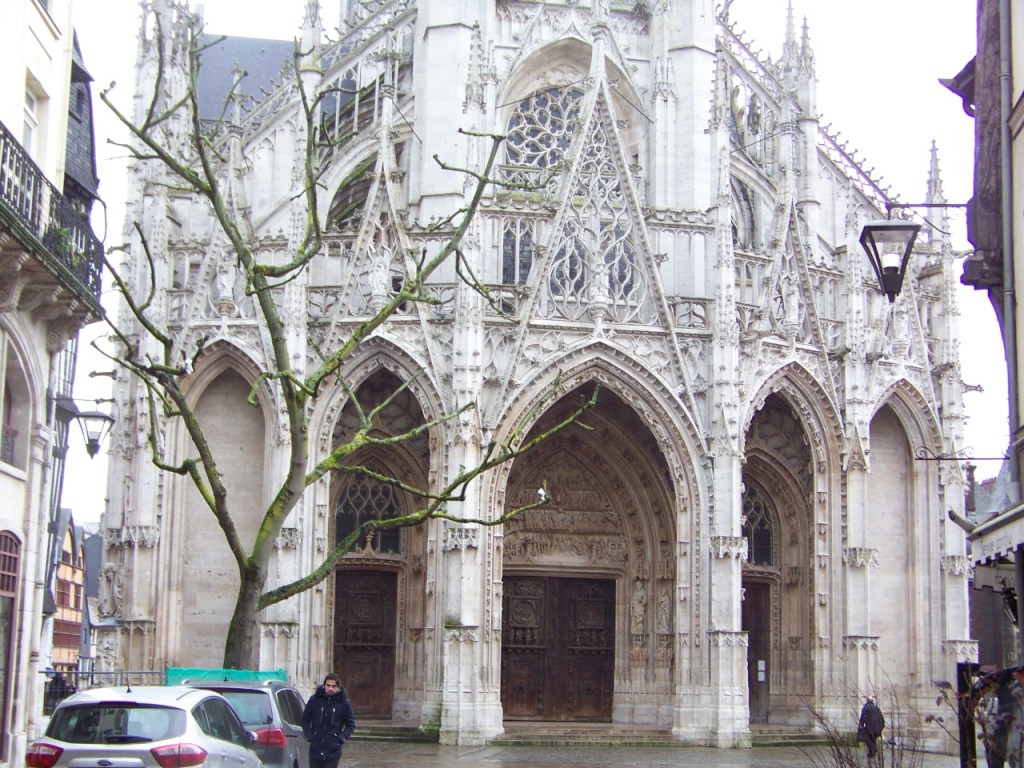
Richard the Lionheart, not quite 42 years old, died of an infected arrow wound in 1199. History recounts that he had always “held Rouen in his heart,” and his embalmed heart rests in Rouen’s Cathedral, while his body is entombed “at the feet of his father” at Fontevraud Abbey in Anjou. His younger brother John succeeded him on the English Throne, and Phillip II of France gained control over Rouen, assuring that Normandy and Brittany would remain under French control.

I knew of the historical ties Rouen has with these renowned English kings, but it was yet another historical figure that beckoned me to Rouen. The Maid of Orleans met her destiny in Rouen in 1431. She was tried for heresy, witchcraft and other offenses ranging from horse theft to sorcery. She was burned at the stake by the English in a square that still serves as the site of the city’s public market. Her bones and ashes were gathered and thrown into the river.

History recounts that Joan of Arc did indeed hear voices and see visions. She believed they were signs, but modern authorities suspect she suffered from a medical disorder, something akin to epilepsy or perhaps schizophrenia.

Although characterized as a warrior, she actually never fought in battle, choosing to simply accompany the troops carrying a banner to urge them on. Nonetheless, she is credited with turning the tide of battle and securing a French victory over English forces in Orleans in 1429.

Joan was originally charged with 70 crimes which were later narrowed to 12; it is said that she signed an admission of guilt in exchange for life imprisonment, but days later violated the terms of that agreement by, among other things, once again donning men’s clothing and admitting that “the voice” had returned to guide her. She was subsequently sentenced as a “relapsed heretic,” according to historical records.

Joan of Arc — the name stems from her father’s surname d’Arc, even though she was simply known as Jehanne or Jehannette. During her trial, she referred to herself simply as Jehanne la Pucelle (translated as Joan “the maid”).

The young peasant girl became a national symbol, a uniting influence on French forces during the latter part of the bitter 100 Year’s War that lasted from 1337 to 1453. There actually was no victor in the war; the English simply retreated, finally realizing that the cost was too great, and the conflict ended.

Twenty years after the war ended, Charles VII, the French king who owed his position to Joan, held a posthumous retrial to clear her name, and she became not only a folk heroine, but also a mythic symbol of French nationalism.

As a child I was fascinated by her exploits, and by her brazen defiance of existing norms. I am still fascinated, and I wanted to see for myself the place where she met her fate.

For centuries, there was no monument to mark the spot of her demise in Rouen, just a simple cross in commemoration of the 19-year-old’s martyrdom. Today, a large modern Catholic church stands to honor Saint Joan; it was completed adjacent to the square in 1979.

Joan, by all accounts, never doubted that she had been chosen by God for her role in history, but it was not until 1920 that she was canonized as a saint. Today she is revered as the patron saint of France.

Then and now

Rouen is filled with good restaurants, small cafes and local bakeries. It boasts boutique hotels tucked away on narrow streets, within walking distance of major sites, a newly-redesigned and attractive riverbank that beckons river cruisers and bicyclists, picnickers and artists. Prior to the pandemic, visitors from across the globe arrived in the city during every season, seeking their own fulfillment. Rouen’s cultural appeal is catholic, and it resonates on different levels depending on one’s personal interests.

But Rouen offers something else as well. Visit the city during the off-season, and a uniquely personalized view of the city is your reward. The pace of life in this part of France is easy-going and friendly, surprisingly subdued. Indeed, if you stay in the medieval quarter or the university district, the slice of life that presents itself is distinctively “common.” It’s truly delightful, relaxed and unpretentious.

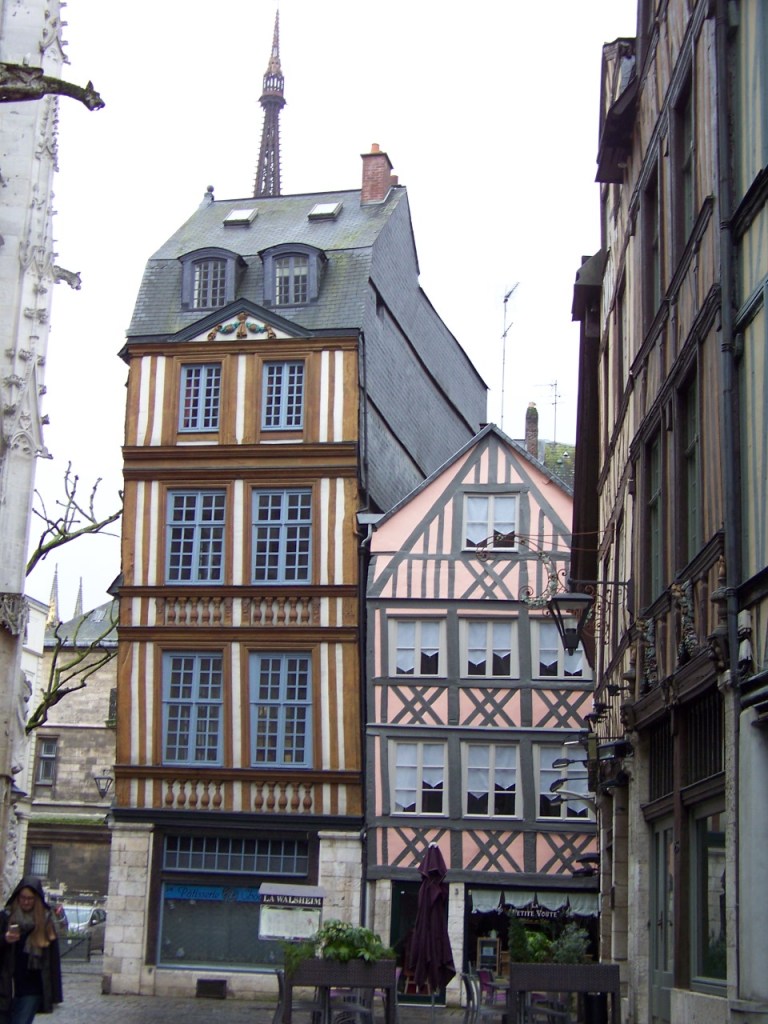
One can walk seemingly endlessly through the narrow cobbled streets of the Medieval quarter. We marveled at the clock, standing under its archway one dismal, chilly late afternoon. We lingered, snapping pictures, studying the artistry of its face and enjoying the music of its chimes. We knew that darkness would soon descend, but we hesitated there, unwilling to break the mood.
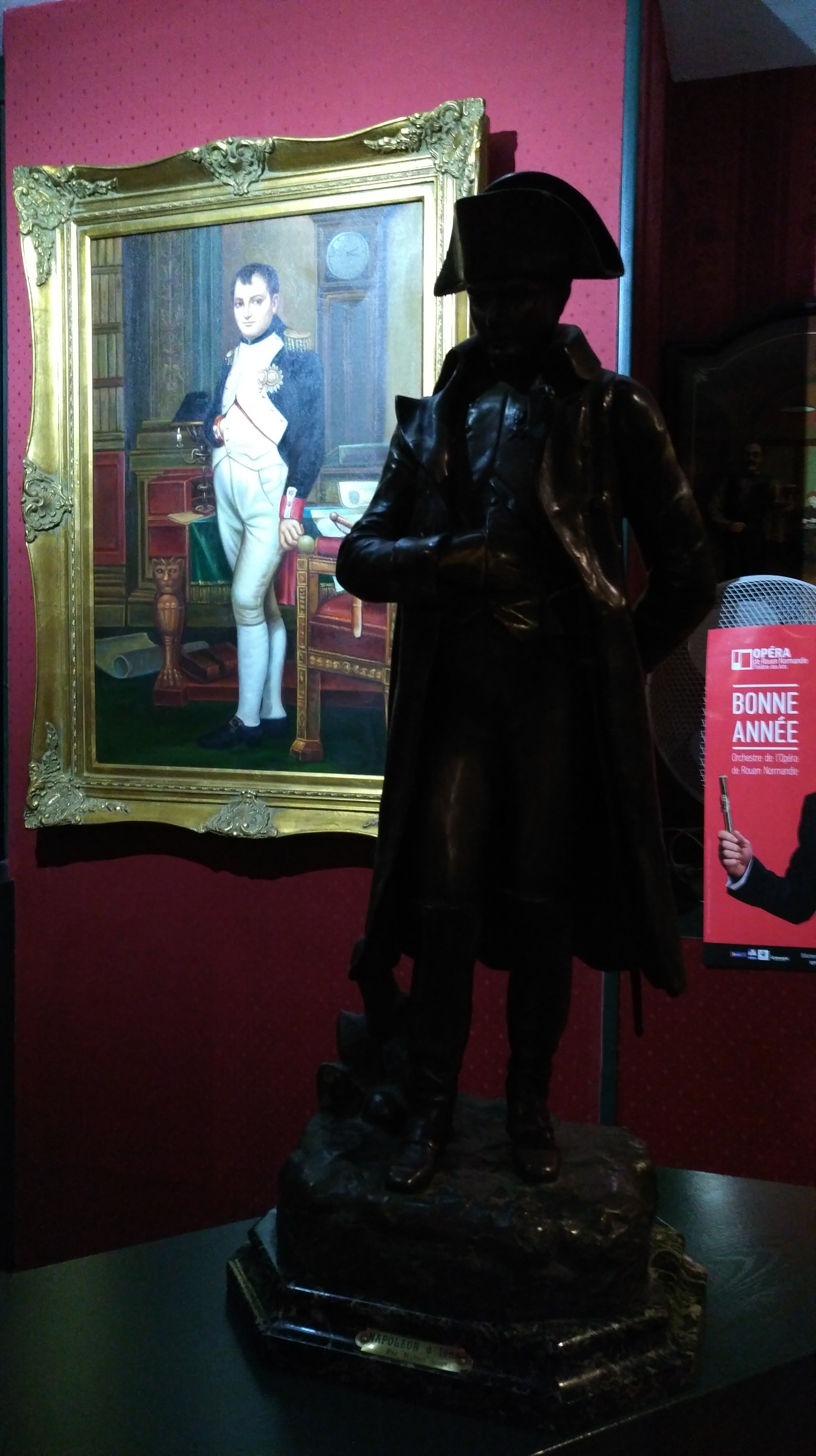
It’s impossible to be in Rouen and ignore its past. Napoleon visited textile factories in the city in 1802, helping to build that industry in the region; he also is credited with commissioning the Corneille Bridge and both Lafayette and Republic Streets. In Rouen, it is impossible to escape the emperor’s historical influence. In numerous ways, the history of France is tied to the history of Rouen.

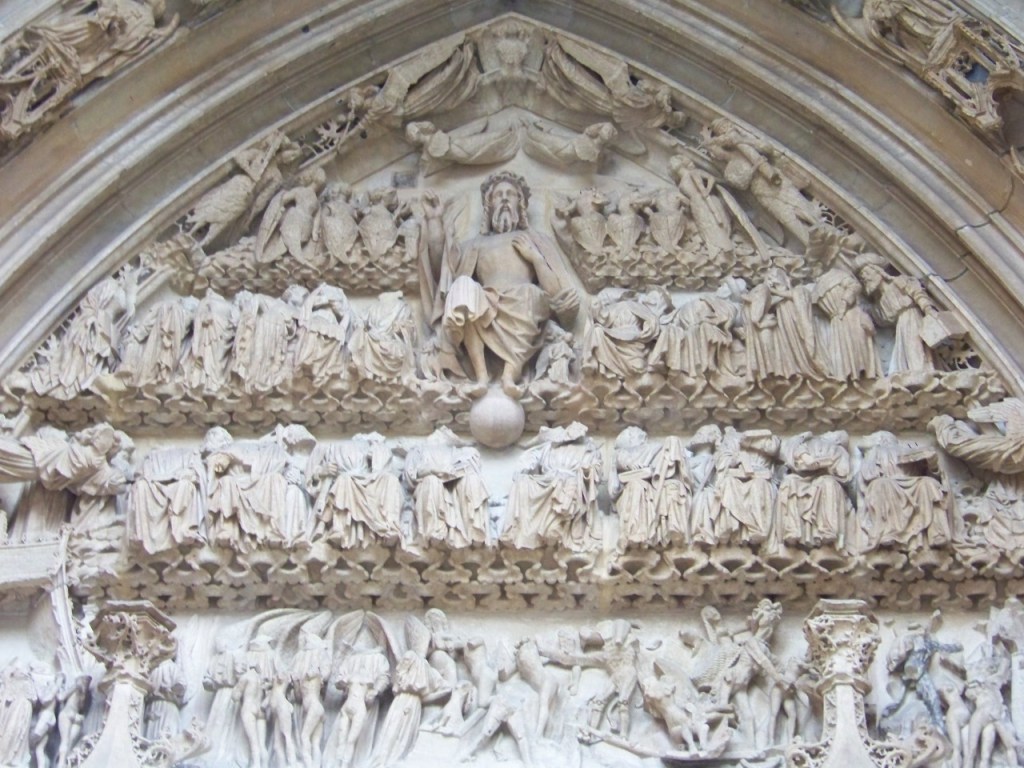
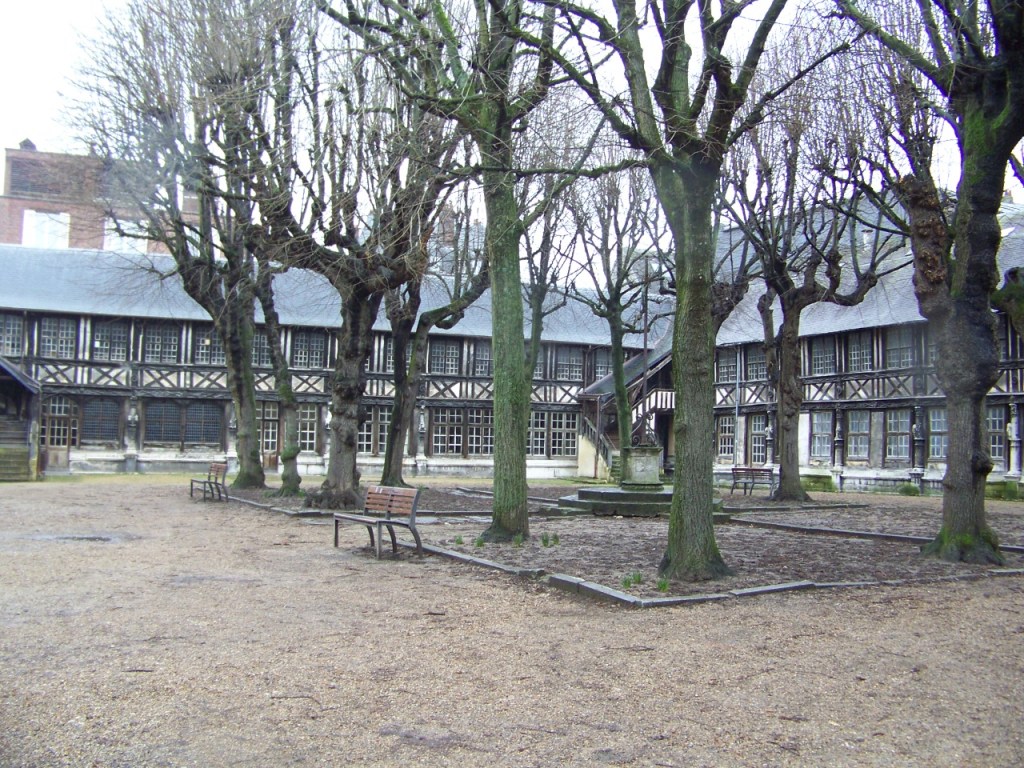
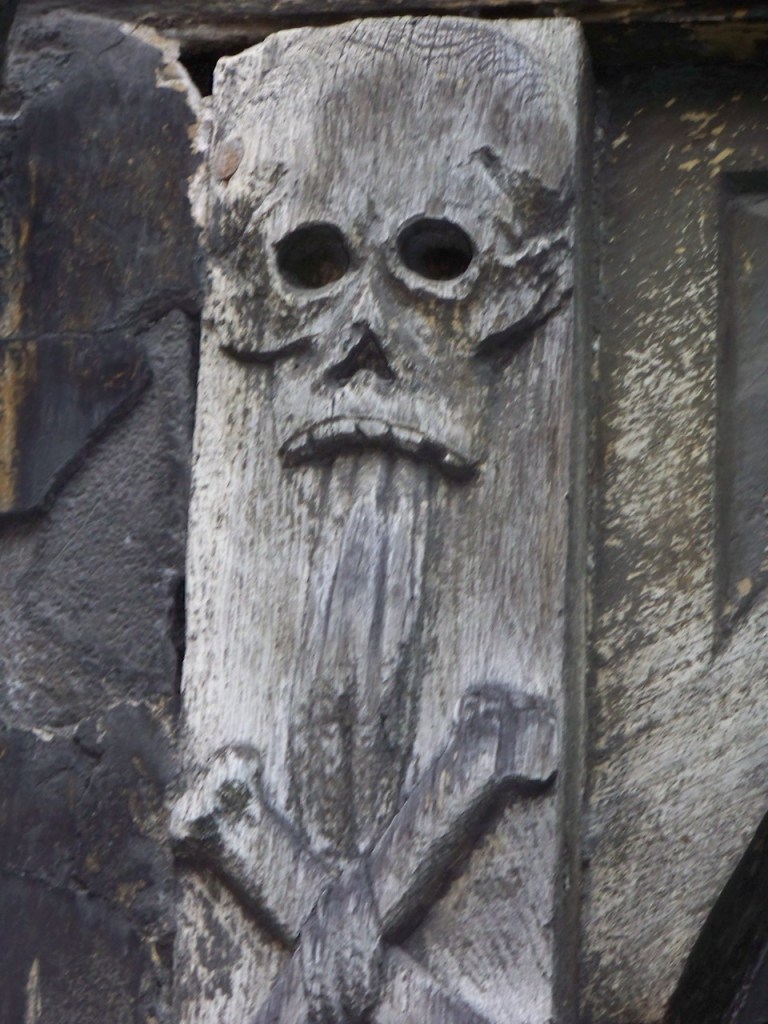
Seeing it all unfold during a walking tour of the city is spellbinding. The most enduring memory, however, is of being alone in the courtyard of Rouen’s ossuary, the “Plague Cemetery.” It is an experience seared into my consciousness, as the world faces an unknown future besieged by a seemingly unstoppable virus.

Later, we ducked into a small brasserie for a cup of hot cafe au lait, and exchanged small talk with the proprietor and two other patrons who were as happy to speak a few words of English as we were to practice our French. We were immediately transported to the present, and we were buoyed by the charm and vivacity of the city’s modern vibe.

We left, strolling the almost deserted streets in search of an informal place to eat. Arriving too early for dinner, we were led upstairs to a warm, cozy nook that suited us perfectly for an early-evening supper. We sipped good red wine, dined on burgers and fries served in true French style, and conversed with the establishment’s friendly proprietor about contemporary life. It was a perfect finale to a day of immersion in the life of Rouen.

We will long remember our visit to Rouen, for a good number of reasons.
A lesson in democracy

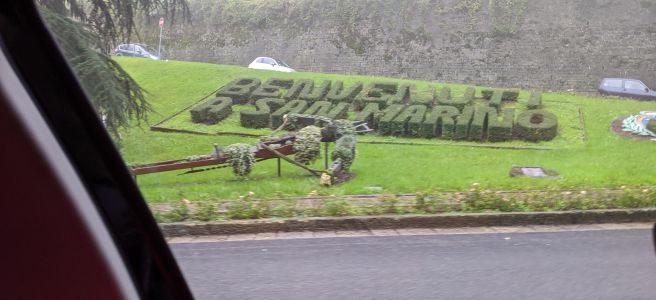
San Marino, capital of the European “microstate” of the same name, is not on most lists of “not-to-be-missed” European destinations. However, this tiny nation, founded in the year 301 and reputed to be the world’s oldest constitutional republic, ranks among our best adventures.

We had read, in passing, about this tiny, ancient city-state, and could not resist the temptation to visit a modern-day anomaly. The lure of the fifth-smallest nation on earth was strong.

My husband and I planned this quick excursion in conjunction with last winter’s Mediterranean/Adriatic cruise. Tiny San Marino is an easy drive — not more than about an hour — from the Italian port of Ravenna.

The world’s longest-surviving republic has known its share of difficult times and has been occupied three times, it is said, by foreign powers. But it has survived, and today it enjoys one of the world’s most stable economies, much of it derived from tourism, and is considered one of the wealthiest countries in Europe in terms of GDP.

Its claim to be the oldest existing sovereign state as well as the oldest constitutional republic is not disputed. San Marino’s 60-member legislature is elected every five years, and dual heads of state, “Captains Regents,” are elected by the council every April and October to serve six-month terms. From all outward appearances, the system of government, with an unlimited number of political parties, seems to work very well.

I think of San Marino now, as the calendar ticks down to our own election and wish I had been able to spend more time getting to know the people and learning more about their system of government.

The few hours we spent there are unforgettable. The mountaintop site of the old city is spectacular and the people we met were lively, welcoming and “real.” There is something compelling about a “parliamentary representative democratic republic” that has survived this long!

With a land area of only 23.6 miles, and a total population of just over 36,000, San Marino is completely surrounded by Italy. Its official language is Italian, and the currency is the Euro, although San Marino is not a member of the EU. There is no official border crossing.

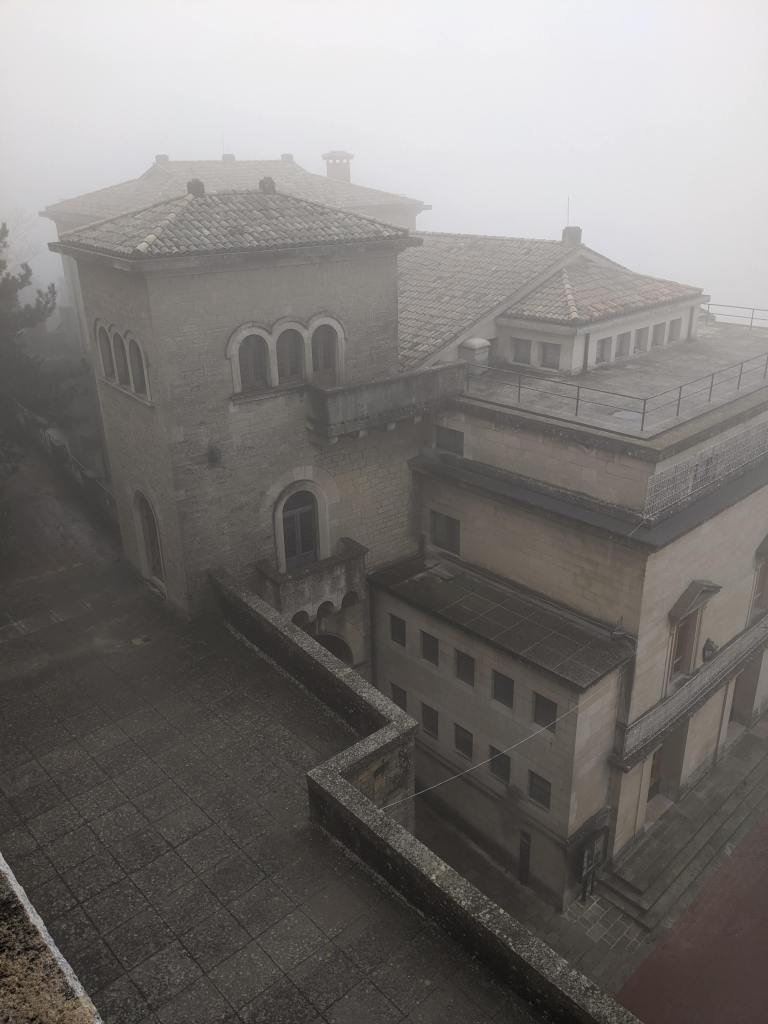
The drive along the coast from Ravenna takes one along modern highways and through charming seaside resorts before turning inland to wind through agricultural fields and vineyards. It’s pleasant. The weather forecast was for cool temperatures with a chance of rain. We knew about San Marino’s strategic location, but we were not prepared for the fog that shrouded the peak as we began the ascent.

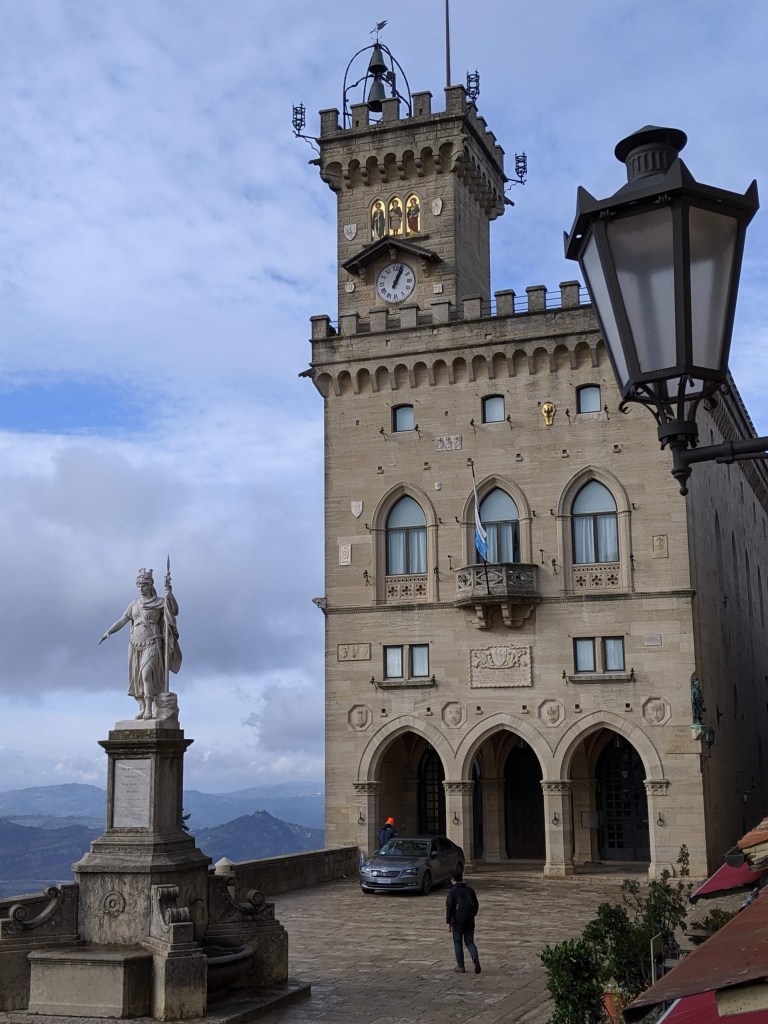
We had seen the pictures of “The Three Towers” that cap the crest of Monte Titano, and the medieval wall that surrounds the capital, also named San Marino. We had hoped to see them outlined by blue sky, as they had appeared in the tourist guide.

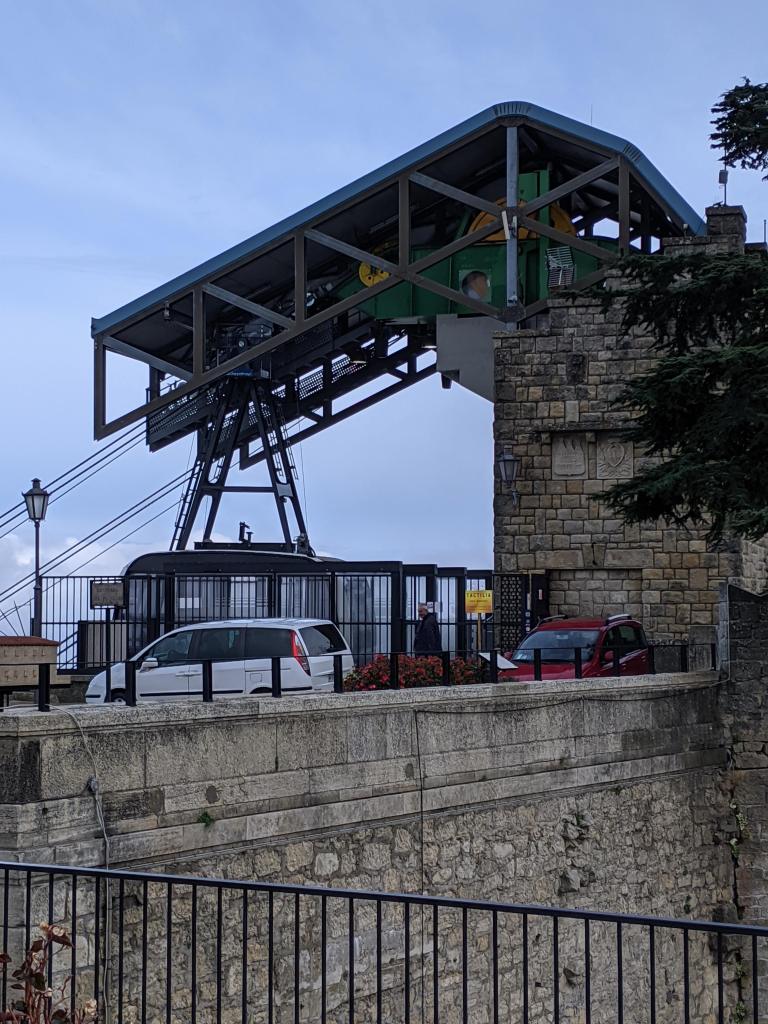
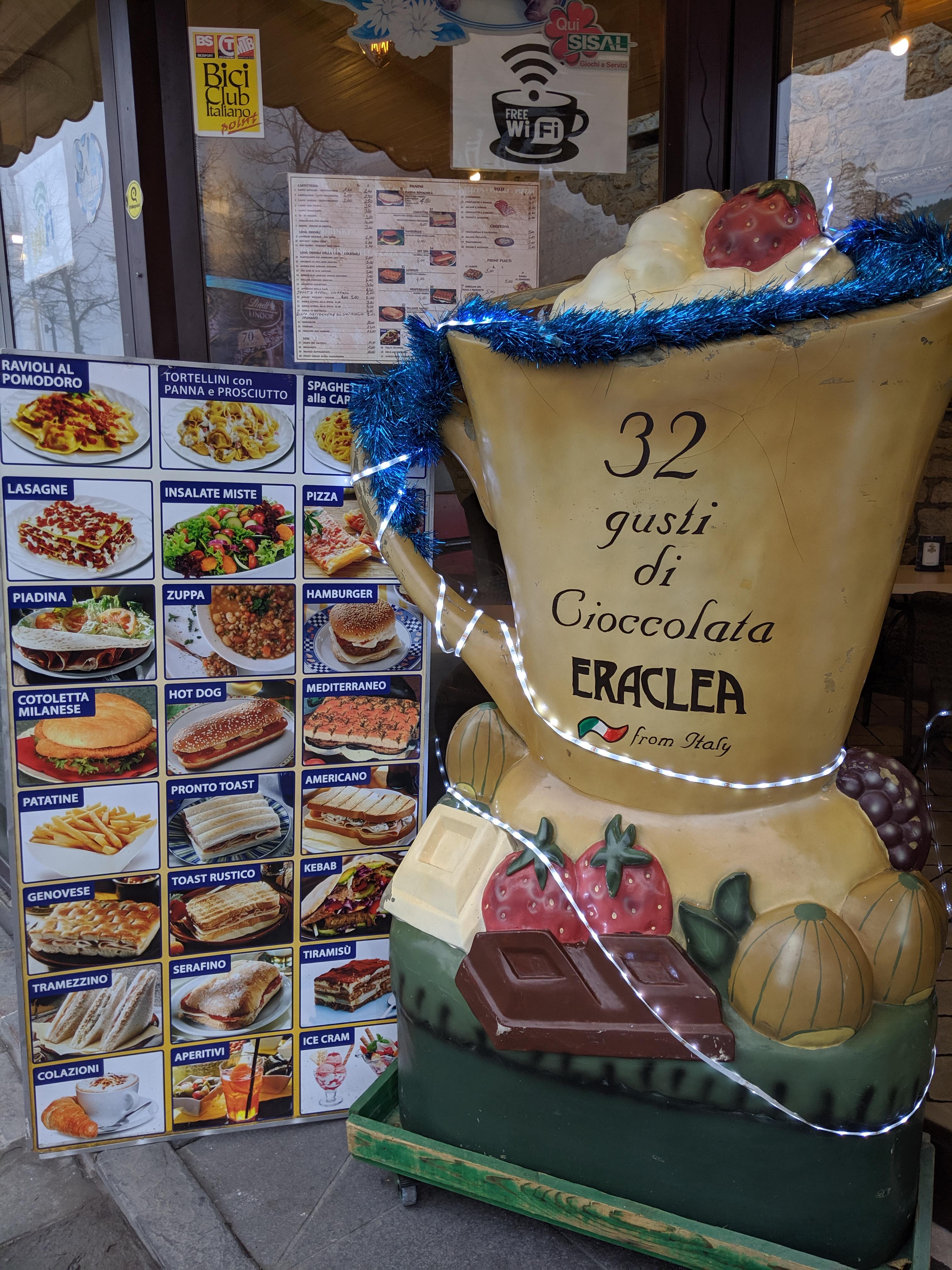
A roadside cafe on the way to the old city beckoned us, and we enjoyed steaming cups of hot chocolate with local workmen and uniformed highway police before pushing onward. It was grey and overcast, and the aerial tramway that would have whisked us to the summit on a sunny day was not running.

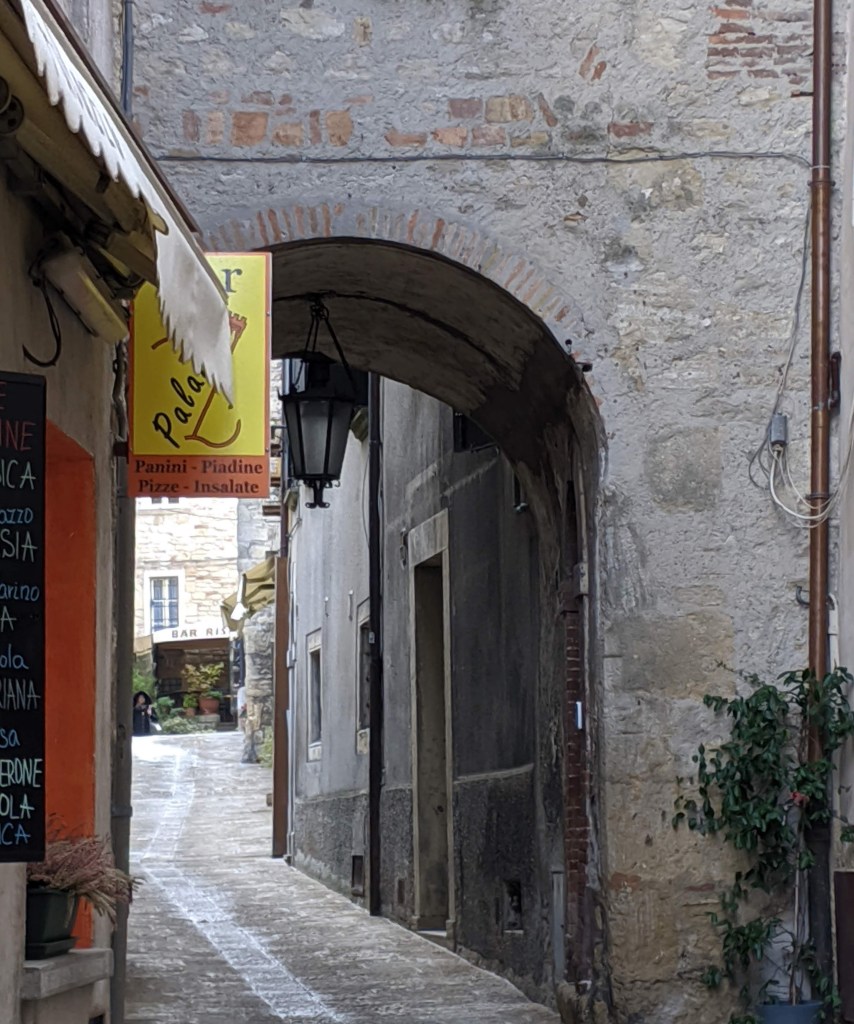
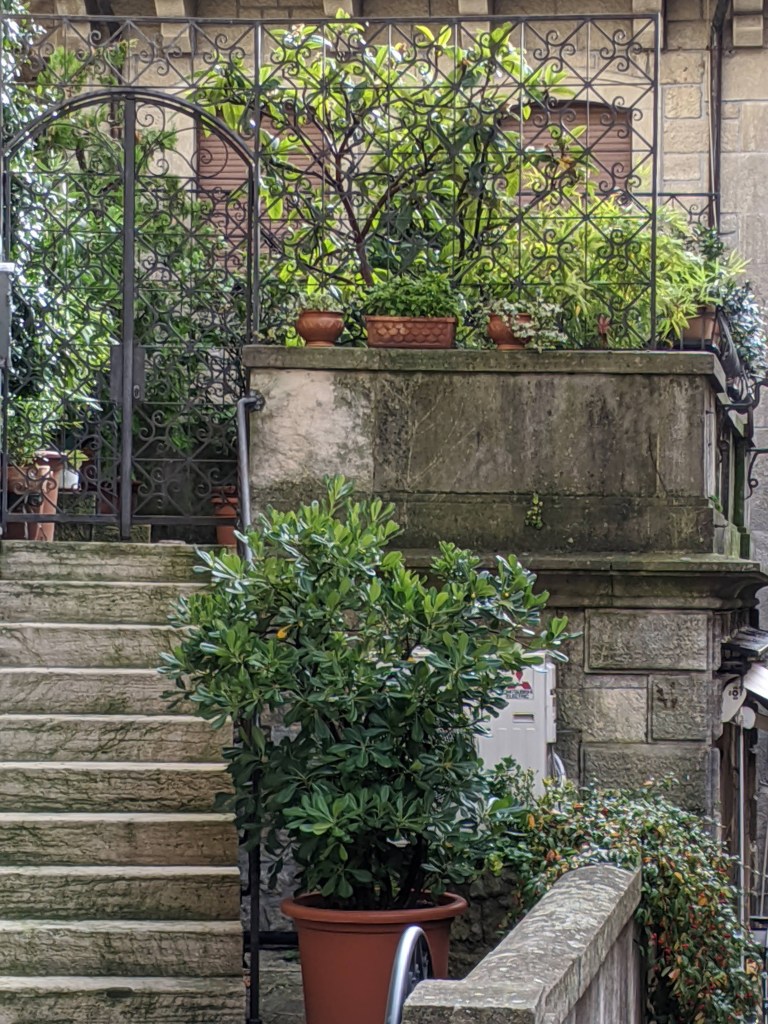
Not knowing what to expect, we pushed on and were able to park just outside the gate of the medieval city. Passing through the gate was like stepping back in time, or entering another world. Cobblestone lanes not much wider than a primitive wagon path greeted us, and even though the mist hung heavy all about, we were enchanted.

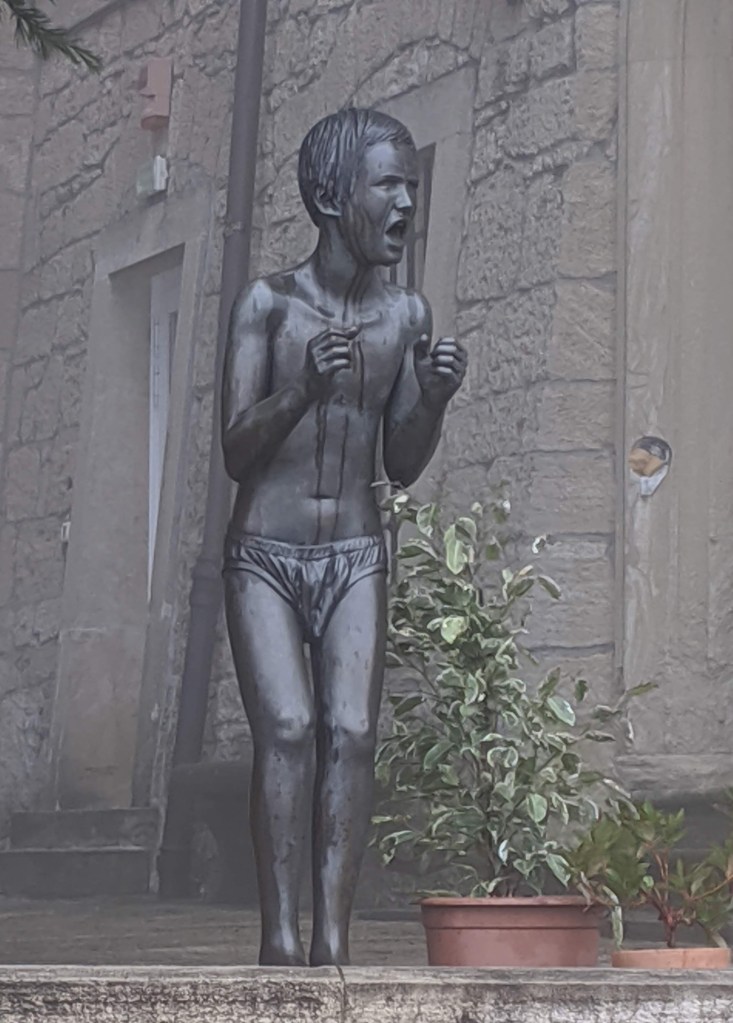
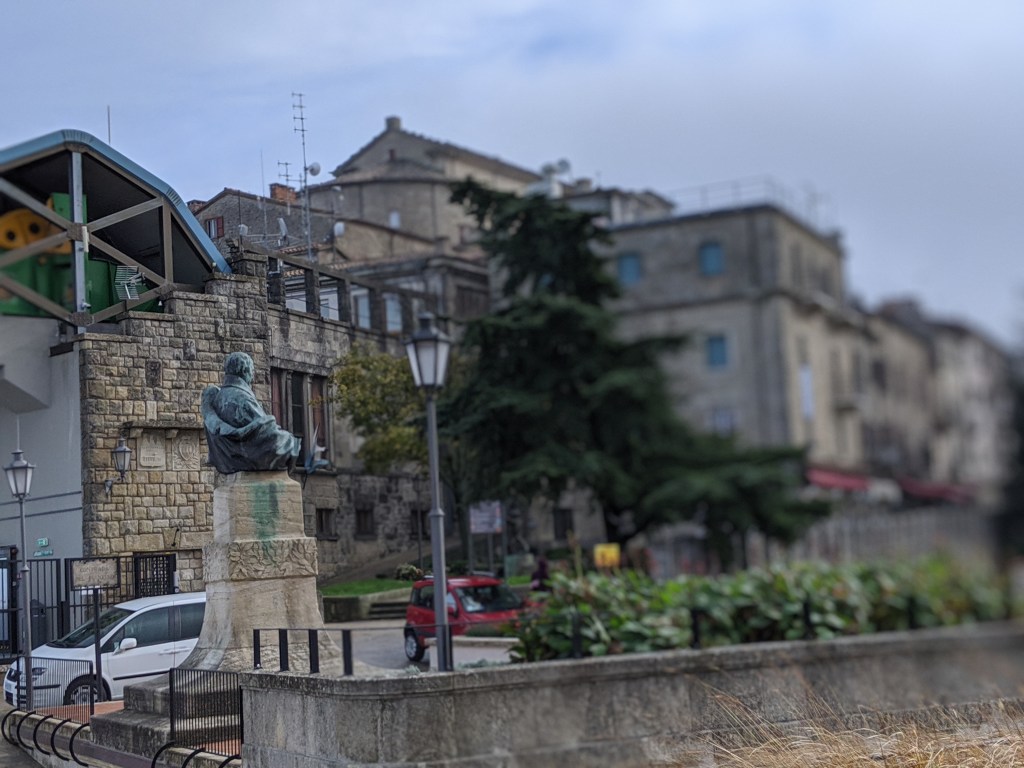
We could not see the valley below, nor could we see the crenelated towers above, but we were content to walk the steep lanes, peering into shop windows, catching glimpses of gardens and marveling at the statuary and art that punctuated plazas and wide spots along the narrow walkways.

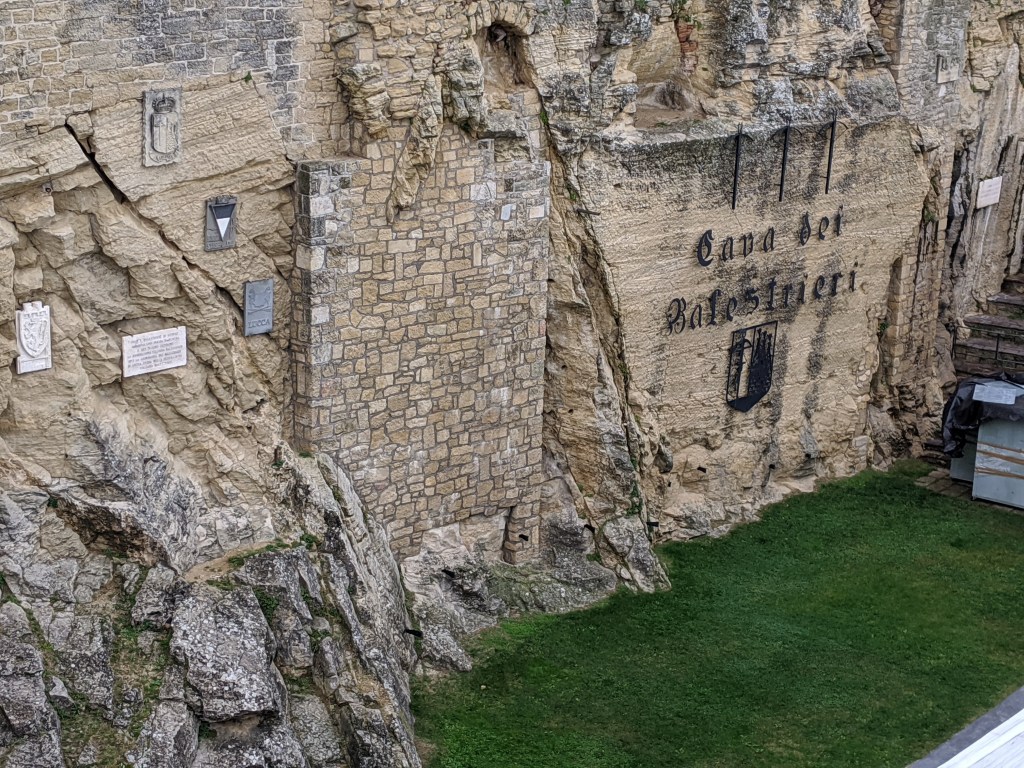
We stopped at the upper station of the tramway, impressed by the engineering expertise it had required, and we looked over the edge of the city wall, disappointed at the mist that still blocked our view of the valley below. We ducked into the nearby Visitors Center to have our passports stamped as proof of our visit.

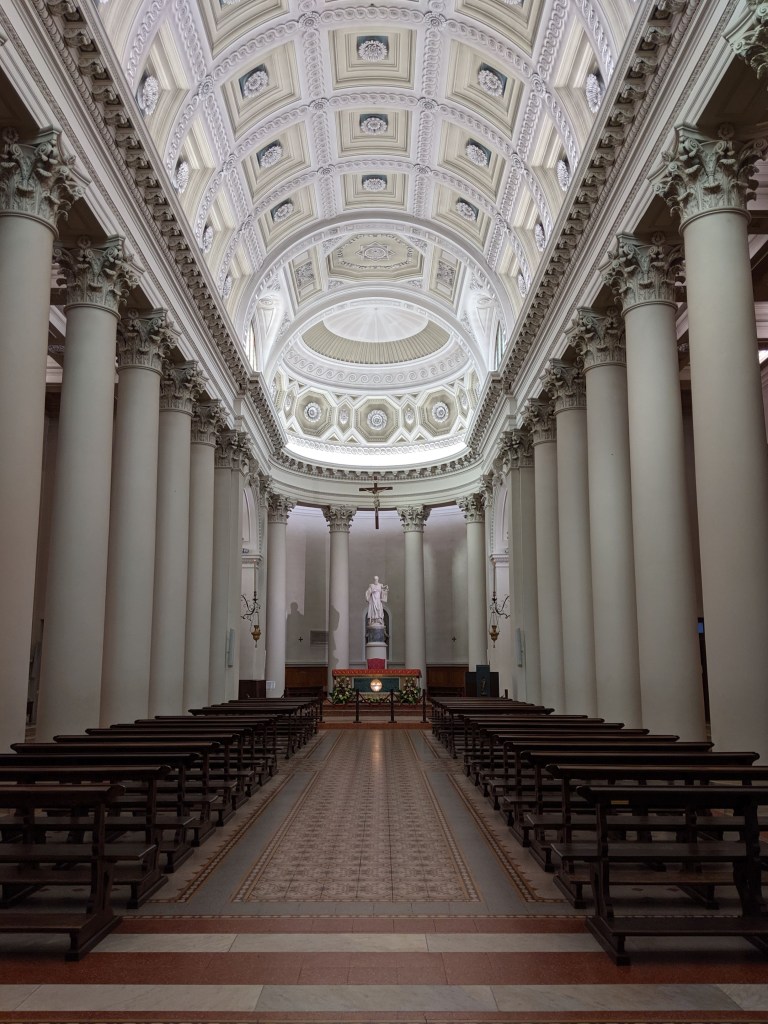
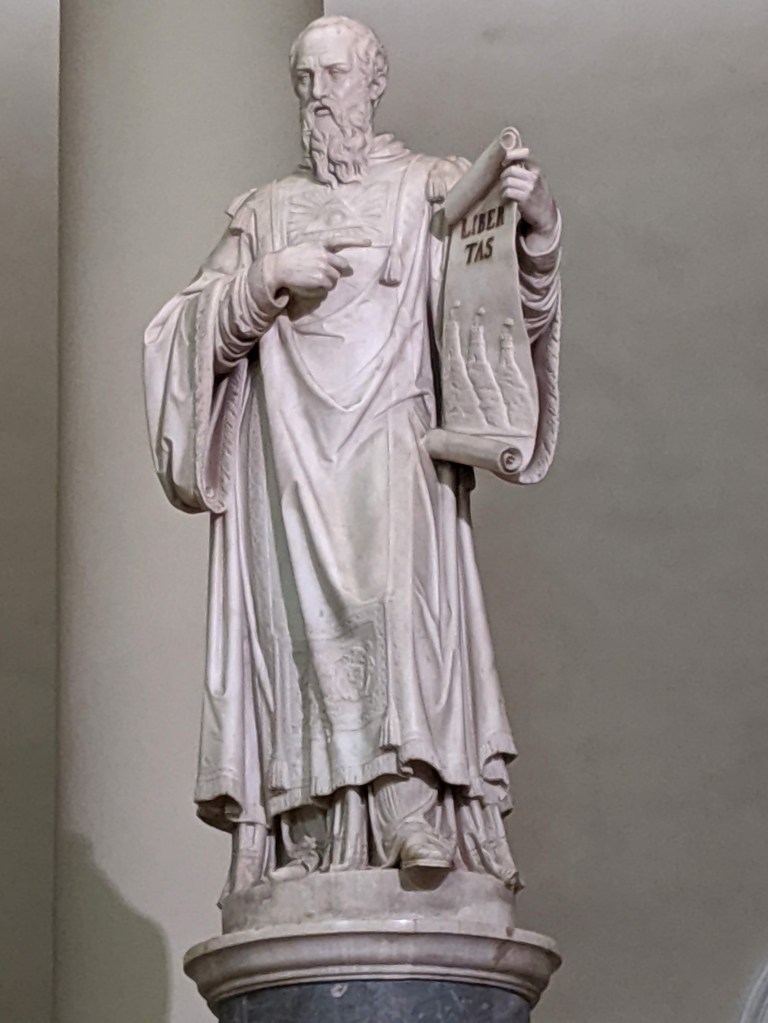
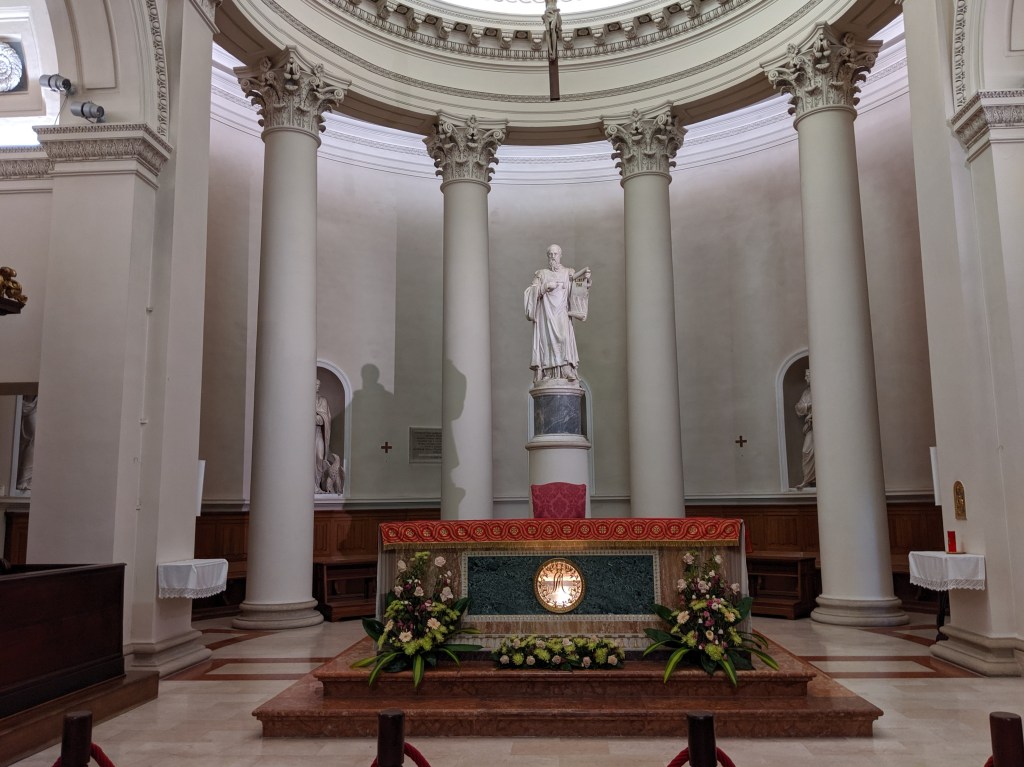
We strolled to the city’s beautiful basilica, marveling at the skill and endurance it must have taken to construct on top of the mountain in 1836, on the site of an earlier church that dated to the 7th Century. We were enthralled, and could have spent longer inside, but because we were on a strict time schedule, we decided to make our way back to our rental vehicle.

When we emerged, the clouds had lifted and the sun was shining. We could not leave without once again making our way to the city’s encircling walls to gaze in awe at the countryside far below us.

Although Ravenna has its own attractions, we were more than pleased by our decision to forego the eight UNESCO world heritage sites located there and head instead to a tiny nation-state with a long history.

It remains a fond memory.

Twists of fate . . .

. . . and other thoughts about travel to the far reaches of today’s shrinking world

As I have said before, and with apologies to Lee Marvin as well as to Lerner and Loewe, I was born “under a wand’rin’ star.” Wanderlust is real!

I am hooked on travel! 

As a freelance writer, I have convinced myself that it is also “my business” to be as informed as possible about popular worldwide destinations, off-the-beaten-path places, interesting excursions and inviting cruise ship itineraries. I enjoy every minute of it, and I keep a running list of possibilities that appeal to me for my own getaways.

I started out as a working journalist at a daily newspaper, and I remain a “newshound” to this day, eager to tell stories about people, places and events. I don’t regret leaving that part of my life behind, but I still sometimes miss being an active “participant” in major news events.

I have been following the Coronavirus outbreak in China with great interest, for all the above reasons, and also because of the serious worldwide health implications. My husband and I listen avidly to the live reports from David Abel and his wife Sally, British citizens on board the quarantined Diamond Princess. But we have watched events unfold, and remained only interested bystanders half a world away.

Until two days ago

Our next planned journey was to have been a trans-Pacific sailing on the 2,200-passenger Celebrity Millennium, scheduled to depart Yokohama, Japan on May 10. We had flight reservations that would have given us a few days in Tokyo prior to the cruise, and allowed us to see friends in Vancouver, B.C. following disembarkation, prior to returning home. We were concerned, but relatively confident that the spread of the virus would be contained during the next 90 days, and that our trip across a vast stretch of ocean would proceed as scheduled without risk.

On Wednesday, we were notified by Celebrity Cruises that the remainder of the Asian cruise schedule for “the Millie” had been suspended. Our cruise and others were to be canceled. The ship would sail early to North America in preparation for a summer season of cruising Alaska. No other details were offered. We shared the disappointment of thousands of other passengers whose vacation plans had instantly been crushed. 

For this single ship of this one cruise line, five sailings were canceled, affecting thousands of booked passengers. Route changes and port cancellations are announced daily by other major cruise companies, and the ripple effect is enormous. Not only is there a huge economic impact on the cruise lines, airlines, hotels and excursion operators, but necessary logistical issues are mind-boggling. 

As we faced the task of canceling reservations yesterday, I ran across some forgotten notes in a travel folder of ideas for 2020 travel. And, to use one of my current favorite expressions, I was gobsmacked.

I had written:

“RT Tokyo — 15 days — Jan 20-Feb 4. Japan, Hong Kong, Vietnam. Diamond Princess — cabins available at good prices — air about $925, estimated”

They were just some quick notes that I hadn’t acted upon, choosing instead to begin the year with other trips, lured by the prospect of the journey from Japan to Canada with 10 relaxing  days at sea. I booked another, shorter, closer-to-home trip for early in the year, and moved on.

Reading that scribbled note, I realized that had I made another decision several months earlier, my husband and I would currently be quarantined aboard Diamond Princess in Yokohama harbor. I imagined the weight of the fear that we might test positive for a worrisome new virus, now bearing the name COVID-19.  It was a sobering thought, even though for just an instant I thought about the stories I could tell about that experience!

More news . . .

Earlier today, Royal Caribbean, the parent company of Celebrity, announced that two of their ships will spend the next several weeks offering complimentary cruises to fire-fighting crews and first responders in Australia and California. There are also plans underway to deliver needed supplies to health authorities in China and Asia. We will miss our own time aboard the Millennium, but we are happy to know that the ships will be used for other good purposes.

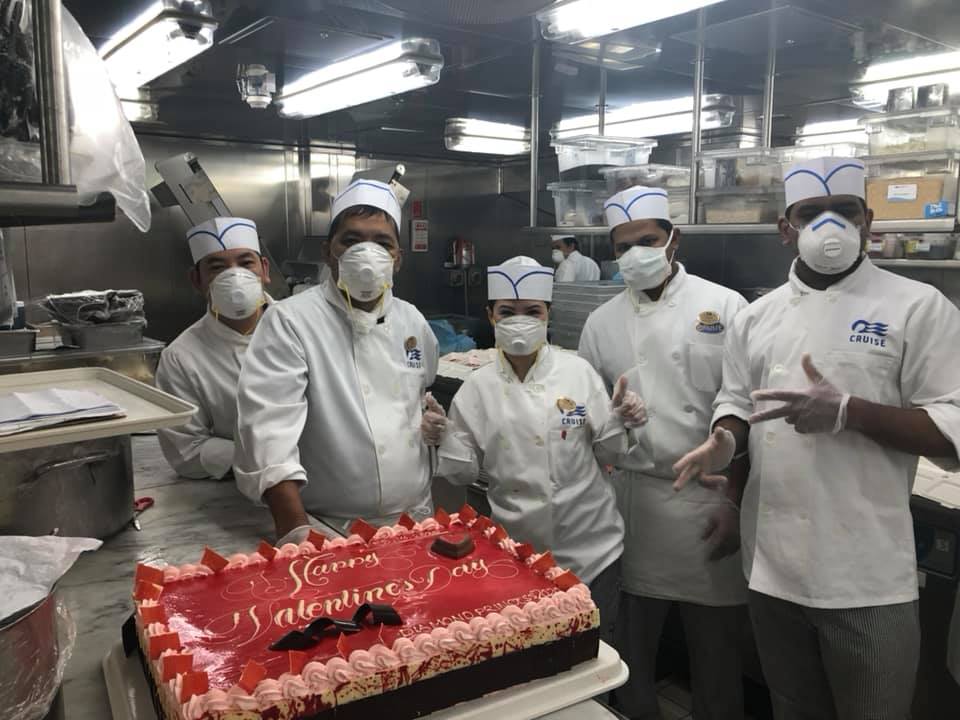
In addition, I cannot help but smile at the Facebook post of a member of the pastry crew on board Diamond Princess. I know there must be some moments that come close to despair for the quarantined crew, but this is truly an example of indomitable spirit!

Now that I have had another day to consider, I am convinced more than ever that travel is “life-changing.” I still believe that travel is always a good idea; it just doesn’t always happen the way we would choose! 

We certainly hope that all passengers and crew aboard the quarantined ship are able to return home well and resume their normal lives as soon as possible. We will continue to watch the reports, and to follow the mounting efforts to control this virulent virus. 

Ode to February

Saturday, in north central Texas, my day began grey and chilly, with a temperature reading just below freezing. The sun appeared later in the afternoon, but I never warmed up. Sunday was sunny and the temperature hovered in the mid-70s. By midweek, another dip into the 30s, with possible snow, was expected. That may be the norm this time of year, but I was happy to hear that Punxsutawney Phil didn’t see his shadow Tuesday, giving me hope that soon I can put away my fleece-lined moccasins and go back to flipflops!

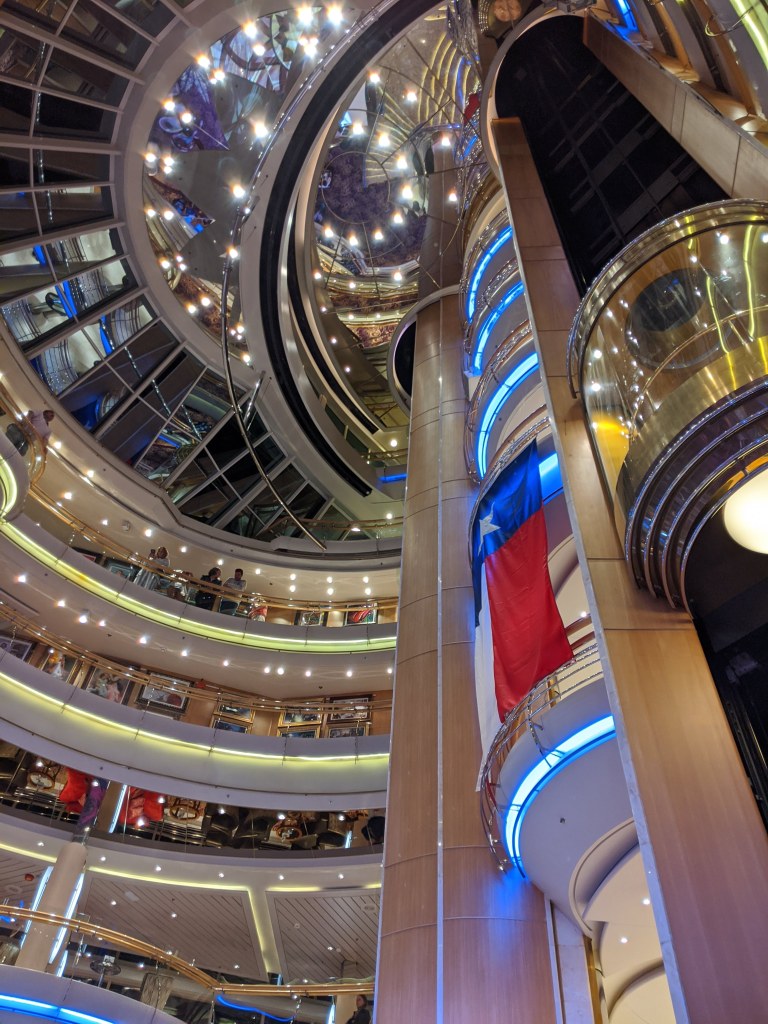
My husband and I did just that the end of January as we snuck off for a few days of R&R. I feel as if I’m still playing catch up from November’s travels, but that didn’t keep us from running away to the sea and sun south of the border. Five days aboard Royal Caribbean’s Enchantment of the Seas, sailing out of Galveston, were a tonic that let us return home refreshed and renewed, even if we did return to cold.

A getaway trip to sun and warmth

It was another of those whims when I booked the cruise several months ago — a deal just too good to refuse, with the benefit of an easy drive to the port rather than the hassle of a flight to a distant coast.

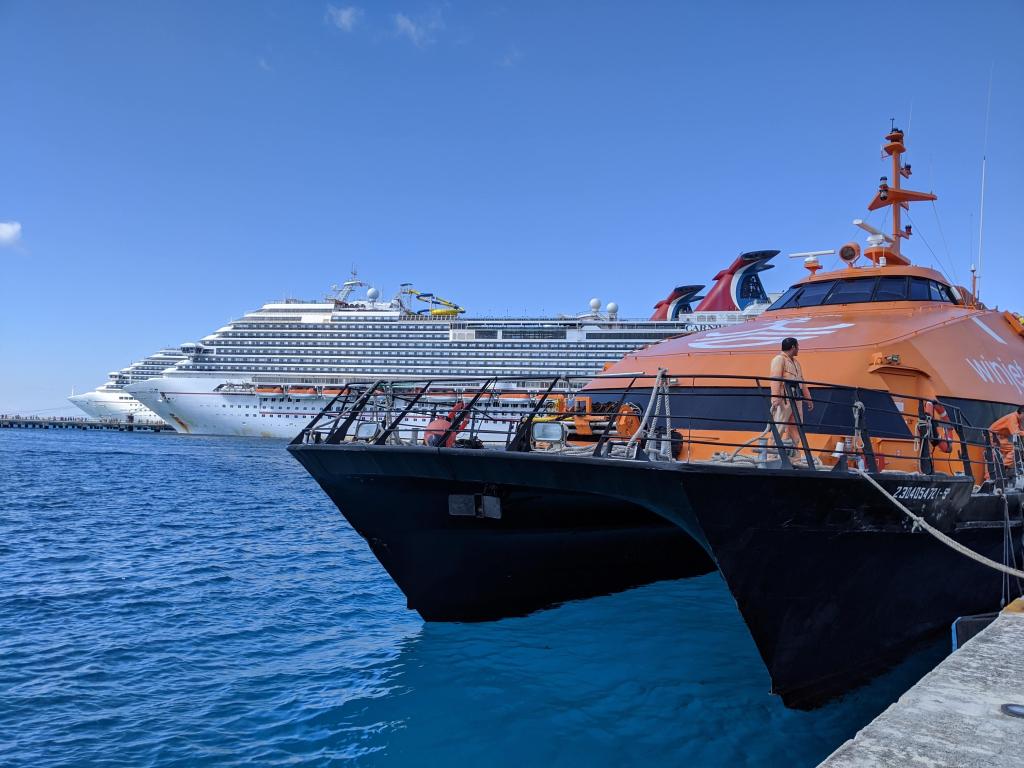
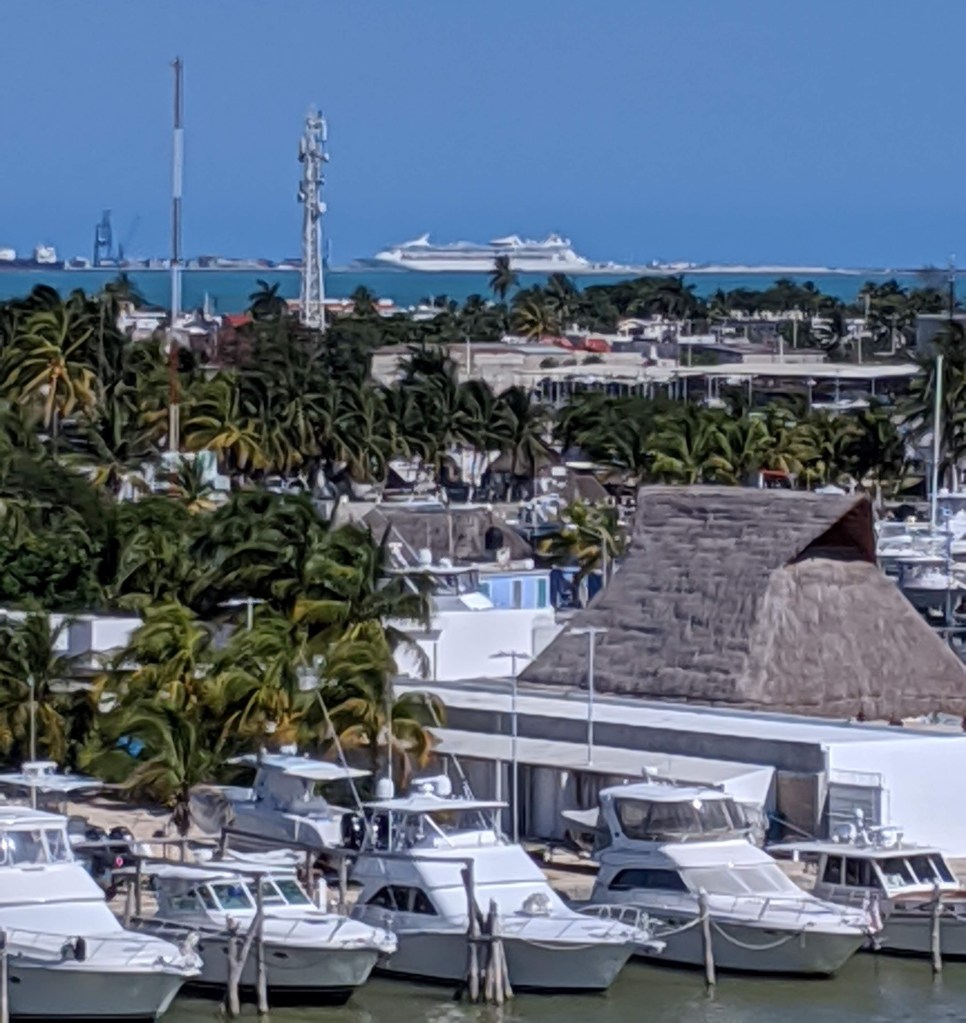
Our quick getaway to Cozumel and Progreso was not timed for lazy days on the beach, but a pampering routine aboard a mid-size cruise ship, Enchantment of the Seas, felt good. We came home with a fresh outlook and boundless appreciation for the cruising lifestyle, as always. However, in tiny Cozumel, we were certain that tourists outnumbered residents. There were seven ships in port the day we called at the island! Ours appeared to be the small one!

We delighted in the lack of schedule. We took full advantage of the “luxuries” offered: A dedicated staff to cook and serve, no alarm clock, afternoon naps, and plenty of time to do absolutely nothing. We enjoyed the food, the shipboard shows, and simply walking around the ports. We finished a book each, started reading new ones, and engaged in lively conversation with fellow cruisers. I even squeezed in a few hours of work!

Keeping busy on board

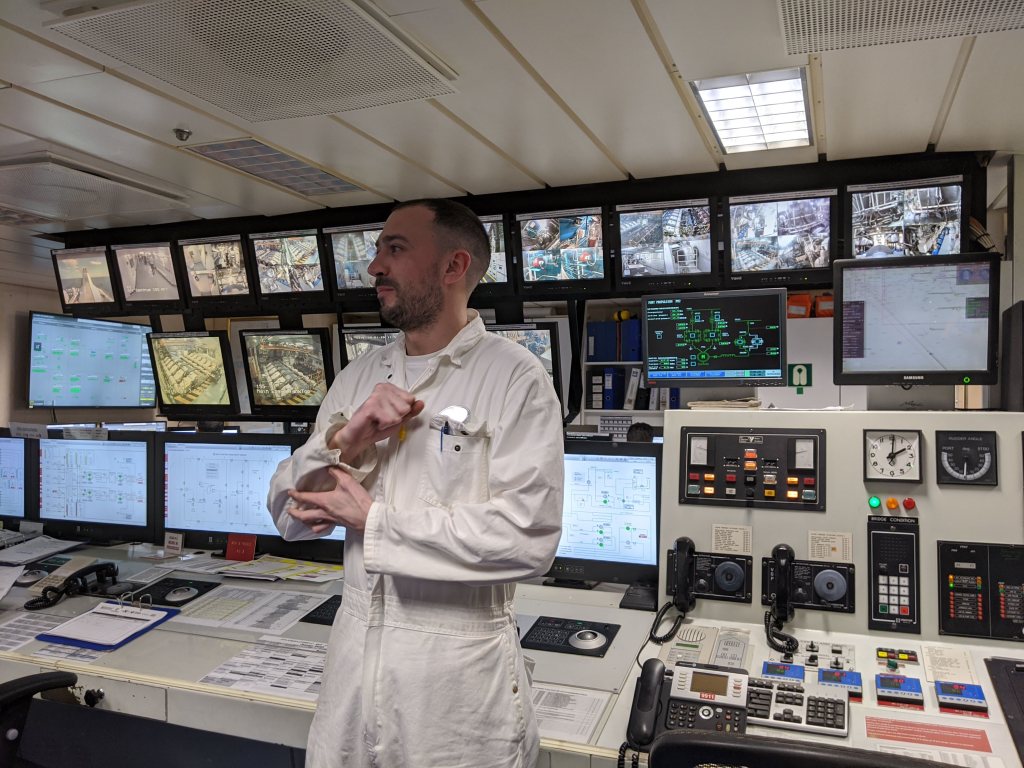
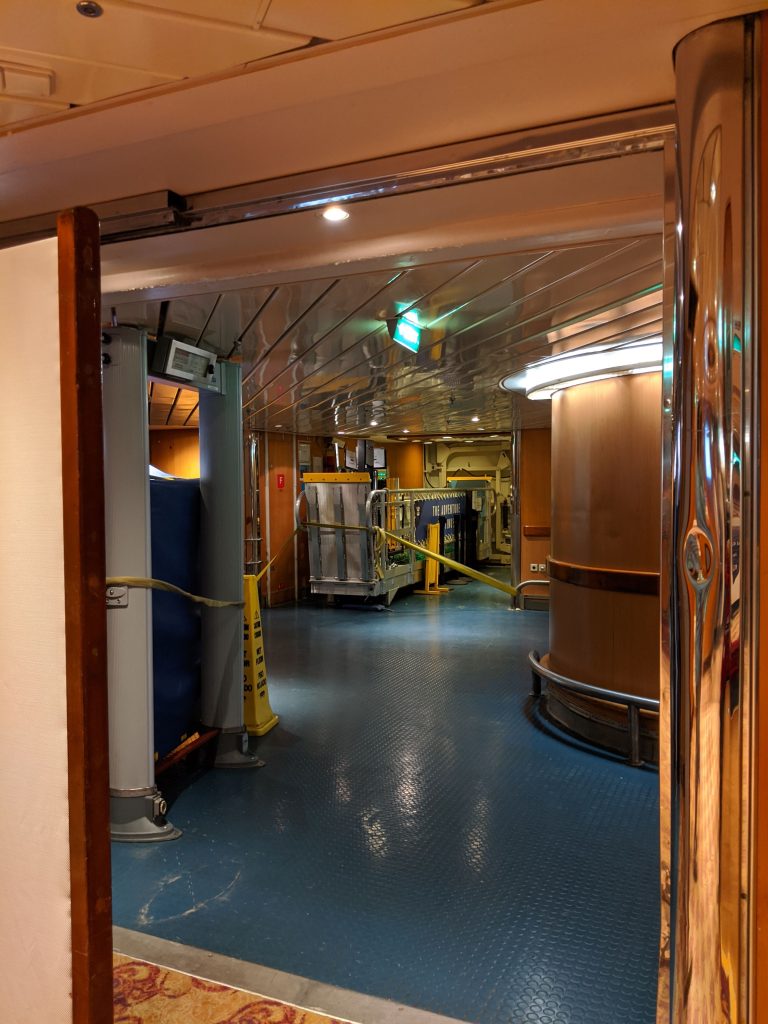
We participated in a sushi-making class offered on board, and enjoyed sampling our efforts for that day’s lunch. We participated in an All-Access ship’s tour another day, relishing a walk through the “belly of the vessel.” The behind-the-scenes activity and inner workings of a large cruise ship are captivating. We learned that there are four full decks below the water line, with ample food and drink stores on board to serve the 3,000 plus passengers and crew for an additional seven days, should it ever become necessary.

In view of the current news about passengers quarantined aboard another cruise ship off the coast of Japan, that becomes an important fact.

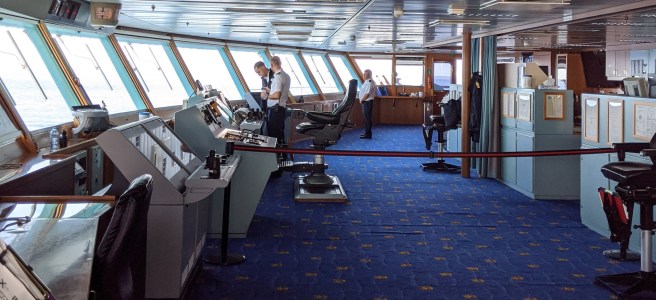
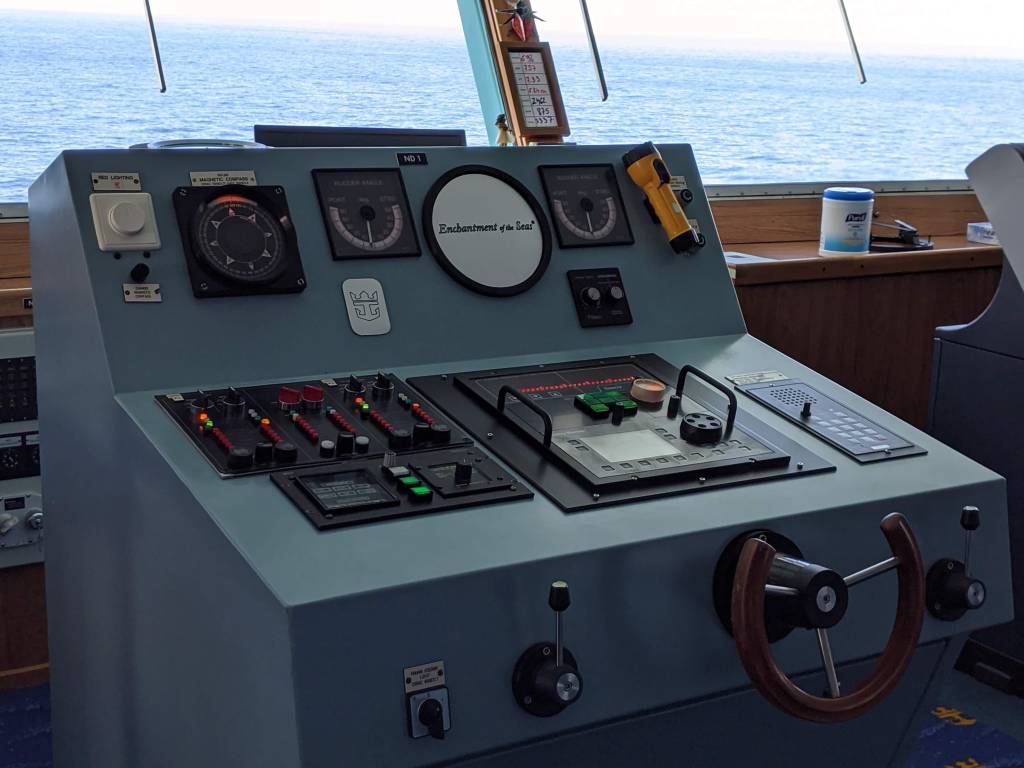
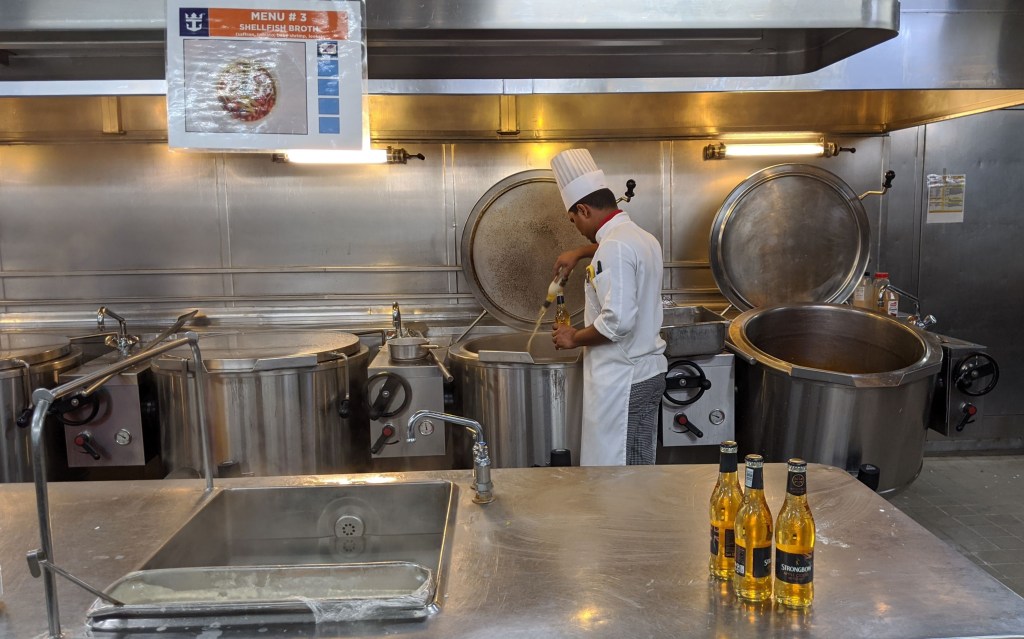
We were duly impressed with the high-tech engine control room, the procurement and storage areas, and the ship’s systems, including a busy laundry and highly-orchestrated kitchen. We visited the bridge, where ship’s officers on duty around the clock stand watch, monitoring the course as well as the weather.

The effort expended to make cruising an enjoyable experience for all passengers is truly impressive. Every aspect of cruise ship operation is superbly planned and executed, and it reinforces the value of this kind of vacation.

Looking to the future

Perhaps soon the temperatures will cease pingponging between seasonal norms and unwelcome cold. All too soon, I may once again complain about Texas heat and reset the air conditioning.

I have not forgotten the stories I promised to tell about our November trip to the Mediterranean and the Adriatic. I realized that the days have flown by when I looked over a post I began on December 1. We arrived home on Thanksgiving Day, and somewhere between the pumpkin pie and New Year’s Eve toasts, I got lost.

January passed all too quickly, as had December.

So, to whet the appetite for what is to come, I’ll just post a handful of photos from last week. And then I plan to get busy writing all those other stories, and looking forward to upcoming adventures.

Come along, won’t you? Follow me to receive email notifications of each new post, and visit me on Facebook and Instagram.

The gift of the unexpected

Call it grit. Call it fortitude. Call it experience, acceptance, resignation — any number of descriptive terms can be applied. The truth is that every one of them is appropriate.

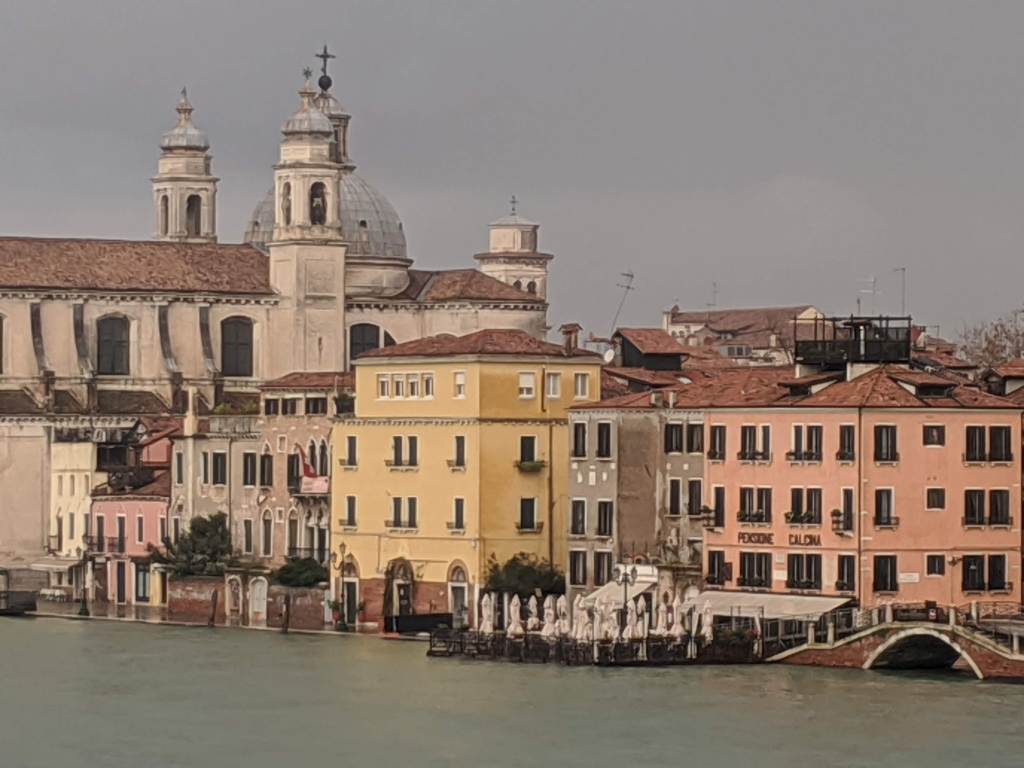
We were witness to the pluck and determination exhibited by Venetians during the recent record-setting rainfall, flooding and tides that washed over the lagoon and gained worldwide attention in late November.

Daily life and commerce were affected, to be sure. But daily life and commerce continued apace. Much seemed normal to a casual observer during a time when conditions were anything but normal.

Planes, trains and buses ran on time, waterbuses continued their scheduled routes, and other boats, including barges filled with building and clean-up materials, plied the canals, supplying goods and services to residents, hotels, restaurants and shops. Most gondolas and their gondoliers seemed at rest, waiting for sun and more forgiving water.

Portable boardwalks were repeatedy set up and subsequently removed along the busiest pedestrian thoroughfares. Christmas lights and decorations were much in evidence, and shoppers toted bags along with umbrellas, testimony that seasonal spirit and daily life intertwined.

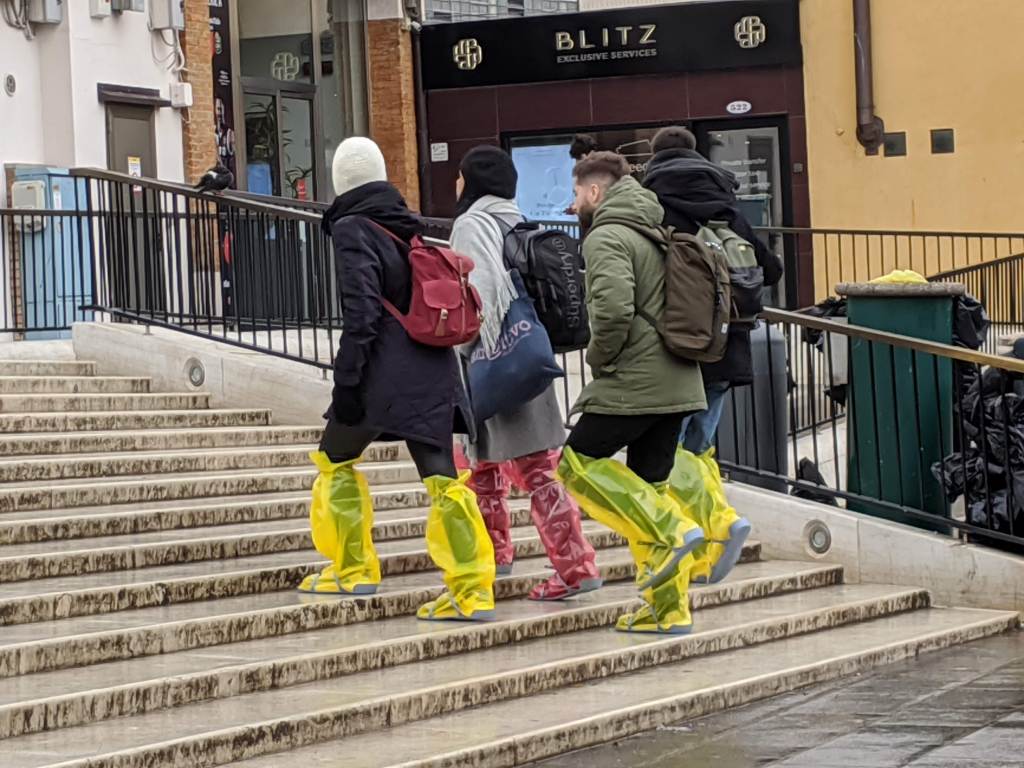
Venetians donned their “Wellies” and rain hats and went about their business. Shopkeepers placed heavy mats inside their doors. Tourists snapped up “fluorescent-colored “cellophane boots with no quibbling over the 10 euro price, pulling them on and wearing them with no embarrassment.

Venice has a full-time population of only slightly more than 50,000, but up to 30 million tourists visit annually. We purposely chose an end-of-season cruise, hoping to encounter fewer crowds at every port, especially in Venice. We succeeded, but the city was by no means deserted!

Through it all, there was a pervasive air of unexpected good humor.

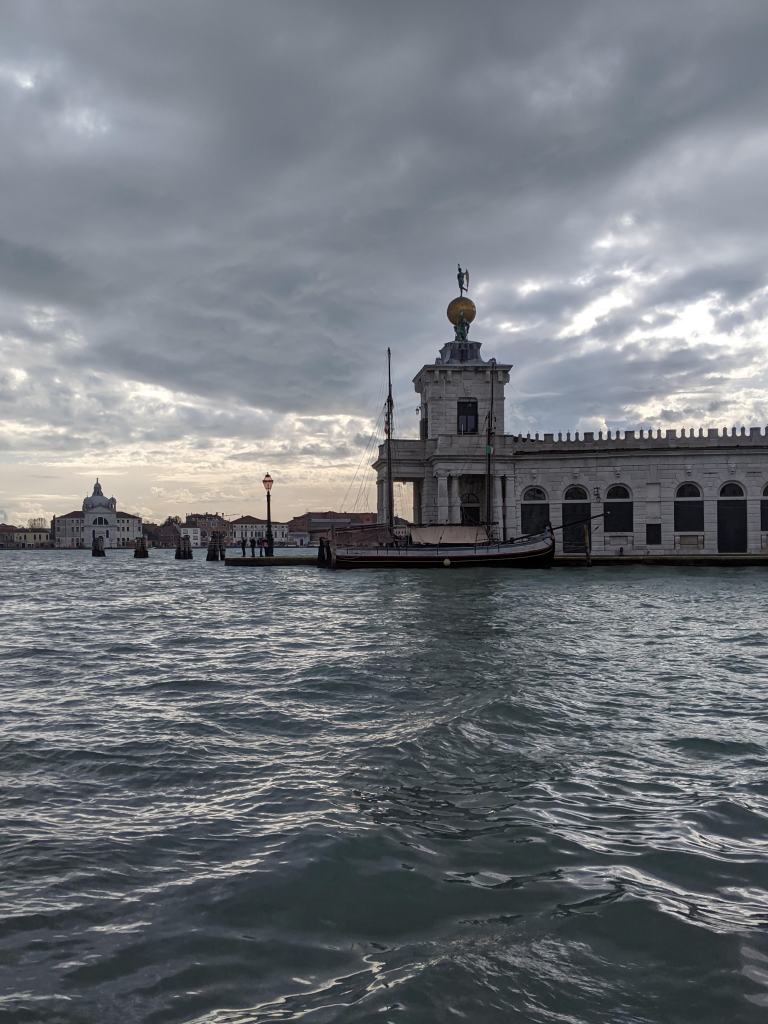
Venice was the last planned port of our 12-day cruise itinerary. Until almost the last moment, we were uncertain whether the call in Venice, scheduled as a three-day visit, might be canceled. When the captain announced that the water levels were receding and lower tides were predicted, we all breathed a sigh of relief. Disappointment turned to anticipation, even as we were advised that although St. Mark’s Square had reopened, the renowned basilica would remain closed.

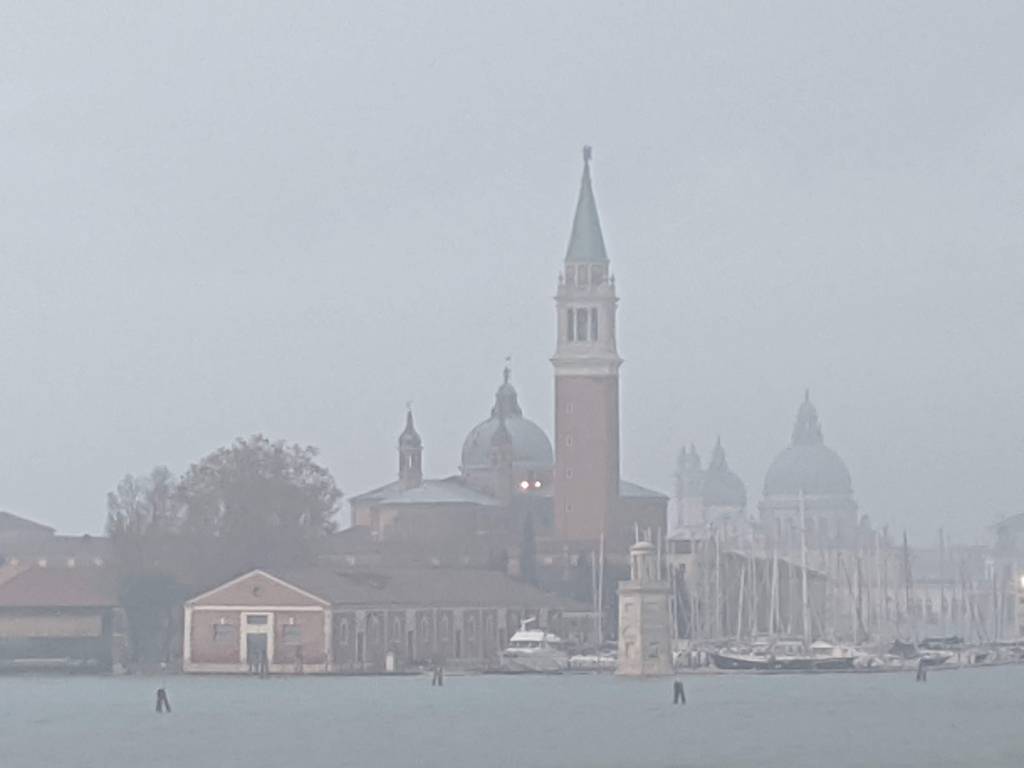
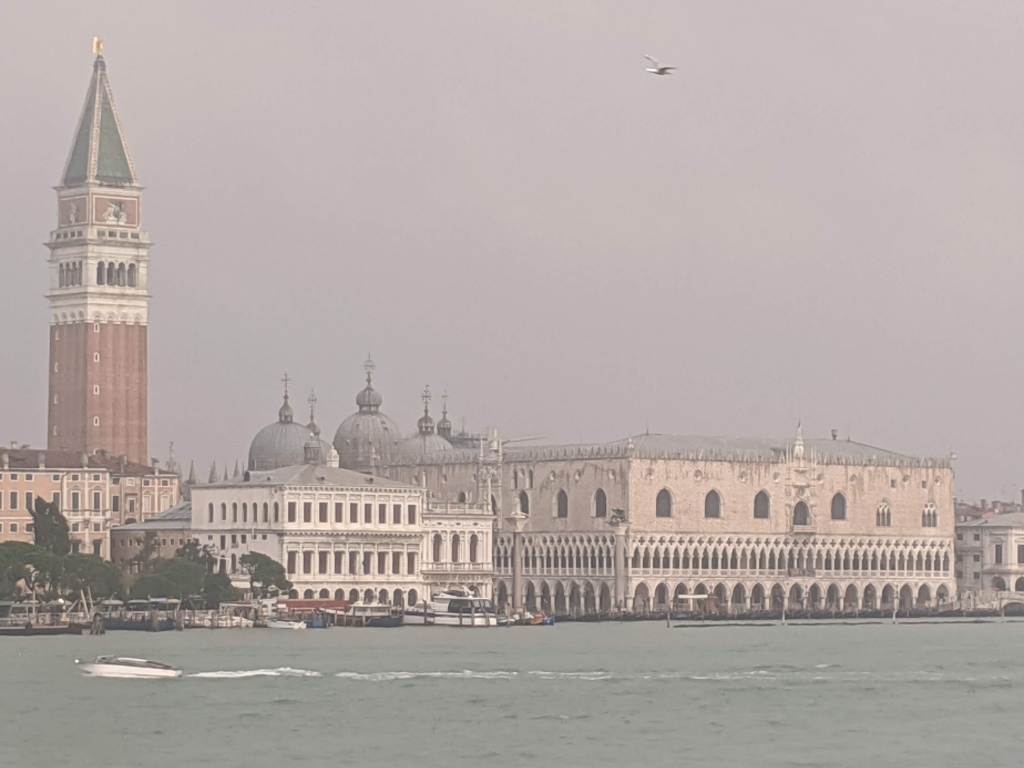
Our arrival in the city was delayed by morning fog, with canal-hugging buildings shrouded in mist as our ship slowly made its way to its designated dock. It made for mystical photo opportunities. Ship stewards passed coffee and pastries in the early dawn light to awed passengers pushing against deck rails even as the drizzle turned to pounding rainfall. The panoramic windows of interior lounges were equally crowded. The day dawned grey and chilly, but then a rainbow appeared. We had arrived in Venice.

Getting to the heart of Venice

From the port, the trip to the heart of the city involved a journey on foot to the modern tram known as the “People Mover.” Later we transferred to a waterbus where we joined other people — commuting businessmen, shopkeepers, local residents, office clerks, laborers, shoppers, students and visitors of many different nationalities — bound for stops accessible only by water.

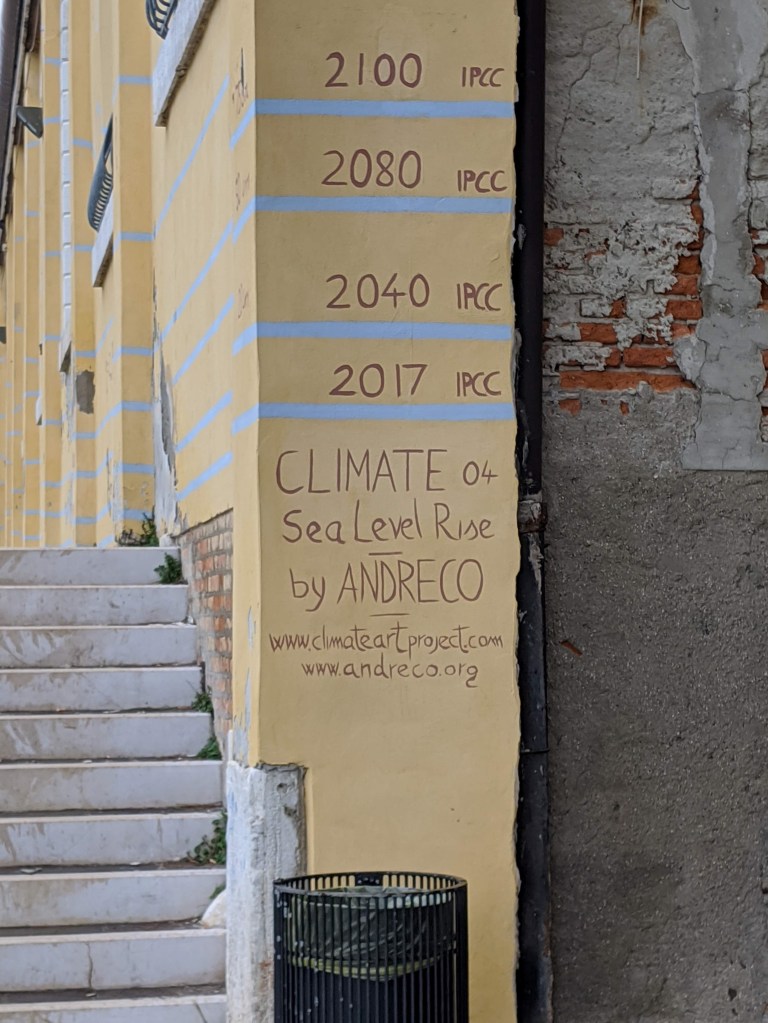
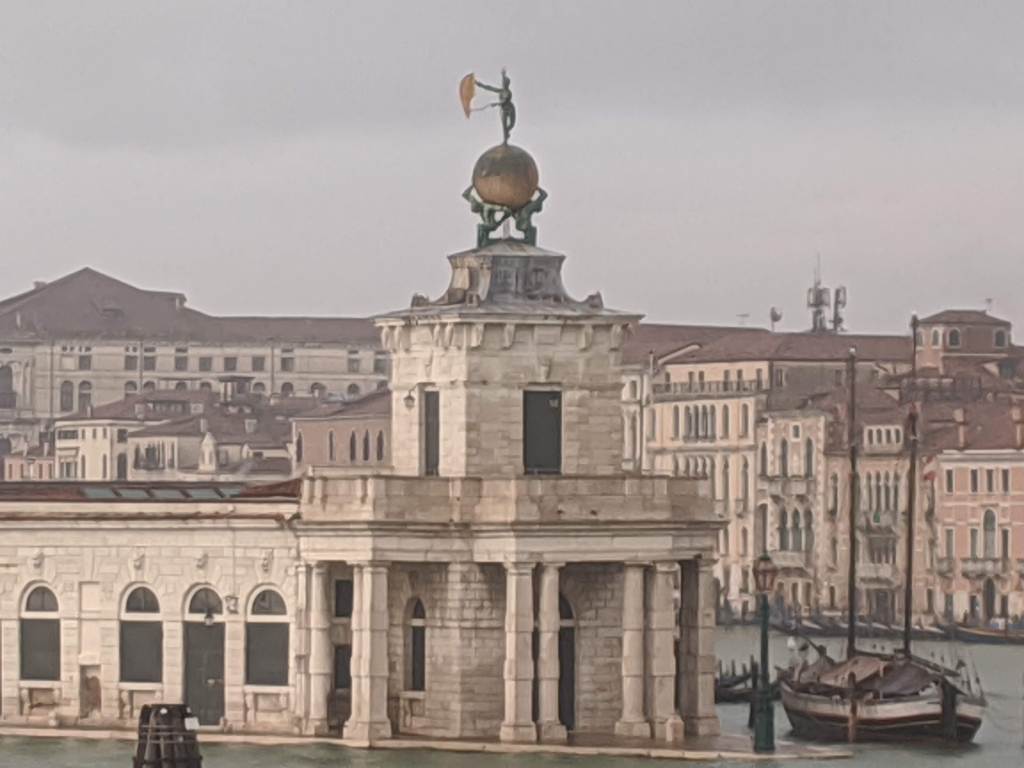
The journey was instructive. We were surprised at how high the water was, still lapping at building doorways and bridge foundations. We were astounded at the visible watermarks that confirmed how much higher it had been in recent days. We remarked on the efficiency of the still-operating pump systems that continued to drain standing water from lower levels of Venetian buildings. We arrived at San Marco station in light drizzle.

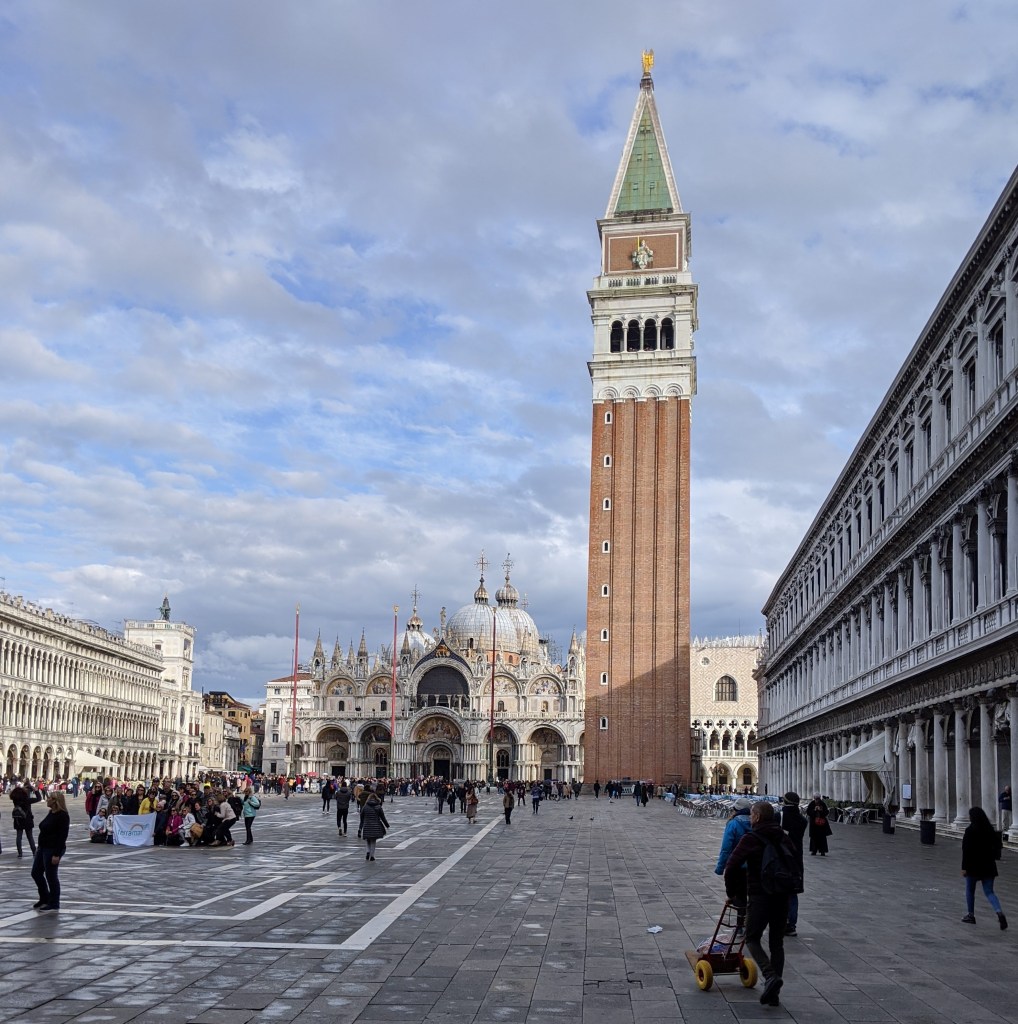
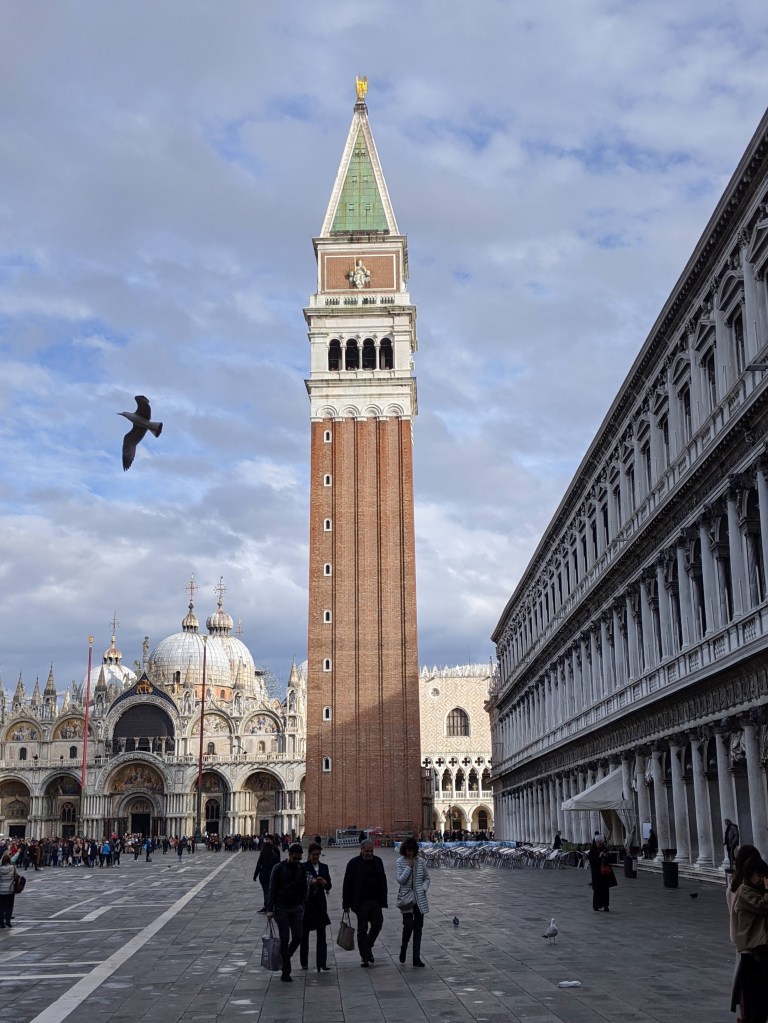
As it turned out, the sun emerged as we made our way to St. Mark’s square. This was my first trip to Venice. I was not prepared for the sensory overload of entering the square. Any description seems quite inadequate. I can only imagine how it must feel when crowded with tourists. I am so happy to have had the chance to see it in its stillness.

I was — I still am — spellbound.

Sign up to Follow Me and receive email notices of each new post.

The Basilica defies description

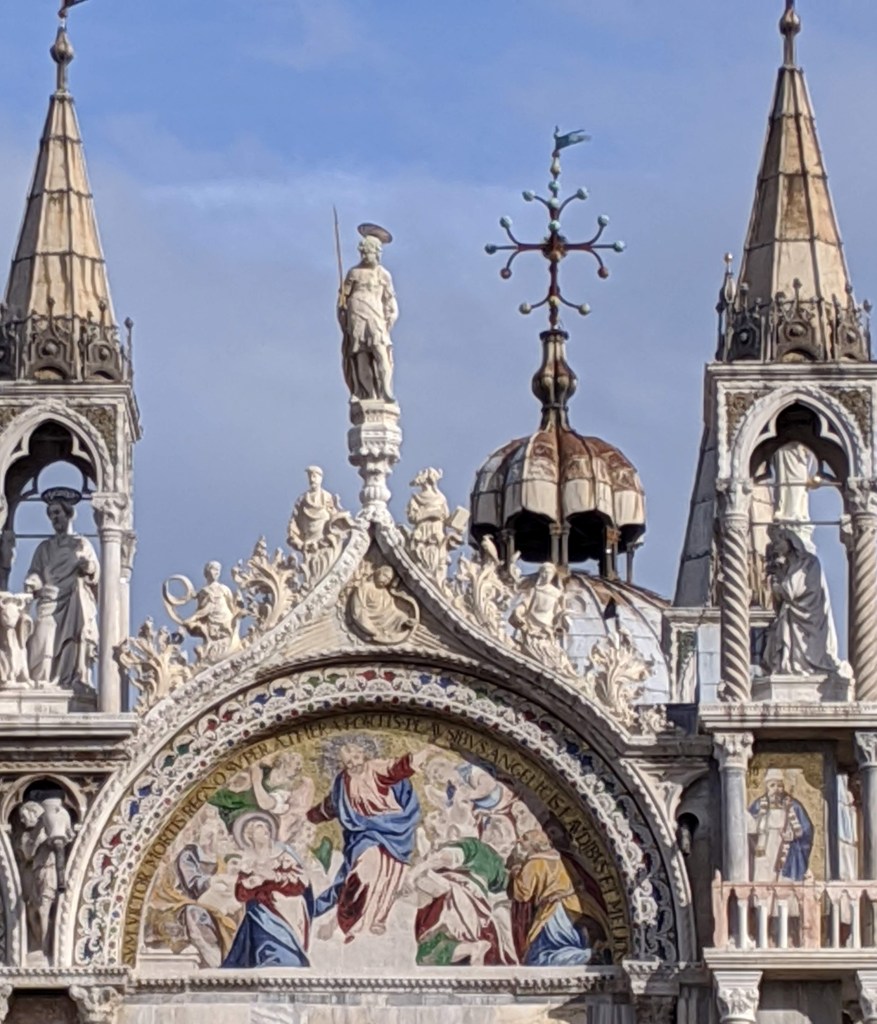
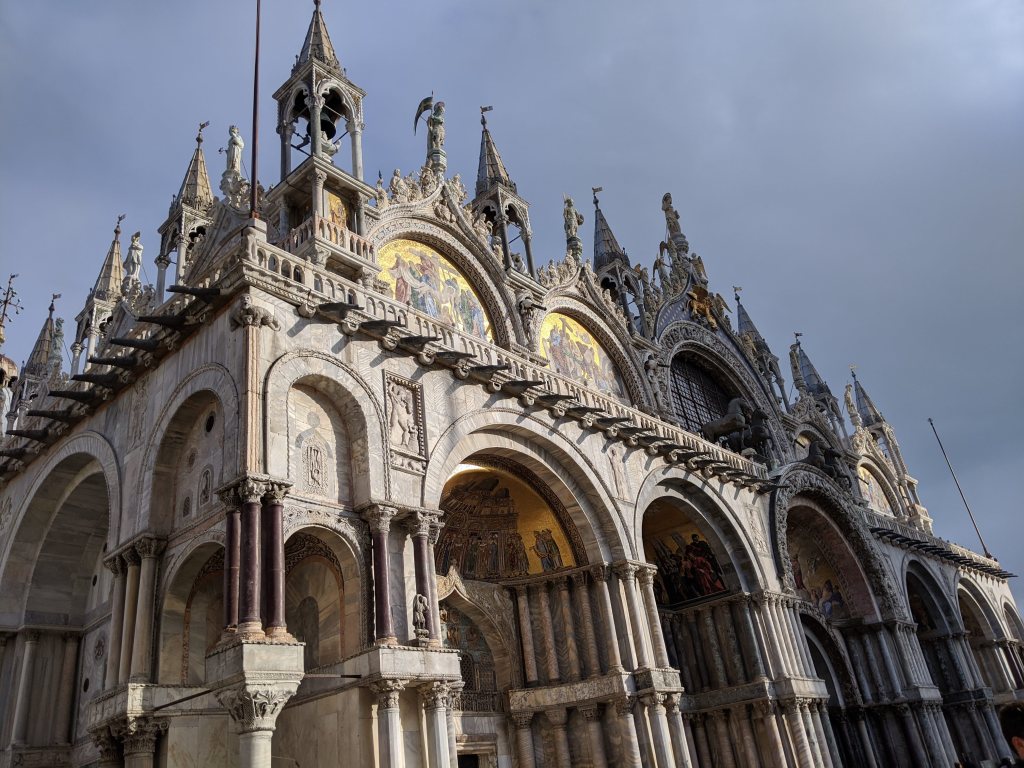
I don’t know how many photos I snapped. Everywhere I looked, from ground level to soaring roofs, held a view I wanted to remember. I stood in the center of this vast square and was completely captivated. I still have difficulty comprehending the size of the plaza, the opulence of each building’s architecture, and the magnificence of every vista.

And then, the final wonder of the day: Visitors were being welcomed into St. Mark’s Basilica. I am overwhelmed by my overwhelming emotional reaction. I honored the posted signs that prohibit photographs and videos of the interior, although I was sorely tempted to sneak at least one cell phone shot.

However, although many others did grab their shots, I hold only my vivid mind pictures of the mosaics, the glistening gold ceilings, the tapestries and the carvings. I also have a sense of how the musty, damp odor combined with the scent of candle wax to heighten the aura of sacred mystery. I am certain that this incredible structure will once again dry out, continuing to inspire future generations of faithful worshippers and curious visitors.

We wandered along the city’s uneven paving stones for a time, stopping for a late lunch at an inviting restaurant. Then, in the late afternoon, we found our way back to our starting point, boarded a waterbus, and settled in with Venetian commuters for a winding canal journey to Plaza Roma. We transferred once again to the train for a quick ride back to the port and our waiting cruise ship, our floating “hotel.”

My husband and I would disembark the next day. Our plans called for us to pick up a rental car and spend a few days exploring Croatia, before returning to Venice.

The introduction to Venice was not at all what we had expected. It was more than we had hoped.

Surprises in the off-season

The experience was reminiscent of our trip to France in late January and early February of 2018. That year we flew into Paris at a time when the Seine was flooded, and departed two weeks later with snow blanketing the city after a paralyzing blizzard. It was a memorable time, for some of the same reasons.
Paris and Venice. Though distinctly different, both cities boast an abundance of architecture, art, history, culture, food and drink — enough to satisfy the appetite of any traveler. But to experience the cadence of life during imperfect times is an opportunity that not every visitor receives. My husband and I treasure that gift.

Coming posts and photos will chronicle our all-too-short visit to Croatia, as well as the “small-ship experience” aboard Pacific Princess, and our impressions of other ports along the Mediterranean and Adriatic coasts.

Please join me for the journey.

So much world to see . . .

It’s already December!

My husband and I returned home tired in the late afternoon of Thanksgiving Day this year, after nearly 24 hours of travel spanning thousands of miles, seven time zones, and airports in four separate countries. We left Venice’s Marco Polo Airport in the rain and fog at first light on Thursday, and landed at sprawling DFW Airport at twilight, in thick fog and persistent drizzle.

The sky in Brussels earlier in the day had been clear, and even though the pilot announced it was blustery and cold in Montreal, the snow had stopped by the time we arrived, leaving only a dusting of white on the ground. It caused minimal delay. On this Thanksgiving Day, I was grateful for the instruments that guided our pilots and for the “weather window” that brought us home on time!

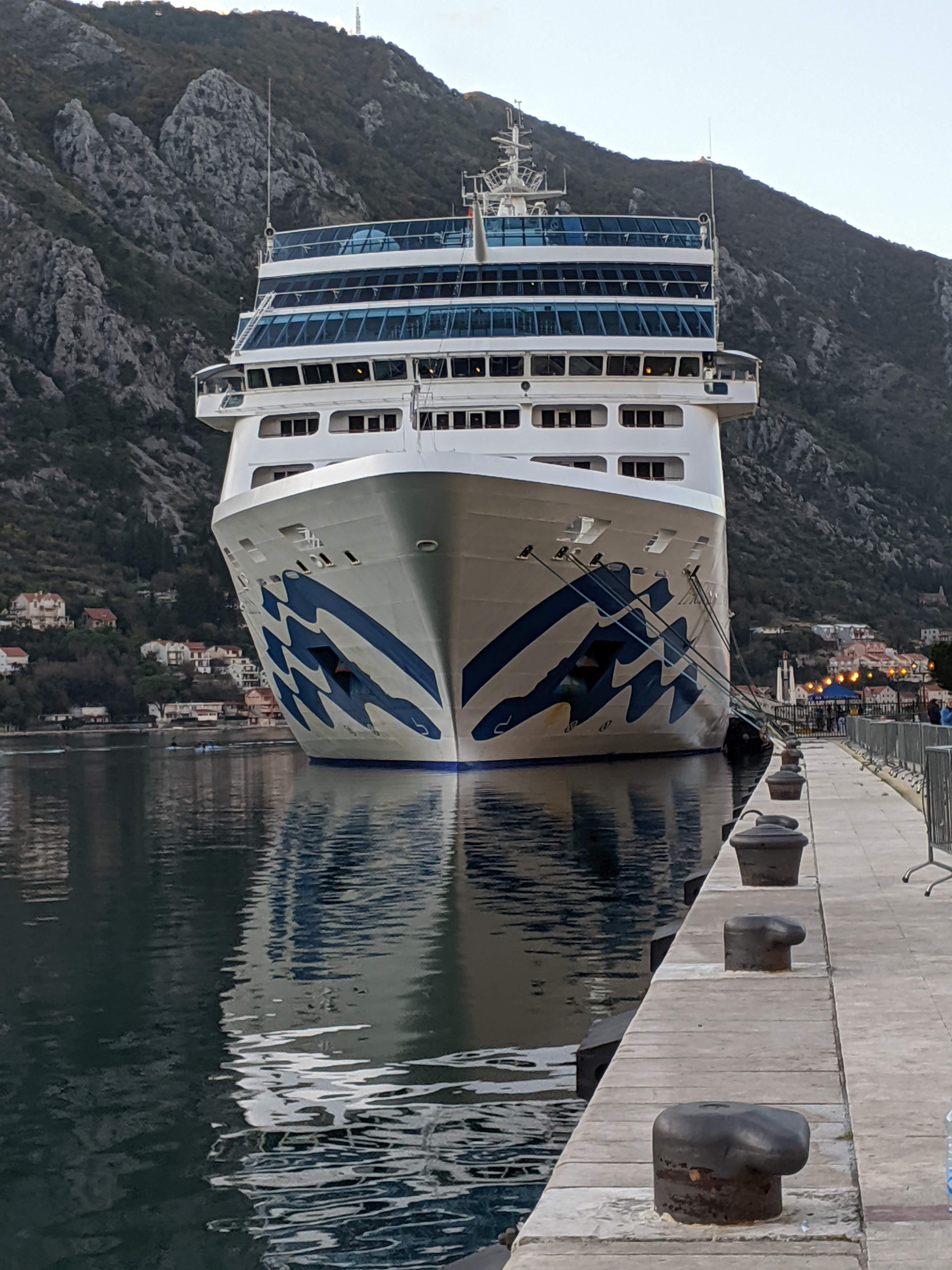
We booked the trip with full knowledge that an end-of-season cruise to Mediterranean and Adriatic ports comes with inherent risk of cool and rainy days, but off-season travel also promises smaller crowds and more chance to interact with local people. We like that. An alluring itinerary combined with the appeal of small-ship cruising aboard the 670-passenger Pacific Princess had sealed the deal for us.

It became an adventure we will not soon forget, marked by minimal deck time, grey skies, winds, occasional high seas, fog and intermittent rain. Some excursions were altered or canceled due to unfavorable conditions. None of that dampened our spirits, because the small-ship experience was much better than we had expected. We feel as if we forged life-long friendships in just 12 days!

Following the cruise, we rented a car and set off to explore the Istrian Peninsula and coastal Croatia for a few days. We ate well, drank local wine and beer, were captivated by the history, enthralled by holiday preparations, and charmed by the people we met along the way.

Mark Twain’s line comes to mind:

Travel is fatal to prejudice, bigotry, and narrow-mindedness, and many of our people need it sorely on these accounts. Broad, wholesome, charitable views of men and things cannot be acquired by vegetating in one little corner of the earth all one’s lifetime.”

Our time away was marked by pleasant days and relaxing evenings, good entertainment, friendly faces, fine food, impressive sights and wonderful experiences. We returned home tired but rejuvenated, filled with delight, invigorated by memories of people and good times. We learned a lot, made new friends, and affirmed once again that travel is indeed the antidote to narrow-mindedness.

Follow my blog to read about our travels; or follow me on Facebook.

After a brief hiatus from writing about my travels, I am once again ready to tell new stories. I hope you’ll join me: We’ll visit Malta, several Italian ports, San Marino — the oldest republic and one of the smallest sovereign nations on earth, Croatia and Slovenia. Finally, I have pictures of Venice, during the aftermath of the worst flooding in 50 years, illuminating the indomitable spirit of the city’s residents.

There is no doubt that travel changes a person, in a good way!

Faraway is close at hand . . .

It recently occurred to me that the small town in Texas I now call home is the “faraway” to most of the world’s inhabitants. It’s still true that most places on earth are totally unfamiliar to most of us, even though we refer repeatedly to “the shrinking planet.” There are enough faraway places to keep me occupied for several more lifetimes!

In preparation for the next getaway, I have lately been googling “best things to do in . . .” as an attempt to separate “must do’s” from “possibles.” I’m trying, as always, to jumpstart trip-planning. It’s a task I never finish in advance, but half the fun of going is facing the unexpected. The other half is the anticipation of what’s already decided!

Learning about home . . .

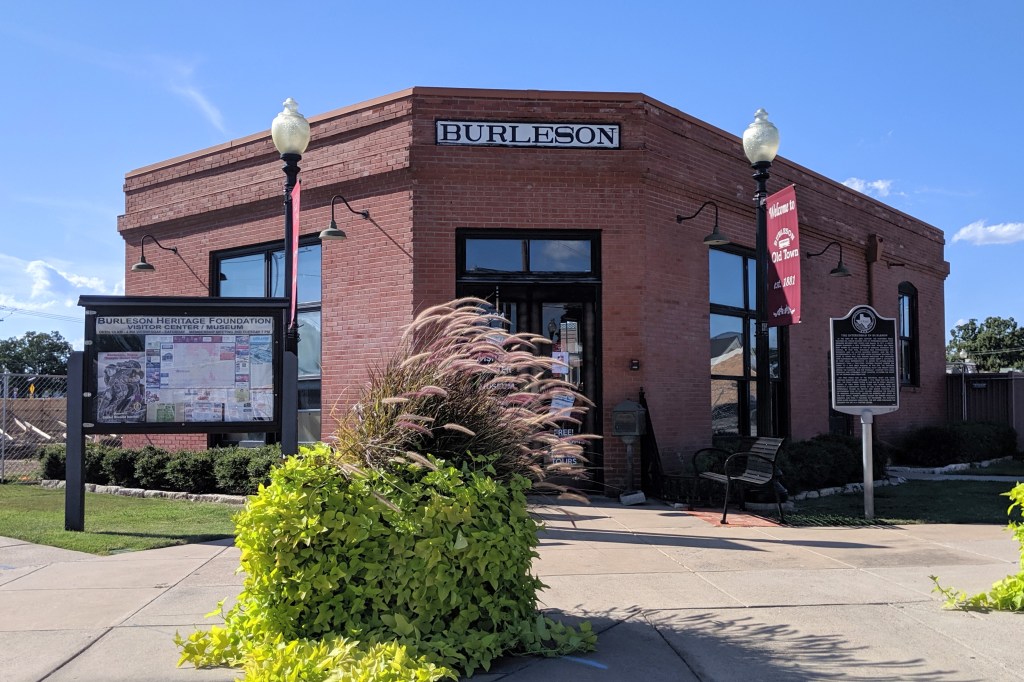
On a whim, I plugged in “best things to do in Burleson, TX.” It was more than just interesting, just short of enlightening. I have started a new mini-list of places to go and things to do right here in my own faraway place. I still qualify as a new arrival, at least in the eyes of born-and-bred local friends.

There are plenty of newcomers to Burleson, drawn by proximity to Fort Worth, reasonable prices, good schools and a distinctive small-town aura. There is a unique vibe — a progressive attitude with pervasive ties to the past — and no shortage of friendly people. This dot on the map was established in the early 1880s as an interim stop for the railroad running south out of Fort Worth.

Later, in 1912, an interurban rail line from Fort Worth to Cleburne also operated a station in Burleson. That depot still stands today. It is, in fact, a cornerstone of the town’s historic district, the focus of a cosmetic redevelopment plan that extends several blocks in each direction from city hall. The historic depot and two early interurban passenger cars will figure as prominently in the city’s future as they did in its past, when trains rumbled through 10 times each day.

Freight trains still run twice daily, sounding mournful whistles and stopping traffic at local crossings. I like that, because I’ve been a lifelong fan of trains and train whistles. (Can you guess why? Because they take people to faraway places, of course!)

Where commonplace and uncommon meet

During my online search, I learned:

There is a periodic ghost tour that makes at least five stops at local “haunts.” There may be no regular schedule, but that tour is on my list!

There is a Coldstone Creamery — how I’ve missed that, I do not know, but I am no stranger to other ice cream shops and numerous pizza parlors!

In 1920, the population was 241. The 2010 census reported 36,690 residents, and next year’s count is likely to exceed 50,000. Whether that is good or not depends largely on one’s point of view.

There’s at least one popular sports bar that features karaoke nights. I will probably continue to miss that attraction, a decision regulars there will surely applaud!

Learning new things about the place I call home made me stop and think about the other places I’ve been recently, those with histories that span many centuries. Burleson is only a child on the world stage.

But my small Texas city is charging forward, growing and taking giant steps to build a sound, healthy, connected community that is good for business, good for residents, supportive of its students and its seniors, welcoming to newcomers, and attuned to citizen wants and needs. It is progressive in all the best ways, and still manages to cherish its past.

It is comfortable.

Reality is the intruder . . .

There are still working farms within Burleson’s borders, along with golf courses and city parks, a creek-size tributary of the Trinity River, a stocked fishing pond, and two local wineries. Its previous rural character is still evident, and getting anywhere in town takes only minutes.

It remains small-town enough to boast large turnouts for summer music and movies on a blocked-off downtown street, for local holiday parades, and for patriotic observances at the city’s Veterans Plaza. It is a place where one can stumble upon painted rocks, left in public places by the volunteer artists of Burleson Rocks. They are meant to be found and treasured by passers-by. And several of its buildings are enlivened by colorful, larger-than-life murals.

It is a place where friends can meet for a spontaneous dinner out without making reservations, and where the sounds of live music drift from a local craft brewery/eatery’s rooftop deck on pleasant evenings. The drumbeat of high school marching band practice punctuates early mornings in the early fall, and local high school football games attract Friday night crowds.

Rabbits and possums are regular backyard visitors, and finding Texas longhorns, horses, donkeys, and even young camels grazing in a field is not entirely unusual.

Even though a busy Interstate runs through it, my city is not a tourist destination by any stretch of the imagination. But if you find yourself in Fort Worth for business or pleasure, Burleson is only about 20 minutes south of the high-rise office buildings and hotels, and it beckons to visitors with the promise of an entirely different Texas experience.

After the storm . . .

Our Boater’s Diary, dated Sunday, April 12, 2009, contains the following entry:

We did 512 [nautical] miles in the Abacos from the time we left here — quite something! We’re back where we started one month and two days ago — oh, the stories we can tell.

The “here” in that entry was Old Bahama Bay Marina, West End, Grand Bahama Island, then a frequent first stop for Bahamas-bound boaters. Our journey had begun in Palm Beach on March 10, as we set a course east across the Gulf Stream at 7:30 a.m. and left the beachfront high-rise condos of Palm Beach behind. We arrived a little after 3 p.m., and our adventure in a completely different world began.

It has been more than a decade now since my husband and I cruised the northern waters of the Bahamas. Our history with the island chain extends back further than that, however, and our memory bank is full of the good times we had, the places we traveled, the people we met.

And then Dorian pummeled those places that we enjoyed so much and remember so well.

I cannot even imagine the force, power, and destructive energy that accompany a Cat 5 hurricane. We were there during some heavy rainstorms; we weathered some rough seas, with stronger winds than were really comfortable, even on a sturdy motoryacht. But never did we face hurricane force gusts; no storms pounded us with heavy rain for more than 30 hours without a break, nor did we encounter flooding.

I have never personally experienced a major disaster, natural or otherwise. But over the course of many years spent on the water, in vessels small and large, I have seen weather in many forms, and I know how quickly conditions can change. I have known fear, and weathered unexpected squalls with high winds, rough seas and accompanying discomfort. But I have never experienced raw terror.

The sparsely populated, small northern islands of the Bahamas are isolated and uniquely beautiful. Surrounding seas have unpredictable currents, and are generally shallow. Boaters must be diligent when plotting courses, selecting anchorages, and navigating shoals. And then there is the weather. Squalls form quickly in the islands. Typically, they pass quickly as well, but not always.

And, sadly, islands have distinct limitations for leaving quickly when weather conditions turn threatening.

Today, hearing the names of the cities and towns, cays and harbors that have been largely destroyed brings tears: Green Turtle Cay, Treasure Cay, Great Guana Cay, Baker’s Bay, Hope Town, Marsh Harbour, Freeport, West End. And then there are the outlying islands whose names I did not note in the log. Which, if any, of those have survived unchanged?

The wonder of it all is that other islands of the chain suffered minimal damage. Nassau, the capital and currently the staging center for evacuation, damage assessment and recovery efforts, was spared the brunt of the storm. The world is responding to the need for assistance.

Chef Jose Andres has set up shop in Nassau to prepare meals needed by survivors and rescuers. As we have witnessed following other natural disasters, generosity is once again apparent], with private vessels, individuals, governmental agencies, and non-profits all offering aid in diverse forms and limitless amounts.

The U.S. Coast Guard, as always, is on the scene, and major cruise lines have pledged not only money, but ships and crew to help deliver relief supplies, food and medical necessities.

As news photos of the destruction become available, I cannot help but review some of my pictures of the time we spent cruising those waters. The sadness grows as I realize that my images reflect a time that may never come again. But, Bahamian citizens are strong and resilient and I am certain that, in time, the cities and towns will be rebuilt. I look forward to the time when, once again, marinas will be filled with private vessels and smiling people enjoying life and good times in one of the most beautiful places on earth.

In the meantime, donations to agencies offering aid are welcomed.

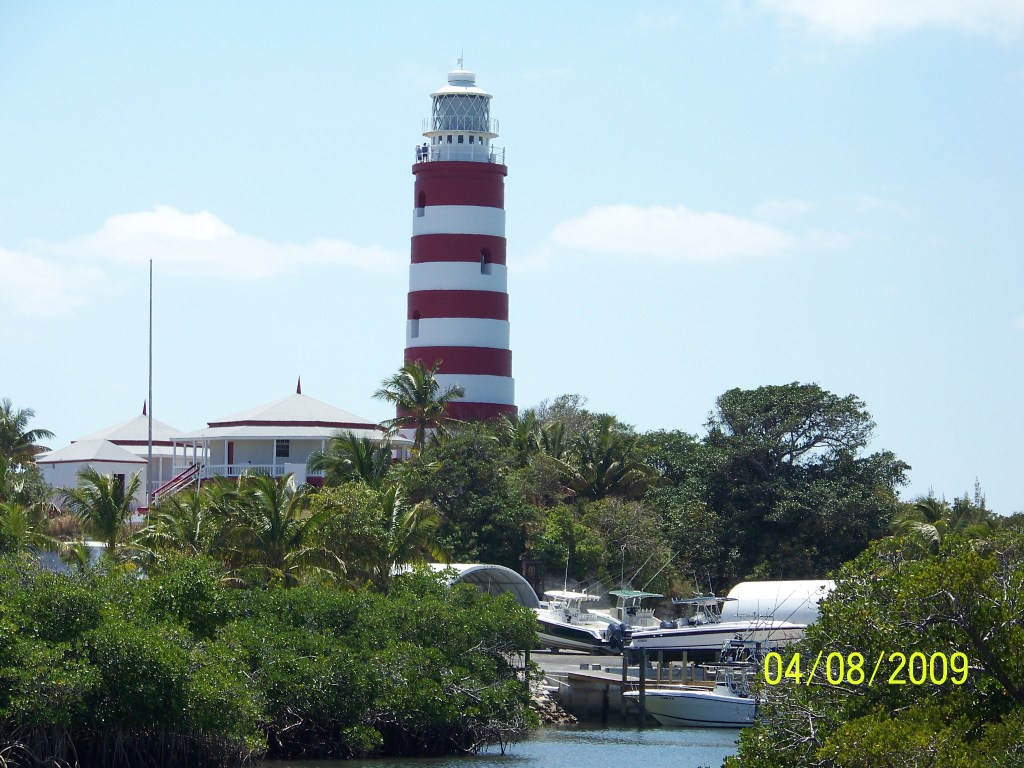
I understand the sun is shining once again in Marsh Harbour on Great Abaco Island, and that tiny Hope Town once again may live up to its name. I have not learned the fate of the red and white lighthouse that has stood there since 1862, one of the last kerosene-fueled, manually-operated navigational lighthouses in the world. I climbed to the top of it 10 years ago and savored the view surrounding Elbow Cay. I hope it will still be there if, and when, I am lucky enough to return.

Prime Minister Hubert Minnis expects the death toll to rise over the coming days, and notes that up to 60 percent of the homes in Marsh Harbour, the largest city in the area, have been destroyed. Airports are unusable and life will not return to “normal” for a long while, if ever.

And now, the massive, slow-moving hurricane has turned toward the Outer Banks along the eastern shore of the United States. We can only hope that residents heeded the calls to evacuate and that damage will not be as extensive as currently feared.

Just as a postscript, our return to Florida 10 years ago was delayed for three full days because of stormy weather. We were relatively comfortable at Old Bahama Bay Marina, surrounded by other mariners who also longed to set sail for other places. Finally, on April 15, we did just that. On the crossing, we were boarded by the U.S. Coast Guard; but that’s another story entirely.

The log notes:

“It was quite a crossing. After last night’s storm, it was a bit nervewrackng to check the weather forecast this morning and find that the prediction was for stronger winds from a different direction and more chop than we would have liked. But the weather is supposed to deteriorate again for the next several days, so we are taking our ‘window’ and leaving — as are most other boats, whether they’re heading east or west. We made the cabin secure and watched the power boat ahead of us bob and sway — and we followed.”

Our journey back to Florida spanned eight full hours, until we dropped anchor in the calm waters of Manatee Pocket in Stuart.

We remember it well.