
I can hardly think of Galveston without — at least in the back of my mind — humming the tune that Glen Campbell sang with so much heart back in the 70s.
I was in Galveston in early May to attend the annual conference of the North American Travel Journalists Association. I definitely heard those sea winds blowing and sea waves crashing. It was a stormy time across Texas, and not really beach weather, but Galveston still offered fun, good food and drink, and plenty of things to occupy my time when I wasn’ t in a meeting or attending a special event.
We were kept quite busy, but there was still time to become reacquainted with a city that I had learned to love when my husband and I were Texas residents looking for a rejuvenating beach getaway. Then, too, my son is a graduate of Texas A&M University at Galveston; so, as parents of a Sea Aggie, we have another tie to this unique beach town.

The city has grown, but in many ways it has not changed much since the last time I visited for any reason other than to board a cruise ship. Indeed, there’s a new cruise terminal and the iconic Hotel Galvez has been completely reimagined and is now grander than ever before. A number of new restaurants are flourishing since the days we sought out cheap takeout places for fried shrimp or oyster Po’Boys. The legendary pleasure pier has been rebuilt, modernized, and expanded. Some of my favorite old haunts no longer exist, but new breweries and bars have taken their place. Another favorite bakery and coffee shop has moved, and is now Bronco Burrito. A sister of the coffee shop proprietor now offers one of the biggest, and best, burritos ever. As the old saying goes: “The more things change,” . . . you know.
Familiar, But Always Fresh
My former “must stop at” donut shop, Shipley’s on the causeway as one enters Galveston is still a tradition. And Galveston’s oversize chess board still occupies a prominent location on The Strand, always ready for a crowd of onlookers when someone suggests a match.

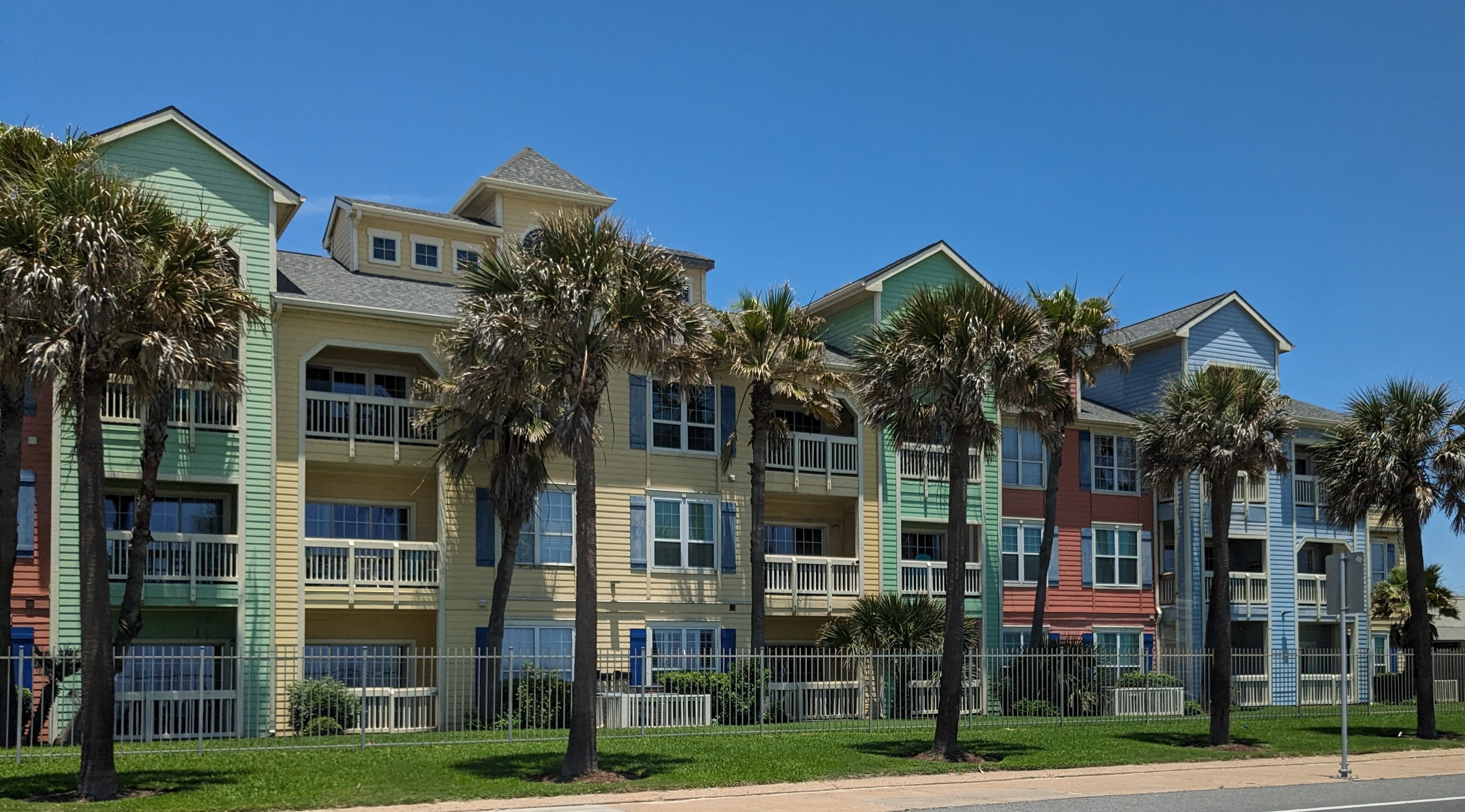


Galveston remains a beach town with a welcoming vibe, a young, active population, and a distinctive sense of its own importance. It has moved easily into the 21st Century, and is primed for future growth and development. Throngs of visitors flock to the island when the weather is good, renting beach cottages and filling the island’s hotels and motels. But on this trip I realized once again that this best-known island just south of Houston — just 27 miles long and three miles wide — has a past worth exploring. That past could fill volumes.
Cabeza de Vaca, the first European to come ashore in North America, spent seven years in Galveston beginning in 1528. That led to 300 years of Spanish colonization. Bernardo de Galvez, the viceroy of Northern Mexico and Texas, defeated the British at the Battle of Mobile Bay, and was a witness to the signing of the American Declaration of Independence.
Then came the pirates — Jean Lafitte and his brother Pierre attacked an American ship in 1822. Steven F. Austin obtained a land grant to settle 300 colonists in Texas and, in 1825, was granted permission to form a port.
These are the names of past visitors and residents who envisioned a city on this spot.
Galveston was born.
When the Texas Revolution was begun in 1836, the city was thriving, and it saw the birth of the Republic of Texas in 1846.
A Port of Renown
By the year 1850, the city was the largest port in the United States, with an export to import ratio of 20 to 1.
One of our conference speakers was J.P. Bryan who founded the Bryan Museum in Galveston in 2015. It boasts some 70,000 artifacts, from family letters (his great-great-grandmother was Steven F. Austin’s sister) to rare books, pistols, and saddles. He grew up in Freeport, and his father was president of the Texas State Historical Association.
The museum is housed in a completely refurbished once-abandoned Galveston orphanage. I was enthralled by his stories and I learned more about Galveston history and lore from him in one hour than I had gleaned during repeated past visits spanning nearly three decades.
One of the best things to do in Galveston is to learn about its history. And I learned from one of the best. As Bryan notes, “History is not boring.” In Galveston, history is around every corner.
Galveston Firsts
Once a center for immigration second only to Ellis Island, the small city was once known as the Wall Street of the West, and it boasted the first black high school, the first library, the first electric lights, the first professional baseball team, and the first medical school (It’s medical complex today, including the University of Texas Medical Center and the Shriners Children’s Hospital and Burn Center, a renowned and highly rated group of institutions.
In 1880, the city counted more millionaires than New York City, and there were more Victorian structures than anywhere else in the country. Until, that is, a 1900 hurricane devastated the city. With a death toll of 9,000 citizens, that event represents the worst disaster in U.S. history. Galveston rebuilt, but it never bounced back financially to where it was in the late 1800s. Today, there are 60 buildings included on the National Register of Historic Places. And Galveston is, once again, on the map, so to speak, and is on the way once again to becoming a force to be reckoned with.
Because it was, and is, a port city, Galveston also knew its share of shady characters, gambling and vice, and had a thriving red light district during the first part of the 20th Century. The city fell into decline from the end of World War II until the 1960s, when it began to reinvent itself once again.
Today, it looks forward to a new renaissance. Business is booming; tourism is up. Galveston has rediscovered its past and by so doing, reclaimed a vision of a prosperous future. This is what we saw during our short stay.

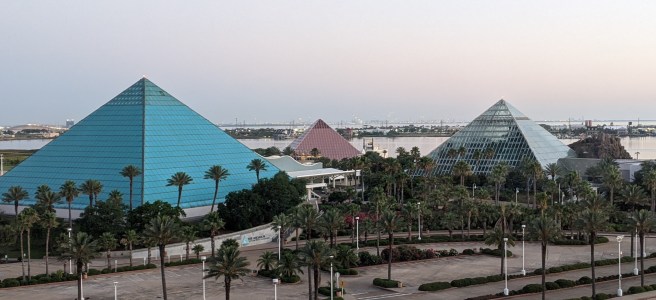
Note: Our conference was held at Moody Gardens. Watch for my future story about this amazing recreational and educational complex that includes a modern hotel and convention center as well as three dramatic pyramids that house an aquarium, a rainforest, and a Discovery pyramid that features rotating exhibits. There’s also a water park, a replica paddlewheeler, a reef rescue virtual reality experience, a ropes course and zipline, a seasonal waterpark, and 3D and 4D theaters.
Juneteenth
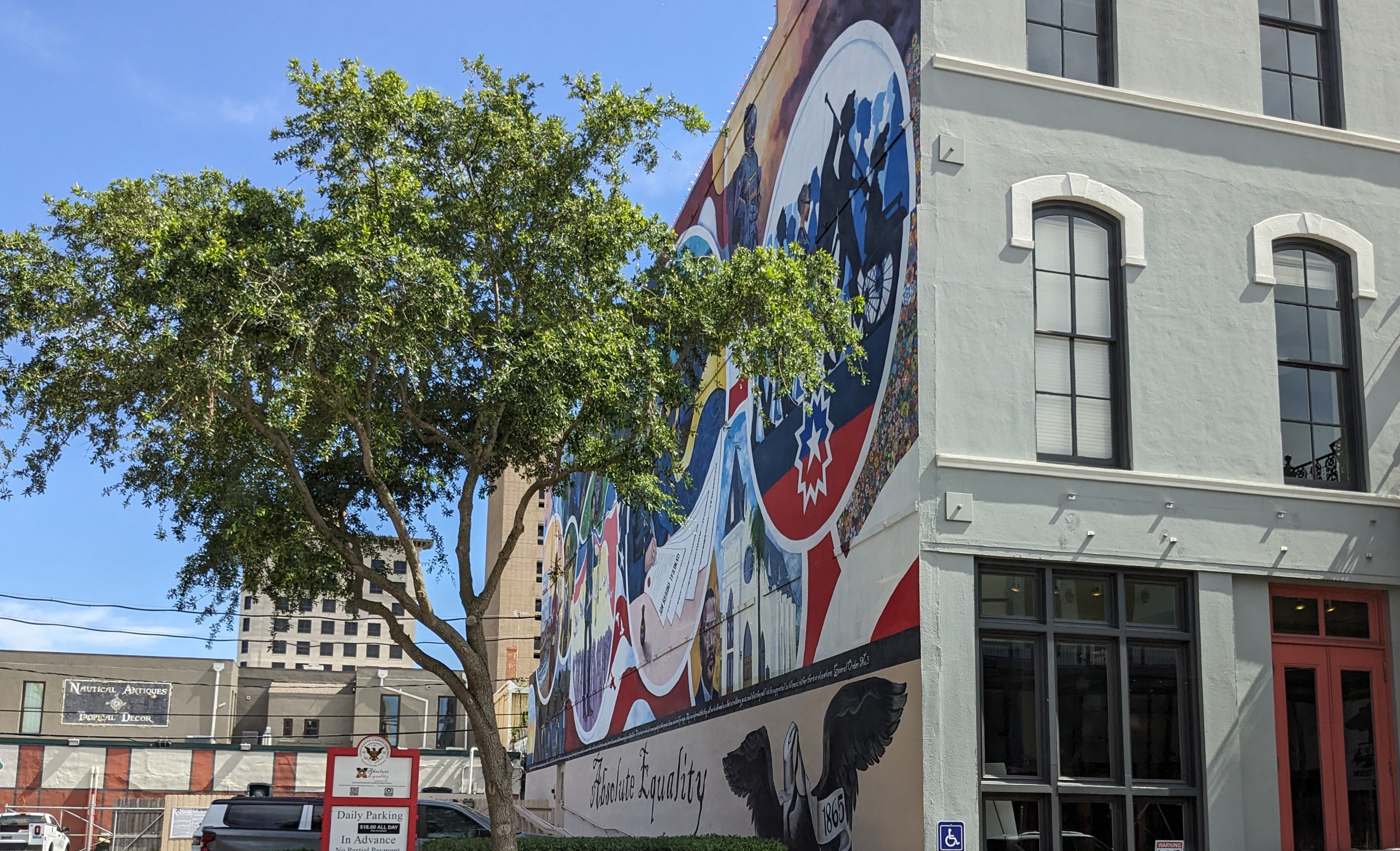
June 19th marks another bit of historical relevance for this quirky beach town. It was on June 19th, 1865, that Maj. Gen. Gordon Granger, who had fought for the Union, arrived with a force of soldiers in Galveston to deliver a very important message: The war was finally over, the Union had won, and it now had the manpower to enforce the end of slavery.
President Lincoln had signed the Emancipation Proclamation two and a half years earlier, but the word had not yet reached the Confederate state of Texas.
Read more about Juneteenth history. Believe me, it’s pertinent.
Today, Juneteenth is a National Holiday, and nowhere is it celebrated with more meaning than in Galveston.
The Future Is Bright
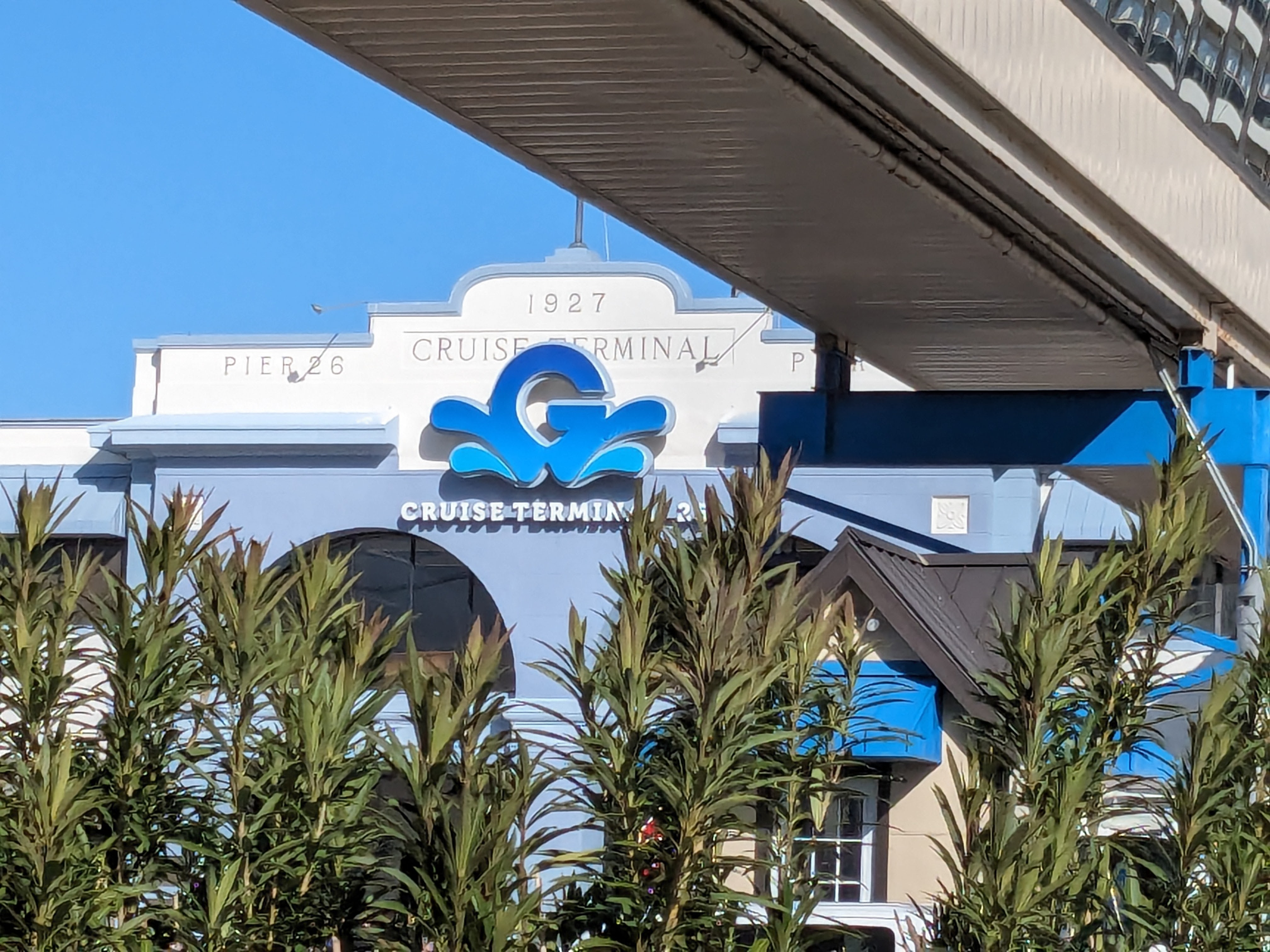
Galveston Mayor Craig Brown noted that, beginning in 2025, “every major cruise line sailing U.S. ports will be represented in Galveston,” and the city is slated to become the country’s third busiest port. A new Royal Caribbean Cruise Terminal opened in late 2022 at a cost of $125 million. It provides the utmost in passenger boarding convenience, with time from parking your car to actually boarding a cruise ship reduced to mere minutes, and it will accommodate the largest cruise ships afloat today.

Best Things to Do in Galveston
I could make a long list of things to do and places to go in this unique city, but half the fun of visiting a destination like Galveston is discovering on your own. If you travel there, just be open to new experiences, and you’re bound to enjoy your time. Seek out unusual places, talk to locals, and try new things.
Don’t Miss the Elyssa
Visitors may also tour an 1877 sailing ship, the Elyssa, that occupies a permanent slip at the Galveston historic seaport, amidst the seafood restaurants and wholesale fish markets. Take a tour of the restored vessel, or schedule a harbor tour. It’s quite an experience. Sightseeing tours of the port are also available that take passengers to the tip of the island, where free ferries operated by the Texas Department of Transportation run 24-hours a day to connect Galveston with the Boliver Peninsula, just just a few minutes away.

Adjacent to the Elyssa’s dock, you can become an immigrant. It’s a fascinating journey to “adopt” a persona and make your way through the immigration procedures at the Port of Galveston during that part of its history.
Ride the Ferry
A free ferry connects the Bolivar Peninsula southwest of Beaumont with Galveston Island. Officials have debated the pros and cons of building a bridge there since the 1930s. So far, it has not been done.

The trip spans less than three miles, and takes 18 to 20 minutes. During peak times, wait times can be long, sometimes an hour or more. There are no priority passes, but the ferry service operates around the clock. There are six ferries in the fleet, and during peak traffic times, all may operate as necessary. In the year 2000, the ferry system transported 6.6 million people. Each vessel can transport up to 70 vehicles, and 500 people.
The Pleasure Pier
In 1906, only a few years after the earthquake, Galveston’s original Electric Park that was to become known as the Coney Island of the South opened on a pier jutting out into the bay. A special excursion train at the time connected Houston to the pier, and crowds thronged to enjoy the moving picture shows, a ferris wheel and roller coaster, vaudeville shows and penny arcade, all lit by 6,000 electric lights.

In 1943, the Pleasure Pier was opened for the benefit of servicemen and military families during World War II. Following the war and throughout the 50s, more rides, games, and attractions were added, including a ballroom and outdoor theater for movies under the stars. Then, in 1961, another hurricane damaged much of the pier, and the Flagship Hotel, built over the water, fell into disrepair. Then, in 2008, Hurricane Ike roared through and the tourist industry in Galveston was hard hit until an investor in the person of Galveston native and Landry Corporation proprietor, took a chance and rebuilt the historic entertainment pier.
It opened in 2012, bigger and better than ever before. It is now a “must see, must visit” attraction in Galveston, with something for every visitor from nine to 90. Don’t miss it, if only to watch other people enjoying themselves.
Tour the Railroad Museum
The former Galveston Railroad Station has been reimagined as a museum, complete with original benches, clocks, ticket counters, a bank of pay telephone booths, and a variety of vintage rail cars and engines looking as if they’re fit to leave the station at a moment’s notice. For any railroad buff, it’s a must see — for its architecture and his historical significance. One can almost hear the “All aboard” cry as you open a door that leads to the tracks.


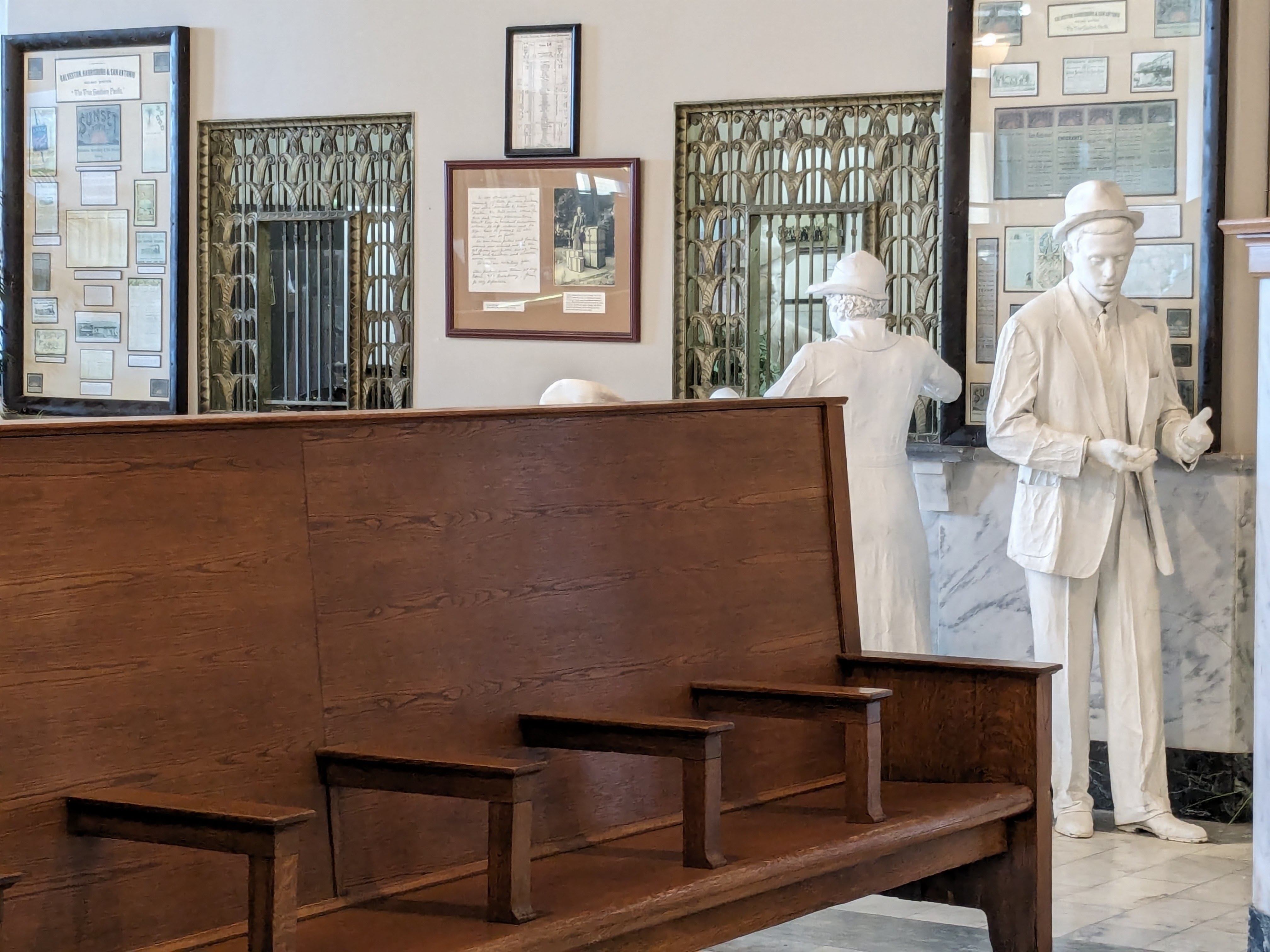
Other displays in the station are captivating as well — especially the stories of children who rode the rails from the east coast to the Midwest and Texas aboard Orphan Trains. Its a history that deserves telling, but one that has not been told completely or enough.
Plan Some Beach Time
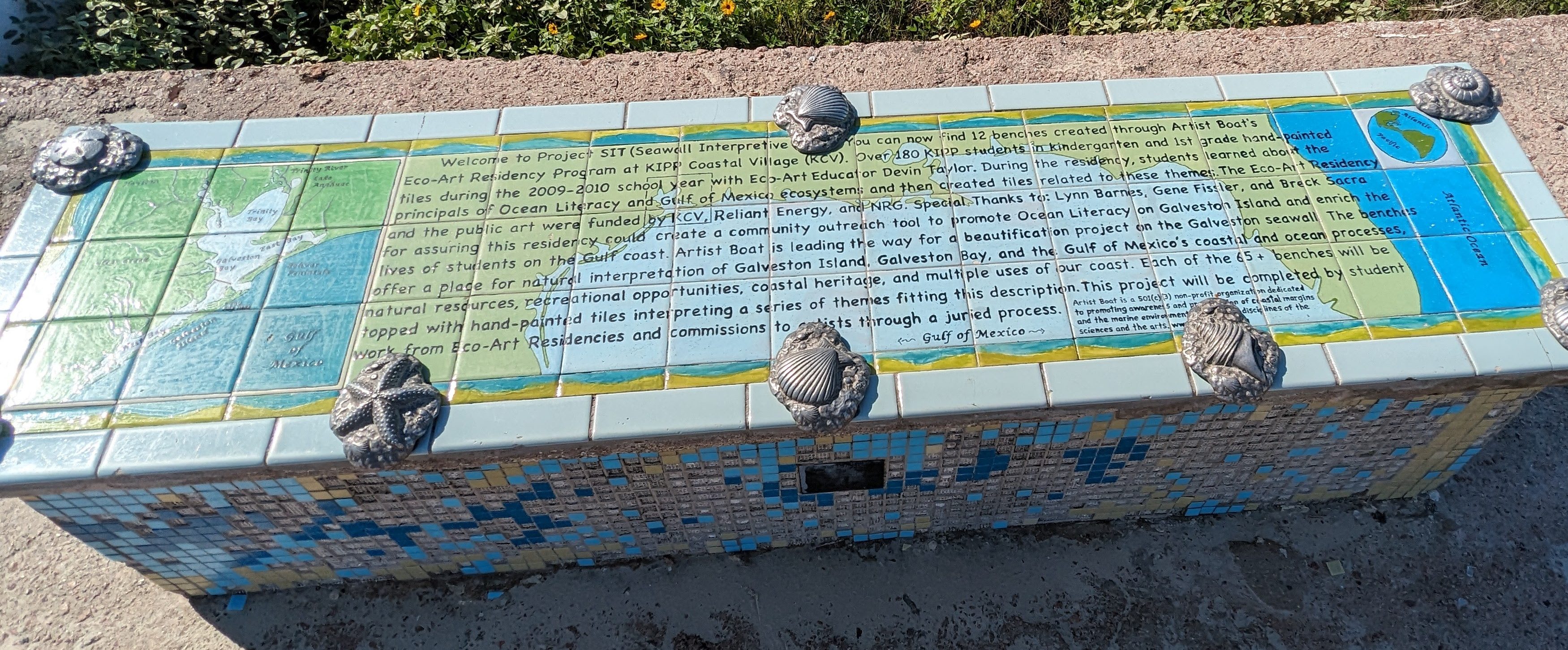
Walk along the Sea Wall and gaze out at the Gulf or take your shoes off and stroll the beach. Spread a towel or a blanket, and have a beach picnic. Stretch out and savor the sun, build a sand castle, or leave the beach for some fun at the historic Pleasure Pier! Galveston has done a marvelous job with its 32 miles of beaches — some areas are now equipped with “paved” paths designed to allow beach access for mobility-challenged beach-goers and visitors in wheelchairs. The city, at the forefront of such user-friendly features, has also installed rest rooms and changing areas with easy beach access. Note: Many Galveston trolleys are also equipped with ramps for mobility-impaired passengers.
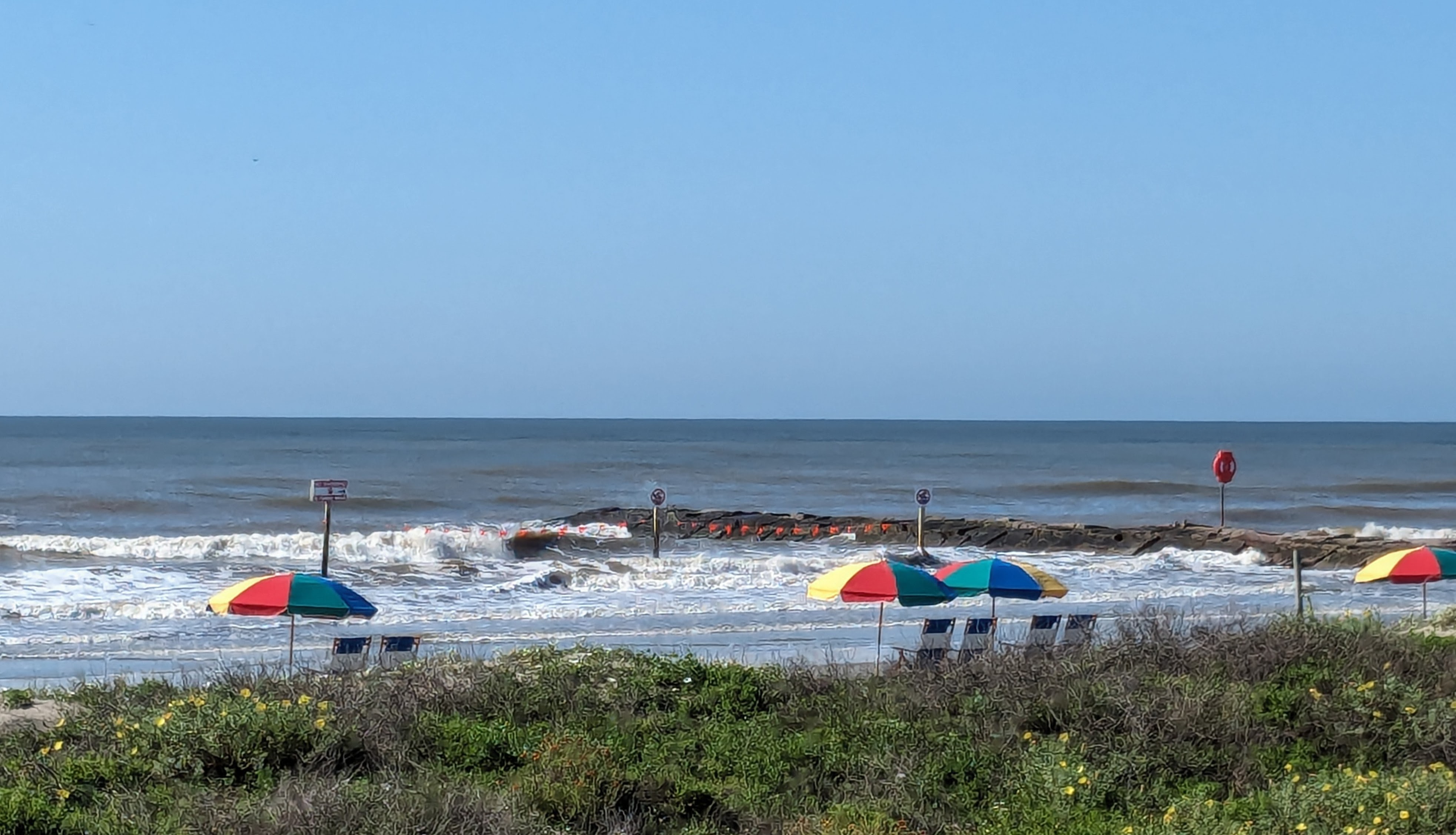
You’ll pay to park your car, but Galveston’s beaches and numerous attractions are open to the public at no charge.
Spend a Day at the Tidal Estuary
Galveston boasts a tidal estuary that has national significance because it has not yet been greatly affected by human activity. It is estimated that 75 percent of the bird species in North America spend some time in the local bay, and it is filled with both finfish and blue crab, bordered by coastal plains and marshes. If this is “your thing,” get out and enjoy it.
Go kayaking, rent a canoe, take a nature hike, or simply gaze at and be amazed by the nature that surrounds you.
Seawolf Park
At the very tip of Pelican Island, accessible by a single bridge from the city of Galveston, Seawolf Park boasts the most popular fishing piers in the area, along with picnic tables and a children’s playground. Pelican Island is also home to the Galveston campus of Texas A&M University, with degree programs in marine sciences, marine fisheries, marine biology, maritime engineering and ocean engineering, computer science, maritime transportation and maritime business administration. It also offers an interdisciplinary program in maritime studies, and is home to the Gulf Coast’s only Maritime Academy that offers a licensing program for students who wish to pursue maritime careers.

Seawolf Park currently houses the Galveston Naval Museum that allows visitors to tour both a WWII-vintage submarine and destroyer, and greenspace with a submarine exhibit. Galveston is also the probable new home for the Battleship Texas, currently undergoing repairs and refurbishment in drydock. It has been reported that this sole surviving U.S. battleship that served in both world wars will at some point in the future find its new home at Pier 21 in Galveston.
Visit a Fish Market

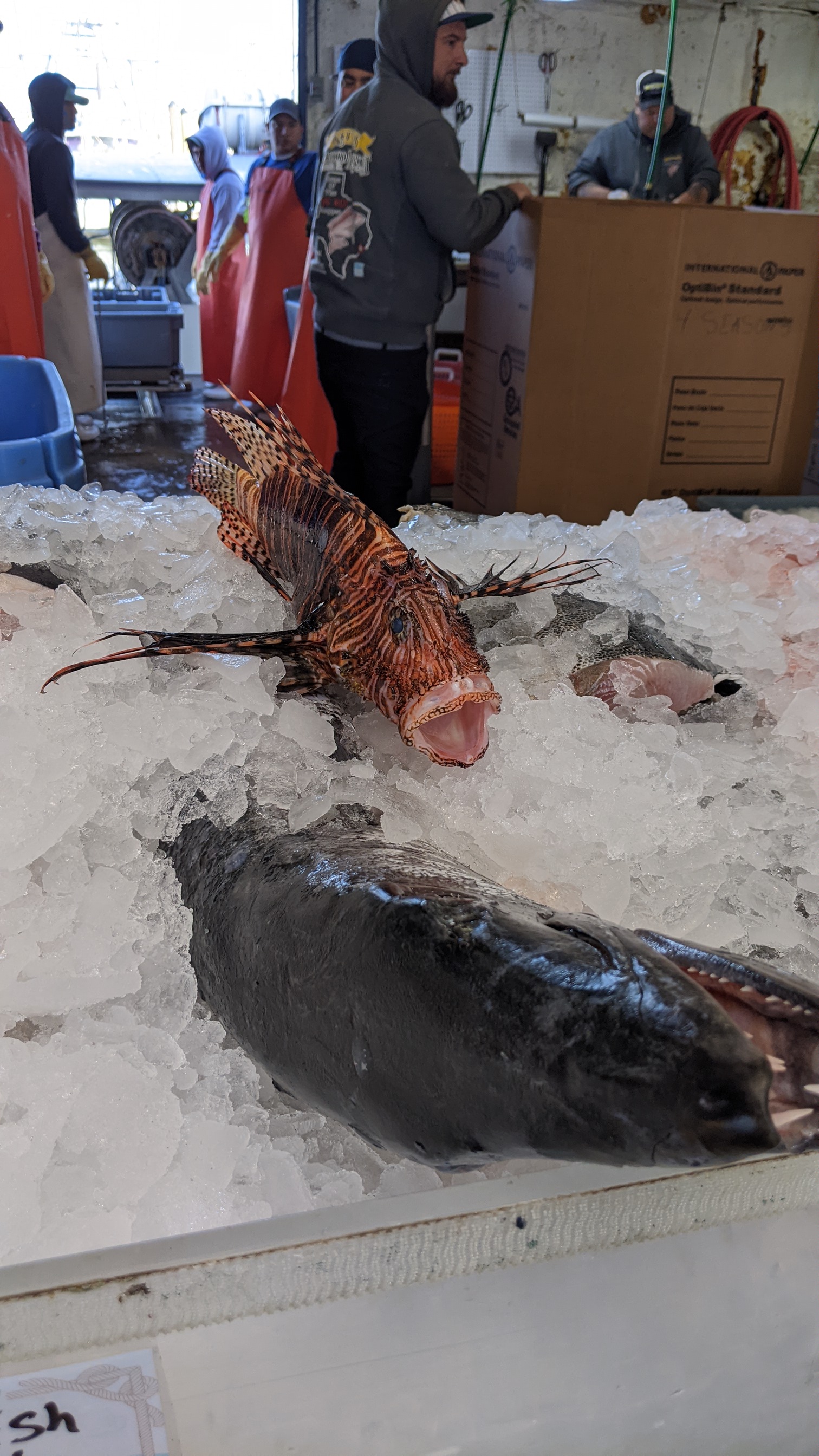
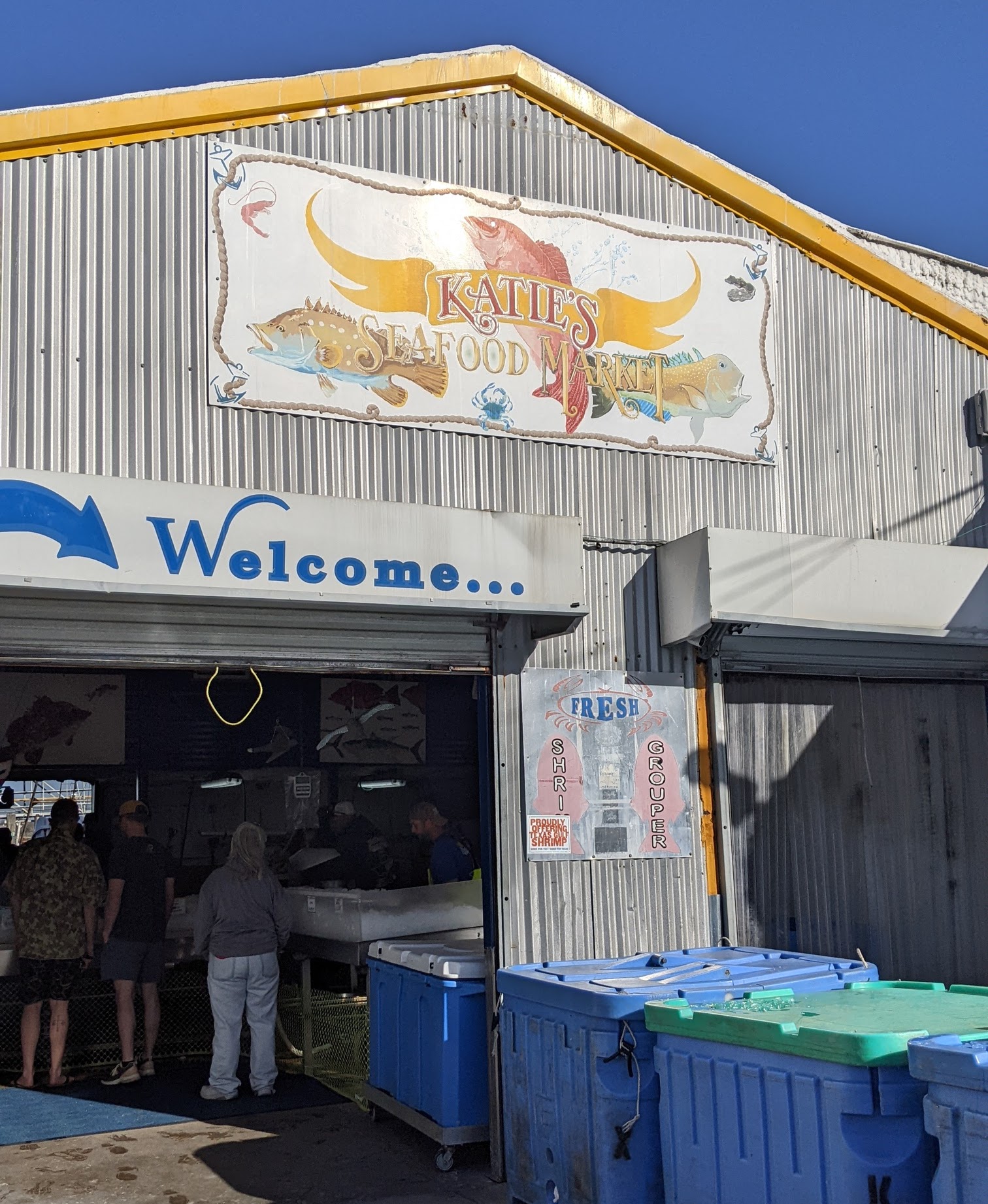
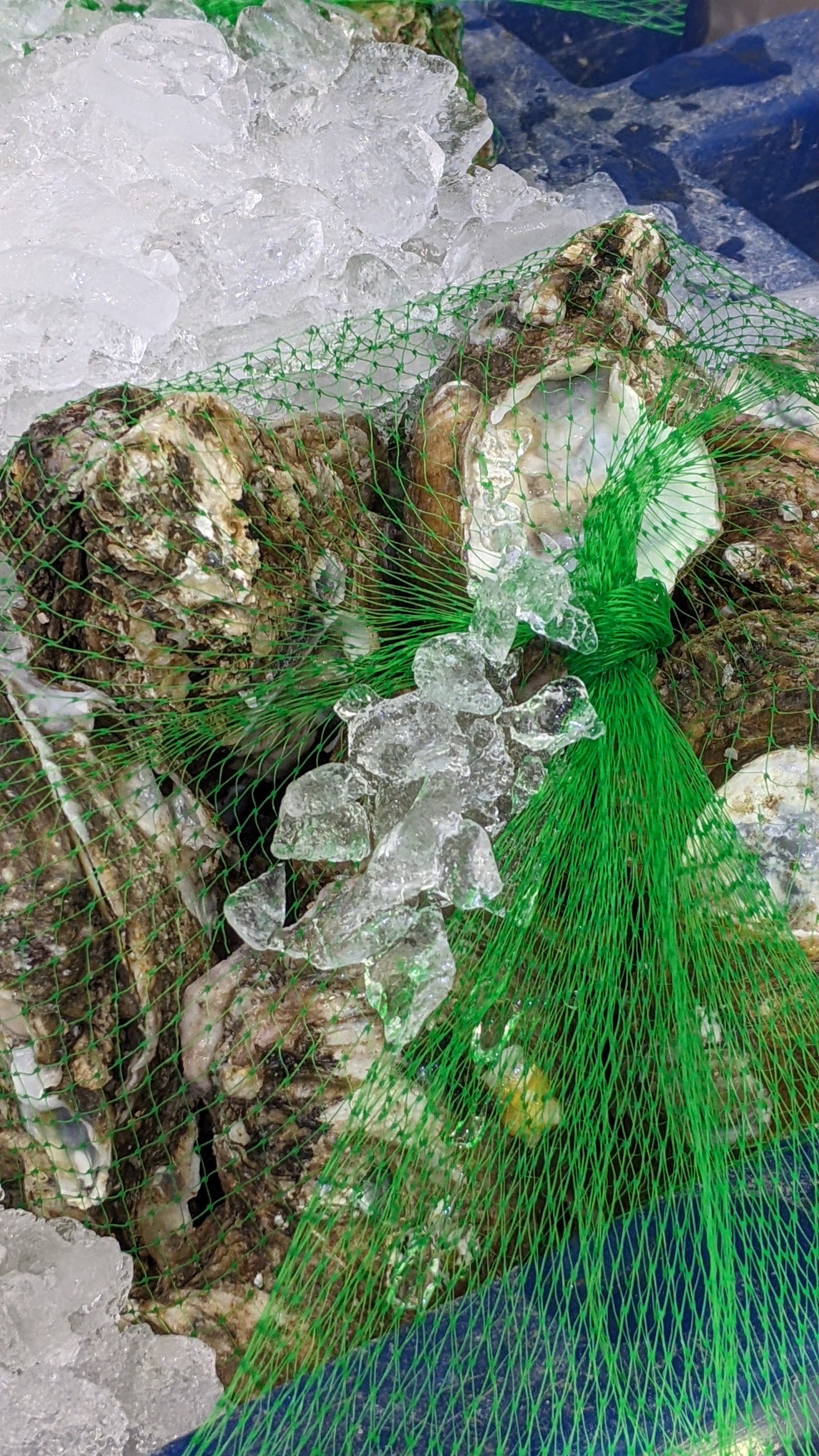


Seeing the wide variety of the catch fresh off the fishing boats is an experience not to be missed when you’re in Galveston. Of course, you can order from a local restaurant menu and you’re likely to get fish that’s just as fresh, but there’s something about seeing fish arrayed in deep tubs of ice that cannot be matched.
A large part of the fun is watching the pelicans who are hoping beyond hope for a handout from the fishmongers. Sometimes they get that gift, and that’s a real show!
Food and Drink
As in any popular vacation area, there a bars, breweries, dives and fine restaurants galore. I’ll just post some pictures of the food and drink I enjoyed in Galveston. You can bet I had my fill of fresh fish and seafood.


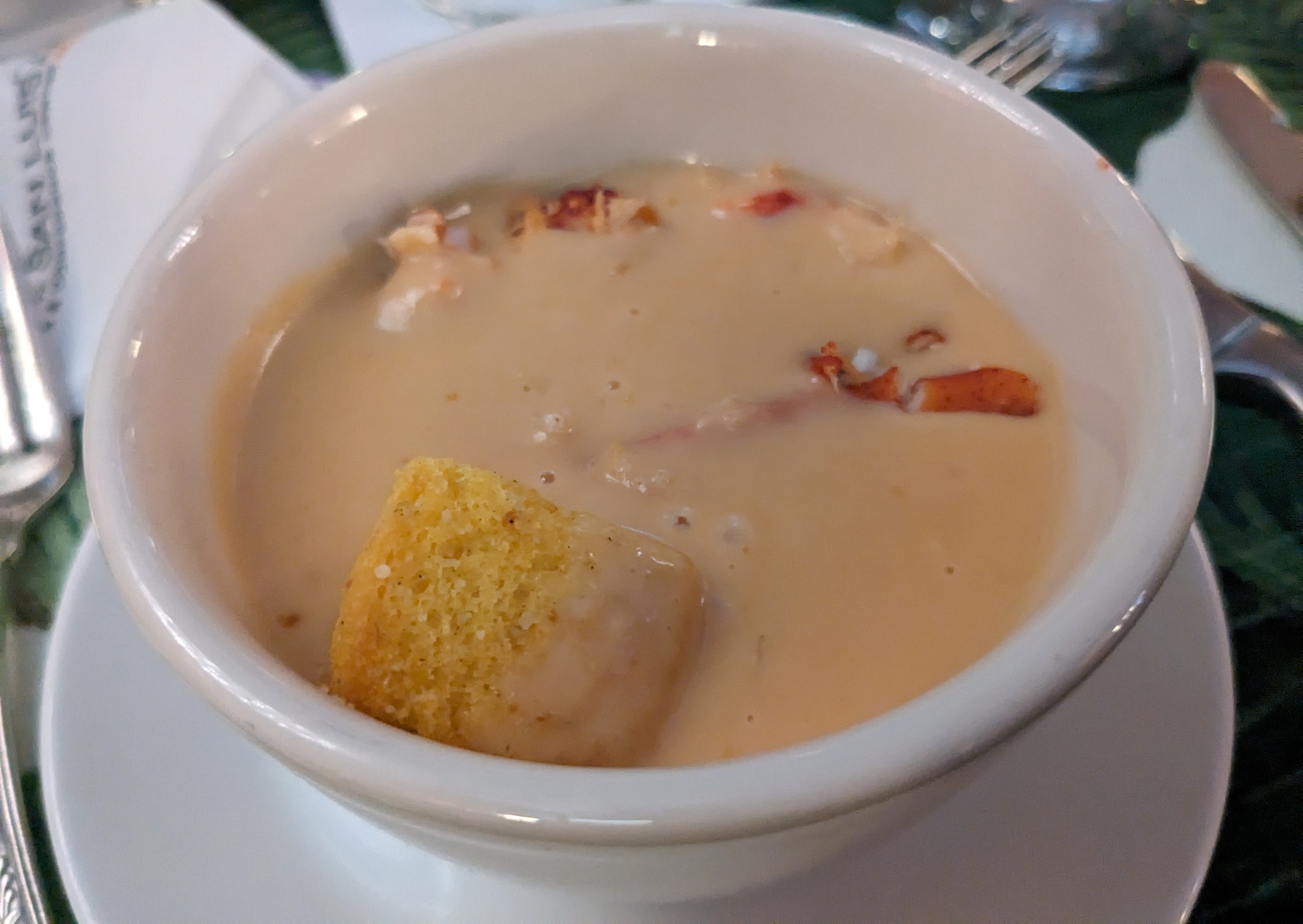

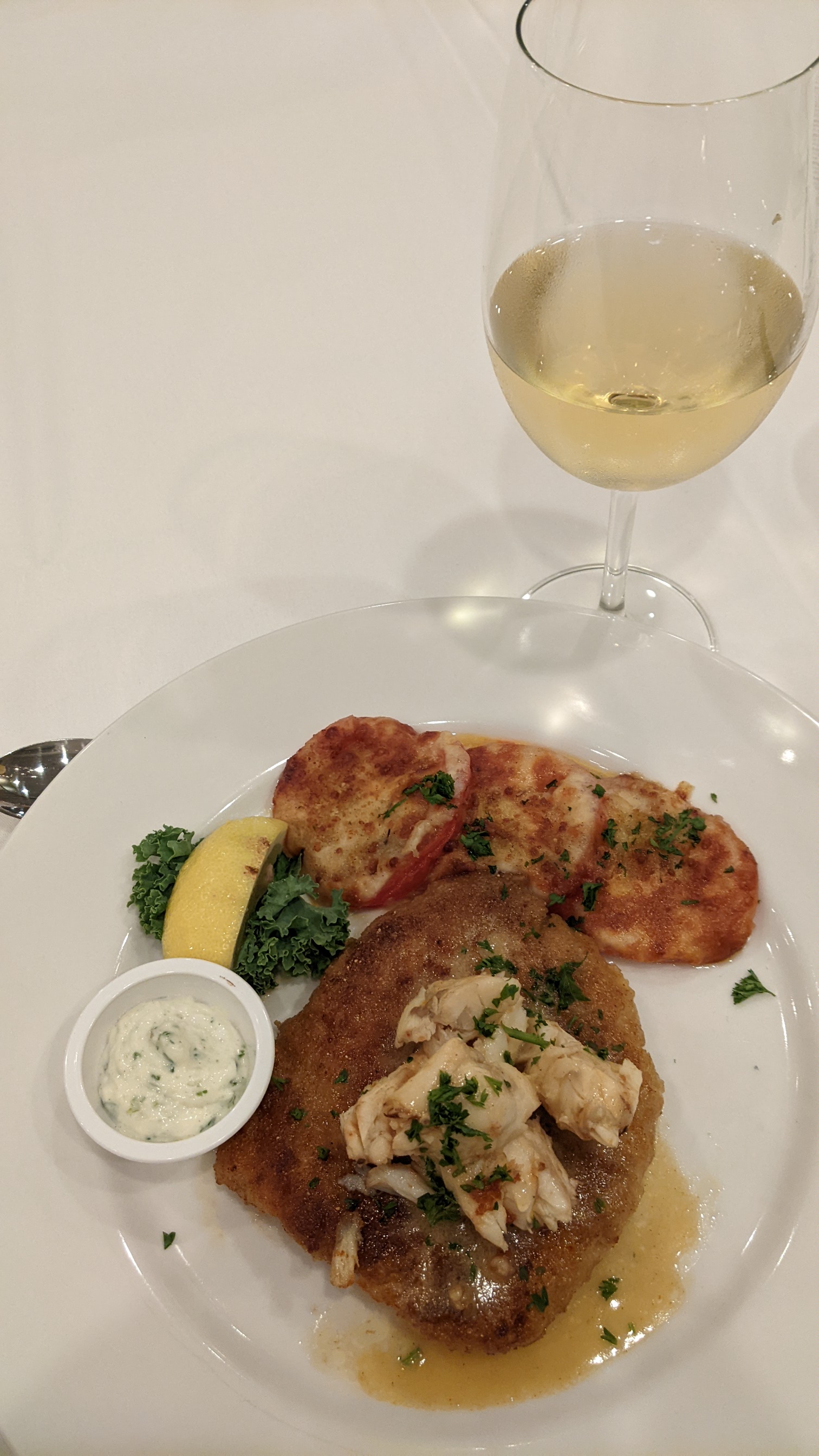
Go and discover for yourself all there is to eat and drink in this popular beach community, from Gaido’s on Seawall Blvd., with a 100-year-history of fine dining, to the rooftop bar at Hotel Lucine, a revamped 50s-era motel, to matchless Italian cuisine at Riondo’s Ristorante, in a historic building in the Strand district, to casual walk-up bars and food trucks. Search out your own favorites, and know that the seafood is fresh, the beer will be cold, the margaritas mixed to your liking, with entertainment and music to suit your taste.
Other Reasons to Visit Galveston
Galveston is an island, of course. But it is also the gateway to a string of beach communities in South Texas. Thousands of people head to those beaches every year for short vacation getaways, for the entire winter season, for fishing expeditions, and for business. Gulf Coast cities, including Port Lavaca, Port Aransas, and Corpus Christi, the coastal barrier islands south of Galveston, and the long expanse of Padre Island’s National Seashore, are popular destinations.
Residents of Houston, one of the country’s largest urban areas, routinely “escape” to Galveston for a day at the beach or a romantic dinner by the sea. Once you’ve experienced all that Galveston offers, it’s hard to get it out of your mind. You might never be the same again.
Go ahead, hum the tune.






 Good Food and Faraway Places