Decoration Day

Today is Memorial Day. It was proclaimed so only in 1971, by an act of Congress, to be celebrated on the last Monday in May, but the tradition of decorating gravesites and paying tribute to those who died in battle, or as a result of injuries sustained in service, goes back a lot further in time. Some say it was always a Southern tradition. It is true that May 30 was celebrated as Decoration Day, beginning in 1866, following a declaration by U.S. Gen. John A. Logan, who took his inspiration from the practice of cleaning and decorating relatives’ graves each spring, especially the gravesites of Confederate dead.

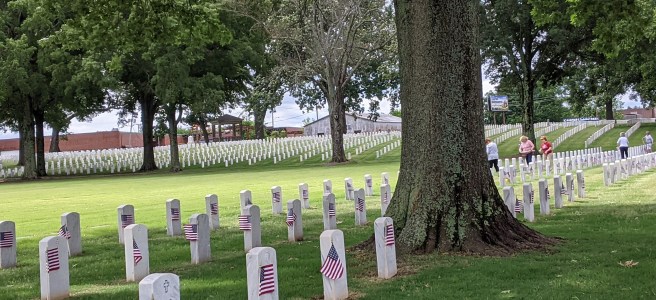
I was privileged last Friday to be one of a small group who volunteered to place flags in a single section of the Little Rock National Cemetery for Memorial Day. In a little more than two hours, our group of nine decorated more than 1,800 headstones with the small, simple reminders that a nation still honors those who died in wars fought to defend the freedoms we now enjoy.
The day was first celebrated nationally in the United States in 1868, during a ceremony at Arlington National Cemetery in Washington, D.C., where both Union and Confederate dead are buried. As the years passed, it came to be known as Memorial Day, and after World War I, the same date was celebrated across the United Kingdom, and elsewhere in the world as Poppy Day or Remembrance Day. The tradition continues, but in many places, the date has come to be celebrated not as a tribute to those who gave their lives in service to the country, but as a party weekend that signals the beginning of summer.

Perhaps there is room for both.

I choose, each Memorial Day, to take at least a few moments to pay tribute to those who died so that my family and I can live in peace and enjoy the coming summer’s activities. As the proud daughter of a retired military officer, the wife of another former Army officer, and the descendant of many men who served honorably in war and peace in our country’s past, I cannot forget the sacrifices of those who served, both at home and in foreign lands and did not return to enjoy the privileges that they won in battle.

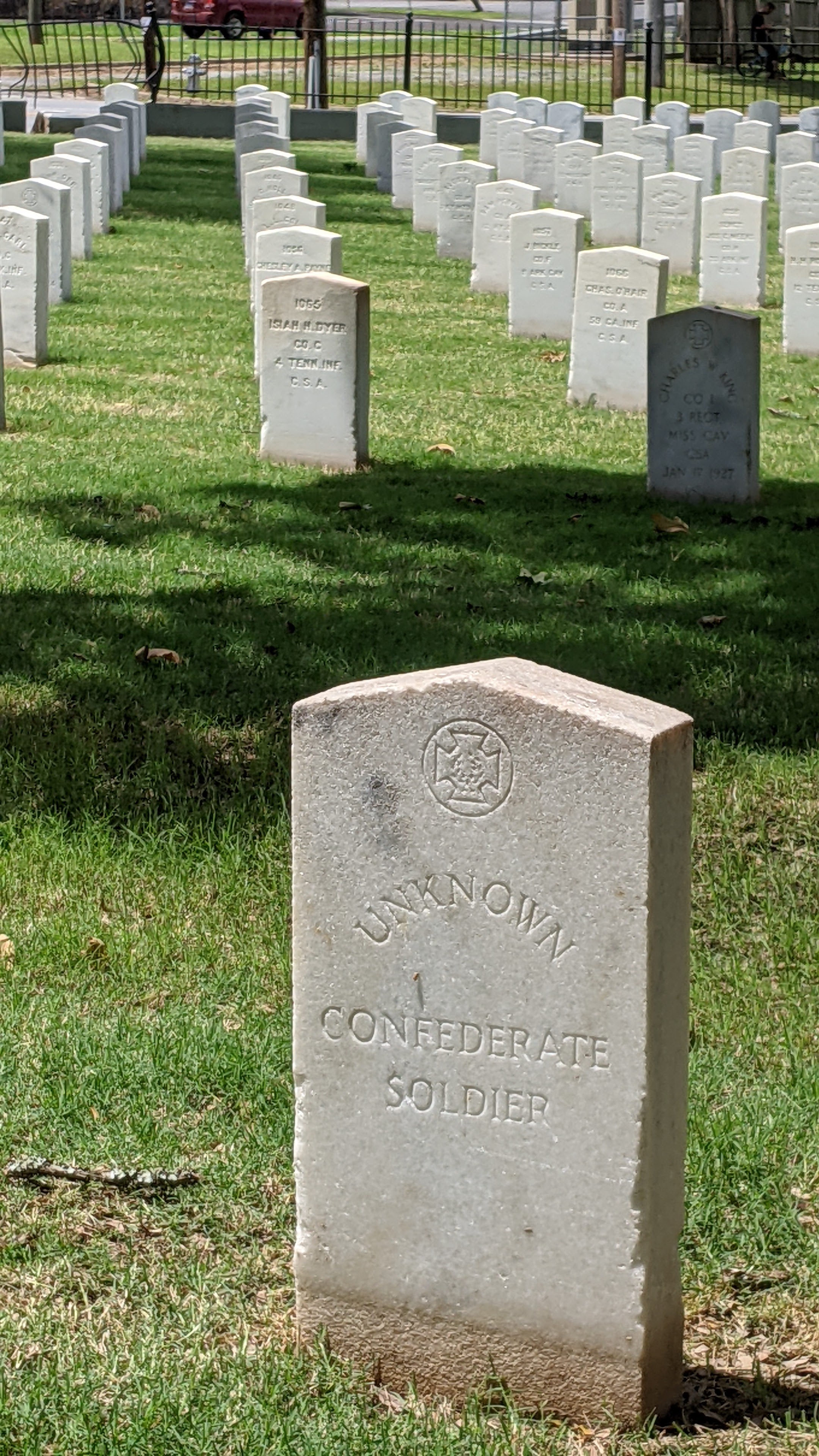
I have written before about my visits to battlefields, and my feelings. I could not help but recall, as I planted small flags aside the headstones of men and women I did not know, those other visits and those other feelings. When the work was done, I took a few moments to walk alone among other markers at the Little Rock Cemetery. Sadly, there were not enough volunteers this year to place flags at all the headstones — many of them date to the Civil War. Separate burial grounds of Confederate and Union soldiers have been incorporated into the grounds of the National Cemetery.

The markers and their inscriptions are telling. Spanish American War, World War I, World War II, Korea, Vietnam, Gulf War. History is alive in this somber place. Veterans from all services who have markers here served in all the battles this country has been engaged in — from that war between the states to foreign battles in which we had no stake. Most of them did not die in battle; they died as old men, but they served, and that service changed them. I am sure that, until the end of their days, they took pride in their service, knowing that what they did allows the rest of us to live our lives in relative peace and prosperity until the end of our days.

Confronting history in Rouen

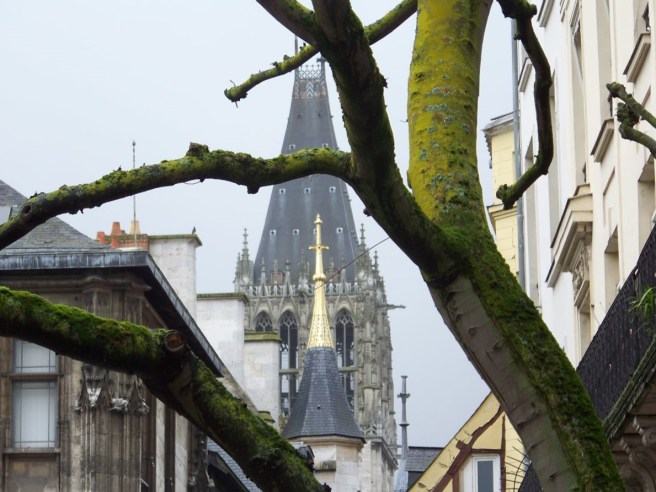
It is impossible to arrive in Rouen without feeling the weight of centuries. Every vista, every dark paving stone, every building carries a past both eerily familiar and somehow ominous. Despite that, Rouen is beautiful, and welcoming in many ways. And it is endlessly fascinating.

Much of Rouen is clothed in the layered green moss and the dark grime of centuries past; some of it chipped and broken or intentionally destroyed by succeeding generations of combatants and conquerors. Parts of the city still reflect the majesty and the mystery of past eras, testimony to times of unrest, when royal intrigue held sway over daily life, and the city was a jousting court for the powerful and ambitious.

The functional and the artistic are intertwined in this capital of Normandy. In the same way, the city’s history is both majestic and mysterious. The city oozes history, and happily unveils a contemporary spirit as well.

Some of it is elegant, some a bit bizarre, and some just quirky.

Situated about halfway between Paris and the beaches of Normandy to the northwest, Rouen is a stopping-off place and a guidebook “must see” destination for first-time visitors to France.

Rouen’s past history fills volumes. It is captivating. Its past imbues its soul. Gaudy tourist trinkets are available, but they don’t detract from its aura. Rouen’s ties are to French royalty, English kings, legendary warriors, beloved artists and esteemed writers. Its history was shaped by Rollo the Viking, William the conqueror, Richard the Lionheart, Joan of Arc, Napoleon, Claude Monet and Gustave Flaubert, among others. It is said that Julia Child ate her first meal in France at Rouen’s La Caronne, the oldest auberge in the country. Rouen boasts a university and the spires of its noted cathedrals stretch to the heavens, punctuating the cityscape.

The reality of suffering

We spent a busy couple of days simply walking the streets of the medieval quarter. We did not venture into the modern city; instead we relished the experience of traveling, at least in our minds, to a time long ago. We were there during the off-season. For the most part, we had the city to ourselves, to discover at our own pace.

Before driving on to Caen and the D-Day beaches, our mission was to visit what is known as the Plague Cemetery. Little did we realize that just two years later the memory of that visit would haunt us. It is not a cemetery in any traditional sense. There are no headstones in neat rows, nor are there any crumbling monuments; there is no statuary. It is, indeed, almost impossible to find. But find it we did, and we entered the grounds of this somber place with more than a little trepidation.

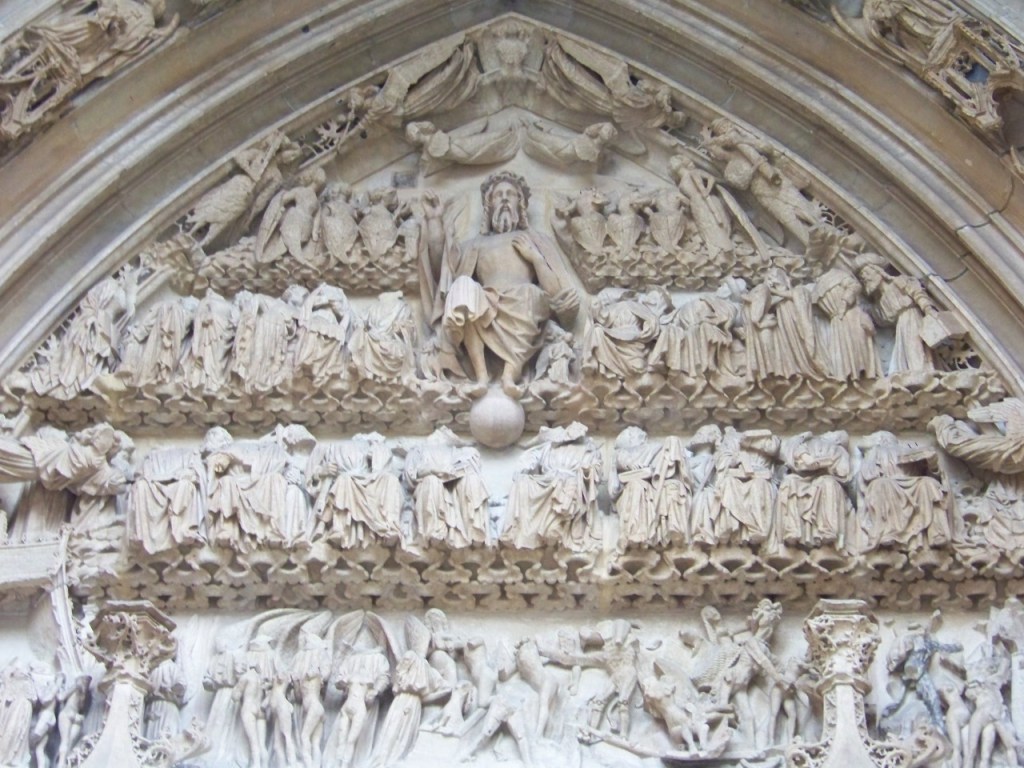
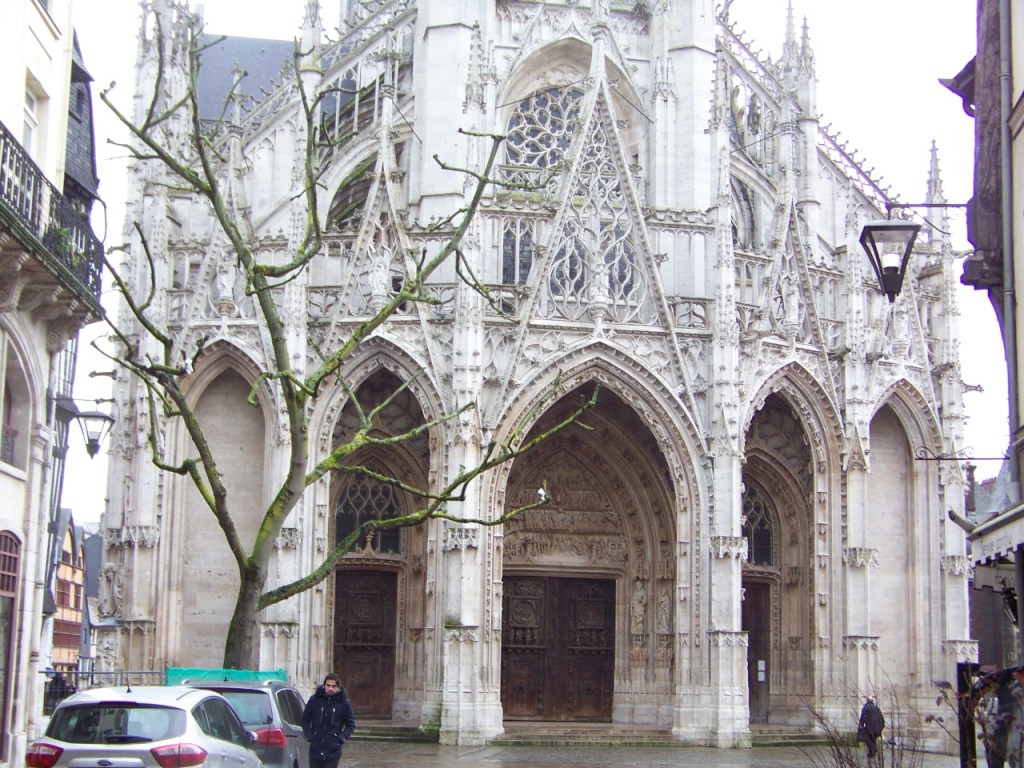
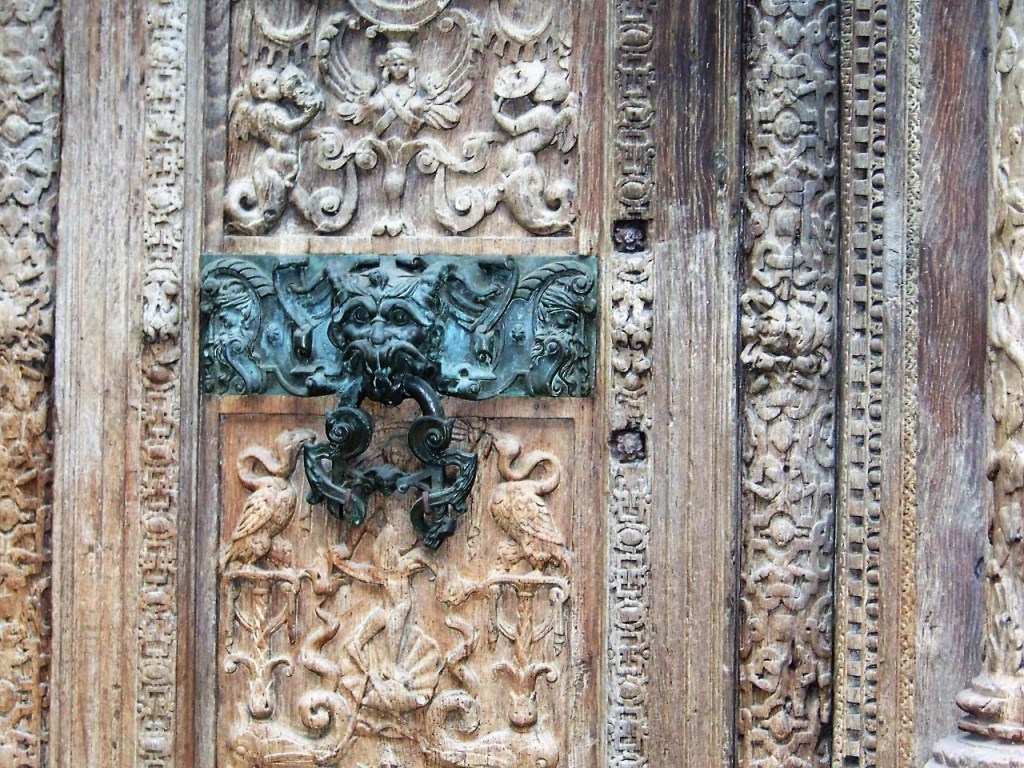
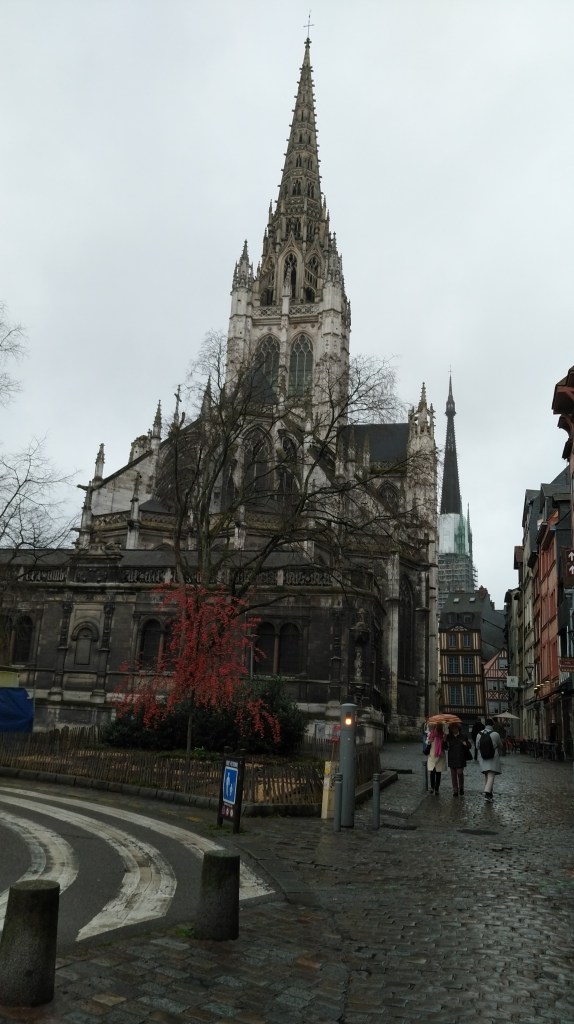
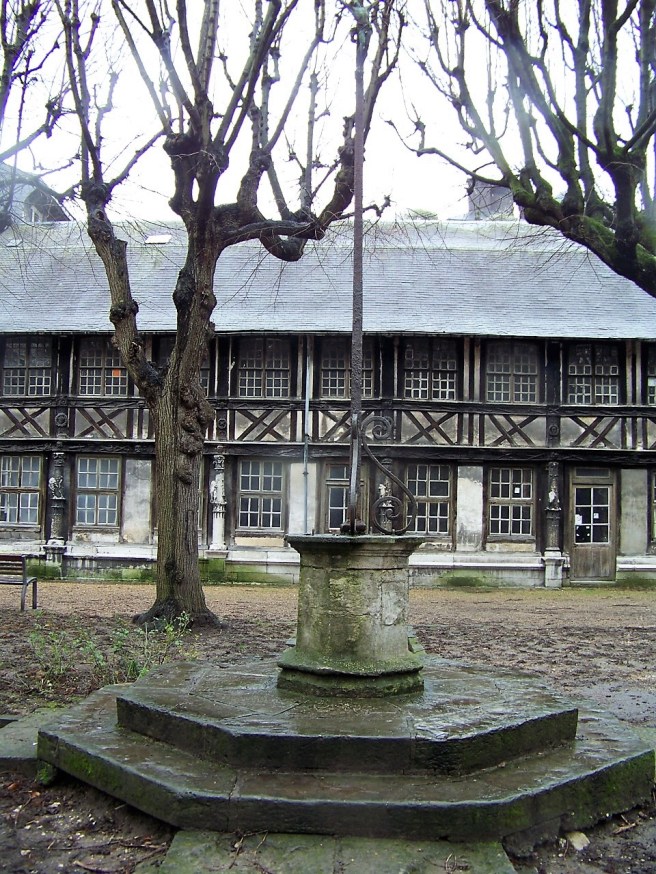
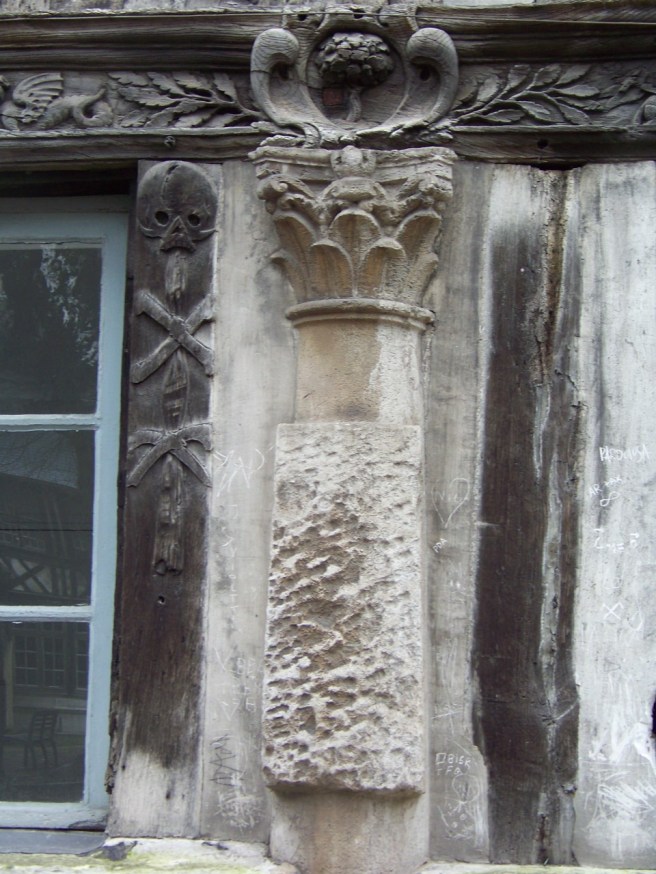
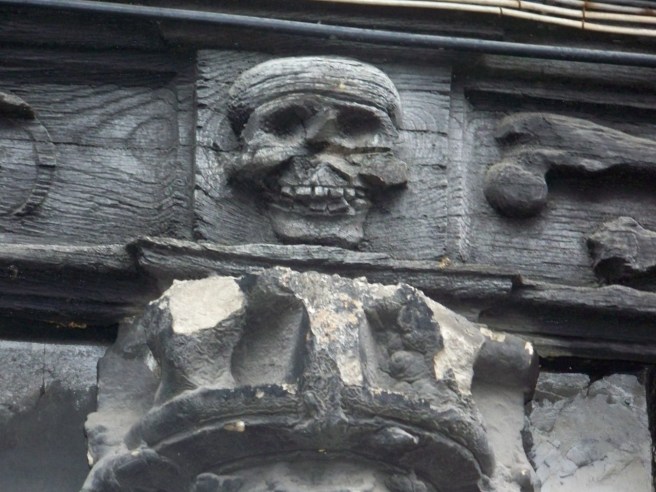
Aître Saint-Maclou is small square not far from the Church of Saint Maclou in Rouen. The massive Gothic structure almost seems out of place amid surrounding half-timbered homes and ancient lanes. Both have slightly macabre carvings that recall the grim influence of the Black Plague that swept through Europe and led to the deaths of up to three-quarters of the citizenry in this parish.

During the plague of 1348, the area was used as a communal grave site for many of the city’s victims. Exterior timbers of the buildings that were later constructed around the perimeter of the site are decorated with skulls, crossed axes, shovels and other reminders of a time long gone.

A second round of plague swept the land about two centuries later, and previously-buried bones were exhumed and stored in an ossuary above the cloisters. During this second round of pandemic, the city required additional burial space. In the 16th Century, two-thirds of the population succumbed to the disease.

It is a sobering experience to stand in the middle of this now peaceful “atrium,” thinking about a time when it had another purpose. Other reminders of those times exist: The remains of a black cat that was entombed in the walls are now enshrined in a glass case. Some say that the cat was plastered into a wall in a superstitious attempt to repel evil.

Originally occupied as homes and places of business, three of the buildings date to about 1526, and a fourth was built in 1651 as a charity boys’ school. The cemetery itself was closed in 1781, and the place became a designated historical site in 1862. It is the only medieval ossuary that remains in Europe, although no bones remain either above or below ground.

In this time of pandemic, I could not help but recall our visit to Rouen, and the startling effect of the place.

Historic Rouen is unforgettable, with many stories to tell. We drove on to the coast, in search of brighter days and happier stories.

This year we are battling a perplexing pandemic. I could not help but think of our 2018 visit to Rouen. It seems there are always lessons to learn from the past.

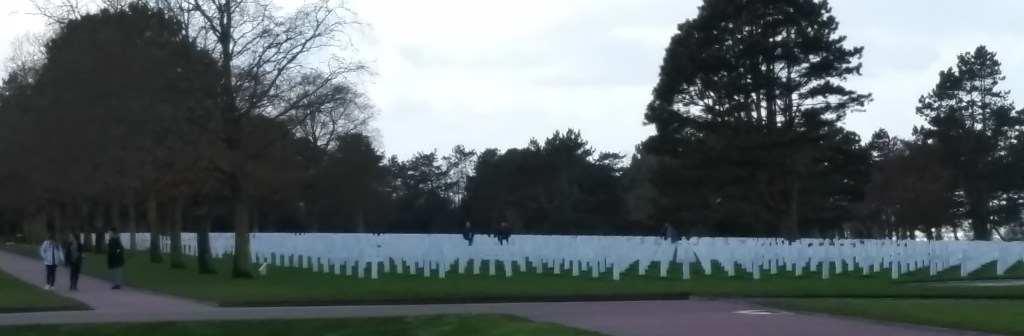
This Memorial Day, we also especially remember the American Cemetery in Normandy, hallowed American ground with the graves of 9,388 American military dead. There the white markers stand in perfectly aligned rows, in high relief against the grassy landscape, to honor the sacrifice of servicemen and women during a war that ended 75 years ago this month.

Note: This is perhaps the last of what I have called the Corona Chronicles. It is time to move on. Other travel stories remain to be told, and I look forward to a time in a not-too-distant future when we can all travel freely without masks, and without fear. That time cannot come soon enough!