Lafayette: A Feast for Spirit & Soul

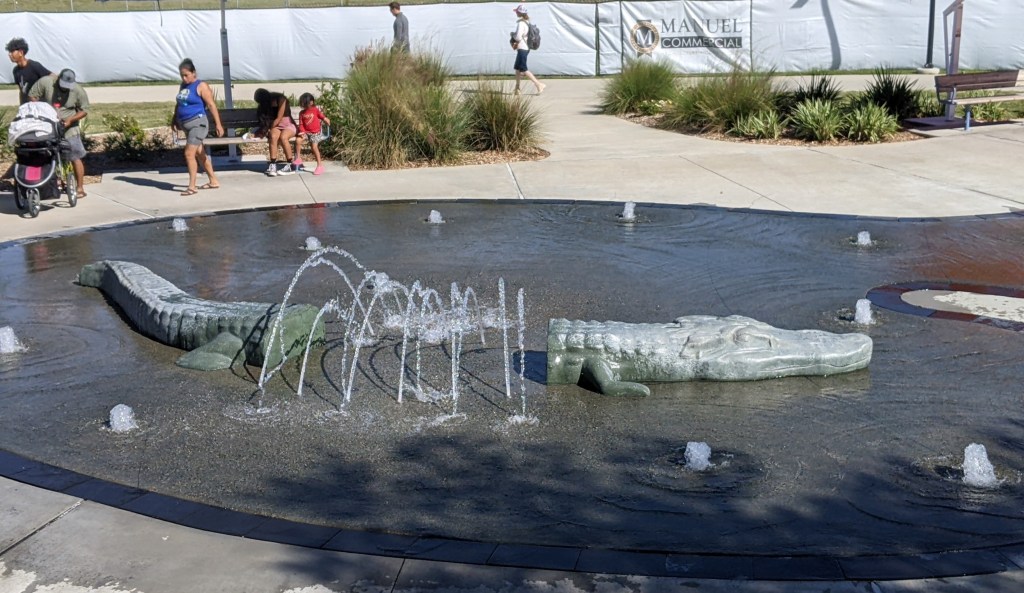
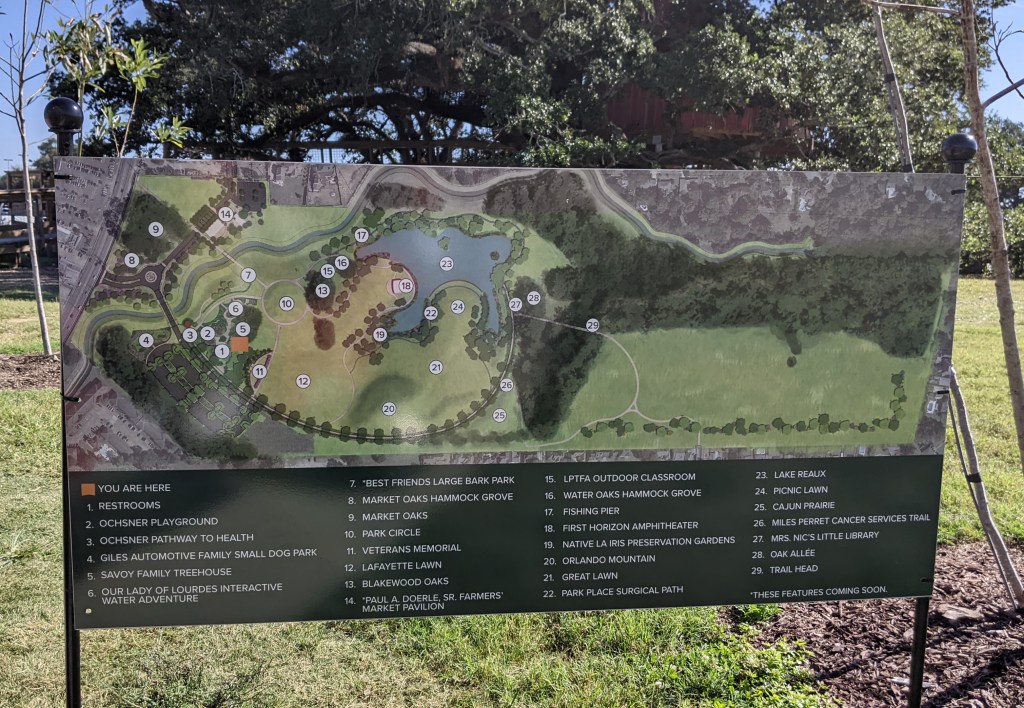
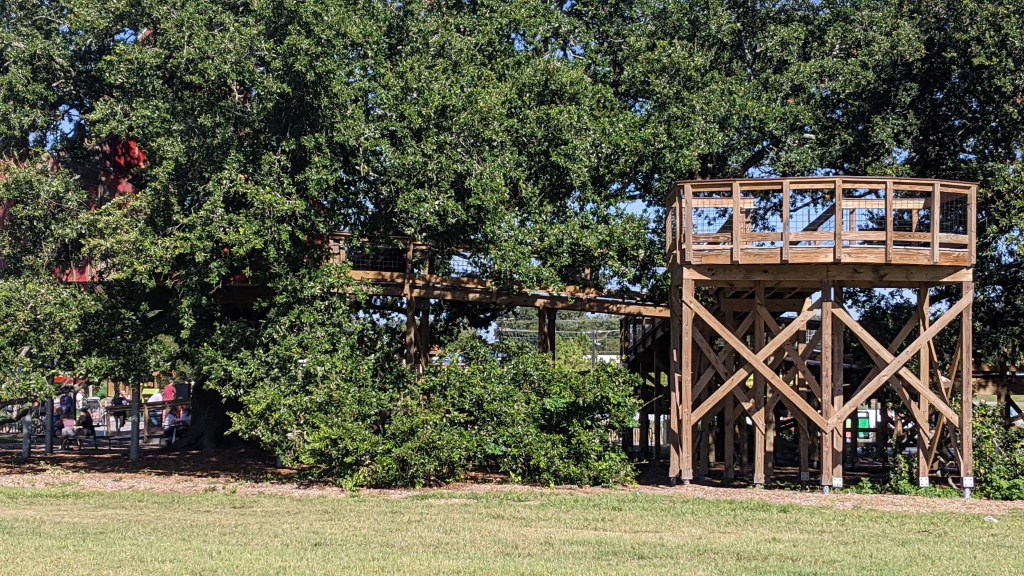
Hidden in the trees of Moncus Park in Lafayette, Louisiana, is a faded red treehouse constructed with lumber salvaged from a former horse barn on the property. It adjoins a children’s play area, but it’s almost hidden from view along the
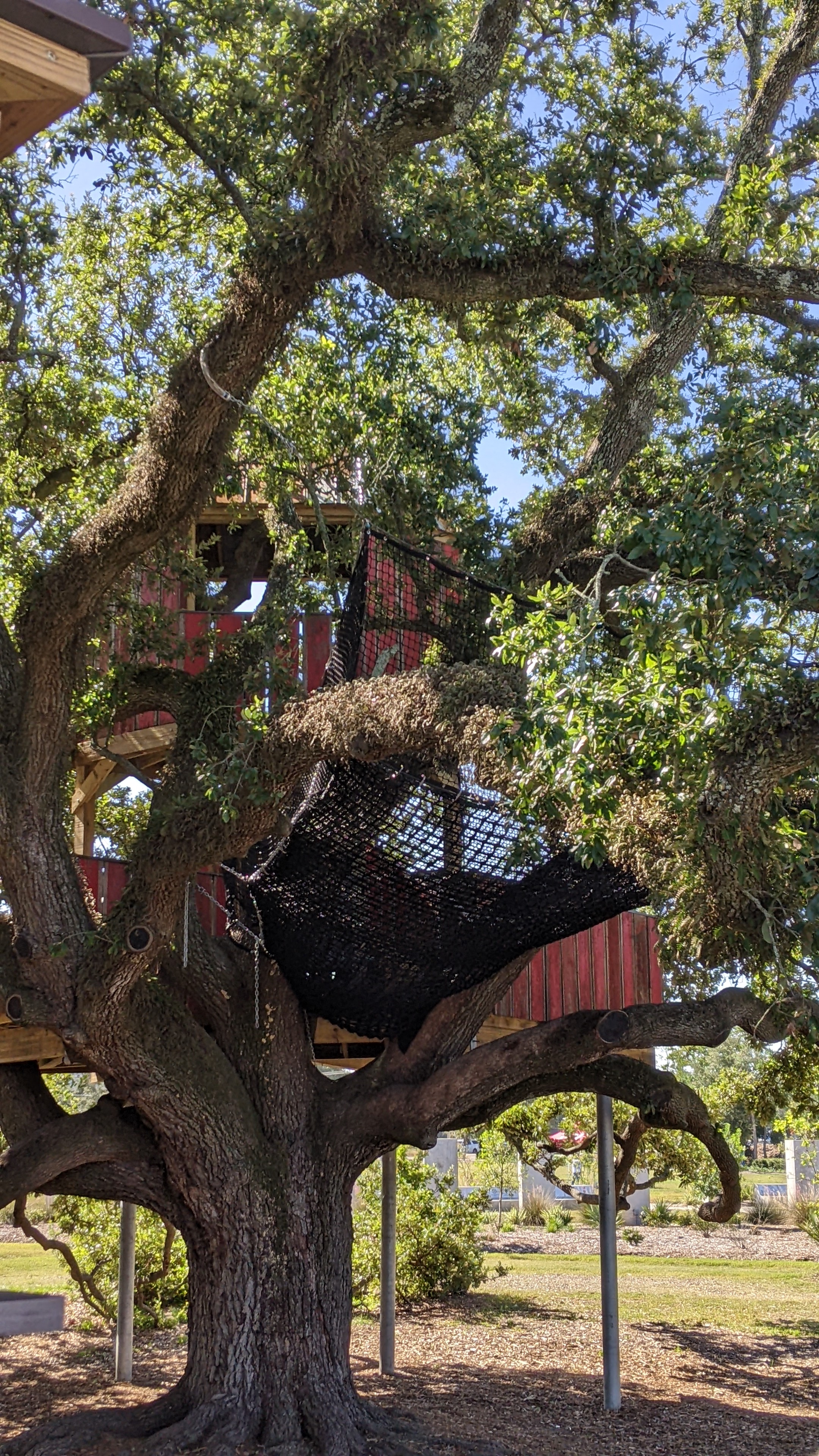
paved walking path that meanders through the property. I’m sure that makes it all the more enticing for the children who choose to climb the ladder and walk the swinging elevated course to reach it.

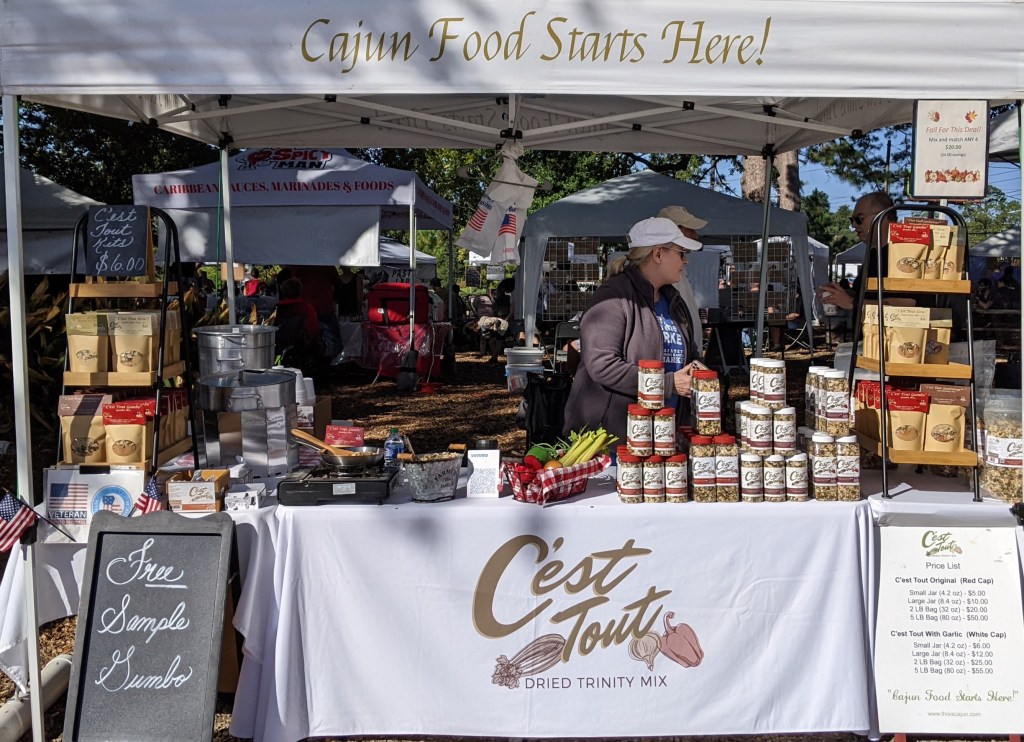
On the day we visited, the park was filled with people. Some, like our group of travel writers from diverse locations, had first visited the thriving adjacent outdoor Saturday Market, overflowing with food and crafts vendors every week throughout the year. This past summer, the market celebrated its 10th anniversary with the ringing of the Durel Bell.

The sun shown brightly on this mid-October day, and the park was alive with activities to attract young and old alike.

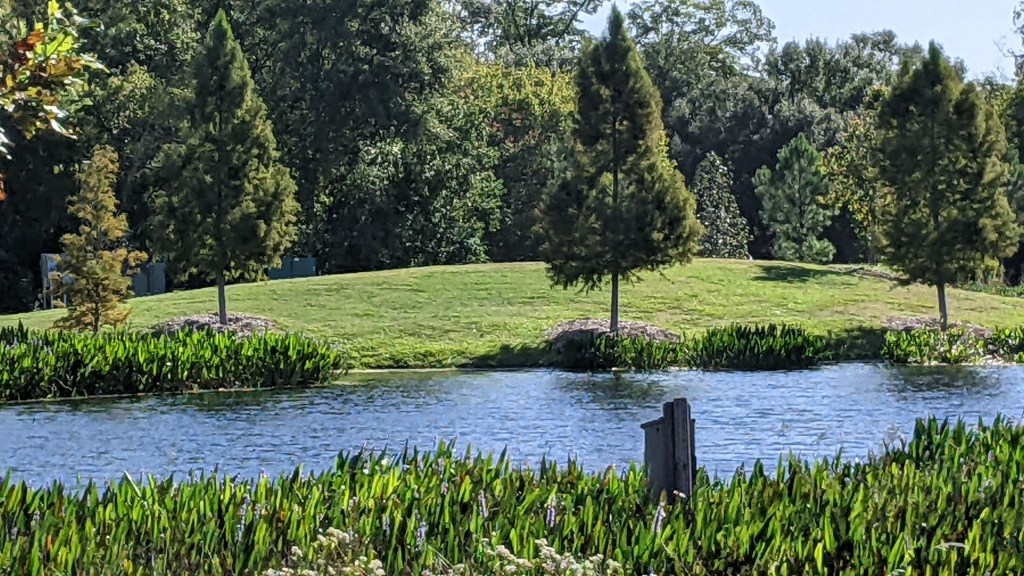
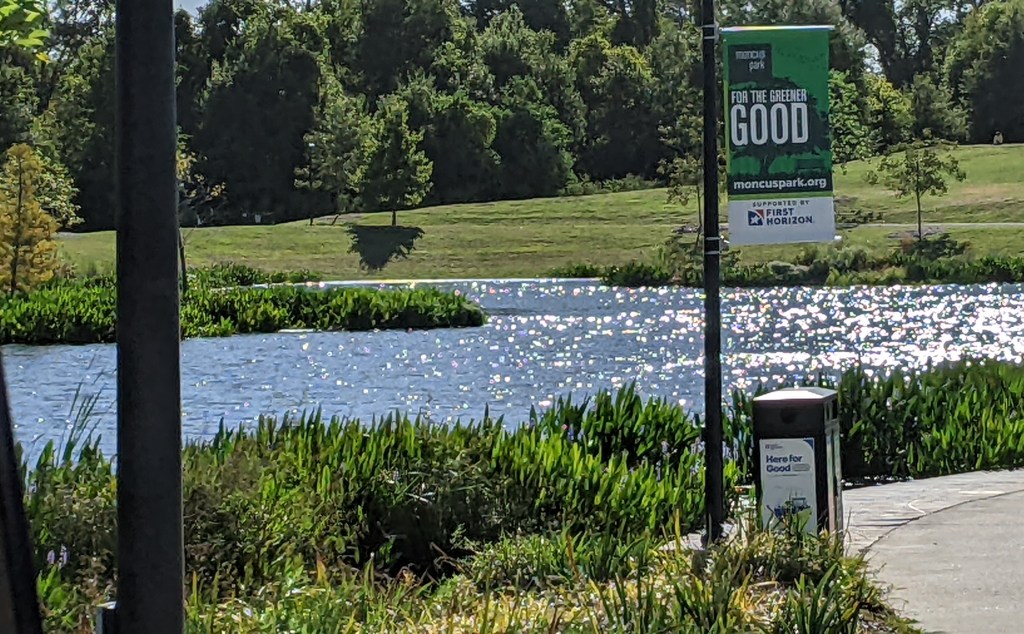
Some, accompanied by leashed dogs, were out for serious exercise in the beautiful surroundings while others simply enjoyed the various trees and plants on the rolling hills of a well-planned natural enclave that was once a horse farm. The park, operated now by a non-profit organization, was designed and built “by the community, for the community,” according to Kaylie LeBlanc, assistant vice president for communications of Lafayette Travel. One of the unique features is a 63-foot high hill, the highest point in Lafayette Parish! Development was begun in 2018, fueled by an initial $6 million grant. Now, a membership program funds ongoing park development and programming.
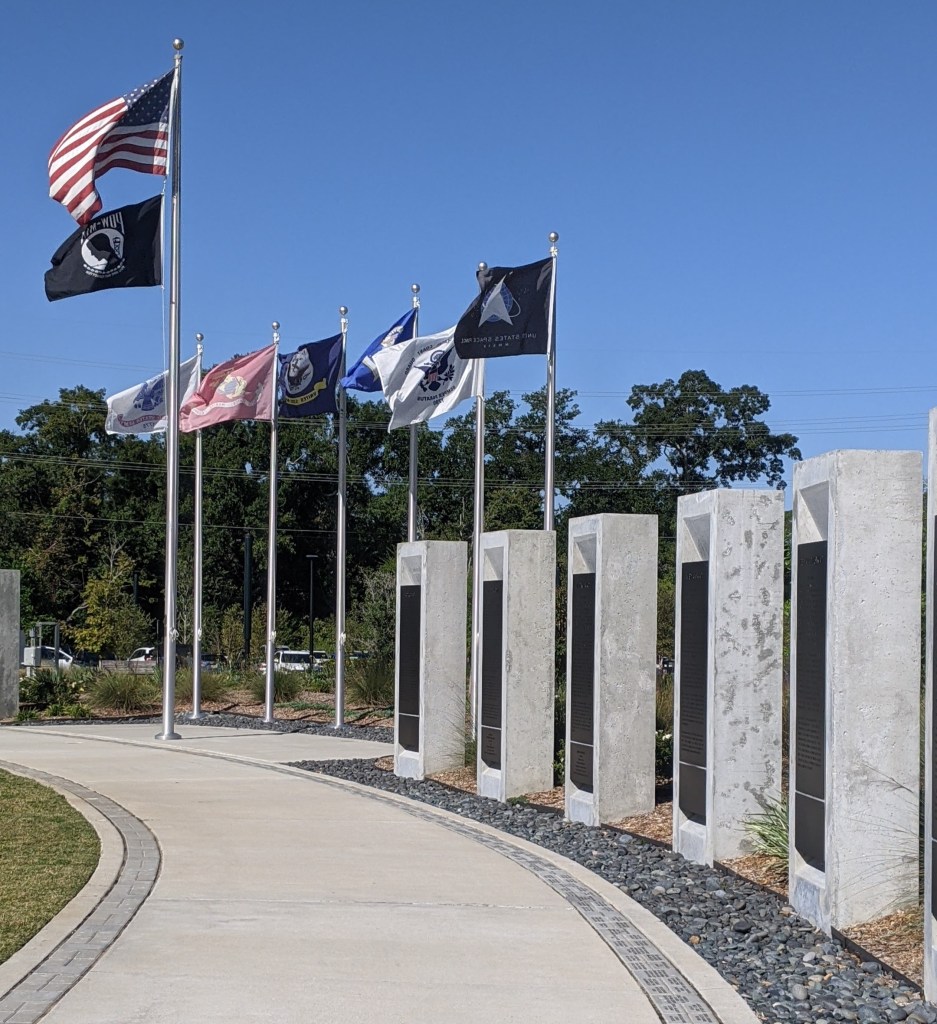
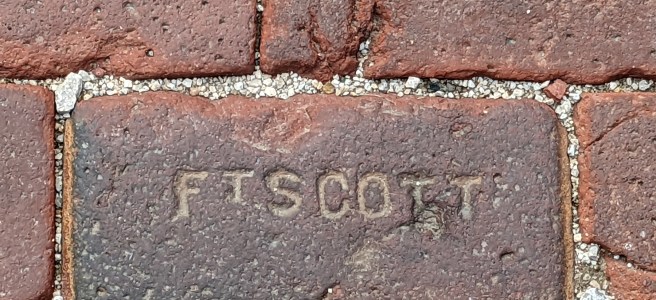
Also on the grounds is a striking Veterans Memorial that pays tribute to local residents who served their country in the various military forces throughout history. Memorial bricks line the path leading to the serene site with its polished granite plaques describing each war that U.S. troops have fought. It’s worth stopping to read each somber account, from a young country’s battle for independence to “Indian Wars — Circa 1600-1924” and the Global War on Terror — 2002-2021.

Moncus Park is one good reason to visit Lafayette, a city known as the “happiest city in America,” at the heart of Louisiana’s Cajun and Creole country. But there are many more.

I was in Lafayette for three days of whirlwind activity during this year’s Festival Acadiens et Creoles, a celebration of food, art, music, history and distinctive culture. What a celebration it was! Lafayette boasts great food and lively music, to be sure, but learning the history of a people who left their homeland and resettled in faraway places was what I found intriguing, somewhat disturbing, and totally fascinating. I had not previously known that Cajun and Creole were and are so intertwined.

The Acadians who came to Louisiana from France by way of the Canadian Maritimes (primarily Nova Scotia, New Brunswick and Prince Edward Island) have retained a distinctive cultural identity that is remarkable and celebratory. Eventually, Acadian morphed into Cajun and Acadian/Creole/Cajun culture is the result. Although we did not visit it, the Acadian Cultural Center in Lafayette is one of six locations of Louisiana’s Jean Lafitte National Historical Park and Preserve. Admission is free, and the center is open Tuesday through Saturday year-round, except on national holidays.
An Ongoing Celebration

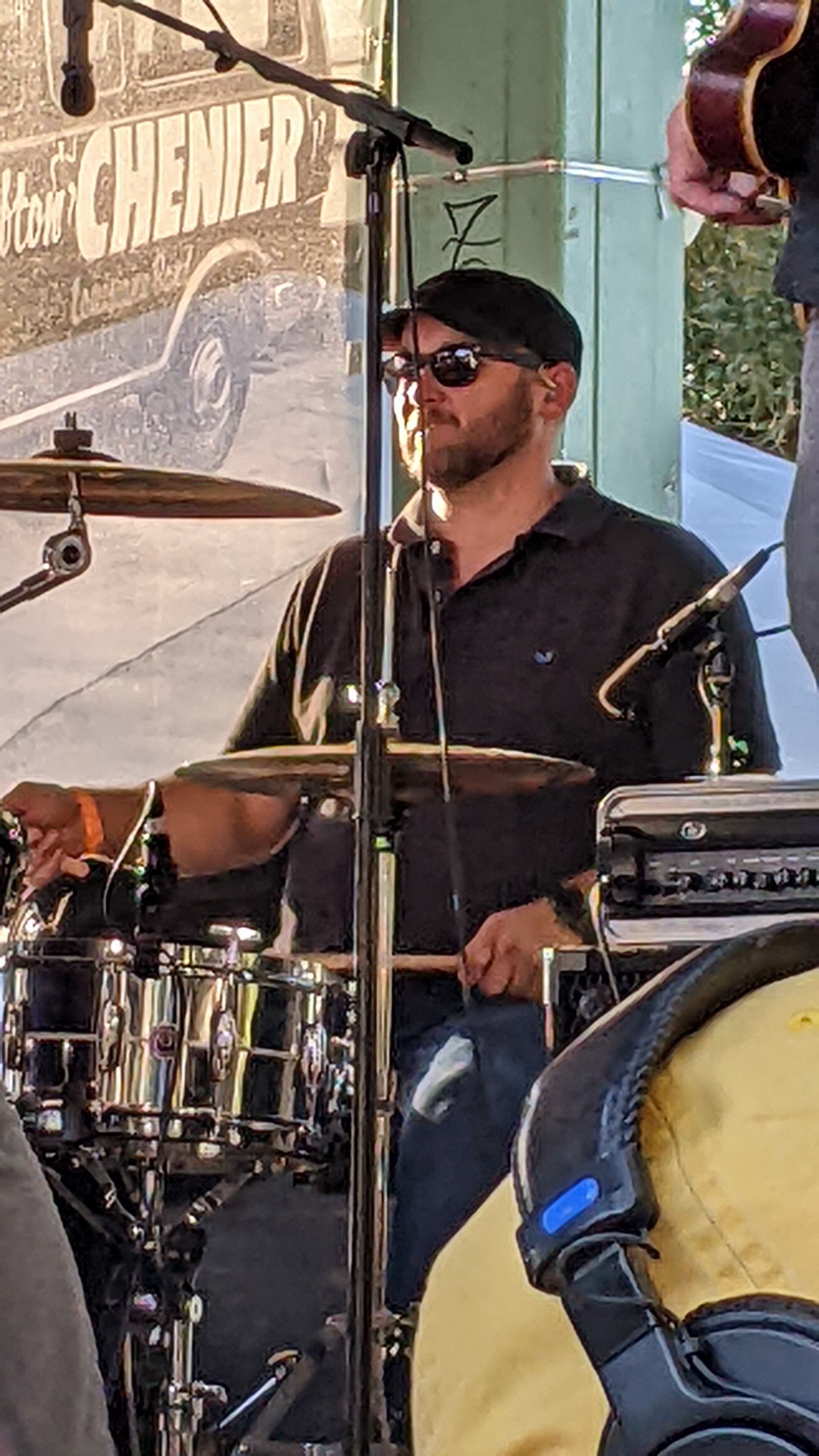
Lafayette is known for its festivals throughout the year, and this one certainly did not disappoint. What’s not to love about live bands that encourage complete strangers to “dance to the music” together? Add the enticing flavors of gumbo, jambalaya, etouffee and boudin sausage served fresh and hot from food trucks in the park, or the refreshing abundance of cold beer, spicy bloody Marys, flavored daiquiris, and other refreshments close at hand.

Girard Park in Lafayette takes on a carnival atmosphere that’s equally appealing for young and old alike, with food treats from beignets to soft ice cream, loaded hot dogs to boiled crawfish, fried gator bites and chicken wings to cheese-smothered grilled oysters! There is face-painting and bubble-blowing for the children, crafting demonstrations to watch and souvenirs to buy.
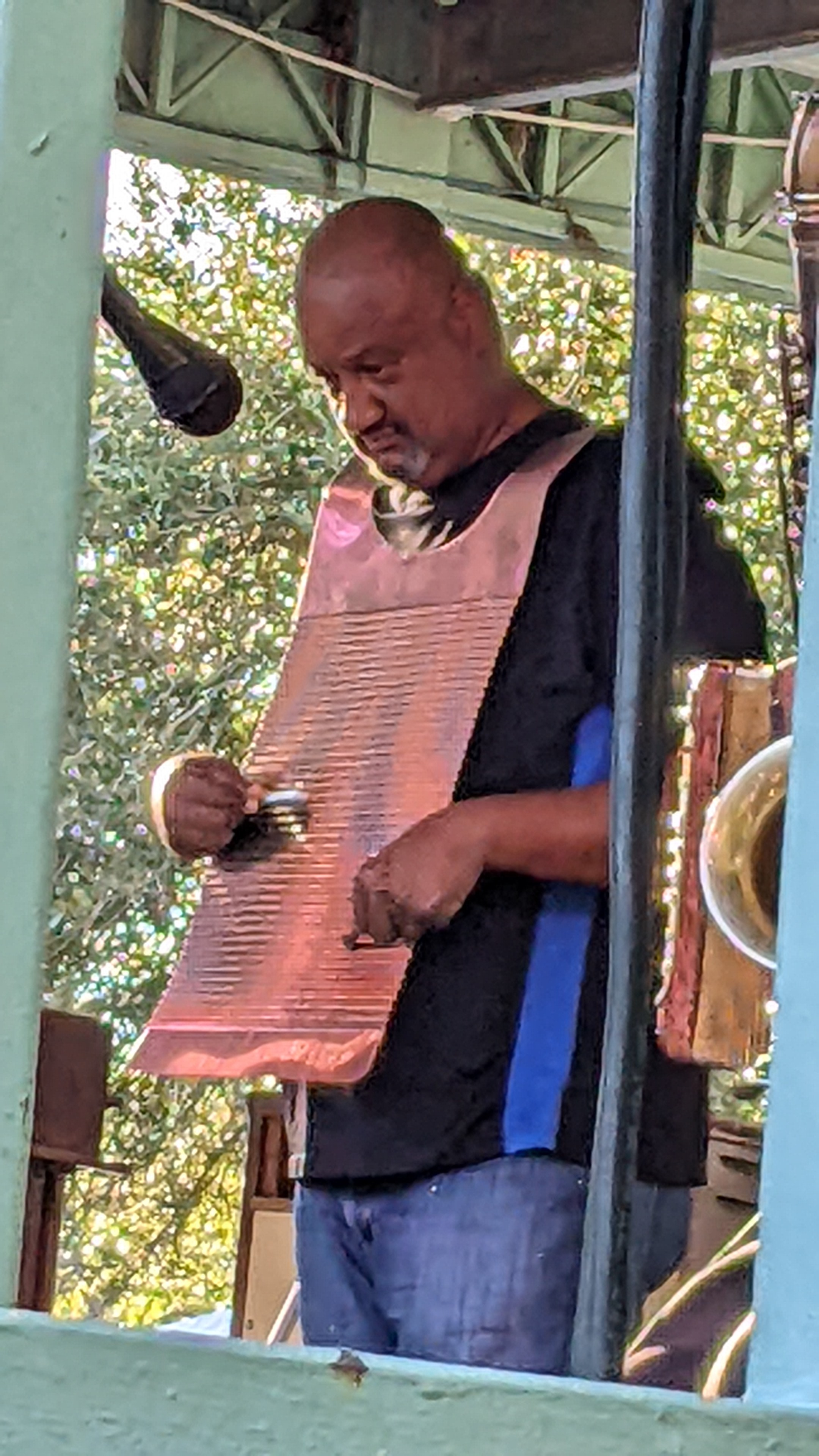
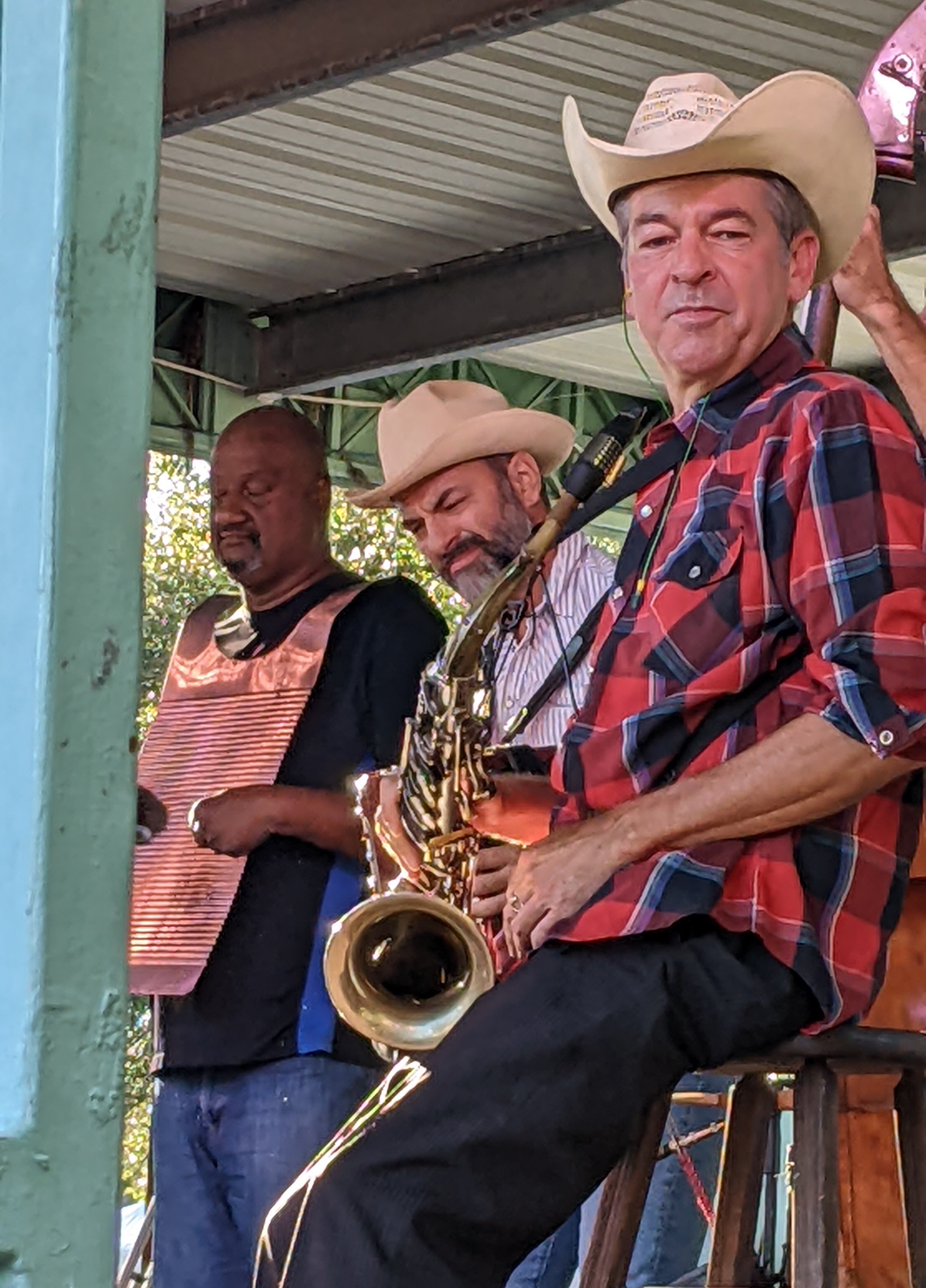
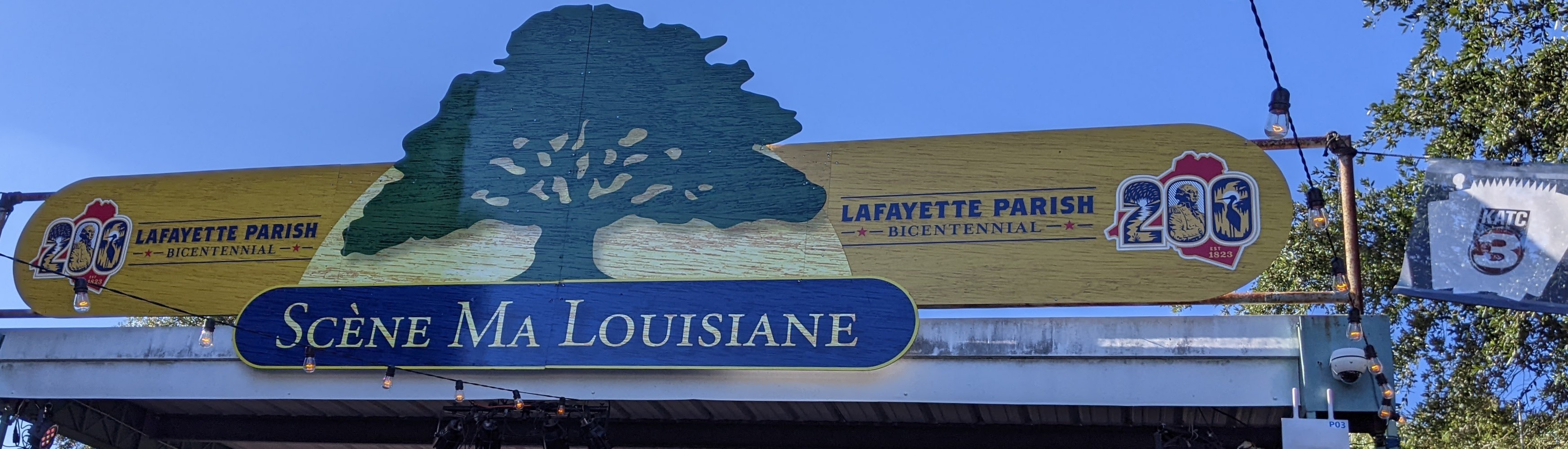
The performance stage is at the center of the activity, and many festival goers bring camp chairs or blankets. Picnic tables and benches are scattered about the park, and various tents offer seating for food and cooking demonstrations, musical lectures, and cultural programs.

From the ceremony of “cutting the boudin” to open the festival to the closing strains of music performed by an all-woman band as darkness fell on the festival’s last day, it was a great experience.

Traditionally held on the first full weekend in October, this celebration has been a Lafayette highlight since 1974. With a focus on the local sounds of Cajun and Zydeco music and local food specialties, the festival atmosphere extends not only throughout the park, but throughout the city. During festival weekend, shops are open late, visitors stroll the compact downtown area, marvel at the street art and local murals, enjoy crafts shows and outdoor exhibits, attend wine tastings and local business open houses, and snap souvenir photos at the Lafayette sign in a local park or selfies at the picturesque downtown arches.

Smiles and high spirits dominate the scene. It is truly a celebration that encourages active participation.

Beyond the Festival

The Festival Acadiens et Creoles is not, however, the largest celebration on Lafayette’s calendar. Held in April, the Festival International de Louisiane spills over into nearby cities and parishes and attracts visitors from throughout the world for the distinctly French-flavored celebration.

Lafayette also celebrates New Year’s Eve in a big way, and goes all out for Mardi Gras. Visit Lafayettetravel.com for up-to-date information on what’s happening when in this “happiest town” so you won’t miss out on any of the events that interest you. I don’t want to leave the impression, however, that visiting Lafayette, is simply one big party. As much fun as it can be, there is also a serious side to Lafayette’s personality

Cultural unity is pervasive and community spirit is inclusive. Informal, spontaneous musical jam sessions seem to be the norm and, more often than not, members of the public are invited to attend, join in, or sing along. Roots run deep here and pride of place and heritage is evident among young and old alike. Lafayette residents are intent on preserving their traditions. A conversation with a local resident can be equal parts history lesson and hope for the future, interspersed with family stories.

The Beginnings

Originally founded as Vermilionville in the 1820’s, the city was renamed Lafayette in 1884. Its population in 2023 is reported to be slightly more than 121,000, a slight decline from 2020 when it was just under 122,000. But the population of metropolitan Lafayette Parish exceeds 376,000.

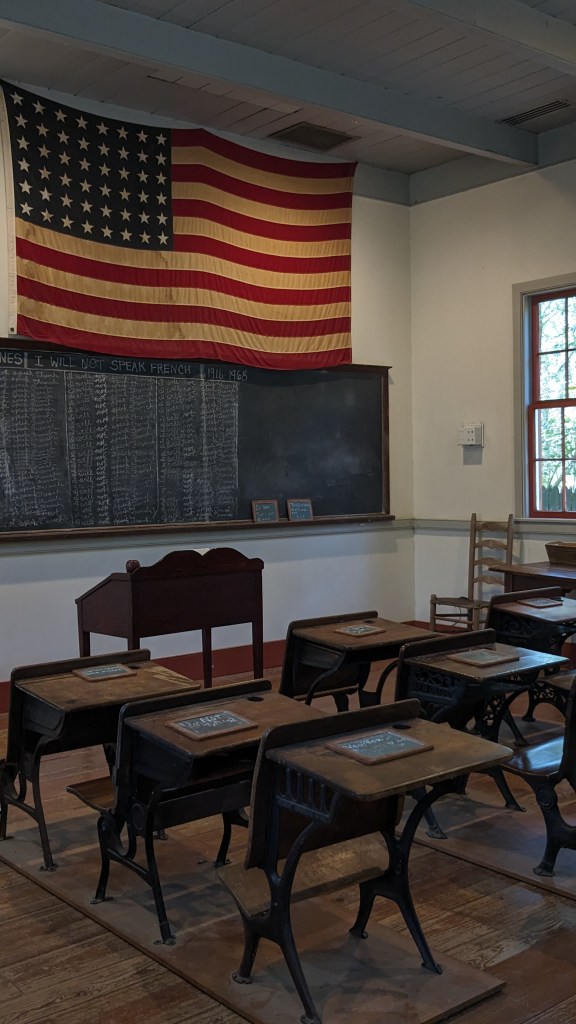
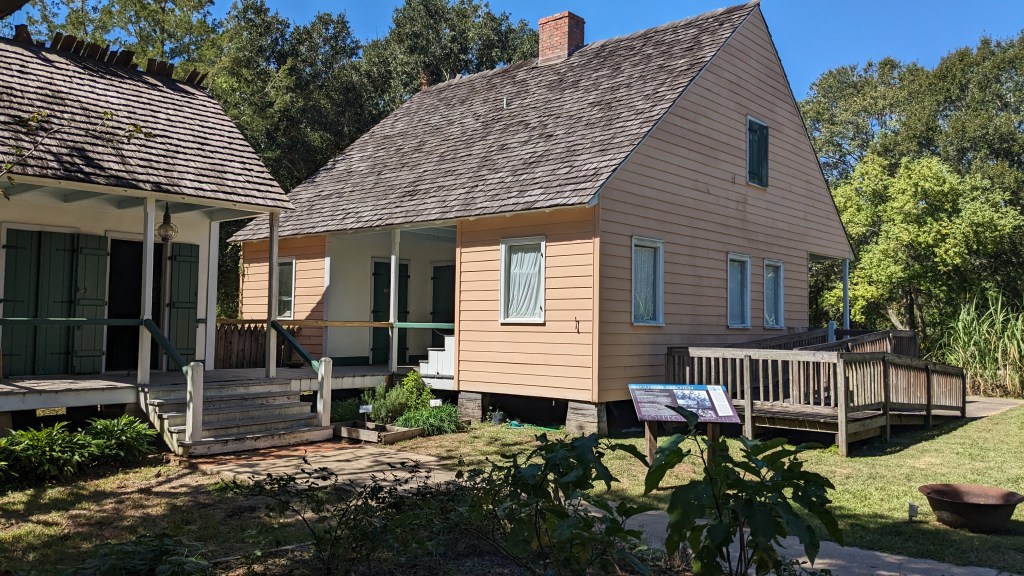
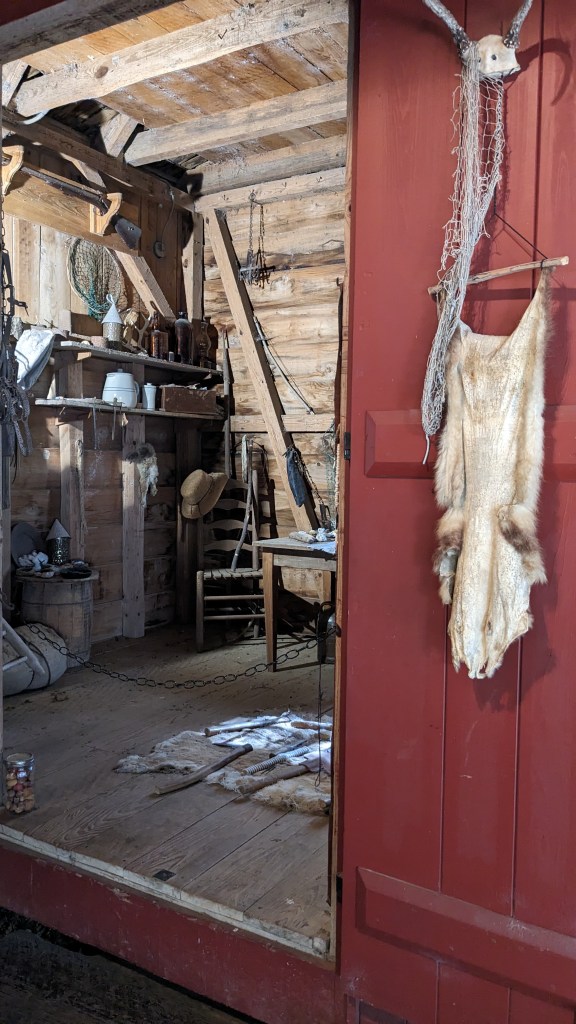
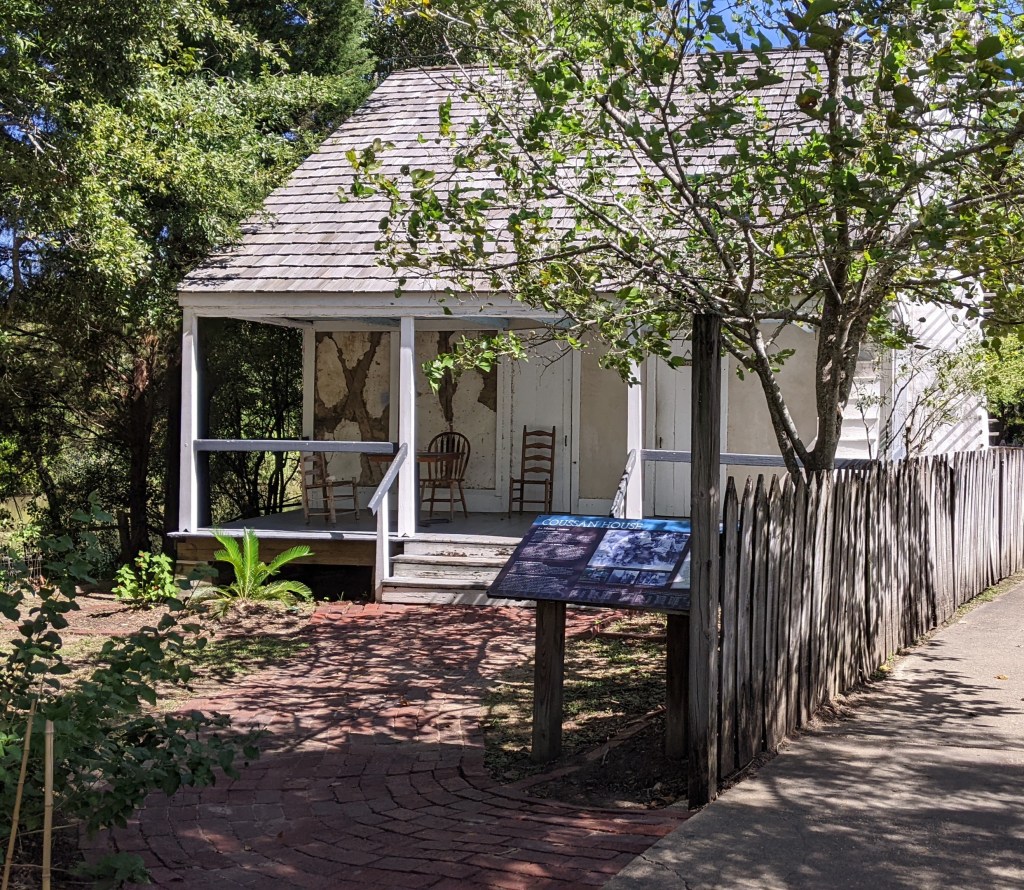
We visited the historical re-creation of Vermilionville, now a living history museum that takes visitors back to the early settlement. Signs along the paths chronicle how Acadian and Creole settlers interacted with native peoples and those of African descent through the late 1800s, and the buildings display a wealth of artifacts. It’s much better than a museum depiction. Walking along the paths offers a uniquely personalized insight into how lives were lived during those times.

Visit Vermilionville.com for information about events, programs and performances, including a 2nd Saturday French Table, a free gathering that allows visitors to “hear, speak and practice” the unique Acadian language. Other programs offer insight into the lifestyle and traditions of early Acadian settlers who sought to preserve their French-speaking culture on the American frontier.

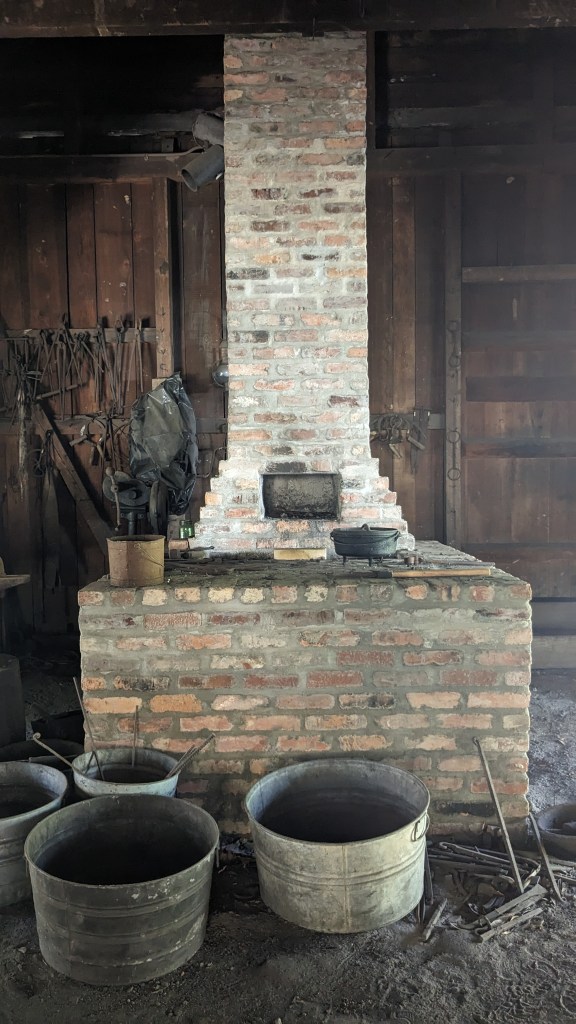
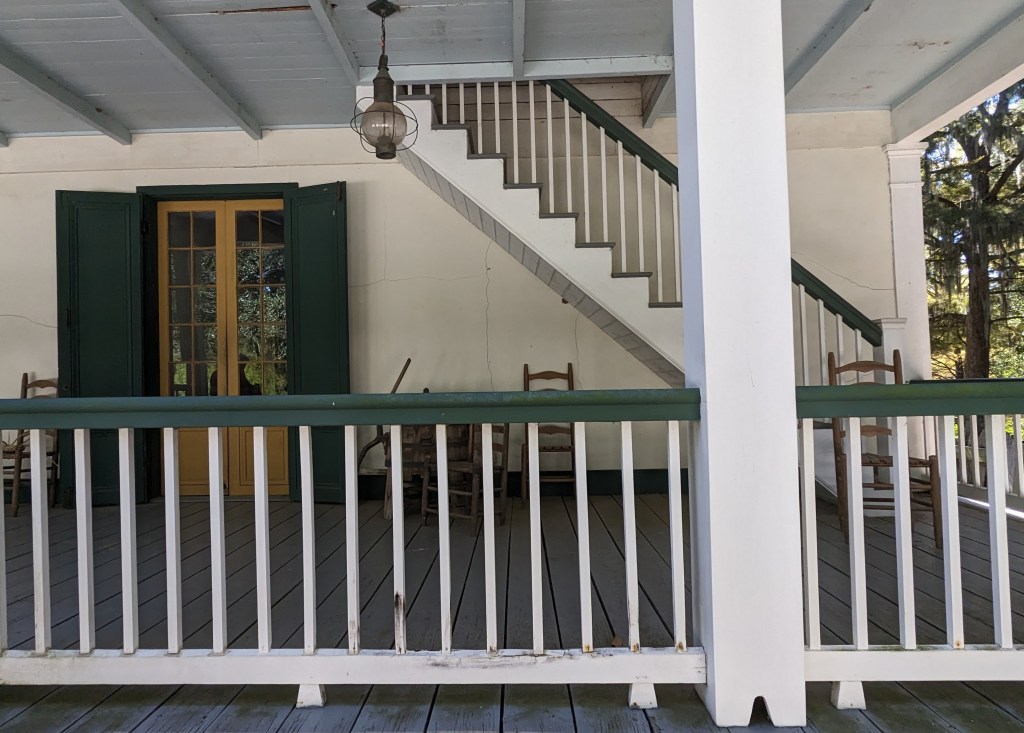
Among the buildings and various dwellings situated at the site are a schoolhouse, church, parsonage, carriage house and other utility buildings, as well as early “shotgun” houses and a wide variety of home styles that were popular through the decades. Traditional crops are still cultivated, and the historical village even has a resident donkey, a couple of sheep, and a working iron forge. This historical village offers a perfect opportunity to explore the history of Cajun culture and it’s impossible to leave without a profound respect for the early Acadian lifestyle, the Native American, Creole, and African influences, and Cajun traditions. We even learned some often-used words in Cajun French!

Our young guide, herself a proud Cajun, was clothed in traditional dress of the time, and she spoke with candor about growing up in this distinctive culture. I was awed as she sat down at a spinning wheel to demonstrate how yarn is spun from raw cotton, but then she apologized for not being very adept at spinning! We also were treated to an explanation of traditional, hand-sewn quilting skills by an older woman intent on preserving the skills that her ancestors possessed. We were duly impressed by the number, the quality and the variety of the quilts she has completed.

Building on Tradition

Our group was treated to a bountiful lunch at La Cuisine de Maman, where we feasted on traditional favorites prepared and served in a circa-1800 home at the site. Suffice it to say that no one left hungry!

Before leaving Vermilionville, we stopped in at the Saturday music jam, held in a performance hall just across the courtyard from the restaurant. That became a fond memory of my short time in Lafayette, one that I will savor for a long time to come. That strangers come together to make music is impressive enough; that the music is well-played, sung with gusto, performed with no rehearsals and at no charge to the public, and enjoyed by all is truly special!

The music is one of the fondest memories of my time in Lafayette!

Yet to come is my account of an eye-opening and thrilling flat-bottomed boat trip through the Atchafalaya Swamp, along with a visit to nearby Avery Island with its jungle gardens and Tabasco factory, as well as more pictures and commentary about the people, the food and drink, the sights and the music scene in this distinctive Louisiana city. I’ll leave you with at least five good reasons to add Lafayette to your own travel plans for the coming year!

Wanderlust — Montenegro Dreams

As a child, I was captivated by people who lived lives very different from my own, and by the sounds of words spoken to a different cadence. The pull of the unfamiliar was strong. I do not remember a time when I didn’t want to experience far away places.  I never outgrew the wanderlust. Today, the rhythm of a foreign language is music to my ears and the promise of a trip is reason enough to pack up.

And those strange-sounding names; oh, yes!

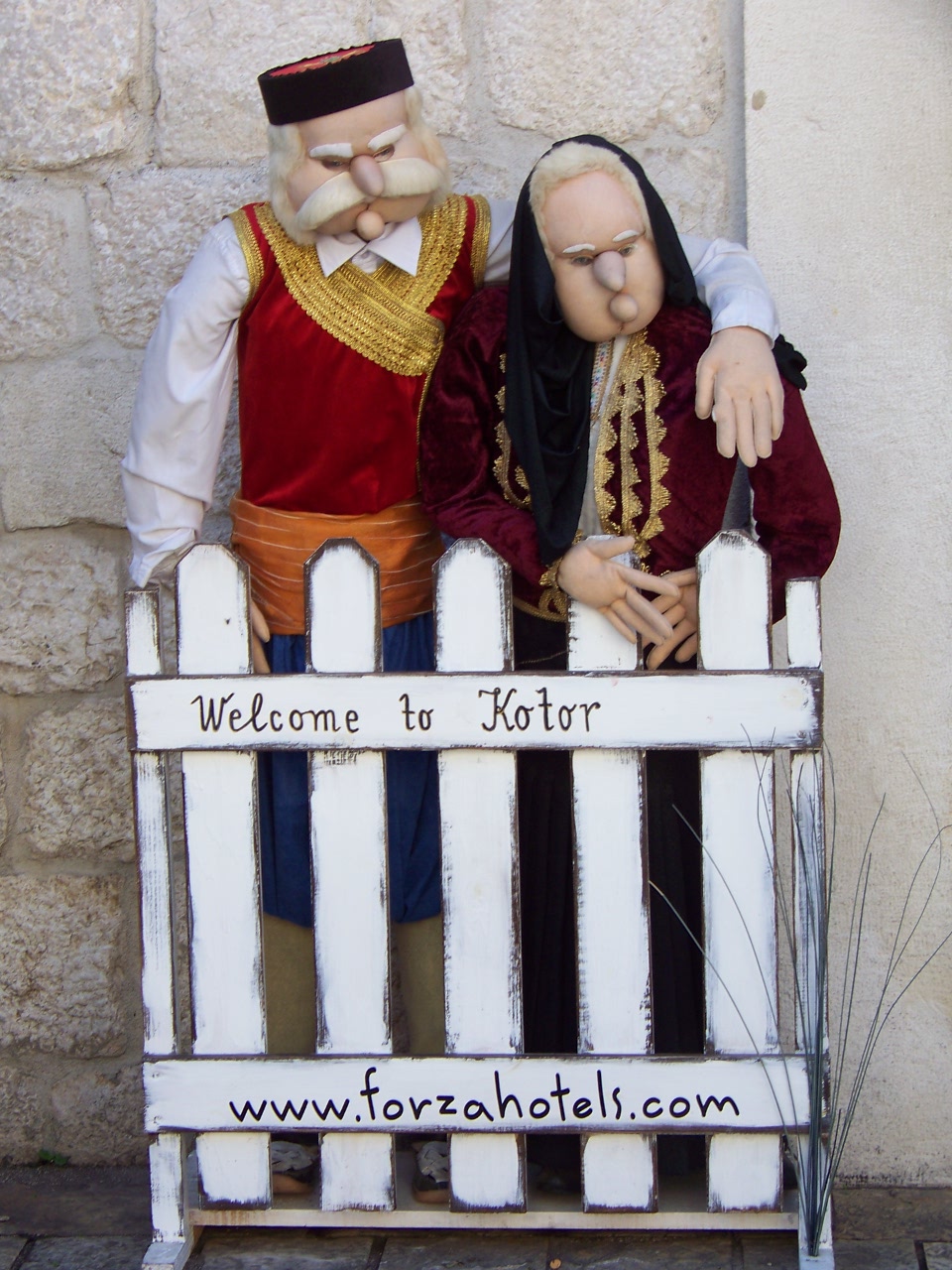
The pull of unknown places is strong. So, when Kotor, Montenegro, was one of the ports on a Princess cruise itinerary, it was almost impossible to resist. I knew next to nothing about Montenegro; in fact, I had to pull out my atlas to locate it.

We were in port for only one day. That was 2017, in the fall. Today, as I think about that visit, I find it hard to believe that all those good memories were formed in the course of one afternoon. Now I want to return again!

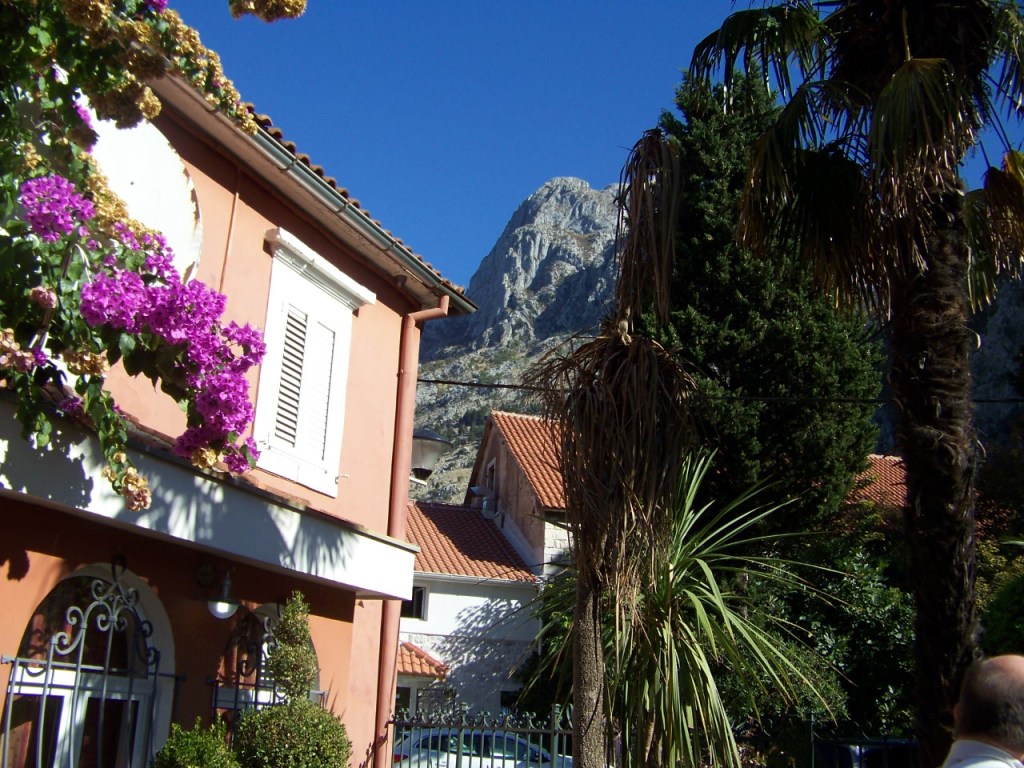
The place, the people, the history speak loudly of life well-lived and fine experiences just waiting to be had. Even more seems promised on a second visit than I experienced during the original. But that first visit could hardly have been better! The scenery, both the ancient city buildings and the surrounding limestone cliffs, is stunning, with hand-built stone walls stretching for more than three miles above the town. The scene is both awesome and forbidding.

Arriving in the City

Our day began with a quick tender ride between our ship and the city dock. Once on land, we were efficiently directed to a guide who was to accompany us on a stroll through Kotor’s marketplace prior to joining a local chef to hear about traditional Montenegrin dishes. We were to sample a variety of regional favorites.

We don’t normally sign up for ship’s tours — we don’t do groups well, preferring instead to walk at our own pace and make our own discoveries. But this one was different.

The stroll turned out to be more of a brisk walk as our group skirted the walls of the ancient city before arriving at the

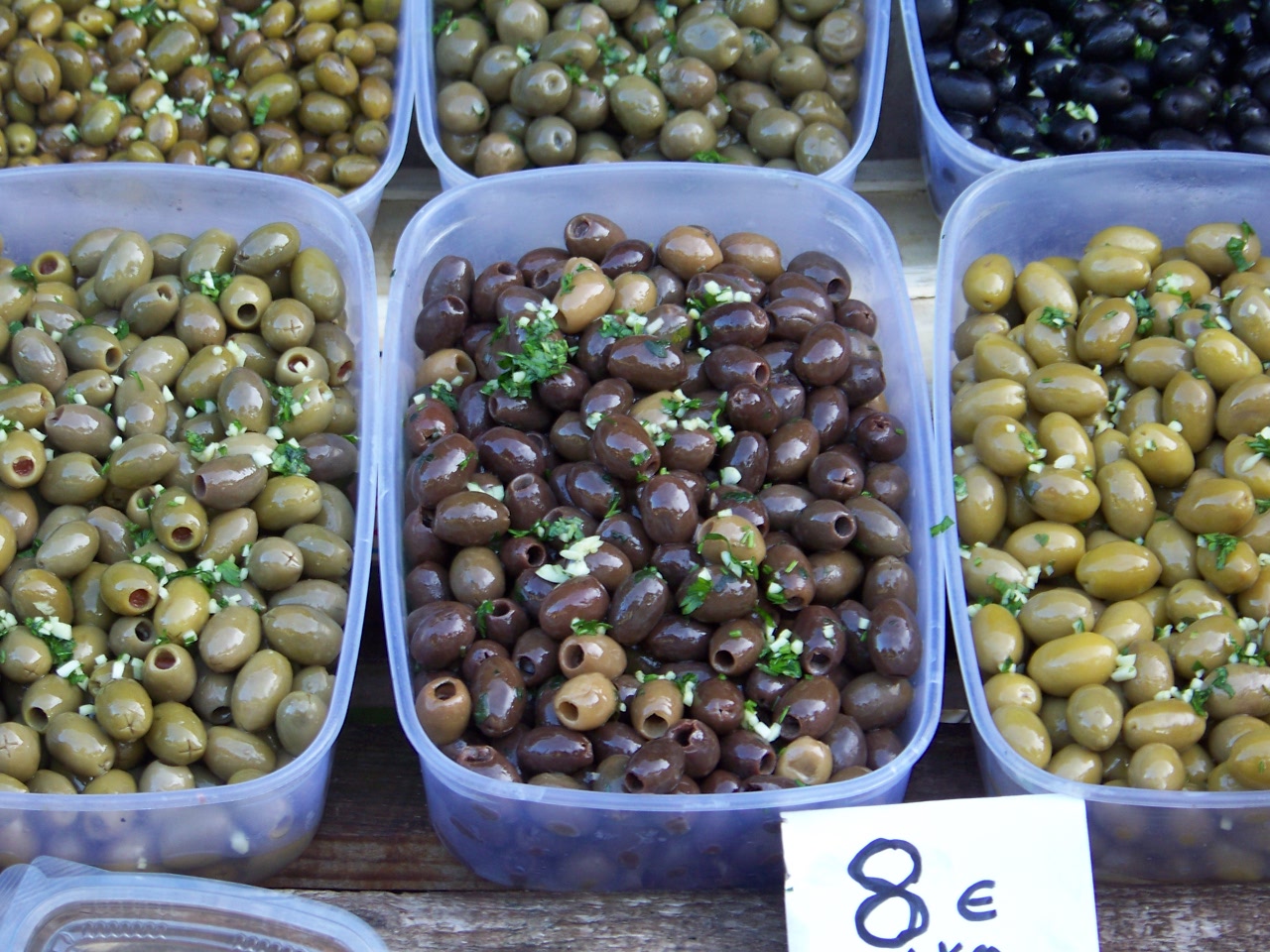
market. Stalls were filled with olives and cheeses, figs and dried apricots, colorful produce, plump breads, pastries and chocolates, sausages, ham and fresh fish – vendors offered samples, encouraging us to try unfamiliar fruits, to sample various figs and olives, to buy spices and olive oil. It was tempting, to be sure.

Welcome Freely Offered

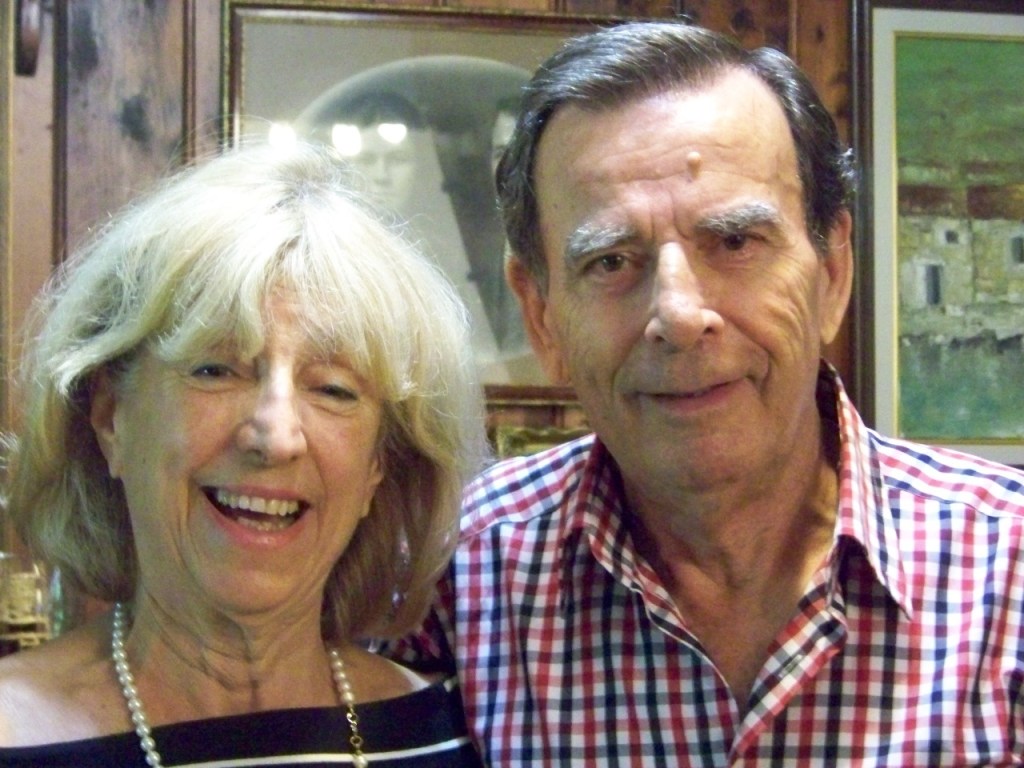
But, we had a schedule to keep, and we pushed on to the end of the harborside thoroughfare before taking a turn onto a tree-lined lane bookended with private gardens. While our group had envisioned gathering in a local café, we were delighted to be ushered through a courtyard and into a cozy home, greeted by a vivacious blonde who wore pearls with her casual slacks and tee.

She greeted us warmly in only-slightly accented English, and introduced her husband, a former sea captain, who stood ready to pour each of us our choice of strong aperitif even though it was not quite 10 a.m. But, when one is on vacation and a guest in someone’s home . . .

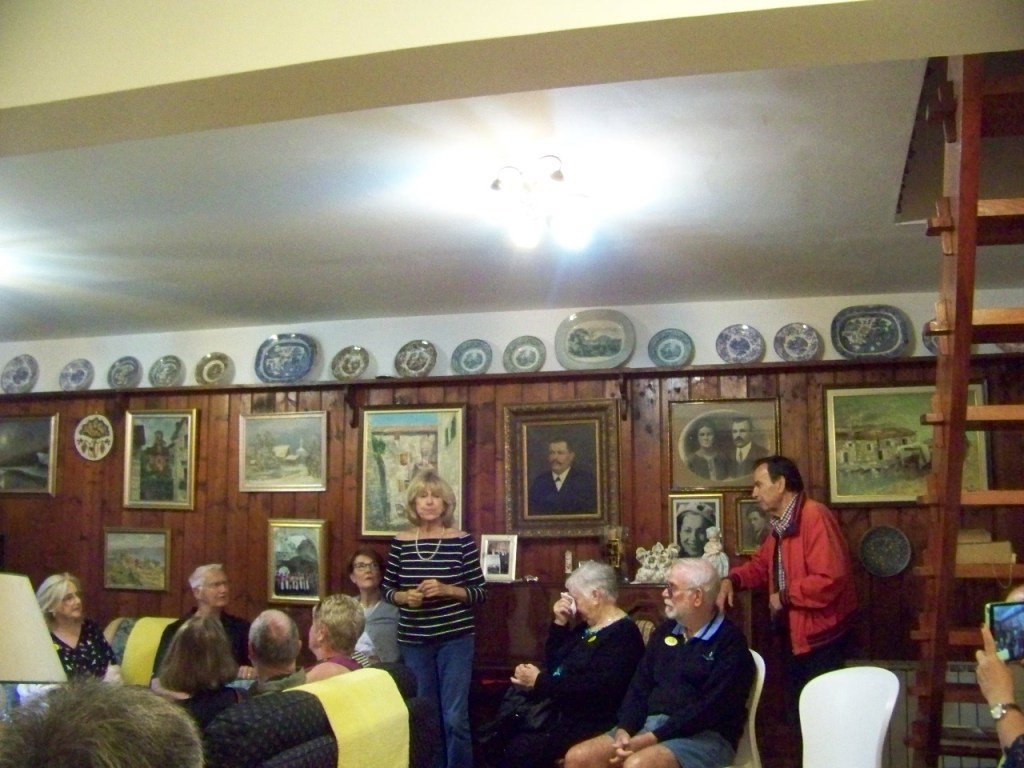
Each of us accepted a glass, then followed our hostess’s lead and raised our glasses in a mutual toast — to new friendships, good food and good times. She encouraged us to feel at home in her home. Each of us found a comfortable seat in the art and antique-filled sitting room. I chose a spot around a diminutive lace-draped round table.

We learned about the life experiences of this lady and her husband. Her many-faceted career, as author, cook, lecturer, tour guide, and who knows what else, was a bit of a surprise, proving that reinventing oneself knows no cultural or geographic boundaries. We also learned about her husband’s exploits at sea and of his ancestors whose portraits hung on the walls.

After a bit, she disappeared for a few moments into the kitchen. We were invited to take seats at a long banquet table that nearly overfilled a well-proportioned dining room with a view of the garden.

Sharing Food, Building Bridges

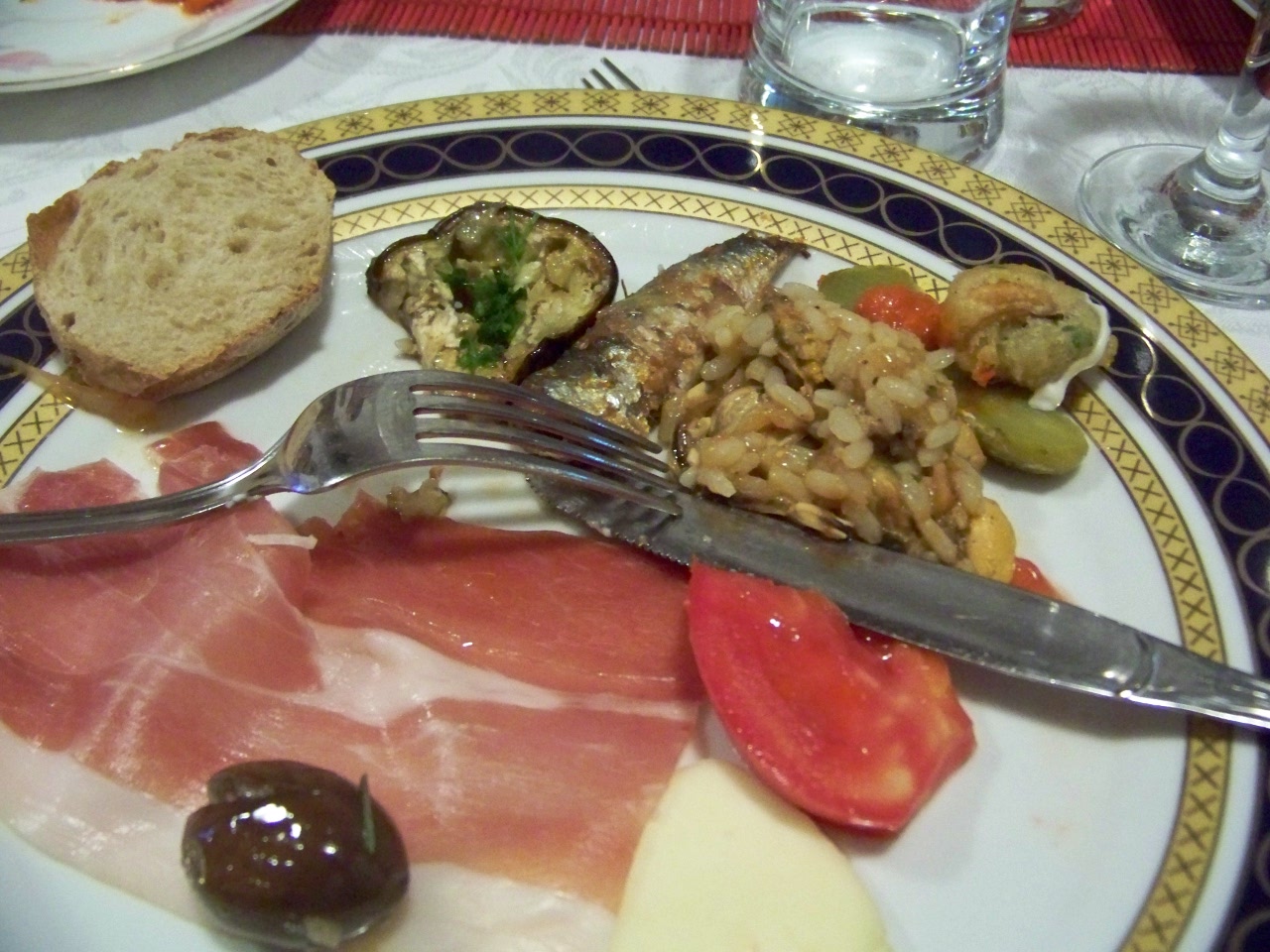
Treated like honored guests, we sampled plate after plate of appetizers, a delicious soup, a traditional entree, and, finally, a rich dessert, all accompanied by a parade of local wines. We listened with rapt attention as she demonstrated how to prepare a traditional Montenegrin recipe.

We were not really prepared for Montenegro. Yes, we knew some of the history: Kotor is a unique medieval fortress town, with an array of buildings that span from the 12th through the 16th Centuries. It’s impossible to walk through the old town without visualizing pirates along with priests, noblemen and beggars, monks and blacksmiths, painters and writers, physicians and printers.

The small city, with a population of approximately 13,000, is situated in a secluded portion of the long Bay of Kotor on Montenegro’s Adriatic Coast. Less than 1,000 people actually live within Kotor’s historic walls, and its earliest history is a bit muddied; it is first mentioned in ancient literature in about 168 BC, but some authorities believe it was founded as early as the 5th Century BC. It was known at one point in history as Acruvium, part of the Roman province of Dalmatia. No matter the date, Kotor now holds the status of a UNESCO World Heritage Site, and the city’s fortifications testify to a succession of foreign occupations and battles. Once allied with Dubrovnik, it gained independence from Byzantium until it was later occupied successively, and repeatedly, by the Serbian Empire, the Republic of Venice and the Ottoman Empire, the Hapsburg Monarchy and, finally, the Napoleonic Kingdom of Italy. It played significant roles in both World Wars.

After 1918, the city that saw some of the fiercest battles of the war became part of Yugoslavia, and gained its new name of Kotor. It was not until 2006, however, that Montenegro, part of the former Yugoslav Republic, become truly independent

With that much turmoil and turnover in its history, it may be surprising that Kotor endured. But endure it did, and today it boasts one of the best-preserved old towns in the region, along with its impressive fortified old city walls and its stunning Cathedral, built in 1166.

The Cathedral of Saint Tryphon is a major tourist site, one of two cathedrals in this unique small city that was formerly known as Cattaro. Saint Tryphon has a collection of beautiful art and artifacts, in addition to its notable architecture.

What else sets Kotor apart from its neighbors? There is a distinguished maritime museum and the Kotor Festival of Theater for Children has attracted throngs of visitors from throughout Europe for the 30 years it has been held. Citizens of Kotor are also protective of their cats, symbols of the city. Food and water, along with boxes that serve as shelter, are left throughout the city. Kotor Kitties is a chartable services that provides spay and neutering services in an attempt to limit the population, but the cats are as much a part of the city as the smiles of its citizens. Don’t miss Cats’ Square if you visit, and be sure to take home a cat-themed souvenir.

I hold fading memories of the cats, the cathedral, the city walls, and the sparkling sea. But I have a clear recollection of the taste of fresh olives and figs from a vendor in the city’s market, and of the stories told and the laughter shared around a dining table in the home of a charming couple in Kotor!
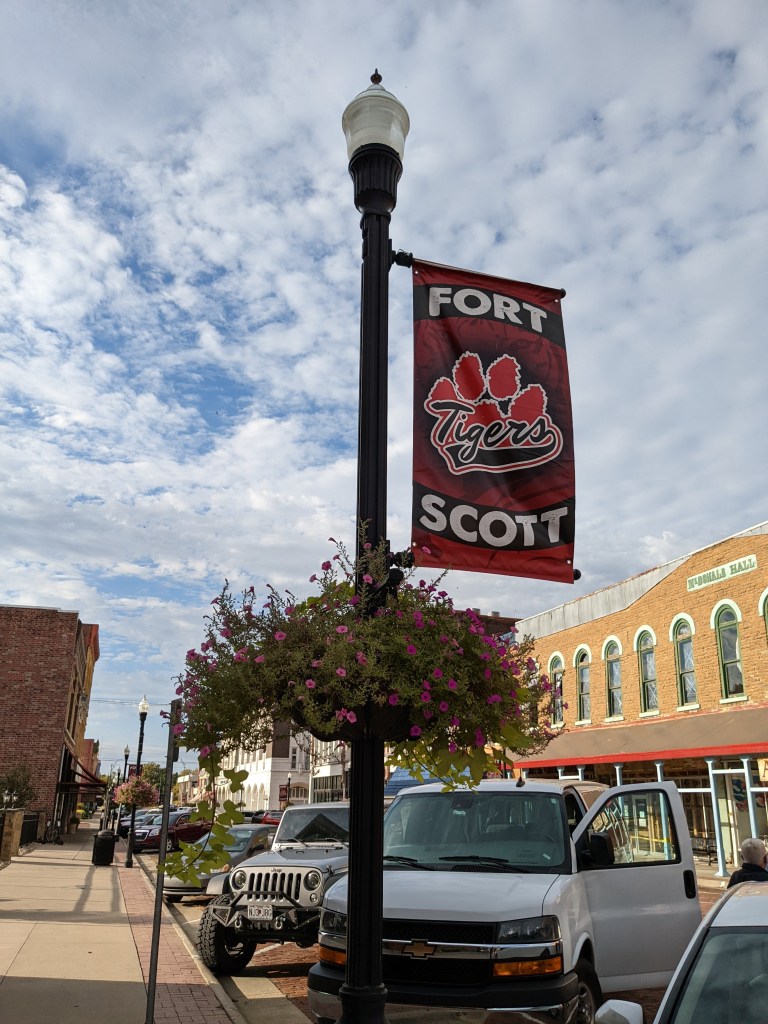
Kansas Part 2 — Comfort food and much more

I first met two of my traveling companions for this trip at the Kansas City Airport. We had arrived at approximately the same time from our starting points in Arkansas, Boston and Michigan. We did the only thing possible: we found a comfortable table in an airport eatery and proceeded to get to know one another until our host could pick us up.

After ordering coffees and ice water, we browsed a menu of mostly uninspired airport dining options. We did not know when we would rendezvous with our other four traveling companions, nor did we know exactly what our schedule had in store for later in the afternoon. However, we did know that we were destined for dinner at a barbecue restaurant in Fort Scott that evening. After some discussion, we decided to try the airport version of local barbecue. And we were pleasantly surprised! The three of us shared an order of barbecue pork sliders — one for each of us — ample small bites that were quite tasty.

If there’s a single universal impression of Kansas food, it’s probably of “comfort food,” and what’s more comforting to a Midwesterner than barbecue and fried chicken? More about that later.

Following an Uber ride and another round of introductions, our group was complete. We settled into our rental van for the drive from Kansas City to Fort Scott.

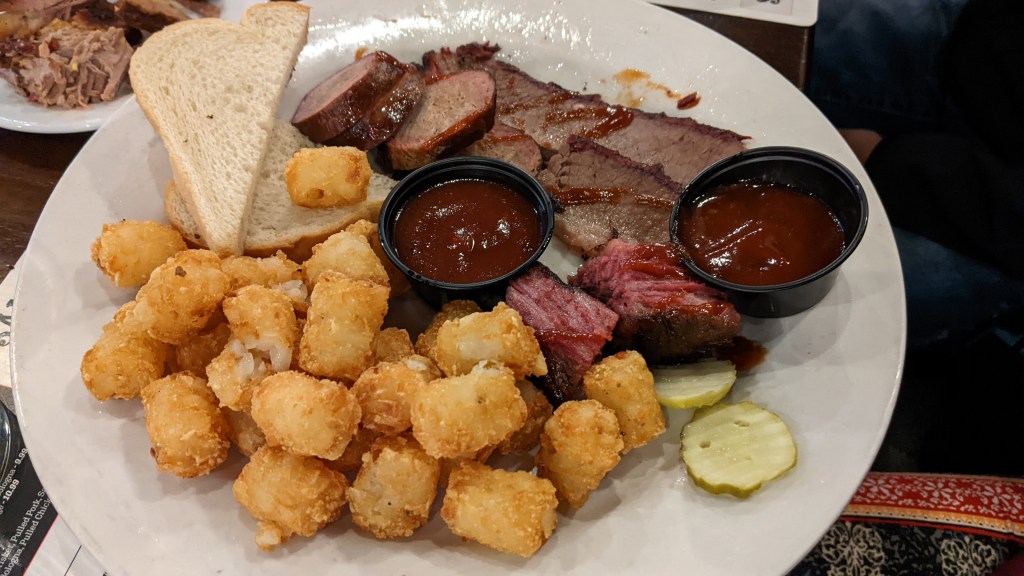
It was at dinner that first evening in Fort Scott that we were introduced to a great variety of barbecue options. The tagline on the menu at Luther’s BBQ, which opened in 2019 just prior to the pandemic, was “good food and plenty of it!” We were to find that could well be a statewide slogan.

The restaurant, housed in an historic brick building in the heart of Fort Scott, offered an extensive menu with much to sample — all simple food as it turned out. We enjoyed tasty deviled eggs and a variety of meats and cheeses — the best kind of finger foods, and delightful drink options, including a Bloody Mary that exceeded all expectations and was “write-home-about-good!”

Sadly, I must end my report about the meal we had at Luther’s, because a message on my computer lists the restaurant as “closed permanently.” I believe that Fort Scott residents were hoping it would be another success story in the city’s planned rejuvenation. Maybe it still will be. But, for now, the website is down, and the phone goes unanswered.

The only thing I regret? I didn’t get a “doggie bag” to take with me.

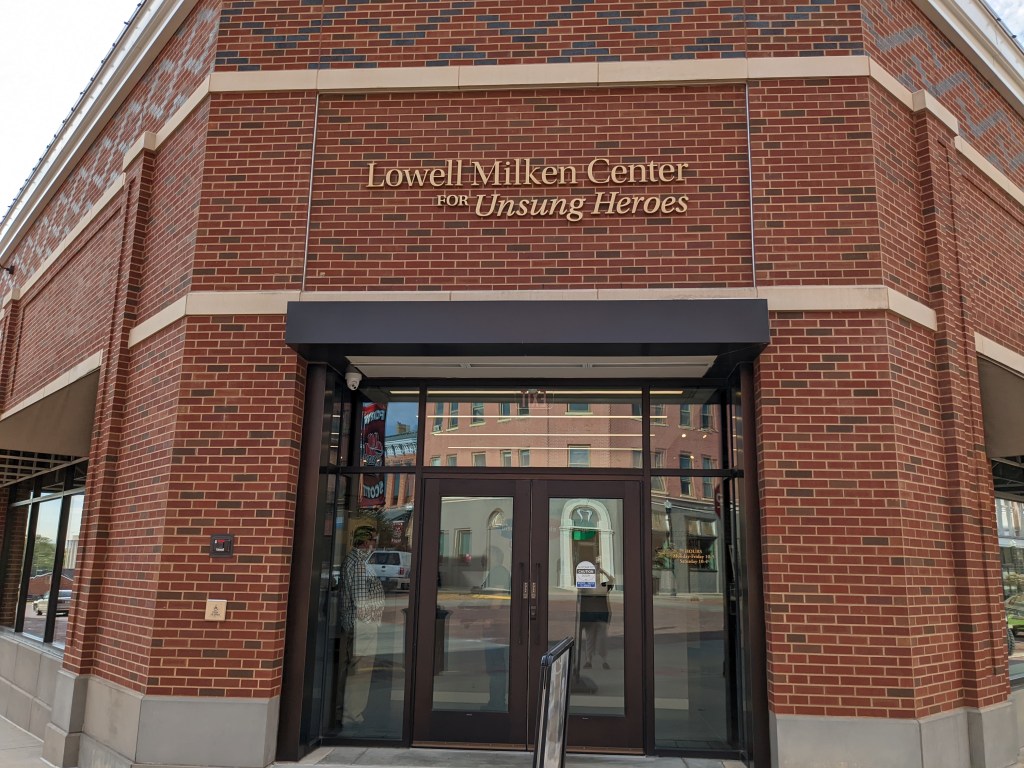
We spent the night at the historic Courtland Hotel in Fort Scott. My plate was full again the next morning with oversized breakfast burritos and specialty coffees from Common Ground Coffee Co., served picnic-style at the Lowell Milken Center for Unsung Heroes. It was another treat in the lineup of Kansas attractions that awaited our group.

The second full day in Kansas was jam-packed with new sights and experiences.

It began at the Milken Center and continued with a drive along the stretch of historic Route 66 that still runs through the state. Kansas, at least this portion of it, hasn’t changed visibly over the past several decades. In many ways, that’s comforting. You know what they say — “The more things change . . . ” Well, yes, much does remain the same.

But change is in the air and there’s a lot more to come!

Life is a celebration . . .

Note: The news earlier this week of the death of Ed Lowe, renowned Dallas restaurateur, came as a shock, not only to his family and friends, but also to those who loved the family dining spot on Lovers Lane. I couldn’t help thinking of the last time I visited there. It turned out to be a much better experience than I had hoped, thanks entirely to the staff of Celebration Restaurant. Although I sent a note to the restaurant at the time, I’ll share the whole story here. I think Ed Lowe would like it, just as I am certain that his spirit lives on at his restaurant with every meal that is served.

There may be no better way to celebrate a special occasion than with a family group sitting around a table laden with good food. And, sometimes, going out is better than cooking at home.

So, it was with high expectations that I chose a place we had not visited for years, but known for decades, as the perfect surprise for a special birthday luncheon. It represented, in some ways, a trip down memory lane.WP_20180311_14_17_57_Pro (3)Celebration Restaurant on Lovers Lane in Dallas is known as the city’s first true “farm to table” enterprise. It has been serving up good food and good times for 46 years in a location not far from Love Field. It still exists in the same sprawling Bluffview neighborhood home where it originally opened. It has been expanded over the years, and now includes not only an outdoor patio, but also an adjacent retail market.
It’s homey in all the best ways.

Tables are set in rooms of varying sizes. There are private rooms available to accommodate groups large or small. The atmosphere isn’t trendy, but rather as familiar as a visit to Grandma’s house.

The food is much the same: No sushi, fusion or “nouvelle” anything here; just good honest beef, pork, chicken, fish and a choice of freshly prepared sides. The veggies, which vary by season, are served in family style bowls, a choice of three for each table. Every meal carries a choice of starters — soup, salad or fresh fruit; and desserts are too good to miss, even though ordering them reaches the borders of glut.

The concept was unique in the mid-70’s when Celebration opened. Now, after nearly five decades, it is still unique in a market that prides itself on its growing roster of award-winning chefs and innovative eateries.

Celebration is low key and pleasant. Children are welcomed, but the children’s menu contains “adult” food. Portions are reasonable rather than “super-sized,” but seconds on most entrees are available, and cheerily served. No one ever leaves hungry.

On our recent visit, there was a slight glitch with the reservations — some of our party arrived a bit early only to find that there was no record of our request for a large group. On a Sunday, the restaurant was already filled to overflowing. I learned of the problem when I arrived with my husband, the honored “birthday boy,” at the appointed hour. Needless to say, I was upset. We did not want to wait for two hours, and we did not want to go elsewhere. It seemed as impossible situation.

However, with only a few words exchanged and a delay of just a few minutes, we were made welcome at a table hastily set on the patio. Luckily, it was a pleasant, early spring day in Dallas, and overhead heaters warmed our bodies. The pleasant views of  fountain, fireplace and greenery warmed our spirits, as did the friendly smiles and attentive bustling of the servers.

I could go on about the impeccable service, the variety of the food, the courtesy of management. But I won’t. Suffice it to say that Celebration Restaurant is an example of the way it ought to be. There is no doubt that Ed Lowe’s visionary eatery is still in business after all these years because it consistently “gets it right!”

Would that it will continue in that tradition.


Eating well in Puerto Limon . . .

High above the harbor, where the air is clear and the streets are filled with cars and people rather than warning signs and concertina wire, our cab driver pulled to the side and indicated a colorful sign and an open doorway. We had arrived at our destination, and a smiling waiter came out to greet us. 100_4759

Crew members on board our cruise ship had said this was the place to go for lunch in Puerto Limon. We were early but it was comfortable enough to just sit and “be.” The big-screen TV that hung from the ceiling, thankfully, was not blaring, and the hum of quiet conversation from two or three adjoining tables was pleasant “background music.” We ordered cool drinks. We did not expect to be alone for long.

The ‘back side’ of Costa Rica

This is not the tourist’s Costa Rica. Puerto Limon, the busiest port in the country, has the look and the feel of a “real” town. Bananas, grains and other goods leave here bound for destinations across the globe, but it has not yet become a prime cruise ship destination. It retains its working class flavor, refreshing in a time when glitzy storefronts and undistinguished trinkets welcome disembarking passengers in most other ports.

This Caribbean port has island roots and they stretch all the way back to 1502, when Christopher Columbus set foot on the land. Beaches stretch in both directions, and the sea is beautiful, but the city itself is a bit disheveled and has suffered the ravages of earthquakes, storms and economic blight. Like much of Latin America, it is defined by gates and barricades, and the ever-present concertina wire.

Limon is not postcard pretty, but the people we met were gracious and friendly, although busy with their own pursuits and not impressed by cruise ship crowds. We had no desire to shop in town, but the fruits and vegetables displayed at the market looked lush, ripe and inviting.

My journal note from the day:

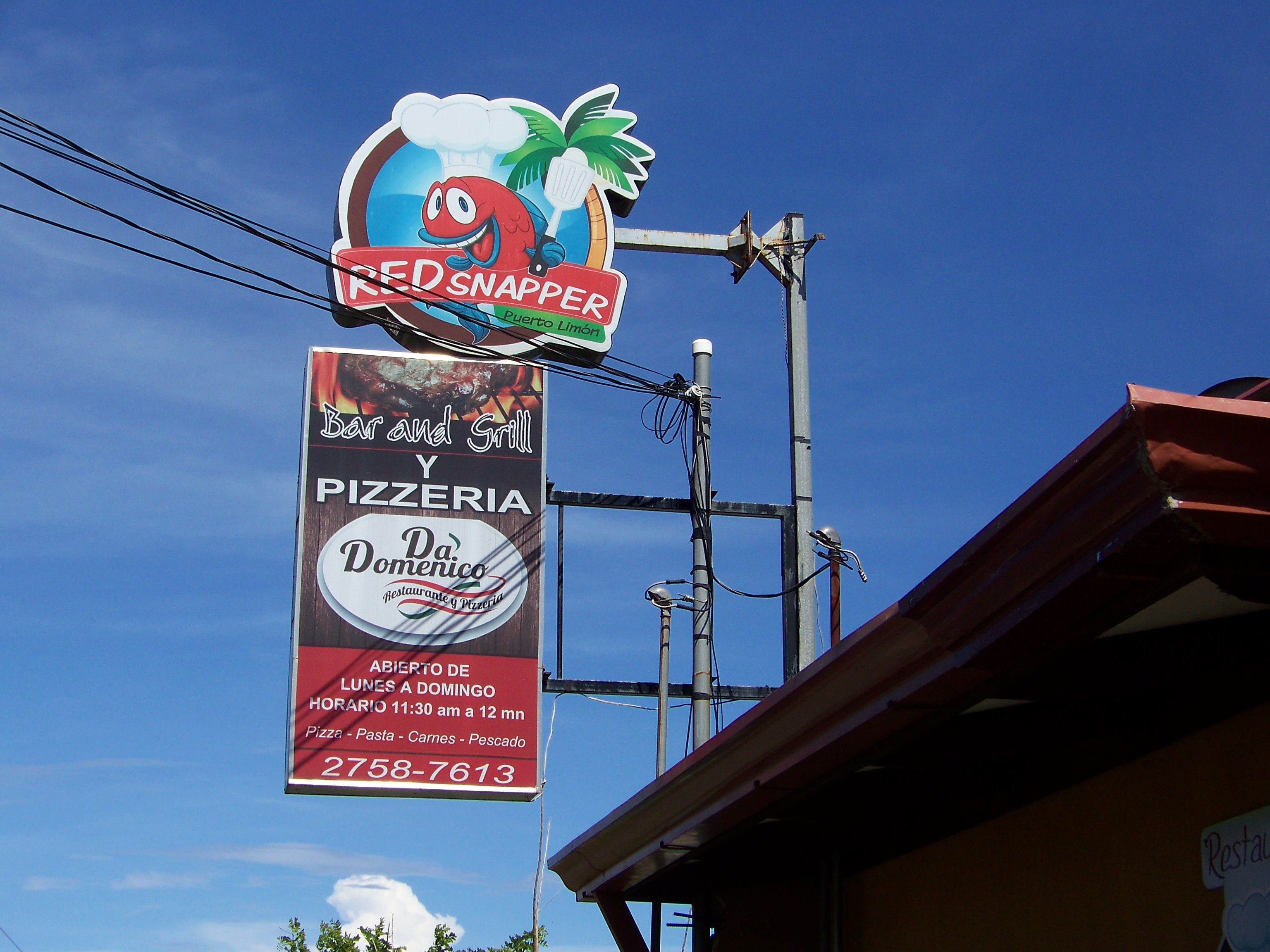
“The Red Snapper (or Da Domenico; we were never quite certain exactly where we were!) is unassuming from the street, pleasant enough within; with a friendly local ambience not unlike bars and restaurants elsewhere in the tropics. Sea breezes circulate under a soaring ceiling, wafting through open-air rooms like invited guests. Dark wood interiors punctuated with spots of bright color keep it cool, but lively. And the good-natured banter emanating from the kitchen makes us smile. So, too, does the sleeping dog that patrons are careful to step over or around!”

This slideshow requires JavaScript.

Views of the harbor — our glistening white cruise ship seemed far away and far below — were mesmerizing. We looked over the rooftops toward the horizon and were captivated. We drank in the beauty of the sea, ordered cool drinks, and knew we had been given good advice.

We also knew it was going to be a long and satisfying lunch! We were not disappointed.

Sampling the sea’s treasures

Because the best part of travel involves putting aside the familiar, we asked our waiter for lunch suggestions. We specified fish or seafood. Little did we know what a feast would be set before us, so we also decided to share a pizza marguerita “appetizer.” No way could we consider it a mistake in terms of flavor, but there is no way a starter course was necessary!

100_4740

Our surprise dishes were delightful — and the three of us happily shared two distinctly different orders. The first, a whole fish served with fried plantain and a fresh green salad, was not only impressive to behold, but would have offered sufficient food for three on its own! And it was presented as beautifully as cruise ship fare.

100_4745

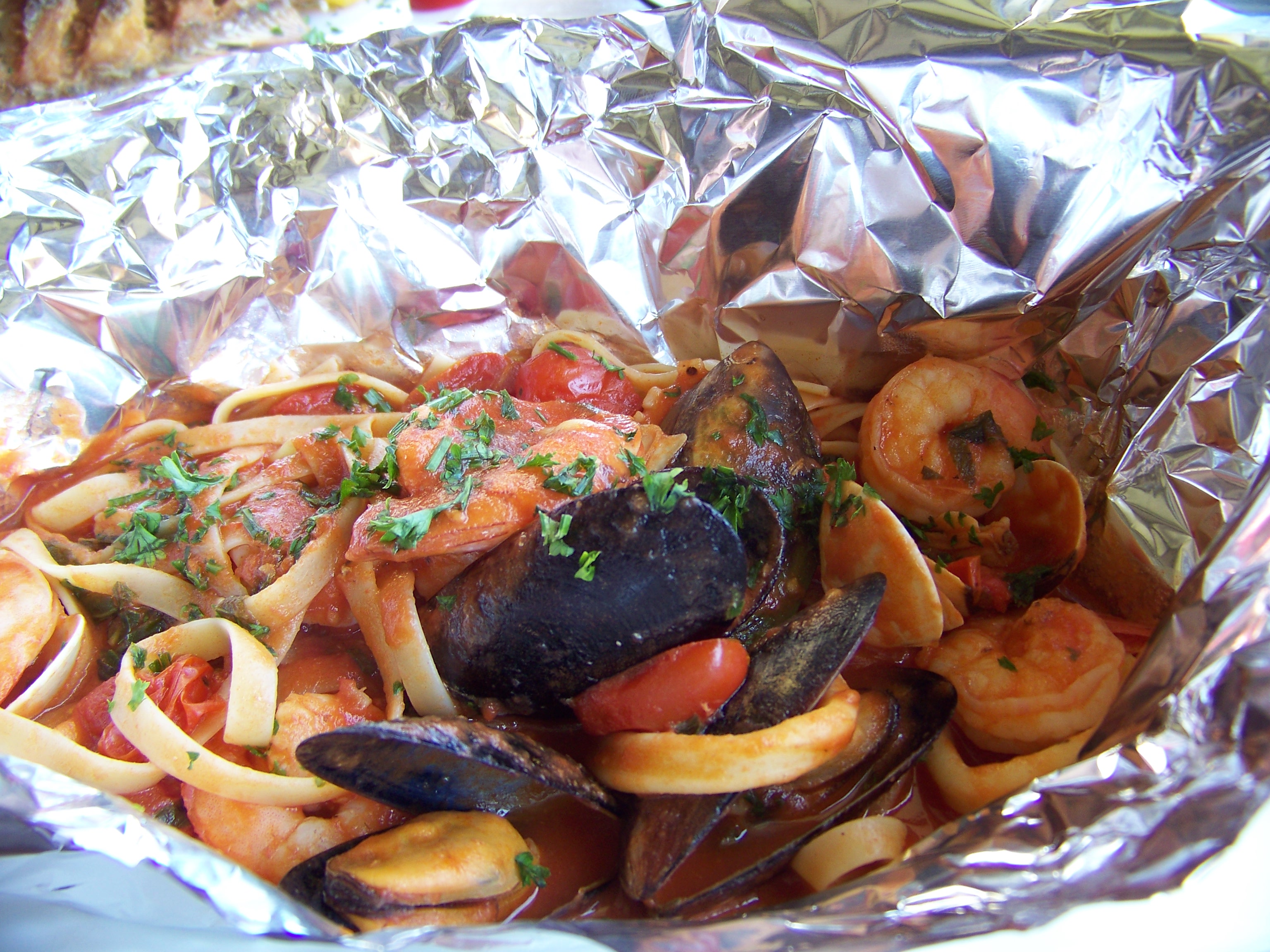
The second house specialty included perfectly-prepared seafood steamed in a delicious sauce and served in its own foil pack hot from the oven. 100_4748Overloaded with shrimp and mussels swimming in flavored sauce atop a bed of pasta, it was Caribbean in character, boasting plump cherry tomatoes, fresh parsley and subtle exotic spice, perfectly executed, but too much for one person!

When our congenial cab driver returned to pick us up, he obliged by taking us on a short tour through his town — a request we always try to make. As we made our way back to the dock, we were happy to have shared a great meal in Puerto Limon, sorry that we had no more time to explore this back side of Costa Rica more fully.

We will savor the experience we had, and we will continue to wonder about our young waiter who dreamed someday of joining a cruise ship crew to see the rest of the world.


It’s not the Maine state food, but it should be!

Well, you could have knocked me over with a feather!

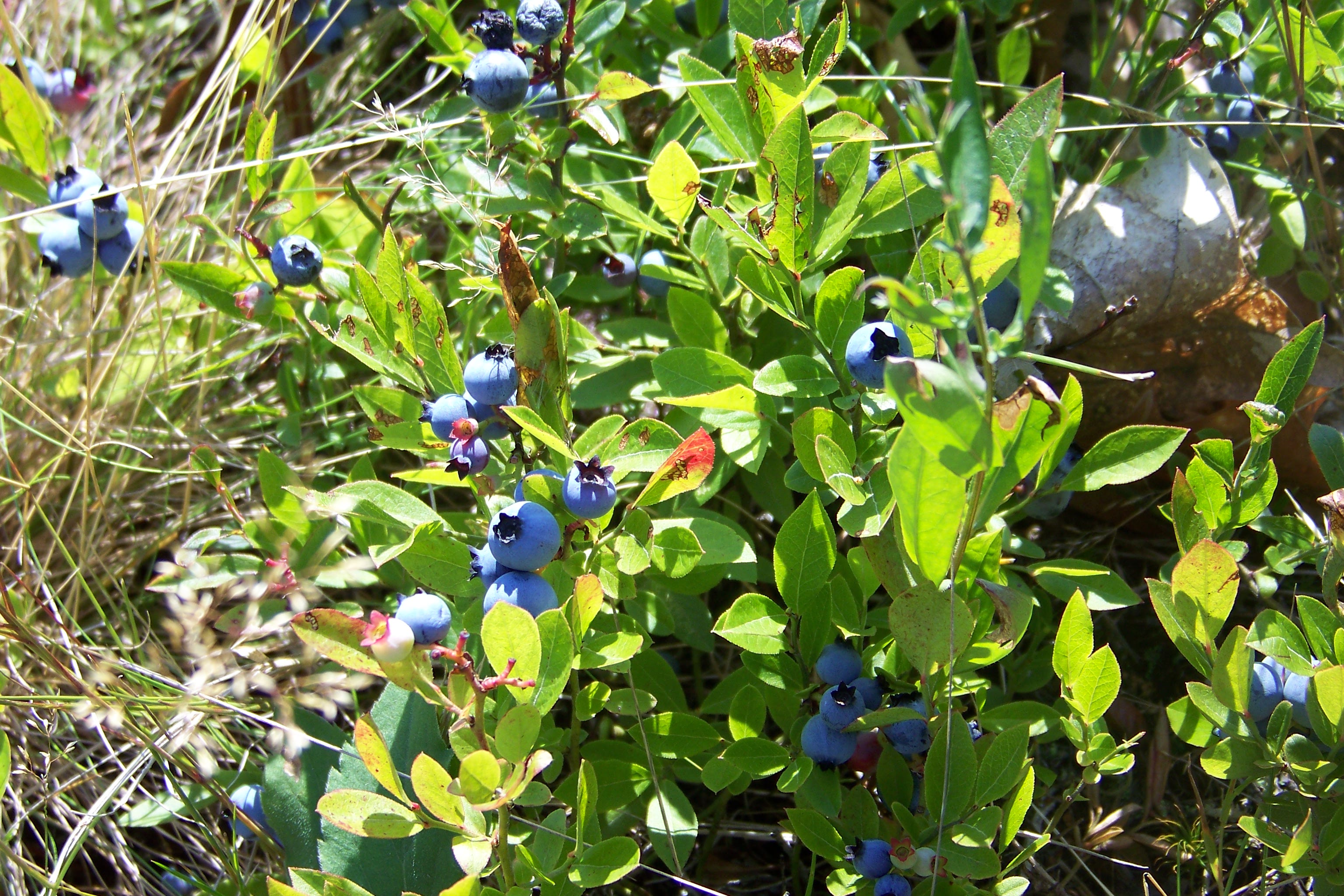
I was certain that the state food of Maine had to be lobster, but I was wrong! According to all sources, it’s the blueberry, as in “wild blueberry,” which was officially designated the101_3377state fruit in 1991. It is also the “state dessert,” so proclaimed in 2011, more specifically “Blueberry pie made with wild Maine blueberries.”
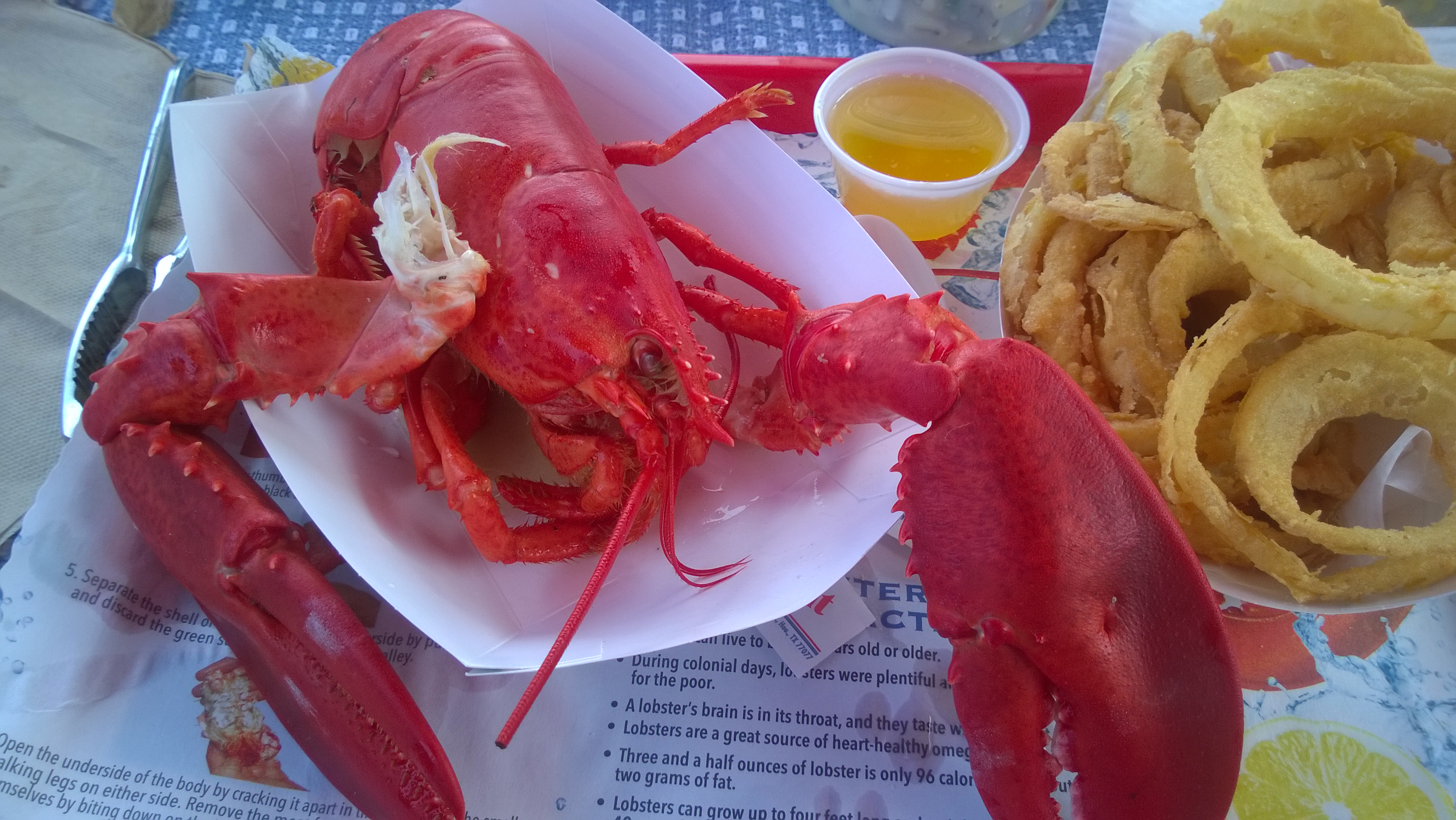
So, where does that leave the lobster?

Well, as much as I like blueberries and wild blueberry pie, I believe I’d opt for lobster any day. There are many ways and many places to enjoy lobster in Maine, some of them renowned, some far off the beaten track — all of them good!WP_20160716_020

This summer, during a much anticipated, multi-week sojourn in this seacoast state, I did my best to sample as many of those places and ways as possible, often with an ample measure of other seafood added in for variety.

I have to confess I turned down a spoonful of “lobstah ice cream,” but I may have to go back for a sample, just to say I did. (Somehow, I just can’t imagine it — in the same way that I cannot imagine fried clam, jalapeno or barbecued chicken ice cream!)

Keeping It Simple

In Maine, especially in the summer, it’s hard to escape lobster specials. There are 2 and 3-lobster dinners with all the trimmings served by uniformed waiters at fine restaurants. And there are lobster rolls at Red’s Eats in Wiscasset, with long lines and periodic traffic101_3355 jams at all hours, no matter what the weather. A person can buy lobsters from friendly vendors along the road who will steam them so you can take them home and add the sides yourself, your choice.

In Maine, McDonald’sWP_20160709_028 even serves lobster. For a quick bite, it’s not at all bad! Honest.

But the best way? Again, it’s personal choice, of course, but lobster fresh off the boat and straight from the tank, eaten at a picnic table on a pier overlooking a local working harbor is really about as close to “wonderful” as it gets. At most of the local lobster piers, it’s perfectly acceptable to pack a picnic basket with your own favorite appetizers, sides and beverages and make an afternoon or an evening of it.

In Midcoast Maine, locals have their own preferences; co-ops and waterside restaurants do a brisk business even when the tourist trade is off. Some of the local hangouts serve lobster, steamers (clams) and corn only. Others have a full menu that might include burgers, coleslaw and potato salad, grilled cheese sandwiches, clams, mussels, scallops, shrimp, crab and haddock. French fries and onion rings tempt adults and children alike. And then there’s dessert. Ice cream stands are at least as popular as lobster shacks!

All About Food

About that state food — there really is no officially designated “state food” in Maine. That would take an action by the state legislature, and we’ll just trust that these days they have better things to do!  101_3107However, just in case you’re interested, Moxie is the official state drink and the whoopie pie is the “state treat.” Don’t know about whoopie pies? Ask any Mainer!

There are other people, by the way, who think lobster should be Maine’s special food. There are at least several lists, and that crusty little crustacean is on every one I found, in one form or another.

Maybe we should start lobbying for that “official” designation after all! It’ll get my vote!


Mainely good: Up country, Down East

Maine in the summer is full of good things: salt air, brisk nights, bright sun, wispy clouds, lobster, ice cream parlors seemingly on every corner, breathtaking scenery, a lazy way of taking one day at a time and putting aside the rush.

There’s also traffic; getting anywhere by car is apt to take twice as long as anyone thinks it should, with distances measured in time rather than in miles. And, yes, it’s easy to spend a lot of time in the car in order to see it all.

But Maine is the kind of place that gets under your skin. It’s hard to resist coming back — and the more one returns, the longer one wants to stay.

Yesterday’s excursion took us along the back roads of Midcoast Maine from Wiscasset, the self-proclaimed “prettiest village,” northeast to Belfast, another old seafaring village about 50 miles distant. 101_3156Then we clung to the seacoast to reach Camden, where Mount Battie stretches to the sky along one side of scenic Route 1 and the surf crashes against the rocks on the other side.101_3149

It was a leisurely drive, interspersed with frequent stops for photos, some “on purpose” wrong turns, and a drive up the bluff to view storied offshore islands from the heights at Point Lookout in Lincolnville.

Summer is alive with color — vibrant flowers, lobster buoys glistening in the sun, colorful sails silhouetted against the sky, canoes and kayaks forming their own artistic displays in their racks.101_3015

Farm stands and roadside booths abound — offering everything from fresh strawberries and blueberries to ever present lobster rolls, fried clams, and whoopie pies (definitely a Maine thing!) 101_3107We even found ice cold Moxie for sale by the bottle. Yes, it still has a medicinal taste, but apparently it has never lost its appeal.

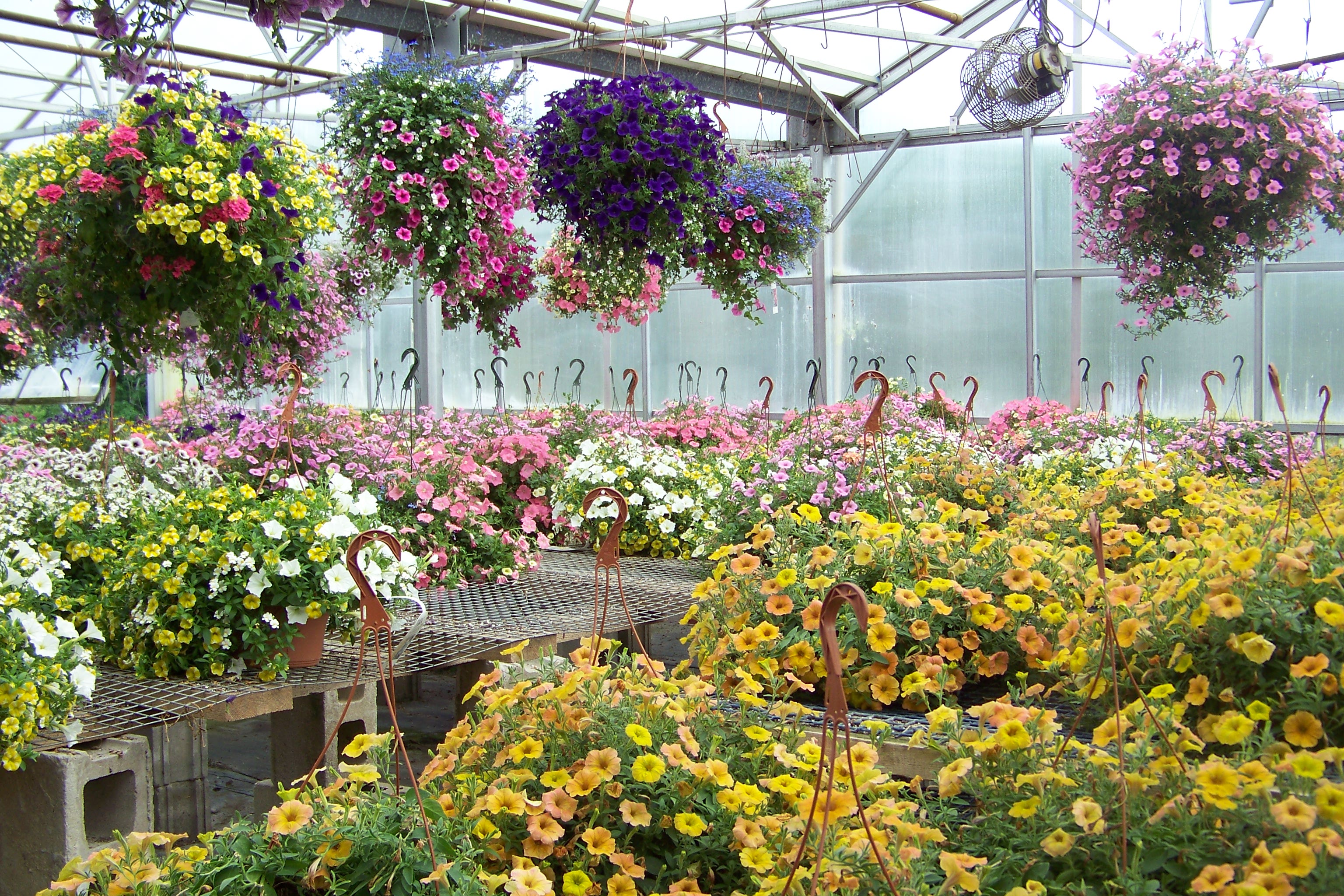
We made a stop at Beth’s Farm Market in Warren, and were thunderstruck by the beauty of huge floral hanging baskets. Alas, it’s still a bit too early for Maine sweet corn. But that’s another story; instead we stocked up on fresh strawberries, tomatoes — both red and green, and on purple carrots!

Make no mistake: Eating your way through Maine is half the fun.

Our lunch destination, and one of the main reasons for the trip, is an unassuming eatery with a loyal following in Belfast. Behind bright yellow doors at 96 Main St. is a thriving vegetarian lunch spot (open for dinner one night a week) that also has an in-house produce market, bakery and flower shop. The owners are all family, and their history in Maine dates to 1969; Chase’s Daily opened its doors in 2000.

Good food and sustainability are hallmarks of the operation; the owners and operators are down to earth, realistic and nothing if not approachable. The food is good, with unexpected layers of flavor and unusual ingredients; the ambience is pleasant, the wait staff congenial and the history heartwarming.

Maine has changed over the years, but in important ways this state remains the same as it was decades ago when I first visited. It’s still a little foreign, perhaps a little provincial, and rough around the edges at times. Portland, the largest city, is a cosmopolitan 101_3181center today, full of fine restaurants, hotels, shops, museums and galleries.

But, get out to the country and there’s still a whole wide world to explore. That’s part of the delight, and that’s the reason for the traffic on the coastal highway. You need to get out of the city and away from the resorts to really experience Maine. As a state slogan proclaims: It is “the way life should be.”

Up country and Down East are not only destinations; they are states of mind.

The open road: Traveling tips

101_2217Fast food isn’t particularly good for the waistline or the pocketbook! And, no matter how familiar, most of it is nothing to write home about.
So, this summer, why not slow down a little to nurture your spirit as well as your body? Whether you take a quick weekend jaunt or an extended trip across the country, here are some good ways to make your next driving trip a memorable one:

Pack a picnic basket

Seriously. There was a time when a wicker basket was a staple in the back seat or the trunk of almost every vehicle. Those were the days when people planned a day’s journey based on the distance between gas stations, and pulled off the road to enjoy a field of flowers or a lakeside vista. Today, with conveniences available at every highway exit, it’s not so necessary to plan ahead, but having a picnic basket full of good food still makes sense.

Fill yours with hard boiled eggs, a package of mini carrots or sugar snap peas, cans of sardines and packets of tuna, a jar of peanut butter, a loaf of crusty French bread, crackers, and homemade granola or trail mix. Bring along either a round of Brie, a wedge of blue, or some string cheese that can stand being out of the refrigerator for a few hours. Include apples, oranges and dried fruit, and maybe some homemade cookies. Pack plastic plates, glasses and silverware, a roll of paper towels and a plastic tablecloth. Include a blanket or quilt for sitting on the ground.

If you’re taking a long trip, restock at a local grocery store; forego the chain restaurants. Forget the cooler full of soda, but bring a large thermos filled with iced tea or lemonade. In cooler weather, fill the thermos with hot chocolate, tomato soup or chicken bouillon. Invest in refillable personal water bottles and fill them with tap water. When you get hungry, get off the road and get out of the car. Park by a stream or find a city park: Walk around, lounge on the grass, walk the dog, and let the kids run!

Get off the road – go local

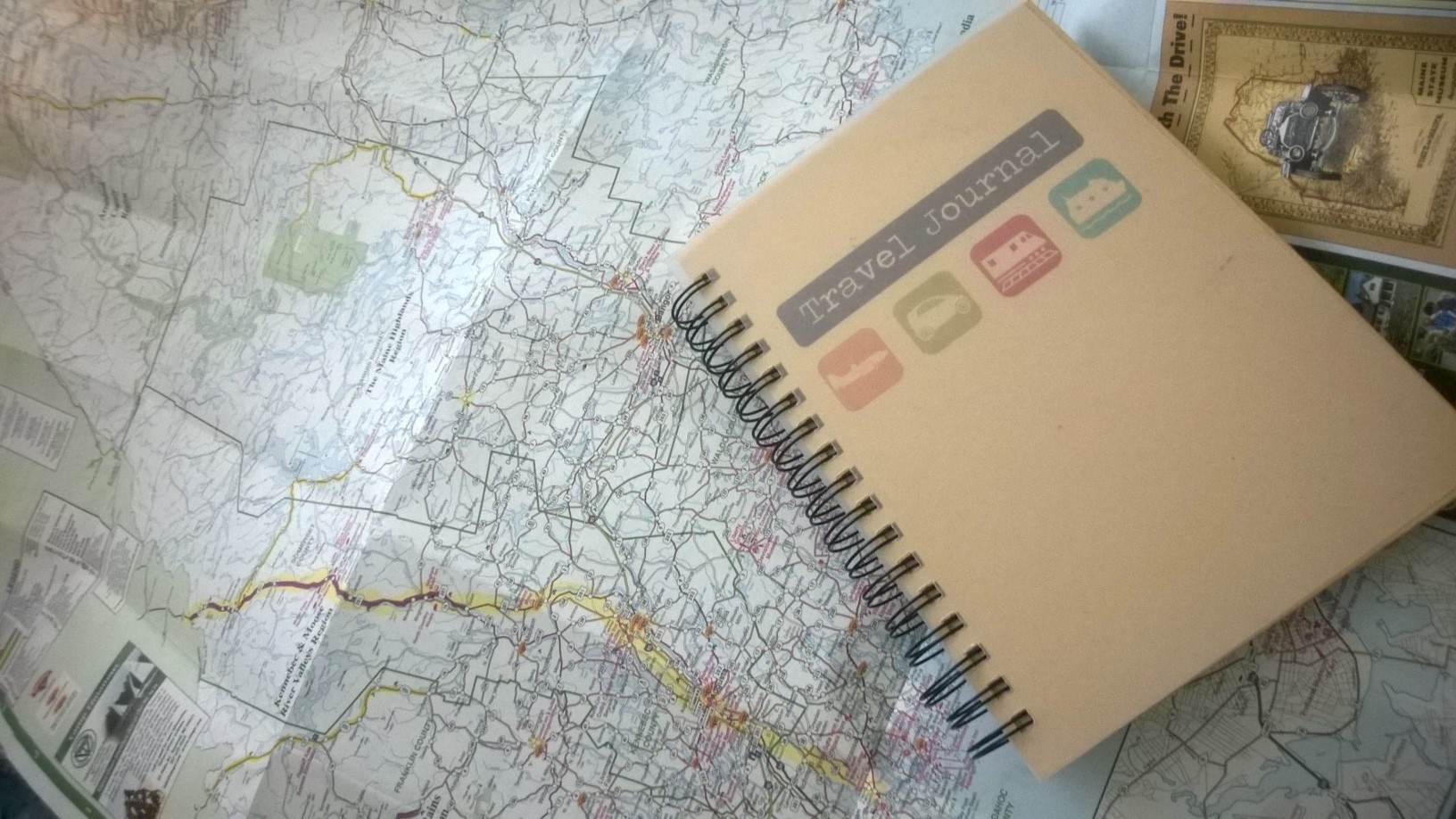
Turn off the interstate occasionally. Even if you want to make good time getting to your destination, you’ll be surprised how invigorating it can be to take a scenic route or venture onto a back road. Forget the GPS and the app, and buy an old-fashioned road map, the paper accordion-folding kind that you spread out on the hood of the car, the kind that shows small towns, county roads, twisting dirt paths, historical sites and topographical features. Then make time to explore.

Leave the smart phone in your pocket and teach your children map-reading skills; get lost on purpose, just so you can find an alternative way back to the highway. Cultivate spontaneity! Take a few chances. Laugh a lot!

The highways were built to move goods and people quickly from place to place, and they do that well. But, any journey can be as interesting as the destination if you take a turn through the countryside and small towns along the way. It’s a whole different world view and one you don’t want to miss. Stop to photograph wild flowers, historical markers, spectacular views, a herd of longhorns, or an old barn. Look for the unusual. Stop at farm stands and “pick your own” orchards. Buy freshly-squeezed orange juice in Florida, fresh shelled pecans in Texas, cherries in Washington or just tapped maple syrup in Vermont. WP_20160508_007 (1)

Keep a travel journal

Don’t worry about the literary quality; just make it personal and it will be memorable. Simply write quick notes to keep in an old three-ring binder and punctuate with doodles, postcards, snapshots or restaurant business cards. Or take notes on your digital device to accompany the pictures you snap: Transfer the notes and photos to an online journal when you return home. Just be sure to date (and place) the entries so that you can look through actual or virtual pages later to recall specific events.

Your kids will love reliving this part of their history, and you can tell friends and relatives about your experiences.  Write about the wild flowers or the weather; the long, boring miles of highway, or the squabbles in the back seat; add anything that describes the moment! And don’t wait for an epic two-week vacation to Europe to begin journaling. You don’t have to be born with a sense of adventure to enjoy travel. You simply have to keep your mind open to possibilities, your heart open to fun and your eyes focused on the new sights all around you.

Slow down and look around

Take advantage of state tourist information centers as you cross state lines. Great sources of information,  they are staffed with knowledgeable volunteers, and often offer snacks, coffee and cool drinks. They also provide a welcome break from sitting! Many states also have upscale, modern rest stops with clean rest rooms, playgrounds and picnic tables.

Turn off the highway and head for a small town square. Look for a local café, or a diner with lots of cars parked outside. Chances are you’ll discover friendly people, good food and good times. Strike up a conversation with your server; ask questions about the area if it’s new to you.

Travel without reservations if you don’t have a deadline, and look for local hotels in small towns rather than chain motels along the highway. Consider it a bonus if you find a charming country inn, a lakeside cottage at a state park, or a historic hotel in the heart of a Midwest city. Another way: Take day trips to other towns in your area. You’ll be surprised at the things you discover!

Walt Whitman said it pretty well:

         “Afoot and light-hearted I take to the open road, 

         Healthy, free, the world before me, 

        The long brown path before me leading wherever I choose.”