We had invited an assortment of neighbors and friends to join us for a potluck get-together at our home last Sunday — Easter Sunday — and they all arrived promptly at the appointed time.
The sky was grey, but it did not seem threatening at that moment.
Darkening gray clouds had not dampened spirits in the slightest as our group of 12 assembled. However, dinner was destined to be delayed as the existing tornado watch was upgraded to multiple tornado warnings for our area, including the Hot Springs, Arkansas, area and the Village we call home.
At that time, Hot Springs Village was not included in the “take cover” area. But that changed before long.
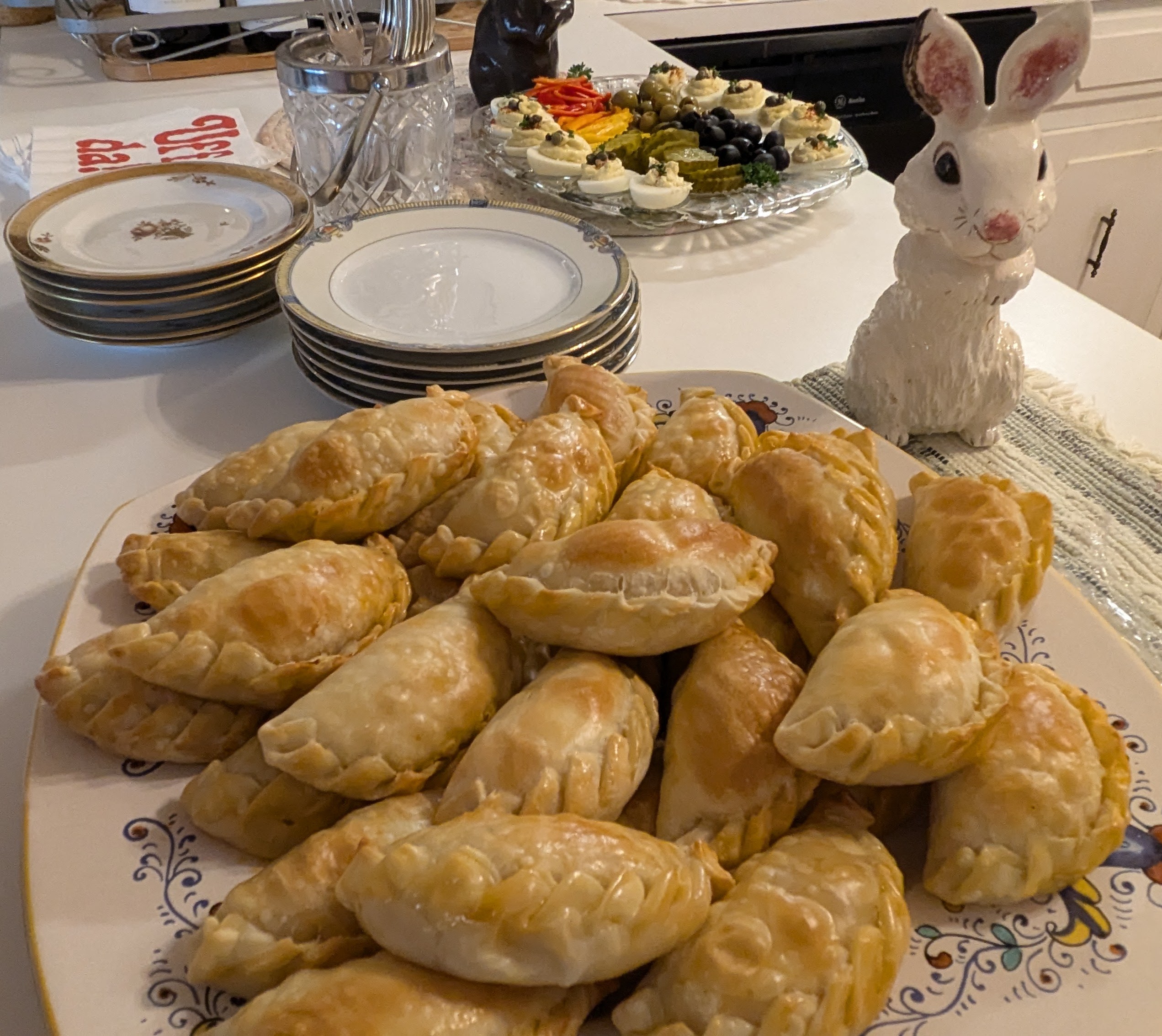
With celebratory glasses of champagne or wine in hand, and a buffet well-stocked with hors d’oeuvres, we resolved to delay serving dinner until the severe threat had passed. Conversation was lively, and the appetizers alone could have served as our meal. We kept a watch on outdoor conditions and listened to the continuing weather updates, while sampling Argentine empanadas, deviled eggs, salmon-topped cucumber slices, toast points topped with savory olive tapenade, and an assortment of pickles, olives, and peppers.
Great appetizers kept us company during the storm watch.Our friends and neighbors are creative chefs.
We all knew there was more food to come, but somehow the worsening weather spiked our appetites.
The screen was ablaze with red and yellow blobs of color in our viewing area. Place names seemed eerily close and familiar, but the sky was still light, the air was calm, and no rain was falling. However, the weather forecaster repeatedly recommended that area residents take shelter.
The warnings kept us all informed of the storm’s progression through our area.
The 12 adults gathered in my living room and screened porch looked questioningly at me and my husband as the wind picked up and raindrops began to fall. Together, we explained to our guests that getting to our “safe place,” a room we use strictly for storage, involved going outside and walking down an incline that becomes treacherous in the rain. It is definitely not a place of comfort. It has no television, and it has a large window.
We had no intention to gathering in our designated “safe room” with plates filled with game hens, wild rice, peas and carrots, and fresh-from-the-oven homemade rolls. Instead, we gathered loosely around the television, and continued to catch up on one another’s lives and activities since we had last been together.
The consensus was to remain where we were, closely watching the TV coverage, monitoring our phones for the latest information, and enjoying our holiday get-together. We agreed that, should a confirmed tornado veer in our direction, we would all gather in the single interior room in our home, the guest bathroom.
It’s adjacent to a concrete block fireplace wall and chimney, has no windows, is fortified by plumbing pipes and drain lines, and boasts at least two walls in every direction between the interior and the outdoors.
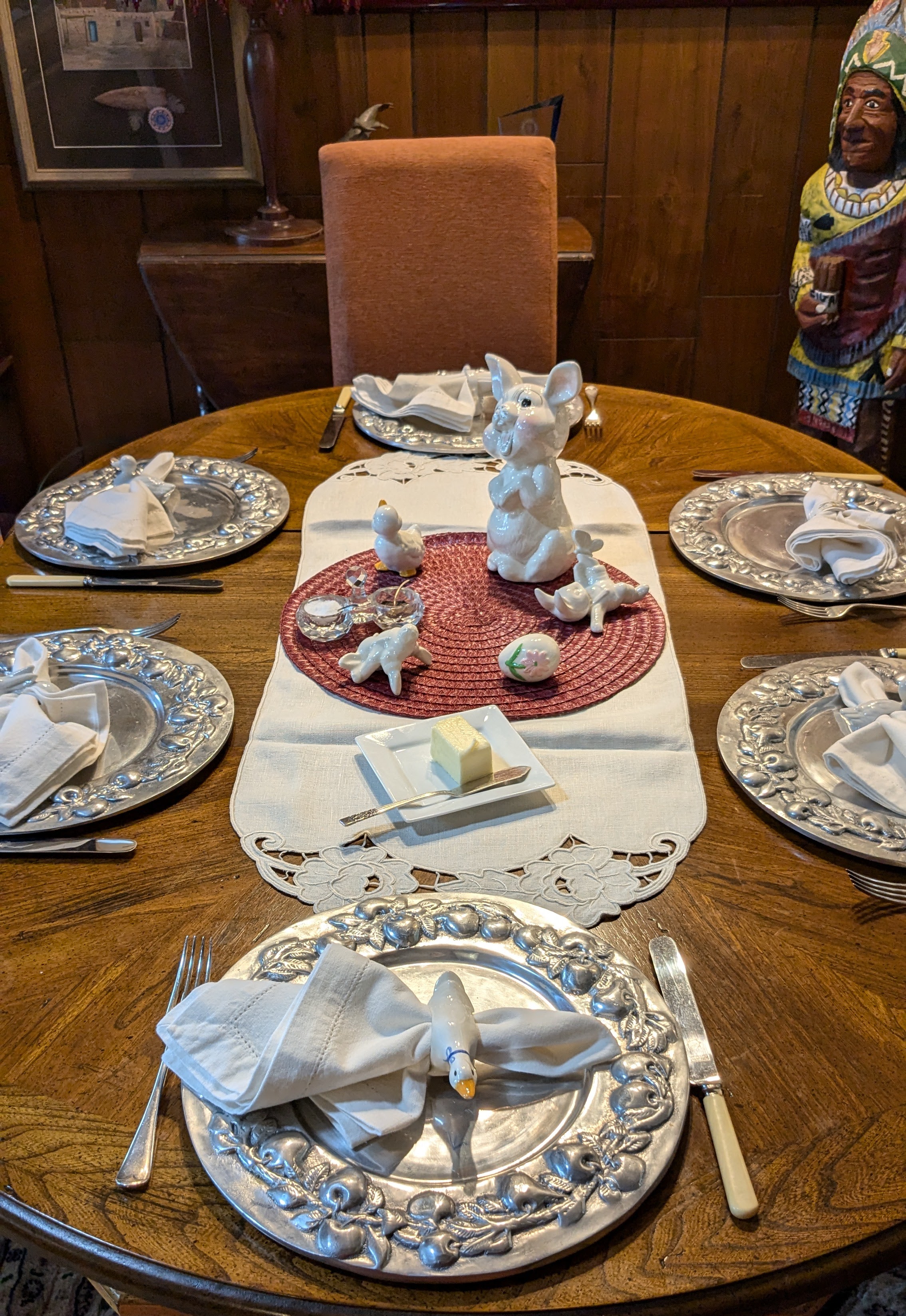
The settings, complete with bunnies and chicks, invited conversation.Our Easter tables were upscale, but also playful.
Once or twice, 12 cell phones served up a cacophony of high-pitched weather alerts along and the concerned faces of our local news station weather forecasters filled the television screen. Weather alerts continued to preempt the scheduled golf coverage on television.
As the minutes ticked by, we all remained comfortable, albeit watchful; some surveying the clouds and breathing in the fresh odor of falling rain. The assortment of appetizers continued to disappear, wine glasses were refilled, and interesting conversation flowed non-stop.
When the tornado threat was deemed to be beyond our geographic area, we drank another toast to friendship and fine food, moving to take our places at tables adorned with ceramic bunnies and white linen napkins, a casually elegant setting combined with a playful sense of humor.
We enjoyed our dinner, with a sense of camaraderie and thankfulness.
We could, at last, give thanks for the holiday celebration — and for the friendships — that are anything but ordinary. This year has already brought our state, and the entire nation, repeated weather events that have been far from ordinary. We will hope that as spring moves into summer, weather patterns calm and we can enjoy the beauty of the seasons to come.
I am apt to brake quickly when driving along the byways of this country.
I’m always on the lookout for distinctive photo ops, and I can’t resist interesting signs (especially unique place names like Toad Suck and Smackover in Arkansas,) decaying fences, old churches and cemeteries, or American flags painted on the sides of old barns and brick buildings. As my husband notes, I am sometimes a pain in the neck, but I try not to be too demanding about those stops.
Most of the time, at least.
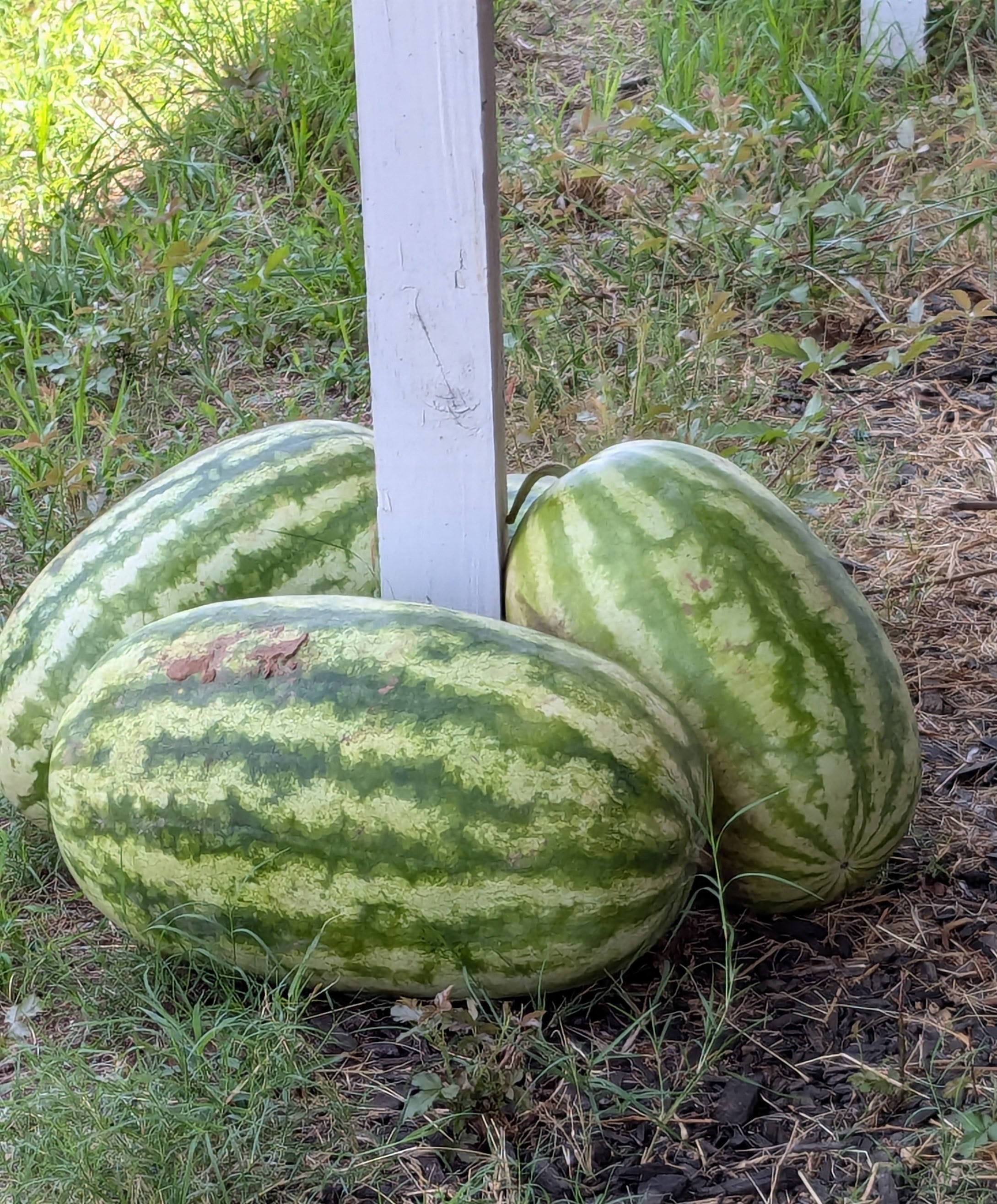
However, I also have been known to request, if not demand, a “slow down and turn around” when I spy a roadside vegetable stand or come upon a weekend farmers market. There’s something appealing about buying produce direct from the source. It’s gratifying to meet the people who grow our food. That food, whether just-ripened berries, plump tomatoes, or recently-picked apples and pears, always tastes better somehow.
At times, as I willingly admit, I can be insistent.
What’s better than cutting into a fresh peach and tasting it as its proud grower looks on approvingly? Typically, I don’t mind when the juice drips down my chin and onto my shirt! It’s all about the flavor, the freshness, and the fun.
Seasonal specialties like fresh melons and sweet corn, pumpkins and apples or the products made from a fresh harvest — pickles, preserves and jams, sauces, or homemade breads — often seem irresistible. In states where it’s possible to buy fresh pecans and freshly roasted peanuts, we brake for those too. And, occasionally, for just-picked bouquets of daffodils, tulips, or chrysanthemums.
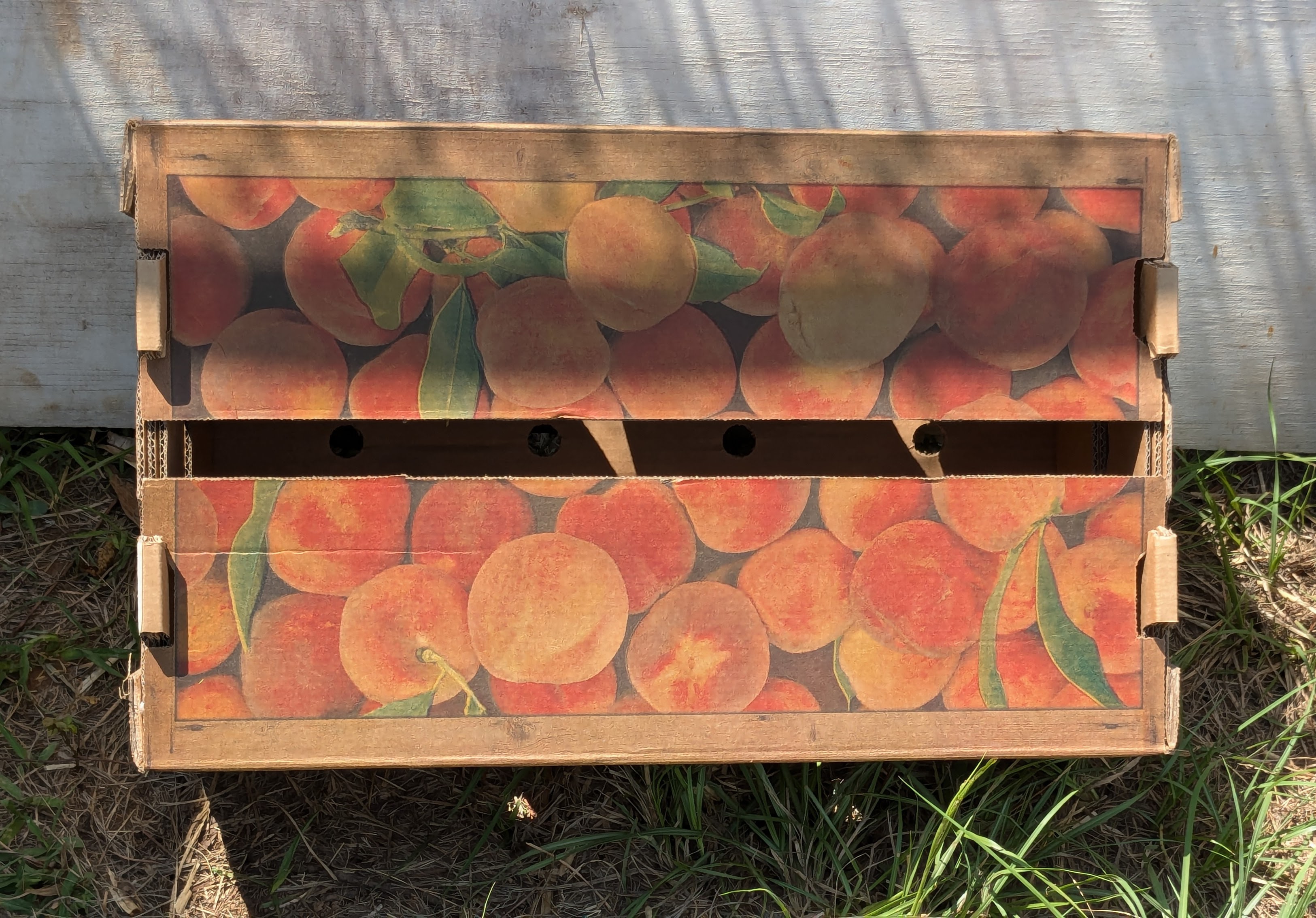
On an impromptu weekend excursion with friends the last weekend of July — destination: the 41st Annual Grape Festival in Altus, Arkansas — we happened upon a farmstand, and it was the prospect of fresh peaches that clinched our decision to stop.
Farm Stands and Festivals
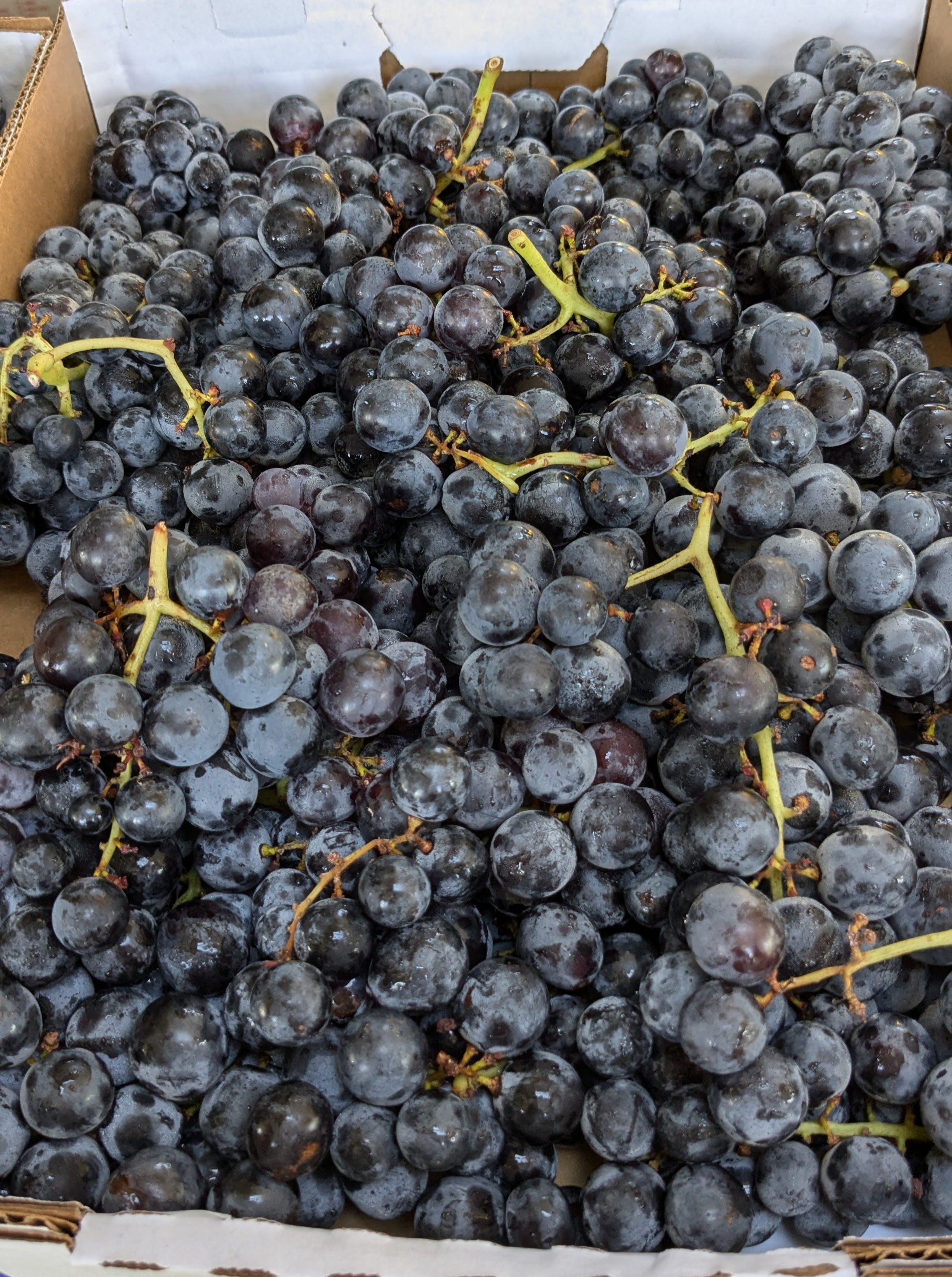
Luckily, everyone was willing, even though this became one of those turn-around-and-go-back moments. It didn’t take long. Nor did it take long to fill several plastic bags with juicy peaches, plump red tomatoes, and vine-ripened sweet grapes. We chatted a bit with the owners of the farm stand. Then, satisfied that we had made a good decision, we loaded our treasures into the back of the SUV and hastened on down the road, eager to get to the festival.
Truth be told, I’m a huge fan of quirky local festivals all across America. It helps to have a willing partner, and my husband and I have made special efforts to visit more than a few of them, including The Goat Festival in Perryville, AR, held annually on the first Saturday of October. We plan to be there again this year and have already ordered our t-shirts. Who can resist the prospect of a fashion show that features young kids in pajamas? The second weekend, on October 12, we plan to attend the 15th annual Sorghum Festival in nearby Mt. Ida, AR, sponsored by Heritage House Museum.
In Arkansas, it seems there are enough festivals and small town celebrations to keep me on the road all year long.
Following the grape festival, we planned to stop for a picnic on the way home. We opted for Paris.
Arkansas, not France.
Small Town Discoveries
The Olympic Games were slated to begin that very day in the “real” Paris across the pond. We had heard that the townspeople of Paris, Arkansas had decorated the 25-foot-tall replica Eiffel Tower that stands in the town square with iconic colored rings, symbol of the Games. It seemed only fitting that we stop there.
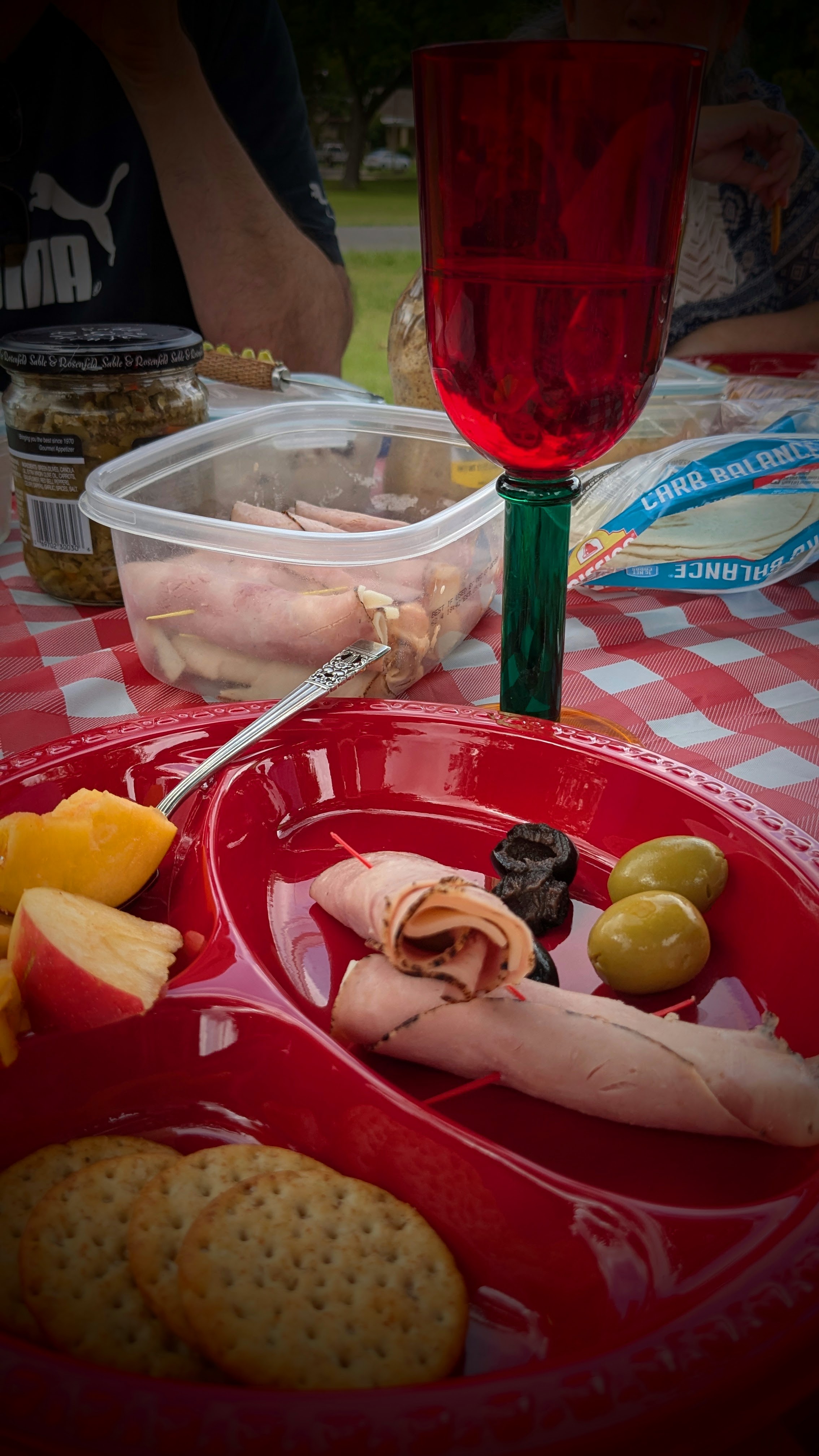
We had packed a picnic basket with bread, crackers and cheese, chicken salad, sliced ham, olives and pickles, cookies, fudge, and lemonade. And we had peaches from the farmstand, a bonus. Leaving Altus, we made a brief stop at Wiederkehr Village, which now also includes a tasting room and restaurant. Johann Andreas Wiederkehr, who arrived in the area in late 1880 from Switzerland, founded the family winery that is now the oldest continually operated winery in the state.
We planned to drink a small toast to the start of the Games. By the time we reached Paris, the air had cooled a bit and we found a picnic table in a city park. Large trees offered shade as we unpacked our picnic basket.
Small Town Delights
Traveling the back roads to Paris took us across rolling hills and along picturesque fields and pastures in this Ozark Mountain valley. It is rural, to be sure. Although I acknowledge that there are valid reasons to travel Interstate routes across the United States, country roads just seem more interesting.
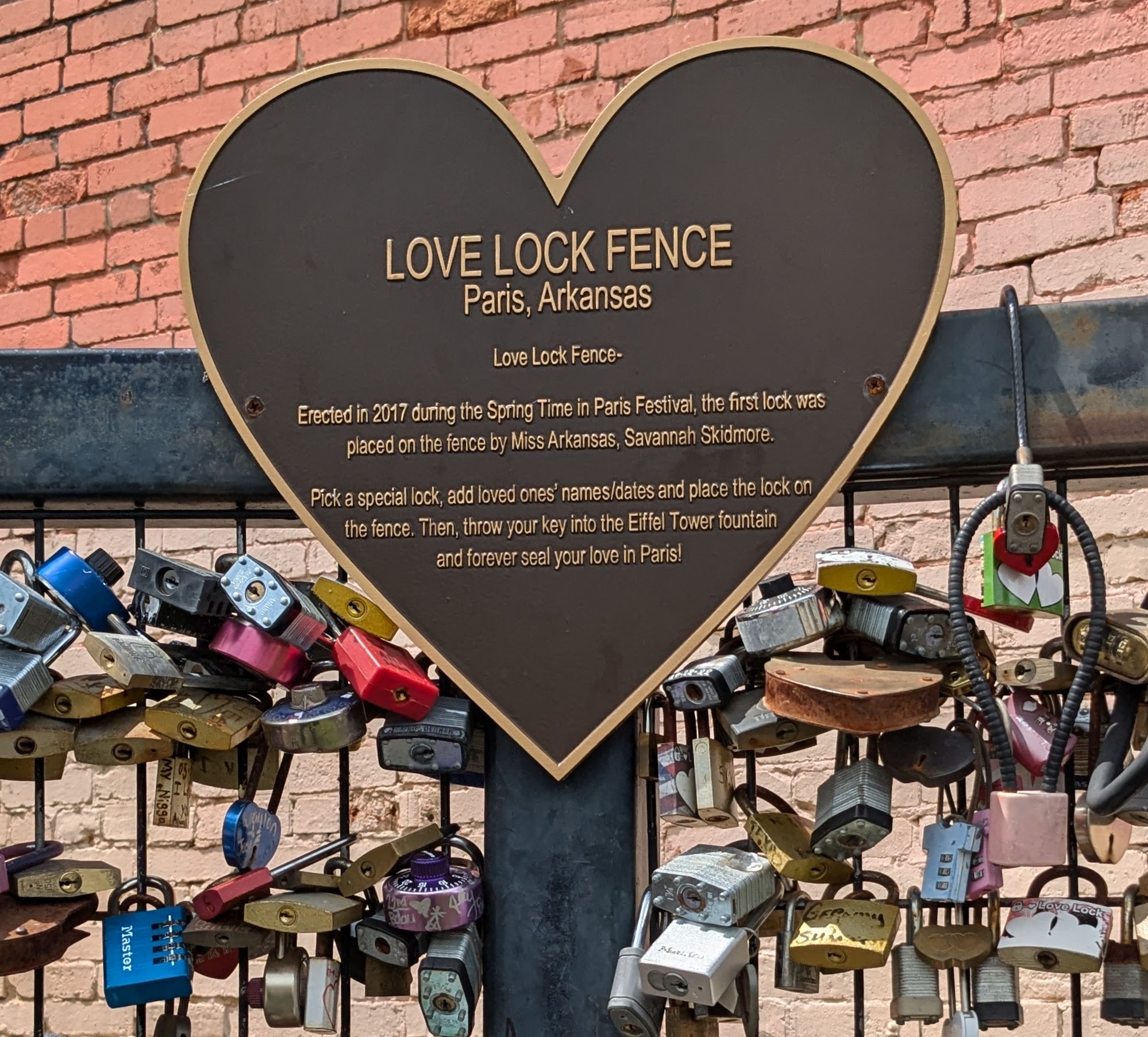
That was the certainly the case for our drive to Paris, and I now have a full handful of reasons to return. In addition to finding the Eiffel Tower, we were intrigued by the adjacent Love Lock Fence, and spent a fair amount of time reading the names and dates on the locks.
There are well-maintained public buildings, stately old homes, towering shade trees, and flowers seemingly everywhere in Paris. I savored the sight of vintage automobiles resting aside old buildings as much as the flower-filled baskets hanging from the light posts.
I longed to visit the charming shops in the downtown area, and to walk through gardens filled with colorful flowers. I vowed I would return to visit the “Old Jail” Museum, the Coal Miners Museum, a wine museum, and Subiaco Abbey, a “working” Benedictine monastery founded in 1878. The monks there produce a hot sauce known as Monk Sauce, made from Habanero Peppers grown in the Abbey gardens.
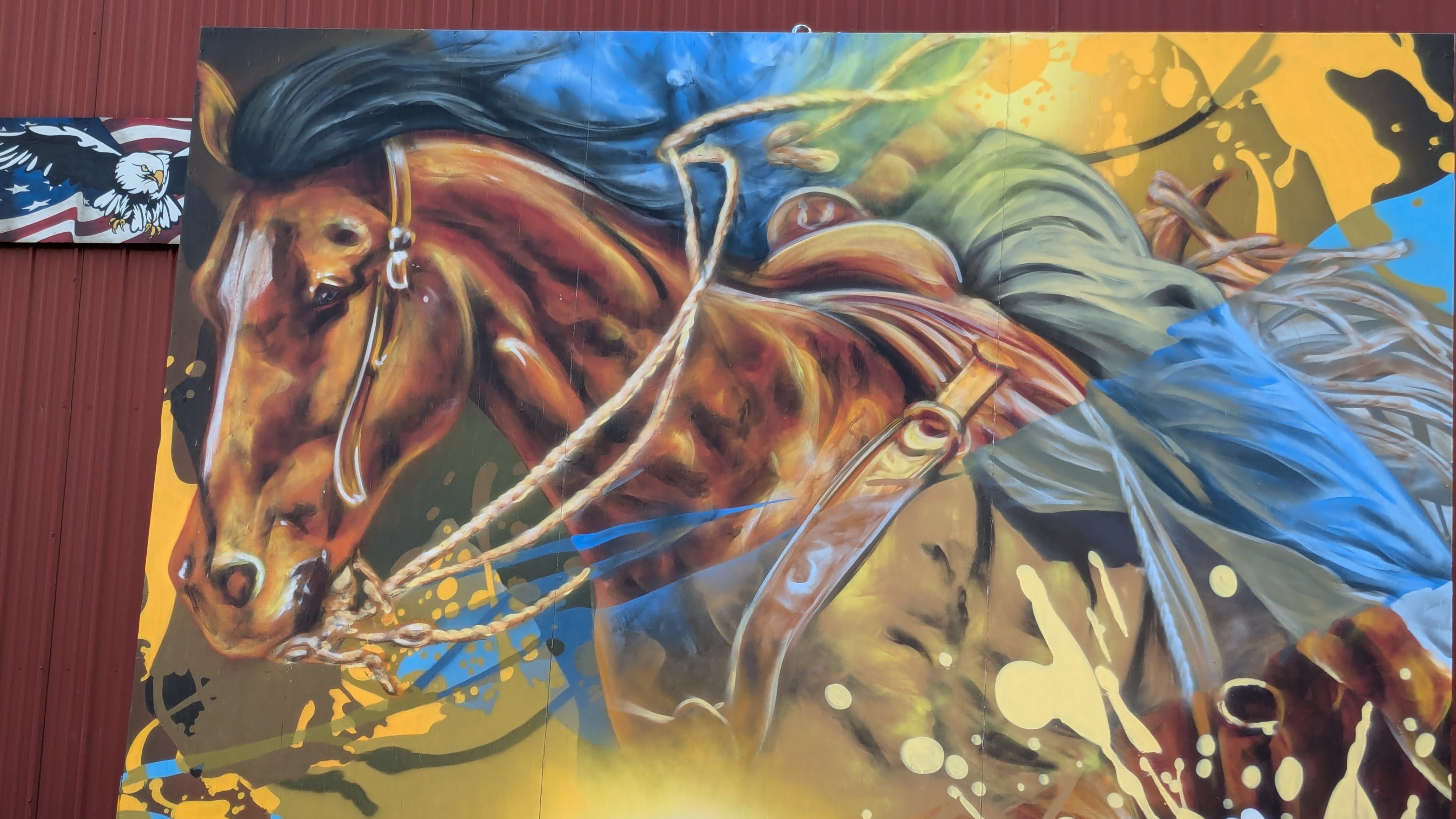
And the murals! The street art and murals in this small town are exceptionally varied and striking, as unexpected as they are enchanting.
Paris is a small town with a population just slightly over 3,200 and a distinctive history. The city was incorporated in 1879, but a settlement had been established there five years earlier. Once the heart of an agricultural area, it has also been a railroad town and a coal mining center. We had too little time to explore fully, but I would like to learn more about life there, for it seems to “live larger” and have a more intriguing story than one would expect.
I can hardly think of Galveston without — at least in the back of my mind — humming the tune that Glen Campbell sang with so much heart back in the 70s.
I was in Galveston in early May to attend the annual conference of the North American Travel Journalists Association. I definitely heard those sea winds blowing and sea waves crashing. It was a stormy time across Texas, and not really beach weather, but Galveston still offered fun, good food and drink, and plenty of things to occupy my time when I wasn’ t in a meeting or attending a special event.
We were kept quite busy, but there was still time to become reacquainted with a city that I had learned to love when my husband and I were Texas residents looking for a rejuvenating beach getaway. Then, too, my son is a graduate of Texas A&M University at Galveston; so, as parents of a Sea Aggie, we have another tie to this unique beach town.
The city has grown, but in many ways it has not changed much since the last time I visited for any reason other than to board a cruise ship. Indeed, there’s a new cruise terminal and the iconic Hotel Galvez has been completely reimagined and is now grander than ever before. A number of new restaurants are flourishing since the days we sought out cheap takeout places for fried shrimp or oyster Po’Boys. The legendary pleasure pier has been rebuilt, modernized, and expanded. Some of my favorite old haunts no longer exist, but new breweries and bars have taken their place. Another favorite bakery and coffee shop has moved, and is now Bronco Burrito. A sister of the coffee shop proprietor now offers one of the biggest, and best, burritos ever. As the old saying goes: “The more things change,” . . . you know.
Familiar, But Always Fresh
My former “must stop at” donut shop, Shipley’s on the causeway as one enters Galveston is still a tradition. And Galveston’s oversize chess board still occupies a prominent location on The Strand, always ready for a crowd of onlookers when someone suggests a match.
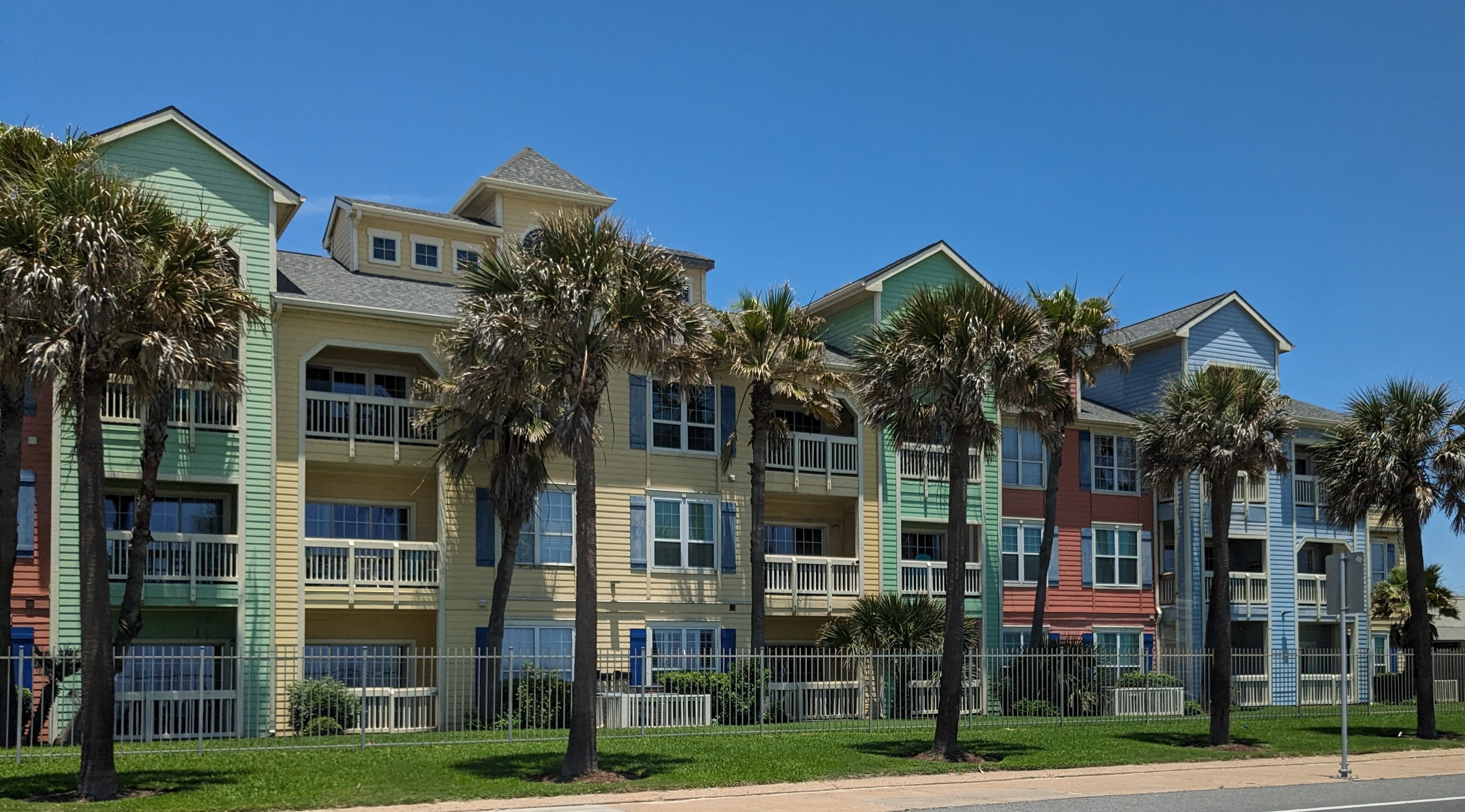
Galveston remains a beach town with a welcoming vibe, a young, active population, and a distinctive sense of its own importance. It has moved easily into the 21st Century, and is primed for future growth and development. Throngs of visitors flock to the island when the weather is good, renting beach cottages and filling the island’s hotels and motels. But on this trip I realized once again that this best-known island just south of Houston — just 27 miles long and three miles wide — has a past worth exploring. That past could fill volumes.
Cabeza de Vaca, the first European to come ashore in North America, spent seven years in Galveston beginning in 1528. That led to 300 years of Spanish colonization. Bernardo de Galvez, the viceroy of Northern Mexico and Texas, defeated the British at the Battle of Mobile Bay, and was a witness to the signing of the American Declaration of Independence.
Then came the pirates — Jean Lafitte and his brother Pierre attacked an American ship in 1822. Steven F. Austin obtained a land grant to settle 300 colonists in Texas and, in 1825, was granted permission to form a port.
These are the names of past visitors and residents who envisioned a city on this spot.
Galveston was born.
When the Texas Revolution was begun in 1836, the city was thriving, and it saw the birth of the Republic of Texas in 1846.
A Port of Renown
By the year 1850, the city was the largest port in the United States, with an export to import ratio of 20 to 1.
One of our conference speakers was J.P. Bryan who founded the Bryan Museum in Galveston in 2015. It boasts some 70,000 artifacts, from family letters (his great-great-grandmother was Steven F. Austin’s sister) to rare books, pistols, and saddles. He grew up in Freeport, and his father was president of the Texas State Historical Association.
The museum is housed in a completely refurbished once-abandoned Galveston orphanage. I was enthralled by his stories and I learned more about Galveston history and lore from him in one hour than I had gleaned during repeated past visits spanning nearly three decades.
One of the best things to do in Galveston is to learn about its history. And I learned from one of the best. As Bryan notes, “History is not boring.” In Galveston, history is around every corner.
Galveston Firsts
Once a center for immigration second only to Ellis Island, the small city was once known as the Wall Street of the West, and it boasted the first black high school, the first library, the first electric lights, the first professional baseball team, and the first medical school (It’s medical complex today, including the University of Texas Medical Center and the Shriners Children’s Hospital and Burn Center, a renowned and highly rated group of institutions.
In 1880, the city counted more millionaires than New York City, and there were more Victorian structures than anywhere else in the country. Until, that is, a 1900 hurricane devastated the city. With a death toll of 9,000 citizens, that event represents the worst disaster in U.S. history. Galveston rebuilt, but it never bounced back financially to where it was in the late 1800s. Today, there are 60 buildings included on the National Register of Historic Places. And Galveston is, once again, on the map, so to speak, and is on the way once again to becoming a force to be reckoned with.
Because it was, and is, a port city, Galveston also knew its share of shady characters, gambling and vice, and had a thriving red light district during the first part of the 20th Century. The city fell into decline from the end of World War II until the 1960s, when it began to reinvent itself once again.
Today, it looks forward to a new renaissance. Business is booming; tourism is up. Galveston has rediscovered its past and by so doing, reclaimed a vision of a prosperous future. This is what we saw during our short stay.
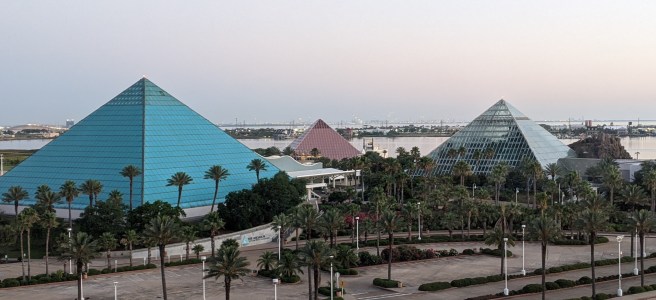
Note: Our conference was held at Moody Gardens. Watch for my future story about this amazing recreational and educational complex that includes a modern hotel and convention center as well as three dramatic pyramids that house an aquarium, a rainforest, and a Discovery pyramid that features rotating exhibits. There’s also a water park, a replica paddlewheeler, a reef rescue virtual reality experience, a ropes course and zipline, a seasonal waterpark, and 3D and 4D theaters.
Juneteenth
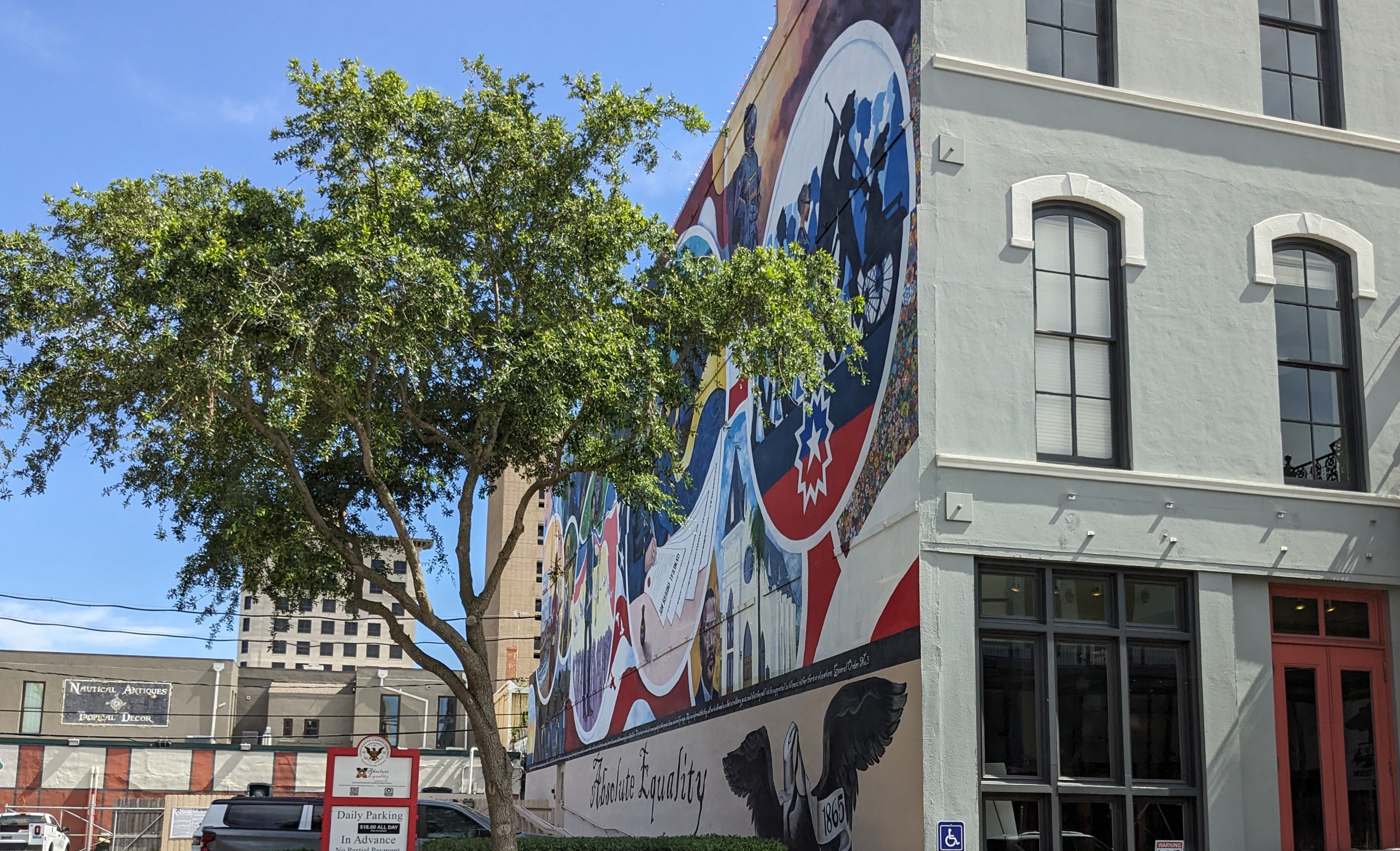
June 19th marks another bit of historical relevance for this quirky beach town. It was on June 19th, 1865, that Maj. Gen. Gordon Granger, who had fought for the Union, arrived with a force of soldiers in Galveston to deliver a very important message: The war was finally over, the Union had won, and it now had the manpower to enforce the end of slavery.
President Lincoln had signed the Emancipation Proclamation two and a half years earlier, but the word had not yet reached the Confederate state of Texas.
Today, Juneteenth is a National Holiday, and nowhere is it celebrated with more meaning than in Galveston.
The Future Is Bright
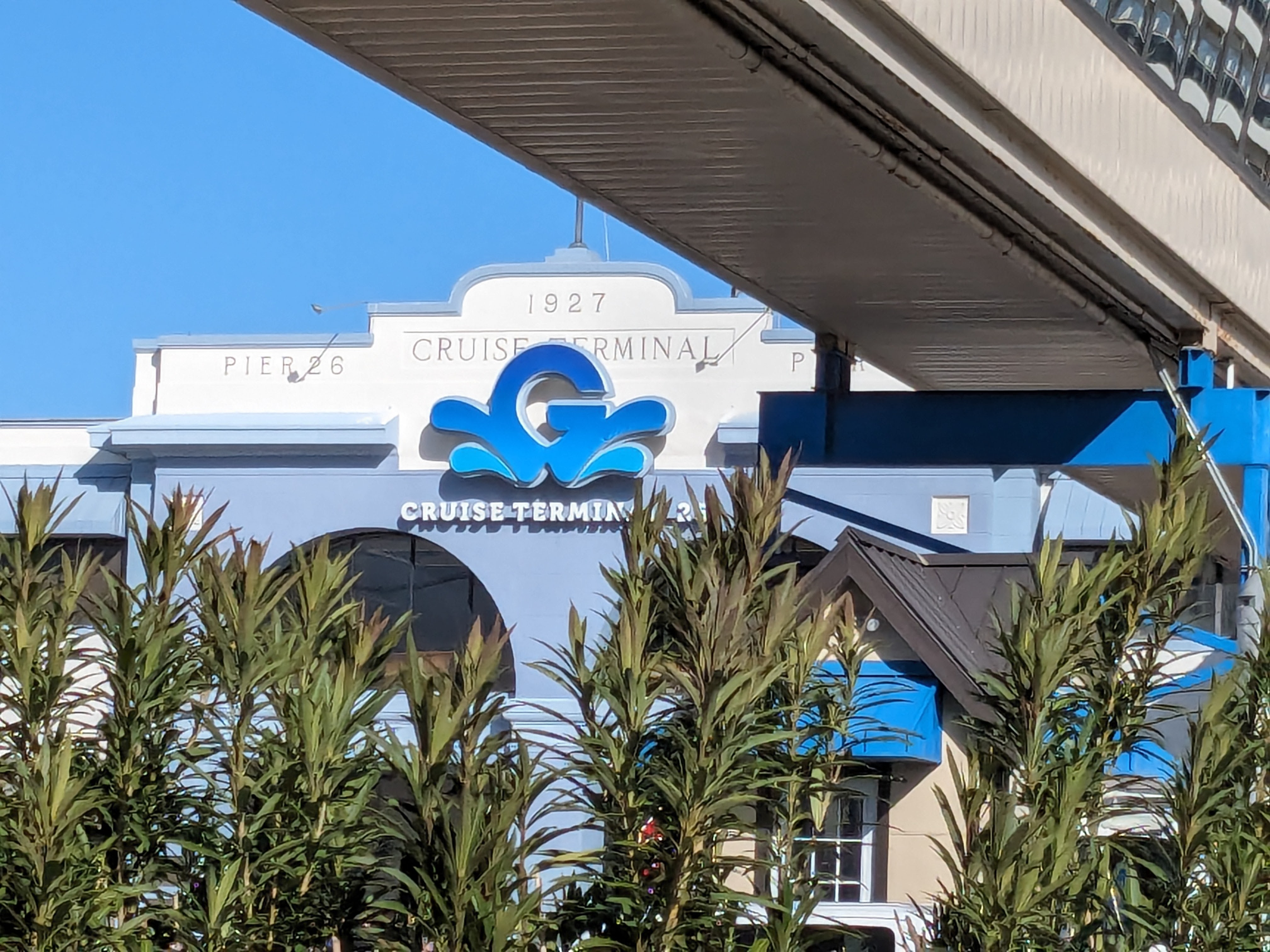
Galveston Mayor Craig Brown noted that, beginning in 2025, “every major cruise line sailing U.S. ports will be represented in Galveston,” and the city is slated to become the country’s third busiest port. A new Royal Caribbean Cruise Terminal opened in late 2022 at a cost of $125 million. It provides the utmost in passenger boarding convenience, with time from parking your car to actually boarding a cruise ship reduced to mere minutes, and it will accommodate the largest cruise ships afloat today.
Best Things to Do in Galveston
I could make a long list of things to do and places to go in this unique city, but half the fun of visiting a destination like Galveston is discovering on your own. If you travel there, just be open to new experiences, and you’re bound to enjoy your time. Seek out unusual places, talk to locals, and try new things.
Don’t Miss the Elyssa
Visitors may also tour an 1877 sailing ship, the Elyssa, that occupies a permanent slip at the Galveston historic seaport, amidst the seafood restaurants and wholesale fish markets. Take a tour of the restored vessel, or schedule a harbor tour. It’s quite an experience. Sightseeing tours of the port are also available that take passengers to the tip of the island, where free ferries operated by the Texas Department of Transportation run 24-hours a day to connect Galveston with the Boliver Peninsula, just just a few minutes away.
Adjacent to the Elyssa’s dock, you can become an immigrant. It’s a fascinating journey to “adopt” a persona and make your way through the immigration procedures at the Port of Galveston during that part of its history.
Ride the Ferry
A free ferry connects the Bolivar Peninsula southwest of Beaumont with Galveston Island. Officials have debated the pros and cons of building a bridge there since the 1930s. So far, it has not been done.
The trip spans less than three miles, and takes 18 to 20 minutes. During peak times, wait times can be long, sometimes an hour or more. There are no priority passes, but the ferry service operates around the clock. There are six ferries in the fleet, and during peak traffic times, all may operate as necessary. In the year 2000, the ferry system transported 6.6 million people. Each vessel can transport up to 70 vehicles, and 500 people.
The Pleasure Pier
In 1906, only a few years after the earthquake, Galveston’s original Electric Park that was to become known as the Coney Island of the South opened on a pier jutting out into the bay. A special excursion train at the time connected Houston to the pier, and crowds thronged to enjoy the moving picture shows, a ferris wheel and roller coaster, vaudeville shows and penny arcade, all lit by 6,000 electric lights.
In 1943, the Pleasure Pier was opened for the benefit of servicemen and military families during World War II. Following the war and throughout the 50s, more rides, games, and attractions were added, including a ballroom and outdoor theater for movies under the stars. Then, in 1961, another hurricane damaged much of the pier, and the Flagship Hotel, built over the water, fell into disrepair. Then, in 2008, Hurricane Ike roared through and the tourist industry in Galveston was hard hit until an investor in the person of Galveston native and Landry Corporation proprietor, took a chance and rebuilt the historic entertainment pier.
It opened in 2012, bigger and better than ever before. It is now a “must see, must visit” attraction in Galveston, with something for every visitor from nine to 90. Don’t miss it, if only to watch other people enjoying themselves.
Tour the Railroad Museum
The toy train at Galveston’s Railroad Museum made me feel like a child again!
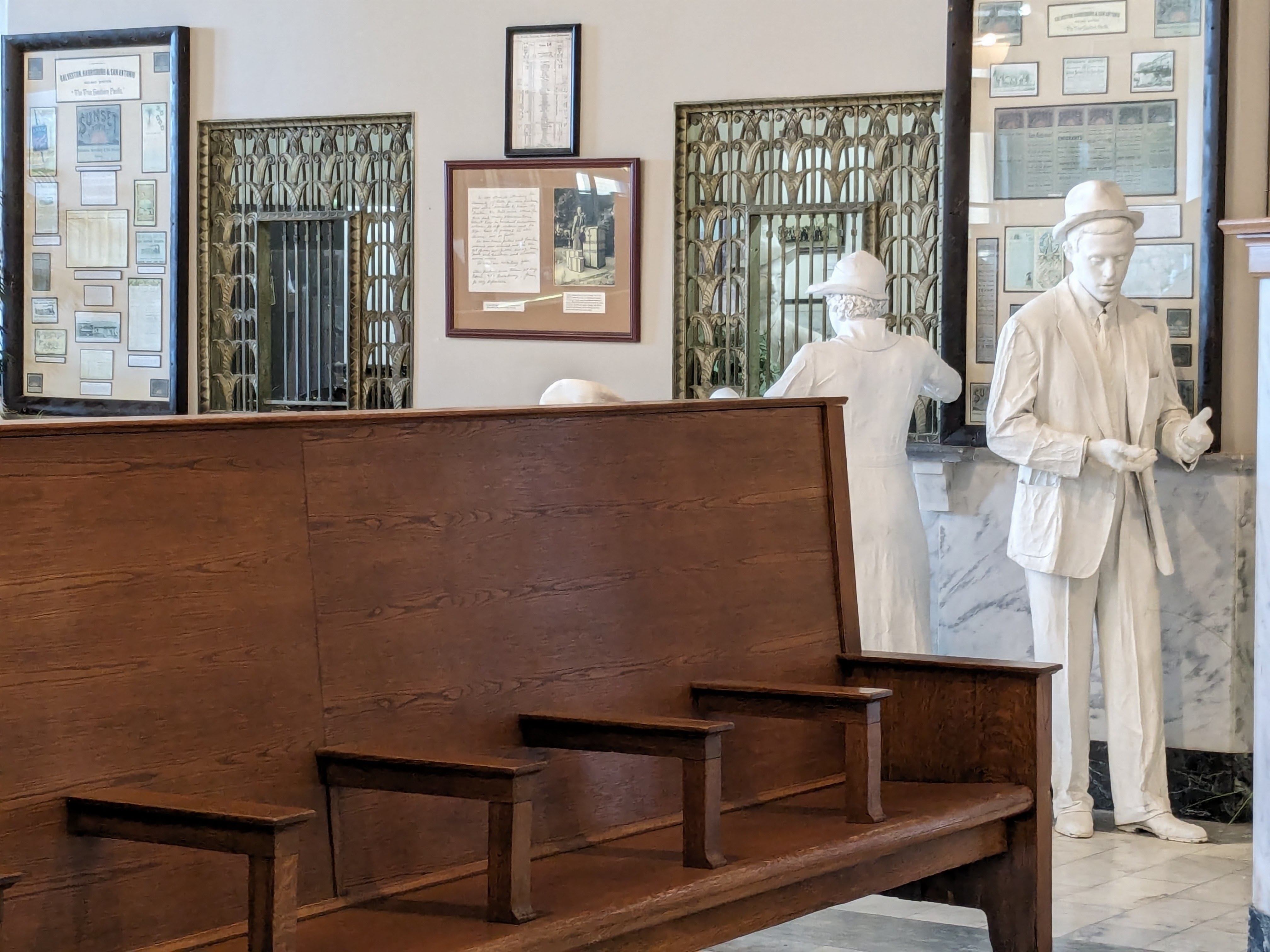
The former Galveston Railroad Station has been reimagined as a museum, complete with original benches, clocks, ticket counters, a bank of pay telephone booths, and a variety of vintage rail cars and engines looking as if they’re fit to leave the station at a moment’s notice. For any railroad buff, it’s a must see — for its architecture and his historical significance. One can almost hear the “All aboard” cry as you open a door that leads to the tracks.
Other displays in the station are captivating as well — especially the stories of children who rode the rails from the east coast to the Midwest and Texas aboard Orphan Trains. Its a history that deserves telling, but one that has not been told completely or enough.
Plan Some Beach Time
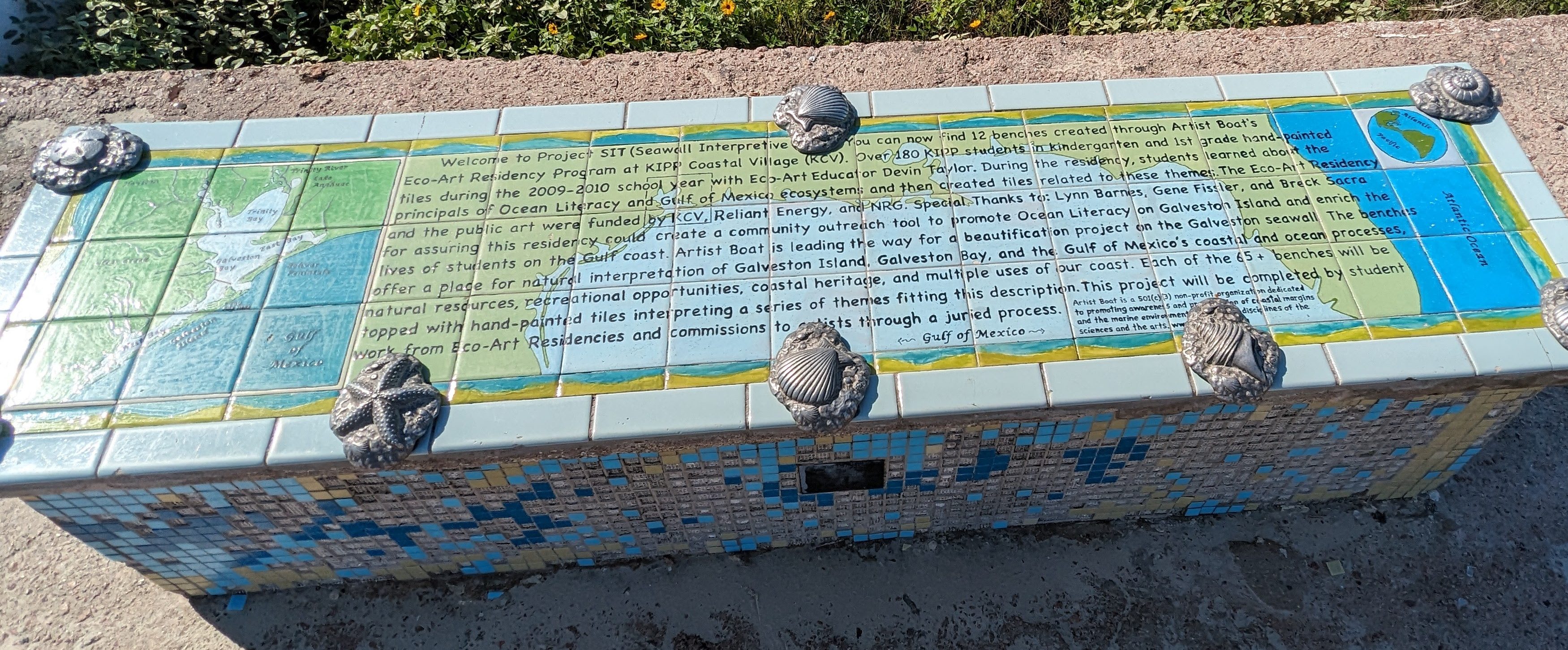
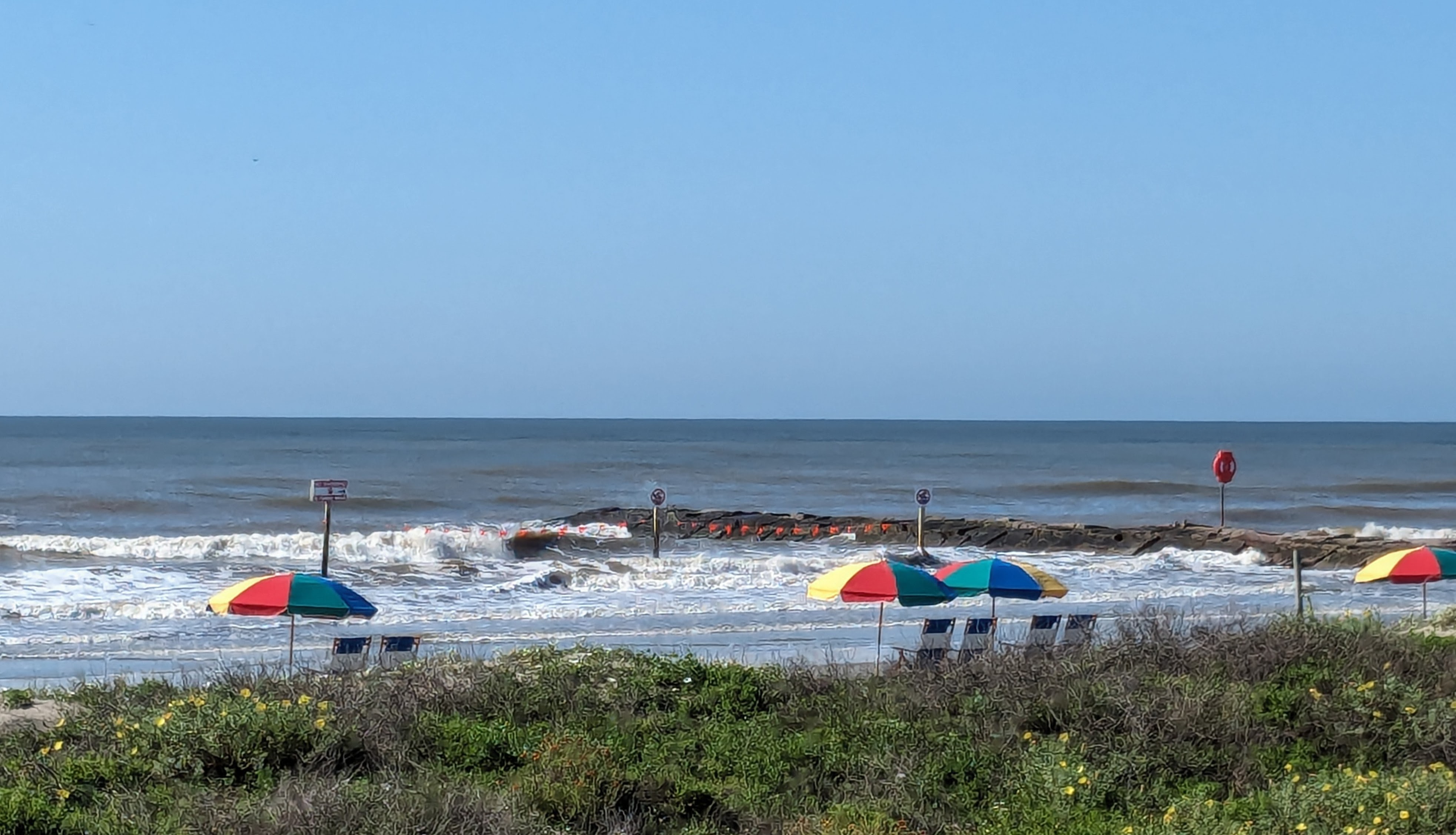
Walk along the Sea Wall and gaze out at the Gulf or take your shoes off and stroll the beach. Spread a towel or a blanket, and have a beach picnic. Stretch out and savor the sun, build a sand castle, or leave the beach for some fun at the historic Pleasure Pier! Galveston has done a marvelous job with its 32 miles of beaches — some areas are now equipped with “paved” paths designed to allow beach access for mobility-challenged beach-goers and visitors in wheelchairs. The city, at the forefront of such user-friendly features, has also installed rest rooms and changing areas with easy beach access. Note: Many Galveston trolleys are also equipped with ramps for mobility-impaired passengers.
Galveston boasts a tidal estuary that has national significance because it has not yet been greatly affected by human activity. It is estimated that 75 percent of the bird species in North America spend some time in the local bay, and it is filled with both finfish and blue crab, bordered by coastal plains and marshes. If this is “your thing,” get out and enjoy it.
Go kayaking, rent a canoe, take a nature hike, or simply gaze at and be amazed by the nature that surrounds you.
Seawolf Park
At the very tip of Pelican Island, accessible by a single bridge from the city of Galveston, Seawolf Park boasts the most popular fishing piers in the area, along with picnic tables and a children’s playground. Pelican Island is also home to the Galveston campus of Texas A&M University, with degree programs in marine sciences, marine fisheries, marine biology, maritime engineering and ocean engineering, computer science, maritime transportation and maritime business administration. It also offers an interdisciplinary program in maritime studies, and is home to the Gulf Coast’s only Maritime Academy that offers a licensing program for students who wish to pursue maritime careers.
Seawolf Park currently houses the Galveston Naval Museum that allows visitors to tour both a WWII-vintage submarine and destroyer, and greenspace with a submarine exhibit. Galveston is also the probable new home for the Battleship Texas, currently undergoing repairs and refurbishment in drydock. It has been reported that this sole surviving U.S. battleship that served in both world wars will at some point in the future find its new home at Pier 21 in Galveston.
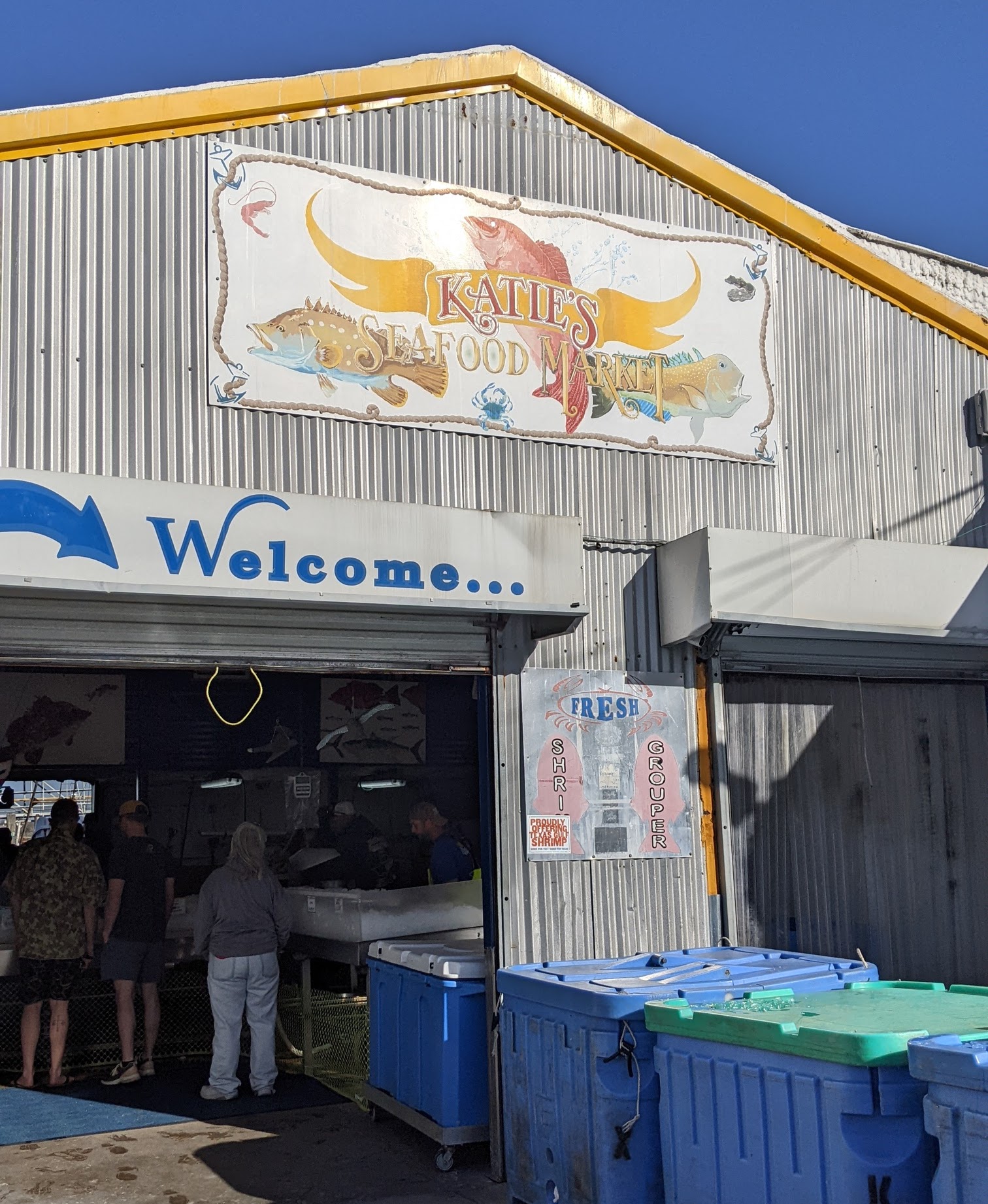
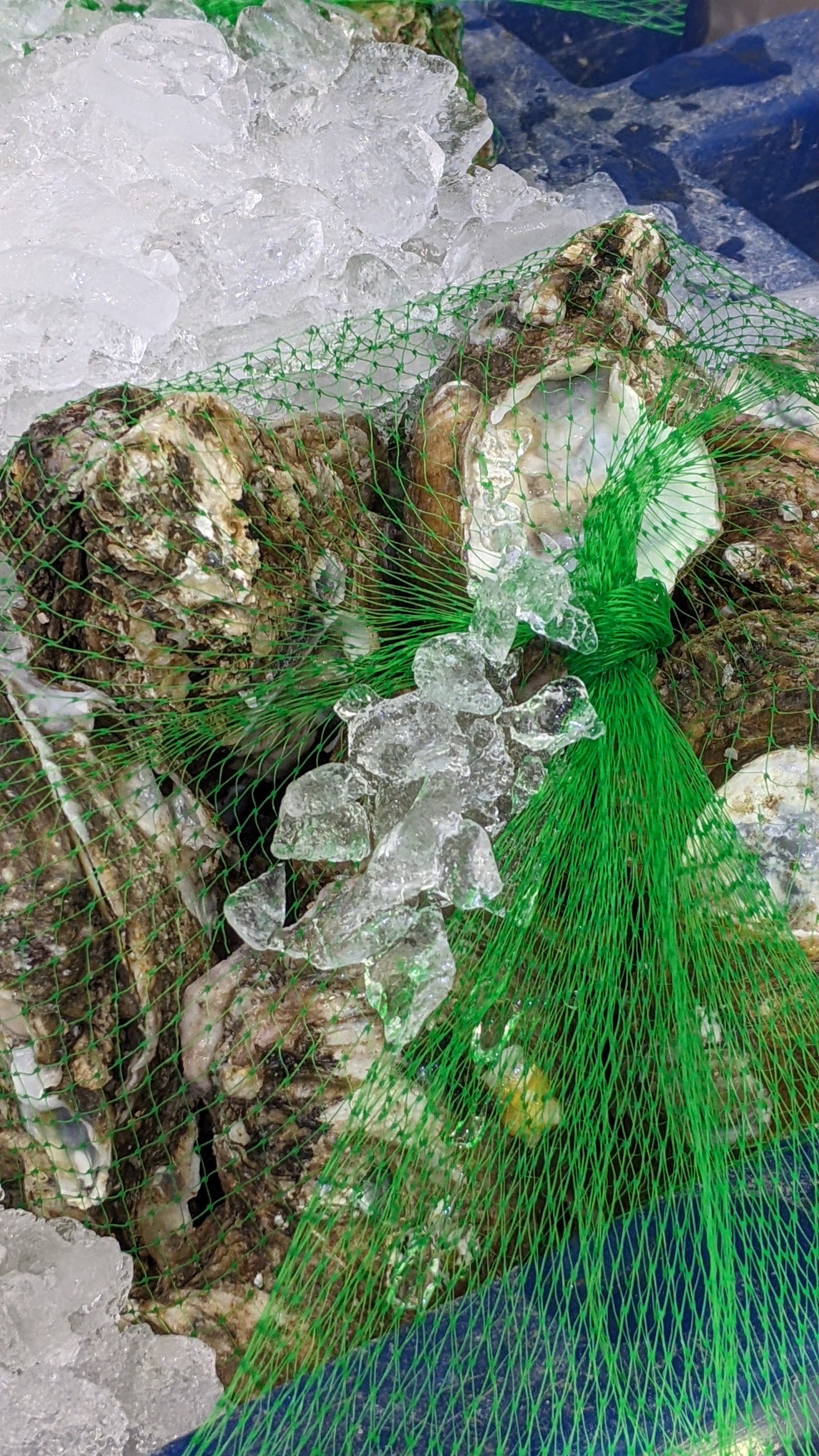
Visit a Fish Market
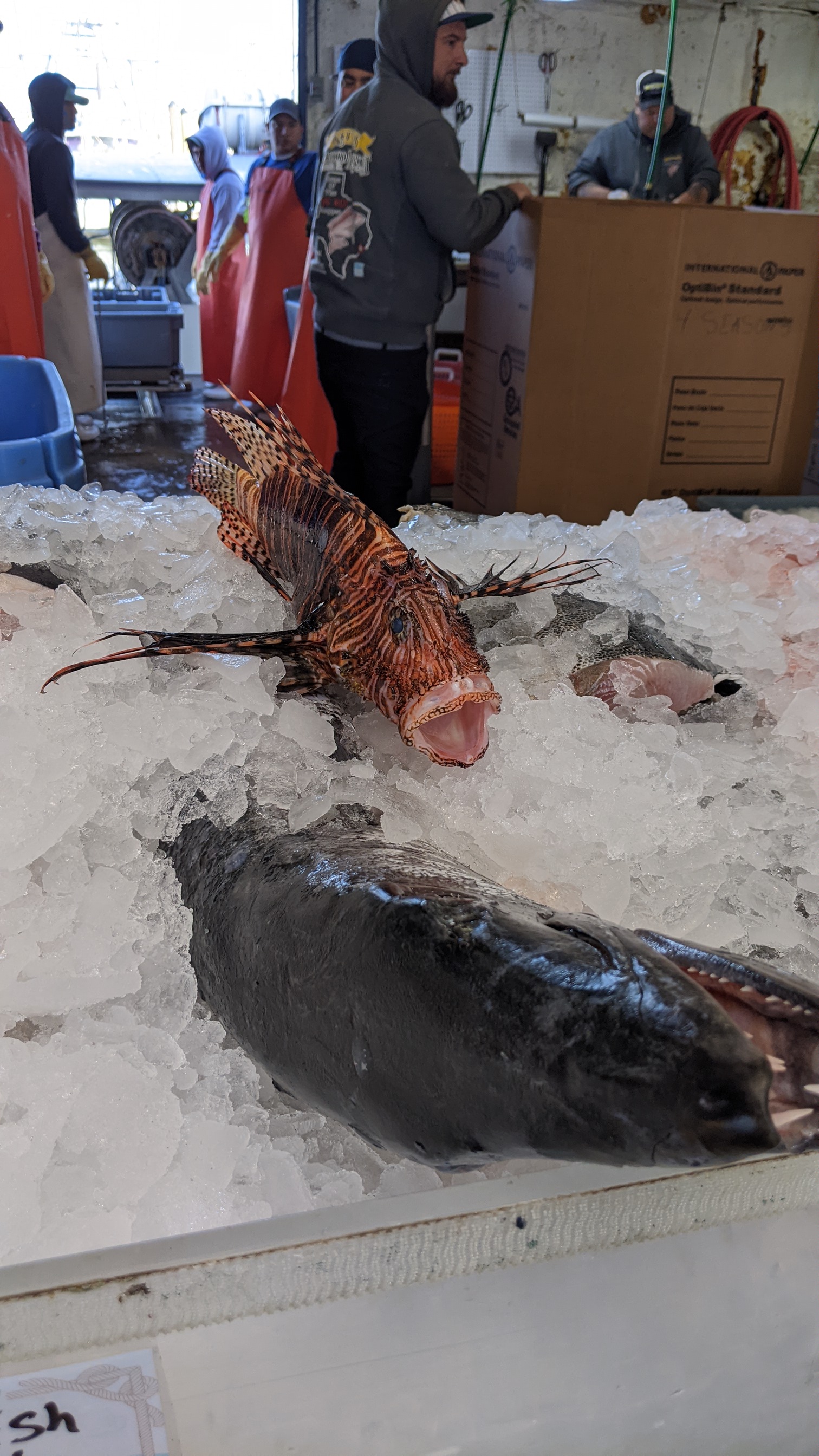
Seeing the wide variety of the catch fresh off the fishing boats is an experience not to be missed when you’re in Galveston. Of course, you can order from a local restaurant menu and you’re likely to get fish that’s just as fresh, but there’s something about seeing fish arrayed in deep tubs of ice that cannot be matched.
A large part of the fun is watching the pelicans who are hoping beyond hope for a handout from the fishmongers. Sometimes they get that gift, and that’s a real show!
Food and Drink
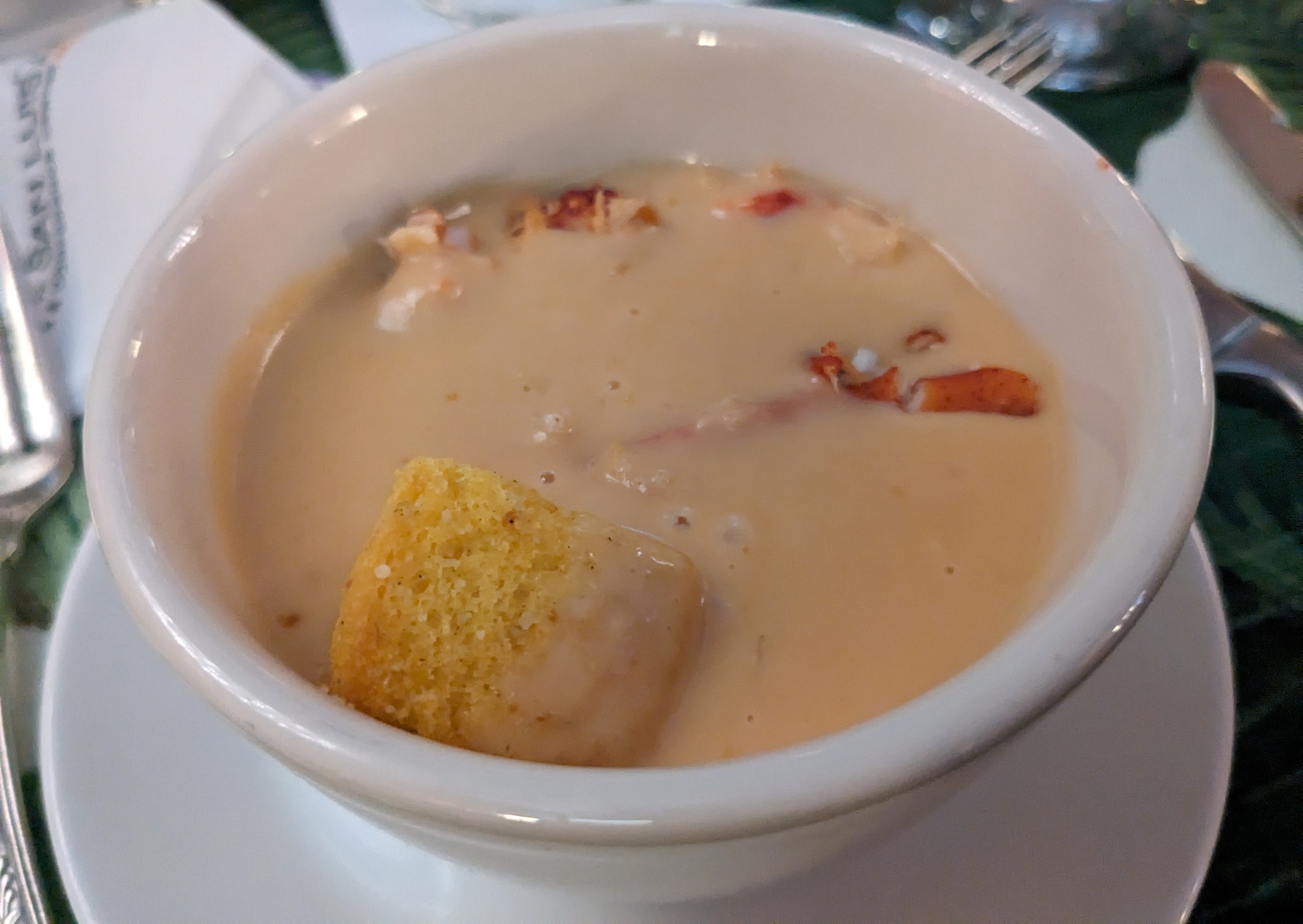
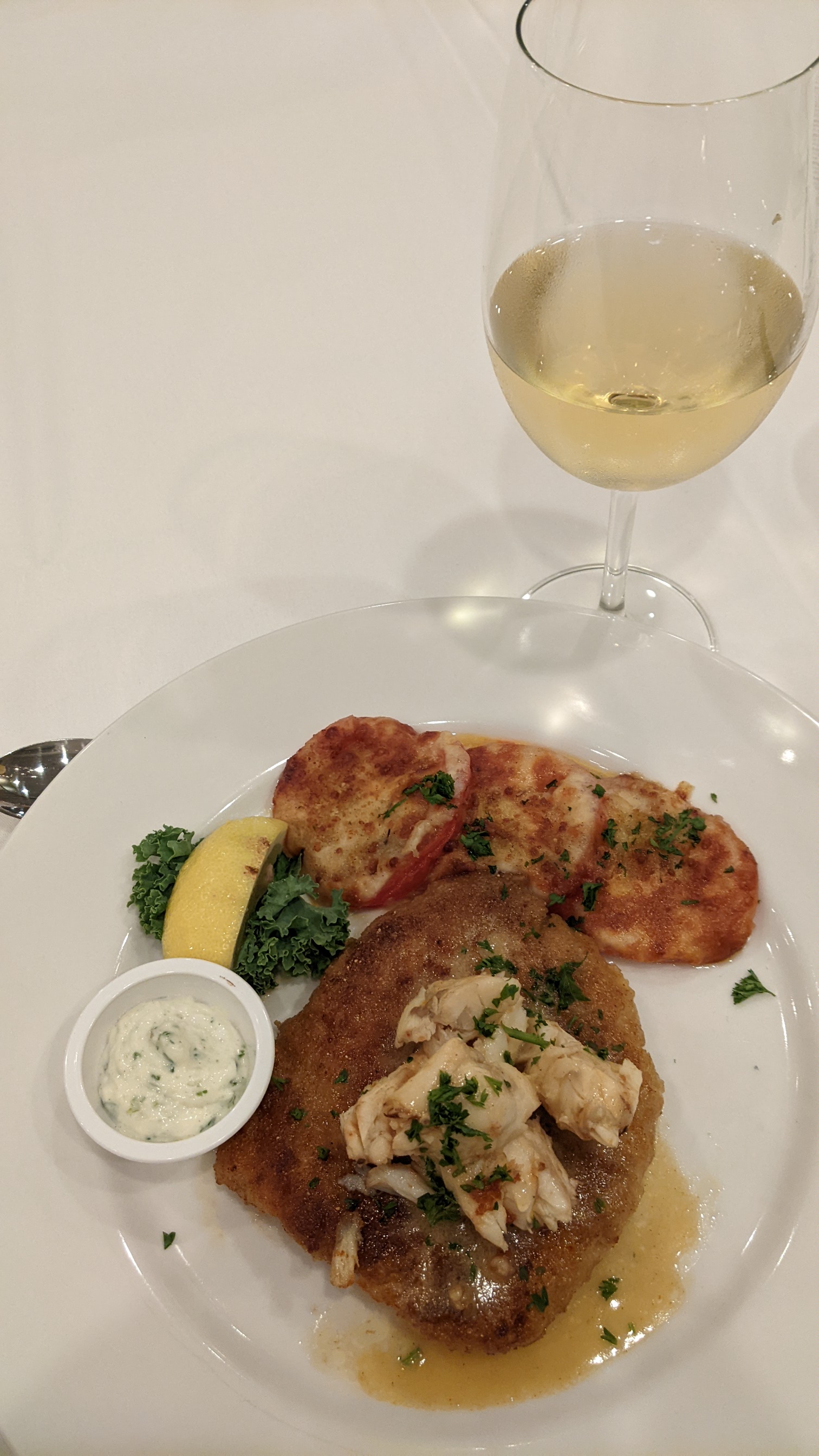
As in any popular vacation area, there a bars, breweries, dives and fine restaurants galore. I’ll just post some pictures of the food and drink I enjoyed in Galveston. You can bet I had my fill of fresh fish and seafood.
Go and discover for yourself all there is to eat and drink in this popular beach community, from Gaido’s on Seawall Blvd., with a 100-year-history of fine dining, to the rooftop bar at Hotel Lucine, a revamped 50s-era motel, to matchless Italian cuisine at Riondo’s Ristorante, in a historic building in the Strand district, to casual walk-up bars and food trucks. Search out your own favorites, and know that the seafood is fresh, the beer will be cold, the margaritas mixed to your liking, with entertainment and music to suit your taste.
Other Reasons to Visit Galveston
Galveston is an island, of course. But it is also the gateway to a string of beach communities in South Texas. Thousands of people head to those beaches every year for short vacation getaways, for the entire winter season, for fishing expeditions, and for business. Gulf Coast cities, including Port Lavaca, Port Aransas, and Corpus Christi, the coastal barrier islands south of Galveston, and the long expanse of Padre Island’s National Seashore, are popular destinations.
Residents of Houston, one of the country’s largest urban areas, routinely “escape” to Galveston for a day at the beach or a romantic dinner by the sea. Once you’ve experienced all that Galveston offers, it’s hard to get it out of your mind. You might never be the same again.
My husband and I chose to celebrate our late January anniversary this year aboard ship. Our itinerary, sailing from Galveston, was to ports we had previously visited, but we were eager to warm our bodies and refresh our spirits during a brief seven-day getaway.
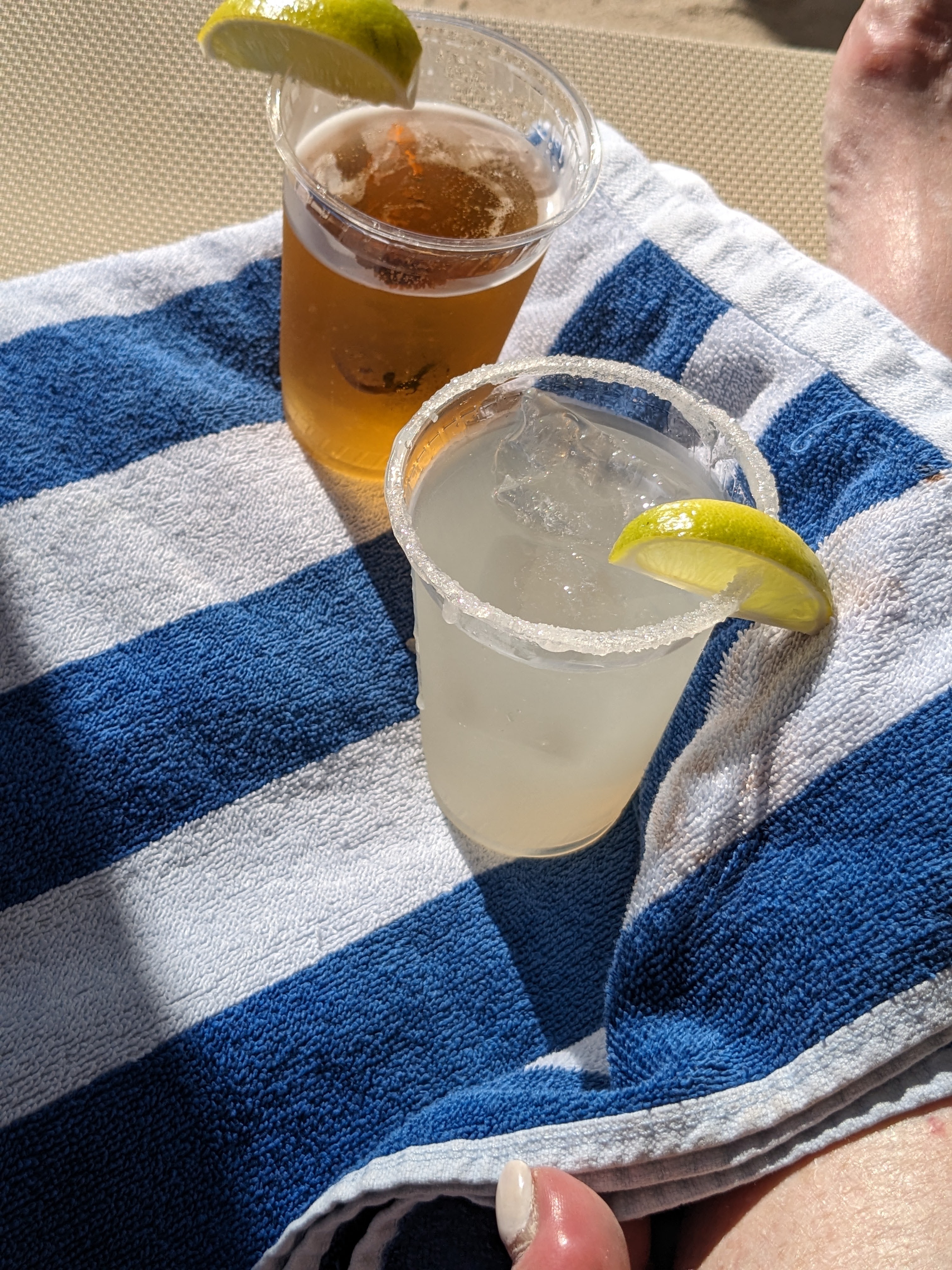
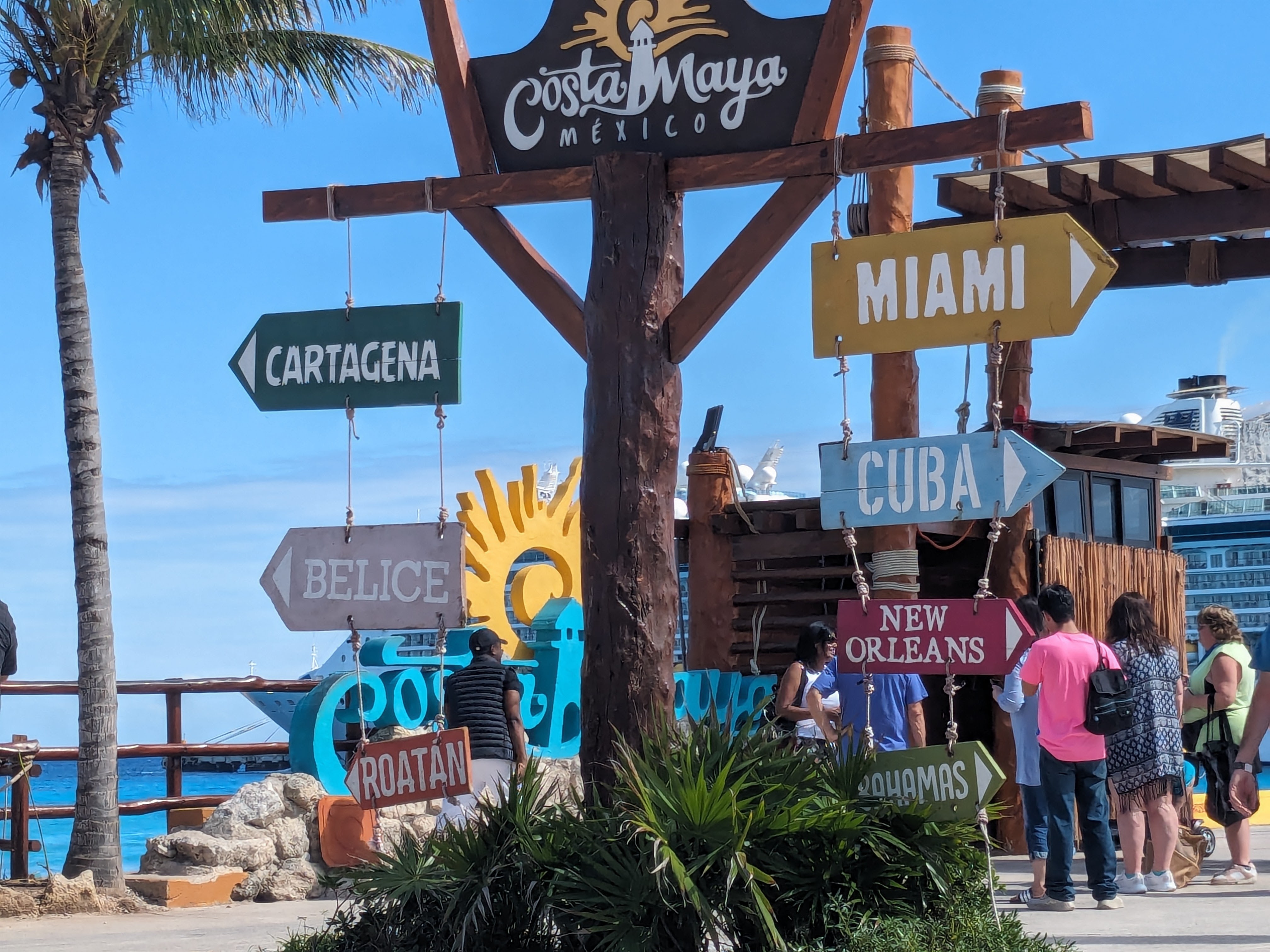
On this voyage, we enjoyed beach time, beach cocktails, and beach vendors in Costa Maya, the first port we visited in the Gulf of Mexico. It was a perfect day, and it fulfilled our need to dip our toes in the water and feel the sand beneath our feet. We spent our hours ashore doing exactly that. We snagged comfortable loungers, enjoyed a few cool libations, and watched people having fun. That was our brand of enjoyment — doing nothing other than enjoying the people around us, and savoring every moment of sun and warmth. I even succumbed to the temptation of a henna tatoo!
Then, we returned to our floating resort hotel for dinner and evening entertainment.
Tabasco: How Hot Is It?
Earlier, in October 2023, I toured the Tabasco plant, home of the world’s best-known hot sauce. The history of The McIlhenny Company which produces the Tabasco brand is fascinating. Still a family-owned business after more than 150 years, the company ships its products from a small factory on tiny Avery Island, Louisiana to 195 countries worldwide.
Cozumel was the final port of our seven-day itinerary. There, I once again encountered Tabasco, this time in the form of a culinary adventure I couldn’t resist.
I had booked the “Chef Maestro Tabasco” excursion, a culinary adventure I couldn’t resist, through Princess. Following my visit to Avery Island, the “home” of Tabasco, I was eager to learn more about cooking with the hot sauce.
This excursion did not disappoint!
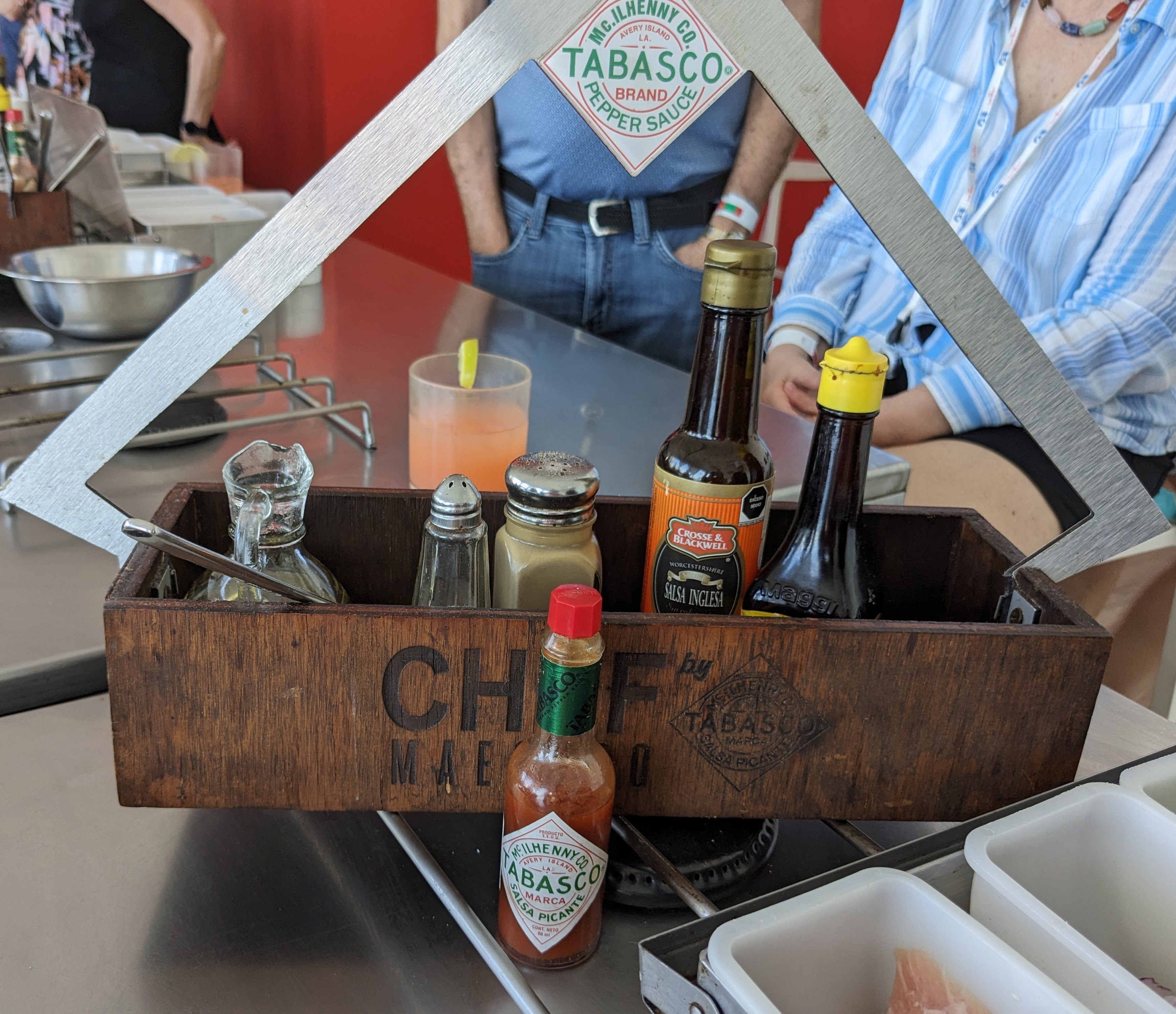
That little bottle of red pepper sauce has been a staple in my kitchen for many years, but I have seldom used Tabasco for food preparation in my home. Instead, I have typically placed it on the table at casual gatherings, allowing guests to ramp up the “hot” to their own preferences. We were somewhat surprised that on this Gulf of Mexico sailing, there was also a bottle of Tabasco on each dining table, along with the salt and pepper shakers!
During my Louisiana trip, I was able to sample food specialties associated with Cajun history, culture, and tradition. I learned how the flavors of simple foods are enhanced by various herbs, spices, peppers, and sauces. I learned that hot sauce can be flavorful as well as fiery, and that spice can elevate common ingredients to levels of haute cuisine.
Feasting on Entertainment
I also realized that the hot red peppers used to create Tabasco sauce had most likely been brought back to Texas and Louisiana by soldiers who fought on the nearby Mexican mainland during the Mexican-American war. Cozumel is not far from the Mexican state of Tabasco.
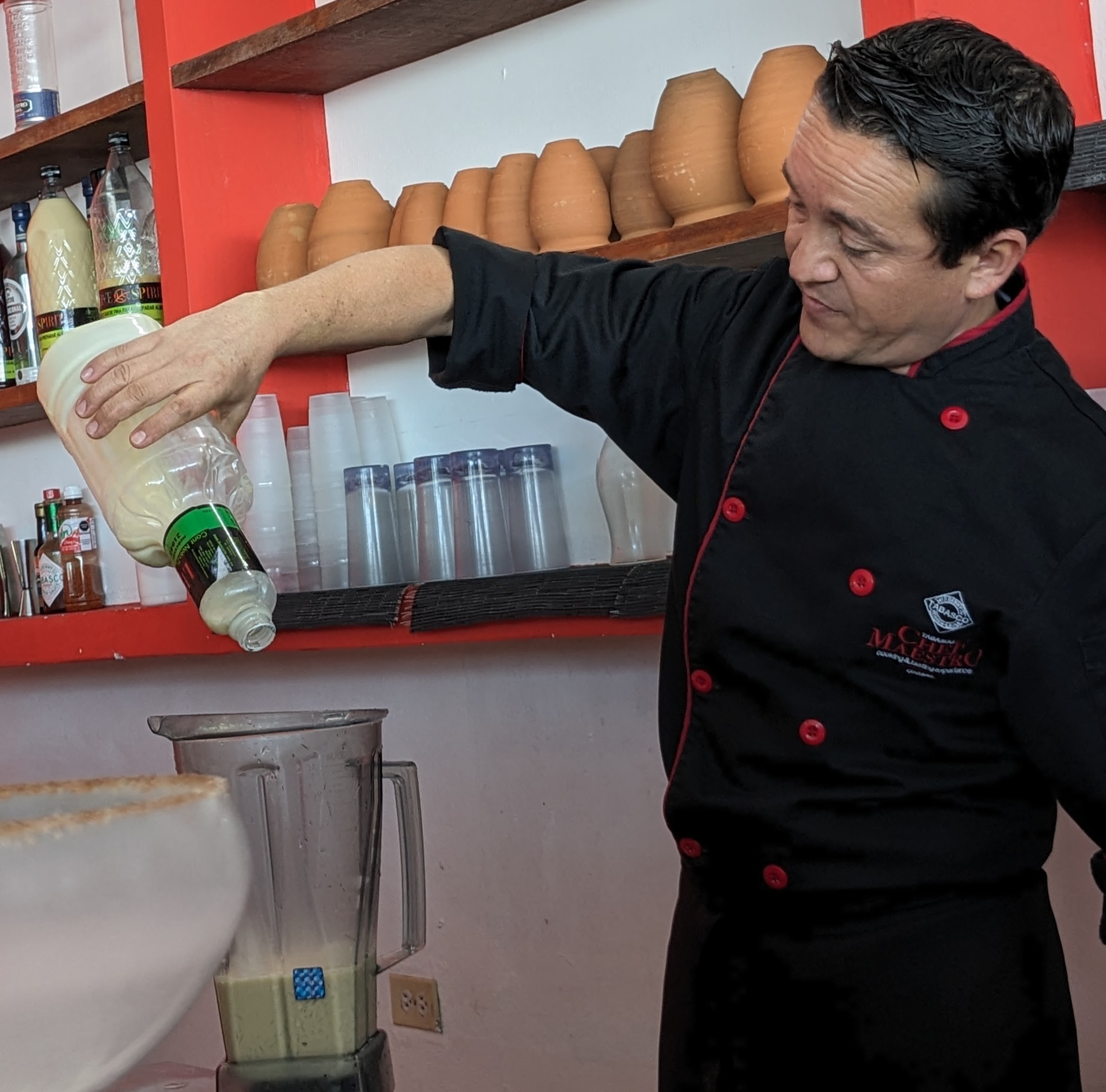
As it turned out, this cooking excursion was one of the highlights of the voyage, both for the foodie experience and for the pure fun of it. Who would pass up a culinary adventure that includes Margaritas as well as tips for cooking with Tabasco?
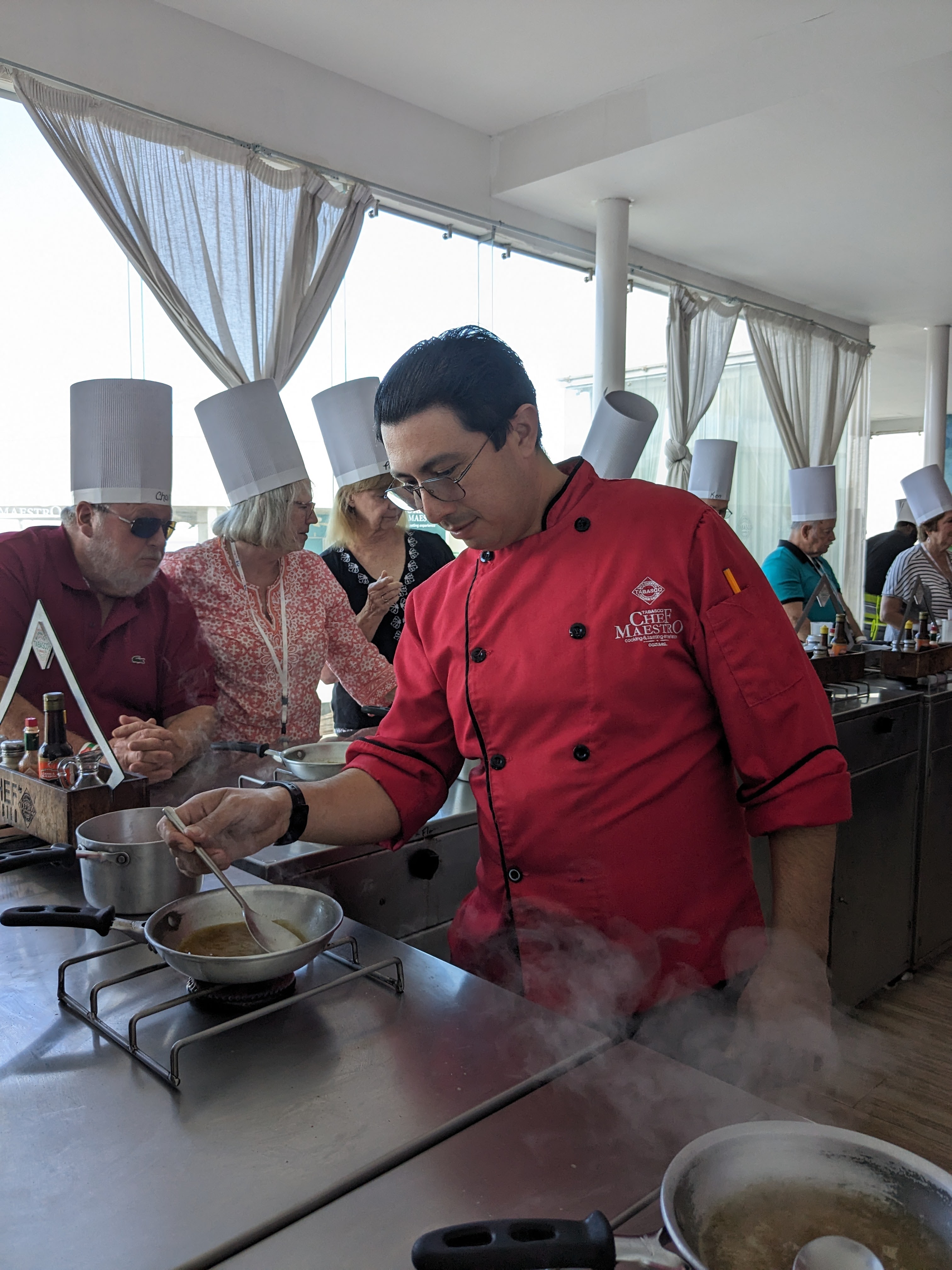
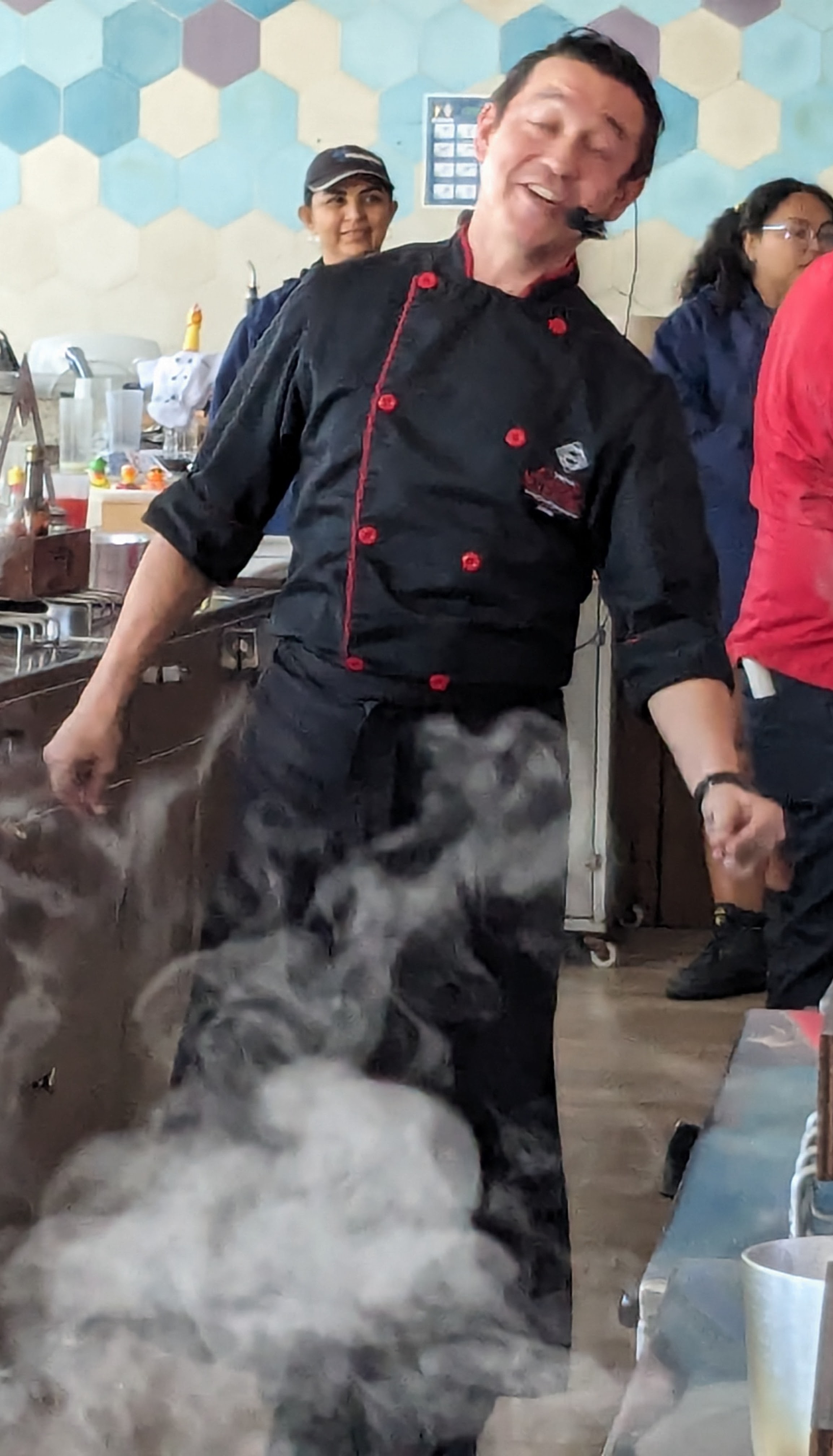
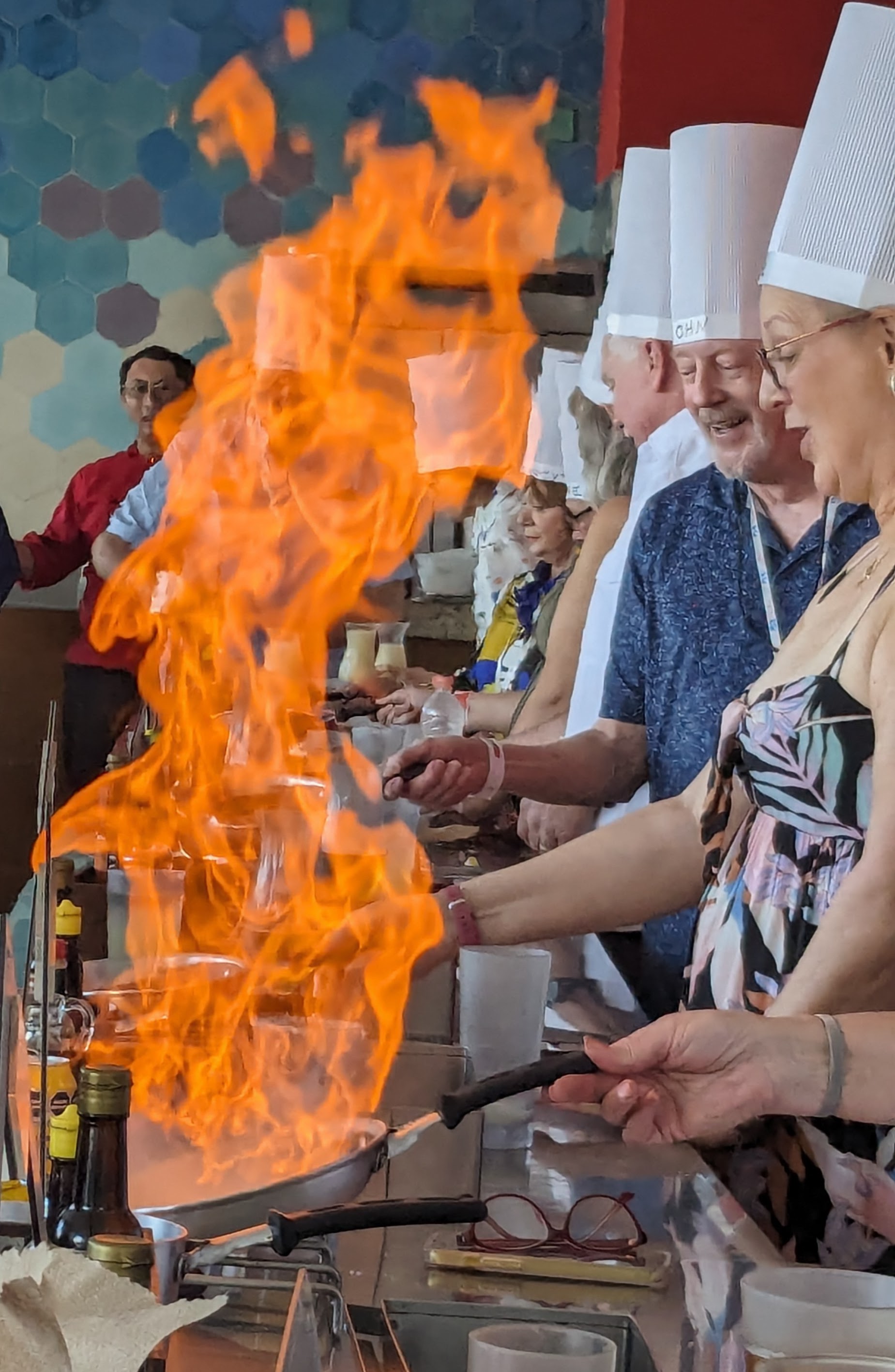
We were entertained from the time we entered the second-floor demonstration kitchen at Cozumel’s Hotel Blu until the moment we were ushered into a waiting cab for our return trip to the pier. At the outset, we donned tall, white, pleated-paper chef’s hats as we awaited further instructions.
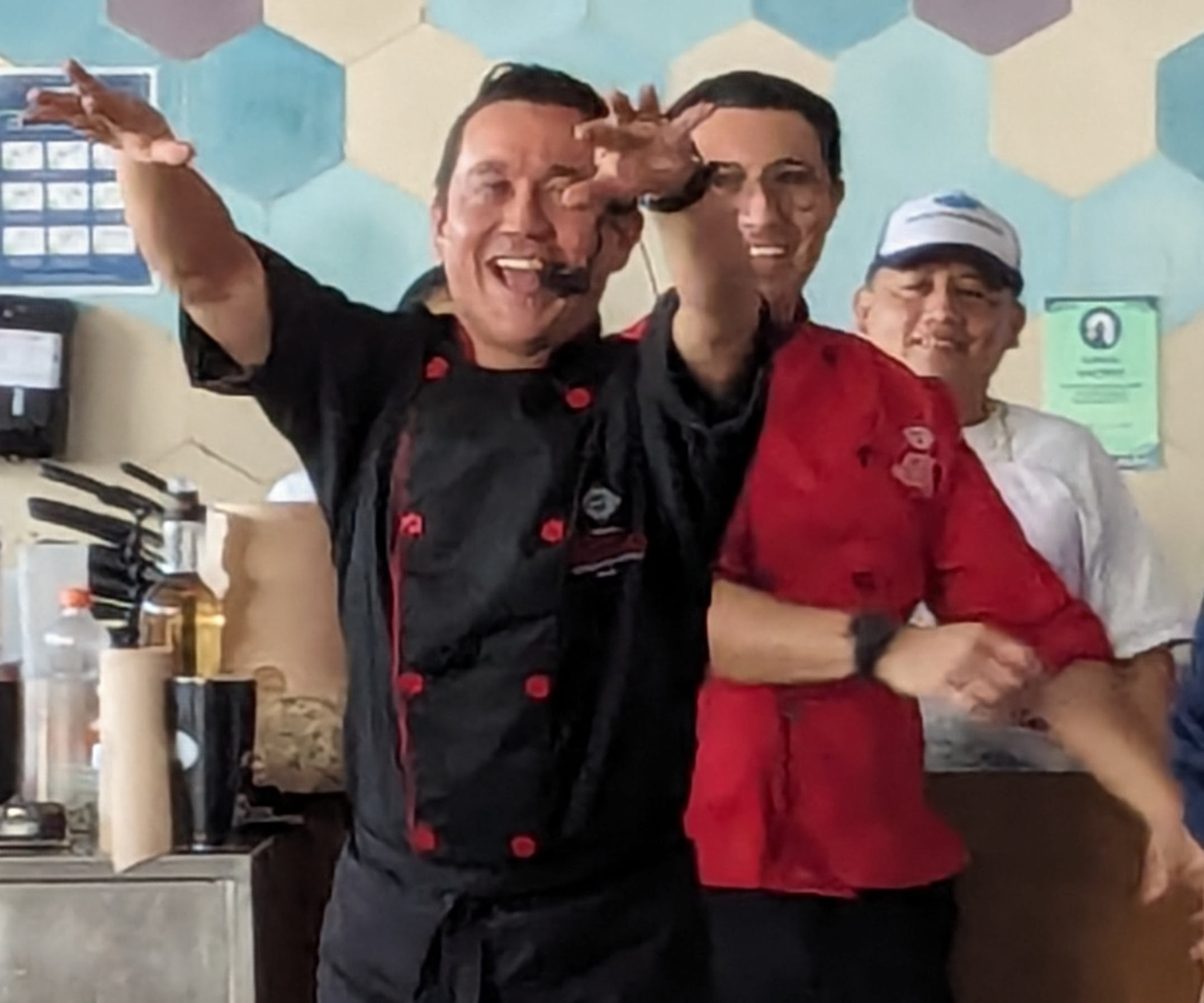
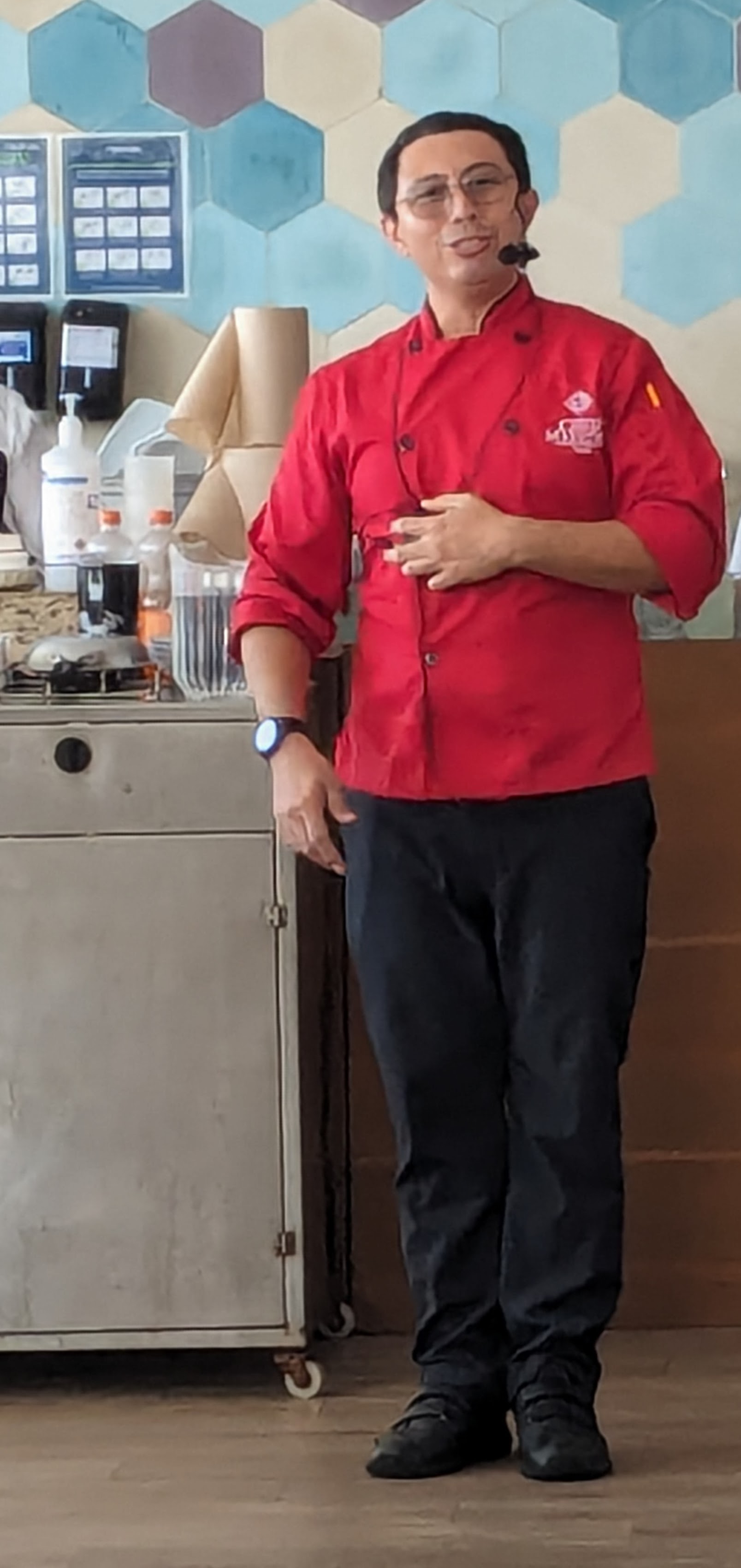
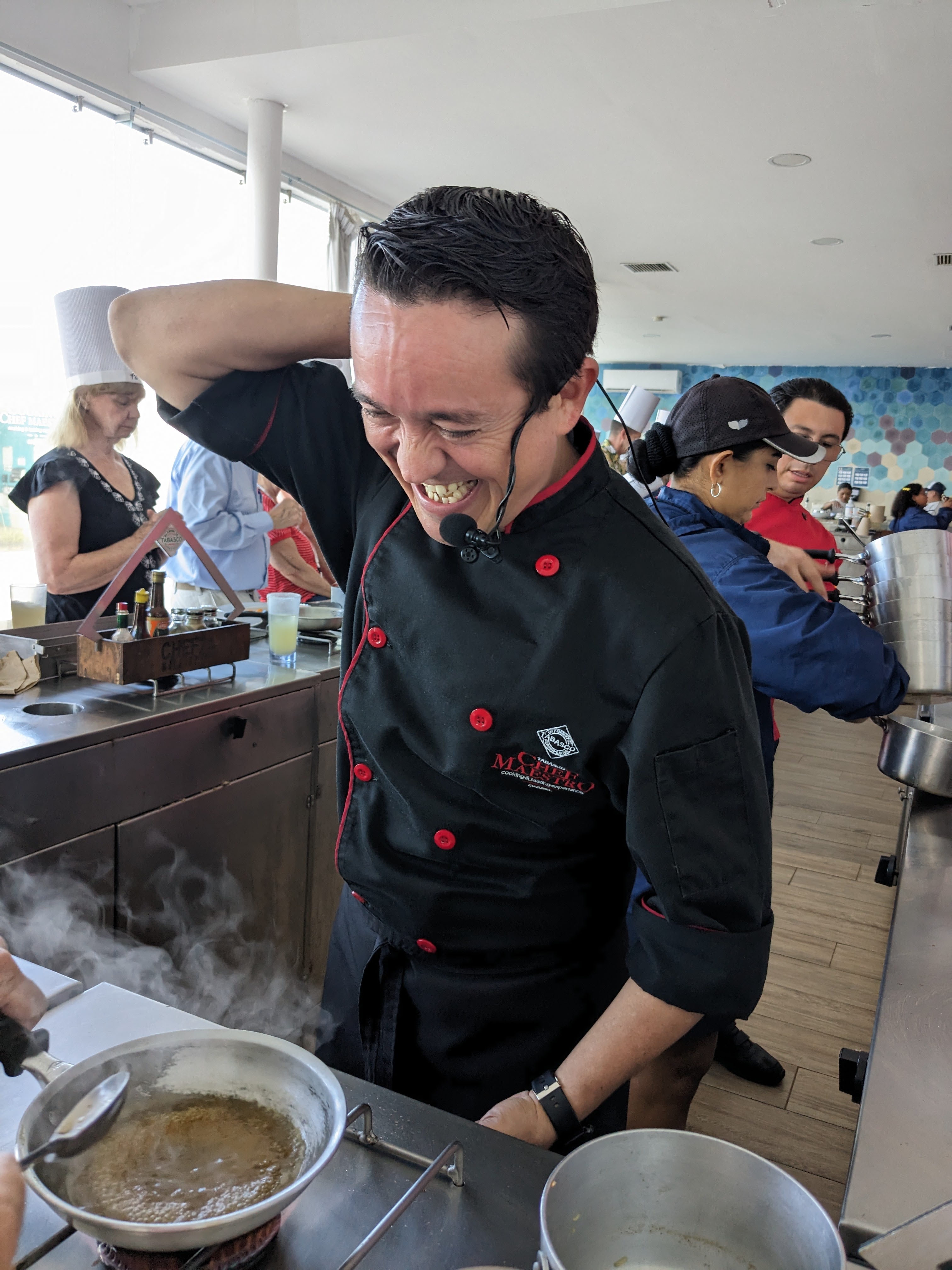
Our chef for the day, Luis Esquivel, was personable and enormously engaging — full of energy, wit, talent, and knowledge.
Let the Cooking Begin
The class may have been two-thirds “show biz” to one-third serious food preparation, but it was nonetheless informative. Chef Luis introduced us to his assistant, Antonio, and to the distinctive flavors of Mexico with an island twist. We learned how to adjust the spice to our personal preferences, and we learned that hot, spicy dishes can be tempered with cool or creamy sauces and tamed by accompanying drinks. These lessons returned with me to my kitchen.
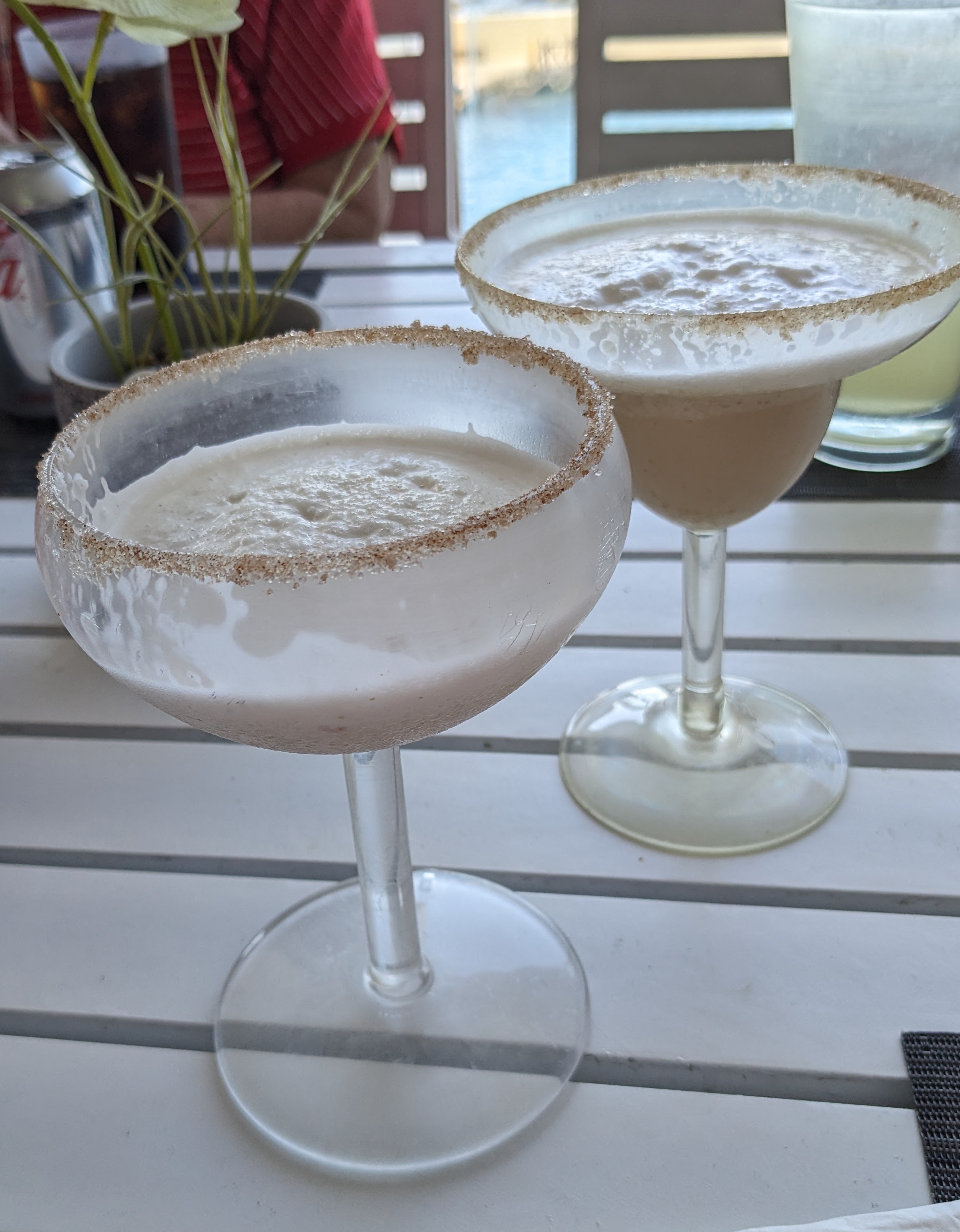
Drinks flowed freely throughout this lighthearted cooking demonstration. The first question put to each of us was “Margarita or Pina Colada?” With that, we took our places at our assigned cooking stations where ingredients had been laid out for the dishes we would prepare.
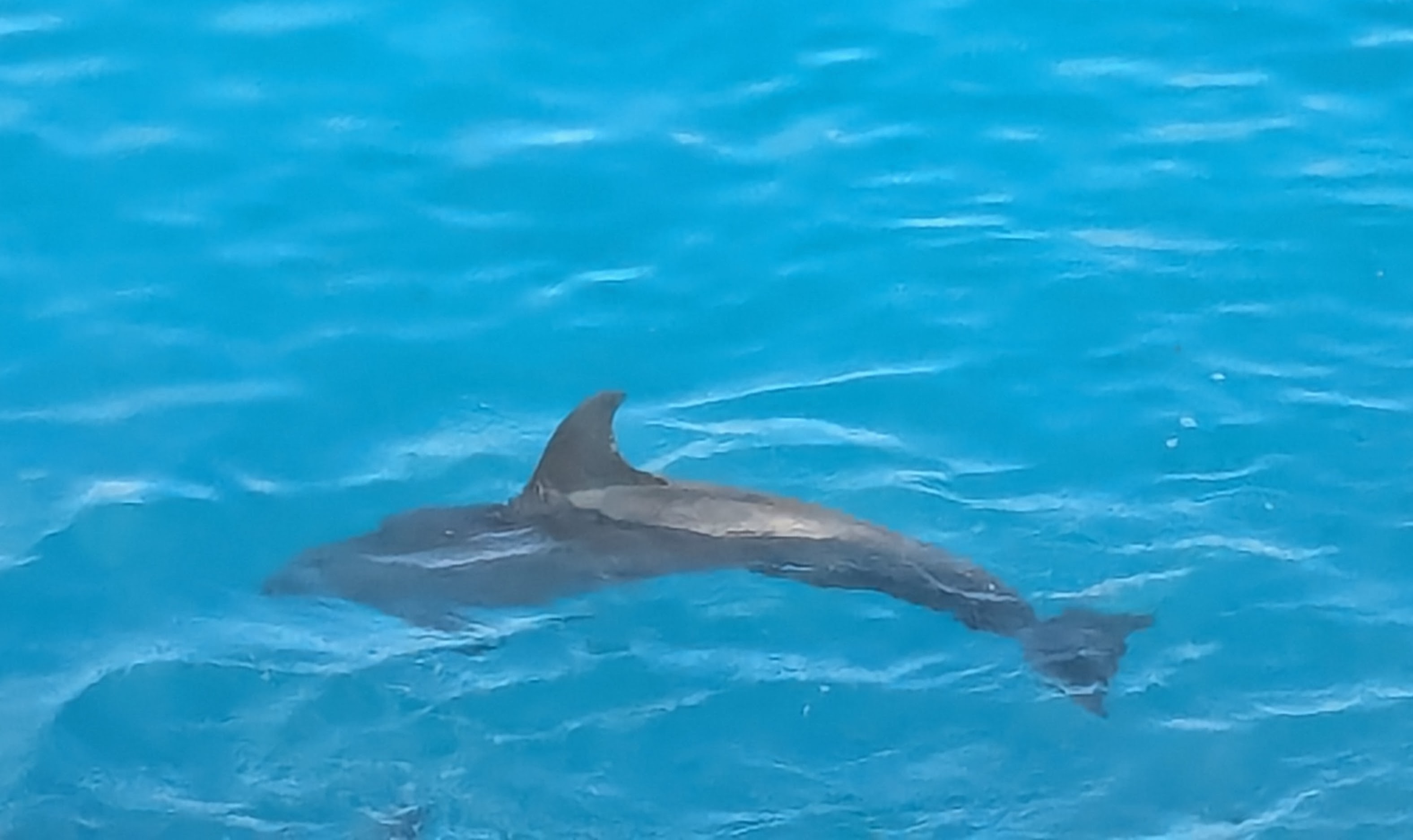
Floor-to-ceiling windows framed a view of the blue sea beyond and the hotel’s dolphin pool just below. We were tempted to simply sip on our Margaritas and watch the dolphins frolic, but there was serious food prep to be completed. Chef Luis and his sous chefs tried their best to keep us on track.
We first prepared a simple shrimp cocktail, with fresh greens, boiled shrimp, lime juice, cocktail sauce, and Tabasco to taste. It was to become the first course of our dinner, so it was put aside to chill.
The learning experience was underway.
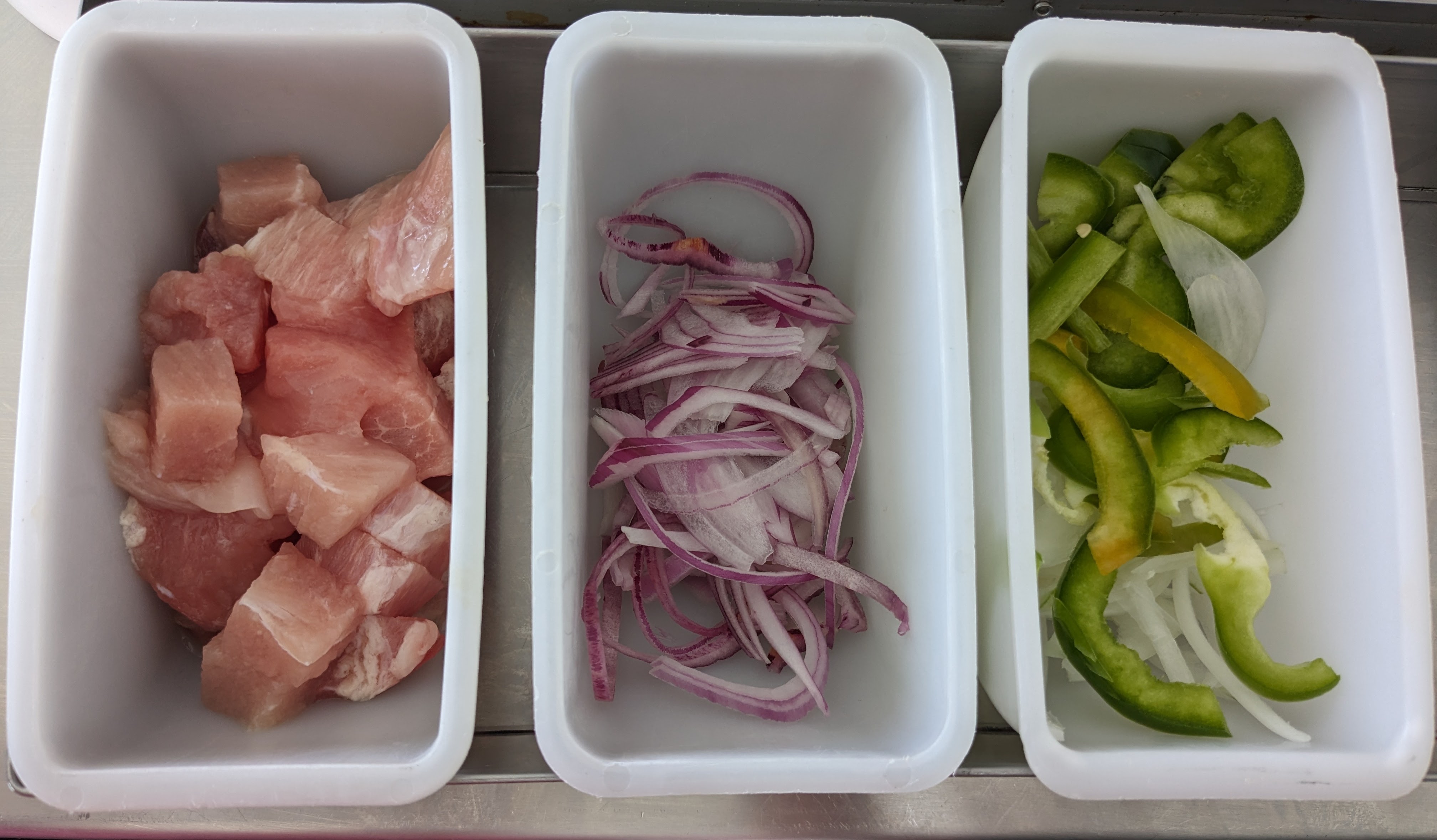
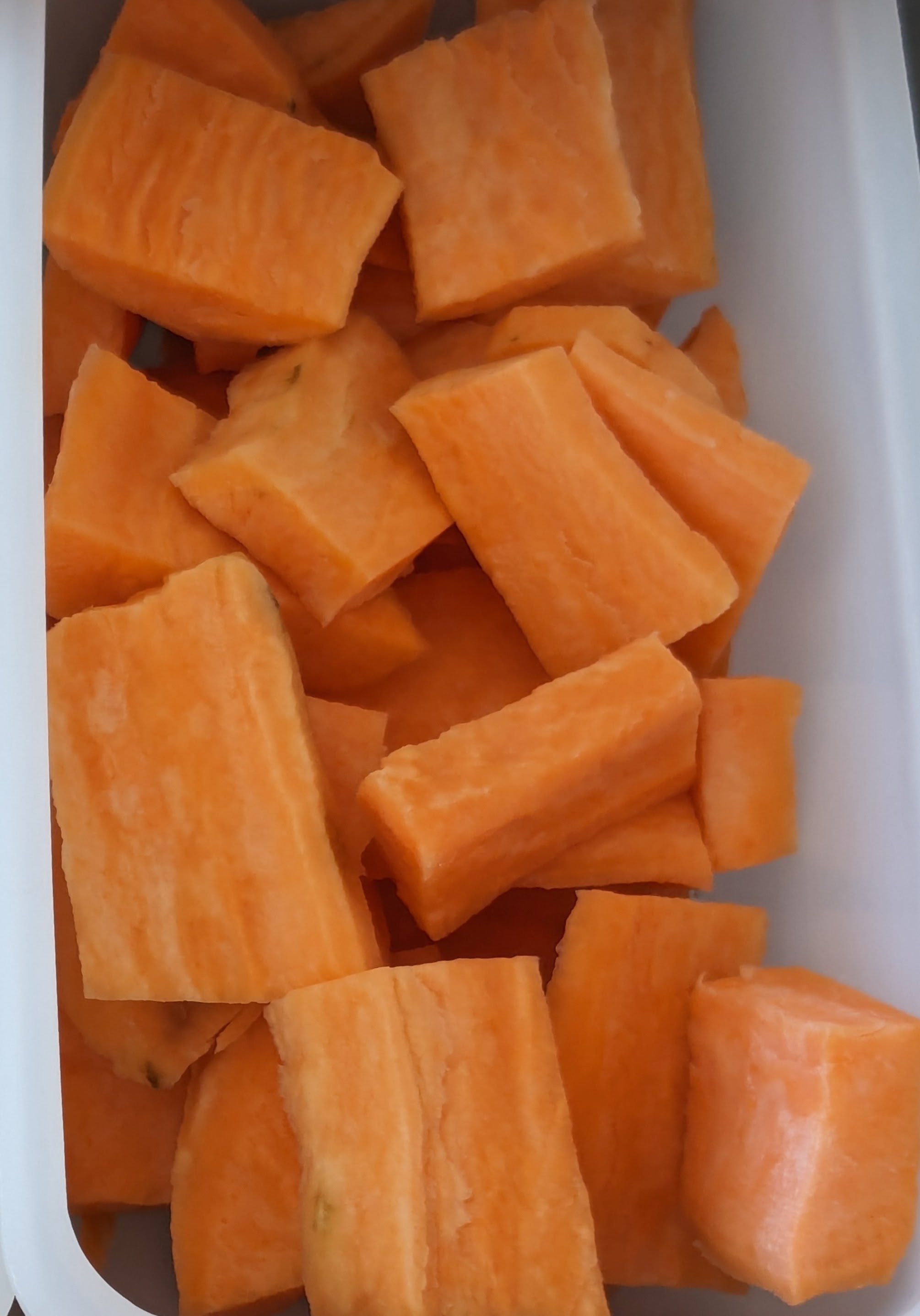
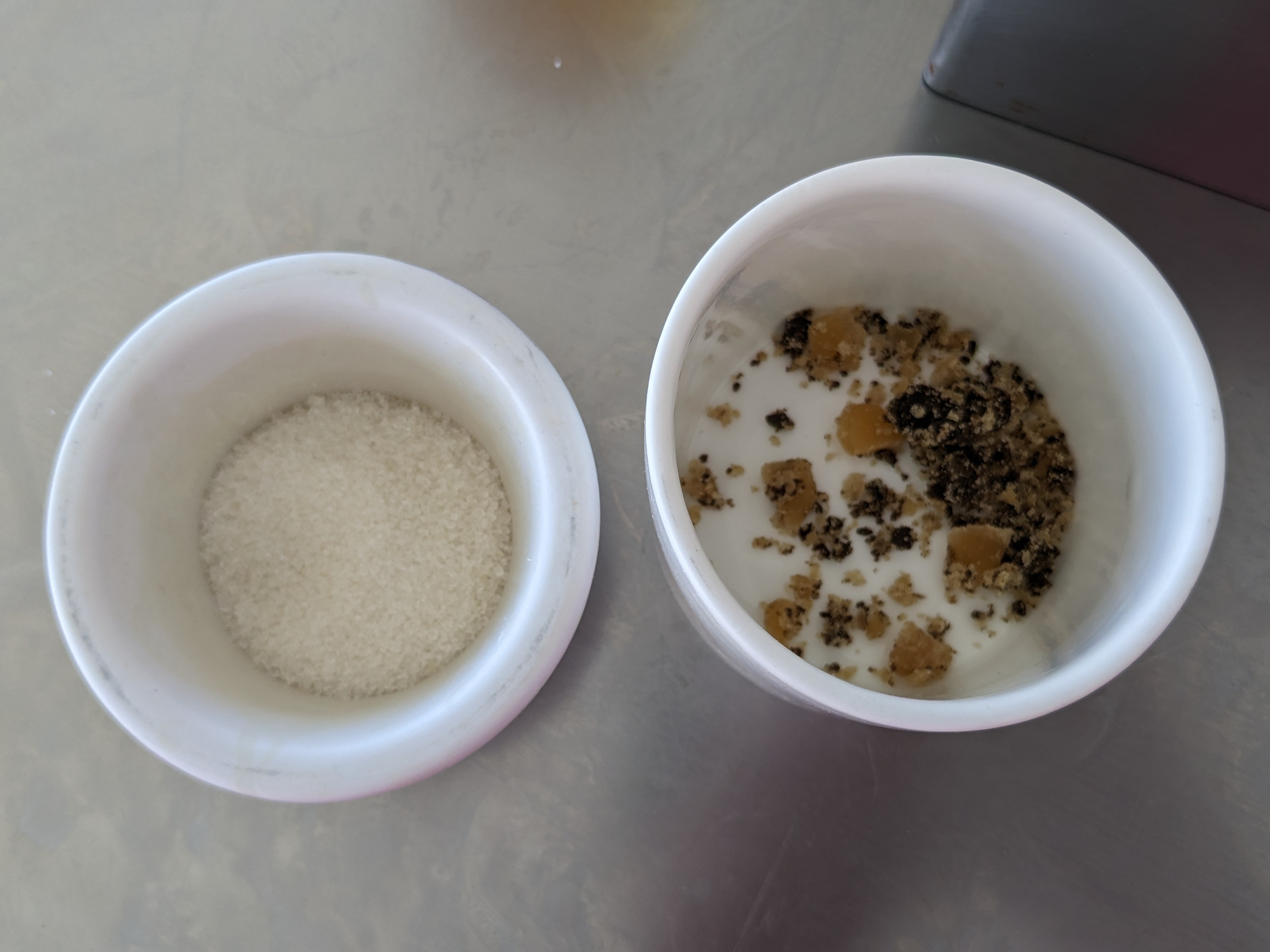
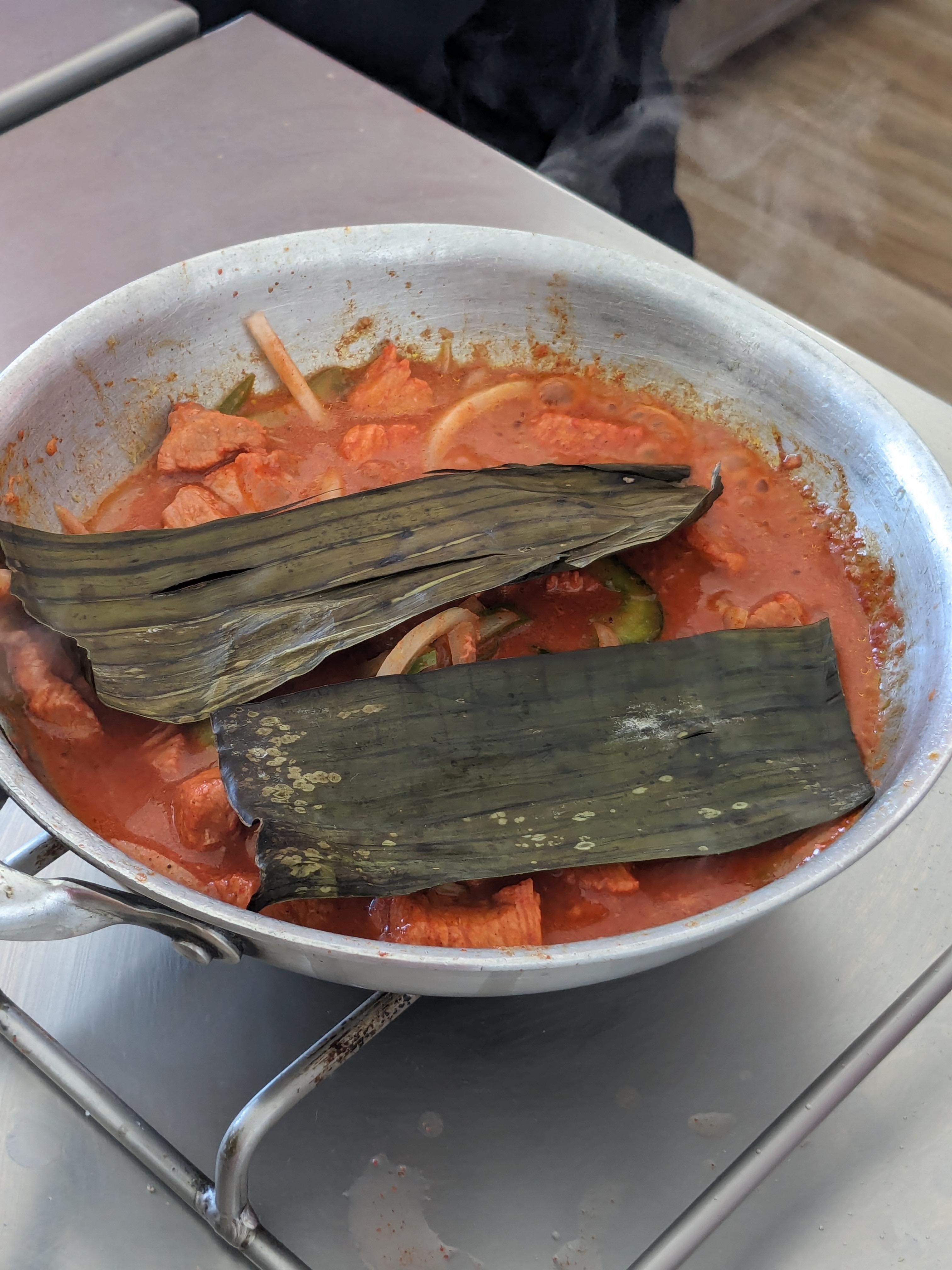
The first order of business was to identify the ingredients and discuss the flavors — cubed pork, sliced red onion, slivered bell pepper, Tabasco sauce, Worcestershire sauce, peppercorns and a clove, vinegar, catchup, cubed sweet potatoes (for dessert), shrimp, fresh lemon, raw sugar, freshly ground peppers, and other spices. We did not yet have any idea of the dishes we would be preparing, and we had little time to relax before the chef and his assistants lit the fires under our personal gas burners.
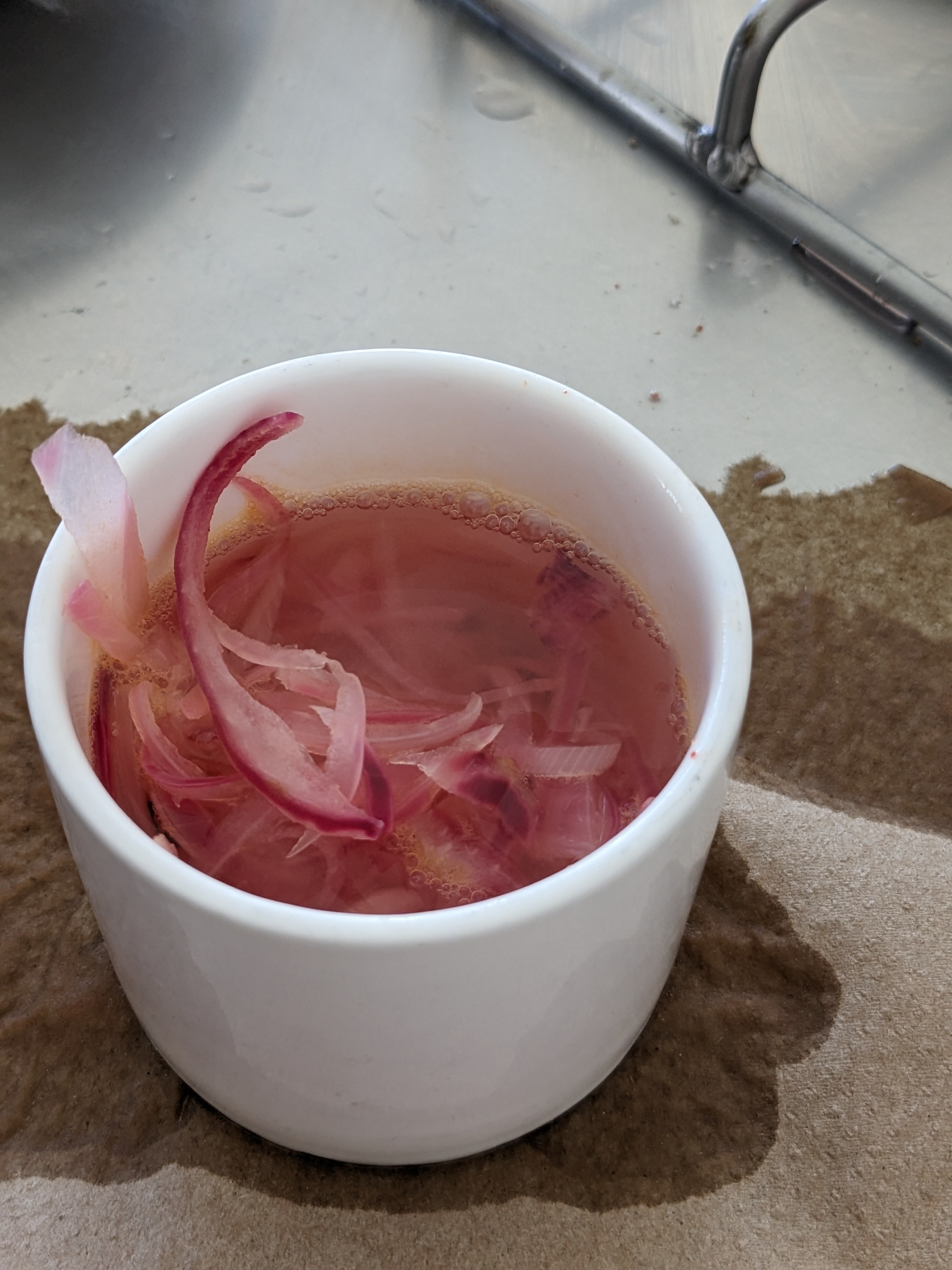
After another sip of Margarita, we set to work under the watchful eyes of Antonio and Chef Luis, who kept up a running commentary about how to do what we needed to do. We learned a technique to “quick pickle” onions that would accompany the pork dish, and we were instructed about easy ways to combine common ingredients to produce unusual flavors. We learned to use intense flavors and hot sauces judiciously.
A Frivolous Approach to Serious Cooking
We prepared simple, no-fuss dishes, perfectly suited for recreating at home. We were supposed to receive the recipes and ingredient lists by email. Alas, ours never arrived, although we have the photos and the memories. We might not be able to reproduce the menu exactly, but we feel relatively confident about how to recreate the savory flavors of the meal we enjoyed. It all begins with fresh ingredients. And, of course, Tabasco!
Not only did this cooking interlude provide us with an introduction to Mexican-flavored dishes, but it was high-level entertainment. It was one of the most informative and enjoyable cooking experiences we can remember. We prepared and plated a shrimp cocktail, a pork entree, and a yam dessert with sweet syrup. We consumed our fill of tasty alcoholic or non-alcoholic beverages as well. Plus, we were picked up and returned to the ship’s pier, all for a reasonable fee.
Then we moved to an adjacent dining room to consume what we had created and thoroughly enjoyed getting to know our fellow students. We drank a final toast to our accomplishment with a frothy after-dinner cocktail, prepared by Chef Luis.
The Tabasco cooking experience provided us a memorable day ashore. We gained a new appreciation for hot peppers and flavorful cooking in the region where those hot peppers originated. We left with a desire to recreate the experience for our friends and neighbors at home. And we have put some of the tips we brought home to good use.
This pampering “getaway” cruise was focused on food and relaxation. My next post, however, is about a much different excursion during our port call in Roatan, the small island off the coast of Honduras. Roatan is known for its reef diving and its remarkable clear water. We discovered much more during our island tour with a private guide.
I explain what was so special about our day on Roatan in Uncovering an Island‘s Hidden Treasures, scheduled for publication next week.
Follow me to receive email notifications about that experience and about future travels. I hope you’ll continue to join me for good food and memorable times in faraway places.
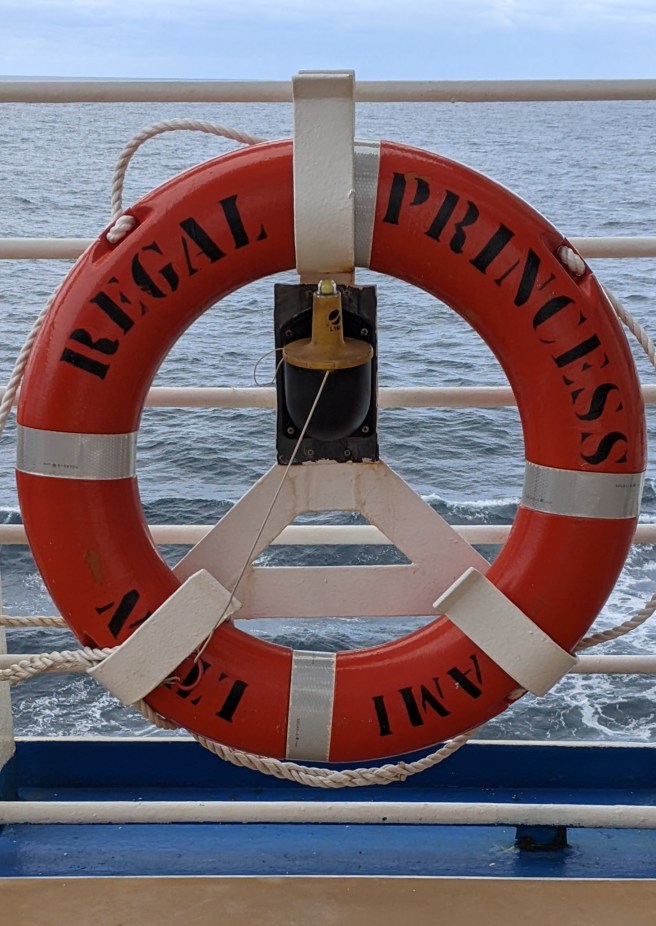
Early in 2024, my husband and I booked a week-long cruise aboard Regal Princess, sailing out of Galveston, Texas. At the end of January we were looking for sun and warmth, a day or two of beach time, and serious relaxation. We found all that and more. Much more, in fact. In addition to bounteous food and entertainment aboard the ship, we booked three port excursions. Two of them were distinctive because they involved both food and cultural insights.
We went to escape the cold days and dreary skies of home; and we returned home with “adjusted attitudes,” looking forward to the early signs of spring . We knew it would be a while till longer, warmer days were upon us, but we felt ready to await the change of seasons after our brief hiatus.
I’ll be writing about all three of the ports — Costa Maya, Roatan, and Cozumel — over the next two weeks. Follow me now to receive a notification about those posts.
As much as we enjoy all types of travel, there is little that trumps an opportunity to spend a few days at sea. It’s not about the destinations. We are “old salts,” who for many years spent as much time as possible aboard our personal cruising motoryacht. The world’s seas still call to us. But now, we let other captains take the helms.
And the Regal? Oh, Yes
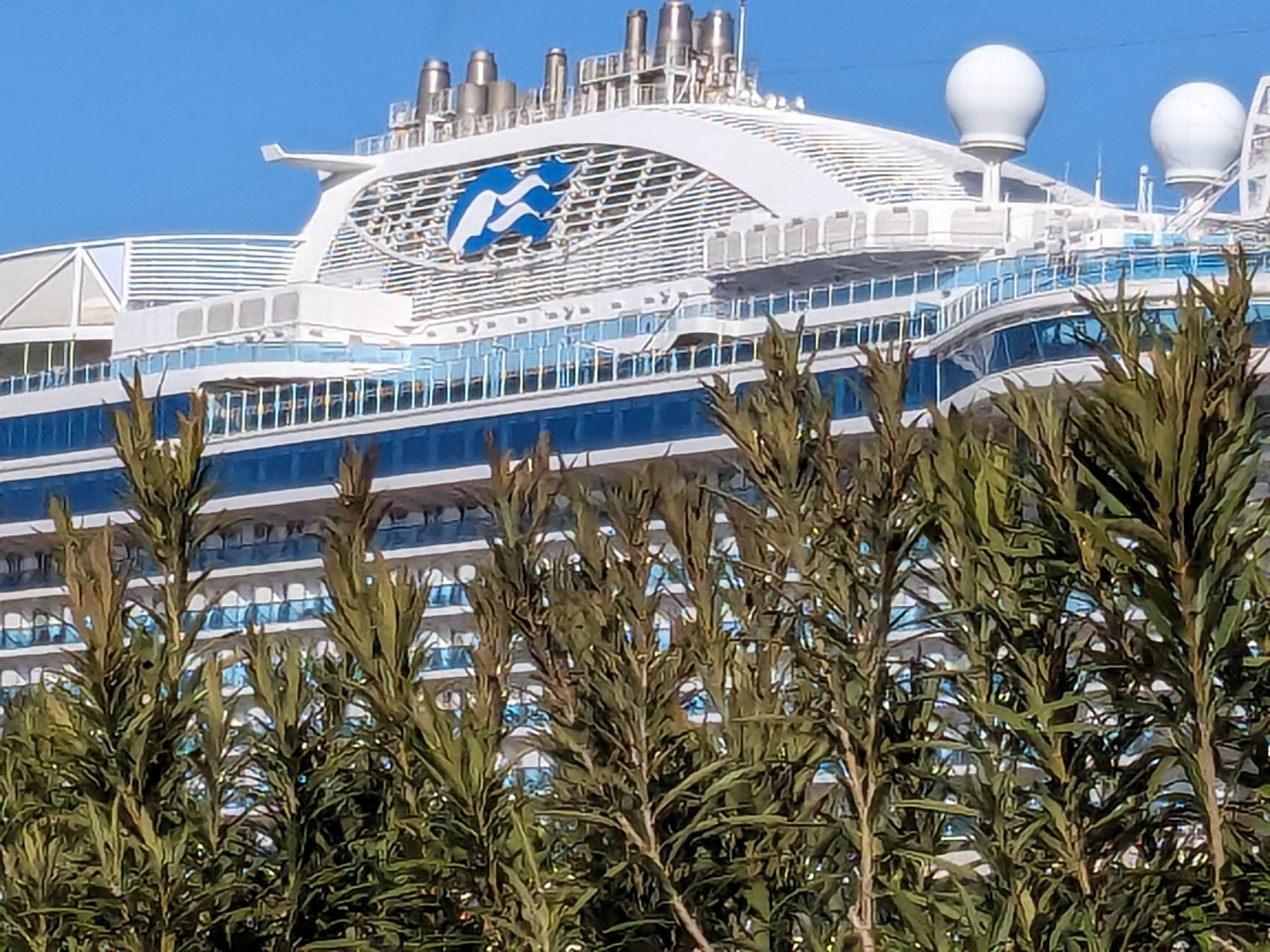
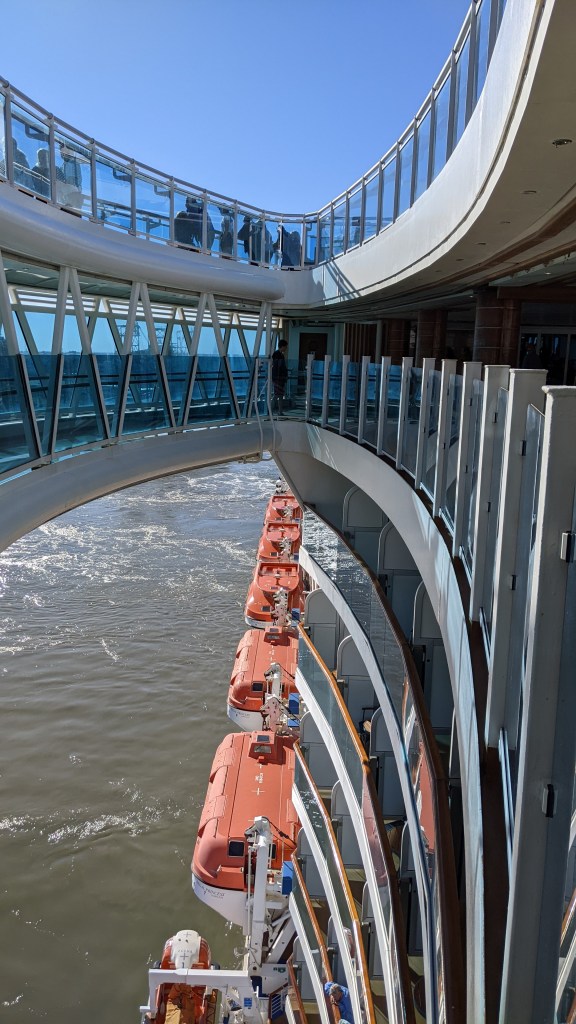
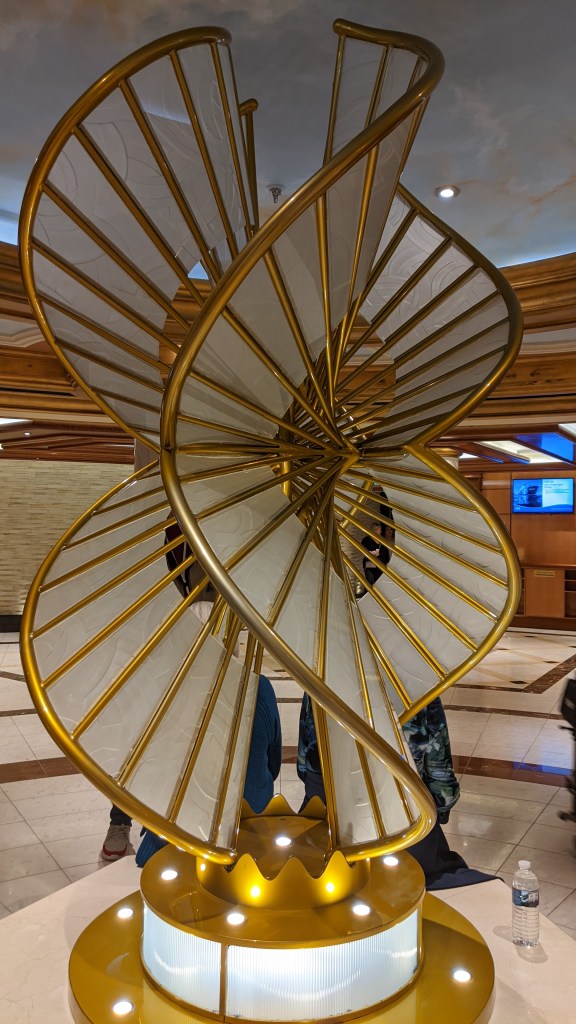
Regal Princess is an elegant vessel, christened in 2014 by the original cast of “The Love Boat.” She is large and impressive with a maximum passenger capacity of 3560, a crew of 1346, and 19 decks. But, because of the design, there are intimate spaces both on deck and indoors where one can find comfortable seating and quiet surroundings. Public spaces are well-proportioned; in our experience, the ship never felt uncomfortably loud or crowded. We, however, could retreat to our private balcony had we wanted time to relax, read, or simply watch the sea drift by. As with all modern cruise ships, there are multiple pool areas, restaurants, lounges, gathering spaces, and enough activities to keep people busy from early morning to late at night.
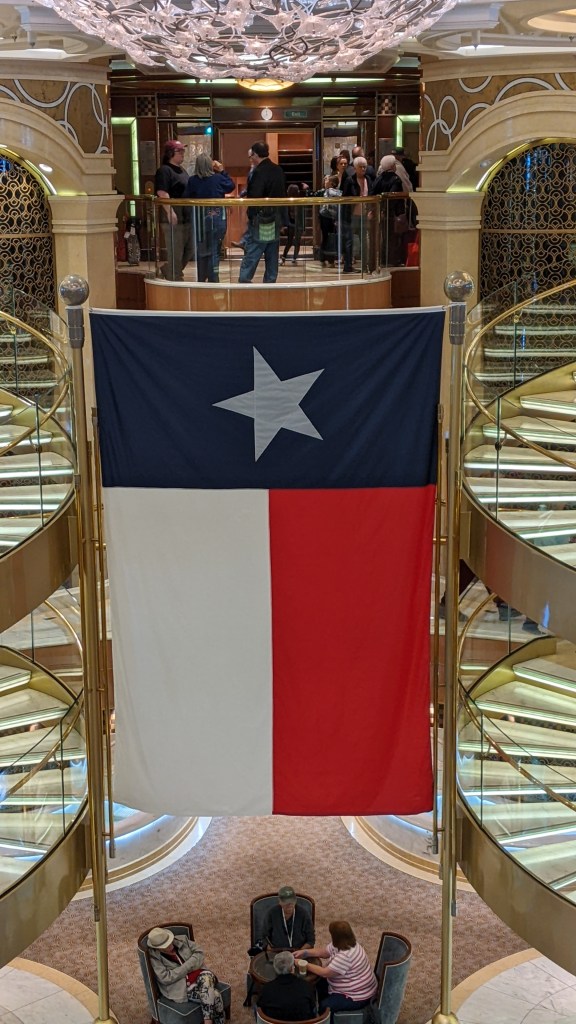
Ours was a short cruise, on an itinerary we had traveled previously. We disembarked at each port, but we thoroughly enjoy the sea days, and have, on previous cruises, remained aboard even while in port. We appreciate the classic lines on the ship, and the familiar public spaces that characterize the ships of the fleet. Princess is one of our favorite cruise lines, so we are familiar with most of the line’s standard offerings, but the Regal has at least a couple of unique features. One is the interior balcony overlooking the casino — it’s possible to watch the action without actually being a part of it!
Food, Wine, Spirits, and Entertainment
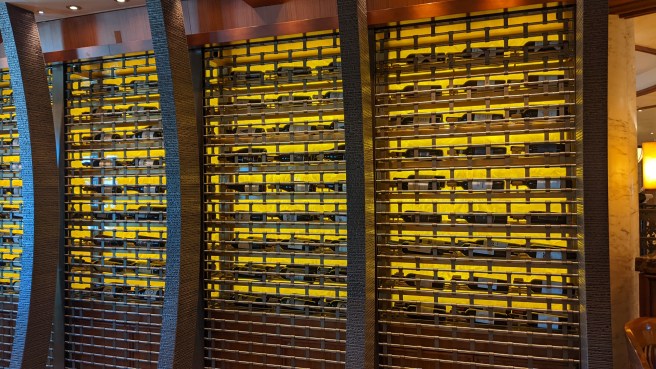
As on all Princess cruises, the food is an experience, whether you choose to eat every meal in one of the dining rooms or opt for the World Marketplace Buffet. You can also eat and snack your way through the day at multiple other onboard venues like Alfredo’s Pizza, the International Cafe, Gelato, or the Ocean Terrace Seafood Bar. Superb specialty restaurants — Crown Grill Steakhouse or Sabatini’s — are also available.
We chose one of the three main dining rooms for each of our dinners, and some of our lunches, aboard Regal Princess, but we also visited the extensive Deck 16 buffet several times for brunch or lunch — and we sometimes snagged cookies and fruit to consume later in our cabin — I find the oatmeal cookies irresistible!
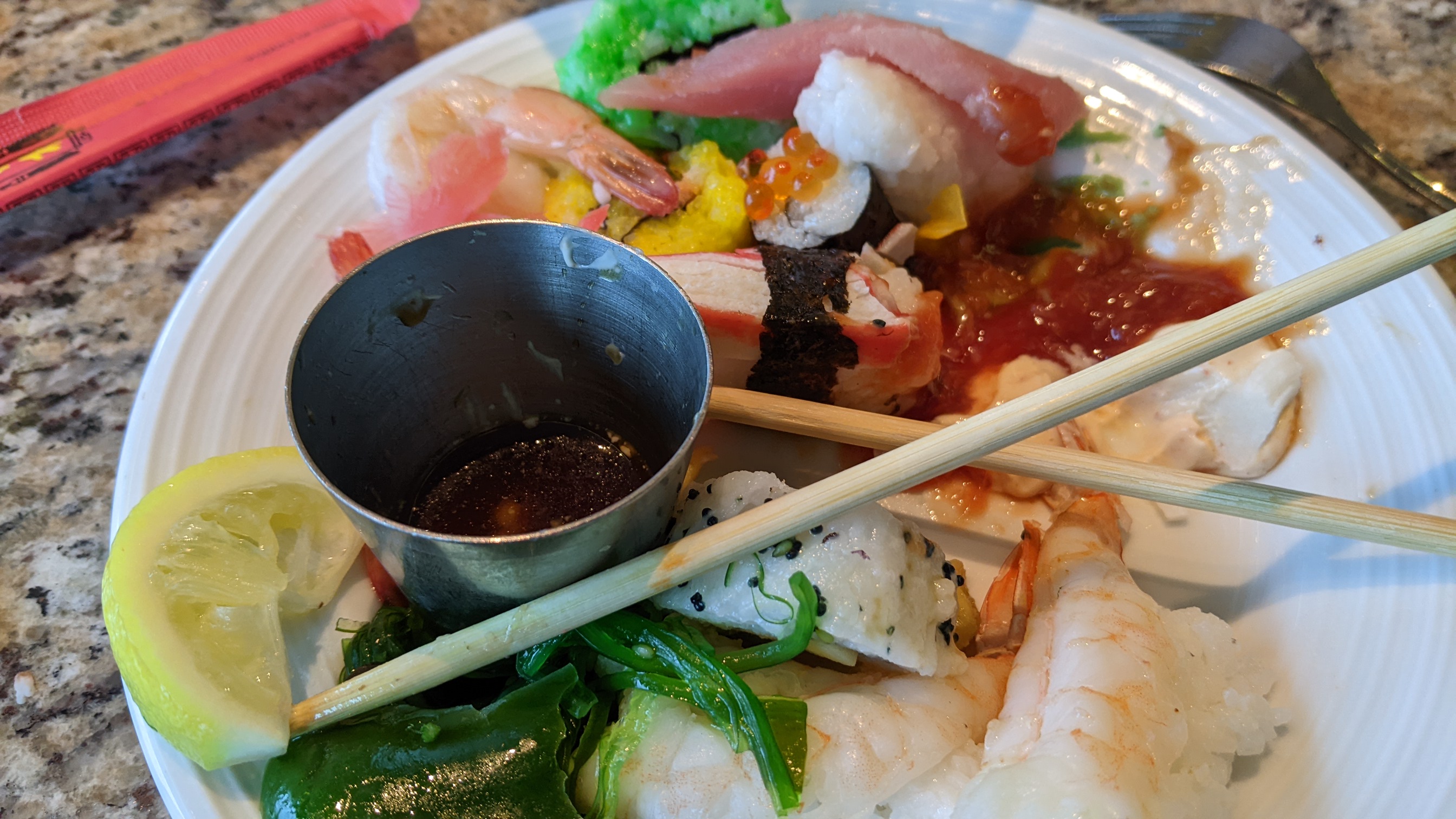
A spectacular feature aboard Regal one day on this cruise was a midday sushi buffet — What a feast!
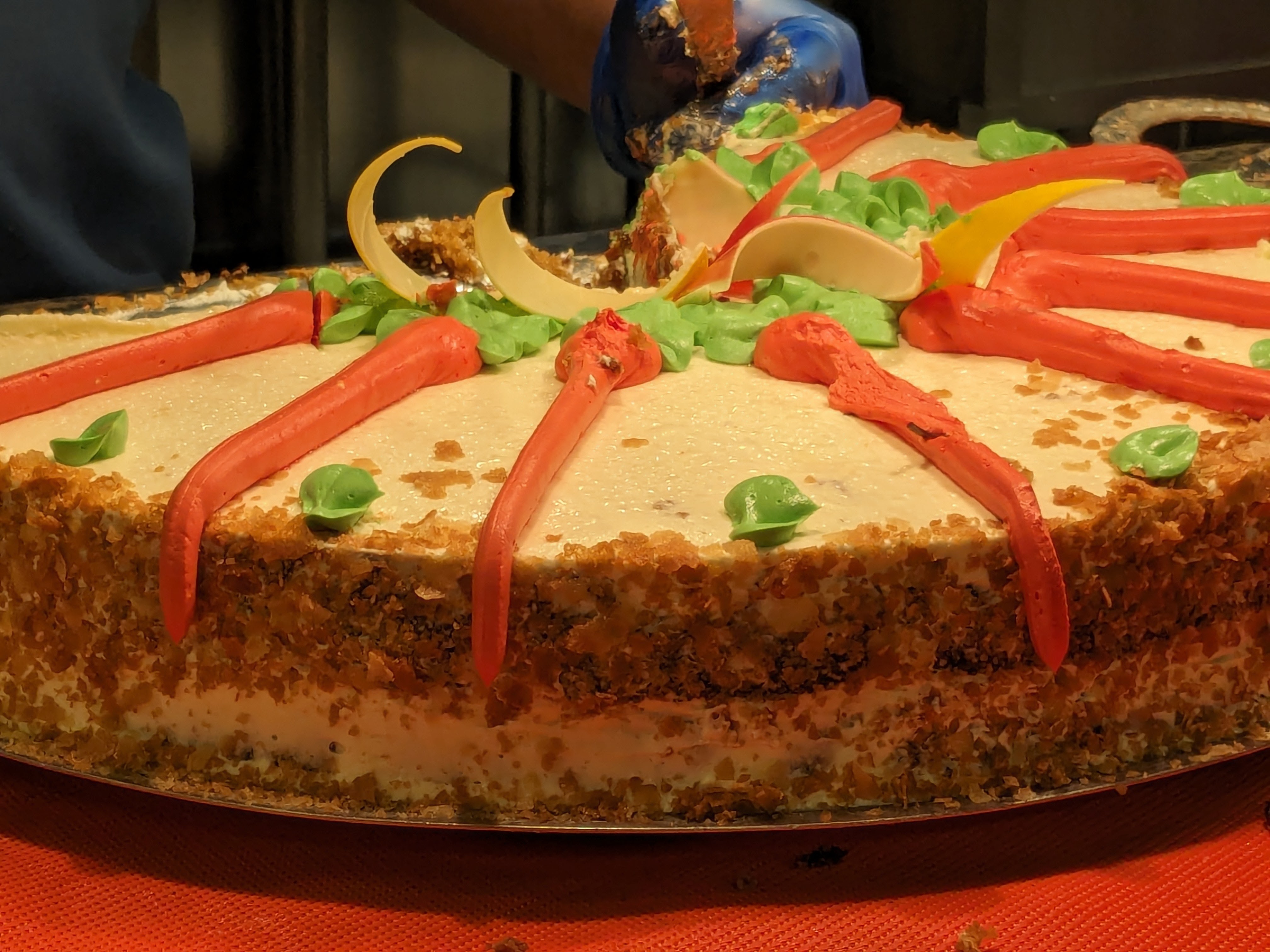
And the desserts! Need we say more?
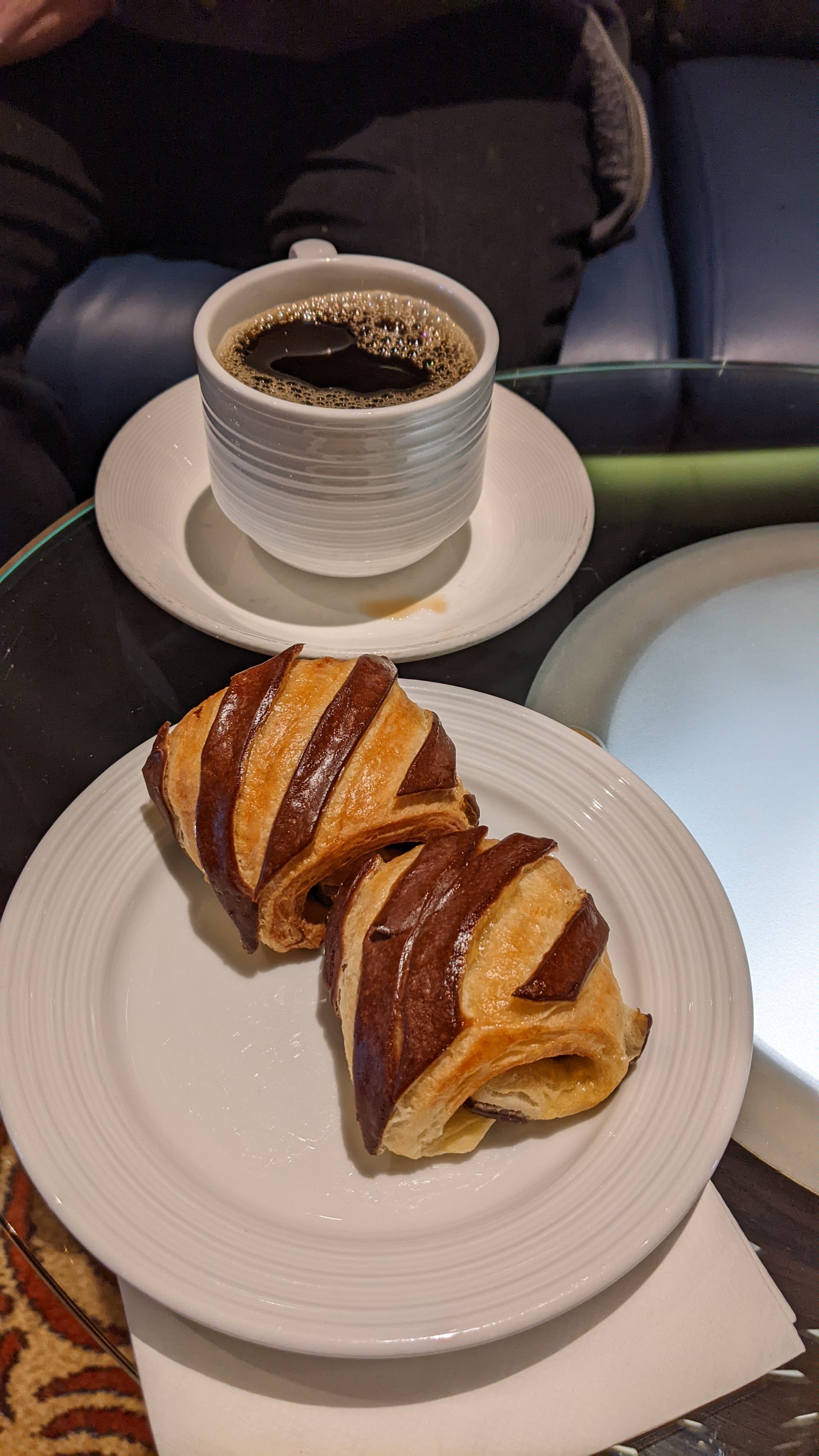
One of our favorite cruise traditions is to order a light breakfast, usually croissants, fruit, and coffee, delivered to our stateroom each morning. It’s a pampering, relaxing way to begin the day and a tradition we can’t seem to break. But why would we want to? But that didn’t mean we didn’t find other places aboard to enjoy breakfast and coffee.
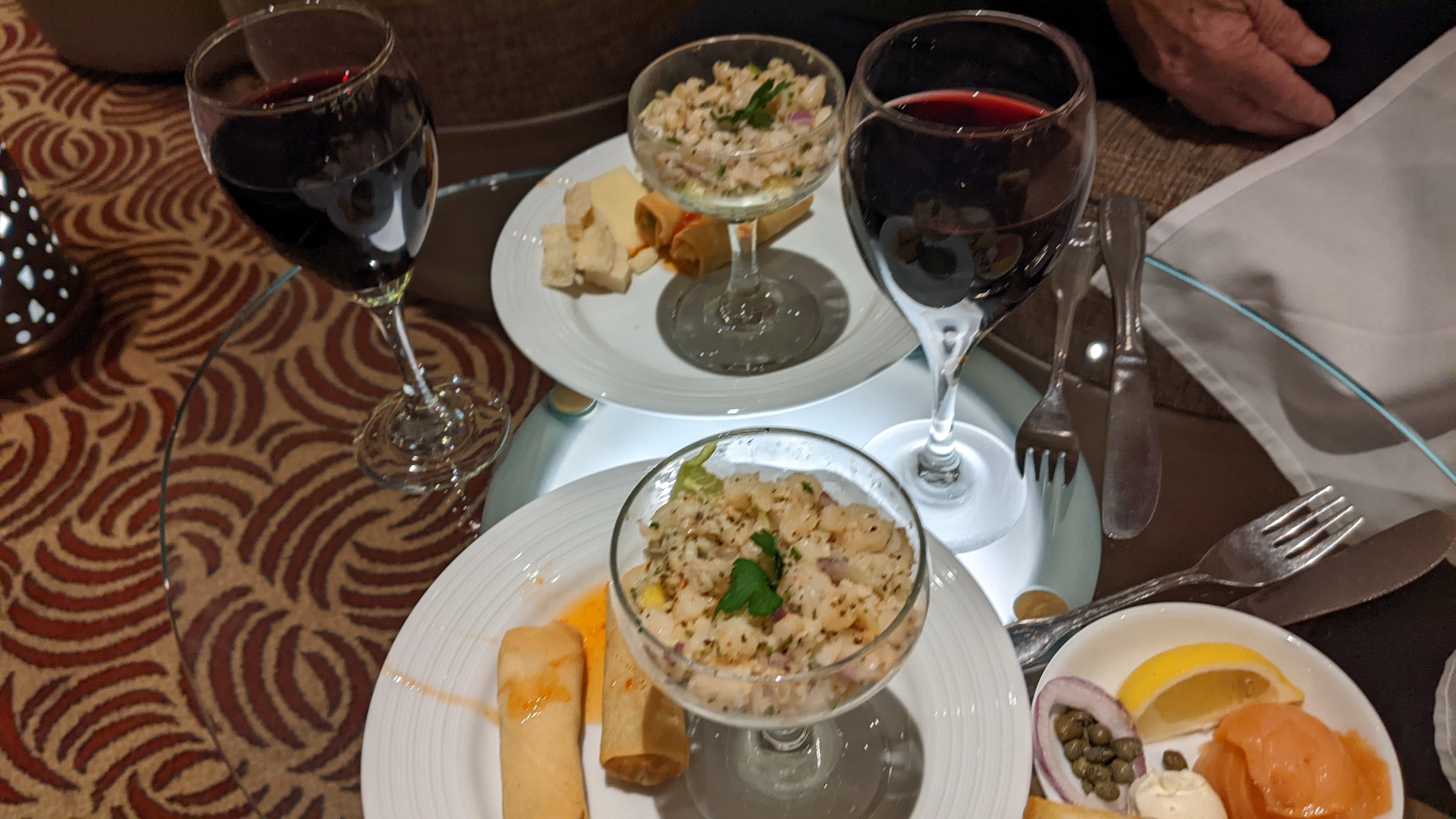
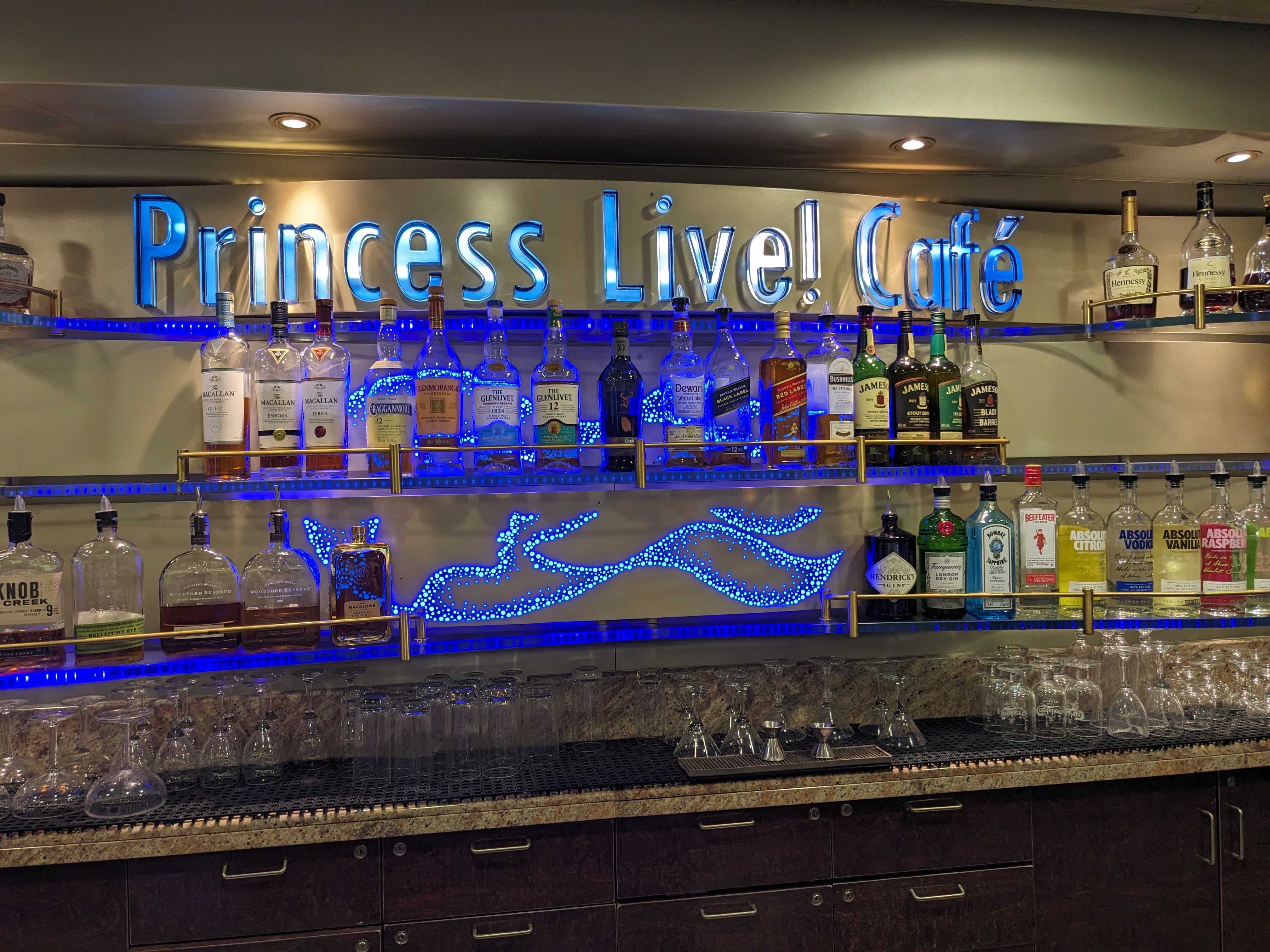
We visited the International Cafe in the Piazza for occasional snacks and specialty coffees. We also enjoyed meeting other passengers, sharing stories, and listening to music in several distinctive cocktail lounges aboard this ship.
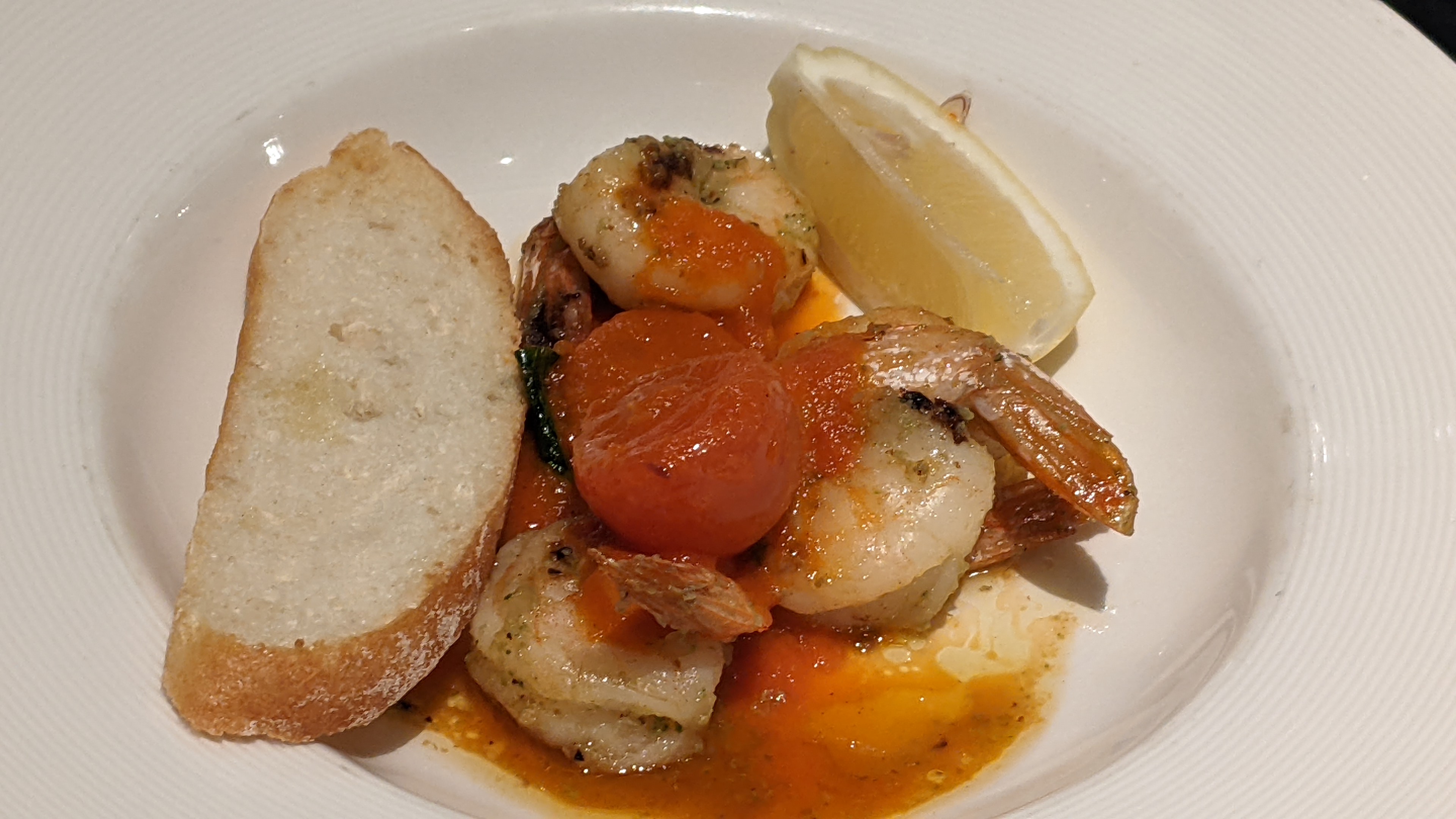
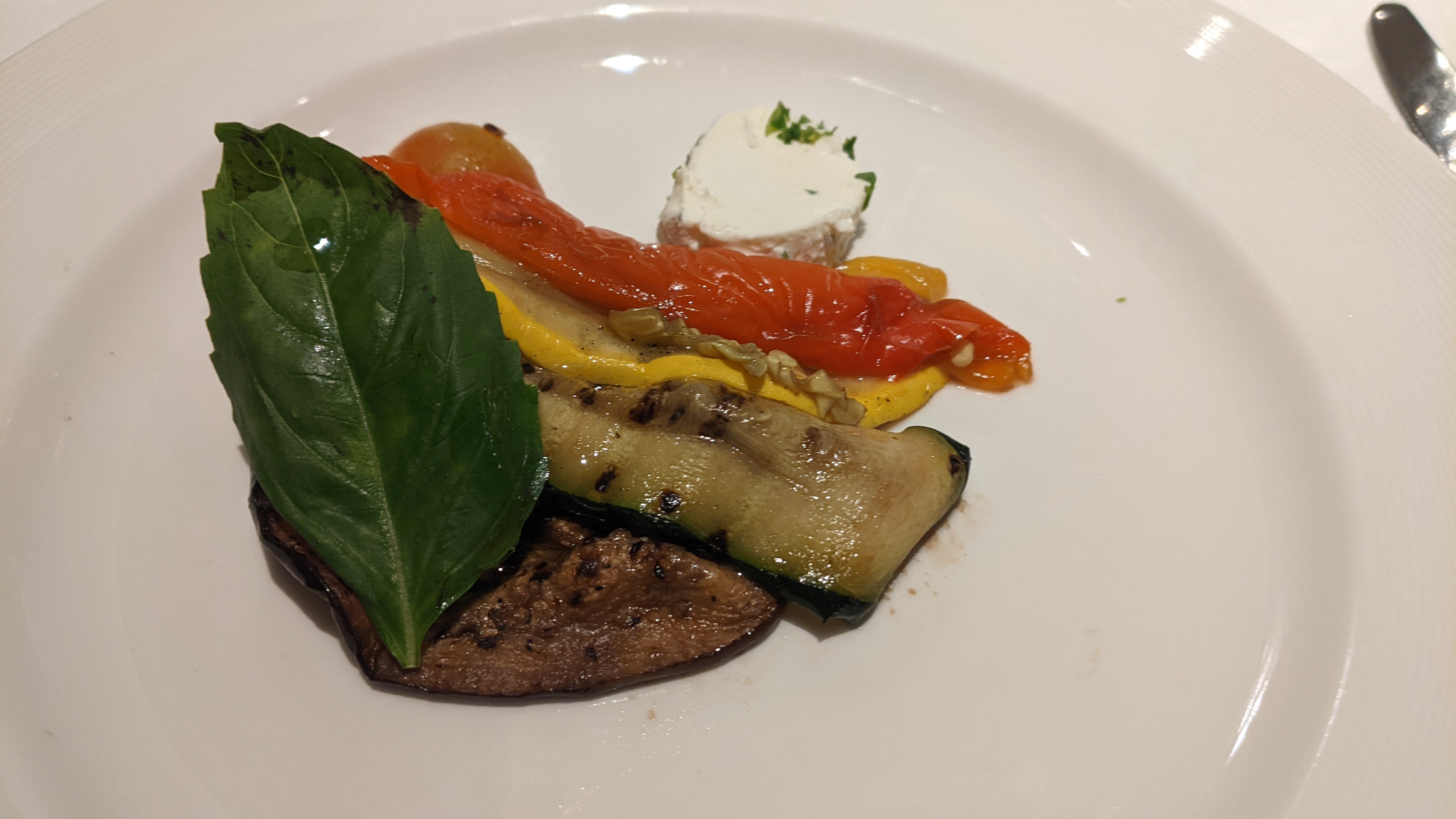
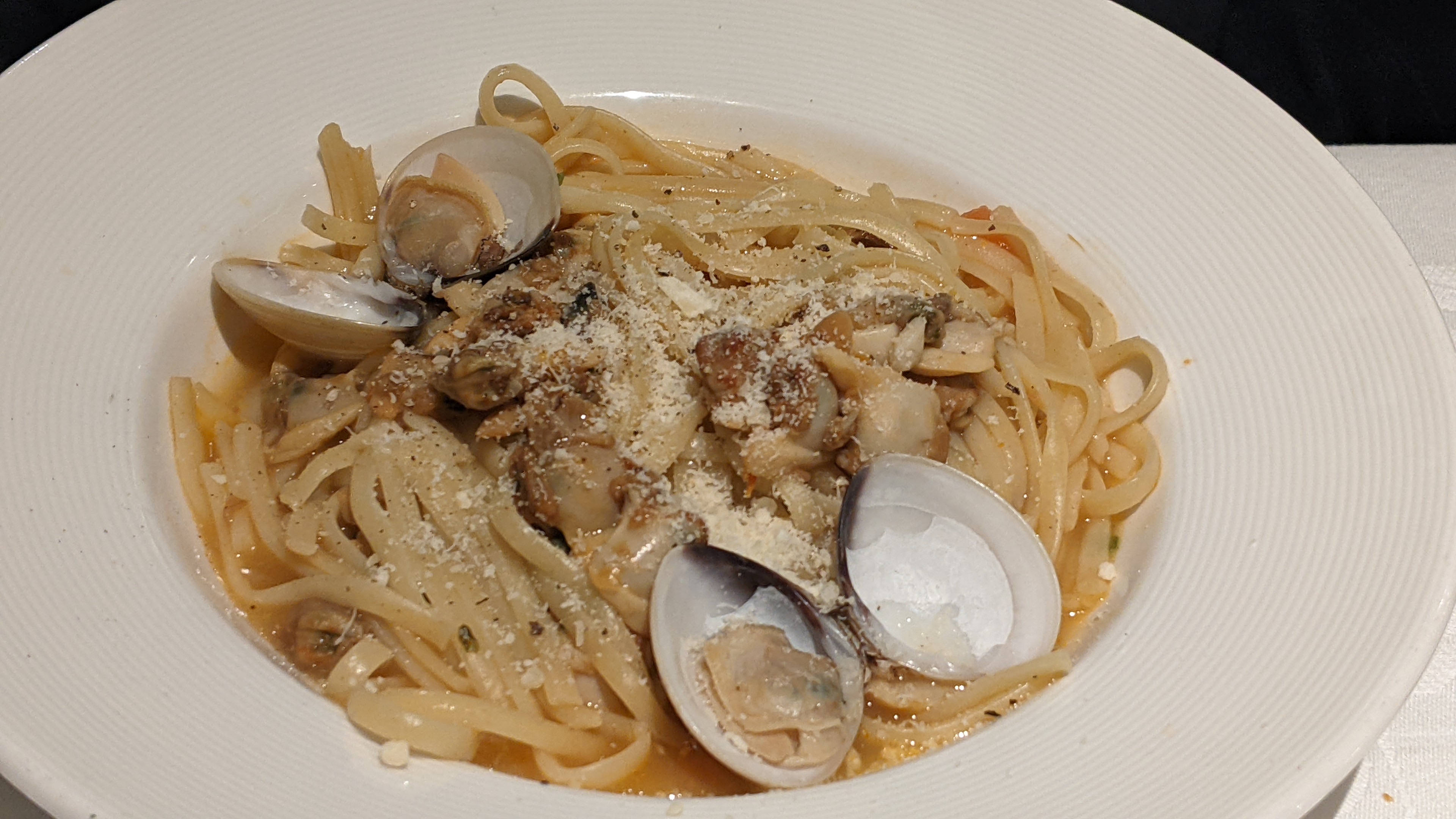
On this voyage, for some reason, dinner menu options were a bit “thinner” than we had expected but choices and portions were certainly ample. Service at times seemed slightly disorganized or rushed, and the visual presentation of some dishes was below the standard we have come to expect and appreciate from our times aboard other ships in the fleet. However, that’s a passing observation and certainly did not measurably detract from our onboard experience. We ate very well in each of the main dining rooms, whether for lunch or dinner.
Just one downside note: On other ships in the fleet, my husband has enjoyed visiting the ship’s sauna without a specific reservation or an extra fee. On the Regal, unfortunately, that was not an available option for him.
As always, onboard entertainment is plentiful — game shows, music, shopping, port lectures, dance and exercise classes and evening shows in the theater. And, of course, the casino. My husband picked up the daily Sudoku from the library and puzzled over it as well. And then there are the movies “under the stars” on the open deck, or on stateroom TV.
But, on sea days, just watching the ocean waves and the changing cloud patterns can be entertainment enough, from a lounge on deck, adjacent to one of the open-air bars, or on a private balcony. There was also plenty of opportunity to engage with other passengers in one of the cocktail lounges, enjoy the eclectic musical selections played throughout the ship, or attend one of the special programs scheduled throughout the day. I cannot imagine how anyone could characterize cruising as boring!
Renewing a Previous Acquaintance
We have traveled with Princess enough to have earned loyalty perks, and we enjoy those bonuses. A truly memorable event on this sailing was the Captain’s reception for upper-tier loyalty passengers at which the three “most traveled passengers” aboard were recognized.
On another Princess cruise several years ago, sailing out of the Port of Houston, I was privileged to meet and interview a lady who, at that time, spent much of each year aboard ship. It was a different ship, but even then she was a “most traveled” and much-loved passenger. I noted that the crew was particularly solicitous and always saved her same table in her favorite lounge for a pre-dinner glass of wine.
During our interview, I learned that she and her husband had cruised extensively together. Following his death, it seemed only natural that she should continue cruising. She told me that she treasured her shipboard life, saying that she was grateful to have the health, the opportunity, and the means to travel, adding that one of her joys was meeting and talking with other passengers. She explained that she returned to her home in Houston, “for tax season and for Christmas!”
During the ensuing years, I thought about her occasionally, wondering if perhaps she was still cruising. On this voyage, my question was answered. At the Captain’s Circle Cocktail Party on February 1, Thelma Middleton was honored as the “most traveled passenger” on Regal Princess for this sailing, with 252 cruises and more than 1,850 days aboard Princess ships.
After the ship’s photographer snapped her photo with Captain Gavin Pears and senior staff, I once again spoke a few words with her. I was genuinely surprised when she told me that she recalled our previous meeting. What a pleasure it is to know she is still traveling, and still enjoying herself!
I must confess that the 1962 red Corvette convertible I once owned spawned dreams of taking the ultimate Route 66 road trip. The car didn’t come into my life until years after the TV show ended, but both were classics. And, as they say, old dreams die hard. Sadly, that car and I shared memorable times on other highways and byways, but the cruise along Route 66 never happened. The Corvette was a part of my automotive “stable” for about 15 years, and I fondly remember that first sports car.
I later learned, to my disappointment, that the car used in the television show wasn’t even red. Even so, it was easy to fall into the rhythm and excitement of traveling along the Mother Road, on a press trip in September with fellow travel journalists.
Route 66 was just about 2,450 miles long. It began in Chicago and meandered through eight states on its way to Los Angeles. Only 13 miles were in Kansas, but much of the original Kansas highway remains. What was America’s “first superhighway” opened in 1926 between Illinois and California, and it became a primary “escape route” for those who fled middle America during the Dust Bowl days. It was, at the same time, a symbol of opportunity and the sign of a country that changed rapidly following the war years.
The Way It Was
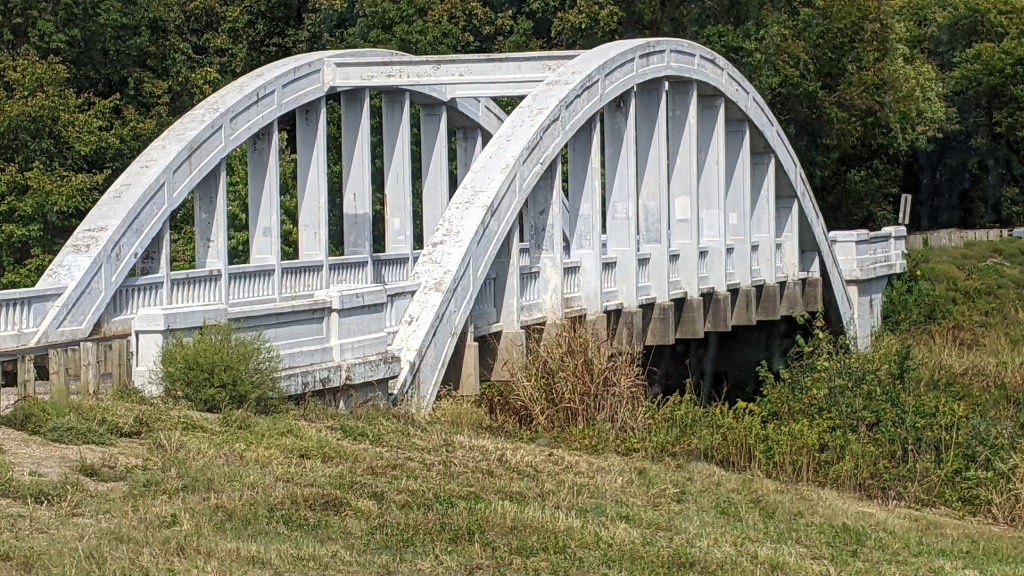
One can still drive across the last survivingMarsh Bridge over Brush Creek, one of three concrete and steel rainbow bridges that once traversed Kansas creeks along Route 66. The bridge now is on a loop road off the thoroughfare, and it’s a favorite destination for photos, picnics, and an occasional wedding. The Route was officially “decommissioned” only in 1985, and it is no longer the highway of choice for modern travelers, other than those who are seduced by its history and its television fame.
Kansas, at least this portion of it, hasn’t changed much visibly over the past several decades, but its people have. Modern highways move vehicles and people faster and more efficiently, but traveling the short stretch of Route 66 is definitely more fun! It’s clear that this section of the historic highway still does what it was designed to do — it “connects the main streets of rural and urban America.” The best part? There are ample opportunities to pull off the road and explore Kansas communities!
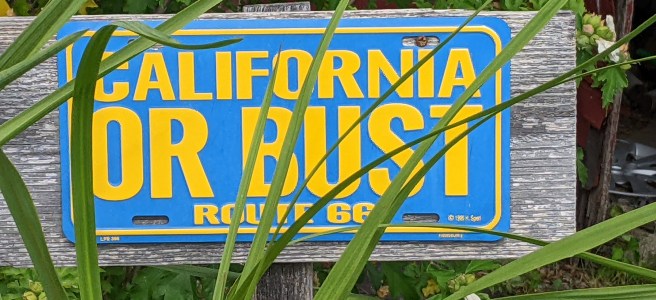
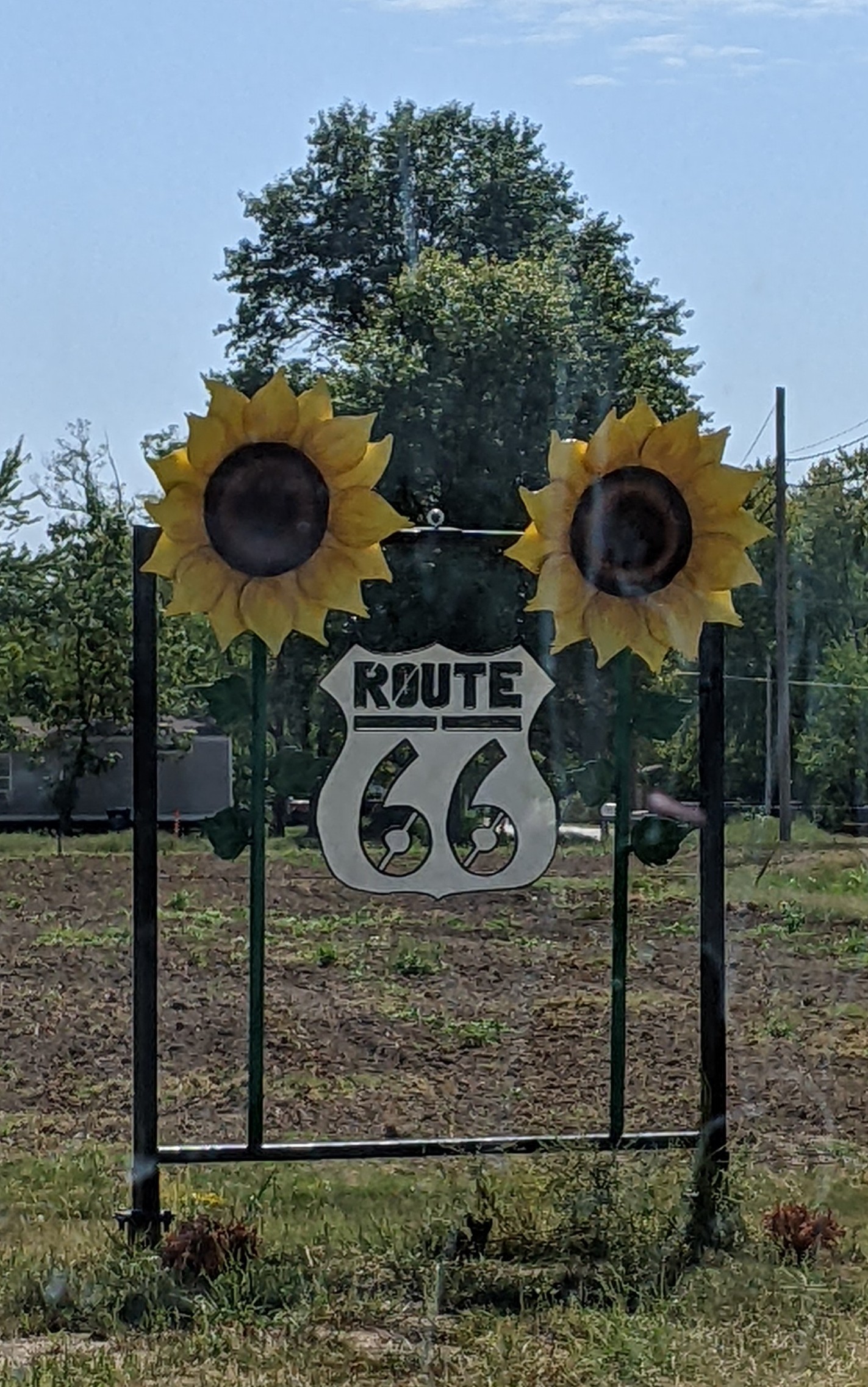
Nostalgic reminders of a very different past are evident along the way. History comes alive when the Route 66 signs appear.
Nelson’s Old Riverton Store has been in continuous operation since 1925. Today, it looks much as it did then, and operates similarly, welcoming locals and tourists alike. It’s worth a visit – try a beet-juice pickled egg or purchase kitchy Route 66 magnets, ball caps, license plates and t-shirts. Why? Just because!
Locals still come to buy a loaf of bread or a can of beans, grab a soda and a sandwich, or just while away the time with friends. It’s that kind of place. It appears to be decades ago that any repairs were made to the building. Wildflowers grow up along the fence line and hanging baskets add color to the scene. Shopkeepers are welcoming and only too willing to share stories with visitors. It’s like stepping back in time.
It’s impossible to escape the influence of the Route in this part of Kansas.
Cars on the Route
Fans of Disney’s “Cars” are in for a treat at Cars on the Route in Galena. Visit the old Kan-O-Tex station and get up close to the rusty boom truck that was the inspiration for Tow Mater in the movie.
Walk down a dusty stretch of road and around a corner to enjoy a sack lunch at rustic picnic tables in the shade of a ramshackle lean-to. Snap some shots of the quirky old photo boards before moving on.
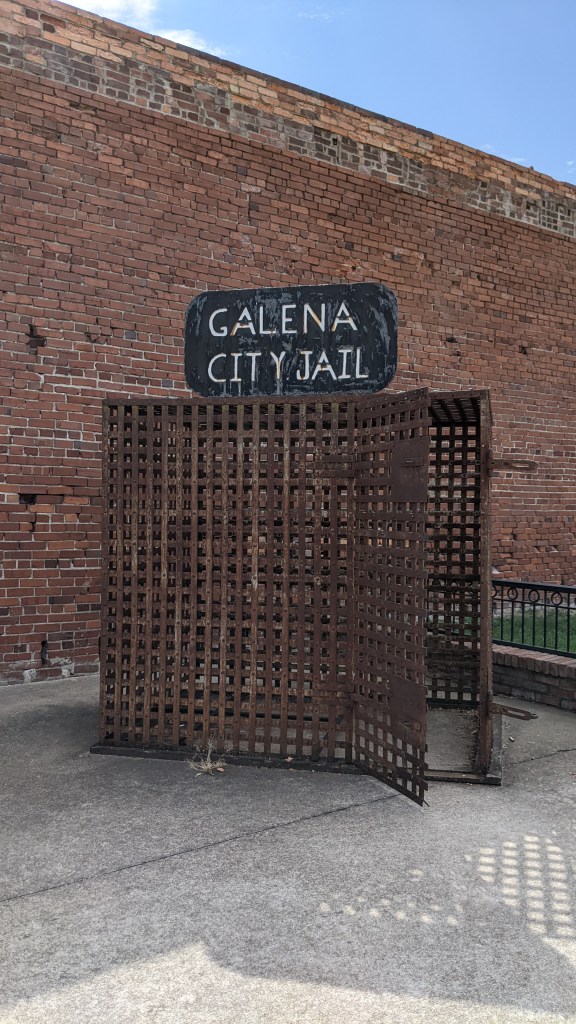
Other attractions in Galena include outdoor art and murals, a Texaco station turned curio shop on Main Street, complete with pumps set to recall the low gas prices of the time. There’s also a rusty old “jail” near the city’s square that provides an irresistible photo op!
We broke for lunch at Bricks & Brews in Baxter Springs, and what a treat that was, with a menu to satisfy any palate and attentive service accompanied by big smiles. We also stopped for an all-too-brief visit at the Baxter Springs Heritage Center and Museum. We had only limited time to spend, but it is a treasure trove of information about the town, the history of Cherokee County and southeast Kansas, the Civil War, and Route 66.
Nature and More
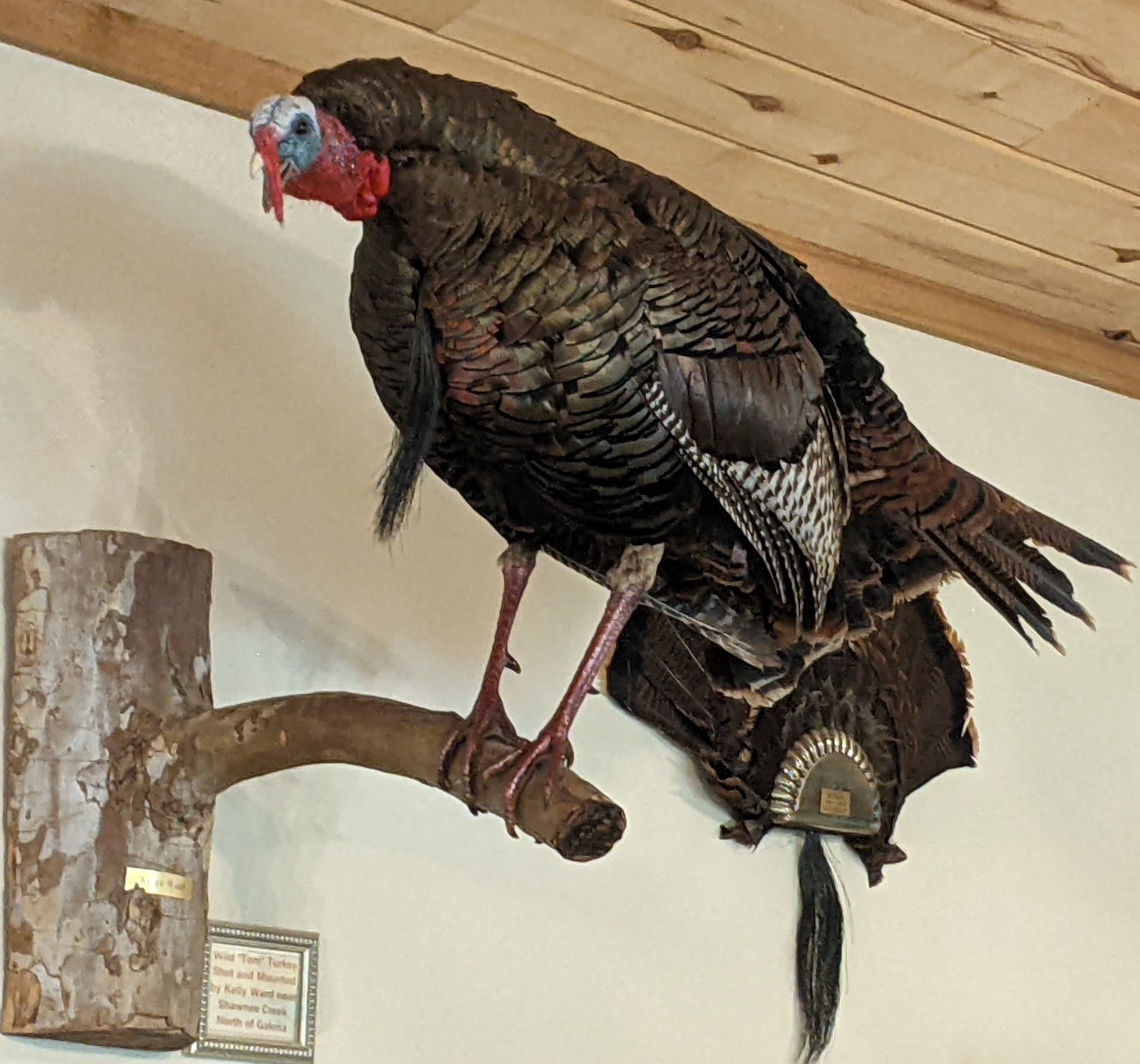
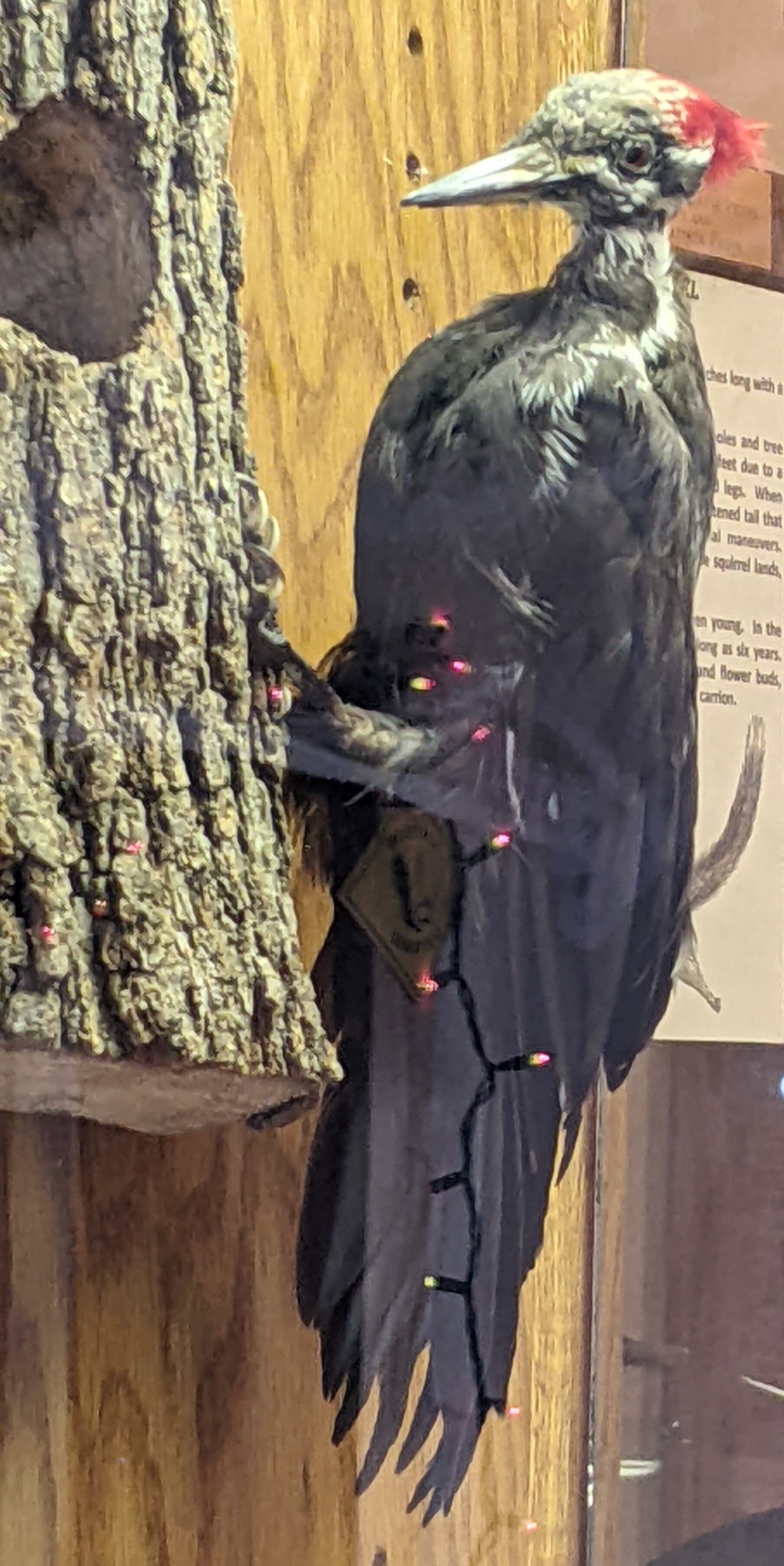
We pushed on to the Southeast Kansas Nature Center/Schermerhorn Park, near Galena. Admission is free, and the hilltop site acts like a magnet for anyone interested in visiting the 32-acre Shoal Creek Wildlife Area. There are wooded hills, streams, and caves to explore; dedicated anglers can even drop lines along a ¼-mile stretch of the creek. Indoor exhibits include live snakes, exploration drawers, plant, animal, and history exhibits, educational films, and the attention of a knowledgeable curator/guide. A bonus was a squirrel that visited the feeding station just outside the one-way glass!
Add in a visit to Big Brutus, standing tall and proud at an old coal mining site on the Kansas prairie, and we were ready to sample Kansas comfort food — fried chicken with all the fixins at not one, but two, local restaurants with long histories in Pittsburg, Kansas.
I’ll fill you in on the food — and there was lots of it — next time. Our group sampled both downhome dishes — some with a new twist — and culinary delights for sophisticated palates.
Planning a road trip to this part of Kansas from the neighboring states of Missouri, Oklahoma, and Arkansas, or from farther afield, is easy. It seems appropriate to leave the Interstates behind and enjoy the miles of farmland punctuated by picture-postcard views of old barns, fields filled with growing crops that stretch towards the sun, and animals lazily passing the time doing what farm animals do. The route stretches on with gentle curves; small towns are not far apart and each promises a unique and unusual experience.
Be sure to request your Kansas map and state travel guides in advance of a road trip to Kansas. Knowing where you’re going and what there is to see makes a driving trip so much better!
Full Disclosure: This trip was sponsored by Kansas Tourism, and the itinerary was prearranged. But the impressions are mine alone. I want to return, and it’s an easy road trip from my home base in Arkansas. I’ll be writing more about Kansas as well as about other travel to new destinations abroad in 2023. Subscribe to my blog here, or follow me on Facebook and Instagram.
Today’s Kansas is not the one that Dorothy and Toto might easily recognize. The winds still blow hard across the state’s prairies. No doubt they still have the power to swirl some dirt around and can occasionally cause tall grass to bend almost horizontal to the ground. The state has endured its share of hard weather and hard times over the years, and not only in fiction.
Today, however, Kansas has its eyes on the future, and that future is bright. The past two and a half years of pandemic closures and uncertainty have in some ways been a catalyst for the growth and development that began before the shutdown. Change is “impatient” in the state today.
The focus is forward-facing and the vibe everywhere is hopeful and energetic.
In late September, I participated in a whirlwind three-day tour of southeast Kansas. As the region’s Travel Guide proclaims: “SOUTH of the stars, EAST of the sunset, smack dab in the heart of America.” This is not a part of Kansas I had previously visited, and I didn’t know quite what to expect.
From the air, the state resembles a patchwork quilt of color, with sinewy ribbons of rivers and roads winding across the prairies. Kansas is filled with small farming communities, each with a unique personality. There are many; we flew into Kansas City, visited Fort Scott, Humboldt, Chanute, Galena, Pittsburg, and Baxter Springs, and drove through others without stopping. Although all towns in Kansas are classified as “cities,” only five boast populations of 100,000 or more. Everywhere we went, we met locals who are in the process of redefining their past history and their future in distinctive ways. Make no mistake, history is intertwined with dreams here in southeast Kansas, and that contributes to the region’s infectious vitality.
To be fair, I was not completely unfamiliar with Kansas, known as the Sunflower State. I was grounded at the Kansas City Airport during a snowstorm many years ago — not one of my happier memories. But the flatland prairies calm me, and road trips always are interesting. The Cosmospherein Hutchinson is not only fascinating but well worth an extended visit. Four years ago, I enjoyed an all-too-short visit to Wichita. I knew about Fort Leavenworth and Fort Riley, but Fort Scott was new to me.
However, I didn’t arrive for my recent visit to this “flyover state” anywhere near as enthusiastic as I was when it came time to leave. The trip was eye-opening, the people welcoming and the sights impressive in unique ways. It was invigorating to spend time on the ground in the heart of America.
I want to return. Sooner rather than someday!
Today’s winds of change are especially strong in some of the state’s traditional farming communities. The New York Times chose Humboldt as one of its 52 best places to travel for 2022. After being there, I know why! The land may not have changed much, but its inhabitants have. It’s hard not to fall in love with this part of the state. Southeast Kansas is full of pleasant surprises and some quirky attractions, and its people seem to be moving at full throttle into a future even they cannot yet quite imagine.
Travel with me . . .
Over the next several weeks I’ll share more of my thoughts. We’ll start in Fort Scott and the jewel in its crown – the Lowell Milken Center for Unsung Heroes. Then, we’ll move on to the 13 miles of Route 66 that still cross this corner of the state and explore other Kansas byways, ending in Emporia, now the acknowledged center of two thoroughly modern sports – disc golf and gravel bicycle racing. We’ll visit the Martin and Osa Johnson Safari Museum in Chanute, a small city also known for its ties to railroading and early aeronautics.
All along the way, we’ll explore Kansas eateries, sampling traditional “comfort food” and new taste treats served by innovative chefs and restaurateurs. This was a trip that kept us on the move. Despite a rental van glitch that required a delayed start and an initial itinerary adjustment, our group of journalists crammed a week’s worth of experiences into the time we had, thanks to the extraordinary planning of Kansas Tourism and our local hosts.
Join me to learn more about the food we enjoyed along the way — it may surprise you! Then, if you should decide to see southeast Kansas for yourself, know that residents of its many charming communities will show you around and make you feel at home — visitors to Kansas don’t remain strangers for long!
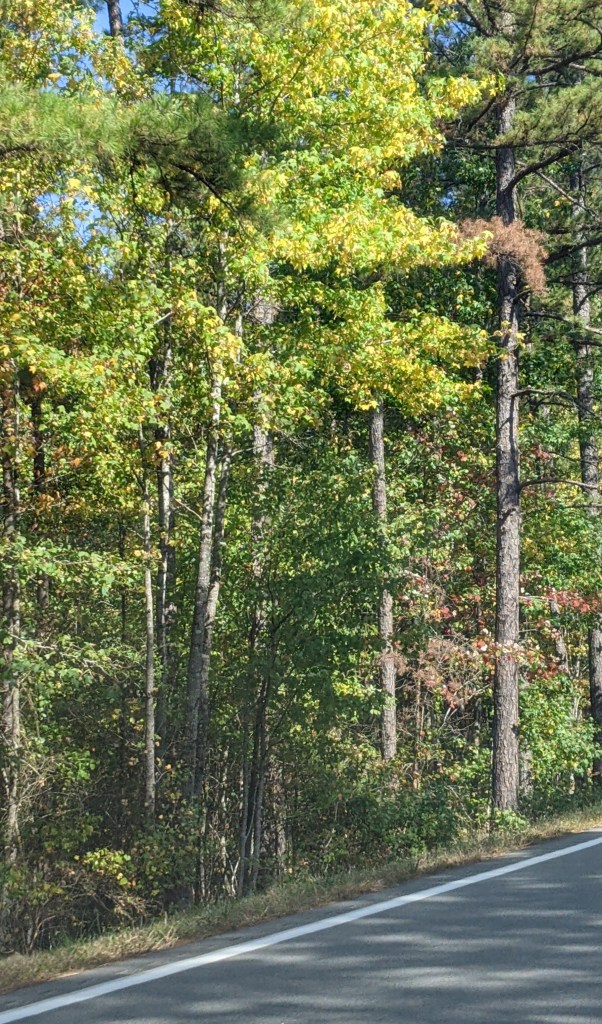
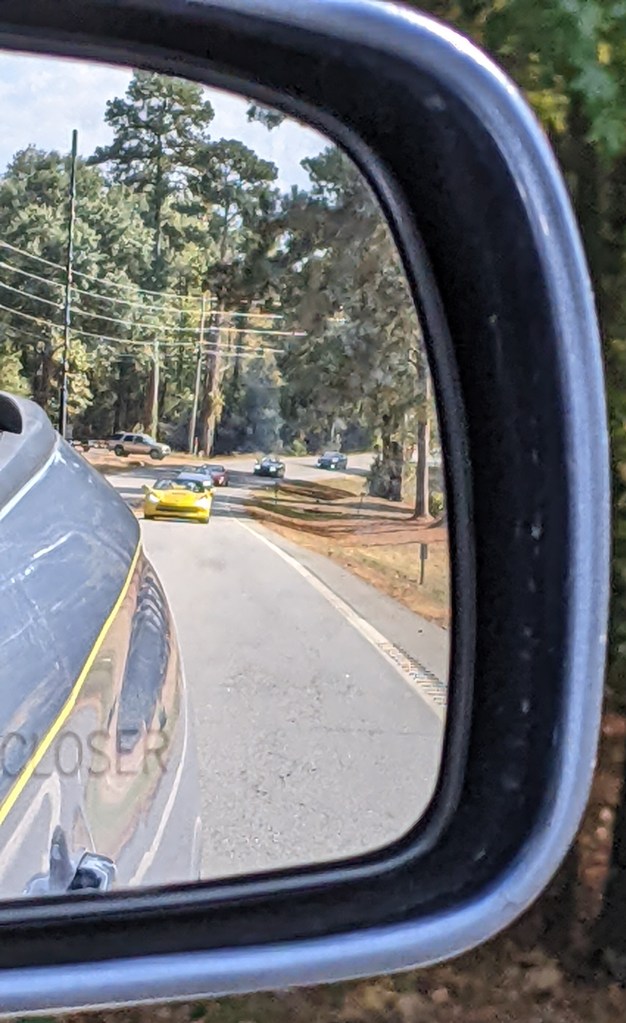
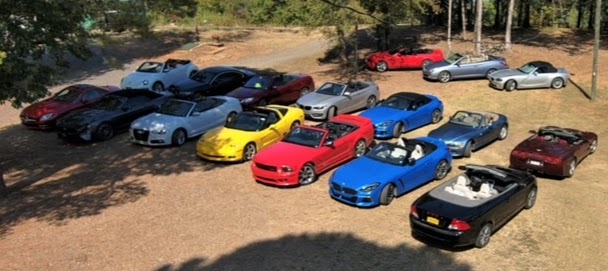
A string of convertibles – all with tops down — left last Saturday morning for a leisurely road trip from Hot Springs Village to Toad Suck, a little town in Arkansas with a name that invariably makes people laugh or shake their heads in disbelief. The excursion was a fall event for members of the loosely organized convertible-owners group “Escape the Gate.”
There may be a few “wannabe convertible owners” among the 190 names on the email list of this group, but on this day 52 people gathered in a parking lot just outside this planned, gated community. We departed in 26 shiny automobiles on an hour-long drive through scenic byways and fall foliage.
The planned destination was lunch at Toad Suck Bucks, a riverfront steakhouse with its own unique story, situated on a bluff overlooking the Arkansas River not far from the lock and dam that share the name.
The eatery is a lively place from Thursday through Sunday, featuring comfort food and good service, cold beer and good bourbon, as well as pool tables and shuffleboard inside and live music on the patio Friday and Saturday evenings. It’s lively and informal, and everyone there seems to know their neighbors.
Toad Suck Bucks has been drawing a crowd for 23 years. Except for a few more dollar bills stapled to the walls and columns today, it probably hasn’t changed much since it first opened. Toads – what else? – are a décor element.
The owner doesn’t normally fire up the grill until 2 p.m. on Saturday and at 4 p.m. Thursday and Friday.
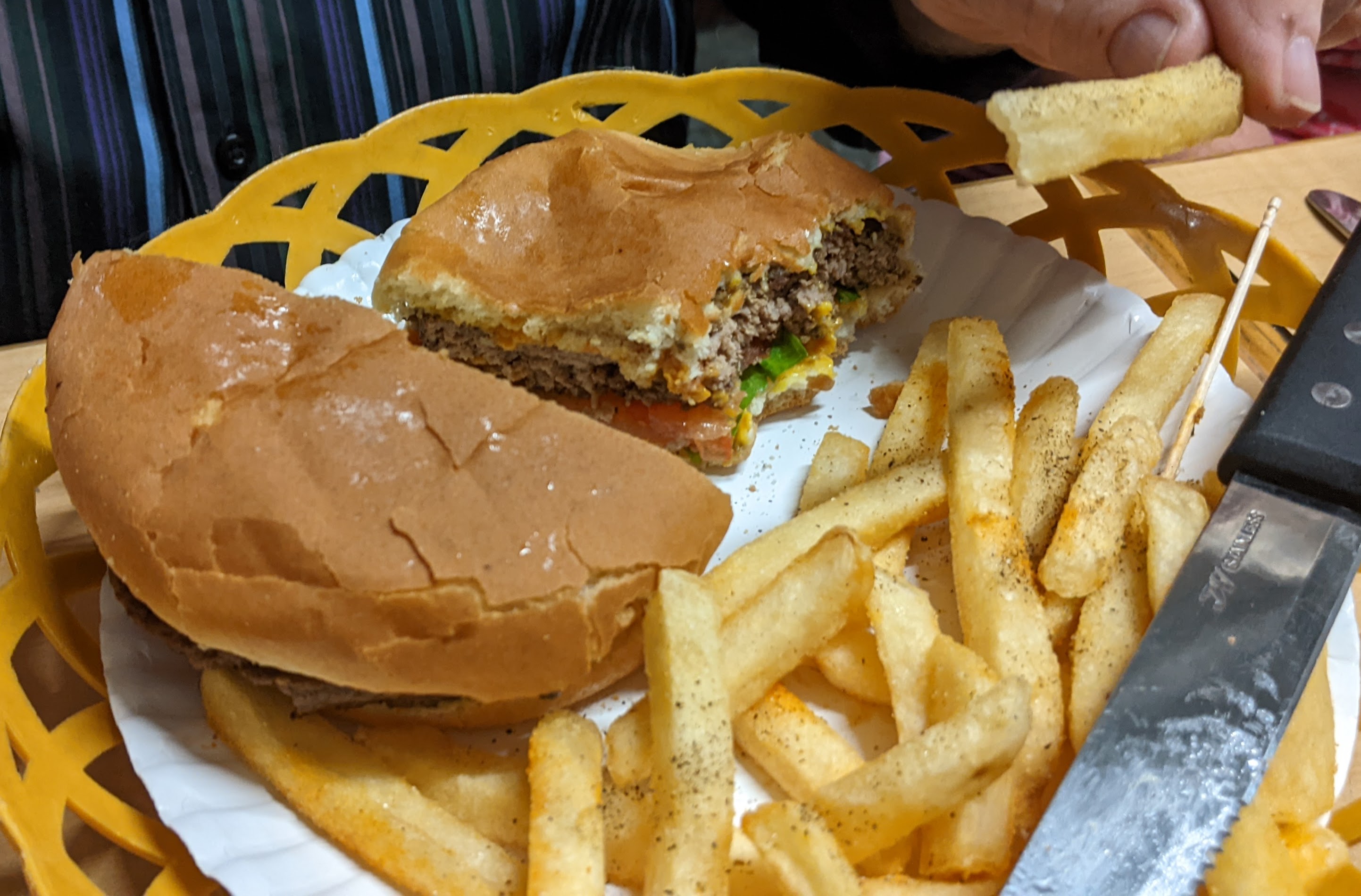
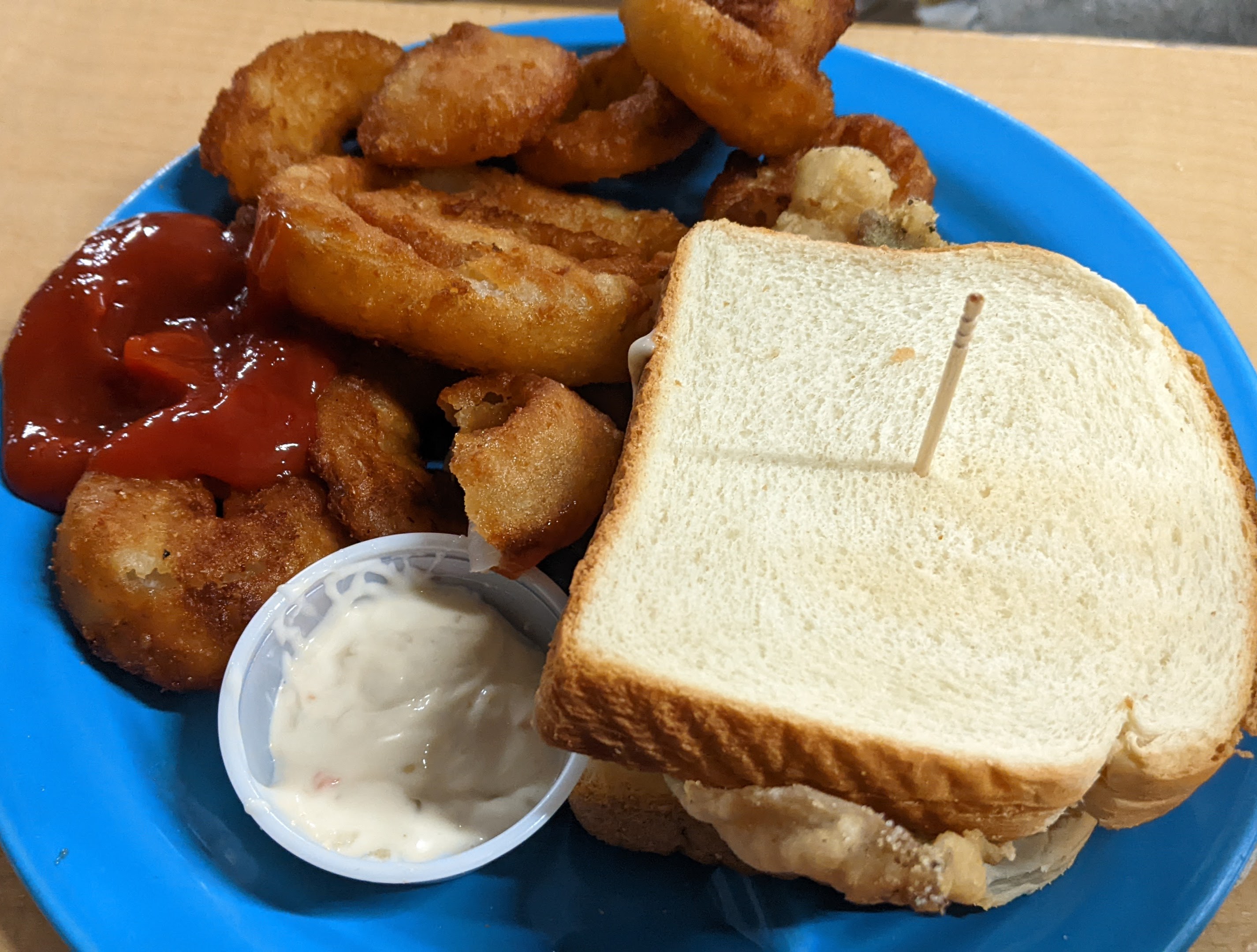
However, owner Ted Buck agreed to be there early to accommodate the convertible crowd on this Saturday. He was in the kitchen turning out burgers and fries, catfish sandwiches and fried bologna sliders, grilled shrimp and pork tamale bites, assisted by his wife and regular crew who pitched in to assure that the people-pleasing quality of this country-favorite diner was intact. Buck still found time to shake hands and explain the history of this quirky Arkansas treasure.
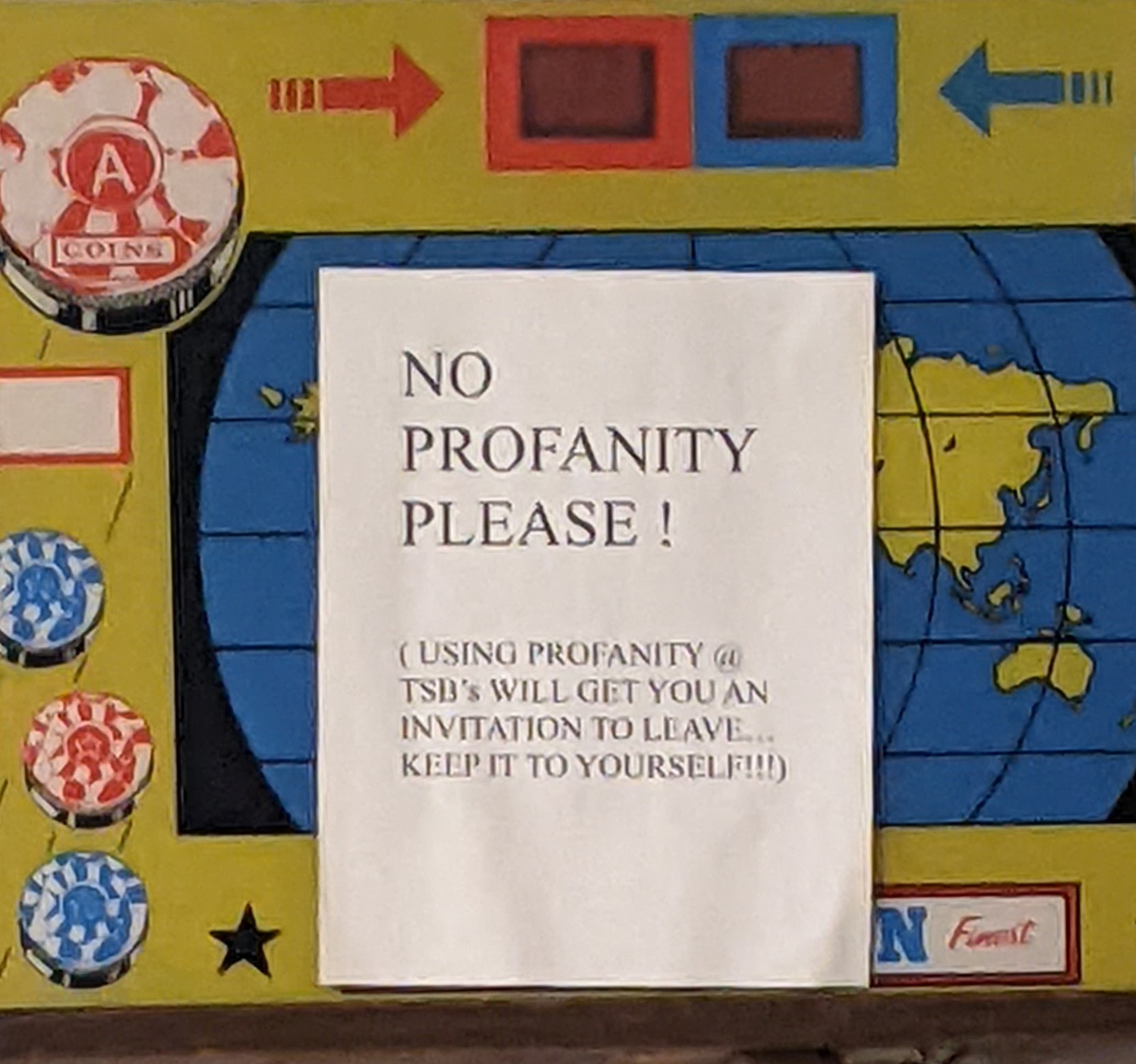
It’s a unique find, but it’s not at all unknown. Toad Suck Bucks boasts a Facebook following of 7.4K, with nearly as many likes! The interior is as quirky as the name, filled with mismatched tables and chairs that can be reconfigured at will to fill any need. There is a sign that proclaims: “No profanity, please,” and another hand-lettered sign hangs from the ceiling near the kitchen as the dessert menu. I’ll bet it changes often, based on what’s in season, or maybe just at the whim of the baker.
Parking isn’t a problem, and it’s obvious that when the weather allows, the “party” naturally spills onto a patio that’s filled with picnic tables and comfortable lawn chairs! Open bulbs are strung for evening illumination and there are no posted closing hours!
Buck returned to his native Arkansas following military service in both the U.S. Navy and Air Force – he laughingly agrees that’s unusual, and he eventually settled on this quiet spot in this peaceful part of the state. A couple of homes and several outbuildings exist on the property today, and a single sign at the head of a long driveway leads newcomers to the site.
He says he operated a flea market in the building that now houses the restaurant, then he bought a pool table to pass the time with friends. One pool table wasn’t enough, so he bought several more, and more friends arrived. Buck once served simple snacks, with BYOB get-togethers the norm. Then, he adds, “Someone suggested we grill some steaks.”
Toad Suck Bucks was born.
Getting there isn’t always easy. No billboards proclaim its existence. There was a several-mile stretch of dirt road that had drivers wondering if we had all taken a wrong turn. Our colorful convoy prompted other drivers to stop, wave, and let us pass as we made our way through small towns and turned across lanes of traffic. I’ll wager we could have asked directions from any one of the residents had we actually thought to do so. Despite the dust, our group arrived intact, and later Buck shared the “easy way” to keep us all on pavement on the way home.
All in all, it was a perfect autumn day for a top-down drive along country roads, an excursion that makes for fond memories. Ken Buck has surely been doing something right for the past couple of decades, and many of our group vowed to return. Add 52 more “likes” to the total!



















































































 Good Food and Faraway Places