Decoration Day

Today is Memorial Day. It was proclaimed so only in 1971, by an act of Congress, to be celebrated on the last Monday in May, but the tradition of decorating gravesites and paying tribute to those who died in battle, or as a result of injuries sustained in service, goes back a lot further in time. Some say it was always a Southern tradition. It is true that May 30 was celebrated as Decoration Day, beginning in 1866, following a declaration by U.S. Gen. John A. Logan, who took his inspiration from the practice of cleaning and decorating relatives’ graves each spring, especially the gravesites of Confederate dead.

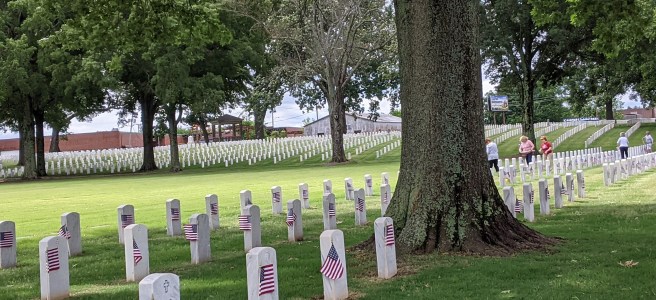
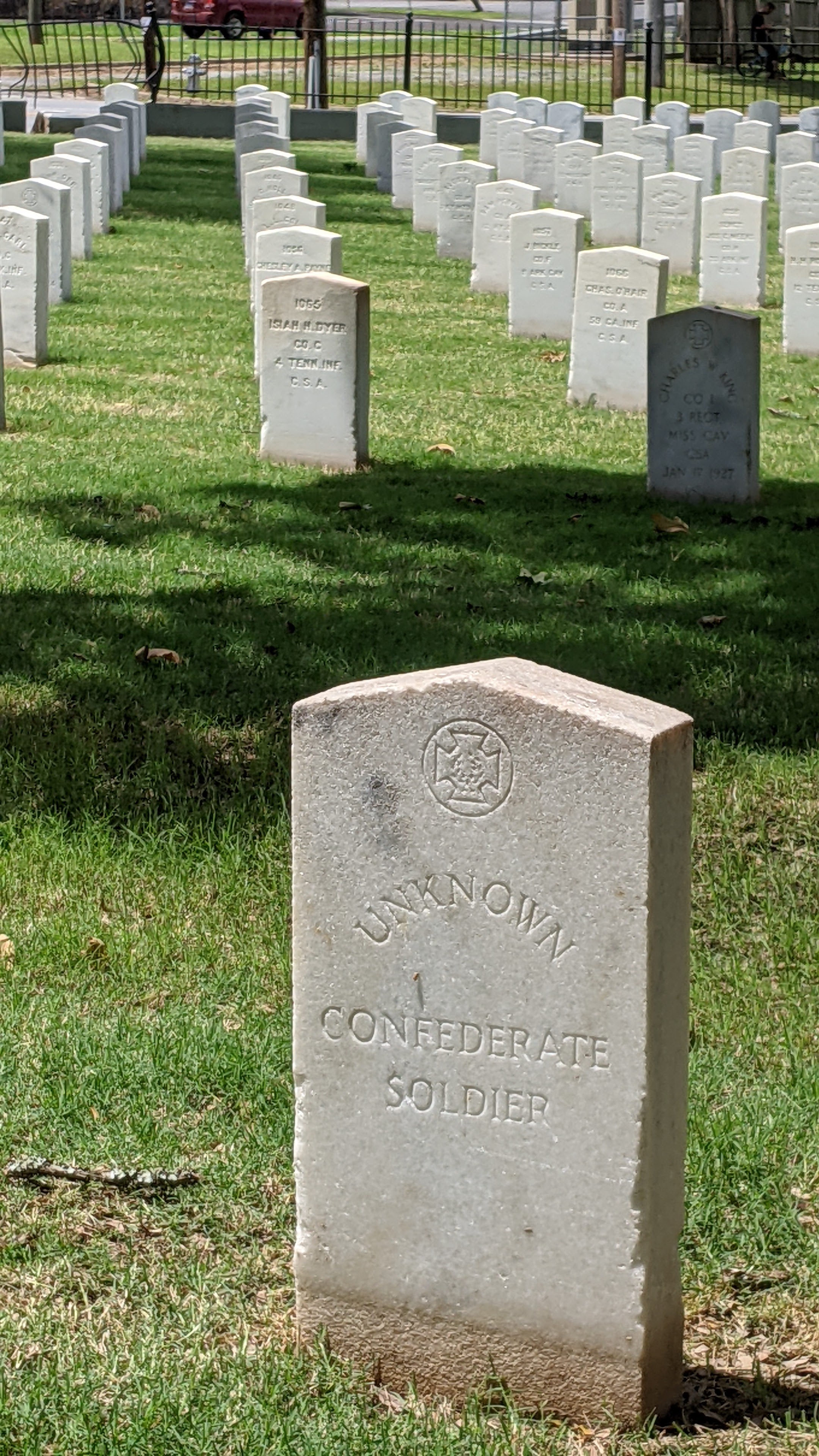
I was privileged last Friday to be one of a small group who volunteered to place flags in a single section of the Little Rock National Cemetery for Memorial Day. In a little more than two hours, our group of nine decorated more than 1,800 headstones with the small, simple reminders that a nation still honors those who died in wars fought to defend the freedoms we now enjoy.
The day was first celebrated nationally in the United States in 1868, during a ceremony at Arlington National Cemetery in Washington, D.C., where both Union and Confederate dead are buried. As the years passed, it came to be known as Memorial Day, and after World War I, the same date was celebrated across the United Kingdom, and elsewhere in the world as Poppy Day or Remembrance Day. The tradition continues, but in many places, the date has come to be celebrated not as a tribute to those who gave their lives in service to the country, but as a party weekend that signals the beginning of summer.

Perhaps there is room for both.

I choose, each Memorial Day, to take at least a few moments to pay tribute to those who died so that my family and I can live in peace and enjoy the coming summer’s activities. As the proud daughter of a retired military officer, the wife of another former Army officer, and the descendant of many men who served honorably in war and peace in our country’s past, I cannot forget the sacrifices of those who served, both at home and in foreign lands and did not return to enjoy the privileges that they won in battle.

I have written before about my visits to battlefields, and my feelings. I could not help but recall, as I planted small flags aside the headstones of men and women I did not know, those other visits and those other feelings. When the work was done, I took a few moments to walk alone among other markers at the Little Rock Cemetery. Sadly, there were not enough volunteers this year to place flags at all the headstones — many of them date to the Civil War. Separate burial grounds of Confederate and Union soldiers have been incorporated into the grounds of the National Cemetery.

The markers and their inscriptions are telling. Spanish American War, World War I, World War II, Korea, Vietnam, Gulf War. History is alive in this somber place. Veterans from all services who have markers here served in all the battles this country has been engaged in — from that war between the states to foreign battles in which we had no stake. Most of them did not die in battle; they died as old men, but they served, and that service changed them. I am sure that, until the end of their days, they took pride in their service, knowing that what they did allows the rest of us to live our lives in relative peace and prosperity until the end of our days.

A time to be silent . . .

When the tourist buses leave, quiet descends and shadows begin to fall over the battlefields. A hush falls over the land, and it’s hard not to speak in whispers. It is also difficult to fight back the tears. Gettysburg is a stark reminder of another time, when the air was filled with smoke and cries echoed on the wind.

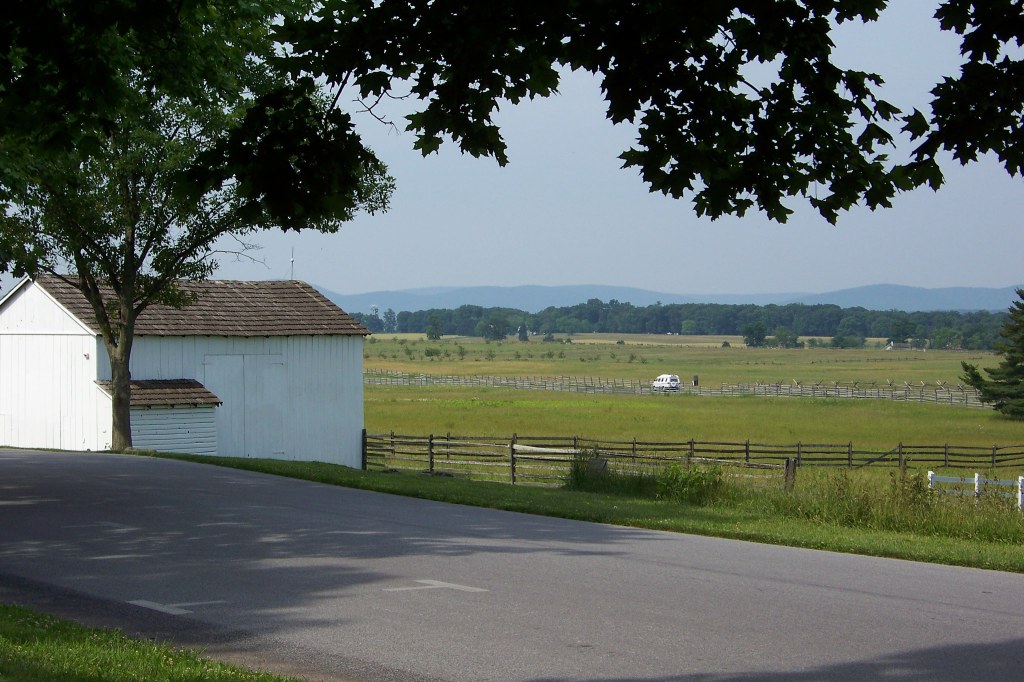
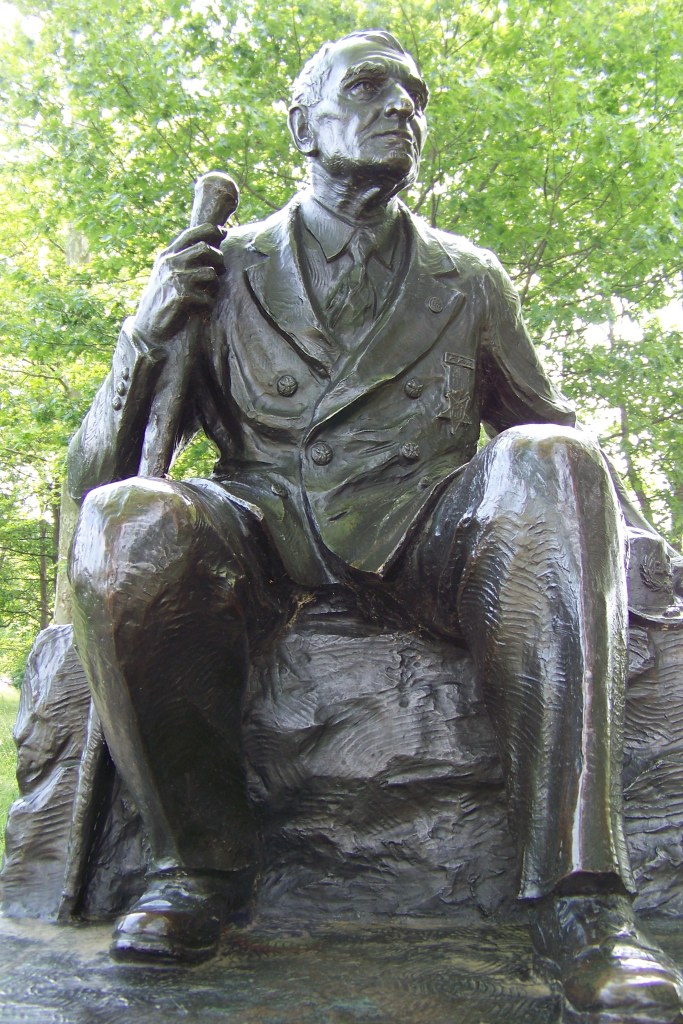
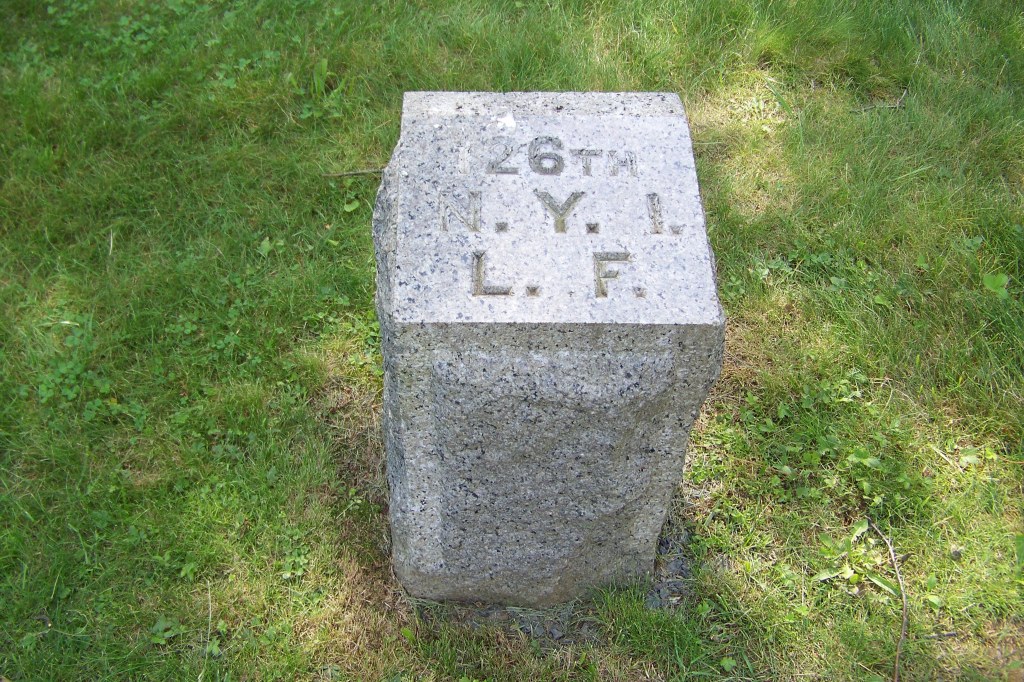
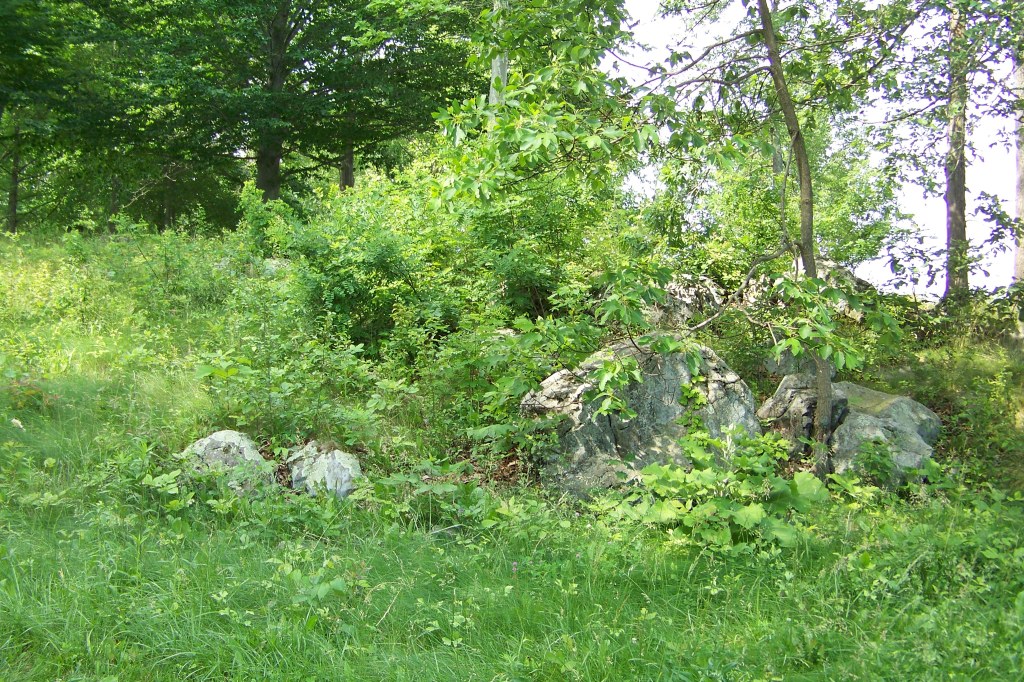
At least that’s how I imagine it. And those were my feelings last year in Gettysburg. The land was beautiful then, alight with the new growth of young grasses waving in the breeze and flowers blooming in the sun. And monuments. The monuments are both small and grand, sited haphazardly, it seems, on plots of ground that must have great meaning to the survivors of the men who fought here.

It’s a somber place in the late afternoon as the sun begins to move low over the western horizon. Battlefields are always somewhat difficult to visit. Civil War battlegrounds are especially sobering. They are smaller than expected, making it easy to imagine facing an enemy up close and personal and terrible to think about that reality.

The fields of Gettysburg, though, are expansive; the hills roll on into the distance; split timber fences delineate the fields, defining various encounters between Union and Confederate forces, and even driving through the area takes time. I felt compelled to walk among the monuments, to read the inscriptions, to wonder about the units they honored, and to think about the men who died on that ground.

Battlefields have a peculiar pull, no matter where I encounter them, and I have walked silently among the ghosts on battle plains across the globe, from the Little Big Horn to the beaches of Normandy, from the Golan Heights to Glorieta, New Mexico. I have also meandered among the headstones of military cemeteries in this country and in other nations, wondering about the lives of the men buried there, and about their survivors.

I always come away from battlefields with a sense of wonder that no matter how bloody the battle, the earth itself recovers from war relatively quickly. It is much more difficult for the people.

So today – Decoration Day was first celebrated on May 30, 1868 – at 3 p.m., the traditional hour of remembrance, I remember that battle fought long ago in Pennsylvania, and all the other battles of the Civil War and the wars that followed. Whether it’s now called Memorial Day or Remembrance Day or Poppy Day, I like to think that we are moving toward a time when battles will no longer be the way to resolve differences, when our children’s children can walk confidently into a future that only honors servicemen and women who died long-ago.

I thought about all of that yesterday as I enjoyed burgers and bratwurst, potato salad and apple pie with a small group of friends. It was a long weekend, after all, and it’s always good to be with friends and to share good food.

But today, because this is the real Memorial Day, I once again remember the fallen soldiers and those members of the armed services who still are called to give their lives in the service of their country.

The Civil War took more lives than any other this country has fought. We can debate, from the comfort of our time a century and a half removed, the issues that led to that war and that provoke other wars, but we cannot deny the consequences. And we must not forget that good and noble men fought on both sides. Warriors have left grieving families in all the battles since. It is good to pay homage to sacrifice like that.

Now, more than ever before, it seems imperative that we learn from our past. We can then move on to the task of writing the future the way we want it to be.