A Trifecta of Shore Excursions

My husband and I chose to celebrate our late January anniversary this year aboard ship. Our itinerary, sailing from Galveston, was to ports we had previously visited, but we were eager to warm our bodies and refresh our spirits during a brief seven-day getaway.

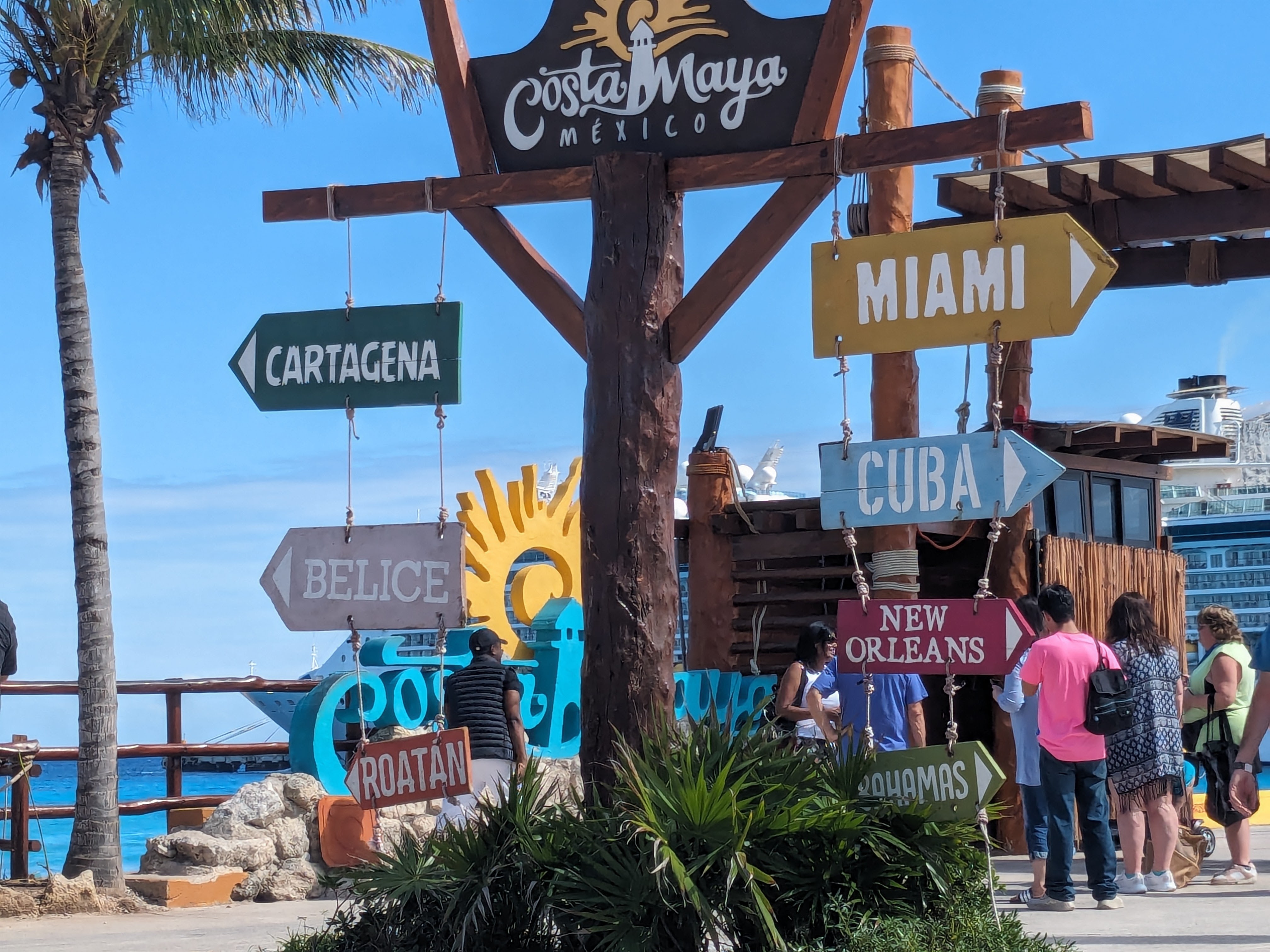
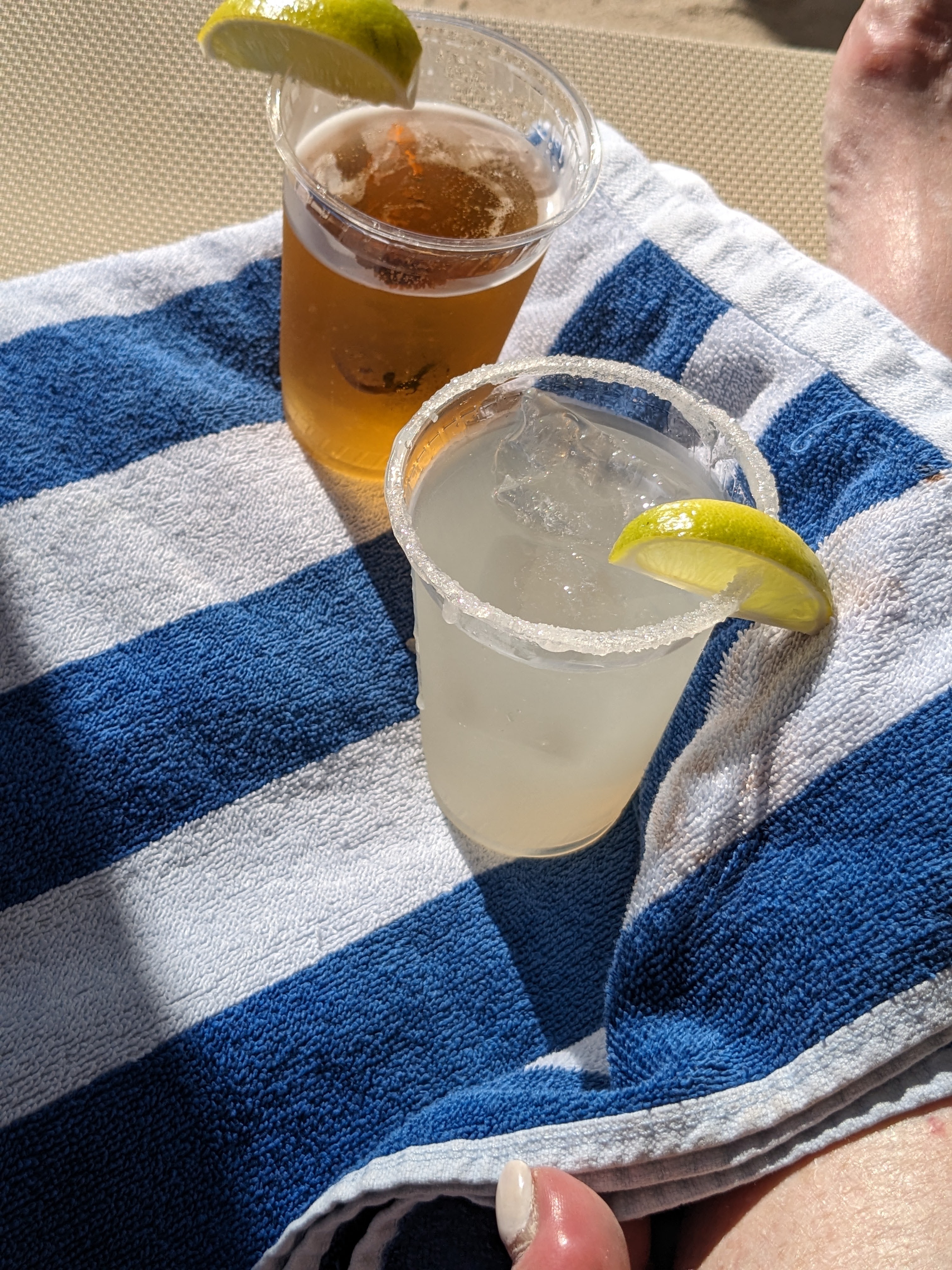
On this voyage, we enjoyed beach time, beach cocktails, and beach vendors in Costa Maya, the first port we visited in the Gulf of Mexico. It was a perfect day, and it fulfilled our need to dip our toes in the water and feel the sand beneath our feet. We spent our hours ashore doing exactly that. We snagged comfortable loungers, enjoyed a few cool libations, and watched people having fun. That was our brand of enjoyment — doing nothing other than enjoying the people around us, and savoring every moment of sun and warmth. I even succumbed to the temptation of a henna tatoo!

Then, we returned to our floating resort hotel for dinner and evening entertainment.
Tabasco: How Hot Is It?

Earlier, in October 2023, I toured the Tabasco plant, home of the world’s best-known hot sauce. The history of The McIlhenny Company which produces the Tabasco brand is fascinating. Still a family-owned business after more than 150 years, the company ships its products from a small factory on tiny Avery Island, Louisiana to 195 countries worldwide.

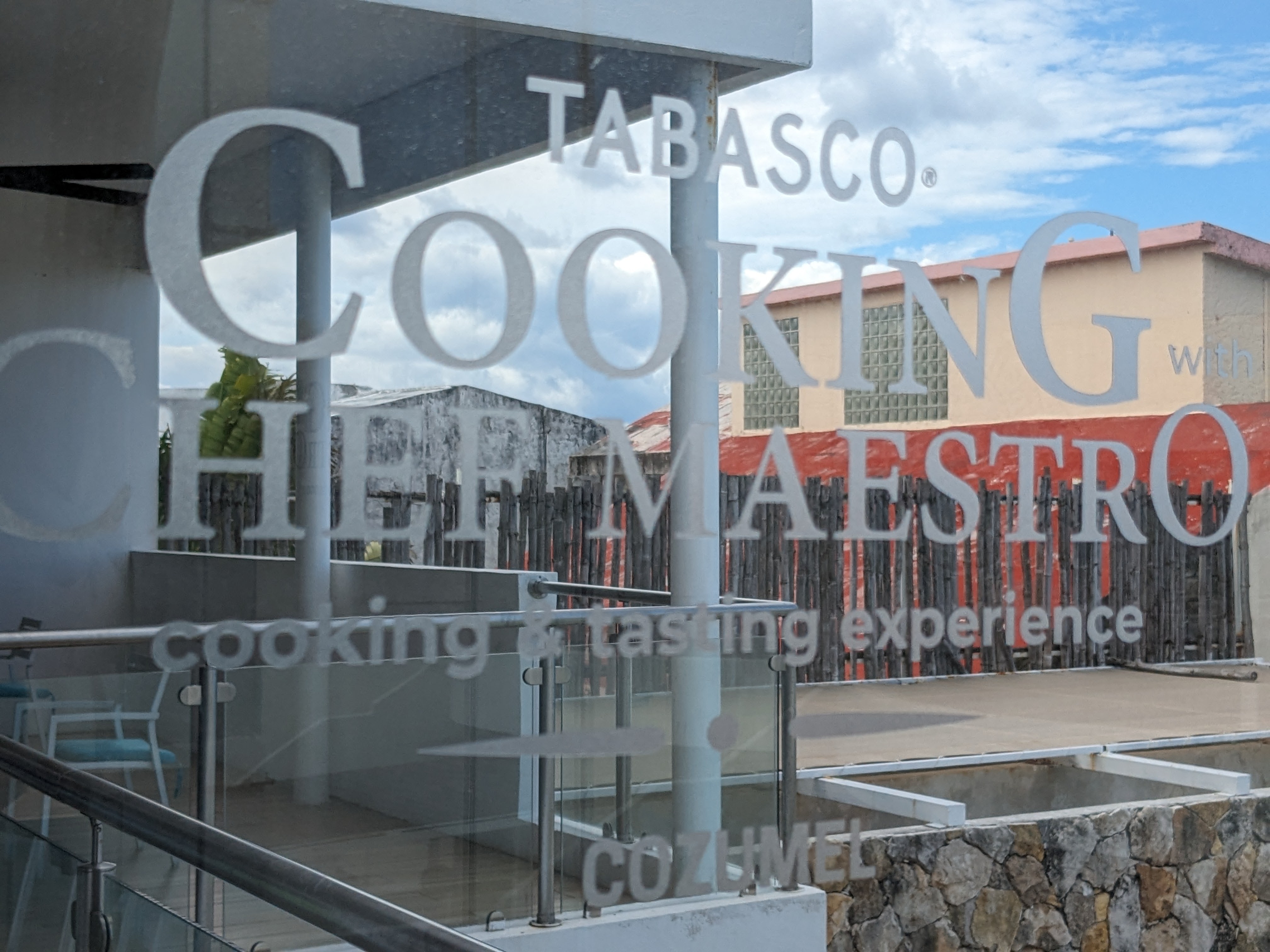
Cozumel was the final port of our seven-day itinerary. There, I once again encountered Tabasco, this time in the form of a culinary adventure I couldn’t resist.

I had booked the “Chef Maestro Tabasco” excursion, a culinary adventure I couldn’t resist, through Princess. Following my visit to Avery Island, the “home” of Tabasco, I was eager to learn more about cooking with the hot sauce.

This excursion did not disappoint!

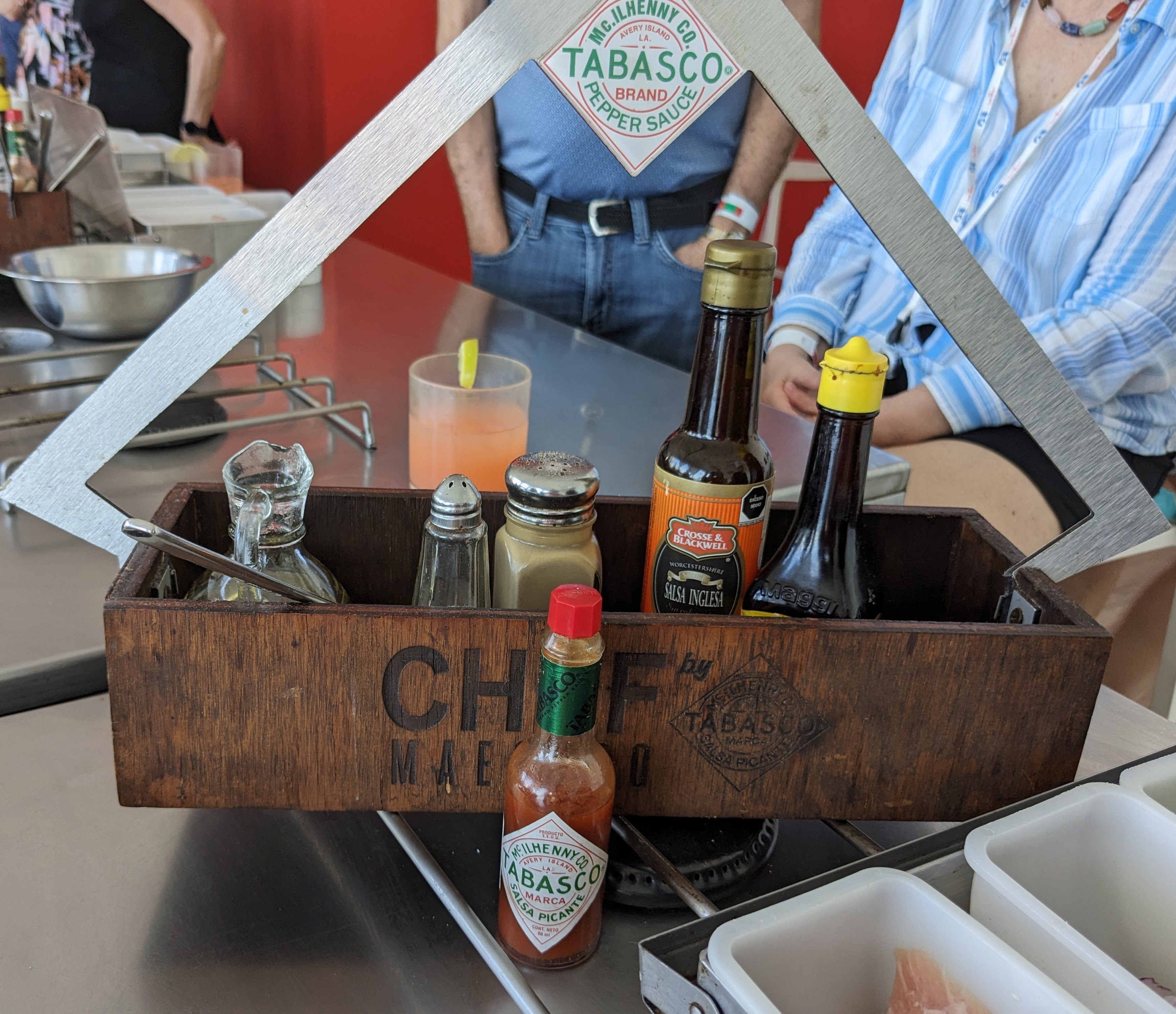
That little bottle of red pepper sauce has been a staple in my kitchen for many years, but I have seldom used Tabasco for food preparation in my home. Instead, I have typically placed it on the table at casual gatherings, allowing guests to ramp up the “hot” to their own preferences. We were somewhat surprised that on this Gulf of Mexico sailing, there was also a bottle of Tabasco on each dining table, along with the salt and pepper shakers!

During my Louisiana trip, I was able to sample food specialties associated with Cajun history, culture, and tradition. I learned how the flavors of simple foods are enhanced by various herbs, spices, peppers, and sauces. I learned that hot sauce can be flavorful as well as fiery, and that spice can elevate common ingredients to levels of haute cuisine.

Feasting on Entertainment

I also realized that the hot red peppers used to create Tabasco sauce had most likely been brought back to Texas and Louisiana by soldiers who fought on the nearby Mexican mainland during the Mexican-American war. Cozumel is not far from the Mexican state of Tabasco.

As it turned out, this cooking excursion was one of the highlights of the voyage, both for the foodie experience and for the pure fun of it. Who would pass up a culinary adventure that includes Margaritas as well as tips for cooking with Tabasco?

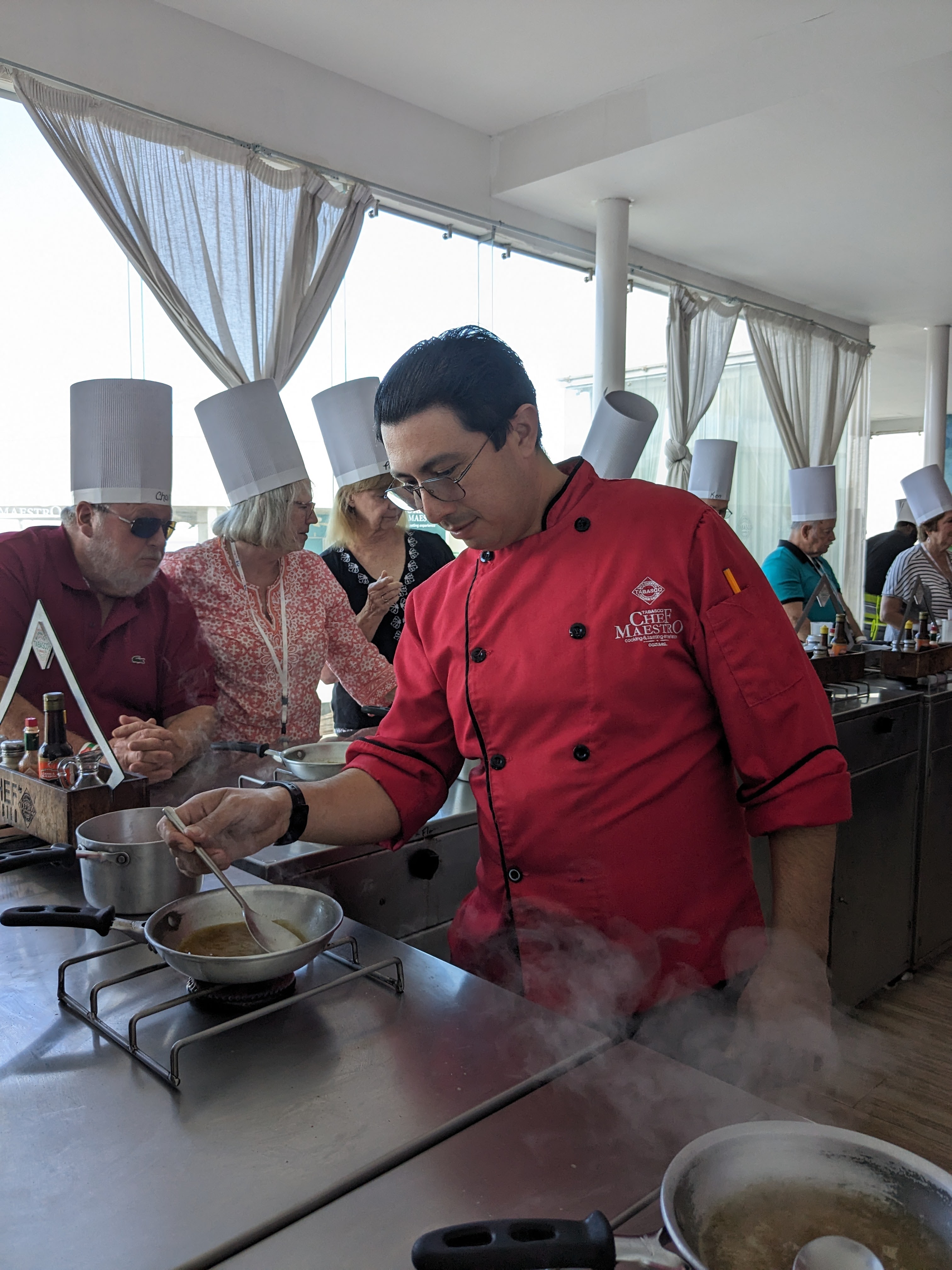
We were entertained from the time we entered the second-floor demonstration kitchen at Cozumel’s Hotel Blu until the moment we were ushered into a waiting cab for our return trip to the pier. At the outset, we donned tall, white, pleated-paper chef’s hats as we awaited further instructions.

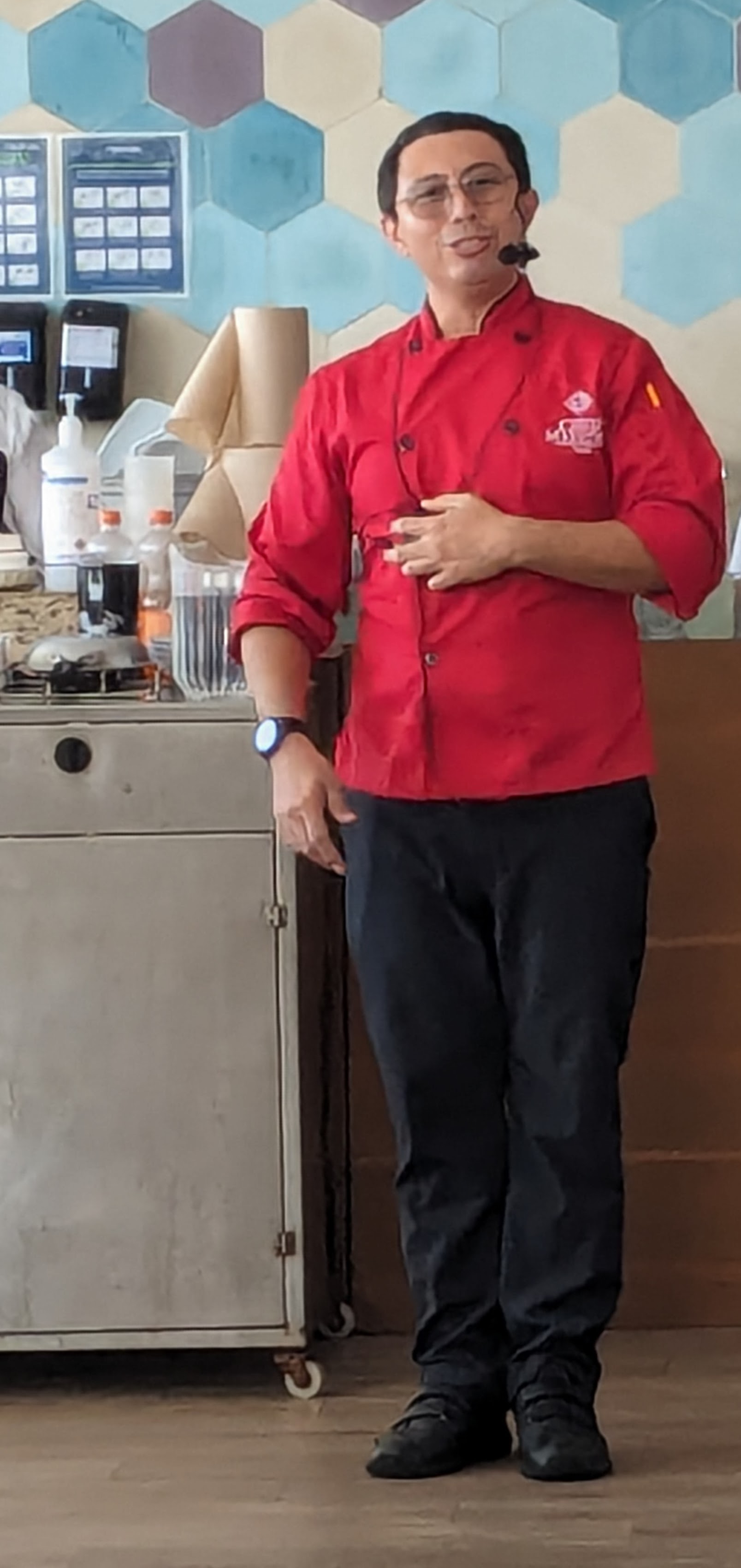
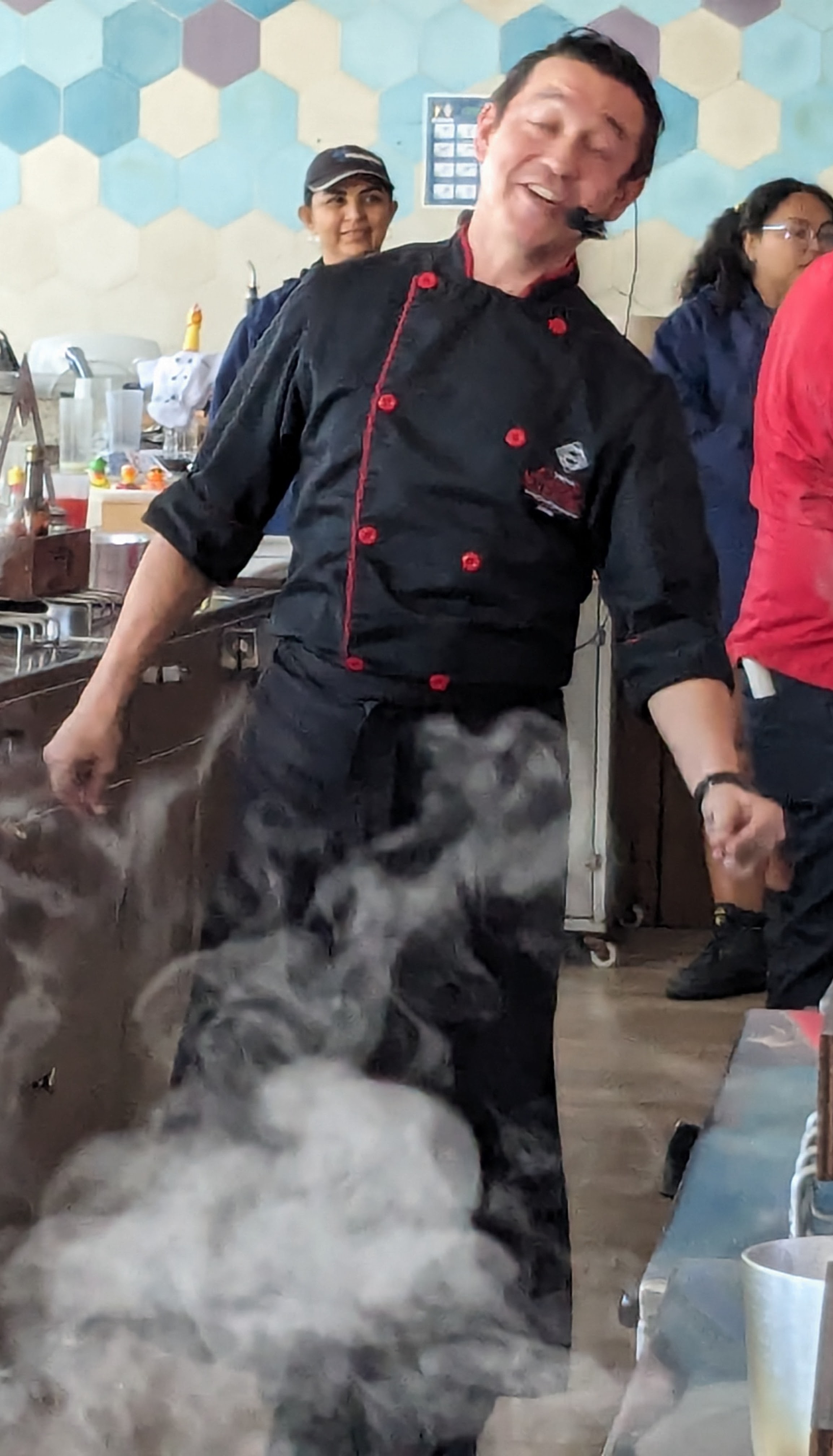
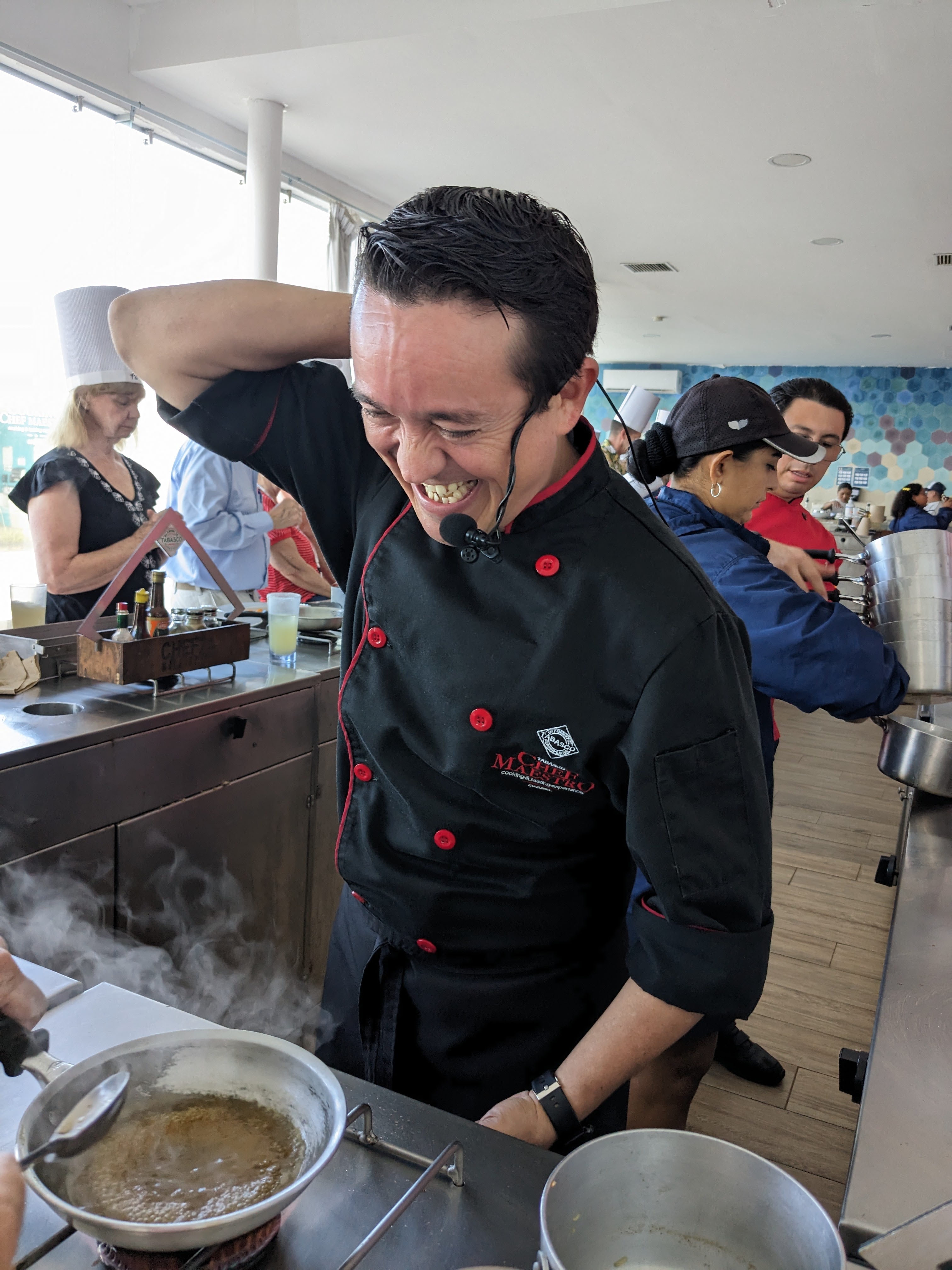
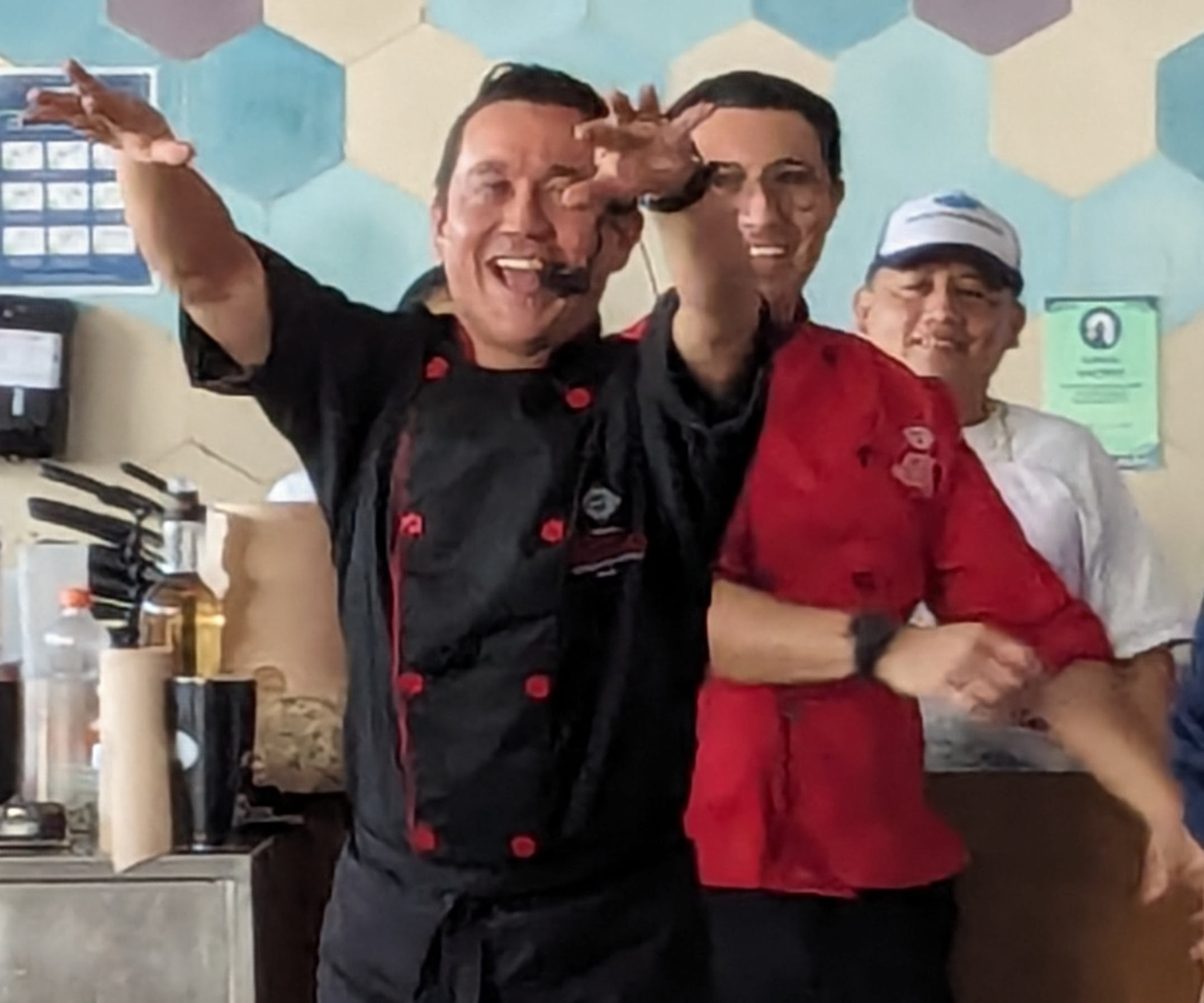
Our chef for the day, Luis Esquivel, was personable and enormously engaging — full of energy, wit, talent, and knowledge.

Let the Cooking Begin

The class may have been two-thirds “show biz” to one-third serious food preparation, but it was nonetheless informative. Chef Luis introduced us to his assistant, Antonio, and to the distinctive flavors of Mexico with an island twist. We learned how to adjust the spice to our personal preferences, and we learned that hot, spicy dishes can be tempered with cool or creamy sauces and tamed by accompanying drinks. These lessons returned with me to my kitchen.

Drinks flowed freely throughout this lighthearted cooking demonstration. The first question put to each of us was “Margarita or Pina Colada?” With that, we took our places at our assigned cooking stations where ingredients had been laid out for the dishes we would prepare.
Floor-to-ceiling windows framed a view of the blue sea beyond and the hotel’s dolphin pool just below. We were tempted to simply sip on our Margaritas and watch the dolphins frolic, but there was serious food prep to be completed. Chef Luis and his sous chefs tried their best to keep us on track.

We first prepared a simple shrimp cocktail, with fresh greens, boiled shrimp, lime juice, cocktail sauce, and Tabasco to taste. It was to become the first course of our dinner, so it was put aside to chill.

The learning experience was underway.

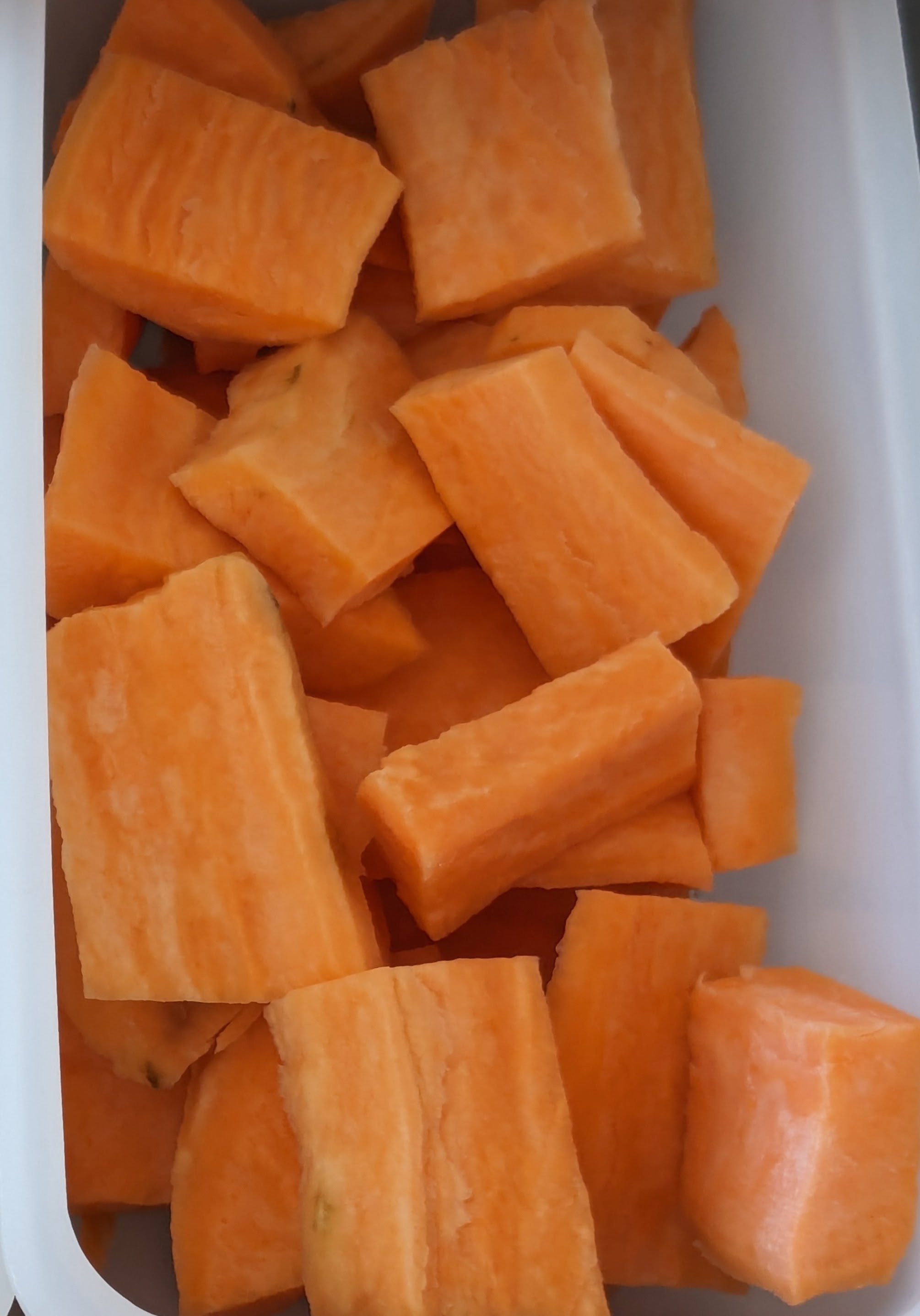
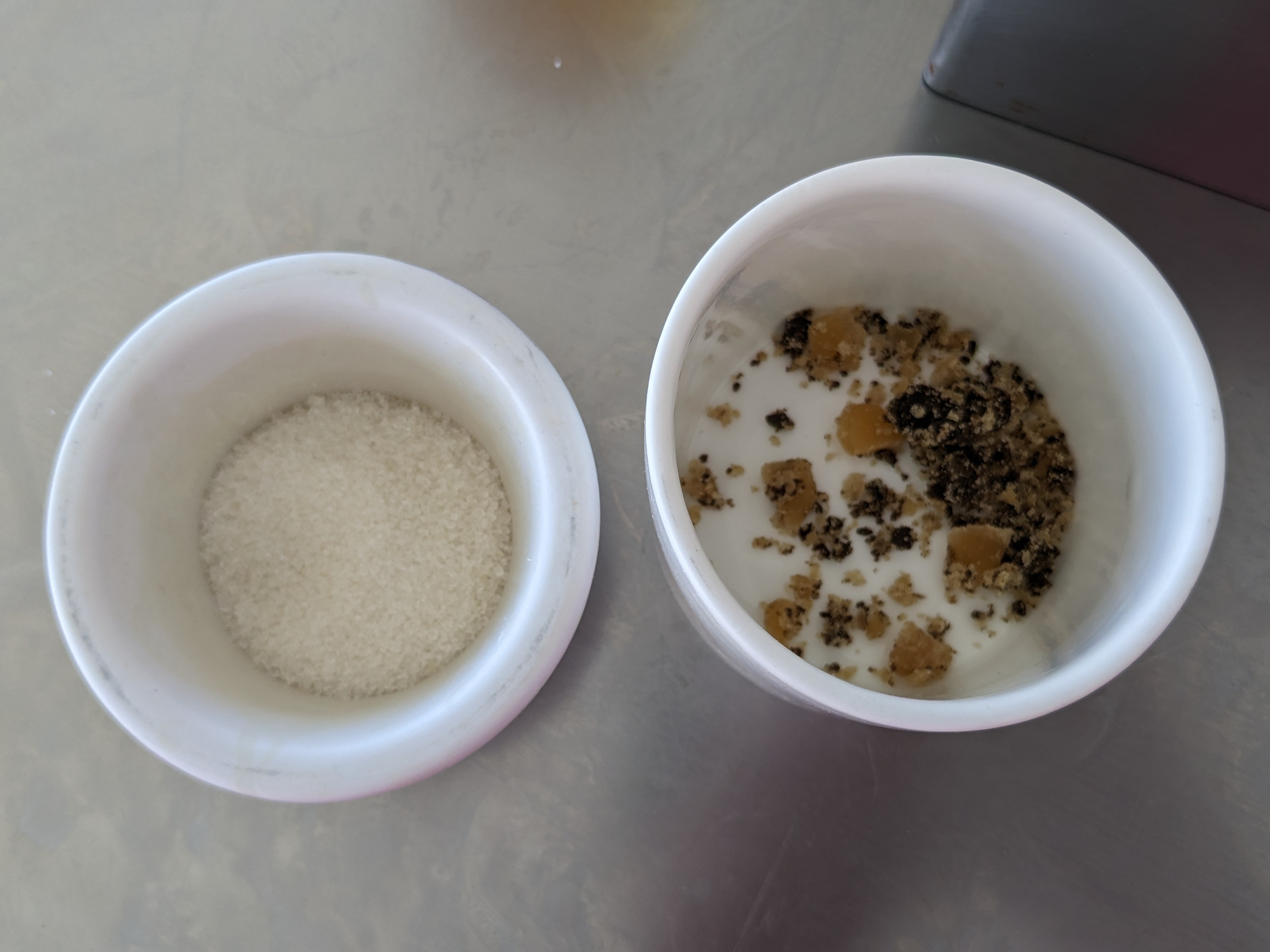
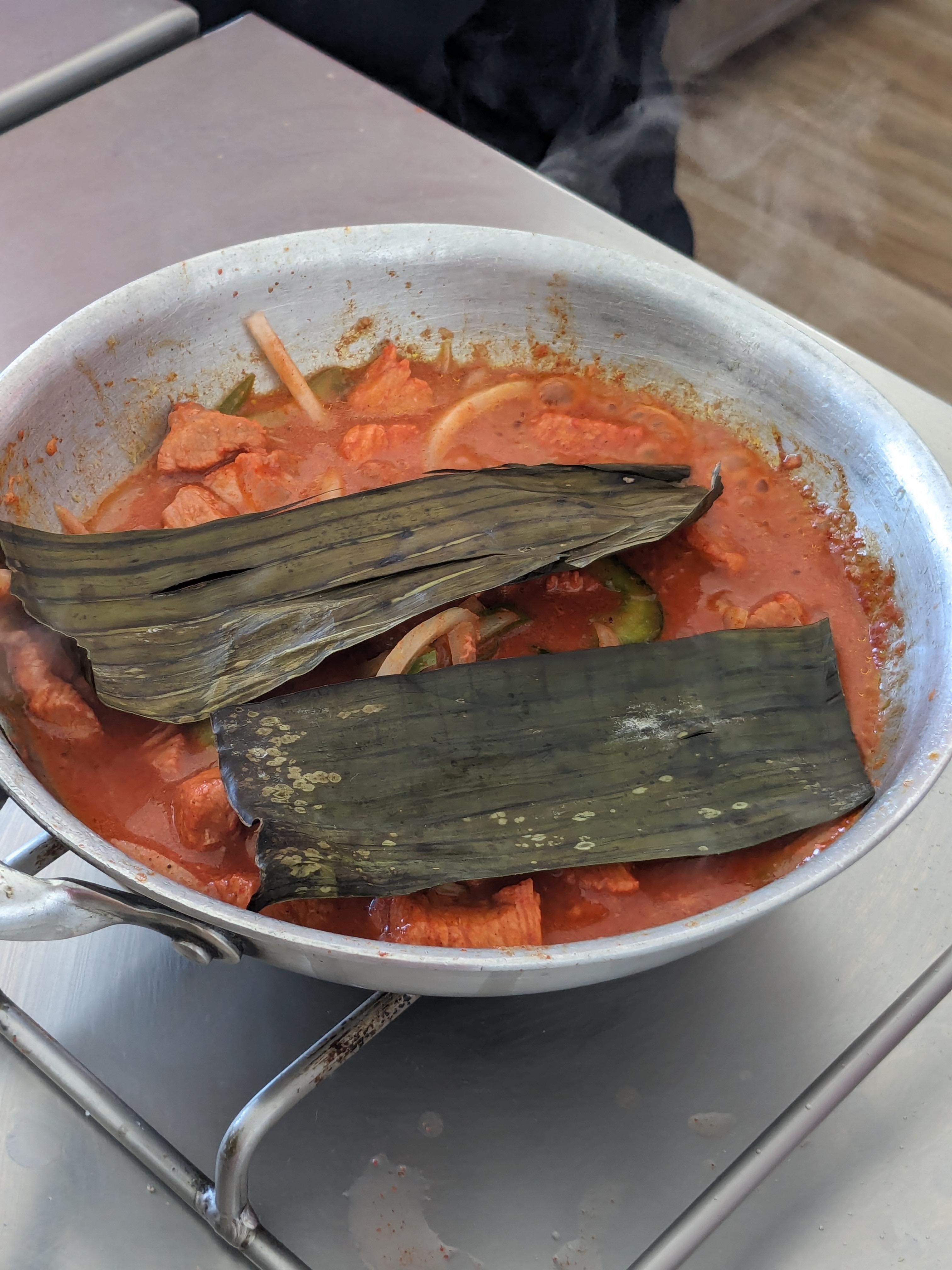
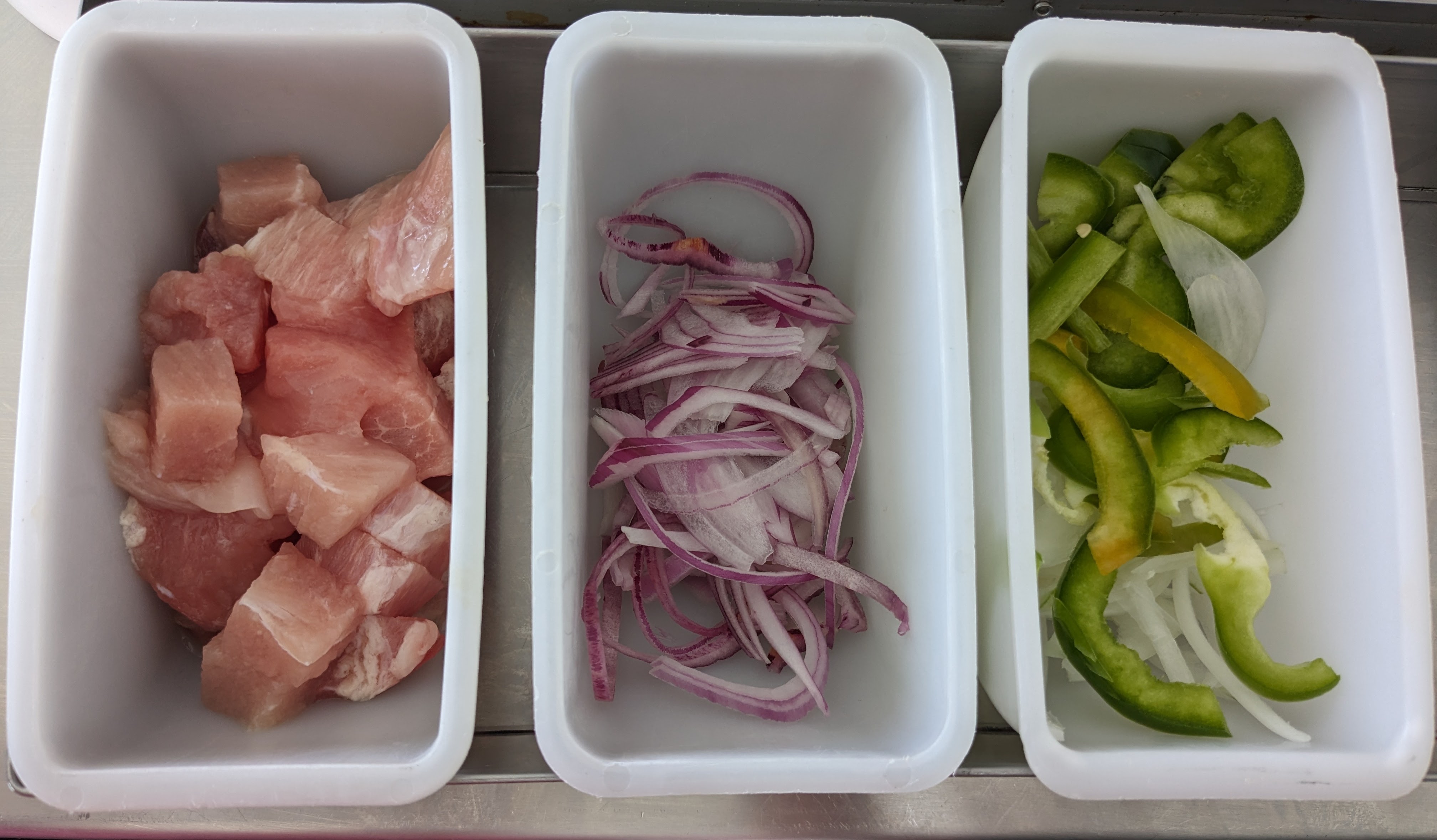
The first order of business was to identify the ingredients and discuss the flavors — cubed pork, sliced red onion, slivered bell pepper, Tabasco sauce, Worcestershire sauce, peppercorns and a clove, vinegar, catchup, cubed sweet potatoes (for dessert), shrimp, fresh lemon, raw sugar, freshly ground peppers, and other spices. We did not yet have any idea of the dishes we would be preparing, and we had little time to relax before the chef and his assistants lit the fires under our personal gas burners.
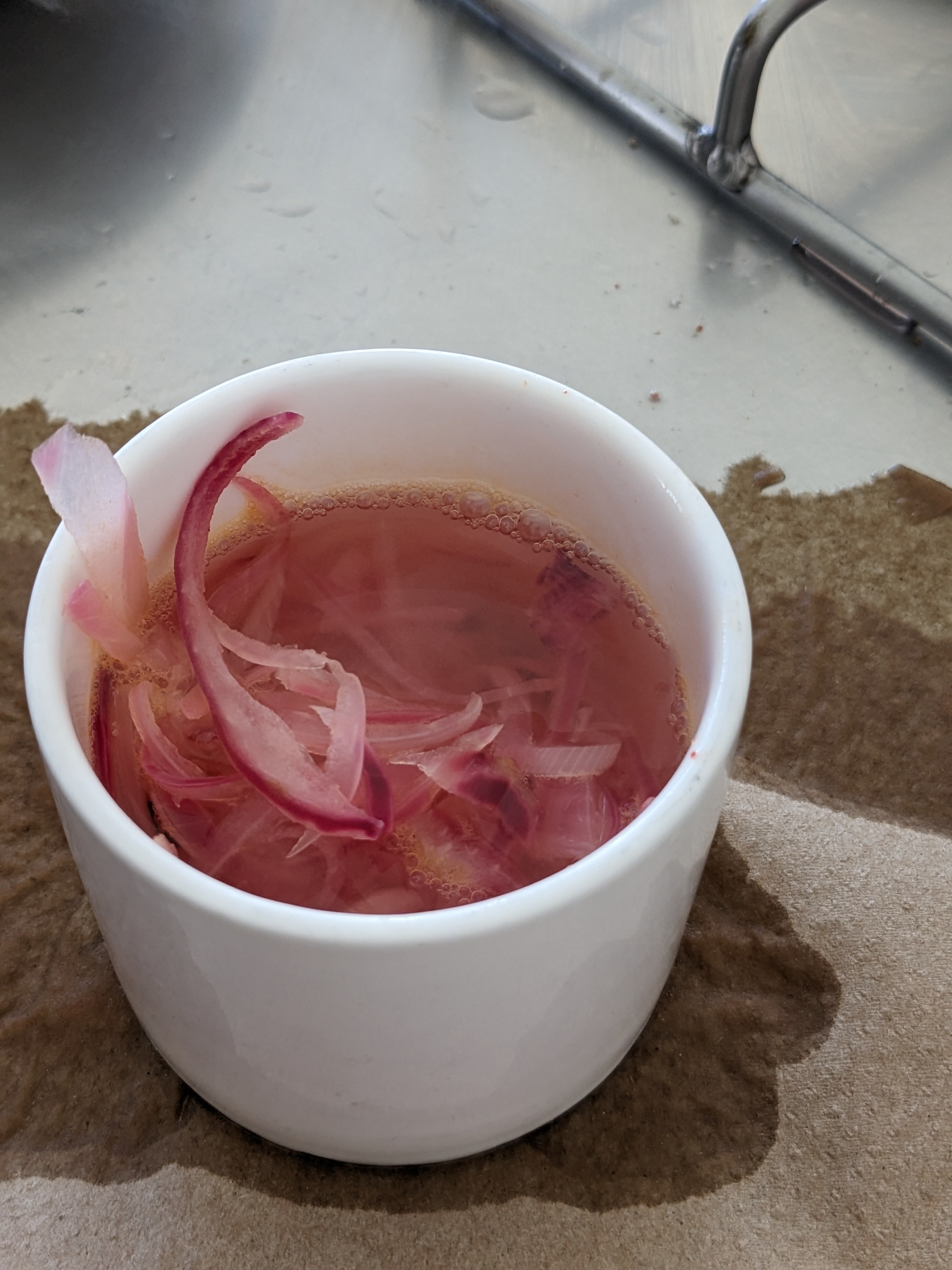
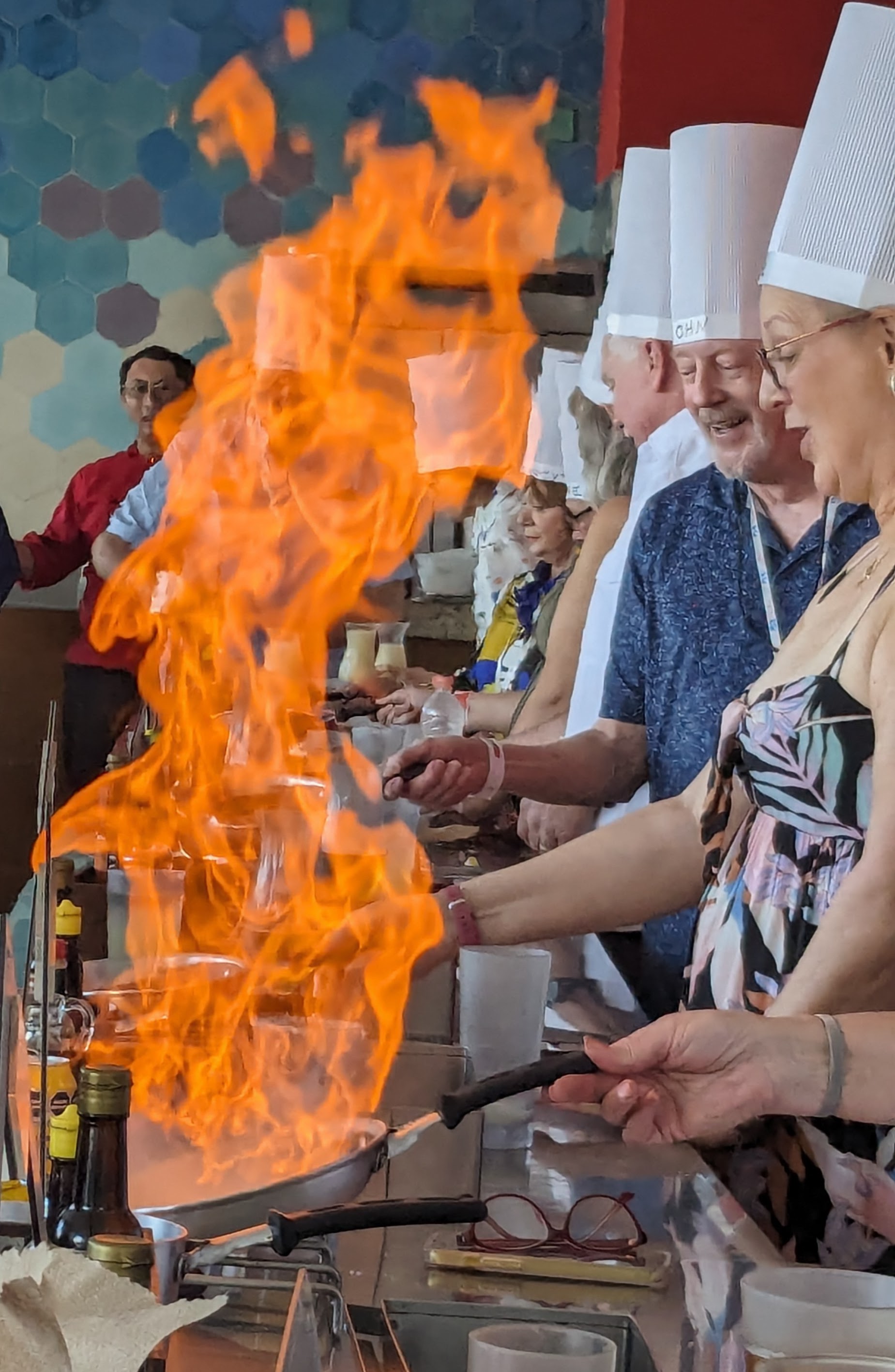
After another sip of Margarita, we set to work under the watchful eyes of Antonio and Chef Luis, who kept up a running commentary about how to do what we needed to do. We learned a technique to “quick pickle” onions that would accompany the pork dish, and we were instructed about easy ways to combine common ingredients to produce unusual flavors. We learned to use intense flavors and hot sauces judiciously.

A Frivolous Approach to Serious Cooking

We prepared simple, no-fuss dishes, perfectly suited for recreating at home. We were supposed to receive the recipes and ingredient lists by email. Alas, ours never arrived, although we have the photos and the memories. We might not be able to reproduce the menu exactly, but we feel relatively confident about how to recreate the savory flavors of the meal we enjoyed. It all begins with fresh ingredients. And, of course, Tabasco!
Not only did this cooking interlude provide us with an introduction to Mexican-flavored dishes, but it was high-level entertainment. It was one of the most informative and enjoyable cooking experiences we can remember. We prepared and plated a shrimp cocktail, a pork entree, and a yam dessert with sweet syrup. We consumed our fill of tasty alcoholic or non-alcoholic beverages as well. Plus, we were picked up and returned to the ship’s pier, all for a reasonable fee.

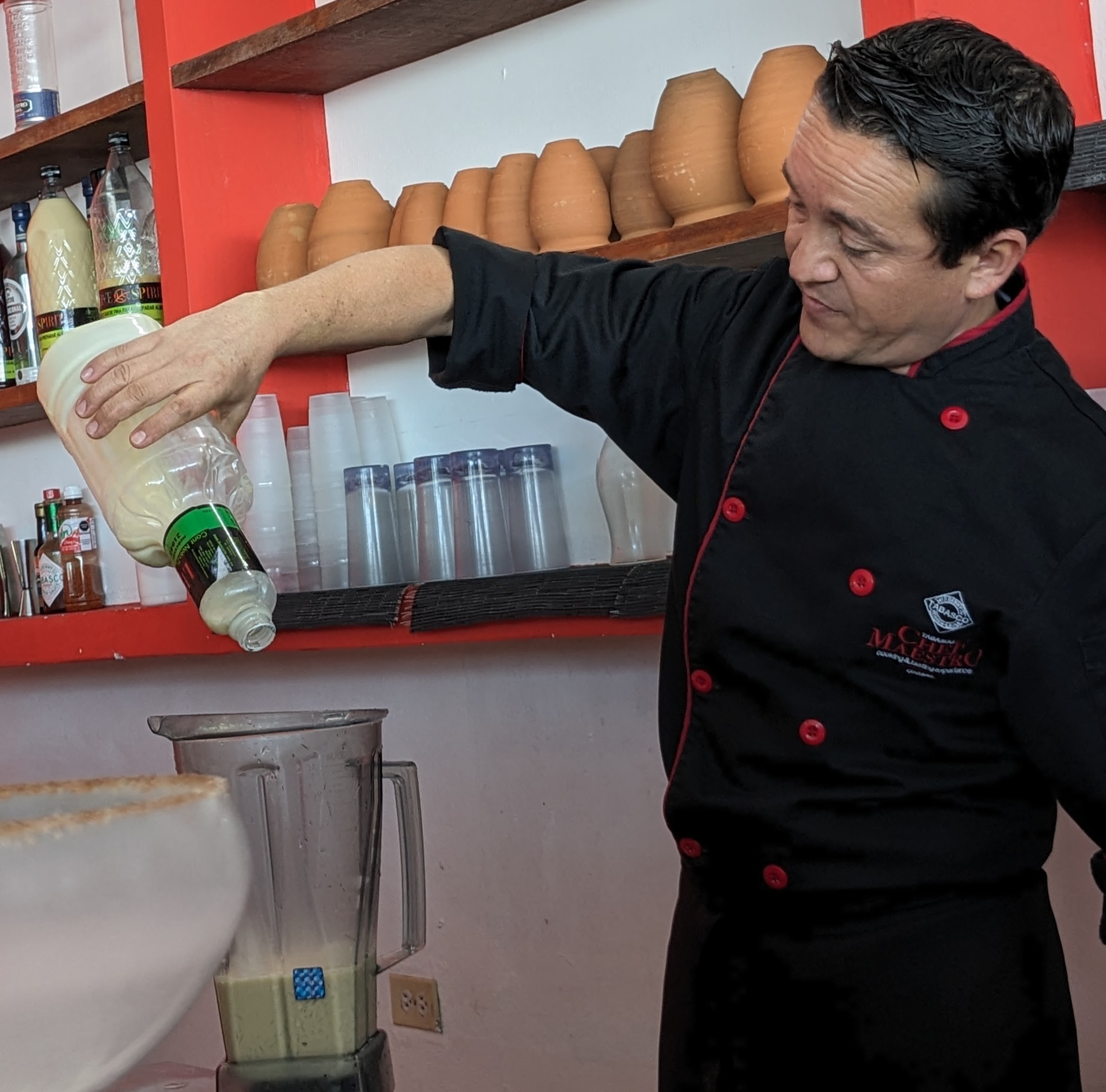
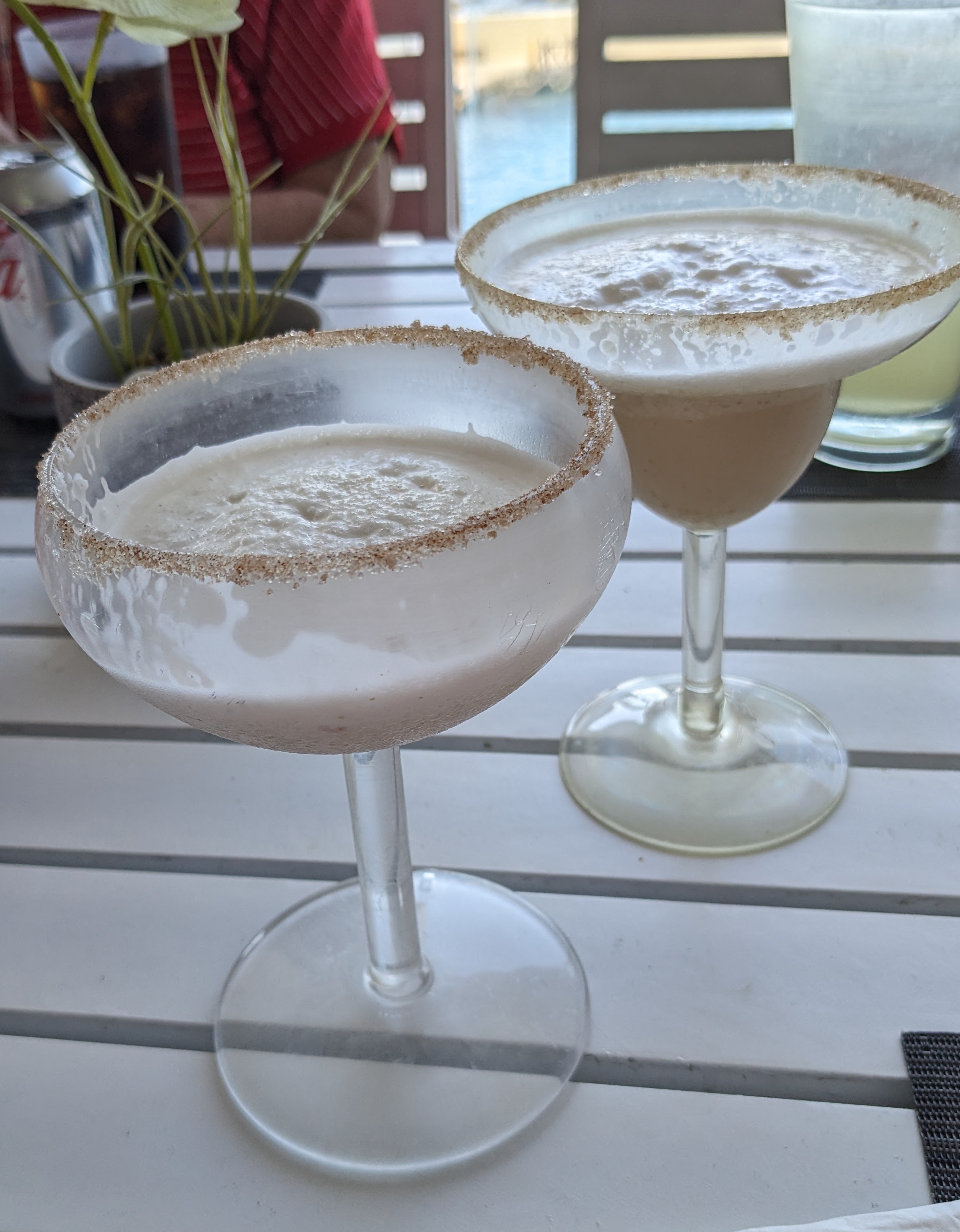
Then we moved to an adjacent dining room to consume what we had created and thoroughly enjoyed getting to know our fellow students. We drank a final toast to our accomplishment with a frothy after-dinner cocktail, prepared by Chef Luis.

The Tabasco cooking experience provided us a memorable day ashore. We gained a new appreciation for hot peppers and flavorful cooking in the region where those hot peppers originated. We left with a desire to recreate the experience for our friends and neighbors at home. And we have put some of the tips we brought home to good use.

This pampering “getaway” cruise was focused on food and relaxation. My next post, however, is about a much different excursion during our port call in Roatan, the small island off the coast of Honduras. Roatan is known for its reef diving and its remarkable clear water. We discovered much more during our island tour with a private guide.

I explain what was so special about our day on Roatan in Uncovering an Island‘s Hidden Treasures, scheduled for publication next week.

Follow me to receive email notifications about that experience and about future travels. I hope you’ll continue to join me for good food and memorable times in faraway places.

Lafayette: A Feast for Spirit & Soul

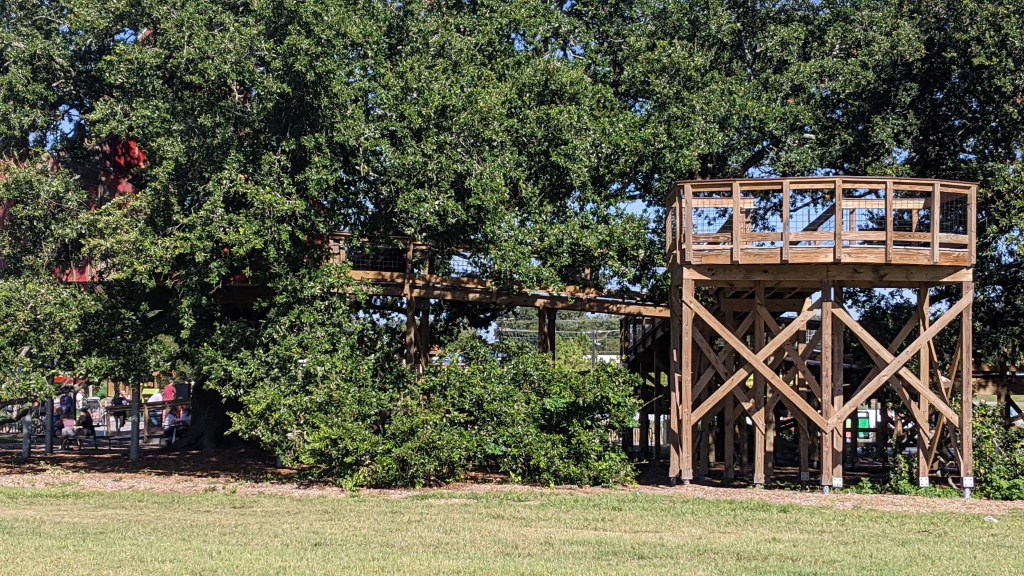
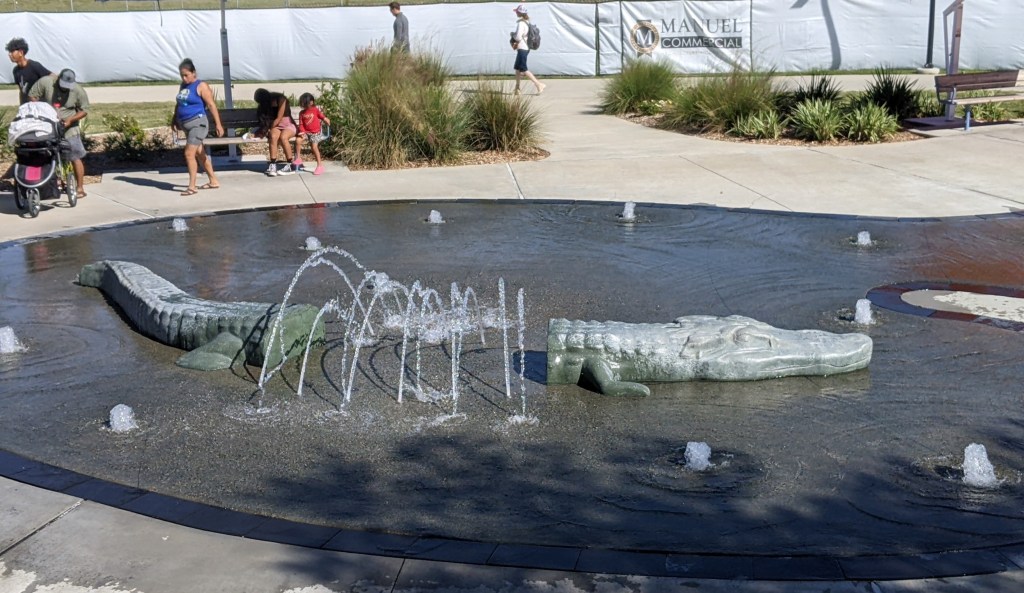
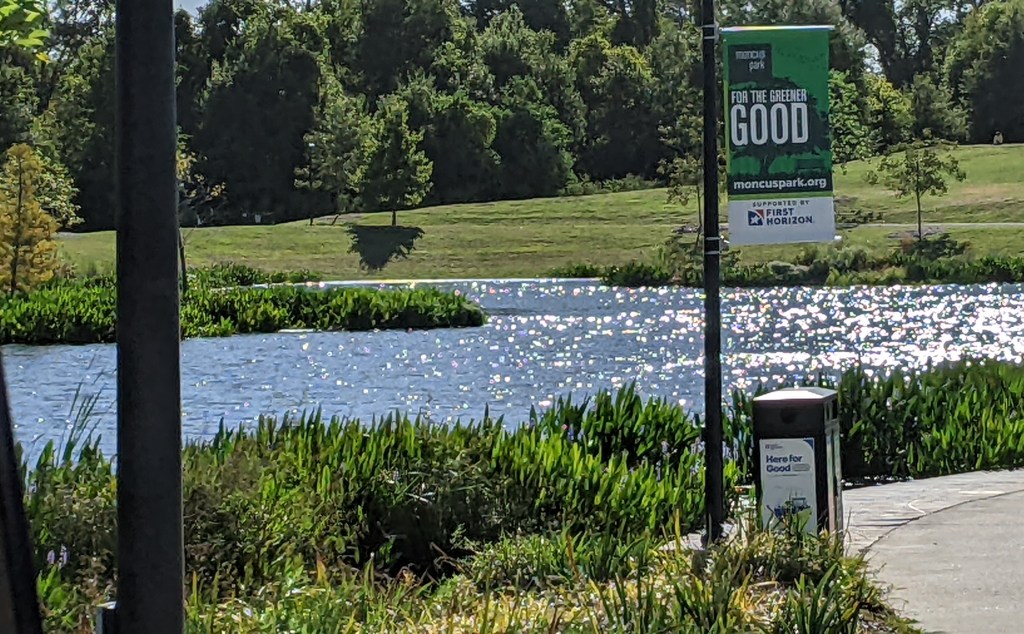
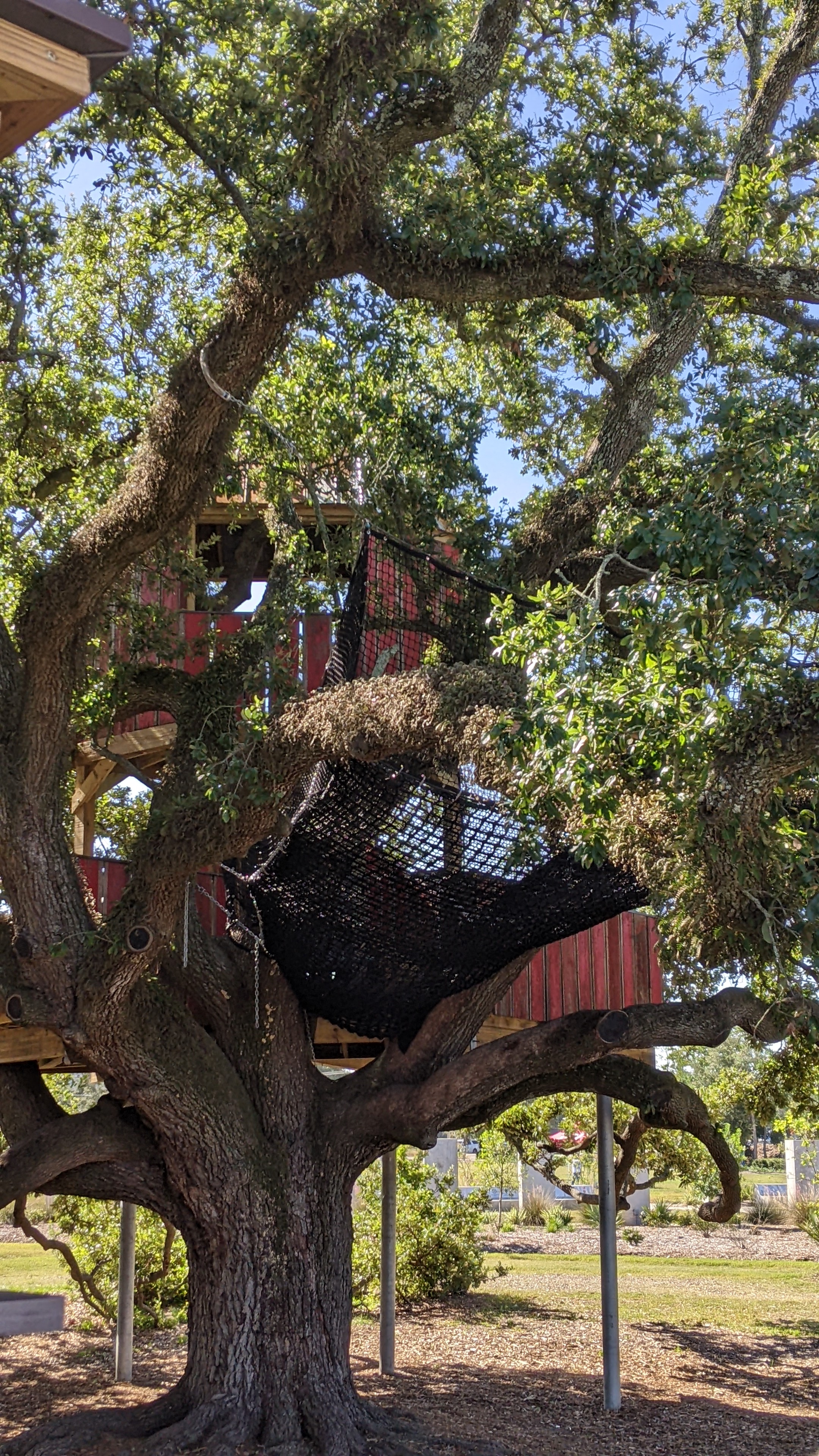
Hidden in the trees of Moncus Park in Lafayette, Louisiana, is a faded red treehouse constructed with lumber salvaged from a former horse barn on the property. It adjoins a children’s play area, but it’s almost hidden from view along the

paved walking path that meanders through the property. I’m sure that makes it all the more enticing for the children who choose to climb the ladder and walk the swinging elevated course to reach it.

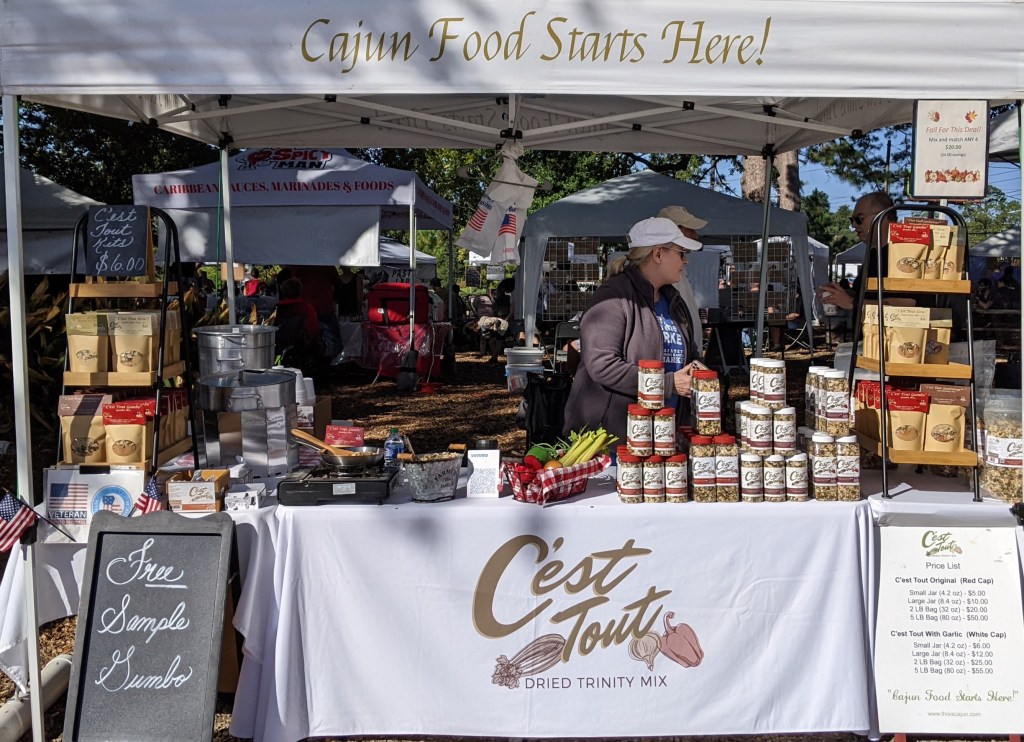
On the day we visited, the park was filled with people. Some, like our group of travel writers from diverse locations, had first visited the thriving adjacent outdoor Saturday Market, overflowing with food and crafts vendors every week throughout the year. This past summer, the market celebrated its 10th anniversary with the ringing of the Durel Bell.

The sun shown brightly on this mid-October day, and the park was alive with activities to attract young and old alike.

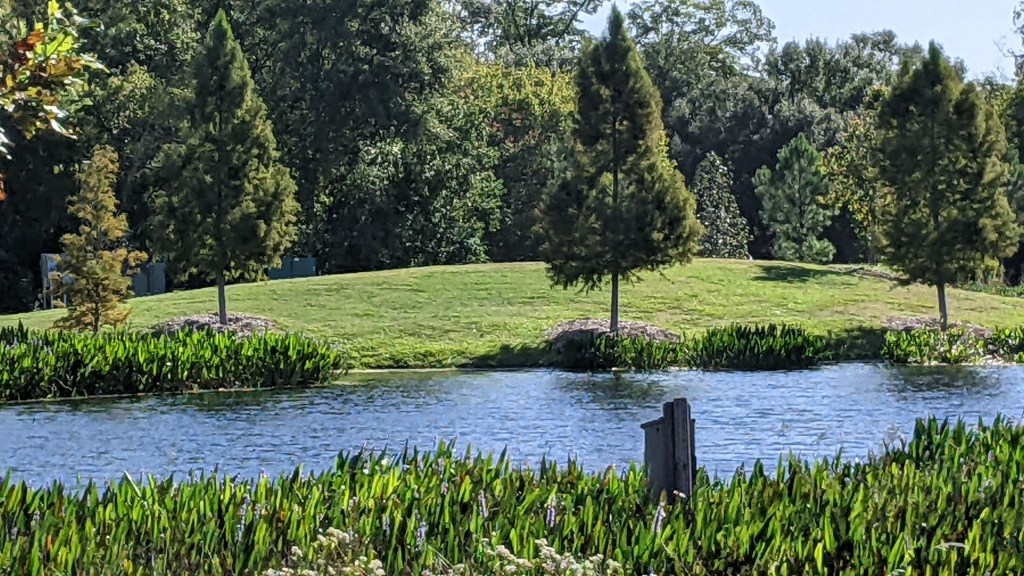
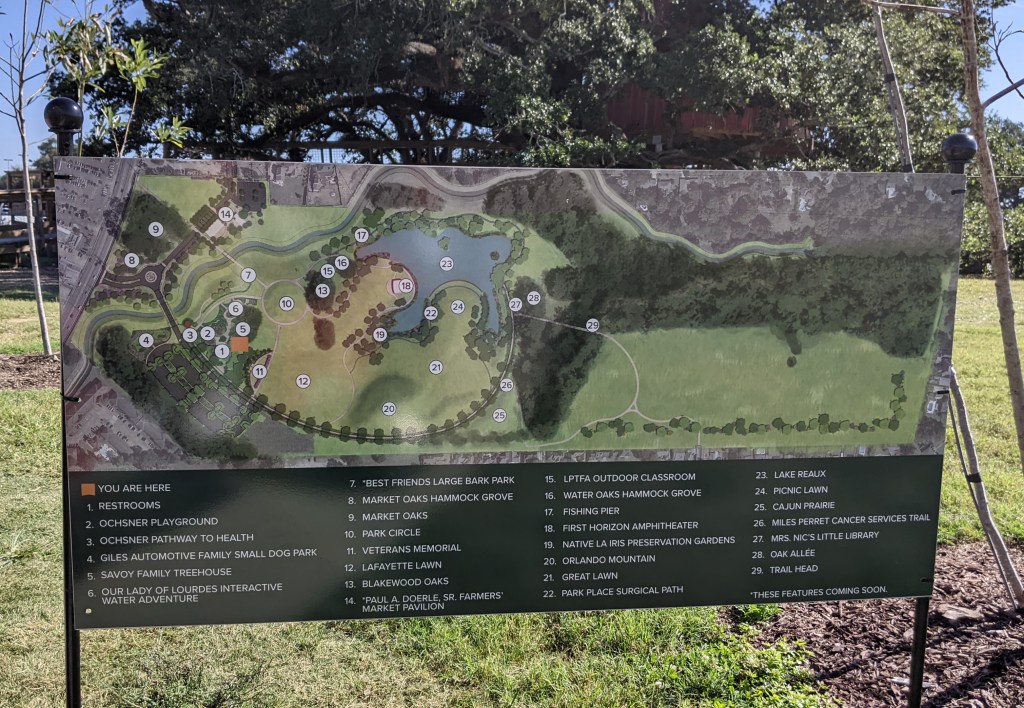
Some, accompanied by leashed dogs, were out for serious exercise in the beautiful surroundings while others simply enjoyed the various trees and plants on the rolling hills of a well-planned natural enclave that was once a horse farm. The park, operated now by a non-profit organization, was designed and built “by the community, for the community,” according to Kaylie LeBlanc, assistant vice president for communications of Lafayette Travel. One of the unique features is a 63-foot high hill, the highest point in Lafayette Parish! Development was begun in 2018, fueled by an initial $6 million grant. Now, a membership program funds ongoing park development and programming.

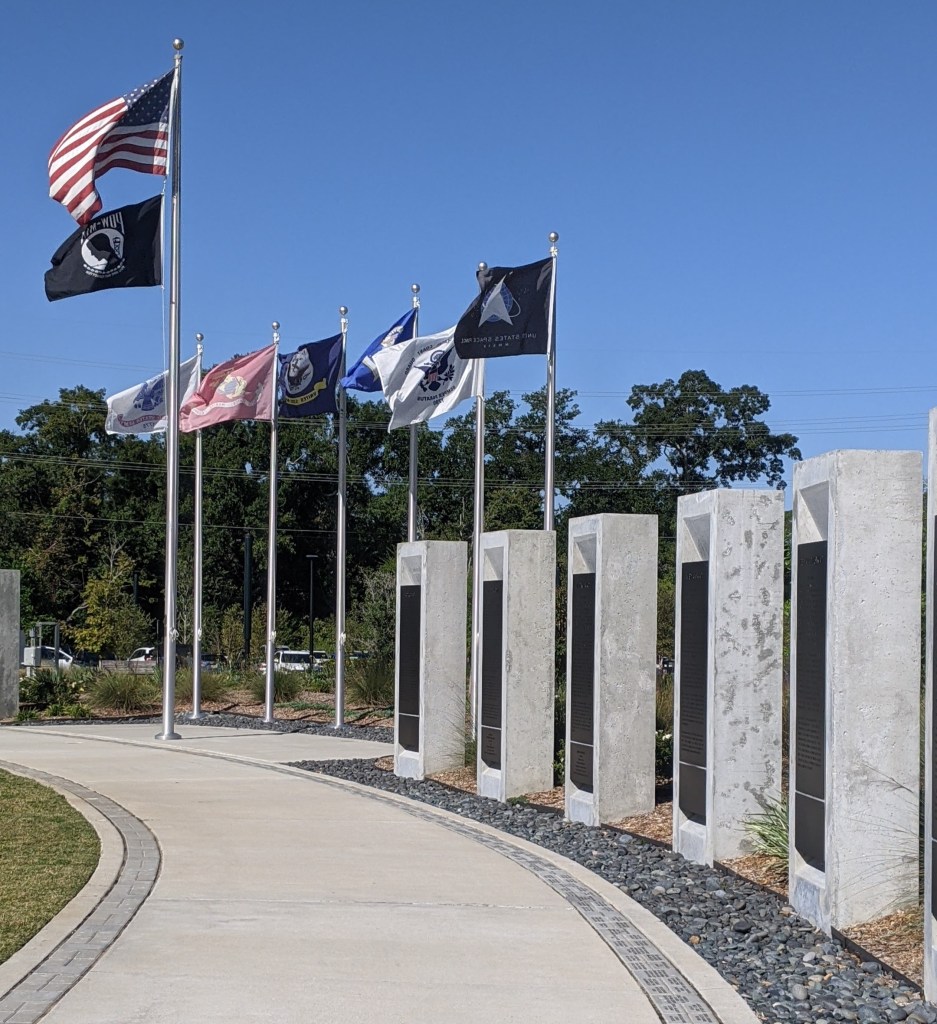
Also on the grounds is a striking Veterans Memorial that pays tribute to local residents who served their country in the various military forces throughout history. Memorial bricks line the path leading to the serene site with its polished granite plaques describing each war that U.S. troops have fought. It’s worth stopping to read each somber account, from a young country’s battle for independence to “Indian Wars — Circa 1600-1924” and the Global War on Terror — 2002-2021.

Moncus Park is one good reason to visit Lafayette, a city known as the “happiest city in America,” at the heart of Louisiana’s Cajun and Creole country. But there are many more.

I was in Lafayette for three days of whirlwind activity during this year’s Festival Acadiens et Creoles, a celebration of food, art, music, history and distinctive culture. What a celebration it was! Lafayette boasts great food and lively music, to be sure, but learning the history of a people who left their homeland and resettled in faraway places was what I found intriguing, somewhat disturbing, and totally fascinating. I had not previously known that Cajun and Creole were and are so intertwined.

The Acadians who came to Louisiana from France by way of the Canadian Maritimes (primarily Nova Scotia, New Brunswick and Prince Edward Island) have retained a distinctive cultural identity that is remarkable and celebratory. Eventually, Acadian morphed into Cajun and Acadian/Creole/Cajun culture is the result. Although we did not visit it, the Acadian Cultural Center in Lafayette is one of six locations of Louisiana’s Jean Lafitte National Historical Park and Preserve. Admission is free, and the center is open Tuesday through Saturday year-round, except on national holidays.

An Ongoing Celebration

Lafayette is known for its festivals throughout the year, and this one certainly did not disappoint. What’s not to love about live bands that encourage complete strangers to “dance to the music” together? Add the enticing flavors of gumbo, jambalaya, etouffee and boudin sausage served fresh and hot from food trucks in the park, or the refreshing abundance of cold beer, spicy bloody Marys, flavored daiquiris, and other refreshments close at hand.

Girard Park in Lafayette takes on a carnival atmosphere that’s equally appealing for young and old alike, with food treats from beignets to soft ice cream, loaded hot dogs to boiled crawfish, fried gator bites and chicken wings to cheese-smothered grilled oysters! There is face-painting and bubble-blowing for the children, crafting demonstrations to watch and souvenirs to buy.

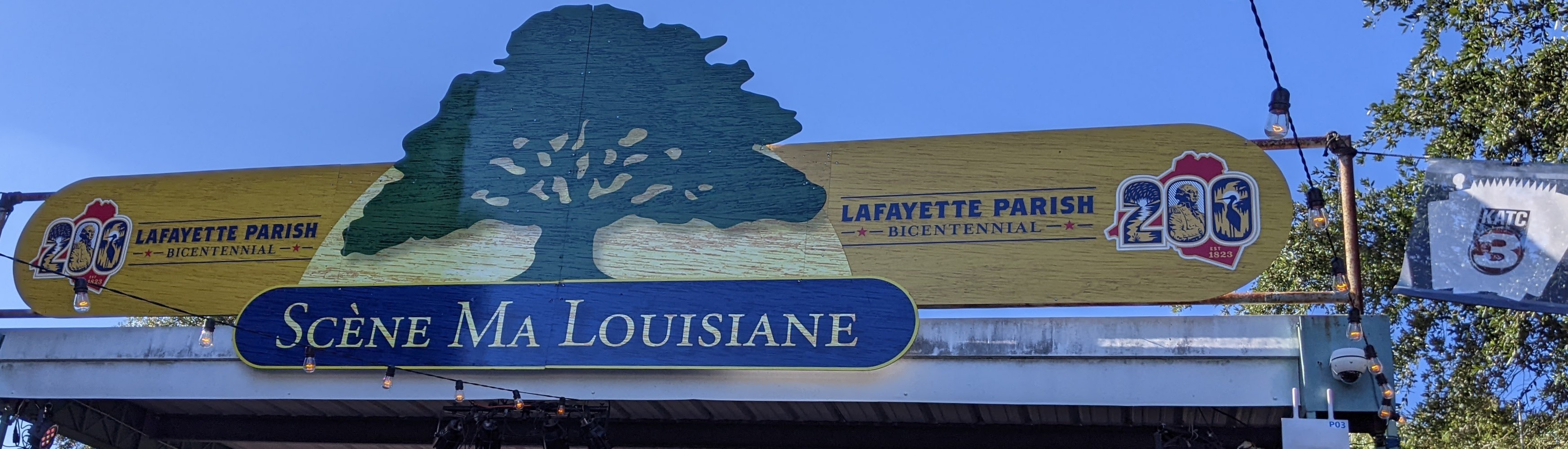
The performance stage is at the center of the activity, and many festival goers bring camp chairs or blankets. Picnic tables and benches are scattered about the park, and various tents offer seating for food and cooking demonstrations, musical lectures, and cultural programs.

From the ceremony of “cutting the boudin” to open the festival to the closing strains of music performed by an all-woman band as darkness fell on the festival’s last day, it was a great experience.

Traditionally held on the first full weekend in October, this celebration has been a Lafayette highlight since 1974. With a focus on the local sounds of Cajun and Zydeco music and local food specialties, the festival atmosphere extends not only throughout the park, but throughout the city. During festival weekend, shops are open late, visitors stroll the compact downtown area, marvel at the street art and local murals, enjoy crafts shows and outdoor exhibits, attend wine tastings and local business open houses, and snap souvenir photos at the Lafayette sign in a local park or selfies at the picturesque downtown arches.

Smiles and high spirits dominate the scene. It is truly a celebration that encourages active participation.

Beyond the Festival

The Festival Acadiens et Creoles is not, however, the largest celebration on Lafayette’s calendar. Held in April, the Festival International de Louisiane spills over into nearby cities and parishes and attracts visitors from throughout the world for the distinctly French-flavored celebration.

Lafayette also celebrates New Year’s Eve in a big way, and goes all out for Mardi Gras. Visit Lafayettetravel.com for up-to-date information on what’s happening when in this “happiest town” so you won’t miss out on any of the events that interest you. I don’t want to leave the impression, however, that visiting Lafayette, is simply one big party. As much fun as it can be, there is also a serious side to Lafayette’s personality

Cultural unity is pervasive and community spirit is inclusive. Informal, spontaneous musical jam sessions seem to be the norm and, more often than not, members of the public are invited to attend, join in, or sing along. Roots run deep here and pride of place and heritage is evident among young and old alike. Lafayette residents are intent on preserving their traditions. A conversation with a local resident can be equal parts history lesson and hope for the future, interspersed with family stories.

The Beginnings

Originally founded as Vermilionville in the 1820’s, the city was renamed Lafayette in 1884. Its population in 2023 is reported to be slightly more than 121,000, a slight decline from 2020 when it was just under 122,000. But the population of metropolitan Lafayette Parish exceeds 376,000.

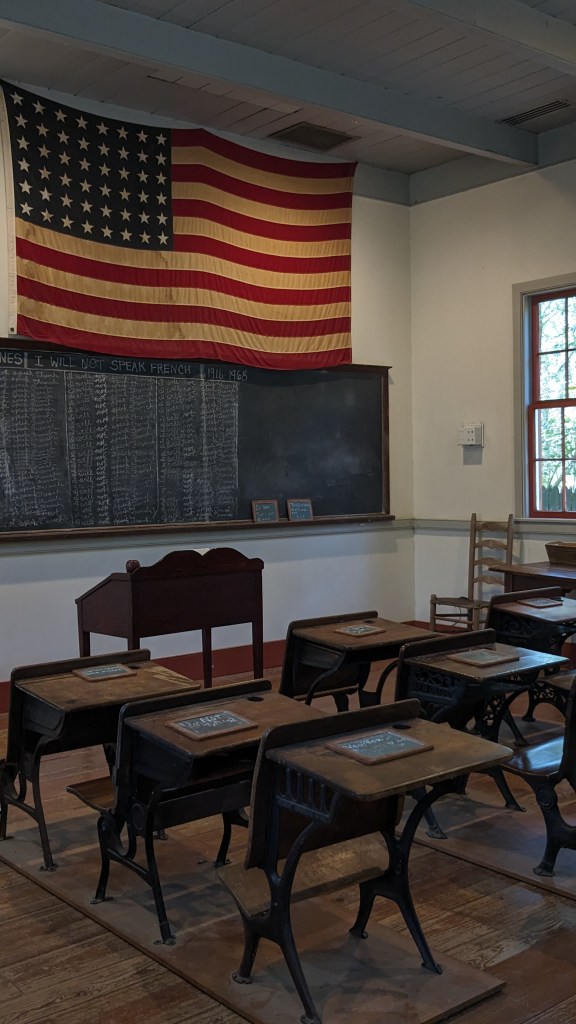
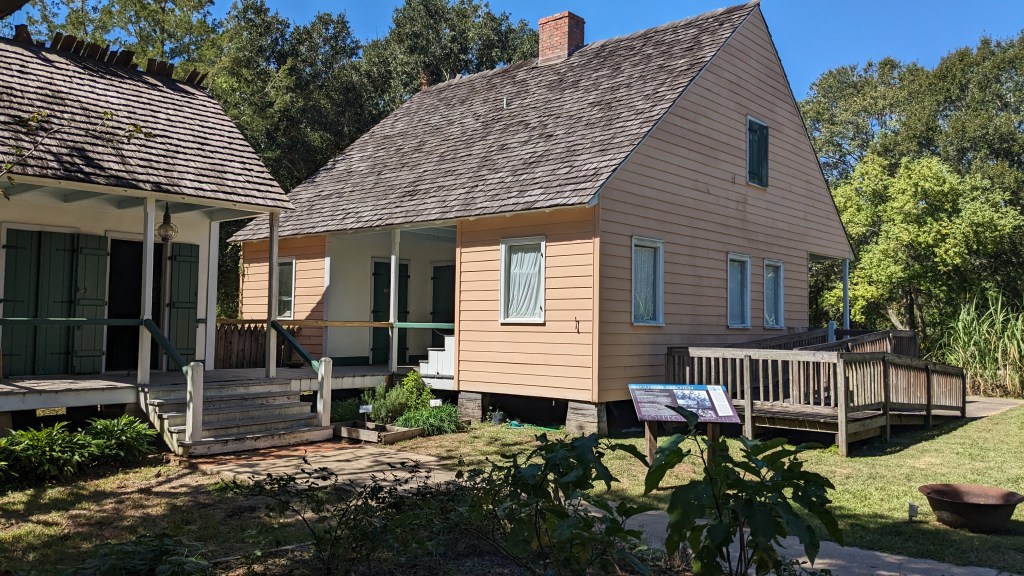
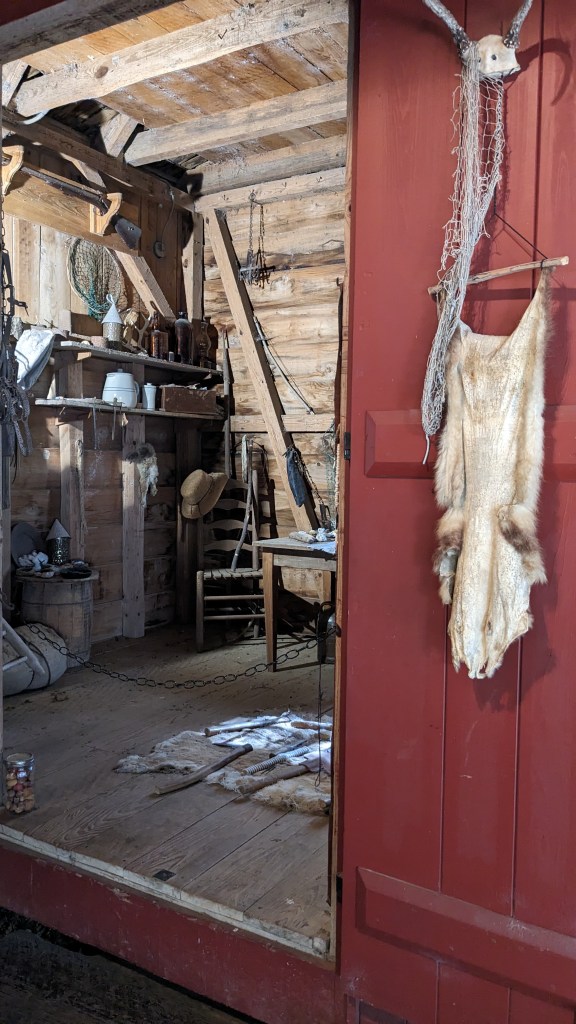
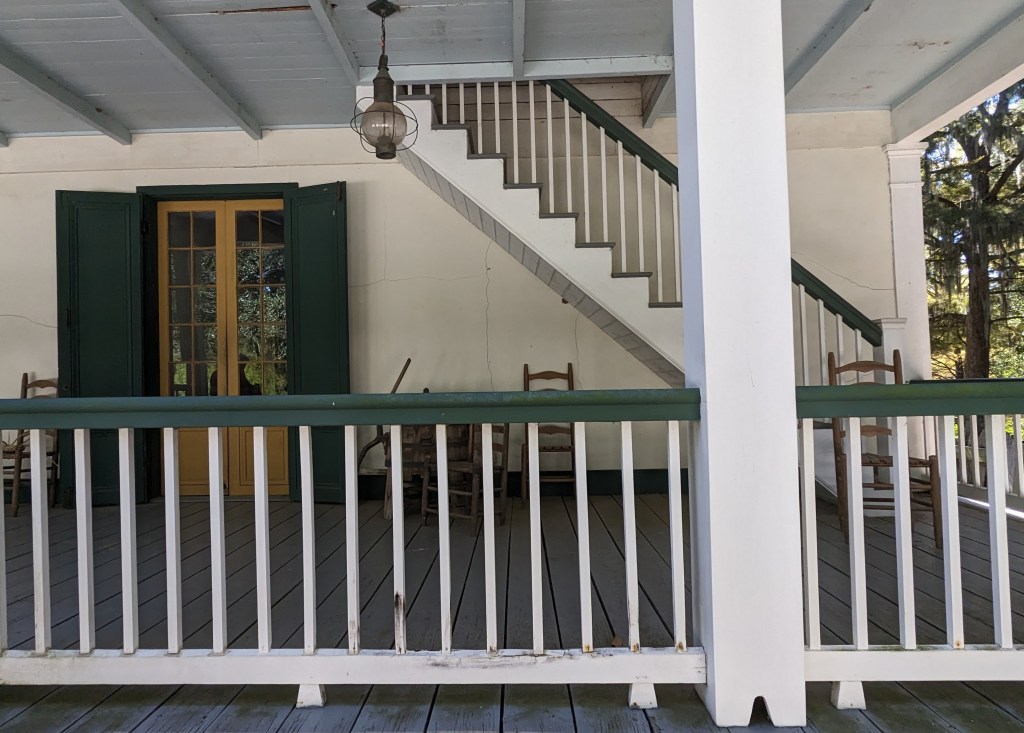
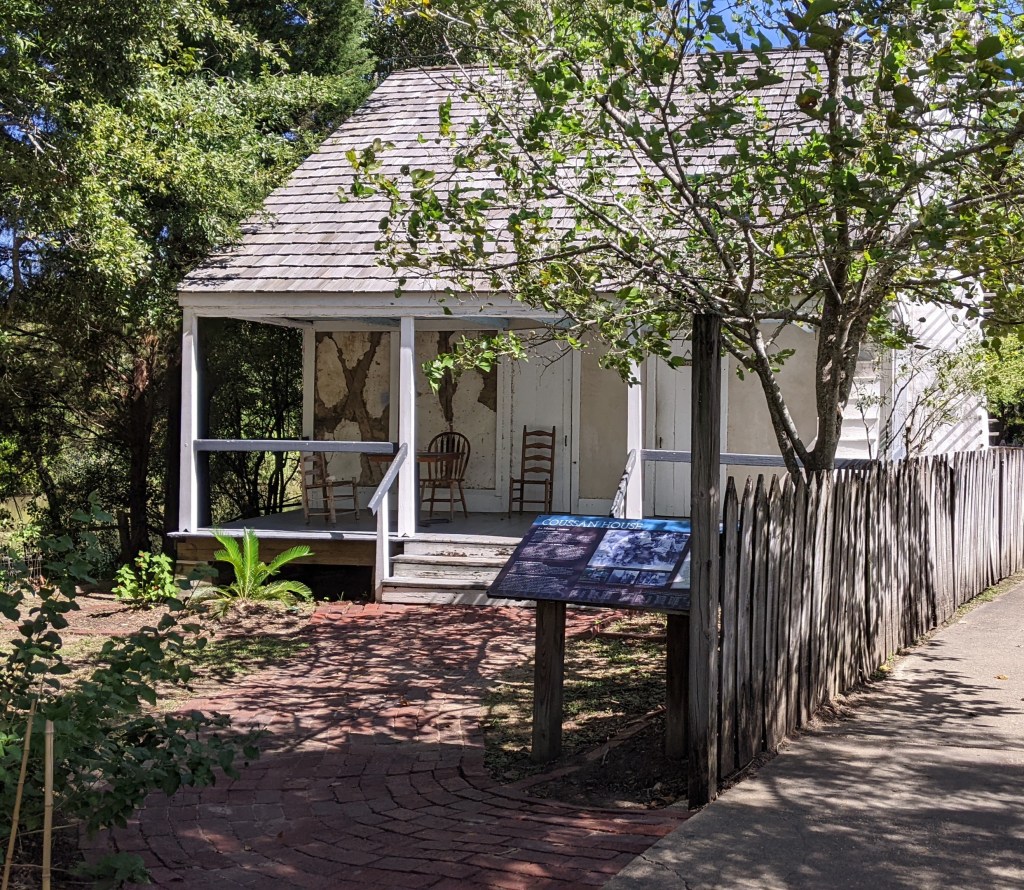
We visited the historical re-creation of Vermilionville, now a living history museum that takes visitors back to the early settlement. Signs along the paths chronicle how Acadian and Creole settlers interacted with native peoples and those of African descent through the late 1800s, and the buildings display a wealth of artifacts. It’s much better than a museum depiction. Walking along the paths offers a uniquely personalized insight into how lives were lived during those times.

Visit Vermilionville.com for information about events, programs and performances, including a 2nd Saturday French Table, a free gathering that allows visitors to “hear, speak and practice” the unique Acadian language. Other programs offer insight into the lifestyle and traditions of early Acadian settlers who sought to preserve their French-speaking culture on the American frontier.

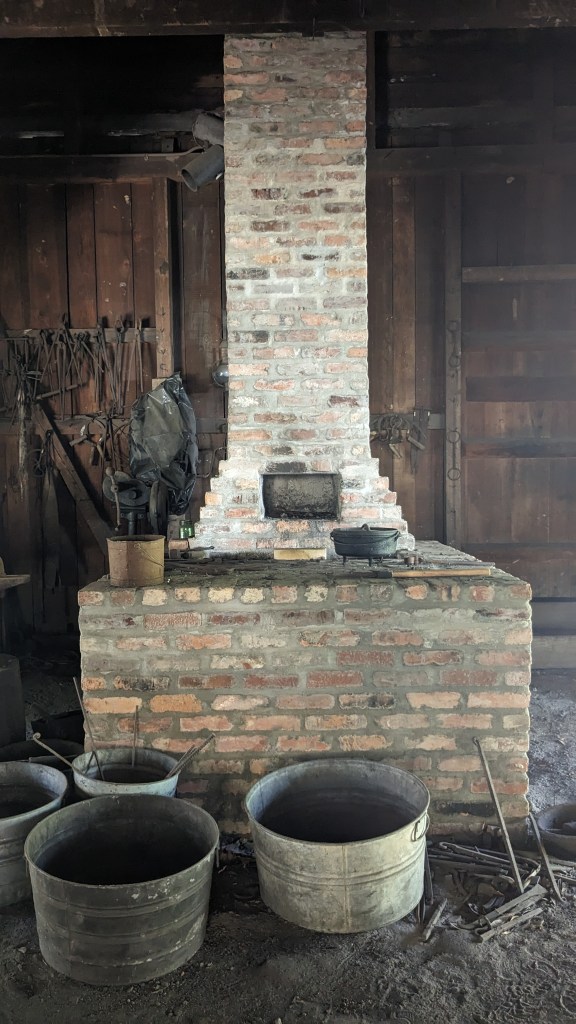
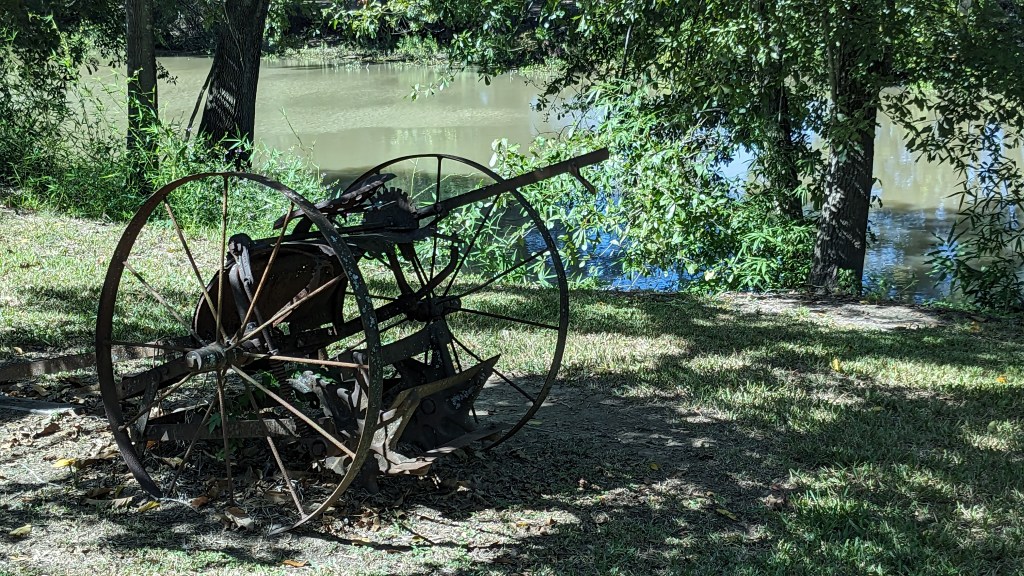
Among the buildings and various dwellings situated at the site are a schoolhouse, church, parsonage, carriage house and other utility buildings, as well as early “shotgun” houses and a wide variety of home styles that were popular through the decades. Traditional crops are still cultivated, and the historical village even has a resident donkey, a couple of sheep, and a working iron forge. This historical village offers a perfect opportunity to explore the history of Cajun culture and it’s impossible to leave without a profound respect for the early Acadian lifestyle, the Native American, Creole, and African influences, and Cajun traditions. We even learned some often-used words in Cajun French!

Our young guide, herself a proud Cajun, was clothed in traditional dress of the time, and she spoke with candor about growing up in this distinctive culture. I was awed as she sat down at a spinning wheel to demonstrate how yarn is spun from raw cotton, but then she apologized for not being very adept at spinning! We also were treated to an explanation of traditional, hand-sewn quilting skills by an older woman intent on preserving the skills that her ancestors possessed. We were duly impressed by the number, the quality and the variety of the quilts she has completed.

Building on Tradition

Our group was treated to a bountiful lunch at La Cuisine de Maman, where we feasted on traditional favorites prepared and served in a circa-1800 home at the site. Suffice it to say that no one left hungry!

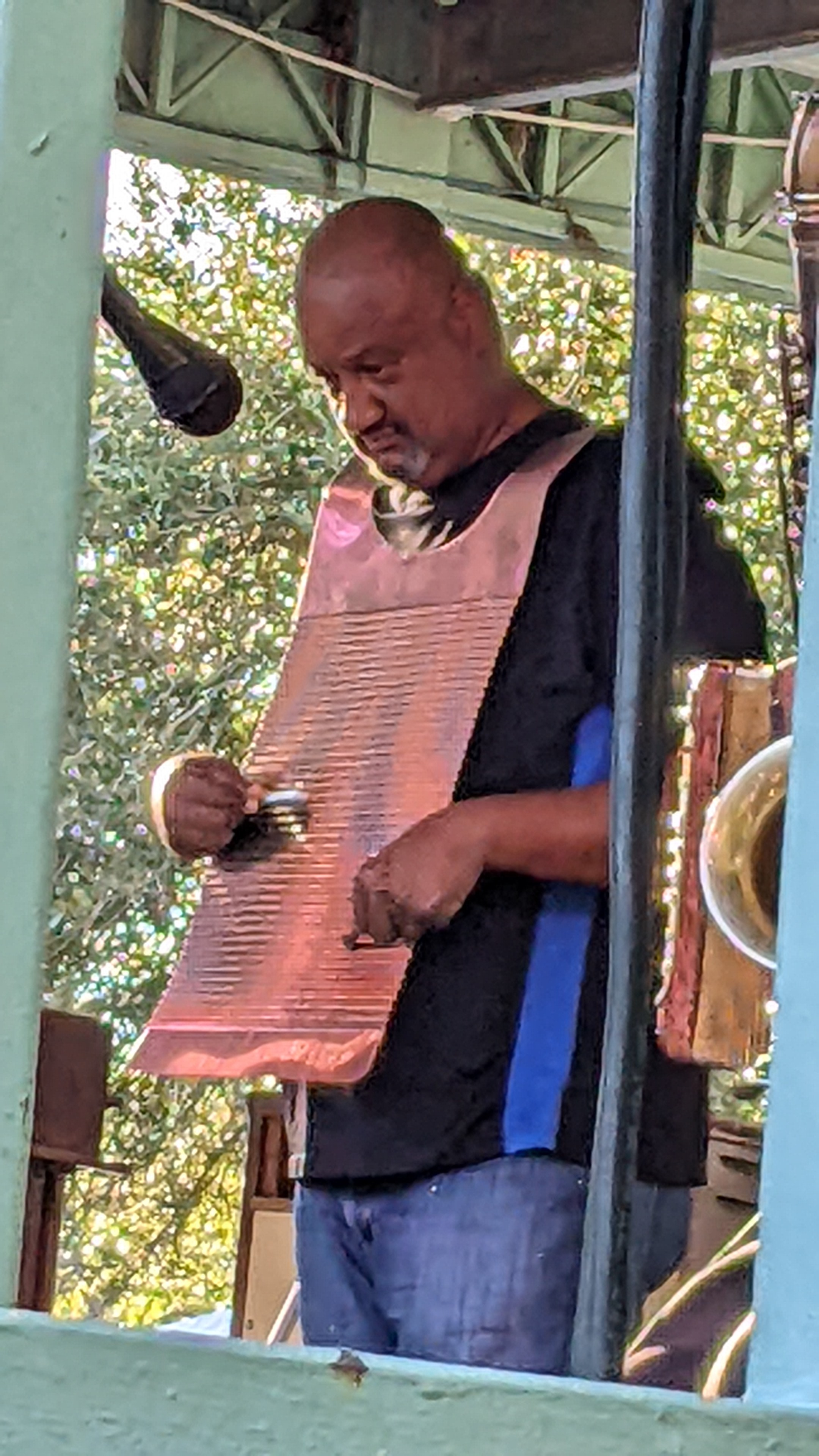
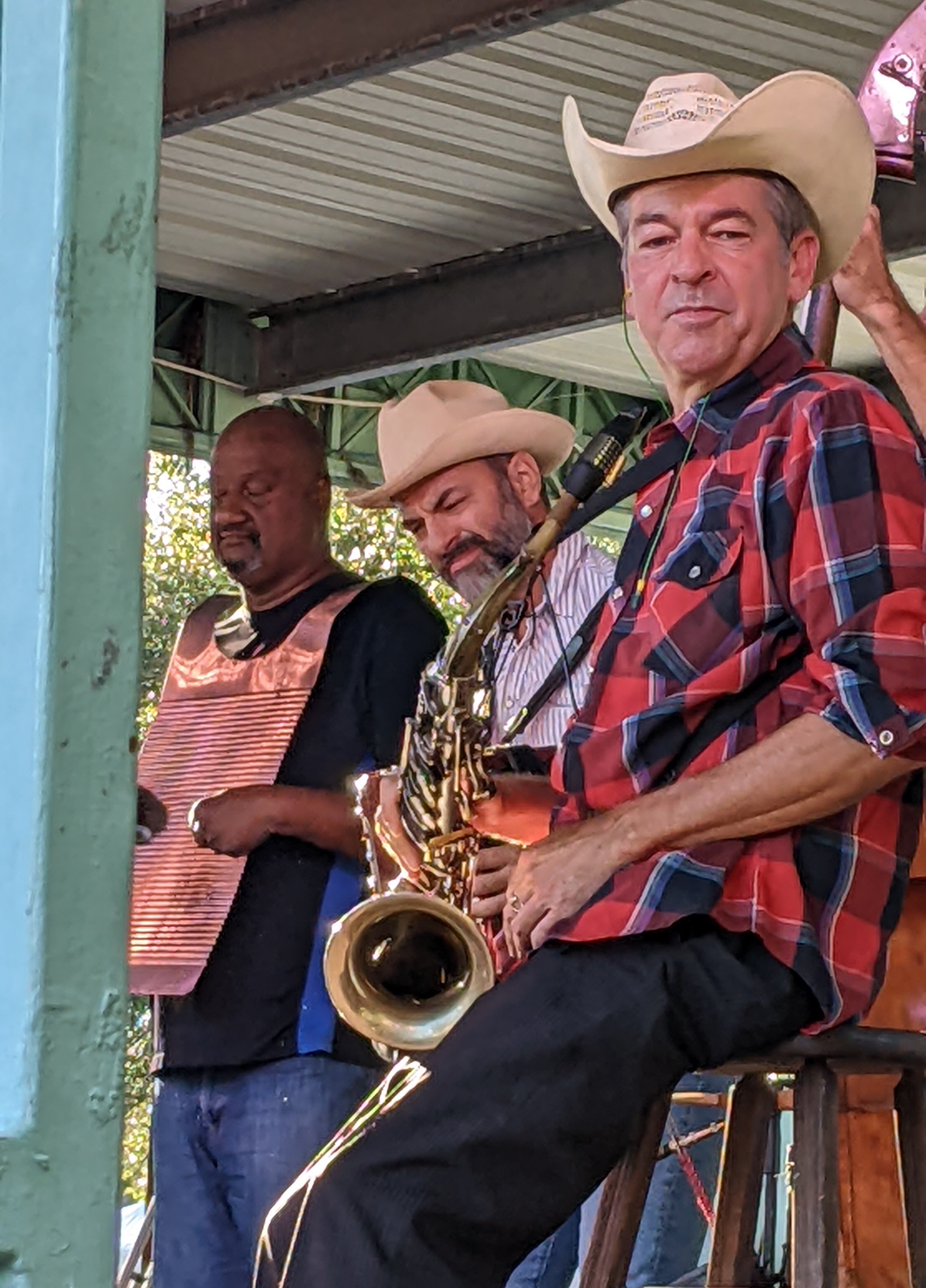
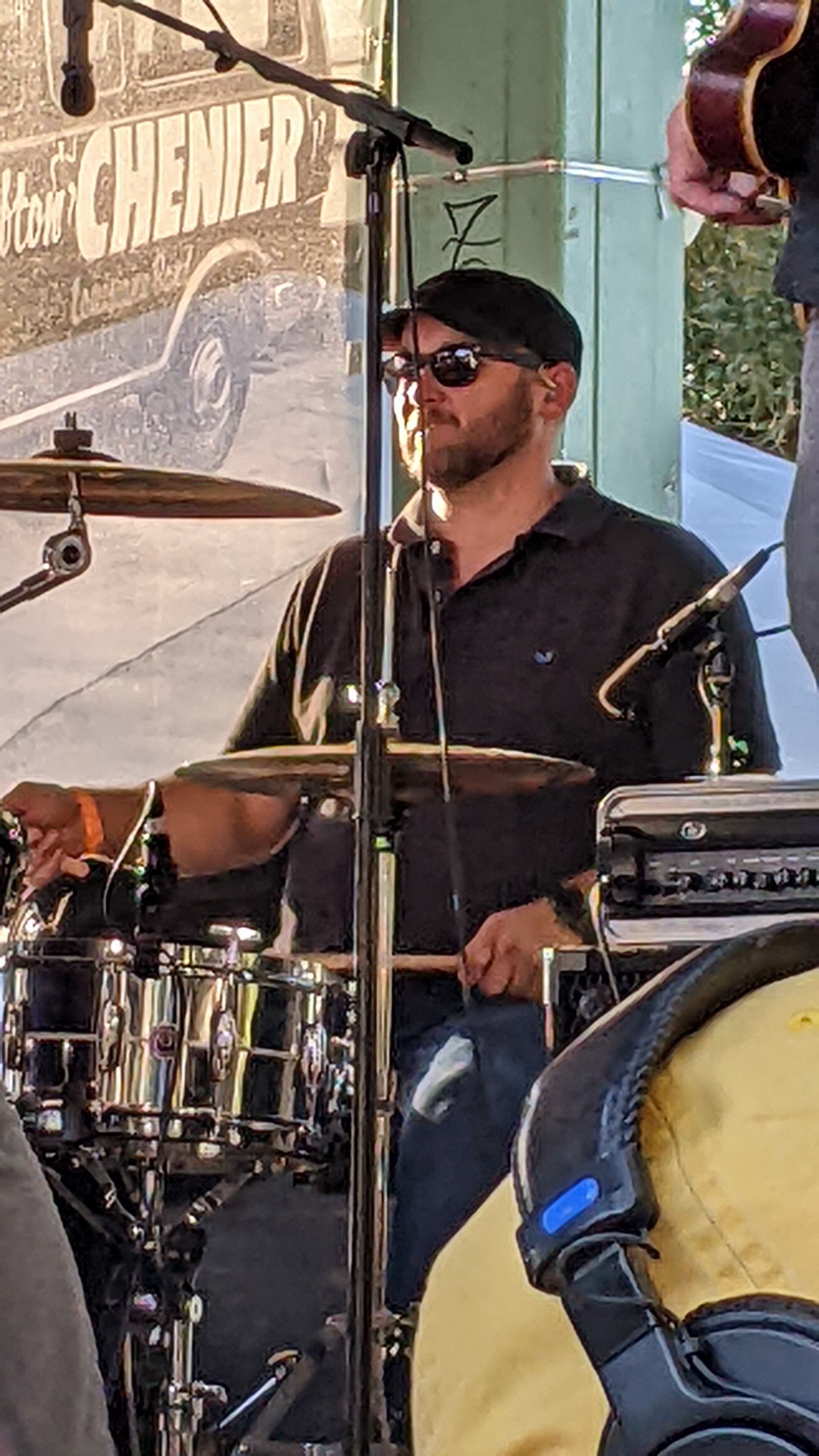
Before leaving Vermilionville, we stopped in at the Saturday music jam, held in a performance hall just across the courtyard from the restaurant. That became a fond memory of my short time in Lafayette, one that I will savor for a long time to come. That strangers come together to make music is impressive enough; that the music is well-played, sung with gusto, performed with no rehearsals and at no charge to the public, and enjoyed by all is truly special!

The music is one of the fondest memories of my time in Lafayette!

Yet to come is my account of an eye-opening and thrilling flat-bottomed boat trip through the Atchafalaya Swamp, along with a visit to nearby Avery Island with its jungle gardens and Tabasco factory, as well as more pictures and commentary about the people, the food and drink, the sights and the music scene in this distinctive Louisiana city. I’ll leave you with at least five good reasons to add Lafayette to your own travel plans for the coming year!