Beyond Tradition: Rethink Thanksgiving

There’s just something wonderful about autumn, isn’t there? Cooler temperatures, back-to-school events, football, falling leaves, pumpkins, gourds, and savory spices all signal a distinctly different approach to life and leisure activities.  

But fall has sped by for me this year, interspersed with travel and the demands of daily life. Suddenly, it’s Thanksgiving week and I’m not at all prepared.

But this year, instead of giving in to guilt, I am letting Thanksgiving week play out in an entirely different way. My husband and I are looking forward to the activities we enjoy rather than dreading the dawn of Thursday and lamenting what was left undone for a big family dinner.

You see, we will forgo the “feast” this year in favor of largely unplanned, spontaneous activities that are scattered throughout the week and into the weekend.

On Thanksgiving Day, we will be with friends who, like us, have no nearby family, and even less reason to want or need turkey with all the traditional sides. There will be no roast turkey with mashed potatoes and gravy, no green bean casserole, no sweet potatoes with marshmallows, and no jellied cranberry sauce. And, best of all, no last-minute worries before the guests arrive!

Instead, we have opted for an “orphan potluck” this year. We anticipate a casual, laid-back vibe, with good conversation interspersed with holiday spirit and cheers for our favorite teams.

We fully intend to celebrate, and you can be assured we are thankful for the blessings of home and friends this year. We will check in with our far-flung families and wish them well. And then we will celebrate the bounty of our table and the bonds of friendship with others in this small community we now call home. What could be more appropriate?

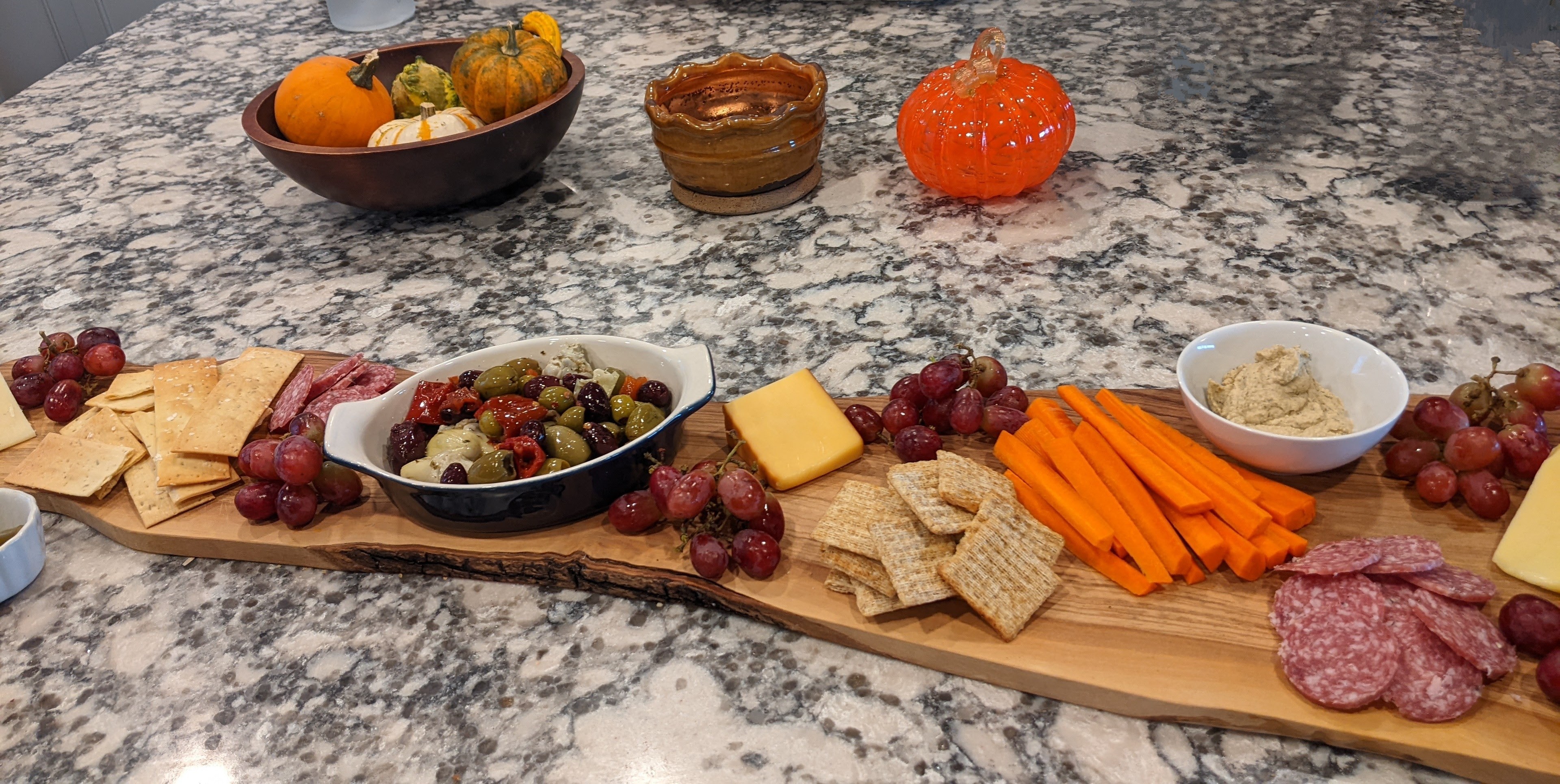
The dozen or so like-minded friends who will join us have all volunteered to bring a variety of favorite dishes. We’ll have appetizers and wine, perhaps a creative charcuterie board with delectable finger foods. And we’re not totally abandoning tradition – we have a smoked turkey breast ready to reheat!
This year, I am thankful for the freedom to read a book, listen to music, watch the Macy’s parade, or maybe even a Hallmark movie on television — all before our friends arrive in the early afternoon!

Times change, as do the seasons. I am eager to see what this new-fangled Thanksgiving celebration feels like. Perhaps it will become our new annual tradition.

A neighbor promised a hearty pasta dish, and others are likely to surprise us with their favorites. There will be home-baked bread and (again from a neighbor, with a nod to tradition!) pumpkin pie to top it all off. As always, at Thanksgiving, it’s not all about the food, but we’re certain there will be plenty of food!

I love many things about Thanksgiving, especially the presence of family and friends. And pumpkin! So, I am searching for pumpkin recipes with a new twist and updating my holiday favorites. Pumpkin, after all, need not be reserved solely for Thanksgiving. Why not enjoy pumpkin treats until it’s time to embrace hot chocolate and peppermint?

During an October trip to the San Francisco Peninsula, I was impressed by, among other things, the expanse of colorful pumpkin fields that stretched almost to the Pacific shore. Our group stopped at Farmer John’s Pumpkin Patch near Half Moon Bay – who knew so many kinds of pumpkin existed? The vibrant displays were eye-catching and tempting when most visitors were searching for the perfect jack-o-lantern pumpkin! I wish I could have brought several home to Arkansas!

Just last week, on a trip to Maine, I found that pumpkin recipes were the talk of the town, so to speak! And there were more pumpkin displays in local yards and grocery stores. That started me thinking, not only about Thanksgiving, but about the extended holiday season as well, about hot cider, roasted vegetables, sweet potatoes, chocolate, and creative soups that chase away winter’s chill.

This year, I’m trying to simplify my life while at the same time wanting to expand my food repertoire. I have been collecting new recipes since I returned from California. I have more from relatives in Maine, and a supermarket magazine provided even more.  

Consider this a challenge to get creative this year, especially during the festive season that extends from  Thanksgiving through the dawn of the new year. So many other flavors combine well with pumpkin that you can experiment to your heart’s content! Don’t limit its use to pie, cookies, or breads.

Incorporate unique and exotic spices. Ginger is one of the best, along with cloves, cinnamon, cumin, turmeric, saffron, and paprika. They not only add wonderful flavor, but many of them offer health benefits as well. Not only the flavors but the colors will add punch to your recipes.

What else goes well with pumpkin? How about maple syrup, caramel, chocolate, apples, apricots, raisins, cranberries, and cheeses? The best part? As good as fresh pumpkin is you can cook with canned pumpkin throughout the year. I have already stocked up on that!

Here are just a few recipes to get you in the spirit. Let me know how you like them!

Family Favorite Pumpkin Bread

This truly is a family recipe that has been a favorite for generations, and I can attest to its goodness! Why not keep some in the freezer to bring out when unexpected guests arrive? It also can double as dessert, with a dollop of whipped cream.

42 2/3 cups sugar

2/3 cup cooking oil

4 eggs

1 ½ cups cooked pumpkin (or Libby’s brand canned pure pumpkin)

3 1/3 cups flour

2 teaspoons baking soda

½ teaspoon baking powder

1 ½ teaspoon salt

½ teaspoon cinnamon

1 cup chopped nuts

2/3 cup water

Mix sugar, oil, and pumpkin; then add eggs one at a time, beating after each addition. In a separate bowl, sift flour, baking powder, soda, and cinnamon. Combine pumpkin mixture with flour mixture. Add water and mix well. Then, add nuts and stir again. Pour into well-greased one-pound coffee cans, filling halfway. This amount of batter will fill four cans. Bake in a 300-degree oven for one hour. Allow bread to cool, then remove from cans. If you prefer, use medium loaf pans.

The bread freezes well: simply slip the cooled loaves back into the coffee cans and cover each with its plastic lid. T freeze pumpkin loaves, remove them from the baking pans when cool, cover them with plastic wrap, and then wrap in foil before freezing.  

Game Day Chili

If you like chili, I can almost guarantee you’ll love this one. It has all the traditional ingredients, with the surprise of a few extra veggies and a can of pure pumpkin. The bonus? It can be ready in a jiffy. Put it together quickly, then settle in to cheer your favorite team to victory. (Courtesy of Hannaford, a grocery chain committed to sustainability and the public good.)  

Ingredients:

1 Tbsp. canola oil

1 finely chopped medium yellow onion

1 red bell pepper, seeded and finely chopped

1 pound lean ground beef

4 garlic cloves, minced

2 Tbsp. chili powder

1 tsp. ground cumin

½ tsp. ground cinnamon

1 (6 -oz) can of tomato paste

2 cups low-sodium vegetable broth

2 (15-oz) cans of no-salt-added diced tomatoes

1 (15-ox) can pure pumpkin

1 ½ cups water, divided

2 (15-oz) cans no-salt-added kidney beans, drained and rinsed

  1. Heat oil in a large, sturdy pot on medium-high heat. Add onion and bell pepper, and saute 8 to 10 minutes, until browned and tender.
  2. Add beef and season with salt and pepper. Cook for 6 to 8 minutes, until browned, using a wooden spoon to break into pieces.
  3. Add garlic, chili powder, cumin, and cinnamon, and cook for 30 seconds. Add tomato paste and stir constantly for 1 minute, until the color darkens. Add broth, tomatoes, pumpkin, and 1 cup of water. Stir to combine and bring to a boil. Reduce to simmer for 10 to 15 minutes, until thickened. If chili is too thick, add the remaining ½ cup of water.
  4. Stir in beans and season to taste with salt and pepper. Cook another 3 to 5 minutes, until thoroughly heated. Serve with your choice of sour cream and/or other garnishes.

Suggested garnishes:

Sour cream, chopped cilantro, finely chopped red onions, avocado cubes, radish slices, chopped jalapenos, oyster crackers.

It’s delicious with a loaf of either sourdough bread or a crusty baguette!

Pumpkin Deviled Eggs

This is a recipe I found online, and I can’t wait to try it!  

https://chosenfoods.com/blogs/central/pumpkin-spiced-deviled-eggs

If, like me, you’re a fan of the charcuterie board for impromptu get-togethers and are always in search of new additions to that board, you’ll love this one! Pumpkin deviled eggs, with their bright color and a hint of spice, are sure to become a favorite. As suggested, add some garnishes to make them extra special, and they’ll be gobbled up quickly — at Thanksgiving or any other time!

Cumin & Thyme Pumpkin Chicken Soup

Here’s a link to this tempting recipe that will easily serve six!

How great is that for a busy day during the coming holiday season? Prepare a salad, add a simple dessert, and you’ll have a weekday dinner to feed the family! Or double the recipe to feed a crowd!

Full Disclosure: I haven’t yet made this soup, but you can be sure I will. I have tried several other Paul Newman recipes and liked each one. In addition. This requires minimal prep and cooking time, and I believe you could easily substitute canned chicken to make it even easier. Finally, and this is purely a personal observation: I am fully behind the Newman commitment to support worthy causes and I like using products that contribute to that effort.

If those aren’t enough, here are some twists on traditional treats:

Pumpkin Hummus

There are any number of recipes available online. Search one out if you’re determined to start from scratch. However, if you’re in a hurry for a tasty dip or spread, simply buy your favorite plain hummus, then swirl in some pureed pumpkin and a bit of fresh lemon. Top with finely chopped cilantro, sprinkle with paprika and toasted pine nuts, and serve with your favorite crackers or fresh veggies. It couldn’t be easier.

Pumpkin Goat Cheese Dip

This is another go-to idea that is superb for unexpected guests, or a simple appetizer. The flavor is uniquely satisfying, especially in the fall and during the holiday season. Serve with a variety of crackers, mini rye or pumpernickel slices, fresh veggies or button mushrooms. It’s sure to be a hit!

Again, it couldn’t be easier — soften the cheese, swirl in some pureed pumpkin. Form it into a log, a ball, or pack in into a ramekin, and serve with a variety of crackers, mini rye or pumpernickel slices, fresh veggies or button mushrooms.

It’s sure to be a hit!

Pumpkin Ice Cream

I admit that this is a newfound favorite – I was introduced to it during my recent trip to Maine. It’s available seasonally and I absolutely love it! There’s not much more to say about it, except that it’s a distinctive and delectable taste treat. The brand I had in Maine came from Trader Joe’s. I’ll definitely be watching for it, even if I have to wait until next fall to find it!

Need more ideas?

You’ll find recipes everywhere right now – from pumpkin scones to hearty cheese soup with the surprise of pumpkin and beer! Create comfort foods that you can enjoy throughout the season and into the new year!

And have a safe and happy Thanksgiving, no matter how, where, or with whom you celebrate.  

Capturing a vision of future travel

There are as many travel styles as there are schools of art expression, but rarely does anyone speak of travel as an art form. I have been thinking of that these past few months, as I have left home several times for both business and pleasure, and as the reality of travel has almost returned to the norm of pre-pandemic times.

What strikes me is that taking to the skies and seas and roadways of our globe — just for the fun of it — has indeed become a lost art. In the wake of governmental restrictions and health recommendations, travel requires more thought and planning than it once did. I don’t know if I will ever again feel completely free to set foot out in the world without some serious advance arrangements and a good bit of thought about the details of a trip.

Will vaccination updates, masks, hand sanitizers and health screenings continue? Will we be required to pay heed to worldwide travel advisories as the earth becomes more divided based on nationalities and dogma? Have restrictions become accepted? Just what are the acceptable guidelines for travel? Will health requirements and some form of social distancing become even more stringent? Have we seen an end to overcrowded buses and packed elevators? (I know, some of that may be a good thing!)

What kind of traveler you are has to do with personality, inclination and DNA. There are cautious planners, those who will only travel with a group and a well-planned itinerary, the Jack Kerouac types who prefer to set out for adventure with no destination in mind. There are those who thrive on the sense of freedom that unplanned itineraries provide, and purposeful travelers who have specific goals and seek meaning from every experience. And there are also those who have pretty much given up on travel except when it’s absolutely necessary. Do you know your type? Or do you let the destination dictate the type of journey? Do you agonize over the right degree of preparedness?

Even if you’re a no-fear rambler, it doesn’t hurt to have a game plan before setting out.

New outbreaks of Coronavirus makes it timely to review some basic travel precautions, not all of them health-related. While mandatory quarantine lasting two weeks or longer is certainly unusual anymore, accidents and delays can result in extended time away from home, and incidents, unfortunately, are not that unusual.

The Goal is to Stay Well and Enjoy Life

Staying well while traveling is a primary goal, and following recommended practices should never be optional. But I believe that traveling the world is truly no more hazardous to one’s health or sanity than staying on home turf.

We are all exposed to innumerable unknown viruses every time we venture out in public — to the supermarket, a shopping center, a restaurant or the gas station. If you attend church or visit your child’s school, you are probably at risk. Unfortunately, even the best masks are not 100% effective. Nor will they protect us from all ills. Common colds and flu-like symptoms can, under the right circumstances, become as deadly as COVID-19. Remember the names that plagued us in the past — Legionnaires Disease, norovirus and hepatitis. And before that, there were others — malaria, typhoid, typhus, yellow fever and other mosquito-borne disease, as well as polio, TB, measles and chicken pox.

Humans have been a breeding ground for disease for millennia.

And about the risks travelers face:

Stepping off a curb can result in a sprain and any number of minor mishaps can keep you away from your office, or cut into your fun. Bending over to pick something up can be the cause of a charleyhorse, a cramp or worse.

Those things happen whether you’re at home or out in the world. And that actually might be one of the better reasons to get away as often as possible. A spur-of-the-moment excursion helps keep us all balanced. Even an impromptu picnic in the park is sometimes enough to lift us out of the doldrums and give us a new lease on life when it has become too routine or too tedious.

This is by way of affirming that I will continue to be on the road routinely, in an airplane or on the seas, going where and when I can, for whatever reasons I choose. I will follow any mandated directives in place at the time but I will not stay home simply because I cannot travel in the same manner that I was able to travel yesterday — or five years ago, or when I was 20!

Read the Current Regulations

Governments and healthcare providers are only too willing to recommend “best practices” for future travel. Pay attention. Get those shots, stock up on masks if need be, travel with sanitizers and sterilizers if you must and follow all the guidelines, not only for the next outbreak of a contagious illness, but also to lessen common health risks in the areas you intend to visit. Know before you go if additional vaccinations are required. Ask your medical provider about potential treatments for any situations you anticipate, whether they are motion sickness, sunburn or stomach upset. Travel with the preventive aids that will help keep you fit and well, or make you feel better when necessary.

Prescription Medications

Always travel with an ample supply of those pills and medical aids that you regularly use, even if you only plan to be away overnight. Take extras. For longer, planned getaways, bring copies of actual prescriptions, have your pharmacist or physician prepare a list for you on official letterhead, and keep your pharmacy name and prescribing physician’s name and telephone number handy.

Don’t forget prescription eyeglasses and hearing aid batteries, or spare earpieces, if necessary. A second pair of reading glasses or sunglasses, along with your vision prescription, and an eyeglass repair kit are always handy.

Physical Aids and Implements

Even if you use them only rarely, bring those medical aids that make your life easier. If you use a CPAP machine at night, don’t travel without it. Other items that can be invaluable when traveling include:

  • A folding or telescoping cane; or an umbrella that can double as a walking stick;
  • Compression socks;
  • An emergency tooth repair kit. Speaking from experience, losing a crown in a foreign country is no fun!
  • Band-Aids, eye drops and digestive aids;
  • An all-purpose antiseptic cream.
  • Lemon drops and candied ginger strips — my personal favorites for sudden nausea.

You might have other items that you consider vital, but know that you can always purchase grooming aids, shampoo, or toothpaste anywhere in the world you find yourself. Don’t use valuable space to bring those items from home.

Additional Conveniences

Aside from health needs, there are some other things that can make every trip easier and more pleasant. Whether you plan a long road trip or a long flight, and no matter what season it might be, the following items will serve you well:

  • A lightweight scarf or shawl that can double as a blanket;
  • sunglasses or an eye mask for grabbing quick naps;
  • slipper socks and/or a pair of flip flops;
  • Head covering: A straw hat, a baseball cap or a scarf that be used as a neckband;
  • A plastic poncho or lightweight rain jacket;
  • A tote that folds to the size of a slim wallet, or a mesh bag that can accompany you to an open market or for souvenir shopping.

With the above items tucked into a shoulder bag, and one wheeled carry-on bag, you can get by for days or even weeks on the road. If you’re packing for a cruise, you might want a larger suitcase — but these days, that’s a personal choice as well.If you plan to do a lot of walking, always include at least one extra pair of shoes or lightweight boots. And, give your feet and legs a break by taking regular breaks. Sit with your feet elevated when you have a chance! Don compression socks for long flights or during extended rail or bus trips.

Cultivate Adaptability

Taking flight or taking to the open road means checking the weather so that you have some idea of what to expect. I agree that it’s no fun to sit on the tarmac, but responsible planning allows for weather delays, missed connections, traffic snarls and last-minute route changes. Know your options before the trip begins, and know that well-laid plans sometimes go awry or must be adjusted. It may not always be fun, but don’t let it become disastrous. Practice deep breathing, and simply consider your alternatives.

Old school traveler that I am, I always like to have a paper map of my route or destination city tucked in my carry-on bag. I know that digital connectivity is not always reliable. Maps serve a dual purpose: Even if you don’t speak the language, you can always communicate by pointing to a spot on the map. Trust me, it works!

Create a ‘Most Dreaded’ List

Then plan what you would do, if . . . You might be surprised how confronting your worst fears and considering your options in advance can remove the dread of traveling. Sometimes, acknowledging your fears will help keep them in check.

For instance, if you’re concerned about getting separated from your partner or travel group, arrange in advance to meet in a convenient place at a specific time. Then, if the fear becomes a reality, simply resort to your fallback plan. You may have a great story to tell when you meet up with your companions.

Other travel occurrences can lead to more serious consequences. So, here’s an additional list of wise habits. Not that they cover every contingency, but they might help.

  • Travel with a photocopy of your passport. Include a list of the U.S. embassy or consulate addresses and telephone numbers in the major cities you plan to visit. Snap a photo of the written information and save it to your smart phone. With such information, you can easily replace a lost or stolen passport.
  • If you’re traveling internationally, check your cell phone service for the countries you plan to visit. Pay supplemental fees if necessary to ensure you’ll have basic emergency service, at minimum. Always keep your phone charged, and carry it with you. Investigate other means of communication, like WhatsApp.
  • Try to learn at least a few phrases in the language of the places you’re visiting. Don’t worry about being fluent! Native speakers appreciate your efforts and are more likely to help if you can say please, thank you, or “Where is the toilet?” in their language.
  • Always consider travel insurance. Although you may never submit a claim, the fee you pay will be more than worth it if you become ill, if you have to arrange for emergency repatriation, if you miss a connection and must make new arrangements for lodging, food and travel, or if your luggage is lost and you need to purchase a new wardrobe.

I believe that getting away should always be enjoyable! It’s partly a matter of attitude, but confidence comes from planning. Dedicated homebodies and adventurous souls alike should take the time to consider, in advance, how to eliminate the stress of travel. More than anything else, resolve to cultivate your curiosity. Approach every trip as a learning experience. Strike up conversations with strangers, especially if you face travel delays. Sharing helps make the time pass more pleasantly.

All too often, an unintended travel glitch will become one of your favorite travel stories.

Think of travel as an art form, and explore the different ways it will enrich your life. You’ll arrive home with beautiful memories. Believe it!

An Unknown Alaska

The 20th annual conference of the North American Travel Journalists Association, held in Fairbanks, Alaska, in May 2023, ended on a high note, indeed. It represented the culmination of a 16-day journey that included travel by air, cruise ship, bus, and train. The route took me from my home in Arkansas to Vancouver, British Columbia, then north along the inland passage to Alaska’s port cities, and on to Anchorage, Denali National Park and inland Alaska.

At the conclusion of the conference, I was off on another type of adventure — a grueling ride along the Dalton Highway, a mostly unpaved roadway that loosely follows the route of the Trans-Alaska pipeline from just north of Fairbanks to Deadhorse, Alaska, on the Arctic Ocean. It is barren, uninhabited land.

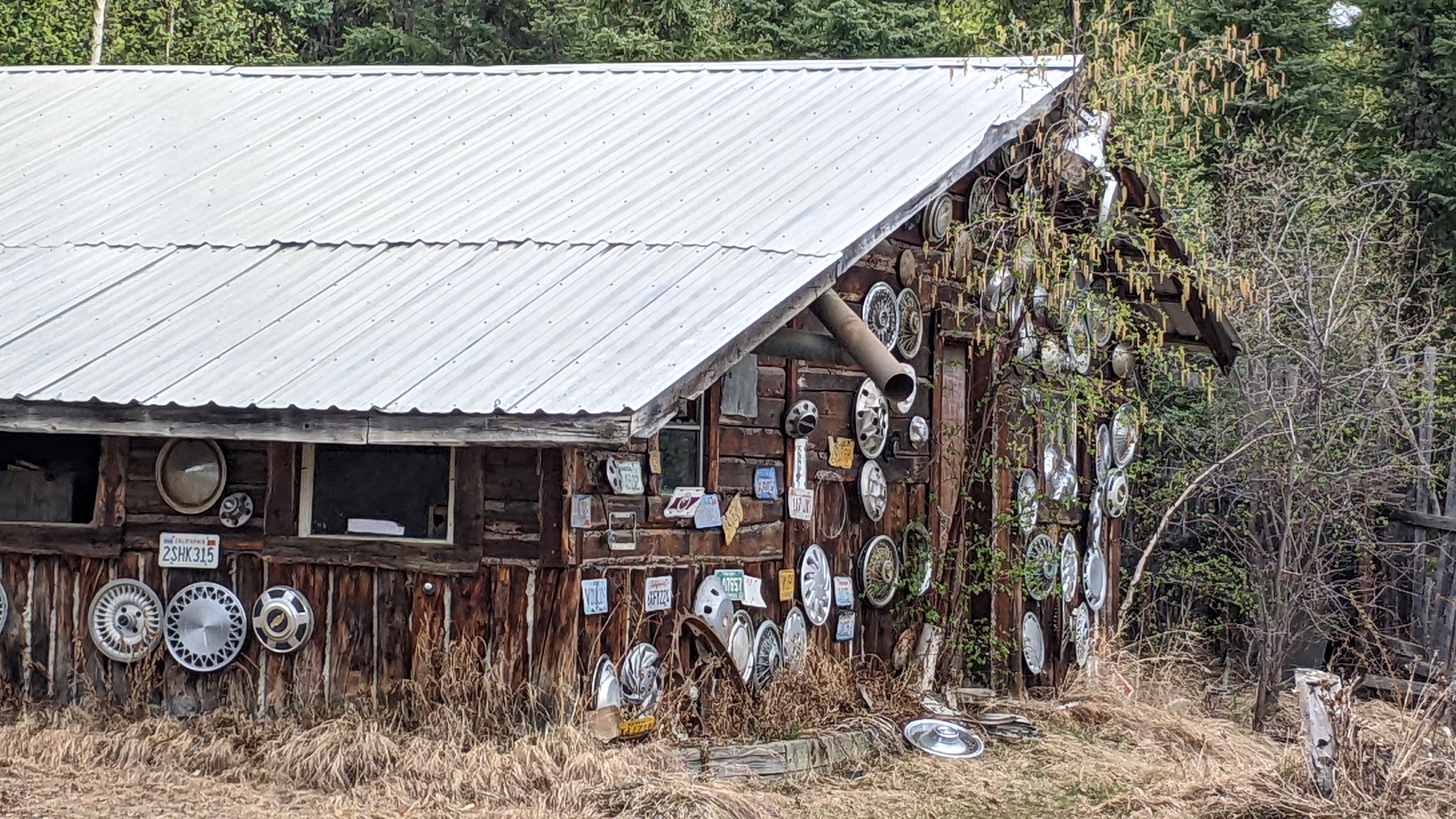
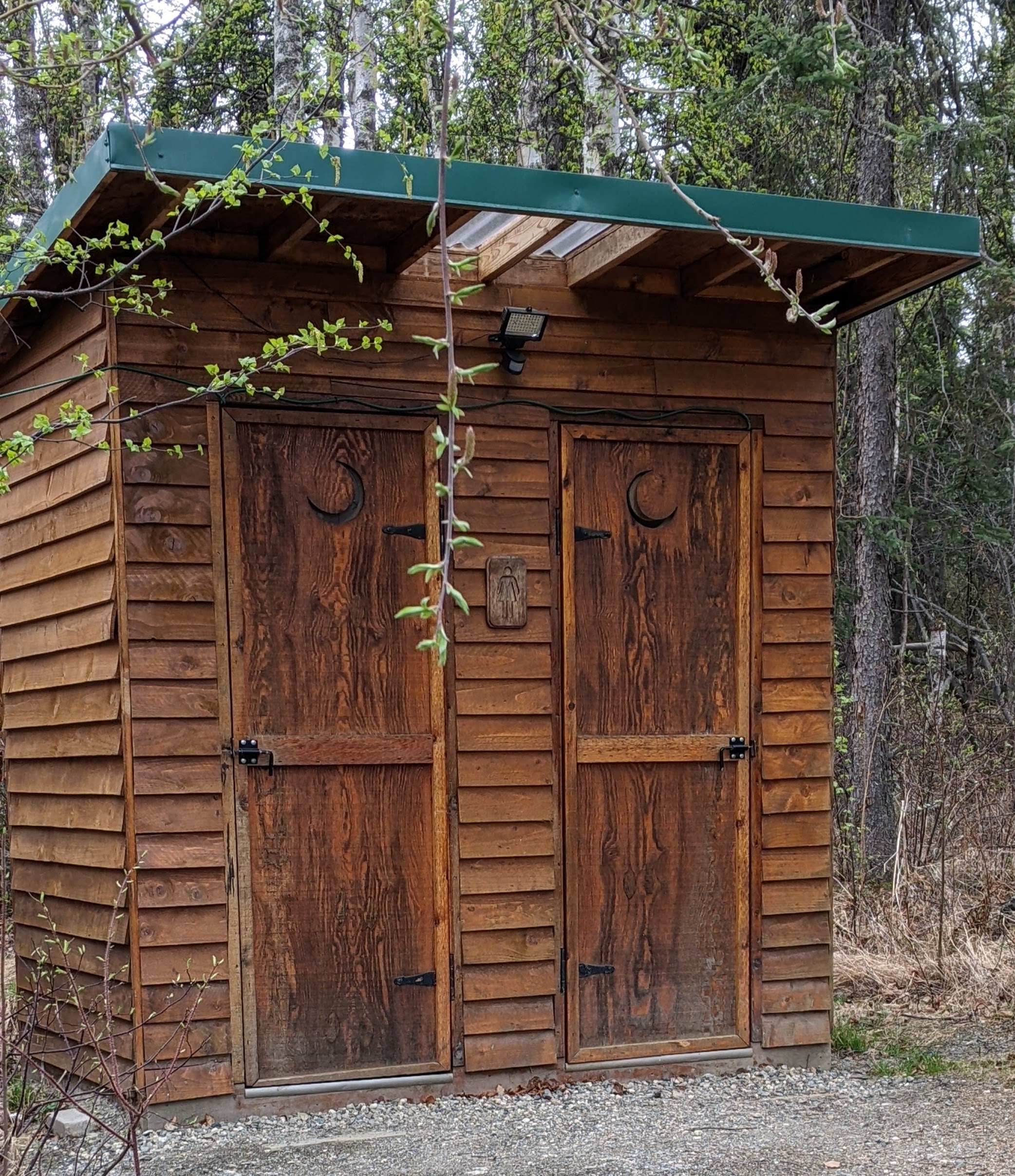
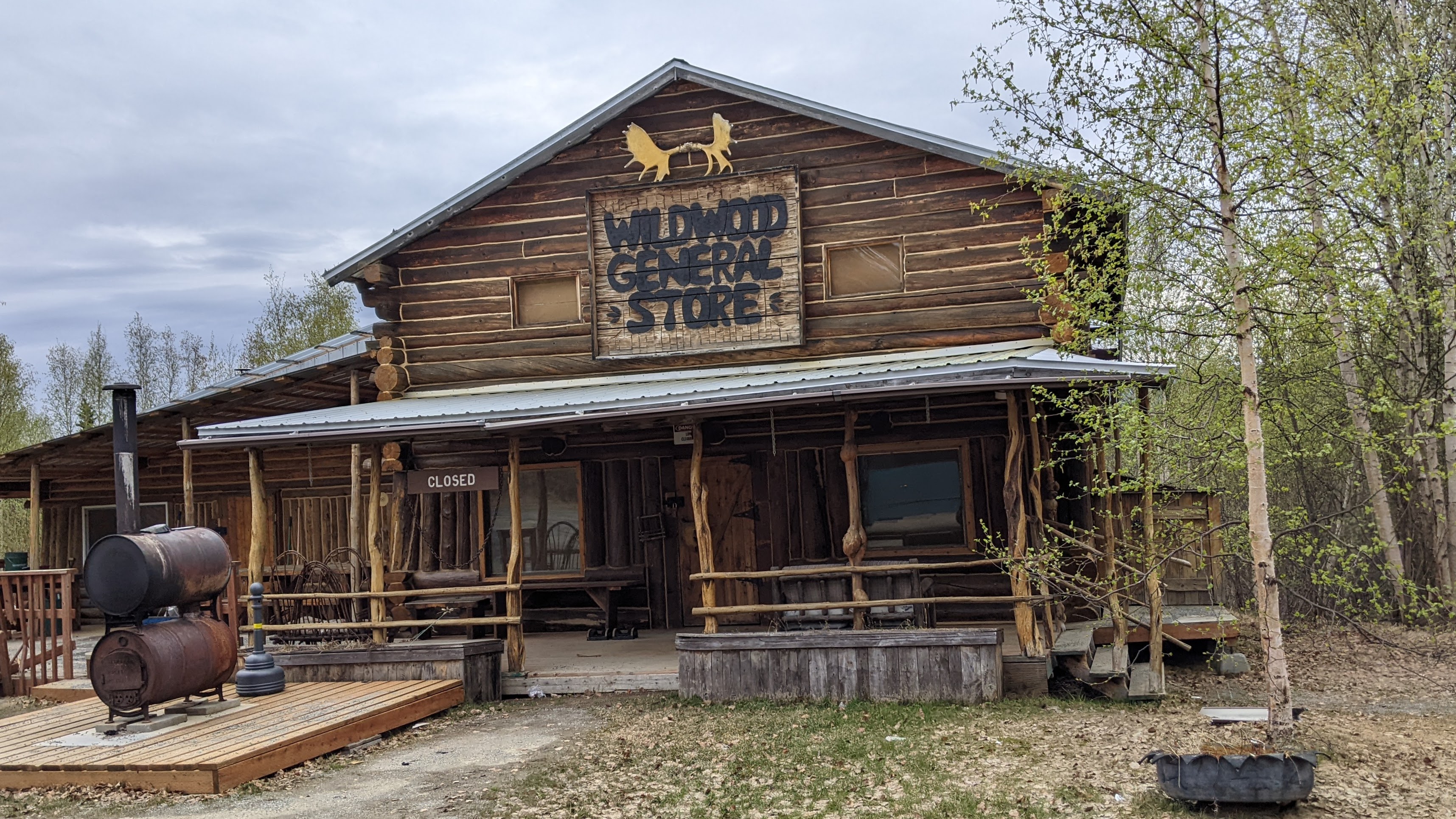
Our guide and driver told us that in the 1980s, a group of homesteaders had formed a small community in an “off-the-grid” location along the route. Today, even they have moved on, with only a handful of buildings as testimony to their former lifestyle. We stopped at what was once the general store in the area, now owned and maintained by the tour company as a convenience stop for participants on the Highway excursions. The site’s several buildings stand empty and unused, but there are clean, well-maintained outhouses, complete with lighting and framed art on the walls. It was not only a welcome rest stop, but the site offered numerous photo ops as well!

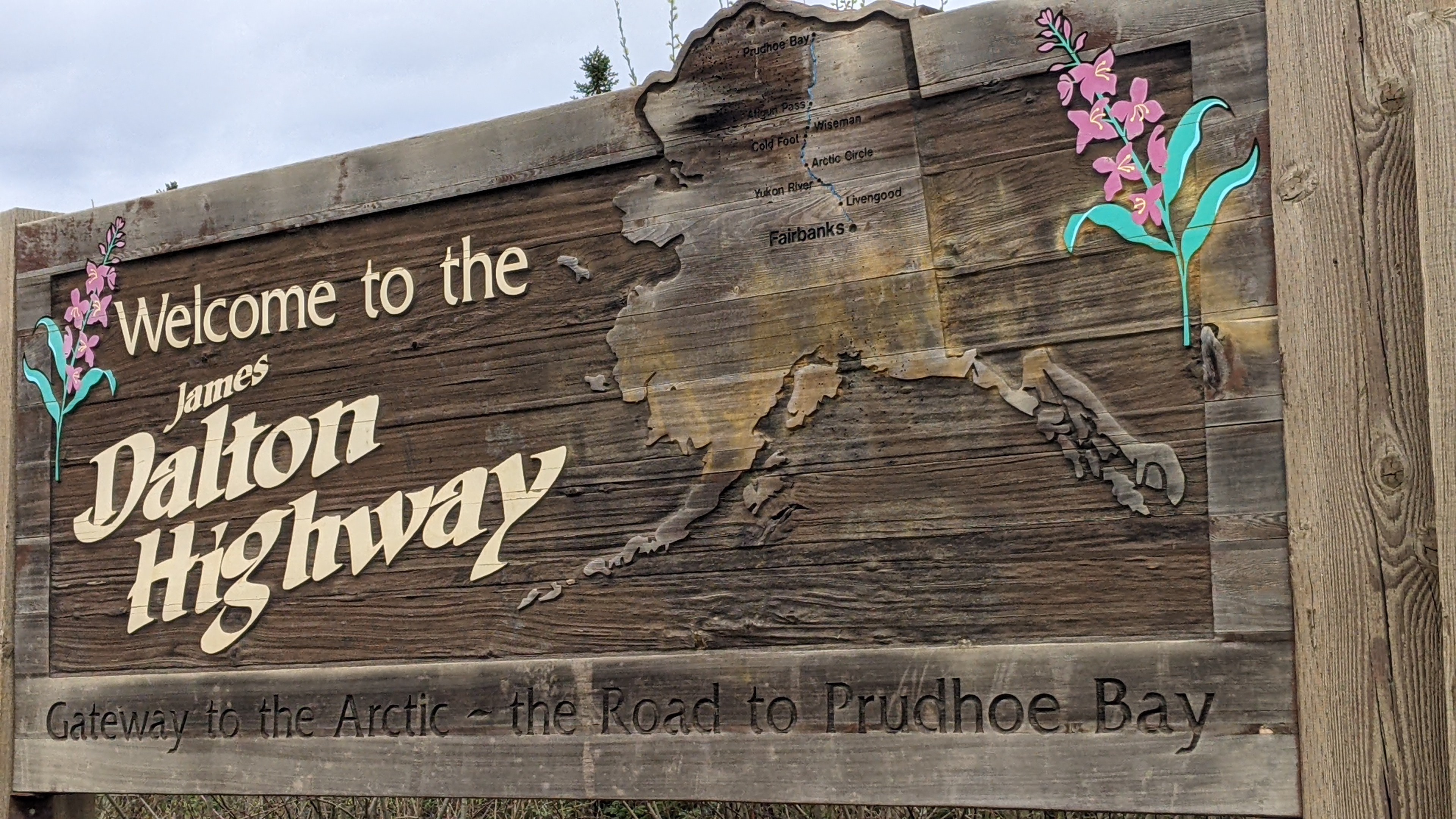
Leaving Fairbanks, we traveled along the Stease Highway, then joined the Elliott Highway (roadways in Alaska have names rather than numbers) until we reached the Dalton Highway, made famous by the television show, “Ice Road Truckers,” for the long-haul drivers who bring food and supplies to oil field workers and support crews along Prudhoe Bay.

There is a welcome sign where the Dalton Highway begins. At a stop there to take photos, we met a couple of motorcyclists traveling north from California to Deadhorse!

The Dalton Highway stretches 414 miles north from Livengood, a former gold mining town approximately 80 miles north of Fairbanks to Deadhorse, Alaska., at the Arctic Ocean. Originally known as the North Slope Haul Road, it was begun in 1974 and completed in just five months to facilitate pipeline installation. The pipeline itself stretches approximately 800 miles from Prudhoe Bay to its terminus at the ice-free port of Valdez in Prince William Sound. Still a marvel of engineering, the Trans-Alaska pipeline was operational in just 20 months, and began pumping oil in 1977.

The highest mountain in this northern region is just over 3,200 feet (in contrast to Denali’s height of more than 20,000 feet only a few hours to the southwest). The high point on the Dalton Highway is 2,200 feet, but much of this land is above the tree line, and it appears stark, nude, and forbidding in its solitude.

Hilltop Gas Station, 15 miles outside of Fairbanks, is the northernmost source of fuel until drivers reach Coldfoot, on the Yukon River, or the northern terminus of Deadhorse. The power line also ends not too far north of Fairbanks. In a very real sense, this is “the end of civilization.” Pedro Dome, situated northeast of Fairbanks, provides the only Doppler weather radar tracking for the entire state. If it goes down, weather forecasts for Alaska are only guesses.
Our second stop was at Yukon River Camp, where pipeline workers, roadway maintenance crews, and truckers gather. It serves as rest stop, information and communications center, local store, no-frills eatery and is a welcome sight for the few tourists along the lonely road. There is a small village of support personnel, with overnight accommodations available.

Visitors can check the weather, make phone calls, grab a hot cup of coffee, even purchase sweatshirts, postcards, and souvenir magnets. It was here that we once again met the cyclists and wished them well on their continued journey north.

Cities in this northern inland portion of the state are non-existent; even primitive settlements are few and far between. Water, power and fuel do not exist, and travel is treacherous.

Although our excursion traversed not quite half the length of the Dalton highway, we traveled far enough north to literally leave civilization behind. It was a unique experience.

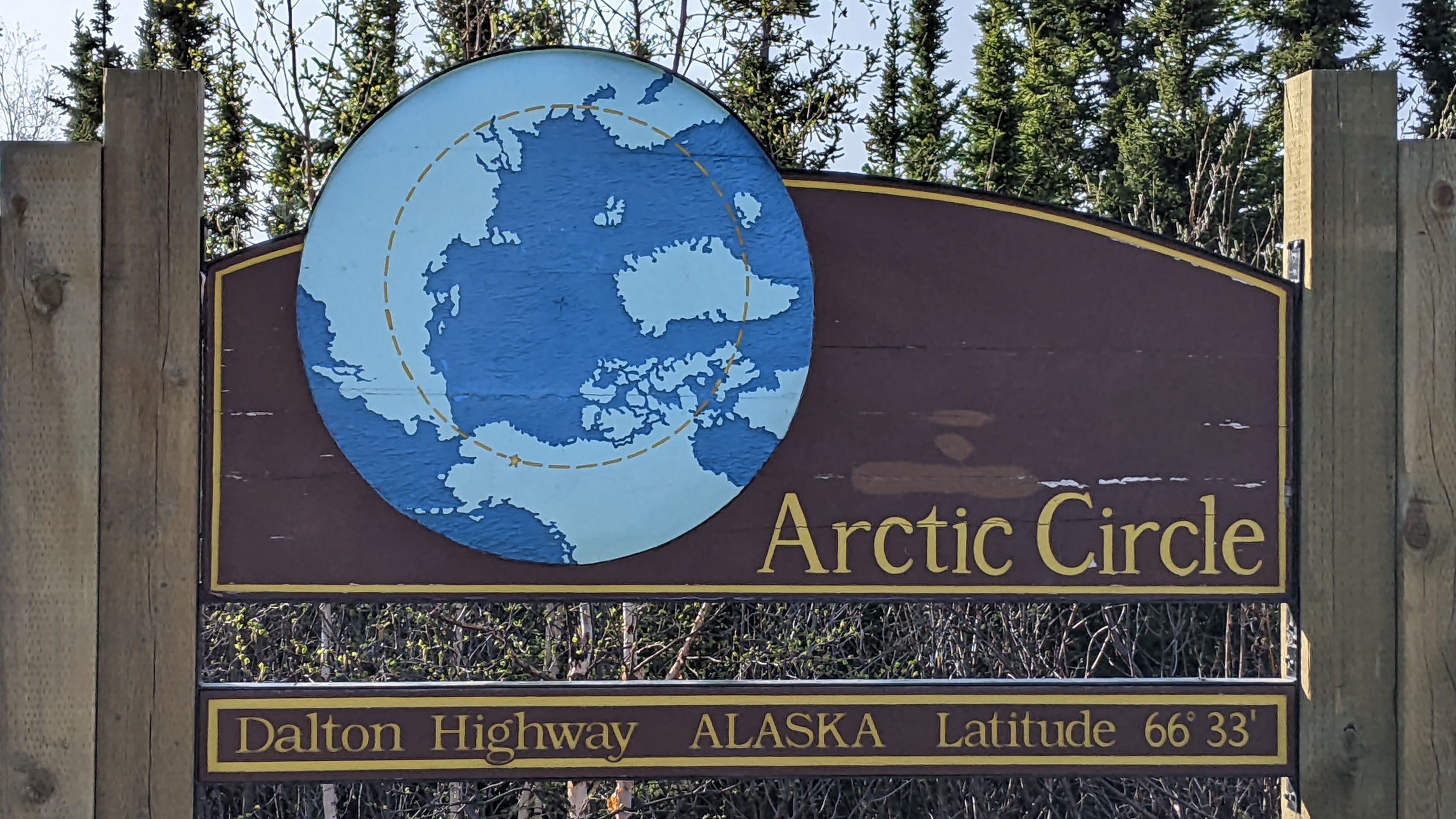
Later, our group stepped across the latitude line (66 degrees, 33 minutes) that marks the Arctic Circle, and we celebrated with “Alaska mud cake” and whipped topping at a picnic table in the forest — under the watchful eyes of curious squirrels and hopeful “thieving birds” perched just above us in the trees. It was there that we picked up a handful of southbound travelers, adventurous souls who had previously ventured further north and would be returning with us to Fairbanks.

On our return south, we stopped again at the Yukon River Camp. But now the kitchen was closed, and the staff had gone to bed. We brought our own sandwiches or microwavable dinners. Water and hot coffee were available to us, but there was little else other than tables, chairs and clean rest rooms. The camaraderie made up for the late-night lack of service.

My colleagues and I — participants in this unique post conference Dalton Highway press trip — discovered the uninhabited, “ungoverned wilderness” of far north inland Alaska. I was overwhelmed by the isolation, and enthralled by the beauty of the land. Only a limited number of participants were chosen for this unique tour offered by the Northern Alaska Tour Company. Another somewhat less-strenuous option offered to Alaska tourists provides an alternative overnight stay near Coldfoot, Alaska, in the Brooks Range, a bumpy hour or so north of the Arctic Circle. On that excursion, travelers can opt to take a morning hike along the Yukon River, followed by a bush-plane flight back to Fairbanks. Fellow journalists who took part in that trip reported that the return flight was spectacular, not to mention a few hours of welcome sleep in a rustic cabin with a comfortable bed!

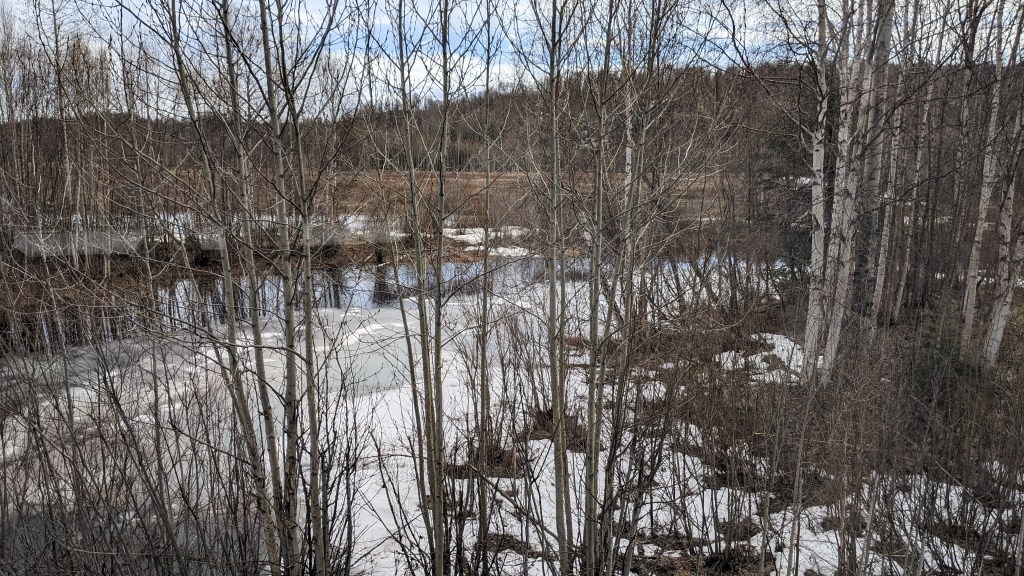
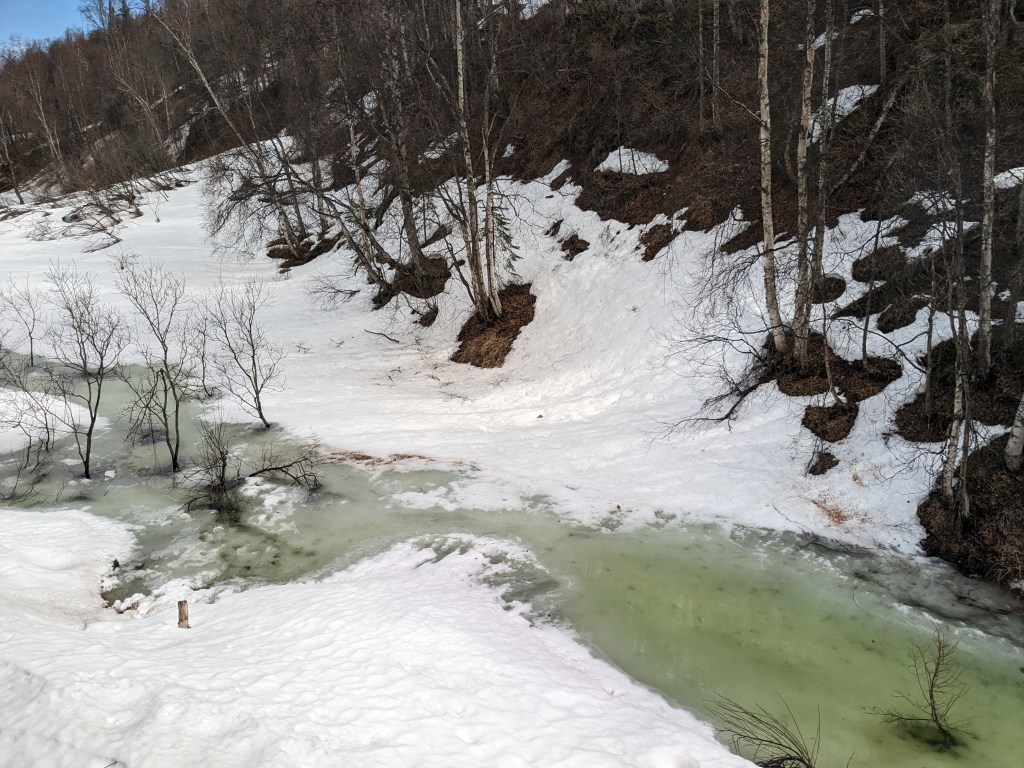
We traveled through the northern boreal forest that spans the globe from Alaska to Scandinavia. Russia and Asia boast greater biodiversity and life forms; in Alaska, there are only four species of trees that grow in the permafrost: white and black spruce, aspen, and birch trees. Because we were there in spring, we witnessed the aspen and spruce leafing out, even though snow remained on the ground in some areas. We were told that a few weeks earlier, the land was fully blanketed with deep snow. But spring comes quickly to this part of Alaska.

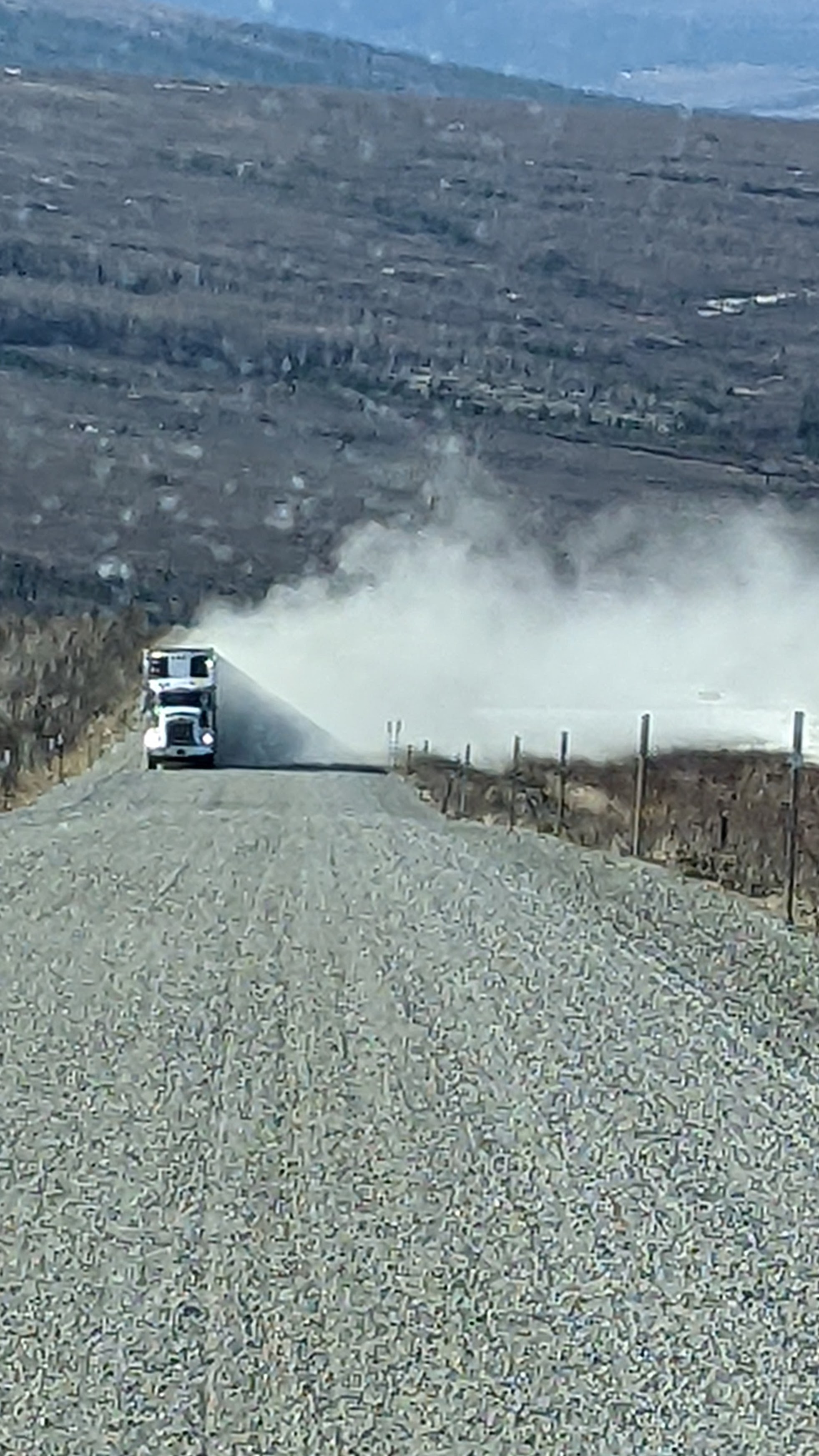
For my part, though, I was grateful for the opportunity to learn from our knowledgeable guide about the history of the Trans-Alaska pipeline and its current upkeep and operation. I was impressed by the ongoing maintenance work along the mostly unpaved roadway, even though construction delays late at night were a bit unnerving! I felt a slight sense of fear, tempered by awe, each time a swirling cloud of dust signaled the approach of a speeding 18-wheeler.

Those long-haul drivers are experienced, professional and, usually, extremely courteous. But it is obvious they operate on an unforgiving timetable, and they simply “keep on trucking.”

I was duly impressed by the sight of the 45-year-old, mostly-elevated oil pipeline as it snakes across the land. For more information about the construction and continuing operation of this engineering marvel, visit TAPS Construction -Alyeska Pipeline.

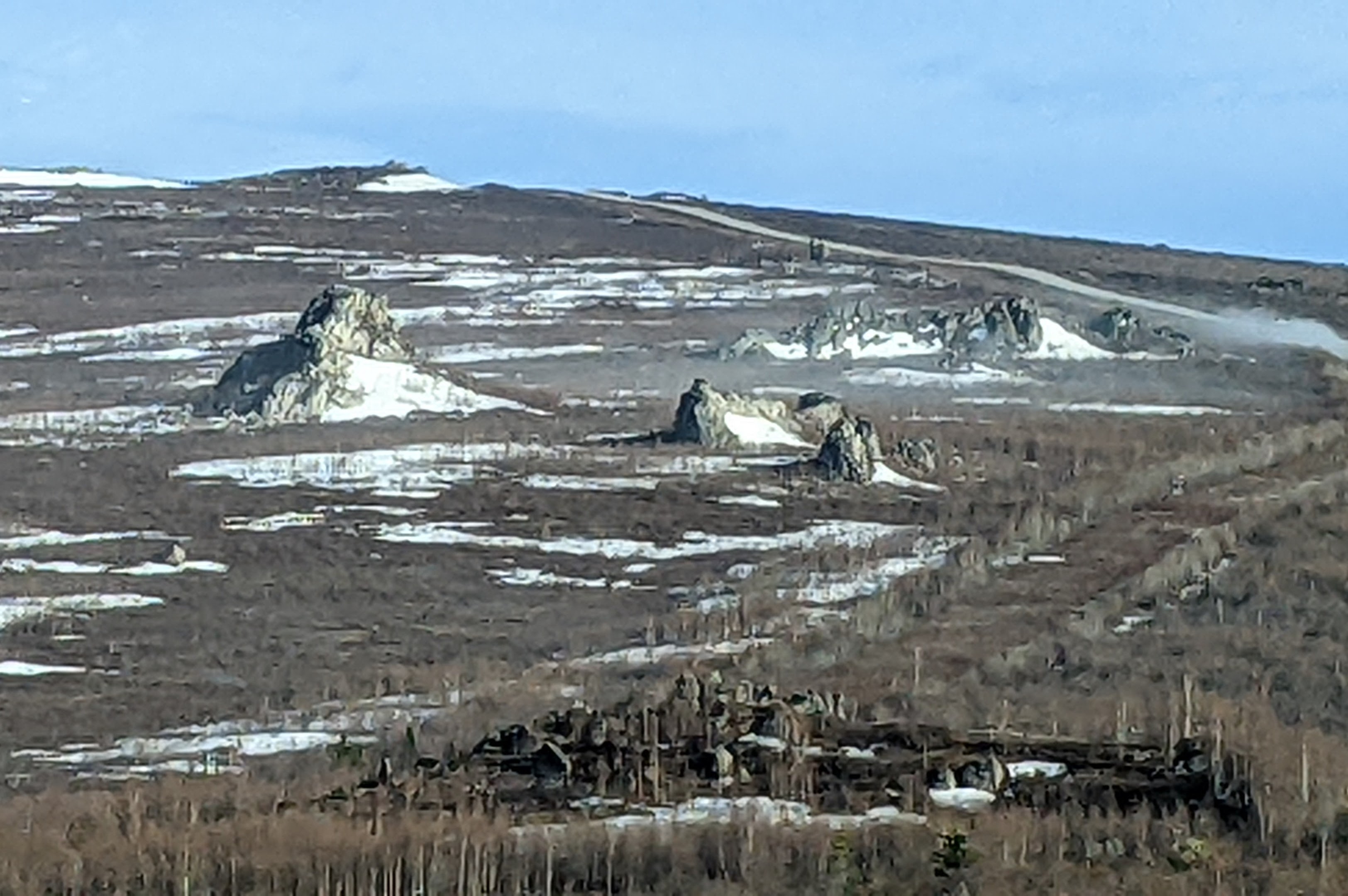
We stopped for a short time at an outcropping of granite tors, huge natural outgrowths that stand like sentinels on the barren land. Much further to the south, there is a 15-mile trail and public campground at another tors site, maintained and administered by the Alaska Division of Parks and Outdoor Recreation.

This trip is by no means an excursion for the faint of heart. But neither was it, as a participant on a tour prior to mine proclaimed, “the worst day of my life.” It was long, yes; cold, drizzly, uncomfortable, and tiring. We returned to our Fairbanks hotel at about 3 a.m. for a few hours of sleep before flying out that afternoon to the Lower 48. Would I do it again? No, but I’m certainly happy to have had the full experience.

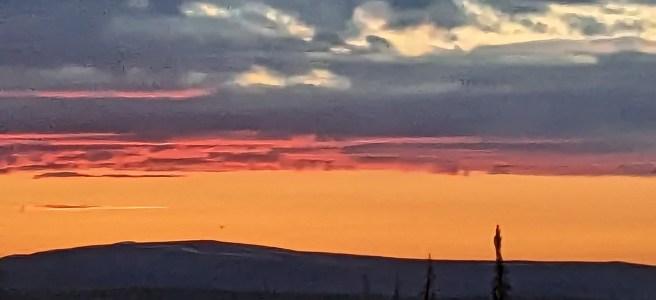
It was a ride I will not soon forget! And the changing hues of blues, pinks, and striated yellow and orange that filled the night sky in those late night and early morning hours will forever color my memories of far north Alaska, a land full of wonders and surprises.

The certificate I was presented proclaims that I crossed the Arctic Circle and “survived an adventurous journey through the Alaska wildnerness.” That says it all!

A special angel at the airport . . .

On the morning of January 17, 2023, we drove to Clinton National Airport in Little Rock. We were filled with anticipation. The skies were clear and the sun was shining. Despite an itinerary that included two plane changes before we would board our international flight in Miami, we believed we were well prepared for all contingencies and that our long-awaited trip to South America would be without incident. We were filled with anticipation.

Little did we realize then just what an experience awaited us. Our long-awaited journey had been on hold since before COVID. The trip itself had morphed from a relatively simple desire to sail around Cape Horn at the southern tip of Argentina — once an itinerary of between 10 and 14 days — to a trip that included not only Chile and Argentina, but also the Falkland Islands. The journey had stretched to 22 days. Our expectations had also become greater!

Travel plans sometimes take on lives of their own — that had certainly happened this time.

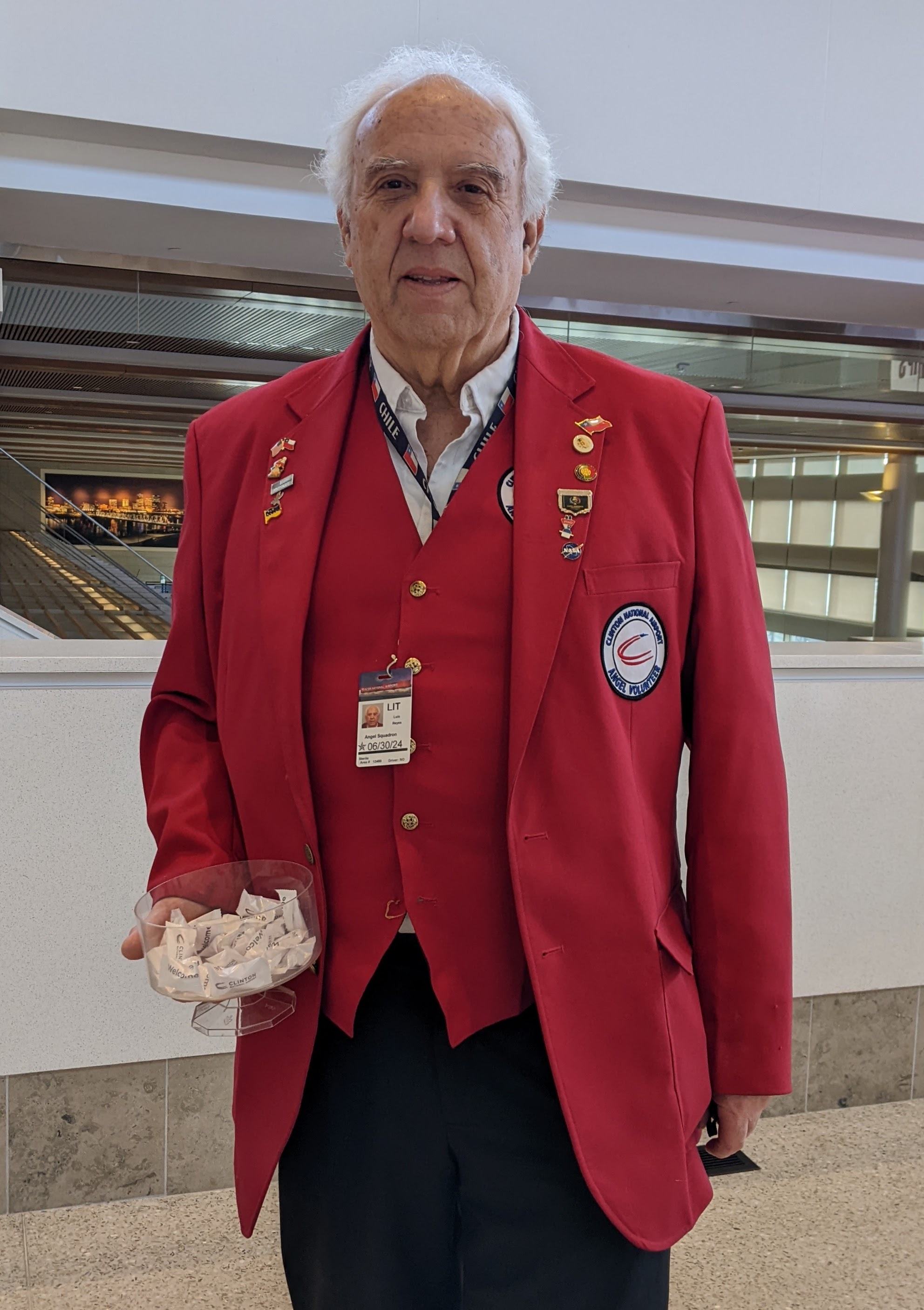
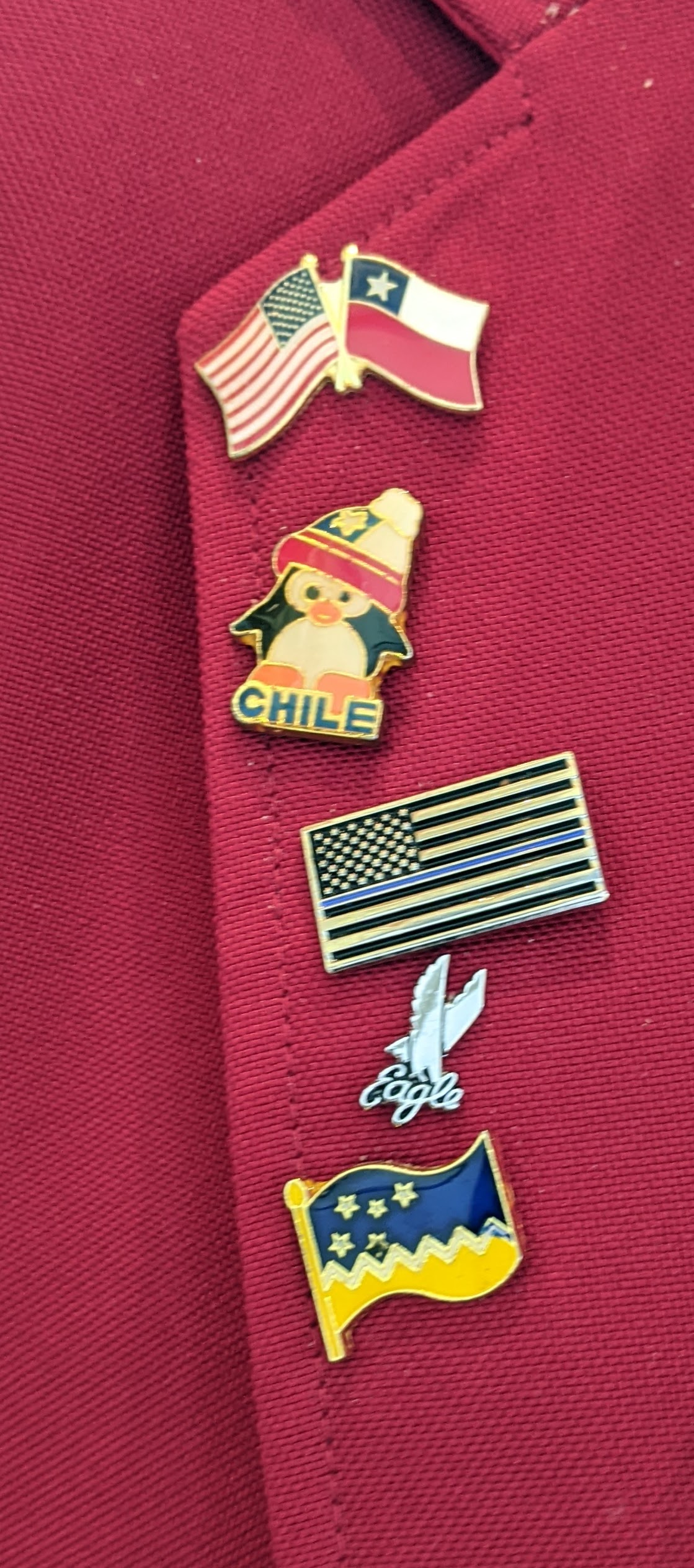
Check- in was swift and painless; a friendly American Airlines agent tagged our bags and placed them on the conveyor belt. We proceeded up the escalator, stopping at the top to chat with an Angel Squadron volunteer at the Airport. His name tag identified him as Luis Reyes. His red vest and a jacket adorned with colorful pins from different states and countries were as welcoming as his smile. I told him that my husband and I were traveling to Santiago, Chile, but would also be visiting Argentina during a 16-day cruise. We talked about the ports we would visit — Punta Arenas as well as Ushuaia at the southern tip of the continent, and then Buenos Aires.

His eyes sparkled and he was more than happy to share information about Chile, his native country. He told us about growing up in Punta Arenas, and how the city overlooked the Strait of Magellan at the southern gateway to Patagonia and Paine Towers National Park. He offered suggestions about where to go, and what to see and do during our short visit there, and he shared his recommendations for local food and drink. He promised that we would want to return.

Reyes also told us about how he and his wife had met, and how he came to be in Arkansas. I asked him if he liked living in Little Rock. He smiled again and said, “Yes, it’s my home now.” And, laughingly, he explained the similarities between the flag of Texas and that of Chile. “We had it first,” he noted. We laughed together.

We considered meeting this unlikely angel a good omen, and we promised to enjoy the delights of his native country and his boyhood home. He wished us a safe journey and we walked on, eager to board our first flight of the day.

Our travel adventures had only just begun! Sadly, our flight plan did not unfold as planned, and we were rerouted through Dallas-Fort Worth instead of Miami. We actually arrived in Chile a bit earlier than planned, and watched a spectacular sunrise over the Andes as our flight landed in Santiago.

After spending two days in that uniquely interesting city, we transferred to Valparaiso, a port city on Chile’s coast, to board our cruise ship bound for Punta Arenas. Again, weather and other circumstances intervened, and that port call was canceled.

Not long ago, returning to Little Rock Airport from another trip, my husband and I once again encountered Luis Reyes at the top of the escalator. He greeted us warmly. We told him how disappointed we were that we had not had an opportunity to visit the city in January. Nonplussed, he didn’t miss a beat! “You’ll just have to return,” he answered. We chatted for a few more minutes, about his summer here in Arkansas, about the trip we had just completed, and about our future travel plans. As we walked on, he called out to us: “I’ll hope to see you again soon,” he said.

Meeting him was one of those chance encounters that served as a prelude to the interesting people we would meet throughout our travels in South America. Once again, it’s the people one meets while traveling, not the places you go, that are the most memorable! Volunteers at major airports throughout the world are there to help travelers. Take advantage of the services if you need help, and get to know the volunteers who give of their time and energy to make travel as pleasant as possible for us all!

As I embark on other travel adventures, I hope this engaging angel will once again be waiting at the top of the escalator in Little Rock. If you happen to meet him, take the hard candy he offers. Ask for his assistance if necessary. Take some time to visit with him. And be sure to tell him hello from me!

And, if you don’t happen to meet Luis Reyes, I hope you meet another angel!

Wanderlust — Montenegro Dreams

As a child, I was captivated by people who lived lives very different from my own, and by the sounds of words spoken to a different cadence. The pull of the unfamiliar was strong. I do not remember a time when I didn’t want to experience far away places.  I never outgrew the wanderlust. Today, the rhythm of a foreign language is music to my ears and the promise of a trip is reason enough to pack up.

And those strange-sounding names; oh, yes!

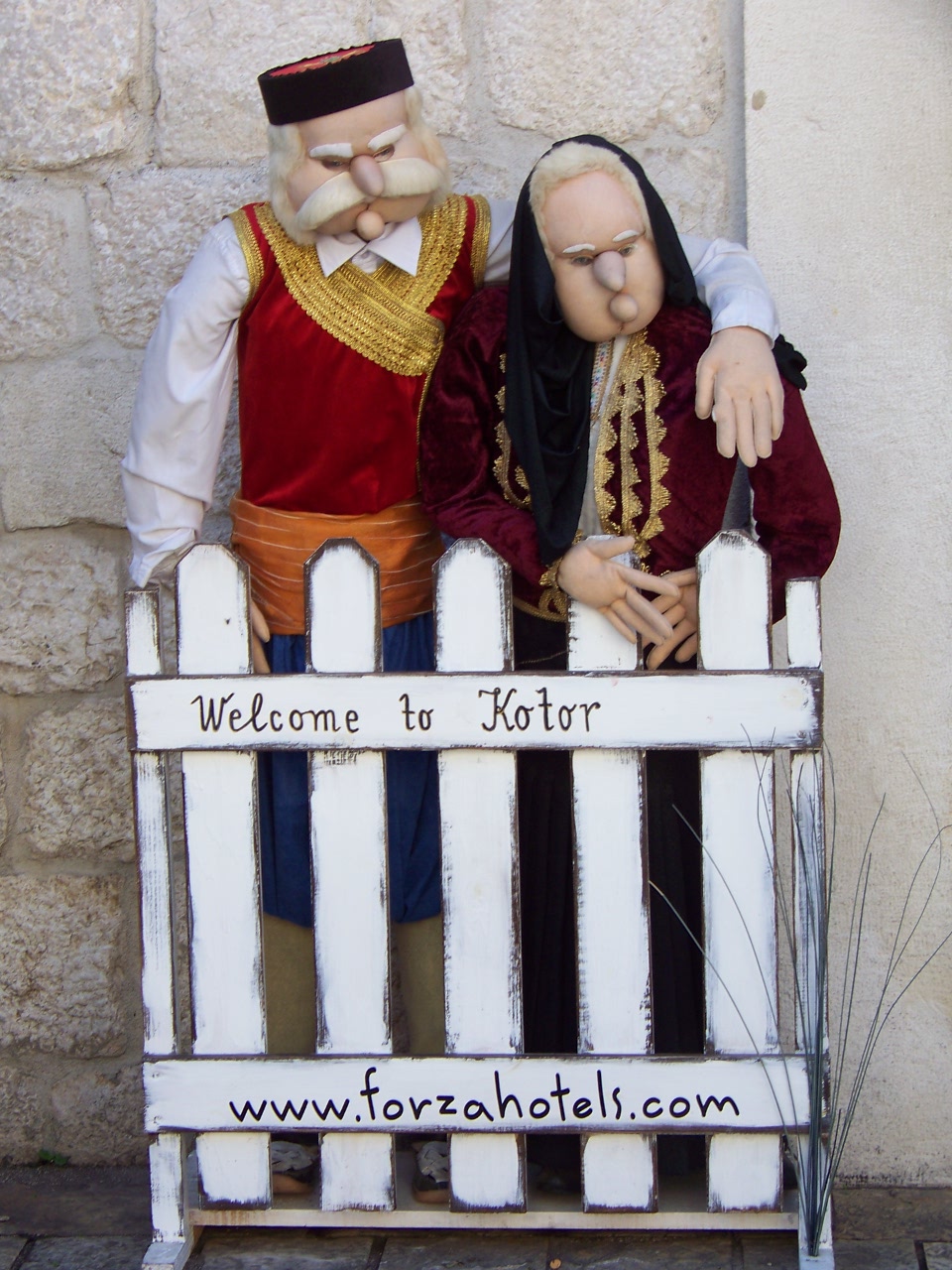
The pull of unknown places is strong. So, when Kotor, Montenegro, was one of the ports on a Princess cruise itinerary, it was almost impossible to resist. I knew next to nothing about Montenegro; in fact, I had to pull out my atlas to locate it.

We were in port for only one day. That was 2017, in the fall. Today, as I think about that visit, I find it hard to believe that all those good memories were formed in the course of one afternoon. Now I want to return again!

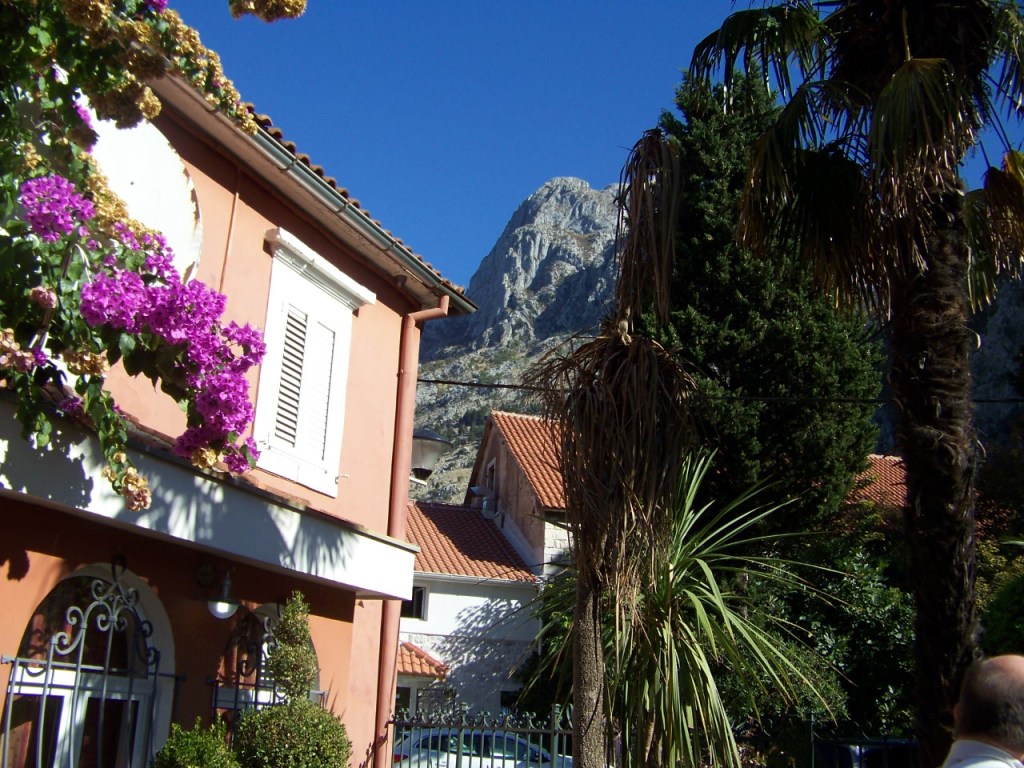
The place, the people, the history speak loudly of life well-lived and fine experiences just waiting to be had. Even more seems promised on a second visit than I experienced during the original. But that first visit could hardly have been better! The scenery, both the ancient city buildings and the surrounding limestone cliffs, is stunning, with hand-built stone walls stretching for more than three miles above the town. The scene is both awesome and forbidding.

Arriving in the City

Our day began with a quick tender ride between our ship and the city dock. Once on land, we were efficiently directed to a guide who was to accompany us on a stroll through Kotor’s marketplace prior to joining a local chef to hear about traditional Montenegrin dishes. We were to sample a variety of regional favorites.

We don’t normally sign up for ship’s tours — we don’t do groups well, preferring instead to walk at our own pace and make our own discoveries. But this one was different.

The stroll turned out to be more of a brisk walk as our group skirted the walls of the ancient city before arriving at the

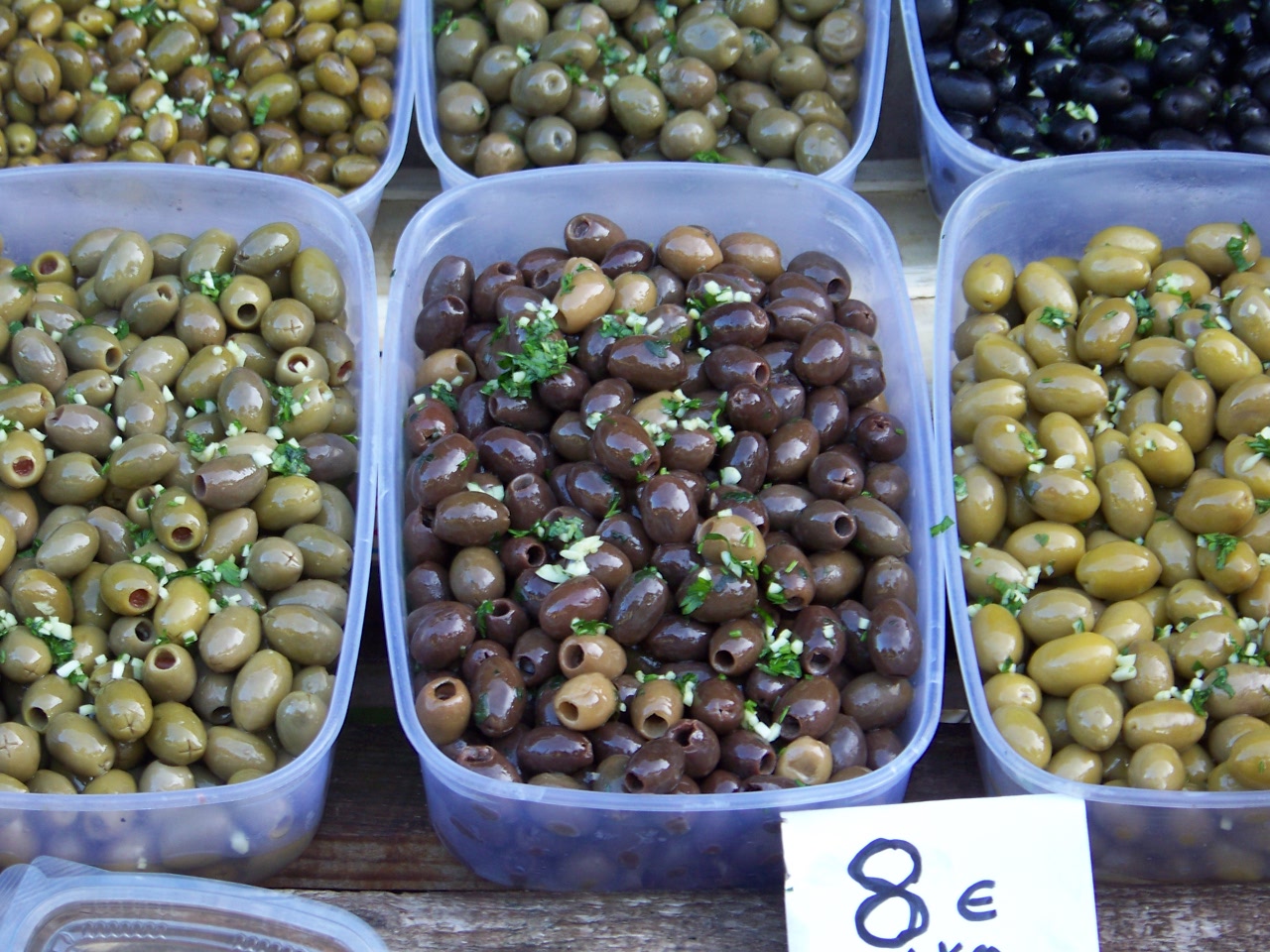
market. Stalls were filled with olives and cheeses, figs and dried apricots, colorful produce, plump breads, pastries and chocolates, sausages, ham and fresh fish – vendors offered samples, encouraging us to try unfamiliar fruits, to sample various figs and olives, to buy spices and olive oil. It was tempting, to be sure.

Welcome Freely Offered

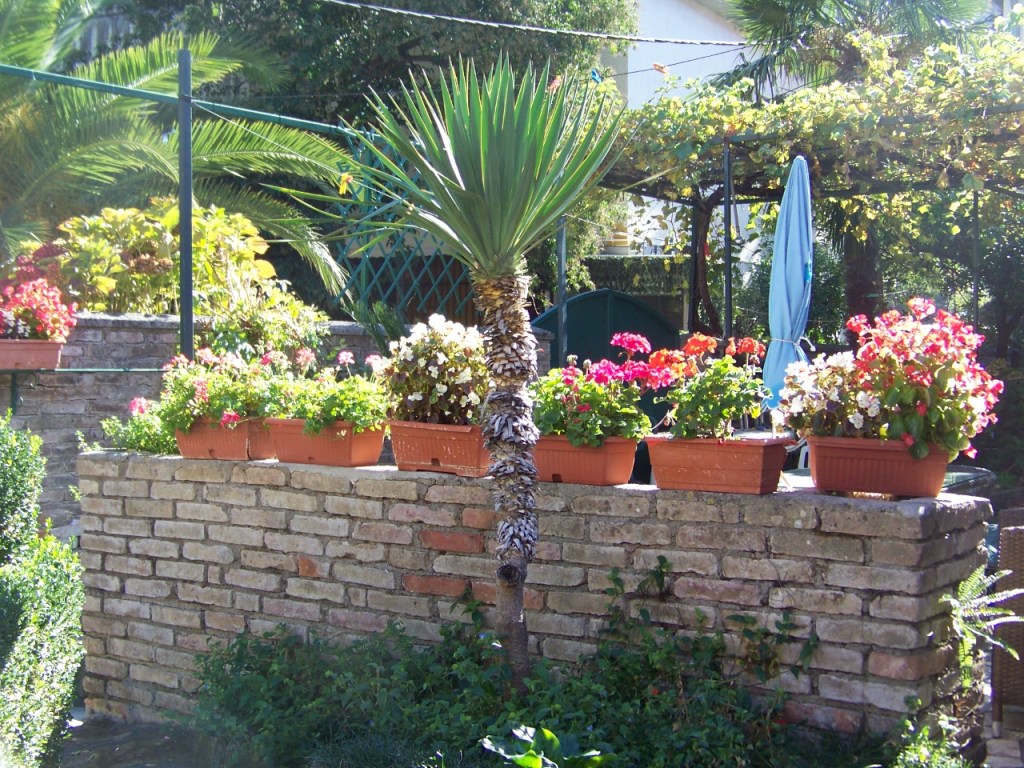
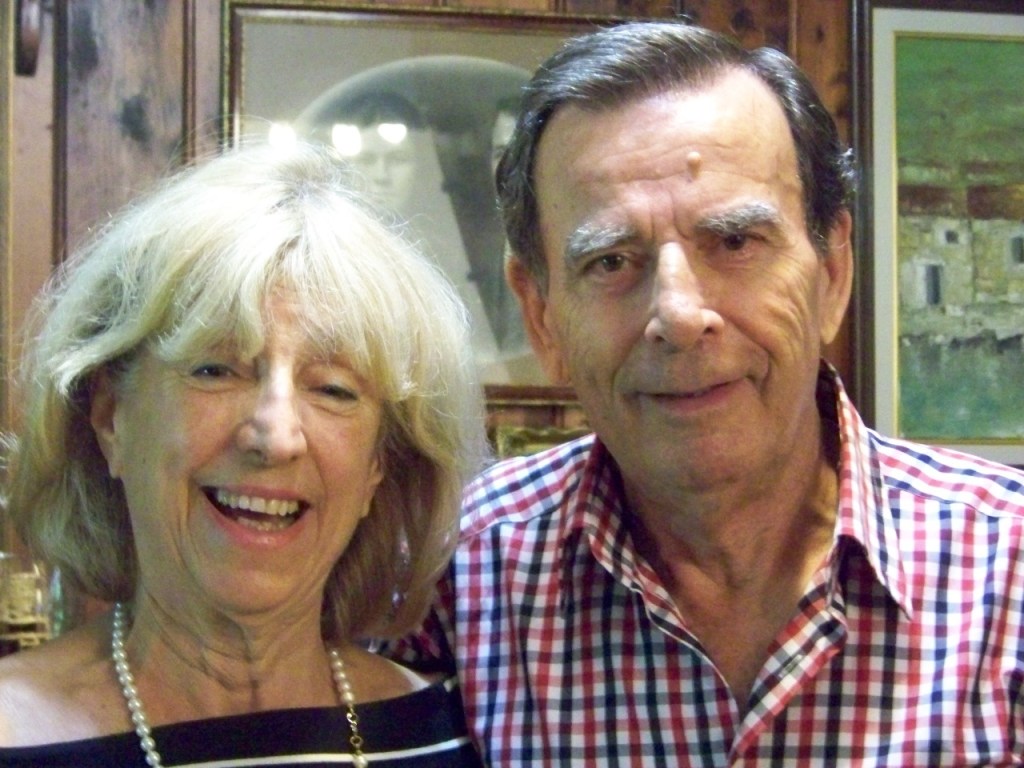
But, we had a schedule to keep, and we pushed on to the end of the harborside thoroughfare before taking a turn onto a tree-lined lane bookended with private gardens. While our group had envisioned gathering in a local café, we were delighted to be ushered through a courtyard and into a cozy home, greeted by a vivacious blonde who wore pearls with her casual slacks and tee.

She greeted us warmly in only-slightly accented English, and introduced her husband, a former sea captain, who stood ready to pour each of us our choice of strong aperitif even though it was not quite 10 a.m. But, when one is on vacation and a guest in someone’s home . . .

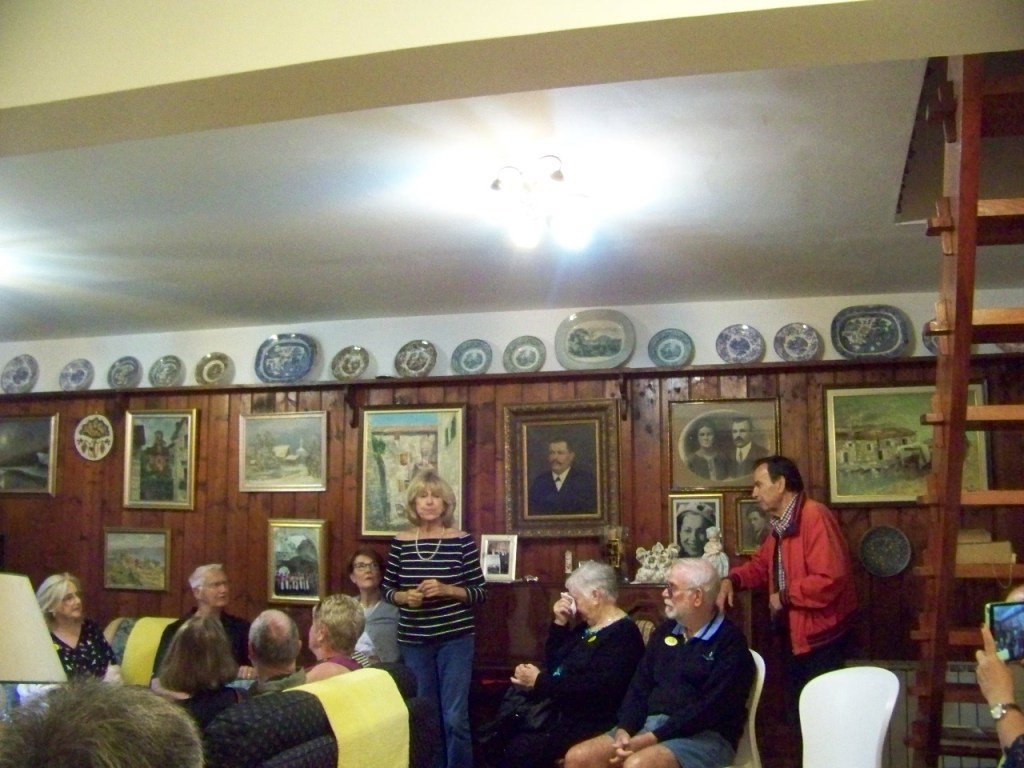
Each of us accepted a glass, then followed our hostess’s lead and raised our glasses in a mutual toast — to new friendships, good food and good times. She encouraged us to feel at home in her home. Each of us found a comfortable seat in the art and antique-filled sitting room. I chose a spot around a diminutive lace-draped round table.

We learned about the life experiences of this lady and her husband. Her many-faceted career, as author, cook, lecturer, tour guide, and who knows what else, was a bit of a surprise, proving that reinventing oneself knows no cultural or geographic boundaries. We also learned about her husband’s exploits at sea and of his ancestors whose portraits hung on the walls.

After a bit, she disappeared for a few moments into the kitchen. We were invited to take seats at a long banquet table that nearly overfilled a well-proportioned dining room with a view of the garden.

Sharing Food, Building Bridges

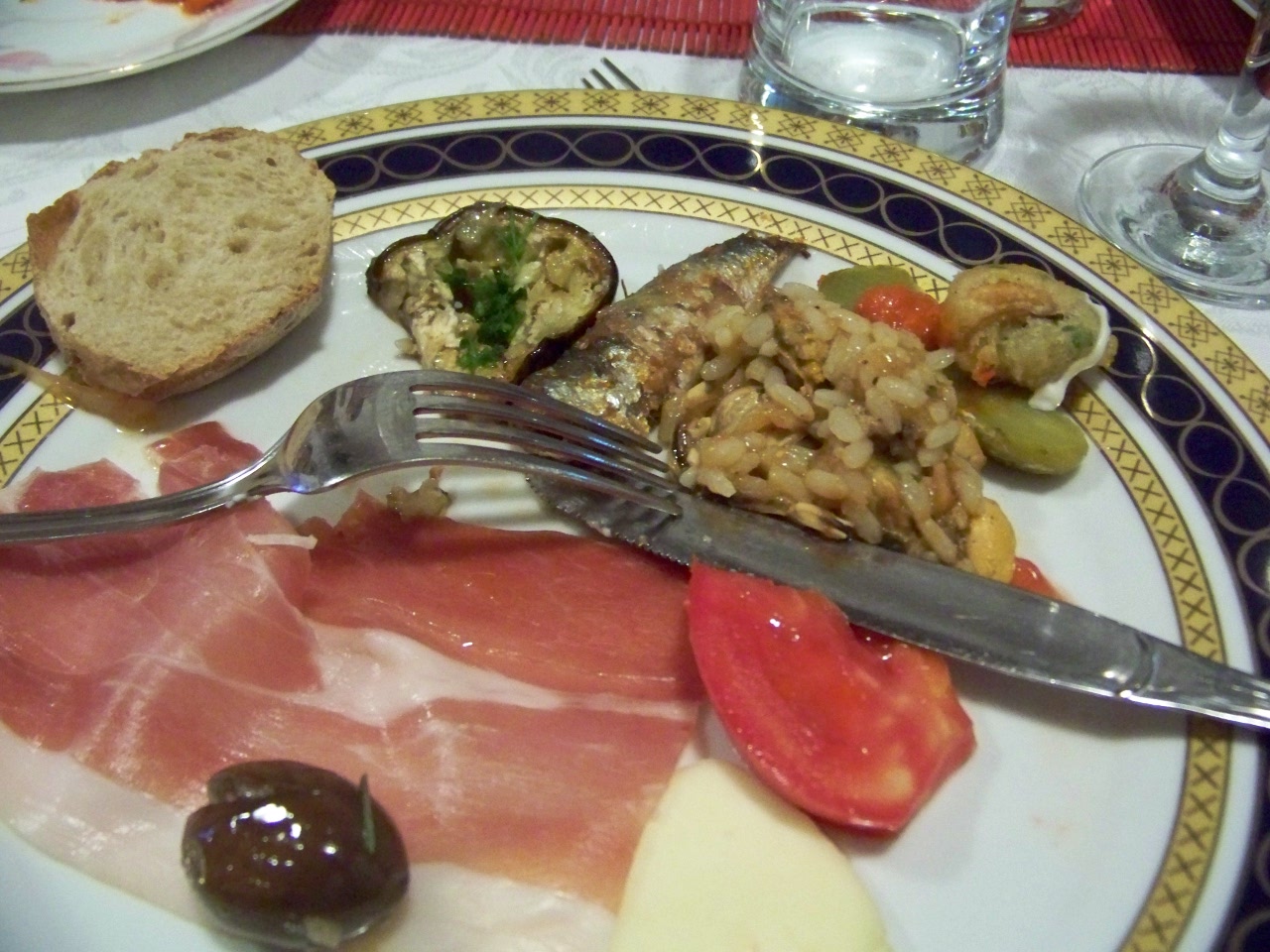
Treated like honored guests, we sampled plate after plate of appetizers, a delicious soup, a traditional entree, and, finally, a rich dessert, all accompanied by a parade of local wines. We listened with rapt attention as she demonstrated how to prepare a traditional Montenegrin recipe.

We were not really prepared for Montenegro. Yes, we knew some of the history: Kotor is a unique medieval fortress town, with an array of buildings that span from the 12th through the 16th Centuries. It’s impossible to walk through the old town without visualizing pirates along with priests, noblemen and beggars, monks and blacksmiths, painters and writers, physicians and printers.

The small city, with a population of approximately 13,000, is situated in a secluded portion of the long Bay of Kotor on Montenegro’s Adriatic Coast. Less than 1,000 people actually live within Kotor’s historic walls, and its earliest history is a bit muddied; it is first mentioned in ancient literature in about 168 BC, but some authorities believe it was founded as early as the 5th Century BC. It was known at one point in history as Acruvium, part of the Roman province of Dalmatia. No matter the date, Kotor now holds the status of a UNESCO World Heritage Site, and the city’s fortifications testify to a succession of foreign occupations and battles. Once allied with Dubrovnik, it gained independence from Byzantium until it was later occupied successively, and repeatedly, by the Serbian Empire, the Republic of Venice and the Ottoman Empire, the Hapsburg Monarchy and, finally, the Napoleonic Kingdom of Italy. It played significant roles in both World Wars.

After 1918, the city that saw some of the fiercest battles of the war became part of Yugoslavia, and gained its new name of Kotor. It was not until 2006, however, that Montenegro, part of the former Yugoslav Republic, become truly independent

With that much turmoil and turnover in its history, it may be surprising that Kotor endured. But endure it did, and today it boasts one of the best-preserved old towns in the region, along with its impressive fortified old city walls and its stunning Cathedral, built in 1166.

The Cathedral of Saint Tryphon is a major tourist site, one of two cathedrals in this unique small city that was formerly known as Cattaro. Saint Tryphon has a collection of beautiful art and artifacts, in addition to its notable architecture.

What else sets Kotor apart from its neighbors? There is a distinguished maritime museum and the Kotor Festival of Theater for Children has attracted throngs of visitors from throughout Europe for the 30 years it has been held. Citizens of Kotor are also protective of their cats, symbols of the city. Food and water, along with boxes that serve as shelter, are left throughout the city. Kotor Kitties is a chartable services that provides spay and neutering services in an attempt to limit the population, but the cats are as much a part of the city as the smiles of its citizens. Don’t miss Cats’ Square if you visit, and be sure to take home a cat-themed souvenir.

I hold fading memories of the cats, the cathedral, the city walls, and the sparkling sea. But I have a clear recollection of the taste of fresh olives and figs from a vendor in the city’s market, and of the stories told and the laughter shared around a dining table in the home of a charming couple in Kotor!

Rollin’ on the river . . .

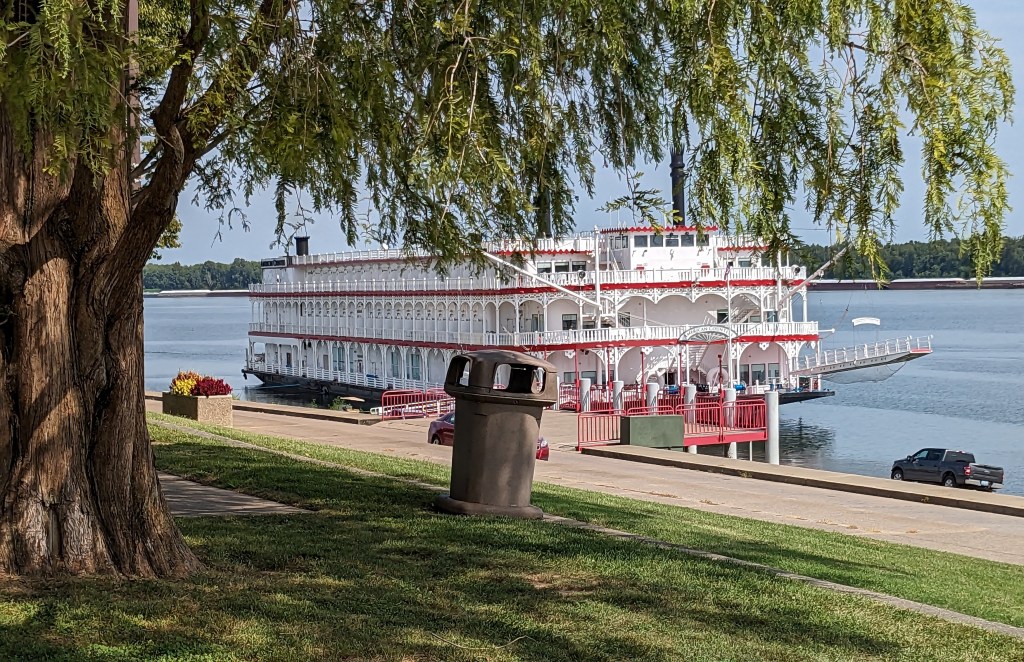
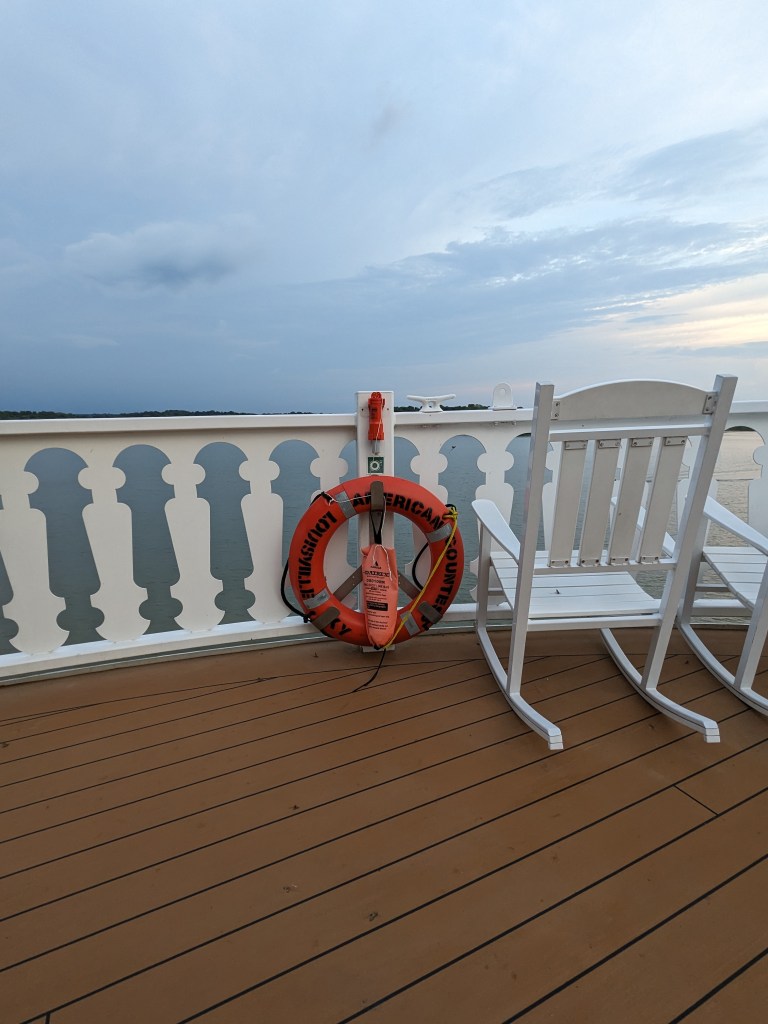
I returned home three days ago from a journey along the Ohio and Mississippi Rivers aboard American Countess, a traditional riverboat sternwheeler with upscale features to rival any ocean-going vessel. With fewer than 250 passengers and more than 90 friendly crew members to cater to every need or request, this was a luxury journey that fostered new friendships and a sense of camaraderie.

Guests were encouraged to submit their personal photographs during the voyage, with winners announced at the end of the week. I was surprised and delighted that my photograph of the American Countess’s iconic twin red paddlewheels was chosen as first-place winner!

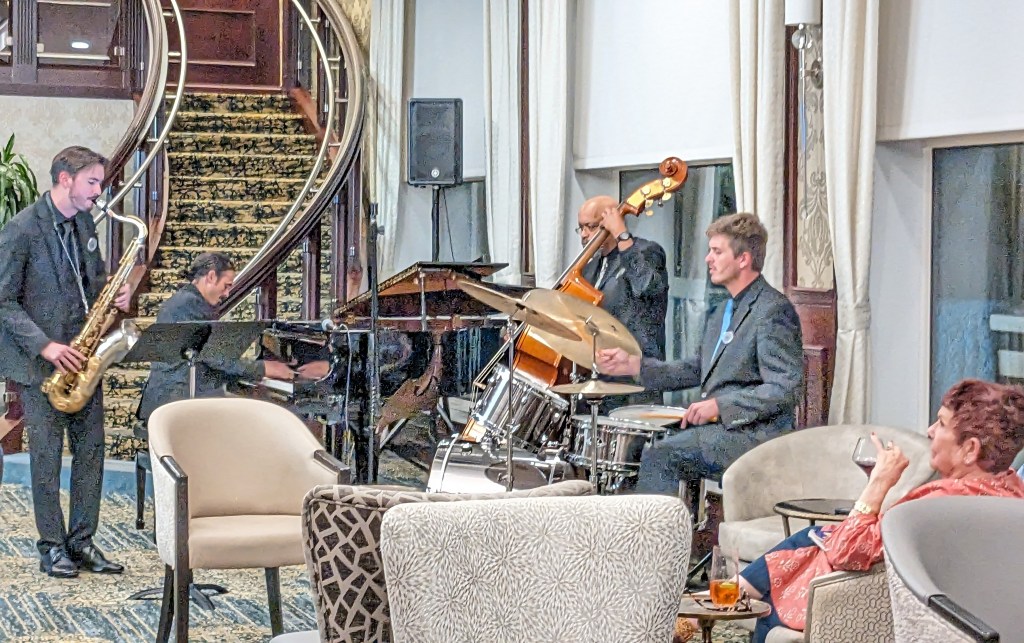
River cruising represents slow-paced travel at its best, with new and impressive sights around every bend, abundant food and drink, a slate of charming towns to visit, excursions designed to appeal to diverse interests, and onboard entertainment, music and activities almost non-stop.

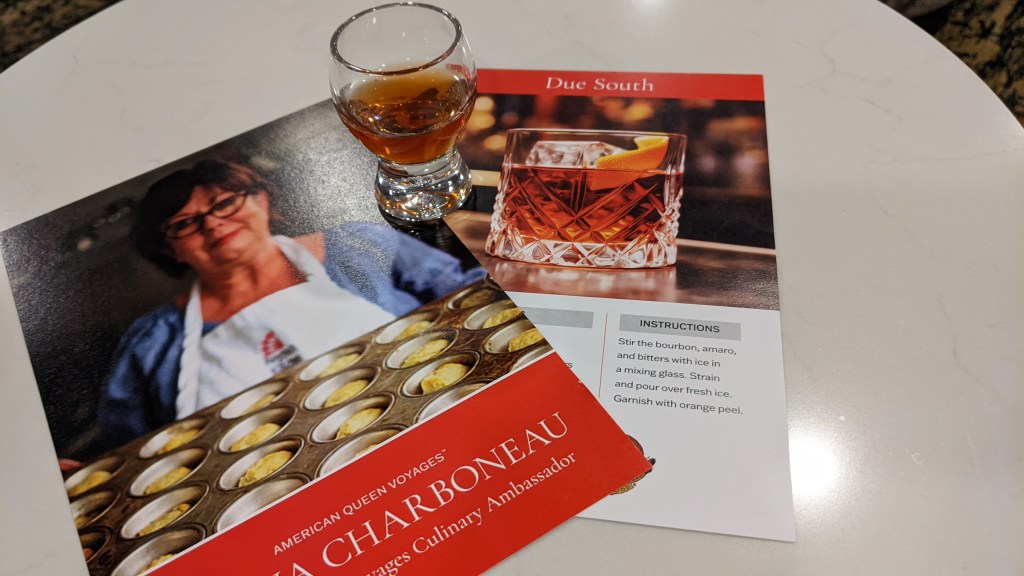
I was one of a group of four writers chosen to participate in a press trip on this Bourbon-themed voyage. Not only did the agenda include seven history-rich river cities, but Bourbon expert Michael Veach, a noted authority on the history of this strictly American whiskey, was aboard to present a series of lectures and complimentary bourbon tastings.

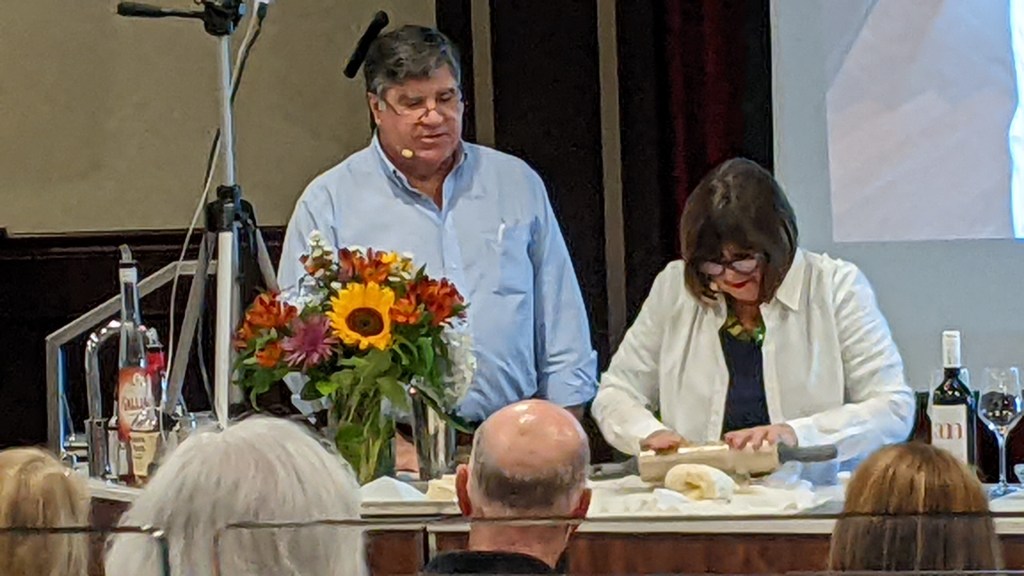
This particular voyage boasted a decidedly “good food and spirits” orientation, with multiple options for brewery tours and tastings along the route. American Queen Voyages President Cindy D’Aoust and Vice President of Marketing Angela Composto joined the cruise for the first few days. Special guests were Dickie Brennan, chef-owner of New Orleans’ landmark Bourbon House restaurant, and noted restaurateur and cookbook author Regina Charboneau, who serves as the cruise line’s Culinary Ambassador, and the pair joined up for a cooking demonstration in the boat’s theater one afternoon.

As a Matador Creator, I was privileged to participate in this unique press trip. There are many stories to tell about the distinctive “flavor” of cruising American rivers, especially on a themed cruise like this one, and I will recount some of my experiences in future posts. Also, look for my article on Matador Network in the near future.
What an amazing treat it was, from a pre-cruise stay at The Brown Hotel in Louisville, Kentucky, to disembarkation in Alton, Illinois, just across the Mississippi from St. Louis, followed by quick, efficient bus transfer to the St. Louis Airport.
This post is simply meant to be a visual “teaser.” Visit American Queen Voyages to learn more about various itineraries, or to take advantage of special incentives for future cruise bookings. If you’ve never before considered an American riverboat vacation, I can highly recommend it as an experience you won’t soon forget!

Traveling solo can be fun when you’re old enough to be somebody’s grandmother!

I recently had an opportunity to be on the road alone — partly for pleasure, to be sure, but with a business connection. I had a professional conference to attend in Fairbanks, Alaska. Instead of booking a round-trip flight from my home in Arkansas to the conference city I opted to cruise north to Alaska from Vancouver, British Columbia. I then spent a few days sightseeing near Denali National Park, finally arriving in Fairbanks the evening before my conference began.

After many years of marriage, my husband and I are well aware that our interests, priorities, enthusiasms, and commitments sometimes differ. That’s all good, and on several occasions over the years, we have kissed each other goodbye and wished one another safe travels. It’s just the way we do things. This was one of those times.

I simply could not resist the appeal of a seven-day cruise followed by a three-day land tour to Denali National Park. My husband, for his part, was not ready to embark on another cruise so soon after our epic Antarctic adventure earlier this year. So, for 16 days, my husband and I led separate lives. In addition to a memorable vacation experience, I told myself that this particular journey could be counted as a business trip, providing valuable background for future posts about traveling solo as a senior woman. And, yes, those planned posts are in their early stages as I write this.

The cruise was truly enjoyable, made even better by spending two days in Vancouver to visit with old friends — my own superb tour guides! I found solo cruising to be totally enjoyable, and not at all intimidating. In fact, I look forward to another solo travel experience should an opportunity arise. The land portion of the trip was almost exactly as I expected. Travel arrangements for the land portion of the trip were part of the cruise package, well-planned and executed by Princess Cruise Line. Even though May is the beginning of the season in Alaska, and local staff members were still learning their specific duties, transfers, tours and accommodations were perfectly choreographed.

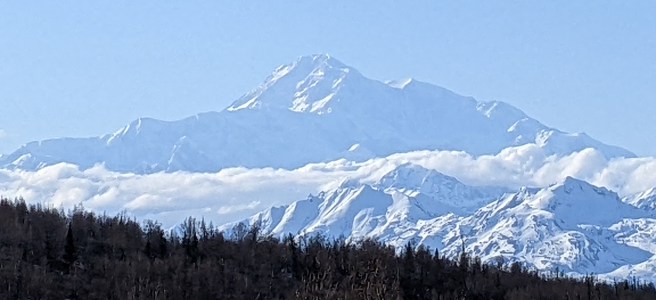
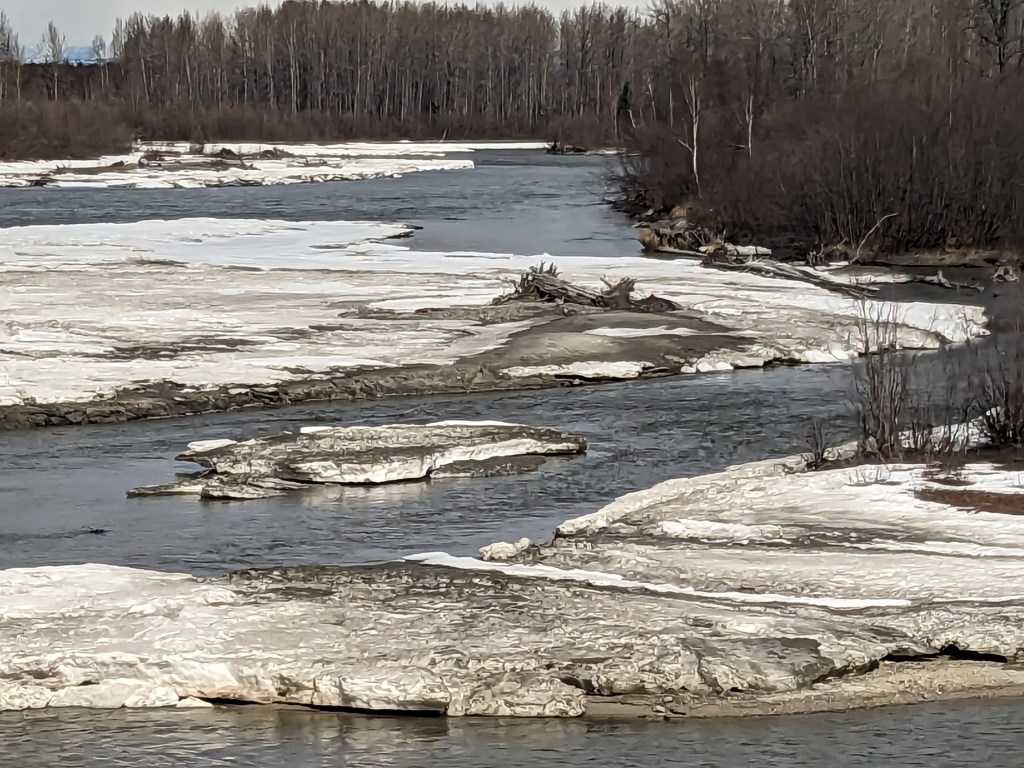
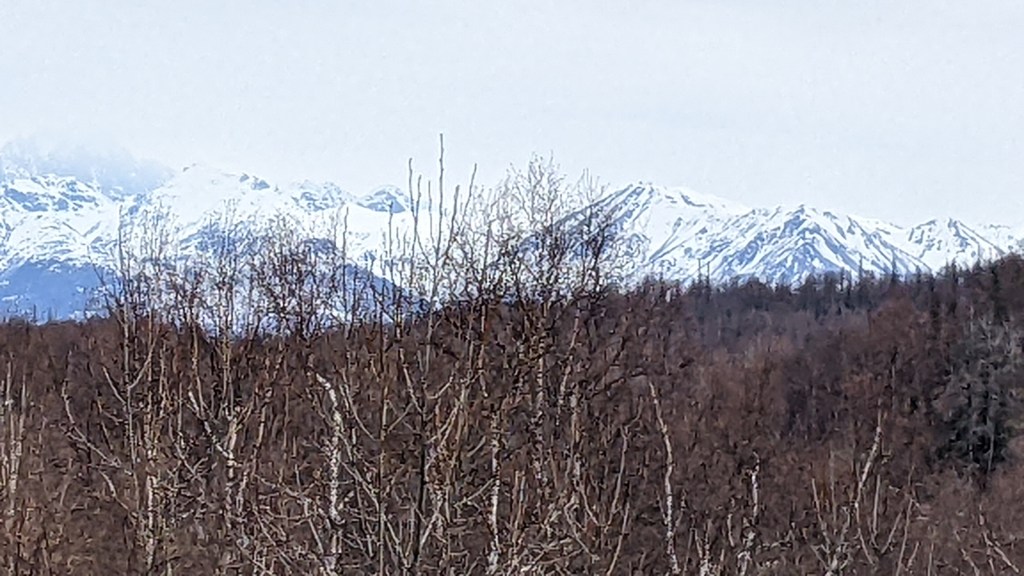
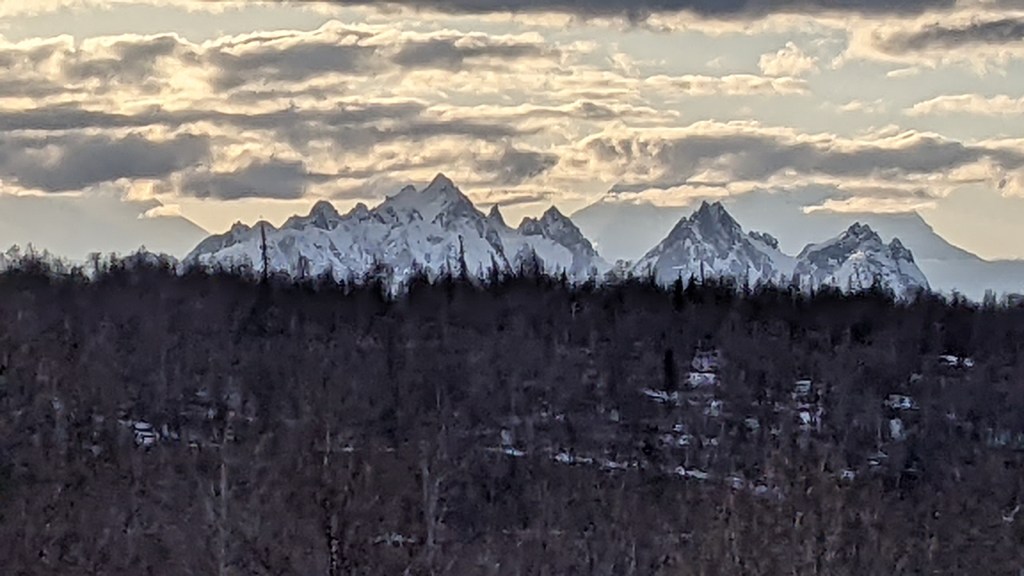
We disembarked in a grey drizzle in the port city of Whittier and boarded a bus for the trip north to the mountains and the national park, stopping briefly in Anchorage. On the way north, the scenery becomes more dramatic and our driver was happy to point out our first view of Denali in the distance. We passed through small towns, including Wasilla and Talkeetna, and viewed the still-snow-covered terrain and ice-clogged rivers. Originally named for President McKinley in 1897, the name of this largest mountain in North America was changed in 2015 to Denali. In the indigenous language of early tribes in the area, the name means “the tall one,” or “the high one.”

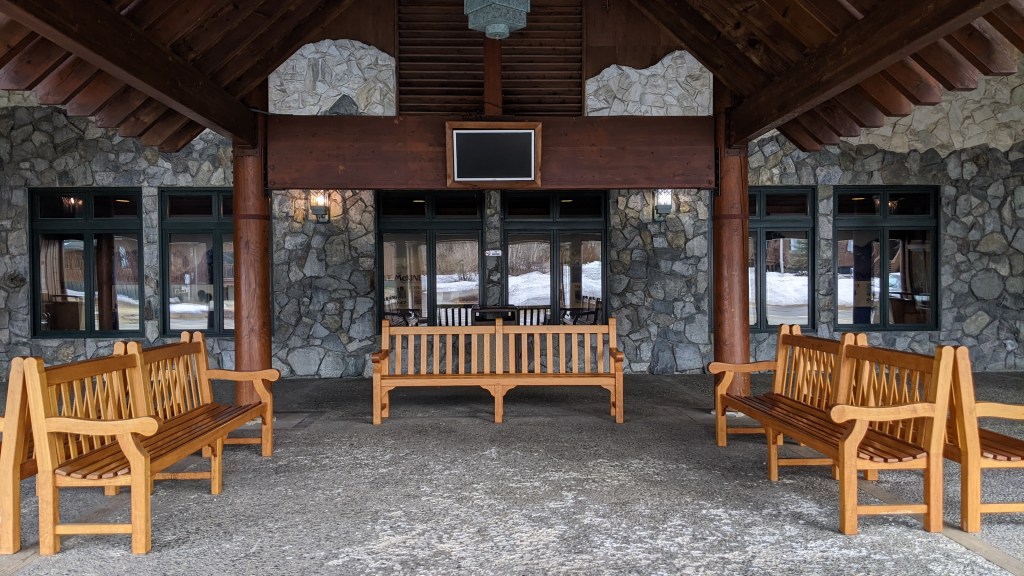
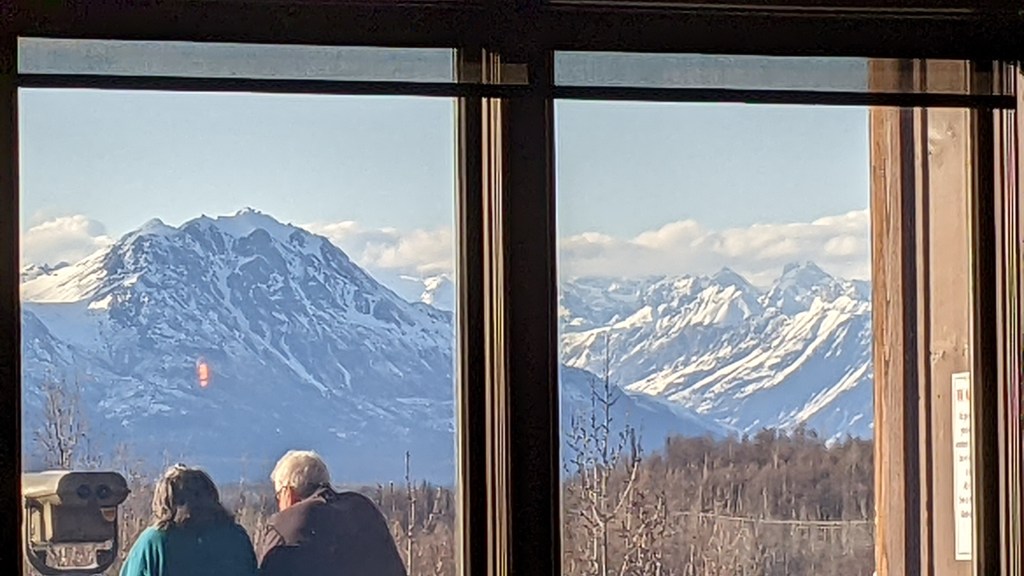
Once we arrived at the Princess Mount McKinley Lodge, a beautiful facility with a “knock-your-socks off” view, I spent my first few hours warmed by the sun on the lodge’s wraparound deck. I was enthralled by the drama of clouds which parted only periodically to provide breathtaking views of the mountain known as “the great one.” It truly is.

I snapped far too many photographs of the changing vista as the late afternoon sun sank lower on the horizon. Denali, at an elevation of 20,310 feet, dwarfs surrounding peaks, but they are not mere foothills, and they have their own allure. Finally, when the clouds seemed to be massing to surround the mountain for the evening, I decided to make my way inside.

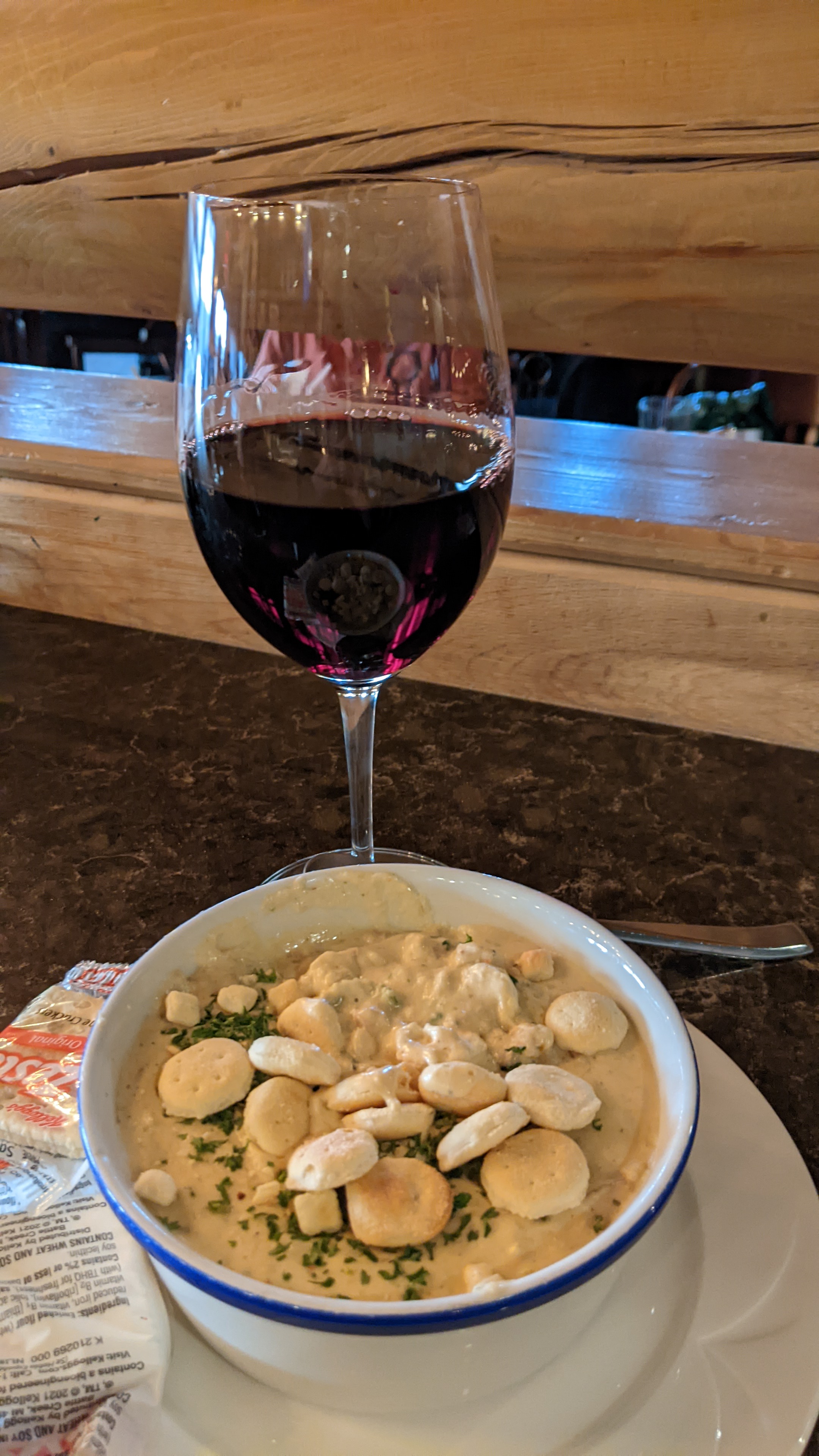
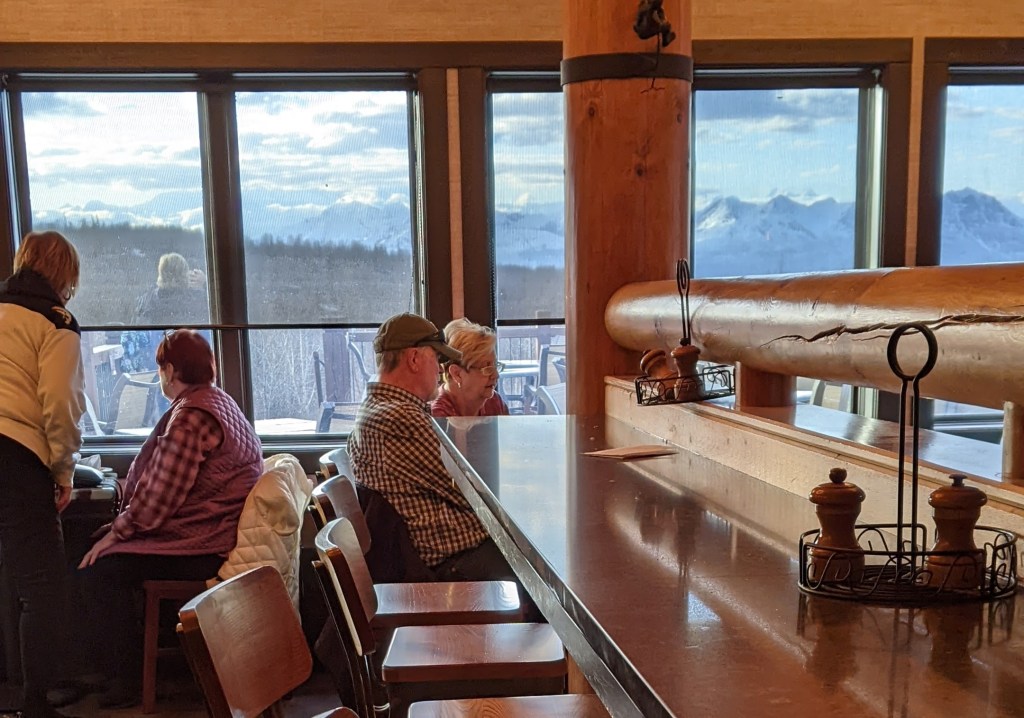
I found an unoccupied seat at a bar counter in the casual lounge. My seat still offered a commanding view of the faraway mountain ranges through the great room’s wall-to-wall windows. Tired from a day of traveling, I ordered a glass of wine, content to simply relax in comfortable surroundings.

My attentive server asked if I wanted to order dinner and suggested I begin with a bowl of hot fish chowder. Happy to not have to make a decision, I agreed that would be good. We chatted a bit as I waited.

He had returned to Alaska the previous week to work at this lodge for a second summer. A university student in the lower 48, he said that his experience the previous year hadn’t seemed quite long enough. This year, his girlfriend had signed on for summer work as well.

This was the first of many conversations I would have over the next few days with the summer employees who arrive in Alaska eager for adventure. Must of the seasonal employees are U.S. or Canadian students. All are happy to have the opportunity to earn money working in one of the top vacation destinations on the globe. Many have returned year after year. Most try to save the bulk of their earnings for the coming school year. Not a one complained about the hours or the work load. And every one admitted to seizing every possible opportunity to hike or camp in the adjacent national and state parks or to explore nearby towns and villages. Almost all planned to return to the lower 48 at the end of the summer to continue their schooling.

I listened willingly to the stories of other servers and staff. I joked with the bartender, and I exchanged smiles with other guests. When my chowder arrived, they all gave me “space” to enjoy my light meal. Suddenly hungry, I ate, sipped my wine, and thought how lucky I was to be in this place at that time. But, in that moment, sitting in a crowded bar in the shadow of a great mountain, I also had to admit that I missed my husband. It was an experience I would have enjoyed sharing with him.

In Alaska, in May, it’s light late into the evening and as I finished my chowder, Denali’s snow-covered summit was once again visible. Despite the many previous pictures I had taken, I wanted just a few more in the twilight of the day.

I was eager to make my way out to the deck once again, and I signaled for my check. As we settled up, this young server and I agreed that getting to know one another was a highlight of the evening. As I stood to leave, he looked at me and asked if he could give me a hug. Somewhat taken aback, I hesitated for just a moment.

He confessed, “You remind me of my grandmother, and I miss her.”

Of course we hugged, and I believe we both treasured that brief connection in a place far away. This time, the human connection was more memorable than the food. And this brief encounter with a stranger was at least equal to my last view of Denali on that day.

A Taste of Uruguay

Uruguay was not on my list of must-visit destinations. In truth, I had not given more than a passing thought to a scheduled port call in Montevideo. The cruise was a South American adventure that included a visit to the Antarctic Peninsula, and it had been in the planning states for three years, since before COVID. I had had plenty of time to research Chile and Argentina — Santiago and Buenos Aires were the beginning and endpoints of the cruise, and my spouse and I planned to spend a few days in each city, in addition to the 16 days we were scheduled to be aboard the Sapphire Princess.

But Montevideo had not been in our sights during the planning stages. Actually, I must confess that we had to look up the proper pronunciations of both the country’s name and the city! We knew virtually nothing about Uruguay, and our time in Montevideo would be limited. Although it was tempting to simply spend our shore time at a nearby beach, we booked a half-day excursion for a wine-tasting event at a well-known Bodega not far from the city. That allowed us a couple of hours to explore the city, as well as a glimpse of the nearby countryside.

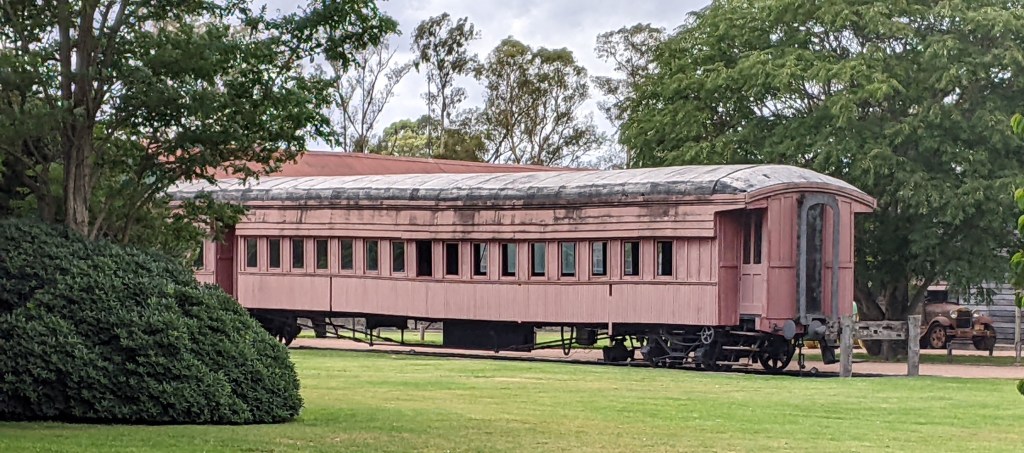
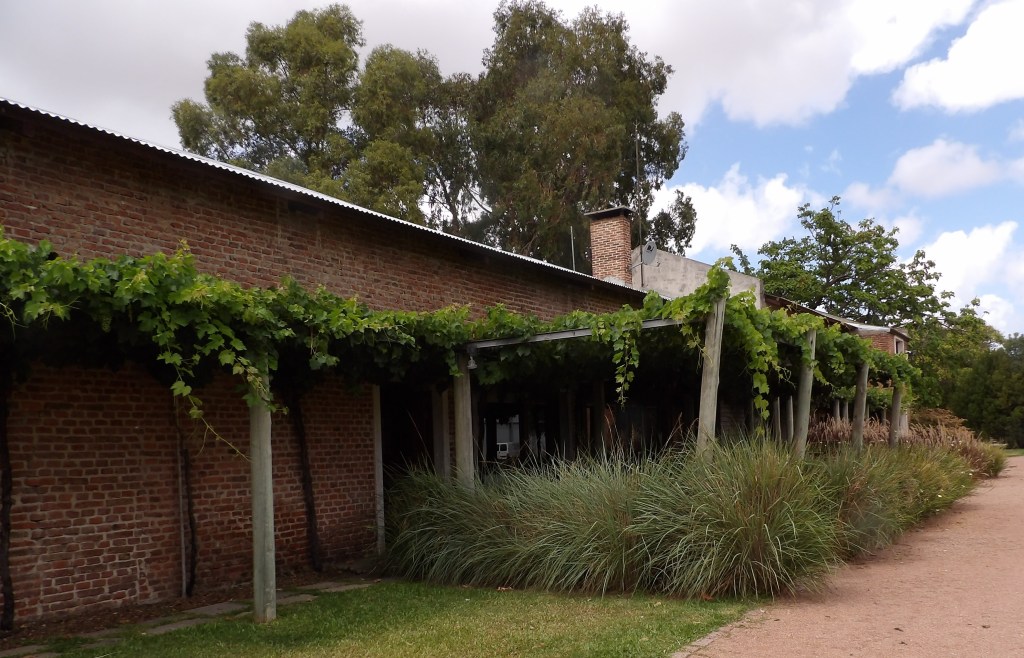
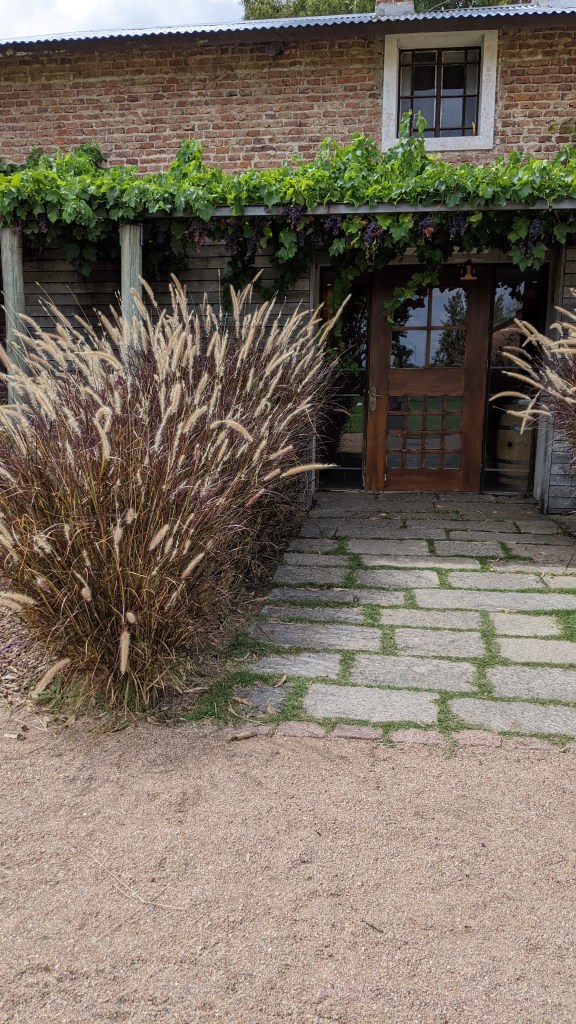
Our only regret is that we didn’t have ample time to enjoy dinner at Bodega Bouza as well. The winery occupies idyllic grounds only about a 25-minute drive from the heart of the city. We were enthralled by the mix of historic buildings, manicured lawn, healthy vineyards, and resident geese, peacocks, and cats. In addition, there is an old rail car, vintage farm equipment, lush landscaping, and several outbuildings, including an impressive modern dining hall.

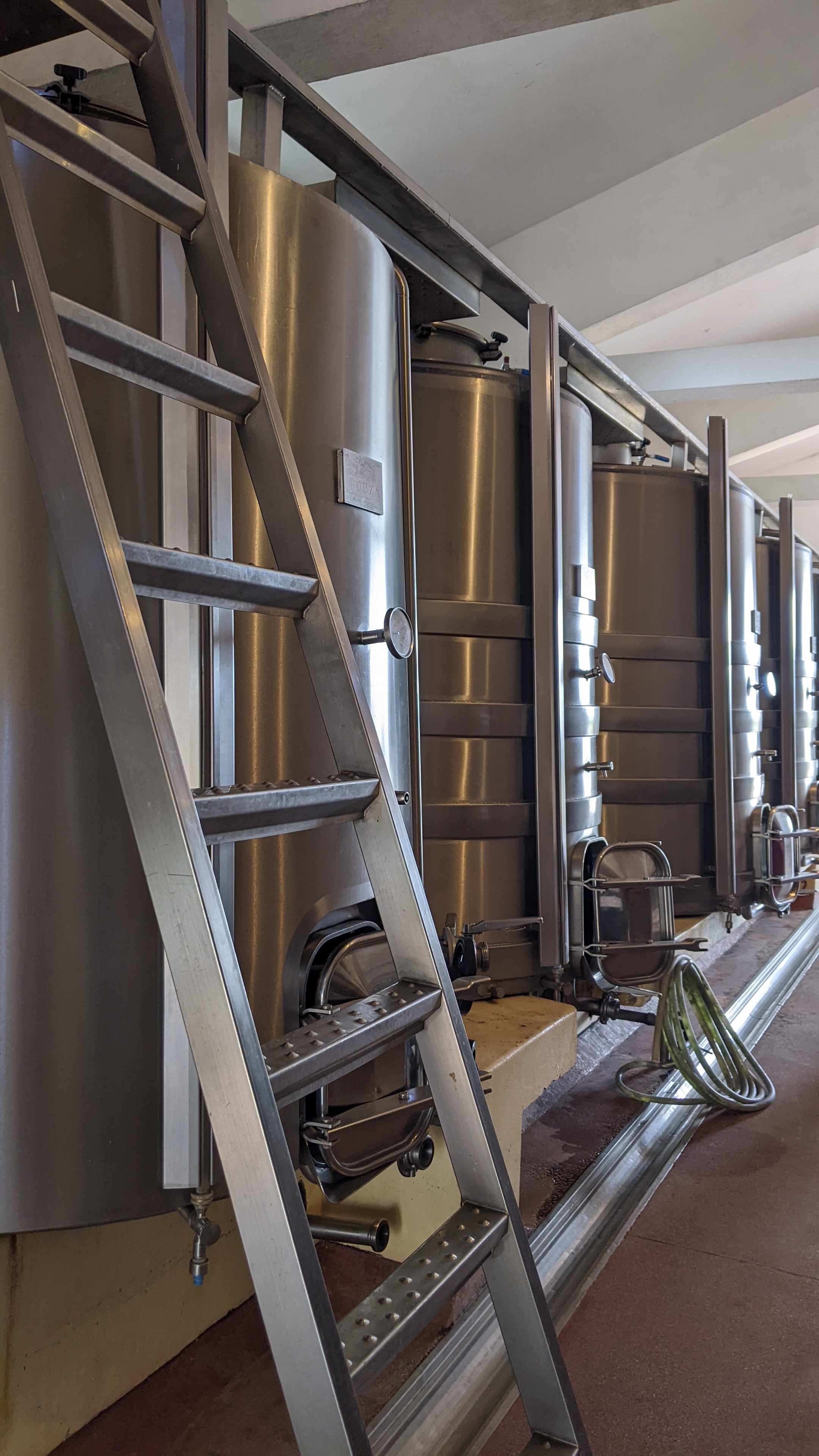
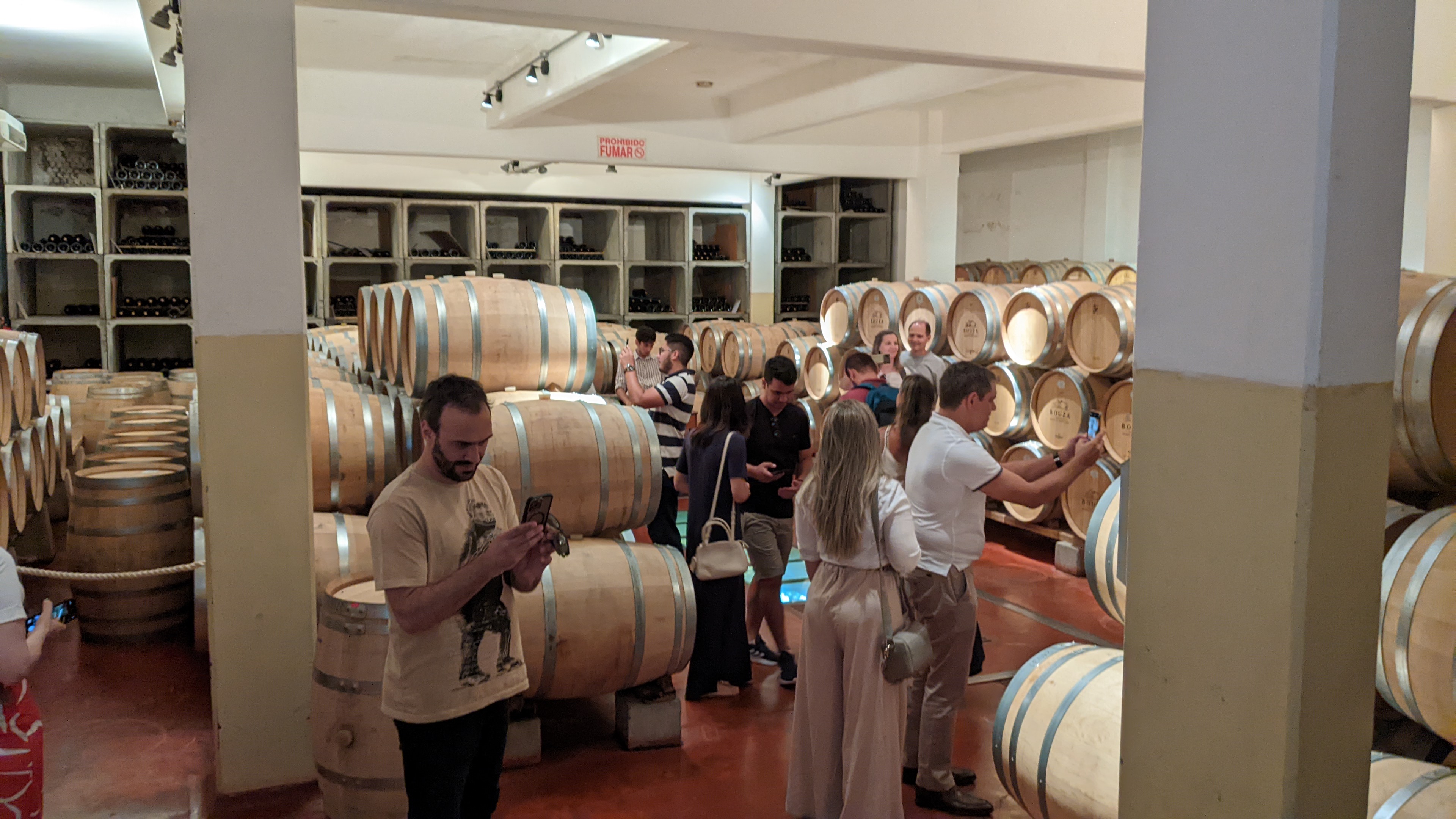
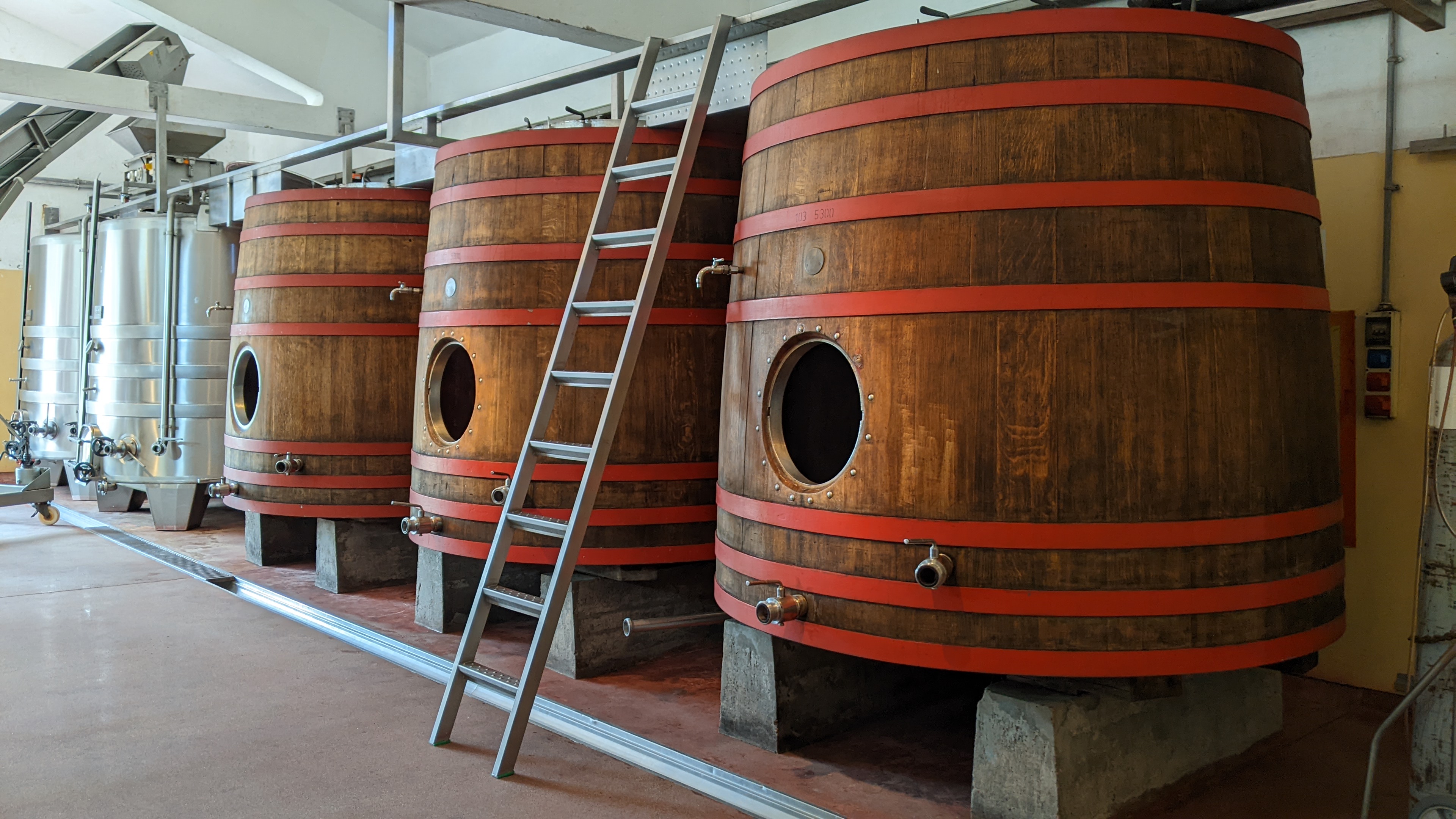
Our tour of the vineyard was interesting, and a subsequent visit to the state-of-the-art processing, aging and bottling facility, including a visit to the climate-controlled cellar, was informative and worthwhile.

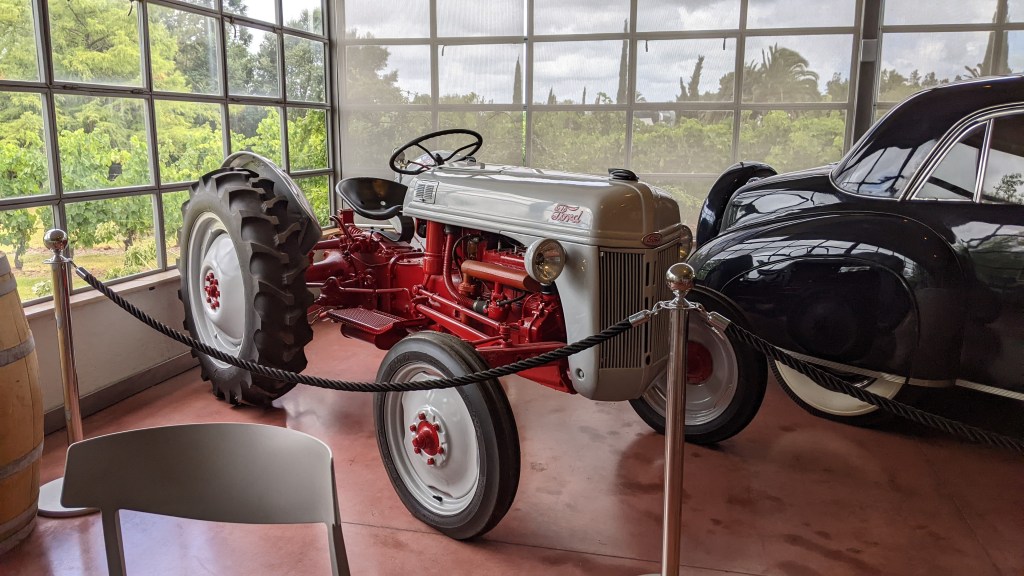
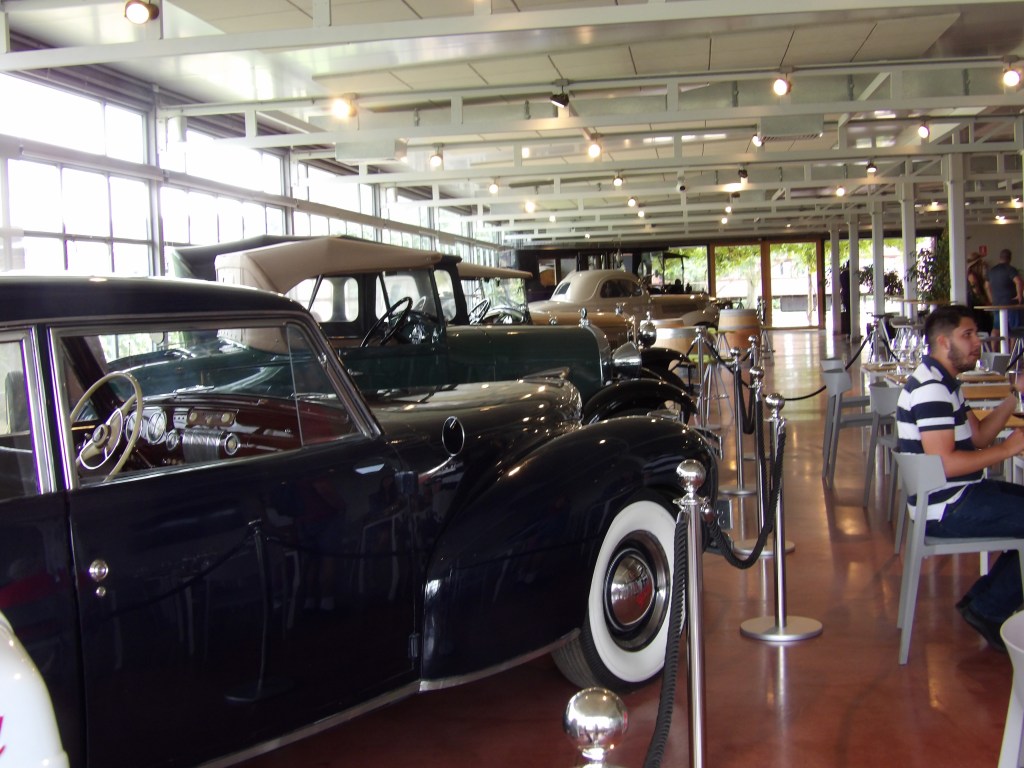
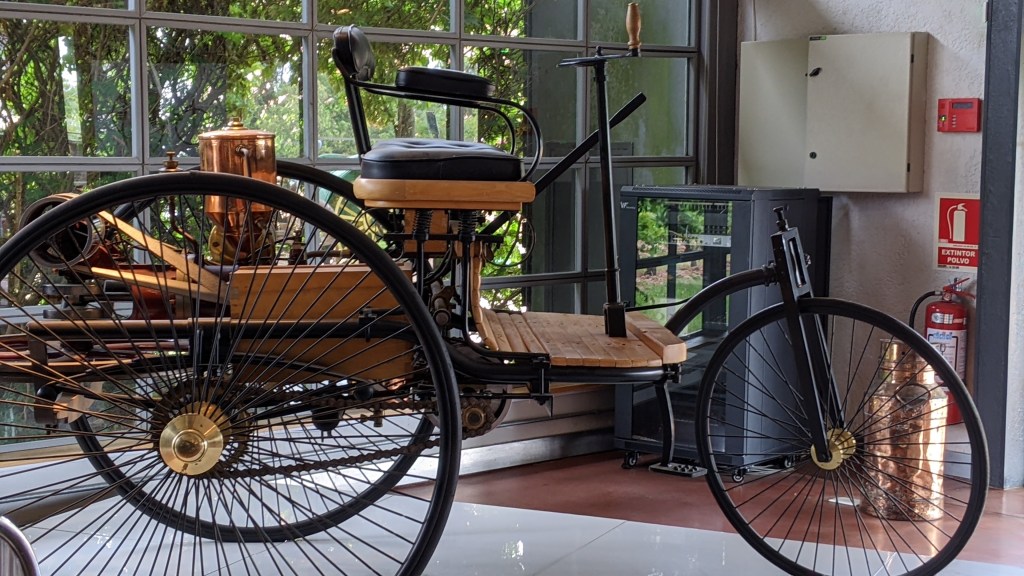
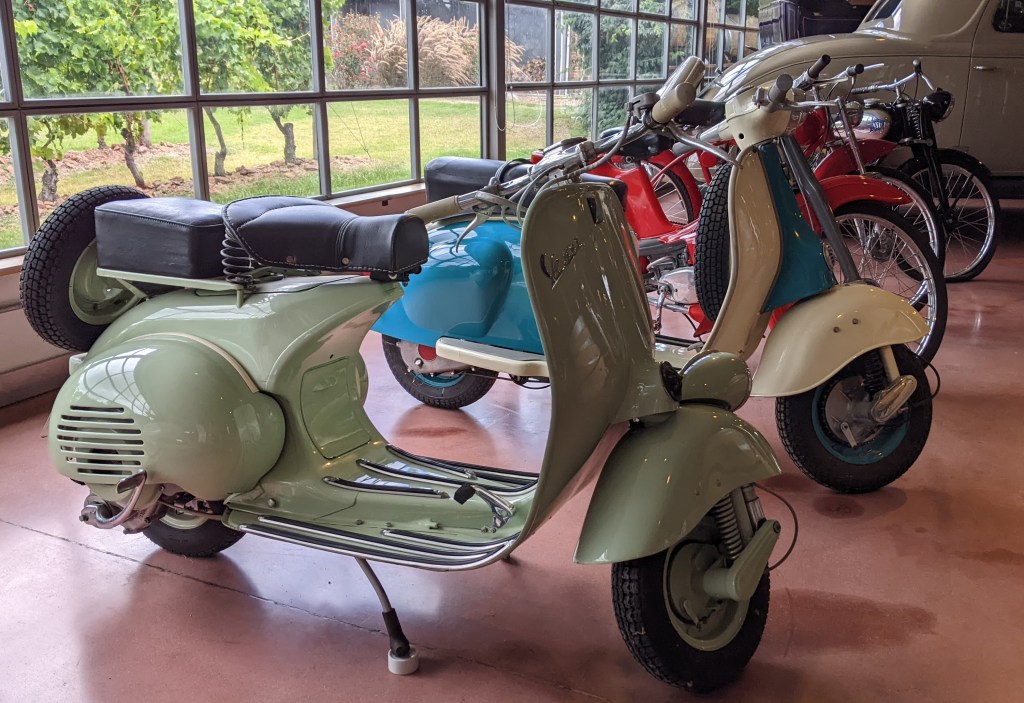
Bodega Bouza, situated in the northwest section of Montevideo, is surrounded by the five-hectare Melilla Vineyard, and was established by Juan and Elisa Bouza between 1999 and 2001 as a family-owned enterprise. The casual, light-filled tasting room — Bouza Vinos Garage — offers tables and chairs surrounded by the family’s collection of classic vehicles. There are work vehicles, classic motorbikes, and antique automobiles, in addition to highly unusual commercial machinery and delivery wagons. Vintage automotive buffs might enjoy the cars as much as the wine!

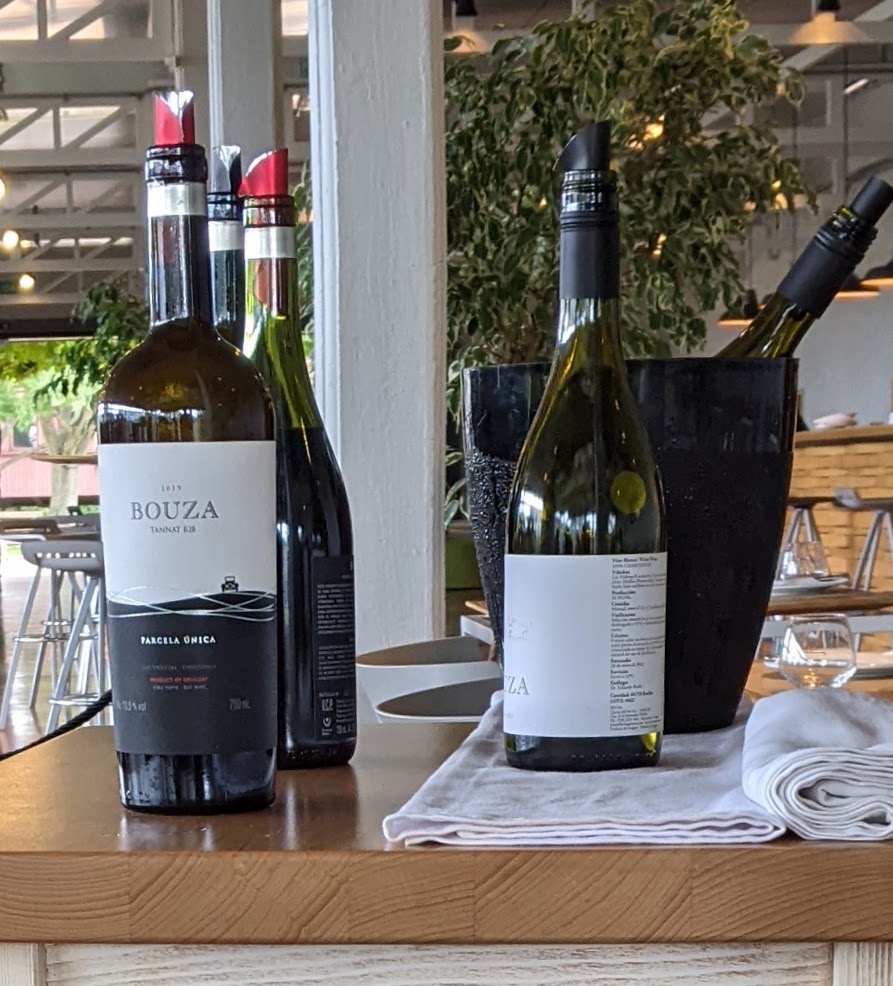
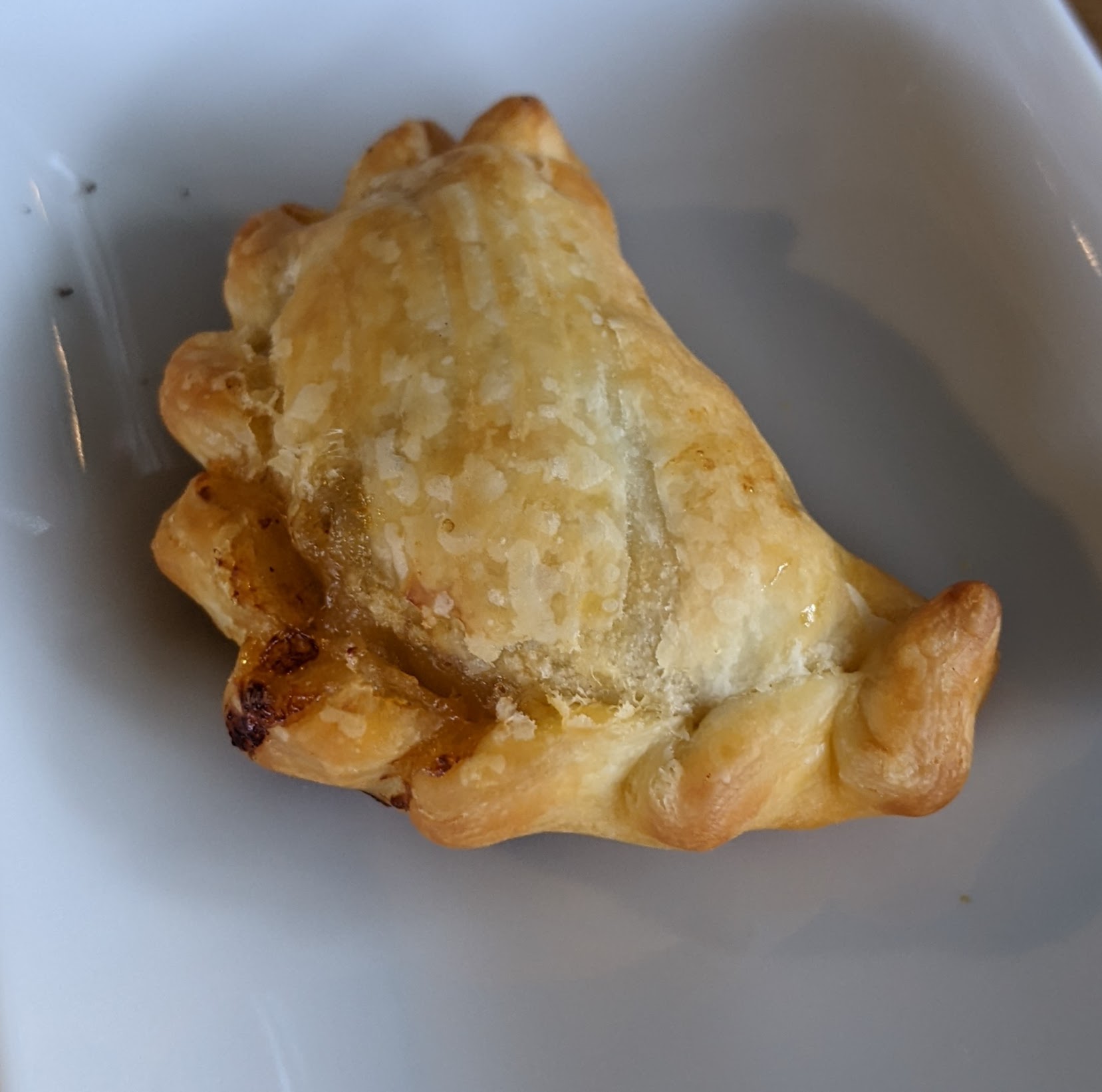
Tables in the garage are elegantly set with glasses for sampling one white wine and three red wines. The tasting itself was perfectly choreographed, with an introduction to each variety of wine offered, and tapas were chosen to enhance the flavor of each wine. We were served miniature beef empanadas to accompany the full-bodied specialty red that Bouza is known for. It was a treat to enjoy our wine tasting in such a setting.

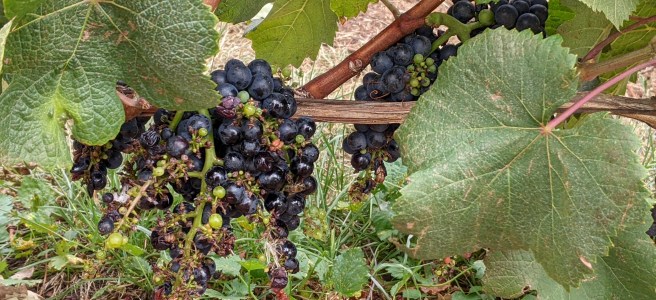
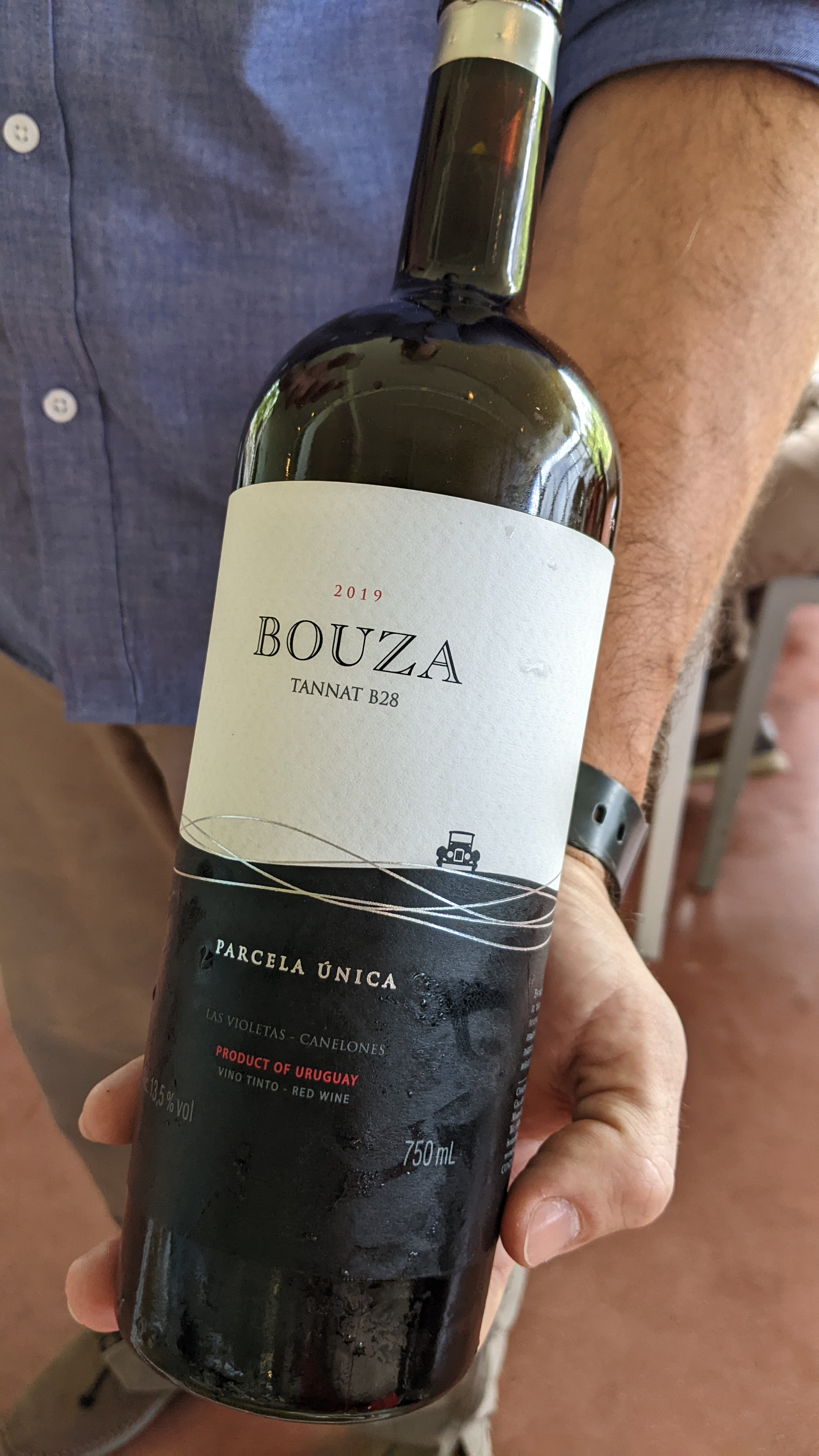
We were intrigued by this opportunity to sample wine produced from the Tannat grape, and pleasantly surprised by how much we liked this deep garnet, somewhat “heavy” red wine. Sometimes known as Uruguay’s national grape, most experts believe it originated in the Basque region of France. It was brought to Ecuador in 1870 by a Basque immigrant, and the vines flourished there. Today, this grape accounts for approximately one-third of total Uruguayan wine production. It is often blended with other grapes, Cabernet Sauvignon, for example, Pinot Noir, and others to produce lighter, less intense sipping wines.

Some people find the full-bodied, dry red too acidic for their taste. However, it has attracted new fans who appreciate its earthy flavor, complex fruitiness, and distinctive dark appearance. Interestingly, Tannat grapes have five seeds, compared with only two or three found in other red wine grapes. The additional seeds, when crushed, boost the concentration of antioxidants in the resulting wine. Ongoing research confirms that Tannat wines have significantly higher antioxident properties than other reds. So, If you need excuse to try it, this just might be it!
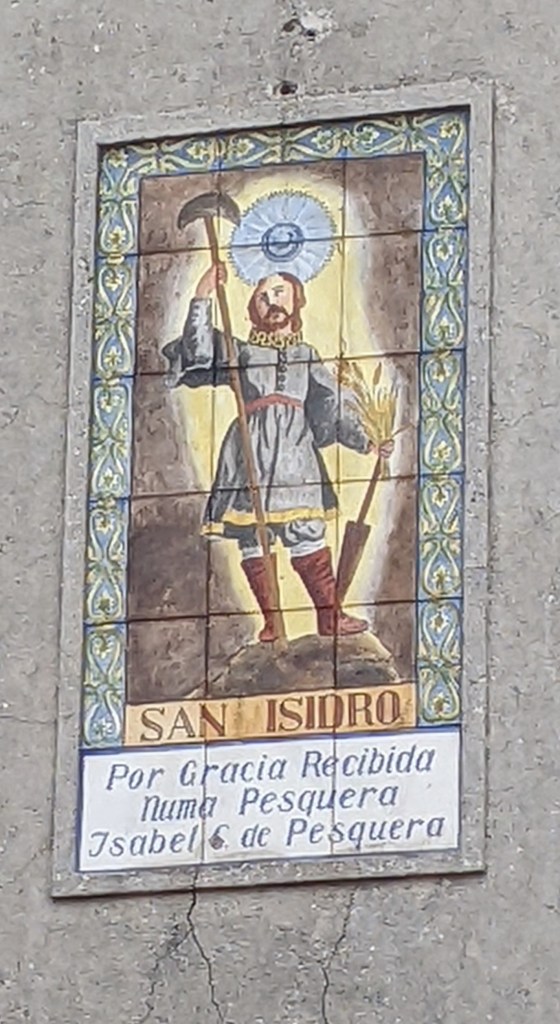
We needed no excuse to savor this distinctive, dry, dark, fruity wine. We found it to be smooth and exceptionally enjoyable, not that the other varieties we were served weren’t equally delightful! We were offered one white and three reds, each distinctive and served with complimentary small bites. During the course of our tour and tasting, we had an opportunity to meet and talk with participants from Uruguay and from neighboring Argentina and Brazil. As the lone Americans, that proved to be a cultural highlight. So much so that, because we had some time to spare, we shared a bottle of Bouza’s Tannat with another couple, confident that we had a driver who could get us back to our ship on time!

The historic winery that is the heart of Bodega Bouza was built in 1942 by Numa Pesquera. The winery has now been expanded to include a total of five separate vineyards. Tannat and Merlot grapes are grown at all locations, and Bouza has become renowned for its Tannat wines. Because of the family’s Spanish heritage, they were the first to introduce Albarino grapes to Uruguay and today they also produce Tempranillo wines. In addition, they produce Merlot and Pinot Noir. Bouza Whites include Albarino, Chardonnay, Semillon, and Riesling.

The other Bouza vineyards are located in Las Violetas, Canelones (the first acquired by the family), and in Maldonado, where their Paz de Azucar and Las Espinas vineyards are located. More recently, Bouza acquired the Canelon Chico vineyard in Canelones, once owned by their winemaker, Eduardo Boido.

We had a wonderful time at Bodega Bouza, and highly recommend this excursion if you find yourself in Montevideo, Uruguay. We would not hesitate to return, but would try to schedule time to include a meal there next time.

Now we are on a quest to find Tannit wine at home here in Arkansas. Hopefully, it will be Bouza!