We had invited an assortment of neighbors and friends to join us for a potluck get-together at our home last Sunday — Easter Sunday — and they all arrived promptly at the appointed time.
The sky was grey, but it did not seem threatening at that moment.
Darkening gray clouds had not dampened spirits in the slightest as our group of 12 assembled. However, dinner was destined to be delayed as the existing tornado watch was upgraded to multiple tornado warnings for our area, including the Hot Springs, Arkansas, area and the Village we call home.
At that time, Hot Springs Village was not included in the “take cover” area. But that changed before long.
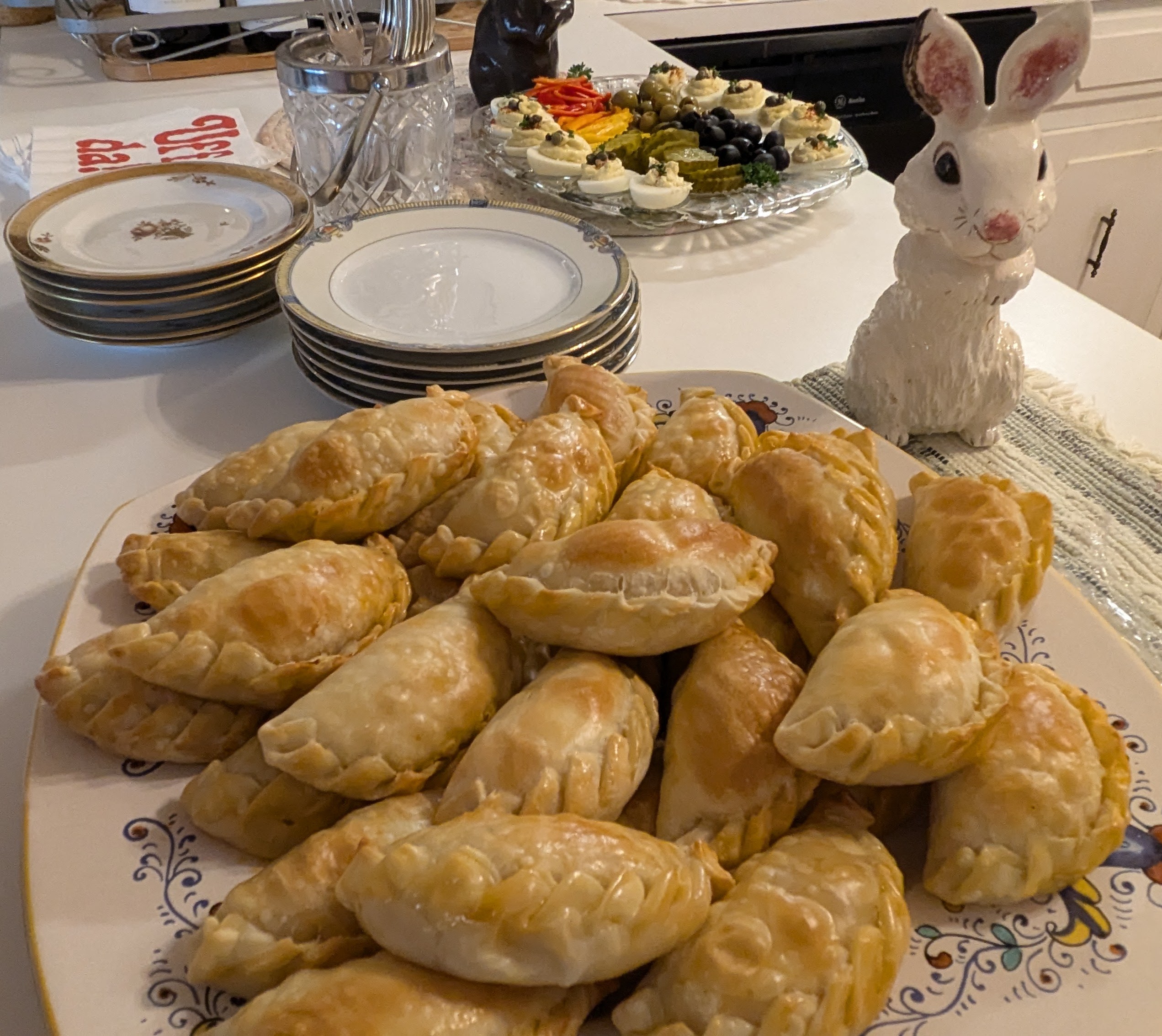
With celebratory glasses of champagne or wine in hand, and a buffet well-stocked with hors d’oeuvres, we resolved to delay serving dinner until the severe threat had passed. Conversation was lively, and the appetizers alone could have served as our meal. We kept a watch on outdoor conditions and listened to the continuing weather updates, while sampling Argentine empanadas, deviled eggs, salmon-topped cucumber slices, toast points topped with savory olive tapenade, and an assortment of pickles, olives, and peppers.
Great appetizers kept us company during the storm watch.Our friends and neighbors are creative chefs.
We all knew there was more food to come, but somehow the worsening weather spiked our appetites.
The screen was ablaze with red and yellow blobs of color in our viewing area. Place names seemed eerily close and familiar, but the sky was still light, the air was calm, and no rain was falling. However, the weather forecaster repeatedly recommended that area residents take shelter.
The warnings kept us all informed of the storm’s progression through our area.
The 12 adults gathered in my living room and screened porch looked questioningly at me and my husband as the wind picked up and raindrops began to fall. Together, we explained to our guests that getting to our “safe place,” a room we use strictly for storage, involved going outside and walking down an incline that becomes treacherous in the rain. It is definitely not a place of comfort. It has no television, and it has a large window.
We had no intention to gathering in our designated “safe room” with plates filled with game hens, wild rice, peas and carrots, and fresh-from-the-oven homemade rolls. Instead, we gathered loosely around the television, and continued to catch up on one another’s lives and activities since we had last been together.
The consensus was to remain where we were, closely watching the TV coverage, monitoring our phones for the latest information, and enjoying our holiday get-together. We agreed that, should a confirmed tornado veer in our direction, we would all gather in the single interior room in our home, the guest bathroom.
It’s adjacent to a concrete block fireplace wall and chimney, has no windows, is fortified by plumbing pipes and drain lines, and boasts at least two walls in every direction between the interior and the outdoors.
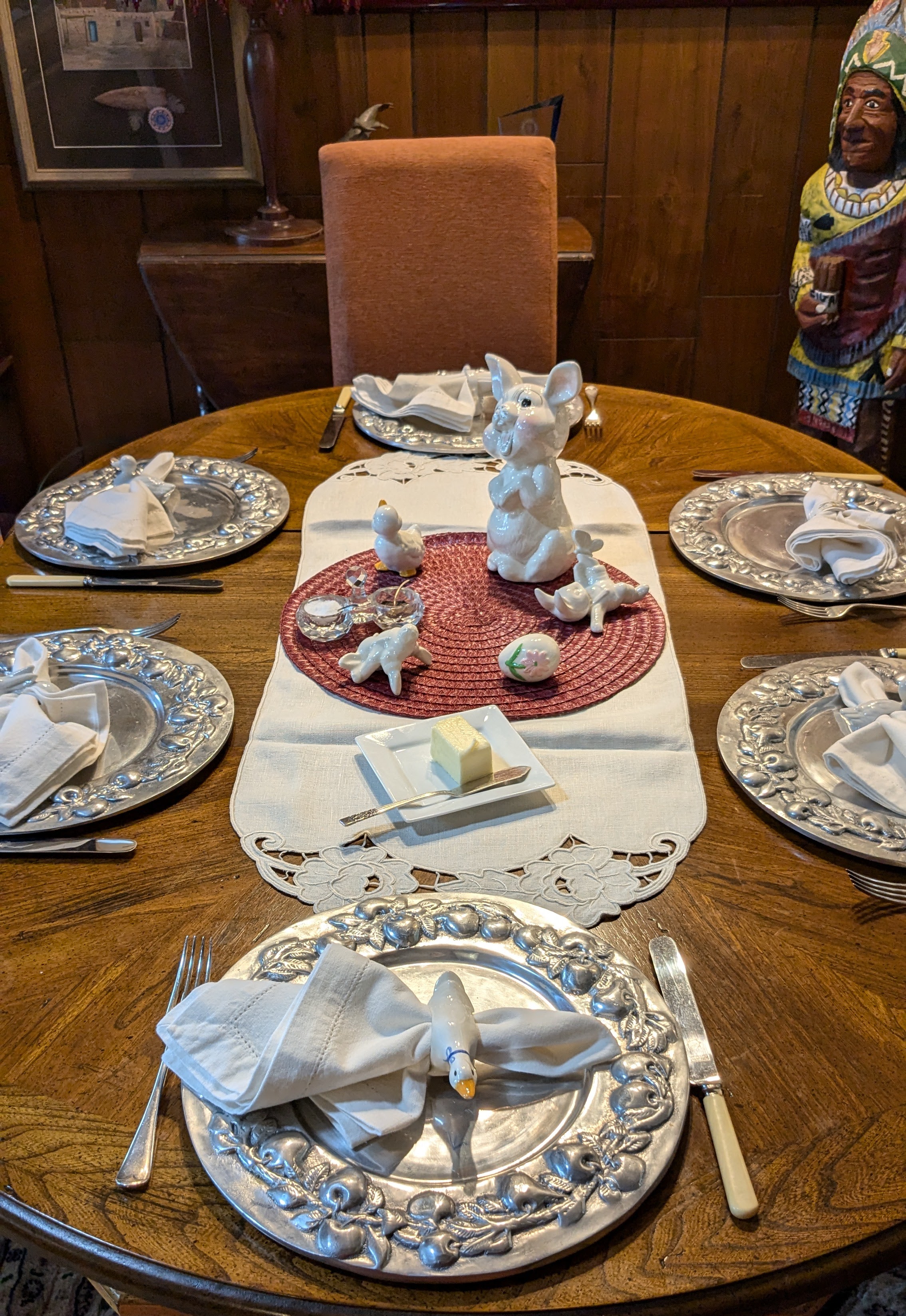
The settings, complete with bunnies and chicks, invited conversation.Our Easter tables were upscale, but also playful.
Once or twice, 12 cell phones served up a cacophony of high-pitched weather alerts along and the concerned faces of our local news station weather forecasters filled the television screen. Weather alerts continued to preempt the scheduled golf coverage on television.
As the minutes ticked by, we all remained comfortable, albeit watchful; some surveying the clouds and breathing in the fresh odor of falling rain. The assortment of appetizers continued to disappear, wine glasses were refilled, and interesting conversation flowed non-stop.
When the tornado threat was deemed to be beyond our geographic area, we drank another toast to friendship and fine food, moving to take our places at tables adorned with ceramic bunnies and white linen napkins, a casually elegant setting combined with a playful sense of humor.
We enjoyed our dinner, with a sense of camaraderie and thankfulness.
We could, at last, give thanks for the holiday celebration — and for the friendships — that are anything but ordinary. This year has already brought our state, and the entire nation, repeated weather events that have been far from ordinary. We will hope that as spring moves into summer, weather patterns calm and we can enjoy the beauty of the seasons to come.
I don’t consider myself a lodging snob when I travel. Although I opt for style, I don’t require luxury. I’ll search for an atypical option rather than settle for a familiar name. I appreciate individuality over chain “sameness.”
A chain hotel offers few surprises. That is not a negative. A recognizable name testifies that travelers should expect a specific known quality. Those who prefer predictability will, without a doubt, book stays at the chains that tick off the greatest number of personal boxes for location, service, quality, and comfort. I empathize with that mindset. I understand those people. On occasion, I am one of those travelers.
But not always. Typically, I am more enterprising. I appreciate comfort, charm, history, character, and a certain quirky ambience. I gravitate toward the unusual.
I would rather have a private balcony than a beautiful lobby. A private bath is important, but classic charm will trump sleek modernity any day. Included breakfast is not necessarily vital, but a complimentary chocolate on my pillow will win me over. A friendly wine bar or a well-stocked library are bonuses, and I appreciate them more than an onsite restaurant.
I readily admit that I search for bargains, and I consider it a personal victory when I find a hotel that offers a low price and at the same time scores high across the board on my personal rating system. I read guest ratings, and high marks for cleanliness are vital. For a single night, I will sometimes take a chance on an “iffy” booking. I like small rather than supersized facilities. And I scoff at urban hotels that try to be all things to all guests.
I admit that over the years I have made some unfortunate choices, but I have learned from them. I will happily select a location far removed from shopping, and I tend to prioritize walkable neighborhoods or views over hotels that advertise proximity to shopping and business centers.
Now that I’ve explained my criteria and you have an idea about what tickles my fancy, these are the hotels I loved in 2022 and 2023. Some may surprise you.
The White Star Tavern, Southampton, England
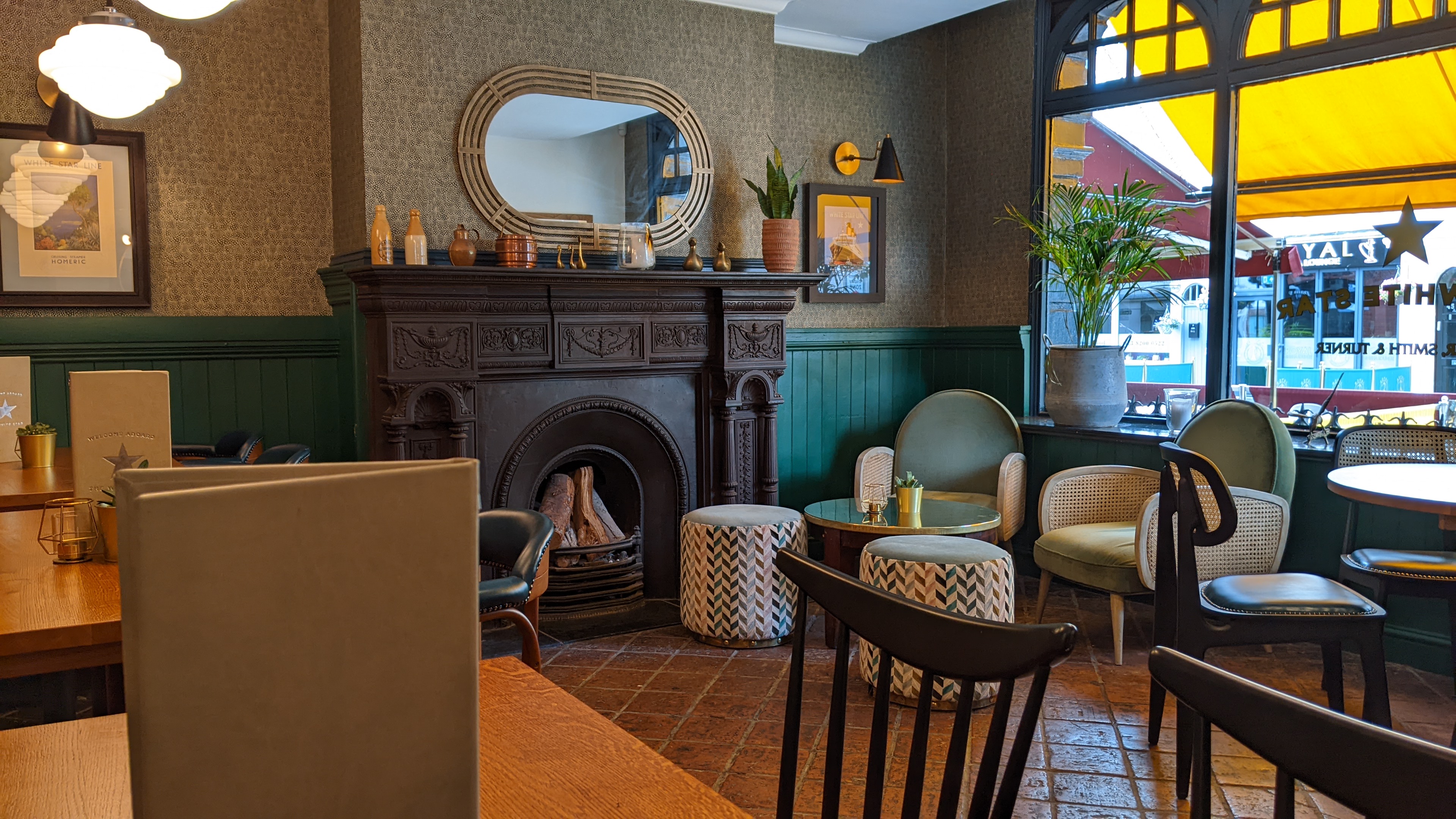
This traditional British inn on one of the most “lively” streets in the city is a real find. Only a short cab ride from the cruise ship pier, it is also not far from Sea City Museum which tells a captivating story of the Titanic. Be sure to make time to visit. There’s a casino just at the end of the street if that appeals to you.
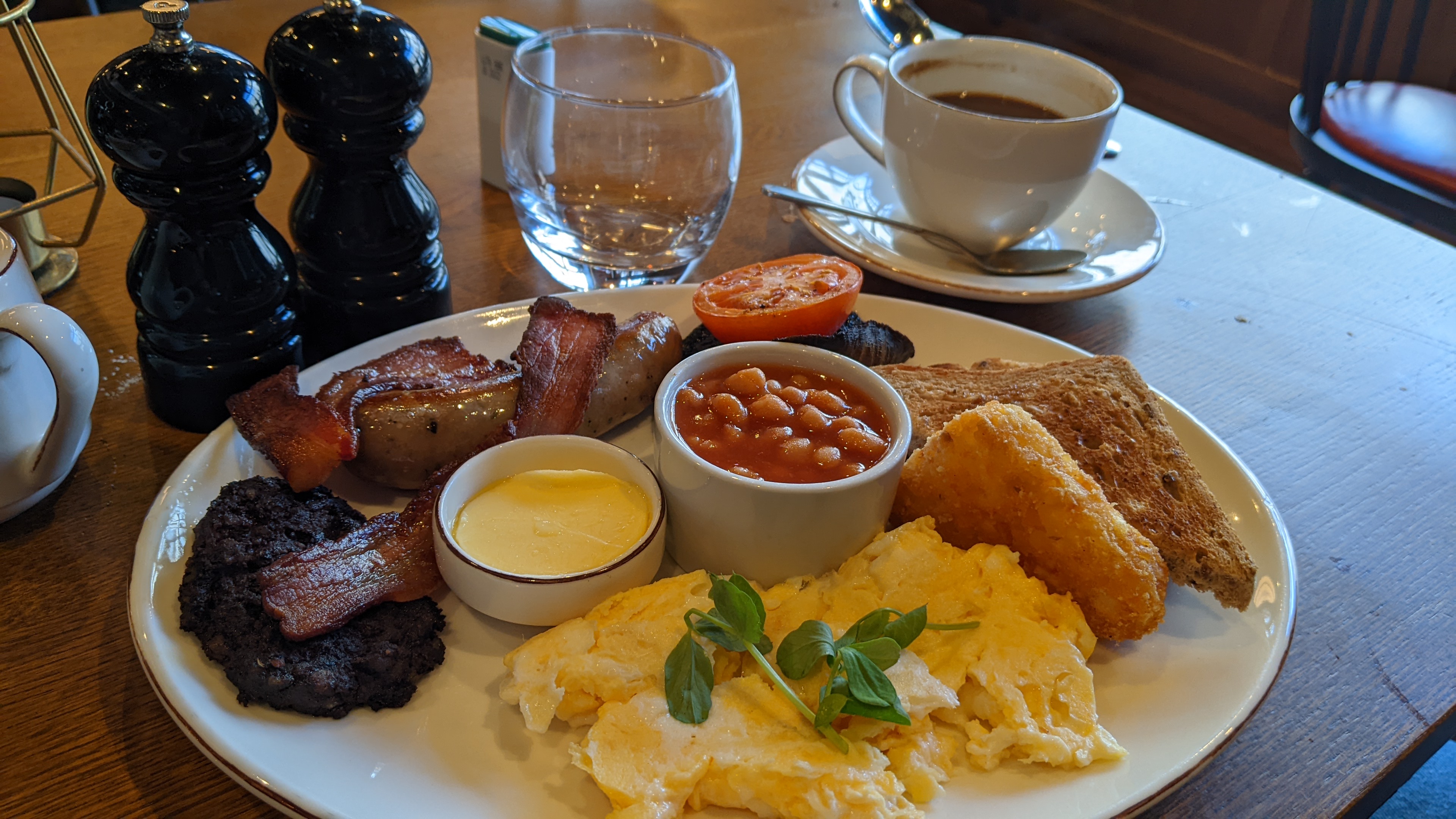
Guests are made to feel like family friends here, the English breakfasts are wonderful, and the pub fare is excellent for both small plates or complete dinners. The outdoor patio at The White Star is a perfect place to watch a passing parade of people. Oxford Street becomes a pedestrian-only avenue each afternoon, attracting throngs to its many pubs and nightspots.
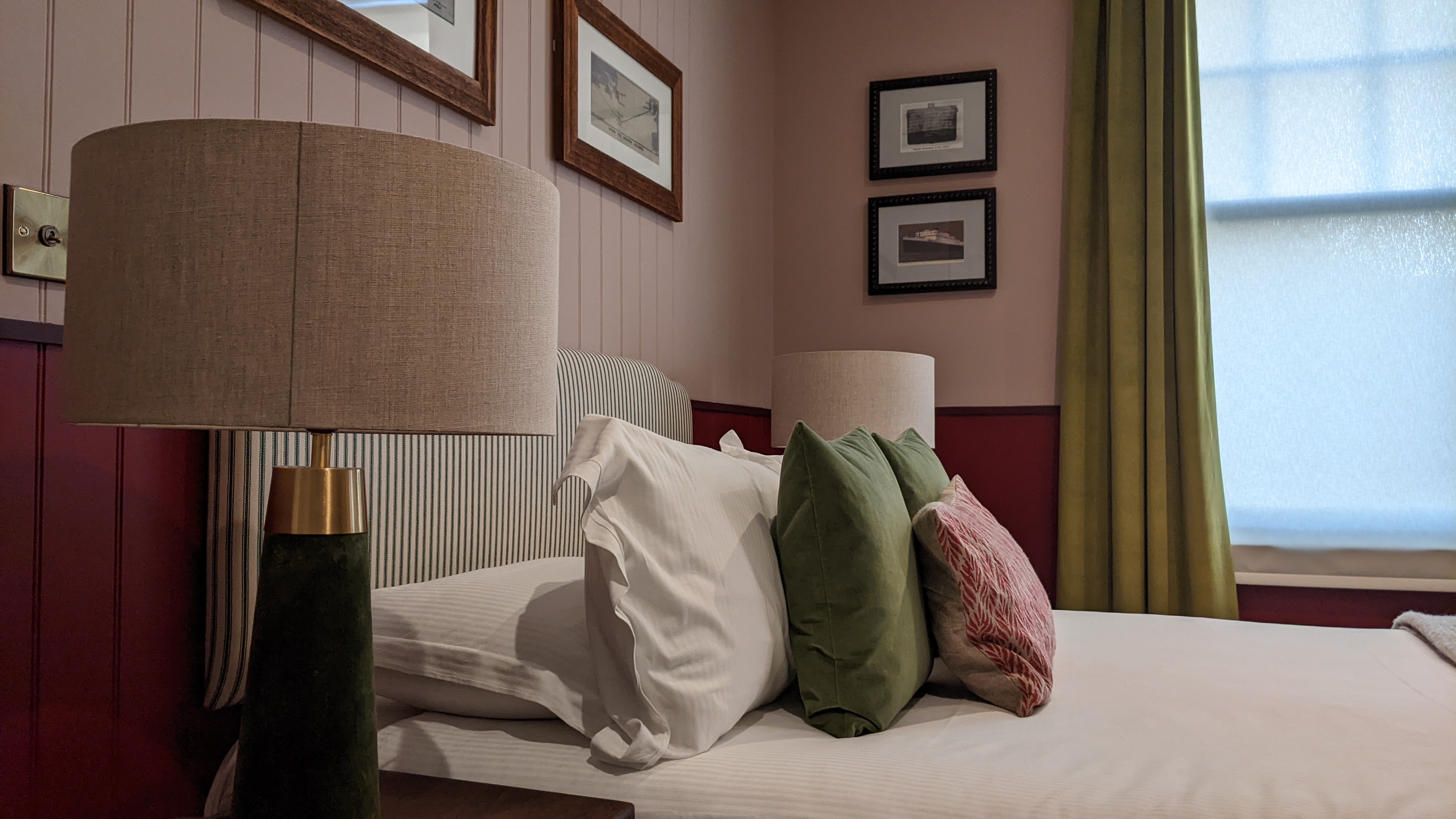
The one drawback – rooms are upstairs and there is no elevator, but attentive staff willingly tote bags up and down. True to its nautical theme, “cabins” are elegantly furnished and decorated, stocked with all necessary amenities and a choice of coffees and teas, along with a sampling of treats. Think biscuits and chocolates. Each floor also features a sitting room, replete with Titanic and seafaring memorabilia.
Hotel Ismael, Santiago, Chile
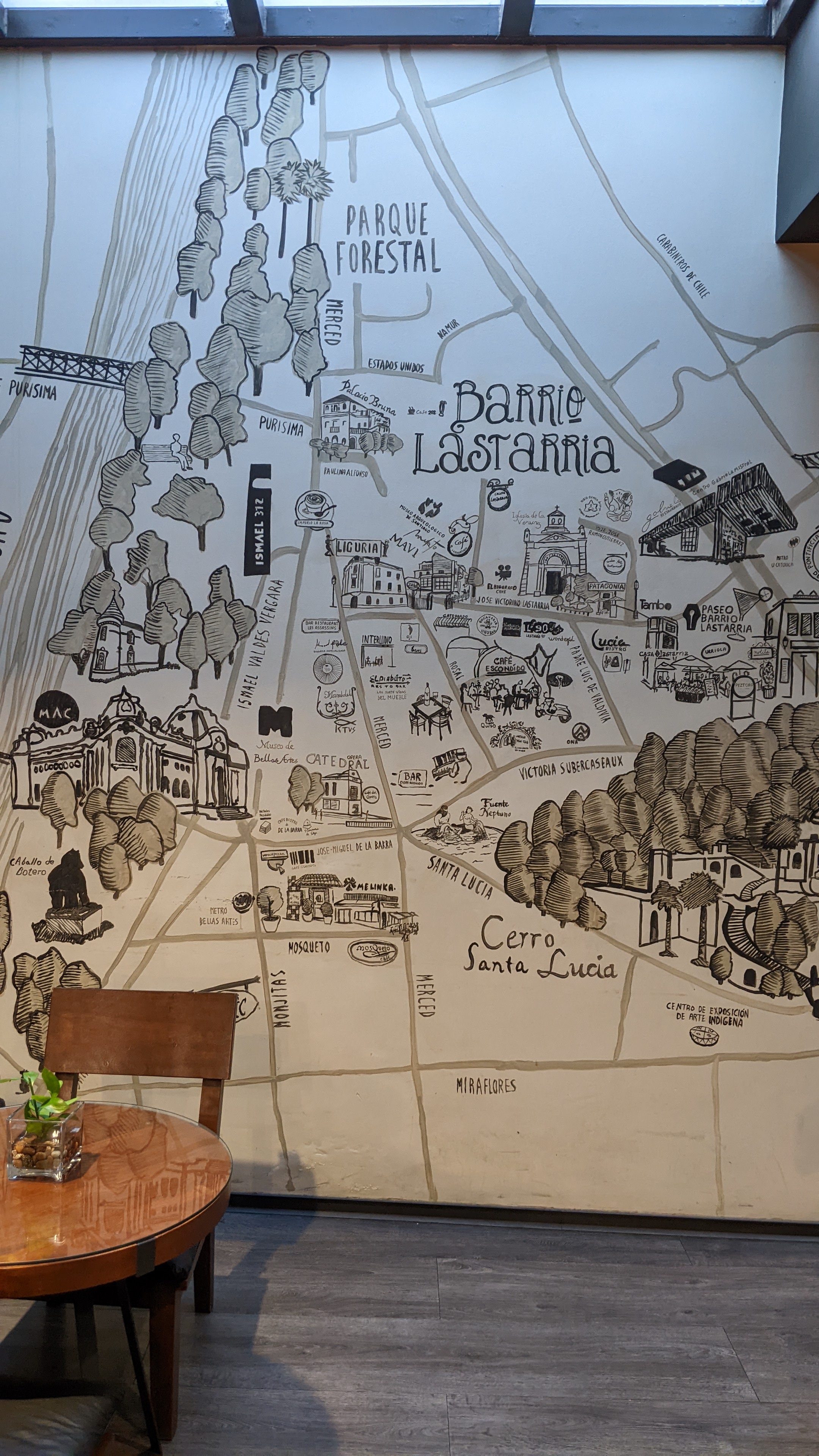
Located in the Lasterria neighborhood, this small contemporary hotel is across the street from Forest Park and near the National Museum of Fine Art, the Contemporary Art Museum, Plaza de Armas, Hidalgo Castle, and the Gabriela Mistral Cultural Center. We even walked to the funicular at Cerro San Cristobal for a ride up the mountain to a scenic overlook and Santiago’s famed mountaintop statue of the Virgin Mary.
I booked our stay via an online site, based only on photos and comments. And I couldn’t have been happier! I loved this hotel from the moment I first walked through the front door.
Hotel staff will recommend nearby eateries – and we especially enjoyed finding a local street bazaar where we could meet vendors and shop for bargains! The neighborhood is safe and charming, and we enjoyed two excellent dinners featuring Chilean specialties during a two-day stay before our scheduled Antarctica cruise.
Guests have access to a top-floor pool, and each room has a small balcony. A superb complimentary breakfast is offered each morning and staff will prepare a “to-go” breakfast for guests with early tours or scheduled transportation to the cruise port or airport. Just make your request the day before.
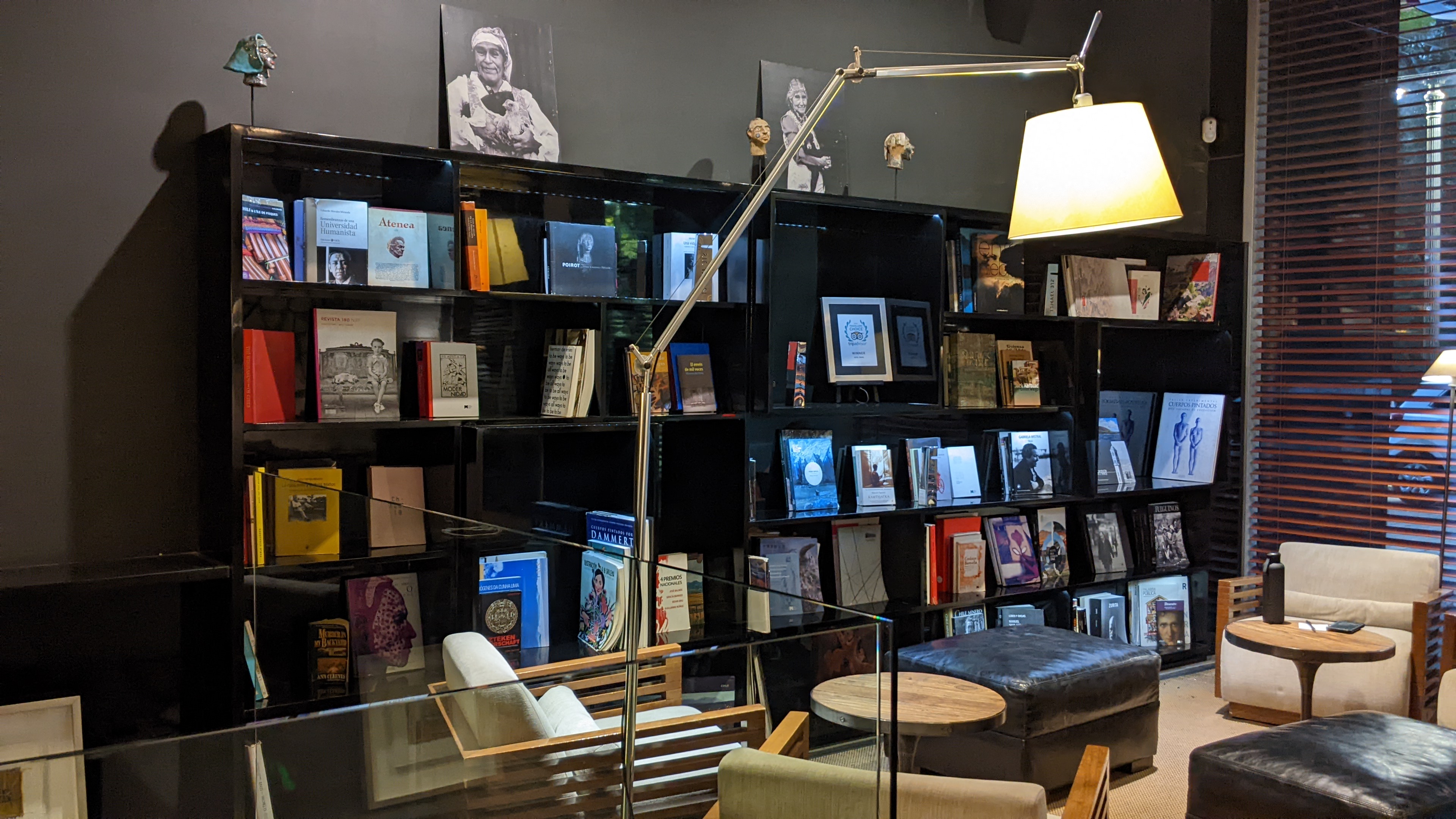
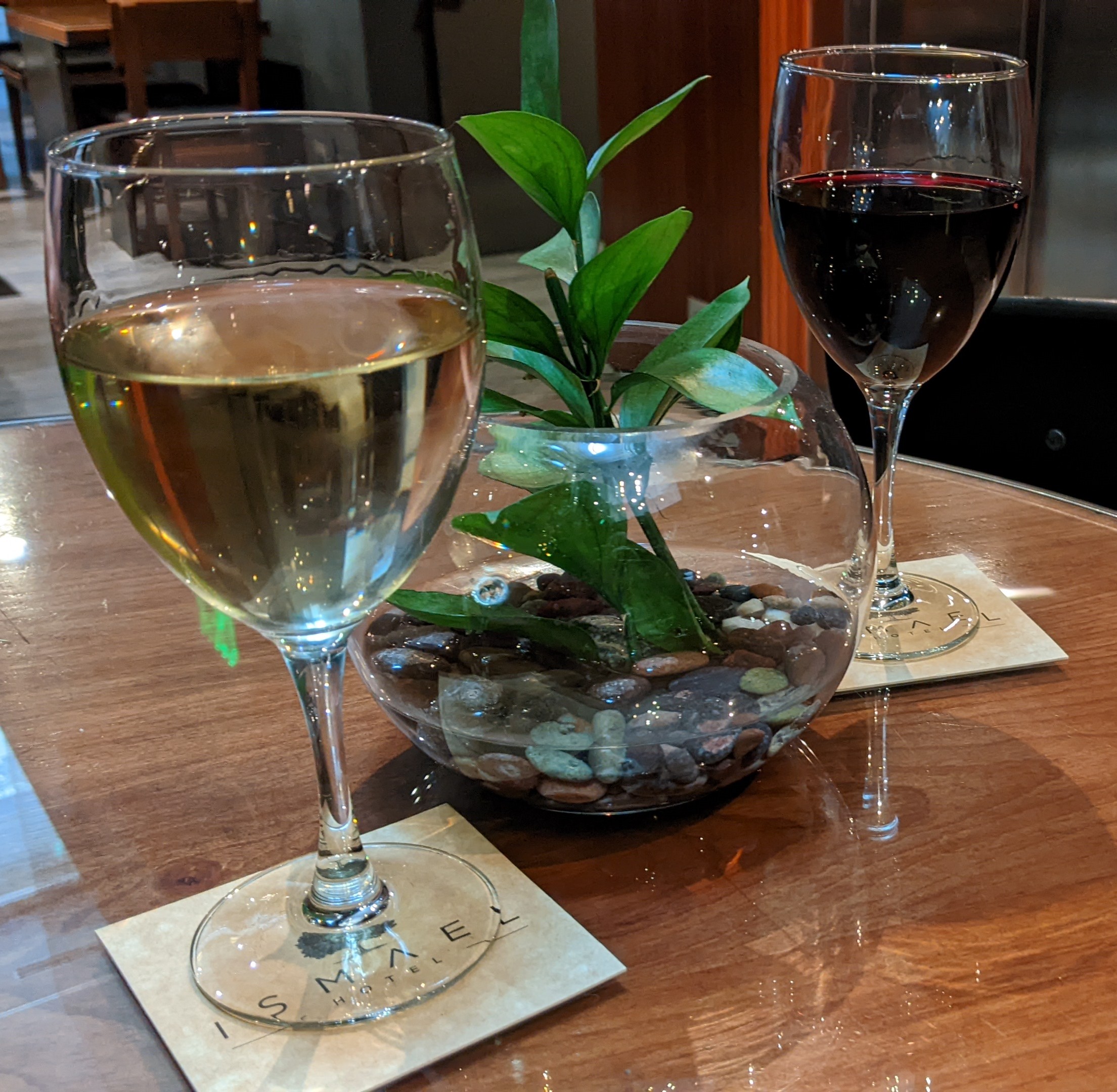
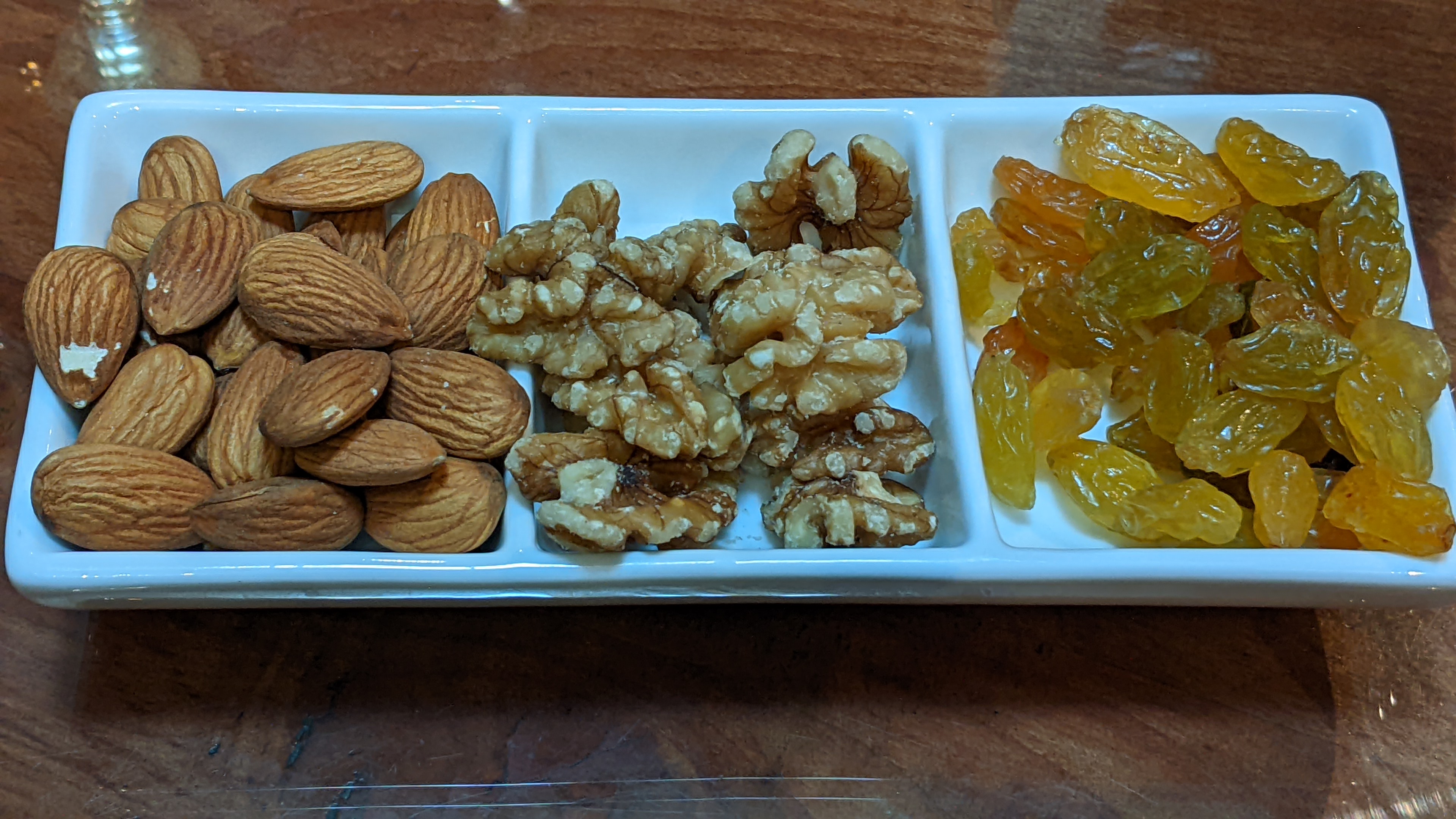
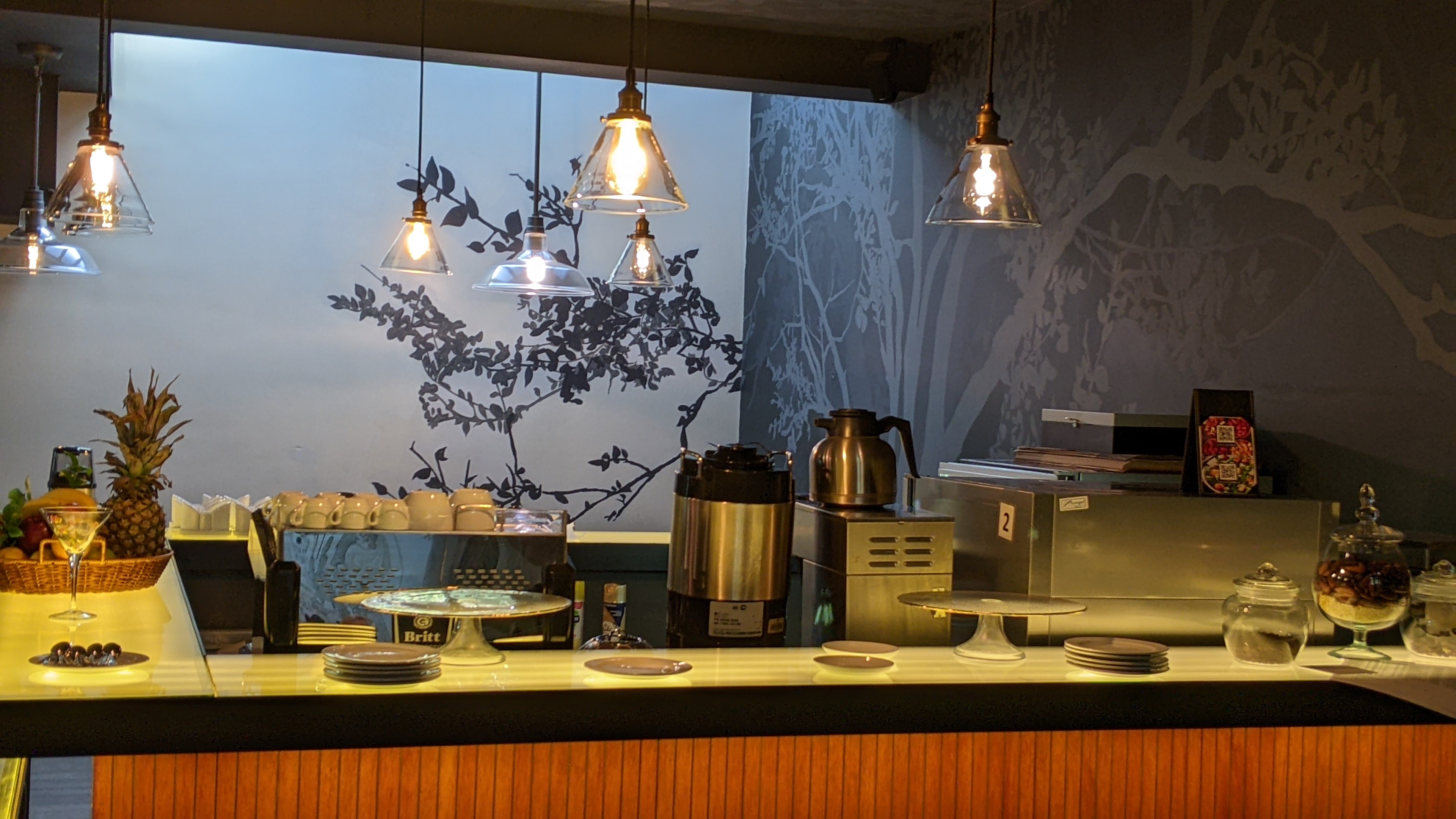
The lower-level breakfast space doubles as a cocktail lounge each afternoon. Simple canapes, served on request, accompany the wines and cocktails prepared by a congenial server. We took advantage of the opportunity to unwind after a busy day in the city, exchange sightseeing tips, or make dinner plans. The main lobby also features comfortable seating, interesting art and books, and is a friendly gathering place during the day.
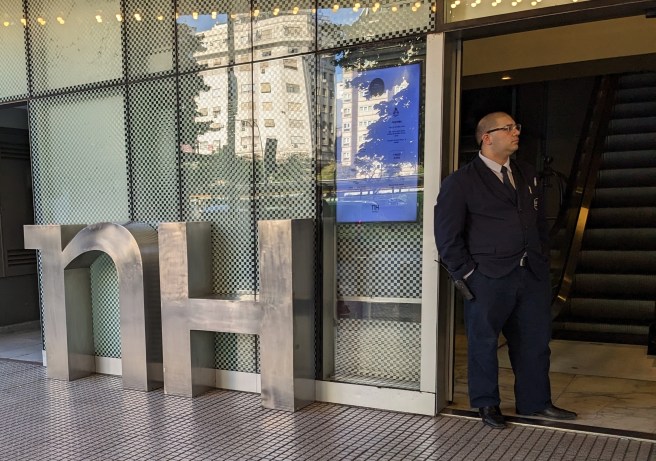
NH Buenos Aires Tango
Book a street-facing room at this sleek city center hotel and you’ll be rewarded with a “knock-your-socks-off” view of the towering obelisk at Plaza Republica just steps away in the heart of the city.
In addition, the location is next door to a lively Tango theater, just a block from the legendary Colon Opera House, and within walking distance of a park, fine shops, and local restaurants. City buses and tour buses, with convenient nearby stops, run regularly, and cabs are readily available.
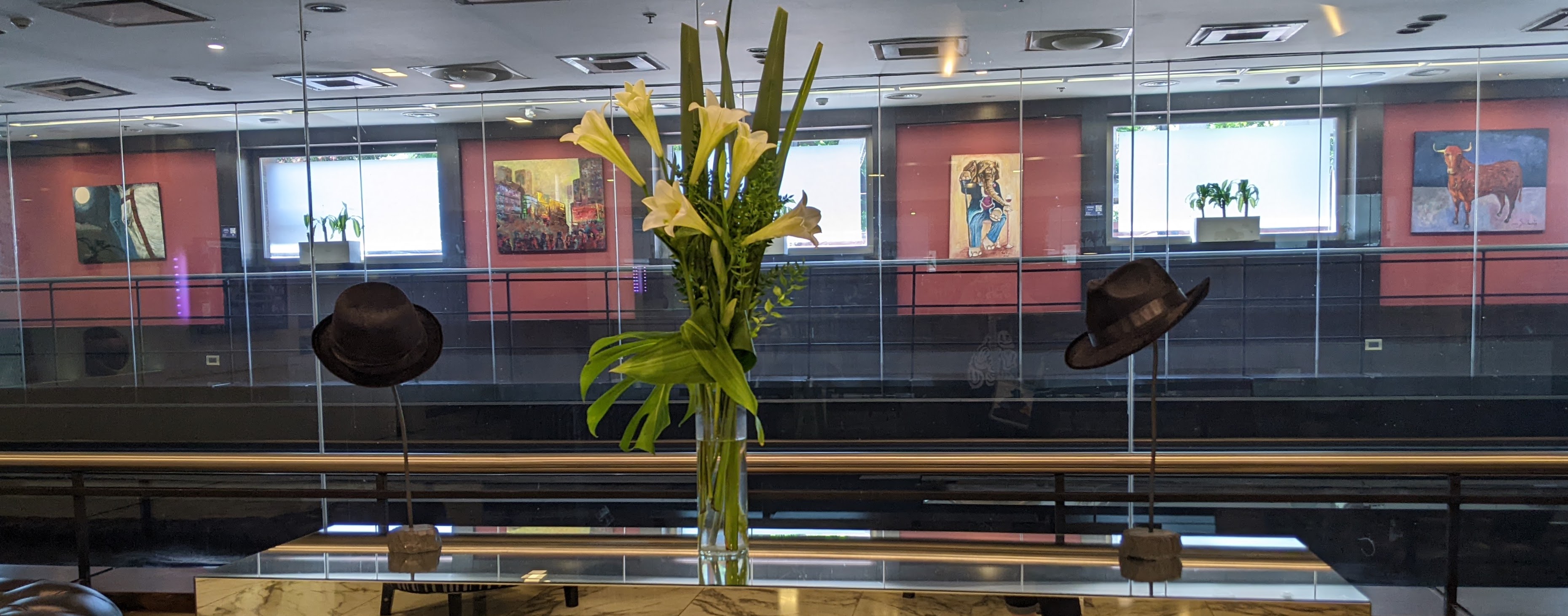
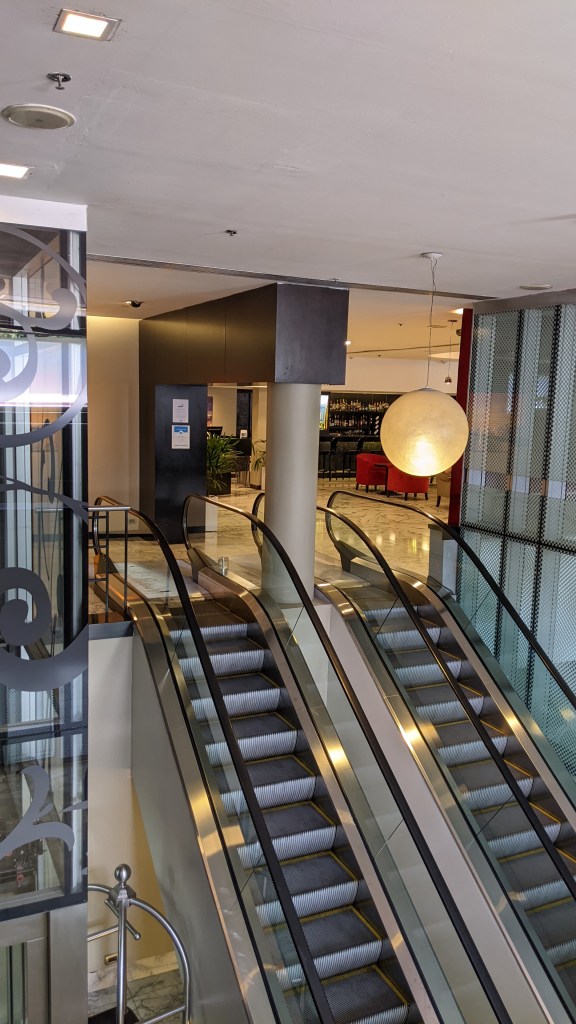
Street-level glass doors open to modern escalators that whisk visitors to the second-floor registration desk. From there, guest rooms are a short elevator ride away. The contemporary art-filled lobby space is a combination sitting room, cocktail lounge, and reading room where guests may order snacks, wine, and bar drinks throughout the day. Business travelers will appreciate available work spaces, meeting rooms, and access to audio-visual aids. The hotel also has a fitness center with multiple machines, and guests have access to a sauna and massage services.
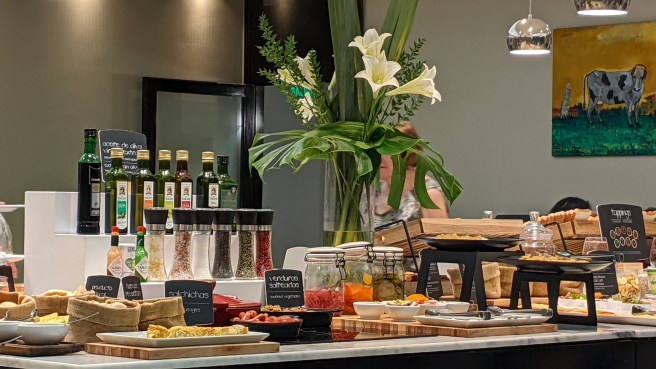
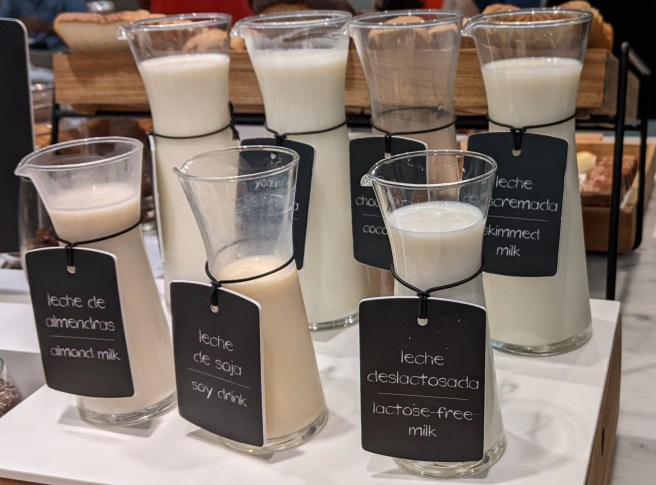
Bountiful breakfast buffets in the full-service dining room include hot and cold options, fresh fruit and juices, breads, baked goods and a variety of yogurts and cheeses, with cooked-to-order omelets also available. In the evening, the room becomes the dinner venue, with choices ranging from pizza and burgers to steaks, seafood and international favorites.
Hotel staff couldn’t be more attentive and will help with directions, call cabs, recommend tours, or book restaurant and show reservations. Just ask.
And that view? Well, it’s mesmerizing day and night. And so is the traffic just below on Ave. 9 de Julio!
Barclay Hotel, Vancouver, British Columbia
This little gem has a striking canopy at the front door, and an elegant set of marble stairs leading to the lobby and reception desk. A retro gem of a building with an address that’s convenient to Stanley Park and Pacific Centre Mall, there is nothing particularly notable about the Barclay aside from its pricing in a city known for high hotel prices.
There are no coffee machines in the guest rooms and little seating in the lobby, but the location is superb. It’s a no-frills place, but it’s spotlessly clean, comfortable, and friendly.
Be forewarned, you must navigate the stairs to upper-floor rooms. But book a first-floor accommodation and you’re all set. My stay was for a single night before a cruise, and I enjoyed it immensely. The Uber fare to Vancouver’s Canada Place, the city’s immense and busy convention center and cruise port, was just over $10 including gratuity.
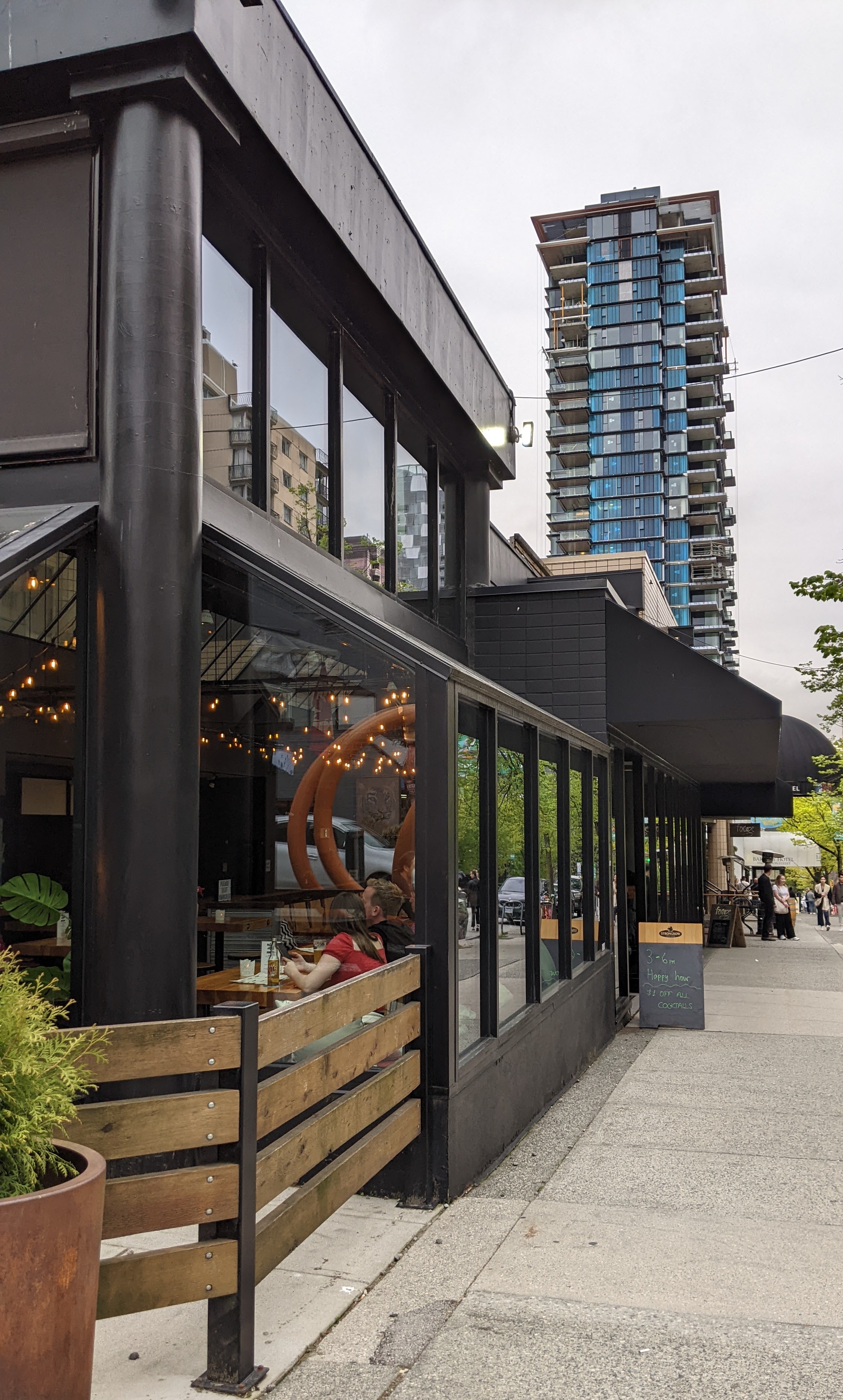
An informal neighborhood bar and eatery, The Jervis Joint, is just steps away. There I ordered small bites and enjoyed a generous glass of wine while I watched the comings and goings of neighborhood residents. And this is a neighborhood – young professionals stopping in for an after-work drink with friends, couples out for an early date night, young families pushing strollers or walking with toddlers, and others stopping to chat with shopkeepers.
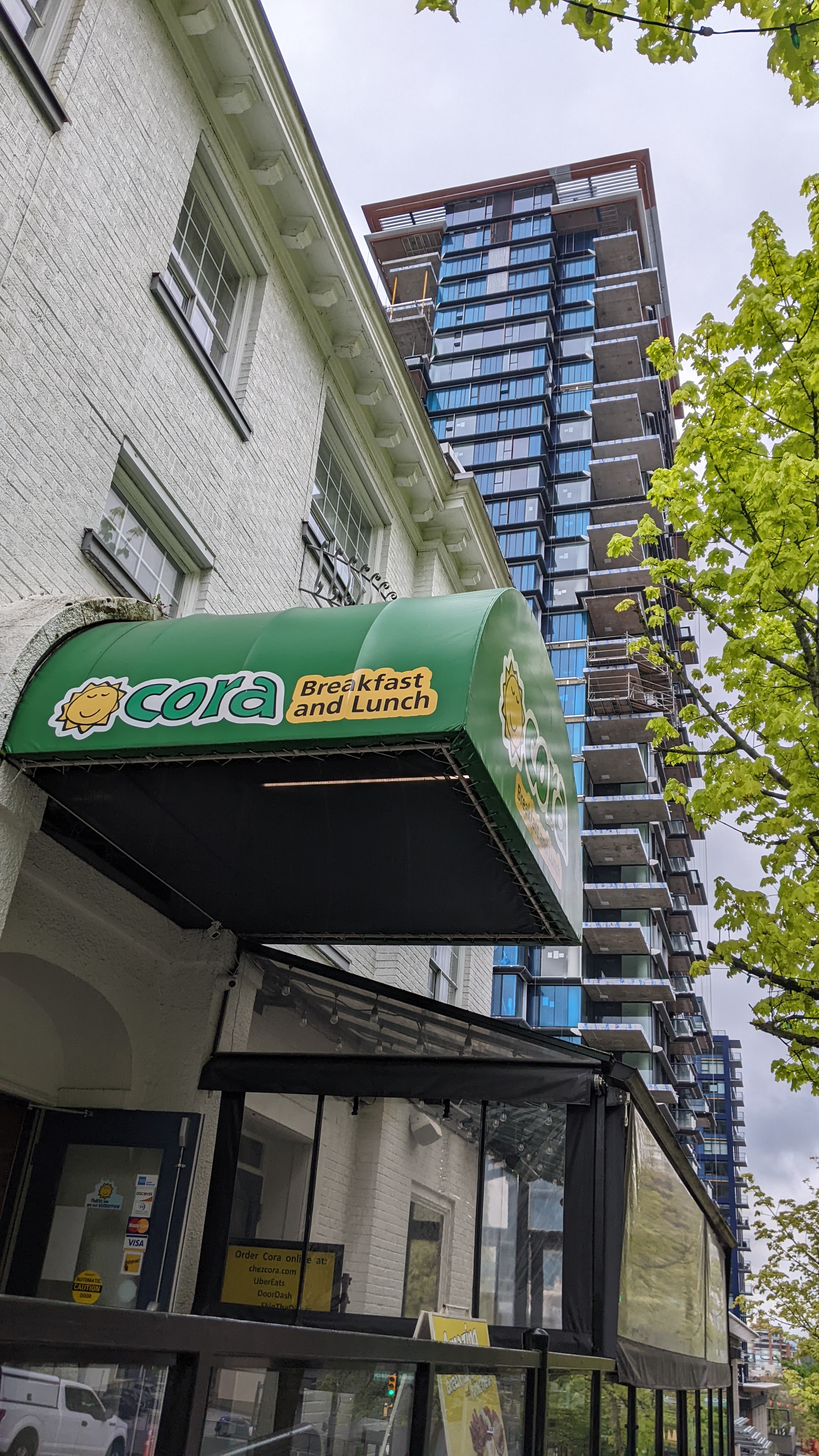
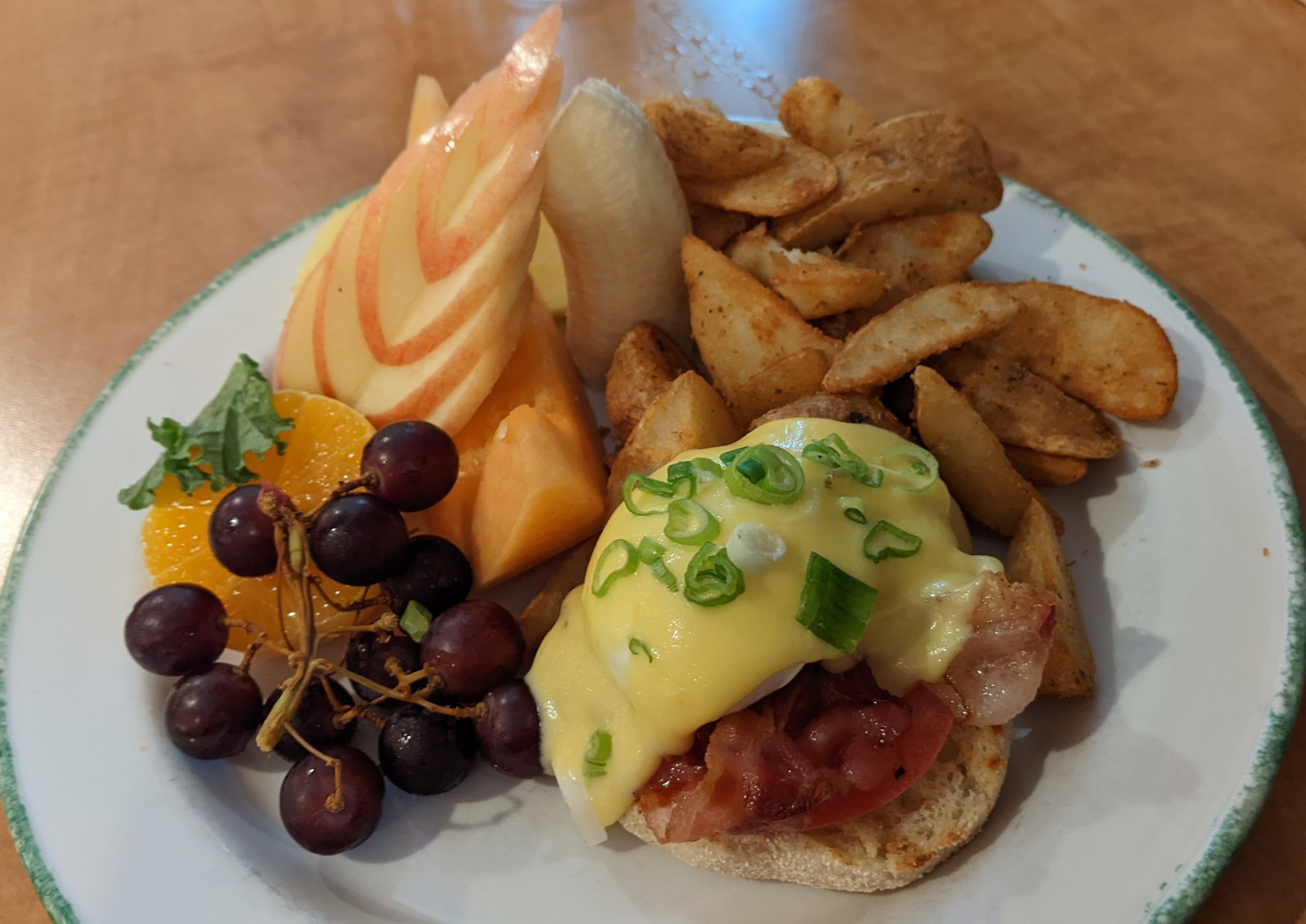
There are also some pricey restaurants nearby, fresh flower stalls across the street, and an Asian grocery that sorely tempted me. The next morning, I enjoyed the best breakfast I have had in years, starting with a fresh fruit smoothie, at Cora on Robson Street, next door to the Barclay. Everyone I asked recommended it, and I heartily endorse it. When I returned to Vancouver several months later, I tried to book a second stay at the Barclay. Alas, there were no vacancies for my required dates. So, my recommendation is to book early.
The Met Hotel, New Westminster, British Columbia
Did you know that New Westminster was once the capital of British Columbia? If you’re a history buff, you’ll want to explore this riverfront village with a history that dates to 1858, when it was the outfitting point for prospectors arriving to the Fraser Gold Rush. They set out from there to seek their fortunes upriver.
New Westminster was designed to be “a second England on the shores of the Pacific.” Richard Clement Moody attempted to build “a city of beauty in the wilderness” and New Westminster was styled to reflect British domination. Now part of greater Vancouver, it was once known as “The Royal City.”
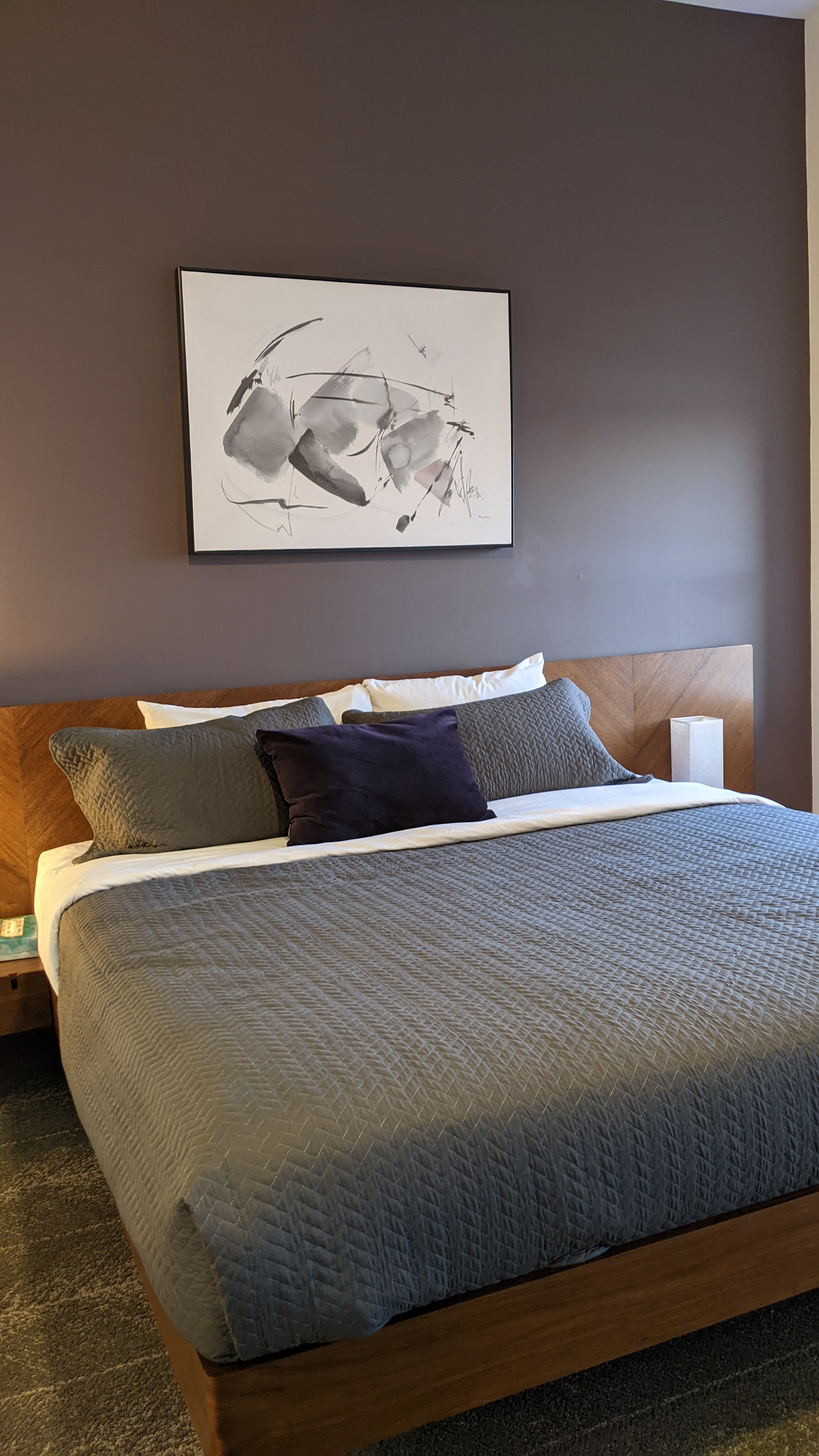
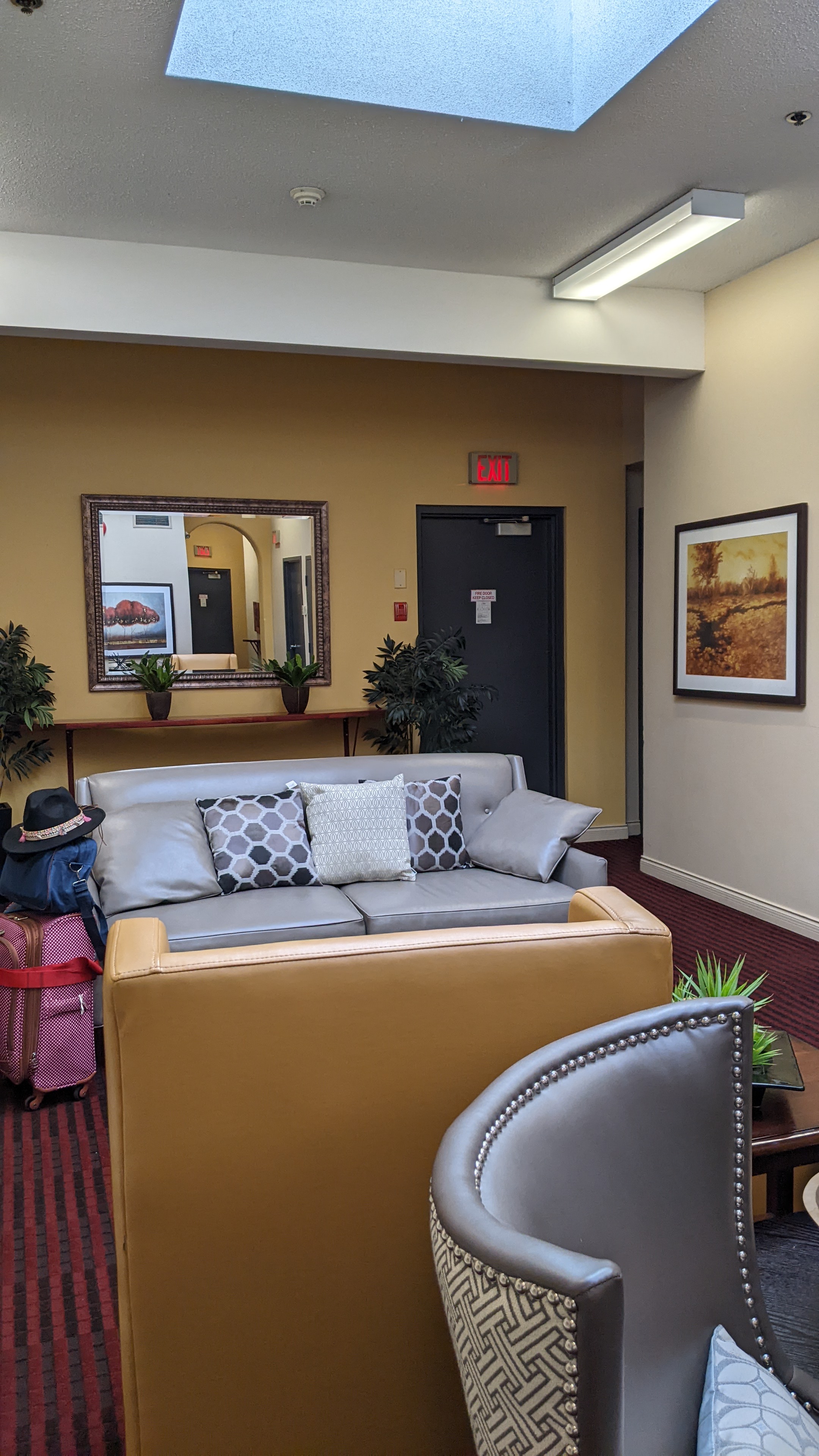
Although this was my second choice for a second overnight stay in Vancouver, there is nothing “second-rate” about The Met! The hotel is charming and comfortable, particularly pleasant for a single traveler. Because there is no main-floor lobby, The Met boasts sitting areas with comfortable seating to serve the handful of guest rooms on each floor. As comfortable as the guest rooms are, it’s nice to have that extra space to meet and talk with other guests. Besides all that, the price is right. Adjacent to the hotel on street level are a pub/restaurant and a liquor store. How convenient is that?
The terrible fire of 1898 destroyed the downtown area, and the city had a hard time recovering from the devastation. The Met Hotel is one of the few downtown buildings to survive the fire.
New Westminster Today
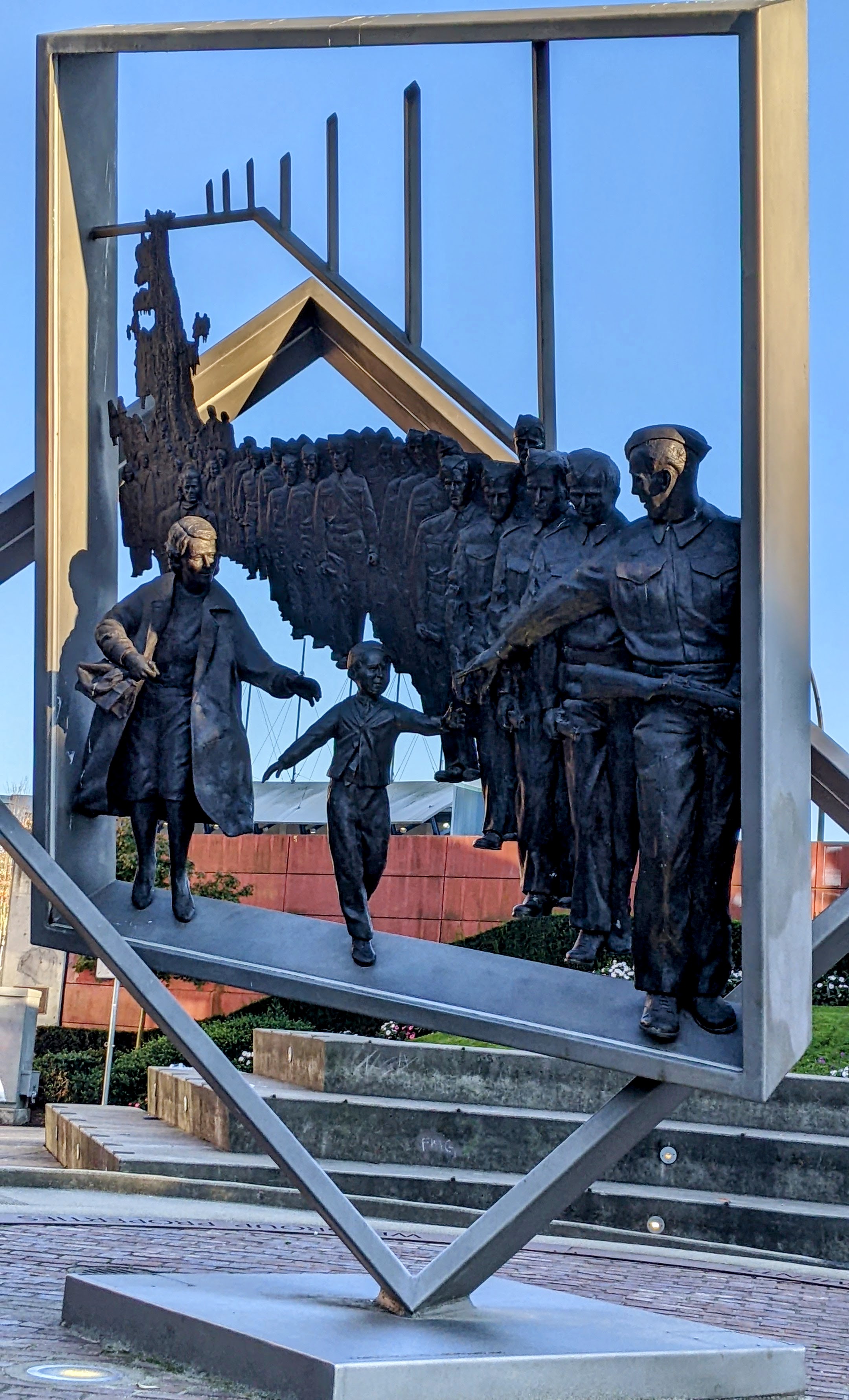
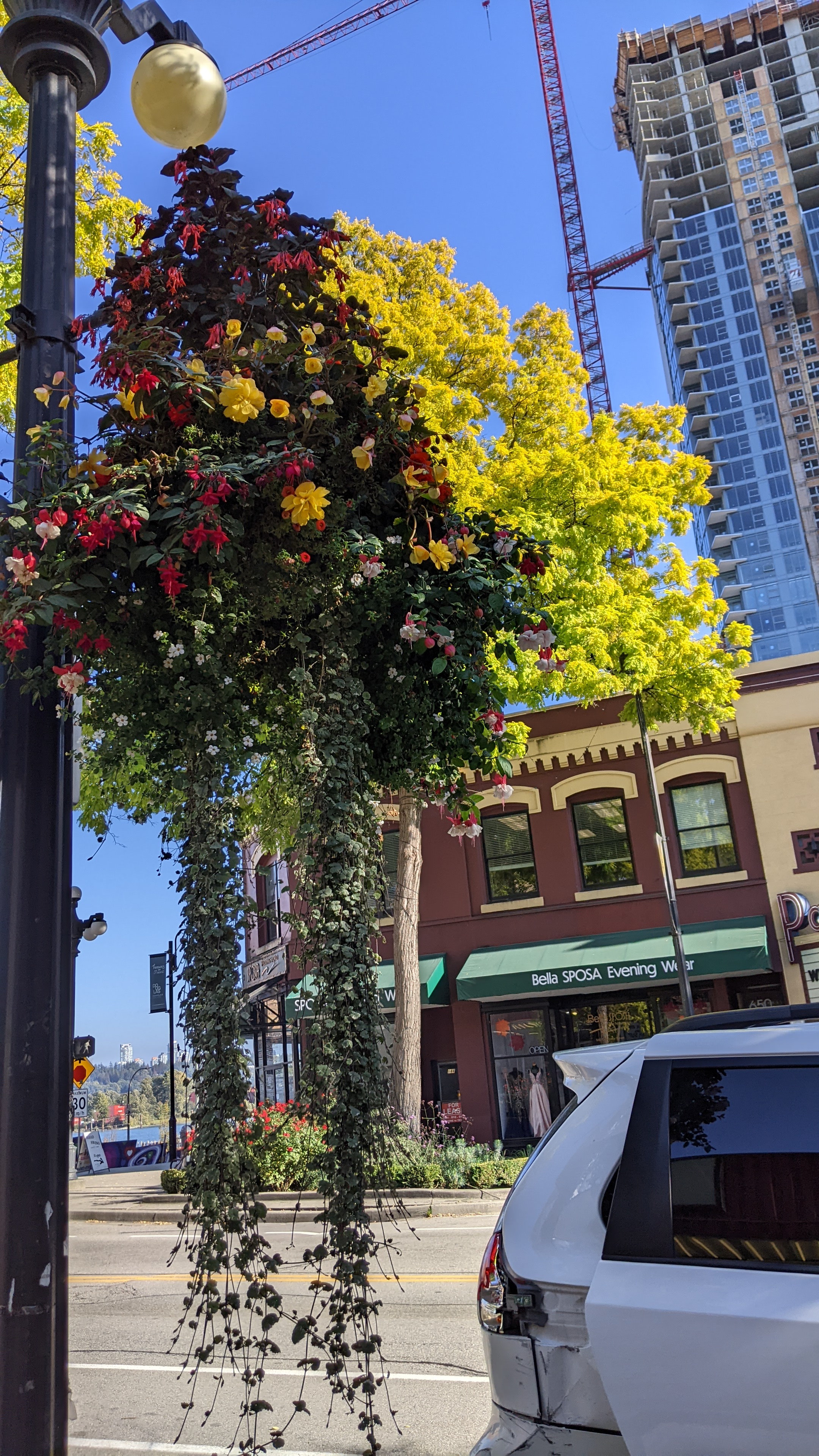
Columbia Street was the former “golden mile” of the city, and the Met Hotel is at its heart. On a walk about the area, I was enchanted by the juxtaposition of old and new, weathered brick buildings standing proud alongside steel and glass skyscrapers. I spent some time at Westminster Pier Park and was struck by the poignancy of the sculpture that depicts servicemen off to War. “Don’t go, Daddy” is the title of the piece.
A second major fire raged through Columbia Street in 2013, displacing 30 businesses and further damaging the street’s historic character. However, new construction, including the $25 million Westminster Pier Park, a new civic center and an office tower named The Anvil Centre have breathed new life into the area.
New Westminster lies 15 miles south of Vancouver, adjacent to Burnaby and Coquitlam, on the north bank of the Fraser River. It was the largest city in Mainland British Columbia until Vancouver’s population grew during the first decade of the 20th Century. Surrey is on the other side of the river. The city has changed greatly over time, but I found the new New Westminster to be a decidedly great place to spend an overnight.
The Brown Hotel, Louisville, Kentucky
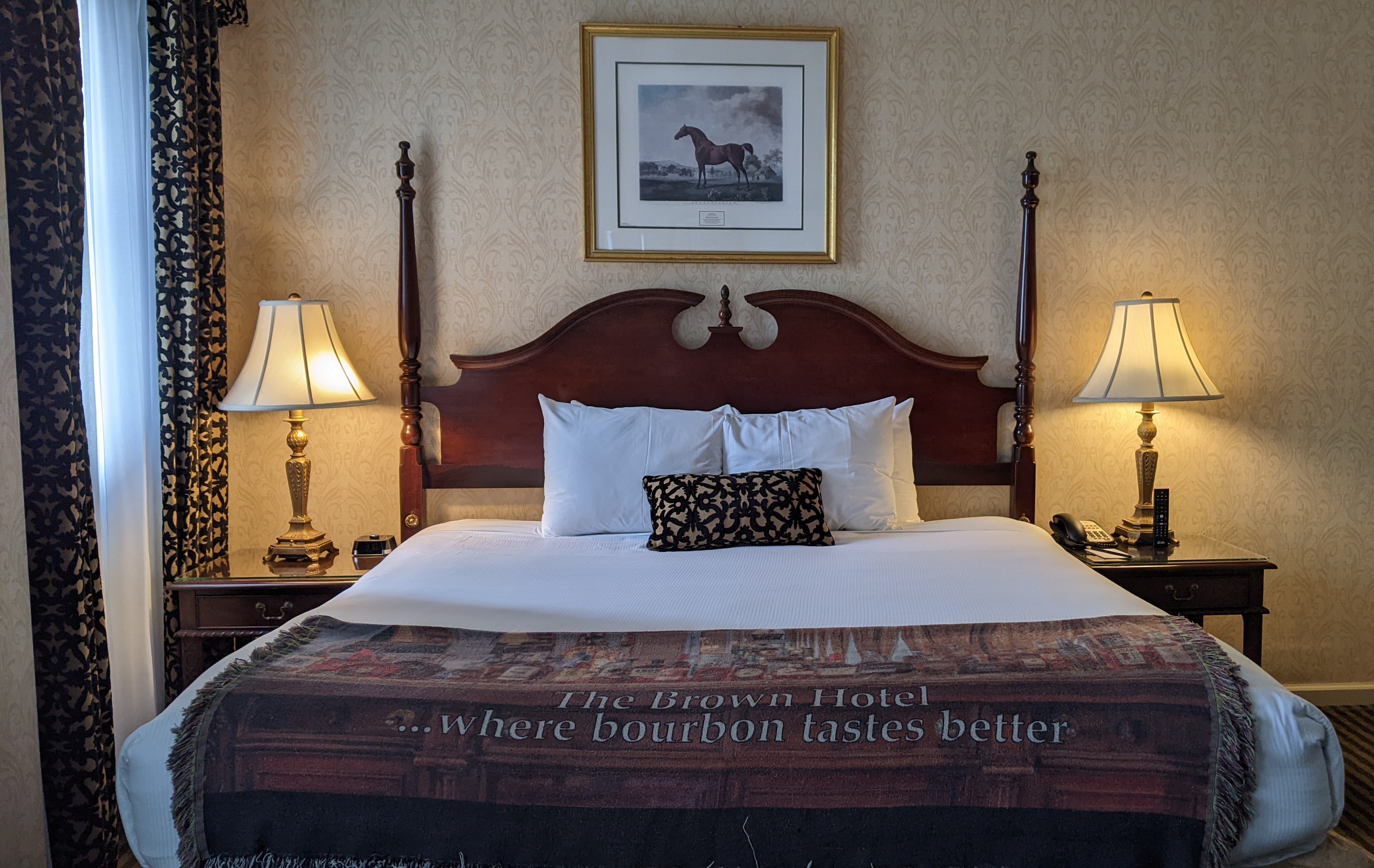
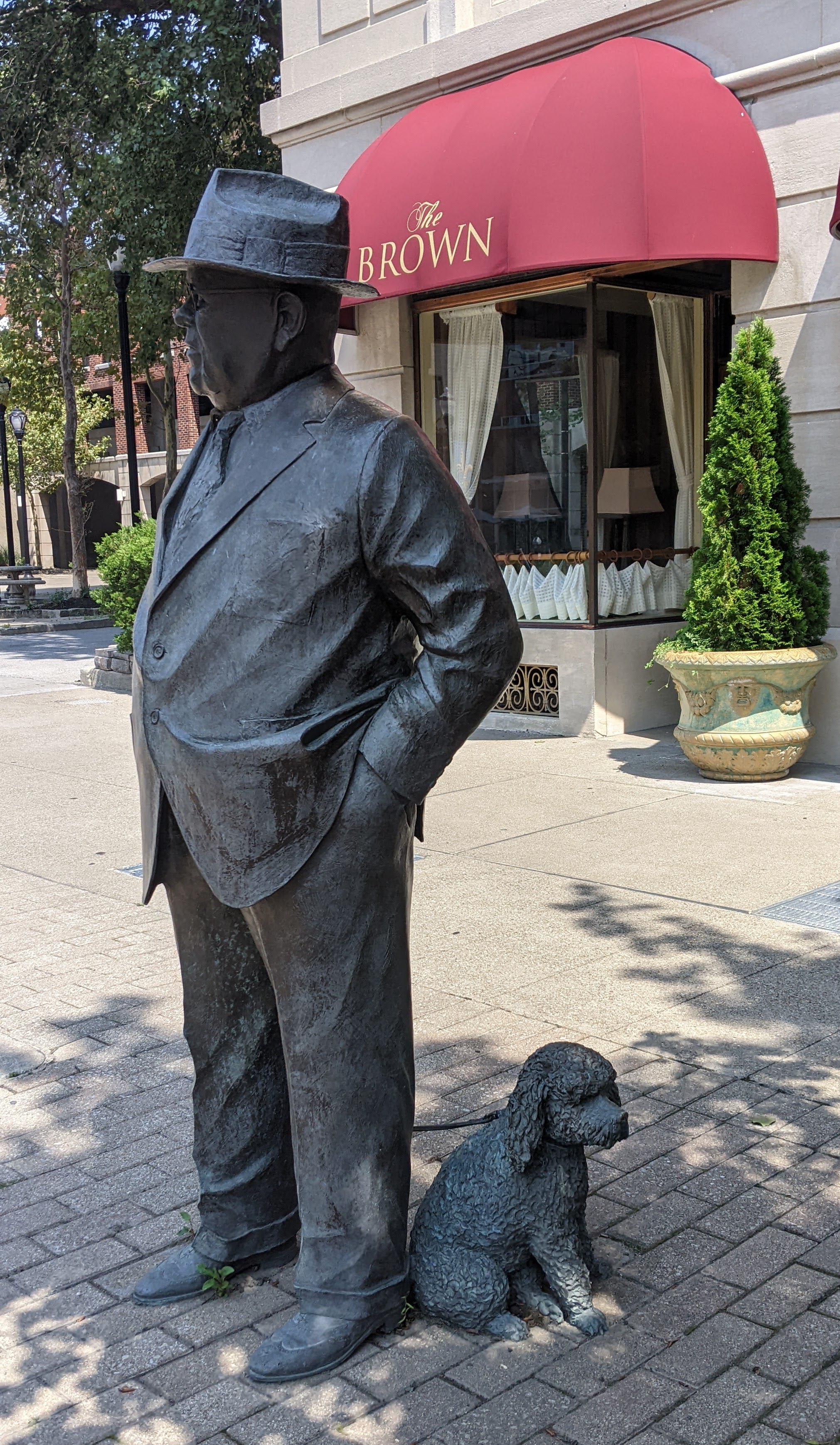
This is a traditional hotel that is quite out of character for me. It was selected by American Cruise Voyages as the location for complimentary pre-cruise stays included with passage on a riverboat itinerary from Louisville to St. Louis. My one-night stay at The Brown was an exceptional experience, from the service to the breakfast to the bar drinks, including seamless check-in and speedy checkout.
I now understand how The Brown Hotel has maintained its popularity for the century it has been in operation. It’s on par with other top names in the hospitality world: The Peabody in Memphis, the Biltmore in Coral Gables, Adolphus and Melrose Hotels in Dallas, and Hotel Galvez, now the Grand Galvez, in Galveston. These grand hotels, and others of this caliber worldwide, are worth a visit, if only to enjoy a drink at the bar!
Yes, The Brown is that good. It’s grand, to be sure, but it’s also comfortable and inviting, a calm place for a restful night’s sleep, with inviting spaces to enjoy a cocktail or a meal. There is plenty of comfortable seating for conversation or quiet time with a book, and its location is superb for exploring the city.
This is what a classic hotel should be. The Brown is nothing if not classic, and I hope it lives on for another 100 years, doing exactly what it does best: pleasing its guests.
IBIS Hotels
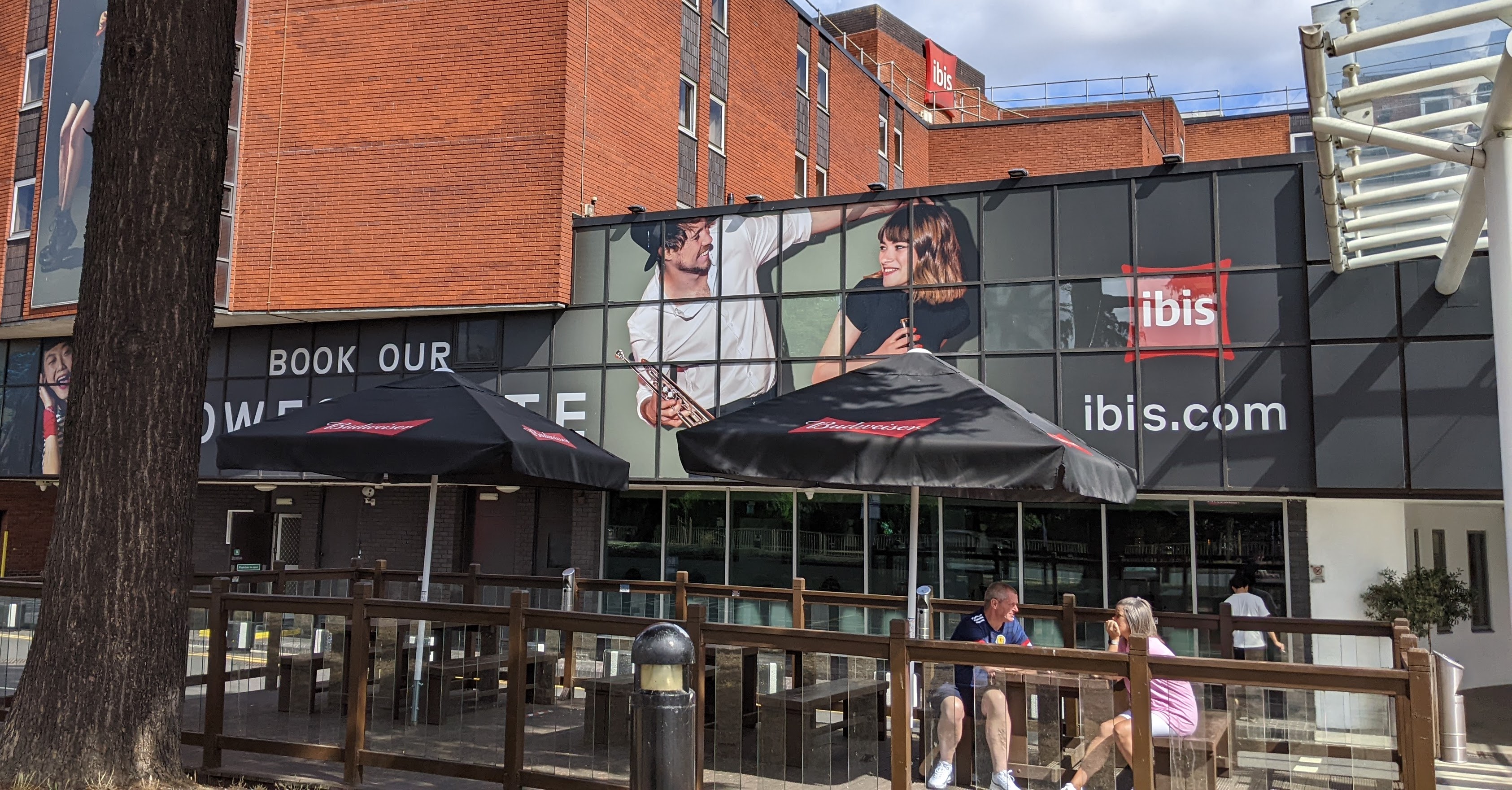
The final entry on my current roster of hotels to love breaks many of my own rules. Owned and managed by the French hospitality chain Accor, the Ibis brand is found across the globe.
Conveniently located, sustainable, and eco-friendly, with bright contemporary spaces and edgy, modern décor, the simple red and white sign is easy to spot. Ibis Hotels are consistent in terms of accommodations, service, and amenities.
Efficient Wi-Fi and 24-hour front desk staffing are bonuses that I appreciate, along with extended breakfast hours. In most locations, cocktails and snacks are available throughout the day. Other perks: Expedited check-in/check-out and the ability to securely store luggage, if necessary, before check-in and after check-out — a boon to the business traveler.
Rooms are small and spare, modern, uncluttered, clean, and comfortable. Service, whether at London’s busy Heathrow Airport or when arriving late at night in Setubal, Portugal, is always cordial and efficient. Breakfast buffets are bountiful, to say the least, with American favorites and local options, and unlimited coffee.
If travel is on your horizon, do some initial homework to find a hotel that will surprise and delight you. In an unfamiliar city, a wonderful hotel becomes your retreat, even if your stay is only for a single night. Just know that the time and effort spent to find a hotel that you will not only love but one that beckons you to return is always worthwhile.
Magic sometimes happens when one is in the right place at the right time. In this case it was slightly before 9:30 a.m. Friday, March 25, when three local musicians set up to play a brief concert at a tiny post office in a shopping center adjacent to Hot Springs Village, Arkansas.
There was no advance notice given, the musicians weren’t collecting for a cause, and they didn’t pass the hat. Nor did they attract a large audience. Their reward was simply a smile or two, from those who came to mail packages, buy stamps, or check their postal boxes. The trio did it for the joy of making music together and to express, through that music, the concern they and many others feel right now for what is happening half a world away.
Dr. Millie Gore Lancaster, an accomplished clarinet player, published author and retired teacher, and her long-time clarinet-playing friend, Sharon Daughters, both of Hot Springs Village, were joined by Phillip Wilson, also a retired teacher and published author, of Tucumcari, New Mexico, on the baritone horn, for a performance that both began and ended with the Ukraine National Anthem. Wilson, known as “Papa,” is a lifelong friend of Mrs. Lancaster, in Hot Springs Village for an extended visit. While here, he also serves as guest conductor of the Village Strings.
The Totally Unauthorized Fully Vaccinated Post Office Pop-Up Band: from left, Phillip “Papa” Wilson, Dr. Millie Gore Lancaster, and Sharon Daughters.
It was the kind of serendipity that doesn’t often occur, and this small community with a large population of retirees is not really a place where the unexpected regularly happens. However, the Post Office Pop-Up Band is not a one-time phenomenon. According to Lancaster, it was an idea that sprung out of an incident three days before Christmas in 2018. Some people waiting in a long line for service were irritable, and a few at the postal service windows became abusive when they learned their packages would not arrive at destinations on time.
Lancaster spoke up: “I’m going to bring my clarinet and play music to remind everyone to be kind to each other,” she announced. She didn’t do it that season, but when spring arrived, she and Daughters, who is a fellow clarinetist, began playing happy music like “Supercalifragilisticexpialidocious” and “Bare Necessities,” just for the fun of it, outside the same post office.
That was in 2019.
They sat out 2020 due to the pandemic, she notes, but began playing again in the spring of 2021. It was time for good friends to “get out and play,” making music together once again. They became the “Totally Unauthorized, Fully Vaccinated Post Office Pop-Up Band.” However, the wind blew their sign down and their sheet music away one too many times, so by Christmas they were popping up once again inside the postal office. When “Papa” Wilson came to visit, they were a trio.
Why the miniscule U.S Post Office as a venue? Because, says Lancaster, she still remembers that Christmas when it was not pleasant to be there.
In addition to the Ukrainian National Anthem, which is said to be the most popular piece of music in that nation, the trio played “You’ve Got a Friend in Me,” from Toy Story, “Can You Feel the Love Tonight?” from The Lion King, and a poignant Bob Dylan “Blowin’ in the Wind.” The concert could have been longer, but the musicians had another agenda. They were moving on to the main post office in Hot Springs, some 13 miles away, hoping to delight postal patrons there.
A simple sign, in Ukraine’s flag colors of blue and yellow, proclaimed simply, “Stand with Ukraine.”
Lancaster said, “We were inspired this time by the musicians in Ukraine whom we saw playing alone amidst the rubble, a cellist once, and a pianist another time. We thought we would join with our brother and sister musicians in solidarity a half world away.”
When it was adopted by the citizens of the independent Ukrainian National Republic following the 1917 Bolshevik Revolution in Russia, the anthem had three verses, and slightly different words. It was adopted in its present form, a single stanza with a repeating chorus, in 2003. The opening line proclaims: “Ukraine’s glory and freedom which haven’t perished . . .” Today, the emphasis is “on vanquishing the country’s enemies and the fresh breath of freedom that citizens so cherish, as they now seek to defend it.”
Indeed, it’s good to make music, to listen to that music, and to stand together.
Today I’m sharing, with a bit of nostalgia, some of my favorite photos from the past three years; 2019 took us to Bermuda, Alaska, Maine, Cuba, on a Mediterranean cruise, and then on to a delightful road trip through Croatia, with a final couple of days in rainy, flooded Venice before flying home on Thanksgiving Day. We were thankful to be home, sharing turkey and reheated stuffing with family after a long journey.
This past November we spent a few brief hours on Thanksgiving Day with dear friends on Florida’s Gulf Coast. We met them years ago on Cabbage Key — but, that’s another story. What is pertinent and what seems fitting is that just as one chapter in our book of travel stories ended on Thanskgiving, the next began to take shape with a similar celebration. For us, it was another reason to be thankful, despite the somewhat complicated travel timing and logistics.
We are hungry for new experiences since the world shut down in March of 2020, and we have no fear of becoming satiated. This year, our travel plans — yes, we’ve made tentative plans through early 2023 — will take us to both familiar destinations and entirely new places.
Had previous plans jelled the way we hoped, we would now be packing for a voyage from Buenos Aires to Antarctica, followed by calls at Rio de Janeiro and several other Brazilian ports, before a trans-Atlantic crossing to Barcelona by way of Cabo Verde, off the coast of West Africa. But plans do not always work out the way we envision them. Sadly, that entire itinerary was scrapped more or less at the last minute because South American tourism has not yet fully rebounded from the global pandemic. As you know if you follow my blog, bookings were changed multiple times during the past two years, as (at last count) 16 cruises were canceled or altered so drastically that we decided to forgo them.
If we have learned anything through it all, it has been to embrace possibilities, to grab at every chance to be with family and friends, to not put off trips for no good reason, and to never give up on dreams. Opportunities to travel are sometimes fleeting, and there is no journey not to be savored.
I look forward to what is to come. But, during the past 20 months, I have also looked backward, back to past journeys as well as at some of the trips not taken. My husband and I are now reconsidering some of those itineraries. Our trips closer to home have been interesting and fulfilling, and we are happy to have had an opportunity to explore our new home state and its neighbors. We plan to do more of that!
It has been interesting. Not in any cosmic, earth-shattering way, but from a personal perspective. I came across a tattered, aging journal as I was sorting travel memorabilia, with notes from a driving trip through France and Spain many, many years ago. I was in Tarragona, a medieval Mediterranean port city in northern Spain. I was living in France at the time, and had not long before returned from a trip through the Middle East.
The entry is dated May 31, 1966. I read the words with wonder:
“I passed through Andorra, one of the smallest countries on earth, and thought, ‘I could be happy here.’ This happens often — the feeling passes in time, and even more quickly if I stay to try to shape reality from the dream. . . .”
It was just a brief entry, and it surprised me.
My younger self had not yet become a storyteller. I like to believe that the intervening years have taught me. Reading what I wrote then, I wondered about the circumstances. I cannot now recall them, except to say that I had hoped to return to Andorra briefly this spring, when a planned road trip through the Basque country of France and Spain would have put us close enough for a side trip to that intriguing small nation in the Pyrenees. That trip is one of those that has not yet materialized.
For many reasons, I am eager to be on the move again. Time seems to move faster today than it once did, and 24 months, for me at least, seems far too long to be essentially “at home.” My realization is that I am at least partially defined by the places I travel. Getting gone seems even more essential now. The road trips, brief flights and short cruises have simply been teases.
I have changed in the years since I first visited Andorra. I wonder if it has. Would I still be happy there, or was that the illusion of a younger me, a dream now withered and unimportant?
What about you? Are you ready to travel again? Do you yearn to meet new people, savor new sights, taste new foods and make new friends? I hope so, and I wish you safe travels and lasting memories, no matter where you choose to roam.
But, I hope you’ll continue to come along with me as I pack my bags for distant destinations.
A new fighter group was activated on June 1, 1943 and was assigned to the Los Angeles Air Defense Wing, IV Fighter Command, of the United States Fourth Air Force at March Field, California. One week later, three squadrons were assigned to the group, each with a cadre of 40 enlisted men; The squadrons were led by captains, while a lieutenant colonel commanded the group.
The group moved to Van Nuys, California, in August, and by mid-September, each squadron had a roster of between 40 and 44 officers and from 189 to 217 enlisted men. Training intensified in October to include mock dogfights in the air over the Pacific, with the three squadrons flying out of separate fields in Southern California.
Sadly, during training, a number of aircraft crashed and several pilots were injured or lost their lives.
Just after Christmas, the 364th Fighter Group passed muster and was deemed ready to engage an enemy. At that time, men assigned to the group did not know where they would be going. The question was answered when, on January 13, orders were received and the next day, the entire group departed California on a troop train bound for New York, arriving five days later. The men received final physicals and 12-hour passes on a staggered basis until, at about 8 p.m. on February 1, all were boarded onto another train, then transferred to ferries in New York Harbor, arriving at a cargo dock under cover of night.
A first-hand account of that night is in the history book of the 364th, produced in 1991 by those who had survived the ensuing months and years of war, and finally were ready to share their memories of it.
“We had time to guzzle hot coffee (viewed now in retrospect as a fabulous luxury) and doughnuts proffered by the Red Cross. The more enterprising, though perhaps not too security-minded, of the squadron were able to learn from the M.P.s that our ship was the Queen Elizabeth, that we would go unescorted, and land in Glasgow in seven days. All of which predictions proved correct.”
The ship, planned as a luxury transatlantic liner, had been outfitted earlier as a troop carrier, and she did, indeed, sail to Europe with precious cargo, but with no military escort. The men of the 364th Fighter Group, now part of the 8th Air Force in Europe, boarded a train immediately upon disembarkation for transfer to Honington Field in Suffolk, England, “where both officers and enlisted men were quartered in more luxurious quarters than we had ever had in the United States of America.”
Mission No. 1 was flown by two of the squadrons of the 364th Fighter Group on March 2, 1944, less than one month after arriving in England. They “supplied withdrawal for bombers returning from Germany.” The account of that first mission notes: “Lt. Kenneth Nicholson had to abort. Returning on one engine, he belly landed the P-38. The plane was the only casualty.”
During the rampup to D-Day, operations for the 364th Fighter Group were “costly,” with the loss of 18 pilots in May and 137 planes aborted. It was just the third month of combat for the group
On June 5, 50 P-38s were a part of Mission 62, termed an “area support mission” in the official records. The invasion fleet had departed from the English coast, and “Neptune” had begun. Missions 63 through 117 were flown in the 10-day period from June 6 through June 15. The following day, the three squadrons of the 364th Fighter Group returned to flying “normal” combat missions.
Once again, from the history of the 364th Fighter Group:
“Major Brad McManus led off the first section of the 383rd at 0330 hours with 16 planes flying. The take-off was in a blinding rain and trying to make formation over the base was a challenge to say the least. . . .
“On the day’s last mission of the 8th of June, Lt. Loren Wilson (383rd) was heard to say over the R/T, ‘Hell, B.B. (his flight leader, Lt. B.B. Wilson) I’ve lost you. I’m going back.’ Lt. Wilson never returned to the base and a crashed P-38 was later found south of London. This was the only loss the Group suffered while flying 321 sorties.”
Today, on the 77th anniversary of D-Day, I cannot help but return to the entries that detail this one American fighter group’s part in that war. Just last week, on Memorial Day, we paid tribute to those who lost their lives, not only on D-Day, but in all the battles waged by this country against foes around the world.
However, for me, World War II remains unique. My father was there — first in California to train with the newly-formed fighter group. He was on that five-day troop train journey from the West Coast to the East, and he was on board as the liner decked out in battleship grey, the ship he called “the Lizzie,” made her way unescorted from New York to Scotland. He was there at Honington on June 6. He was 25 years old. Even though he did not fly, I know he waited with concern for planes and pilots to return from each mission. I know he grieved when they did not return as scheduled.
He did not talk about those days, nor did he talk much about the war, or about other battles in other wars. I suspect he carried vivid memories of the war years, but he chose not to share them with me. But the pride he felt about being a member of the 364th Fighter Group during World War II was something he never hid.
The last Mission of the 364th was flown from Honington on May 6, 1945, not quite two years after the fighter group’s activation. During its short life span it achieved a remarkable record, flying P-38s and, later, P-51s. My father returned home from England in July 1945, with the expectation of being transferred to the the Pacific Theater of Operations. Thankfully, the war ended before he received his orders. The fighter group was deactivated on November 10, 1945.
So, now I try to piece together the stories I wish I had heard from him, and I share his pride in the unit, and the service members — all of them — who played a part in the effort that culminated in D-Day 1945.
More people today travel to more places more often than ever before in history. At least they did, before the world came grinding to a halt due to the COVID pandemic. When restrictions are lifted once again for worldwide leisure travel, the experience will undoubtedly be changed.
What will it look like? As yet, we’re all a bit uncertain. What is certain, however, is that Americans and other nationalities will continue to travel, very probably in record numbers.
It’s not just the numbers, but also the percentages of people traveling that has skyrocketed in recent years. More than 28.5 million people took to the seas in 2018, according to Cruise Lines International Association, the world’s largest cruise industry trade association, and 2019 was expected to reach or exceed 30 million, once all numbers were tallied. Cruises regularly discharged passengers into crowded ports around the globe for visits that spanned only a few hours.
According to figures from the U.S. Travel Association, “U.S. residents logged 1.8 billion person‐trips* by air for leisure purposes in 2018,” and a record number of Americans, more than 93 million, traveled outside the country that year, according to data supplied by the U.S. Commerce Department’s National Travel and Tourism Office. A fair portion of those flights brought travelers to foreign ports so that they could board cruise ships.
*A person-trip is defined as one person on a trip away from home overnight in paid accommodations or on a day or overnight trip to places 50 miles or more [one-way] away from home.
All Those Ships
The cruise industry had become a major economic factor for many nations, impacting an astonishingly broad spectrum of goods, services and specialties. It is one of the largest worldwide employers, and the shutdown has affected broad segments of the worldwide economy.
The statistics are sobering:
It is estimated that 8.75 million passengers missed their cruises as of October 31, 2020. Between mid-March and the end of September last year, approximately 334,000 cruise-related jobs were lost. In the United States alone, the lost revenue was estimated to reach about $26 billion by the end of October 2020. And those figures don’t begin to count what has happened since.
There’s no doubt that it was “big business,” but there is even less doubt that the number of travelers will continue to increase, according to cruise industry spokespeople. Despite the worrisome statistics, bookings for future travel are up for the coming year, and for succeeding years, pointing to significant future demand. Travel is not expected to return to the “old normal” soon, perhaps not ever. But those who miss traveling and are eager to set off once again, for the most part, will embrace airline and cruise travel no matter what new restrictions may be are imposed.
About 7,000 cruise passengers were quarantined aboard their ships, in Japan, other Asian ports and various other parts of the world, including some ports in the United States in the early days of the pandemic. and other places in Asia. However, bookings for future cruised were not canceled in large numbers until the cruise industry ban on travel became a reality across the globe. Today, based on reports from all cruise lines, bookings are up for 2021, 2022 and already for 2023, even though only a handful of ships have actually begun to carry passengers.
“Stay Nimble!”
The prevailing attitude of passengers booked on a Transpacific sailing scheduled to depart Yokohama, Japan May 10 was “wait and see,” until the final moment. The cruise, of course, was canceled, but a high percentage of those passengers affected by the cancellation immediately transferred their deposits to another sailing on a future date. Refunds and incentives for future bookings were attractive, and most cruisers seem willing to wait it out.
My husband and I are among those who have had multiple cancellations. We are eager to see the return of cruise ship travel. As others in the same boat, we had little idea that the ban would persist for an entire year. We certainly did not foresee longer than a year!
Now we are encouraged not only by recent rulings that will allow ships to travel from U.S. ports to Alaska for a part of the summer, bypassing British Columbia. We are even more encouraged by the news that other U.S. ports will be embarking passengers this summer for short itineraries to Bermuda, the Bahamas, Mexico and the Caribbean.
We currently have deposits on three cruises — one this fall, one for January 2022, and another for June 2022. This is new territory for us to navigate: We seldom plan that far ahead. Typically we are much more spontaneous in our bookings. But by booking early, we have taken advantage of lower prices and additional perks. We still have dreams to hold on to. We have practiced living with hope for far too long.
Fears and Facts
Major concerns still exist. Will the logistics of future travel become more difficult? Will insurance continue to cover financial loss due to a world health scare. Will the spread of Coronavirus finally be contained. Will we be able to travel without masks, but with proof of vaccination? We realize that these concerns may seem frivolous in the face of illness and death, financial woes and the other pain associated with a worldwide pandemic, political unrest and continuing uncertainty about the future.
But for many of us, the ability to meet new people, enjoy new experiences, and explore new ideas through travel is nearly as vital as breathing, eating and sleeping. So, the questions remain.
If you love traveling, are you currently making plans for the future? Where — and how — will you be traveling? When will you deem it safe to leave home, to fly to a destination half a world away, to be on a ship at sea with thousands of other people and no immediate access to comprehensive medical care. Is taking a road trip across the United States now a viable alternative to other forms of travel?
These are important questions that each person and every family must answer from an individual perspective. There are no right answers. What are your thoughts? I would love to hear from you.
Until we can all meet up in some foreign port and share stories around a friendly table, just stay curious and be safe. Be ready to pack up and go when it becomes possible!
Note: A previous post, about a stopover in the Azores, was the first in a series of posts that chronicle a recent trip to Portugal, heavy on relaxation and good food, undertaken as a sort of “experiment” by two couples. As cousins, we have more than just family ties in common, but had no previous experience traveling together. It was a unique adventure.
We had embarked on the planning with gusto. We all agreed that daily schedules and strict timetables would not govern our trip. We would take the days as they came, giving in to whims, and choosing to explore both together and sometimes separately. We also agreed that picnics and snacking would be every bit as welcome as “reservations-only dinners,” and that off-the-beaten-path attractions held more appeal than guided tours or noted museums.
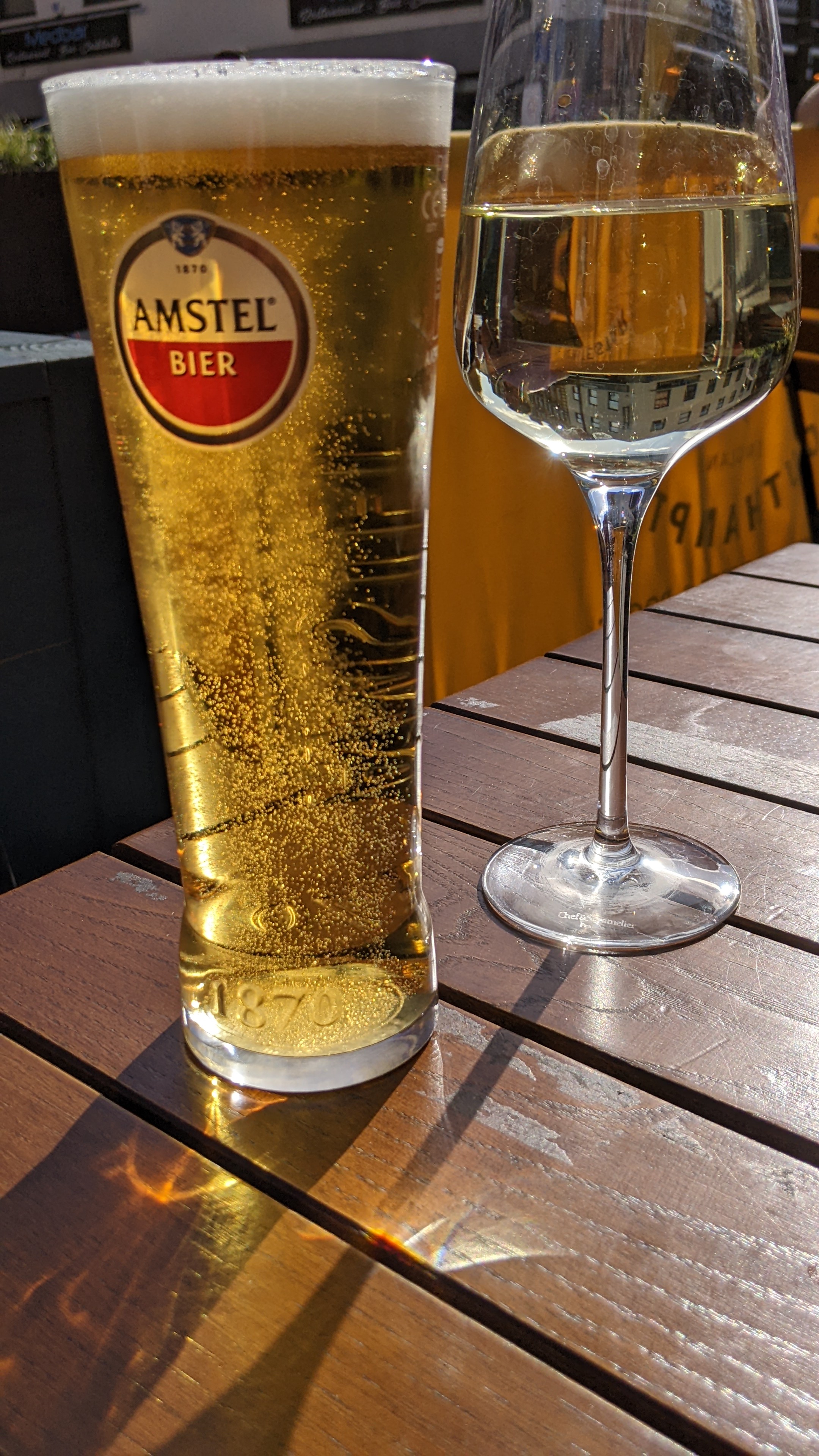
I hate to admit that our appetites guided our island activities, but that’s pretty much the truth of it. We heartily endorsed seaglass expeditions on lonely beaches, long lunches with accompanying local beer or wine, and lazy afternoons with our books, sometimes interspersed with naps. Even though early dawn light was beautiful, we felt no compunction to be overly active early each morning.
We overindulged in fresh fish and seafood prepared in traditional ways, and we sampled sardines, octopus, local mussels, sheep’s cheese, and plenty of olives. We did, unfortunately, miss the experience of eating cozido, a meat or chicken dish slow-cooked underground in the hot volcanic soil. And we did not venture a soak in the mineral-laden volcanic pools, although they are a highlight of the visit for many tourists to Sao Miguel Island.
The marina drew us . . .
After spending a morning exploring the town, we were drawn by the water, and the prospect of having a view to accompany a light lunch. We were walking along the rocky shore in what will someday be a revamped marina district of Vila Franca do Campo. Deadlines seem both non-existent and unimportant on this island, so there are no signs proclaiming a targeted completion date.
With a couple of eateries to choose from, we picked the one closer to the water, Atlantico Restaurante & Grill, and were ushered upstairs to a pleasant dining room with a stunning view. It was late by island standards, apparently; other diners were close to finishing their meals, but we were welcomed nonetheless by a server who smilingly said we had plenty of time. The kitchen would not close until 3 p.m.
And so our first encounter with Portuguese dining began:
First the obligatory sampling of bread, olives, cheese, and this time, paper-thin sliced ham and a tasty sweet jam. Our orders came and were consumed, along with a bottle of chilled white wine, and the minutes ticked by.
It was well after 3 p.m. when we finished, and we bade goodbye to Michael, our waiter, who had spent time in Chicago, as we recall, and spoke perfectly idiomatic English. He seemed not to mind being kept after “quitting time,” and actually invited us back for dinner, but then told us the restaurant would be closed for the next couple of days due to an annual — and, apparently, quite raucous — fisherman’s celebration. Indeed, while we ate, workers continued to decorate the street outside; we suspect it was quite a party!
Another day, we visited Mariserra, once again for a late lunch, in Sao Roque, nearer the large city of Ponta Delgada. We had yet another delicious taste of island life, this time highlighted by a shareable fish stew, served with pasta in a tomatoey sauce, as well as perfectly-prepared garlic shrimp (two orders) and flavorful mussels.
Crafting a memorable visit . . .
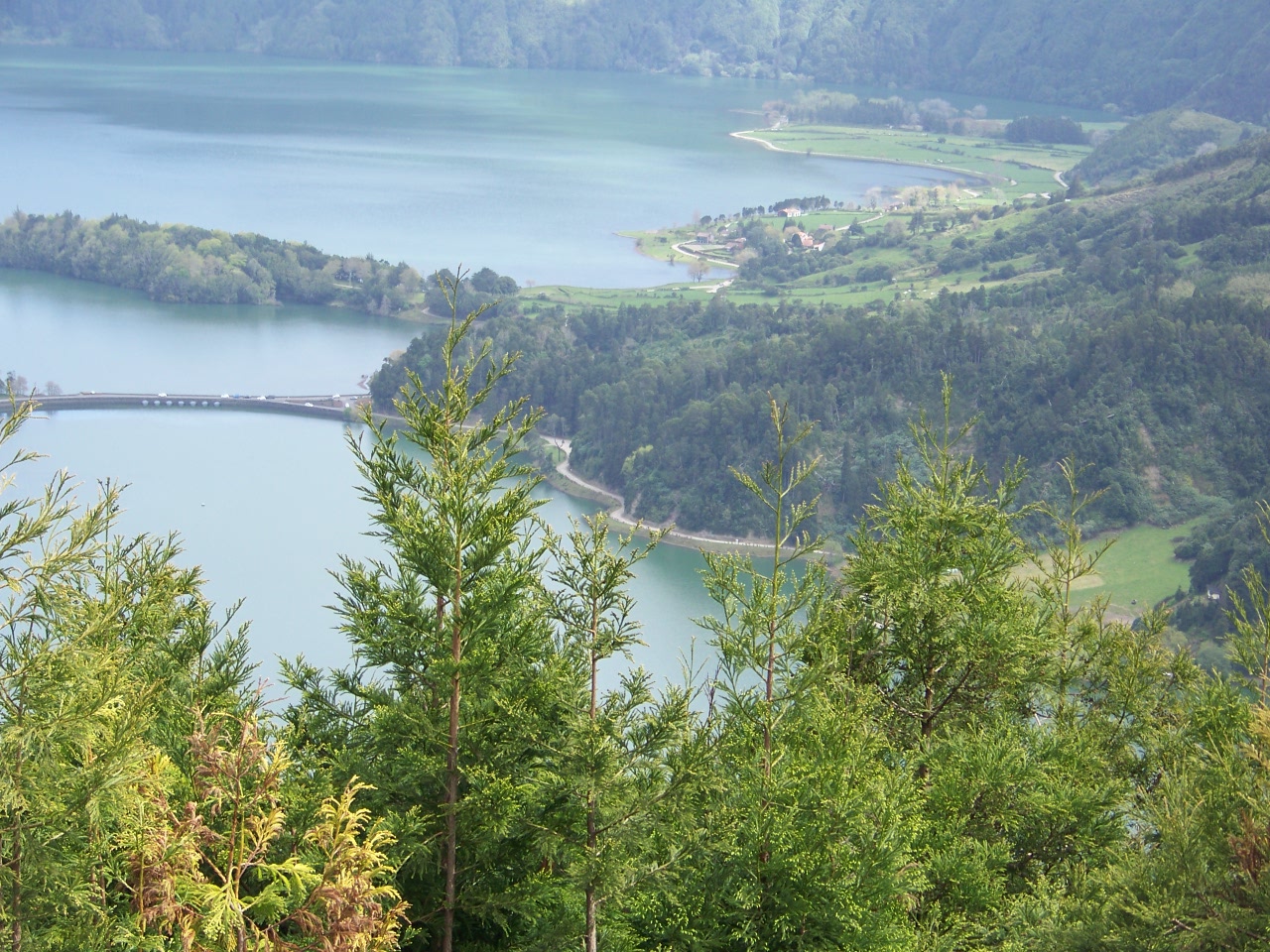
We kept busy, but we relaxed completely, interspersing long beach strolls and walks along cobblestone streets with short excursions to the market and a day trip to Sete Cidades at the far end of Sao Miquel Island. We drove winding switchbacks to the rim of the now quiet volcano, and marveled at the sight of twin pristine lakes, one blue, one green, that fill the caldera. There are numerous hiking trails, with plenty of scenic overlooks for photo ops.
We acted as “traffic cops” when a mama duck and her brood strolled through a lakeside parking lot, and we stopped to gaze in awe at an abandoned structure. Now covered in graffiti and spreading greenery, it must have once been an architectural gem. We never learned its history.
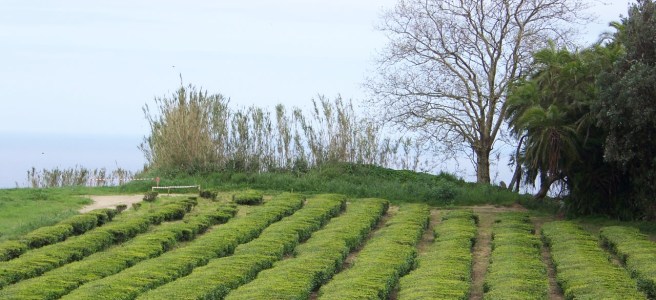
Another day we visited another shore, thoroughly enjoying a leisurely excursion to Cha Gorreana in Ribeira Grande. Family-owned and operated since 1883, the only surviving tea plantation in all of Europe is still farmed and harvested by time-honored methods, completely organic and pesticide-free. The tour and tea samples were free of charge, and we lingered at the site.
The story of how tea farming came to the Azores is fascinating, affirming that a volcanic island in the North Atlantic was a well-known destination to voyagers from the Orient and India, and by dealers in exotic spices and fruit, long before any of us might have guessed. Tea plantations arrived later, however. The tea harvest and processing is still done by hand, labor-intensive and a labor of love, as well as a booming business. Both black and green teas are wonderful.
A simple question . . .
“Meat or fish?” the proprietor asked, after he had brought our wine to a table perfectly situated near balcony windows, open just enough to let a light breeze waft through.
We chose fish, but the meat platter served to nearby diners looked equally tempting.
We had stumbled, quite by accident, upon Fim de Seculo Restaurante in the heart of Maia, a coastal village not far from the tea plantation. We had hoped for a quiet late lunch in a cafe along the shore, but instead we found this charming upstairs dining room, accessed via the outdoor patio and ground floor bar, complete with blue and white tile murals, white linen tablecloths and a dark wooden staircase that has borne its share of footsteps over the years.
This was to be a leisurely lunch, punctuated with laughter, good wine and interesting conversation with the proprietor and his daughter, who, we learned, had just graduated with a degree in hospitality management. It ended on a sweet note: a platter of freshly-sliced Azorean pineapple, perfect in its simplicity.
We will not soon forget the experience, and we did not eat again that day!
Three days on this island only whetted our appetite. A twist of scheduling became a highlight of our trip. We boarded our flight to Lisbon with a twinge of regret, at the same time looking forward to a planned cork forest tour and some highly-anticipated beach time on the mainland, in addition to more good food in faraway places.
They may not actually have much in common, but there is a common thread — Salt constitutes a ribbon of continuity from ancient times to the present, and beyond. It is essential for life. Luckily, salt in its various forms is abundant on earth. Processing techniques have been employed for millennia, and salt as a commodity was once prized as much by nations as by individuals.
Today, the love of salt extends to specialty varieties, including Himalayan sea salt, black salt, Celtic salt, smoked salt, and rare, expensive Fleur de Sel from Brittany, among others. Every type of salt has its dedicated advocates.
But who knew that pretzel salt comes from a small East Texas town?
It’s true. Every pretzel consumed all across the United States has salt crystals extracted from the massive salt dome situated deep below the Texas prairie about 75 miles east of Dallas.
Salty Travels and Tales
I had heard of Grand Saline, but I never — ever — gave its name much thought until I learned last year that it has been the home of a Morton Salt mine for nearly a century.
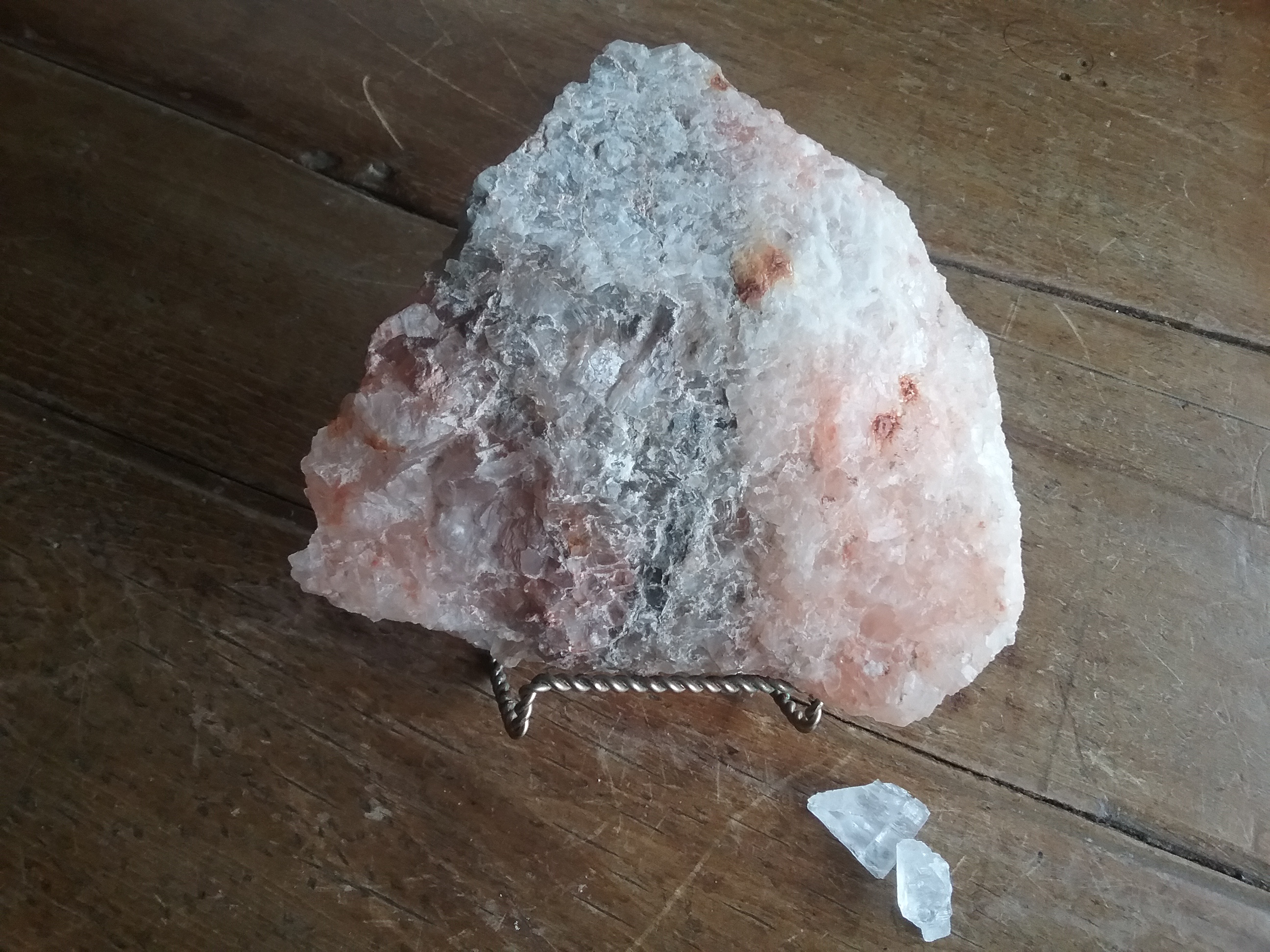
In the mid-1990s, I had the privilege of visiting the planned nuclear waste repository (WIPP Site) near Carlsbad, N.M., prior to the time it received its first shipment of radioactive waste. I treasure a large chunk of salt that I brought up from that salt cavern almost half a mile underground. Now I also have two small rock salt crystals extracted from below the earth’s crust in Texas. They are much harder; and they are clear.
I also remember sailing around Salt Island, in the British Virgin Islands. My companions and I didn’t dive the wreck of the Rhone, nor did we step ashore on the island, but we were enthralled to learn that current inhabitants still pay an annual rent to the Queen — a one-pound bag of salt. Traditions die hard!
Then, just a year or so ago, I visited Ston, a small town in Croatia, where salt has been harvested from the shore of the Adriatic for centuries. Of course, I brought home a bag of Croatian salt. I regularly buy unusual salts at the grocery store. We enjoy cooking with them, and sampling the various textures and flavors.
In addition, my husband and I were recently gifted with a beautiful book, “Salt,” by Mark Bitterman, along with a Himalayan salt slab, designed for grilling; it is supposed to embue meats and vegetables with natural salty flavor. We are eager to test it!
So, it was with a sense of expectation that we took a day trip recently to Grand Saline. Its history extends back in time to about 800 BC, when the local Caddo Indians collected salt from surface marshes. Those same drying flats supplied Confederate soldiers with salt during the Civil War.
The salt flats still exist on the mine property, but are no longer publicly accessible. But evaporative salt is still processed in much the same way, although on a much larger scale than formerly.
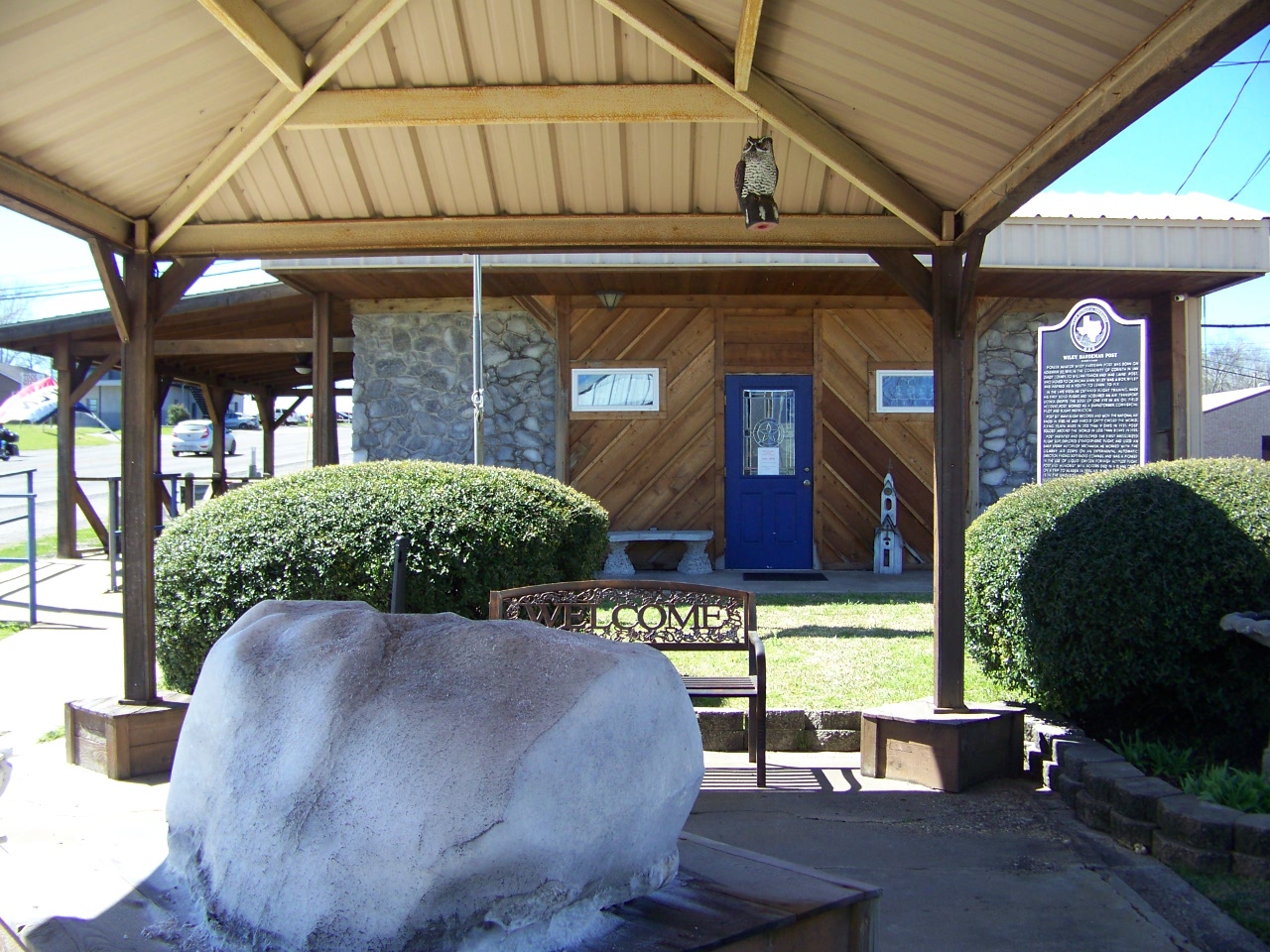
To my disappointment, tours of the mine itself were discontinued, because of federal (OSHA) safety regulations, in the 1960s, but visitors to Grand Saline can learn the history of the mine through exhibits and a 14-minute video at the Salt Palace, a funky little building right in the heart of town. It actually boasts salt block siding, but licking it is not really encouraged!
About that Pretzel Salt
The underground salt dome, said to extend downward at least 20,000 feet from the surface, is vast. It is said that this single salt deposit could supply this country’s needs for many thousands of years. At a level 750 feet below the surface, where mining operations take place today, the salt dome measures approximately 1.5 miles in diameter. The “mother bed” of salt is said to be a remnant of an ancient sea. Underground temperature is a constant 75 degrees.
Each underground salt “room” is about 75 feet wide and 25 feet high, with solid salt pillars for support that measure 130 feet square. Future expansion will enlarge existing rooms to 75 feet in height from floor to roof. Trucks and all mining equipment are brought from the surface in pieces and reassembled in the mine. Approximately 100 miles of roadway wind through the caverns, and mining operations continue underground 24 hours a day, seven days a week.
The salt deposits are 98.5% pure NaCl. Grand Saline is one of only two Morton Salt plants to produce both rock salt and evaporated salt; it produces all major grades of evaporated salt, including dendritic (flaked) salt, and is the company’s sole producer of shaker products and salt substitute potassium chloride.
Salt, of course, is not just for eating. Because of its purity, the salt extracted from the Grand Saline mine is also earmarked for pharmaceutical use. Salt is, after all, salt — but what is taken from the earth at Grand Saline mine is deemed unsuitable for most industrial uses because it is too pure. Although it could be used to melt snow, that would, in effect, seem wasteful!
Our visit to the Salt Palace was enlightening. Poking around Grand Saline on a beautiful early spring day was pleasant, although there’s not much there other than the Salt Palace. But it’s an easy day trip from Dallas or Fort Worth, and it’s always fun to get out on the back roads; you never know what you might find!
I will never again take salt for granted, but will instead savor the many varieties that are available. And, for sure, I’ll continue to collect salty stories.


































 on lonely beaches, long lunches with accompanying local beer or wine, and lazy afternoons with our books, sometimes interspersed with naps. Even though early dawn light was beautiful, we felt no compunction to be overly active early each morning.







 operations take place today, the salt dome measures approximately 1.5 miles in diameter. The “mother bed” of salt is said to be a remnant of an ancient sea. Underground temperature is a constant 75 degrees.
 Good Food and Faraway Places