Time to Refresh and Renew

Cruising vacations are all about what you make them.

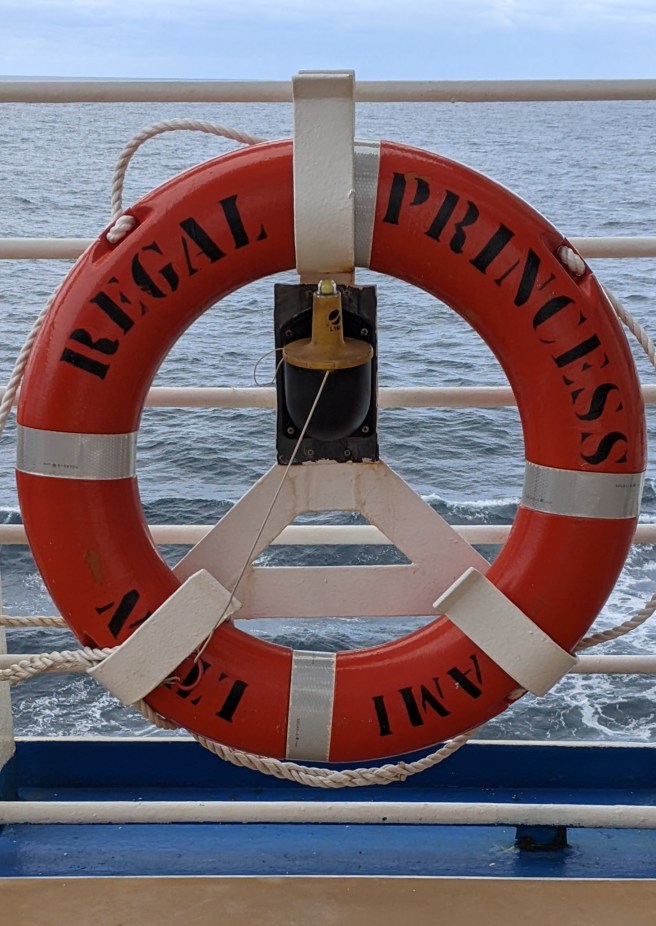
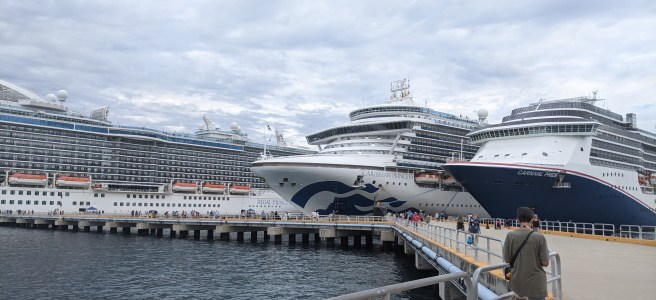
Early in 2024, my husband and I booked a week-long cruise aboard Regal Princess, sailing out of Galveston, Texas. At the end of January we were looking for sun and warmth, a day or two of beach time, and serious relaxation. We found all that and more. Much more, in fact. In addition to bounteous food and entertainment aboard the ship, we booked three port excursions. Two of them were distinctive because they involved both food and cultural insights.

We went to escape the cold days and dreary skies of home; and we returned home with “adjusted attitudes,” looking forward to the early signs of spring . We knew it would be a while till longer, warmer days were upon us, but we felt ready to await the change of seasons after our brief hiatus.

I’ll be writing about all three of the ports — Costa Maya, Roatan, and Cozumel — over the next two weeks. Follow me now to receive a notification about those posts.

As much as we enjoy all types of travel, there is little that trumps an opportunity to spend a few days at sea. It’s not about the destinations. We are “old salts,” who for many years spent as much time as possible aboard our personal cruising motoryacht. The world’s seas still call to us. But now, we let other captains take the helms.
And the Regal? Oh, Yes

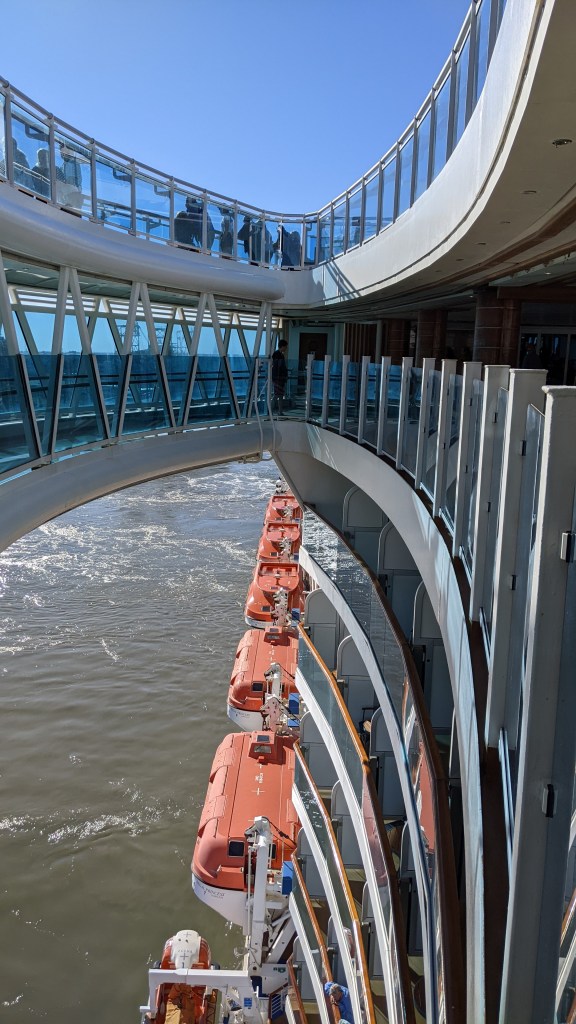
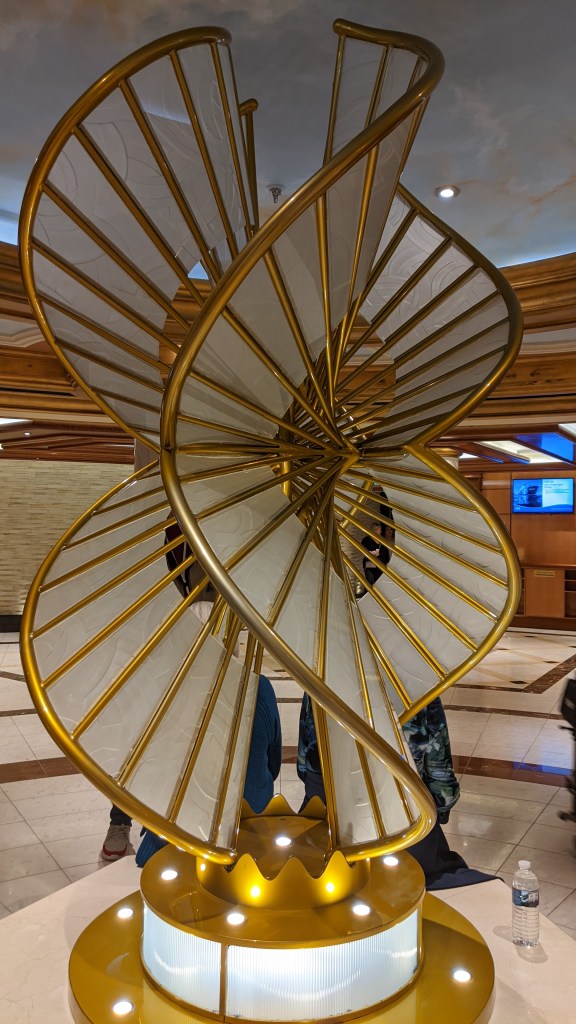
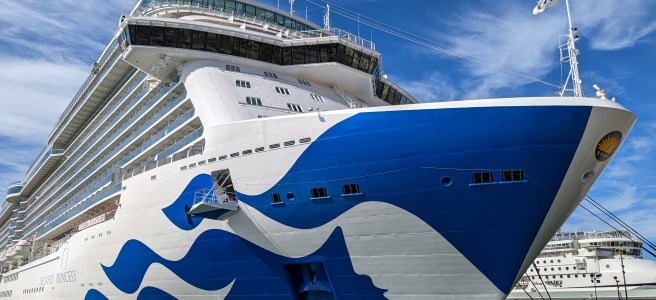
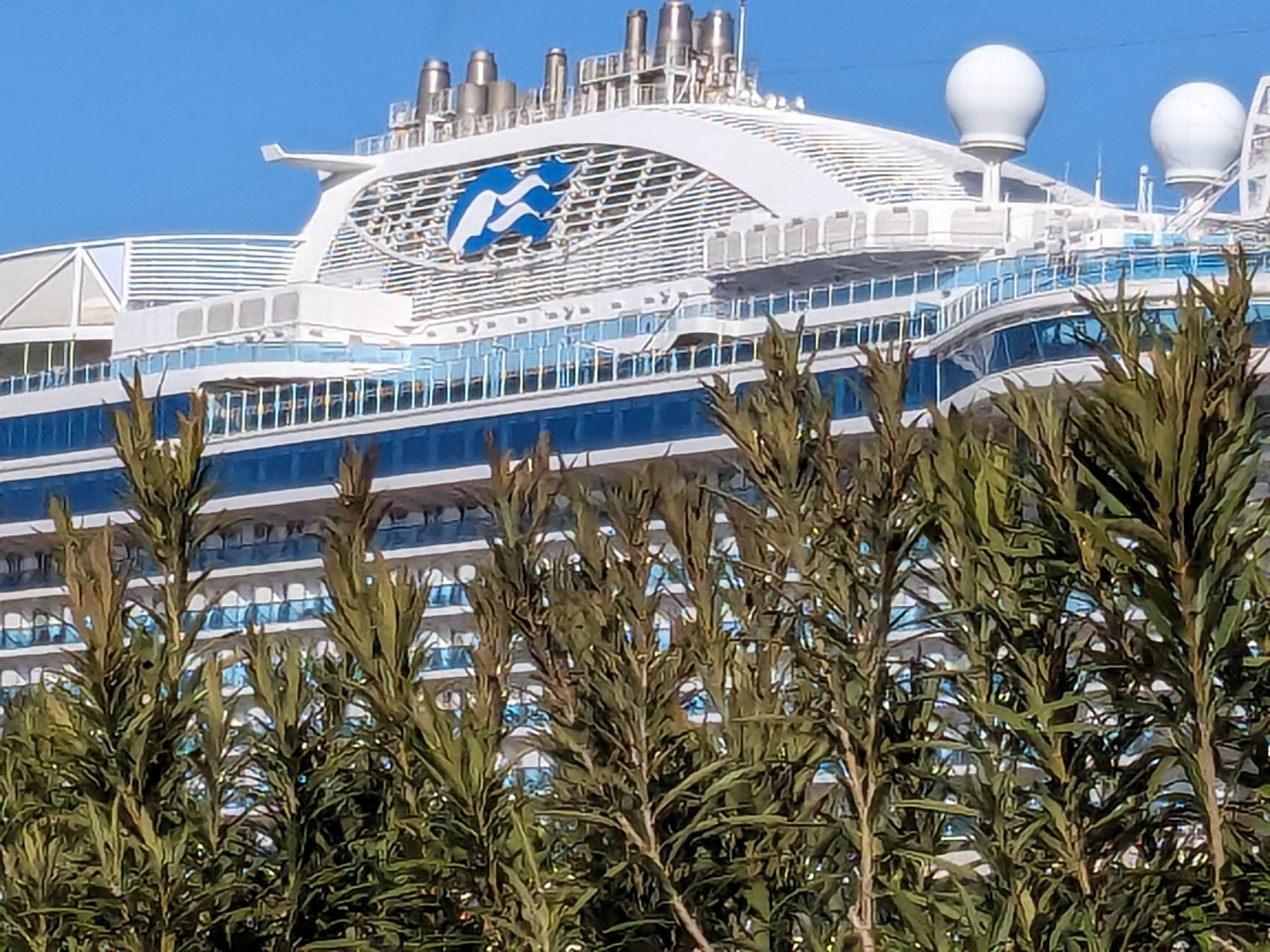
Regal Princess is an elegant vessel, christened in 2014 by the original cast of “The Love Boat.” She is large and impressive with a maximum passenger capacity of 3560, a crew of 1346, and 19 decks. But, because of the design, there are intimate spaces both on deck and indoors where one can find comfortable seating and quiet surroundings. Public spaces are well-proportioned; in our experience, the ship never felt uncomfortably loud or crowded. We, however, could retreat to our private balcony had we wanted time to relax, read, or simply watch the sea drift by. As with all modern cruise ships, there are multiple pool areas, restaurants, lounges, gathering spaces, and enough activities to keep people busy from early morning to late at night.

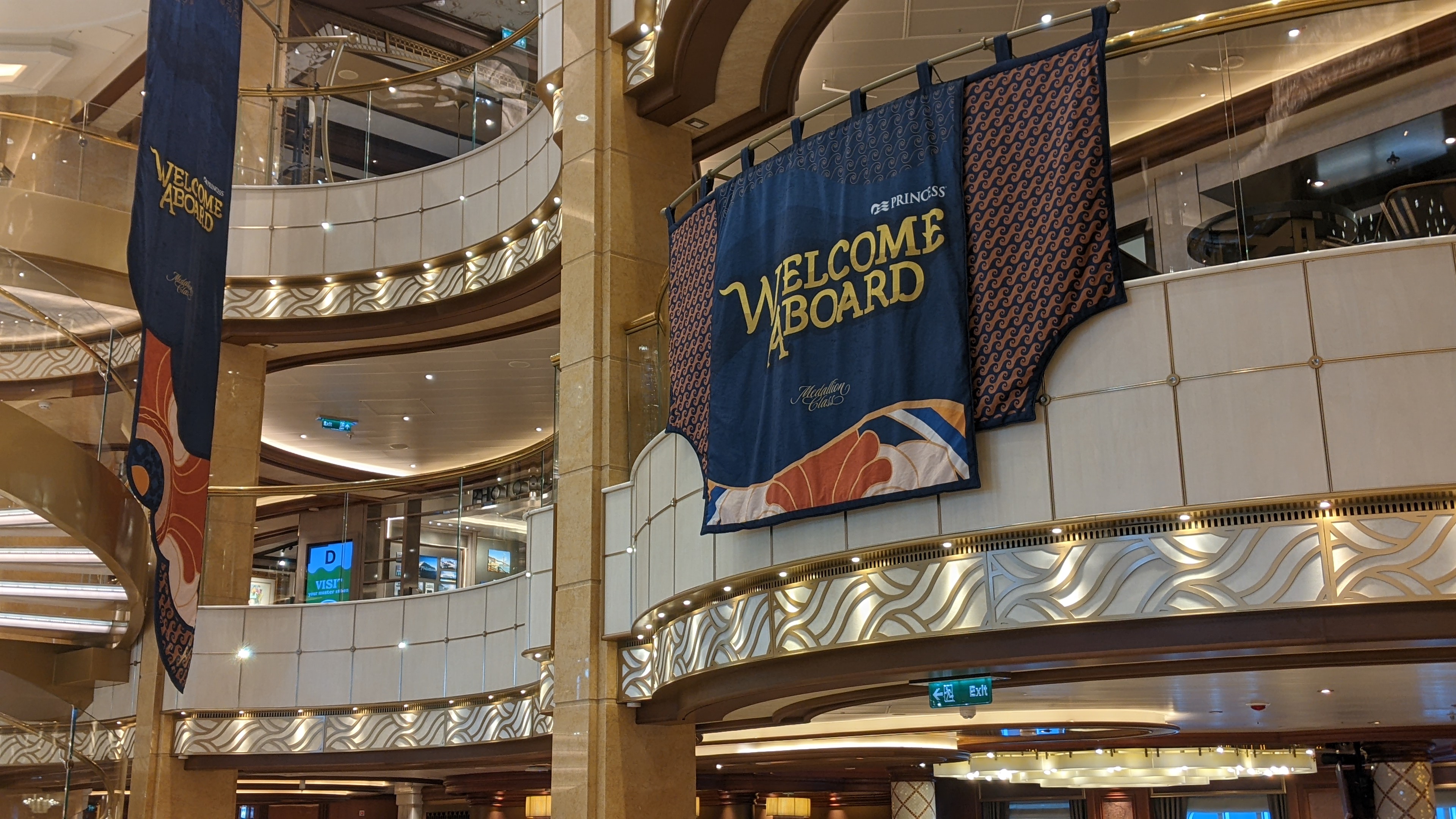
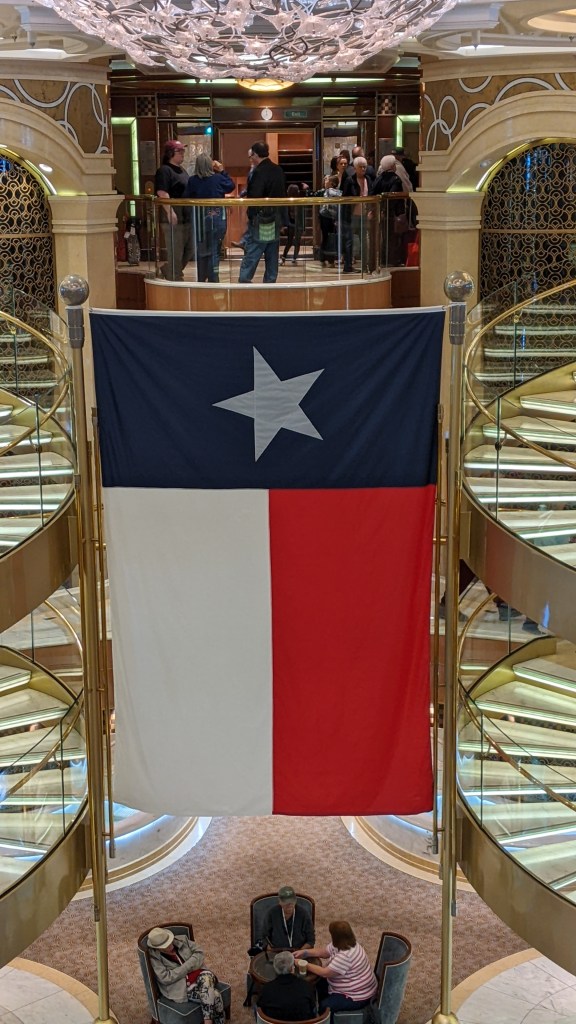
Ours was a short cruise, on an itinerary we had traveled previously. We disembarked at each port, but we thoroughly enjoy the sea days, and have, on previous cruises, remained aboard even while in port. We appreciate the classic lines on the ship, and the familiar public spaces that characterize the ships of the fleet. Princess is one of our favorite cruise lines, so we are familiar with most of the line’s standard offerings, but the Regal has at least a couple of unique features. One is the interior balcony overlooking the casino — it’s possible to watch the action without actually being a part of it!
Food, Wine, Spirits, and Entertainment

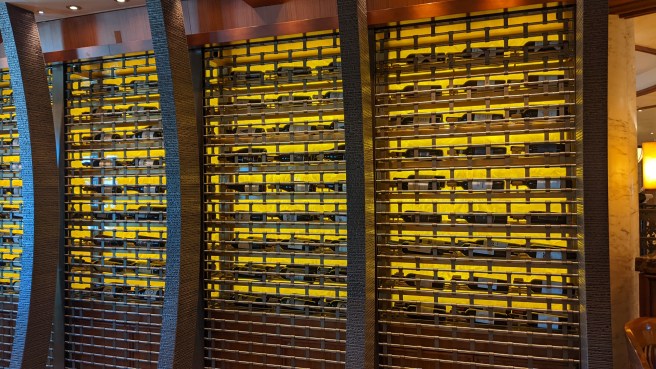
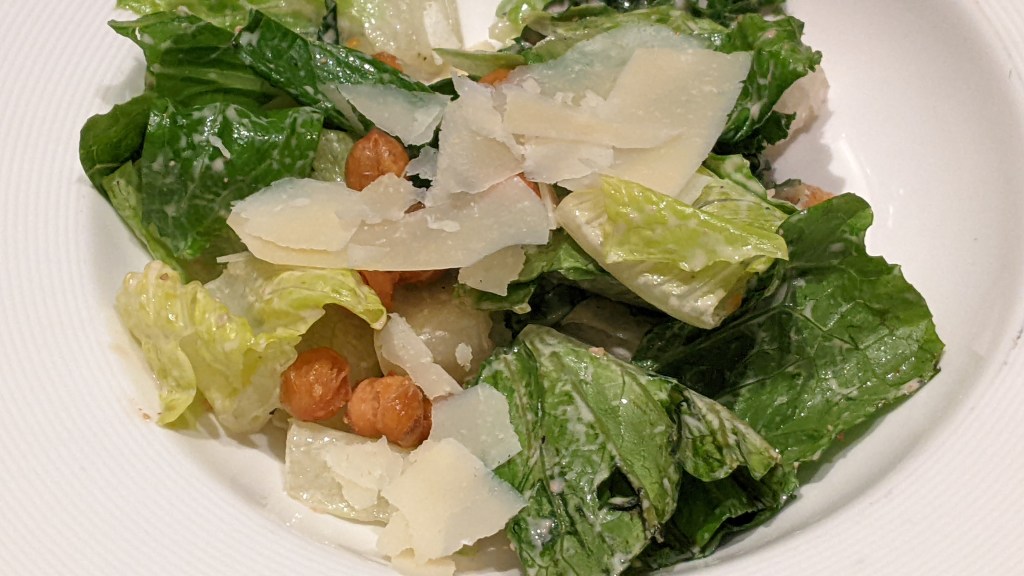
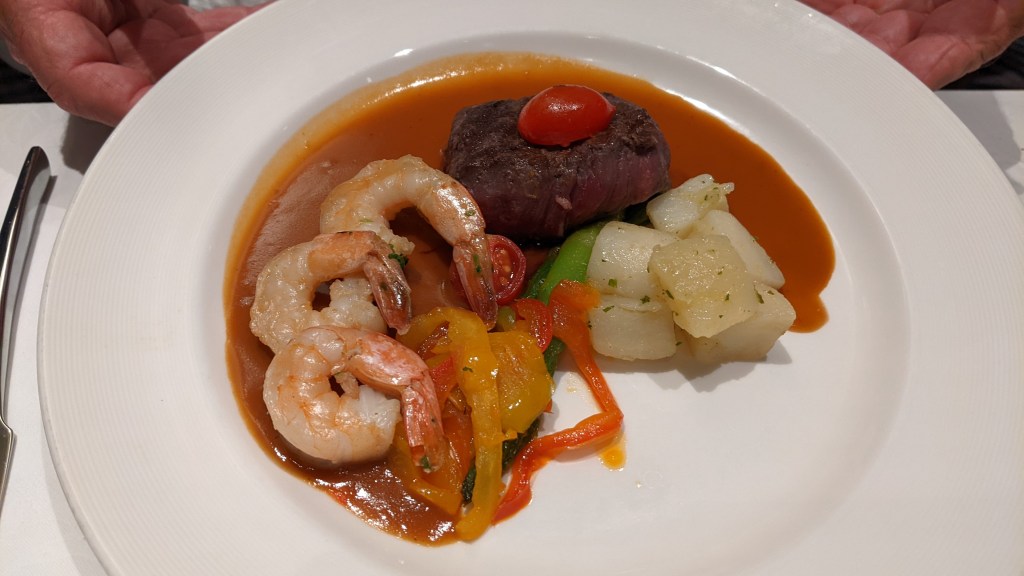
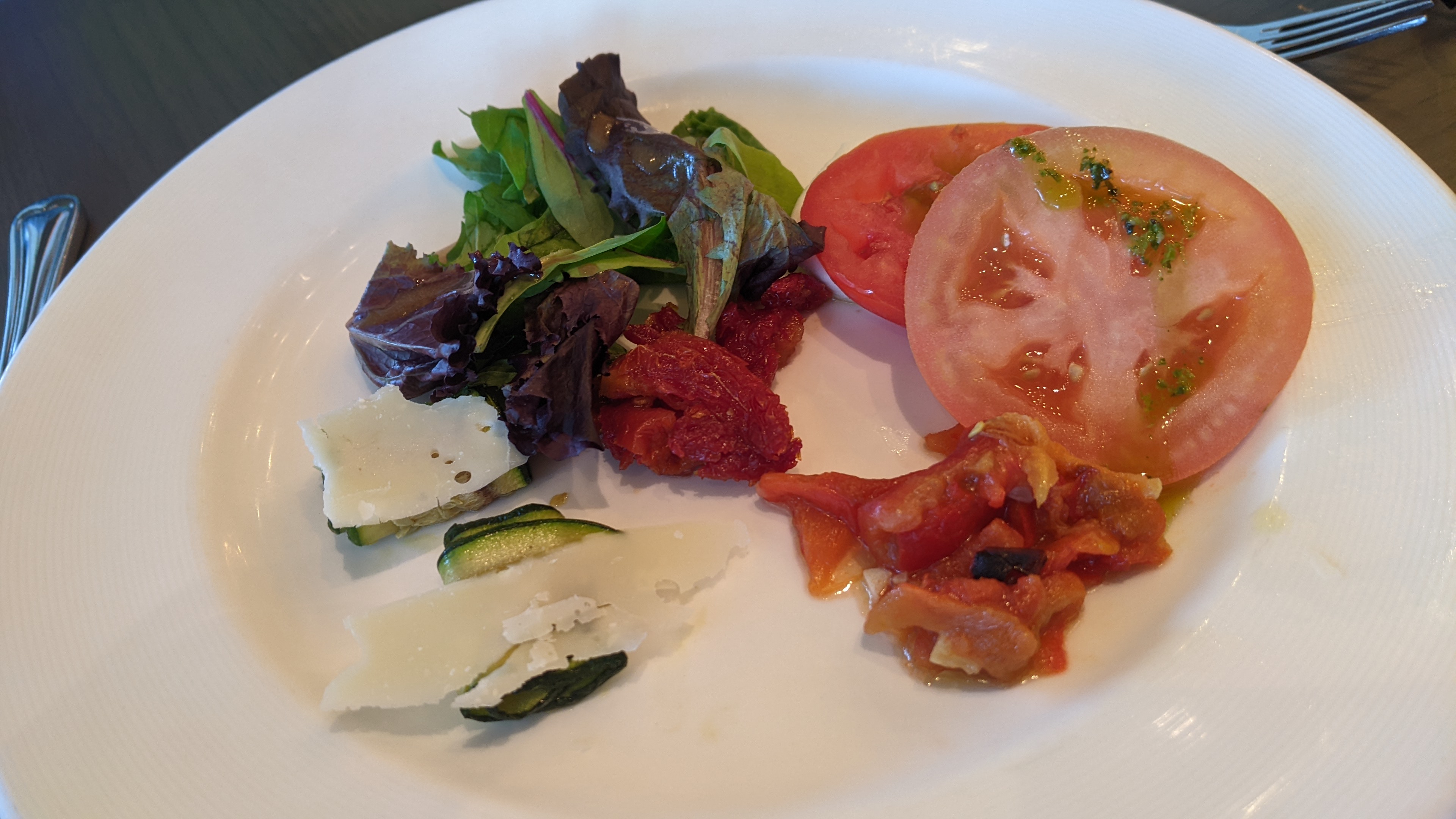
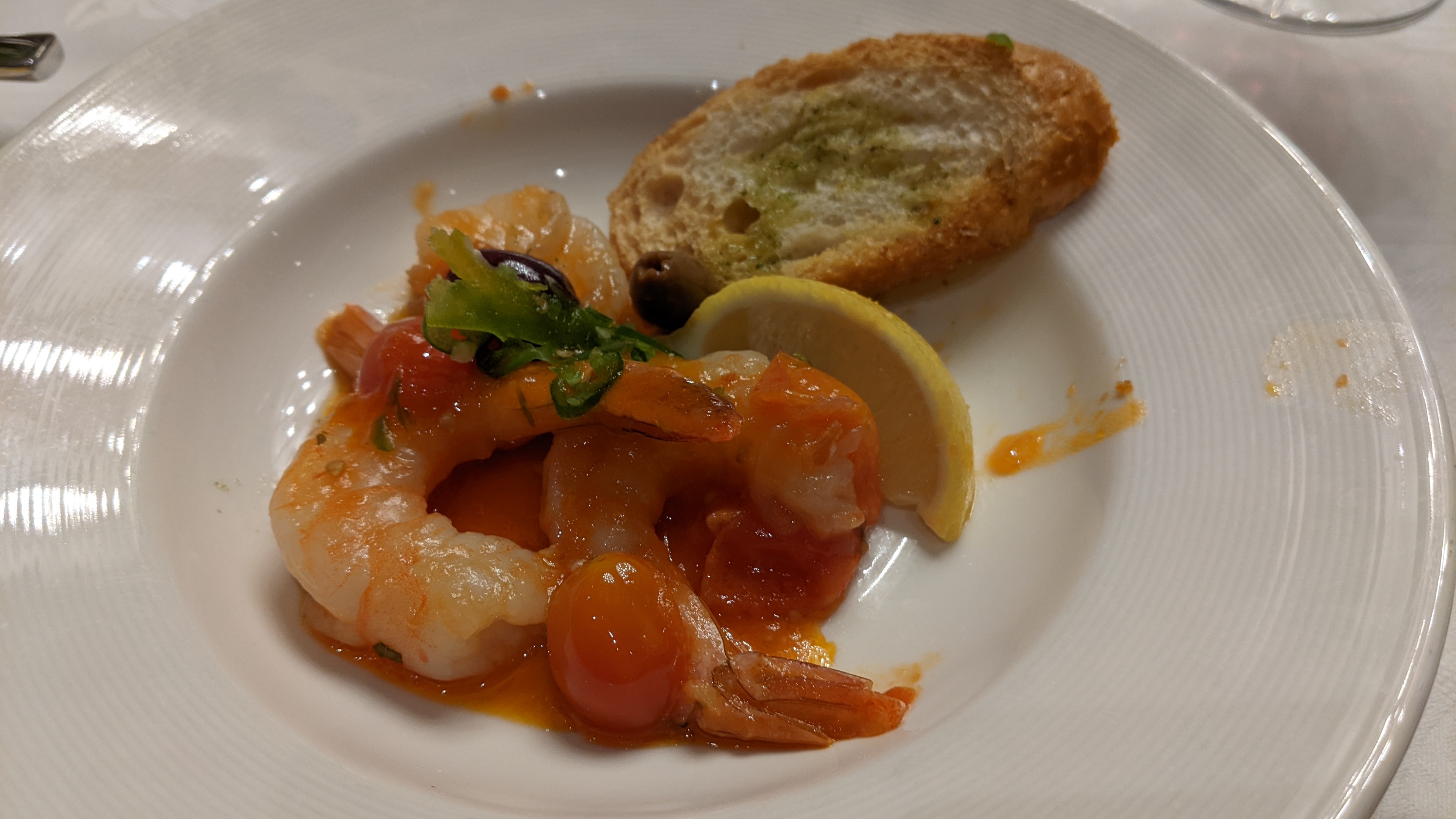
As on all Princess cruises, the food is an experience, whether you choose to eat every meal in one of the dining rooms or opt for the World Marketplace Buffet. You can also eat and snack your way through the day at multiple other onboard venues like Alfredo’s Pizza, the International Cafe, Gelato, or the Ocean Terrace Seafood Bar. Superb specialty restaurants — Crown Grill Steakhouse or Sabatini’s — are also available.

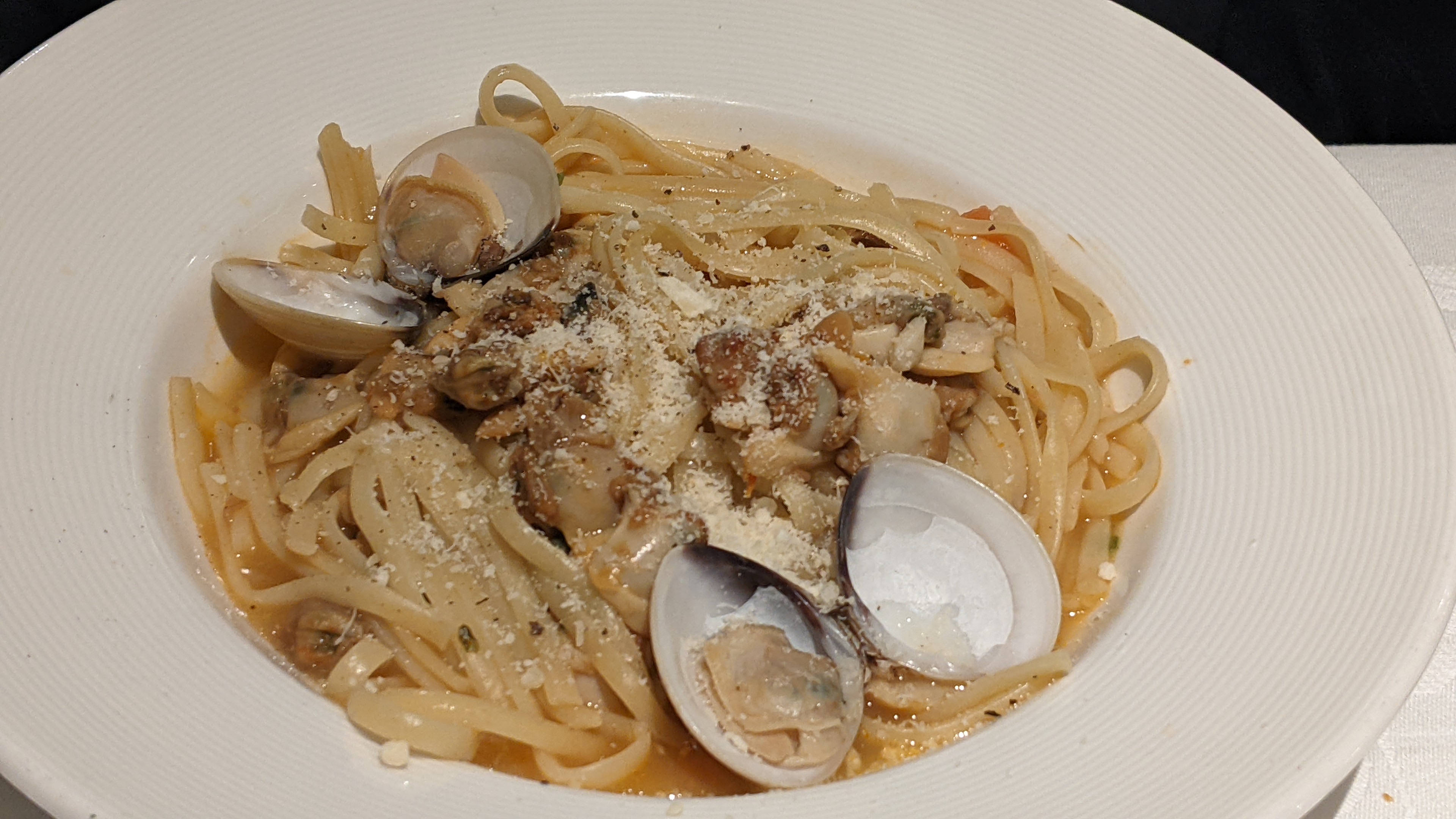
We chose one of the three main dining rooms for each of our dinners, and some of our lunches, aboard Regal Princess, but we also visited the extensive Deck 16 buffet several times for brunch or lunch — and we sometimes snagged cookies and fruit to consume later in our cabin — I find the oatmeal cookies irresistible!

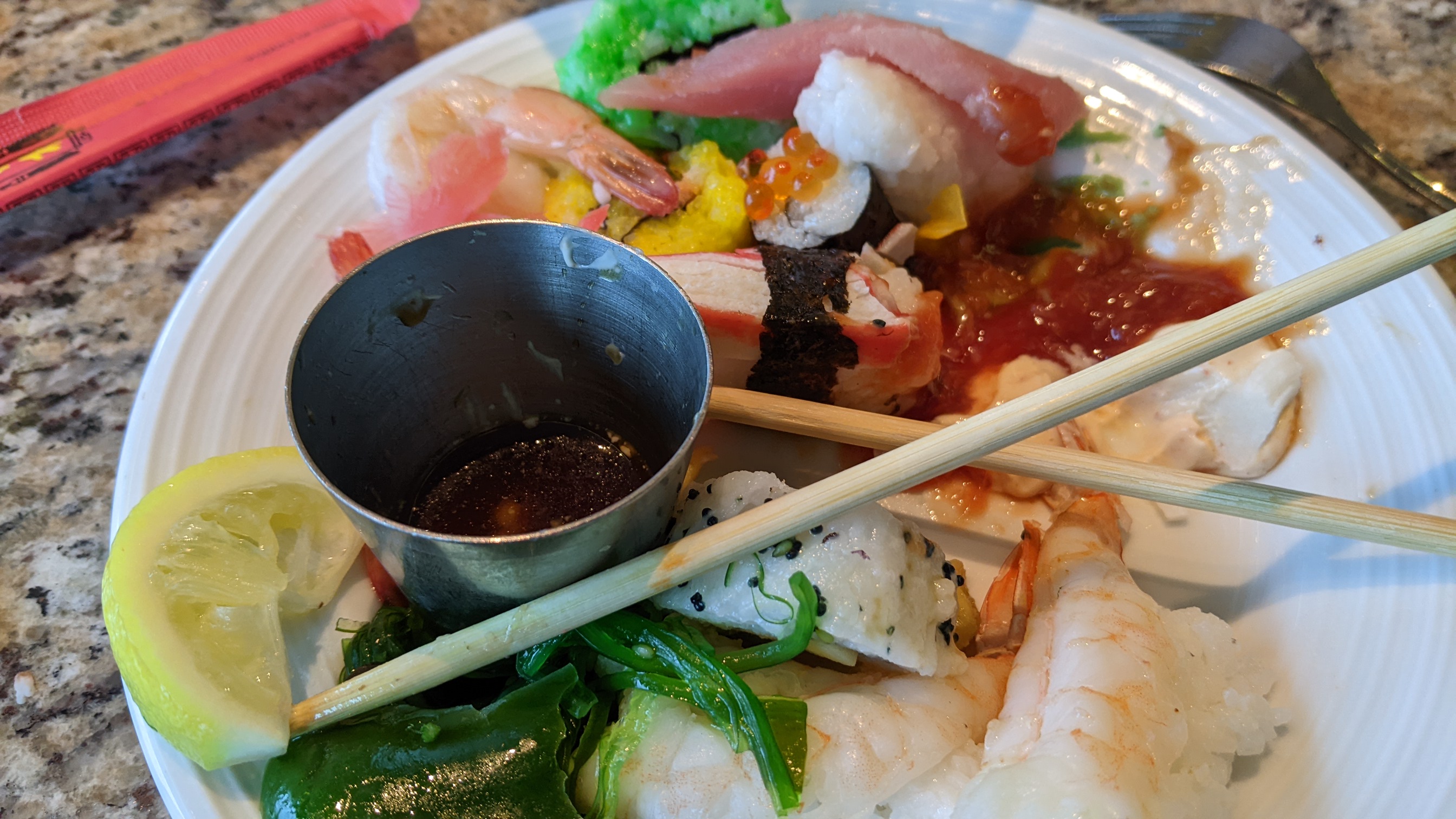
A spectacular feature aboard Regal one day on this cruise was a midday sushi buffet — What a feast!

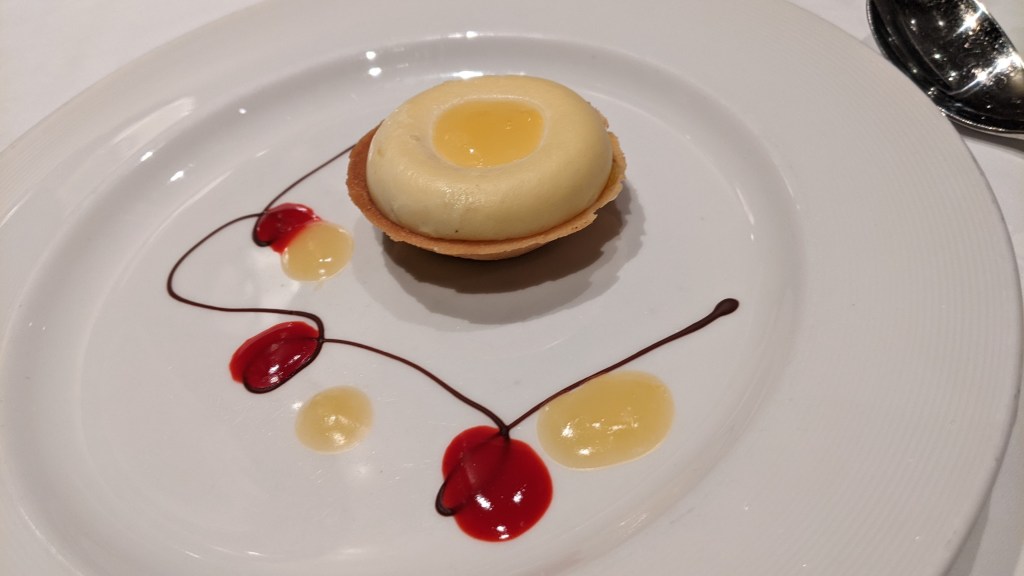
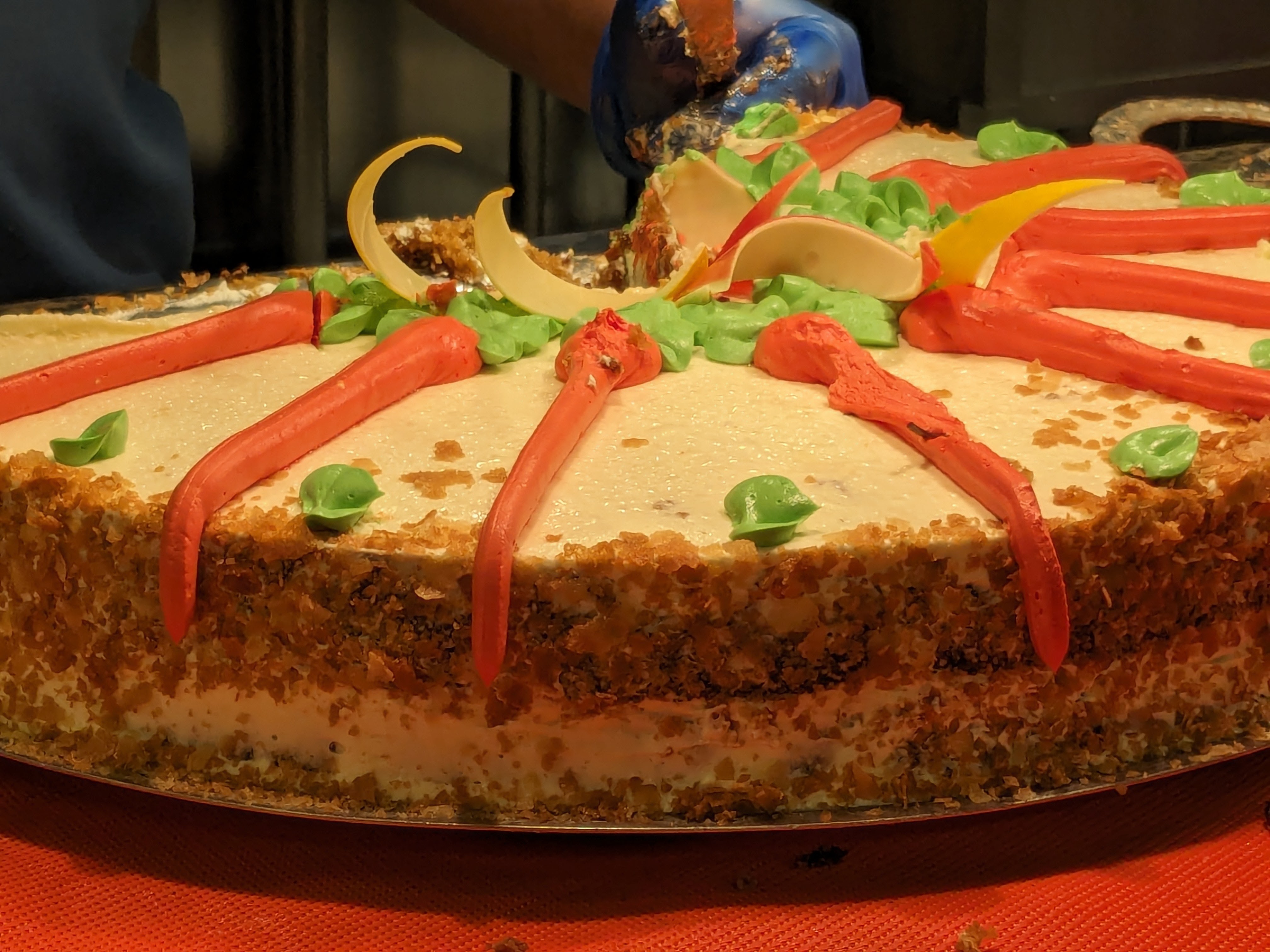
And the desserts! Need we say more?
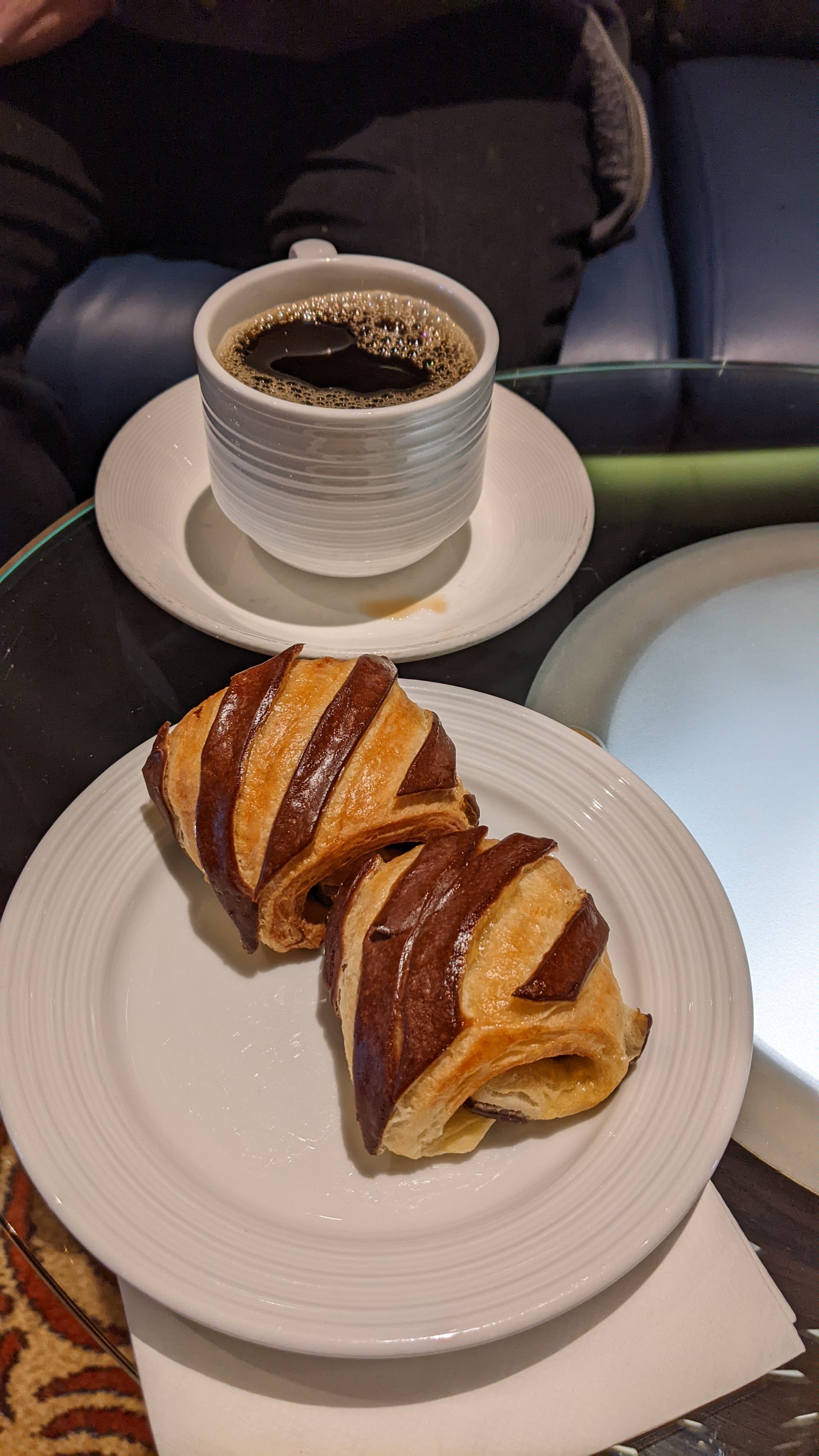
One of our favorite cruise traditions is to order a light breakfast, usually croissants, fruit, and coffee, delivered to our stateroom each morning. It’s a pampering, relaxing way to begin the day and a tradition we can’t seem to break. But why would we want to? But that didn’t mean we didn’t find other places aboard to enjoy breakfast and coffee.

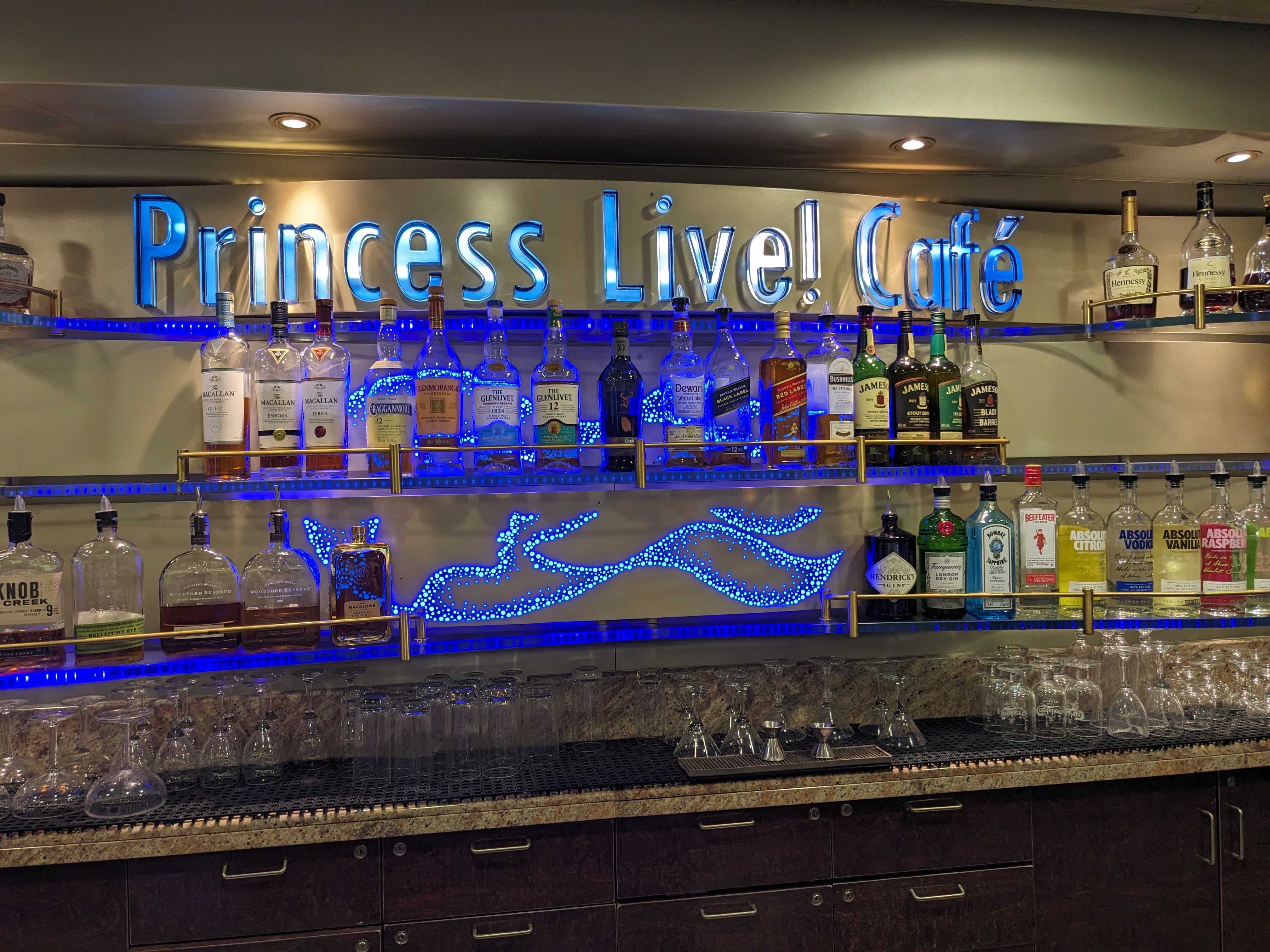
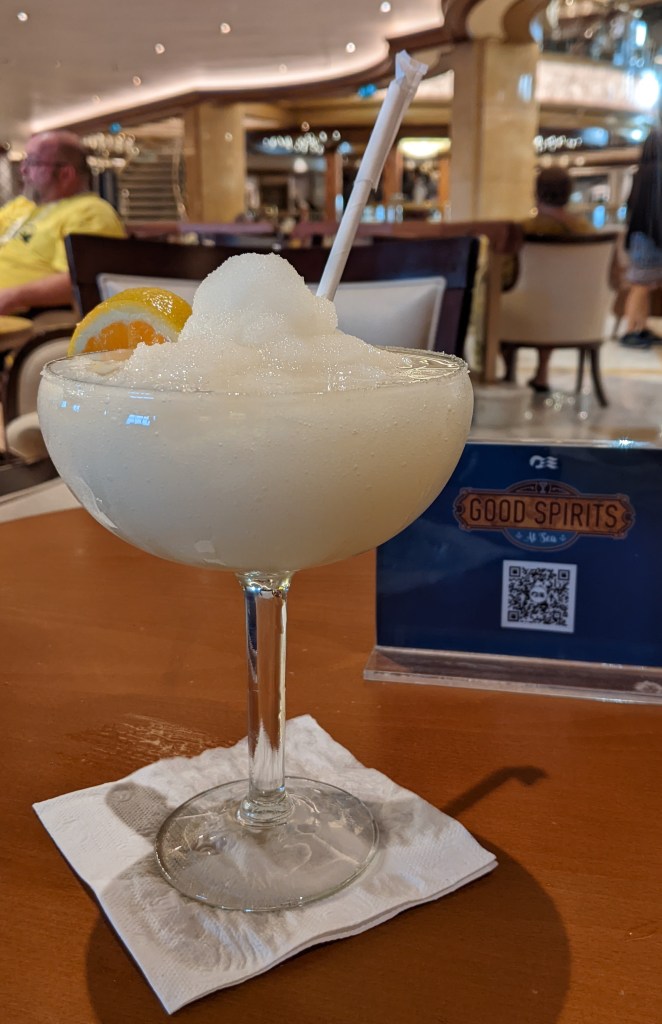
We visited the International Cafe in the Piazza for occasional snacks and specialty coffees. We also enjoyed meeting other passengers, sharing stories, and listening to music in several distinctive cocktail lounges aboard this ship.

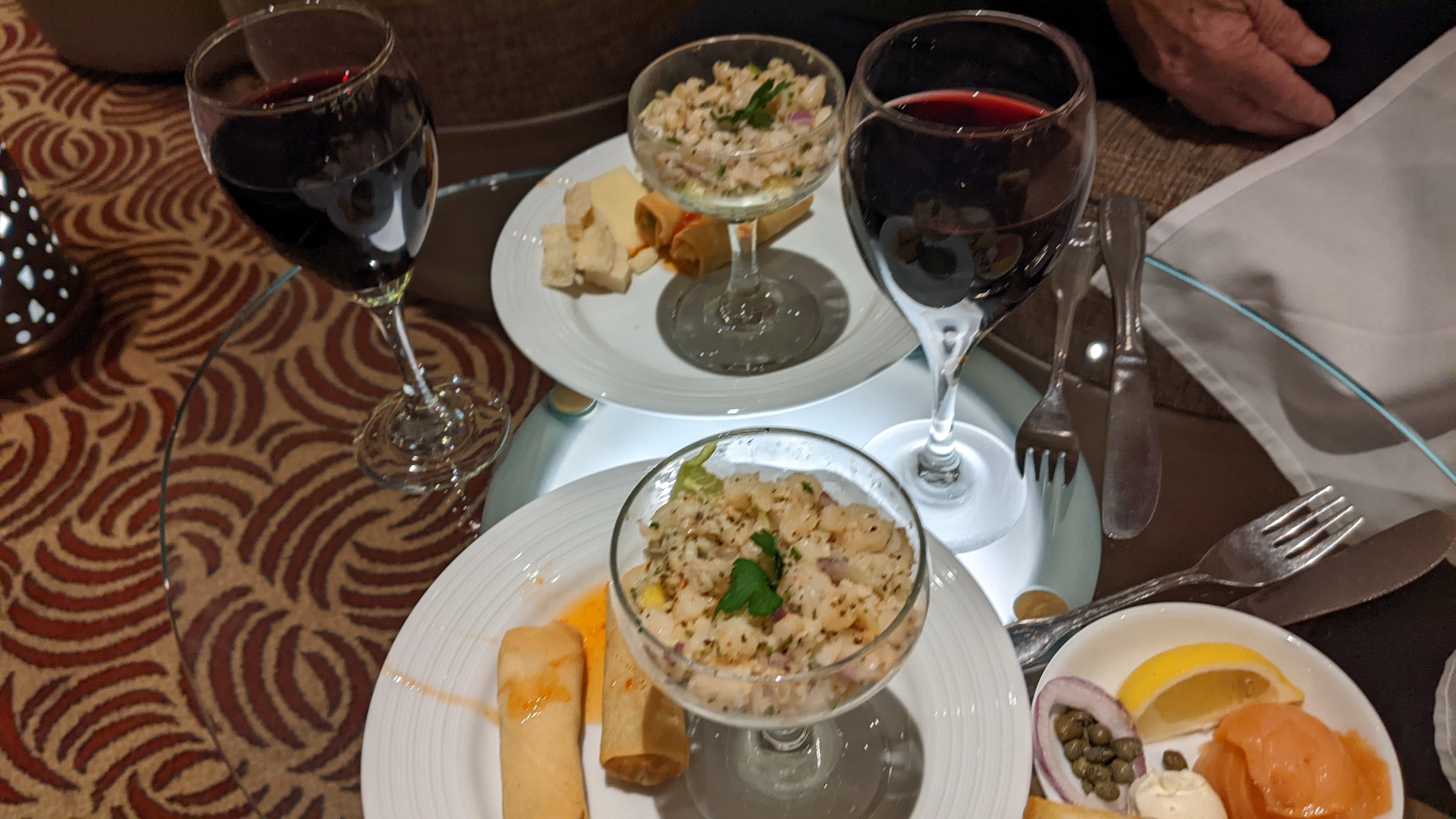
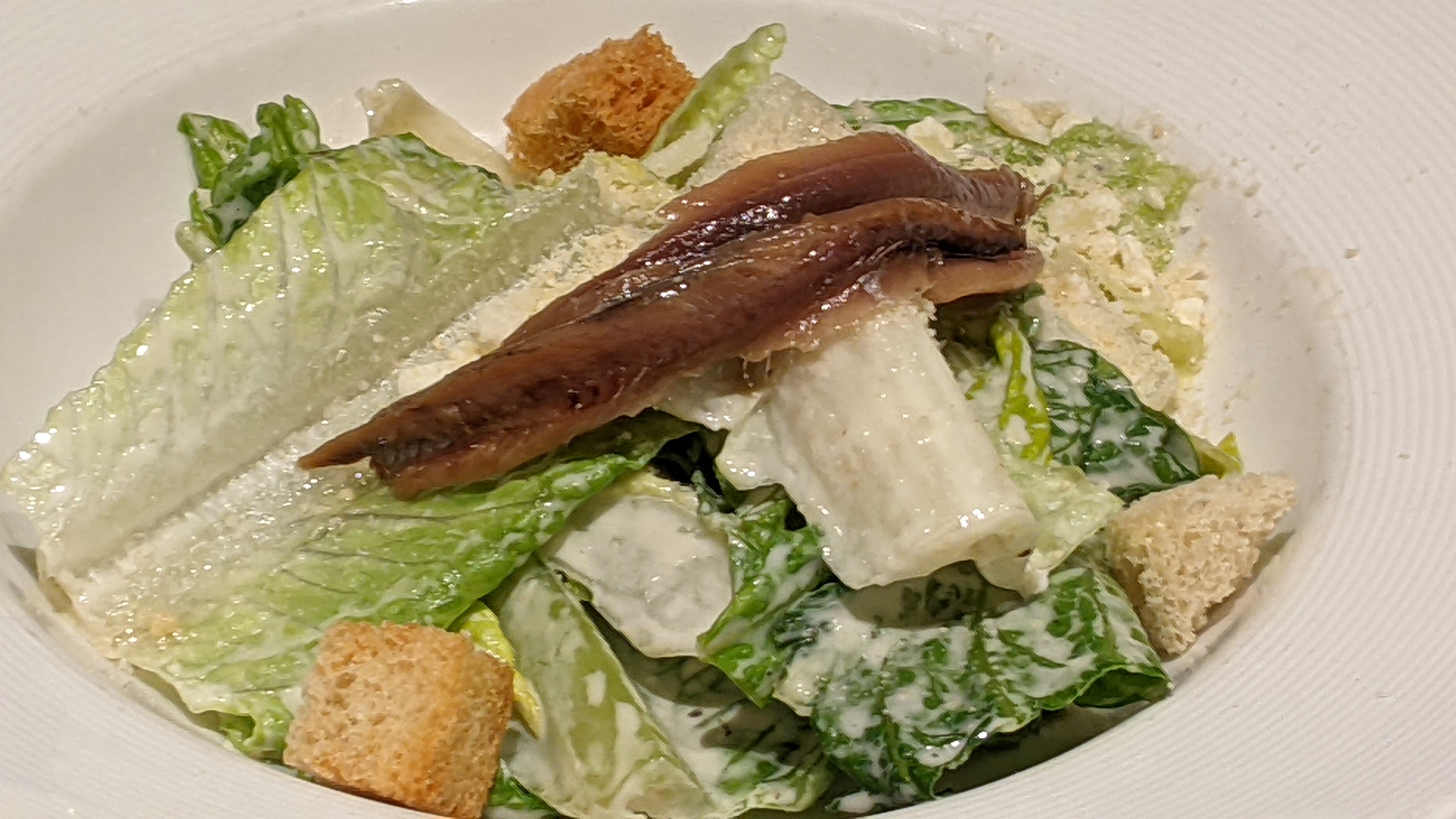
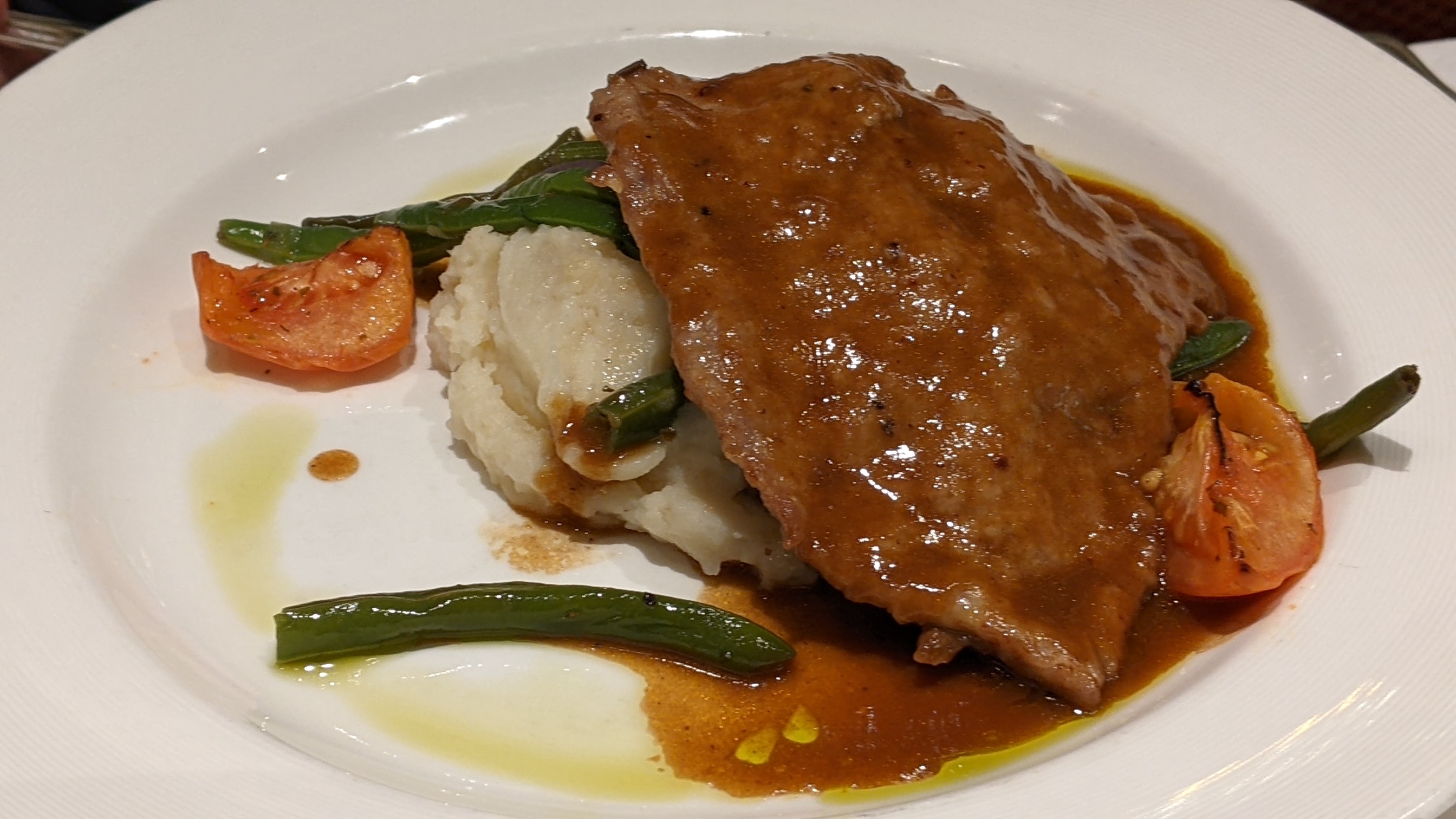
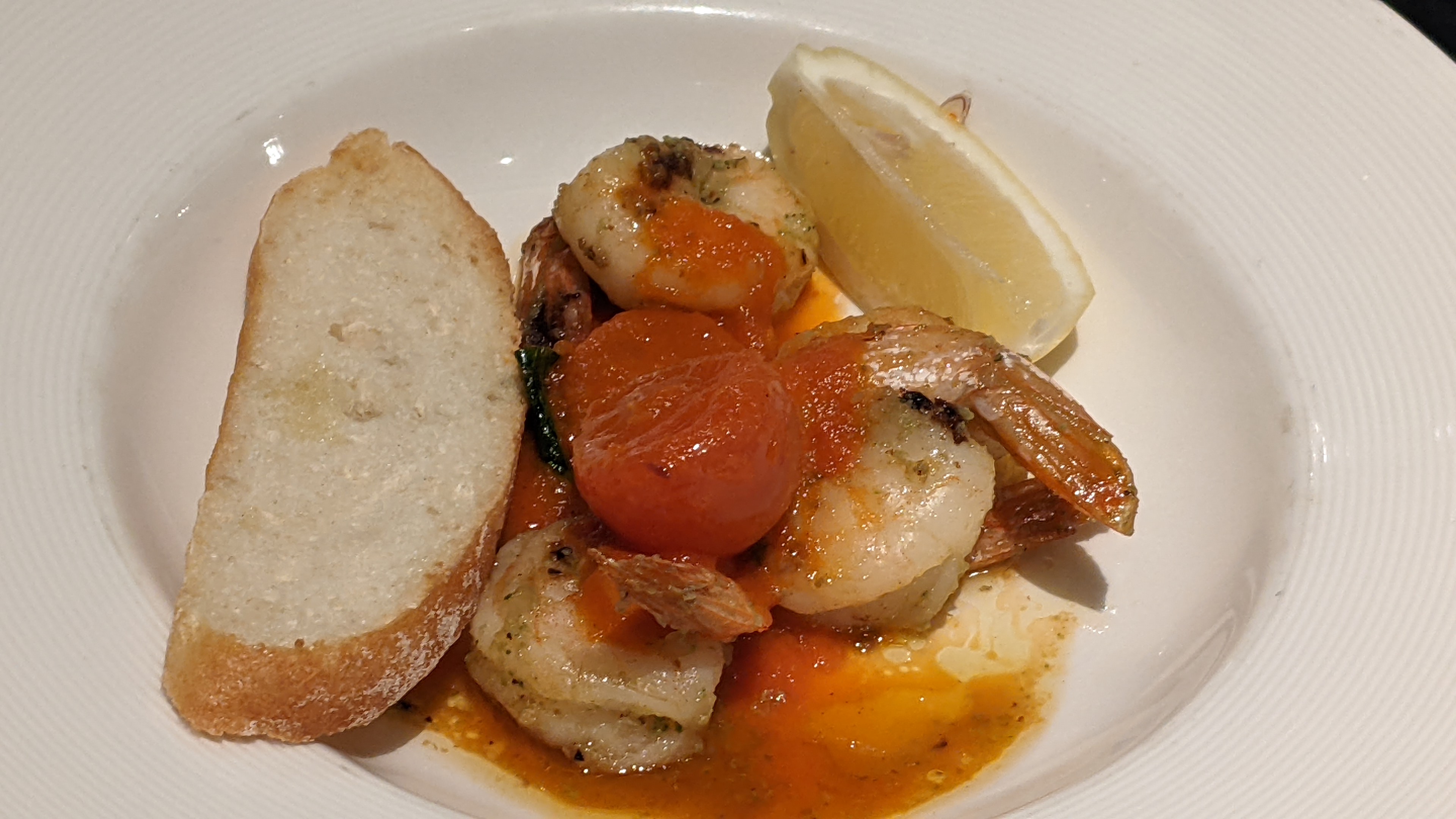
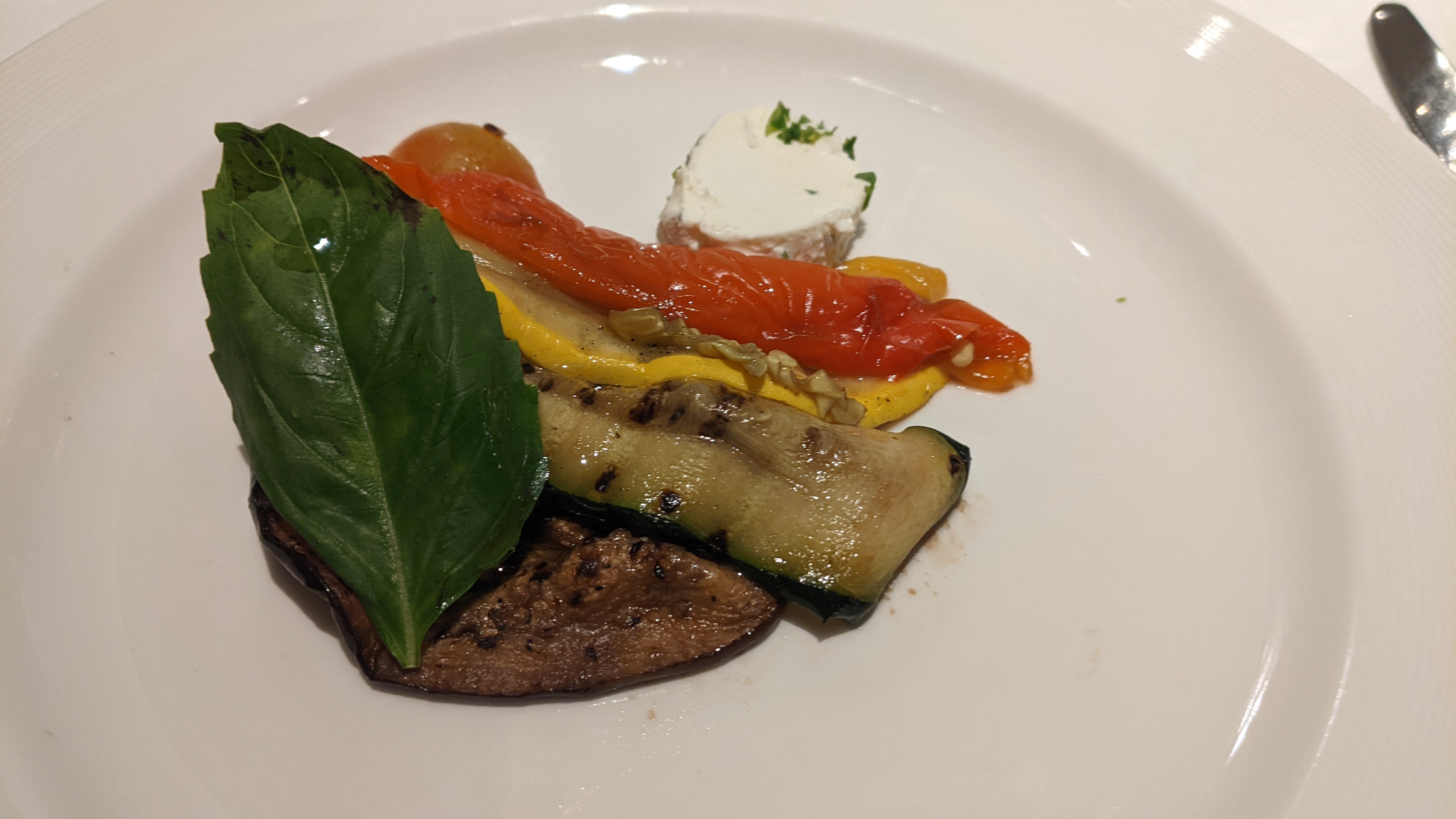
On this voyage, for some reason, dinner menu options were a bit “thinner” than we had expected but choices and portions were certainly ample. Service at times seemed slightly disorganized or rushed, and the visual presentation of some dishes was below the standard we have come to expect and appreciate from our times aboard other ships in the fleet. However, that’s a passing observation and certainly did not measurably detract from our onboard experience. We ate very well in each of the main dining rooms, whether for lunch or dinner.
Just one downside note: On other ships in the fleet, my husband has enjoyed visiting the ship’s sauna without a specific reservation or an extra fee. On the Regal, unfortunately, that was not an available option for him.

As always, onboard entertainment is plentiful — game shows, music, shopping, port lectures, dance and exercise classes and evening shows in the theater. And, of course, the casino. My husband picked up the daily Sudoku from the library and puzzled over it as well. And then there are the movies “under the stars” on the open deck, or on stateroom TV.

But, on sea days, just watching the ocean waves and the changing cloud patterns can be entertainment enough, from a lounge on deck, adjacent to one of the open-air bars, or on a private balcony. There was also plenty of opportunity to engage with other passengers in one of the cocktail lounges, enjoy the eclectic musical selections played throughout the ship, or attend one of the special programs scheduled throughout the day. I cannot imagine how anyone could characterize cruising as boring!

Renewing a Previous Acquaintance

We have traveled with Princess enough to have earned loyalty perks, and we enjoy those bonuses. A truly memorable event on this sailing was the Captain’s reception for upper-tier loyalty passengers at which the three “most traveled passengers” aboard were recognized.

On another Princess cruise several years ago, sailing out of the Port of Houston, I was privileged to meet and interview a lady who, at that time, spent much of each year aboard ship. It was a different ship, but even then she was a “most traveled” and much-loved passenger. I noted that the crew was particularly solicitous and always saved her same table in her favorite lounge for a pre-dinner glass of wine.

During our interview, I learned that she and her husband had cruised extensively together. Following his death, it seemed only natural that she should continue cruising. She told me that she treasured her shipboard life, saying that she was grateful to have the health, the opportunity, and the means to travel, adding that one of her joys was meeting and talking with other passengers. She explained that she returned to her home in Houston, “for tax season and for Christmas!”

During the ensuing years, I thought about her occasionally, wondering if perhaps she was still cruising. On this voyage, my question was answered. At the Captain’s Circle Cocktail Party on February 1, Thelma Middleton was honored as the “most traveled passenger” on Regal Princess for this sailing, with 252 cruises and more than 1,850 days aboard Princess ships.

After the ship’s photographer snapped her photo with Captain Gavin Pears and senior staff, I once again spoke a few words with her. I was genuinely surprised when she told me that she recalled our previous meeting. What a pleasure it is to know she is still traveling, and still enjoying herself!

Lafayette: A Feast for Spirit & Soul

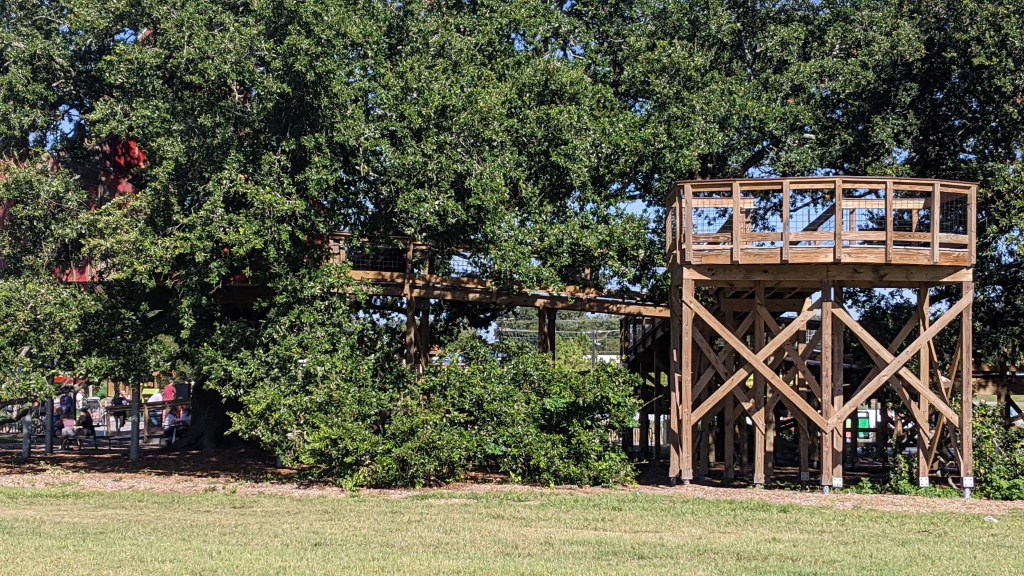
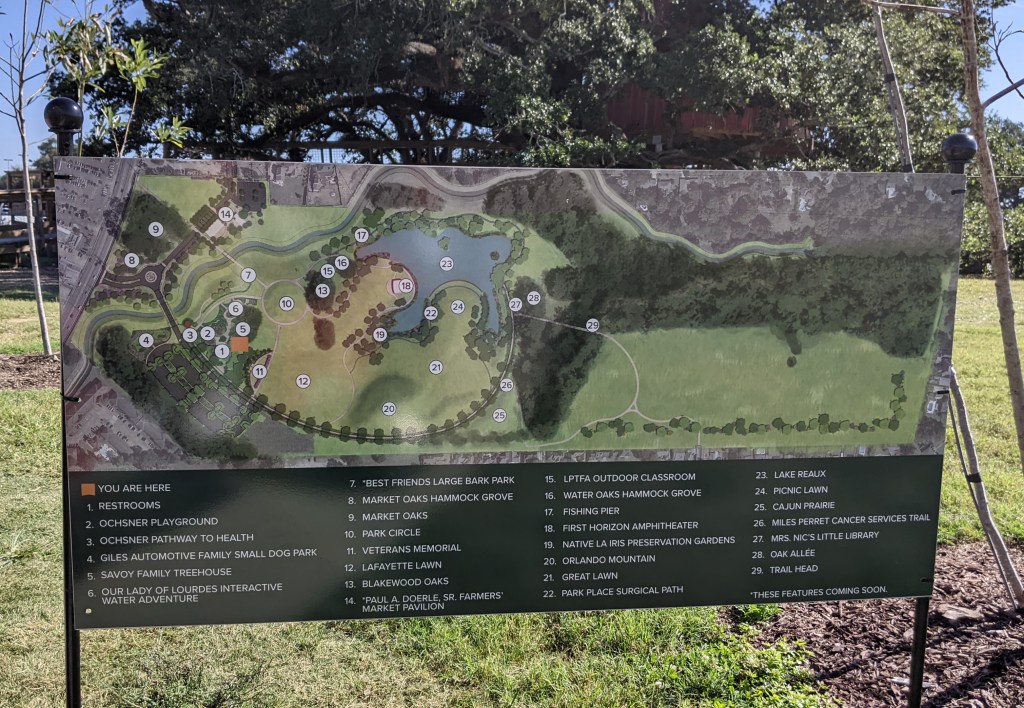
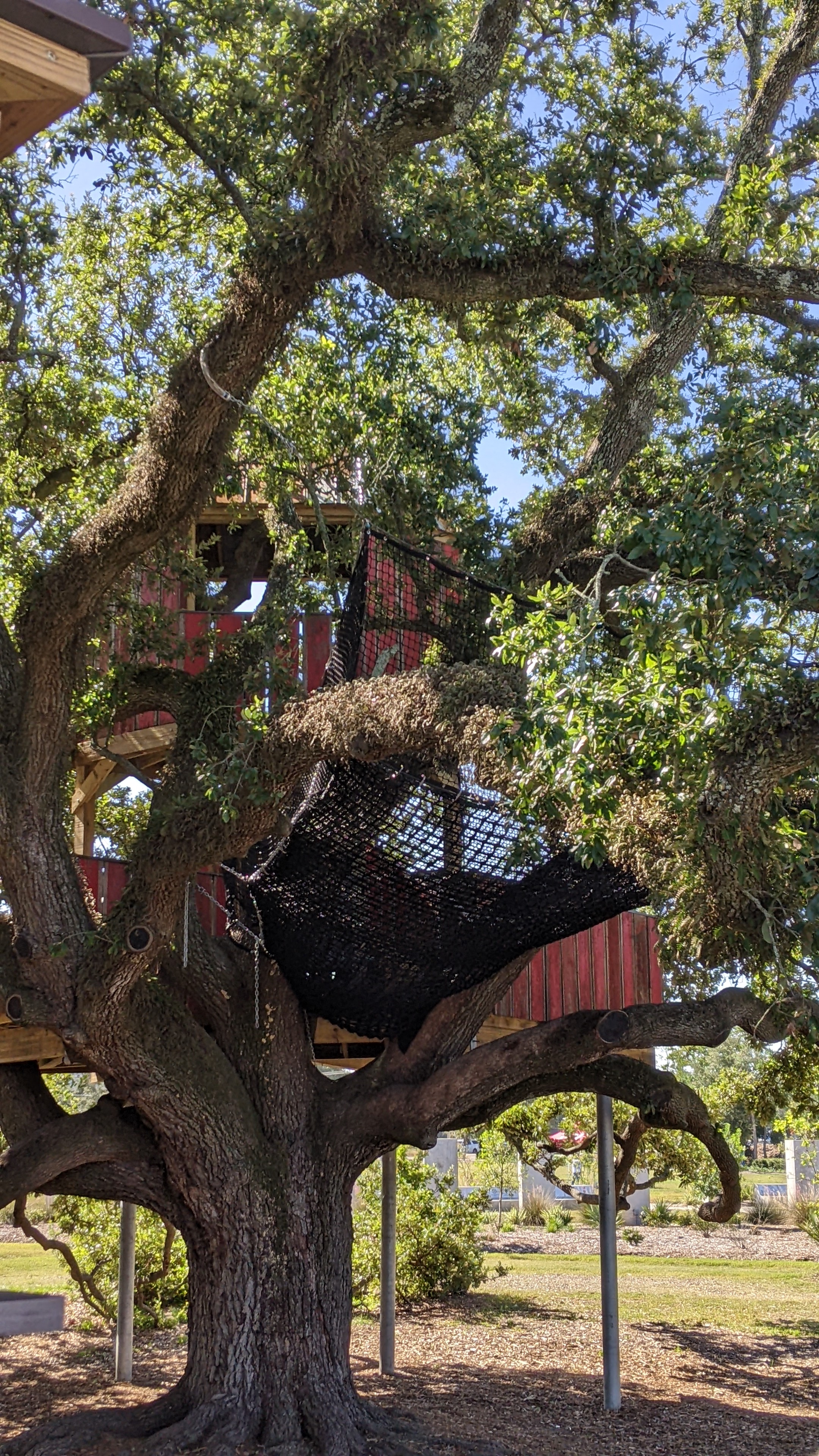
Hidden in the trees of Moncus Park in Lafayette, Louisiana, is a faded red treehouse constructed with lumber salvaged from a former horse barn on the property. It adjoins a children’s play area, but it’s almost hidden from view along the

paved walking path that meanders through the property. I’m sure that makes it all the more enticing for the children who choose to climb the ladder and walk the swinging elevated course to reach it.

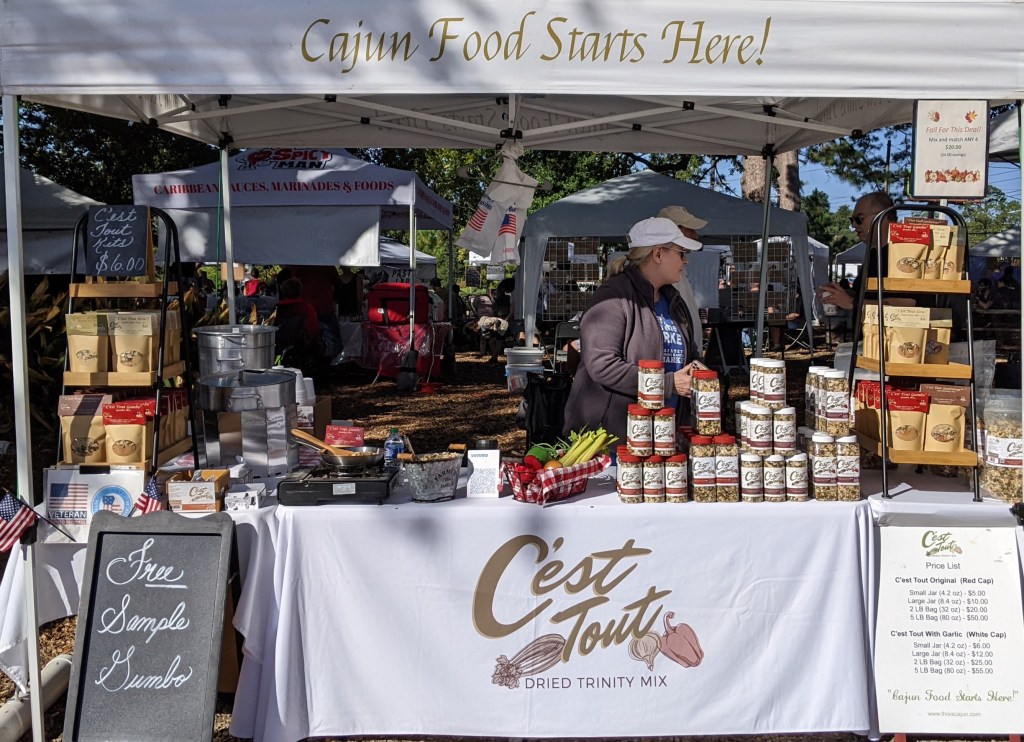
On the day we visited, the park was filled with people. Some, like our group of travel writers from diverse locations, had first visited the thriving adjacent outdoor Saturday Market, overflowing with food and crafts vendors every week throughout the year. This past summer, the market celebrated its 10th anniversary with the ringing of the Durel Bell.

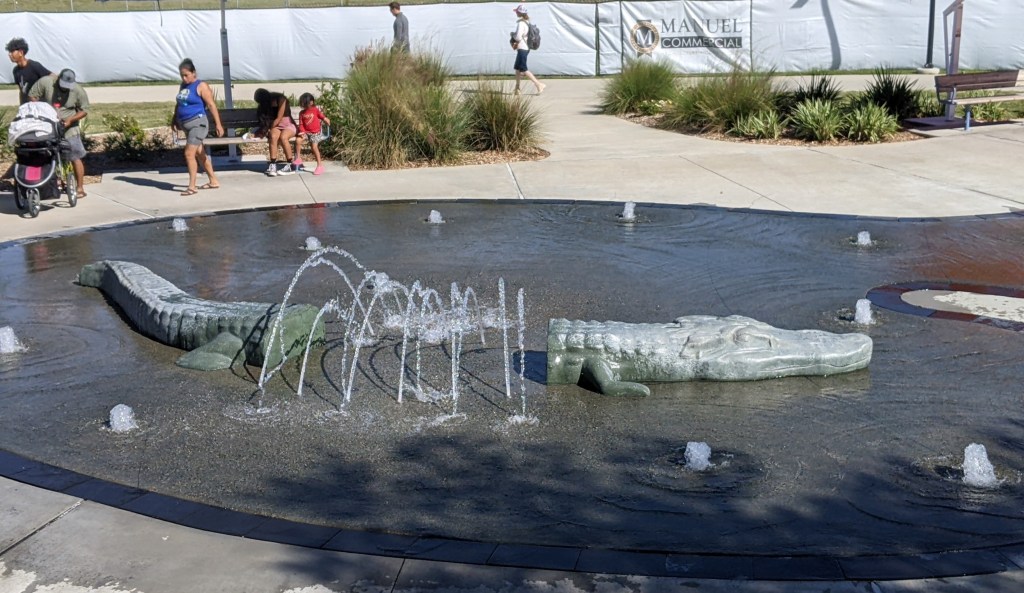
The sun shown brightly on this mid-October day, and the park was alive with activities to attract young and old alike.

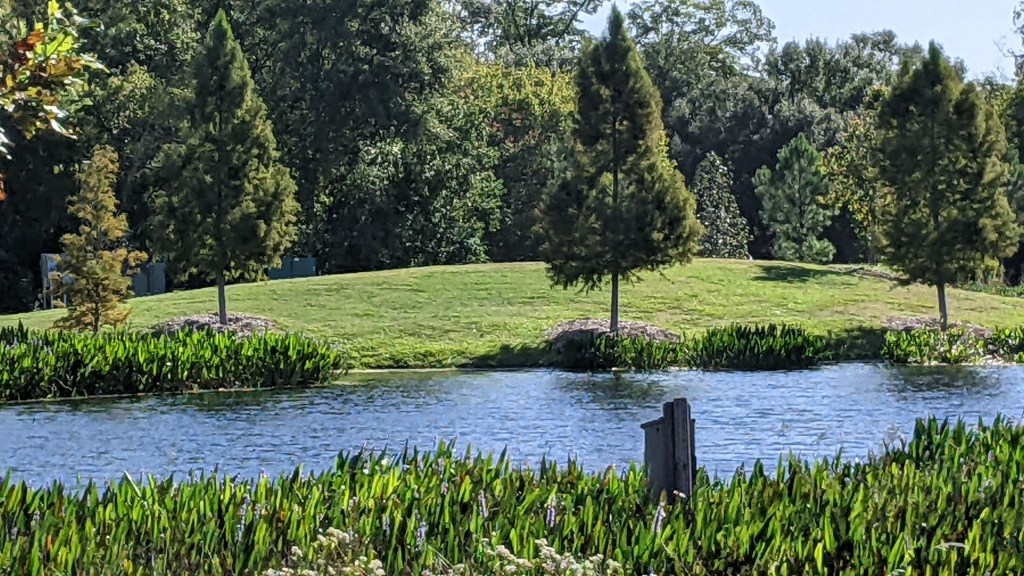
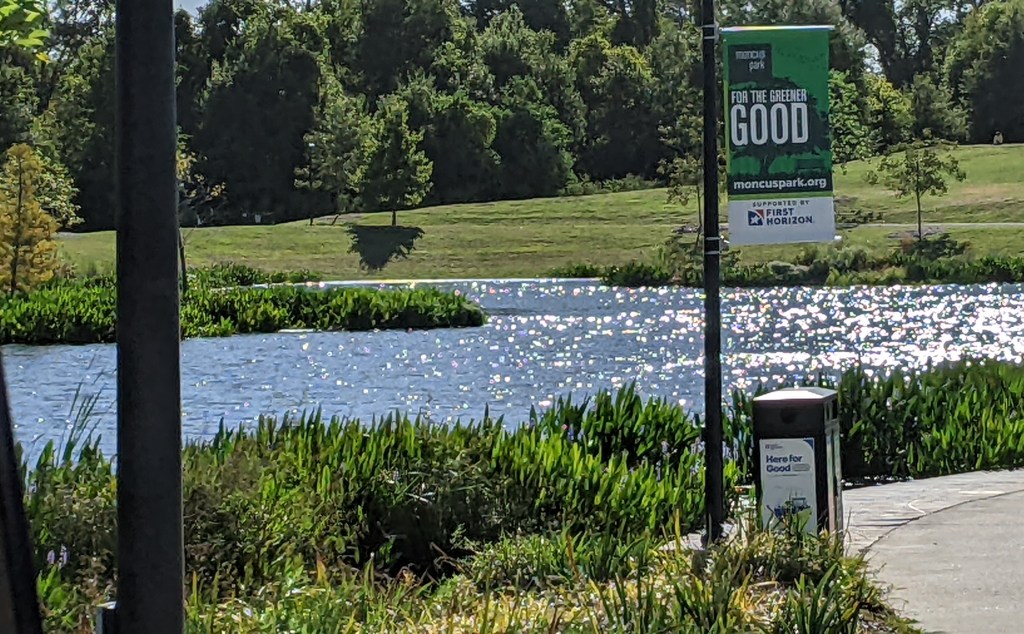
Some, accompanied by leashed dogs, were out for serious exercise in the beautiful surroundings while others simply enjoyed the various trees and plants on the rolling hills of a well-planned natural enclave that was once a horse farm. The park, operated now by a non-profit organization, was designed and built “by the community, for the community,” according to Kaylie LeBlanc, assistant vice president for communications of Lafayette Travel. One of the unique features is a 63-foot high hill, the highest point in Lafayette Parish! Development was begun in 2018, fueled by an initial $6 million grant. Now, a membership program funds ongoing park development and programming.
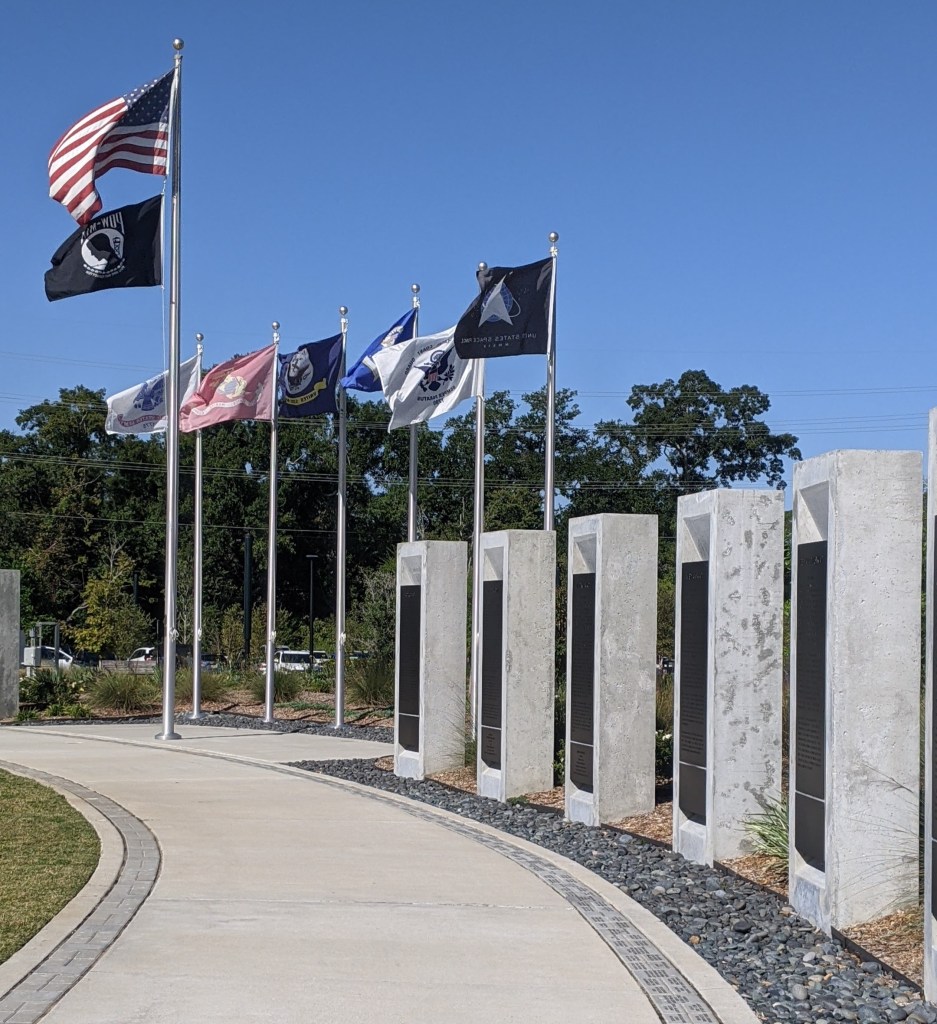
Also on the grounds is a striking Veterans Memorial that pays tribute to local residents who served their country in the various military forces throughout history. Memorial bricks line the path leading to the serene site with its polished granite plaques describing each war that U.S. troops have fought. It’s worth stopping to read each somber account, from a young country’s battle for independence to “Indian Wars — Circa 1600-1924” and the Global War on Terror — 2002-2021.

Moncus Park is one good reason to visit Lafayette, a city known as the “happiest city in America,” at the heart of Louisiana’s Cajun and Creole country. But there are many more.

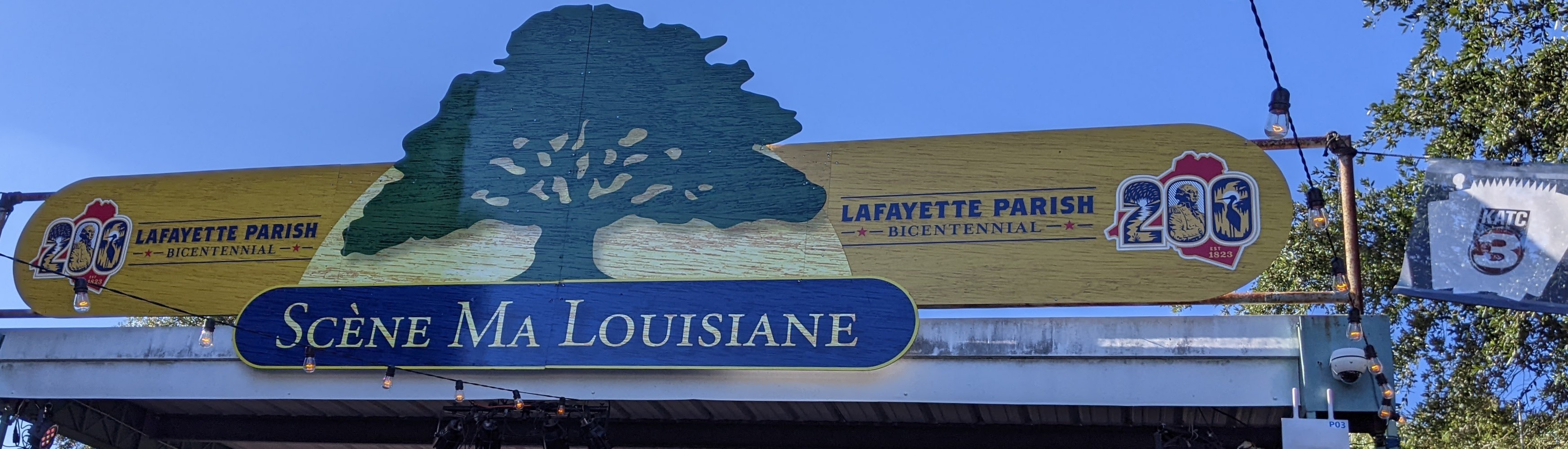
I was in Lafayette for three days of whirlwind activity during this year’s Festival Acadiens et Creoles, a celebration of food, art, music, history and distinctive culture. What a celebration it was! Lafayette boasts great food and lively music, to be sure, but learning the history of a people who left their homeland and resettled in faraway places was what I found intriguing, somewhat disturbing, and totally fascinating. I had not previously known that Cajun and Creole were and are so intertwined.

The Acadians who came to Louisiana from France by way of the Canadian Maritimes (primarily Nova Scotia, New Brunswick and Prince Edward Island) have retained a distinctive cultural identity that is remarkable and celebratory. Eventually, Acadian morphed into Cajun and Acadian/Creole/Cajun culture is the result. Although we did not visit it, the Acadian Cultural Center in Lafayette is one of six locations of Louisiana’s Jean Lafitte National Historical Park and Preserve. Admission is free, and the center is open Tuesday through Saturday year-round, except on national holidays.

An Ongoing Celebration

Lafayette is known for its festivals throughout the year, and this one certainly did not disappoint. What’s not to love about live bands that encourage complete strangers to “dance to the music” together? Add the enticing flavors of gumbo, jambalaya, etouffee and boudin sausage served fresh and hot from food trucks in the park, or the refreshing abundance of cold beer, spicy bloody Marys, flavored daiquiris, and other refreshments close at hand.

Girard Park in Lafayette takes on a carnival atmosphere that’s equally appealing for young and old alike, with food treats from beignets to soft ice cream, loaded hot dogs to boiled crawfish, fried gator bites and chicken wings to cheese-smothered grilled oysters! There is face-painting and bubble-blowing for the children, crafting demonstrations to watch and souvenirs to buy.

The performance stage is at the center of the activity, and many festival goers bring camp chairs or blankets. Picnic tables and benches are scattered about the park, and various tents offer seating for food and cooking demonstrations, musical lectures, and cultural programs.

From the ceremony of “cutting the boudin” to open the festival to the closing strains of music performed by an all-woman band as darkness fell on the festival’s last day, it was a great experience.

Traditionally held on the first full weekend in October, this celebration has been a Lafayette highlight since 1974. With a focus on the local sounds of Cajun and Zydeco music and local food specialties, the festival atmosphere extends not only throughout the park, but throughout the city. During festival weekend, shops are open late, visitors stroll the compact downtown area, marvel at the street art and local murals, enjoy crafts shows and outdoor exhibits, attend wine tastings and local business open houses, and snap souvenir photos at the Lafayette sign in a local park or selfies at the picturesque downtown arches.

Smiles and high spirits dominate the scene. It is truly a celebration that encourages active participation.

Beyond the Festival

The Festival Acadiens et Creoles is not, however, the largest celebration on Lafayette’s calendar. Held in April, the Festival International de Louisiane spills over into nearby cities and parishes and attracts visitors from throughout the world for the distinctly French-flavored celebration.

Lafayette also celebrates New Year’s Eve in a big way, and goes all out for Mardi Gras. Visit Lafayettetravel.com for up-to-date information on what’s happening when in this “happiest town” so you won’t miss out on any of the events that interest you. I don’t want to leave the impression, however, that visiting Lafayette, is simply one big party. As much fun as it can be, there is also a serious side to Lafayette’s personality

Cultural unity is pervasive and community spirit is inclusive. Informal, spontaneous musical jam sessions seem to be the norm and, more often than not, members of the public are invited to attend, join in, or sing along. Roots run deep here and pride of place and heritage is evident among young and old alike. Lafayette residents are intent on preserving their traditions. A conversation with a local resident can be equal parts history lesson and hope for the future, interspersed with family stories.

The Beginnings

Originally founded as Vermilionville in the 1820’s, the city was renamed Lafayette in 1884. Its population in 2023 is reported to be slightly more than 121,000, a slight decline from 2020 when it was just under 122,000. But the population of metropolitan Lafayette Parish exceeds 376,000.

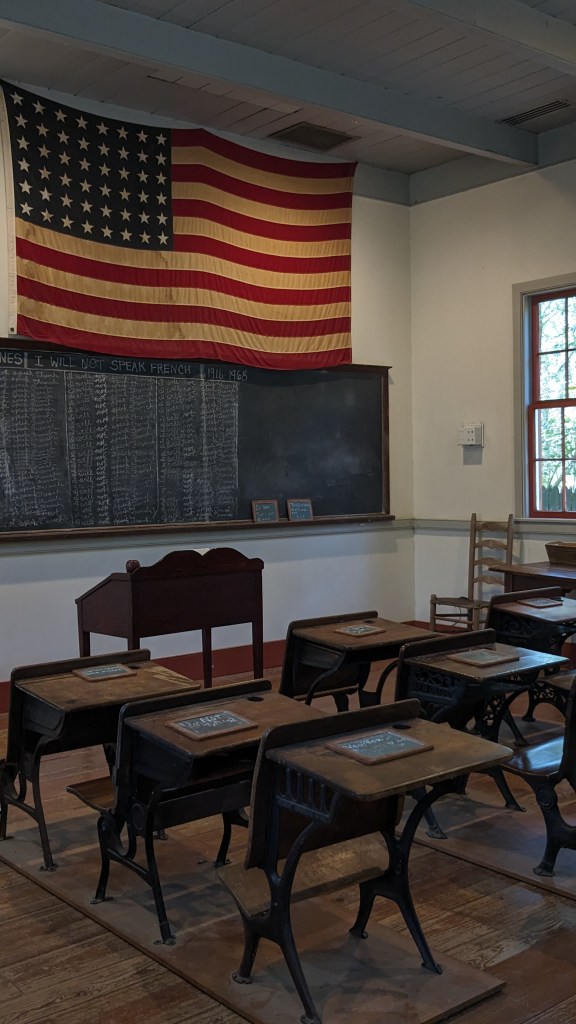
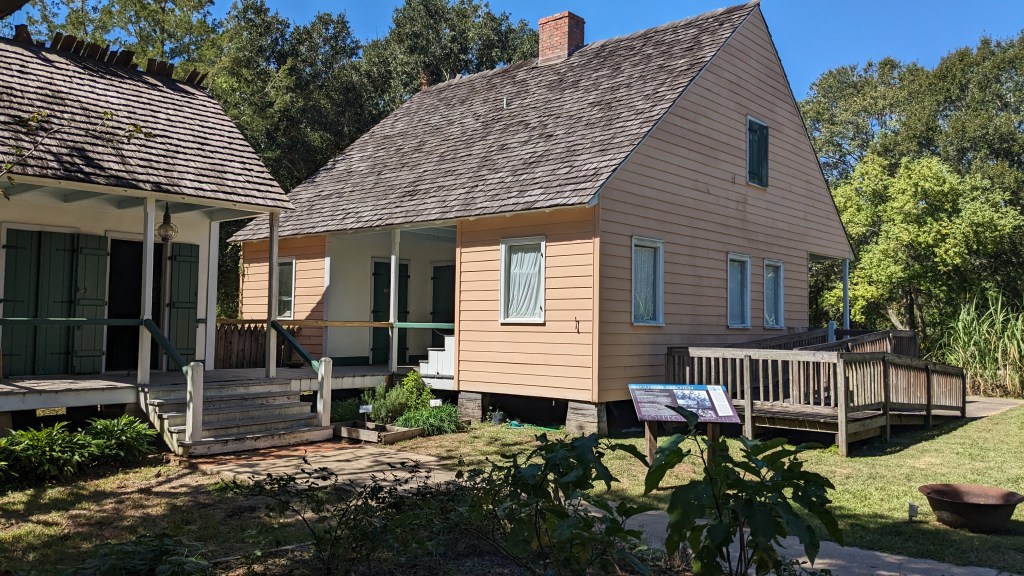
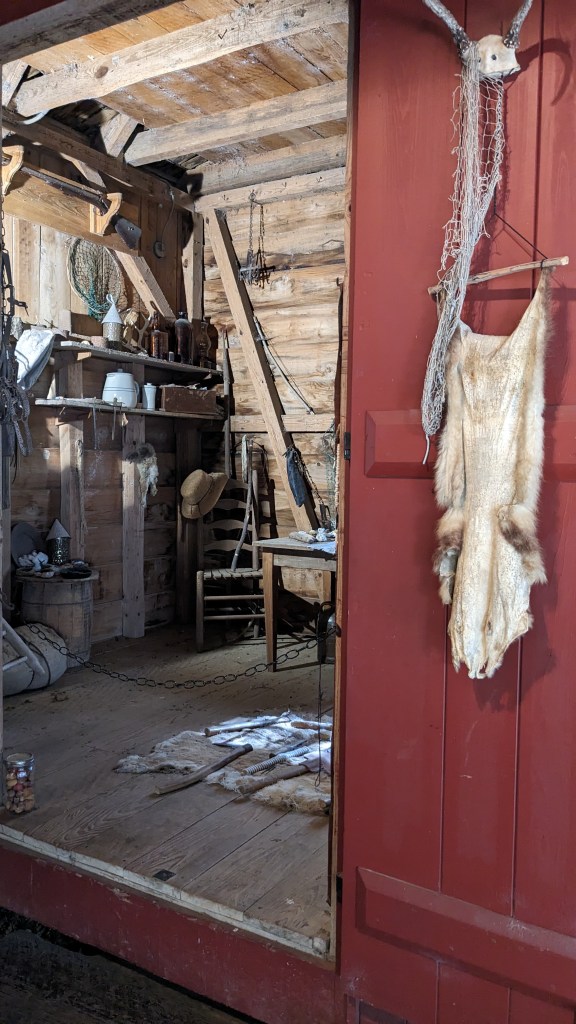
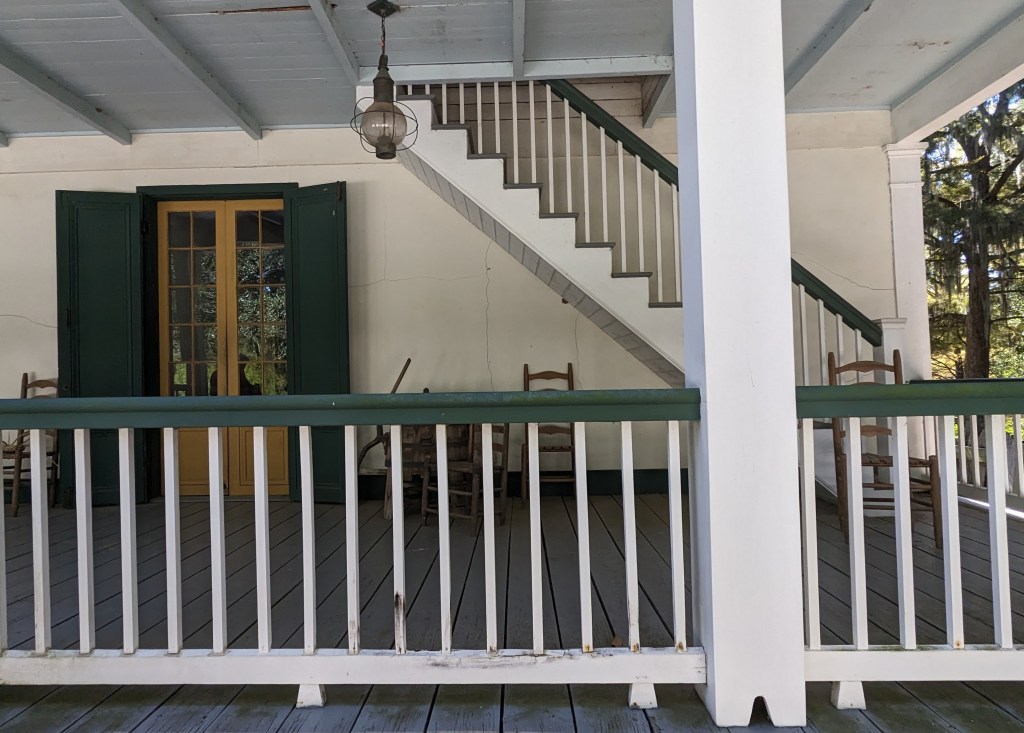
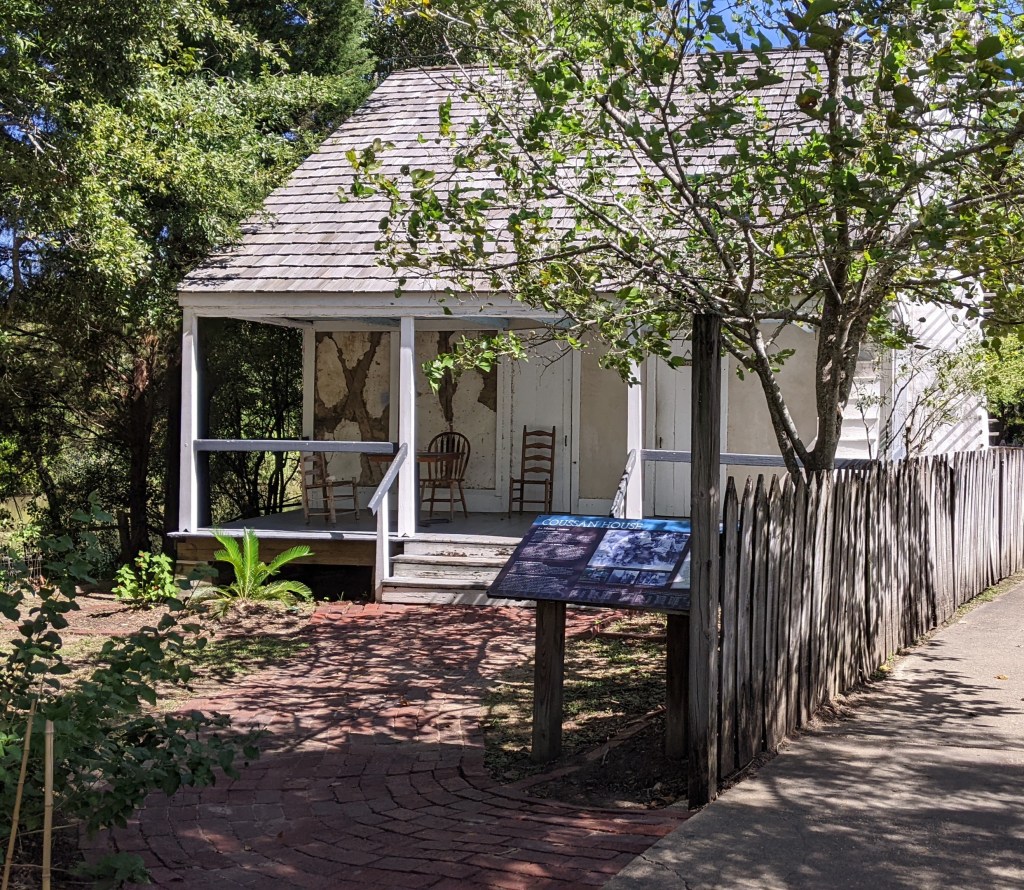
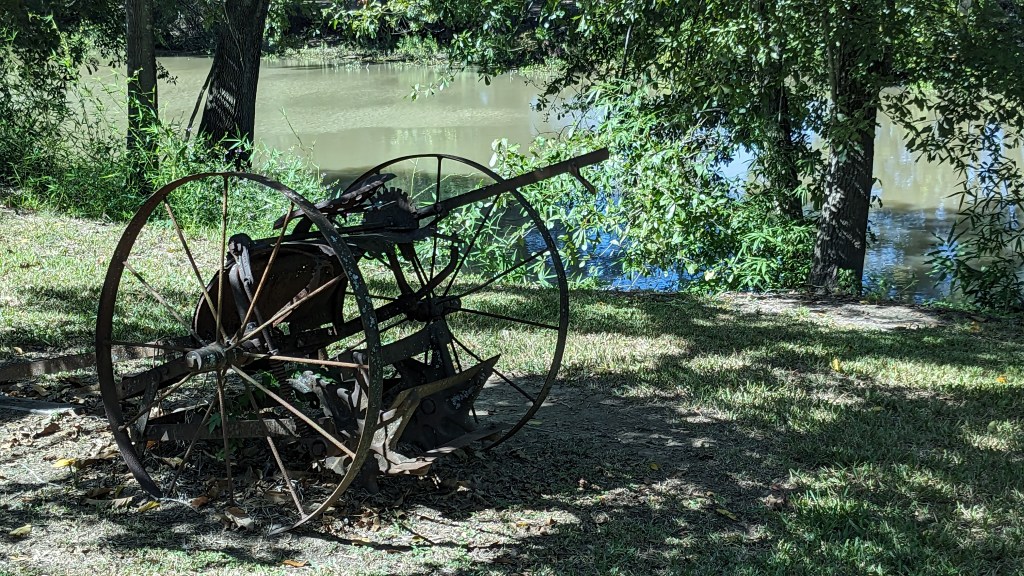
We visited the historical re-creation of Vermilionville, now a living history museum that takes visitors back to the early settlement. Signs along the paths chronicle how Acadian and Creole settlers interacted with native peoples and those of African descent through the late 1800s, and the buildings display a wealth of artifacts. It’s much better than a museum depiction. Walking along the paths offers a uniquely personalized insight into how lives were lived during those times.

Visit Vermilionville.com for information about events, programs and performances, including a 2nd Saturday French Table, a free gathering that allows visitors to “hear, speak and practice” the unique Acadian language. Other programs offer insight into the lifestyle and traditions of early Acadian settlers who sought to preserve their French-speaking culture on the American frontier.

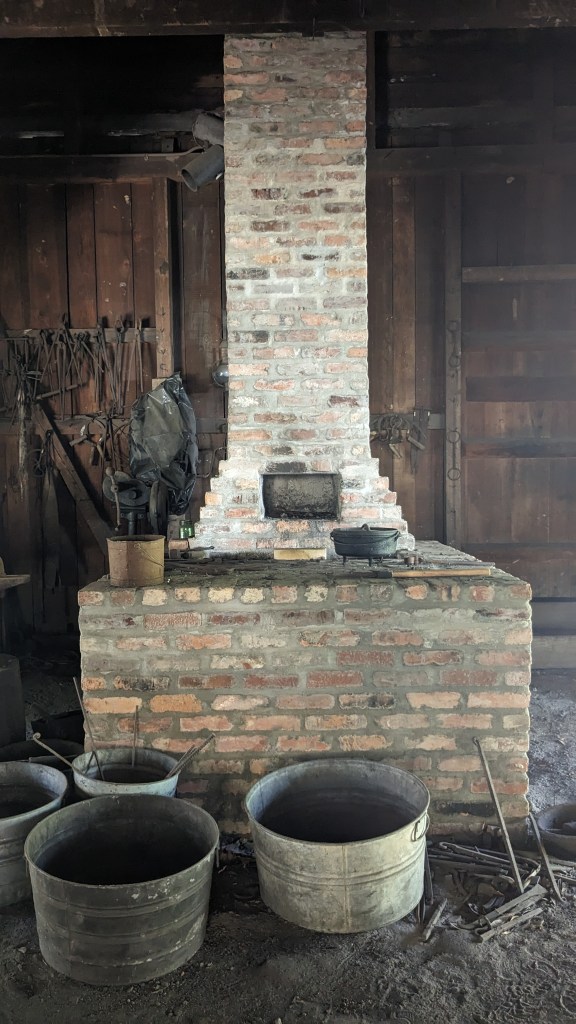
Among the buildings and various dwellings situated at the site are a schoolhouse, church, parsonage, carriage house and other utility buildings, as well as early “shotgun” houses and a wide variety of home styles that were popular through the decades. Traditional crops are still cultivated, and the historical village even has a resident donkey, a couple of sheep, and a working iron forge. This historical village offers a perfect opportunity to explore the history of Cajun culture and it’s impossible to leave without a profound respect for the early Acadian lifestyle, the Native American, Creole, and African influences, and Cajun traditions. We even learned some often-used words in Cajun French!

Our young guide, herself a proud Cajun, was clothed in traditional dress of the time, and she spoke with candor about growing up in this distinctive culture. I was awed as she sat down at a spinning wheel to demonstrate how yarn is spun from raw cotton, but then she apologized for not being very adept at spinning! We also were treated to an explanation of traditional, hand-sewn quilting skills by an older woman intent on preserving the skills that her ancestors possessed. We were duly impressed by the number, the quality and the variety of the quilts she has completed.

Building on Tradition

Our group was treated to a bountiful lunch at La Cuisine de Maman, where we feasted on traditional favorites prepared and served in a circa-1800 home at the site. Suffice it to say that no one left hungry!

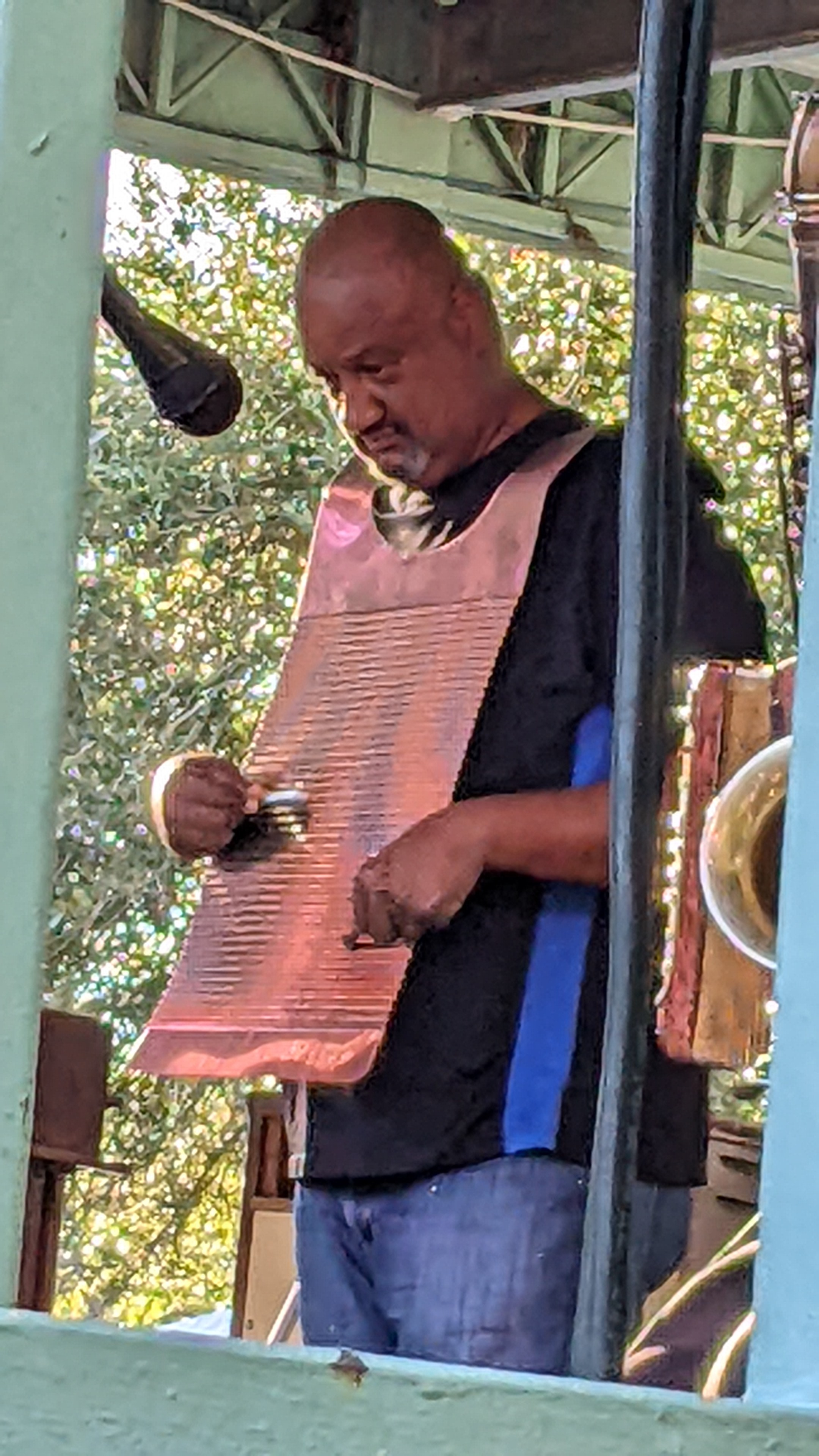
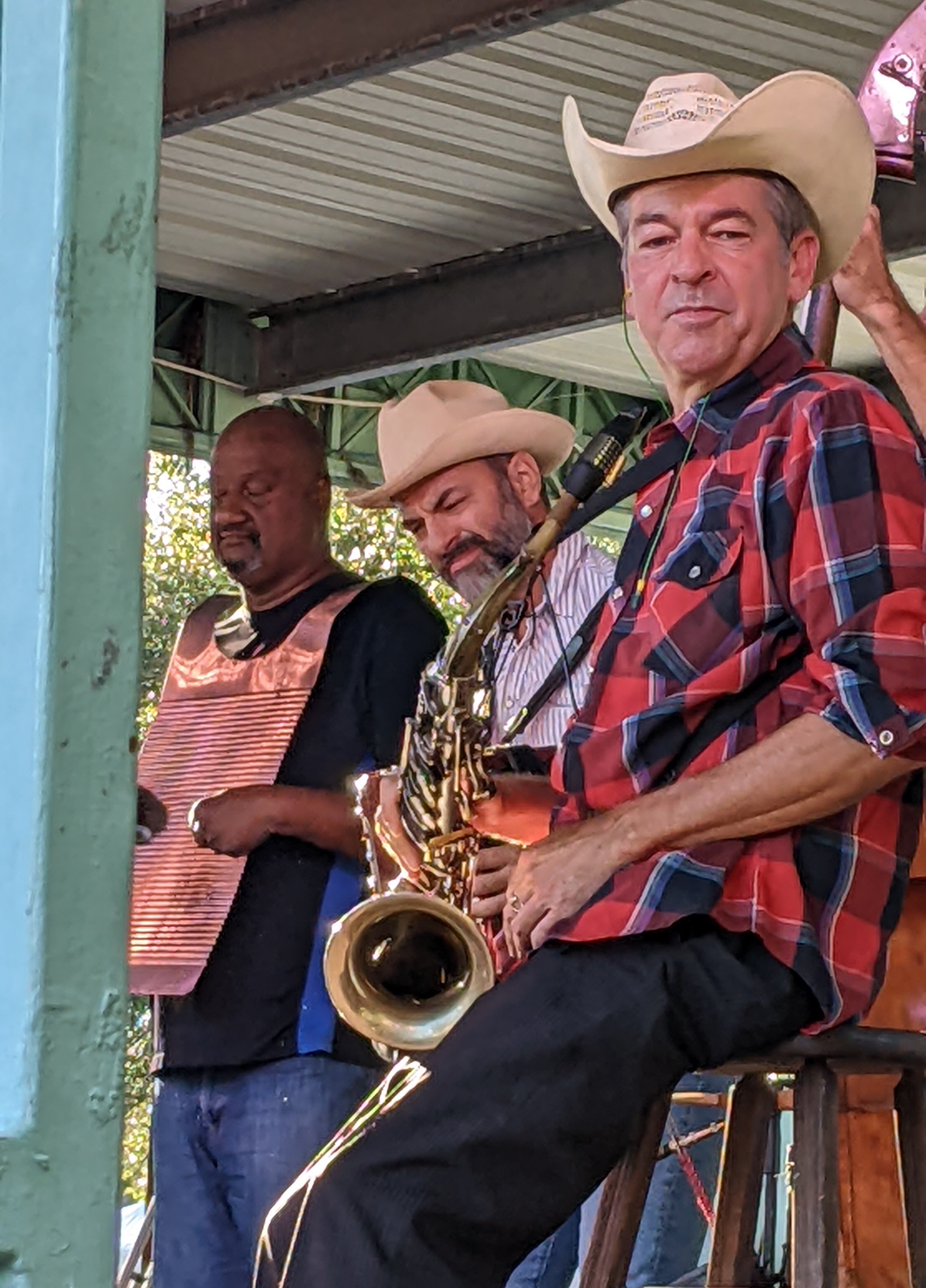
Before leaving Vermilionville, we stopped in at the Saturday music jam, held in a performance hall just across the courtyard from the restaurant. That became a fond memory of my short time in Lafayette, one that I will savor for a long time to come. That strangers come together to make music is impressive enough; that the music is well-played, sung with gusto, performed with no rehearsals and at no charge to the public, and enjoyed by all is truly special!

The music is one of the fondest memories of my time in Lafayette!

Yet to come is my account of an eye-opening and thrilling flat-bottomed boat trip through the Atchafalaya Swamp, along with a visit to nearby Avery Island with its jungle gardens and Tabasco factory, as well as more pictures and commentary about the people, the food and drink, the sights and the music scene in this distinctive Louisiana city. I’ll leave you with at least five good reasons to add Lafayette to your own travel plans for the coming year!

Rollin’ on the river . . .

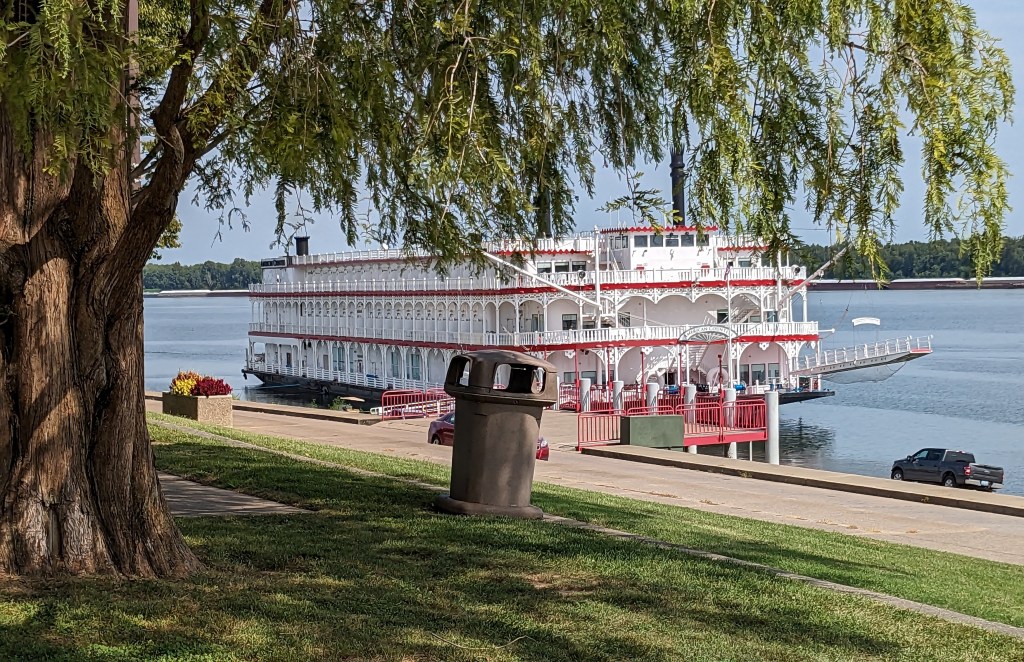
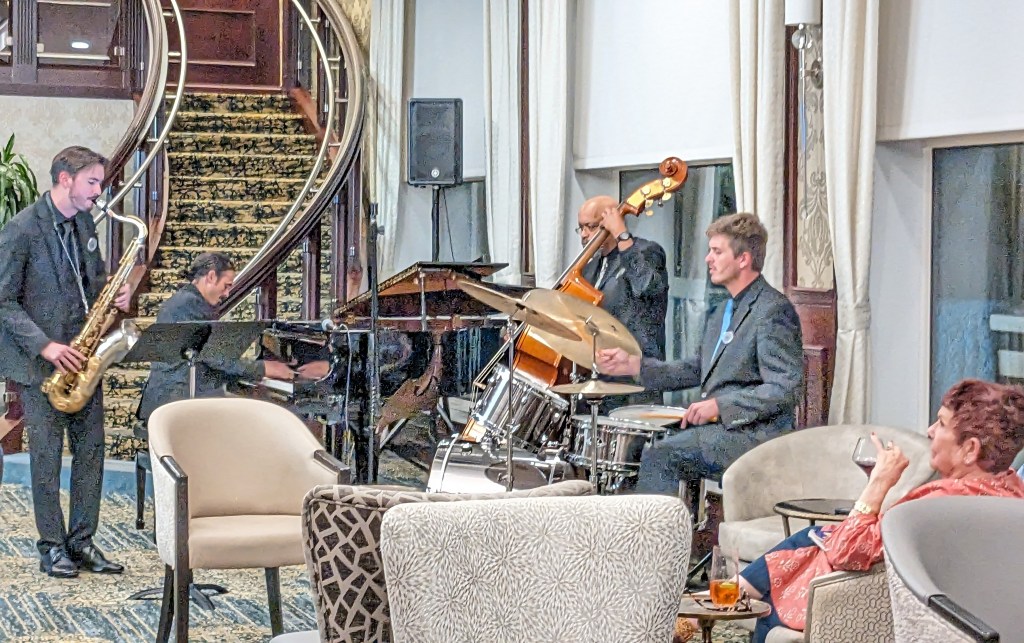
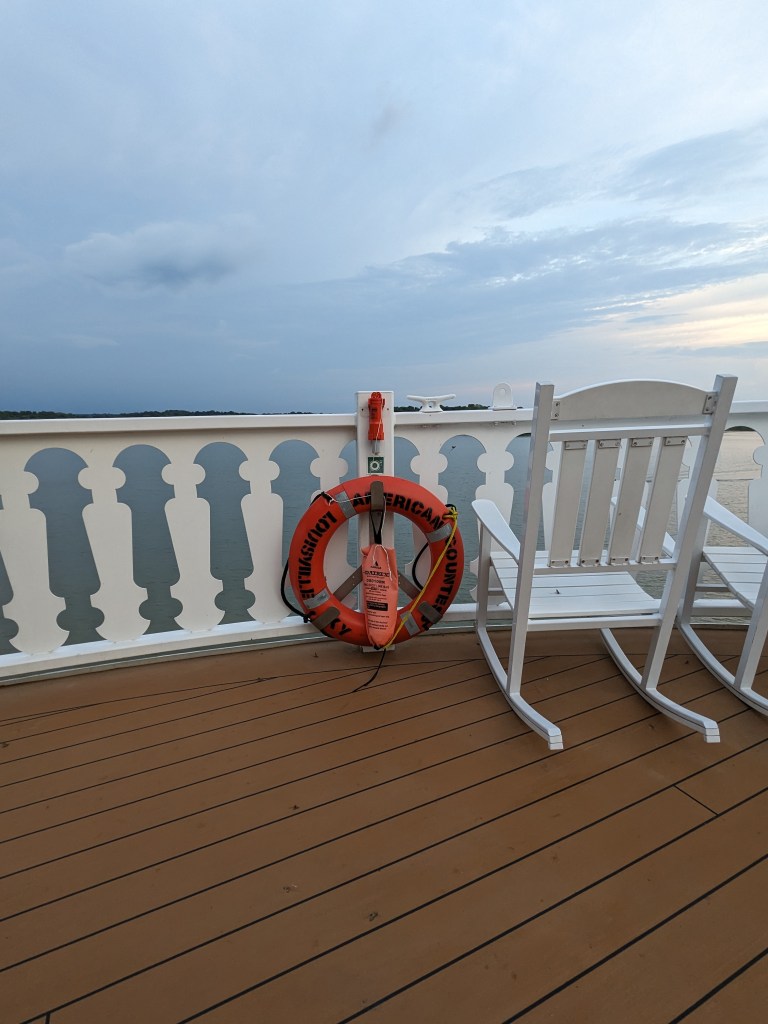
I returned home three days ago from a journey along the Ohio and Mississippi Rivers aboard American Countess, a traditional riverboat sternwheeler with upscale features to rival any ocean-going vessel. With fewer than 250 passengers and more than 90 friendly crew members to cater to every need or request, this was a luxury journey that fostered new friendships and a sense of camaraderie.

Guests were encouraged to submit their personal photographs during the voyage, with winners announced at the end of the week. I was surprised and delighted that my photograph of the American Countess’s iconic twin red paddlewheels was chosen as first-place winner!

River cruising represents slow-paced travel at its best, with new and impressive sights around every bend, abundant food and drink, a slate of charming towns to visit, excursions designed to appeal to diverse interests, and onboard entertainment, music and activities almost non-stop.

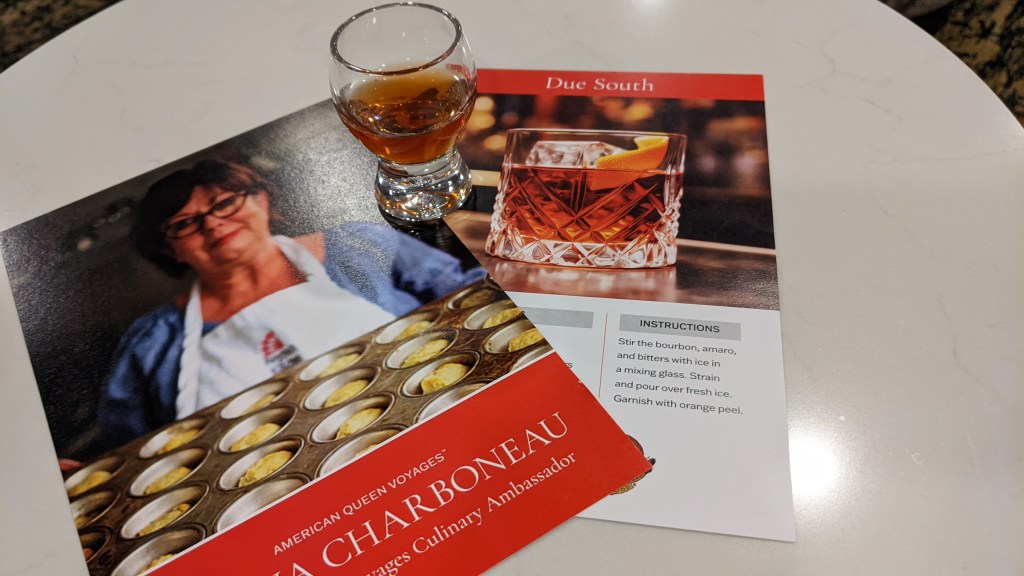
I was one of a group of four writers chosen to participate in a press trip on this Bourbon-themed voyage. Not only did the agenda include seven history-rich river cities, but Bourbon expert Michael Veach, a noted authority on the history of this strictly American whiskey, was aboard to present a series of lectures and complimentary bourbon tastings.

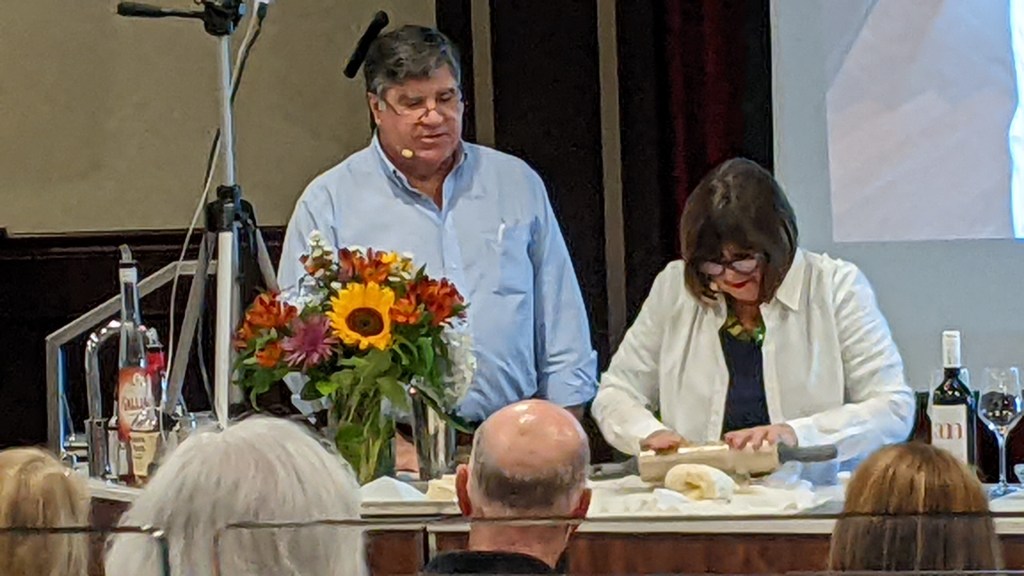
This particular voyage boasted a decidedly “good food and spirits” orientation, with multiple options for brewery tours and tastings along the route. American Queen Voyages President Cindy D’Aoust and Vice President of Marketing Angela Composto joined the cruise for the first few days. Special guests were Dickie Brennan, chef-owner of New Orleans’ landmark Bourbon House restaurant, and noted restaurateur and cookbook author Regina Charboneau, who serves as the cruise line’s Culinary Ambassador, and the pair joined up for a cooking demonstration in the boat’s theater one afternoon.

As a Matador Creator, I was privileged to participate in this unique press trip. There are many stories to tell about the distinctive “flavor” of cruising American rivers, especially on a themed cruise like this one, and I will recount some of my experiences in future posts. Also, look for my article on Matador Network in the near future.

What an amazing treat it was, from a pre-cruise stay at The Brown Hotel in Louisville, Kentucky, to disembarkation in Alton, Illinois, just across the Mississippi from St. Louis, followed by quick, efficient bus transfer to the St. Louis Airport.

This post is simply meant to be a visual “teaser.” Visit American Queen Voyages to learn more about various itineraries, or to take advantage of special incentives for future cruise bookings. If you’ve never before considered an American riverboat vacation, I can highly recommend it as an experience you won’t soon forget!

A Taste of Uruguay

Uruguay was not on my list of must-visit destinations. In truth, I had not given more than a passing thought to a scheduled port call in Montevideo. The cruise was a South American adventure that included a visit to the Antarctic Peninsula, and it had been in the planning states for three years, since before COVID. I had had plenty of time to research Chile and Argentina — Santiago and Buenos Aires were the beginning and endpoints of the cruise, and my spouse and I planned to spend a few days in each city, in addition to the 16 days we were scheduled to be aboard the Sapphire Princess.

But Montevideo had not been in our sights during the planning stages. Actually, I must confess that we had to look up the proper pronunciations of both the country’s name and the city! We knew virtually nothing about Uruguay, and our time in Montevideo would be limited. Although it was tempting to simply spend our shore time at a nearby beach, we booked a half-day excursion for a wine-tasting event at a well-known Bodega not far from the city. That allowed us a couple of hours to explore the city, as well as a glimpse of the nearby countryside.

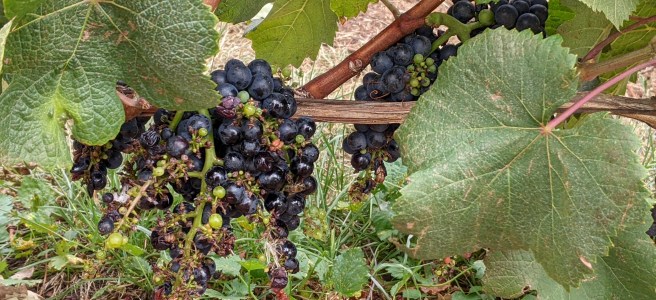
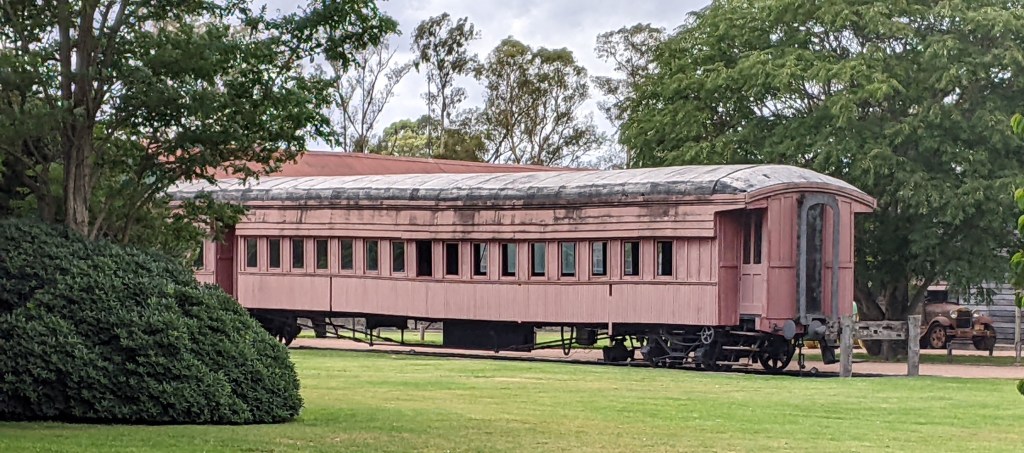
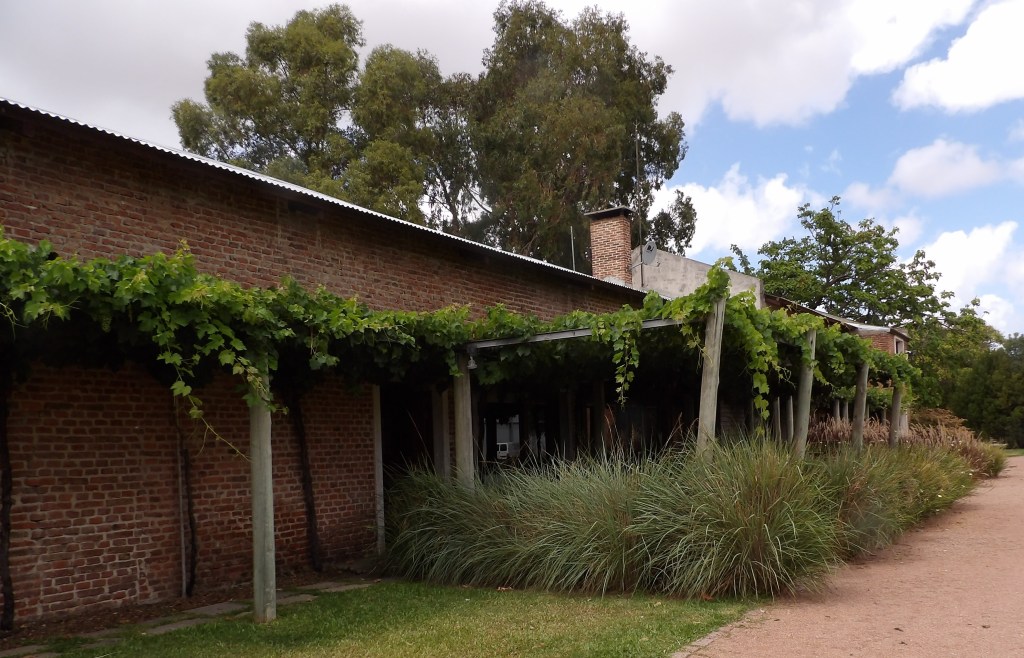
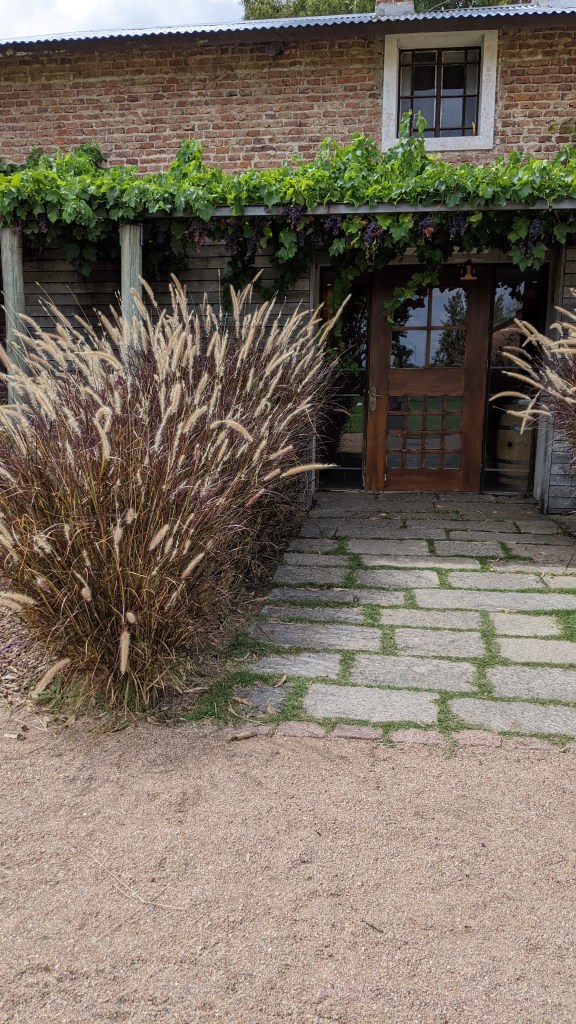
Our only regret is that we didn’t have ample time to enjoy dinner at Bodega Bouza as well. The winery occupies idyllic grounds only about a 25-minute drive from the heart of the city. We were enthralled by the mix of historic buildings, manicured lawn, healthy vineyards, and resident geese, peacocks, and cats. In addition, there is an old rail car, vintage farm equipment, lush landscaping, and several outbuildings, including an impressive modern dining hall.

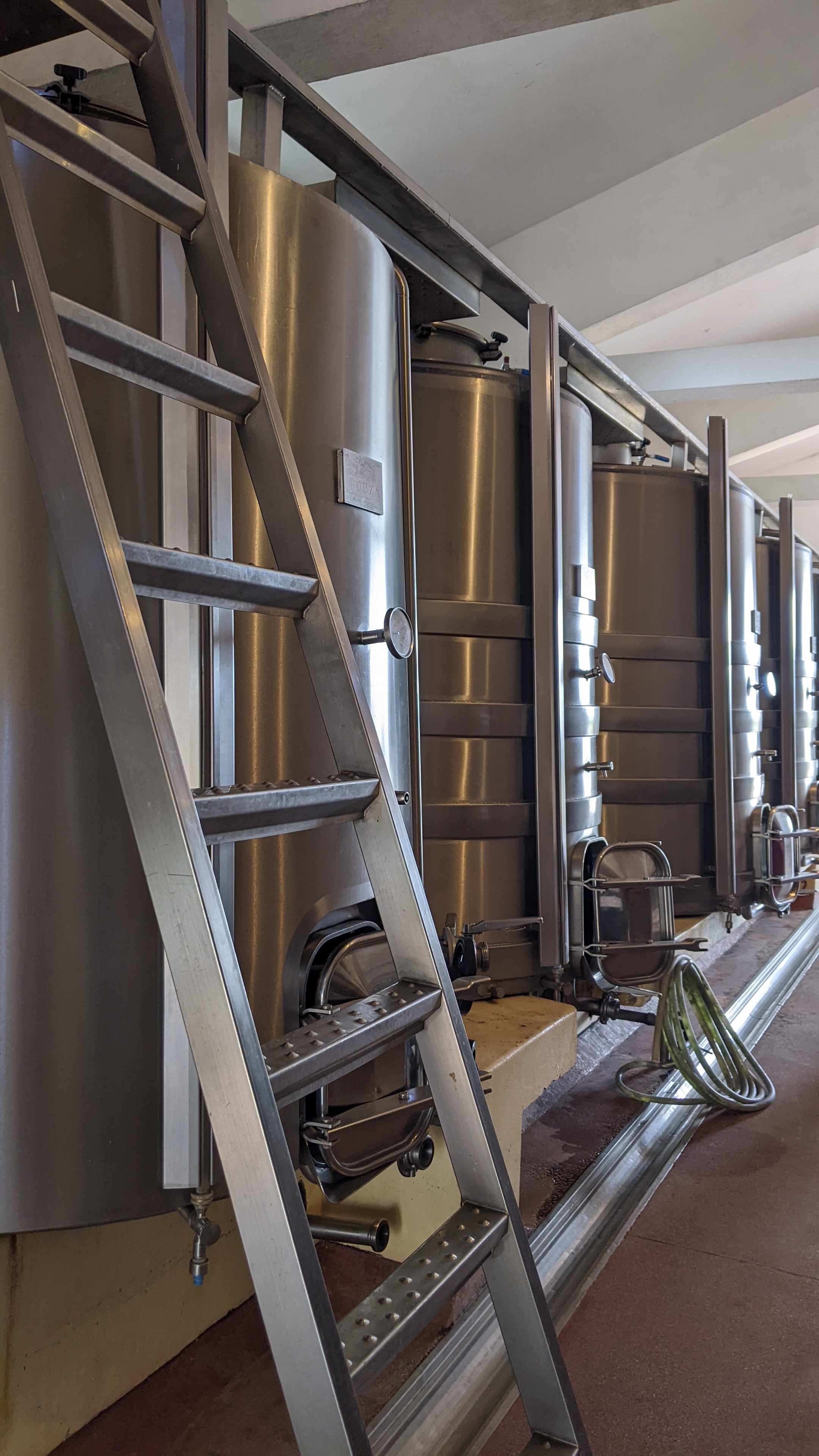
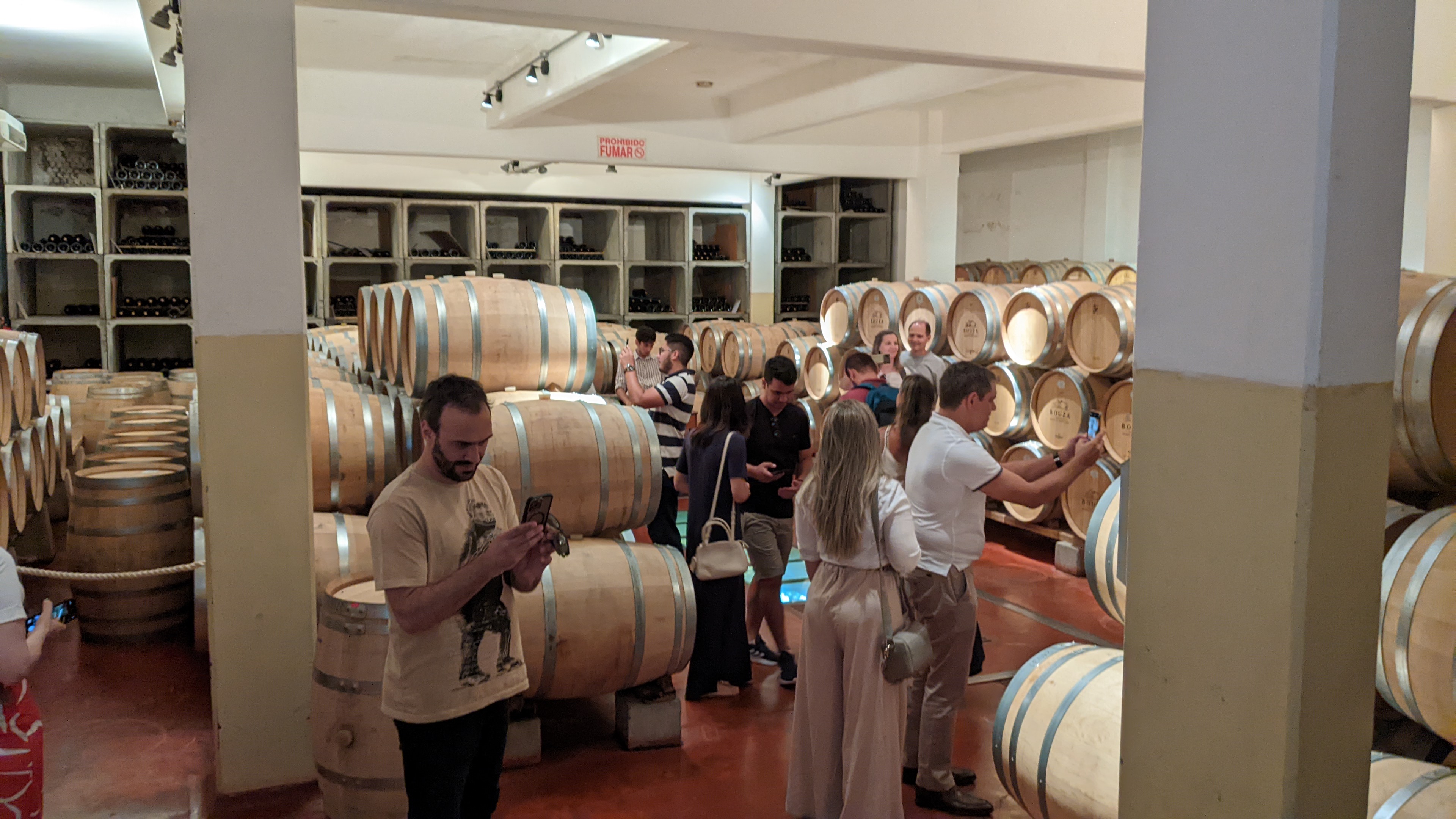
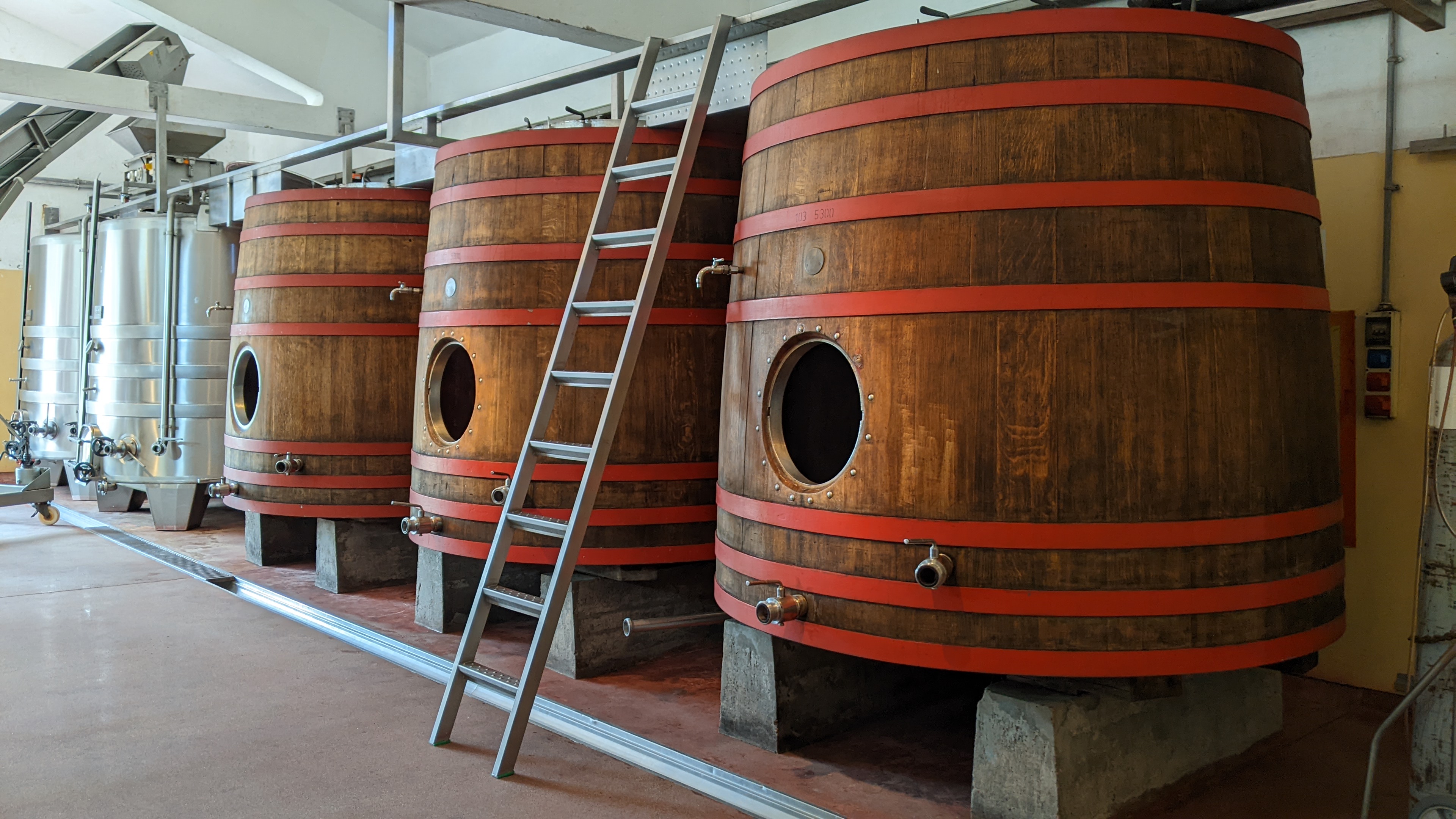
Our tour of the vineyard was interesting, and a subsequent visit to the state-of-the-art processing, aging and bottling facility, including a visit to the climate-controlled cellar, was informative and worthwhile.

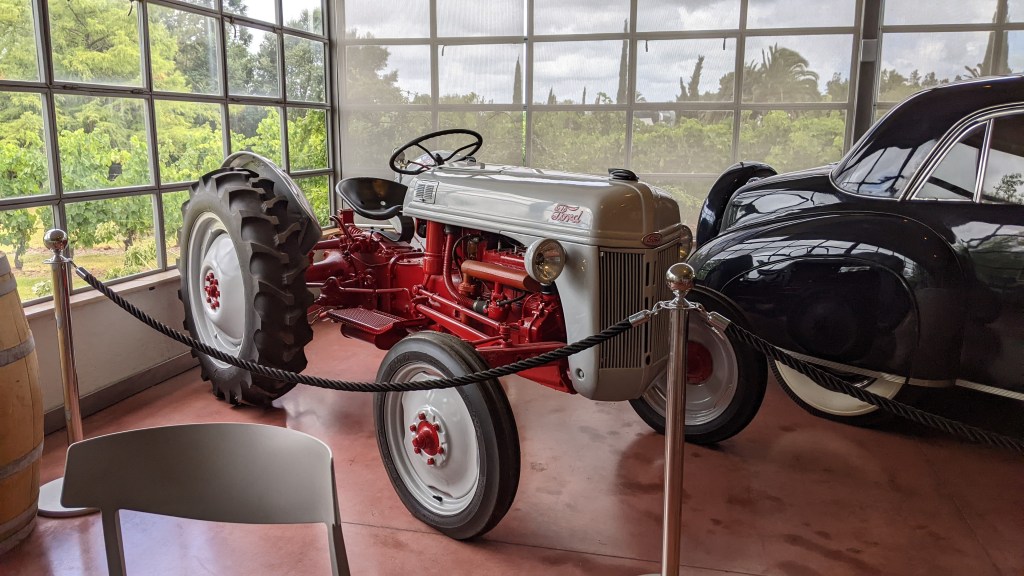
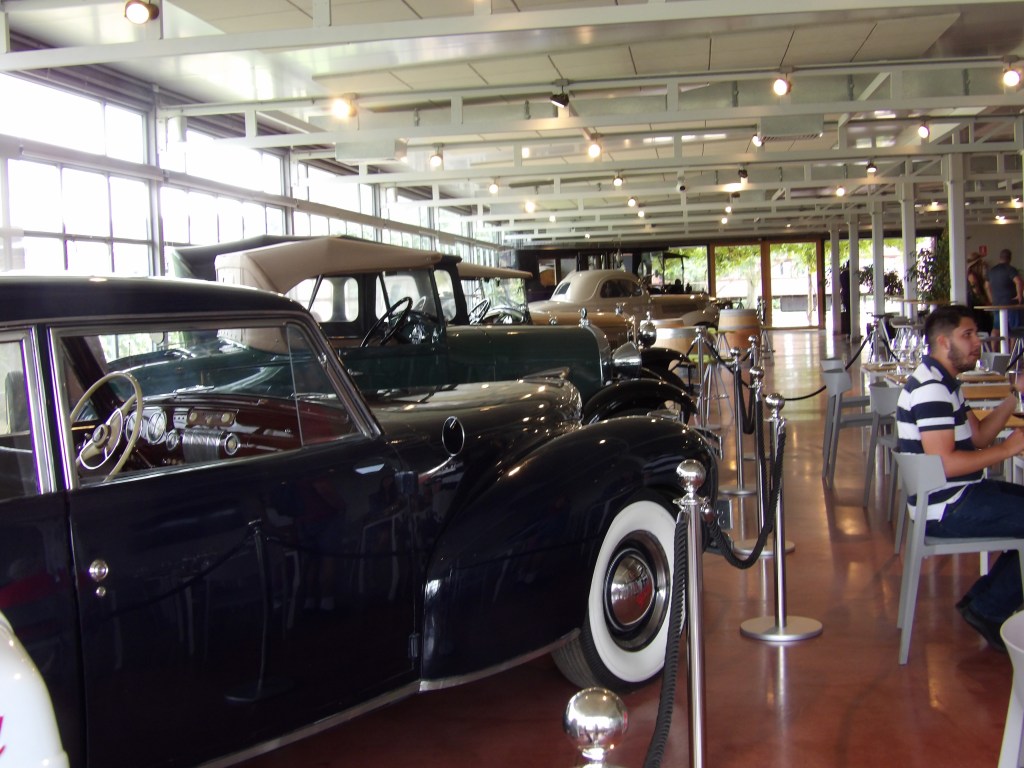
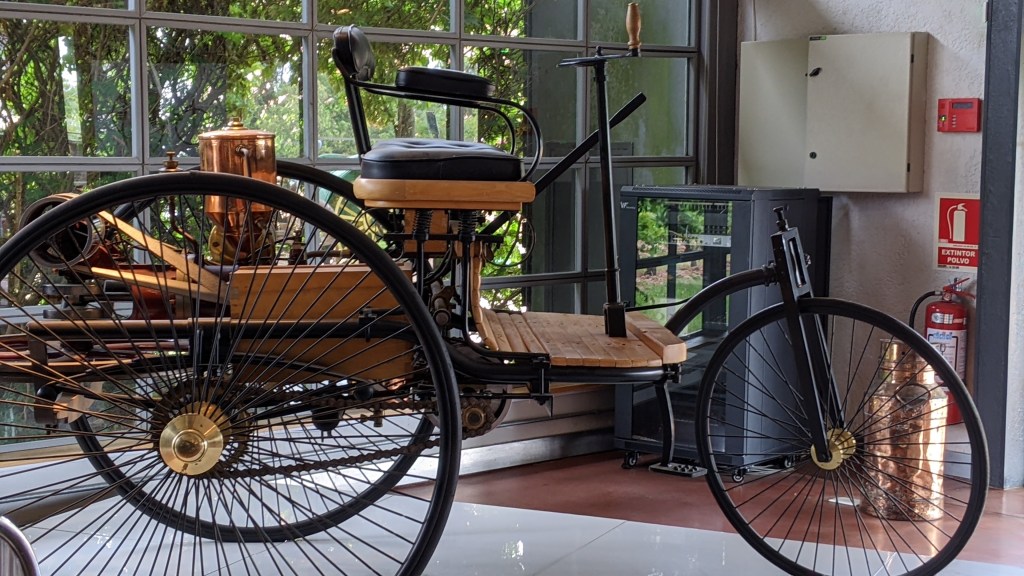
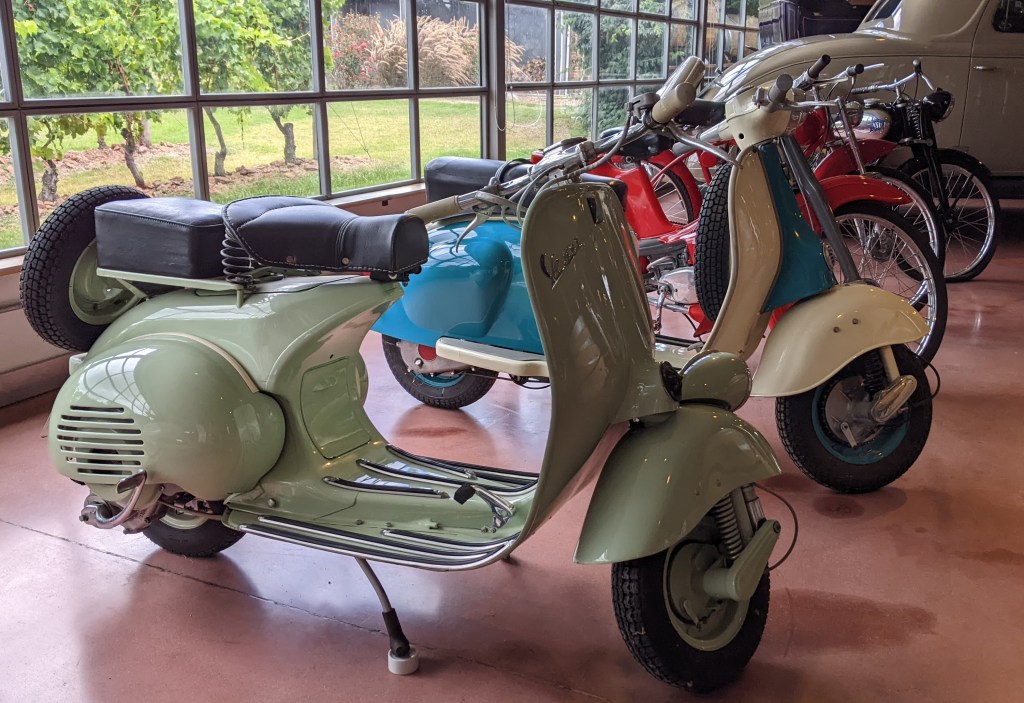
Bodega Bouza, situated in the northwest section of Montevideo, is surrounded by the five-hectare Melilla Vineyard, and was established by Juan and Elisa Bouza between 1999 and 2001 as a family-owned enterprise. The casual, light-filled tasting room — Bouza Vinos Garage — offers tables and chairs surrounded by the family’s collection of classic vehicles. There are work vehicles, classic motorbikes, and antique automobiles, in addition to highly unusual commercial machinery and delivery wagons. Vintage automotive buffs might enjoy the cars as much as the wine!

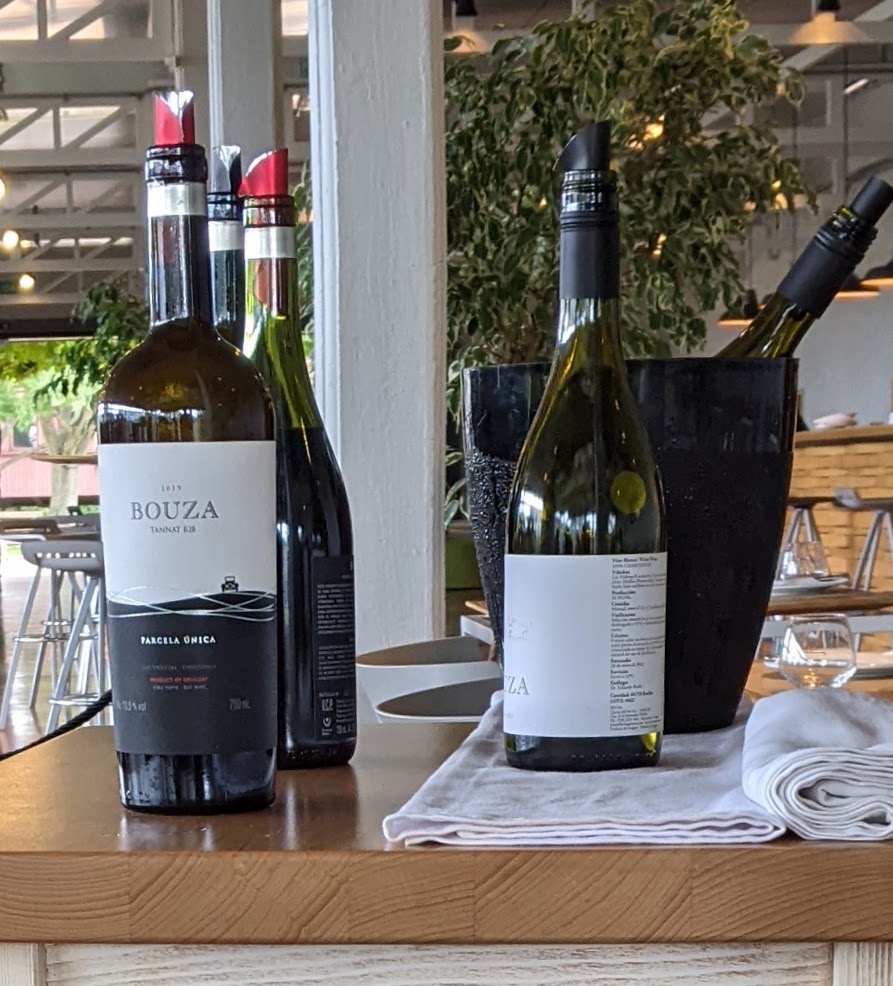
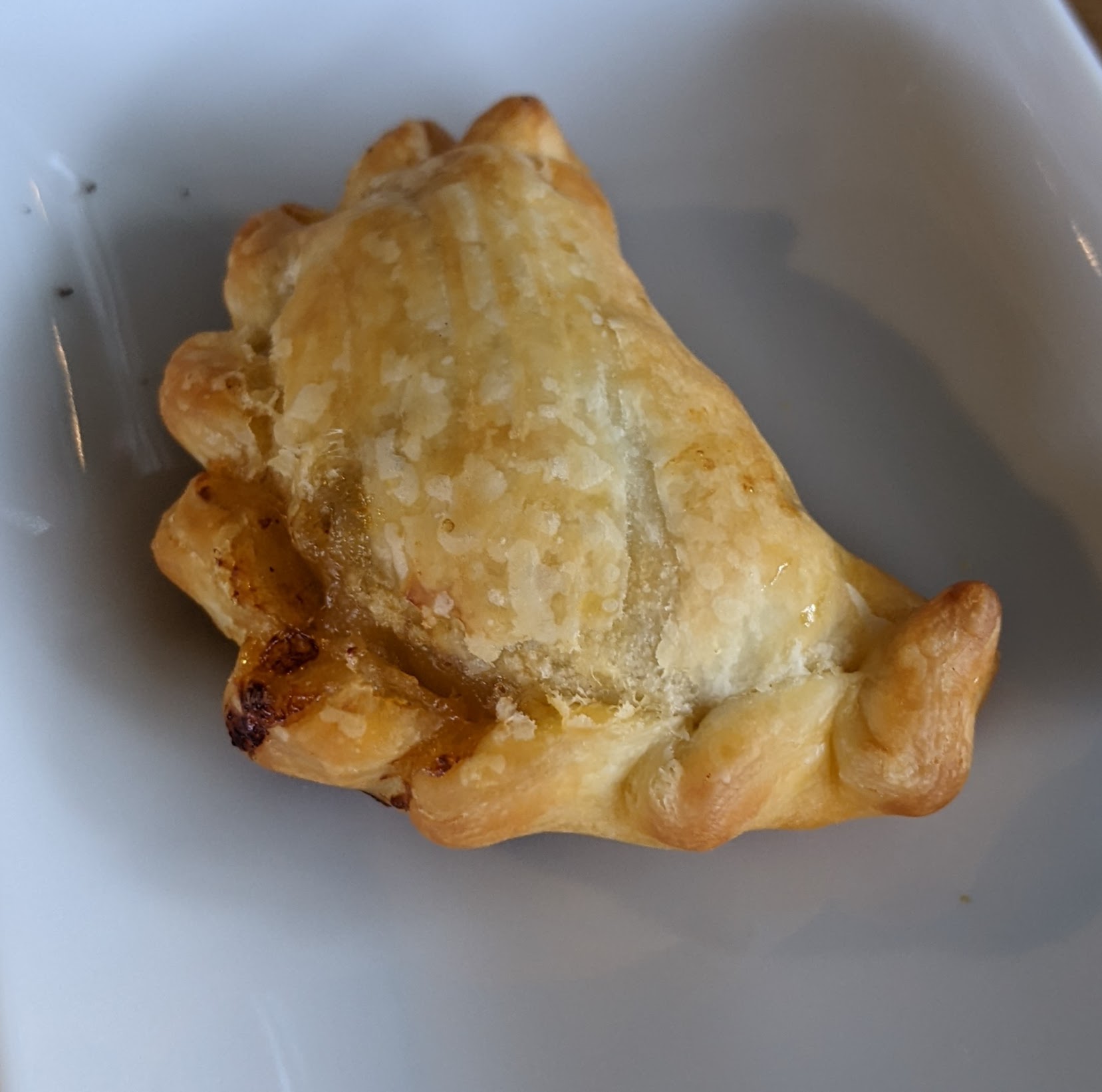
Tables in the garage are elegantly set with glasses for sampling one white wine and three red wines. The tasting itself was perfectly choreographed, with an introduction to each variety of wine offered, and tapas were chosen to enhance the flavor of each wine. We were served miniature beef empanadas to accompany the full-bodied specialty red that Bouza is known for. It was a treat to enjoy our wine tasting in such a setting.

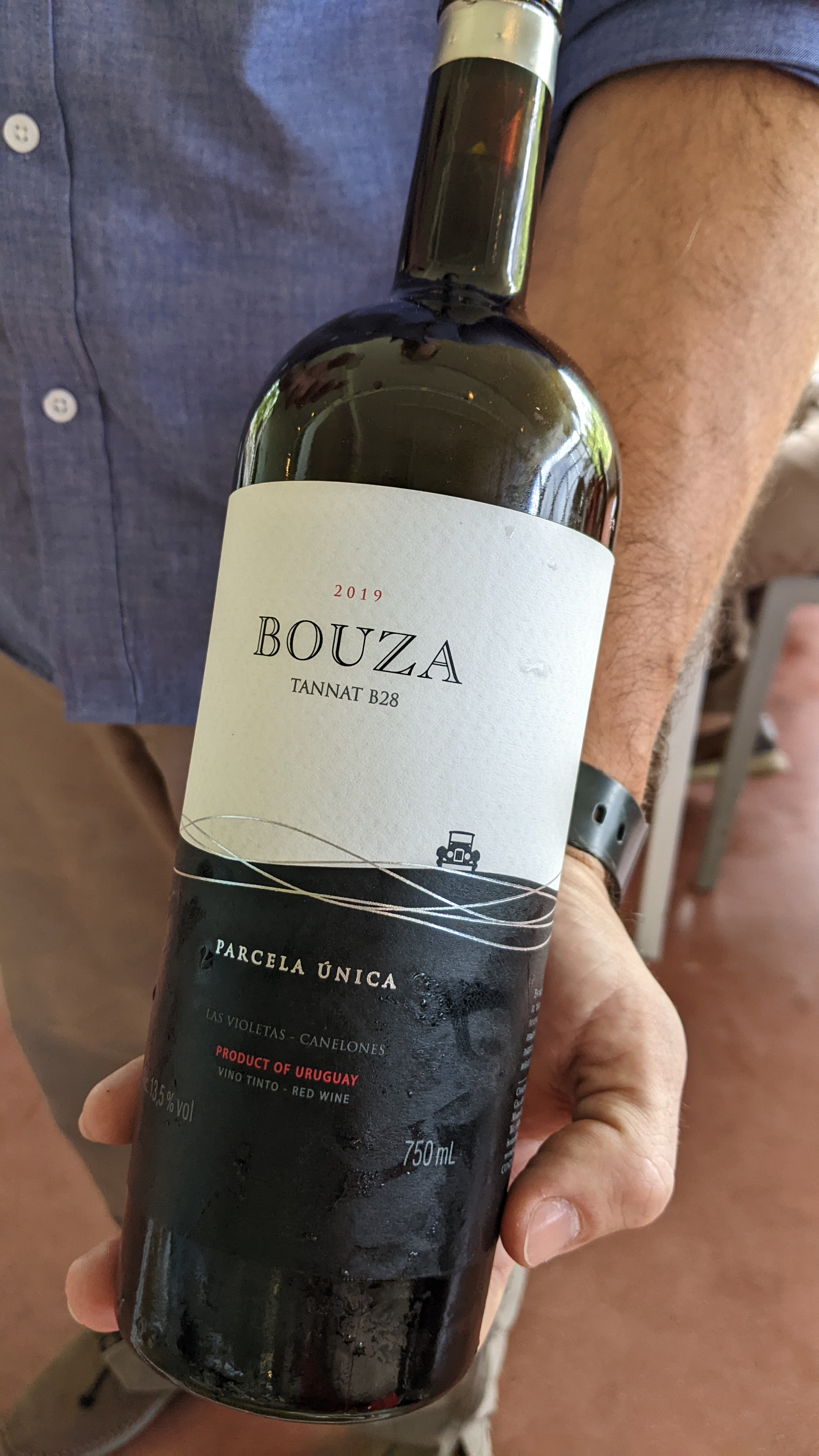
We were intrigued by this opportunity to sample wine produced from the Tannat grape, and pleasantly surprised by how much we liked this deep garnet, somewhat “heavy” red wine. Sometimes known as Uruguay’s national grape, most experts believe it originated in the Basque region of France. It was brought to Ecuador in 1870 by a Basque immigrant, and the vines flourished there. Today, this grape accounts for approximately one-third of total Uruguayan wine production. It is often blended with other grapes, Cabernet Sauvignon, for example, Pinot Noir, and others to produce lighter, less intense sipping wines.

Some people find the full-bodied, dry red too acidic for their taste. However, it has attracted new fans who appreciate its earthy flavor, complex fruitiness, and distinctive dark appearance. Interestingly, Tannat grapes have five seeds, compared with only two or three found in other red wine grapes. The additional seeds, when crushed, boost the concentration of antioxidants in the resulting wine. Ongoing research confirms that Tannat wines have significantly higher antioxident properties than other reds. So, If you need excuse to try it, this just might be it!

We needed no excuse to savor this distinctive, dry, dark, fruity wine. We found it to be smooth and exceptionally enjoyable, not that the other varieties we were served weren’t equally delightful! We were offered one white and three reds, each distinctive and served with complimentary small bites. During the course of our tour and tasting, we had an opportunity to meet and talk with participants from Uruguay and from neighboring Argentina and Brazil. As the lone Americans, that proved to be a cultural highlight. So much so that, because we had some time to spare, we shared a bottle of Bouza’s Tannat with another couple, confident that we had a driver who could get us back to our ship on time!

The historic winery that is the heart of Bodega Bouza was built in 1942 by Numa Pesquera. The winery has now been expanded to include a total of five separate vineyards. Tannat and Merlot grapes are grown at all locations, and Bouza has become renowned for its Tannat wines. Because of the family’s Spanish heritage, they were the first to introduce Albarino grapes to Uruguay and today they also produce Tempranillo wines. In addition, they produce Merlot and Pinot Noir. Bouza Whites include Albarino, Chardonnay, Semillon, and Riesling.

The other Bouza vineyards are located in Las Violetas, Canelones (the first acquired by the family), and in Maldonado, where their Paz de Azucar and Las Espinas vineyards are located. More recently, Bouza acquired the Canelon Chico vineyard in Canelones, once owned by their winemaker, Eduardo Boido.

We had a wonderful time at Bodega Bouza, and highly recommend this excursion if you find yourself in Montevideo, Uruguay. We would not hesitate to return, but would try to schedule time to include a meal there next time.

Now we are on a quest to find Tannit wine at home here in Arkansas. Hopefully, it will be Bouza!

Food — the primary reason to cruise?

Okay, so taking a cruise isn’t all about the food — sunsets, entertainment, and destinations play a large part in the selection of itineraries. Luxury service, creature comforts, pools and hot tubs, spa treatments, and a variety of tantalizing activities appeal to young and old alike, But unlimited drink packages and specialty dining venues clinch the deal for a growing legion of cruise-ship passengers each season. Major cruise lines are quick to recognize that they must cater to the diverse needs and preferences of both veteran cruisers and first-timers, so options vary considerably from one line to another. They also may be quite different from the choices that existed just a few years ago.

Recent passenger statistics point to a cruising resurgence. Numbers are back to pre-pandemic levels, and passenger volume for 2023 is expected to reach 106% of the 2019 level, to a total of 31.5 million passengers, according to Cruise Lines International Association (CLIA), and some ships now report sailing routinely at 100% capacity. Passenger totals dropped to less than five million in 2021 at the height of the pandemic, but 2024 numbers are projected to reach 36 million! That’s good for the cruise lines, and for the economy, but it means that travelers must make their plans earlier, particularly if they’re seeking bargain fares and any offered perks.

If you step back in time, transatlantic voyages were a means of getting from one continent to another, albeit in luxurious fashion. Today, a cruise is about a great deal more than getting somewhere. Trans-ocean itineraries now whisk cruise passengers in high style not only to and from Europe and America but from the West Coast to the Orient, from Asia to Africa, or to circle the globe on itineraries that stretch across months and seasons. The onboard experience is all-important.

One can traverse the Panama Canal as well as the Suez, cross the equator or the International date line, or drift lazily along the rivers in a score of different countries, sometimes even captaining your own vessel. Expedition cruises that package sightseeing with high-adventure experiences are growing in popularity.

It all makes me a little envious — how about you?

What about the food?

Yes, there certainly have been changes — but, for the most part, the elegance of cruise ship menu choices and the excellence of the food offerings remain! Even though midnight dessert buffets have almost universally disappeared, there is no shortage of food options on contemporary cruise ships. And lavish buffets offer a visual treat as well as wonderful food. Most offer the availability of food and drink from early morning to late at night — sometimes on a 24-hour basis!

Choose to take all your meals in your ship’s main dining rooms, or opt instead for lavish upper-deck buffets, specialty restaurants, or room service. For the most part, traditional dinner “seatings” are no longer specified. It’s all about choice, and the choices are extensive. Ships are getting larger, and on larger ships, passengers may not even have time to sample all the options! Early reports are that a new Royal Caribbean ship expected to debut in 2024 will feature at least 40 different dining venues.

Personalize your cruising experience

Last fall, on a brief round-trip sailing from Los Angeles to San Diego and Baja California aboard Discovery Princess, we enjoyed an abundance of tasty treats — from made-to-order hand-tossed pizza at Gigi’s Pizzeria at the heart of the ship’s three-level piazza, to loaded hot dogs and fries from the Salty Dog Grill adjacent to Deck 16’s pools. We even ordered a selection of street tacos via room service to consume on our private balcony!

We did not make it to the Salty Dog Gastropub that features gourmet burgers on Deck 5, but we met friends and enjoyed pre-dinner cocktails at Good Spirits at Sea, a lively bar and favorite gathering spot just across the Piazza. The International Cafe is just next door, and it was hard to resist sampling a sandwich with a cocktail. It became even more difficult to refuse a pastry treat with a mid-morning latte or a late-night espresso. As is our tradition aboard ship, we were awakened each morning — at a time of our choosing — by a knock on our stateroom door signaling the arrival of a pot of coffee, sometimes accompanied by a selection of croissants and pastries! Isn’t that the height of personal pampering? On Princess Line ships, it’s just one of the complimentary amenities.

While we chose to enjoy a leisurely dinner in one of the ship’s superb dining rooms most evenings, after a busy day of sightseeing in San Diego, we opted for lighter fare when we returned so we could watch our sailaway from the upper deck. Another evening, we indulged in a multi-course dinner at the Crown Grill before moving on for evening entertainment at the nearby Princess Live! lounge. With all the different options available, we did not want for food at any time of day!

What to expect on your cruise vacation?

The dizzying number of options means that you must do some initial homework even before you shop for a ship. The increased popularity of river cruising adds another dimension. Today, you can opt for a laid-back, relatively casual three-day excursion out of Florida to a Caribbean island, a week-long cruise in the Mediterranean or a cruise that circles Australia, Japan, or the Hawaiian Islands. Alternatively, you can explore Alaska, Antarctica, the South Sea Islands, or the great rivers of Europe and the Americas, including the Nile, the Amazon, or the Mississippi. Combine a pre-or-post cruise land tour, and your choices are multiplied.

Choosing to cruise typically means that you pay for your vacation in advance, often including the port excursions that interest you. You unpack when you arrive at your port of embarkation with no need to pack up again for the duration of the cruise, be it seven days, three weeks, or more. Still, cruising is not for everybody. If you haven’t cruised before, it’s wise to dip your toes in the water, so to speak, on a three or four-day sailing combined with a visit to the port or a nearby beach. Also, be sure to investigate thoroughly the options and packages available from the various international cruise lines.

Not only have itineraries and destinations changed over the decades but so have cruising traditions. Where, in the past, formal attire — even ball gowns and tuxedos on occasion — were proper for dinner — the emphasis today is on informal. Some lines recommend “country club casual” with slightly upscale dress expected in the evening, and many ships still specify a formal night or theme party as part of each itinerary, usually with advance notice. Most travelers, however, don’t even pack multiple bags; sometimes a carry-on and a backpack will suffice, even for a week or longer, with laundry services available to passengers.

If you choose to join the millions of people who plan to cruise in 2023 and 2024, whether you cruise as a solo passenger, as a couple, or as part of a larger group of family or friends, Bon Voyage! Enjoy both sea days and port visits to the fullest, and don’t forget to take plenty of pictures! Most of all, savor the food!

Polar Opposites

71-10-21 and 64-89-??

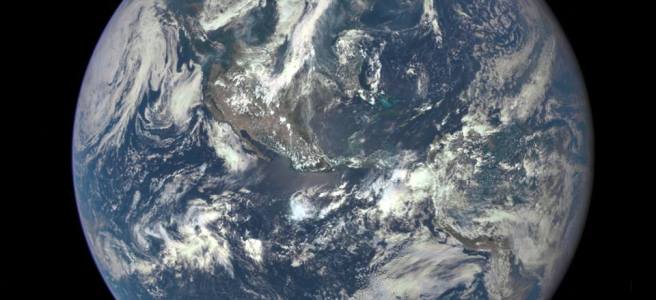
Points on a compass have little meaning to most people. Schoolchildren learn about the north and south poles, that the earth is tilted on its axis as it travels around the sun, and that the globe is divided into latitude and longitude lines. Most come to know that the equator separates northern and southern hemispheres, and that the latitude lines defining Arctic and Antarctic circles are set at 66 degrees thirty minutes north and south of the equator which is at zero. But it’s a fact long forgotten by most adults. In truth, there’s little reason to know exactly where one is on the globe at any given point in time, unless you have a precise need to navigate to a destination. Airline pilots and ship captains need that knowledge, but casual travelers really do not.

For what it’s worth, however, the coordinates of Hot Springs Village are 34.6720 degrees N, 92.9988 W. It won’t replace a street address, but if you’re interested in little-known facts, make a note! I once was tempted to have the coordinates of the tiny train depot in my favorite little village in Maine printed on a t-shirt, just to see if anyone would ask what the numbers meant. I didn’t.

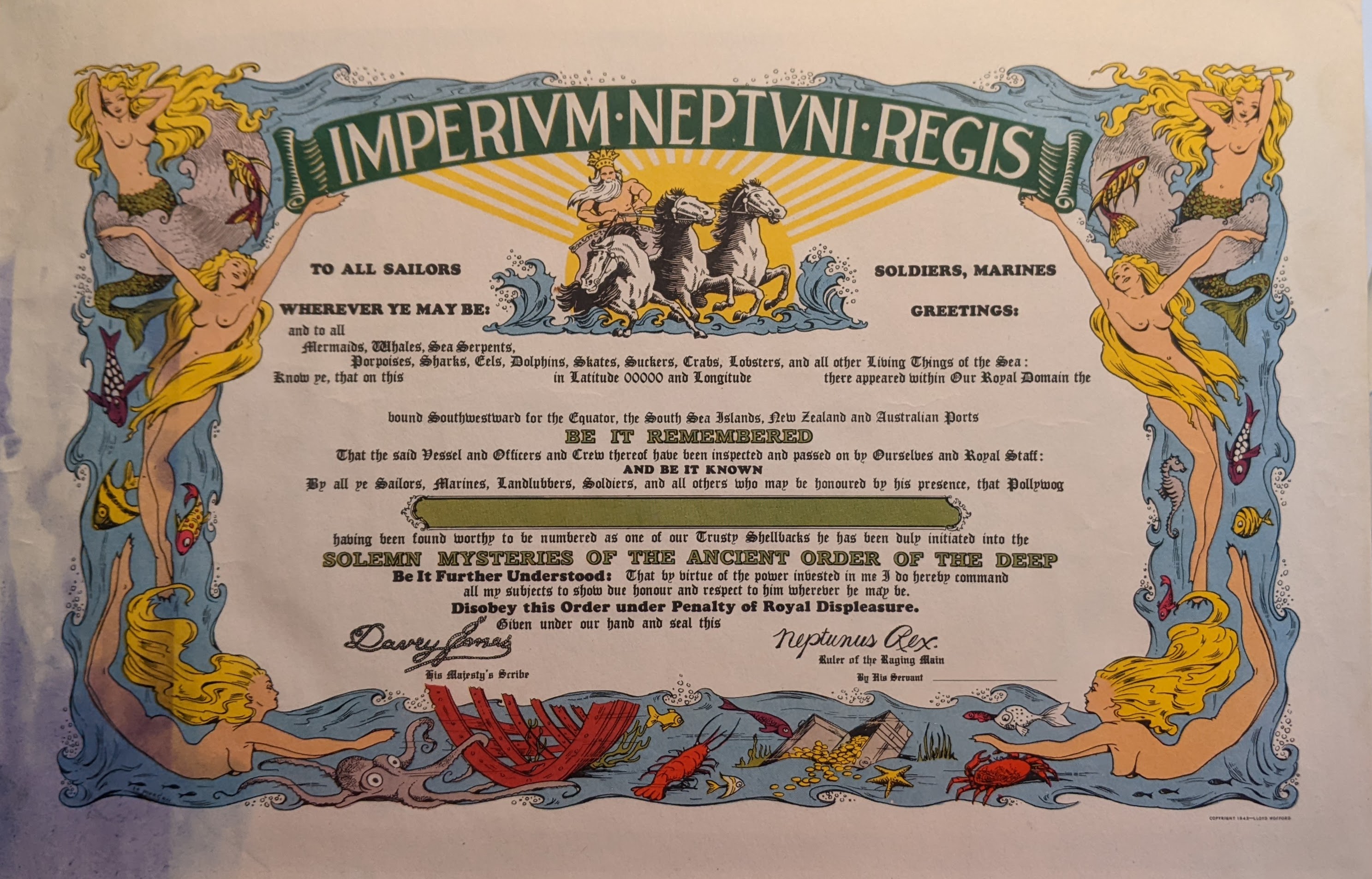
Ancient mariners noted the crossing of that zero latitude line regularly, and it is an honored tradition still practiced by sailors today. If you have been lucky enough to sail across the equator, you may know about the good-natured and sometimes raucous festivities that mark that passage. Read about the Royal Navy’s Crossing the Line ceremony aboard the aircraft carrier HMS Queen Elizabeth on the ship’s first equator crossing in 2021. I also have a certificate of passage across the equator. It is colorful and ornate, and it is not mine, but it is part of my family history.

The latitude is noted as 0000 — the equator. The longitude is left blank, as are other blanks for the name of the ship, the name of the sailor, and the date and time. On the back, however, is this handwritten note:

Longitude “Secret.” USS Admiral Benson. Destination: “On a Mission of War” Date: “Secret 1945.”

I find it fascinating that some traditions were kept even during wartime. Celebrations take place aboard modern cruise ships, to the delight of most passengers. And crossing the International Date Line can be a bit disorienting. At basically 180 degrees longitude, or half the globe away from Greenwich, England, at Longitude 0, the date line was only designated as such in 1884, to make timekeeping more consistent. The line, which designates the change of calendar dates, sometimes follows a zigzag path around political boundaries, as between eastern Russia and the Aleutian Islands of Alaska. Gaining or losing an entire day in an instant while crossing the International Date Line must be disorienting as well as exciting. Crossing from east to west means that travelers “lose” an entire day! You can gain that day back if you return later to your starting point. That must be disorienting as well as exciting. I don’t know if a certificate exists for that or not!

Some airline pilots will also announce the crossing of the equator, or the time-altering effects of crossing the International date line.

Breaking the Barriers

Tourists can easily venture north of the Arctic Circle on Scandinavian itineraries, whether on land, sea or in the air. Travel to Antarctica typically requires a sea voyage, and is only possible during the height of the southern hemisphere summer. A commemorative certificate is commonly awarded to passengers, denoting the actual southern latitude a vessel reached, but traditions vary. Most visitors to Antarctica do not actually cross into the Antarctic Circle. Most don’t get even to 65 degrees south latitude — the passages are too treacherous for all but sturdy scientific vessels with ice-breaking ability. There are no scheduled flights to the seventh continent from either South America or Australia. Scientists and researchers most often arrive by air at their remote research stations in late spring and depart the same way prior to the onset of the long Antarctic winter.

The earth’s magnetic poles continue to shift slightly, and the imaginary lines that describe the polar regions also vary somewhat. The boundaries of the polar circles are typically noted as 66-33-39 degrees North or South latitude. They are sometimes said to be situated at 66.5 degrees. There are only about 69 miles between degrees of latitude, so the difference is truly miniscule.

When my husband and I cruised along the coast of Norway in 2022, we entered into the Arctic Circle, according to our certificate, at 12:12 a.m. on June 17, at Latitude 66-30.1 N Latitude and Longitude 009-26.3 E. We continued north to Nordkapp, or the North Cape, at 71-10-21, the northernmost point of the European continent, and also to Skarsvag, a Norwegian fishing village with a population of 60, at latitude 71-06-47 N.

Approximately seven months later, we sailed from Ushuaia at the southern tip of Argentina across Drake Passage and along the Antarctic Peninsula, achieving a “most southerly latitude of 64 degrees 58 minutes.” The date and time are not noted on that certificate.

Next month, I will travel along the Dalton Highway, which runs north from just outside of Fairbanks to end at Deadhorse, Alaska, close to the Arctic Ocean. There’s a simple wood sign at about milepost 115 on the roadway, at which vehicles traditionally stop for photos. The sign, depicting the earth as viewed from the North Pole, simply reads “Latitude 66 33”. The 414-mile highway, some of it still only hard-packed gravel, was built to facilitate construction of the Trans-Alaska Pipeline. The pipeline itself stretches for 800 miles, from Prudhoe Bay in the north to Port Valdez, where the oil is loaded onto tankers for shipment to market.

Why do I do these things?

Well, for one reason, like Captain Kirk, I like to go where few other people have been. Secondly, I am especially fond of quirky destinations, and I will go out of my way for the photo ops and the unique experiences they provide. I like to stand at points where the land ends and the sea begins, and imagine what lies beyond. Many of these “furtherest” points fill me with a sense of wonder that past explorers, sailors, and adventurers stepped out into the unknown not knowing where exactly their journeys would take them, when they would end, or if they would ever return.

Just for the fun of it while we were boating in Maine, my husband and I visited Lubec, Maine, the easternmost point of the continental United States. Nearby are the distinctive red and white striped West Quoddy Head Light in Maine, and the historic East Quoddy Head Lightstation which stands at the most northern point of Campobello Island, New Brunswick, Canada. The names confused us until we consulted our navigational chart and realized that they designate opposite sides of Quoddy Narrows, and make perfect sense to local mariners, as they have for nearly two centuries.

We have returned to Key West many times to stand at the southernmost point buoy. Just for reference, latitude and longitude readings there are 24.5465 N, 81.7975 W. The northwesternmost and most western points of the contiguous 48 states are near Cape Flattery on the Olympic Peninsula in Washington state. Despite living in Washington for many years and boating in the waters around Puget Sound and the peninsula, I have not been there. Maybe someday.

Trips to Gibraltar give us reason to look longingly across the Staight that separates Africa from Europe — a mere eight miles. A trip to Portugal several years ago found us enthralled with the lighthouse at Cabo Sao Vicente, the southwesternmost point of Europe. It is said that it can be seen from 60 miles out to sea. And, yes, I have an ongoing fascination with lighthouses!

It is at these times, as I stand in these faraway places, I realize anew just how vast and beguiling this earth we call home truly is, and just how many places remain for me to discover.

Note: If you’re interested in random facts, have time on your hands that invites mindless armchair exploration, or are in need of trivial conversation starters, visit Wikipedia’s List of extreme points of the United States.

Surprise in a crystal glass . . .

The bottle was not particularly distinctive. I took little note of the winery name and there was no reason to pay attention to the vintage. My husband and I were waiting for friends in the comfortable lobby lounge of our hotel in Santiago, Chile, before venturing out to a nearby casual eatery for dinner.

Our trip, which had begun the morning before in Little Rock, AR, had been long, though exciting, and our arrival in Santiago had not been without an unfortunate attempt at credit card fraud by a cab driver. We had been cautioned, but even advance warnings, unfortunately, do not always protect foreign travelers. (See my related piece about travel precautions.)

However, we had arrived and been welcomed at the charming Hotel Ismael in the vibrant Lastarria District, put the weariness of a long flight, airport lines, and transport frustration behind us, and were planning how to best take advantage of our time in Chile.

A quiet aperitif morphed into a group sampling as we were joined by others in the lobby. I had asked for a glass of a pleasant local red wine, ready to accept what our server chose. My husband ordered a white variety, and we talked about our fresh impressions of the city that we had arrived in only a few hours earlier.

At first sip, I was intrigued by the rich, smooth, deep red of this wine I had never heard of. We quickly learned that the Carmenere is sometimes known as “the lost grape of Bordeaux,” a variety that was nearly destroyed by Phylloxera plague that devastated European vineyards in 1867. It was virtually “extinct” for nearly 100 years. Rediscovered by accident in 1994, the grape had been mistaken for Merlot until a Chilean vintner noticed that some vines took longer to ripen than normal Merlot grapes. Upon investigation, it was determined that they were actually Carmenere, and production in Chile took off.

Our visit to Chile brought us to the heart of the Maipo Valley, not far where the river of the same name flows out of the Andes Mountains. Several of our traveling companions scheduled winery tours during our two days in Santiago. They were captivated by the variety and the quality of local wines produced, the reasonable prices, and the beauty and appeal of the Chilean countryside, seemingly perfectly suited to support a growing winemaking tradition. Participants in one such winery tour brought back a quartet of partially-consumed bottles, which we willingly sampled in the lobby with the blessings of hotel staff.

Today, Chile is home to 90% of the world’s production of Carmenere, and a wide variety of wine is produced along Chile’s sinewy landscape from the far north to the extreme south. Some grapes are exported to other areas, and replantings of Carmenere vines are currently underway in other parts of the world. Wine produced from these grapes may be difficult to find at my home in Arkansas, but the market is growing, and its future is almost assured.

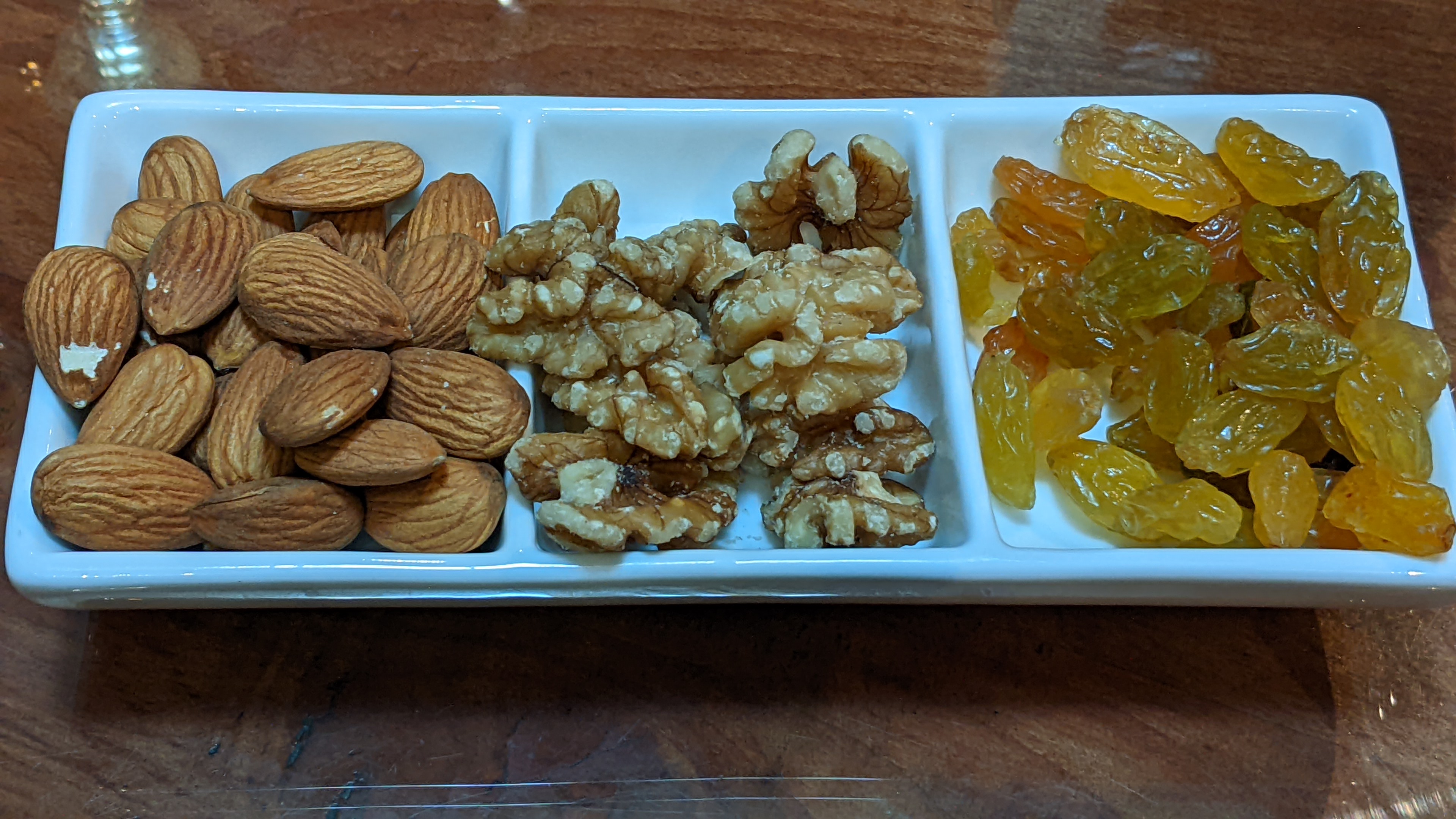
The combination of ripe and spicy fruit flavors, rich texture, soft tannins, and some notes of black or green pepper, herbs and cacao add to its unique character. I must say that is a wine critic’s description; all I can attest to is that I found it very pleasant and I immediately liked it. It is a wine that can hold its own with beef dishes and with vegetables as we learned when we later ordered a bottle with dinner, but we found it an exemplary choice with almonds, walnuts, and raisins — the snacks that appeared in tandem with our glasses that first afternoon in the hotel lobby.

It was a wine I found easy to sip and easy to savor, so much so that we purchased two bottles from the hotel stock to bring aboard our cruise ship when we sailed two days later from Valparaiso. We were pleased as well by the other Chilean and Argentinian wines we sampled in South America. During a port stop in Montevideo, Uruguay, we toured an up-and-coming young vineyard to learn more about production and the demand for fresh, new wines from other regions in South America. The varieties and the vintages are notable and worth sampling.

Sadly, Vines Wine Bar aboard Sapphire Princess had sold out of its stock of Chilean and Argentinian wine halfway through our voyage, proving just how interesting and drinkable these varieties really are! But, one of the onboard activities was a wine tasting that was well attended and highly informative.

Now back home, I will be checking with local wine importers to determine what’s available in my area. I am hoping to find Carmenere, but I will also be on the lookout for other South American wines. My husband and I look forward to sampling some, and we are eager to visit the Argentinian Coffee and Wine Bar in Hot Springs. I can testify that South American wines are a great choice for good times with friends.

Salud!

Want to learn more about Carmenere, the grapes that were misclassified for decades as Merlot? Check out these articles: https://winemakermag.com/article/1142-south-american-grapes; and https://www.winemag.com/2022/09/13/rediscovering-chilean-carmenere/

Where dreams and reality meet . . .

I must confess that the 1962 red Corvette convertible I once owned spawned dreams of taking the ultimate Route 66 road trip. The car didn’t come into my life until years after the TV show ended, but both were classics. And, as they say, old dreams die hard. Sadly, that car and I shared memorable times on other highways and byways, but the cruise along Route 66 never happened. The Corvette was a part of my automotive “stable” for about 15 years, and I fondly remember that first sports car.

I later learned, to my disappointment, that the car used in the television show wasn’t even red. Even so, it was easy to fall into the rhythm and excitement of traveling along the Mother Road, on a press trip in September with fellow travel journalists.

Route 66 was just about 2,450 miles long. It began in Chicago and meandered through eight states on its way to Los Angeles. Only 13 miles were in Kansas, but much of the original Kansas highway remains. What was America’s “first superhighway” opened in 1926 between Illinois and California, and it became a primary “escape route” for those who fled middle America during the Dust Bowl days. It was, at the same time, a symbol of opportunity and the sign of a country that changed rapidly following the war years.

The Way It Was

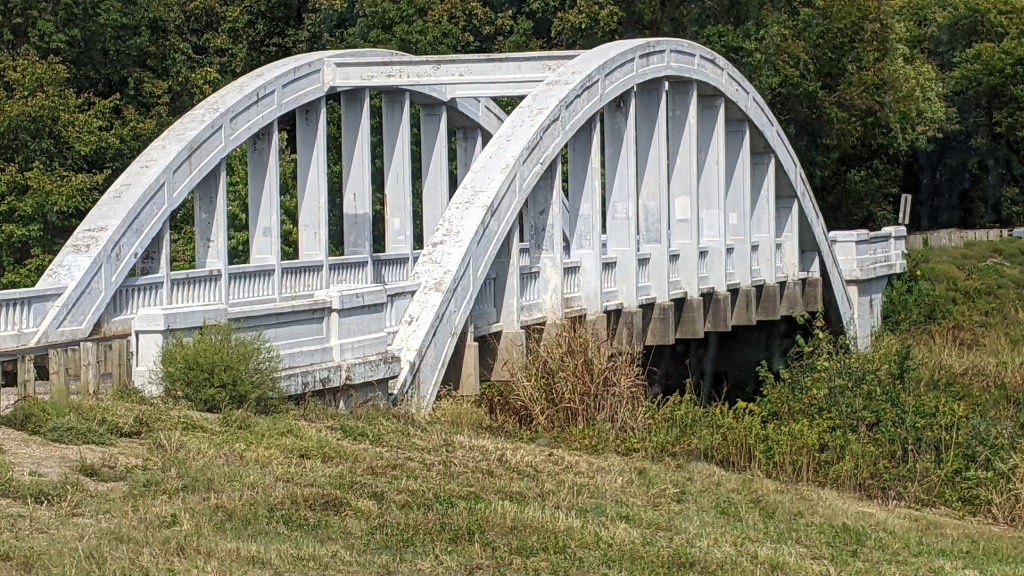
One can still drive across the last surviving Marsh Bridge over Brush Creek, one of three concrete and steel rainbow bridges that once traversed Kansas creeks along Route 66. The bridge now is on a loop road off the thoroughfare, and it’s a favorite destination for photos, picnics, and an occasional wedding. The Route was officially “decommissioned” only in 1985, and it is no longer the highway of choice for modern travelers, other than those who are seduced by its history and its television fame.

Kansas, at least this portion of it, hasn’t changed much visibly over the past several decades, but its people have. Modern highways move vehicles and people faster and more efficiently, but traveling the short stretch of Route 66 is definitely more fun! It’s clear that this section of the historic highway still does what it was designed to do — it “connects the main streets of rural and urban America.” The best part? There are ample opportunities to pull off the road and explore Kansas communities!

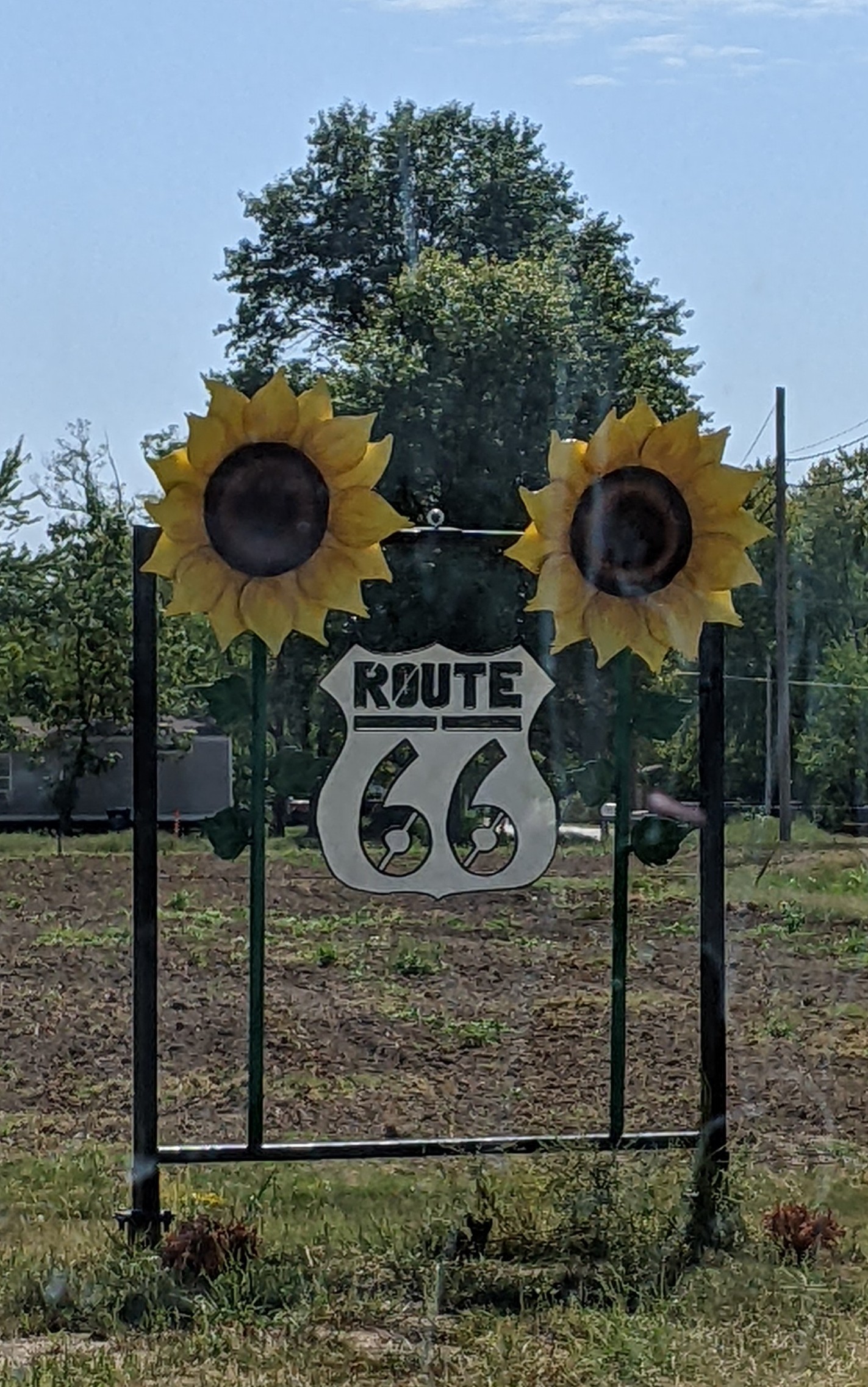
Nostalgic reminders of a very different past are evident along the way. History comes alive when the Route 66 signs appear.

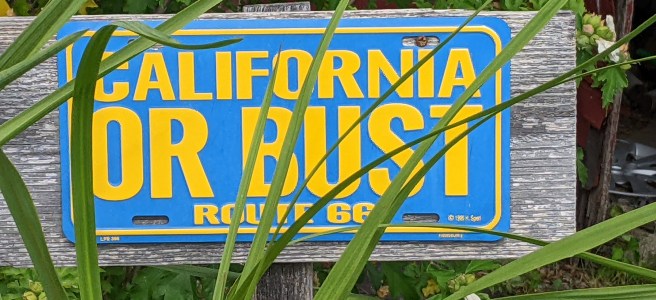
Nelson’s Old Riverton Store has been in continuous operation since 1925. Today, it looks much as it did then, and operates similarly, welcoming locals and tourists alike. It’s worth a visit – try a beet-juice pickled egg or purchase kitchy Route 66 magnets, ball caps, license plates and t-shirts. Why? Just because!

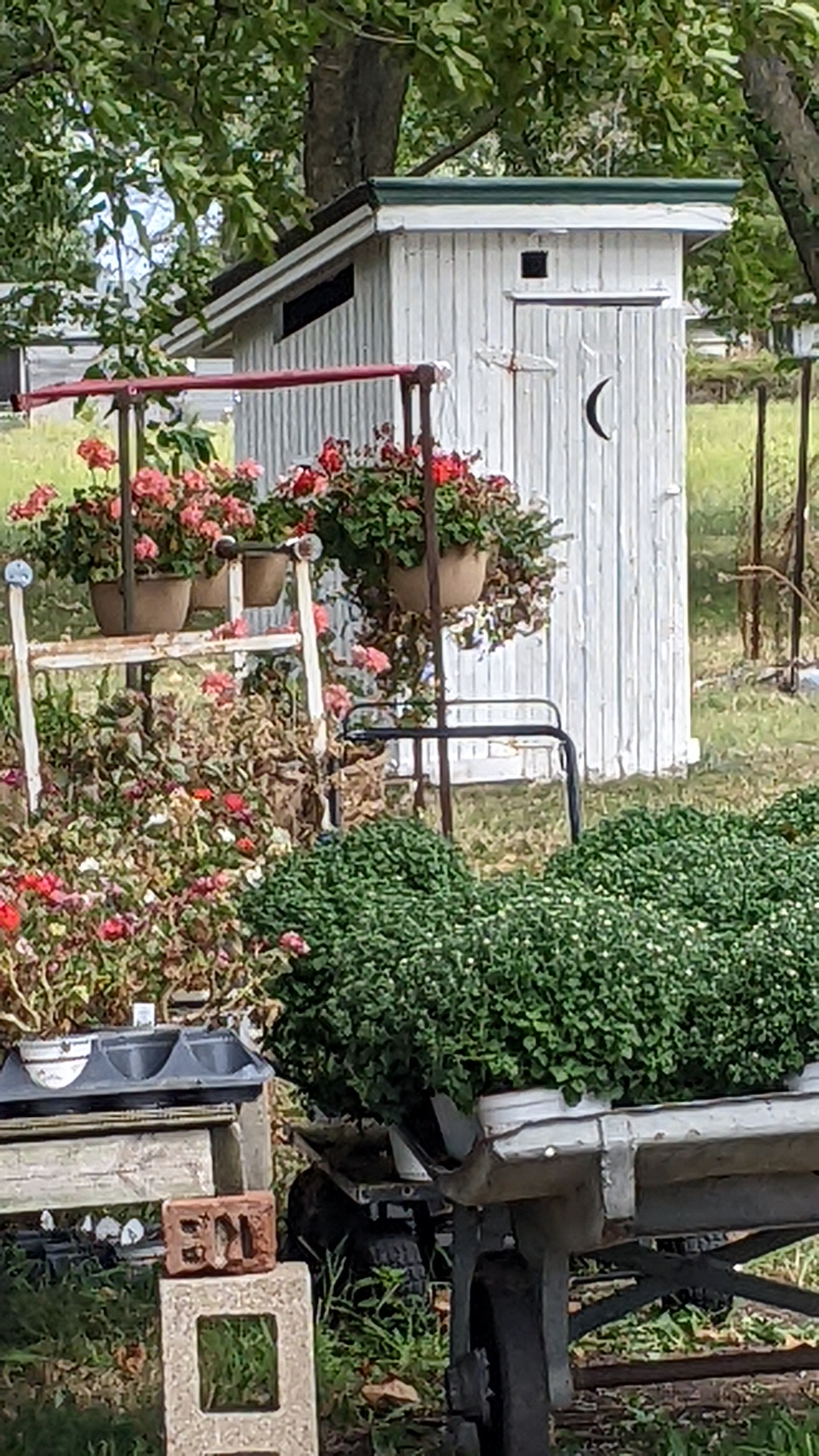
Locals still come to buy a loaf of bread or a can of beans, grab a soda and a sandwich, or just while away the time with friends. It’s that kind of place. It appears to be decades ago that any repairs were made to the building. Wildflowers grow up along the fence line and hanging baskets add color to the scene. Shopkeepers are welcoming and only too willing to share stories with visitors. It’s like stepping back in time.

It’s impossible to escape the influence of the Route in this part of Kansas.

Cars on the Route

Fans of Disney’s “Cars” are in for a treat at Cars on the Route in Galena. Visit the old Kan-O-Tex station and get up close to the rusty boom truck that was the inspiration for Tow Mater in the movie.

Walk down a dusty stretch of road and around a corner to enjoy a sack lunch at rustic picnic tables in the shade of a ramshackle lean-to. Snap some shots of the quirky old photo boards before moving on.

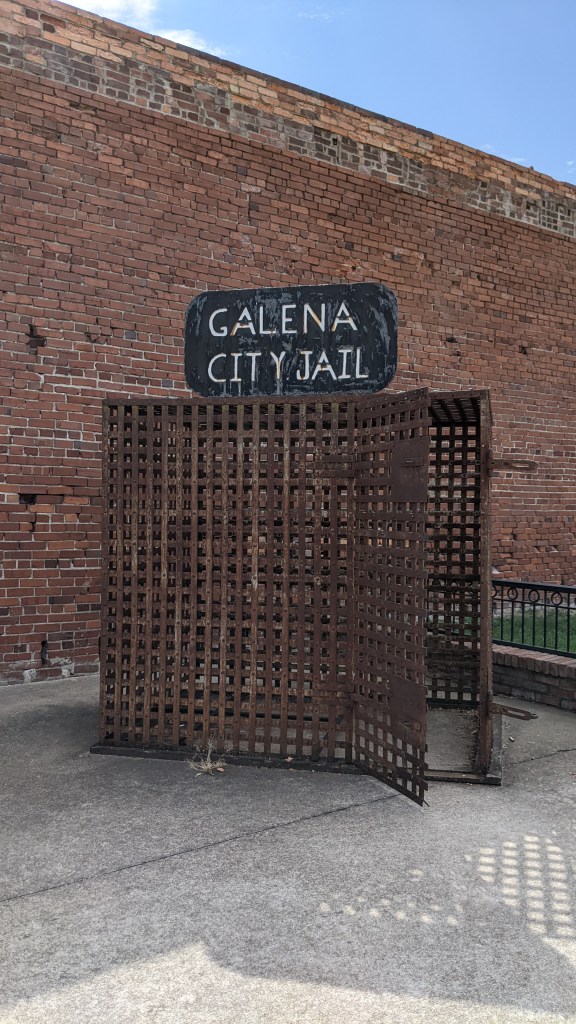
Other attractions in Galena include outdoor art and murals, a Texaco station turned curio shop on Main Street, complete with pumps set to recall the low gas prices of the time. There’s also a rusty old “jail” near the city’s square that provides an irresistible photo op!

We broke for lunch at Bricks & Brews in Baxter Springs, and what a treat that was, with a menu to satisfy any palate and attentive service accompanied by big smiles. We also stopped for an all-too-brief visit at the Baxter Springs Heritage Center and Museum. We had only limited time to spend, but it is a treasure trove of information about the town, the history of Cherokee County and southeast Kansas, the Civil War, and Route 66.

Nature and More

We pushed on to the Southeast Kansas Nature Center/Schermerhorn Park, near Galena. Admission is free, and the hilltop site acts like a magnet for anyone interested in visiting the 32-acre Shoal Creek Wildlife Area. There are wooded hills, streams, and caves to explore; dedicated anglers can even drop lines along a ¼-mile stretch of the creek. Indoor exhibits include live snakes, exploration drawers, plant, animal, and history exhibits, educational films, and the attention of a knowledgeable curator/guide. A bonus was a squirrel that visited the feeding station just outside the one-way glass!     

Add in a visit to Big Brutus, standing tall and proud at an old coal mining site on the Kansas prairie, and we were ready to sample Kansas comfort food — fried chicken with all the fixins at not one, but two, local restaurants with long histories in Pittsburg, Kansas.

I’ll fill you in on the food — and there was lots of it — next time. Our group sampled both downhome dishes — some with a new twist — and culinary delights for sophisticated palates.

Planning a road trip to this part of Kansas from the neighboring states of Missouri, Oklahoma, and Arkansas, or from farther afield, is easy. It seems appropriate to leave the Interstates behind and enjoy the miles of farmland punctuated by picture-postcard views of old barns, fields filled with growing crops that stretch towards the sun, and animals lazily passing the time doing what farm animals do. The route stretches on with gentle curves; small towns are not far apart and each promises a unique and unusual experience.

Be sure to request your Kansas map and state travel guides in advance of a road trip to Kansas. Knowing where you’re going and what there is to see makes a driving trip so much better!

Full Disclosure: This trip was sponsored by Kansas Tourism, and the itinerary was prearranged. But the impressions are mine alone. I want to return, and it’s an easy road trip from my home base in Arkansas. I’ll be writing more about Kansas as well as about other travel to new destinations abroad in 2023. Subscribe to my blog here, or follow me on Facebook and Instagram.