Escape the Bounds of Earth: Visit Space Center Houston

On April 12, 1961, Soviet Cosmonaut Yuri Gagarin became the first person to fly in space. The event not only made world news, but it reinforced American fears about being left behind in the technological competition with the Soviet Union.

Two and a half years earlier, the Soviet satellite Sputnik 1 had circled the planet for approximately three months before burning up as it re-entered Earth’s atmosphere. That was followed by dogs in space, a fly-by of the moon, a crash of the Soviet Luna 2 probe onto the surface of the moon, and the first photos of the dark side of the moon. All were Soviet accomplishments.

John F. Kennedy was elected President in November 1960. At the time, it seemed as if the Soviet Union had beat the U.S. into space before the term “space race” had even been voiced.

Then, in an address to Congress and the Nation on May 25, 1961, President Kennedy proclaimed: “I believe that this nation should commit itself to achieving the goal, before this decade is out, of landing a man on the moon and returning him safely to the earth.” 

At the time, it seemed an audacious, if not impossible, dream. But the mood of the nation was energized and hopeful.

Plans were made for two new rocket launch complexes north of Cape Canaveral in Florida, although construction of the enlarged Launch Operations Center wouldn’t begin until November 1962. Land was set aside near Houston for what was to become NASA’s Mission Control Center. The new president wasn’t about to let the other side gain further advantage. The National Aeronautics and Space Administration had already established the Marshall Space Flight Center (MSFC) in Huntsville, Alabama.

The Race to Space Had Begun
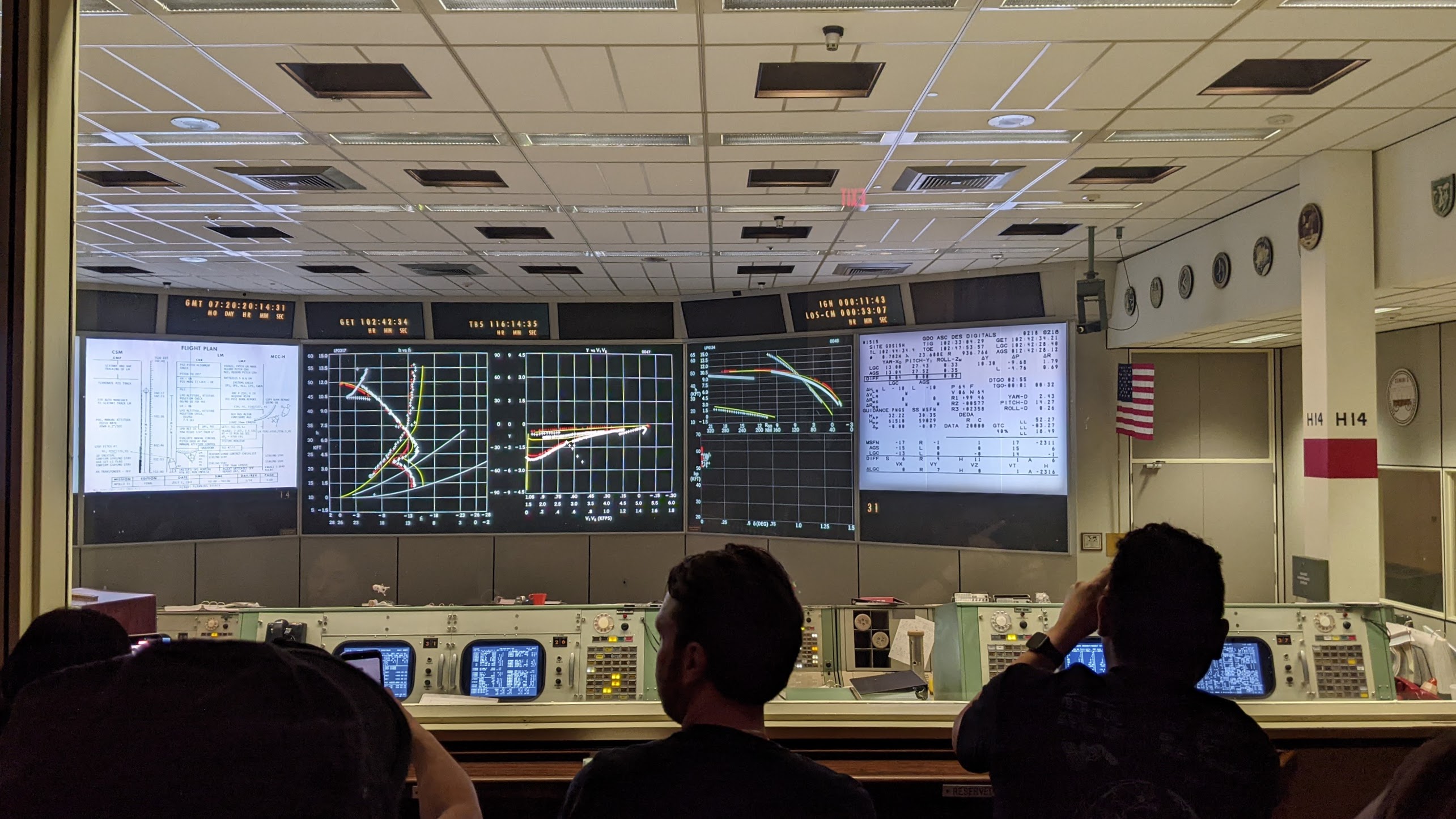
My visit to Space Center Houston included a tour of the Mission Control Center in use for most of the country’s early space flights, including the first moon landing in 1969. It has been preserved as it was then — down to cigarette butts in ashtrays, Styrofoam coffee cups amidst the banks of monitors and scattered about on the floor, a few black desktop telephones with curly cords, and bulky vintage computers.

Today, the room looks somewhat like a movie set. Stadium seating behind a wall of glass allows visitors to see the array of desktops and equipment. For those of us who watched that first landing in real time, it was eerily familiar.

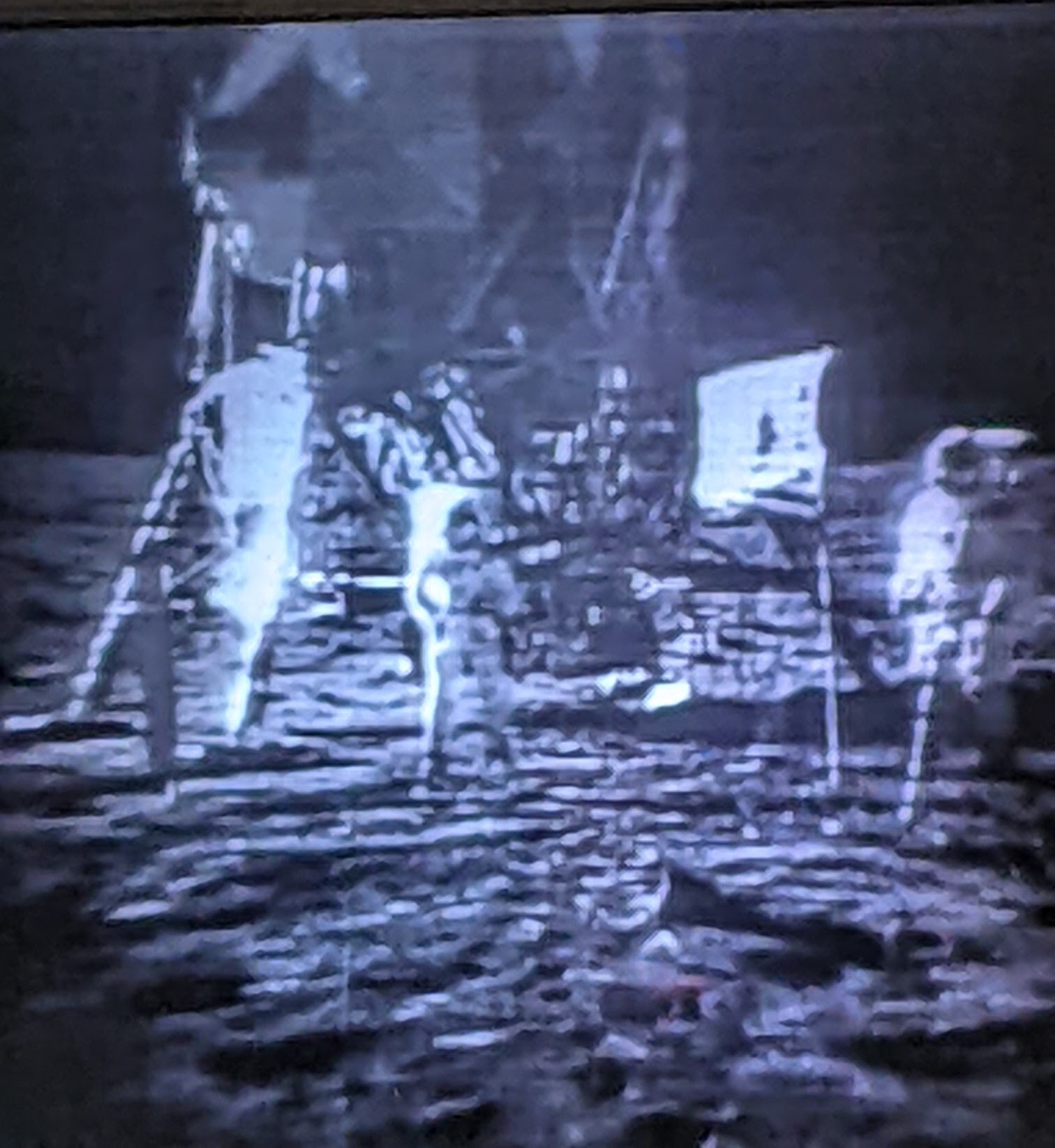
Visitors watch the broadcast tape from July 20-21, 1969, replayed on a wall-mounted TV screen. Listening to the raspy voices of mission control directors and news reporters, I was transported back to that time. I nearly teared up once more as veteran television commentator Walter Cronkite appeared overcome with emotion. I couldn’t resist mouthing the words: “The Eagle has landed.”

First Men on the Moon

In quick sequence, I relived the disbelief, the awe, and then the jubilation of that July day. I almost forgot that it had happened 55 years ago.

The first words spoken by Neil Armstrong were unclear: “One small step for . . .”  Did he say man or a man? And then, “One giant leap for mankind.”

Astronaut Buzz Aldrin followed Armstrong, stepping out of the lunar lander onto the moon’s surface approximately 20 minutes later. The lander itself was an odd sort of taxi from the orbiting Apollo spacecraft to the moon’s surface. With spindly “toothpick” legs, it seemed held together by aluminum foil and chewing gum. Pilot Michael Collins remained aboard the Apollo command module Columbia in orbit around the moon.

The lunar lander was on the surface of the moon for about 21 hours, and the two astronauts didn’t venture far from the landing site, dubbed “Tranquility Base” by Armstrong. They did, however, plant the first American flag on the surface and they collected more than 45 pounds of moon rocks before reboarding Eagle.  When they returned to Columbia with their payload, the lander was jettisoned to fall back onto the surface of the moon.

The Apollo 11 mission that brought these first humans to the moon was just the fifth crewed mission of the Apollo program.  Six Apollo missions actually included moon landings, and Armstrong and Aldrin were the first of only 12 men to step onto the moon’s surface.

Ever!

The final moon landing was a 12-day Apollo 17 mission in December 1972, just a little over three years after Apollo 11.

NASA Today

The current mission control center is still located in the same building at Johnson Space Center, just a floor or two below the original. Our group did not visit, but I expect it is sleekly outfitted with an updated array of wireless communication technology necessary to monitor today’s space launches and landings.

The grounds of Johnson Space Center, however, are “littered” with reminders of early American space exploration.

Marvel at the immense Saturn rocket that carried Apollo astronauts into space. The 30-story tall rocket was displayed outside and upright for two decades, but it suffered “weather abuse,” so it has been restored and is now displayed horizontally in a specially constructed building.
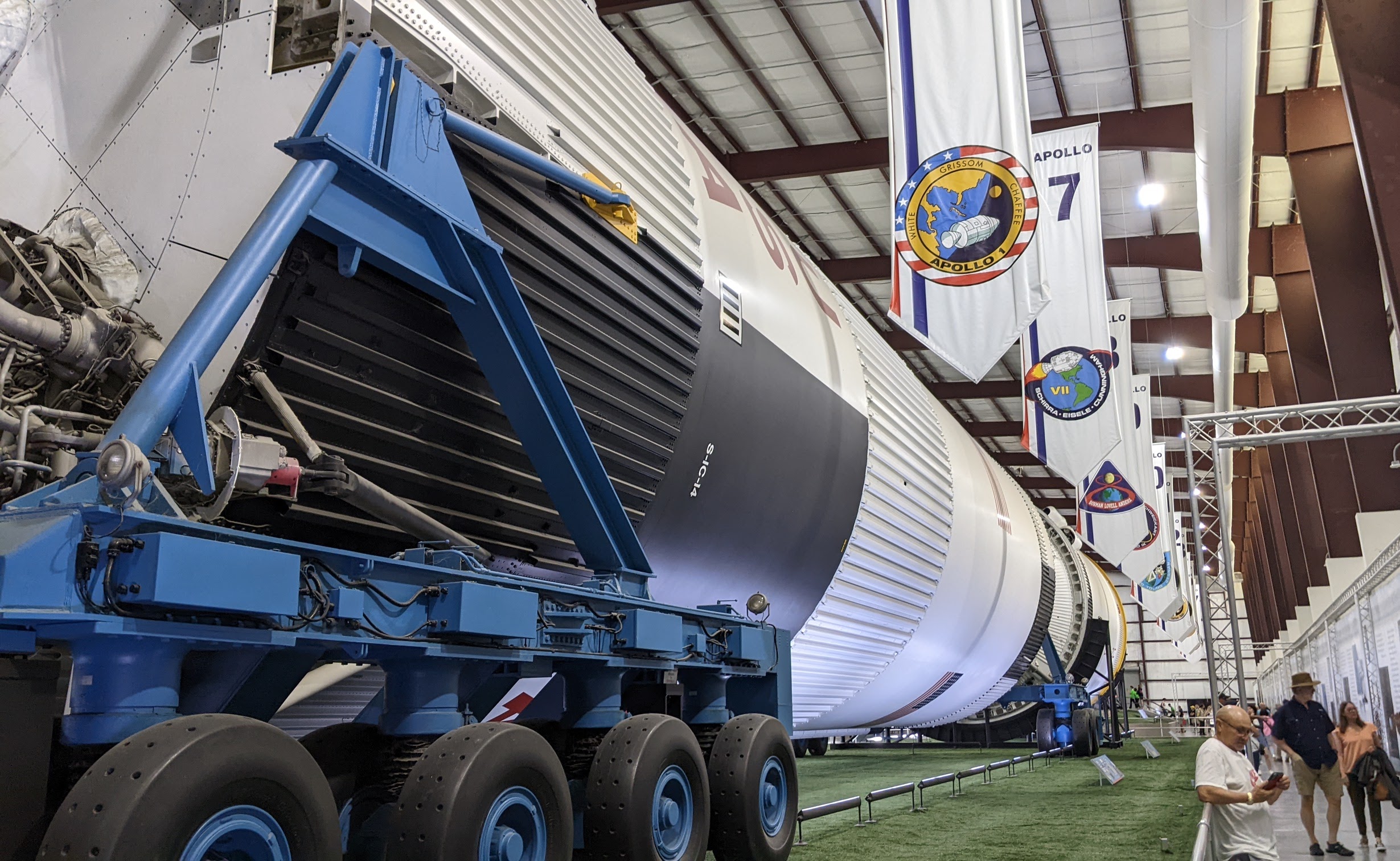
I gasped at the size of the five immense thrusters on the Saturn V. It is one of three intact Saturn V rockets that still exist, and it stretches for what seems like blocks, while flags and story boards chronicle NASA’s 17 Apollo missions, both the successes and the tragic failures. It’s a sobering experience.

Learn the history, from initial pre-orbital flights through later missions used to transport men and supplies to the orbiting Skylab, launched into orbit in 1973.

Then, move on to the space shuttle era. 

Between 1981 and 2011, American shuttles successfully completed 135 missions and carried 355 astronauts from 16 countries. My husband and I were observers twice for shuttle launches, including the last flight of Space Shuttle Discovery in February 2011. Discovery was the third of five shuttles built, and the first to be retired.  The U.S. shuttle program was discontinued later in 2011, with the final flight of Shuttle Atlantis.
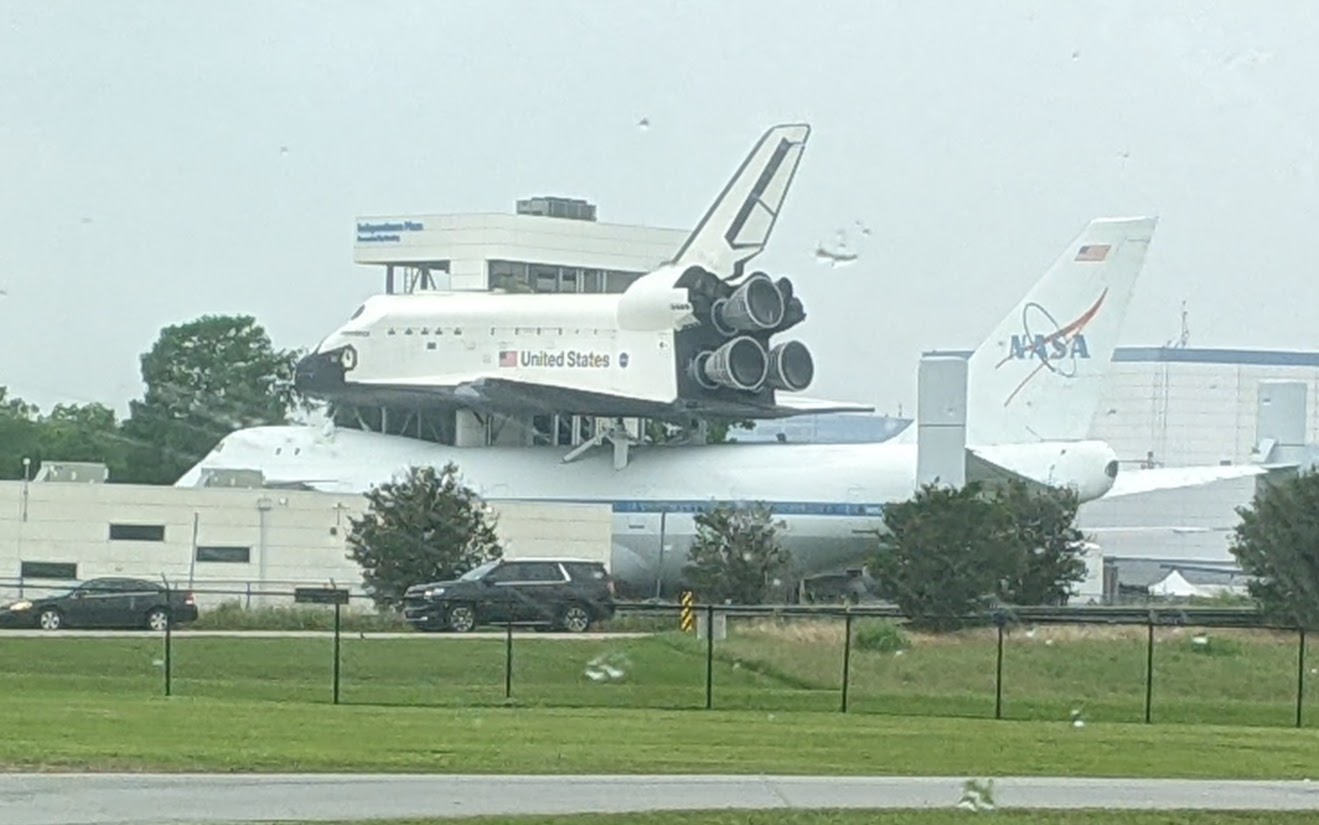
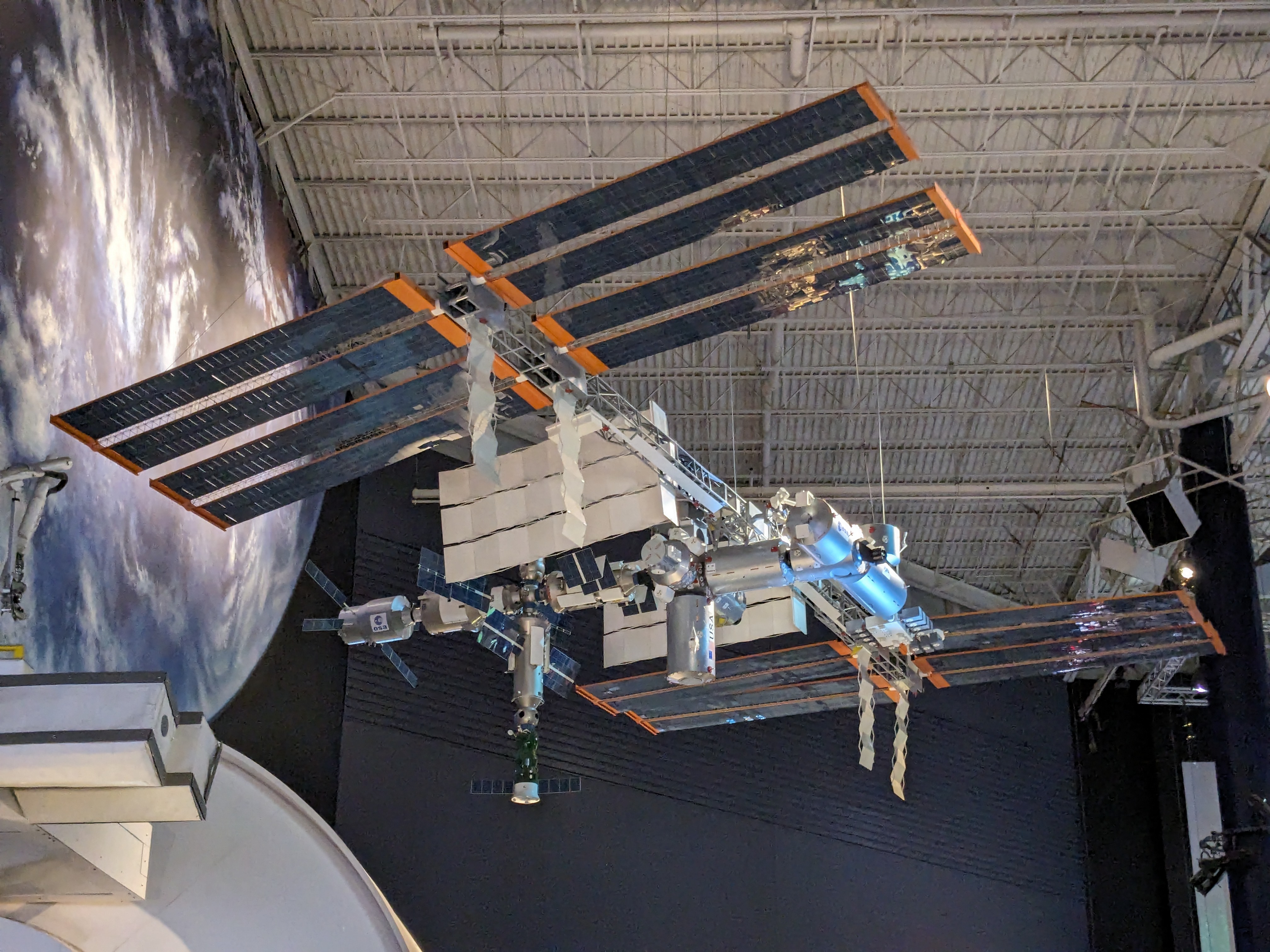
Get close to a full-size Boeing 747 aircraft with a sleek white space shuttle on its back. It rests in a peaceful field, adjacent to a herd of grazing Longhorn cattle. The reusable, winged spacecraft was designed to carry large payloads and crew into orbit. It was instrumental in the development, initial outfitting, and staffing of the International Space Station (ISS). Crews have lived and worked aboard the ISS continuously since the year 2000. Today, however, NASA cooperates with other nations and private companies to transport crews and supplies to the space station.
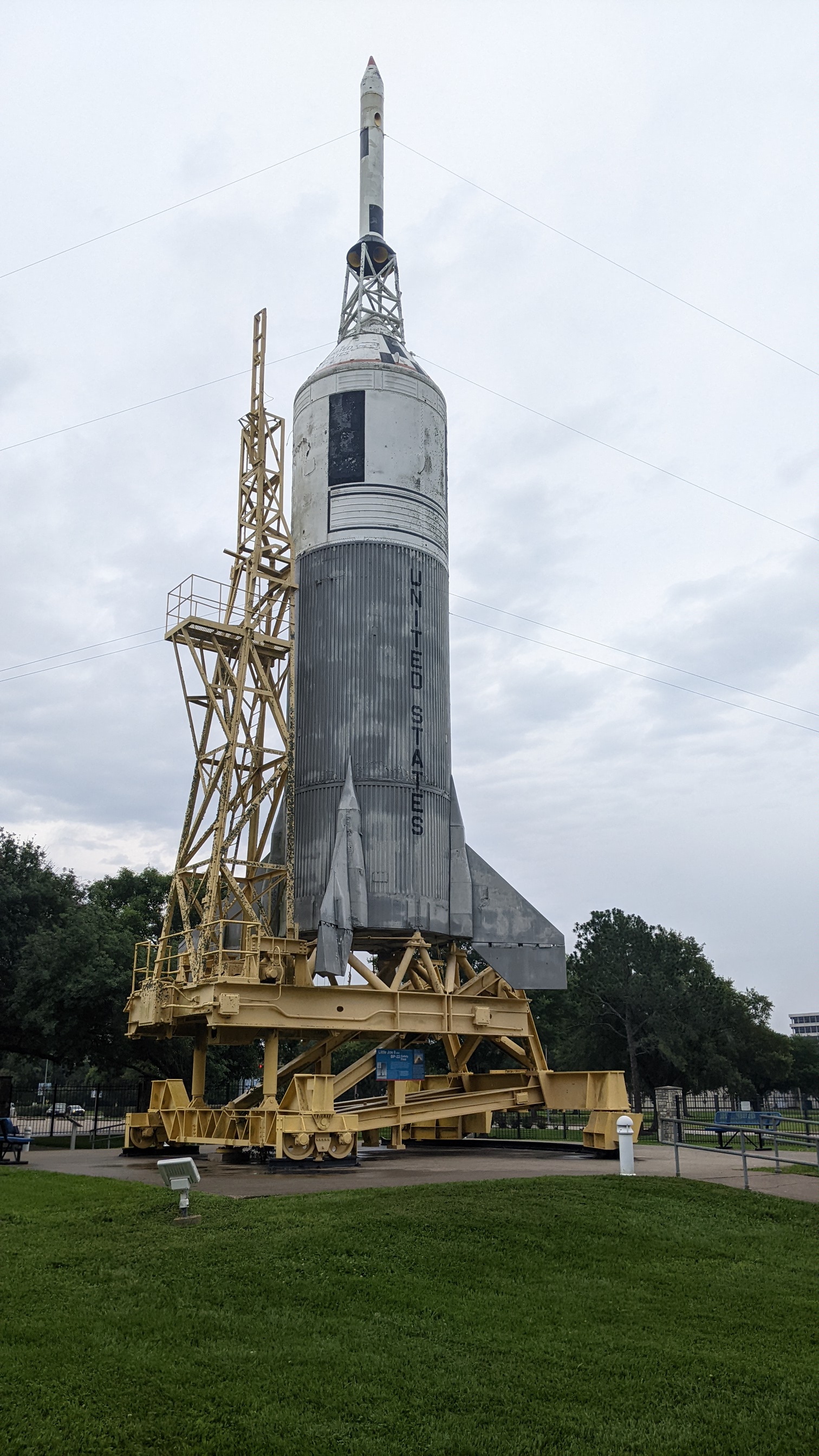
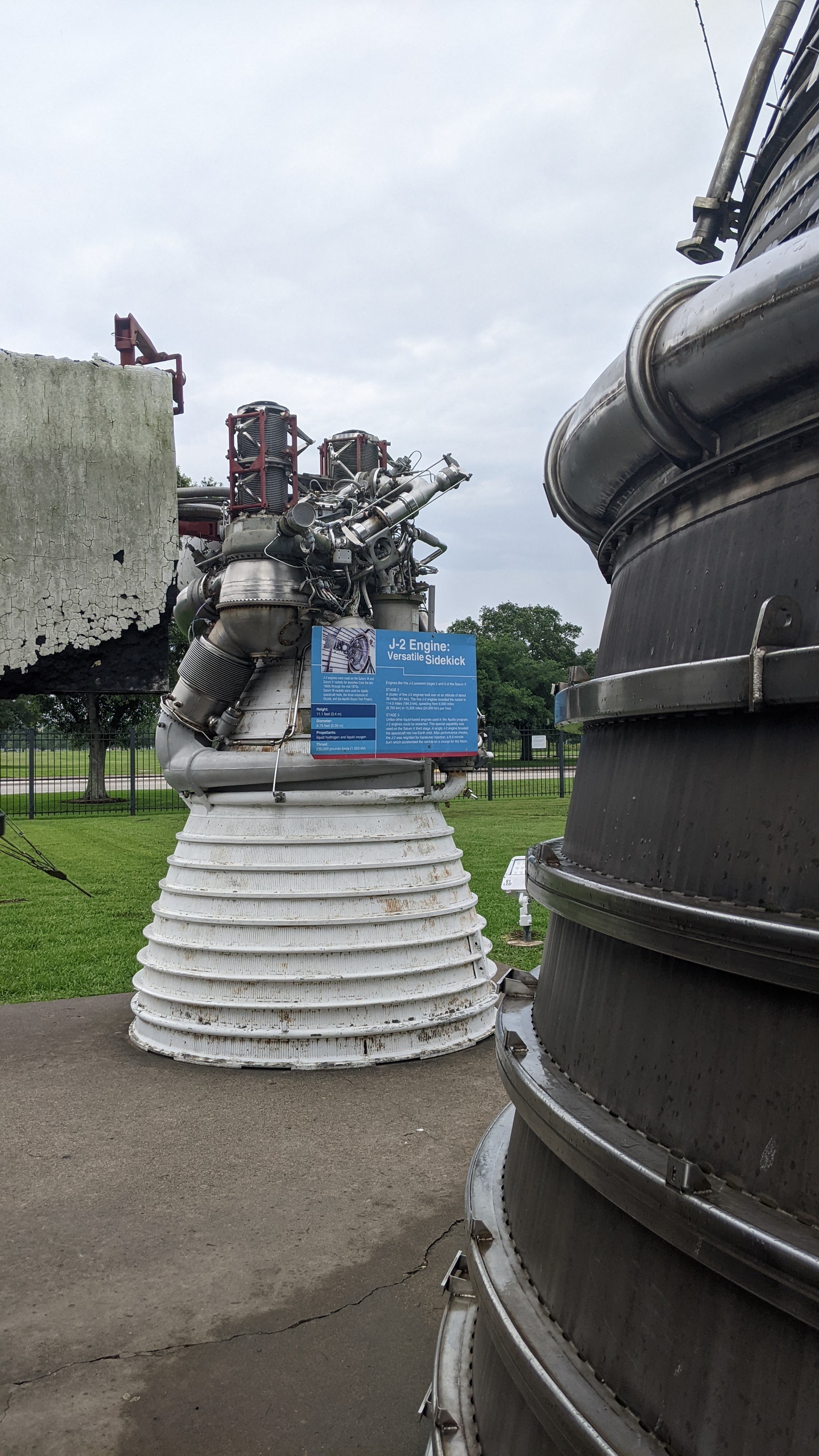
Walk through the outdoor “rocket garden,” then spend as much time as you wish in the Space Center Museum to learn about NASA’s past and future missions. Make time to visit interactive exhibits or to attend a lecture. I found it interesting to learn about meal preparation in space.

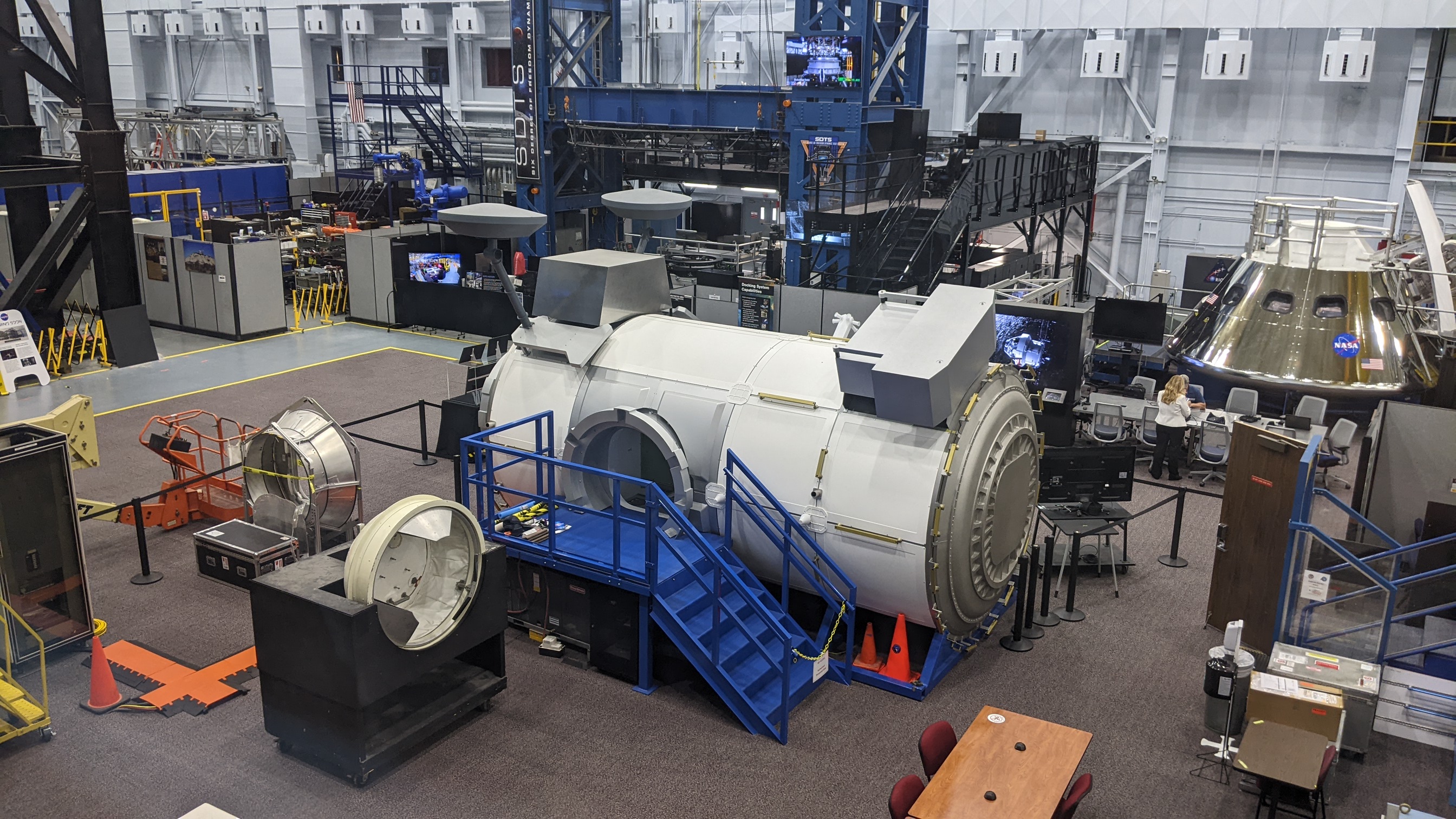
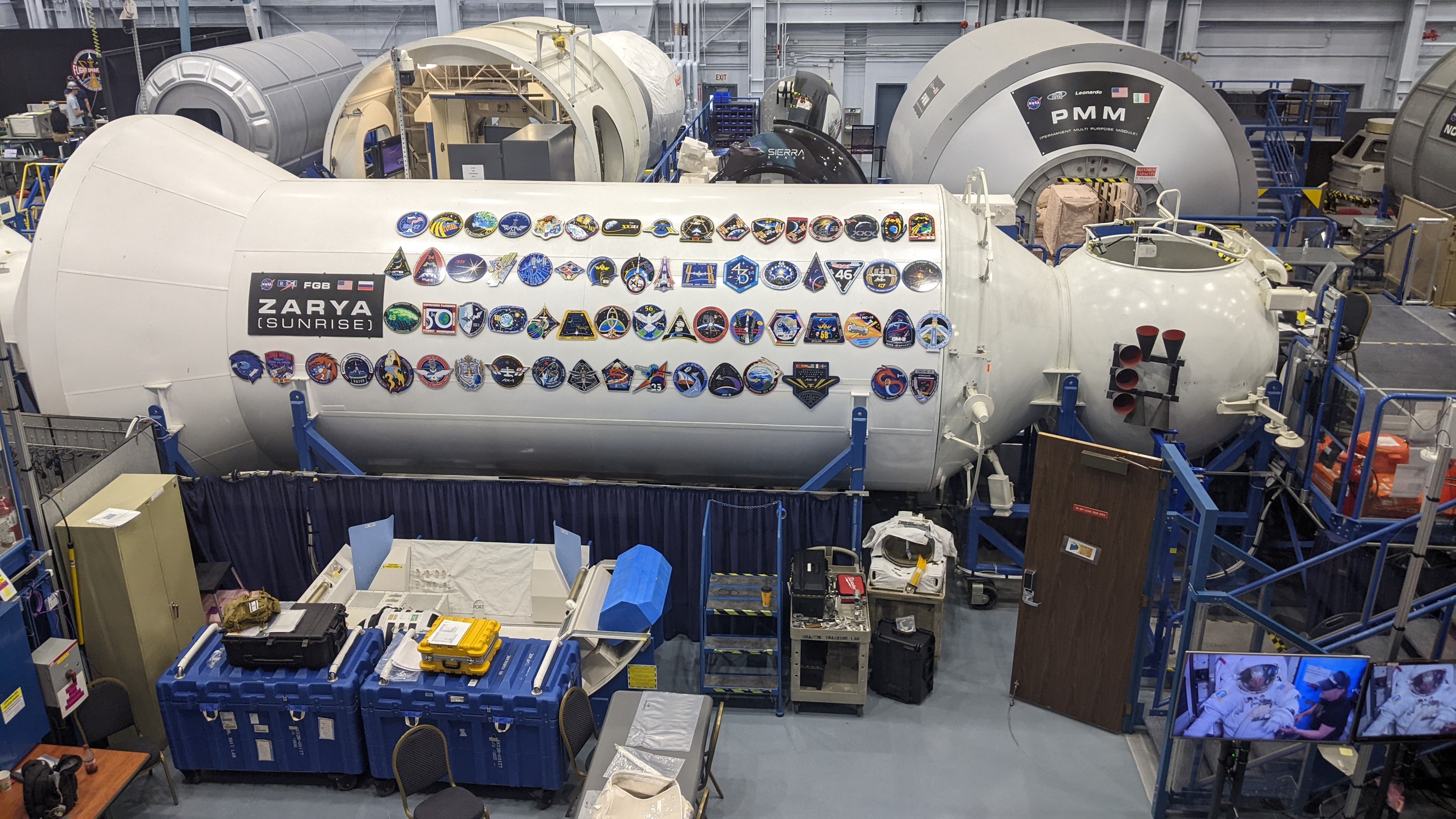
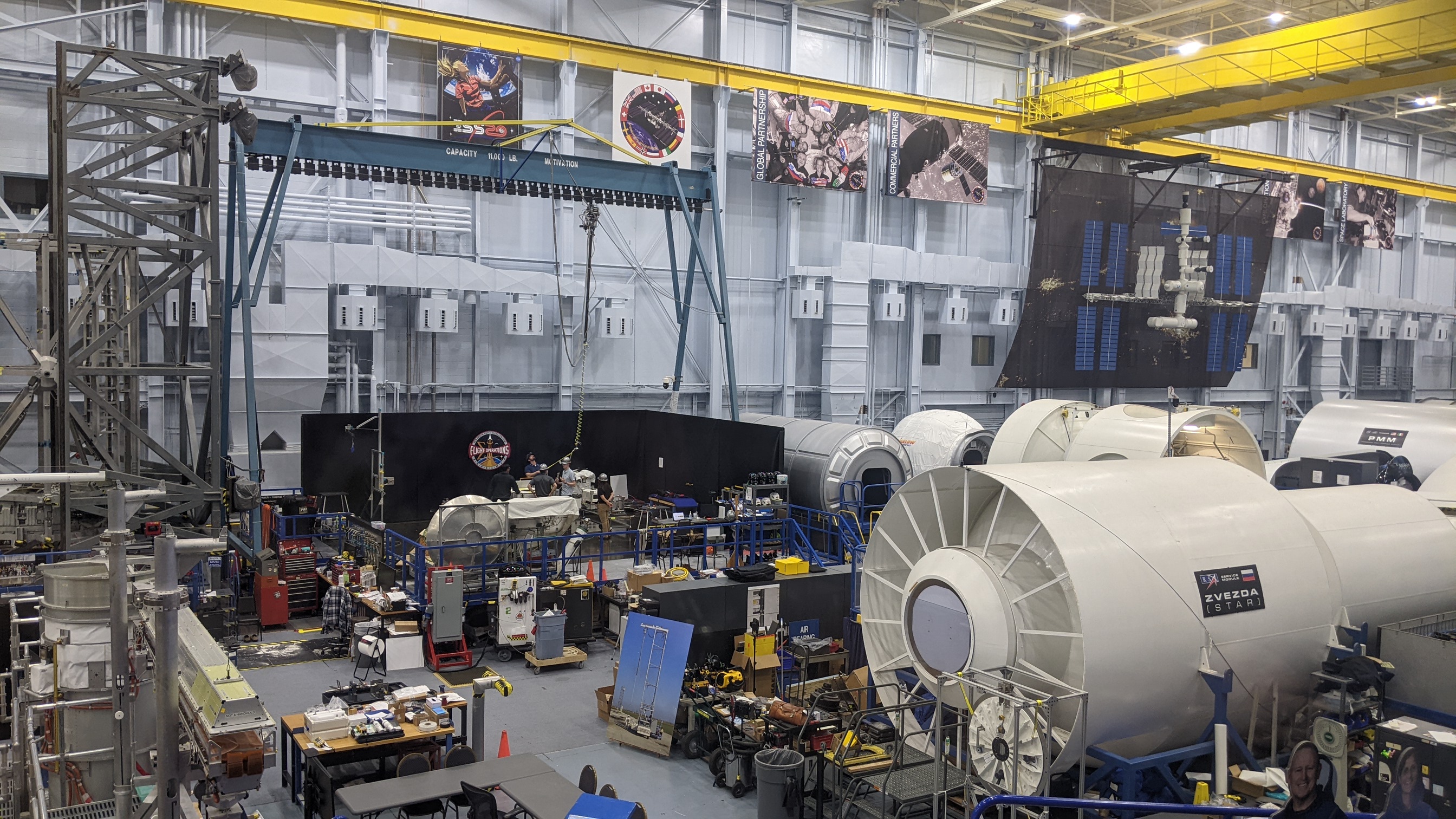
My tour also included a walk along a raised catwalk to peer down at the floor of a huge astronaut training center with full-size replicas of space station modules and transport capsules that journey to and from the space station. Although I am certain it can become a hub of activity at time, it appeared quiet and relaxed the day we visited.
Anticipate Future Exploration

Many more space missions are planned, but they will be very different.

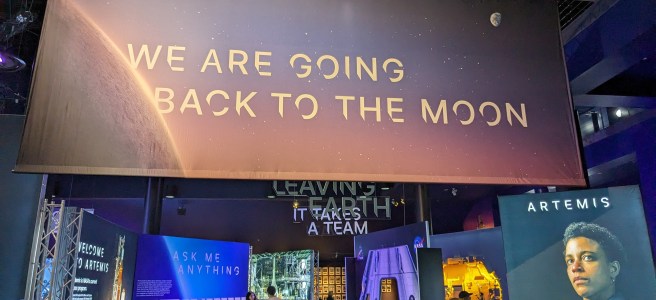
First, according to NASA, the United States will return to the moon, perhaps as early as 2026. The ISS is set to be “retired” and dismantled by 2030, replaced by two or more international orbiting space stations, likely to be commercial or privately financed ventures. Then, American astronauts and the international community will turn their sights towards Mars and beyond.
The Artemis Accords, a set of principles designed to foster international partnerships for space exploration, were conceived and signed by representatives of eight nations, led by the United States, in 2020. To date, 42 countries have signed the voluntary agreements.

At Home on the Prairie

The NASA site is well-integrated with its Texas prairie roots. The agency has been working on sustainability projects in one form or another for more than 20 years. In addition to the Longhorns that share the 1,600-acre campus, the Johnson Space Center hosts a Houston Zoo program dedicated to increasing the population of endangered Attawater Prairie Chickens. The birds are bred in onsite field pens in an area that resembles their native habitat.

Another unique feature offers employees free access to more than 300 bicycles while on site to provide emission-free alternatives to driving while on the campus that’s adjacent to Clear Lake, which flows into Galveston Bay. During heavy rain, flooding and associated pollution can occur, so the space center has installed mitigation measures to alleviate potential problems and avoid disruption of operations. While NASA continues to have its sights set on space missions, it is also serious about protecting the home planet.

Visiting the Space Center

Space Center Houston is said to be the Number 1 attraction for foreign visitors to the Houston area. Leave plenty of time for your visit. There is much to see. One could easily spend an entire day in the exhibit hall, and tram tours of the 1,600-acre campus are offered. 

The center brings alive the history of American space efforts, from the first sub-orbital flight of Alan Shepard in 1961 and John Glenn’s three orbits around the Earth in 1962, to future planned Mars missions.

It is affiliated with the nation’s Smithsonian Institution and is one of several locations where visitors can learn about the U.S. space program. Visitor centers are located throughout the country, including Kennedy Space Center in Florida and the Marshall Space Flight Center in Alabama. A Space Camp is also held at Marshall.

If you’re interested in the full story of flight, the National Air and Space Museum in Washington, D.C, should be on your list. And, if you’re visiting the Midwest, a side trip to the Cosmosphere in Hutchinson, Kansas, is well worth a visit. There, you can see a full-size Blackbird spy plane and “Liberty Bell 7,” the Mercury capsule that sank in the Atlantic upon splashdown after a successful 15-minute sub-orbital flight in 1961. The accident almost killed Astronaut Gus Grissom, the second man in space. The account of its retrieval and restoration is legendary.
An Unknown Alaska

The 20th annual conference of the North American Travel Journalists Association, held in Fairbanks, Alaska, in May 2023, ended on a high note, indeed. It represented the culmination of a 16-day journey that included travel by air, cruise ship, bus, and train. The route took me from my home in Arkansas to Vancouver, British Columbia, then north along the inland passage to Alaska’s port cities, and on to Anchorage, Denali National Park and inland Alaska.

At the conclusion of the conference, I was off on another type of adventure — a grueling ride along the Dalton Highway, a mostly unpaved roadway that loosely follows the route of the Trans-Alaska pipeline from just north of Fairbanks to Deadhorse, Alaska, on the Arctic Ocean. It is barren, uninhabited land.

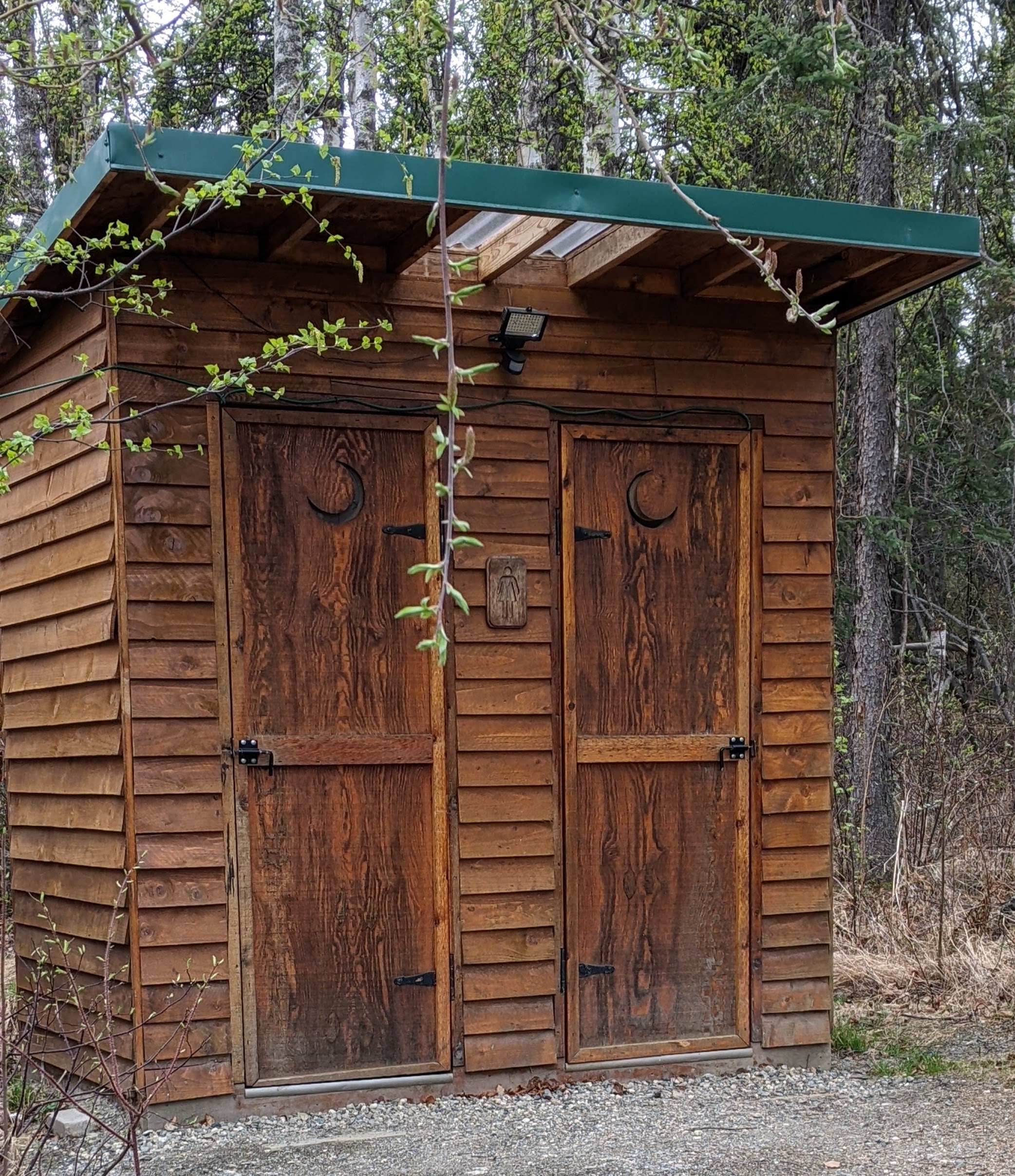
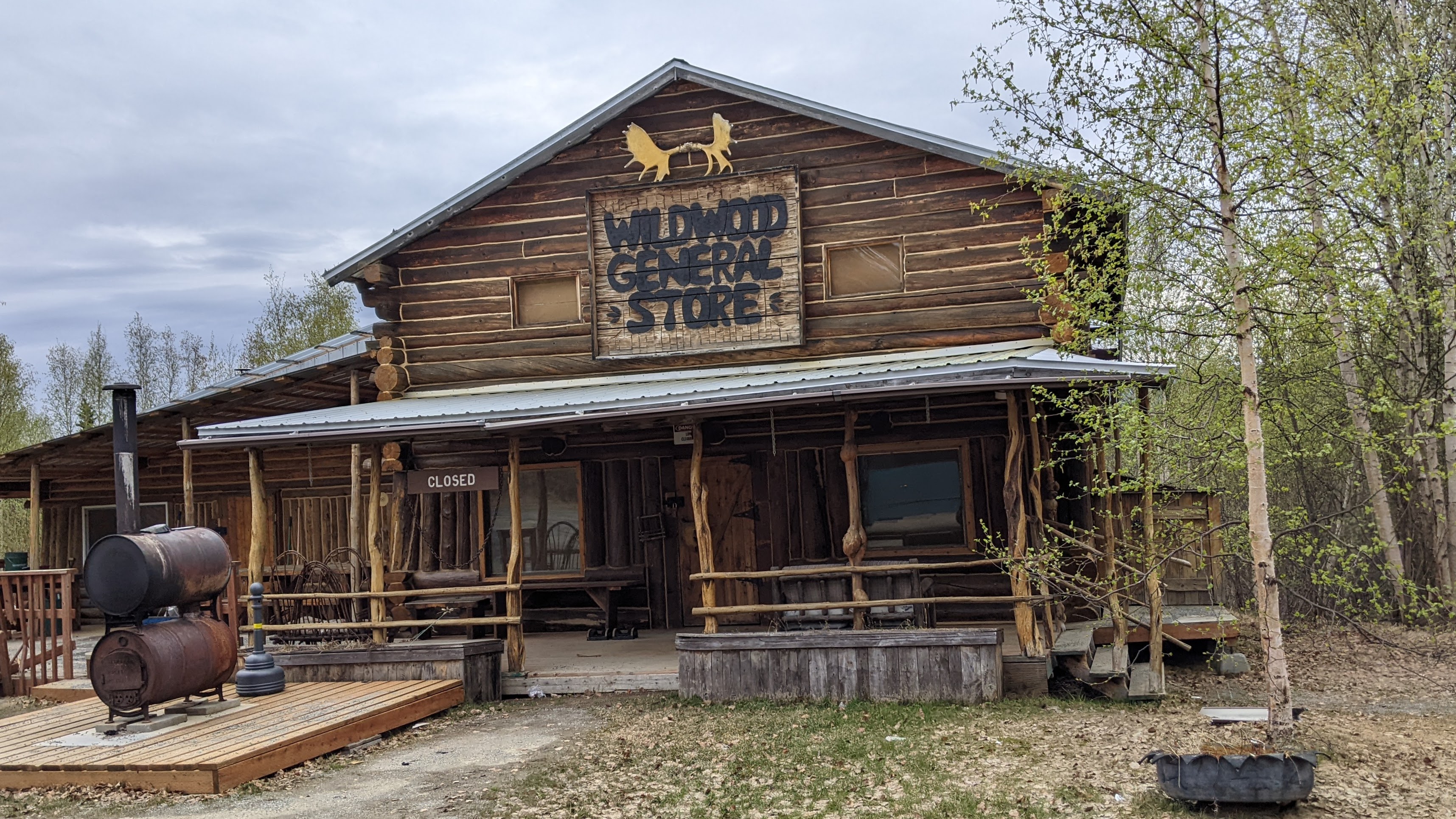
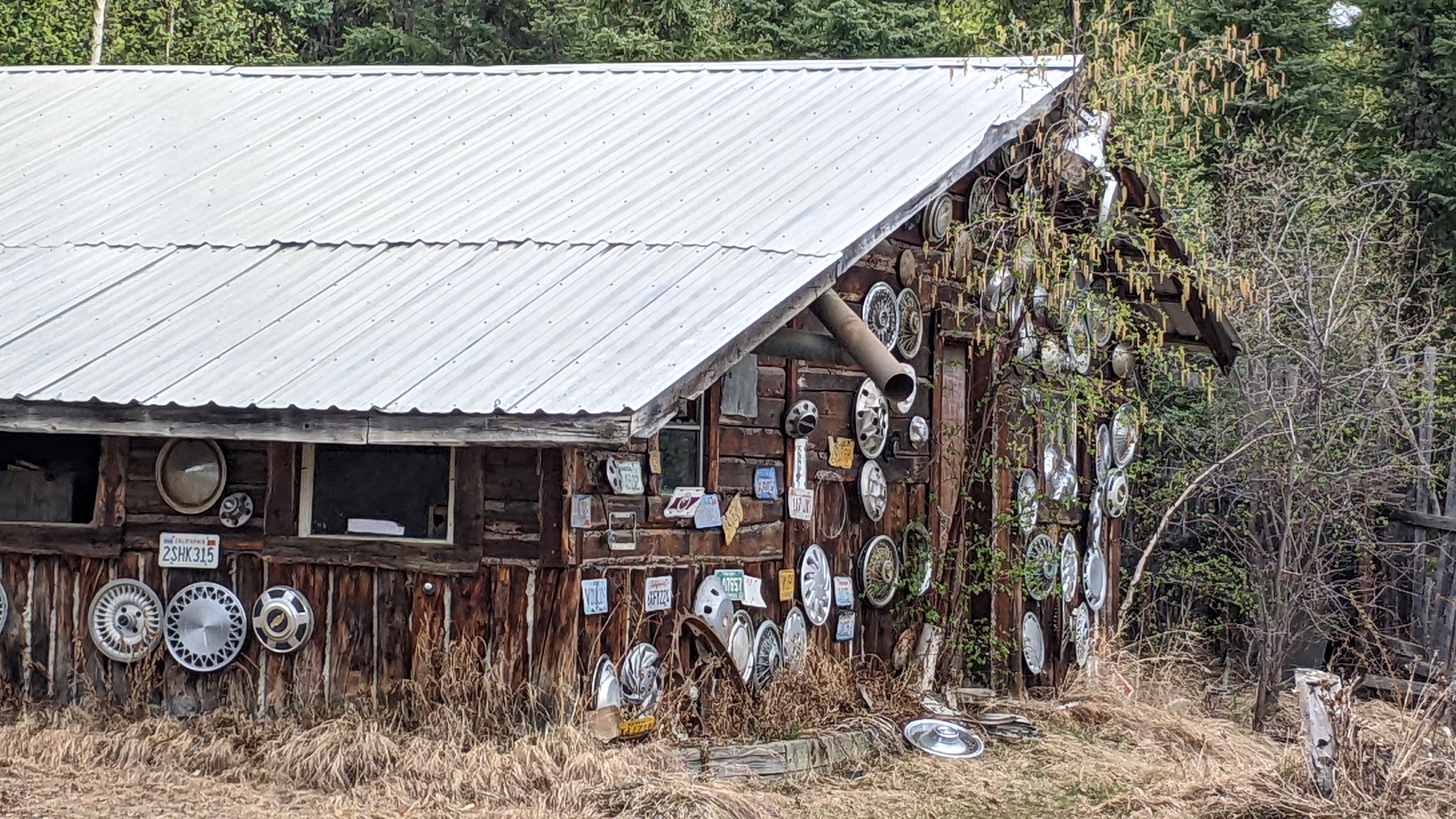
Our guide and driver told us that in the 1980s, a group of homesteaders had formed a small community in an “off-the-grid” location along the route. Today, even they have moved on, with only a handful of buildings as testimony to their former lifestyle. We stopped at what was once the general store in the area, now owned and maintained by the tour company as a convenience stop for participants on the Highway excursions. The site’s several buildings stand empty and unused, but there are clean, well-maintained outhouses, complete with lighting and framed art on the walls. It was not only a welcome rest stop, but the site offered numerous photo ops as well!

Leaving Fairbanks, we traveled along the Stease Highway, then joined the Elliott Highway (roadways in Alaska have names rather than numbers) until we reached the Dalton Highway, made famous by the television show, “Ice Road Truckers,” for the long-haul drivers who bring food and supplies to oil field workers and support crews along Prudhoe Bay.

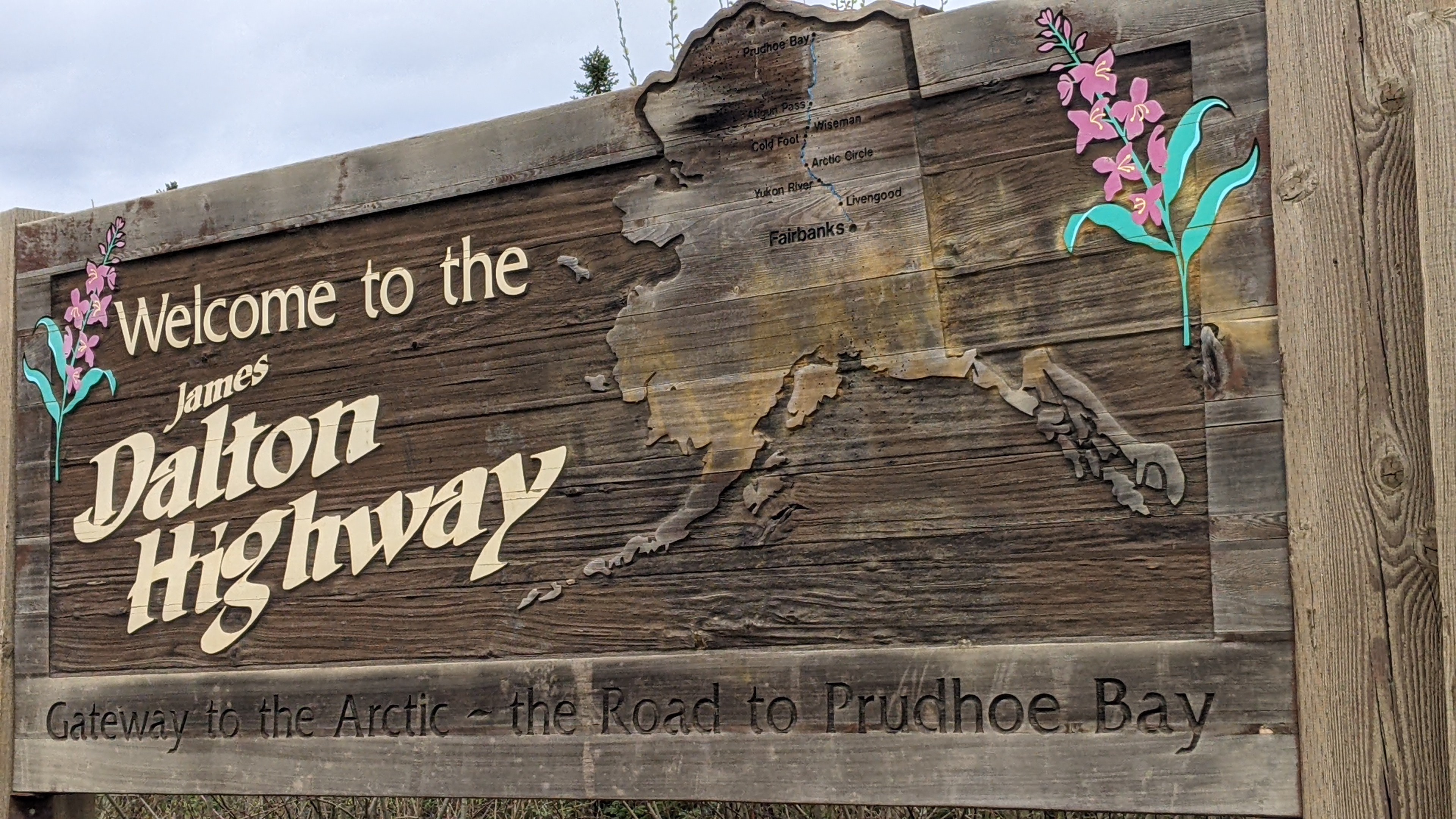
There is a welcome sign where the Dalton Highway begins. At a stop there to take photos, we met a couple of motorcyclists traveling north from California to Deadhorse!

The Dalton Highway stretches 414 miles north from Livengood, a former gold mining town approximately 80 miles north of Fairbanks to Deadhorse, Alaska., at the Arctic Ocean. Originally known as the North Slope Haul Road, it was begun in 1974 and completed in just five months to facilitate pipeline installation. The pipeline itself stretches approximately 800 miles from Prudhoe Bay to its terminus at the ice-free port of Valdez in Prince William Sound. Still a marvel of engineering, the Trans-Alaska pipeline was operational in just 20 months, and began pumping oil in 1977.

The highest mountain in this northern region is just over 3,200 feet (in contrast to Denali’s height of more than 20,000 feet only a few hours to the southwest). The high point on the Dalton Highway is 2,200 feet, but much of this land is above the tree line, and it appears stark, nude, and forbidding in its solitude.

Hilltop Gas Station, 15 miles outside of Fairbanks, is the northernmost source of fuel until drivers reach Coldfoot, on the Yukon River, or the northern terminus of Deadhorse. The power line also ends not too far north of Fairbanks. In a very real sense, this is “the end of civilization.” Pedro Dome, situated northeast of Fairbanks, provides the only Doppler weather radar tracking for the entire state. If it goes down, weather forecasts for Alaska are only guesses.

Our second stop was at Yukon River Camp, where pipeline workers, roadway maintenance crews, and truckers gather. It serves as rest stop, information and communications center, local store, no-frills eatery and is a welcome sight for the few tourists along the lonely road. There is a small village of support personnel, with overnight accommodations available.

Visitors can check the weather, make phone calls, grab a hot cup of coffee, even purchase sweatshirts, postcards, and souvenir magnets. It was here that we once again met the cyclists and wished them well on their continued journey north.

Cities in this northern inland portion of the state are non-existent; even primitive settlements are few and far between. Water, power and fuel do not exist, and travel is treacherous.

Although our excursion traversed not quite half the length of the Dalton highway, we traveled far enough north to literally leave civilization behind. It was a unique experience.

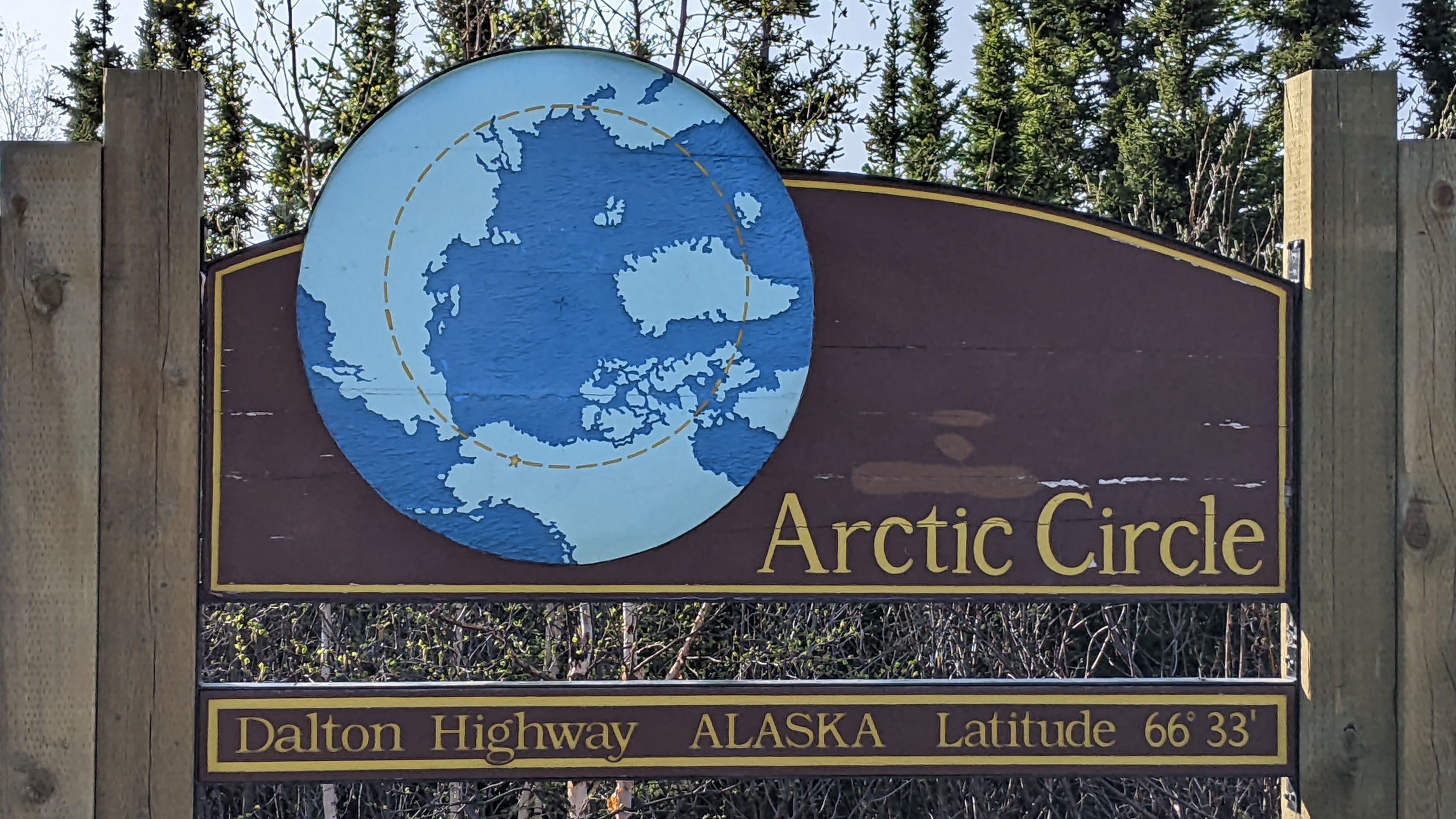
Later, our group stepped across the latitude line (66 degrees, 33 minutes) that marks the Arctic Circle, and we celebrated with “Alaska mud cake” and whipped topping at a picnic table in the forest — under the watchful eyes of curious squirrels and hopeful “thieving birds” perched just above us in the trees. It was there that we picked up a handful of southbound travelers, adventurous souls who had previously ventured further north and would be returning with us to Fairbanks.

On our return south, we stopped again at the Yukon River Camp. But now the kitchen was closed, and the staff had gone to bed. We brought our own sandwiches or microwavable dinners. Water and hot coffee were available to us, but there was little else other than tables, chairs and clean rest rooms. The camaraderie made up for the late-night lack of service.

My colleagues and I — participants in this unique post conference Dalton Highway press trip — discovered the uninhabited, “ungoverned wilderness” of far north inland Alaska. I was overwhelmed by the isolation, and enthralled by the beauty of the land. Only a limited number of participants were chosen for this unique tour offered by the Northern Alaska Tour Company. Another somewhat less-strenuous option offered to Alaska tourists provides an alternative overnight stay near Coldfoot, Alaska, in the Brooks Range, a bumpy hour or so north of the Arctic Circle. On that excursion, travelers can opt to take a morning hike along the Yukon River, followed by a bush-plane flight back to Fairbanks. Fellow journalists who took part in that trip reported that the return flight was spectacular, not to mention a few hours of welcome sleep in a rustic cabin with a comfortable bed!

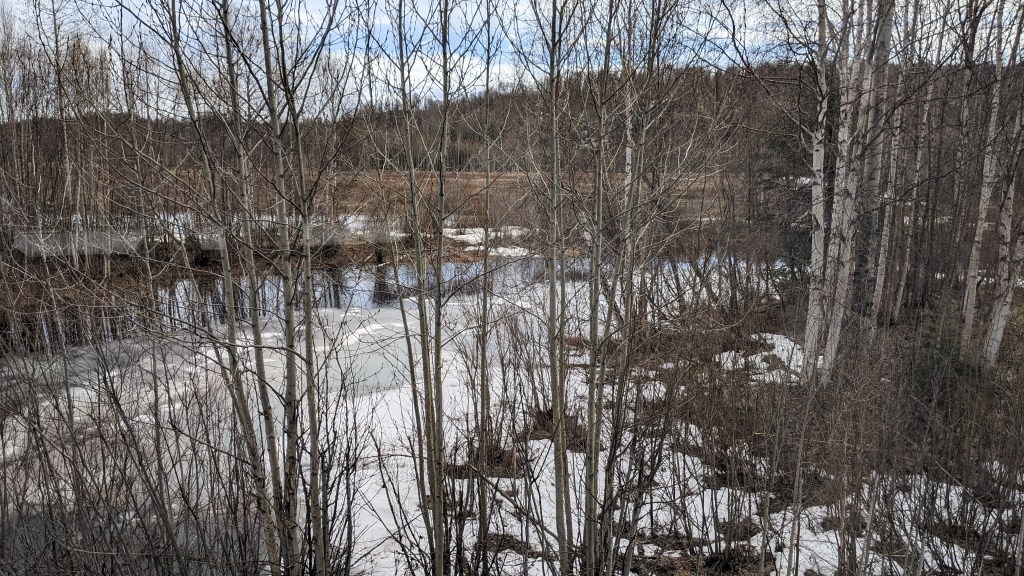
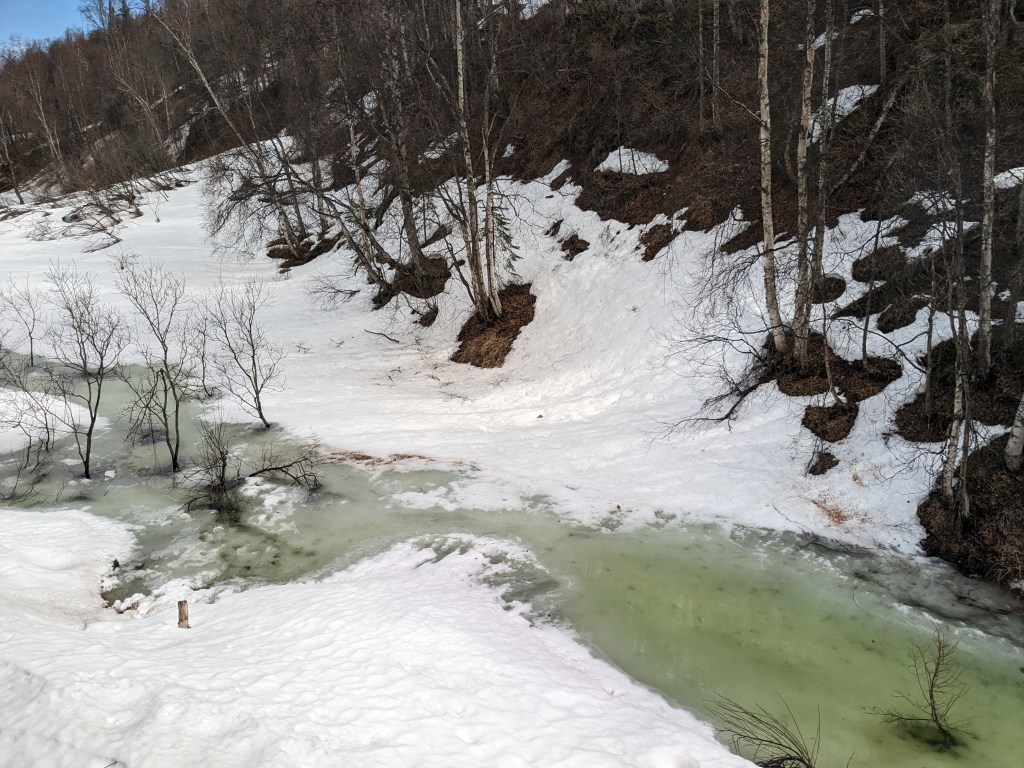
We traveled through the northern boreal forest that spans the globe from Alaska to Scandinavia. Russia and Asia boast greater biodiversity and life forms; in Alaska, there are only four species of trees that grow in the permafrost: white and black spruce, aspen, and birch trees. Because we were there in spring, we witnessed the aspen and spruce leafing out, even though snow remained on the ground in some areas. We were told that a few weeks earlier, the land was fully blanketed with deep snow. But spring comes quickly to this part of Alaska.

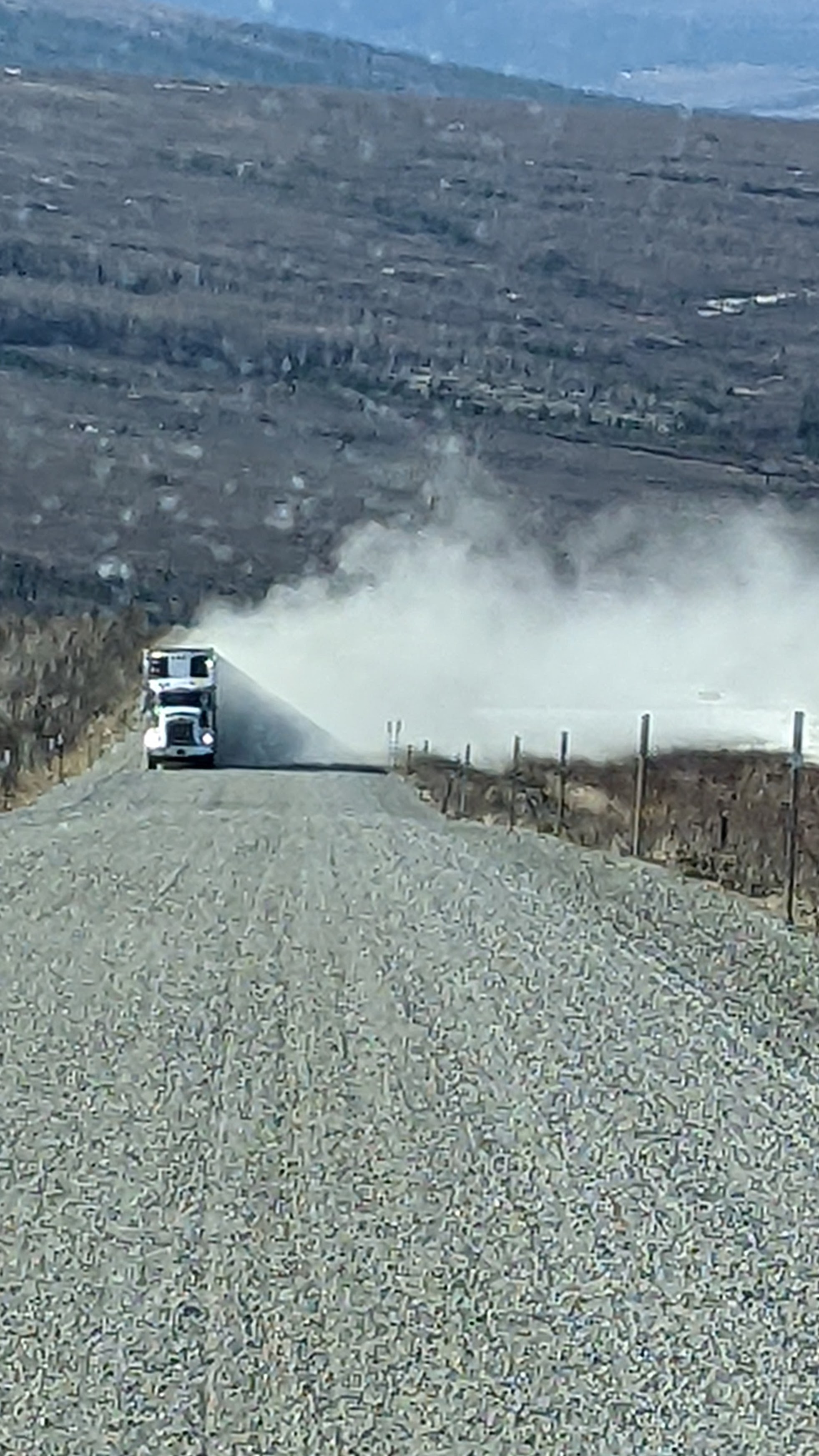
For my part, though, I was grateful for the opportunity to learn from our knowledgeable guide about the history of the Trans-Alaska pipeline and its current upkeep and operation. I was impressed by the ongoing maintenance work along the mostly unpaved roadway, even though construction delays late at night were a bit unnerving! I felt a slight sense of fear, tempered by awe, each time a swirling cloud of dust signaled the approach of a speeding 18-wheeler.

Those long-haul drivers are experienced, professional and, usually, extremely courteous. But it is obvious they operate on an unforgiving timetable, and they simply “keep on trucking.”

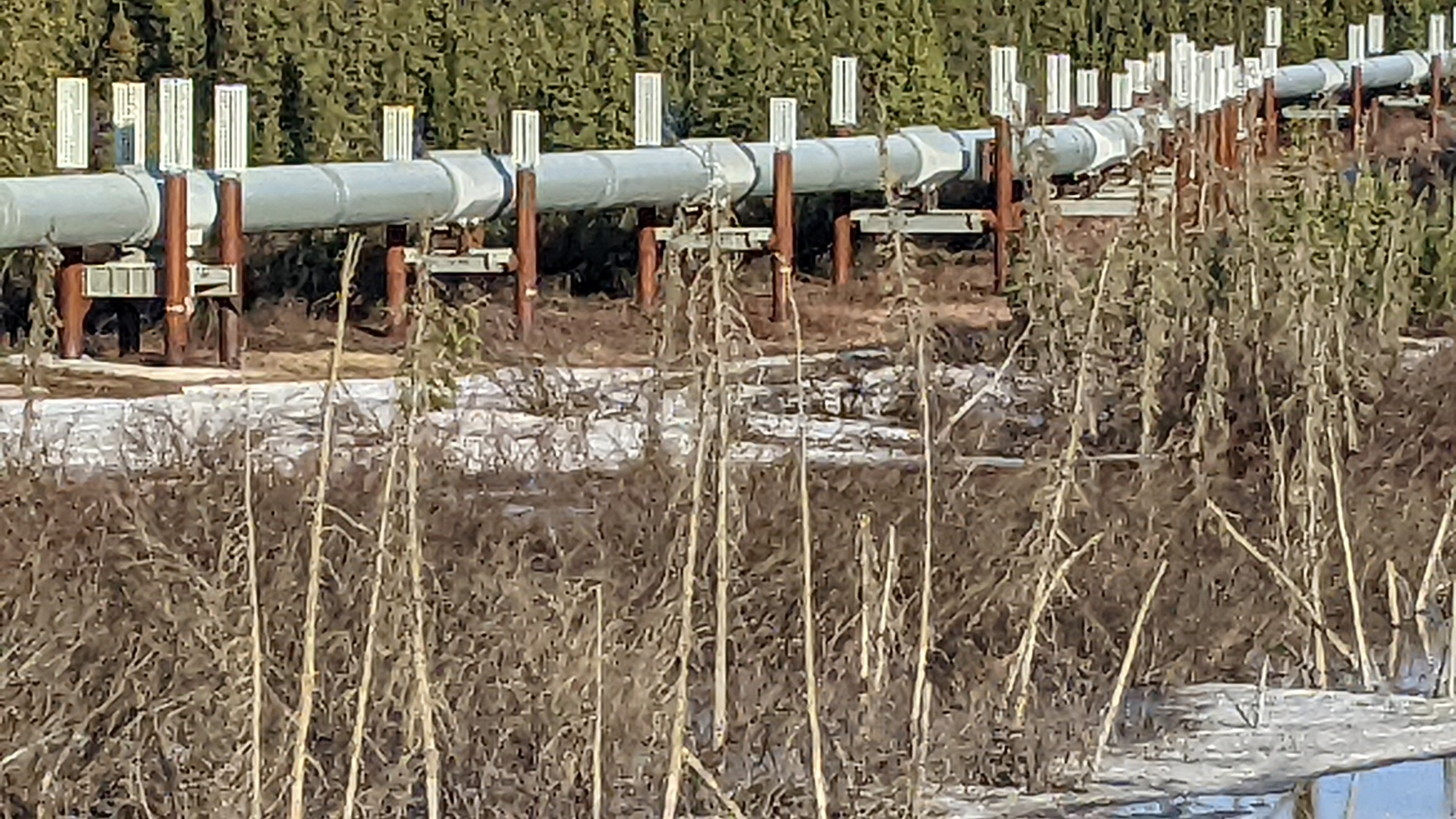
I was duly impressed by the sight of the 45-year-old, mostly-elevated oil pipeline as it snakes across the land. For more information about the construction and continuing operation of this engineering marvel, visit TAPS Construction -Alyeska Pipeline.

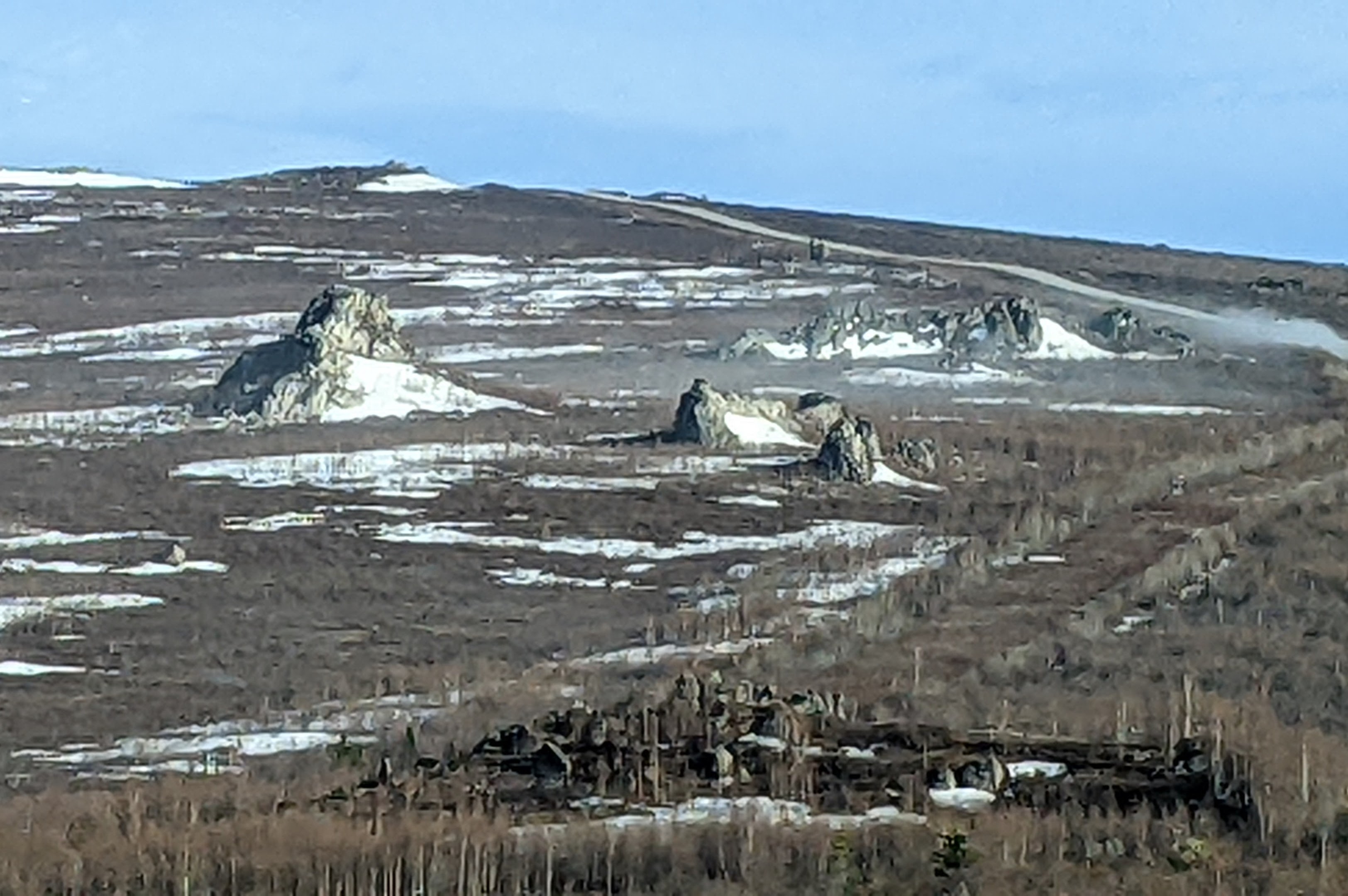
We stopped for a short time at an outcropping of granite tors, huge natural outgrowths that stand like sentinels on the barren land. Much further to the south, there is a 15-mile trail and public campground at another tors site, maintained and administered by the Alaska Division of Parks and Outdoor Recreation.

This trip is by no means an excursion for the faint of heart. But neither was it, as a participant on a tour prior to mine proclaimed, “the worst day of my life.” It was long, yes; cold, drizzly, uncomfortable, and tiring. We returned to our Fairbanks hotel at about 3 a.m. for a few hours of sleep before flying out that afternoon to the Lower 48. Would I do it again? No, but I’m certainly happy to have had the full experience.

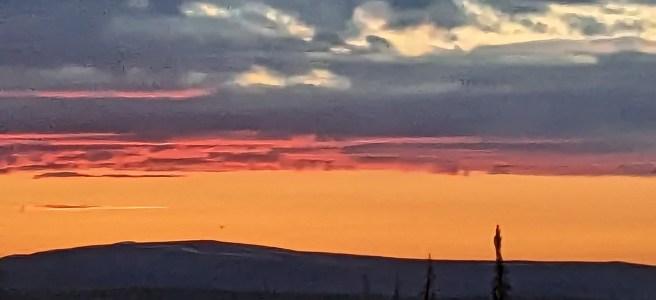
It was a ride I will not soon forget! And the changing hues of blues, pinks, and striated yellow and orange that filled the night sky in those late night and early morning hours will forever color my memories of far north Alaska, a land full of wonders and surprises.

The certificate I was presented proclaims that I crossed the Arctic Circle and “survived an adventurous journey through the Alaska wildnerness.” That says it all!

A special angel at the airport . . .

On the morning of January 17, 2023, we drove to Clinton National Airport in Little Rock. We were filled with anticipation. The skies were clear and the sun was shining. Despite an itinerary that included two plane changes before we would board our international flight in Miami, we believed we were well prepared for all contingencies and that our long-awaited trip to South America would be without incident. We were filled with anticipation.

Little did we realize then just what an experience awaited us. Our long-awaited journey had been on hold since before COVID. The trip itself had morphed from a relatively simple desire to sail around Cape Horn at the southern tip of Argentina — once an itinerary of between 10 and 14 days — to a trip that included not only Chile and Argentina, but also the Falkland Islands. The journey had stretched to 22 days. Our expectations had also become greater!

Travel plans sometimes take on lives of their own — that had certainly happened this time.

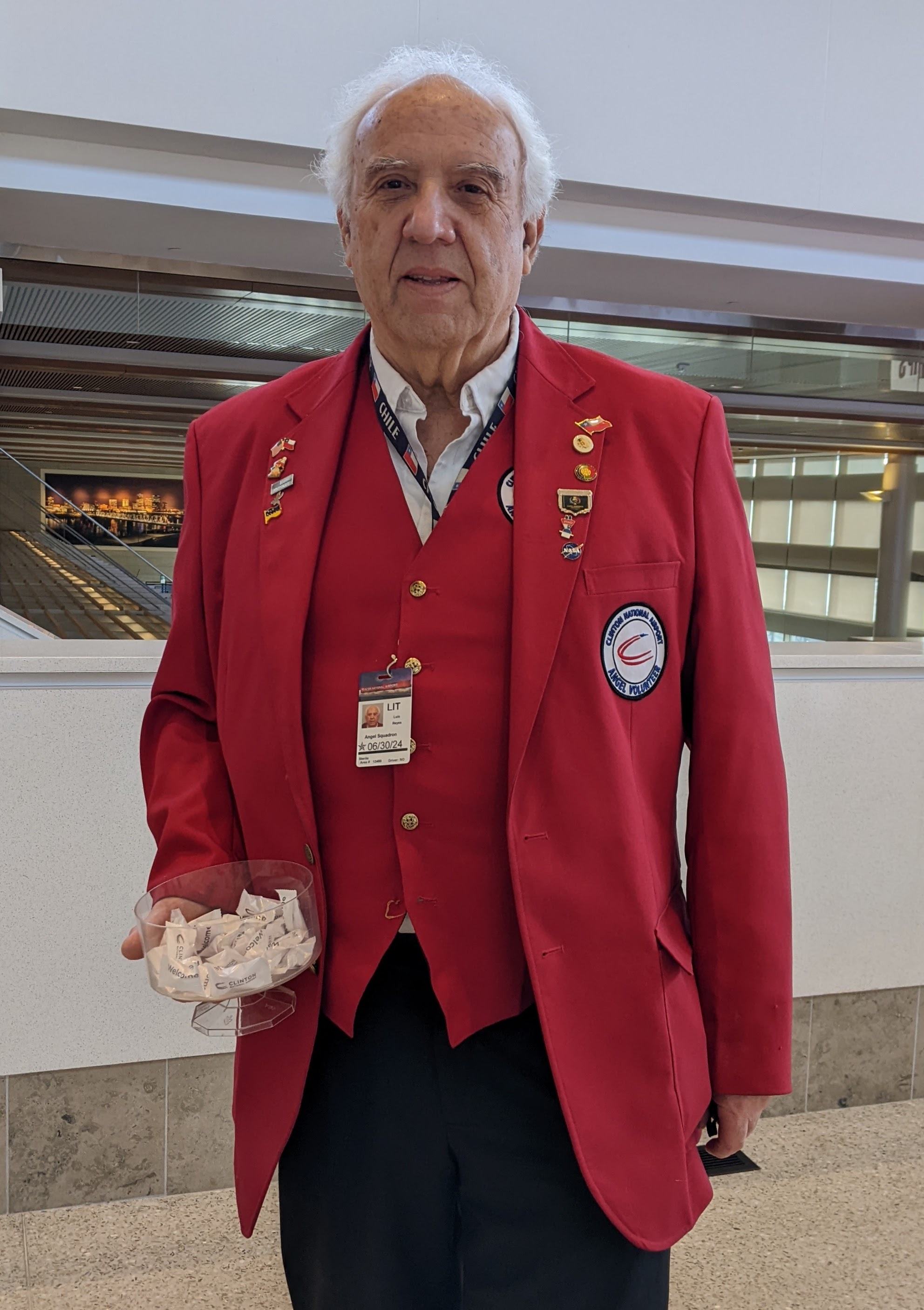
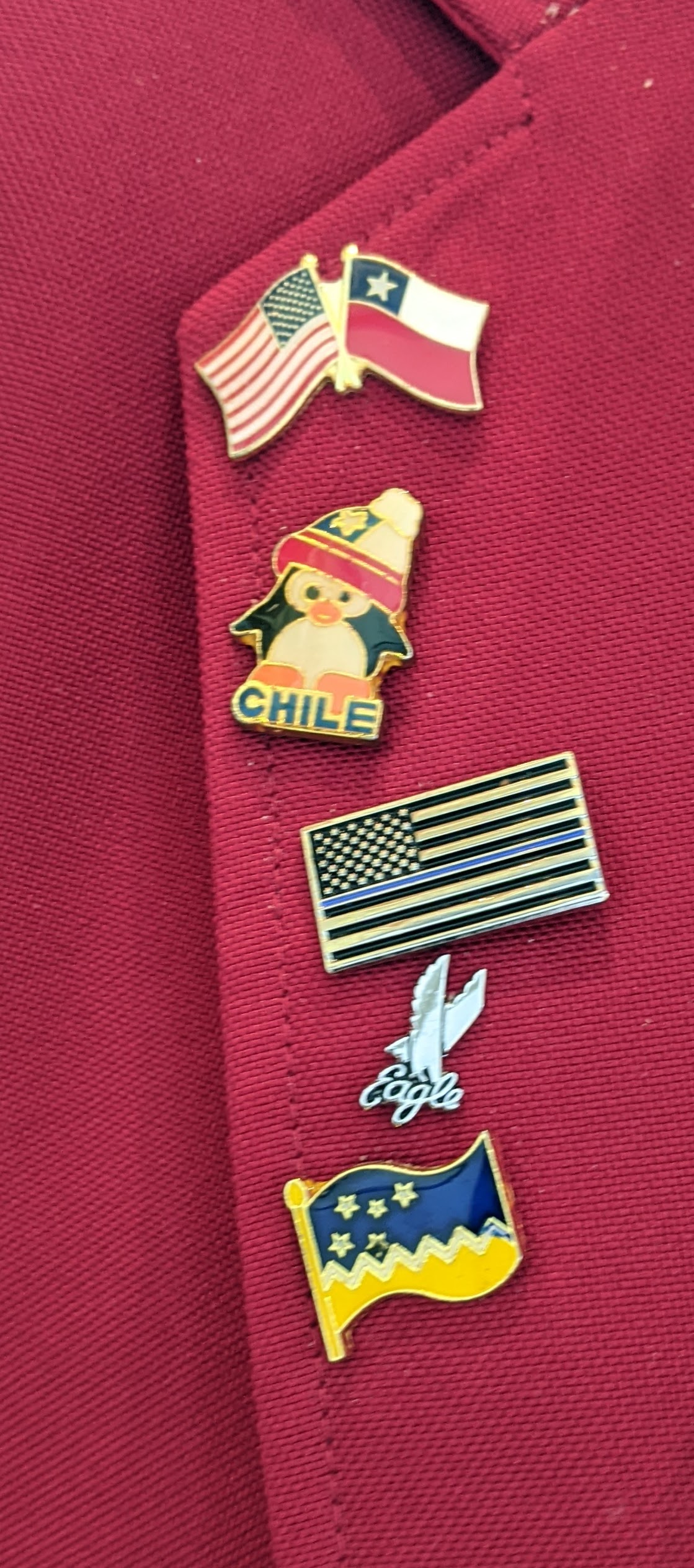
Check- in was swift and painless; a friendly American Airlines agent tagged our bags and placed them on the conveyor belt. We proceeded up the escalator, stopping at the top to chat with an Angel Squadron volunteer at the Airport. His name tag identified him as Luis Reyes. His red vest and a jacket adorned with colorful pins from different states and countries were as welcoming as his smile. I told him that my husband and I were traveling to Santiago, Chile, but would also be visiting Argentina during a 16-day cruise. We talked about the ports we would visit — Punta Arenas as well as Ushuaia at the southern tip of the continent, and then Buenos Aires.

His eyes sparkled and he was more than happy to share information about Chile, his native country. He told us about growing up in Punta Arenas, and how the city overlooked the Strait of Magellan at the southern gateway to Patagonia and Paine Towers National Park. He offered suggestions about where to go, and what to see and do during our short visit there, and he shared his recommendations for local food and drink. He promised that we would want to return.

Reyes also told us about how he and his wife had met, and how he came to be in Arkansas. I asked him if he liked living in Little Rock. He smiled again and said, “Yes, it’s my home now.” And, laughingly, he explained the similarities between the flag of Texas and that of Chile. “We had it first,” he noted. We laughed together.

We considered meeting this unlikely angel a good omen, and we promised to enjoy the delights of his native country and his boyhood home. He wished us a safe journey and we walked on, eager to board our first flight of the day.

Our travel adventures had only just begun! Sadly, our flight plan did not unfold as planned, and we were rerouted through Dallas-Fort Worth instead of Miami. We actually arrived in Chile a bit earlier than planned, and watched a spectacular sunrise over the Andes as our flight landed in Santiago.

After spending two days in that uniquely interesting city, we transferred to Valparaiso, a port city on Chile’s coast, to board our cruise ship bound for Punta Arenas. Again, weather and other circumstances intervened, and that port call was canceled.

Not long ago, returning to Little Rock Airport from another trip, my husband and I once again encountered Luis Reyes at the top of the escalator. He greeted us warmly. We told him how disappointed we were that we had not had an opportunity to visit the city in January. Nonplussed, he didn’t miss a beat! “You’ll just have to return,” he answered. We chatted for a few more minutes, about his summer here in Arkansas, about the trip we had just completed, and about our future travel plans. As we walked on, he called out to us: “I’ll hope to see you again soon,” he said.

Meeting him was one of those chance encounters that served as a prelude to the interesting people we would meet throughout our travels in South America. Once again, it’s the people one meets while traveling, not the places you go, that are the most memorable! Volunteers at major airports throughout the world are there to help travelers. Take advantage of the services if you need help, and get to know the volunteers who give of their time and energy to make travel as pleasant as possible for us all!

As I embark on other travel adventures, I hope this engaging angel will once again be waiting at the top of the escalator in Little Rock. If you happen to meet him, take the hard candy he offers. Ask for his assistance if necessary. Take some time to visit with him. And be sure to tell him hello from me!

And, if you don’t happen to meet Luis Reyes, I hope you meet another angel!

Traveling solo can be fun when you’re old enough to be somebody’s grandmother!

I recently had an opportunity to be on the road alone — partly for pleasure, to be sure, but with a business connection. I had a professional conference to attend in Fairbanks, Alaska. Instead of booking a round-trip flight from my home in Arkansas to the conference city I opted to cruise north to Alaska from Vancouver, British Columbia. I then spent a few days sightseeing near Denali National Park, finally arriving in Fairbanks the evening before my conference began.

After many years of marriage, my husband and I are well aware that our interests, priorities, enthusiasms, and commitments sometimes differ. That’s all good, and on several occasions over the years, we have kissed each other goodbye and wished one another safe travels. It’s just the way we do things. This was one of those times.

I simply could not resist the appeal of a seven-day cruise followed by a three-day land tour to Denali National Park. My husband, for his part, was not ready to embark on another cruise so soon after our epic Antarctic adventure earlier this year. So, for 16 days, my husband and I led separate lives. In addition to a memorable vacation experience, I told myself that this particular journey could be counted as a business trip, providing valuable background for future posts about traveling solo as a senior woman. And, yes, those planned posts are in their early stages as I write this.

The cruise was truly enjoyable, made even better by spending two days in Vancouver to visit with old friends — my own superb tour guides! I found solo cruising to be totally enjoyable, and not at all intimidating. In fact, I look forward to another solo travel experience should an opportunity arise. The land portion of the trip was almost exactly as I expected. Travel arrangements for the land portion of the trip were part of the cruise package, well-planned and executed by Princess Cruise Line. Even though May is the beginning of the season in Alaska, and local staff members were still learning their specific duties, transfers, tours and accommodations were perfectly choreographed.

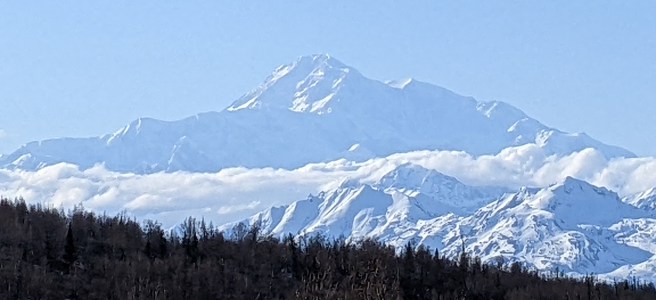
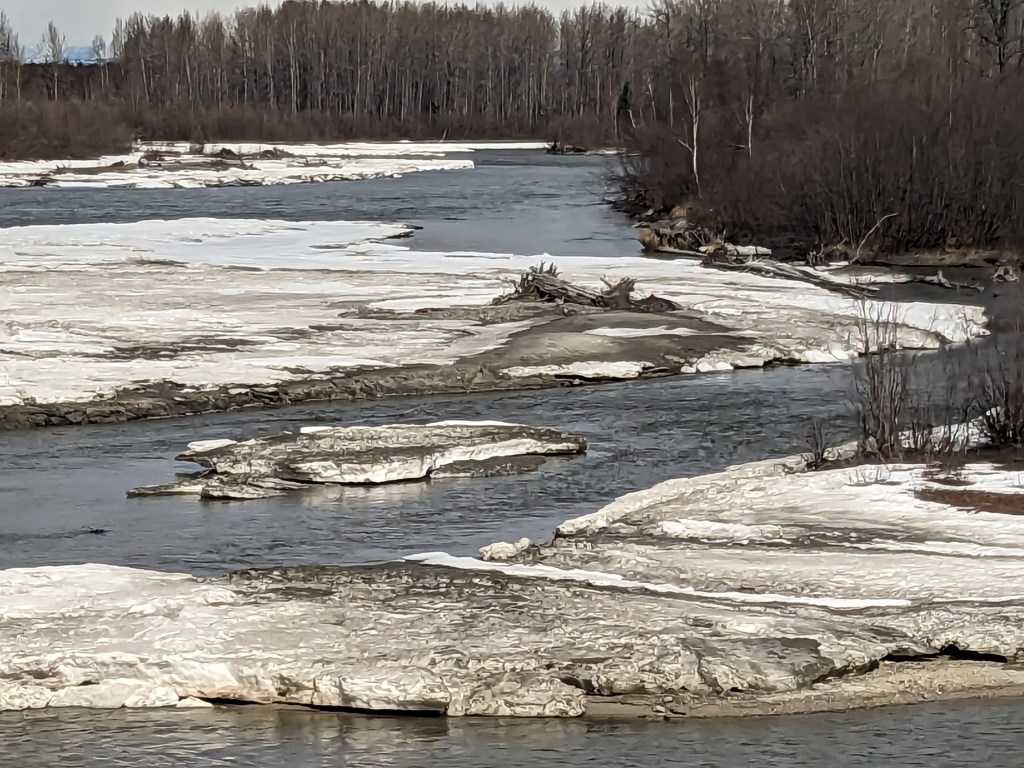
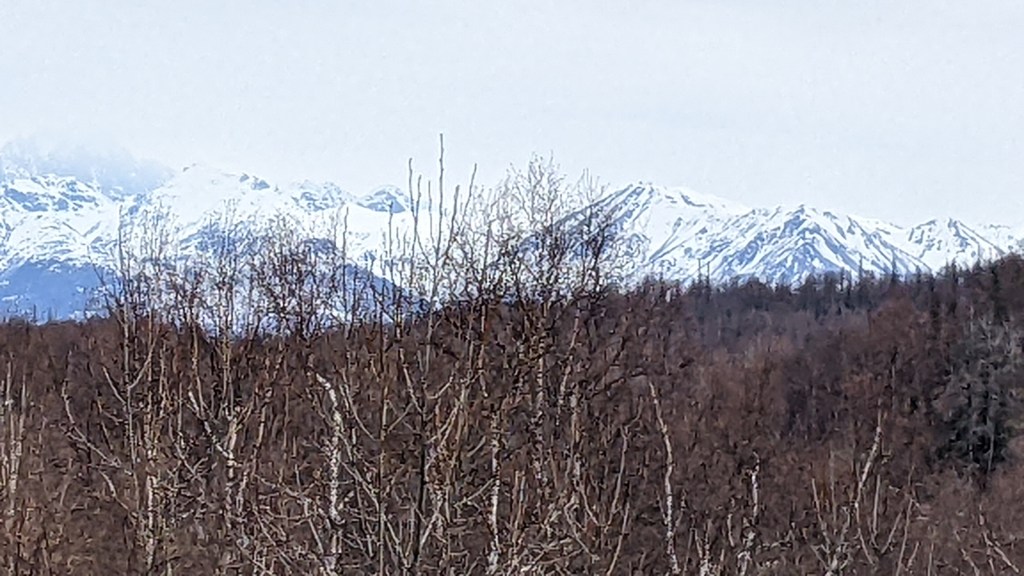
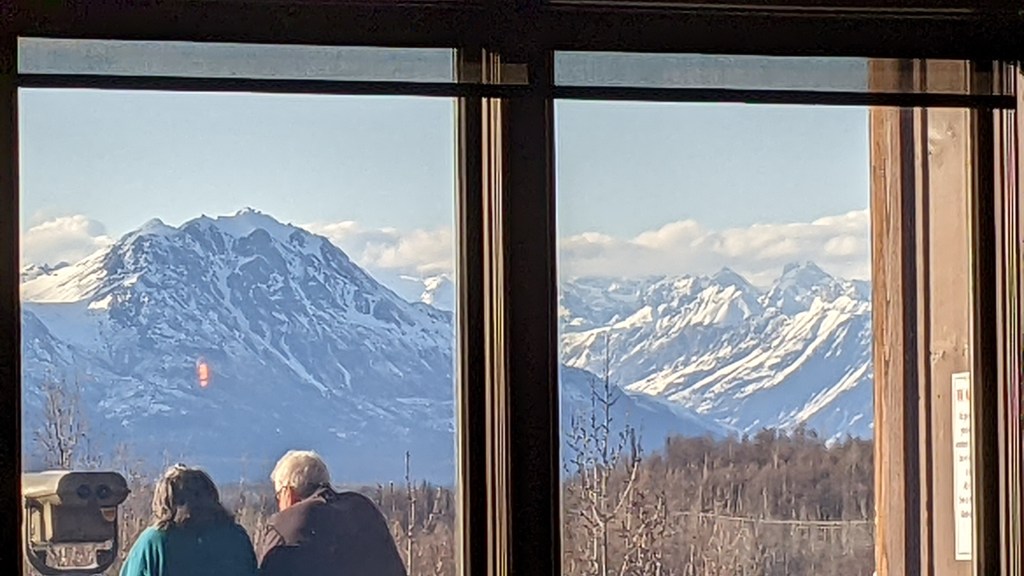
We disembarked in a grey drizzle in the port city of Whittier and boarded a bus for the trip north to the mountains and the national park, stopping briefly in Anchorage. On the way north, the scenery becomes more dramatic and our driver was happy to point out our first view of Denali in the distance. We passed through small towns, including Wasilla and Talkeetna, and viewed the still-snow-covered terrain and ice-clogged rivers. Originally named for President McKinley in 1897, the name of this largest mountain in North America was changed in 2015 to Denali. In the indigenous language of early tribes in the area, the name means “the tall one,” or “the high one.”

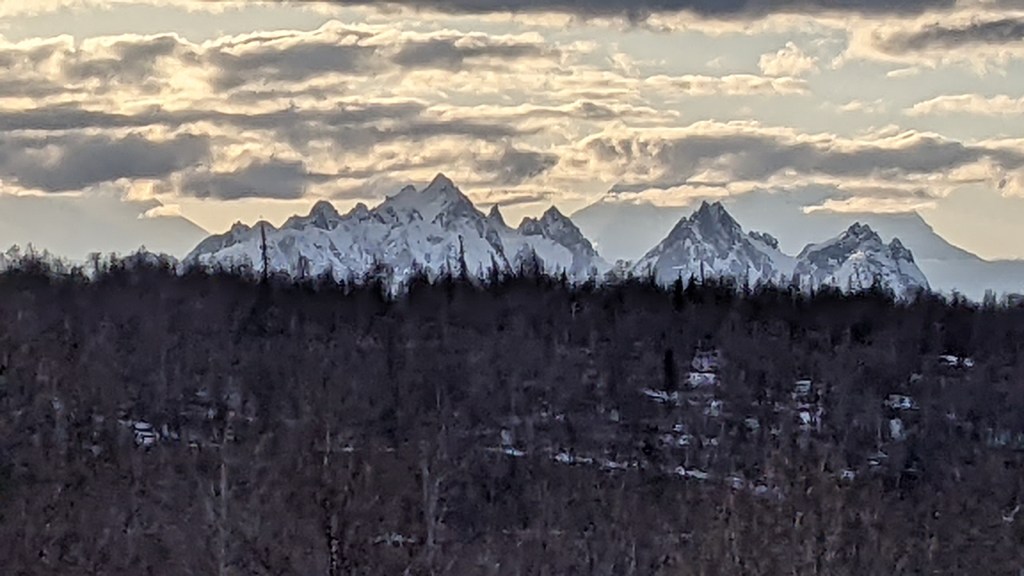
Once we arrived at the Princess Mount McKinley Lodge, a beautiful facility with a “knock-your-socks off” view, I spent my first few hours warmed by the sun on the lodge’s wraparound deck. I was enthralled by the drama of clouds which parted only periodically to provide breathtaking views of the mountain known as “the great one.” It truly is.

I snapped far too many photographs of the changing vista as the late afternoon sun sank lower on the horizon. Denali, at an elevation of 20,310 feet, dwarfs surrounding peaks, but they are not mere foothills, and they have their own allure. Finally, when the clouds seemed to be massing to surround the mountain for the evening, I decided to make my way inside.

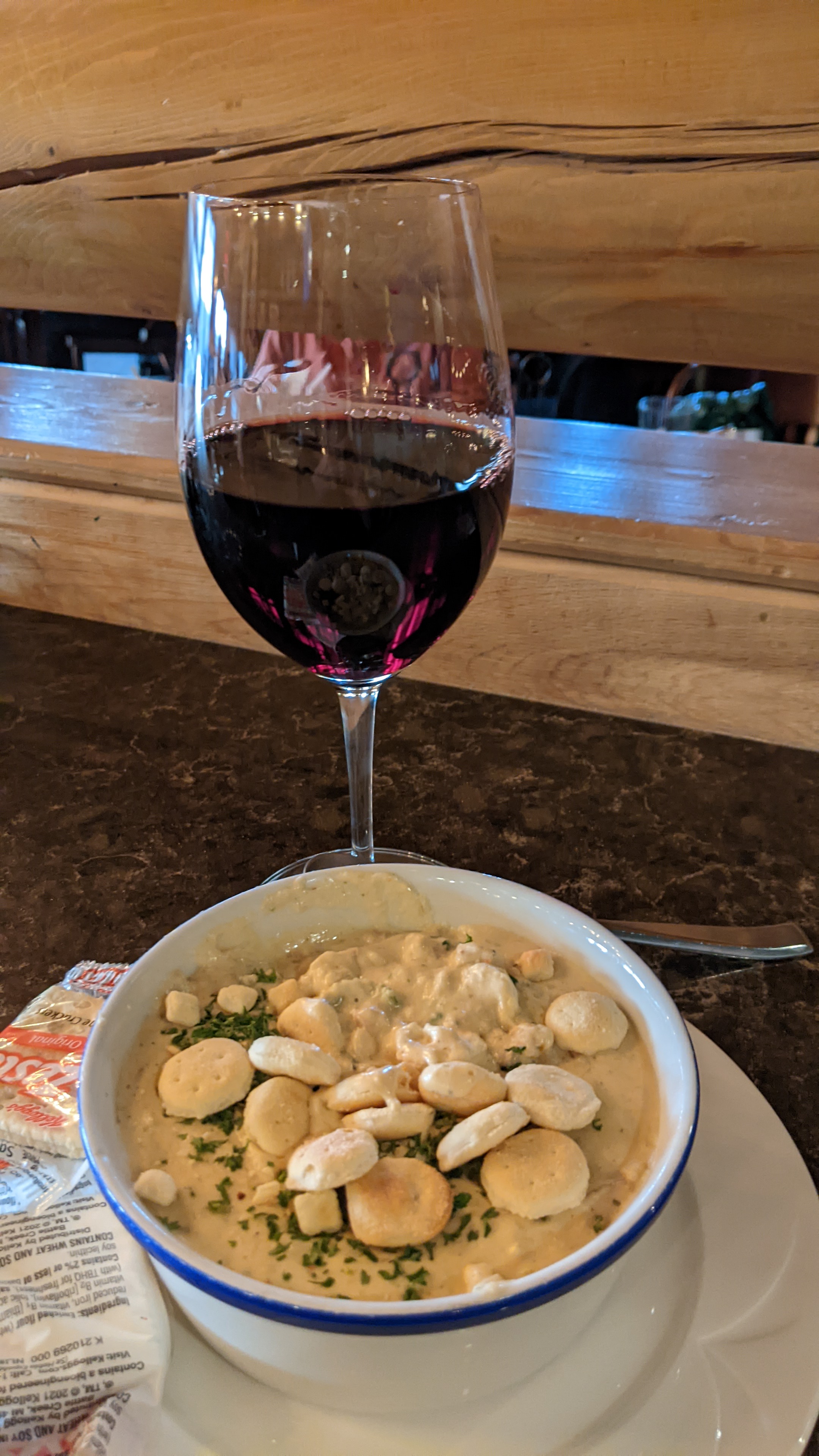
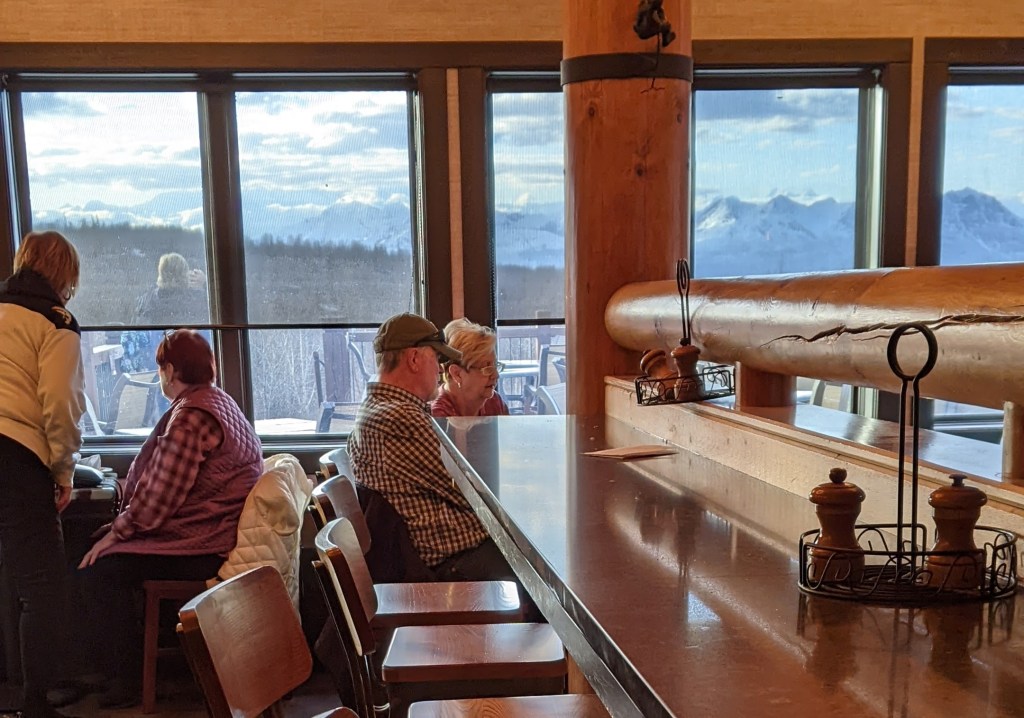
I found an unoccupied seat at a bar counter in the casual lounge. My seat still offered a commanding view of the faraway mountain ranges through the great room’s wall-to-wall windows. Tired from a day of traveling, I ordered a glass of wine, content to simply relax in comfortable surroundings.

My attentive server asked if I wanted to order dinner and suggested I begin with a bowl of hot fish chowder. Happy to not have to make a decision, I agreed that would be good. We chatted a bit as I waited.

He had returned to Alaska the previous week to work at this lodge for a second summer. A university student in the lower 48, he said that his experience the previous year hadn’t seemed quite long enough. This year, his girlfriend had signed on for summer work as well.

This was the first of many conversations I would have over the next few days with the summer employees who arrive in Alaska eager for adventure. Must of the seasonal employees are U.S. or Canadian students. All are happy to have the opportunity to earn money working in one of the top vacation destinations on the globe. Many have returned year after year. Most try to save the bulk of their earnings for the coming school year. Not a one complained about the hours or the work load. And every one admitted to seizing every possible opportunity to hike or camp in the adjacent national and state parks or to explore nearby towns and villages. Almost all planned to return to the lower 48 at the end of the summer to continue their schooling.

I listened willingly to the stories of other servers and staff. I joked with the bartender, and I exchanged smiles with other guests. When my chowder arrived, they all gave me “space” to enjoy my light meal. Suddenly hungry, I ate, sipped my wine, and thought how lucky I was to be in this place at that time. But, in that moment, sitting in a crowded bar in the shadow of a great mountain, I also had to admit that I missed my husband. It was an experience I would have enjoyed sharing with him.

In Alaska, in May, it’s light late into the evening and as I finished my chowder, Denali’s snow-covered summit was once again visible. Despite the many previous pictures I had taken, I wanted just a few more in the twilight of the day.

I was eager to make my way out to the deck once again, and I signaled for my check. As we settled up, this young server and I agreed that getting to know one another was a highlight of the evening. As I stood to leave, he looked at me and asked if he could give me a hug. Somewhat taken aback, I hesitated for just a moment.
He confessed, “You remind me of my grandmother, and I miss her.”

Of course we hugged, and I believe we both treasured that brief connection in a place far away. This time, the human connection was more memorable than the food. And this brief encounter with a stranger was at least equal to my last view of Denali on that day.

Times beyond forgetting . . .

Striking up a conversation with a stranger, especially when one is away from home turf — in another state or halfway across the globe — always leads to new insights. Somehow, sharing seems easier, and there is a double-edged desire to understand one another. Talking about history and the past, hopes and dreams for the future, life, expectations, favorite places, fears and hardships, war and peace, children and ancestors, puppies and good food — it seems easy to cross cultural borders in those times. Such encounters happen quite naturally while waiting for a flight, browsing a bazaar, standing on a cruise ship deck, or sitting in a crowded cafe almost anyplace in the world. It’s real, easy, and spontaneous.

The truth is that people throughout the world are eager to talk about all of these things — to me and to you. And we’re all eager to talk about our homes and our families. We form quick friendships with others we have just met. Sometimes they are short, quick encounters, and they end just as quickly. Occasionally, those chance meetings lead to lasting memories. They can also foster new friendships that easily survive decades and distances. There is promise in that fact.

So, because travel has once again become a welcome reality, I look at the empty pages of my desk calendar for the coming year, thinking about the destinations that will be penciled into those pages. I cannot help but think of the people I might meet in those faraway places. And I think of the trip from which I recently returned. For nearly three weeks, I was a solo traveler. It was not my first trip alone, but it was a uniquely fresh adventure. For many years, I have enjoyed the company of a willing travel partner. When my spouse and I each had busy and fulfilling careers, we were not infrequently apart due to work schedules and business trips. We sometimes enjoyed the company of individual friends and family members on our travels, but we traveled as a couple for most of our most memorable vacations.

Booking a solo cruise for May of 2023, followed by attendance at a professional conference, was in many ways new territory for me at this stage of my life. And, I must report that it was better than I had hoped. I also have to say that, for me at least, it was nice to return home and resume my by-now-familiar pattern of life. Will I leave again as a solo traveler? At this point, I am not certain that I will, but I would not hesitate should the right opportunity present itself.

That’s the joy of traveling. The art and the architecture, the vistas and the crowded piazzas, the food and the wine, the excursions and the unexpected experiences all may be the stuff of dreams, but nothing beats the privilege of sharing “quality time” with real people, no matter how fleeting that time might be.

That’s what I missed most during the pandemic. Interacting with real people is the one thing that makes travel so enjoyable, so unforgettable, so necessary, to my mind. That’s what I anticipate most with each trip I take. My recent journey seemed almost like too much frosting on the cake. It included another chance to step across the latitude line in northern Alaska that allows me to say that I have been north of the Arctic Circle once again. The first time was a Nordic cruise to “the top of the world” last September. Coupled with a trip to Antarctica in January of this year, this time was a new thrill.

Where to next? At this point, I have no idea. Much to our disappointment, a planned February 2024 cruise that we had booked with a sizable group of friends and family was just canceled by the cruise line due to ship redeployment. But, I am sure we will find another journey that lures us to “take flight.” Once again, it will mean a potential to meet and interact with interesting people in addition to a distinctive itinerary, that will lead us to book another trip.

Looking forward also entails looking back.

Several years ago, my husband and I had a free afternoon in a Mediterranean port city. We had seen enough churches and museums, eaten enough lunch, walked too much. We found a cabbie near the port who, for a set fee, was willing to take us on a drive around “his” city. We wanted to visit a market to buy some fresh fruit, perhaps some cheese and olives, and a local bottle of wine. We wanted to see the view from the bluffs above the city. Most of all, we wanted to relax and hear about life in a unique and beautiful part of the world.

We got all of that and more. Our congenial driver spoke in halting English about his family, his wife, his life. He told us how proud he was of his children, a son studying medicine in London; a daughter pursuing dreams of her own in America. He told us how much he missed them, and what he wished for them in the future. We practiced our Italian, asking about the cost of living, about the political situation in his country and throughout the EU, about the past and the future, about the weather, and about the cost of gasoline and the price of olives.

He brought us to a favorite lookout with an incredible view of the sea, where we stood in the wind and drank in the beauty of the setting. And then he brought us to a small cafe where we drank small cups of strong coffee as a fitting end to our excursion. He dropped us back at the dock and we re-boarded our ship, knowing that we would never see him again but that we would never forget him. The world grew just a bit smaller that afternoon, and our hearts were full.

It is experiences like that that will keep me on the road as long as I am able.

Follow me here @goodfoodandfarwayplaces.com to learn more about strangers I have met and befriended across the globe and through the years. Read more stories about travel, history and my random musings about life in today’s world @rightoffmain.com, follow me at facebook.com/cohenadrienne/ and on Instagram @adriennecohen221.

Polar Opposites

71-10-21 and 64-89-??

Points on a compass have little meaning to most people. Schoolchildren learn about the north and south poles, that the earth is tilted on its axis as it travels around the sun, and that the globe is divided into latitude and longitude lines. Most come to know that the equator separates northern and southern hemispheres, and that the latitude lines defining Arctic and Antarctic circles are set at 66 degrees thirty minutes north and south of the equator which is at zero. But it’s a fact long forgotten by most adults. In truth, there’s little reason to know exactly where one is on the globe at any given point in time, unless you have a precise need to navigate to a destination. Airline pilots and ship captains need that knowledge, but casual travelers really do not.

For what it’s worth, however, the coordinates of Hot Springs Village are 34.6720 degrees N, 92.9988 W. It won’t replace a street address, but if you’re interested in little-known facts, make a note! I once was tempted to have the coordinates of the tiny train depot in my favorite little village in Maine printed on a t-shirt, just to see if anyone would ask what the numbers meant. I didn’t.

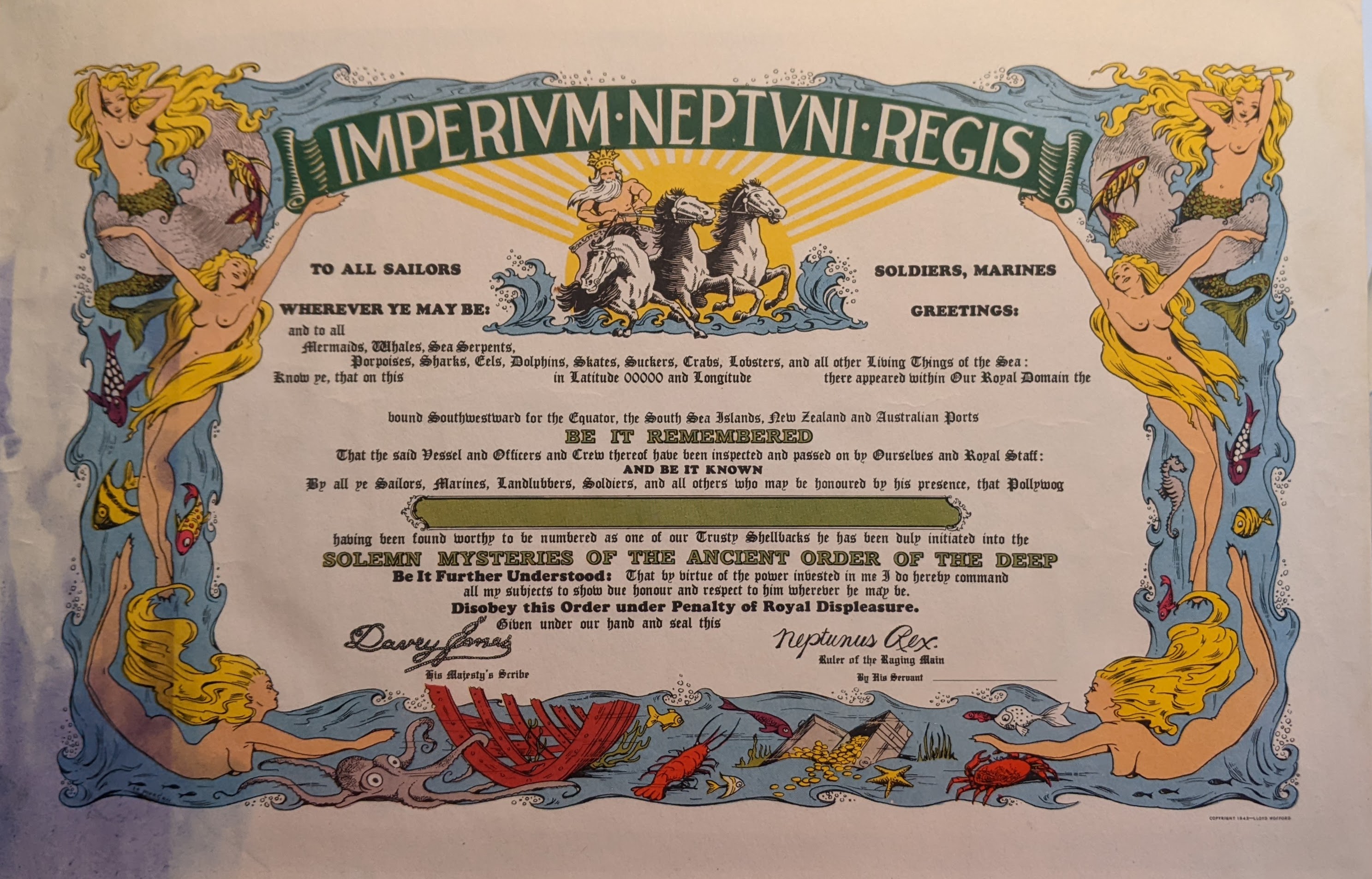
Ancient mariners noted the crossing of that zero latitude line regularly, and it is an honored tradition still practiced by sailors today. If you have been lucky enough to sail across the equator, you may know about the good-natured and sometimes raucous festivities that mark that passage. Read about the Royal Navy’s Crossing the Line ceremony aboard the aircraft carrier HMS Queen Elizabeth on the ship’s first equator crossing in 2021. I also have a certificate of passage across the equator. It is colorful and ornate, and it is not mine, but it is part of my family history.

The latitude is noted as 0000 — the equator. The longitude is left blank, as are other blanks for the name of the ship, the name of the sailor, and the date and time. On the back, however, is this handwritten note:

Longitude “Secret.” USS Admiral Benson. Destination: “On a Mission of War” Date: “Secret 1945.”

I find it fascinating that some traditions were kept even during wartime. Celebrations take place aboard modern cruise ships, to the delight of most passengers. And crossing the International Date Line can be a bit disorienting. At basically 180 degrees longitude, or half the globe away from Greenwich, England, at Longitude 0, the date line was only designated as such in 1884, to make timekeeping more consistent. The line, which designates the change of calendar dates, sometimes follows a zigzag path around political boundaries, as between eastern Russia and the Aleutian Islands of Alaska. Gaining or losing an entire day in an instant while crossing the International Date Line must be disorienting as well as exciting. Crossing from east to west means that travelers “lose” an entire day! You can gain that day back if you return later to your starting point. That must be disorienting as well as exciting. I don’t know if a certificate exists for that or not!

Some airline pilots will also announce the crossing of the equator, or the time-altering effects of crossing the International date line.

Breaking the Barriers

Tourists can easily venture north of the Arctic Circle on Scandinavian itineraries, whether on land, sea or in the air. Travel to Antarctica typically requires a sea voyage, and is only possible during the height of the southern hemisphere summer. A commemorative certificate is commonly awarded to passengers, denoting the actual southern latitude a vessel reached, but traditions vary. Most visitors to Antarctica do not actually cross into the Antarctic Circle. Most don’t get even to 65 degrees south latitude — the passages are too treacherous for all but sturdy scientific vessels with ice-breaking ability. There are no scheduled flights to the seventh continent from either South America or Australia. Scientists and researchers most often arrive by air at their remote research stations in late spring and depart the same way prior to the onset of the long Antarctic winter.

The earth’s magnetic poles continue to shift slightly, and the imaginary lines that describe the polar regions also vary somewhat. The boundaries of the polar circles are typically noted as 66-33-39 degrees North or South latitude. They are sometimes said to be situated at 66.5 degrees. There are only about 69 miles between degrees of latitude, so the difference is truly miniscule.

When my husband and I cruised along the coast of Norway in 2022, we entered into the Arctic Circle, according to our certificate, at 12:12 a.m. on June 17, at Latitude 66-30.1 N Latitude and Longitude 009-26.3 E. We continued north to Nordkapp, or the North Cape, at 71-10-21, the northernmost point of the European continent, and also to Skarsvag, a Norwegian fishing village with a population of 60, at latitude 71-06-47 N.

Approximately seven months later, we sailed from Ushuaia at the southern tip of Argentina across Drake Passage and along the Antarctic Peninsula, achieving a “most southerly latitude of 64 degrees 58 minutes.” The date and time are not noted on that certificate.

Next month, I will travel along the Dalton Highway, which runs north from just outside of Fairbanks to end at Deadhorse, Alaska, close to the Arctic Ocean. There’s a simple wood sign at about milepost 115 on the roadway, at which vehicles traditionally stop for photos. The sign, depicting the earth as viewed from the North Pole, simply reads “Latitude 66 33”. The 414-mile highway, some of it still only hard-packed gravel, was built to facilitate construction of the Trans-Alaska Pipeline. The pipeline itself stretches for 800 miles, from Prudhoe Bay in the north to Port Valdez, where the oil is loaded onto tankers for shipment to market.

Why do I do these things?

Well, for one reason, like Captain Kirk, I like to go where few other people have been. Secondly, I am especially fond of quirky destinations, and I will go out of my way for the photo ops and the unique experiences they provide. I like to stand at points where the land ends and the sea begins, and imagine what lies beyond. Many of these “furtherest” points fill me with a sense of wonder that past explorers, sailors, and adventurers stepped out into the unknown not knowing where exactly their journeys would take them, when they would end, or if they would ever return.

Just for the fun of it while we were boating in Maine, my husband and I visited Lubec, Maine, the easternmost point of the continental United States. Nearby are the distinctive red and white striped West Quoddy Head Light in Maine, and the historic East Quoddy Head Lightstation which stands at the most northern point of Campobello Island, New Brunswick, Canada. The names confused us until we consulted our navigational chart and realized that they designate opposite sides of Quoddy Narrows, and make perfect sense to local mariners, as they have for nearly two centuries.

We have returned to Key West many times to stand at the southernmost point buoy. Just for reference, latitude and longitude readings there are 24.5465 N, 81.7975 W. The northwesternmost and most western points of the contiguous 48 states are near Cape Flattery on the Olympic Peninsula in Washington state. Despite living in Washington for many years and boating in the waters around Puget Sound and the peninsula, I have not been there. Maybe someday.

Trips to Gibraltar give us reason to look longingly across the Staight that separates Africa from Europe — a mere eight miles. A trip to Portugal several years ago found us enthralled with the lighthouse at Cabo Sao Vicente, the southwesternmost point of Europe. It is said that it can be seen from 60 miles out to sea. And, yes, I have an ongoing fascination with lighthouses!

It is at these times, as I stand in these faraway places, I realize anew just how vast and beguiling this earth we call home truly is, and just how many places remain for me to discover.

Note: If you’re interested in random facts, have time on your hands that invites mindless armchair exploration, or are in need of trivial conversation starters, visit Wikipedia’s List of extreme points of the United States.

The Lowell Milken Center: Recognizing Unsung Heroes

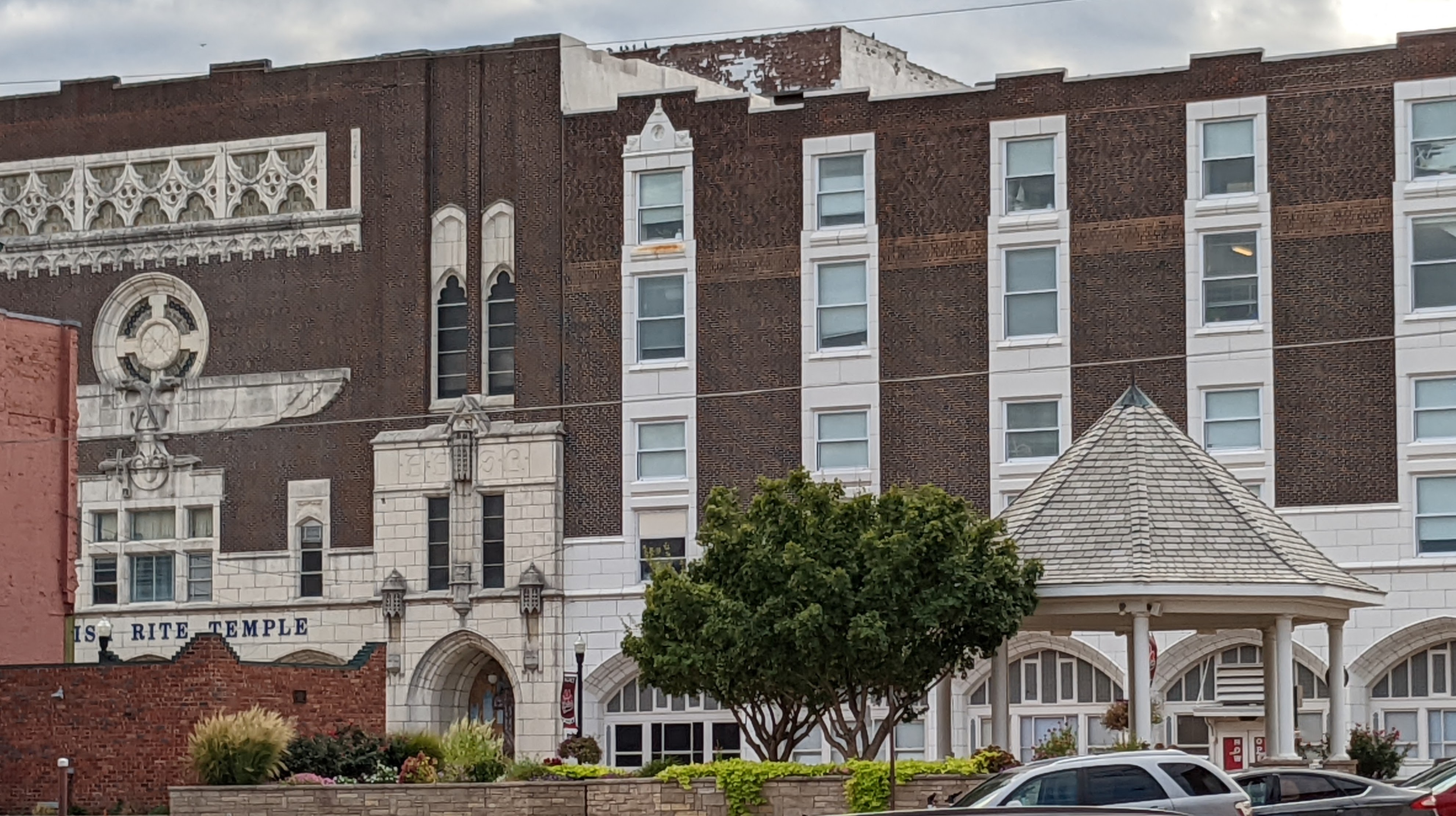
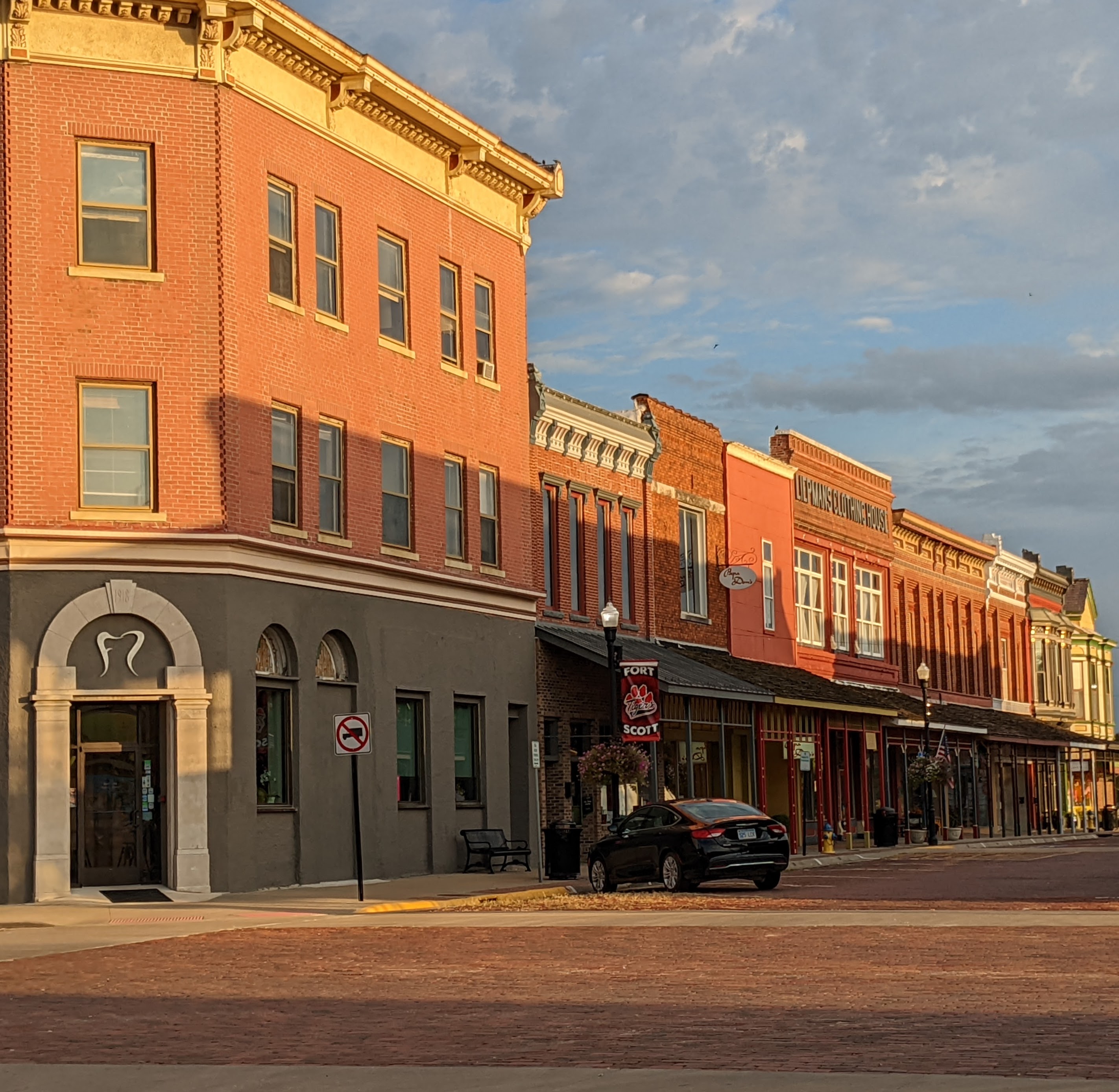
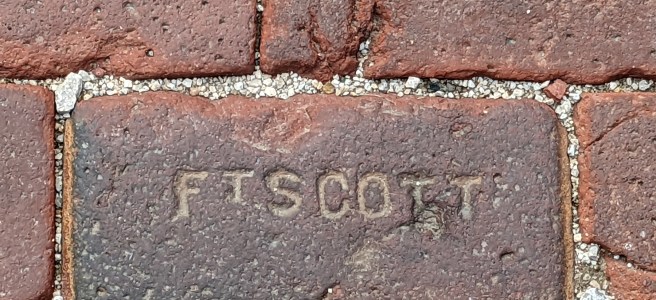
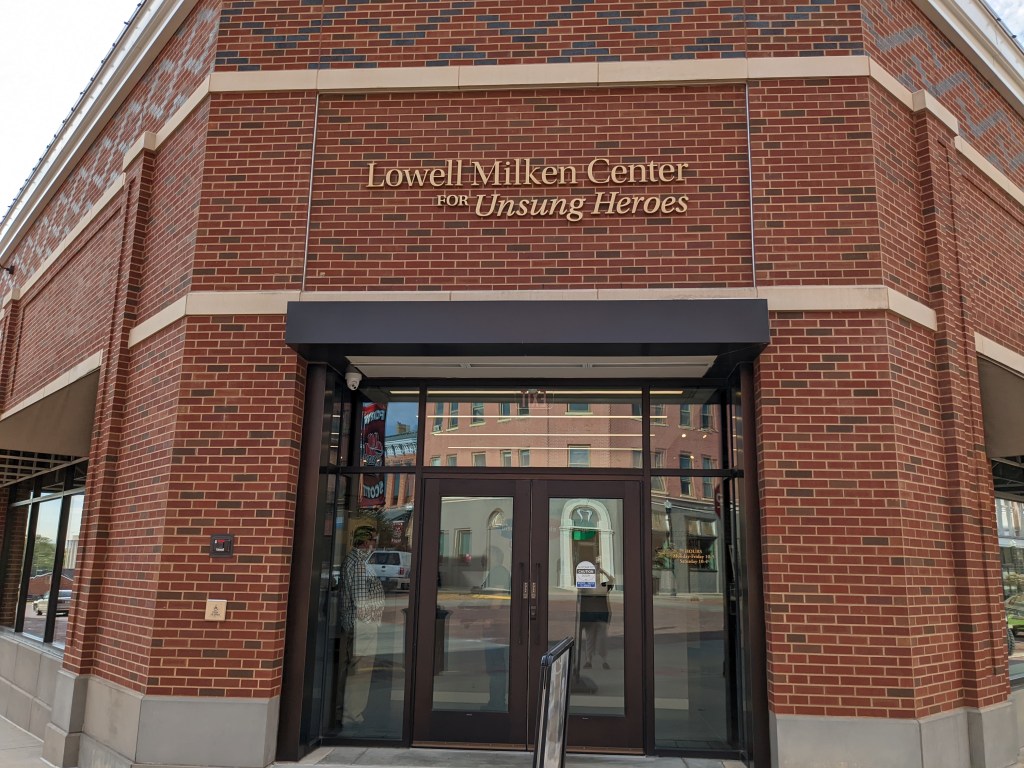
The Lowell Milken Center for Unsung Heroes occupies one of the newer buildings in Fort Scott, Kansas, situated across the street from its original location. Several century-old historic buildings in downtown Fort Scott, Kansas, were destroyed by fire in 2005 and have since been rebuilt. An adjacent outdoor park opened earlier this year and is a contemporary urban delight. The downtown still retains its former character, with traditional brick buildings and brick-paved streets, but the city’s history is being written with renewed vigor.

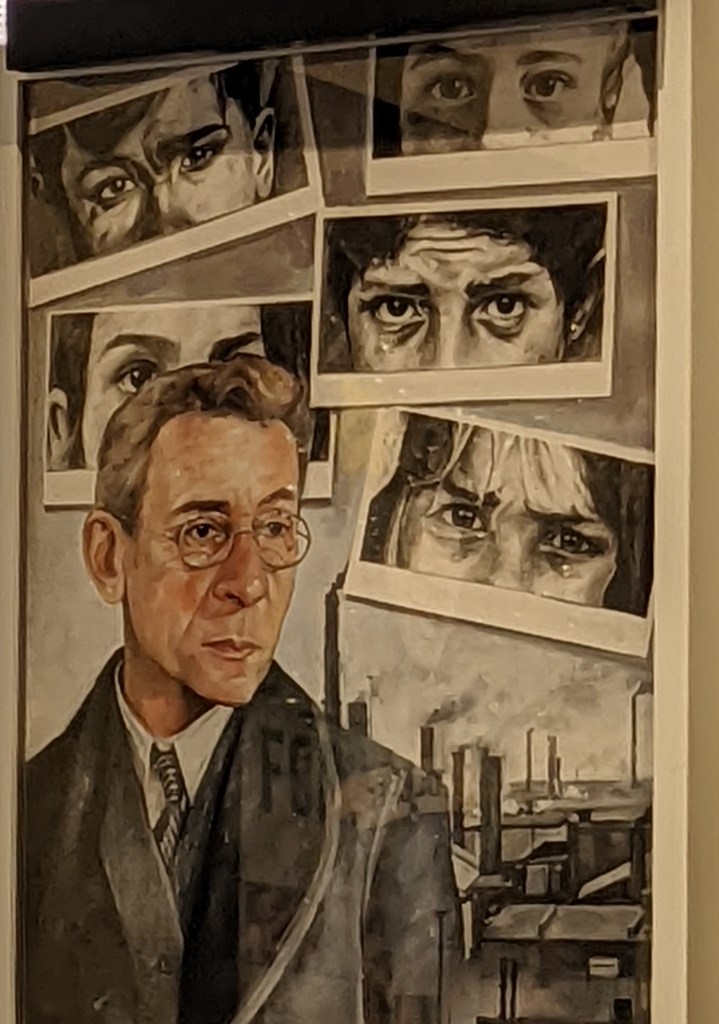
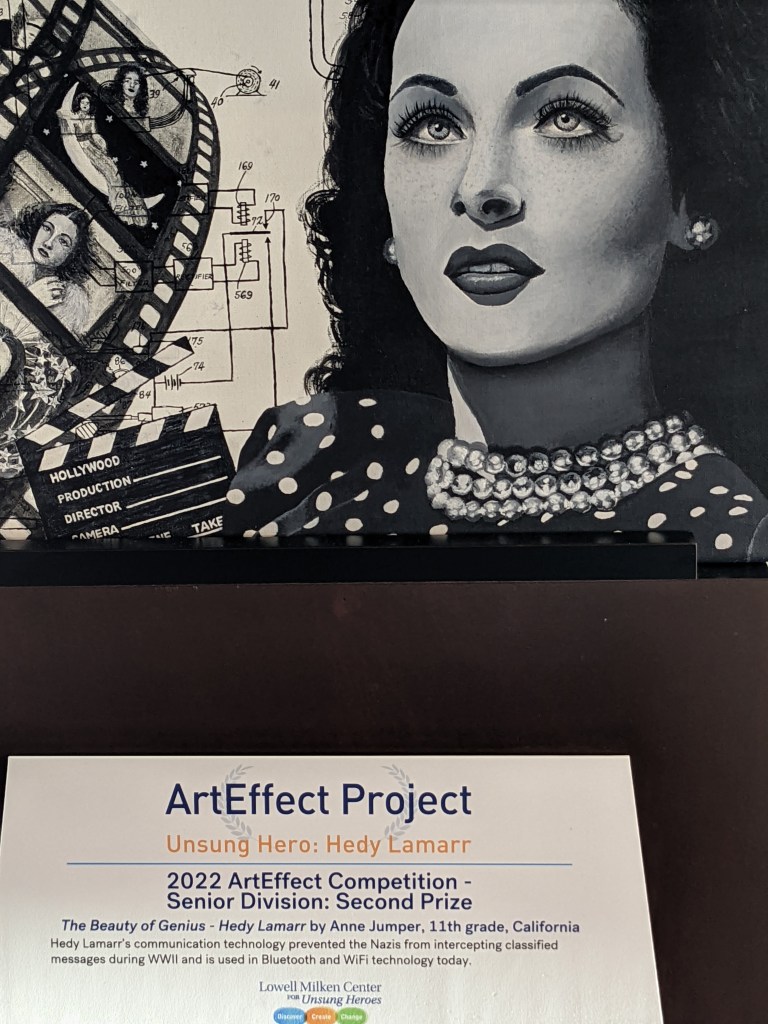
Stories told at the Center are larger than life, brought to life in a way that is truly remarkable. The history of the Milken Center is as awe-inspiring as the lives of the featured heroes. Visitors are introduced to real people who lived seemingly ordinary lives, playing largely unknown and unrecognized roles in history. Their stories have been uncovered, researched, and retold by students, through art and drama, photographs and videos, essays and interactive displays. Their truths are as thought-provoking as they are disturbing. The history of the Milken Center is as awe-inspiring as the lives of the featured heroes.

In 1999, Norm Conard was a social studies teacher at Uniontown High School in rural Kansas. He had given his class a History Day assignment. One of his student teams learned of Irena Sendler, a Polish Catholic social worker who was instrumental in rescuing children from the Warsaw Ghetto during World War II. She buried the names of rescued children in milk jars hidden under a tree. It was, and still is, quite a story. Read a more detailed account here. The students found that Sendler was alive and living still in Poland. In 2001, Conard accompanied a group of students to Poland to meet with her. Several other trips followed, until she passed away in 2007. The student-written play about her deeds, “Life in a Jar,” has been performed more than 350 times, and it continues to be be staged in the U.S and Europe.

During his tenure at Uniontown High School, Conard’s students created more than 85 projects, telling the stories of other common people who performed uncommon acts. Those stories are now the focus and backbone of the Center for Unsung Heroes. New heroes continue to be identified by groups of students — from fourth grade through high school — who have been inspired to dig deep into history and to move far beyond the obvious.

Today, Norm Conard serves as chief executive officer of the Center and is also the director of the Life in a Jar Foundation. It was, after all, his classroom motto for the History Day project in 1999 that gave birth to the idea. That motto? “He who changes one person, changes the world entire.” The Lowell Milken Center was founded with the goal of creating ripples of influence that will engage even more educators and students in an effort to change the world. Megan Felt, one of the students who first identified Irena Sendler, is the center’s program director.

Plan to spend longer than you may originally intend at the Milken Center. It is no ordinary museum. It’s a place to discover the true meaning of heroes in a time when that word is often overused. It’s mesmerizing and unforgettable.

But the Milken Center isn’t the only reason to visit Fort Scott.

Before Kansas was even a territory, Fort Scott was a military outpost. It was established on the frontier in 1842 but the Army abandoned the garrison in 1853. The city was chartered in 1860, one year before Kansas became a state. Today, it’s the only such town to survive. Its military cemetery, one of 12 originally designated by President Abraham Lincoln, is listed as U.S. National Cemetery #1.

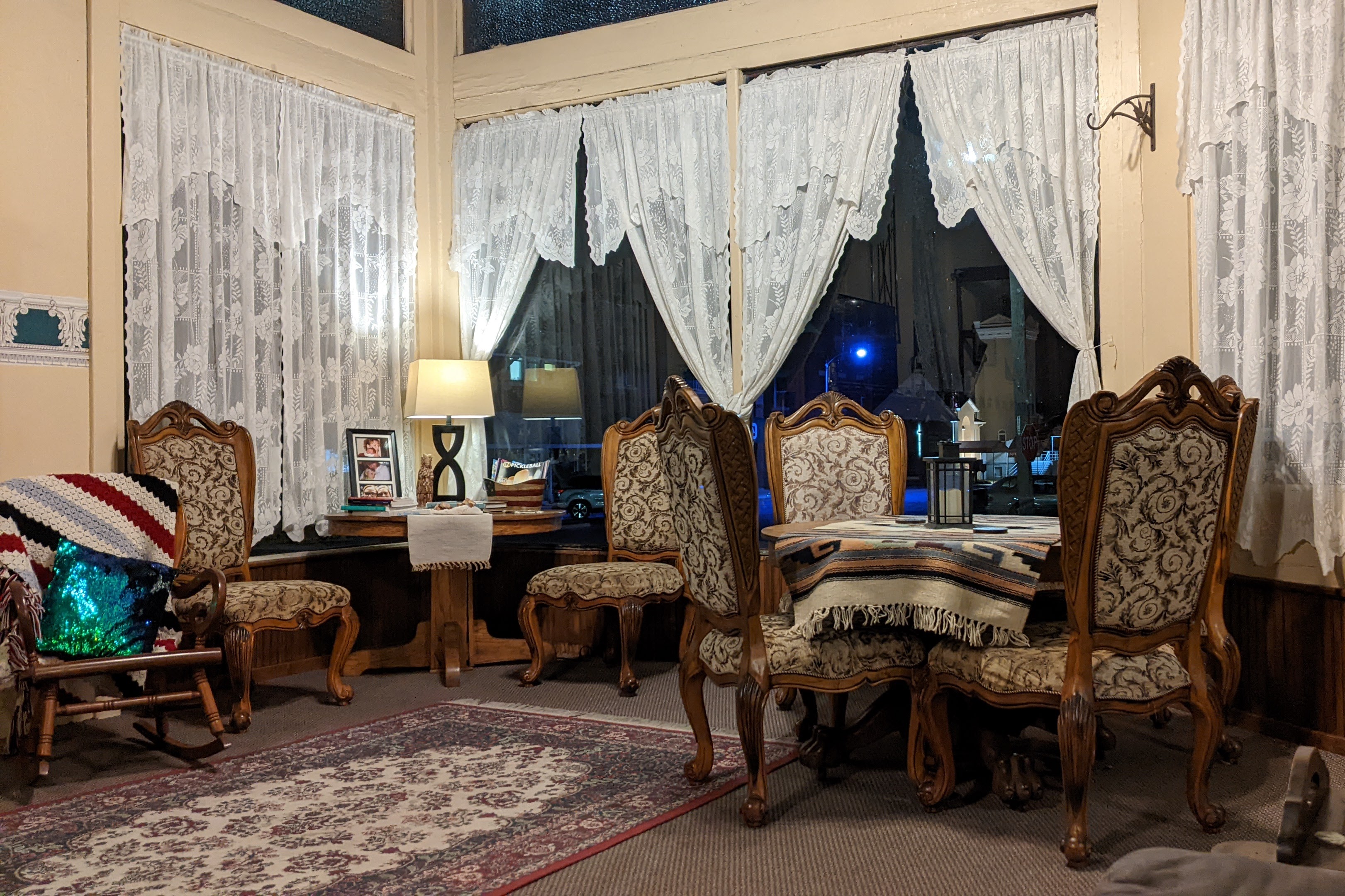
Our group spent that first night in Kansas at the Courtland Hotel and Day Spa. Situated in a building that dates to 1906, it was once a bustling laundry with a boarding house on its upper level. Proprietor Frank Adamson, a Fort Scott native, is only too happy

to offer insights into city history! He and his wife, a massage therapist, purchased the building as a location for her to open a day spa. They remodeled a portion of the main floor for the spa, with refurbished guest rooms on the second floor. Today, each room in the hotel is distinctive, filled with antiques and period decor to complement the architecture and honor the building’s history. A main floor lobby, office area and dining room retain the period charm of the past, and serve as a gathering spot where Adamson regales guests with stories of Fort Scott’s past.

A center of pre-Civil War turmoil between slavery proponents in nearby Missouri and local anti-slavery forces, this part of of the state was known as “Bleeding Kansas” until the end of the Civil War, even though Kansas entered the union as a free state in late January 1861, before the war began. As the U.S. Army’s district Headquarters, Fort Scott was a quartermaster supply depot, training center, and recruitment station.

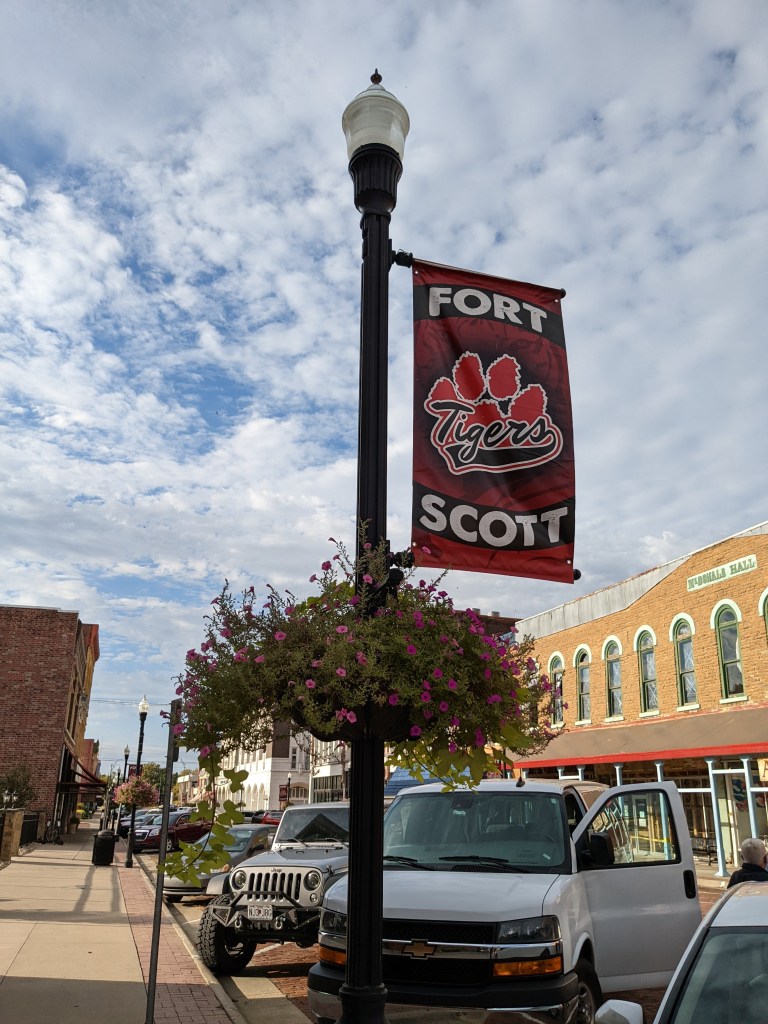
At one time, it was a noted frontier city, one of the largest in eastern Kansas, and it rivaled Kansas City as a railroad center. All that now remains of that time is the original, restored Old Fort building, now relocated to the town square. But the stories that date to those times are fascinating, and visiting Fort Scott is like stepping back in time to a simpler era. Brick-paved streets, sturdy brick buildings, and stately period lamp posts reflect its history, but its people have their sights set on the future, and they’re doing their best to integrate the two.

We left Fort Scott and headed for Route 66 — The Mother Road. Only 13 miles of the unique highway traversed a corner of the state, but it’s impossible to escape the influence of the Route in this part of Kansas. Come along next Wednesday as we recreate a legendary road trip. We had great fun along the way and discovered more unique attractions in Southeast Kansas!

Kansas Part 2 — Comfort food and much more

I first met two of my traveling companions for this trip at the Kansas City Airport. We had arrived at approximately the same time from our starting points in Arkansas, Boston and Michigan. We did the only thing possible: we found a comfortable table in an airport eatery and proceeded to get to know one another until our host could pick us up.

After ordering coffees and ice water, we browsed a menu of mostly uninspired airport dining options. We did not know when we would rendezvous with our other four traveling companions, nor did we know exactly what our schedule had in store for later in the afternoon. However, we did know that we were destined for dinner at a barbecue restaurant in Fort Scott that evening. After some discussion, we decided to try the airport version of local barbecue. And we were pleasantly surprised! The three of us shared an order of barbecue pork sliders — one for each of us — ample small bites that were quite tasty.

If there’s a single universal impression of Kansas food, it’s probably of “comfort food,” and what’s more comforting to a Midwesterner than barbecue and fried chicken? More about that later.

Following an Uber ride and another round of introductions, our group was complete. We settled into our rental van for the drive from Kansas City to Fort Scott.

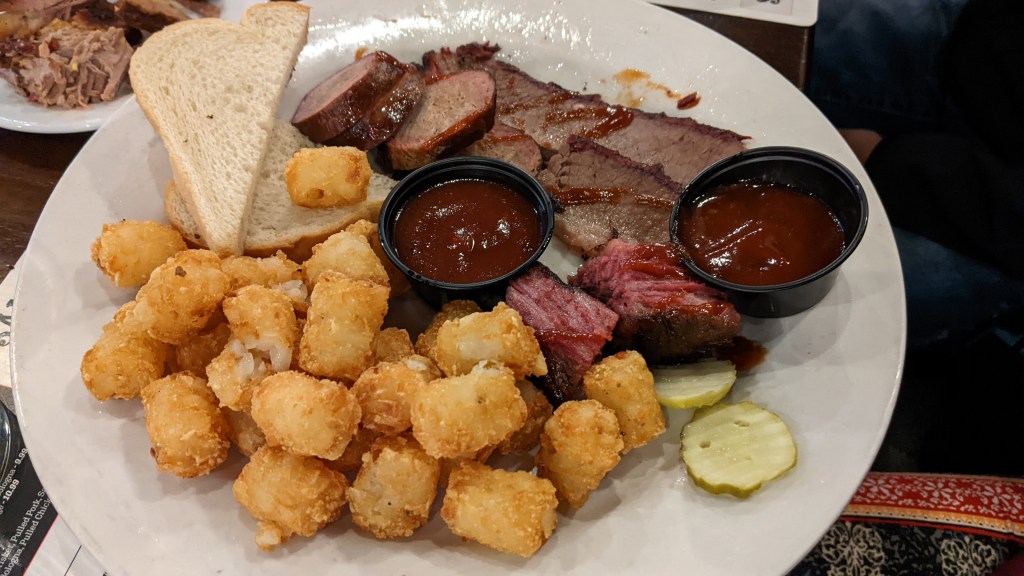
It was at dinner that first evening in Fort Scott that we were introduced to a great variety of barbecue options. The tagline on the menu at Luther’s BBQ, which opened in 2019 just prior to the pandemic, was “good food and plenty of it!” We were to find that could well be a statewide slogan.

The restaurant, housed in an historic brick building in the heart of Fort Scott, offered an extensive menu with much to sample — all simple food as it turned out. We enjoyed tasty deviled eggs and a variety of meats and cheeses — the best kind of finger foods, and delightful drink options, including a Bloody Mary that exceeded all expectations and was “write-home-about-good!”

Sadly, I must end my report about the meal we had at Luther’s, because a message on my computer lists the restaurant as “closed permanently.” I believe that Fort Scott residents were hoping it would be another success story in the city’s planned rejuvenation. Maybe it still will be. But, for now, the website is down, and the phone goes unanswered.

The only thing I regret? I didn’t get a “doggie bag” to take with me.

We spent the night at the historic Courtland Hotel in Fort Scott. My plate was full again the next morning with oversized breakfast burritos and specialty coffees from Common Ground Coffee Co., served picnic-style at the Lowell Milken Center for Unsung Heroes. It was another treat in the lineup of Kansas attractions that awaited our group.

The second full day in Kansas was jam-packed with new sights and experiences.

It began at the Milken Center and continued with a drive along the stretch of historic Route 66 that still runs through the state. Kansas, at least this portion of it, hasn’t changed visibly over the past several decades. In many ways, that’s comforting. You know what they say — “The more things change . . . ” Well, yes, much does remain the same.

But change is in the air and there’s a lot more to come!