How Color Can Define a Culture

It was hard work -- for the women and the men -- but it was the price of freedom in the early Gullah Geechee known as Pin Point, near Savannah.

Haint Blue

It’s a paint color, a pale, watery shade that seems somehow imbued with sky, water, serenity, and the hopes and dreams of an entire culture. It’s traditional for the Gullah Geechee inhabitants of Georgia, the Carolinas and the sea islands that extend along the Eastern seaboard all the way to northern Florida. These people were transplants from western Africa, primarily Angola. For them, the color blue was sacred.  

Indigo bottles decorate a tree at Pin Point Heritage Center,
One of the many variations of Haint Blue colors a door at Pin Point, an impressive Gullah Geechee Heritage Center only about 11 miles from Savannah. Also, the deep indigo bottles on the tree are a reminder of the heritage of the hue.

In their native land, and also in the new world as enslaved people, they worked indigo plantations. The distinctive blue dye derived from indigo plants was used for textiles and was also adopted for home furnishings and décor. The Gullah people frequently painted the trim on their dwellings or the ceilings of their porches the distinctive shade known as Haint Blue.  Today, you’ll spot the color as building trim on small coastal cottages, and as the accent color on larger city dwellings along the Eastern Seaboard from the Carolinas to Florida as well. The blue that originally was derived from the Indigo plant has become an international favorite, and is a highly popular choice for home decor, particularly along the coast.

It’s a color that has also graced the porch ceilings of my homes — from Maine to Texas, and now in Arkansas — since I first learned about its history and its significance. It is said to ward off evil spirits. It is also believed to deter pests, particularly flies and mosquitoes. For those reasons alone, I would have chosen it, but the color is also calming and just unusual enough to appeal to me.  

Besides that, it offers one more chance to tell a good story! I learned more about Haint Blue and its American roots during a trip last fall to Savannah and Tybee Island, Georgia. 

The History of Haint Blue 

In the early days of the American Colonies, the enslaved peoples from western Africa also brought with them the indigo seeds that thrived in their home countries. They grew well in the marshy sea islands along the Atlantic coast and the blue dye derived from the indigo plant became a cash crop for plantation owners, prized by the British in both the Old and New Worlds. 

That distinctive blue retains its significance, although it appears today in a multitude of shades, from deep cobalt to a pale robin’s egg tint, from vibrant turquoise to a milky mixture of sky and sea with hints of grey or green. This historical affinity for blue is evident throughout the Low Country. 

The African slaves toiled over indigo, along with cotton, rice and, later, tobacco. Following the Civil War, Gullah populations settled in communities along the coast, subsequently beginning the tedious job of “farming” the marshes for shrimp, oysters and crab. They also planted fruit trees and small vegetable gardens. Interestingly, it is the Gullah culture that can be credited for some of the more popular “Southern food” that we enjoy today.   

The long, narrow lots fostered a sense of community for the  freed slaves.
Deemed unsuitable for wealthy Savannah buyers, former slaves pooled their money to buy the unconventional lots.

Waterfront property not far from Savannah that had been owned by Judge McAlpin as part of the Beaulieu Plantation was subdivided and sold to wealthy Savannah residents. Less-desirable marshy lots were made available to freed slaves who pooled their money to acquire long, narrow plots with limited access other than by boat through the marshes. The community of Pin Point was founded in 1896, and today it survives as the only Gullah Geechee community along the Atlantic coast that is untouched by commercialization.

Many of the newly-freed slaves remained on Skidaway, Ossabaw, and Green Islands as tenant farmers, crabbers and fishermen. However, a series of hurricanes swept through the barrier islands in the 1890s, killing many hundreds, if not thousands, of the inhabitants.    

Pin Point is included in the swath of land from the Carolinas to northern Florida designated by the U.S. Congress in 2006 as the Gullah Geechee Heritage Corridor. Late last October, during the time of my visit to the area, a bridge to one of the coastal islands a bit further north collapsed during a Gullah Geechee celebration, killing seven people and injuring many more.

Against the Odds 

From the beginning, the story of Gullah Geechee communities has been one of survival against the odds. It was a hard life, but the newly freed families “made do,” according to Gail Laverne Smith, who was born in Pin Point, Georgia.  

Smith’s recently published book, “Gullah Geechee Gal,” is a collection of stories and poems that speak of her life in the community.  

At once a personal memoir and a record of life in a post-Civil War community, this is a fascinating look at life in this unique community.

I met her at the Pin Point Heritage Museum, where she served as the Historic Interpreter. She spoke freely about her younger years as one of five children growing up in a community of fishermen, noting that they were “also skilled laborers who gathered to build homes, many of which were elevated on stilts to survive the heavy rains.” Known as shotgun houses, she explained that “when the front door opened, one could see clear through to the back of the house.” Other dwellings, including some of the first cabins in the community, were constructd of Tabby, a mixture of burned oyster shells, sand, water, and lime. A few still exist.

Today, about 100 residents still live in Pin Point, and the historic church and cemetery still serves local families. When the community was established, the first settlers built Sweetfield of Eden Church, an “offspring” of Hinder Me Not on Ossabaw Island.

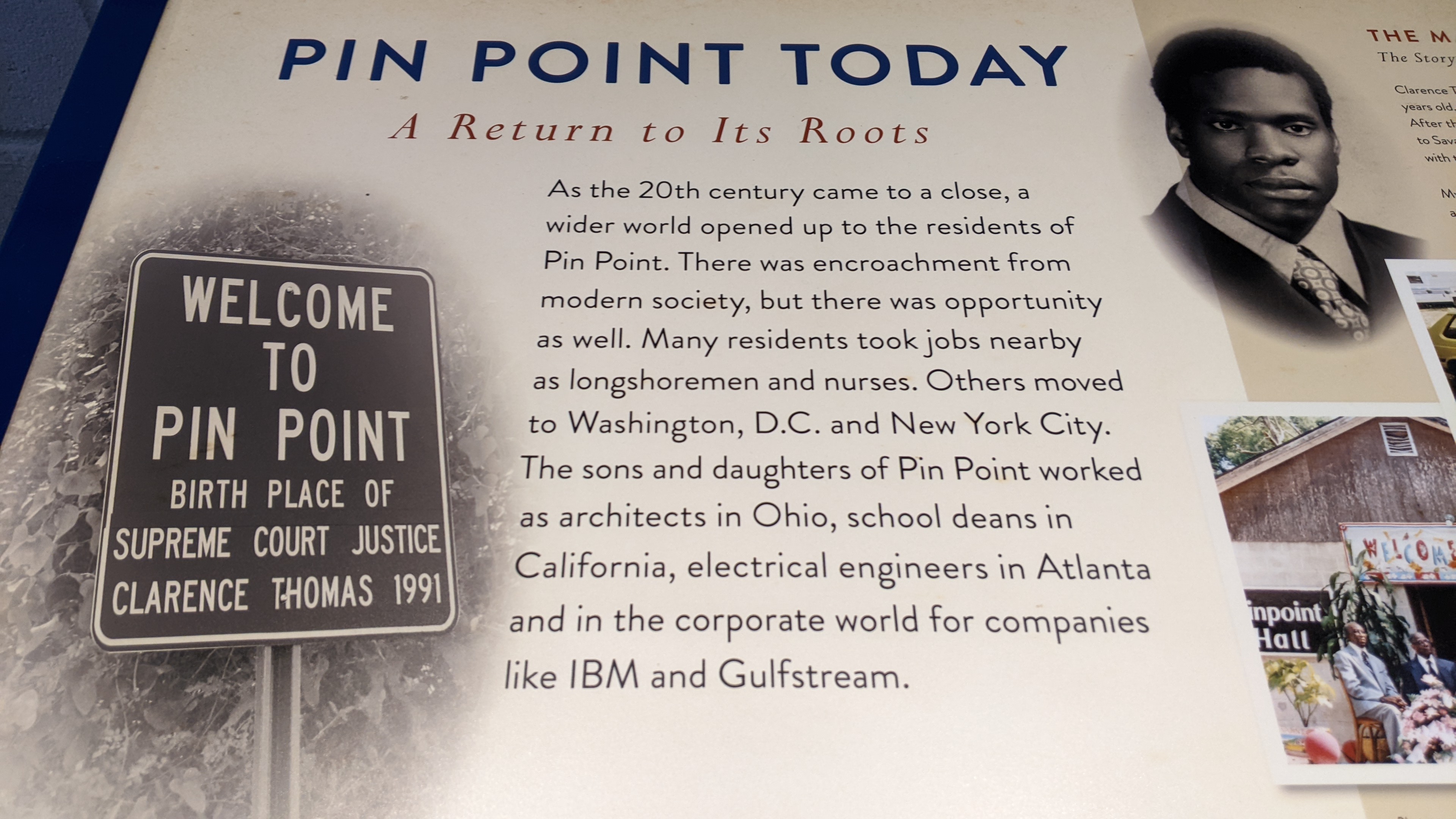
In the 1960s, according to Smith, about 400 families lived in Pin Point. Supreme Court Justice Clarence Thomas was born in 1948 to a Pin Point family. He was not only instrumental in the establishment of the cultural center, but is one of the featured former residents in the informative film shown to Pin Point visitors.  

The Pin Point Heritage Museum

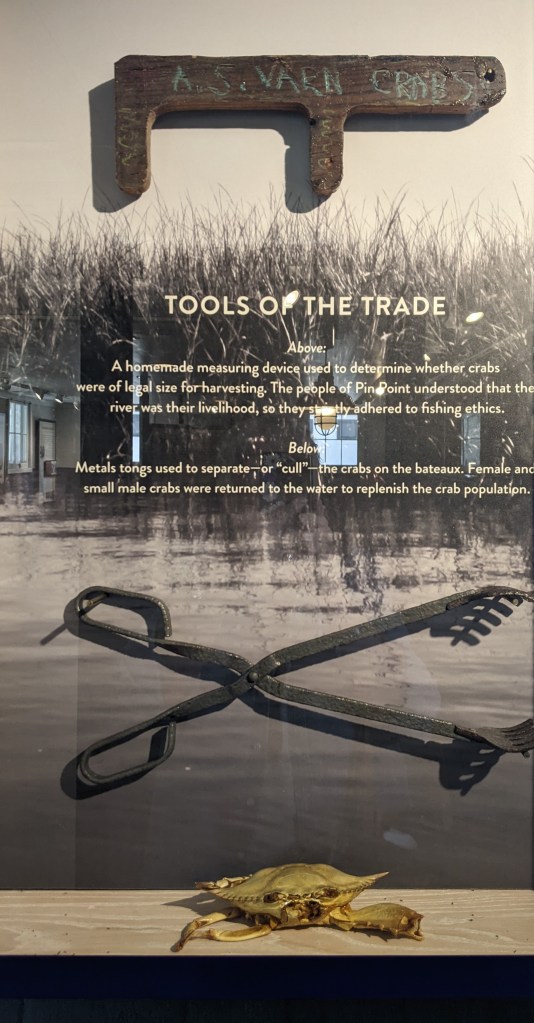
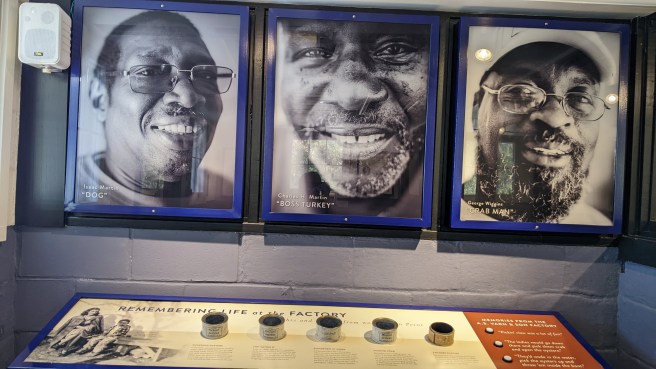
The educational center at Pin Point Heritage Museum is located in the former A.S. Varn and son Oyster and Crab Factory. Visitors are first treated to an introductory film, and then are free to explore the grounds at their own pace, learning about the factory’s operation during the years from its founding as a processing plant in 1926 until it ceased operation in 1985.  

Visiting Pin Point today is like taking a step back in time.
The Pin Point Heritage Center is located on a tranquil site not far from Savannah.

It was a strikingly sophisticated operation in its early years, with division of labor between men and women who performed the grueling work by hand. During the 1960’s, A.S. Varn was a major supplier of seafood along the Atlantic Coast. In the 70’s, however, a declining harvest and the rise of commercial fleets and factories contributed to its demise. 

To learn more about Gullah Geechee communities and culture, visit http://visitgullahgeechee.com/about/. 

Pin Point offers a fascinating glimpse of those former times, as well as insight into the Gullah Geechee community that existed there. Just up the road from the marsh, the still-existing community stretches to the site of the church and its nearly-century-old cemetery, offering insight into the past of this former freedman’s community and to the growth and development of coastal Georgia. Traveling on that isolated roadway was akin to taking a step into the past.

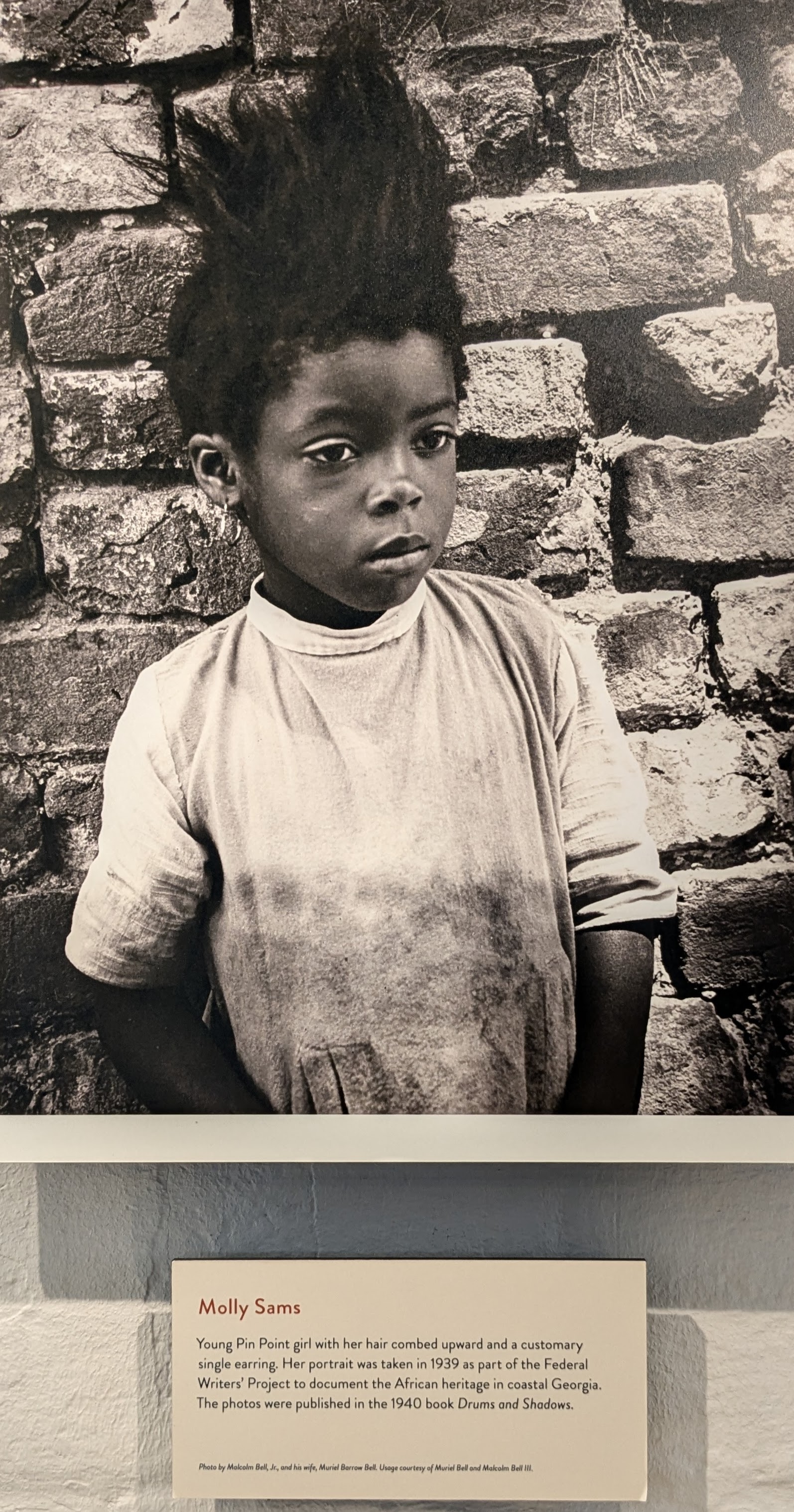
The newly-freed people who founded Pin Point were determined to preserve their heritage and maintain their cultural heritage and traditions. As Gail Smith explains, they have done just that. Religion and spirituality played a pivotal role in Gullah family and community life. Enslaved Africans were exposed to Christian religious practices, and they incorporated them into the traditional system of African beliefs. One of the prime values was that of community, according to Gail Smith.  

She noted that, while growing up in Pin Point, children did not talk back to their parents —obedience and respect for their elders were primary requirements, as well as a belief that the needs of the community trumped individual goals and desires. She noted that the center of daily life and activity was the family, and that religious beliefs, hard work, and respect for nature held the community together.

  • It was hard work -- for the women and the men -- but it was the price of freedom in the early Gullah Geechee known as Pin Point, near Savannah.

In her book, Smith notes: “Growing up as a little girl in Pin Point, I always felt like even though we didn’t have a lot, we always had just enough.”

She continues to chronicle the cultural history and traditional lore of her community through her stories and poems. Her willingness to share her memories with visitors to Pin Point ensures that the voices of her ancestors continue to be heard and celebrated. The time I spent with her was evocative of a lifestyle and time I previously knew little about and I am grateful that I had the opportunity to learn about the Gullah Geechee heritage. 

Celebrating Cultural Heritage

Geechee communities developed, over time, a distinctive dialect to maintain their individuality and partially confound the slave owners. A mixture of English, Creole French and some African words and expressions, the language  is still spoken today by some of the Low Country families, and it partially defines the culture, in a similar manner as Haint Blue.
Pin Point is located just 11 miles from Savannah, situated adjacent to the marsh that separates it from Moon River. It is the last surviving black-owned waterfront community in coastal Georgia, one of the distinct communities that constitutes the Gullah Geechee National Heritage Corridor, the historic swath of territory established by an act of Congress in 2006. 

That corridor is designated to ”help preserve and interpret the traditional cultural practices, sites, and resources associated withGullah-Geechee people. It extends along the eastern U.S. coast through North and South Carolina, Georgia and Florida, culminating at the site of Fort Mose in St. Augustine, FL, which in 1738 was the first legally-sanctioned free black community in what would become the United States.  
Today, the Gullah Geechee Corridor focuses on 79 Atlantic barrier islands in the designated area and certain adjoining areas within 30 miles of the coast. Traditional Gullah baskets woven from native sea grass are popular items at the Charleston market. Also, it is interesting to note that some of the typically “Southern dishes” that we enjoy today can be traced to the foods grown and consumed by the early Gullah inhabitants who not only caught fish, shrimp, crab and oysters from the sea, but also planted beans, rice and vegetables on their small plots of land.

The Gullah Geechee Corridor is administered through a partnership between the National Park Service, local governments, and cultural and tourishm authorities from the Charles Pinckney National Historic Site in Mount Pleasant, South Carolina, just northeast of Charleston. If you’re interested in the area’s history, that site is also well worth a visit.

A Mournful Whistle Recalls the Storied Past of a Massive Steam Locomotive

I made my way as close as possible to the railroad tracks earlier this month, as eager as children half my height, for a close-up view of Union Pacific’s “Big Boy” 4014 steam locomotive. It was at rest in the rail yard in North Little Rock, a scheduled stop along its 2024 Heartland of America Tour. The route takes it through nine states, with “whistle stops” in more than three dozen different communities. You might also see it passing through the countryside, but visitors are admonished to stay “at least 25 feet back” as the massive locomotive travels along the rails. View the route and tentative schedule.

This relic from the glory days of transcontinental railroad commerce and loaded freight trains is the last operating steam locomotive of 25 built between 1941 and 1944 for the Union Pacific Railroad.

The public was invited to view the glistening black behemoth from 5 to 7 p.m. on September 15, during an overnight visit to one of the railroad company’s major modern servicing facilities. The facility is busy 24 hours a day, sorting freight cars that arrive and depart from across the country. It was a cloudy, grey afternoon, but hundreds of people, young and old alike, turned out to see the historic steam locomotive. The round-trip “rolling tour” began August 28 in Cheyenne, Wyoming, and will end back in Cheyenne in late October.

Some visitors parked blocks away, but a walk over uneven gravel and through a sea of mud puddles did not dampen their enthusiasm. Even the unrelenting drizzle was just a minor annoyance. Ed Dickens, senior manager of Union Pacific Heritage Operations, is the locomotive’s chief engineer for the tour. From all appearances, he was having as much fun as the viewers, waving to children and snapping his own photos of the crowd. Occasionally, he sounded the mournful whistle, and laughed as young children covered their ears.

People of all ages stood transfixed, the younger ones beside me pushing against the barricades. Many of them had probably never before been close enough to even wave at a train. There were aging men and women with canes and walkers, and others in wheelchairs. A layer of colorful umbrellas formed a spotty canopy above the heads of the crowd. Children sporting hoodies and ear-to-ear smiles clasped grown-up hands, and toddlers perched expectantly on their fathers’ shoulders.

A service crew was busy at work, even as raindrops continued to fall. The engine belched billows of steam into the sky and more steam drifted between the wheels along its underbelly.

A Return to Days Long Gone

Some of us who grew up watching freight trains rumble through small towns still love the “choo-choo” sounds of the wheels as much as the “melodies” of the whistles. Note: This recording is a blast of the whistle on another steam locomotive in Union Pacific’s Heritage Fleet, Number 844, the only one never to be officially “retired” from active service. Smaller than the Big Boy, it is used to pull expedition trains from its home base at the Union Pacific Museum in Council Bluffs, Iowa.

I have numerous train-related memories. My husband, who grew up in Maine, remembers placing pennies on railroad tracks near a rented summer beach house, waiting for a train to pass, and then retrieving the flattened, elongated pieces of copper.

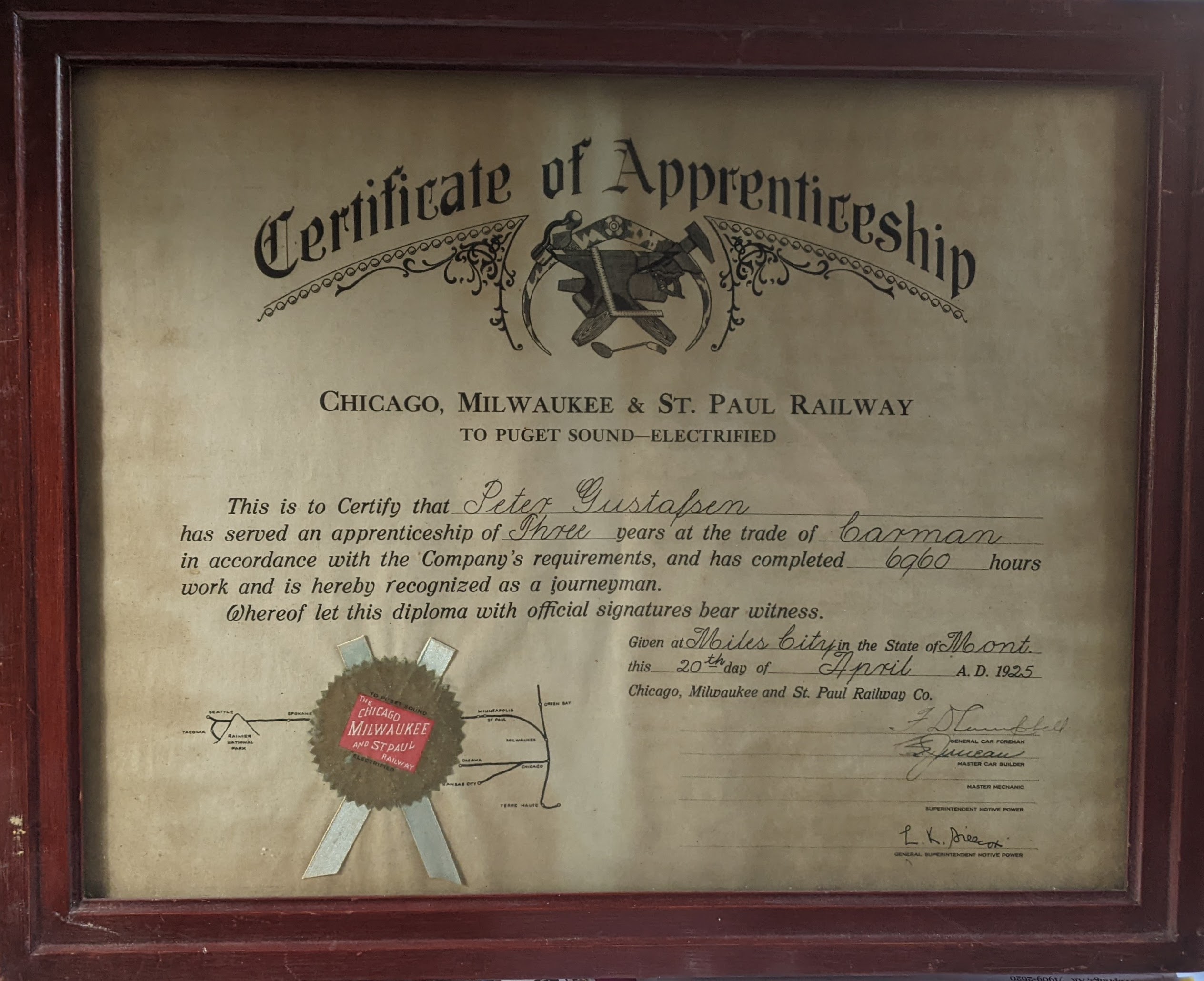
One of my grandfathers completed a three-year apprenticeship as carman for the Chicago, Milwaukee & St. Paul Railway Co., to “Puget Sound—Electrified” in April 1925. Today that certificate hangs on my office wall, along with a photo of yet another early steam locomotive. I confess that I still wave at trains, although I typically don’t expect a return wave from the engineer. Sadly, the brakemen on those cabooses of long ago have also now disappeared. Most trains no longer even have a caboose; they have been replaced by electronic small-box sensors.

I remember passenger trains as well as long-haul freight trains, and I sometimes yearn for those days of “slow travel,” observation cars, and meals served by white-gloved waiters in dining cars with linen tablecloths and distinctive china, silver, and sturdy glassware. Seeing this locomotive, the last and largest of its type still in use anywhere in the world, represents a step back into much-loved childhood memories for me.

The trains that now speed along tracks adjacent to the nation’s highways no longer have the same appeal, but freight trains still serve the needs of modern commerce and transport our country’s freight. The market is expected to reach $400 billion in 2024, with growth to more than $510 billion by 2029. There is also a growing resurgence in railroad tourism in some parts of the United States, and travel by high-speed rail in other countries is increasingly popular.

Saved from the Scrapheap

The Big Boy is the largest articulated steam locomotive ever constructed, and it was designed specifically to pull heavy loads over the steep grades of the Wasatch Mountains in Utah. Constructed by American Locomotive Company, with development input from Union Pacific, the Big Boy was designed to handle heavy freight loads, conquer the mountain grades of the routes through western mountain states, do it all at a reliable speed with no need for an auxiliary engine, and deliver the goods to western destinations on schedule.

Twenty were delivered to Union Pacific and placed in service in 1941, largely in support of the second world war effort. Another five were delivered in 1944, but the last of the Big Boys was pulled from service by 1962. Number 4014 completed its last revenue run in July 1959, and was officially retired in December 1961 after 17 years of active service, exactly 20 years after its first run.

Union Pacific launched a five-year-long restoration of Big Boy 4014 when the company reacquired it from a museum in California in 2013. The locomotive was moved from southern California to Cheyenne, where it sat idle for nearly two years as plans were completed for its restoration. Not only did the facility require expansion and updating to accommodate the Big Boy, but the locomotive had to be totally disassembled. In some cases, new parts were fabricated, and it was converted from coal to run on more efficient, less expensive diesel fuel.

Otherwise, however, the locomotive has been restored to its original design and configuration.

In the spring of 2019, a test-firing was successful, and Number 4014 moved “under its own power” for the first time in nearly 60 years. The revitalized Big Boy locomotive made a first test run the next evening from Cheyenne to Nunn, Colorado.

The rest, as they say, is history. And now, the public can share that history on annual runs that typically attract thousands all along the designated routes.

When the restoration was complete in 2019, Big Boy 4014 embarked on an inaugural tour to commemorate the 150th anniversary of the Transcontinental Railroad’s completion. The locomotive was then placed in excursion service as a member of the Union Pacific Heritage Fleet. Today, it is said to be Union Pacific’s primary public relations tool. Earlier this year, the locomotive completed a “Westward Bound” tour to California, passing through five states and culminating with an excursion for paying guests. Such special events help underwrite the railroad’s museum operation.

Who Cares about an Old Steam Engine?

Although Big Boy locomotives were said to be capable of speeds up to 80 miles per hour, there is no confirmation that they ever actually traveled that fast. They typically ran well under 60 mph, often chugging along at a much lower speed, but they did so reliably and consistently for nearly two decades.

Many of them traveled a million miles or more. Number 4014 logged 1,031,205 miles during its years in service.  Astoundingly, the Big Boy locomotive is nearly 133 feet in length and weighs 1.2 million pounds. The primary advantage was its power. It is still robust and, for all its size and power, it is able to maneuver mountain curves because it is articulated, or “hinged” at strategic points.

This is no ordinary engine. And a lot of people care. I have fond memories of traveling by train both in this country and abroad, but the passenger trains I remember, with their sleek diesel engines, are a totally different breed from the steam locomotives that served as the iconic workhorses of the railroads.

Big Boy 4014 is the only one of 25 built that is still in operation. And it is the largest operational steam locomotive in the world today.

Ed Dickens of the train’s crew notes that the locomotive, with a weight of approximately 600 tons, “runs like a Swiss watch,” even though it can easily pull a train five miles long on flat ground. He says that it was designed to be simple to operate, adding that “you drive by the seat of your pants – you smell the brakes,” and the crew becomes familiar with the sounds.

If you’re interested in learning more about Big Boy 4014, and the history of the steam engine era, tune in to this episode of Jay Leno’s Garage on You Tube. You’ll love it!

Finally, if you’re interested in seeing Big Boy 4014, its home base is in Cheyenne, Wyoming, when it’s not on tour. Other Big Boy locomotives can be viewed in Denver CO, St. Louis MO, Scranton PA, Green Bay WI, Frisco TX, and Omaha NE, just across the river from the Union Pacific Railroad Museum in Council Bluffs, Iowa. If you’re a fan of old trains, though, and you go to Council Bluffs, plan to spend the better part of a day there. And you’ll leave wanting to return.

Santa Fe: Getting to Know The City Different

It has been more than a decade since I lived in Santa Fe. But it’s a city one cannot easily forget. In many ways, it’s a city that I will always miss. I fell in love with Santa Fe the first time I visited, about 1975, and I still cherish the years that I lived and worked there.  

Long described by both residents and visitors as “The City Different,” Santa Fe was known by its earliest inhabitants as “The Dancing Ground of the Sun.” Those of us who arrived to become new residents when it was still a relatively small town were attracted by its culture, its lifestyle, the spectacular sunsets, and the people. We were mesmerized by the changing seasons, the landscape, the diversity, and by city’s traditions and timeless quality. We hoped it would remain so forever.

But change is inevitable, and Santa Fe’s growth and growing popularity prompted many changes, some of them good and some not so well received. Over a span of nearly 20 years, the population grew by more than 20,000, with new residents from every state and many other countries. No longer was it a quaint New Mexico town with a predominantly Hispanic and Native American population. It became much more cosmopolitan, and more complex.

Prices increased, of course, not only for housing, but for all goods and services. New businesses opened, and new philosophies of growth, development, and government were born. Tourism thrived, and Santa Fe became an increasingly popular destination. Some “old-timers” feared then that Santa Fe would lose its appeal and become “not so different” from other prominent tourist destinations around the world.

Change and Growth Are Not Always Negative

Recently, my husband and I revisited Santa Fe. Our time was limited, but we made the most of the opportunity to see old friends, neighbors and business associates. We found, happily, that Santa Fe’s charm has not been diminished. The opposite is true.

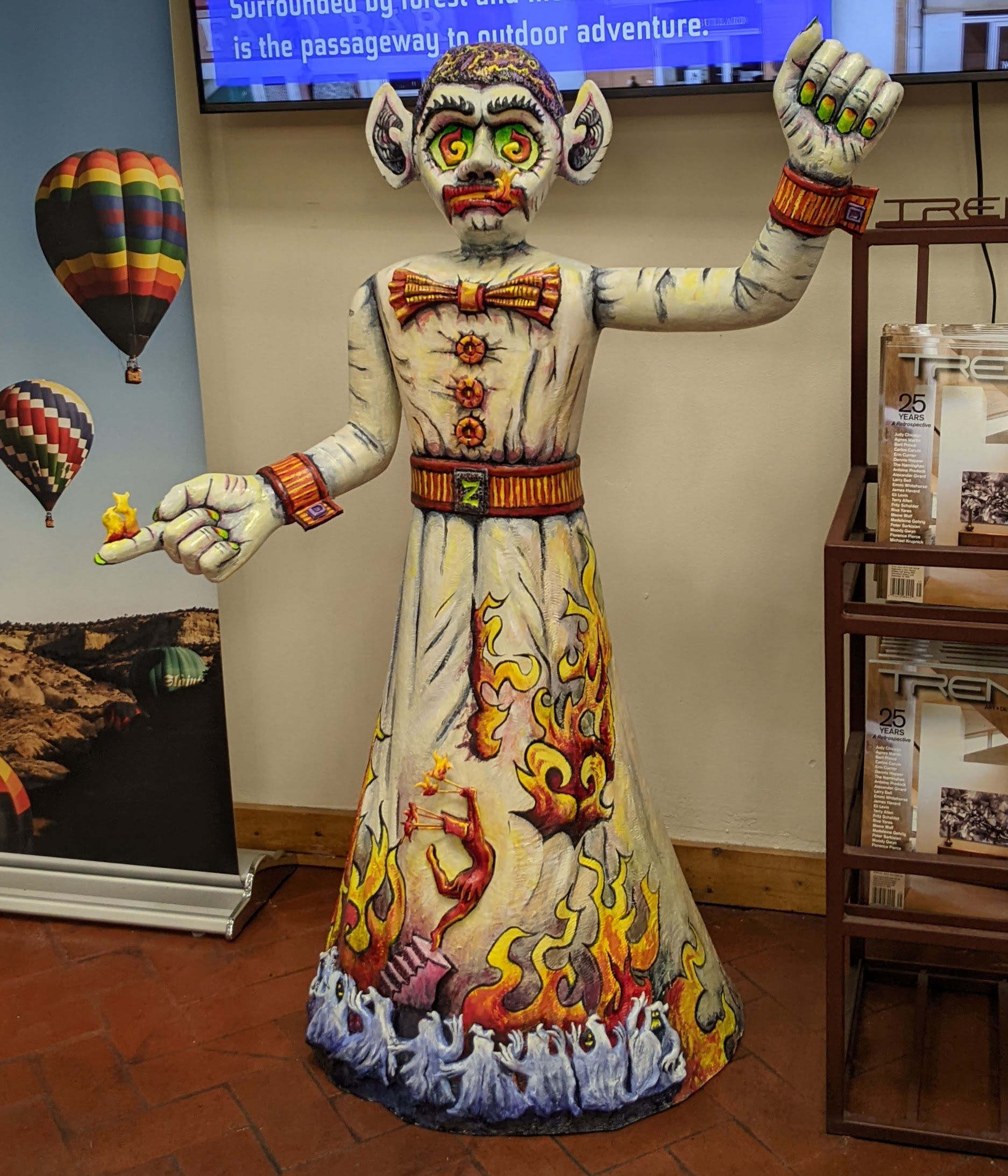
Surprises still exist seemingly around every corner. Some of our favorite restaurants and old “haunts” have disappeared, but many are still there. New ones have opened and become popular, adding a new dimension. Annual celebrations and the festivals that we loved so much are still on the calendar — Summer’s Wine and Chile Festival, the traditional Spanish and Indian Markets, and the annual burning of Zozobra. This year marked the 72nd year of Spanish Market in July, and more than 1,000 artists from 200 tribes were featured at the 102nd Indian Market, held mid-August. But now, there are festivals and markets year round. The Holiday Folk Art Market complements summer’s International Folk Art Market, and popular Artists Markets are held near the Railyard Saturdays from May through December.

We found a large and lively market with fresh vegetables and crafts, much to our delight, when we visited, and our friends touted the appeal of new galleries, Meow Wolf, local pubs and breweries, and additional public art installations.

Historic buildings, parks, galleries, and art dominate the Santa Fe scene. New streets and highways make it easier to get around — and to get lost. We thought it would be easy to revisit our favorite places. Time and memory seem to have altered our perceptions. We found it difficult at times to even navigate to the addresses we once called home.

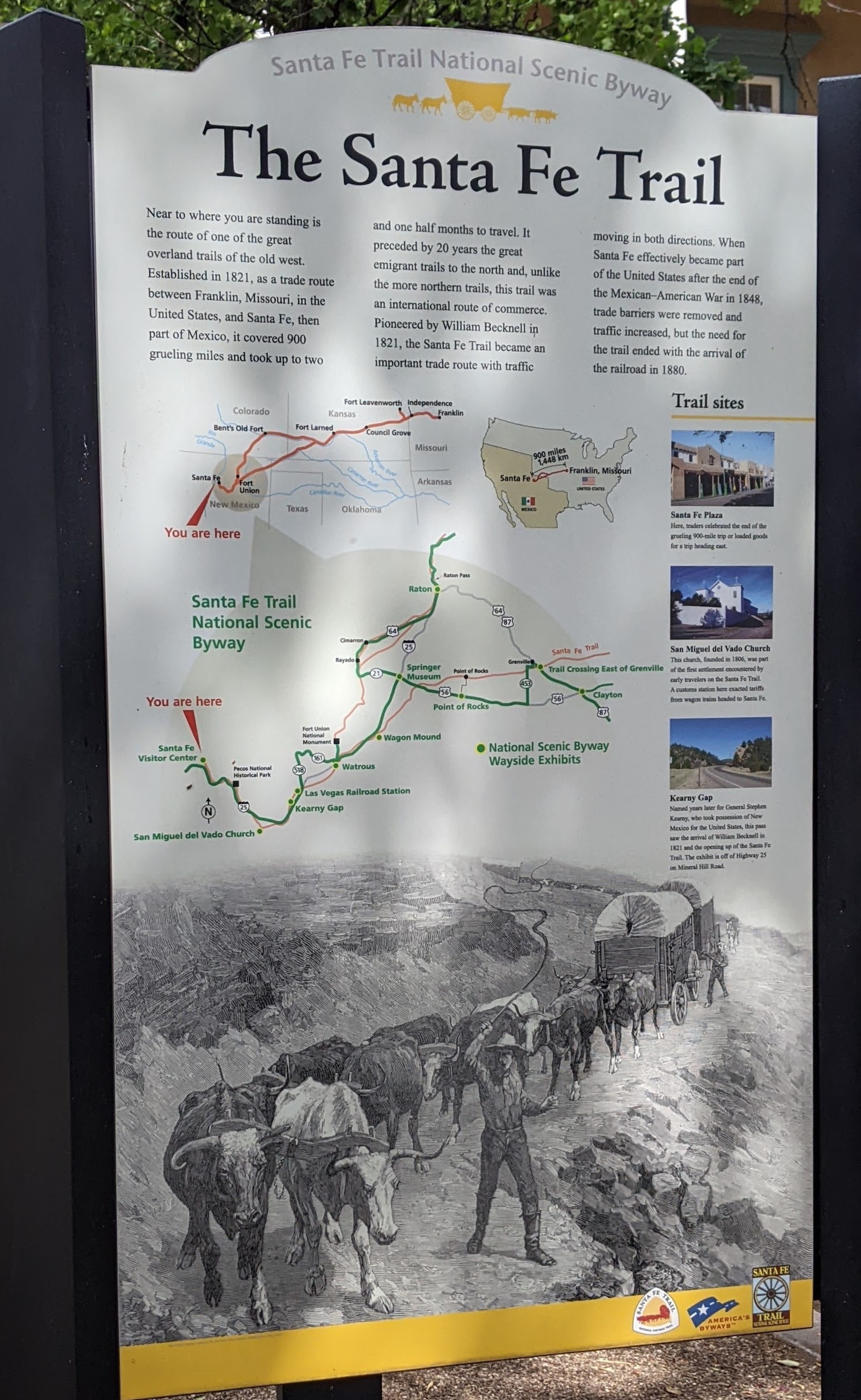
Santa Fe still proclaims itself The City Different and it remains unlike most other vacation destinations. There is a special vibe that’s difficult to resist, with much to see, do and learn in and around Santa Fe. Three historic travel routes converge in the city. It’s the end of the 900-mile Santa Fe Trail that began in Missouri and traversed the Great Plains, allowing goods and settlers to move westward. The pre-1937 Route 66 ran through Santa Fe on its path from Chicago to California, and the 1,600 mile route linking Mexico City, Spain’s colonial capital at the time, to its northern outpost at Santa Fe, was designated as an historic trail — El Camino Real de Tierra Adentro — by the U.S. National Park Service in 2000.

The city resonates with history, art that is sometimes quirky, and charm, and you’ll find wonderful food and a distinctive cultural experience no matter what time of year you visit the city.

What to Do in and Around Santa Fe

Whether you go to Santa Fe for two days or two weeks, there’s plenty to keep you busy.

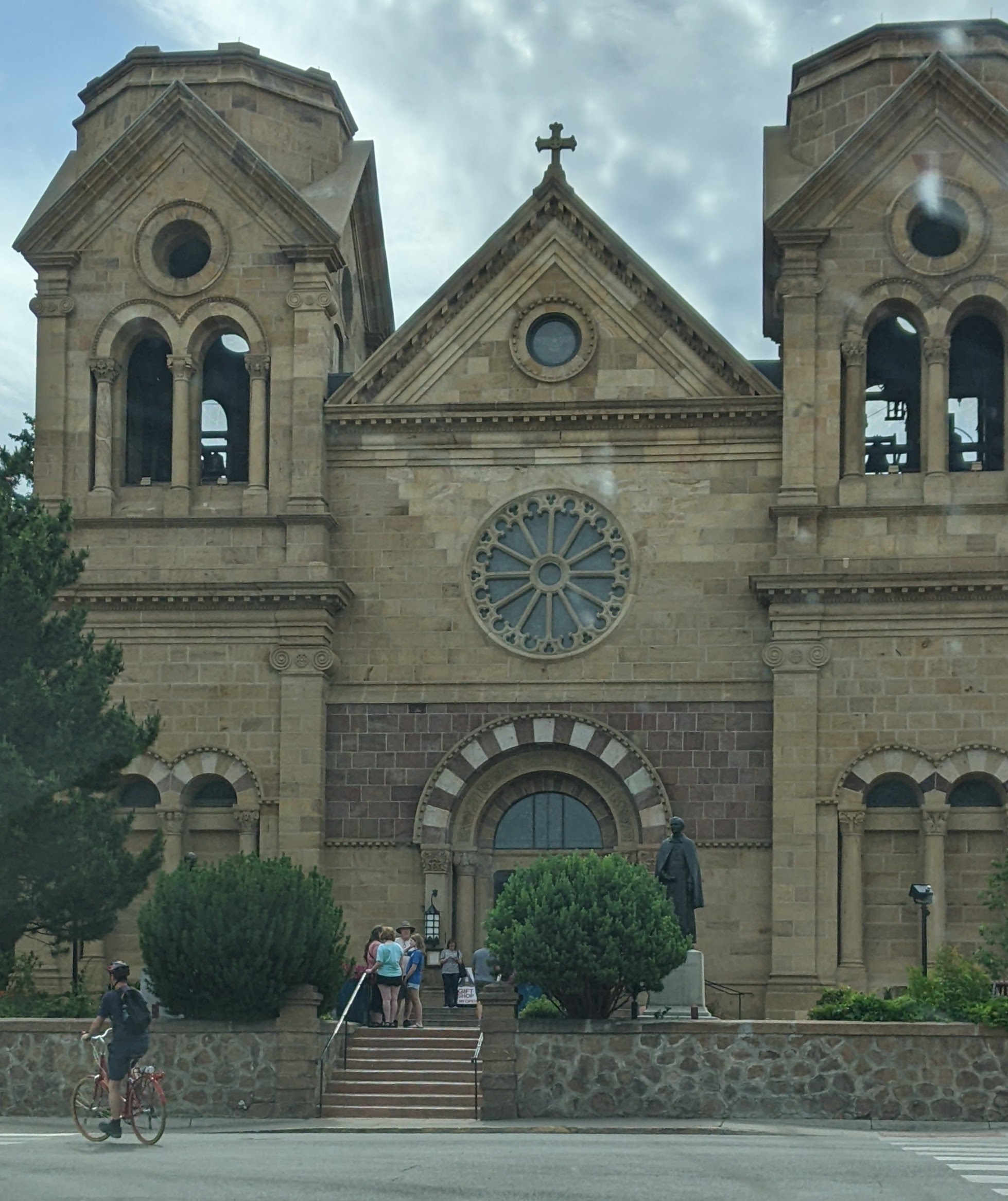
Visit museums and art galleries, weekend markets, downtown shops and the stunning open-air Opera House just outside of town. Savor local food specialties. Talk with shopkeepers, artists, bartenders and street vendors. Purchase art and jewelry from galleries or directly from artist studios. Talk with the artists and artisans who sell their creations from the portal at the Palace of the Governors. Attend a service at the Cathedral, or step inside the 400-year-old San Miguel Chapel, known as “the oldest church.” Visit the Georgia O’Keefe Museum. Explore Santa Fe’s distinctive neighborhoods.

Stroll the Plaza and Canyon Road. Be awed by the imposing Cathedral Basilica of St. Francis of Assisi and the impressive and mysterious staircase at Loretto Chapel. Have a drink or a meal at the sprawling Hotel La Fonda, which is conveniently located at one corner of the city’s downtown Plaza. Embrace the weather, the sights, the history, Pueblo and Territorial architecture, the scents of pinon or roasting chiles in season. Bask in the natural beauty of the site and breathe fresh mountain air.

Take the “white knuckle” drive up the winding road to the Ski Basin. Nearby Chimayo, Los Alamos, La Cienega, Las Vegas (yes, New Mexico), and Madrid are worth a day trip. See ancient pueblo cliff dwellings at Bandelier National Monument or go fishing at Cochiti Lake or along the Rio Chama. Hike the Sangre de Cristo or Jemez Mountains in the summer. Ski or snowmobile on mountain trails in the winter.

Learn about Santa Fe’s history, and visit a nearby Pueblo, especially if there’s a celebration or special ceremony scheduled. Most welcome visitors, but be respectful of their customs and regulations. Schedule a spa treatment or soak under the stars in a hot tub at 10,000 Waves. Sample street food or pub fare. Enjoy it all. Santa Fe is unique in any season.

Next week I’ll write more about where to stay, where to “play” and where and what to eat while in The City Different. Follow me to receive timely email notifications about future posts.

Getting to Santa Fe

Despite its popularity as a tourist destination, getting to Santa Fe, and getting around the city once you’re there, can be problematic. Public transportation is, for all practical purposes, non-existent. Unless you stay in the heart of the city, you will want a car.

You can fly into Santa Fe; there are direct flights from Houston, Denver, Phoenix, and Dallas. If you fly into Albuquerque, you can rent a car there — it’s an easy drive to Santa Fe and will take little more than an hour. There’s a train that runs between the cities, and it’s an interesting ride, but it’s better as an excursion than as a comfortable, reliable way to arrive in the city for vacation.

Finally, most tourism guides will warn you that lodging and meals are expensive in Santa Fe. And they can be. But more modest accommodations are available, including B&B’s or private “casitas,” and it can be worth the effort to search them out. Also, be sure to ask for dining recommendations from shopkeepers or guides. Savor delightful breakfast places and long-established local favorites for distinctive dishes and ethnic specialties. Learn what “Christmas” means when asked how you want your burritos served.

Santa Fe Today

Santa Fe has become a cosmopolitan city with an estimated 2024 population of just under 90,000, but its soul is still “small town,” rooted in the traditions of its more than 400-year history. It was originally established in 1610 as the capital of Nuevo Mexico, a province of New Spain. That was 13 years before Plymouth Colony in Massachusetts was settled by pilgrims who arrived on the Mayflower. Its history, however, began long before that.

Santa Fe boasts not only the oldest public building in the United States, the Palace of the Governors, but also the oldest community festival, first celebrated in 1712 to commemorate the Spanish reconquest of New Mexico in 1692. This year’s Fiesta de Santa Fe is scheduled August 31 through September 11. The city was built on the ruins of an earlier Indian Pueblo, and it’s not only the earliest European settlement west of the Mississippi but also the oldest state capital in the United States.

Want information about things to do in Santa Fe? Here are some specific suggestions, whether your interests are primarily arts and culture, outdoor activities, foodie experiences, or shopping. You might also want to order a copy of the Official Visitors Guide to help plan your trip. And when you’re in town, stop by TOURISM Santa Fe, located downtown at 201 W. Marcy St., for the best up-to-date information about local special events and exhibitions.

Alexandria Adventure: Savor the Flavor of Cajun Country

Daylight lasts longer in the summer and weather is typically more predictable, even if it’s predictably hot. Close-to-home day trips or spur-of-the-moment, loosely-organized one or two-night excursions, are a welcome treat. Getting away, particularly to someplace new just seems easier, not to mention more fun. The goal, of course, is to choose a destination that promises captivating sights, provocative activities, stimulating people, and, of course, a local food adventure.

My husband and I found all that and more just a few hours from our home. Our destination — Alexandria, Louisiana — is a relatively small city in a state just to the south of Arkansas. We planned our route along a scenic highway. No interstates to navigate. Minimum traffic to contend with. As much as we enjoy road trips, we wanted this drive to be easy. The bonus? Close friends had recently relocated to Alexandria from our community in Arkansas. We missed them. After helping them pack boxes before their departure, we wanted to see them settling into their new home. We were curious.

Although we were happy to accept the offer of a guest room, we stipulated only hot coffee in the morning. We wanted to sample local eateries, and requested no homemade meals.

Finding Distinctive Local Food

Our first impression, as we drove into town, was positive, but our first decision involved food. We had skipped breakfast that morning, opting instead for take-along coffee and a relatively early start to our journey. When we arrived, we were ready to quell our growing hunger pangs, so the priority became food over friendship.

A quick online search yielded a convenient address and favorable customer reviews.

Spirits Food & Friends

The dining area was far from filled in the early afternoon, but our initial impressions of Alexandria were boosted immeasurably by the “look and feel” of this eatery. Other diners seemed to be having a good time. An amiable and informative waiter greeted us warmly and seated us promptly.

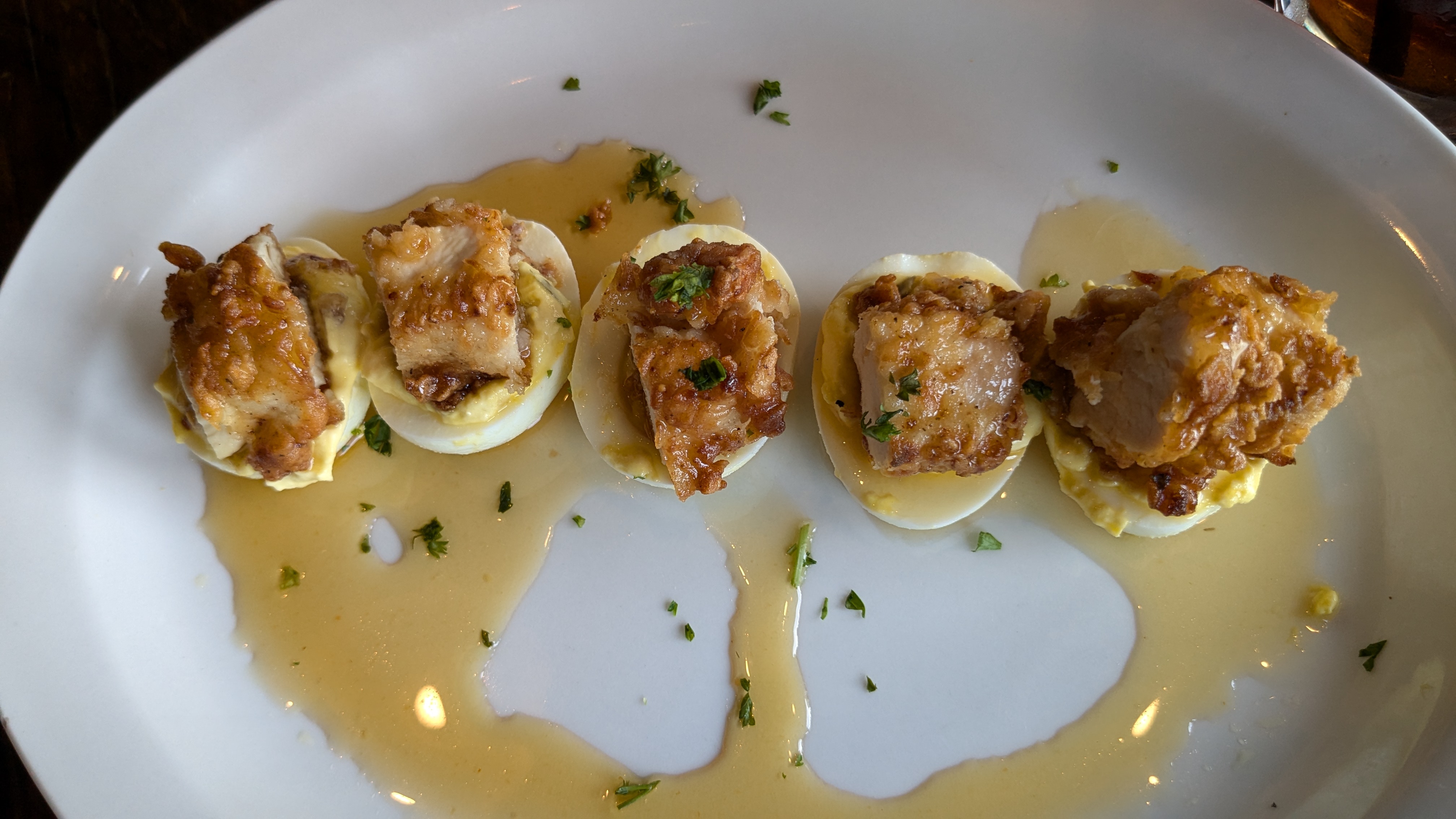
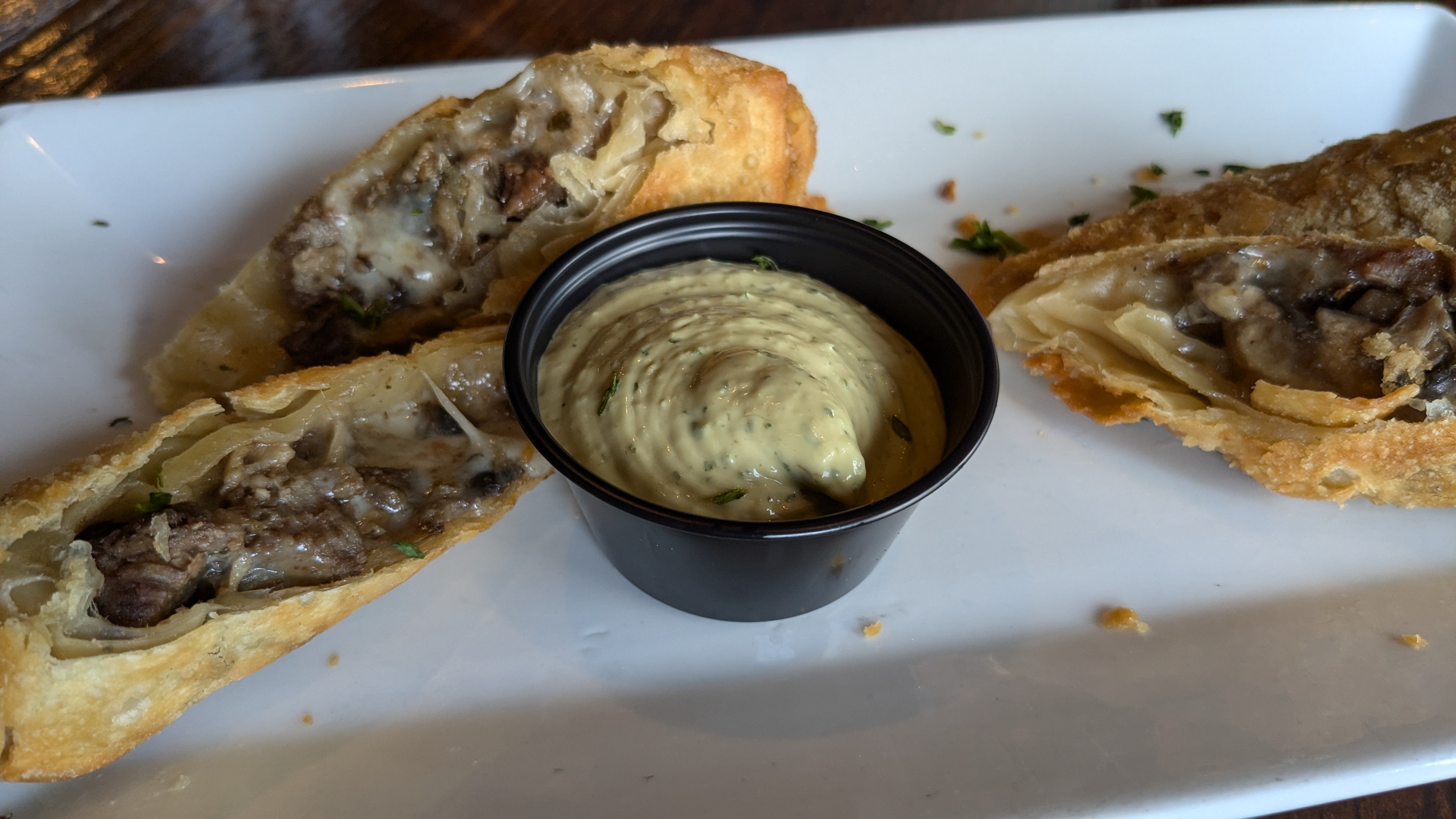
We chose not to order a complete meal, but instead selected appetizers to share from the extensive menu. An order of “Which Came First” Deviled Eggs, topped with fried chicken bites, bacon jam and sweet chili sauce, combined both breakfast and lunch in a unique way, and unusually good Philly Cheesesteak Eggrolls with creamy avocado ranch dressing more than satisfied our hunger.

Our server kept our glasses of iced tea and lemonade full, and he answered all our questions about things to do and places to go in the city. We chatted about the history and growth of the “family-owned, Alexandria-grown” establishment.

We were captivated by our first taste of local food and hospitality and more than pleased with our choices. We also asked for suggestions about where to dine that evening, and were treated to a “mini-course” in local culture and history.

Our visit to Alexandria was off to a great start. We were beginning to understand the reasons our friends had chosen this city on the banks of the Red River as their new home. Cajun food and culture are certainly part of the appeal. But, as we discovered, there’s much more to savor about Alexandria.

The Cottage

Another day — another lunch. The Cottage proved to be another delightful surprise.

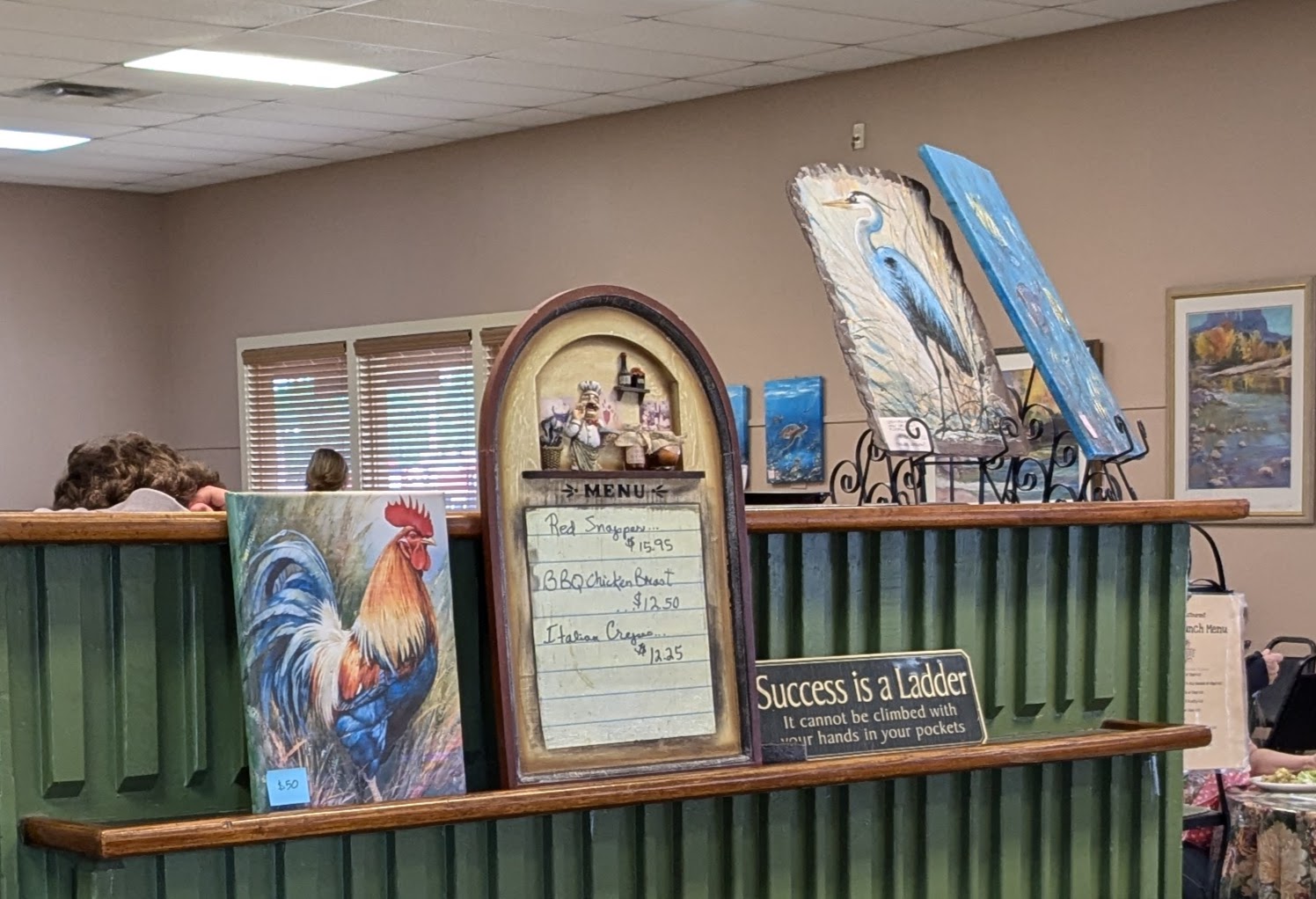
Renowned for its specialty cream of shrimp soup available in sizes from a “demi” cup to a large bowl, The Cottage features daily luncheon specials. Although the compact lunch-only spot looks somewhat like a ladies’ tea room, its clientele runs the gamut from suited businessmen to golfing foursomes to families with children. Personalized service is one key to its popularity, but the food lives up to the reputation it has built. Dishes are full of fresh flavor and served with flair.

Just one note of caution. A special of fresh fish with spinach salad and cottage potatoes had been listed online at a price substantially lower than the price that was charged. We noted the discrepancy with great surprise when the bill was presented. Although restaurant staff honored the lower (and incorrect) online price, it is probably always a good idea to confirm special prices before ordering.

Beer and wine are available, but the specialty almond iced tea was exceptional. We didn’t try any of the homemade dessert offerings, but I’m willing to bet they’re wonderful as well. Next time, I’ll have a hard time deciding between a Strawberry Crepe and the P-Nutty Oreo Pie.

Know that The Cottage is only open from 11 a.m. to 2 p.m. Monday through Saturday. Would we return? Absolutely!

Tunk’s Cypress Inn

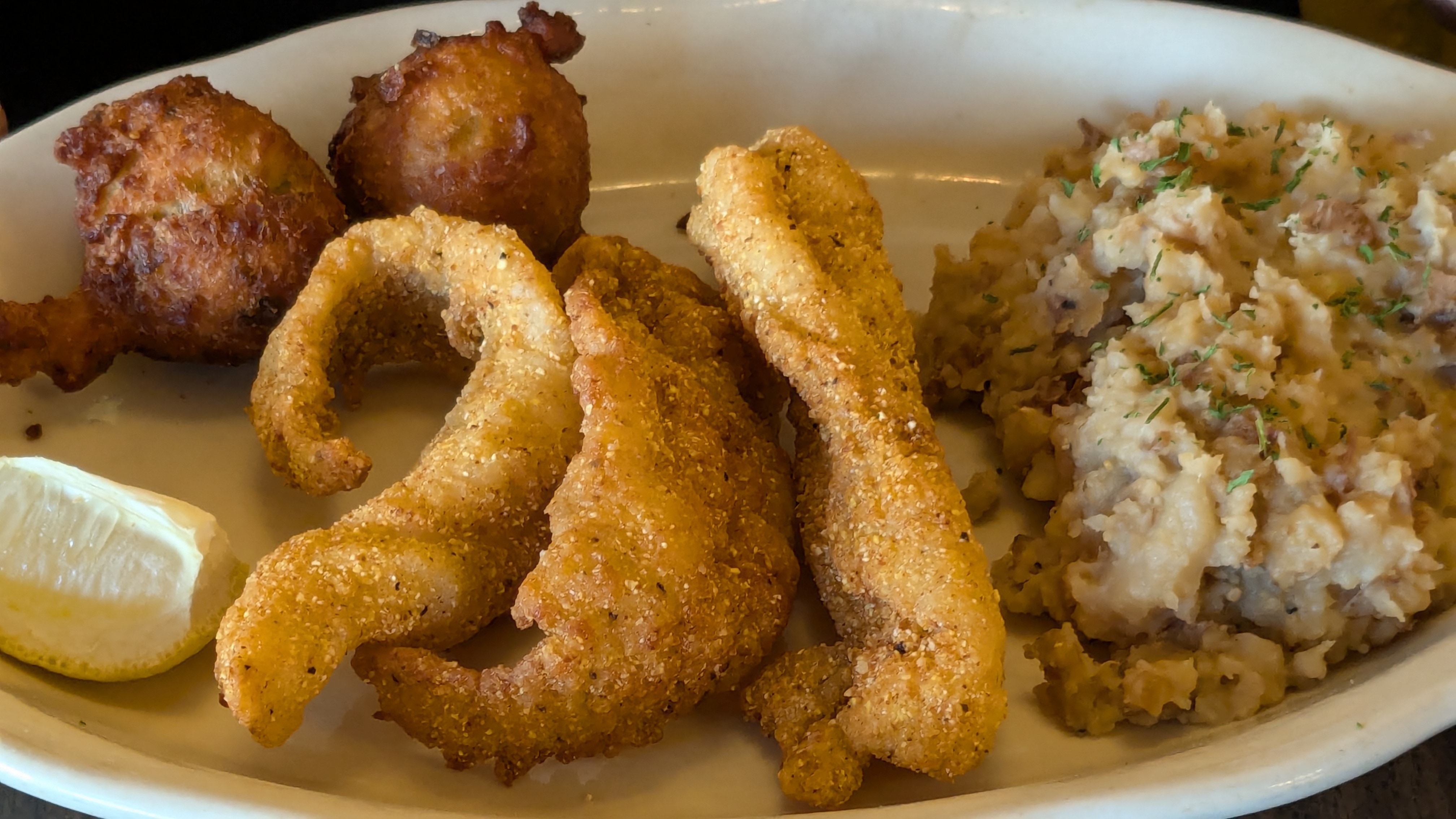
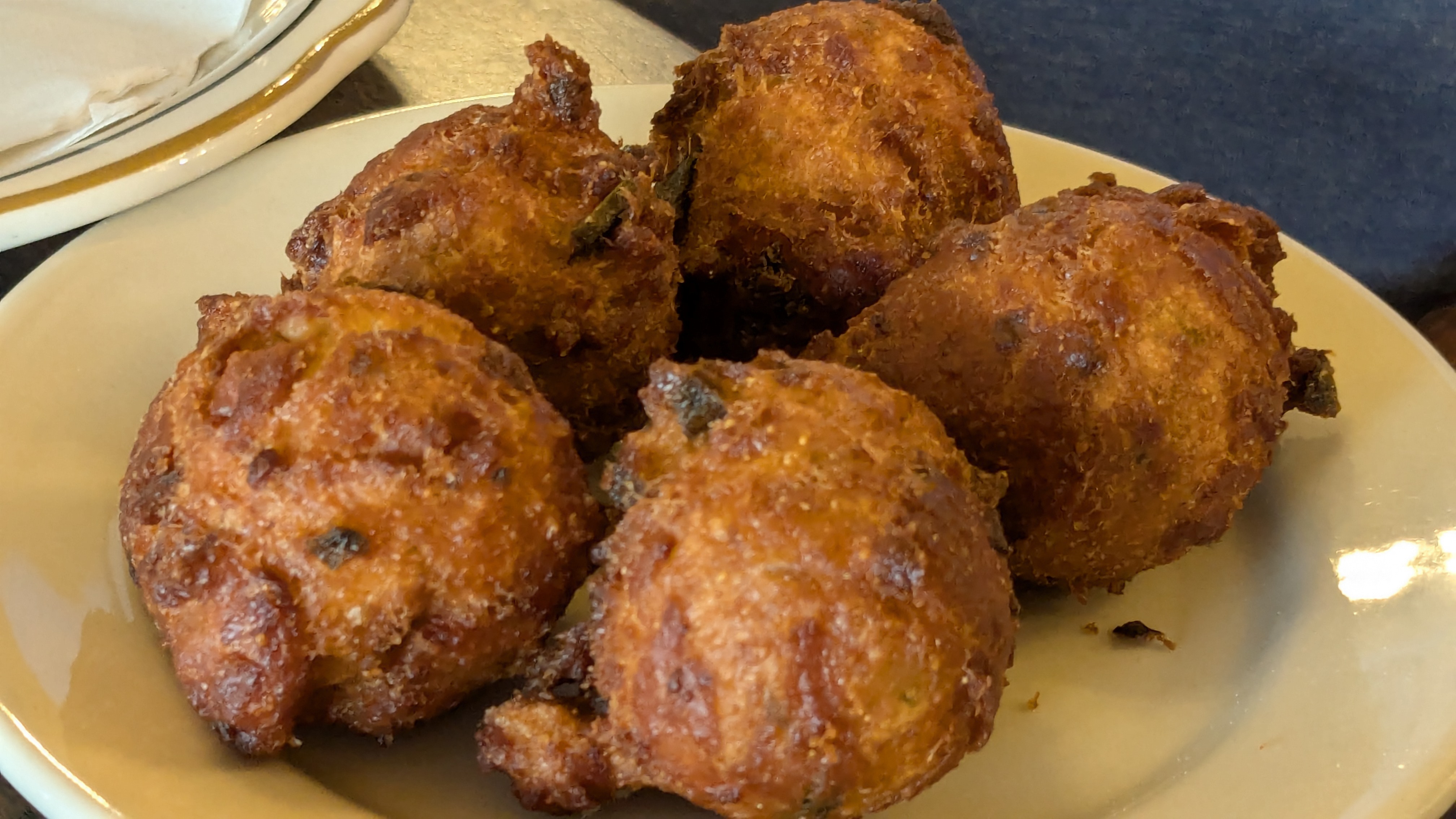
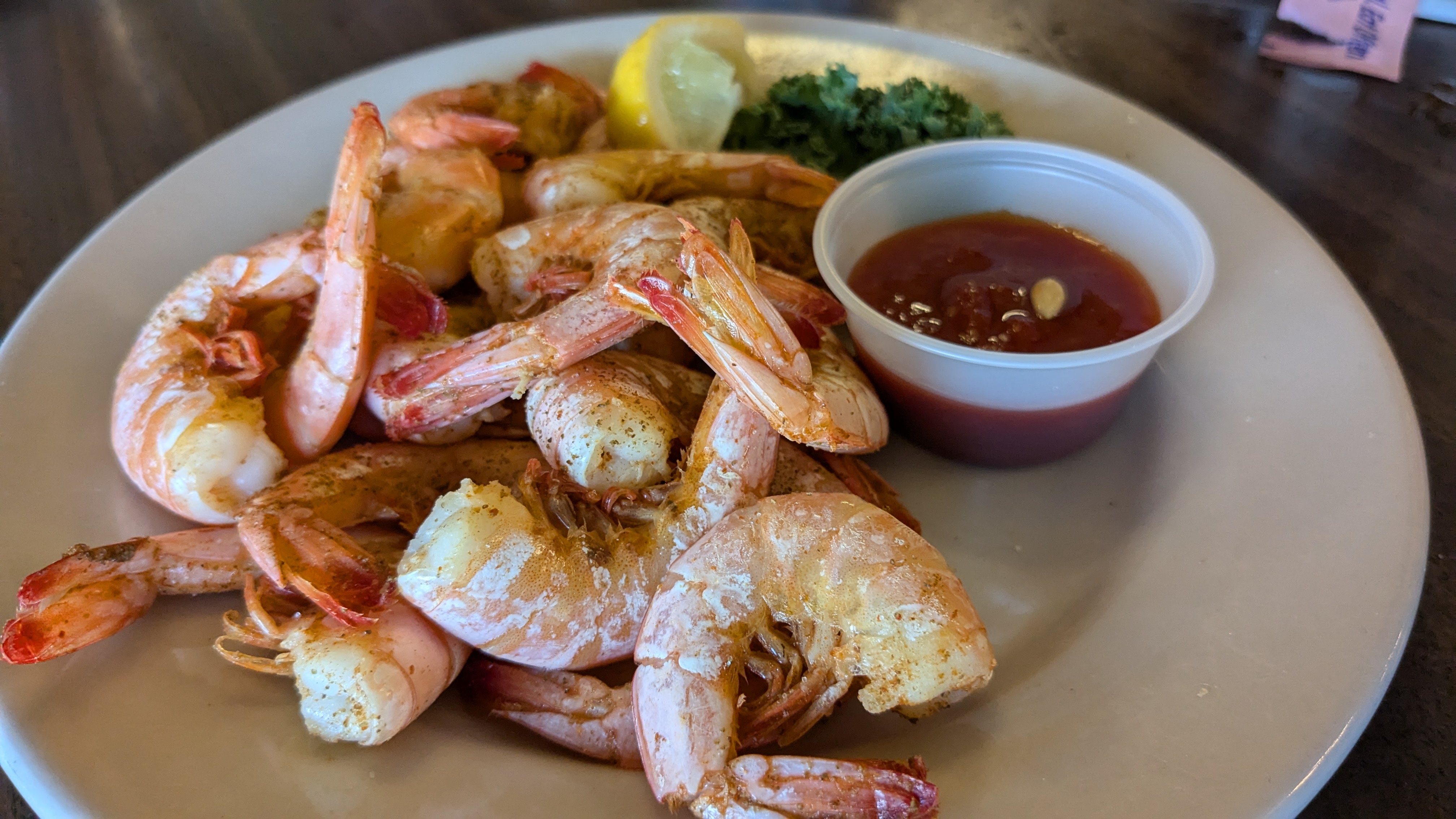
It would be worth visiting Tunk’s Cypress Inn & Oyster Bar just to sit on the deck with a cool drink while gazing at the serene view. However, to miss the food would be almost criminal. The Oyster Bar, right at water level, even features a choice of Po-boys as a Thursday night special. We missed that, but what we had — shrimp-topped fried green tomatoes with basil pesto cream sauce, boiled shrimp, fried catfish, seafood gumbo, and hush puppies — more than compensated for any disappointment we felt about missing the Poboy Special.

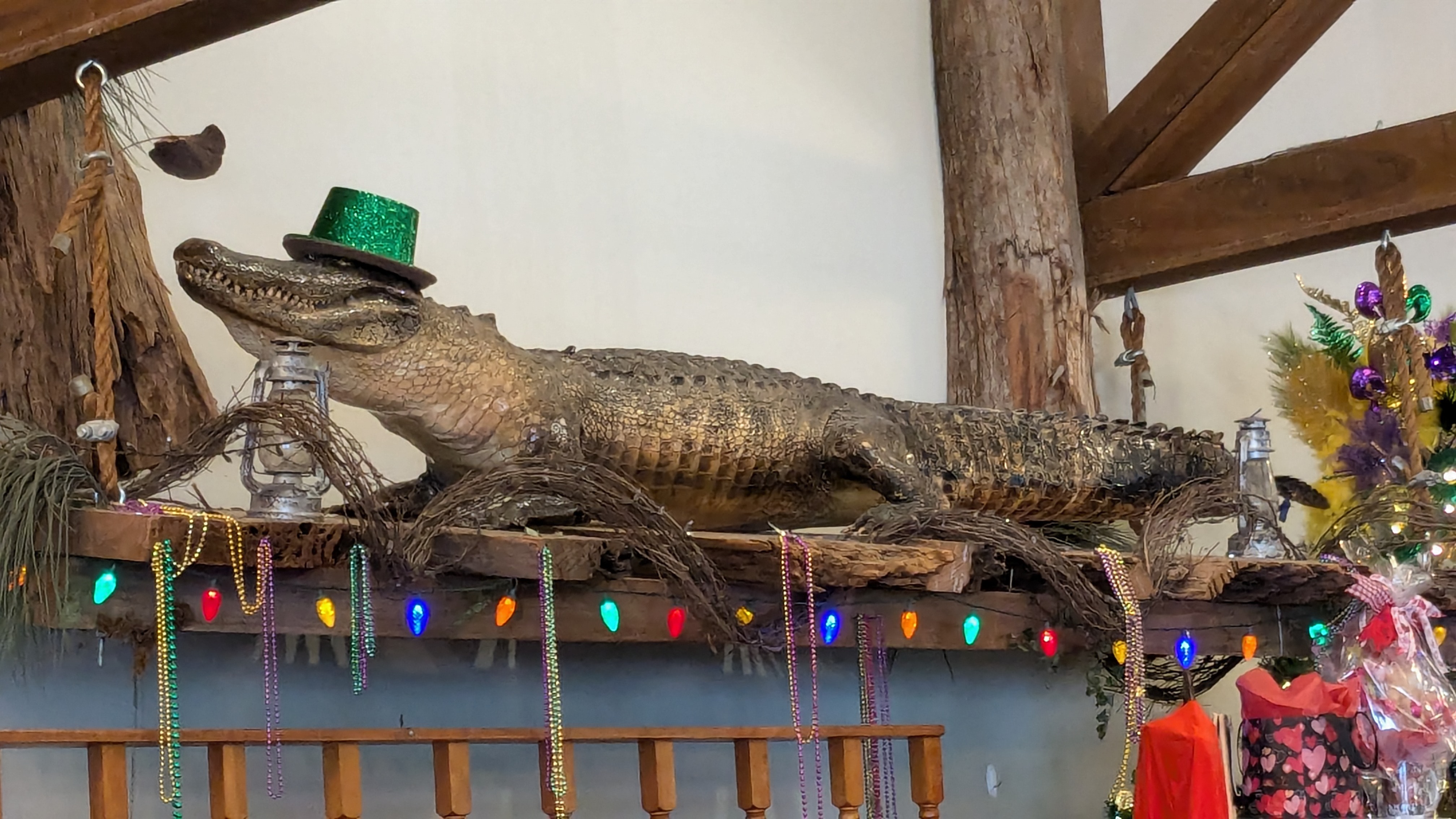
In case you’re wondering, the alligator, dressed in Mardi Gras finery, oversees the dining room on a perch adjacent to a pine tree trimmed in traditional purple, green and gold. And “the good times roll” here, we’re sure, all year long.

Mardi Gras colors, along with beads and memorabilia, are not necessarily limited to Tunk’s. You’ll find reminders of the “good times” throughout Alexandria. It’s part of Louisiana’s mystique, along with Cajun and Creole food and music.

Rosie Jo’s

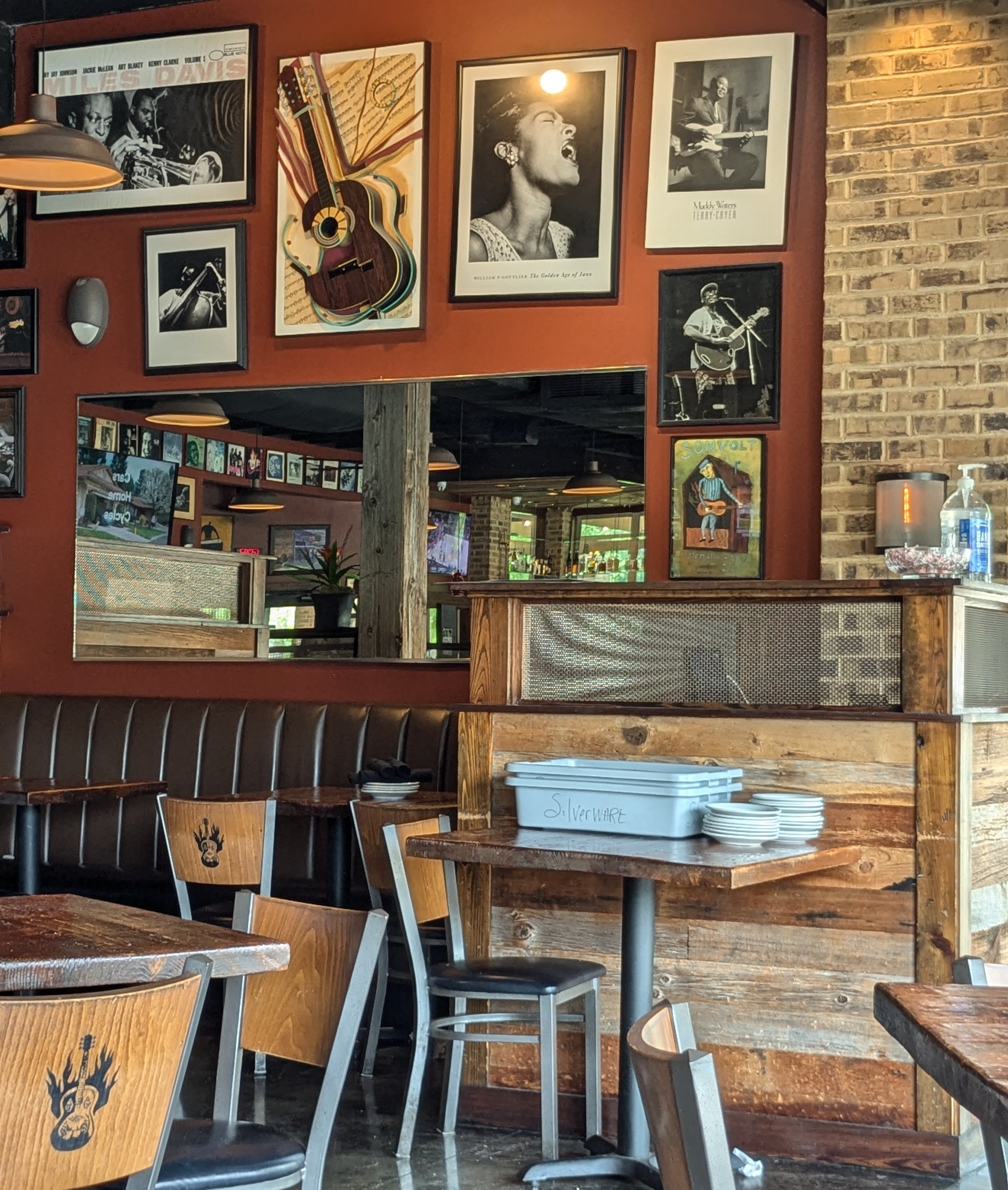
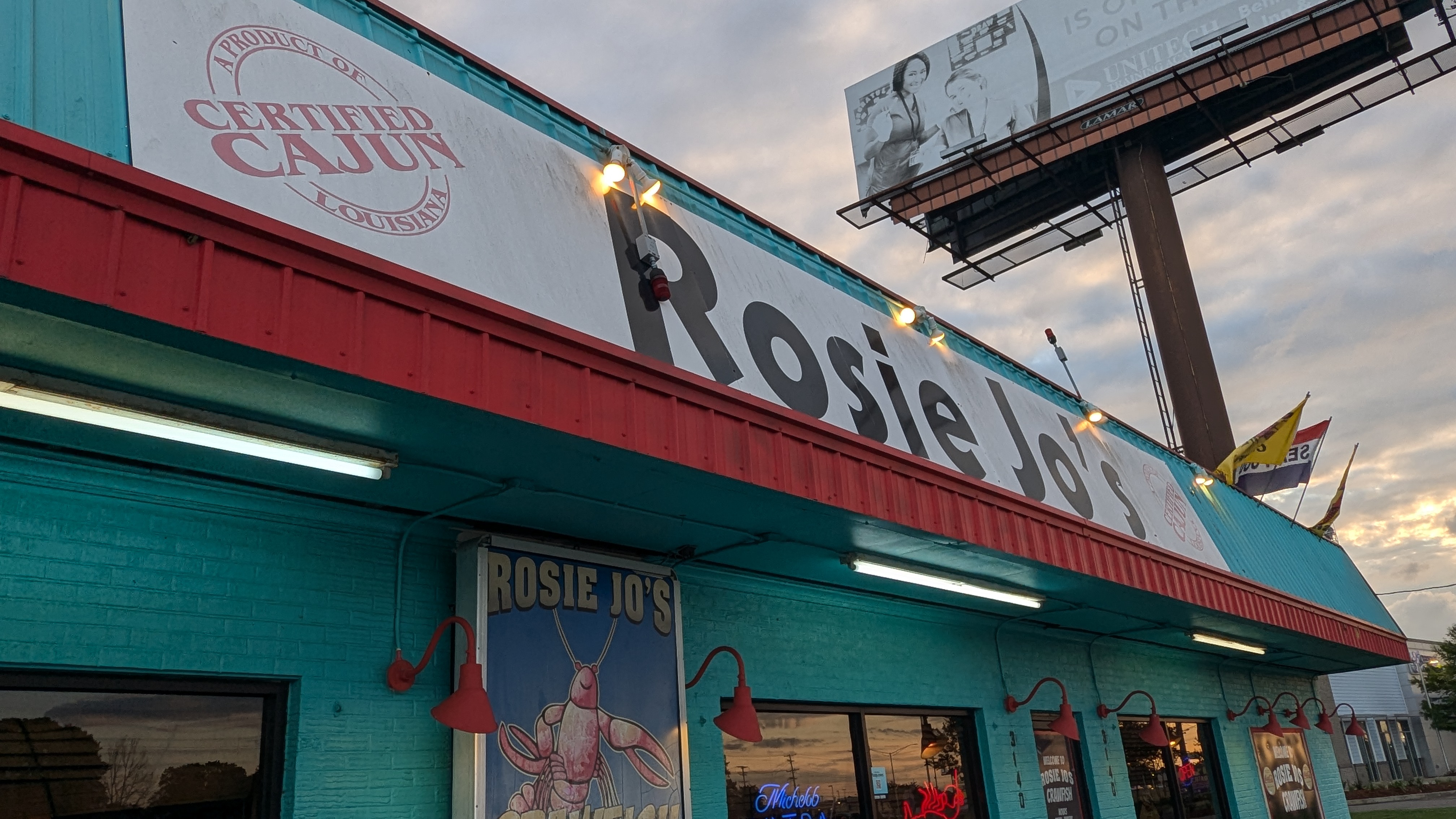
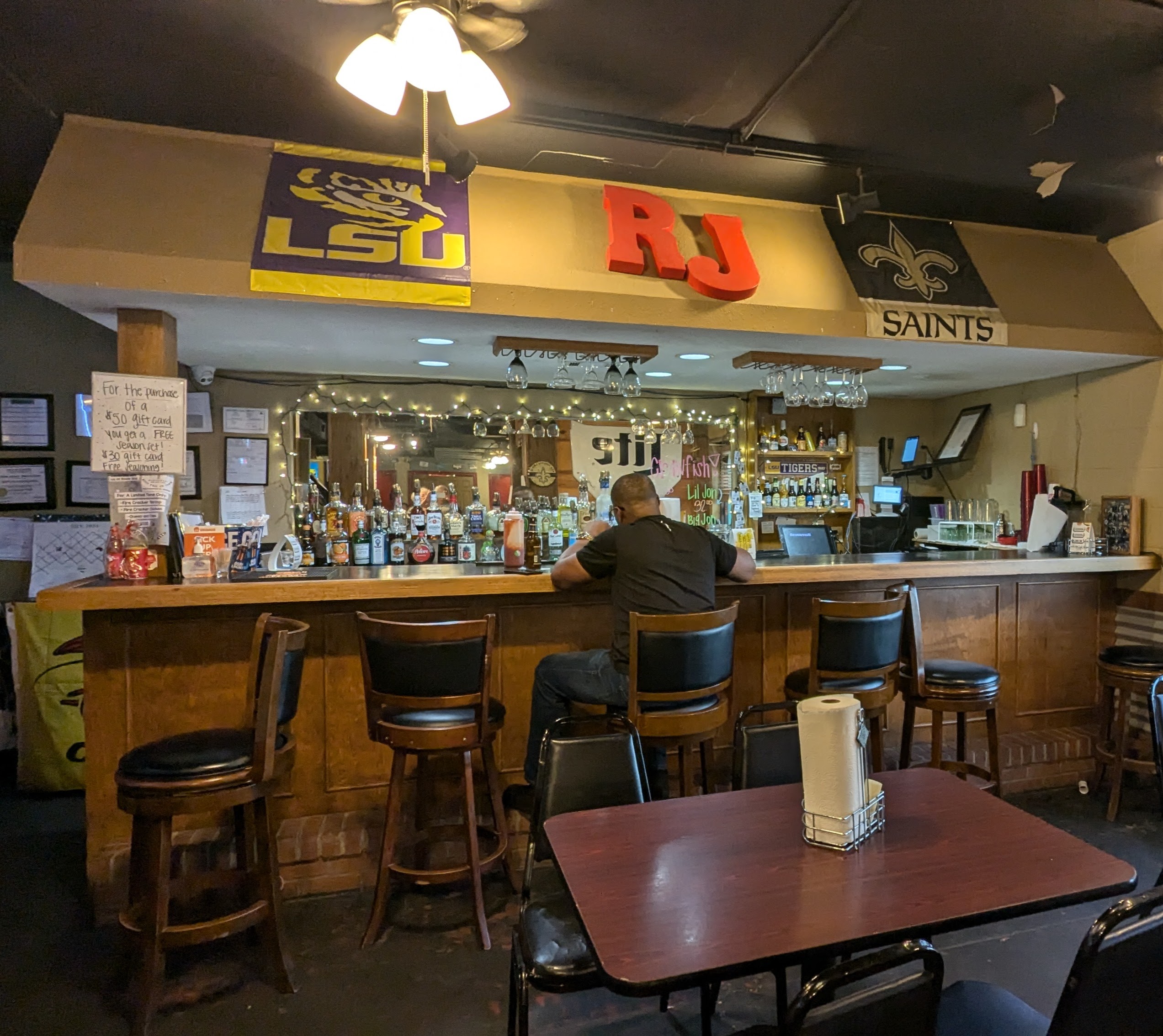
Rosie Jo’s looks like a roadside diner from the outside, and the interior has some of the ambience of an after work watering hole, or a late night honky-tonk. But don’t let that keep you from going. It’s hip, friendly, busy, and fun. And the food — everything we ordered — was well-prepared, hot, and delicious. Service was on point, as well. So, for the pure fun of it, as well as the quality, we heartily add our names to the list of local recommendations we received about Rosie Jo’s.

We visited Rosie Jo’s during crawfish season and and, even though we didn’t order a bucket to share, plenty of other diners did! As I looked around, I realized that not many crawfish go uneaten! If you go, you might want to time your visit so that you can have the experience!

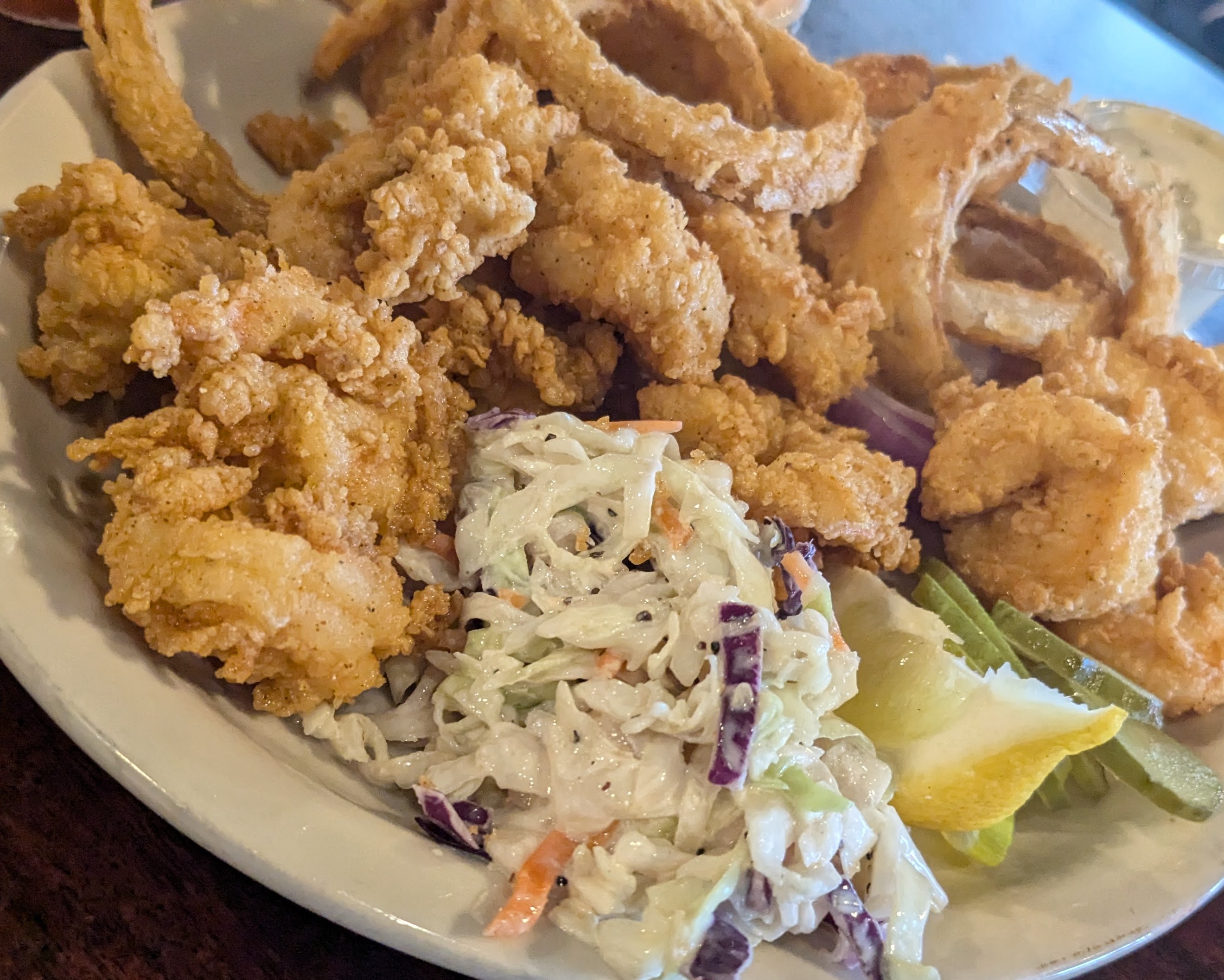
We thoroughly enjoyed what we did order. I’m not sure I wouldn’t choose the hearty Shrimp and Grits again, but it’s a large order, suitable for sharing. Others in our group chose Fried Shrimp, complete with onion rings and coleslaw, and Pistolettes, fried pockets of dough stuffed with boudin and covered in shrimp etouffee.

Needless to say, samples all around were willingly shared.

Even though the city lies to the north of what is considered “Cajun Country,” there’s plenty of good Cajun food to be found. Over the course of the next two days, we sought recommendations from everyone we met and were rewarded with a list of options that would satisfy even the most discerning diners. There are fine, upscale restaurants as well. And we understand that food booths and food trucks are there for the festivals.

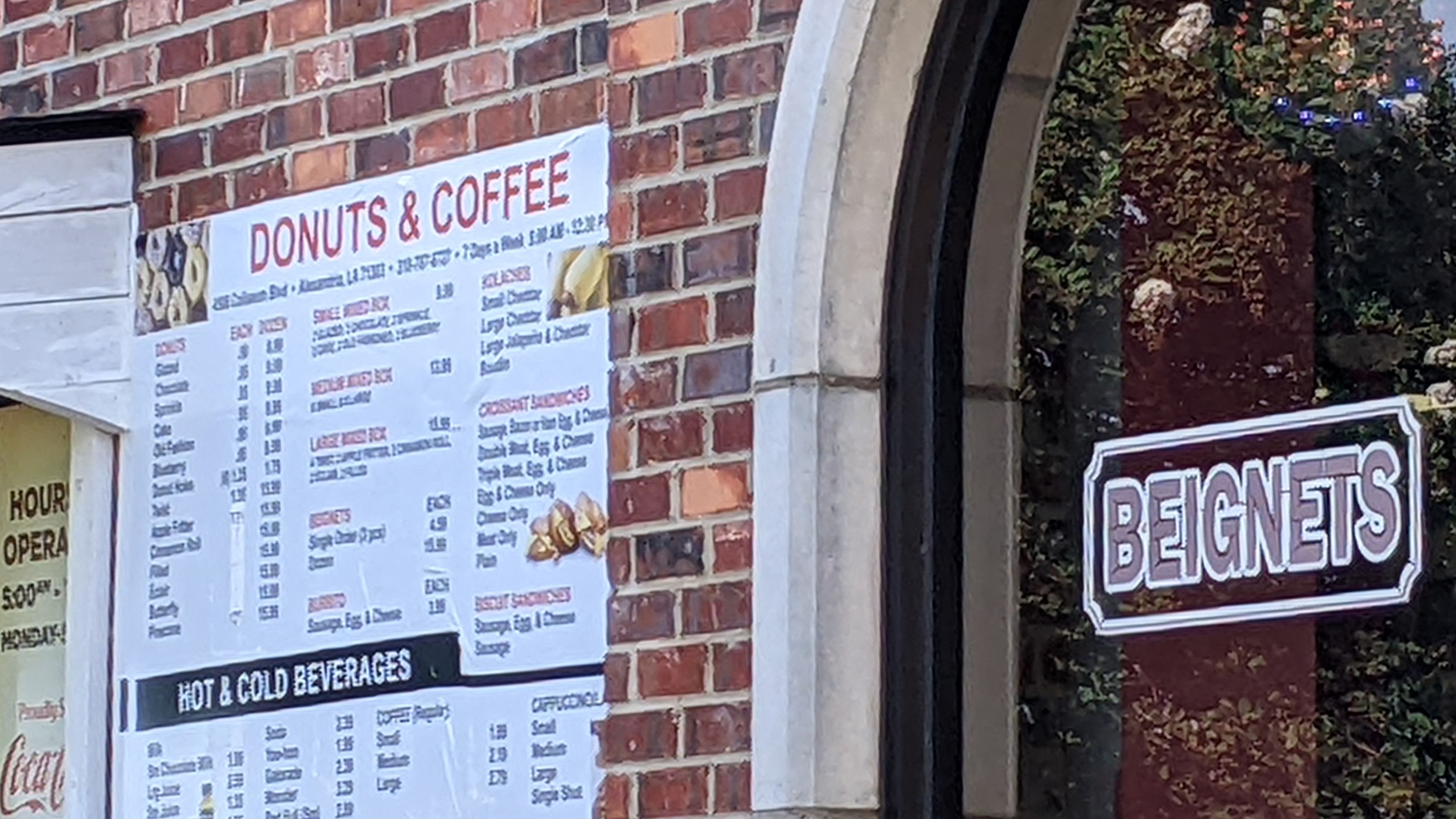
Our final morning came too soon. After leisurely coffee and conversation with our hosts, we made ready to leave. Previously, we had spied a neighborhood Coffee and Donut Shop. We couldn’t resist stopping. Served fresh and piping hot, three to the order, the large beignets drenched in powdered sugar reconfirmed that Louisiana residents definitely know how to enjoy the good things in life. One more reason to return.

On our return trip to Arkansas, we passed through the charming town of Ruston, not quite two hours north of Alexandria. Home to Louisiana Tech University, it seemed a good place to stop for a bite to eat — home was approximately another four hours away. Our friends had recommended Ponchatoulas, with a convenient downtown location. Another chance to sample “the flavor of Louisiana” was tempting, to say the least. We had been forewarned, however, that we might have to wait for a table, and that was the case.

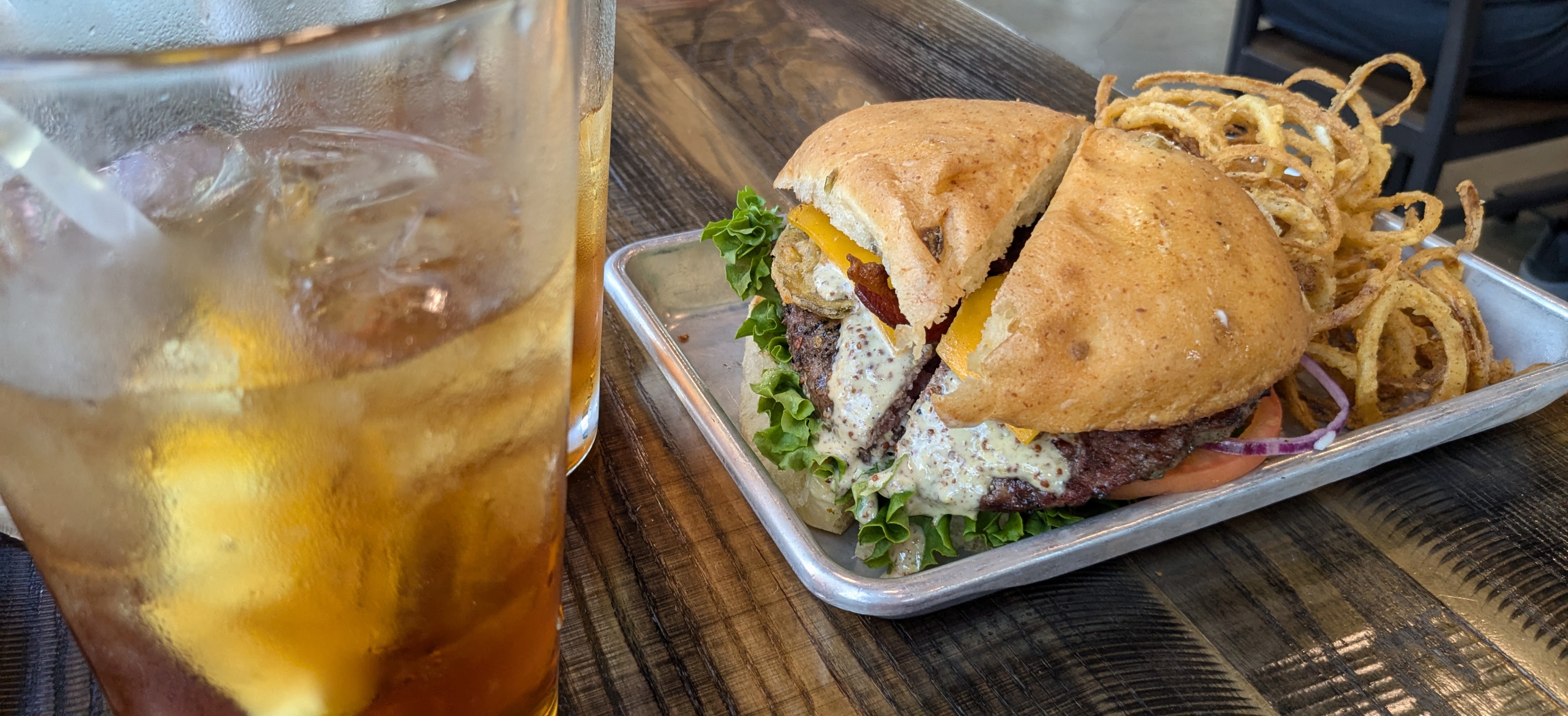
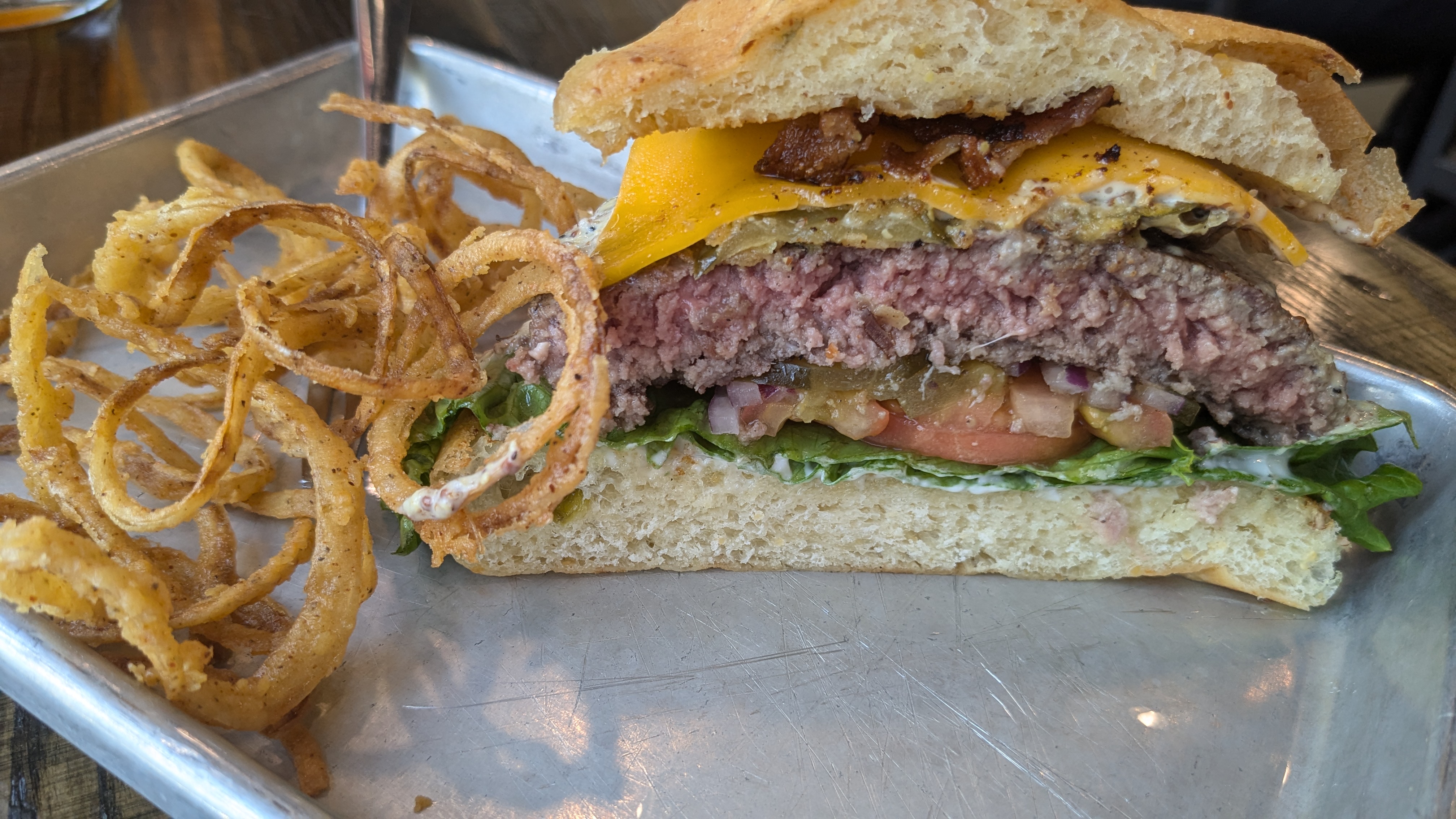
Another quick online search yielded results: Dawg House Sports Grill. It has a tempting menu of burgers and was easy to find. Obviously popular with students and sports fans, there were also a fair number of families there to watch Sunday games. Although tempted by menu items like Boudin Egg Rolls, Fried Green Tomatoes, or a Shrimp Poboy, we settled on a Bulldawg Burger with Onion Strings, after our server’s assurance that it was large enough to share.

It was indeed! We felt confident we would not have to worry about dinner that evening.

“On the Road” Learning

Driving home, we reviewed everything we had packed into the all-too-brief road trip. Importantly, we had learned that there’s more than food to love about Alexandria, but that food is an important aspect of any good travel experience.

We knew our two-day time frame would allow little time to do more than scratch the surface of Alexandria. We had hoped to explore some of the city’s casual eateries, with the goal of finding, at minimum, interesting food options and Cajun flavors. A variety of Poboy choices and local brews would have satisfied us.

What we found was so much better. We hadn’t expected a food dilemma, but there simply are too many good options, it seems, for the time or appetites we had.

We left wanting to know more about this distinctive Louisiana city. There’s a plantation house that dates to pre-Louisiana purchase days, a grand century-old hotel that must have many stories to tell, a highly-rated zoo and art museum, an undergrad campus of Louisiana State University, and several popular annual celebrations, including Mardi Gras. Alexandria also boasts a fascinating military history. It was near here that thousands of soldiers trained prior to World War II and many different types of aircraft flew out of the former England Air Base that has been “recycled” as a regional international airport.

Alexandria seems like a “happening” place to be, any time of year. It’s now certain that we’ll return.

Strengthening the ties of friendship with former neighbors was important to us, and we vowed not to allow much time to pass before doing it again. Getting away for fresh experiences in unfamiliar places is good for the soul.

And sampling new foods definitely adds spice to life.

Galveston — Queen of the Gulf

I can hardly think of Galveston without — at least in the back of my mind — humming the tune that Glen Campbell sang with so much heart back in the 70s.

I was in Galveston in early May to attend the annual conference of the North American Travel Journalists Association. I definitely heard those sea winds blowing and sea waves crashing. It was a stormy time across Texas, and not really beach weather, but Galveston still offered fun, good food and drink, and plenty of things to occupy my time when I wasn’ t in a meeting or attending a special event.

We were kept quite busy, but there was still time to become reacquainted with a city that I had learned to love when my husband and I were Texas residents looking for a rejuvenating beach getaway. Then, too, my son is a graduate of Texas A&M University at Galveston; so, as parents of a Sea Aggie, we have another tie to this unique beach town.

The city has grown, but in many ways it has not changed much since the last time I visited for any reason other than to board a cruise ship. Indeed, there’s a new cruise terminal and the iconic Hotel Galvez has been completely reimagined and is now grander than ever before. A number of new restaurants are flourishing since the days we sought out cheap takeout places for fried shrimp or oyster Po’Boys. The legendary pleasure pier has been rebuilt, modernized, and expanded. Some of my favorite old haunts no longer exist, but new breweries and bars have taken their place. Another favorite bakery and coffee shop has moved, and is now Bronco Burrito. A sister of the coffee shop proprietor now offers one of the biggest, and best, burritos ever. As the old saying goes: “The more things change,” . . . you know.

Familiar, But Always Fresh

My former “must stop at” donut shop, Shipley’s on the causeway as one enters Galveston is still a tradition. And Galveston’s oversize chess board still occupies a prominent location on The Strand, always ready for a crowd of onlookers when someone suggests a match.

Galveston remains a beach town with a welcoming vibe, a young, active population, and a distinctive sense of its own importance. It has moved easily into the 21st Century, and is primed for future growth and development. Throngs of visitors flock to the island when the weather is good, renting beach cottages and filling the island’s hotels and motels. But on this trip I realized once again that this best-known island just south of Houston — just 27 miles long and three miles wide — has a past worth exploring. That past could fill volumes.

Cabeza de Vaca, the first European to come ashore in North America, spent seven years in Galveston beginning in 1528. That led to 300 years of Spanish colonization. Bernardo de Galvez, the viceroy of Northern Mexico and Texas, defeated the British at the Battle of Mobile Bay, and was a witness to the signing of the American Declaration of Independence.

Then came the pirates — Jean Lafitte and his brother Pierre attacked an American ship in 1822. Steven F. Austin obtained a land grant to settle 300 colonists in Texas and, in 1825, was granted permission to form a port.

These are the names of past visitors and residents who envisioned a city on this spot.

Galveston was born.

When the Texas Revolution was begun in 1836, the city was thriving, and it saw the birth of the Republic of Texas in 1846.

A Port of Renown

By the year 1850, the city was the largest port in the United States, with an export to import ratio of 20 to 1.

One of our conference speakers was J.P. Bryan who founded the Bryan Museum in Galveston in 2015. It boasts some 70,000 artifacts, from family letters (his great-great-grandmother was Steven F. Austin’s sister) to rare books, pistols, and saddles. He grew up in Freeport, and his father was president of the Texas State Historical Association.

The museum is housed in a completely refurbished once-abandoned Galveston orphanage. I was enthralled by his stories and I learned more about Galveston history and lore from him in one hour than I had gleaned during repeated past visits spanning nearly three decades.

One of the best things to do in Galveston is to learn about its history. And I learned from one of the best. As Bryan notes, “History is not boring.” In Galveston, history is around every corner.

Galveston Firsts

Once a center for immigration second only to Ellis Island, the small city was once known as the Wall Street of the West, and it boasted the first black high school, the first library, the first electric lights, the first professional baseball team, and the first medical school (It’s medical complex today, including the University of Texas Medical Center and the Shriners Children’s Hospital and Burn Center, a renowned and highly rated group of institutions.

In 1880, the city counted more millionaires than New York City, and there were more Victorian structures than anywhere else in the country. Until, that is, a 1900 hurricane devastated the city. With a death toll of 9,000 citizens, that event represents the worst disaster in U.S. history. Galveston rebuilt, but it never bounced back financially to where it was in the late 1800s. Today, there are 60 buildings included on the National Register of Historic Places. And Galveston is, once again, on the map, so to speak, and is on the way once again to becoming a force to be reckoned with.

Because it was, and is, a port city, Galveston also knew its share of shady characters, gambling and vice, and had a thriving red light district during the first part of the 20th Century. The city fell into decline from the end of World War II until the 1960s, when it began to reinvent itself once again.

Today, it looks forward to a new renaissance. Business is booming; tourism is up. Galveston has rediscovered its past and by so doing, reclaimed a vision of a prosperous future. This is what we saw during our short stay.

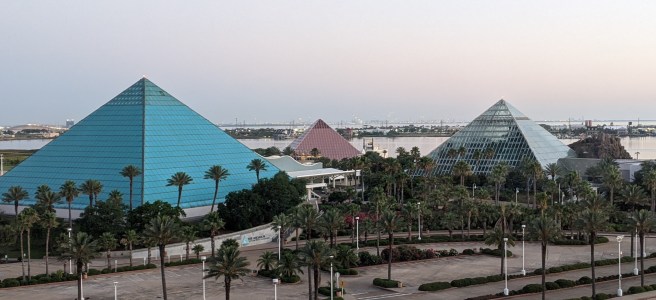
Note: Our conference was held at Moody Gardens. Watch for my future story about this amazing recreational and educational complex that includes a modern hotel and convention center as well as three dramatic pyramids that house an aquarium, a rainforest, and a Discovery pyramid that features rotating exhibits. There’s also a water park, a replica paddlewheeler, a reef rescue virtual reality experience, a ropes course and zipline, a seasonal waterpark, and 3D and 4D theaters.

Juneteenth

June 19th marks another bit of historical relevance for this quirky beach town. It was on June 19th, 1865, that Maj. Gen. Gordon Granger, who had fought for the Union, arrived with a force of soldiers in Galveston to deliver a very important message: The war was finally over, the Union had won, and it now had the manpower to enforce the end of slavery.

President Lincoln had signed the Emancipation Proclamation two and a half years earlier, but the word had not yet reached the Confederate state of Texas.

Read more about Juneteenth history. Believe me, it’s pertinent.

Today, Juneteenth is a National Holiday, and nowhere is it celebrated with more meaning than in Galveston.

The Future Is Bright

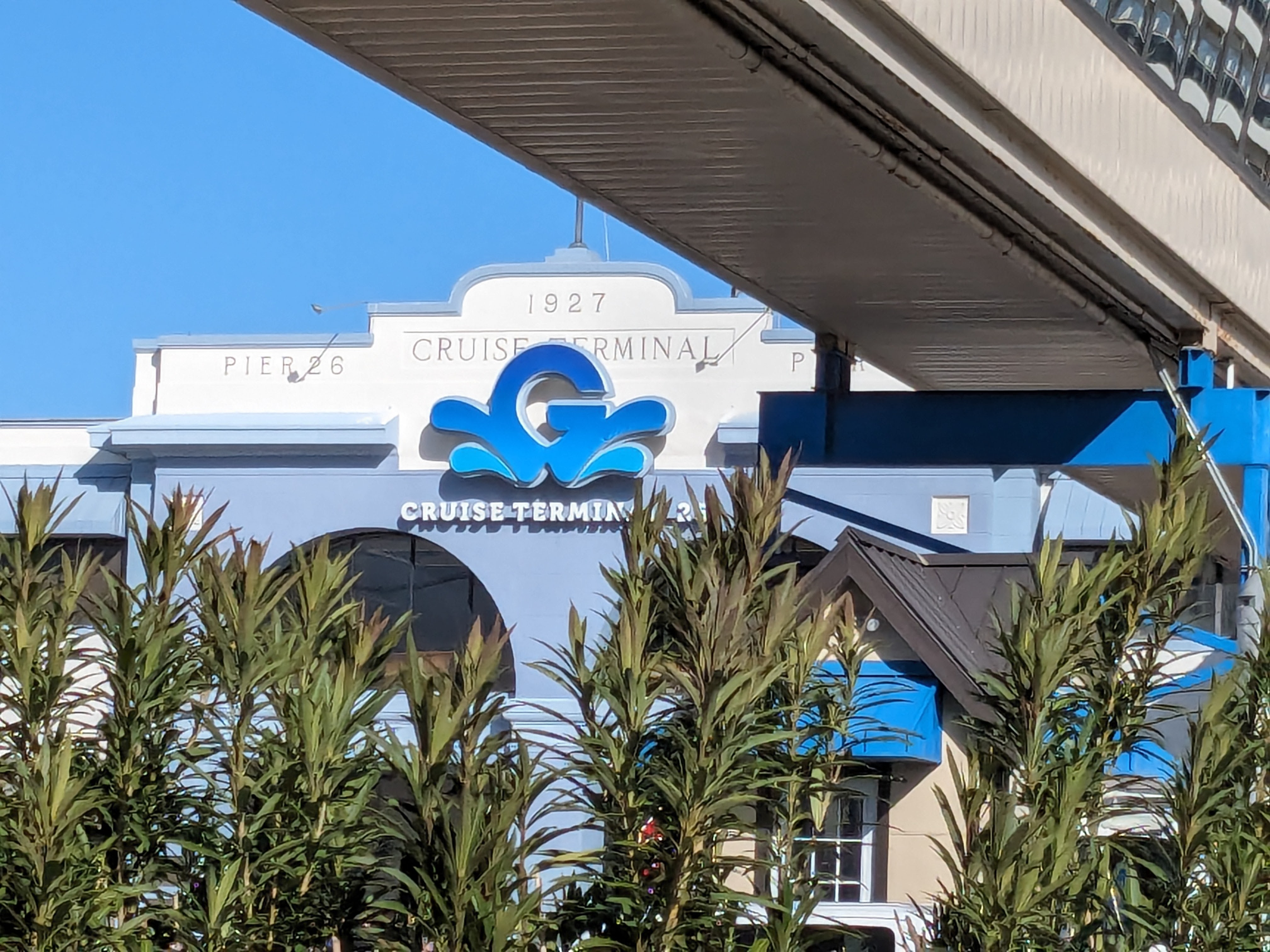
Galveston Mayor Craig Brown noted that, beginning in 2025, “every major cruise line sailing U.S. ports will be represented in Galveston,” and the city is slated to become the country’s third busiest port. A new Royal Caribbean Cruise Terminal opened in late 2022 at a cost of $125 million. It provides the utmost in passenger boarding convenience, with time from parking your car to actually boarding a cruise ship reduced to mere minutes, and it will accommodate the largest cruise ships afloat today.

Best Things to Do in Galveston

I could make a long list of things to do and places to go in this unique city, but half the fun of visiting a destination like Galveston is discovering on your own. If you travel there, just be open to new experiences, and you’re bound to enjoy your time. Seek out unusual places, talk to locals, and try new things.

Don’t Miss the Elyssa

Visitors may also tour an 1877 sailing ship, the Elyssa, that occupies a permanent slip at the Galveston historic seaport, amidst the seafood restaurants and wholesale fish markets. Take a tour of the restored vessel, or schedule a harbor tour. It’s quite an experience. Sightseeing tours of the port are also available that take passengers to the tip of the island, where free ferries operated by the Texas Department of Transportation run 24-hours a day to connect Galveston with the Boliver Peninsula, just just a few minutes away.

Adjacent to the Elyssa’s dock, you can become an immigrant. It’s a fascinating journey to “adopt” a persona and make your way through the immigration procedures at the Port of Galveston during that part of its history.

Ride the Ferry

A free ferry connects the Bolivar Peninsula southwest of Beaumont with Galveston Island. Officials have debated the pros and cons of building a bridge there since the 1930s. So far, it has not been done.

The trip spans less than three miles, and takes 18 to 20 minutes. During peak times, wait times can be long, sometimes an hour or more. There are no priority passes, but the ferry service operates around the clock. There are six ferries in the fleet, and during peak traffic times, all may operate as necessary. In the year 2000, the ferry system transported 6.6 million people. Each vessel can transport up to 70 vehicles, and 500 people.

The Pleasure Pier

In 1906, only a few years after the earthquake, Galveston’s original Electric Park that was to become known as the Coney Island of the South opened on a pier jutting out into the bay. A special excursion train at the time connected Houston to the pier, and crowds thronged to enjoy the moving picture shows, a ferris wheel and roller coaster, vaudeville shows and penny arcade, all lit by 6,000 electric lights.

In 1943, the Pleasure Pier was opened for the benefit of servicemen and military families during World War II. Following the war and throughout the 50s, more rides, games, and attractions were added, including a ballroom and outdoor theater for movies under the stars. Then, in 1961, another hurricane damaged much of the pier, and the Flagship Hotel, built over the water, fell into disrepair. Then, in 2008, Hurricane Ike roared through and the tourist industry in Galveston was hard hit until an investor in the person of Galveston native and Landry Corporation proprietor, took a chance and rebuilt the historic entertainment pier.

It opened in 2012, bigger and better than ever before. It is now a “must see, must visit” attraction in Galveston, with something for every visitor from nine to 90. Don’t miss it, if only to watch other people enjoying themselves.

Tour the Railroad Museum

The toy train at Galveston’s Railroad Museum made me feel like a child again!

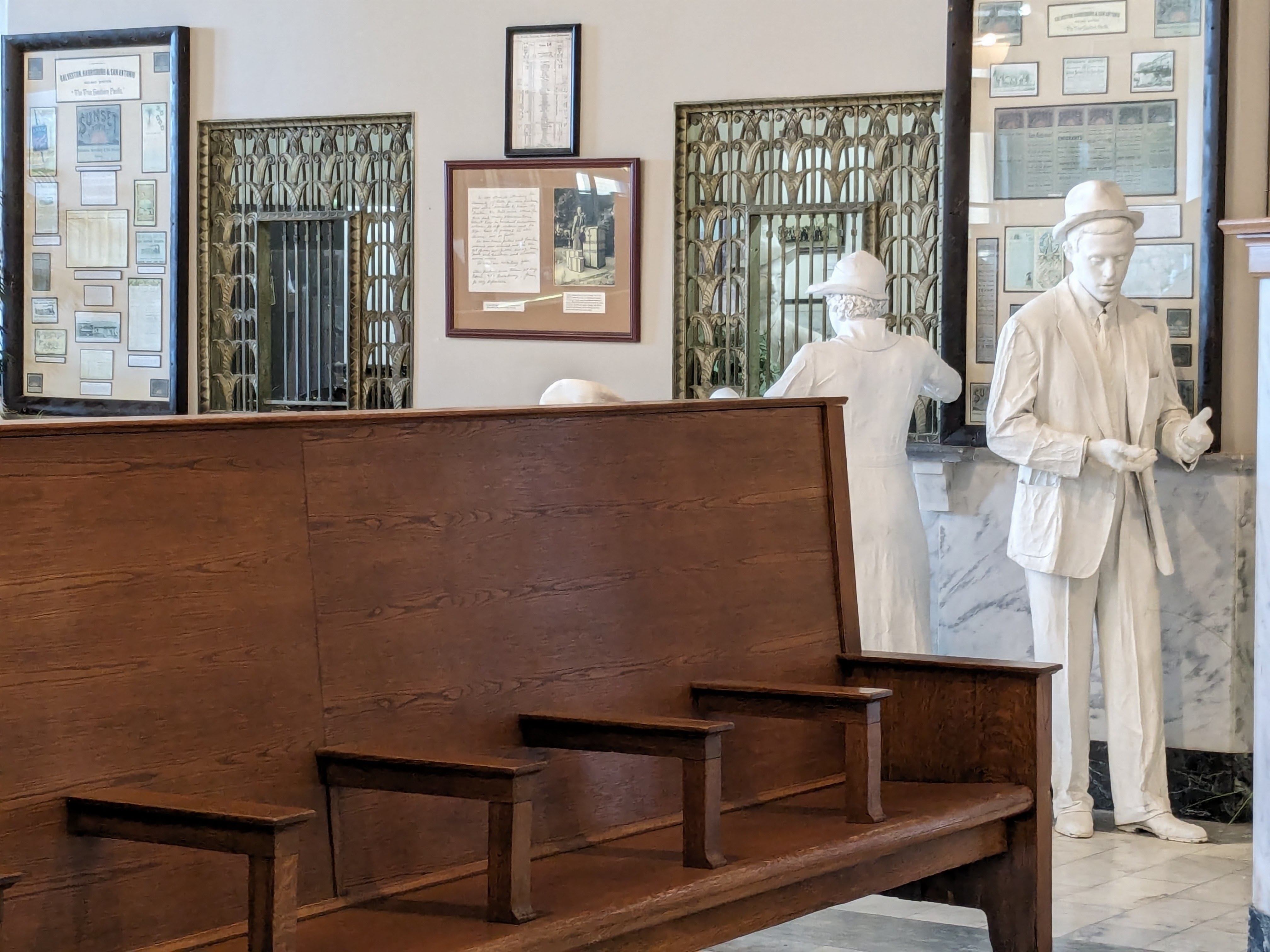
The former Galveston Railroad Station has been reimagined as a museum, complete with original benches, clocks, ticket counters, a bank of pay telephone booths, and a variety of vintage rail cars and engines looking as if they’re fit to leave the station at a moment’s notice. For any railroad buff, it’s a must see — for its architecture and his historical significance. One can almost hear the “All aboard” cry as you open a door that leads to the tracks.

Other displays in the station are captivating as well — especially the stories of children who rode the rails from the east coast to the Midwest and Texas aboard Orphan Trains. Its a history that deserves telling, but one that has not been told completely or enough.

Plan Some Beach Time

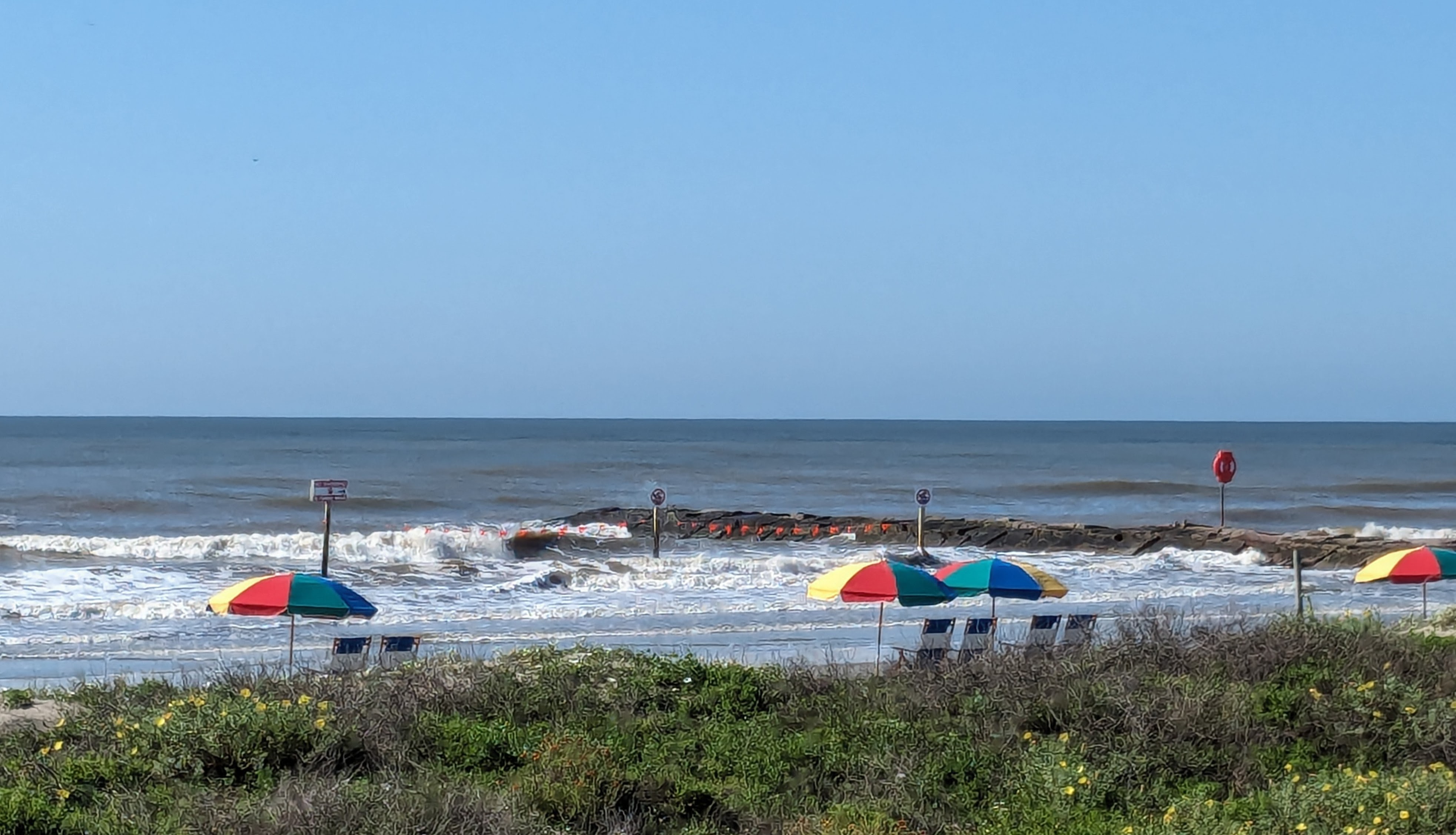
Walk along the Sea Wall and gaze out at the Gulf or take your shoes off and stroll the beach. Spread a towel or a blanket, and have a beach picnic. Stretch out and savor the sun, build a sand castle, or leave the beach for some fun at the historic Pleasure Pier! Galveston has done a marvelous job with its 32 miles of beaches — some areas are now equipped with “paved” paths designed to allow beach access for mobility-challenged beach-goers and visitors in wheelchairs. The city, at the forefront of such user-friendly features, has also installed rest rooms and changing areas with easy beach access. Note: Many Galveston trolleys are also equipped with ramps for mobility-impaired passengers.

You’ll pay to park your car, but Galveston’s beaches and numerous attractions are open to the public at no charge.

Spend a Day at the Tidal Estuary

Galveston boasts a tidal estuary that has national significance because it has not yet been greatly affected by human activity. It is estimated that 75 percent of the bird species in North America spend some time in the local bay, and it is filled with both finfish and blue crab, bordered by coastal plains and marshes. If this is “your thing,” get out and enjoy it.

Go kayaking, rent a canoe, take a nature hike, or simply gaze at and be amazed by the nature that surrounds you.

Seawolf Park

At the very tip of Pelican Island, accessible by a single bridge from the city of Galveston, Seawolf Park boasts the most popular fishing piers in the area, along with picnic tables and a children’s playground. Pelican Island is also home to the Galveston campus of Texas A&M University, with degree programs in marine sciences, marine fisheries, marine biology, maritime engineering and ocean engineering, computer science, maritime transportation and maritime business administration. It also offers an interdisciplinary program in maritime studies, and is home to the Gulf Coast’s only Maritime Academy that offers a licensing program for students who wish to pursue maritime careers.

Seawolf Park currently houses the Galveston Naval Museum that allows visitors to tour both a WWII-vintage submarine and destroyer, and greenspace with a submarine exhibit. Galveston is also the probable new home for the Battleship Texas, currently undergoing repairs and refurbishment in drydock. It has been reported that this sole surviving U.S. battleship that served in both world wars will at some point in the future find its new home at Pier 21 in Galveston.

Visit a Fish Market

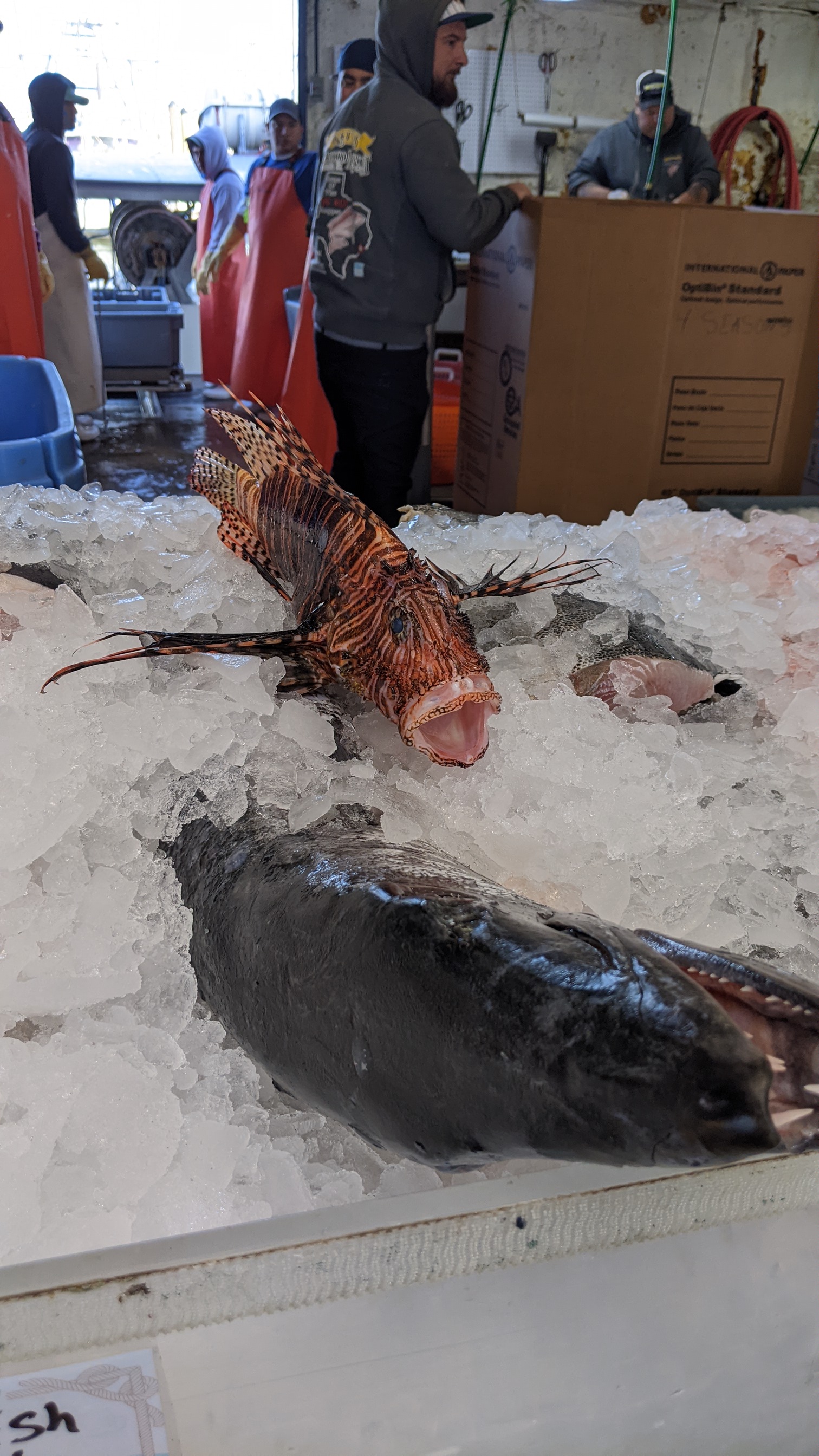
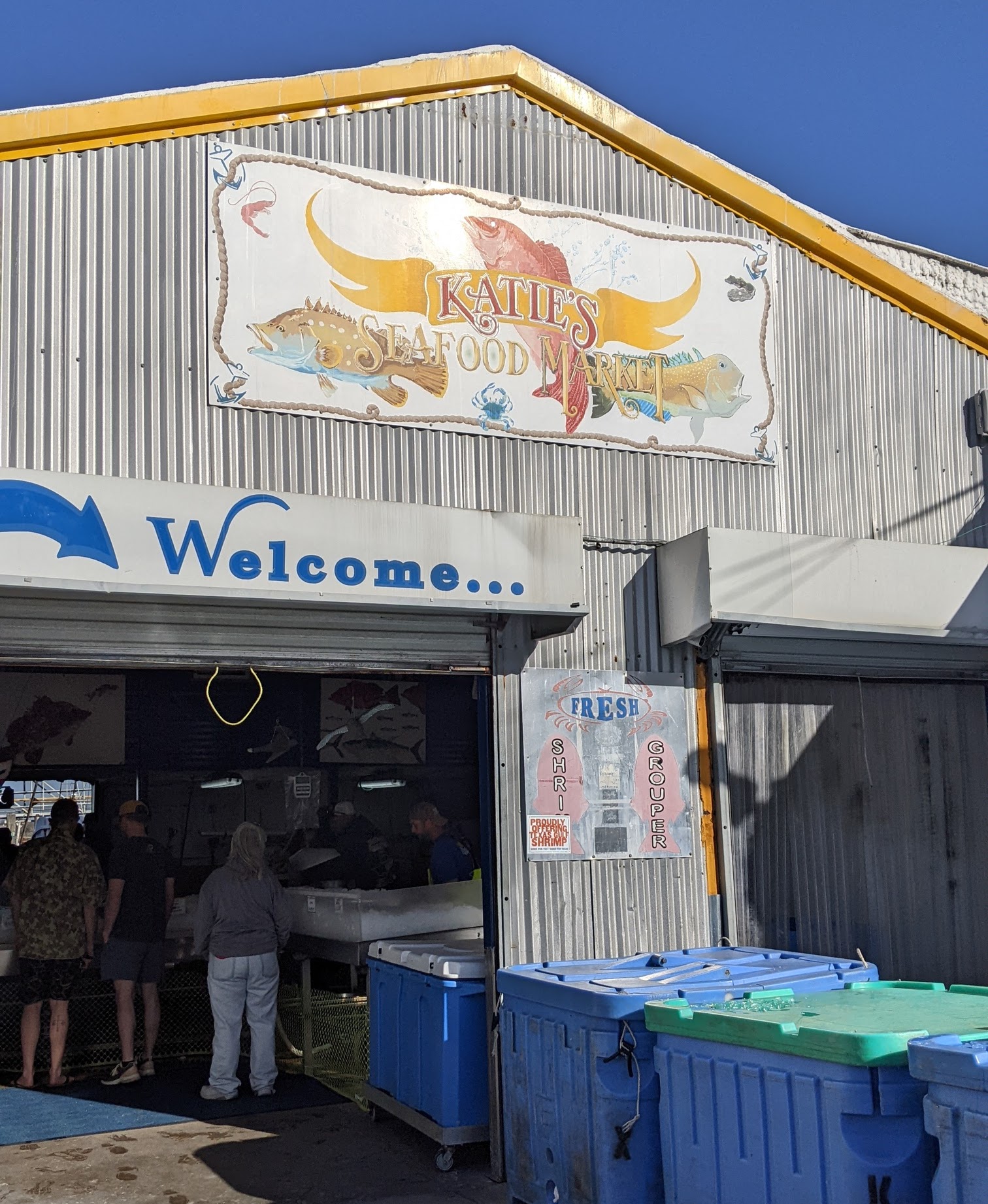
Seeing the wide variety of the catch fresh off the fishing boats is an experience not to be missed when you’re in Galveston. Of course, you can order from a local restaurant menu and you’re likely to get fish that’s just as fresh, but there’s something about seeing fish arrayed in deep tubs of ice that cannot be matched.

A large part of the fun is watching the pelicans who are hoping beyond hope for a handout from the fishmongers. Sometimes they get that gift, and that’s a real show!

Food and Drink

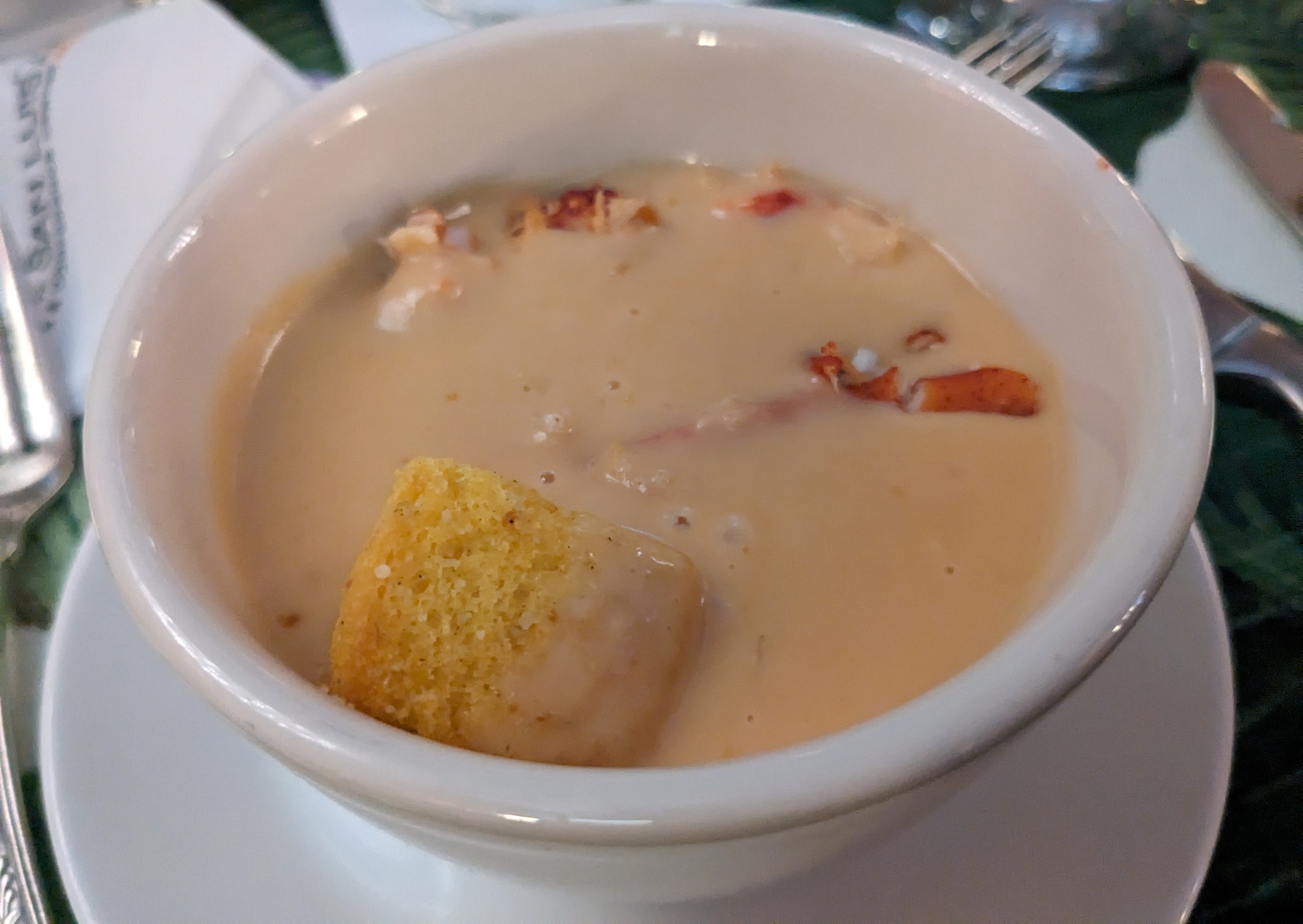
As in any popular vacation area, there a bars, breweries, dives and fine restaurants galore. I’ll just post some pictures of the food and drink I enjoyed in Galveston. You can bet I had my fill of fresh fish and seafood.

Go and discover for yourself all there is to eat and drink in this popular beach community, from Gaido’s on Seawall Blvd., with a 100-year-history of fine dining, to the rooftop bar at Hotel Lucine, a revamped 50s-era motel, to matchless Italian cuisine at Riondo’s Ristorante, in a historic building in the Strand district, to casual walk-up bars and food trucks. Search out your own favorites, and know that the seafood is fresh, the beer will be cold, the margaritas mixed to your liking, with entertainment and music to suit your taste.

Other Reasons to Visit Galveston

Galveston is an island, of course. But it is also the gateway to a string of beach communities in South Texas. Thousands of people head to those beaches every year for short vacation getaways, for the entire winter season, for fishing expeditions, and for business. Gulf Coast cities, including Port Lavaca, Port Aransas, and Corpus Christi, the coastal barrier islands south of Galveston, and the long expanse of Padre Island’s National Seashore, are popular destinations.

Residents of Houston, one of the country’s largest urban areas, routinely “escape” to Galveston for a day at the beach or a romantic dinner by the sea. Once you’ve experienced all that Galveston offers, it’s hard to get it out of your mind. You might never be the same again.

Go ahead, hum the tune.

Once Upon a Frontier

In December 2023, Old West Magazine published a list of the “The Top 10 True Western Towns of 2024,” as it has annually for nearly two decades.

Cody, Wyoming, topped the list this year, but others include:

  • Miles City, Montana
  • Lubbock, Texas
  • Abilene, Kansas
  • The Dalles, Oregon
  • San Angelo, Texas
  • Deadwood, South Dakota
  • Tombstone, Arizona
  • Fort Smith, Arkansas, and
  • Prescott, Arizona

Some of these Old West towns have made repeated appearances on the magazine’s annual list. I have lived in several of these legendary locations — Santa Fe, NM, Fort Worth, TX, and Miles City, Montana. And I have visited many more.

Many towns across America claim to be throwbacks to earlier times, dripping with the romance and spirit of discovery that characterized a new and uncharted land.

Most have become thoroughly integrated with modern life. The best, however, retain and celebrate their history as towns on the frontier of a fresh and growing America. Their residents may no longer subscribe to the lively lifestyles of the past, but they are also unwilling to completely put the past behind them. I find that refreshing.

The West Lives On

Last month, I visited an Arkansas frontier town, Fort Smith, for the first time.

Fort Smith has also made True West’s list more than once, and its past may be more colorful than most. The facts testify to its importance on the edge of the American frontier.

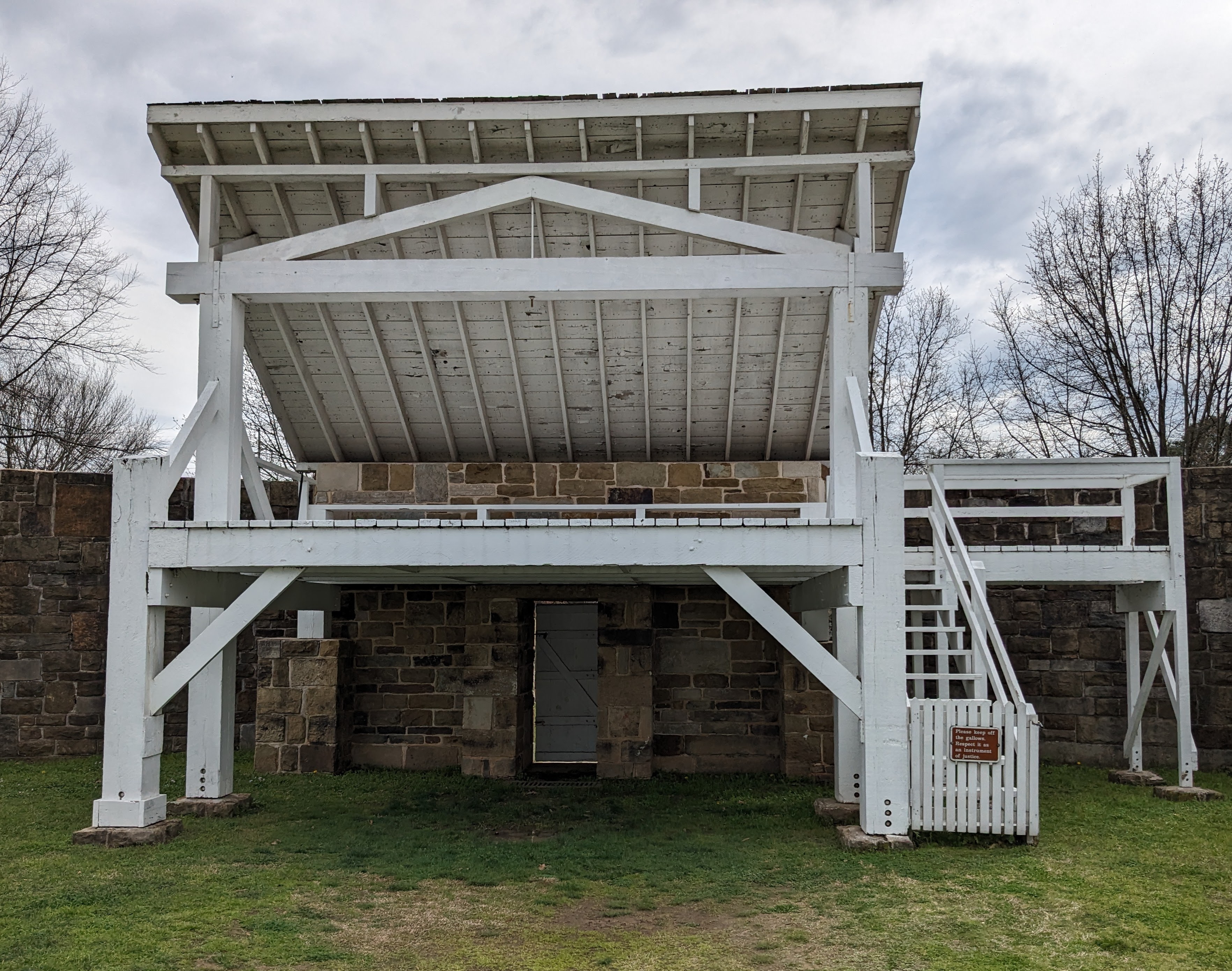
Situated on the banks of the Arkansas River and just a bridge away from Oklahoma, Fort Smith is a small town by any standard, but its history is long and varied. It was where “the Hanging Judge” of Old West renown held court — 83 men were hanged on the orders of Judge Isaac Parker between 1873-1896, and reconstructed gallows now occupy a prominent position at Fort Smith’s National Historic Site. Displays are housed in a former military barracks and the city’s impressive historical museum occupies a one-time Army commissary.

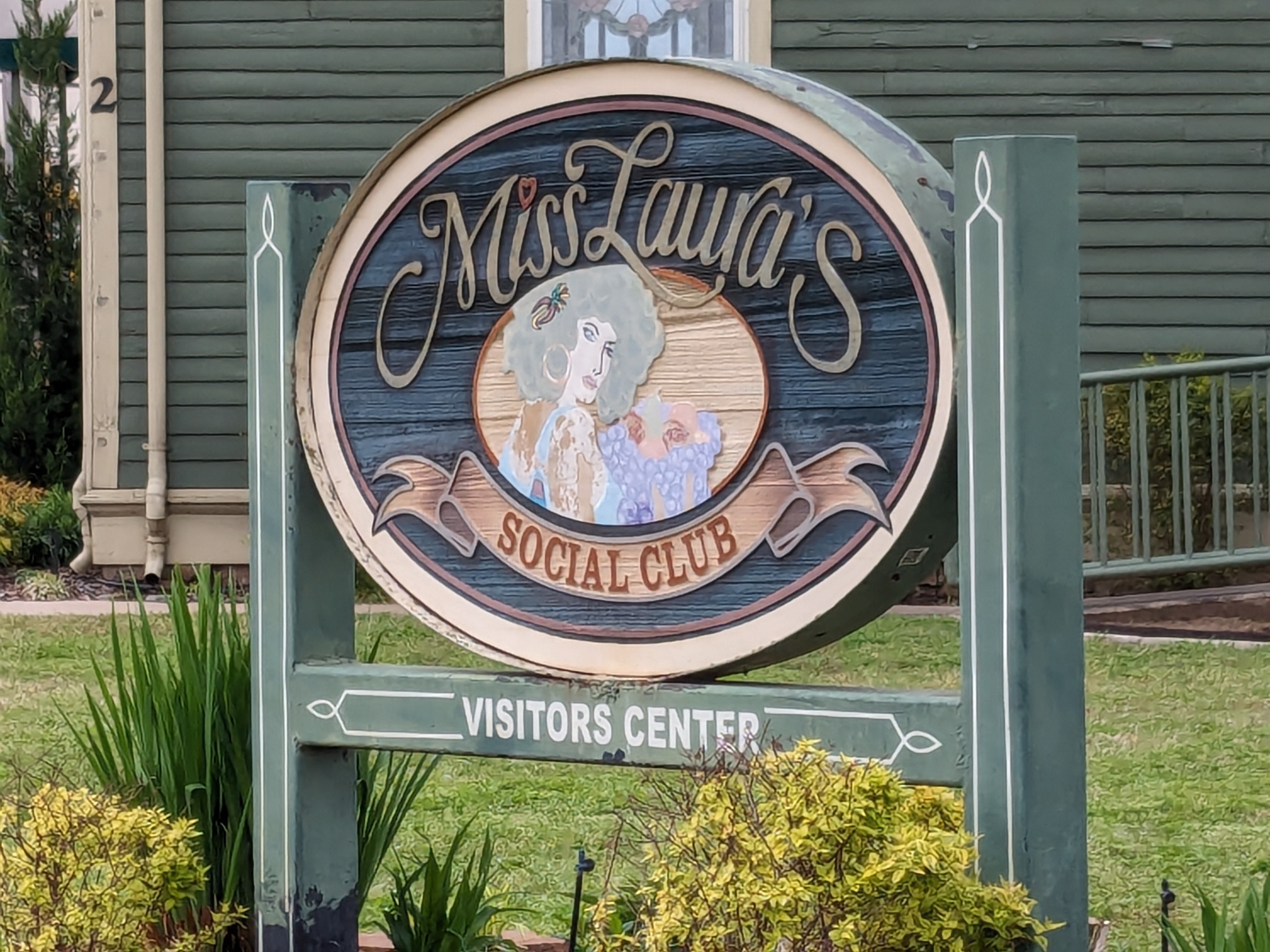
The city’s Visitors Center is currently in a former brothel, Miss Laura’s Social Club, and tours of the restored house are offered to the public on a regular schedule. A modern Visitors Center, however, is slated to open in 2025.

Despite its status as the third most populous city in Arkansas, with approximately 90,000 residents, Fort Smith retains its small-town appeal. Its boundaries encircle an area of about 63 square miles, but its downtown core consists of only a few easily walkable blocks.

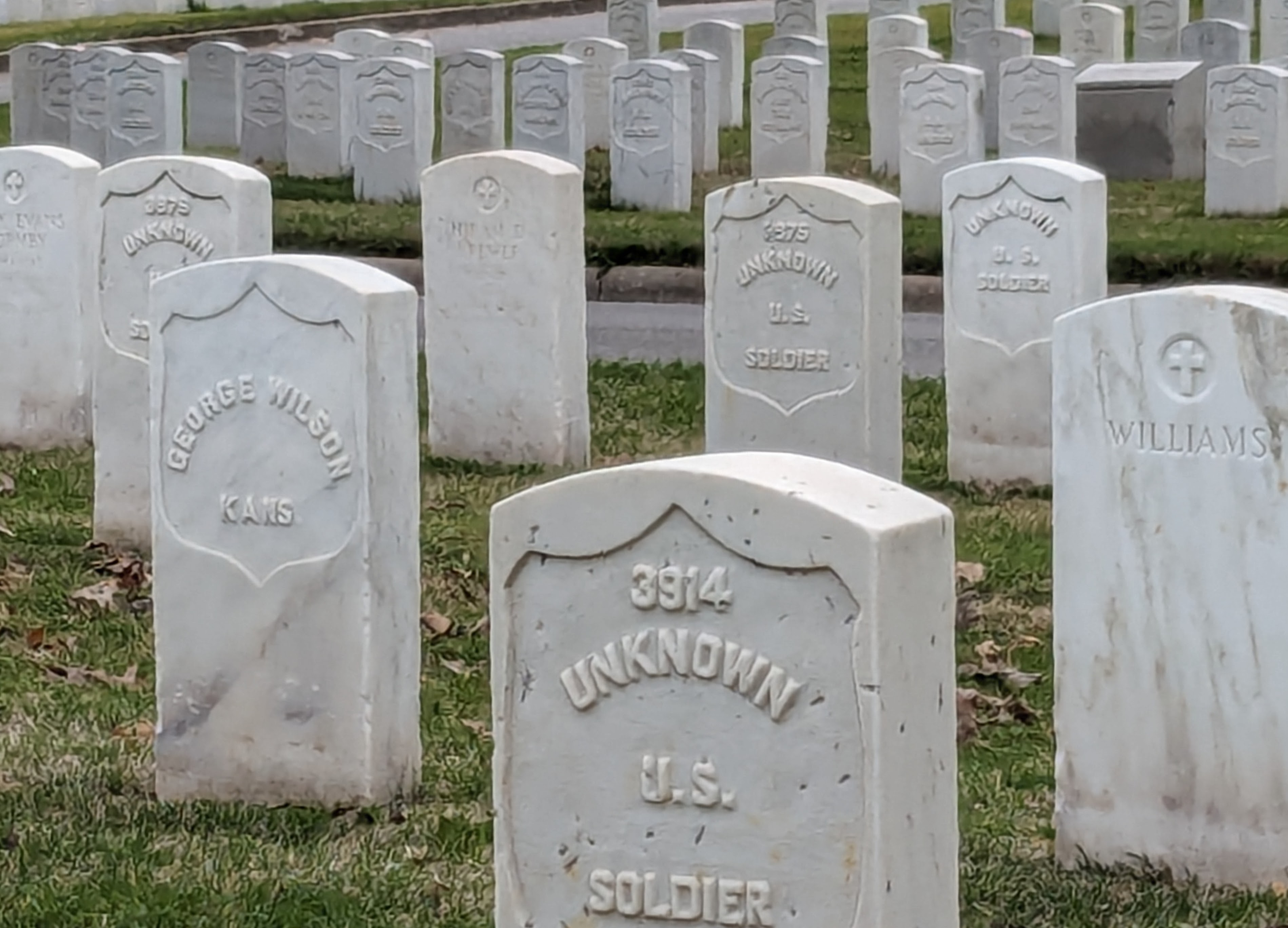
The city played a contested role in the Civil War and fell under the control of both the Confederacy and the Union at different times. Today a National Cemetery is located near the center of Fort Smith’s historic downtown district. Walking among the headstones is an eye-opening lesson in American history.

Building a New History

Present-day Fort Smith also has much to recommend it, not the least of which is the United States Marshals Museum that opened July 1, 2023, after a decade of planning. It occupies a dramatic riverbank site only a mile or so from the city’s historic downtown.

If, like me, most of what you know about U.S. marshals has been gleaned from television and movies, visiting this museum is akin to a refresher course in reality. The modern building at first seems a bit incongruous on the river, sandwiched between a bridge that leads to Oklahoma and an RV campground. One wonders initially what this architecturally stunning building, set starkly between large boulders and clumps of prairie grass, can be. Closer to the bank, a horse and rider seem to stand watch.

Upon approach, however, the steel and glass building morphs into a stylized star – the badge of the U.S. Marshal. A single American flag directs visitors to the building’s entrance.

The museum tells the story of a small band of legendary men and women charged since 1789 with “keeping the peace and carrying out justice” in the United States. And it tells that story in an unparalleled way.

The Trail of Tears

Also in Fort Smith, there is a viewing platform on the river, not far from the city’s modern convention center, that marks the spot where the trail ended for native tribes who were forcibly removed from their lands east of the Mississippi. Although there were several routes to the designated “Indian Lands” in the West, the years-long relocation of thousands of indigenous tribal members is known as the “Trail of Tears.”

For some, that trail ended at Fort Smith. Indian Territory lay just across the Arkansas River, in what was to become Oklahoma. Last year, I stood near the bank of the Mississippi River not far from St. Louis, at a point where a marker now designates a beginning point of the Trail of Tears. Seeing both the beginning and end of that trail was a sobering experience.

My recent travels have opened my mind to the variety and wealth of Arkansas history, and to the reasons for its nickname as the Natural State. One need not travel far afield to learn more about this unique region.

The City That Holds My Heart

Old West towns beckon to me. To this day, each retains a kind of defiant swagger that sets it apart from other historic American cities, and each one has a distinctive mystique.

Some years of my early childhood were spent in Miles City, along with many summer vacations to visit grandparents. Miles City was then, and in some ways still remains a quintessential frontier town. Founded in 1877, the year after the Battle of the Little Big Horn, it was adjacent to Fort Keogh, at the confluence of the Powder and Yellowstone Rivers in eastern Montana. The fort’s reason for being was as a military outpost to urge local tribes — the Lakota and Crow — to resettle on the state’s designated reservations.

As an active military installation, the fort had a storied history up to and including World War II. Miles City in its early days supplied liquor and services for the troops. Allow your imagination free rein; Miles City began life as a rowdy town.

The fort was deactivated in 1924 to become an agricultural research station. Miles City was an early railroad hub, with both the Milwaukee Road and the Great Northern Railway running through the town. And, for decades, motorists on both U.S. Highways 10 and 12 passed through Miles City. But in the latter part of the 20th Century, Interstate 90 and its I94 spur from Billings to North Dakota were constructed. The interstate bypassed Miles City, and it fell into decline as passenger train travel also diminished. The city’s airport had insufficient runway to handle jets, and most reasons for visiting disappeared.

However, to this day, Miles City clings to the pride that perpetuates its rowdy past. Some of that raucous past manifests each spring, during the third full weekend of May, at the legendary Bucking Horse Festival, held since 1951. The weekend celebration is a spirited event that includes horse races, rodeo events, and visits to Miles City’s throwback saloons. It is grounded in the history of the military and westward expansion, and characterized by high spirits and daring antics by contemporary cowboys. It is still a primary source of rodeo stock for the entire country and the annual rodeo and sale is one of those American “folk festivals” that one really must experience in person to believe.

More West to Explore

In just a few days, I will embark on another journey that will take me through several Old West towns in Kansas on the way to a week of R&R at a mountain cabin in Estes Park, CO. 

Kansas is another state with a rich frontier history, and I look forward to exploring a bit more on this quick journey west, visiting Fort Scott, Wichita, and Dodge City along the way. On this road trip, my husband and I will drive a few miles along Route 66 in eastern Kansas, and then return to the past further west as we follow part of what was once the Santa Fe Trail. I wrote before about Kansas in 2022 when I visited several of the small towns in the southeastern corner of the state that we will pass through again on our way west.

On the way back to Arkansas, we plan to revisit Santa Fe, which we called home for nearly two decades, then will see friends in Lubbock and the Dallas/Fort Worth area before returning home. My plan is to return and write more about these legendary Old West towns that are now redefining themselves as unique places in the modern world.

I hope you’ll join me as I continue to travel and find interesting and unusual places to visit. I urge you to venture out on your own as you have time — to your state’s parks, historic sites, regional festivals and the many small towns, lakes, streams, mountains or shores that surround you, wherever you may live.

Uncovering Roatan’s Hidden Treasures

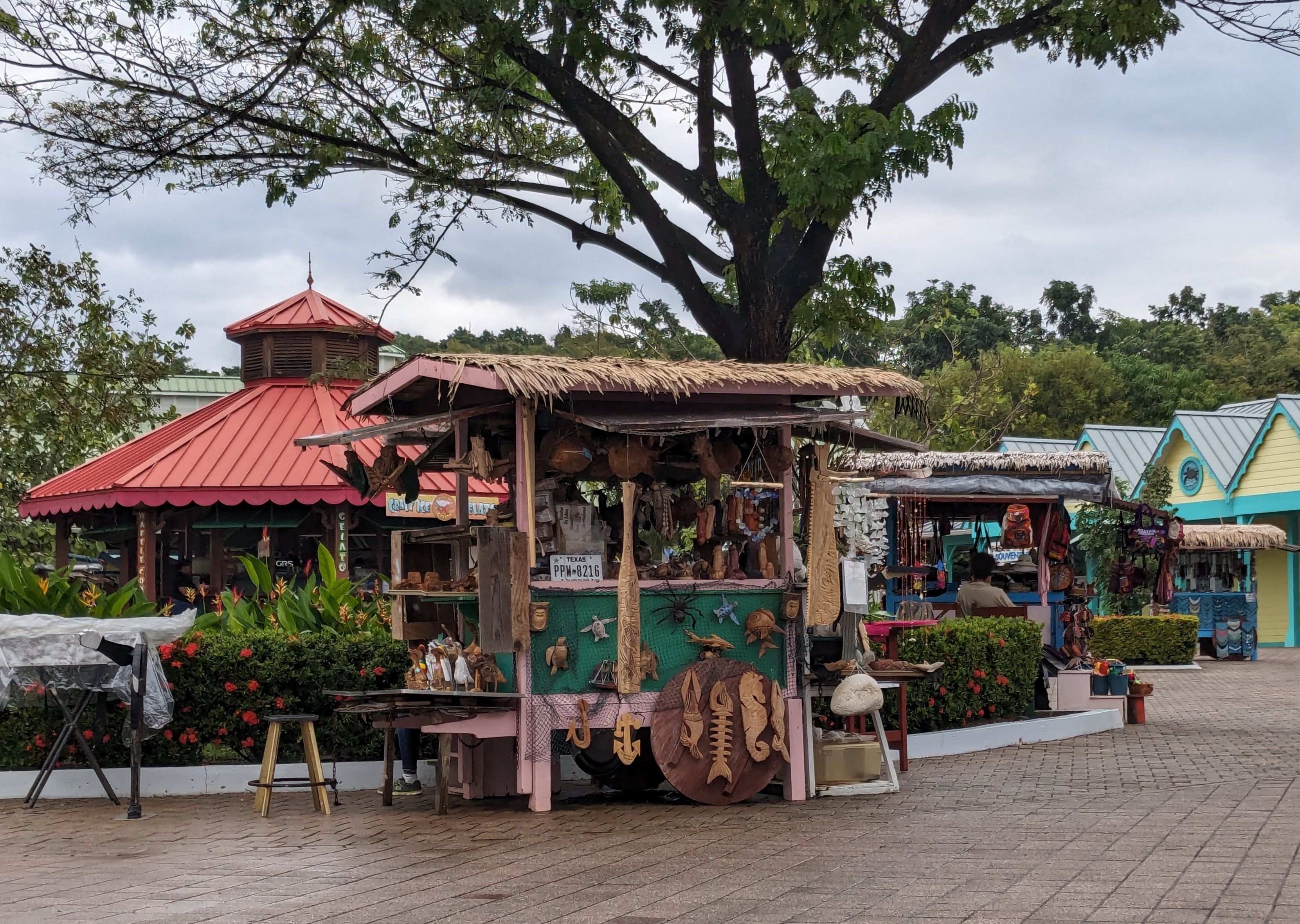
Roatan is a beautiful, small island, with clear water and friendly people. On previous cruise visits to the tiny island of Roatan off the coast of Honduras, my husband and I had seldom ventured far from the port and nearby beaches. We had occasionally talked about returning to the island to spend a week at a local hotel, but that idea had never matured. So, once again, we were on a Gulf of Mexico cruise that included this port call. This time, we were determined to venture beyond the “tourist trap” at the end of the pier. I use that term in the sense of a protected enclave that offers short-term visitors an opportunity to purchase local crafts and souvenirs.

I am sorry this has become the norm in so many cruise ports throughout the world. These shopping and entertainment enclaves offer visitors only a filtered view. They are filled with chain shops and eateries, even though they often feature local entertainment and crafts. They are pleasant enough to visit, but they are in no way the same as visiting the country. Sadly, my husband and I had fallen victim to a skewed vision of Roatan, based on previous short visits. But this trip changed all that. We considered spending the day at a local beach. Instead, I found and booked a private tour of the island through Get Your Guide and its local affiliate, Roatan Trips and Tours.

It was an eye-opening experience, against which I will be likely to judge future tours in other destinations. I may not return to Roatan, but I will hold memories of this experience dear, and I have unique photos of our visit as well as mind pictures etched deep in my consciousness.

That’s the joy of travel — stumbling into situations that alter one’s perceptive, right?

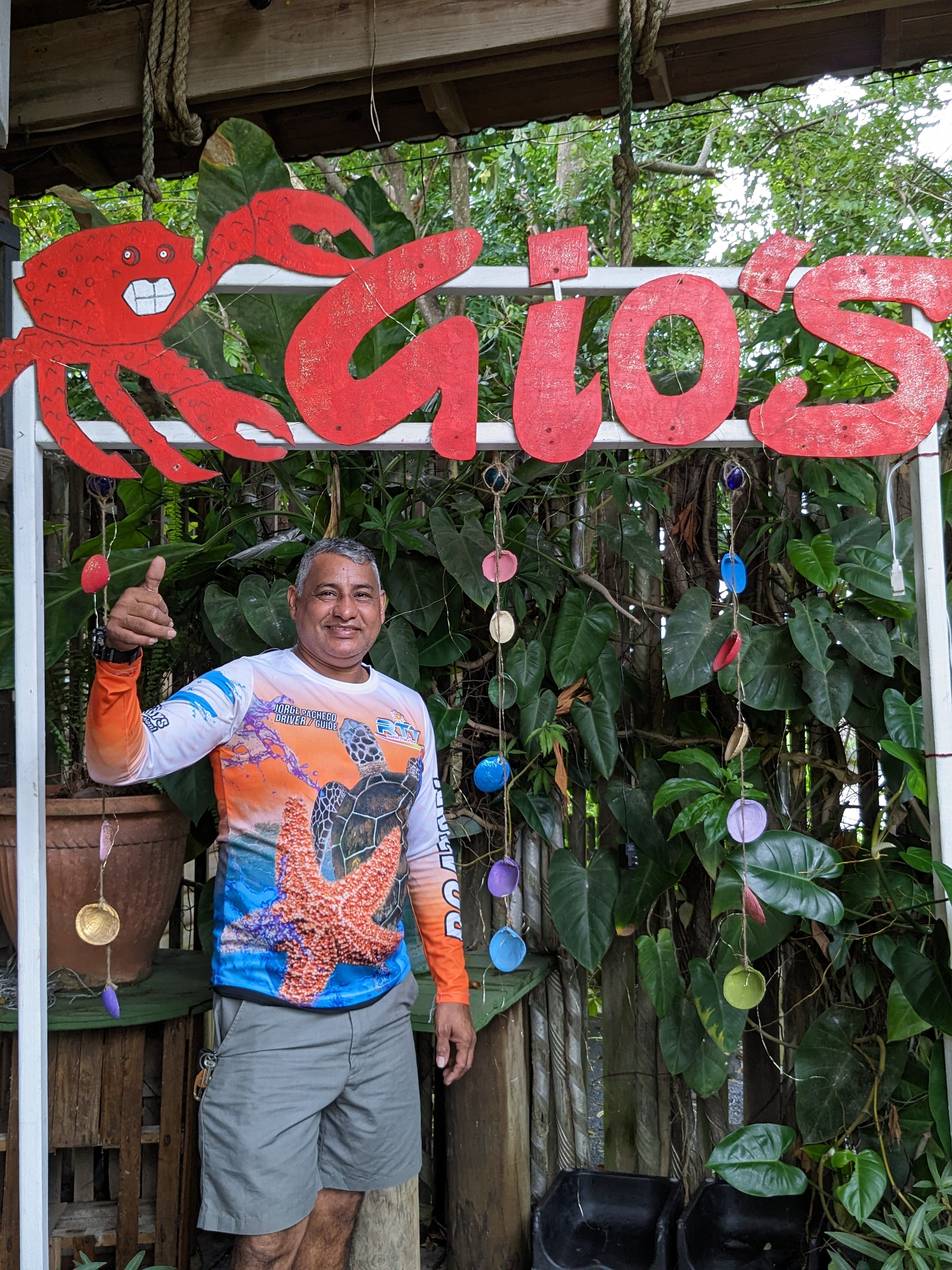
Our four-hour tour stretched beyond the stated time constraints, but we weren’t watching the clock. I found the time spent with Jorge, our personable local guide, invigorating, enriching, and rewarding, and he had promised to return us to the dock before our ship was scheduled to sail. He did just that. The tour more than fulfilled my expectations, and my husband and I left believing that we had made a new friend who would welcome us back to Roatan should we choose to return. It pinpoints what is missing from many shore tours — the personal connection.

Let me explain.

Exploring Local Culture

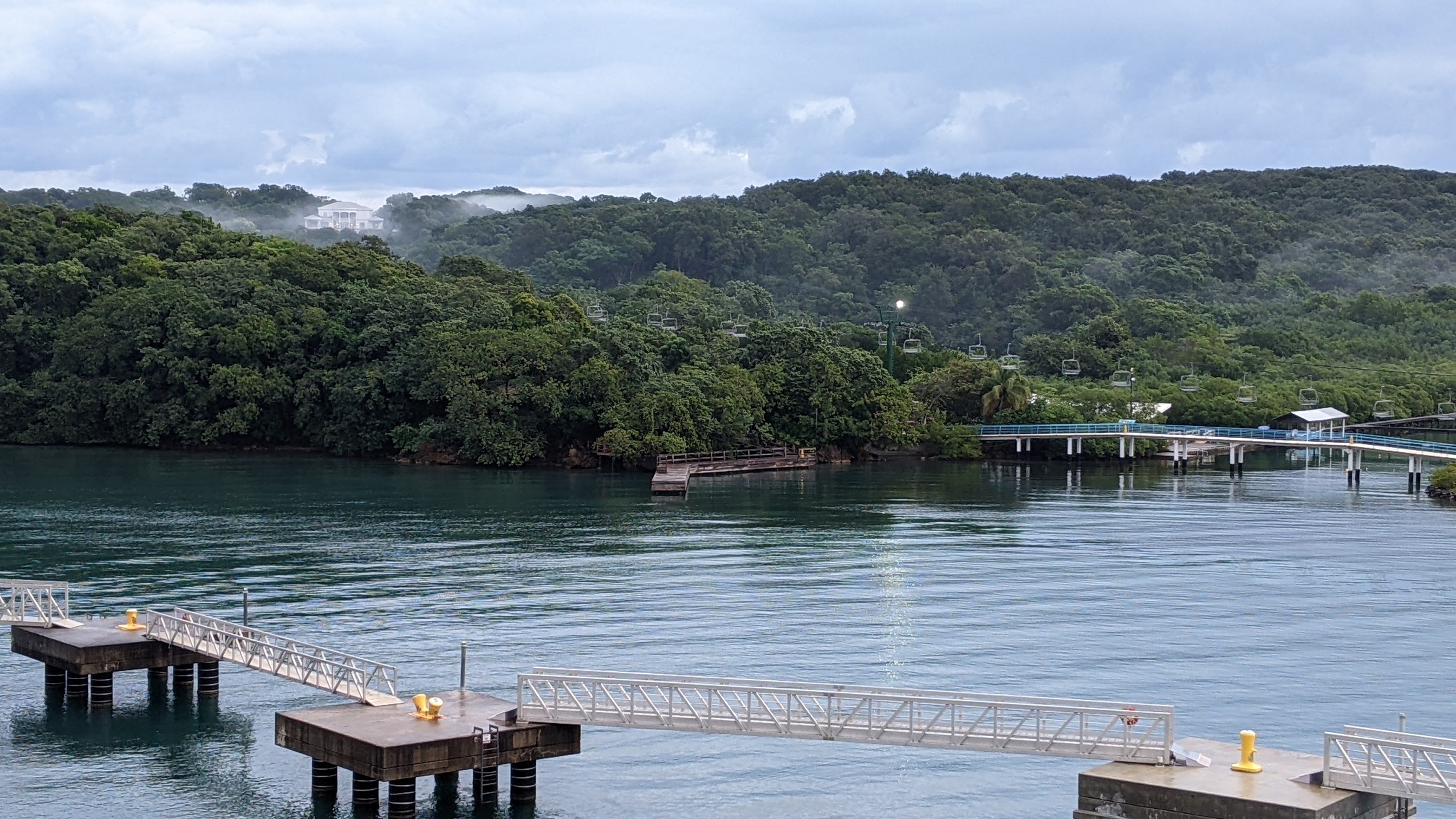
We docked early the morning of February 1 at Mahogany Bay, while the mist was still clinging to the folds in the forested slopes that extend down to the sea.

Used almost exclusively by Carnival Corporation, Mahogany Bay boasts an aerial tram that runs from the port to a nearby beach for a nominal fee. We disembarked in time to stroll leisurely through the port enclosure. Even though our ship, the Regal Princess, was the only one in port that day, the area already seemed alive with both locals and visitors.

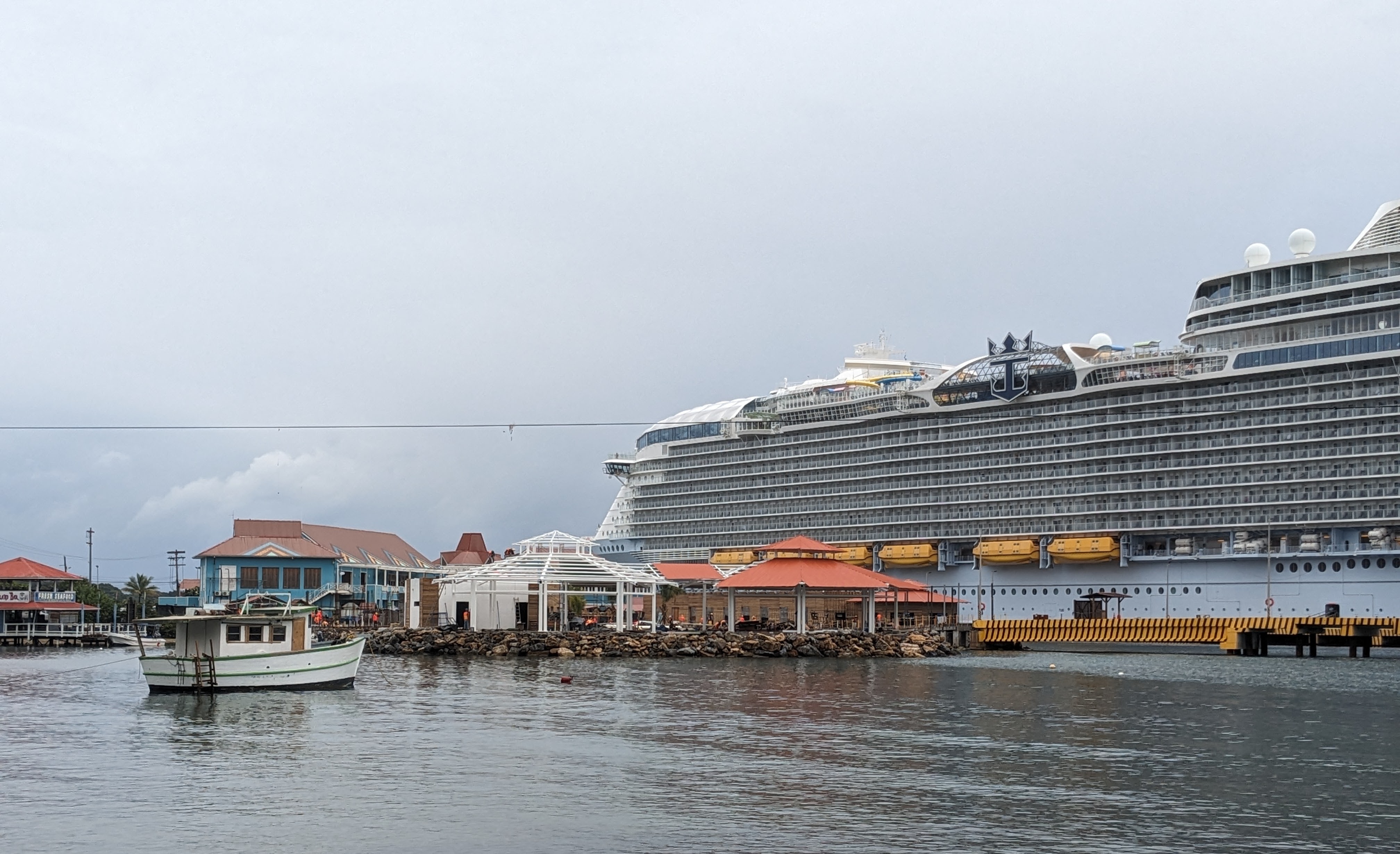
The island’s larger dock is known as the Port at Town Center, situated further west along the coast, adjacent to Coxen Hole, Roatan’s major city. It is used by almost all other cruise lines and can accommodate three large ships at a time, one alongside the dock and two at anchor. The port area is currently being enlarged and improved; construction activity is expected to continue through 2024; perhaps longer. Royal Caribbean’s Wonder of the Seas was alongside the dock at Town Center.

Icon of the Seas, Royal Caribbean’s newest vessel and the largest cruise ship currently sailing, was scheduled to make an inaugural call there on March 4. It officially entered service on January 27, 2024, with the ability to carry 7,600 passengers and more than 2,500 crew members. I found myself wondering if tiny Roatan could handle that many additional cruise passengers, particularly if other ships were also in port.

On the day we visited, it is probable that cruise visitors numbered upwards of 5,000.

We typically disembark and explore port cities on our own, walking or riding local buses. We sometimes hire a cab driver for an hour or two. Less often, we join a planned excursion. Before this trip, we had debated whether we would disembark at all in Roatan. I could have canceled our excursion at the eleventh hour, but we’re happy we chose to take the tour. We count the time we spent with our guide as one of the highlights of our cruise, and I readily admit that Roatan has much to offer beyond the port facilities.

When we disembarked, we walked to the far side of the port compound and then took a brief jitney ride to the designated meeting point outside the port area. The fee was minimal. Guides from multiple companies waited there to ferry passengers to local beaches or other island destinations. We visited with local tour operators and fellow cruise passengers as we awaited our driver/guide.

He arrived, apologetic that he had been delayed by traffic. The excursion had been billed as a “design your own” tour, offering options to visit local beaches, go snorkeling or sailboarding, shop if we wished to do so, spend some time at a chocolate factory or a monkey or sloth sanctuary, and several other possibilities. We told our guide, Jorge (or George), that we wanted him to show us his island, and asked only if there might be a restaurant with a water view where we could stop for a simple lunch.

Jorge agreed, and we set off.

Learning About “Jorge’s Island”

Like many islands, Roatan is a land of contrasts. The island has a rich history, some of it very different from the history of mainland Honduras. Once a British colony, 17th Century Roatan boasted a population of about 2,000 pirates with more than 500 houses in the northern city of Port Royal. That city is now in ruins, and the island’s resorts exist primarily at the other end of the skinny, curving island, congregated in West End and West Bay. The first language of native islanders is English, although in recent decades, increasing numbers of Spanish-speaking residents have made their homes on Roatan.

During the next several hours, we saw much of Roatan, including some areas where day visitors do not normally venture. Roatan is the largest of a group of seven islands located about 40 miles off the northern coast of Honduras. But it is a small island, measuring approximately 48 miles long and varying from one to five miles wide.

The Meso-American Barrier Reef, the second-largest in the world, surrounds Roatan and is known for its biodiversity and extraordinary reef diving. Daily flights arrive from Miami, Houston, and Phoenix at the airport that lies between the two cruise ports. It is estimated that upwards of 1.6 million tourists visit Roatan annually.

We drove past tony all-inclusive resorts on this beautiful spit of land, many with private beaches and over-the-water bungalows, some hidden behind iron gates and lush greenery. There are no high-rises, but inland some new multi-story condos and rental apartments are under construction, some with incredible views.

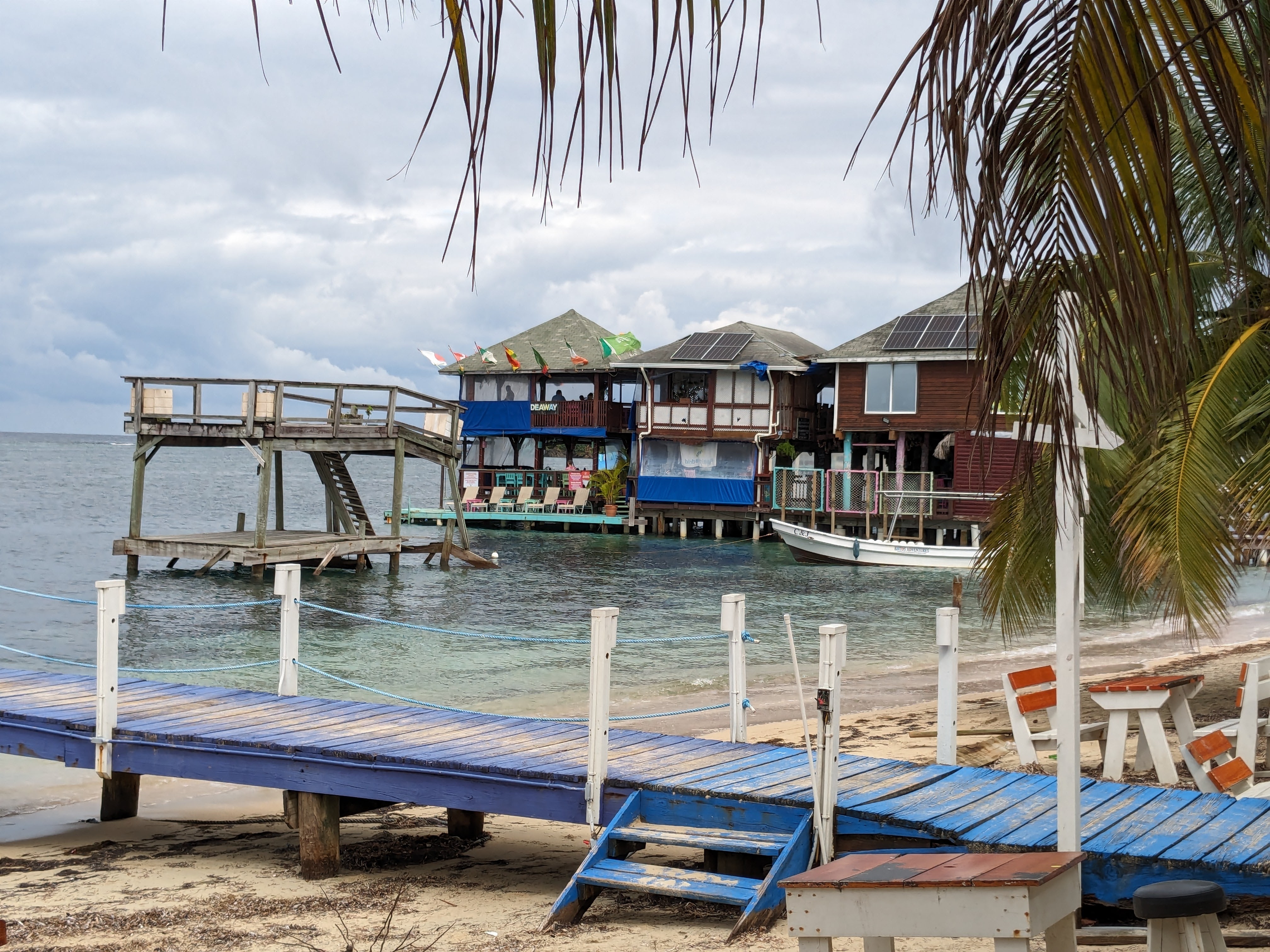
We passed waterside restaurants and bars, and numerous piers boasting fishing, diving, or snorkeling expeditions. Roatan boasts some of the clearest water and best beaches in the Gulf, and it is renowned for its diving and snorkeling possibilities. We saw local homes, both large and small, in small communities and near the water.

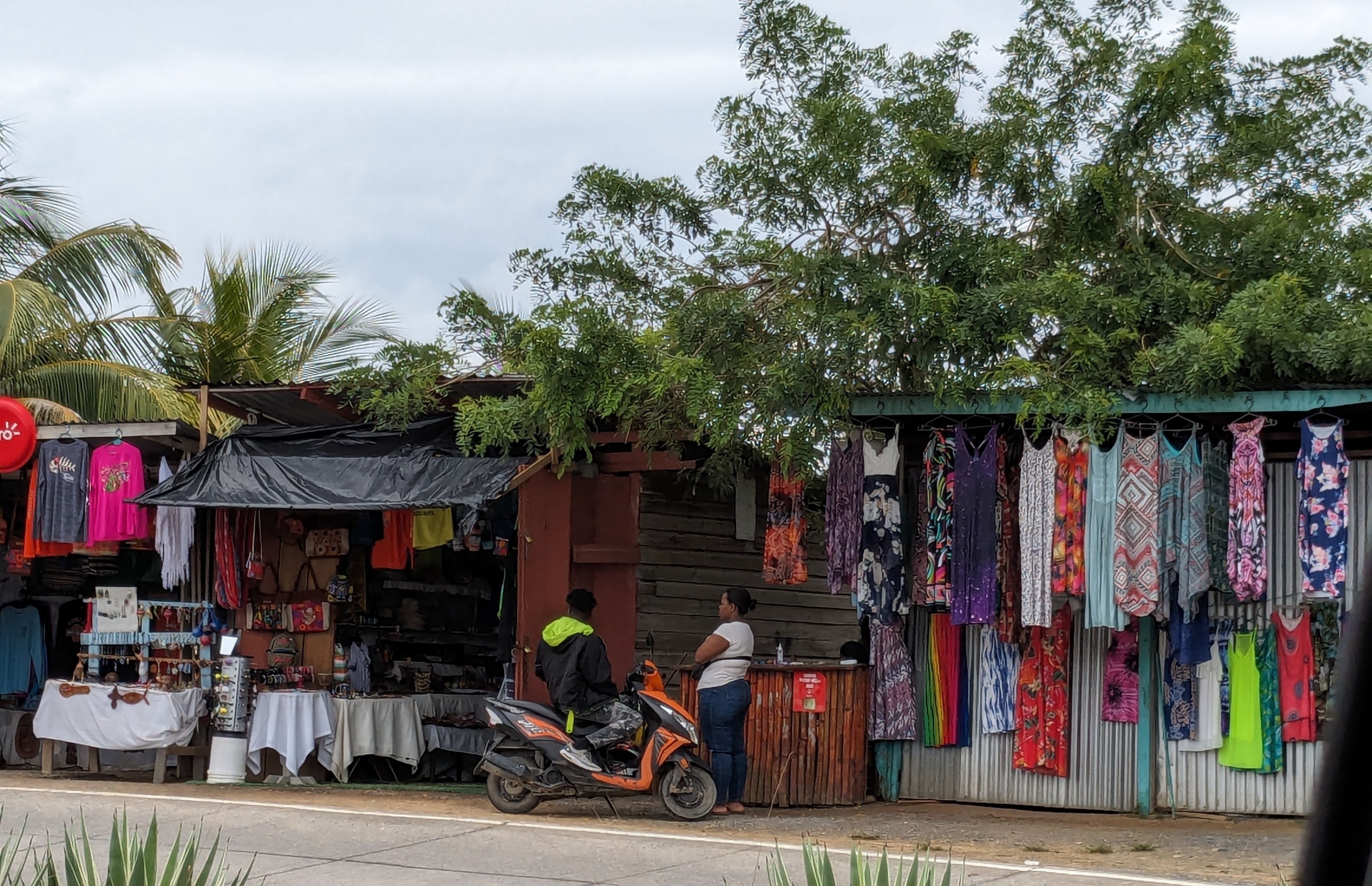
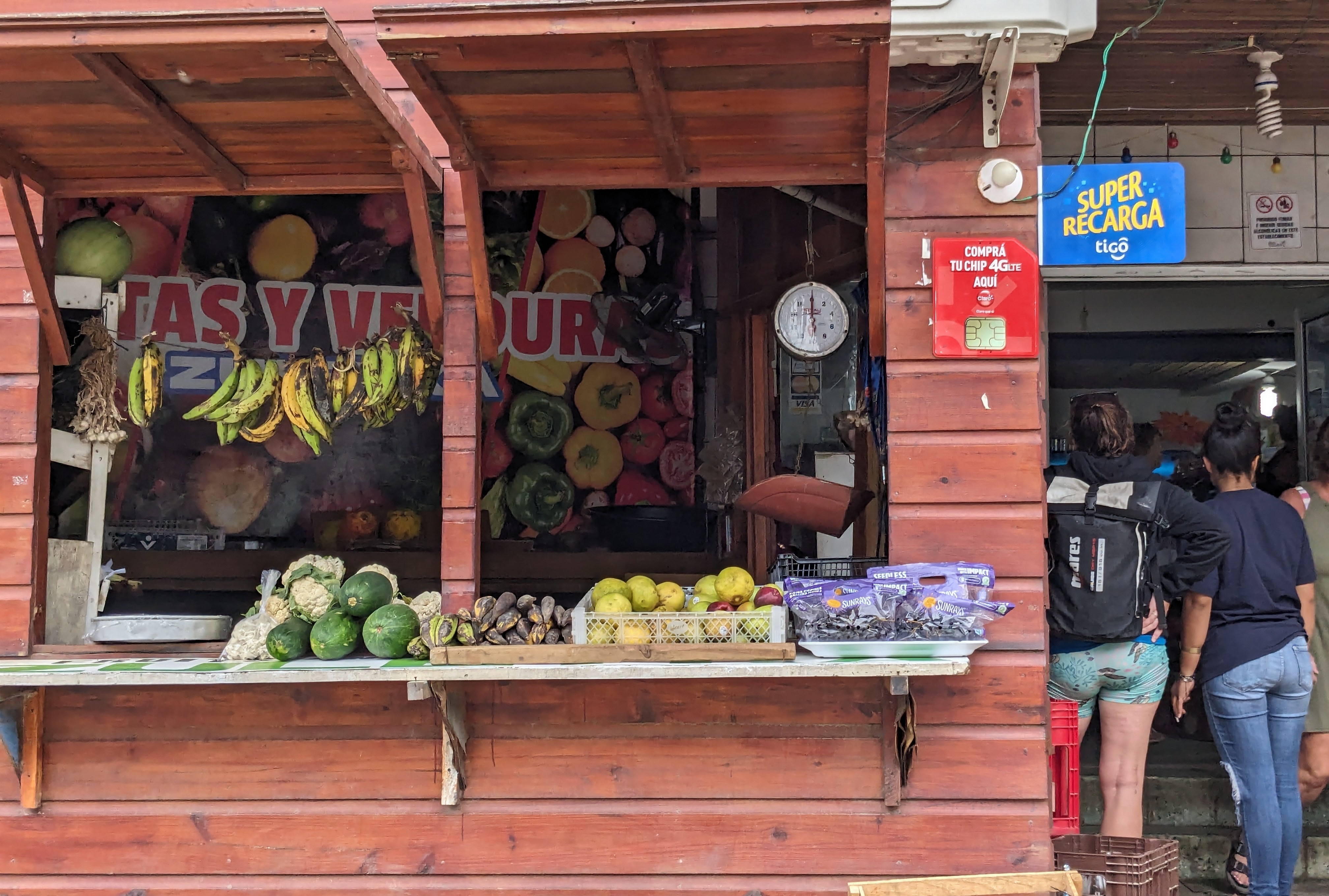
We encountered roadside vendors selling fresh fruit and other wares, and we saw local shopping centers, and even a casino!

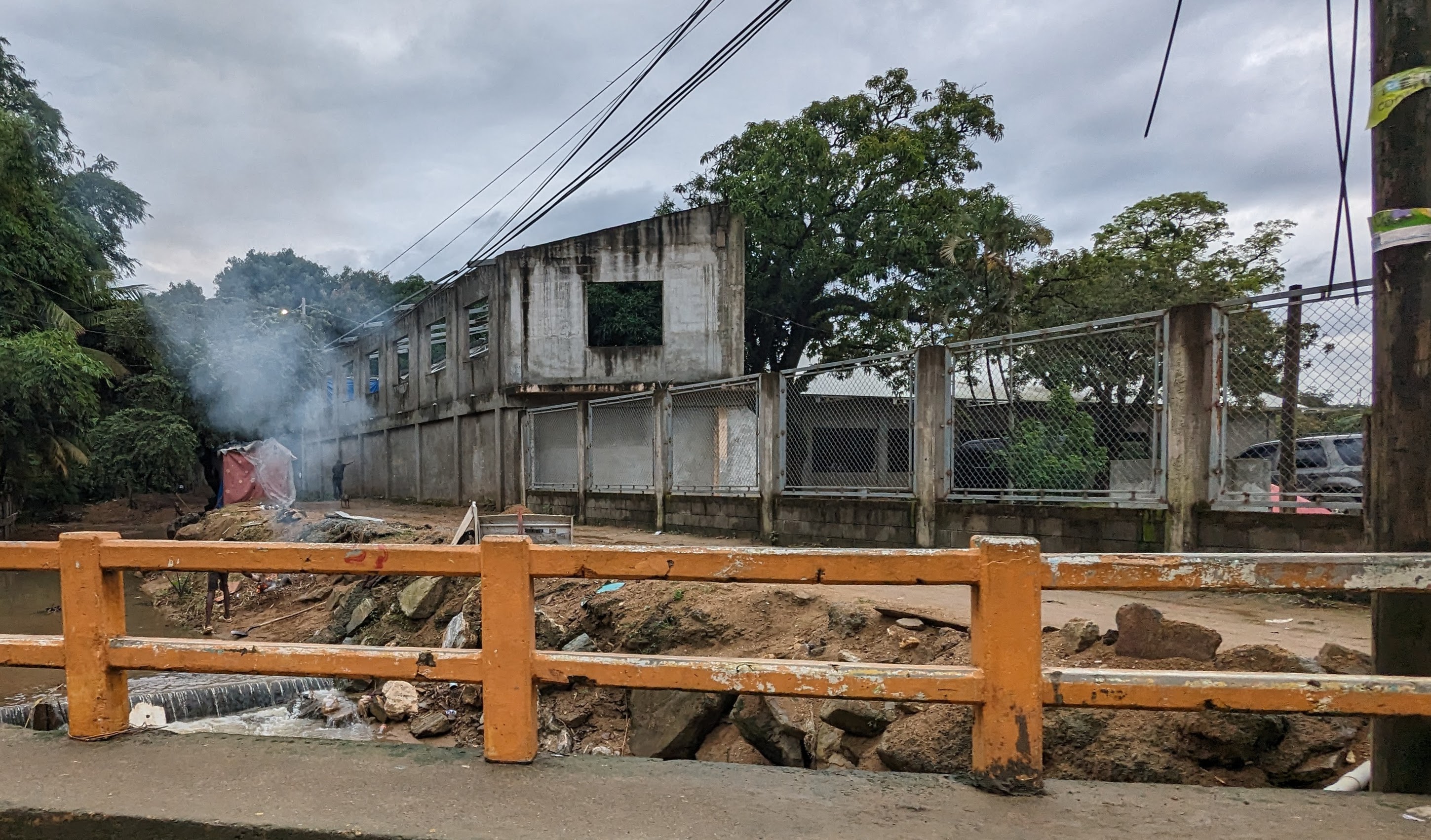
We turned off the main highway and followed dirt roads to shorelines devastated by recent storms. Some buildings and playgrounds have not been rebuilt since the last hurricane passed through. We drove through small local communities and slowed to allow groups of young children to move out of our path. They smiled, and we waved.

A Story of Growth and Development

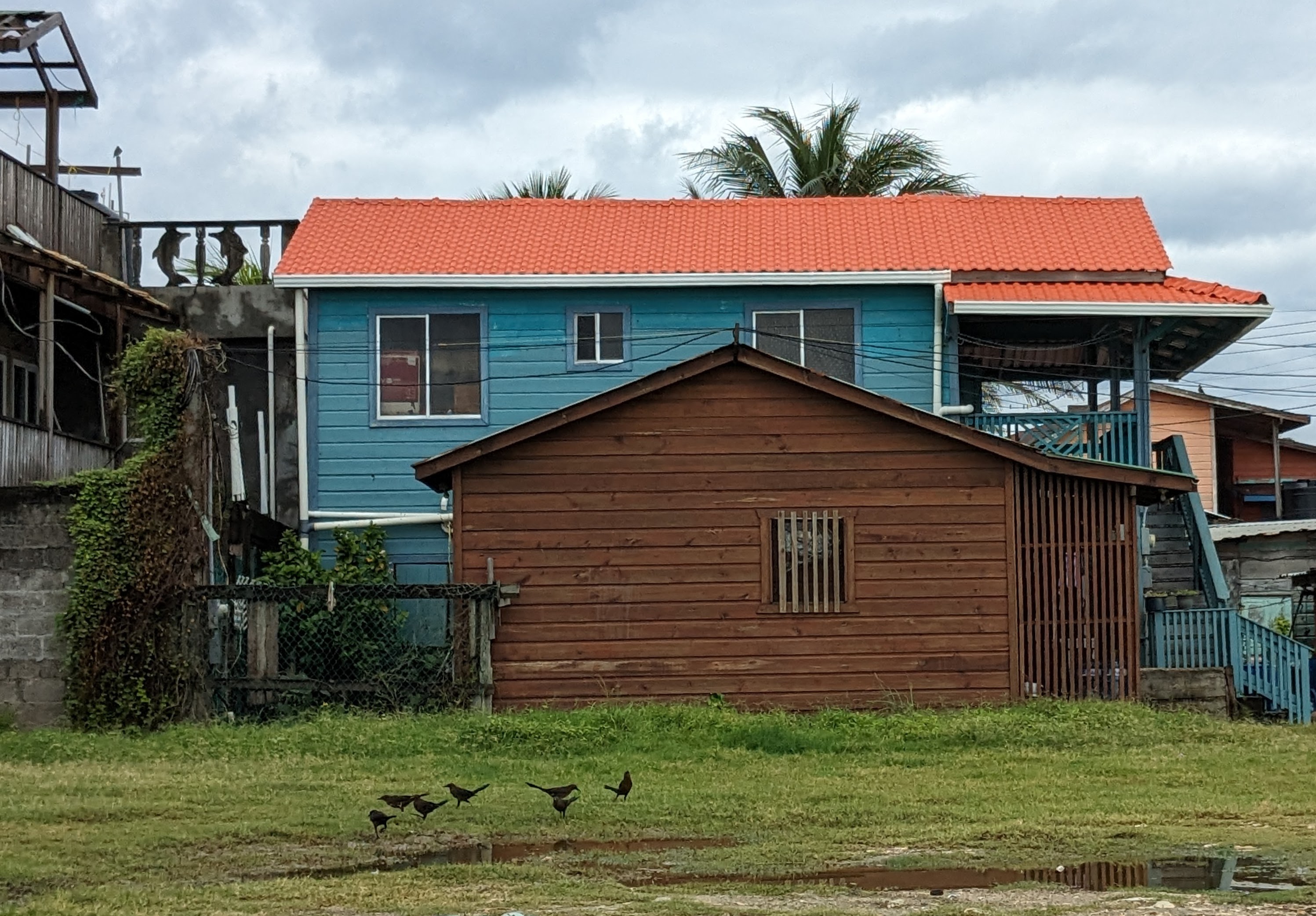
There is evidence of growth and development everywhere, from road building and infrastructure to modern offices, warehouses, shopping areas, and condos. But much of the island is old, and many of its residents are poor. Many homes and buildings are in need of repair.

Jorge pointed out an impressive columned mansion that belonged to Roatan’s former Mayor Dale Jackson, an island native who amassed a fortune from his fishing business. He also showed us grocery stores and shopping centers, factories, homes and apartments, and tumbling-down old structures that seem beyond repair. He showed us schools and children at play, and we drove through neighborhoods and business districts where people invariably greeted us with smiles.

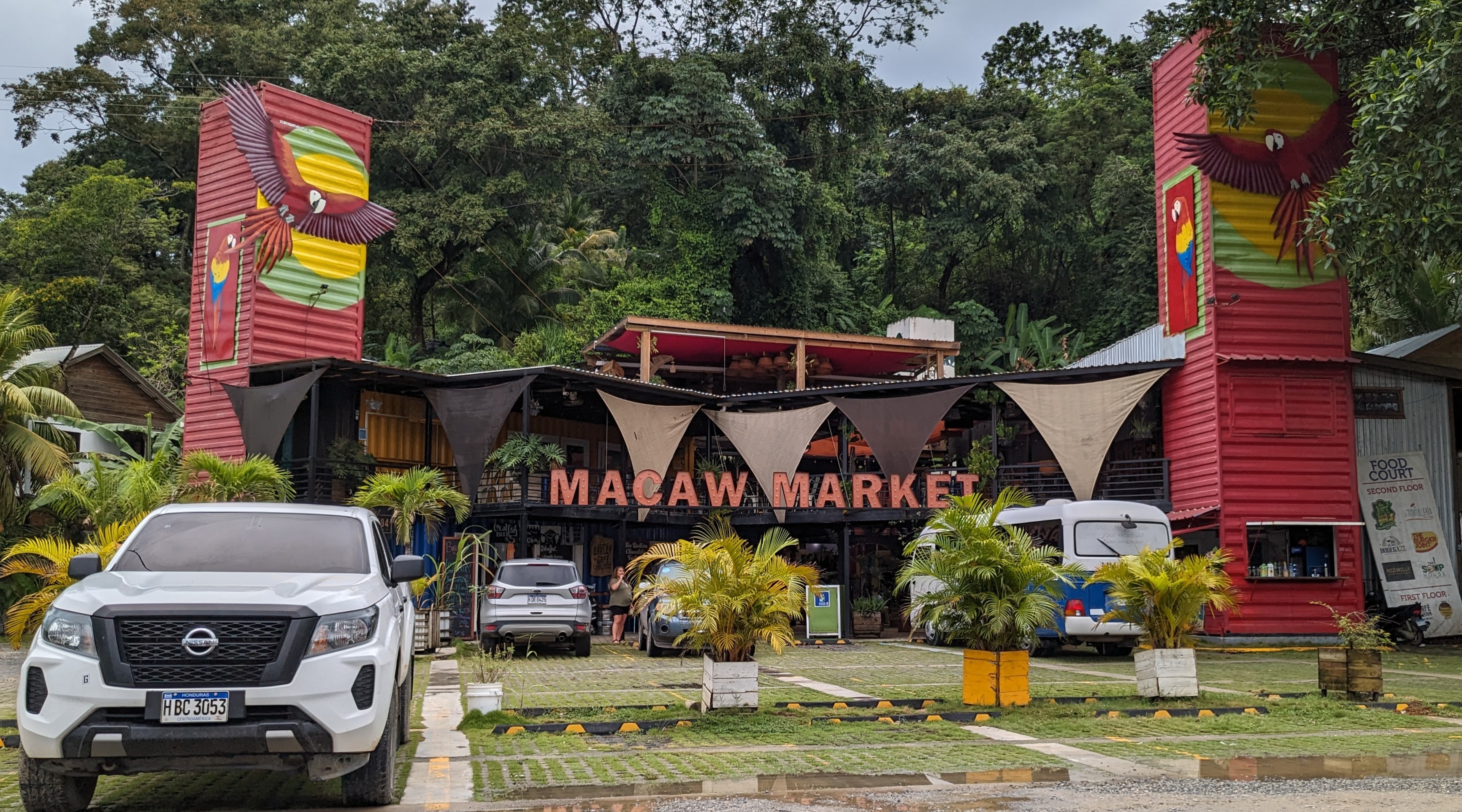
We drove past modern “mini-malls,” and stopped at a small shopping center to visit a chocolate factory. I was enthralled to see how cacao beans are processed. I followed the multi-step process from bean to chocolate bar, and watched as cocoa butter was processed in a blender. The scent alone made me want to taste the chocolate. We were offered samples and could not resist purchasing several different varieties of Honduran chocolate to take home.

Jorge told us about his family, about the realities of life on a small island, about the Honduran economy, taxes, government, medical care, education, and business. We asked how life on Roatan differs from life on the mainland. He smiled and explained that living on the island is good, despite the hardships. Life on the mainland, he said, is “not so good.” We asked about his past and his hopes for the future. Although medical care is available on the island, he noted, residents must travel to the mainland for a complete physical exam. He told us he had just been to the mainland for his annual physical, and he was happy to be home with a clean bill of health.

He gave us each a paper bill — Un Lempira — each worth about four U.S. cents, explaining that Honduras recently phased out its coins. Today all the currency is paper. I bought a keepsake magnet that shows some of the now retired coins.

We asked about local housing and food. Jorge pointed out some newer condos and vacation homes under construction. We wondered about the pricing. Suffice it to say that waterfront properties are expensive, as in any prime vacation market, and larger homes on waterfront property can range into the millions in U.S. dollars.

Jorge answered all our questions, and we gained a better understanding of the Honduran economy, local issues, and island culture than we could have learned from a guidebook or a printed brochure. We tried to answer his questions about our life in the United States as honestly as he had shared information about his homeland.

Feasting on Island Specialties

Then, Jorge steered us to a beachside cabana with a rustic bar and a few picnic tables. We sat looking out at the gentle waves and watched children and adults play in the surf while we sipped cooling drinks and asked more questions about life in Roatan. Jorge talked about his family, his wife, and his sons who work in the construction field.

It was a peaceful interlude. I had not realized that there is so much for tourists to see and do on the island. I was more than pleased that we had this relaxing time to share with Jorge.

I asked about restaurants and his food favorites, and a few minutes later, he stopped his car outside a bustling food bazaar. Jorge left us for a few moments, quickly returning with what he called the “Honduran cheeseburger.” It’s delicious! A soft warm tortilla filled with beans, cheese, and a dollop of sour cream. The humble baleada may also be filled with additional ingredients — scrambled eggs, grilled meat, onions, or avocado, upon request — to make this simple street food a hearty breakfast or a tasty lunch treat.

The next time you visit a foreign destination, take the time to interact with local people. All-inclusive resorts, luxury hotels, fine dining, and secluded beaches certainly have their place, but it’s frequently the unexpected encounters with ordinary residents that leave the most indelible impressions on the heart and mind. That’s the gift that Jorge gave us on this tour.

Now, About Lunch

Jorge had not forgotten our earlier request for a simple lunch. After confirming that we had little interest in cuddling a sloth or interacting with parrots, he steered us toward French Harbor, a well-known and popular part of the island. He promised us a view, and a meal, that we would remember. After only a little coaxing, he agreed to join us.

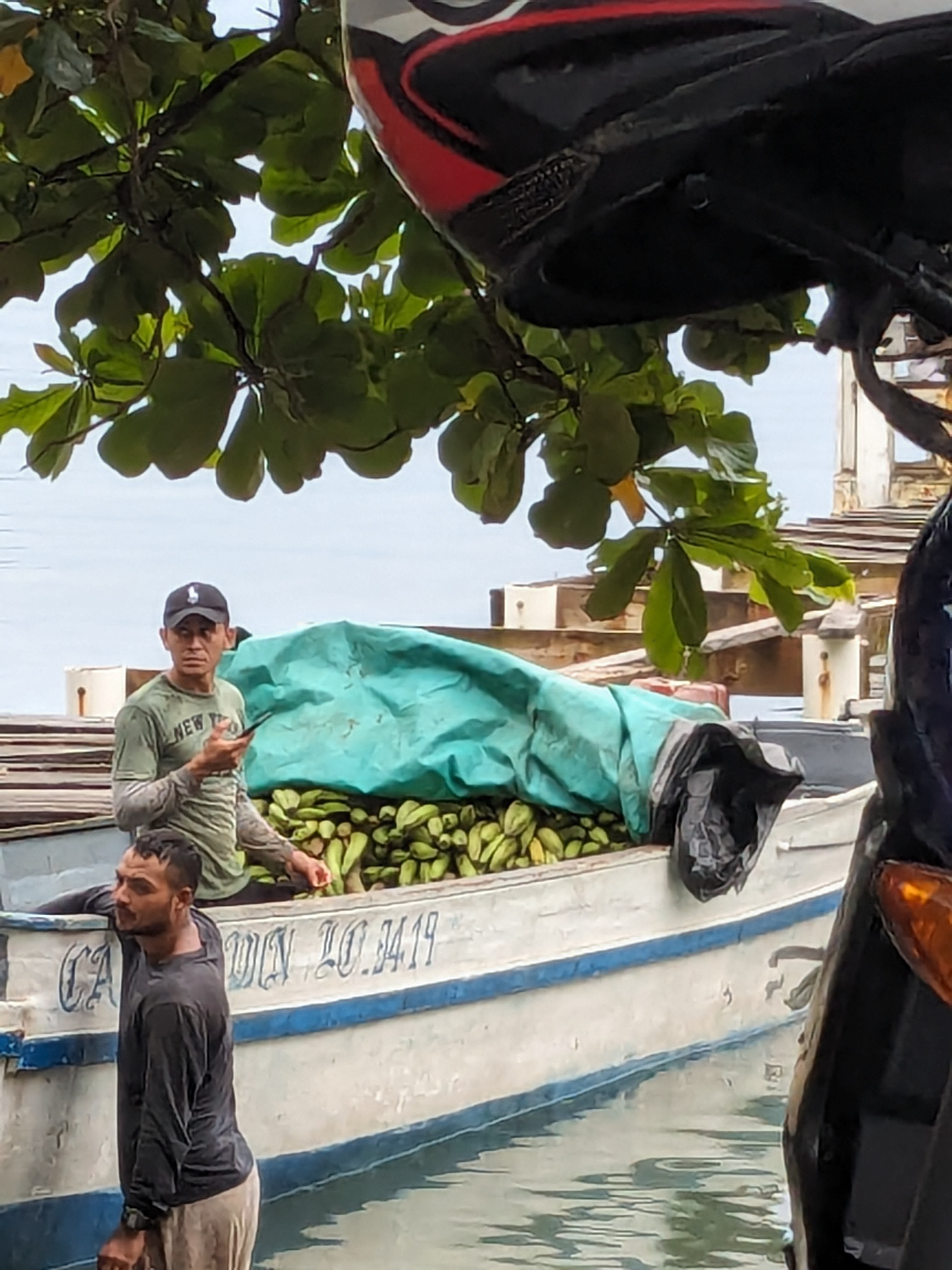
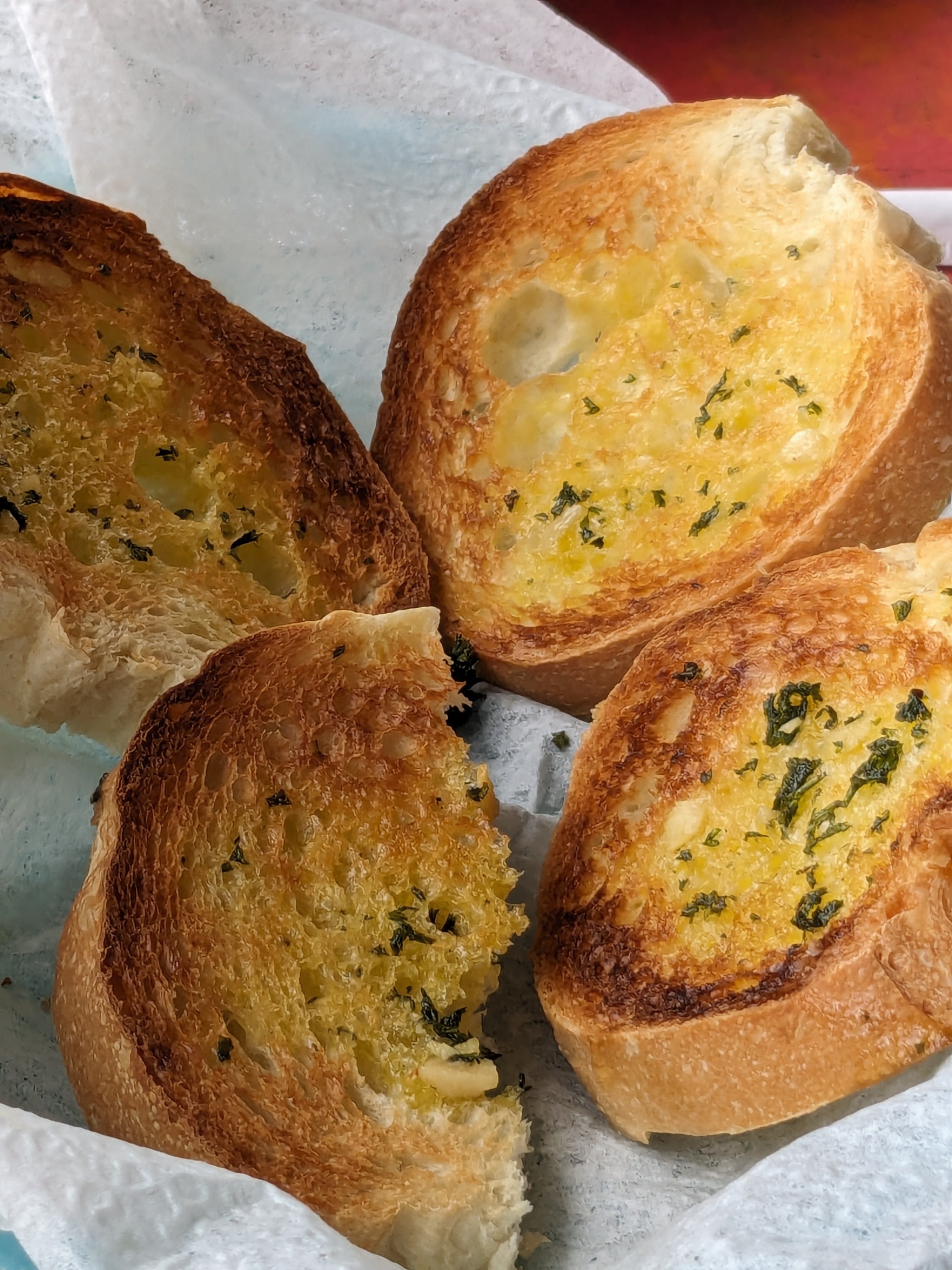
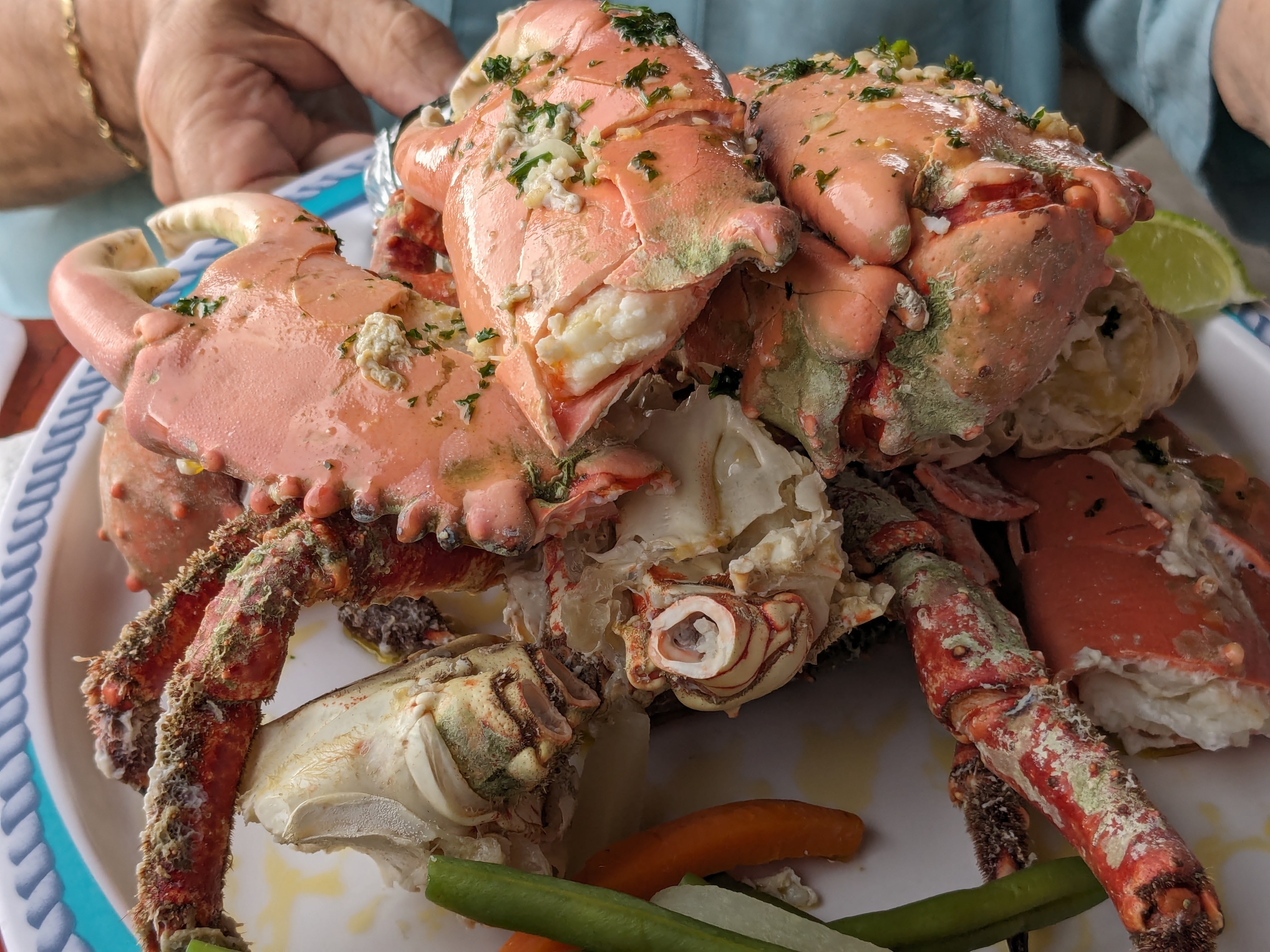
Gio’s is a popular and well-known Roatan establishment that has operated in the same location since 1994. Tourists and islanders alike tout it for the friendly service, the food, the panoramic views, and the laid-back atmosphere. The specialty of the house is Spiny Caribbean King Crab, so that’s what my husband ordered. I ordered what I thought would be a sampler plate of fried plantains and other appetizers. We planned to share. Jorge chose beef and vegetables (perhaps, because he lives on the island, he has his fill of seafood and fish?) In any case, we all were happy!

The meal served as a memorable conclusion to our day on the island. With full bellies and more-than-satisfying memories of time spent on an island we now know and understand a little better, we were saddened at the thought of saying goodbye to a new friend. He dropped us back at Mahogany Bay. We could not say goodbye, however, without snapping a few pictures and exchanging heartfelt hugs.

We carry the memory of a few hours spent in Roatan with Jorge as one of the true pleasures to be found through travel.

A Trifecta of Shore Excursions

My husband and I chose to celebrate our late January anniversary this year aboard ship. Our itinerary, sailing from Galveston, was to ports we had previously visited, but we were eager to warm our bodies and refresh our spirits during a brief seven-day getaway.

On this voyage, we enjoyed beach time, beach cocktails, and beach vendors in Costa Maya, the first port we visited in the Gulf of Mexico. It was a perfect day, and it fulfilled our need to dip our toes in the water and feel the sand beneath our feet. We spent our hours ashore doing exactly that. We snagged comfortable loungers, enjoyed a few cool libations, and watched people having fun. That was our brand of enjoyment — doing nothing other than enjoying the people around us, and savoring every moment of sun and warmth. I even succumbed to the temptation of a henna tatoo!

Then, we returned to our floating resort hotel for dinner and evening entertainment.

Tabasco: How Hot Is It?

Earlier, in October 2023, I toured the Tabasco plant, home of the world’s best-known hot sauce. The history of The McIlhenny Company which produces the Tabasco brand is fascinating. Still a family-owned business after more than 150 years, the company ships its products from a small factory on tiny Avery Island, Louisiana to 195 countries worldwide.

Cozumel was the final port of our seven-day itinerary. There, I once again encountered Tabasco, this time in the form of a culinary adventure I couldn’t resist.

I had booked the “Chef Maestro Tabasco” excursion, a culinary adventure I couldn’t resist, through Princess. Following my visit to Avery Island, the “home” of Tabasco, I was eager to learn more about cooking with the hot sauce.

This excursion did not disappoint!

That little bottle of red pepper sauce has been a staple in my kitchen for many years, but I have seldom used Tabasco for food preparation in my home. Instead, I have typically placed it on the table at casual gatherings, allowing guests to ramp up the “hot” to their own preferences. We were somewhat surprised that on this Gulf of Mexico sailing, there was also a bottle of Tabasco on each dining table, along with the salt and pepper shakers!

During my Louisiana trip, I was able to sample food specialties associated with Cajun history, culture, and tradition. I learned how the flavors of simple foods are enhanced by various herbs, spices, peppers, and sauces. I learned that hot sauce can be flavorful as well as fiery, and that spice can elevate common ingredients to levels of haute cuisine.

Feasting on Entertainment

I also realized that the hot red peppers used to create Tabasco sauce had most likely been brought back to Texas and Louisiana by soldiers who fought on the nearby Mexican mainland during the Mexican-American war. Cozumel is not far from the Mexican state of Tabasco.

As it turned out, this cooking excursion was one of the highlights of the voyage, both for the foodie experience and for the pure fun of it. Who would pass up a culinary adventure that includes Margaritas as well as tips for cooking with Tabasco?

We were entertained from the time we entered the second-floor demonstration kitchen at Cozumel’s Hotel Blu until the moment we were ushered into a waiting cab for our return trip to the pier. At the outset, we donned tall, white, pleated-paper chef’s hats as we awaited further instructions.

Our chef for the day, Luis Esquivel, was personable and enormously engaging — full of energy, wit, talent, and knowledge.

Let the Cooking Begin

The class may have been two-thirds “show biz” to one-third serious food preparation, but it was nonetheless informative. Chef Luis introduced us to his assistant, Antonio, and to the distinctive flavors of Mexico with an island twist. We learned how to adjust the spice to our personal preferences, and we learned that hot, spicy dishes can be tempered with cool or creamy sauces and tamed by accompanying drinks. These lessons returned with me to my kitchen.
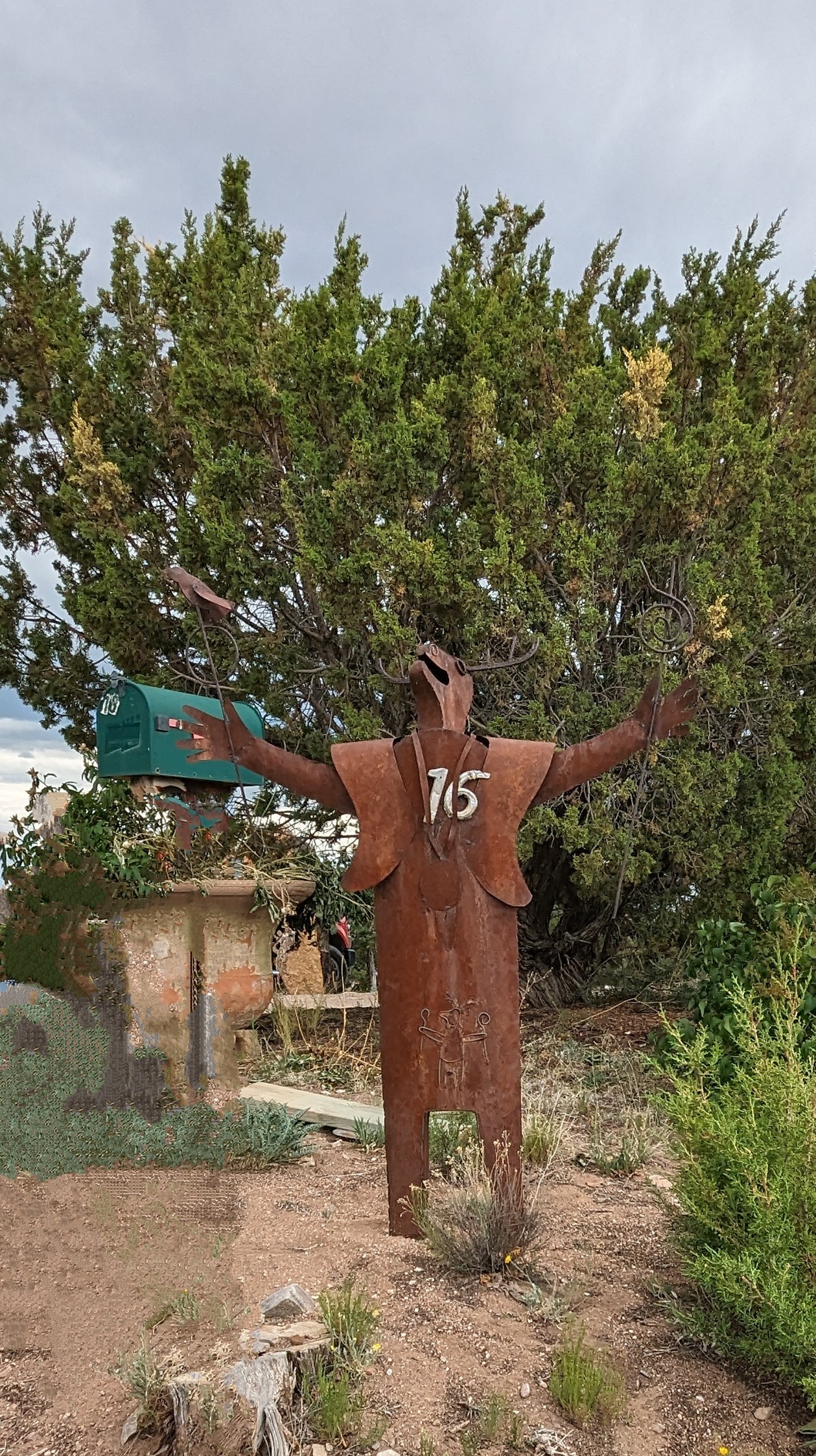
Drinks flowed freely throughout this lighthearted cooking demonstration. The first question put to each of us was “Margarita or Pina Colada?” With that, we took our places at our assigned cooking stations where ingredients had been laid out for the dishes we would prepare.

Floor-to-ceiling windows framed a view of the blue sea beyond and the hotel’s dolphin pool just below. We were tempted to simply sip on our Margaritas and watch the dolphins frolic, but there was serious food prep to be completed. Chef Luis and his sous chefs tried their best to keep us on track.

We first prepared a simple shrimp cocktail, with fresh greens, boiled shrimp, lime juice, cocktail sauce, and Tabasco to taste. It was to become the first course of our dinner, so it was put aside to chill.

The learning experience was underway.

The first order of business was to identify the ingredients and discuss the flavors — cubed pork, sliced red onion, slivered bell pepper, Tabasco sauce, Worcestershire sauce, peppercorns and a clove, vinegar, catchup, cubed sweet potatoes (for dessert), shrimp, fresh lemon, raw sugar, freshly ground peppers, and other spices. We did not yet have any idea of the dishes we would be preparing, and we had little time to relax before the chef and his assistants lit the fires under our personal gas burners.

After another sip of Margarita, we set to work under the watchful eyes of Antonio and Chef Luis, who kept up a running commentary about how to do what we needed to do. We learned a technique to “quick pickle” onions that would accompany the pork dish, and we were instructed about easy ways to combine common ingredients to produce unusual flavors. We learned to use intense flavors and hot sauces judiciously.

A Frivolous Approach to Serious Cooking

We prepared simple, no-fuss dishes, perfectly suited for recreating at home. We were supposed to receive the recipes and ingredient lists by email. Alas, ours never arrived, although we have the photos and the memories. We might not be able to reproduce the menu exactly, but we feel relatively confident about how to recreate the savory flavors of the meal we enjoyed. It all begins with fresh ingredients. And, of course, Tabasco!

Not only did this cooking interlude provide us with an introduction to Mexican-flavored dishes, but it was high-level entertainment. It was one of the most informative and enjoyable cooking experiences we can remember. We prepared and plated a shrimp cocktail, a pork entree, and a yam dessert with sweet syrup. We consumed our fill of tasty alcoholic or non-alcoholic beverages as well. Plus, we were picked up and returned to the ship’s pier, all for a reasonable fee.
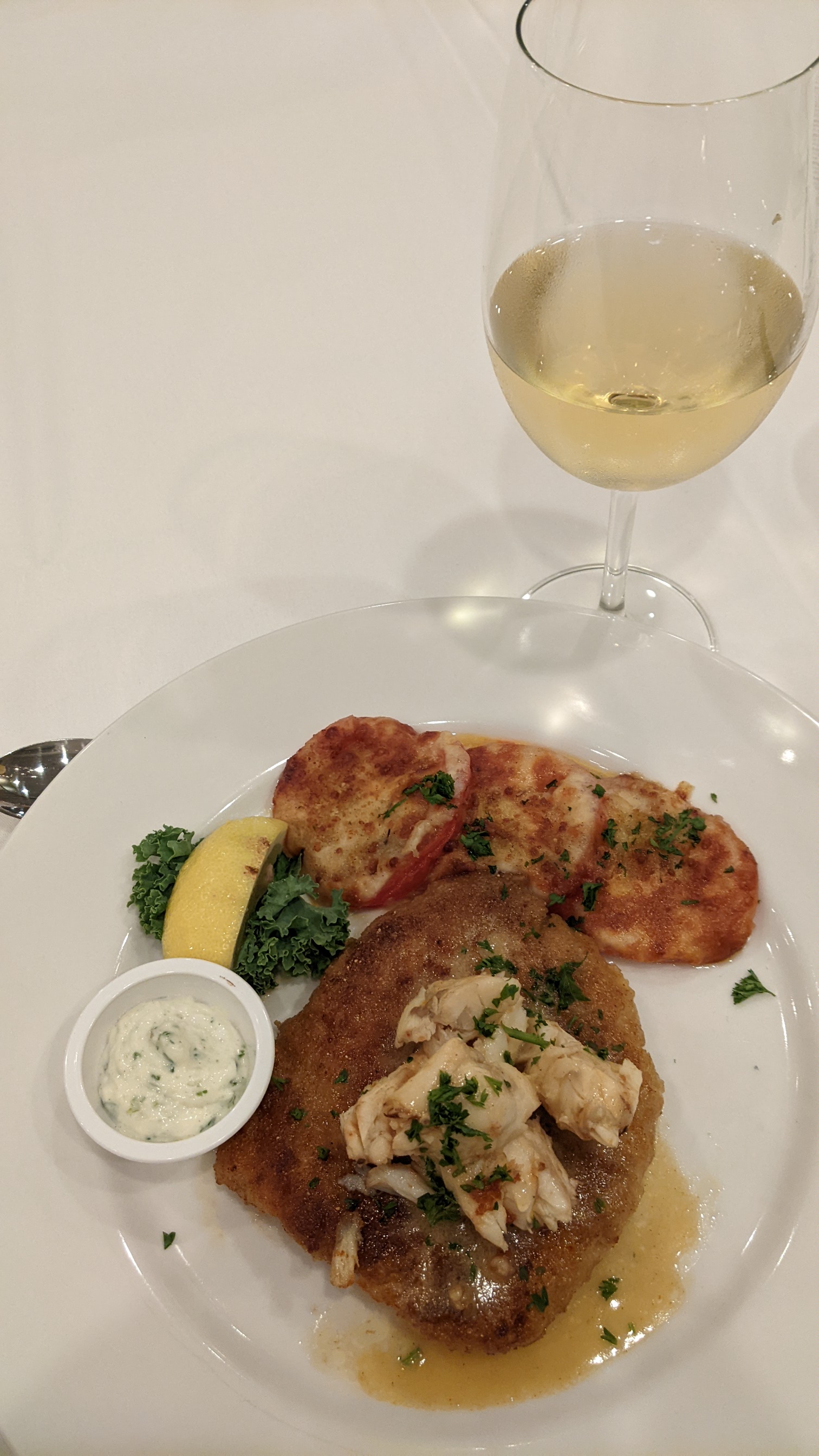
Then we moved to an adjacent dining room to consume what we had created and thoroughly enjoyed getting to know our fellow students. We drank a final toast to our accomplishment with a frothy after-dinner cocktail, prepared by Chef Luis.

The Tabasco cooking experience provided us a memorable day ashore. We gained a new appreciation for hot peppers and flavorful cooking in the region where those hot peppers originated. We left with a desire to recreate the experience for our friends and neighbors at home. And we have put some of the tips we brought home to good use.

This pampering “getaway” cruise was focused on food and relaxation. My next post, however, is about a much different excursion during our port call in Roatan, the small island off the coast of Honduras. Roatan is known for its reef diving and its remarkable clear water. We discovered much more during our island tour with a private guide.

I explain what was so special about our day on Roatan in Uncovering an Island‘s Hidden Treasures, scheduled for publication next week.

Follow me to receive email notifications about that experience and about future travels. I hope you’ll continue to join me for good food and memorable times in faraway places.