How Color Can Define a Culture

It was hard work -- for the women and the men -- but it was the price of freedom in the early Gullah Geechee known as Pin Point, near Savannah.

Haint Blue

It’s a paint color, a pale, watery shade that seems somehow imbued with sky, water, serenity, and the hopes and dreams of an entire culture. It’s traditional for the Gullah Geechee inhabitants of Georgia, the Carolinas and the sea islands that extend along the Eastern seaboard all the way to northern Florida. These people were transplants from western Africa, primarily Angola. For them, the color blue was sacred.  

Indigo bottles decorate a tree at Pin Point Heritage Center,
One of the many variations of Haint Blue colors a door at Pin Point, an impressive Gullah Geechee Heritage Center only about 11 miles from Savannah. Also, the deep indigo bottles on the tree are a reminder of the heritage of the hue.

In their native land, and also in the new world as enslaved people, they worked indigo plantations. The distinctive blue dye derived from indigo plants was used for textiles and was also adopted for home furnishings and décor. The Gullah people frequently painted the trim on their dwellings or the ceilings of their porches the distinctive shade known as Haint Blue.  Today, you’ll spot the color as building trim on small coastal cottages, and as the accent color on larger city dwellings along the Eastern Seaboard from the Carolinas to Florida as well. The blue that originally was derived from the Indigo plant has become an international favorite, and is a highly popular choice for home decor, particularly along the coast.

It’s a color that has also graced the porch ceilings of my homes — from Maine to Texas, and now in Arkansas — since I first learned about its history and its significance. It is said to ward off evil spirits. It is also believed to deter pests, particularly flies and mosquitoes. For those reasons alone, I would have chosen it, but the color is also calming and just unusual enough to appeal to me.  

Besides that, it offers one more chance to tell a good story! I learned more about Haint Blue and its American roots during a trip last fall to Savannah and Tybee Island, Georgia. 

The History of Haint Blue 

In the early days of the American Colonies, the enslaved peoples from western Africa also brought with them the indigo seeds that thrived in their home countries. They grew well in the marshy sea islands along the Atlantic coast and the blue dye derived from the indigo plant became a cash crop for plantation owners, prized by the British in both the Old and New Worlds. 

That distinctive blue retains its significance, although it appears today in a multitude of shades, from deep cobalt to a pale robin’s egg tint, from vibrant turquoise to a milky mixture of sky and sea with hints of grey or green. This historical affinity for blue is evident throughout the Low Country. 

The African slaves toiled over indigo, along with cotton, rice and, later, tobacco. Following the Civil War, Gullah populations settled in communities along the coast, subsequently beginning the tedious job of “farming” the marshes for shrimp, oysters and crab. They also planted fruit trees and small vegetable gardens. Interestingly, it is the Gullah culture that can be credited for some of the more popular “Southern food” that we enjoy today.   

The long, narrow lots fostered a sense of community for the  freed slaves.
Deemed unsuitable for wealthy Savannah buyers, former slaves pooled their money to buy the unconventional lots.

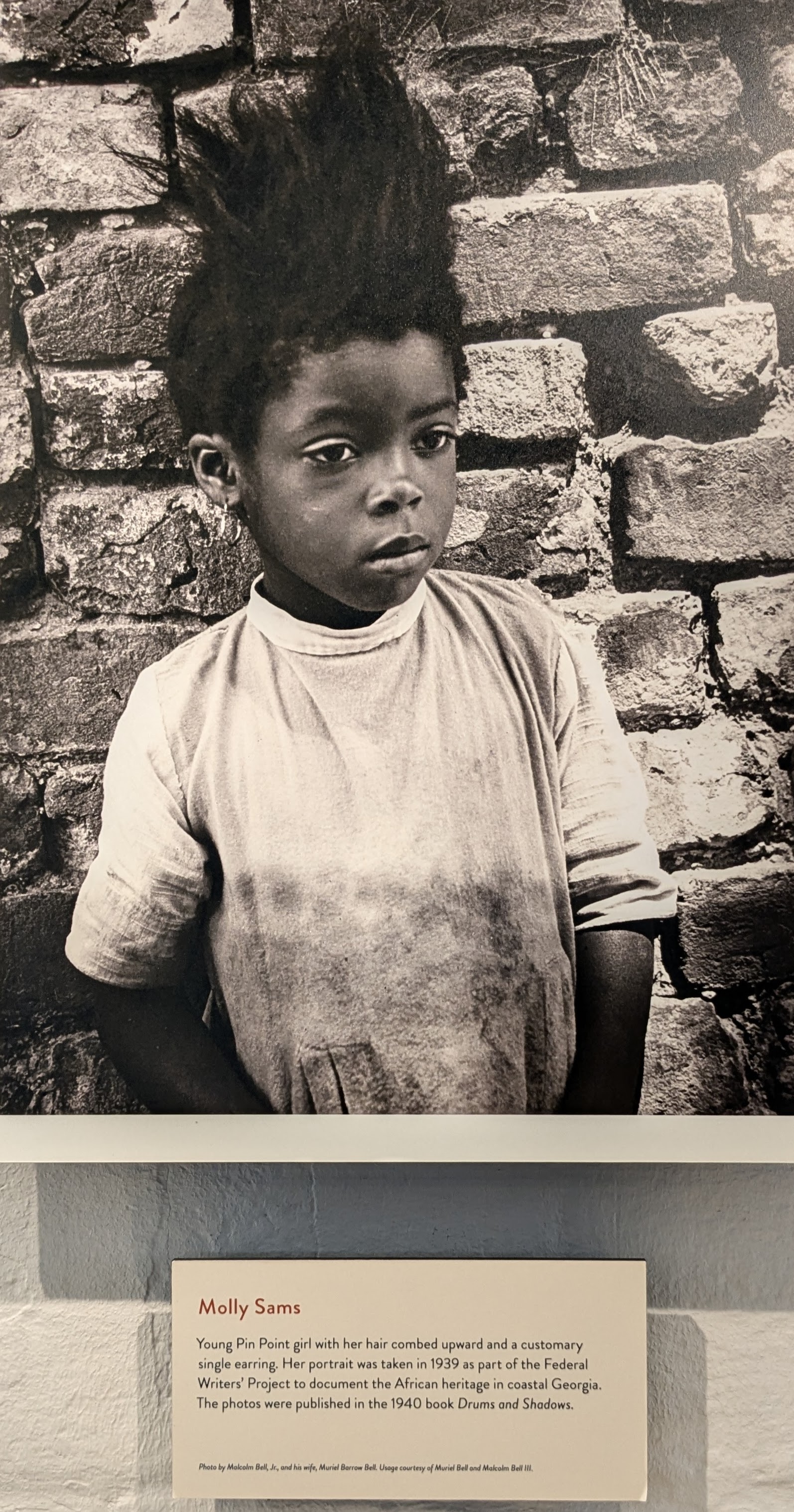
Waterfront property not far from Savannah that had been owned by Judge McAlpin as part of the Beaulieu Plantation was subdivided and sold to wealthy Savannah residents. Less-desirable marshy lots were made available to freed slaves who pooled their money to acquire long, narrow plots with limited access other than by boat through the marshes. The community of Pin Point was founded in 1896, and today it survives as the only Gullah Geechee community along the Atlantic coast that is untouched by commercialization.

Many of the newly-freed slaves remained on Skidaway, Ossabaw, and Green Islands as tenant farmers, crabbers and fishermen. However, a series of hurricanes swept through the barrier islands in the 1890s, killing many hundreds, if not thousands, of the inhabitants.    

Pin Point is included in the swath of land from the Carolinas to northern Florida designated by the U.S. Congress in 2006 as the Gullah Geechee Heritage Corridor. Late last October, during the time of my visit to the area, a bridge to one of the coastal islands a bit further north collapsed during a Gullah Geechee celebration, killing seven people and injuring many more.

Against the Odds 

From the beginning, the story of Gullah Geechee communities has been one of survival against the odds. It was a hard life, but the newly freed families “made do,” according to Gail Laverne Smith, who was born in Pin Point, Georgia.  

Smith’s recently published book, “Gullah Geechee Gal,” is a collection of stories and poems that speak of her life in the community.  

At once a personal memoir and a record of life in a post-Civil War community, this is a fascinating look at life in this unique community.

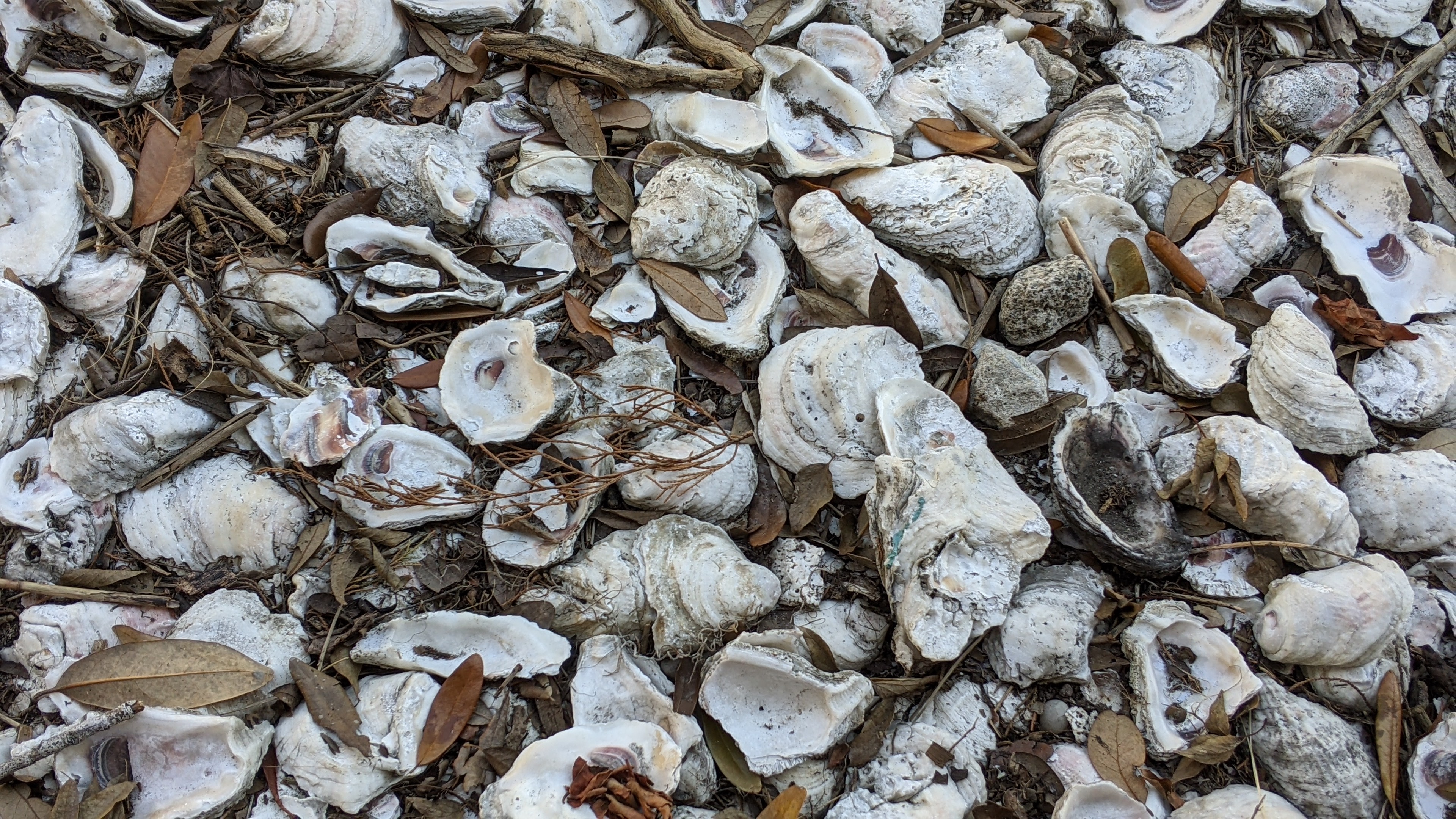
I met her at the Pin Point Heritage Museum, where she served as the Historic Interpreter. She spoke freely about her younger years as one of five children growing up in a community of fishermen, noting that they were “also skilled laborers who gathered to build homes, many of which were elevated on stilts to survive the heavy rains.” Known as shotgun houses, she explained that “when the front door opened, one could see clear through to the back of the house.” Other dwellings, including some of the first cabins in the community, were constructd of Tabby, a mixture of burned oyster shells, sand, water, and lime. A few still exist.

Today, about 100 residents still live in Pin Point, and the historic church and cemetery still serves local families. When the community was established, the first settlers built Sweetfield of Eden Church, an “offspring” of Hinder Me Not on Ossabaw Island.

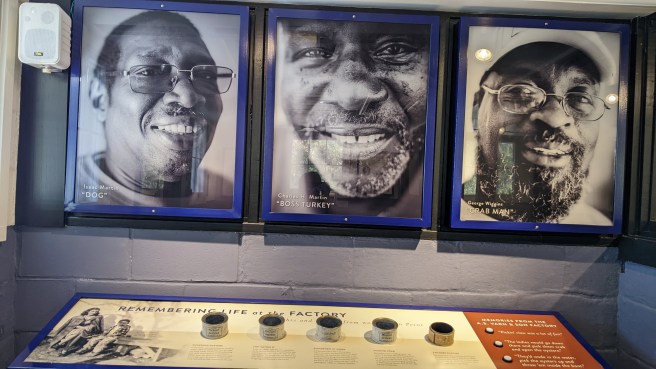
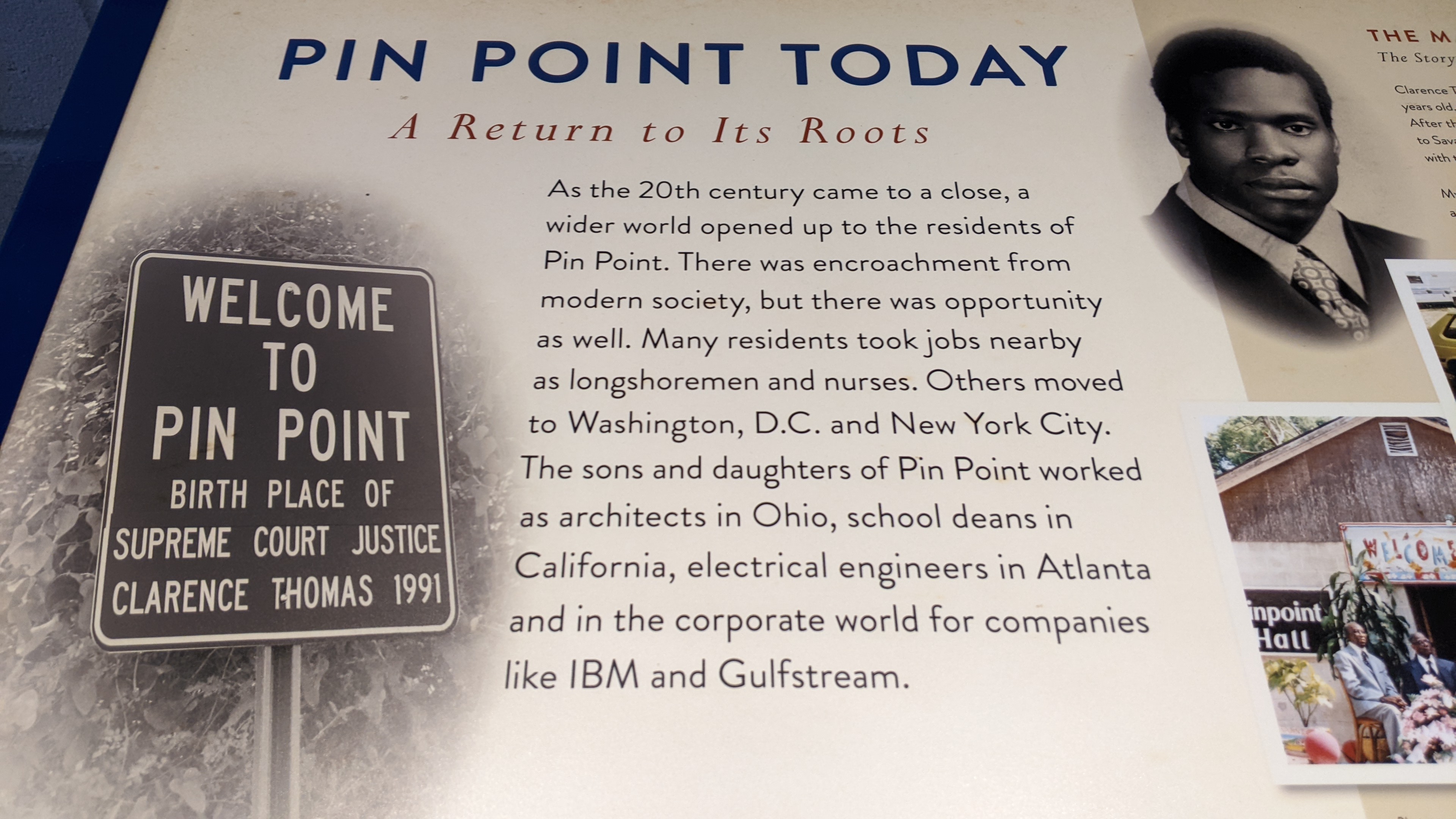
In the 1960s, according to Smith, about 400 families lived in Pin Point. Supreme Court Justice Clarence Thomas was born in 1948 to a Pin Point family. He was not only instrumental in the establishment of the cultural center, but is one of the featured former residents in the informative film shown to Pin Point visitors.  

The Pin Point Heritage Museum

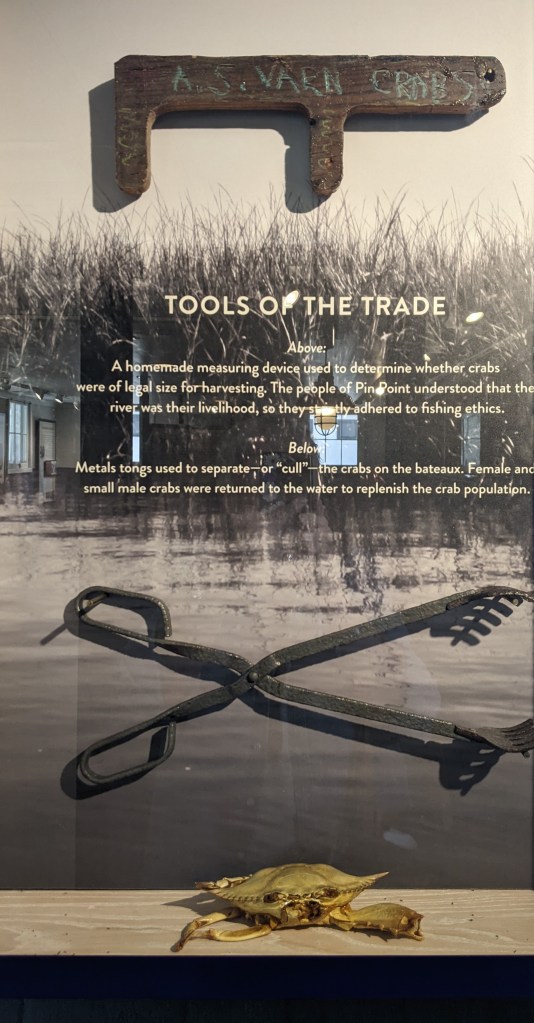
The educational center at Pin Point Heritage Museum is located in the former A.S. Varn and son Oyster and Crab Factory. Visitors are first treated to an introductory film, and then are free to explore the grounds at their own pace, learning about the factory’s operation during the years from its founding as a processing plant in 1926 until it ceased operation in 1985.  

Visiting Pin Point today is like taking a step back in time.
The Pin Point Heritage Center is located on a tranquil site not far from Savannah.

It was a strikingly sophisticated operation in its early years, with division of labor between men and women who performed the grueling work by hand. During the 1960’s, A.S. Varn was a major supplier of seafood along the Atlantic Coast. In the 70’s, however, a declining harvest and the rise of commercial fleets and factories contributed to its demise. 

To learn more about Gullah Geechee communities and culture, visit http://visitgullahgeechee.com/about/. 

Pin Point offers a fascinating glimpse of those former times, as well as insight into the Gullah Geechee community that existed there. Just up the road from the marsh, the still-existing community stretches to the site of the church and its nearly-century-old cemetery, offering insight into the past of this former freedman’s community and to the growth and development of coastal Georgia. Traveling on that isolated roadway was akin to taking a step into the past.

The newly-freed people who founded Pin Point were determined to preserve their heritage and maintain their cultural heritage and traditions. As Gail Smith explains, they have done just that. Religion and spirituality played a pivotal role in Gullah family and community life. Enslaved Africans were exposed to Christian religious practices, and they incorporated them into the traditional system of African beliefs. One of the prime values was that of community, according to Gail Smith.  

She noted that, while growing up in Pin Point, children did not talk back to their parents —obedience and respect for their elders were primary requirements, as well as a belief that the needs of the community trumped individual goals and desires. She noted that the center of daily life and activity was the family, and that religious beliefs, hard work, and respect for nature held the community together.

  • It was hard work -- for the women and the men -- but it was the price of freedom in the early Gullah Geechee known as Pin Point, near Savannah.

In her book, Smith notes: “Growing up as a little girl in Pin Point, I always felt like even though we didn’t have a lot, we always had just enough.”

She continues to chronicle the cultural history and traditional lore of her community through her stories and poems. Her willingness to share her memories with visitors to Pin Point ensures that the voices of her ancestors continue to be heard and celebrated. The time I spent with her was evocative of a lifestyle and time I previously knew little about and I am grateful that I had the opportunity to learn about the Gullah Geechee heritage. 

Celebrating Cultural Heritage

Geechee communities developed, over time, a distinctive dialect to maintain their individuality and partially confound the slave owners. A mixture of English, Creole French and some African words and expressions, the language  is still spoken today by some of the Low Country families, and it partially defines the culture, in a similar manner as Haint Blue.
Pin Point is located just 11 miles from Savannah, situated adjacent to the marsh that separates it from Moon River. It is the last surviving black-owned waterfront community in coastal Georgia, one of the distinct communities that constitutes the Gullah Geechee National Heritage Corridor, the historic swath of territory established by an act of Congress in 2006. 

That corridor is designated to ”help preserve and interpret the traditional cultural practices, sites, and resources associated withGullah-Geechee people. It extends along the eastern U.S. coast through North and South Carolina, Georgia and Florida, culminating at the site of Fort Mose in St. Augustine, FL, which in 1738 was the first legally-sanctioned free black community in what would become the United States.  
Today, the Gullah Geechee Corridor focuses on 79 Atlantic barrier islands in the designated area and certain adjoining areas within 30 miles of the coast. Traditional Gullah baskets woven from native sea grass are popular items at the Charleston market. Also, it is interesting to note that some of the typically “Southern dishes” that we enjoy today can be traced to the foods grown and consumed by the early Gullah inhabitants who not only caught fish, shrimp, crab and oysters from the sea, but also planted beans, rice and vegetables on their small plots of land.

The Gullah Geechee Corridor is administered through a partnership between the National Park Service, local governments, and cultural and tourishm authorities from the Charles Pinckney National Historic Site in Mount Pleasant, South Carolina, just northeast of Charleston. If you’re interested in the area’s history, that site is also well worth a visit.
Traveling solo can be fun when you’re old enough to be somebody’s grandmother!

I recently had an opportunity to be on the road alone — partly for pleasure, to be sure, but with a business connection. I had a professional conference to attend in Fairbanks, Alaska. Instead of booking a round-trip flight from my home in Arkansas to the conference city I opted to cruise north to Alaska from Vancouver, British Columbia. I then spent a few days sightseeing near Denali National Park, finally arriving in Fairbanks the evening before my conference began.

After many years of marriage, my husband and I are well aware that our interests, priorities, enthusiasms, and commitments sometimes differ. That’s all good, and on several occasions over the years, we have kissed each other goodbye and wished one another safe travels. It’s just the way we do things. This was one of those times.

I simply could not resist the appeal of a seven-day cruise followed by a three-day land tour to Denali National Park. My husband, for his part, was not ready to embark on another cruise so soon after our epic Antarctic adventure earlier this year. So, for 16 days, my husband and I led separate lives. In addition to a memorable vacation experience, I told myself that this particular journey could be counted as a business trip, providing valuable background for future posts about traveling solo as a senior woman. And, yes, those planned posts are in their early stages as I write this.

The cruise was truly enjoyable, made even better by spending two days in Vancouver to visit with old friends — my own superb tour guides! I found solo cruising to be totally enjoyable, and not at all intimidating. In fact, I look forward to another solo travel experience should an opportunity arise. The land portion of the trip was almost exactly as I expected. Travel arrangements for the land portion of the trip were part of the cruise package, well-planned and executed by Princess Cruise Line. Even though May is the beginning of the season in Alaska, and local staff members were still learning their specific duties, transfers, tours and accommodations were perfectly choreographed.

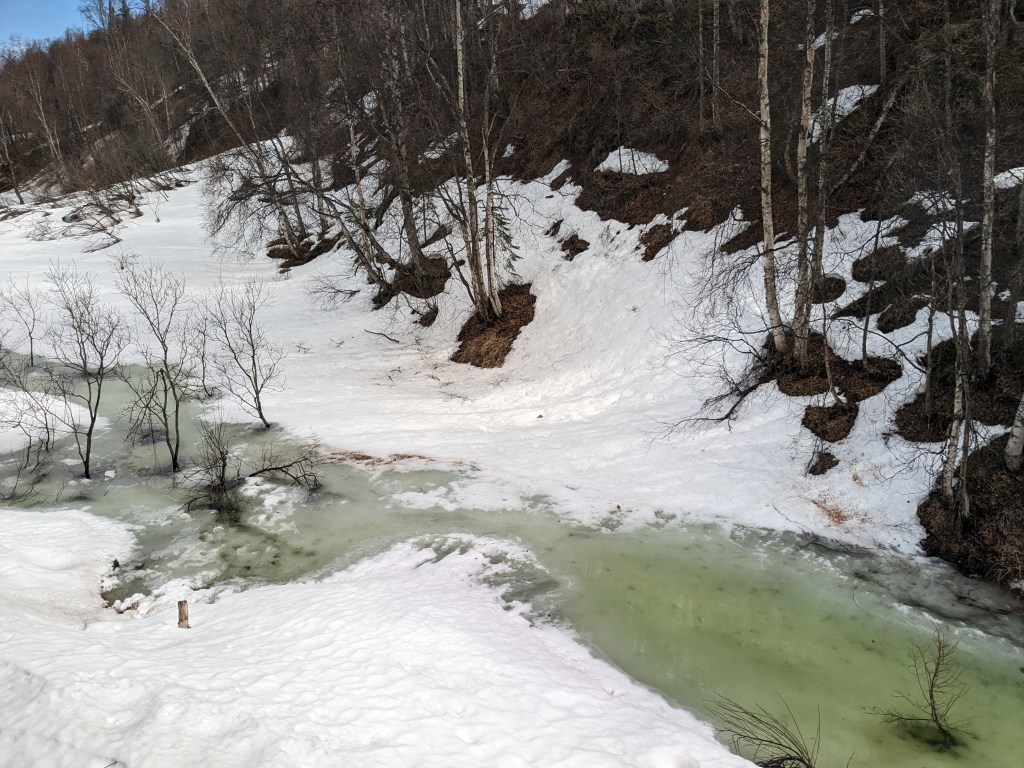
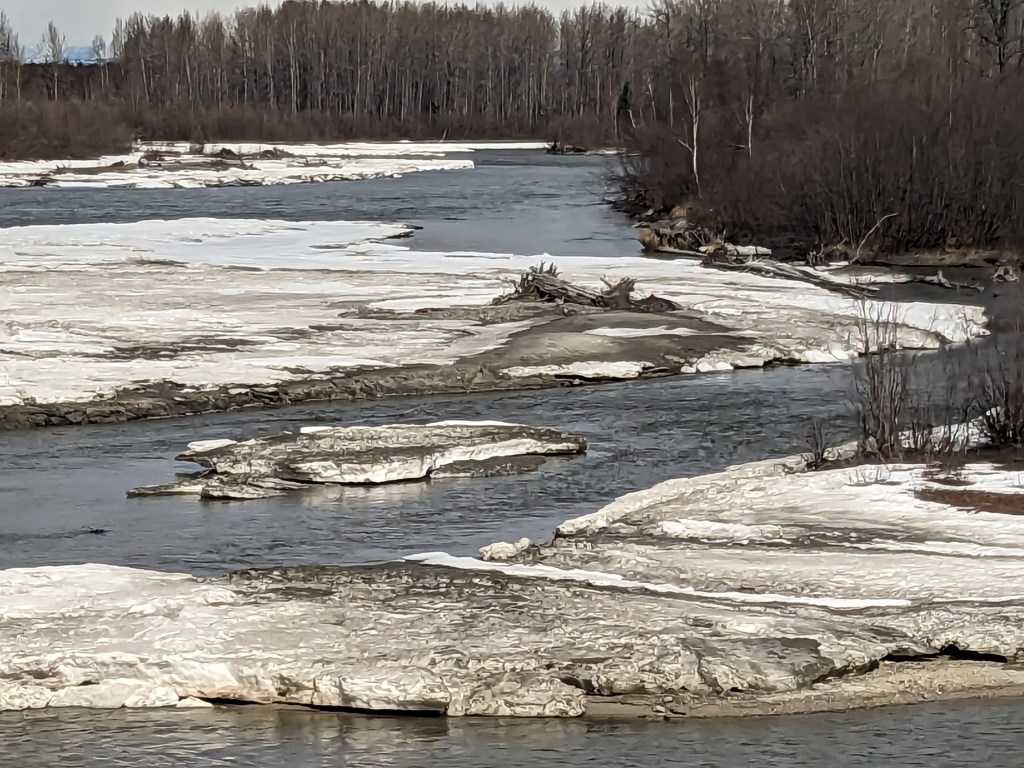
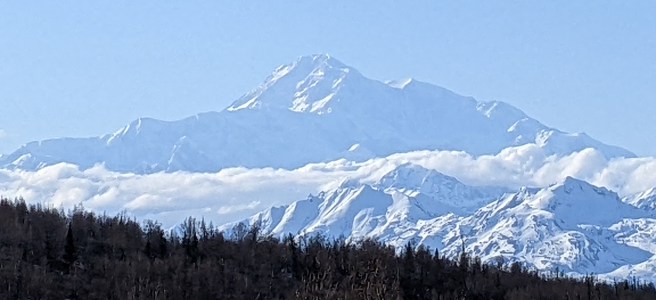
We disembarked in a grey drizzle in the port city of Whittier and boarded a bus for the trip north to the mountains and the national park, stopping briefly in Anchorage. On the way north, the scenery becomes more dramatic and our driver was happy to point out our first view of Denali in the distance. We passed through small towns, including Wasilla and Talkeetna, and viewed the still-snow-covered terrain and ice-clogged rivers. Originally named for President McKinley in 1897, the name of this largest mountain in North America was changed in 2015 to Denali. In the indigenous language of early tribes in the area, the name means “the tall one,” or “the high one.”

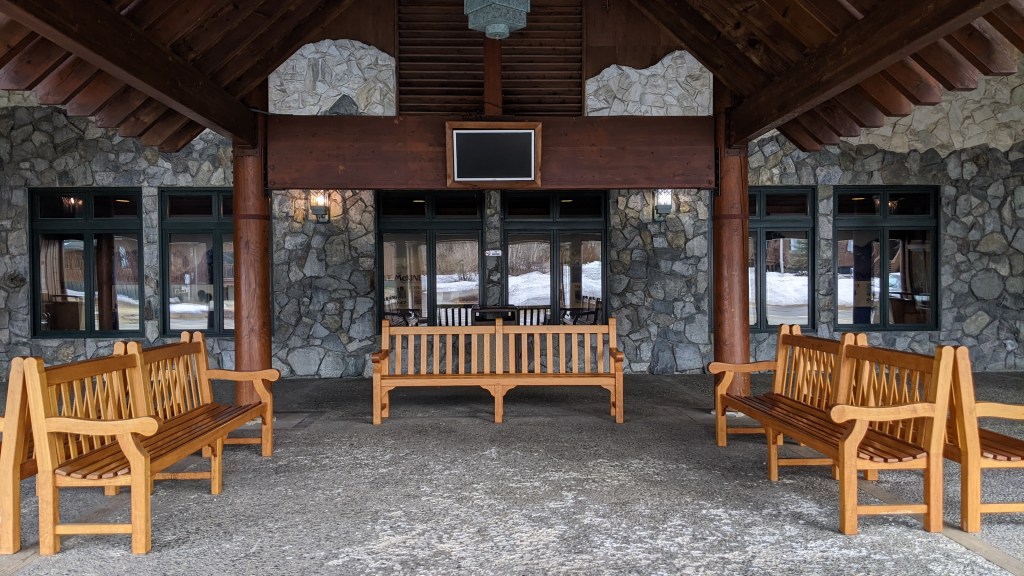
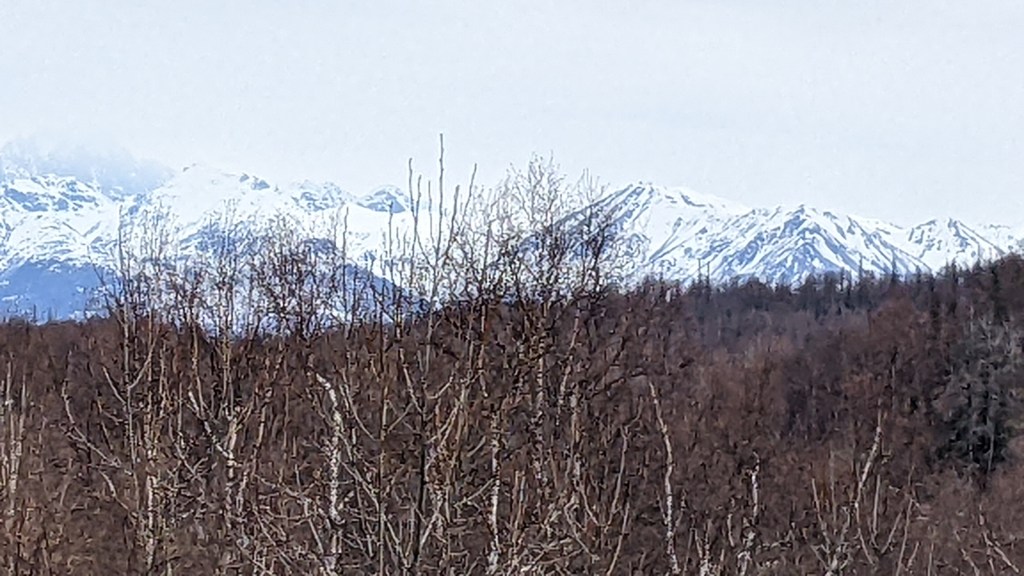
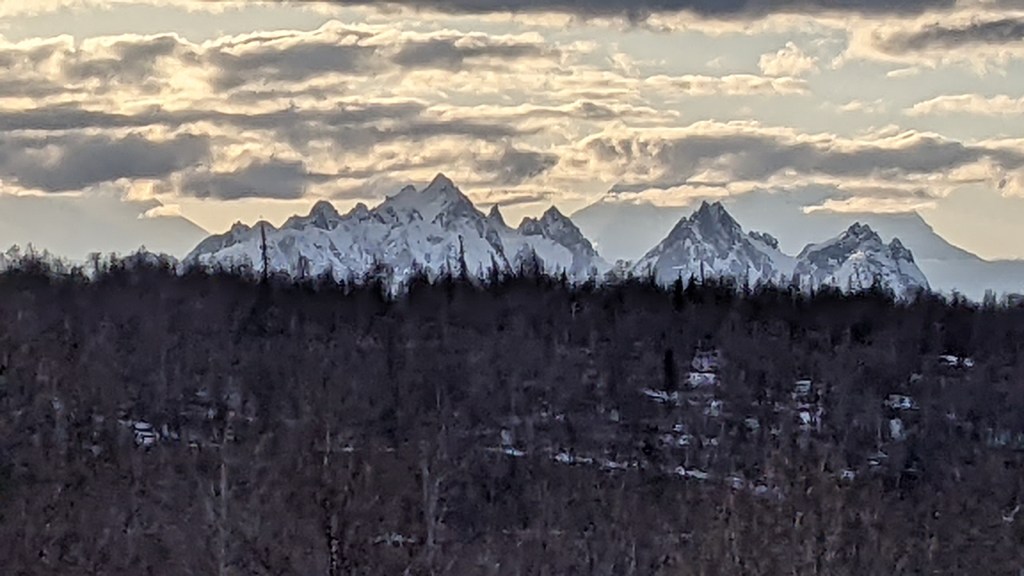
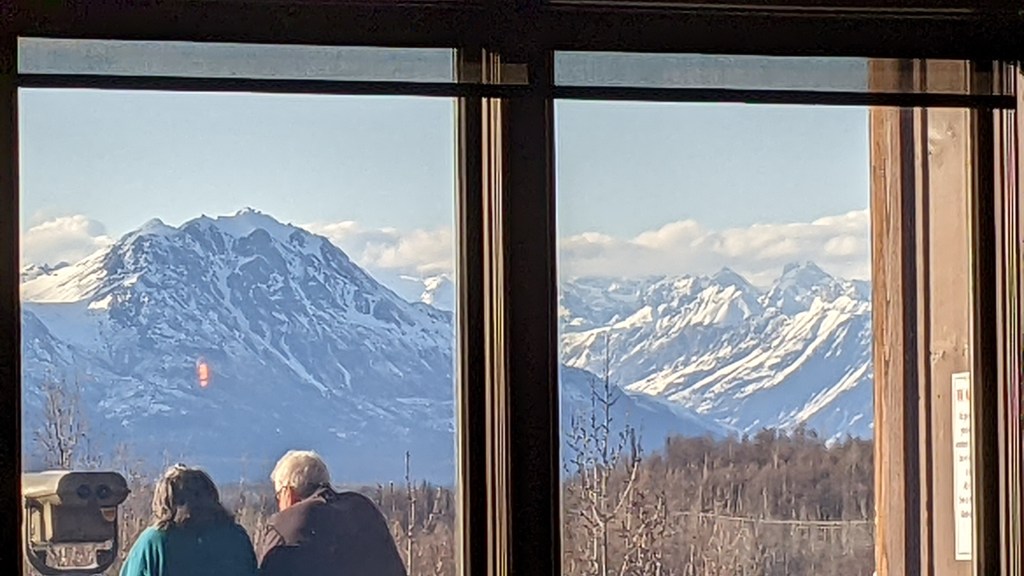
Once we arrived at the Princess Mount McKinley Lodge, a beautiful facility with a “knock-your-socks off” view, I spent my first few hours warmed by the sun on the lodge’s wraparound deck. I was enthralled by the drama of clouds which parted only periodically to provide breathtaking views of the mountain known as “the great one.” It truly is.

I snapped far too many photographs of the changing vista as the late afternoon sun sank lower on the horizon. Denali, at an elevation of 20,310 feet, dwarfs surrounding peaks, but they are not mere foothills, and they have their own allure. Finally, when the clouds seemed to be massing to surround the mountain for the evening, I decided to make my way inside.

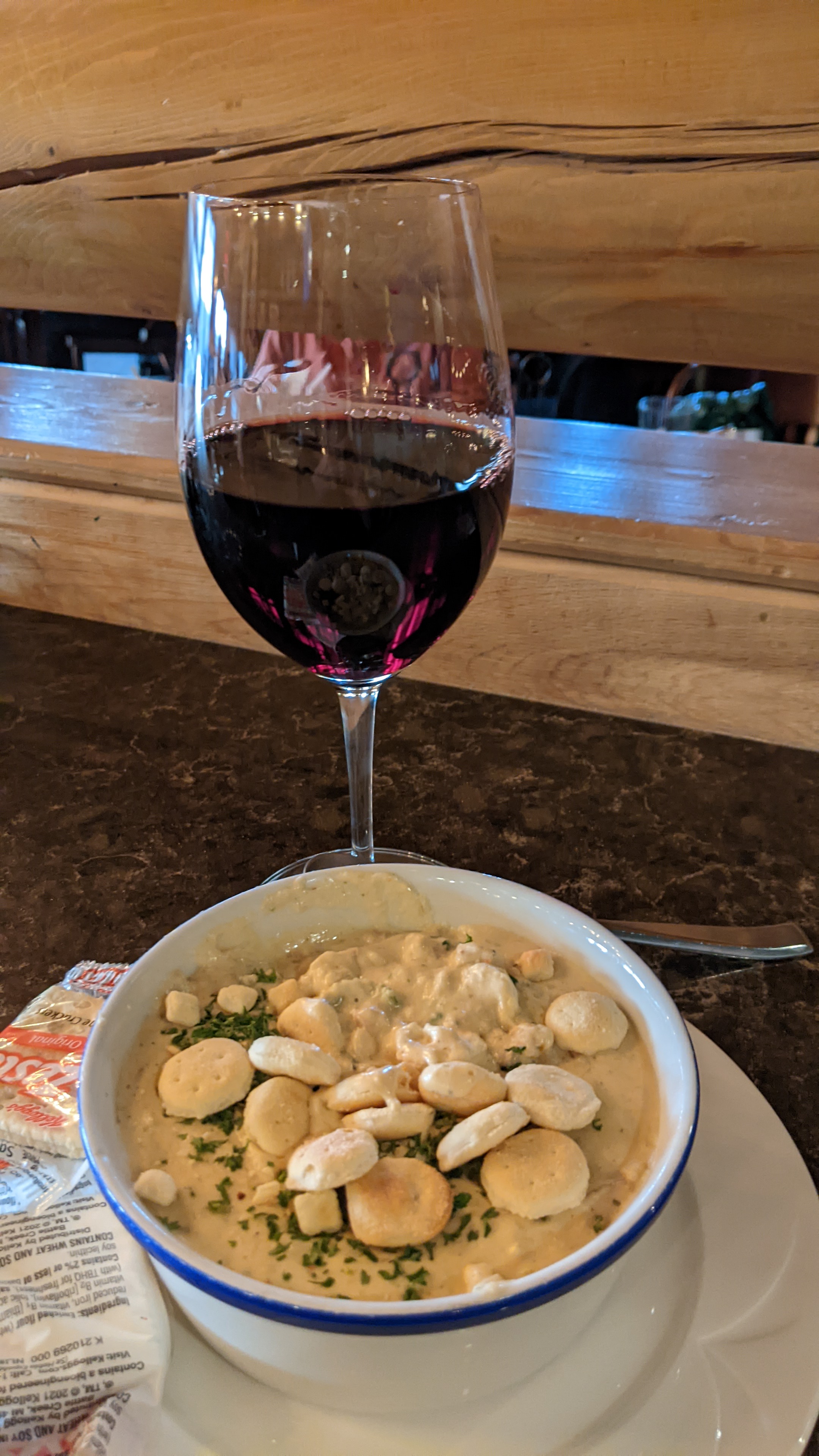
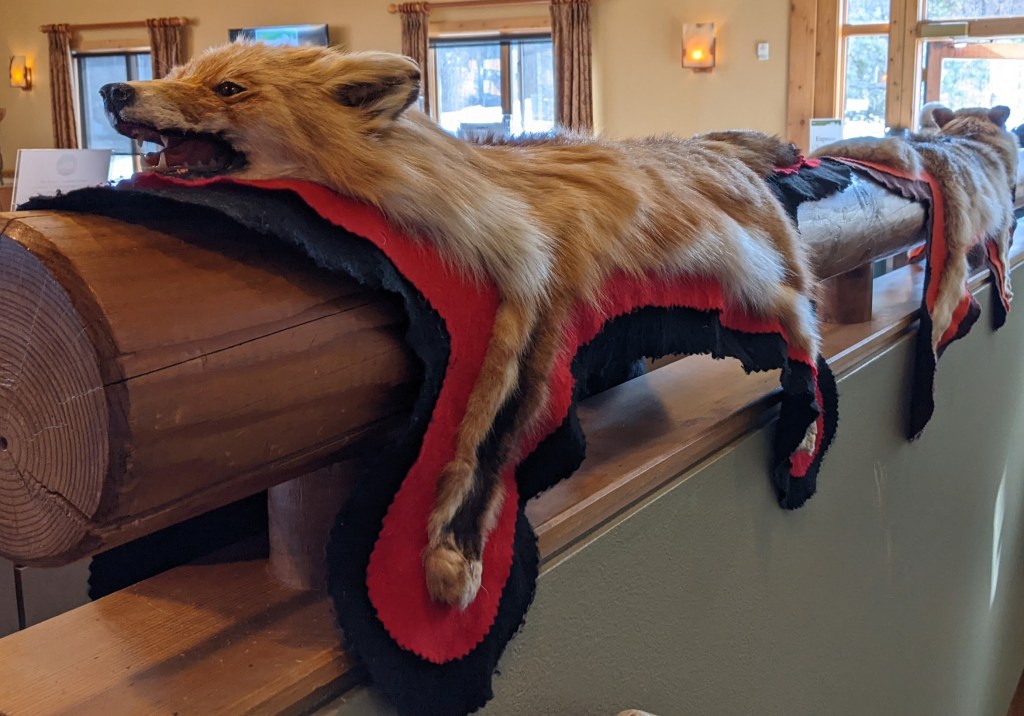
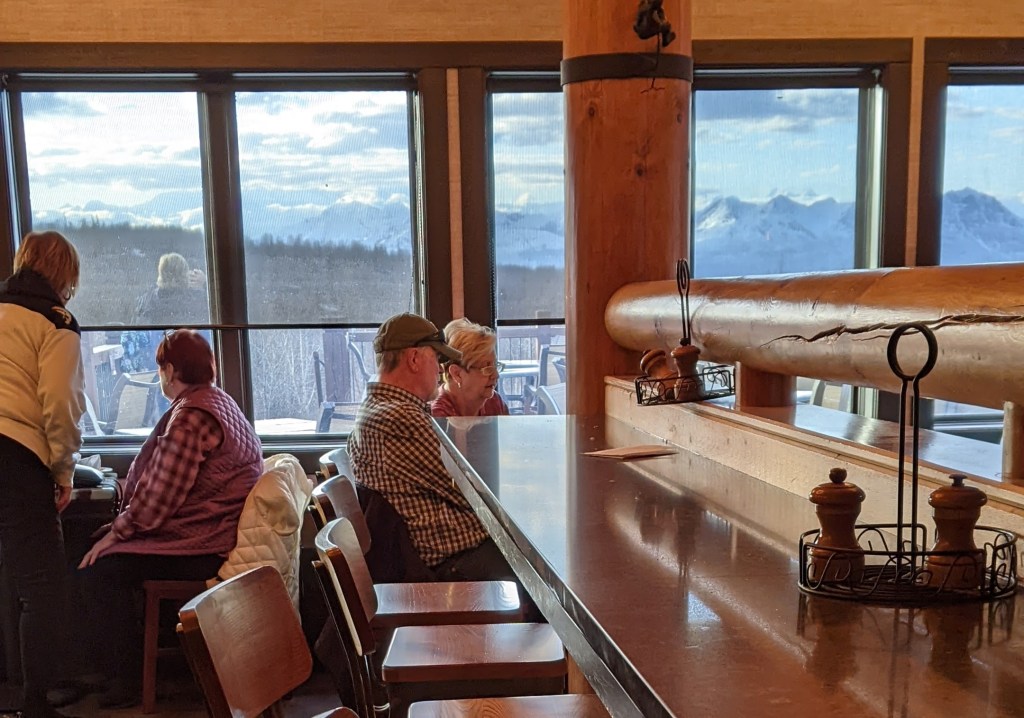
I found an unoccupied seat at a bar counter in the casual lounge. My seat still offered a commanding view of the faraway mountain ranges through the great room’s wall-to-wall windows. Tired from a day of traveling, I ordered a glass of wine, content to simply relax in comfortable surroundings.

My attentive server asked if I wanted to order dinner and suggested I begin with a bowl of hot fish chowder. Happy to not have to make a decision, I agreed that would be good. We chatted a bit as I waited.

He had returned to Alaska the previous week to work at this lodge for a second summer. A university student in the lower 48, he said that his experience the previous year hadn’t seemed quite long enough. This year, his girlfriend had signed on for summer work as well.

This was the first of many conversations I would have over the next few days with the summer employees who arrive in Alaska eager for adventure. Must of the seasonal employees are U.S. or Canadian students. All are happy to have the opportunity to earn money working in one of the top vacation destinations on the globe. Many have returned year after year. Most try to save the bulk of their earnings for the coming school year. Not a one complained about the hours or the work load. And every one admitted to seizing every possible opportunity to hike or camp in the adjacent national and state parks or to explore nearby towns and villages. Almost all planned to return to the lower 48 at the end of the summer to continue their schooling.

I listened willingly to the stories of other servers and staff. I joked with the bartender, and I exchanged smiles with other guests. When my chowder arrived, they all gave me “space” to enjoy my light meal. Suddenly hungry, I ate, sipped my wine, and thought how lucky I was to be in this place at that time. But, in that moment, sitting in a crowded bar in the shadow of a great mountain, I also had to admit that I missed my husband. It was an experience I would have enjoyed sharing with him.

In Alaska, in May, it’s light late into the evening and as I finished my chowder, Denali’s snow-covered summit was once again visible. Despite the many previous pictures I had taken, I wanted just a few more in the twilight of the day.

I was eager to make my way out to the deck once again, and I signaled for my check. As we settled up, this young server and I agreed that getting to know one another was a highlight of the evening. As I stood to leave, he looked at me and asked if he could give me a hug. Somewhat taken aback, I hesitated for just a moment.

He confessed, “You remind me of my grandmother, and I miss her.”

Of course we hugged, and I believe we both treasured that brief connection in a place far away. This time, the human connection was more memorable than the food. And this brief encounter with a stranger was at least equal to my last view of Denali on that day.

Times beyond forgetting . . .

Striking up a conversation with a stranger, especially when one is away from home turf — in another state or halfway across the globe — always leads to new insights. Somehow, sharing seems easier, and there is a double-edged desire to understand one another. Talking about history and the past, hopes and dreams for the future, life, expectations, favorite places, fears and hardships, war and peace, children and ancestors, puppies and good food — it seems easy to cross cultural borders in those times. Such encounters happen quite naturally while waiting for a flight, browsing a bazaar, standing on a cruise ship deck, or sitting in a crowded cafe almost anyplace in the world. It’s real, easy, and spontaneous.

The truth is that people throughout the world are eager to talk about all of these things — to me and to you. And we’re all eager to talk about our homes and our families. We form quick friendships with others we have just met. Sometimes they are short, quick encounters, and they end just as quickly. Occasionally, those chance meetings lead to lasting memories. They can also foster new friendships that easily survive decades and distances. There is promise in that fact.

So, because travel has once again become a welcome reality, I look at the empty pages of my desk calendar for the coming year, thinking about the destinations that will be penciled into those pages. I cannot help but think of the people I might meet in those faraway places. And I think of the trip from which I recently returned. For nearly three weeks, I was a solo traveler. It was not my first trip alone, but it was a uniquely fresh adventure. For many years, I have enjoyed the company of a willing travel partner. When my spouse and I each had busy and fulfilling careers, we were not infrequently apart due to work schedules and business trips. We sometimes enjoyed the company of individual friends and family members on our travels, but we traveled as a couple for most of our most memorable vacations.

Booking a solo cruise for May of 2023, followed by attendance at a professional conference, was in many ways new territory for me at this stage of my life. And, I must report that it was better than I had hoped. I also have to say that, for me at least, it was nice to return home and resume my by-now-familiar pattern of life. Will I leave again as a solo traveler? At this point, I am not certain that I will, but I would not hesitate should the right opportunity present itself.

That’s the joy of traveling. The art and the architecture, the vistas and the crowded piazzas, the food and the wine, the excursions and the unexpected experiences all may be the stuff of dreams, but nothing beats the privilege of sharing “quality time” with real people, no matter how fleeting that time might be.

That’s what I missed most during the pandemic. Interacting with real people is the one thing that makes travel so enjoyable, so unforgettable, so necessary, to my mind. That’s what I anticipate most with each trip I take. My recent journey seemed almost like too much frosting on the cake. It included another chance to step across the latitude line in northern Alaska that allows me to say that I have been north of the Arctic Circle once again. The first time was a Nordic cruise to “the top of the world” last September. Coupled with a trip to Antarctica in January of this year, this time was a new thrill.

Where to next? At this point, I have no idea. Much to our disappointment, a planned February 2024 cruise that we had booked with a sizable group of friends and family was just canceled by the cruise line due to ship redeployment. But, I am sure we will find another journey that lures us to “take flight.” Once again, it will mean a potential to meet and interact with interesting people in addition to a distinctive itinerary, that will lead us to book another trip.

Looking forward also entails looking back.

Several years ago, my husband and I had a free afternoon in a Mediterranean port city. We had seen enough churches and museums, eaten enough lunch, walked too much. We found a cabbie near the port who, for a set fee, was willing to take us on a drive around “his” city. We wanted to visit a market to buy some fresh fruit, perhaps some cheese and olives, and a local bottle of wine. We wanted to see the view from the bluffs above the city. Most of all, we wanted to relax and hear about life in a unique and beautiful part of the world.

We got all of that and more. Our congenial driver spoke in halting English about his family, his wife, his life. He told us how proud he was of his children, a son studying medicine in London; a daughter pursuing dreams of her own in America. He told us how much he missed them, and what he wished for them in the future. We practiced our Italian, asking about the cost of living, about the political situation in his country and throughout the EU, about the past and the future, about the weather, and about the cost of gasoline and the price of olives.

He brought us to a favorite lookout with an incredible view of the sea, where we stood in the wind and drank in the beauty of the setting. And then he brought us to a small cafe where we drank small cups of strong coffee as a fitting end to our excursion. He dropped us back at the dock and we re-boarded our ship, knowing that we would never see him again but that we would never forget him. The world grew just a bit smaller that afternoon, and our hearts were full.

It is experiences like that that will keep me on the road as long as I am able.

Follow me here @goodfoodandfarwayplaces.com to learn more about strangers I have met and befriended across the globe and through the years. Read more stories about travel, history and my random musings about life in today’s world @rightoffmain.com, follow me at facebook.com/cohenadrienne/ and on Instagram @adriennecohen221.

Polar Opposites

71-10-21 and 64-89-??

Points on a compass have little meaning to most people. Schoolchildren learn about the north and south poles, that the earth is tilted on its axis as it travels around the sun, and that the globe is divided into latitude and longitude lines. Most come to know that the equator separates northern and southern hemispheres, and that the latitude lines defining Arctic and Antarctic circles are set at 66 degrees thirty minutes north and south of the equator which is at zero. But it’s a fact long forgotten by most adults. In truth, there’s little reason to know exactly where one is on the globe at any given point in time, unless you have a precise need to navigate to a destination. Airline pilots and ship captains need that knowledge, but casual travelers really do not.

For what it’s worth, however, the coordinates of Hot Springs Village are 34.6720 degrees N, 92.9988 W. It won’t replace a street address, but if you’re interested in little-known facts, make a note! I once was tempted to have the coordinates of the tiny train depot in my favorite little village in Maine printed on a t-shirt, just to see if anyone would ask what the numbers meant. I didn’t.

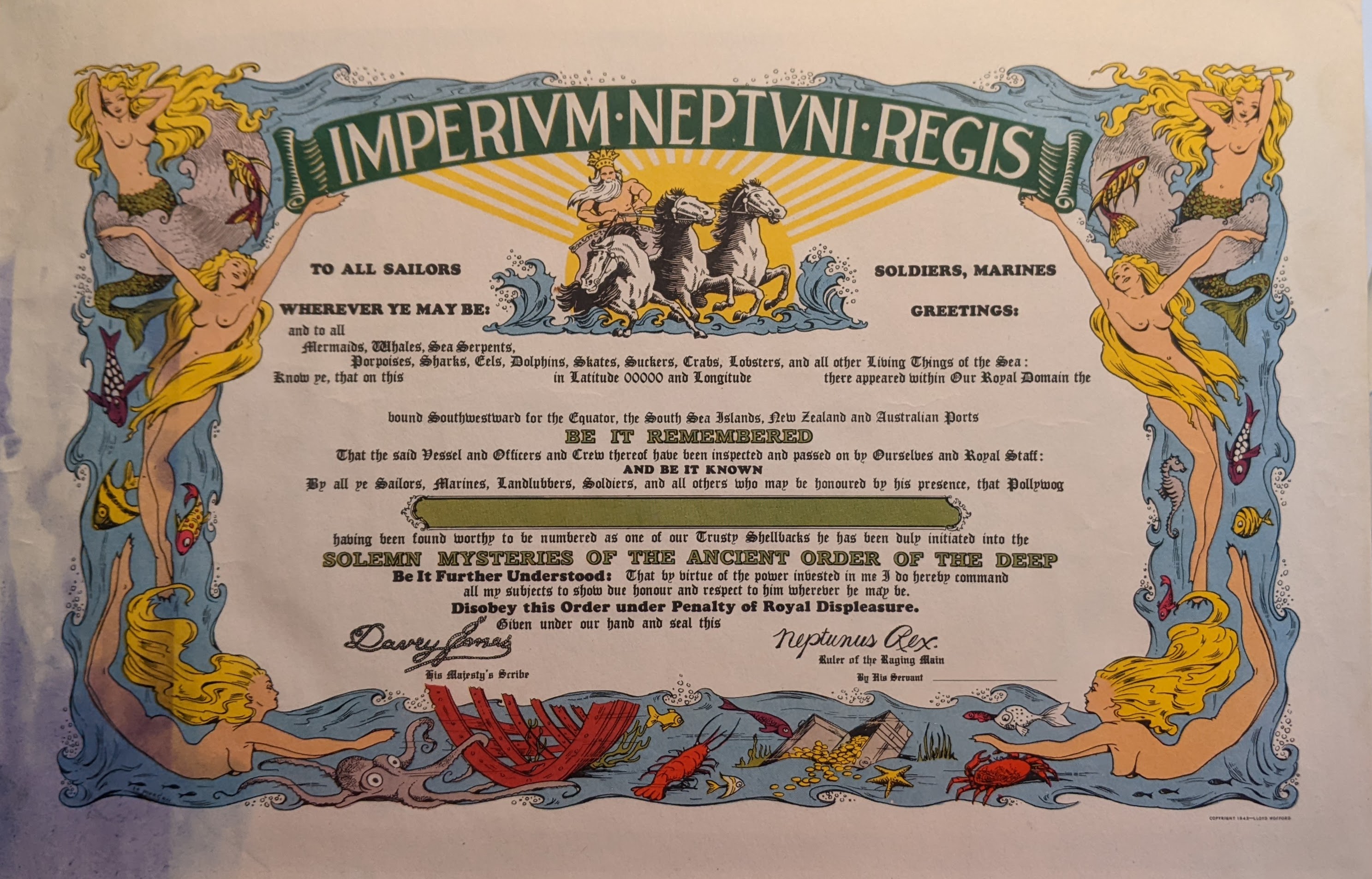
Ancient mariners noted the crossing of that zero latitude line regularly, and it is an honored tradition still practiced by sailors today. If you have been lucky enough to sail across the equator, you may know about the good-natured and sometimes raucous festivities that mark that passage. Read about the Royal Navy’s Crossing the Line ceremony aboard the aircraft carrier HMS Queen Elizabeth on the ship’s first equator crossing in 2021. I also have a certificate of passage across the equator. It is colorful and ornate, and it is not mine, but it is part of my family history.

The latitude is noted as 0000 — the equator. The longitude is left blank, as are other blanks for the name of the ship, the name of the sailor, and the date and time. On the back, however, is this handwritten note:

Longitude “Secret.” USS Admiral Benson. Destination: “On a Mission of War” Date: “Secret 1945.”

I find it fascinating that some traditions were kept even during wartime. Celebrations take place aboard modern cruise ships, to the delight of most passengers. And crossing the International Date Line can be a bit disorienting. At basically 180 degrees longitude, or half the globe away from Greenwich, England, at Longitude 0, the date line was only designated as such in 1884, to make timekeeping more consistent. The line, which designates the change of calendar dates, sometimes follows a zigzag path around political boundaries, as between eastern Russia and the Aleutian Islands of Alaska. Gaining or losing an entire day in an instant while crossing the International Date Line must be disorienting as well as exciting. Crossing from east to west means that travelers “lose” an entire day! You can gain that day back if you return later to your starting point. That must be disorienting as well as exciting. I don’t know if a certificate exists for that or not!

Some airline pilots will also announce the crossing of the equator, or the time-altering effects of crossing the International date line.

Breaking the Barriers

Tourists can easily venture north of the Arctic Circle on Scandinavian itineraries, whether on land, sea or in the air. Travel to Antarctica typically requires a sea voyage, and is only possible during the height of the southern hemisphere summer. A commemorative certificate is commonly awarded to passengers, denoting the actual southern latitude a vessel reached, but traditions vary. Most visitors to Antarctica do not actually cross into the Antarctic Circle. Most don’t get even to 65 degrees south latitude — the passages are too treacherous for all but sturdy scientific vessels with ice-breaking ability. There are no scheduled flights to the seventh continent from either South America or Australia. Scientists and researchers most often arrive by air at their remote research stations in late spring and depart the same way prior to the onset of the long Antarctic winter.

The earth’s magnetic poles continue to shift slightly, and the imaginary lines that describe the polar regions also vary somewhat. The boundaries of the polar circles are typically noted as 66-33-39 degrees North or South latitude. They are sometimes said to be situated at 66.5 degrees. There are only about 69 miles between degrees of latitude, so the difference is truly miniscule.

When my husband and I cruised along the coast of Norway in 2022, we entered into the Arctic Circle, according to our certificate, at 12:12 a.m. on June 17, at Latitude 66-30.1 N Latitude and Longitude 009-26.3 E. We continued north to Nordkapp, or the North Cape, at 71-10-21, the northernmost point of the European continent, and also to Skarsvag, a Norwegian fishing village with a population of 60, at latitude 71-06-47 N.

Approximately seven months later, we sailed from Ushuaia at the southern tip of Argentina across Drake Passage and along the Antarctic Peninsula, achieving a “most southerly latitude of 64 degrees 58 minutes.” The date and time are not noted on that certificate.

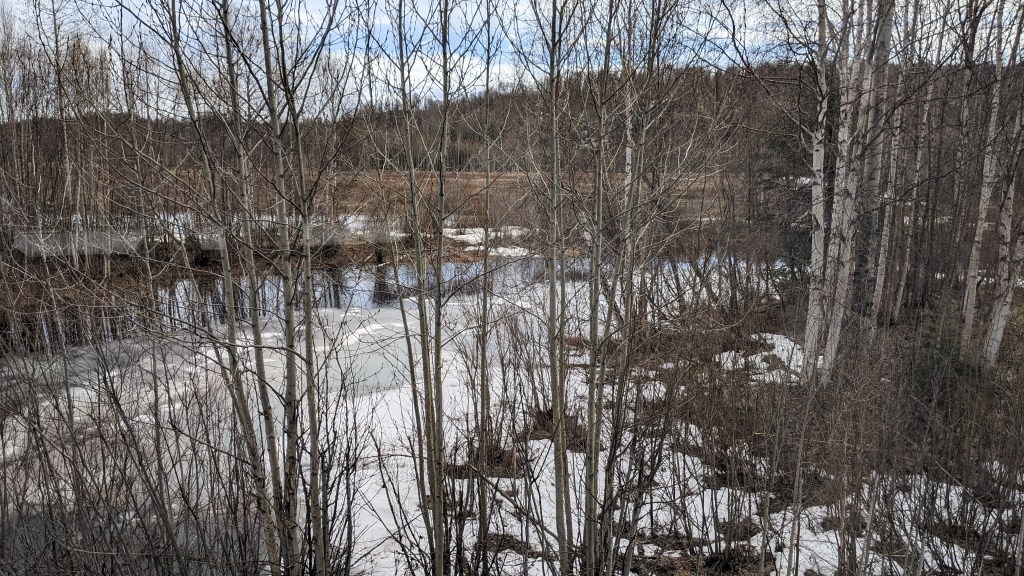
Next month, I will travel along the Dalton Highway, which runs north from just outside of Fairbanks to end at Deadhorse, Alaska, close to the Arctic Ocean. There’s a simple wood sign at about milepost 115 on the roadway, at which vehicles traditionally stop for photos. The sign, depicting the earth as viewed from the North Pole, simply reads “Latitude 66 33”. The 414-mile highway, some of it still only hard-packed gravel, was built to facilitate construction of the Trans-Alaska Pipeline. The pipeline itself stretches for 800 miles, from Prudhoe Bay in the north to Port Valdez, where the oil is loaded onto tankers for shipment to market.

Why do I do these things?

Well, for one reason, like Captain Kirk, I like to go where few other people have been. Secondly, I am especially fond of quirky destinations, and I will go out of my way for the photo ops and the unique experiences they provide. I like to stand at points where the land ends and the sea begins, and imagine what lies beyond. Many of these “furtherest” points fill me with a sense of wonder that past explorers, sailors, and adventurers stepped out into the unknown not knowing where exactly their journeys would take them, when they would end, or if they would ever return.

Just for the fun of it while we were boating in Maine, my husband and I visited Lubec, Maine, the easternmost point of the continental United States. Nearby are the distinctive red and white striped West Quoddy Head Light in Maine, and the historic East Quoddy Head Lightstation which stands at the most northern point of Campobello Island, New Brunswick, Canada. The names confused us until we consulted our navigational chart and realized that they designate opposite sides of Quoddy Narrows, and make perfect sense to local mariners, as they have for nearly two centuries.

We have returned to Key West many times to stand at the southernmost point buoy. Just for reference, latitude and longitude readings there are 24.5465 N, 81.7975 W. The northwesternmost and most western points of the contiguous 48 states are near Cape Flattery on the Olympic Peninsula in Washington state. Despite living in Washington for many years and boating in the waters around Puget Sound and the peninsula, I have not been there. Maybe someday.

Trips to Gibraltar give us reason to look longingly across the Staight that separates Africa from Europe — a mere eight miles. A trip to Portugal several years ago found us enthralled with the lighthouse at Cabo Sao Vicente, the southwesternmost point of Europe. It is said that it can be seen from 60 miles out to sea. And, yes, I have an ongoing fascination with lighthouses!

It is at these times, as I stand in these faraway places, I realize anew just how vast and beguiling this earth we call home truly is, and just how many places remain for me to discover.

Note: If you’re interested in random facts, have time on your hands that invites mindless armchair exploration, or are in need of trivial conversation starters, visit Wikipedia’s List of extreme points of the United States.

Rubber Duckies: Back at Sea

Note: This post was first published as “Rubber Duckies and the Road Ahead” in August 2016; it has been revised slightly and updated to reflect new information about the continuing duck craze!

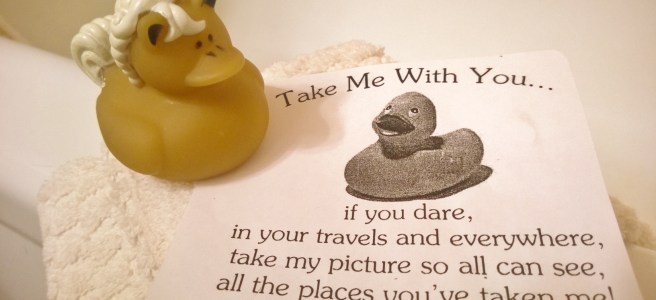
Several years ago I wrote a column about rubber duckies, discussing the pervasive fascination with that familiar childhood bathtub toy. Who doesn’t love a rubber duck?

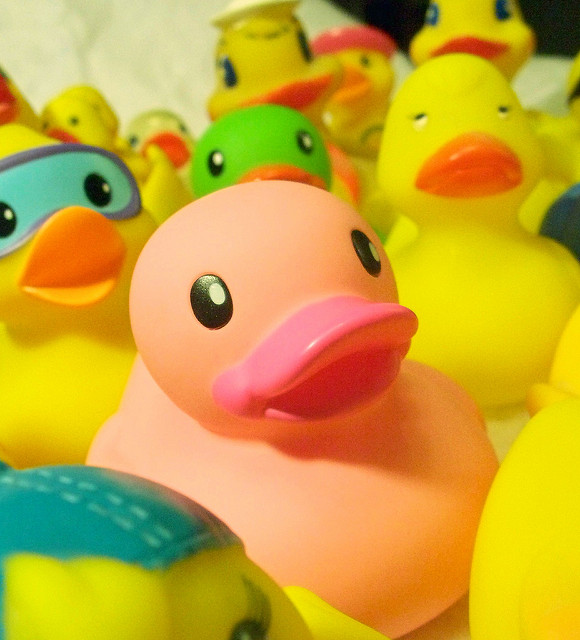
3478249785_bc1b8b1ae5_z

A personalized rubber duckie was one of the first gifts I bought for my grandson — that turned into a progression (and a collection) of rubber duckies of various colors and costumes. The obsession spilled over into gifts for my then high-school-teacher son (Professor Duck) and various other family members, with ducks for each succeeding holiday. Then, like other enthusiasms, my duck-gifting phase ran its course to echoes of “Enough, Mom, enough.” 

Rubber Duckies are available in all sizes, a few varied shapes, numerous colors and with all sorts of “costumes” and personalities.  However, the perennial favorite is still the yellow version, with bright orange bill and black eyes. Many collections feature “one of a kind” or limited-edition duckies; Stories are circulated about duck adventures, and tales are told of lost or rescued ducks.  Ducks are used in NASA glacier-tracking experiments, and there are still sightings of some of the group of “globe-trotting” ducks that “jumped ship” in the Pacific in January of 1992.  Really.

Rubber Duck Races, generally to benefit local charities, are held from Seattle to the Ozarks, from Washington, D.C., to Crested Butte, from Texas to Tahoe.  One of the largest duck races is in Hawaii, and some of the most informal are held in small town creeks, canals and even in swimming pools.

I am still tempted when I see an especially appealing little duck in a store window. And I gasped with delight at news photographs of a giant rubber duck making its way through Lake Superior at a Tall Ships Festival in Duluth, Minn. In August of 2021, a 25-foot-tall mystery duck with the word “JOY” emblazoned on its chest appeared mysteriously, to the delight of local residents, in the harbor in Belfast, Maine. Then, just as mysteriously, it disappeared.

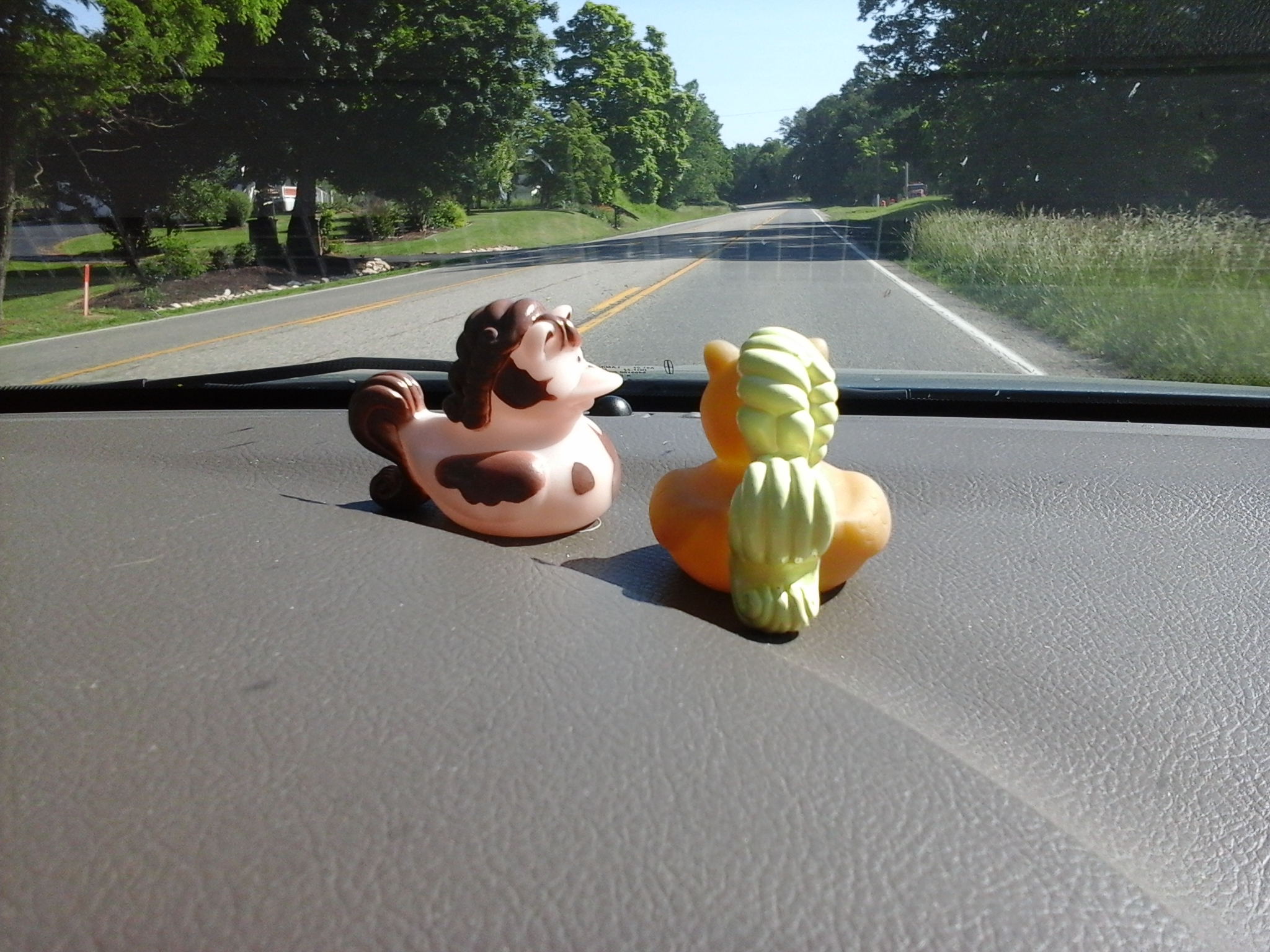
So, imagine my surprise when I encountered a stylized rubber “duckie” with mane and tail in the middle of Virginia horse country during a summer road trip.

20160610_082651

I was immediately smitten, not only with the little rubber horsie that perched on the edge of the Lexington motel room bathtub, but with the motel itself. After the whoops and the grins — and the picture-taking — I thought about the marketing genius that played to the playfulness of tired travelers.

The clerk was accommodating, more than willing to let us pick a mate for our little rubber traveling companion, only exacting a promise that we would honor the commitment to snap pictures as we traveled on. That we did, and the little horsie-ducks happily sat on the dashboard — a pair of cute mascots — for the next 3,000 or so miles of our journey. They traveled through city traffic, along country roads, into Quebec and Ontario, skirted along several of the Great Lakes and sat under the Gateway Arch in St. Louis. It proved, I think, that we are never too old for a little silliness in our lives.

Our little companions abandoned their perch on the dashboard when the temperature soared regularly above 100 degrees back home in Texas. But they accompanied us on several other adventures; today they spend most of their time perched happily on a shelf in my office, joined by a sizable “paddling” of ducks collected from many places over the years.

Just recently, during a quick weekend visit to Eureka Springs, Arkansas, The Bridgeford House, a charming B&B, had a pair of ducks perched on the edge of the jetted tub in our bathroom. I was delighted, and I was tempted to take at least one, but I allowed them to stay to greet future guests.

Rubber ducks on cruise ships, some with “passports” and others with “tickets” and messages from previous owners, were regularly hidden on cruise ships prior to the cessation of cruising in early 2020 due to the pandemic. They had gained a large following aboard major cruise lines. Now, we understand, the craze has gained new life, and there are numerous cruising ducks pages on Facebook. It’s a phenomenon of the times, with a number of spinoffs — crocheted ducks, duck jewelry and key chains, duck towels and duck art — for fun-loving children, and equally fun-loving “adult children” at sea and on land.

Some cruise lines have embraced the fun, selling ducks and duck-themed gifts in onboard shops. And some crew members are enthusiastic collectors as well! Rubber duckies don’t take up much space or make a mess; they are exceedingly patient and compliant travelers, requiring no special accommodations or food. But they did, do and will continue to make us smile! So, if you come across a duck in your travels, feel free to befriend it and take it home. Or let it remain in its hiding place to bring a smile to another face. Post a photo on one of the online groups, if you choose, or rehide it to give someone else the pleasure of finding it. Release your inner child, and just enjoy the experience. I have only found one duck on board a ship, but you can bet I’ll be keeping my eyes open next time I sail.

*Multicolored duck photo by Jo Naylor/Flickr; others by Adrienne Cohen; The motel was the Comfort Inn Virginia Horse Center, Lexington, VA, and The Bridgeford House B&B is located at 263 Spring St., Eureka Springs, AR.

Ring those bells . . .

A random Facebook post from a faraway friend captured my imagination this past week. And now it has become a “cause” because I can’t seem to help getting caught up in grand ideas that are designed to bring people together in quirky, frivolous ways. Great things often come from small and simple acts. This time it seems a lot of others have joined in with enthusiasm. I hope it lasts, and I hope it grows.

It has been reported that the effort was begun by a housewife and “mum” in the U.K. who thought it would be a good memory for her children in years to come. I learned about it via several Facebook posts, among them one from a relative in Norway; and the word is spreading fast!

Just as the balcony singing across Italy seemed so spontaneous and emotionally uplifting in the terrible, early days of the pandemic, this recent request for citizens of the world to gather on their front porches at 6 p.m. Christmas Eve strikes an emotional chord with me. I want to be a part of it. I want to hear bells ringing from every doorstep on my street. Then I want to watch the television news coverage of bells ringing in other time zones and in other nations. It will restore my faith that people everywhere — from Capetown to Chicago, From Anchorage to Ankara, from Dublin to Denver are more alike than they are different, in the words of Maya Angelou. I want to celebrate with those people on apartment balconies and front porches all across the world. I am gathering up my bells!

Does anyone remember Hands Across America?

It was 1986. It was a BIG IDEA. Organized by USA for Africa, the same organization that produced the star-studded video concert We Are the World in 1985, Hands Across America was designed to underscore the need for funding to fight devastating famine in Africa, and also to address hunger and homelessness in the U.S.

The thought of people from all walks of life clasping hands to form a human chain stretching from the West Coast to the East to highlight the plight of those who needed help was more than I could resist. I became an early supporter. It was conceived as a benefit effort, not only to address problems but to be a ray of hope for those who had little else to sustain them. The 80s were difficult times for many Americans and for the world, although the sting of those years has faded over time.

The route was designated and mapped, and for a small donation, individuals were assigned a place to be at a specific hour — 3 p.m. Eastern time, May 25, or noon Pacific time. It was a Sunday. I gathered up my family, including my husband and young son plus several equally spirited friends. We drove about 30 minutes to be at our designated spot along a highway not far from our suburban Dallas neighborhood. We arrived shortly before 2 p.m. to find only a few others scattered along the roadway. I remember being somewhat disappointed that the crowd wasn’t as large as I had hoped.

But, as happened in other communities, we joined hands at the appointed hour and stood in solidarity under the Texas sun for a cause that was born from a dream, a cause we believed had the potential to change the world. We stretched our line along the roadway as far as possible. It was reported that there were breaks in the line throughout the nation, but in a cornfield in Iowa, in the geographic center of the United States, 16,000 people gathered. There were throngs in New York, in California, and in Indianapolis, where the Indy 500 was rained out but people stood in the rain for another reason.

It is said that long-haul truckers honked as they passed the lines along the country’s highways. It is said that a few stopped and joined the chain for brief moments. In some small towns, church bells rang out as neighbors gathered along their streets, one hand in another. And anyone who participated felt uplifted by it all.

President Ronald Reagan joined hands with others at the White House and then-Speaker of the House Tip O’Neill brought the U.S. Capitol into the chain. Arkansas Governor Bill Clinton joined in in Little Rock, and scores of entertainers lent their names and their support to the effort. A theme song, Hands Across America, was broadcast simultaneously from radio stations coast to coast. For 15 minutes or so on one day in 1986, millions of people came together in a most unusual way.

Even though the actual human chain did not span the 3,000 plus miles as intended, it is estimated that more than five million individuals participated, perhaps as many as 6.5 million. Though there were empty spots along the route, it is also said that if those who joined the effort could have been equally spaced, the line would have stretched from coast to coast, and the effort was termed a success by the organizers, raising more than $15 million after expenses. Many of the participants donated more than the stipulated fee for the privilege of joining total strangers to see an audacious idea take shape.

So it is this year. It’s an outrageous request to ask people across the globe to step onto their front porches Christmas eve to perform a symbolic act — “to spread Christmas spirit and help Santa fly his sleigh” — with no thought of reward. But it’s also inspiring, isn’t it?

I want to hear bells echoing throughout my neighborhood the evening of December 24, and I want to see news reports of millions of people in scores of other countries shaking their own bells with an energy that could change the world.

Is that too fanciful a dream? Perhaps, but I hope not. Even if it doesn’t shake the world, perhaps it can open hearts, spark a new hopefulness, contribute to a happier holiday, and become the source of lasting smiles for many who have precious little to smile about this year.

So, enlist your neighbors, spread the word to friends and family, join neighborhood and online groups that are springing up to support what has become known as “The Christmas Eve Jingle 2020.”

Get those bells ready!

At the very least, perhaps it will be a fond memory, and provide a unique story for future grandmothers to tell their grandchildren in years to come.

We all know that 2020 has been a tough year. We all want the coming year to be better. And, no matter what holiday or holy day one celebrates this December, the year is coming to an end. Each of us must now look ahead to 2021. We cannot escape the passage of time, and we cannot turn back the calendar to a date that was more pleasant or more “normal.” All we can do is move on, so why not begin the process of moving ahead with a bell in each hand and new purpose in our hearts? It’s up to each one of us to make a difference.

I believe in hope and I know that we could all use a new measure of hope this season.

I remember Hands Across America, I remember We Are the World, and I want to be a witness as another Big Idea comes alive!

The art of sipping port

The mention of Port Wine has always, for me, prompted a vision of wood-paneled rooms filled with leather settees and impeccably-groomed men holding a glass in one hand and a cigar in the other. It’s a movie-set vision, I know.

Port still seems a bit mysterious. Like sherry, it has never really been a mainstream experience for most Americans. I was aware that port was produced in Portugal, while sherry is associated with Spain, but I knew little else. So, when my traveling companions and I had the opportunity to take part in a port tasting on a rainy day, we seized it. We were in Cascais, a delightful seaside city not far from Lisbon.

Port is produced only in a specific region in the country, and its designation is strictly regulated. Bottled in several varieties, there are expensive aged ports and sought-after vintages, but surprisingly smooth, rich and reasonably-priced options are also available. Stringent standards govern a port’s bottling and labeling. But all true port wine comes from the Douro Valley of northern Portugal. It bears what is termed a “controlled” appellation. Although other regions produce liqueurs and similar fortified wines, true port is distinctive and distinctively satisfying.

My brief experience in the tasting room certainly does not bestow expert status, but I feel confident that I would not embarrass myself by ordering an after-dinner port in a restaurant. For me, that’s a triumph. I also know now why so many people enjoy sipping port. I have a favorite, but the four different varieties we sampled were all pleasant. To my surprise, I learned that there is white port; and that it is, indeed, very good.

The cool, drizzly day presented us an opportunity to cozy up in a wine bar in the all-but-deserted marina area of Cascais. The proprietor beckoned us in, offering temporary shelter from approaching dark clouds. Within minutes, places were set, bottles arranged, and the learning commenced.

The tasting became a highlight of our two-week driving trip through Portugal. When we returned home, one of our first purchases was a bottle of Tawny Port. We savored it, both for its taste and for the memories it evoked.

A European trip the previous year filled in some gaps in my knowledge about sherry during a tasting and cooking class in the Spanish city of Jerez. I remember that experience fondly as well. Today, bottles of the two unique fortified wines share space in my home’s cocktail bar, offered as complements to good food and good times shared regularly with friends.

One of the best reasons for traveling, of course, has always been to experience new things. The tastes of new and previously unfamiliar food and drink rank every bit as high on my list as visual adventures. Even though, today, there is a temporary hold on my travel plans, the enjoyment lingers, the memories are sweet and fresh, and sharing past experiences keeps every recollection alive.

Oysters . . . and other Adriatic adventures

I had never developed an appreciation for raw oysters; nor for oyster stew or oyster stuffing at Thanksgiving, for that matter.

I have been known to order Oysters Rockefeller because that seems a “classy” choice at an upscale restaurant, on the same culinary level as escargot or whole artichokes. I love showy foods, and I admit that I enjoy demonstrating that I know how to deal with such dishes. I have, on occasion, skewered a salty, smoked oyster for a cracker.

But as for raw oysters. No, thank you. I do not love oysters.

My husband, on the other hand, enjoys oysters any way they’re served, but preferably right in the shell, cold, salty and fresh from the sea.

It was a preference he worked hard to cultivate, ordering oysters on the half shell several times in his early 20s. He initially discovered that the slippery oysters didn’t slide so easily down his throat, no matter how much he tried to disguise them with cocktail sauce and and Tabasco. Those first few times, he admits, were less than pleasant experiences.

But he persevered. At a tiny cafe in Brittany, with a view of the oyster fields just out the window, he ordered an oyster. One fresh-from-the-Atlantic oyster. The lone half shell on ice, accompanied by lemon and course sea salt, was brought to the table with a flourish by an ever-so-proper French waiter. It prompted curious smiles from those seated at nearby tables.

The waiter stood by expectantly, awaiting a reaction.

I was there, cheering him on.

Other diners also waited, and nodded approval as he downed that first cool slippery oyster. It was a personal triumph. And it started a trend. He has since ordered oysters in Maine, in numerous Gulf Coast eateries, and in fine restaurants in cities across the globe. He does, you see, love oysters.

After many years, we returned to that same restaurant in Cancale, France. It had changed a bit over the years, but the oyster fields are still the same, and this time my husband ordered a half dozen and enjoyed every one. In fact, he considered ordering another half dozen.

Today, he rarely passes on the opportunity to order oysters on the half shell when we’re near an ocean that allows them to be delivered fresh and cold from their habitat. He still asks for extra horseradish and hot sauce.

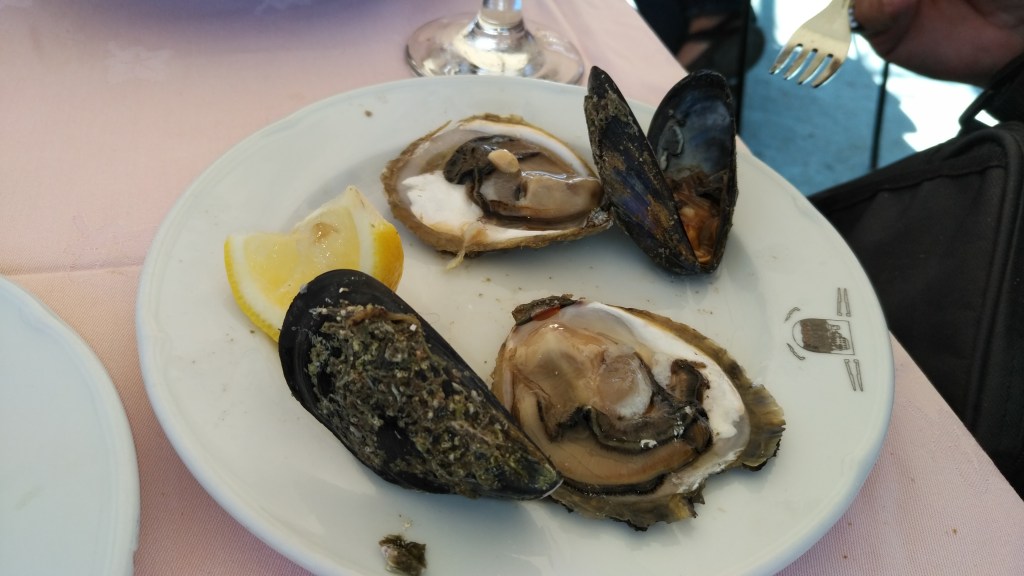
I resisted for the longest time, until we visited the Adriatic three years ago. Sitting on the open deck of a vessel anchored only feet from the oyster beds, I was prepared to enjoy the local fare along with the white wine promised as part of a half-day excursion from Dubrovnik, Croatia.

I had planned to say no to the oysters. But I was curiously enthralled as I watched the servers expertly open the shells and plate up the briny treats. Before I took much time to think about it, I was repeating “I can do this” to myself. I accepted my plate with a bit of trepidation, but I knew my mate would help me out if I couldn’t finish my share.

I sprinkled the smallest oyster with lemon juice, added just a drop of Tabasco, and closed my eyes. My first sensation was memorable. I sensed the cold, and tasted the sea. Then I swallowed. It was a whole new reality.

I actually liked the sensation. I was pleasantly surprised by the silky texture, the intense fresh flavor, and the saltiness. I felt close to the sea and its bounty in profound ways.

It was a lesson. It was delicious. It was unforgettable. Not only was it an eye-opening confirmation of the bounties of the sea, but it was the beginning of a love affair with Croatia. The time we spent there was all too short. Last November we returned to see more of the country.

I did not sample any more oysters, but I did partake, willingly, of other Croatian treats! The food is special, as are the people. To say we loved our two short visits to Croatia is an understatement. I still have no great love for oysters, but Croatia captured our hearts. This Thanksgiving I cannot help but think again of those trips.

I am thankful that we took those trips when we did. When the world is once again healed, we will return. I look forward to it.

And I am sure there will be more stories to tell.