I first met two of my traveling companions for this trip at the Kansas City Airport. We had arrived at approximately the same time from our starting points in Arkansas, Boston and Michigan. We did the only thing possible: we found a comfortable table in an airport eatery and proceeded to get to know one another until our host could pick us up.
After ordering coffees and ice water, we browsed a menu of mostly uninspired airport dining options. We did not know when we would rendezvous with our other four traveling companions, nor did we know exactly what our schedule had in store for later in the afternoon. However, we did know that we were destined for dinner at a barbecue restaurant in Fort Scott that evening. After some discussion, we decided to try the airport version of local barbecue. And we were pleasantly surprised! The three of us shared an order of barbecue pork sliders — one for each of us — ample small bites that were quite tasty.
If there’s a single universal impression of Kansas food, it’s probably of “comfort food,” and what’s more comforting to a Midwesterner than barbecue and fried chicken? More about that later.
Following an Uber ride and another round of introductions, our group was complete. We settled into our rental van for the drive from Kansas City to Fort Scott.
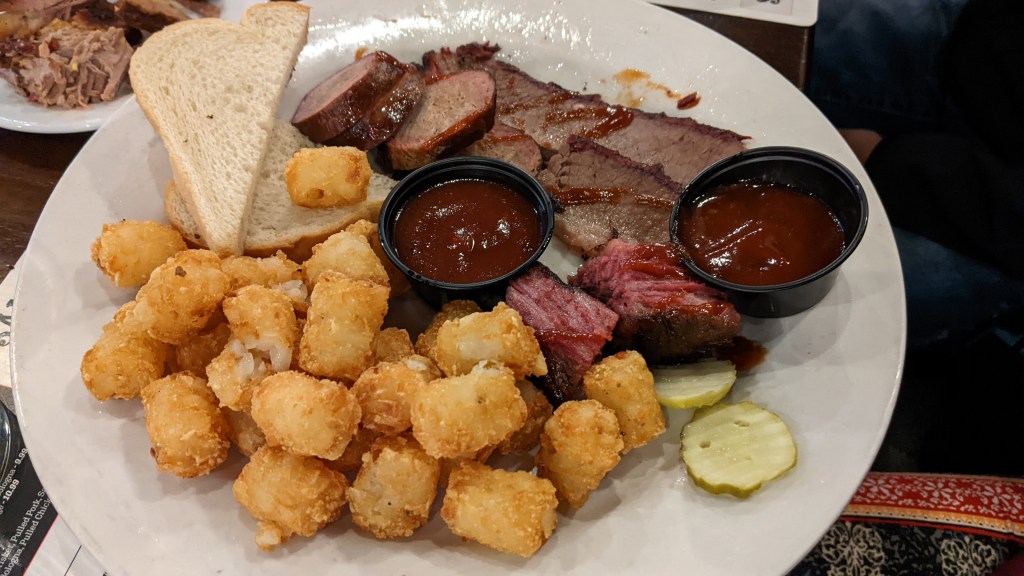
It was at dinner that first evening in Fort Scott that we were introduced to a great variety of barbecue options. The tagline on the menu at Luther’s BBQ, which opened in 2019 just prior to the pandemic, was “good food and plenty of it!” We were to find that could well be a statewide slogan.
The restaurant, housed in an historic brick building in the heart of Fort Scott, offered an extensive menu with much to sample — all simple food as it turned out. We enjoyed tasty deviled eggs and a variety of meats and cheeses — the best kind of finger foods, and delightful drink options, including a Bloody Mary that exceeded all expectations and was “write-home-about-good!”
Sadly, I must end my report about the meal we had at Luther’s, because a message on my computer lists the restaurant as “closed permanently.” I believe that Fort Scott residents were hoping it would be another success story in the city’s planned rejuvenation. Maybe it still will be. But, for now, the website is down, and the phone goes unanswered.
The only thing I regret? I didn’t get a “doggie bag” to take with me.
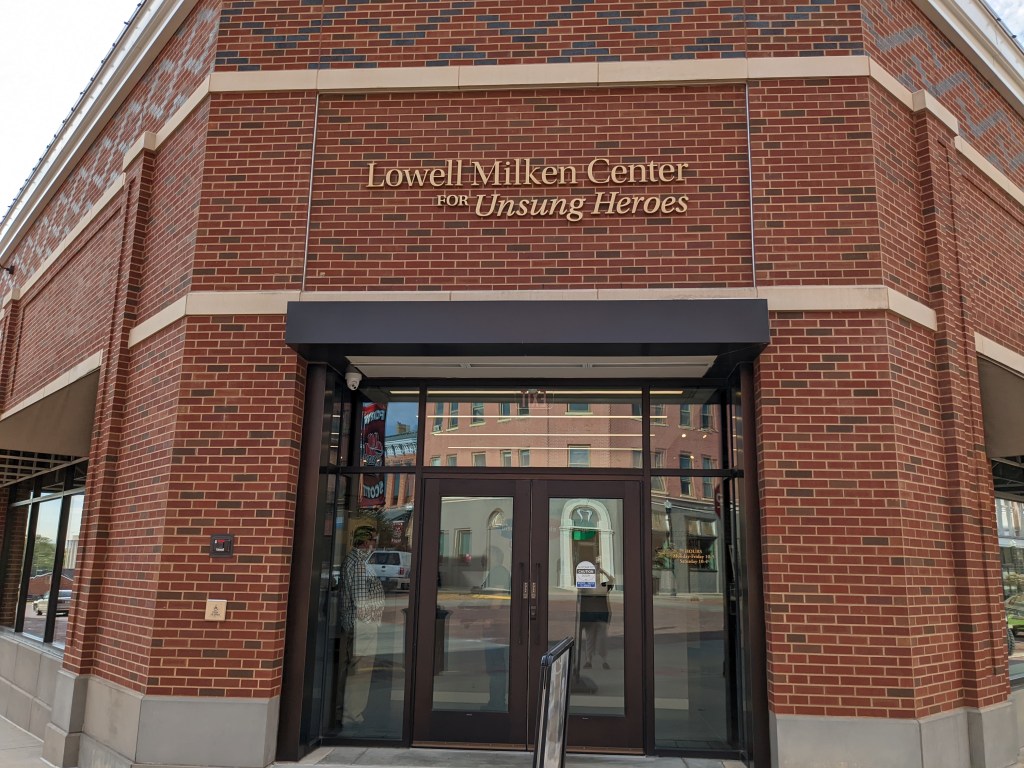
We spent the night at the historic Courtland Hotel in Fort Scott. My plate was full again the next morning with oversized breakfast burritos and specialty coffees from Common Ground Coffee Co., served picnic-style at the Lowell Milken Center for Unsung Heroes. It was another treat in the lineup of Kansas attractions that awaited our group.
The second full day in Kansas was jam-packed with new sights and experiences.
It began at the Milken Center and continued with a drive along the stretch of historic Route 66 that still runs through the state. Kansas, at least this portion of it, hasn’t changed visibly over the past several decades. In many ways, that’s comforting. You know what they say — “The more things change . . . ” Well, yes, much does remain the same.
But change is in the air and there’s a lot more to come!
Magnetic North, the point on the globe where all other locations lie to the south, is commonly known as the North Pole. But it’s moving, sometimes pretty rapidly, according to scientists.
Despite romantic notions to the contrary, the North Pole is not a physical point on the planet, but it’s also not a figment of the imagination.
It’s not where Santa Claus hangs out. It’s not a very hospitable place. And, no, I have not been there. In fact, I haven’t been even close. But, last summer I crossed into the Arctic Circle as a passenger aboard a lavish modern cruise ship, Princess Cruise lines Island Princess. It was a unique adventure, and the trip is spectacular. My husband and I were there during “polar day,” which lasts from about the time of the Spring Equinox in late March through late September. During those days the sun never completely falls beneath the horizon and one can read at midnight with no need for a lamp.
At 66 (plus a little bit) degrees north latitude, the Arctic Circle forms a ring around what is known as the Earth’s North Pole. The certificates we received to commemorate the crossing, signed by Ship’s Captain Paul Slight, attest that on “Friday, June 17, 2022 at 12:12 am,” we crossed that fabled line. In our minds, we had become Arctic explorers.
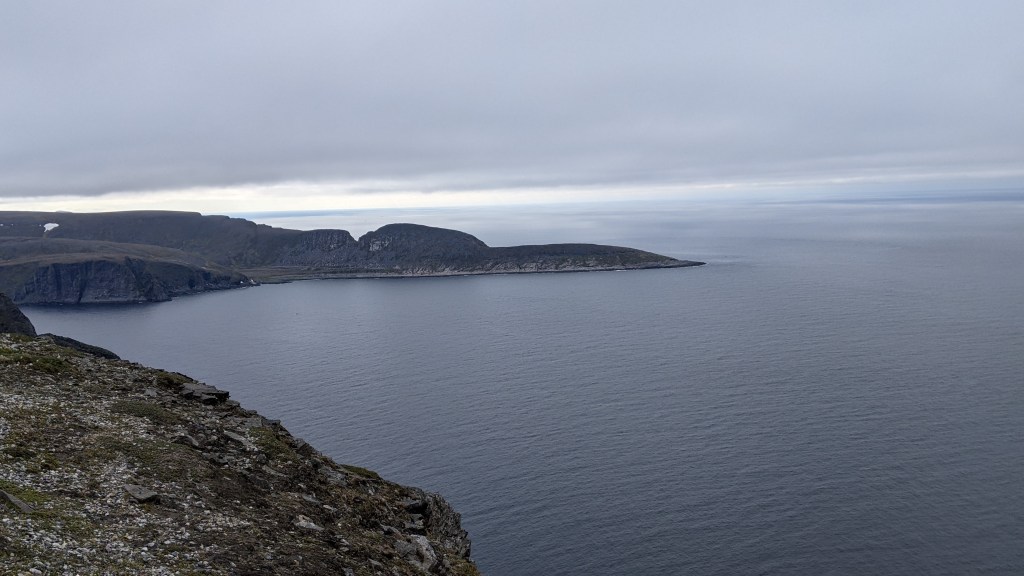
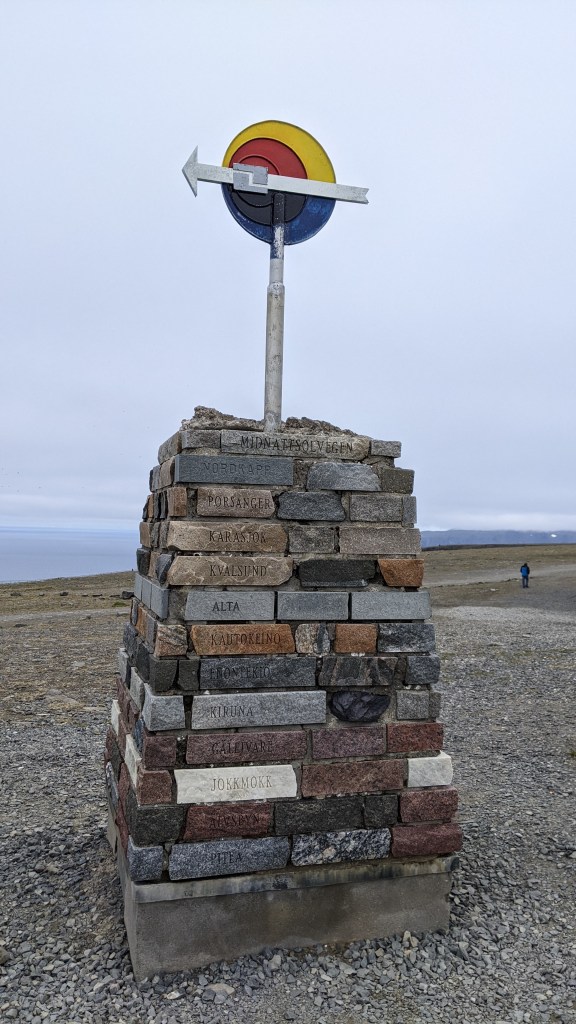
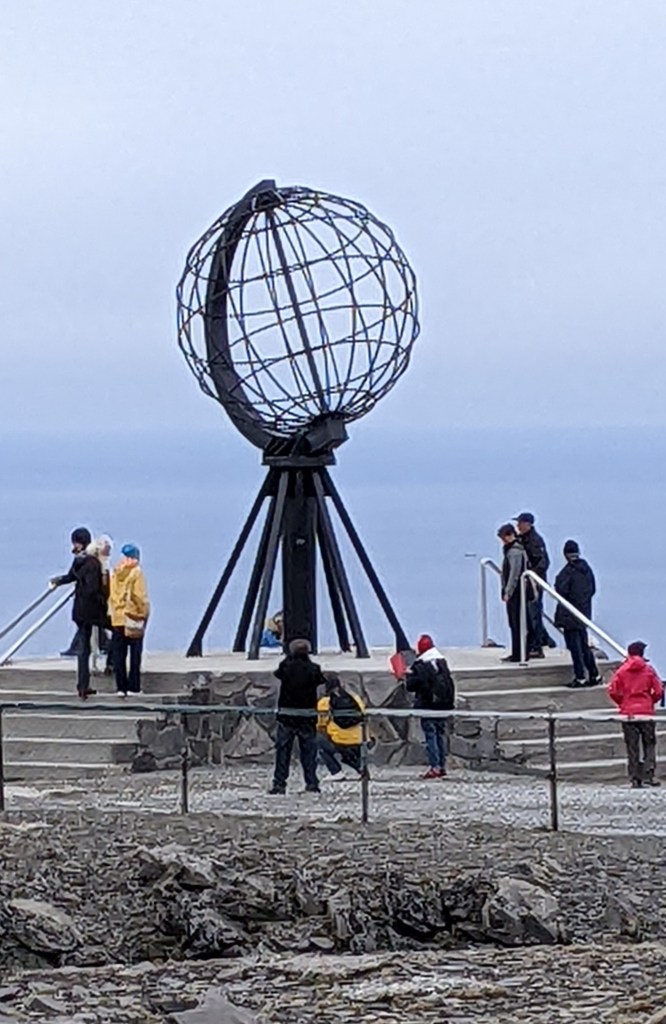
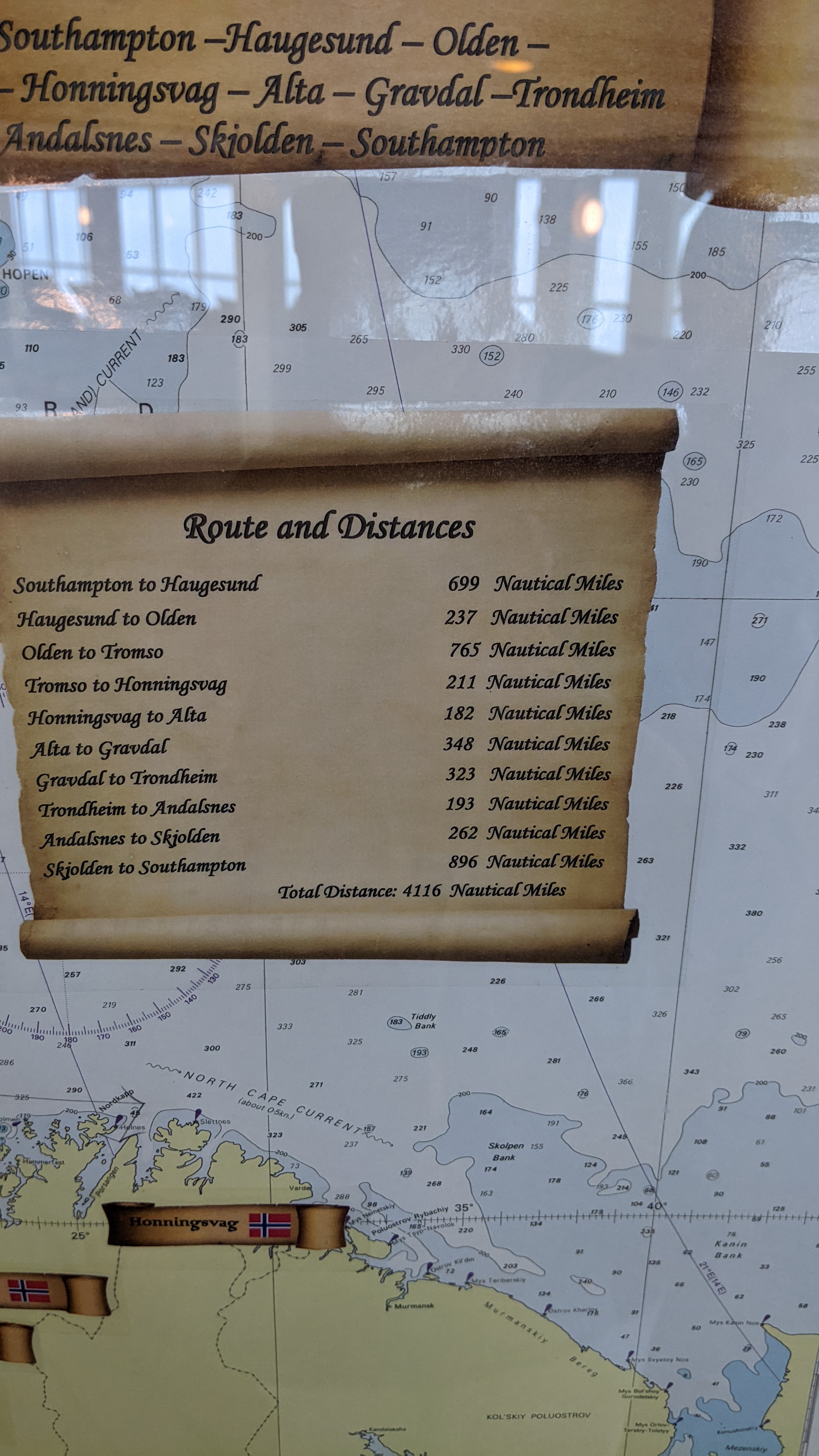
We traveled further north. Nordkapp lies at Latitude 71°10′21″ N, a high plateau on a spit of land that rises almost 400 feet above the swirling Arctic Ocean below. It is cold, windy and forbidding on the best of days. In the winter, the road to Nordkapp is often impassable, and not even reindeer remain on the surrounding fields.
The nearest town is approximately 22 kilometers distant. Oslo, Norway’s capital, lies about 2000 kilometers to the south, and the North Pole is about the same distance further north. At the easternmost end of the virtually uninhabited land, there is a 121.6-mile land border with Russia, established by treaty in 1826. But few travelers cross at the single border station, and the boundary between the two countries continues through the Barents Sea and the Arctic Ocean. As the furthest north point of land in continental Europe, Nordkapp attracts visitors who harbor the same dreams that have lured explorers to points unknown over the centuries. Their stories are captivating.
Early visitors had to arrive by boat on the sea below. They scaled steep, rocky cliffs to reach the point above. There was no visitor center then, and the path back down the cliff had to be even more difficult than the climb up.
Today, the draw of this stunning promontory is so powerful that tourist buses sometimes follow snowplows to bring visitors to the point. Our trip in June, however, entailed a pleasant drive along modern roadways, punctuated by native Sami settlements and the sight of reindeer grazing on the barren windswept land. They and their Sami masters invariably return to the mainland in the fall, prior to “polar night,” when the sun does not rise above the horizon for a period of months. We also visited a northern fishing village, which must feel terribly isolated during the winter.
Another northern port, sadly, was canceled. We had been scheduled to call at Svalbard, the island that houses the Svalbard Global Seed Vault, an underground facility that stores millions of crop seeds from throughout the globe, protecting them against disasters of all kinds, including global warming. We had anticipated visiting Longyearbyen, the largest settlement with a population exceeding 1,000 in the Arctic region, but the visit was canceled at the 11th hour.
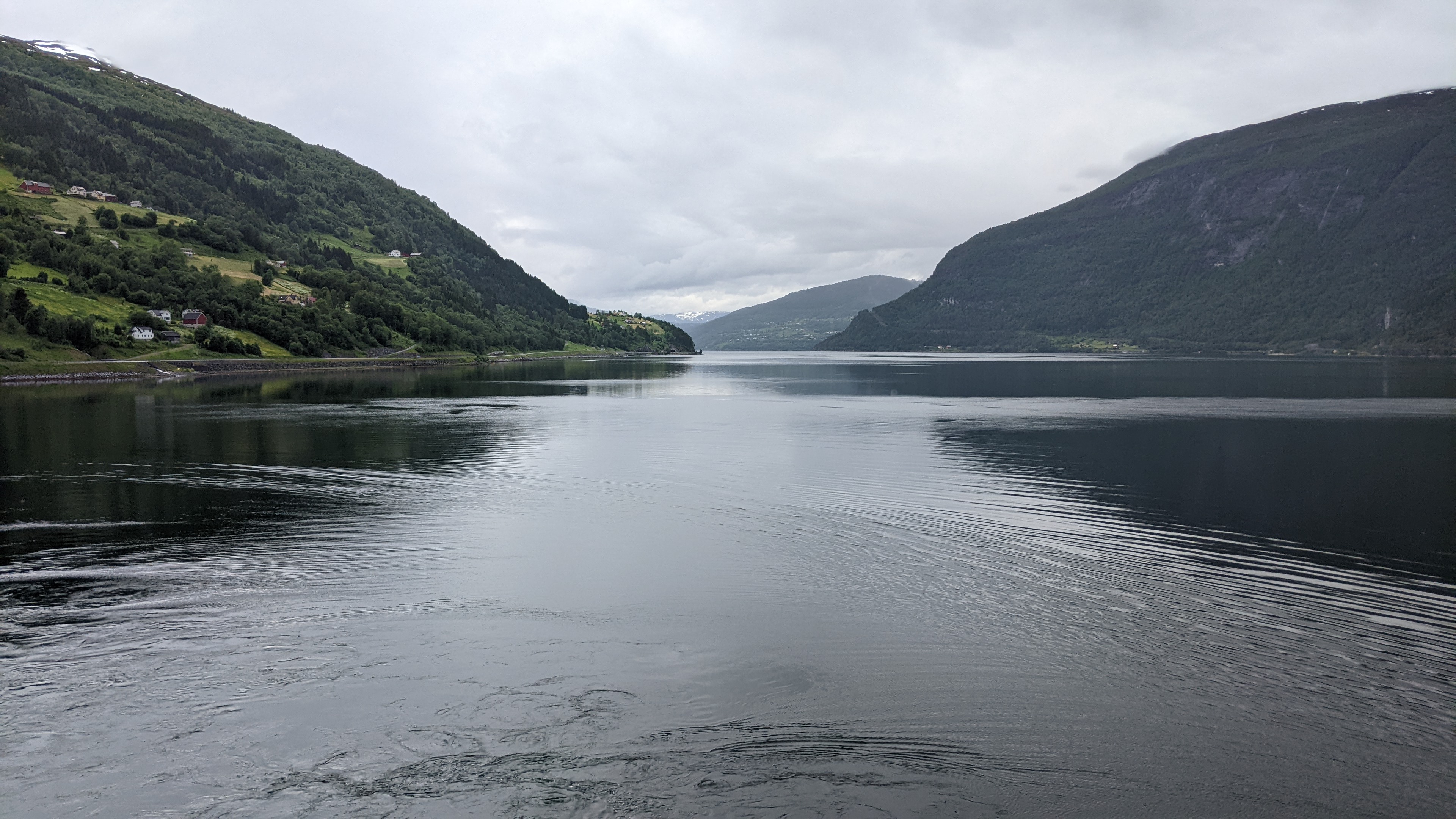
Our trip through the coastal fjords was spectacular, relaxing and enlightening. We are grateful to have had the opportunity to visit a far-away landscape that is awesomely beautiful, to drink in the natural beauty of the far North, and to meet the people who inhabit this extraordinary landscape. Those who live here are accustomed to strangers, but no one remains a stranger for long!
Now, another adventure awaits . . .
In January 2023, my husband and I — barring unforeseen circumstances — will experience another polar day. We will reach approximately 65 degrees south of the Equator and cruise among the ice shelves and along the shoreline of this unique continent. Our 16-day itinerary with the Sapphire Princess promises to be a unique adventure. We are not likely, given the size of our ship and current regulations, to cross Latitude 66°33′49.3″ which is the official Antarctic Circle. Only smaller expedition ships and scientific teams routinely venture further into this ice-covered environment.
We are scheduled to fly into Santiago, Chile, and embark from the port of Valparaiso for a journey that will take us to the southern reaches of Patagonia, and to Ushuaia, “the southernmost outpost in the world” at the tip of Argentina. We expect to sail in Beagle channel, as did Charles Darwin, and round Cape Horn just as previous generations of seafarers did on their voyages to the new world. Then, we look forward to spending four full days cruising the waters of the Antarctic Peninsula, leaving Ushuaia at the southern tip of Argentina and traversing Drake Passage, hopefully without incident, and with minimal turbulence from notoriously rough waters where the currents of three oceans collide. It’s a voyage I have long envisioned!
Just days ago, however, on December 2, 2022, I learned of the rogue wave that struck the Viking Polaris in nearby waters, resulting in the death of a passenger, injuries to four others, and damage to a well-equipped modern cruise ship. I realized once again that we humans have little control over the forces of nature, much as we would like to be the “powers that be.”
Does it concern me? Not enough to change our existing plans, but I cannot claim it didn’t give me pause. This trip to the bottom of the world, just as our trip to the Arctic Circle, will be during a polar day (or summer season) due to the inclination of the earth in relation to the sun. When my husband and I travel in late January to the southern reaches of the globe, will it be calmer in those waters? I do not know.
There are no permanent settlements in Antarctica, and the various research stations are located further south than our journey will take us. We will not set foot on Antarctica, the seventh of earth’s continents, but to gaze out at the barren expanses of snow-covered terrain and cruise past glistening icebergs, larger even than the ones we encountered in Alaska, will be enough. I, for one, am enthralled by the thought of being (relatively) close to another of earth’s legendary places — the South Pole. Like the North Pole, it is not a fixed point — it, too, shifts, even though there is a land mass below. If we are fortunate enough to spy seabirds, seals, penguins, albatross, and other wildlife in their natural habitat, we will count it as a bonus.
And, if our travel through Drake Passage is a calm one, I am certain we will be forever grateful. This trip to the “bottom of the world” is not only the culmination of a long-held dream, it also seems a fitting “second act” to last summer’s Arctic adventure.
It sits today on the Kansas prairie like a kind of mechanical orange dinosaur, but this giant electric shovel was once an operating mining machine used to extract coal from shallow veins that run through surrounding farmland. In 1963, the parts were shipped on 150 rail cars to be assembled on the site. The behemoth stands 16 stories tall and weighs in at 11 million pounds. Its boom alone is 150 feet long, and each dip of its shovel could hold enough material to fill three rail cars – the equivalent of 90 cubic yards or 150 tons.
Sadly, Big Brutus performed its duties only for 11 years. It was used to unearth shallow veins of coal at depths down to about 65 feet. Smaller equipment was then used to fully extract and move the coal. By 1974, the process was no longer economical, but Big Brutus was left in place, deemed too expensive to move.
It’s not the biggest shovel ever built; the record-holder was three times its size, but Big Brutus is the largest to survive. Donated by the Pittsburg & Midway Coal Mining Company, it forms the core of the mining museum that was established in 1985. In 2018, it was listed on the National Register of Historic Places.
Today, visitors to the site marvel not only at the size of Big Brutus, but also at its story. One could spend several hours to view all the exhibits and actual machinery displayed at the non-profit center. It tells the story of mining in this part of the world, and it is fascinating. It also provides a glimpse into what life was like in Kansas in times past.
It is awesome to stand next to the metal tracks that tower over my head, and know that those gears once moved this machine across the landscape, albeit at a snail’s pace. Visitors may climb up to sit in the cab of Big Brutus, pose for photos on its platforms or in its shovel, and see small-scale models of other mining equipment in action in the Visitor Center. The Visitor Center in West Mineral, Kansas, is open seven days a week, except for Thanksgiving and Christmas.
It may be an unlikely destination for a family vacation, but it’s captivating, to say the least! The truth is that Big Brutus is equally impressive for adults as for children!
Big Brutus was only one of the destinations that I visited recently on a three-day press trip through southeast Kansas. Read more of my stories and impressions in the coming days. As those of us on the trip agreed, “There’s a lot of Kansas in Kansas.”
I don’t quite know what to say about Eureka Springs. It’s equal parts history, natural beauty and distinctive character. And for a quick weekend getaway, it’s a delight! There’s a lot to like about this small town (population only about 2,100) in the beautiful Ozark Mountains of northern Arkansas. It’s unique, and in some ways it feels stuck in time. That, too, is part of its mystique. It has charm, for sure.
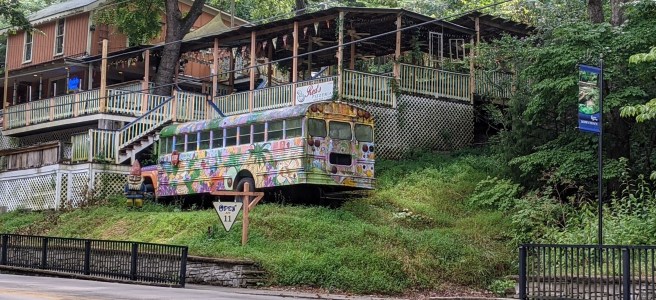
Eureka Springs was first settled in 1879, and named on July 4 of that year. There are wonderful old homes — many of them now B&Bs — that rival San Francicsco’s “painted ladies.” Log cabins, imposing stacked stone family homes and simple, single-story cottages exist along steep inclines and winding lanes. There are pizza places galore. There are casual diners and a few fast-food outlets; there are fine dining places with white linen tablecloths and attentive waiters. Old-fashioned bars attract a biker crowd come to ride the high curves and twisting back lanes. A local brewery and plenty of watering holes with more than their share of character and characters attract lively, friendly crowds.
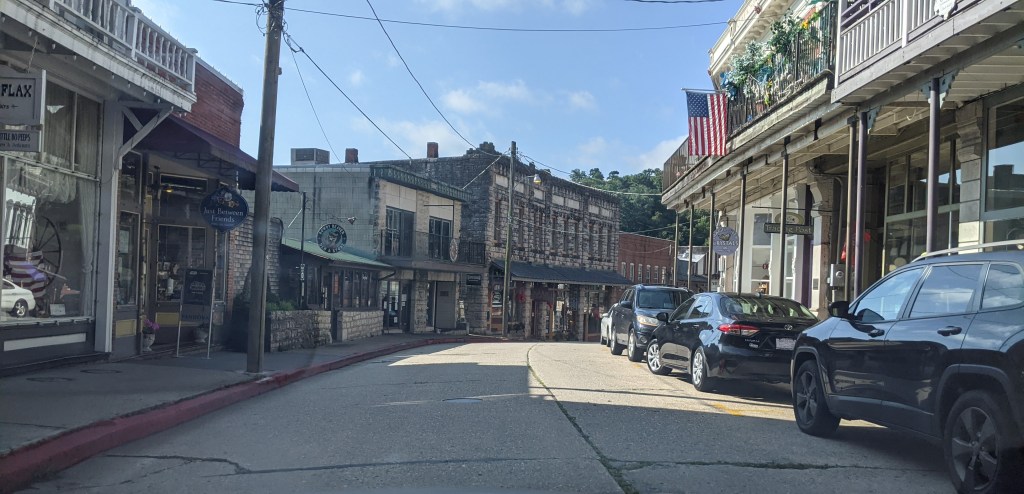
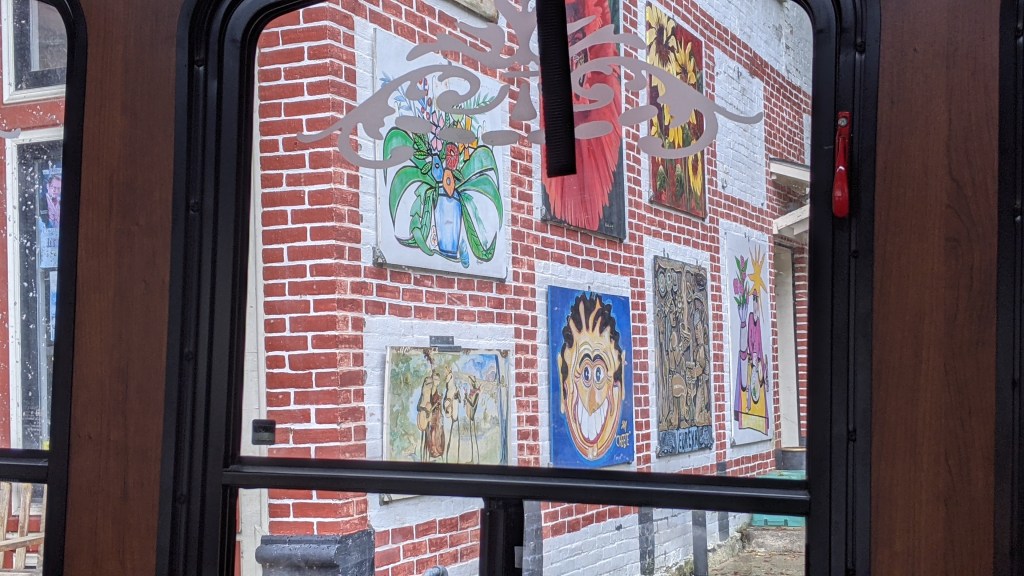
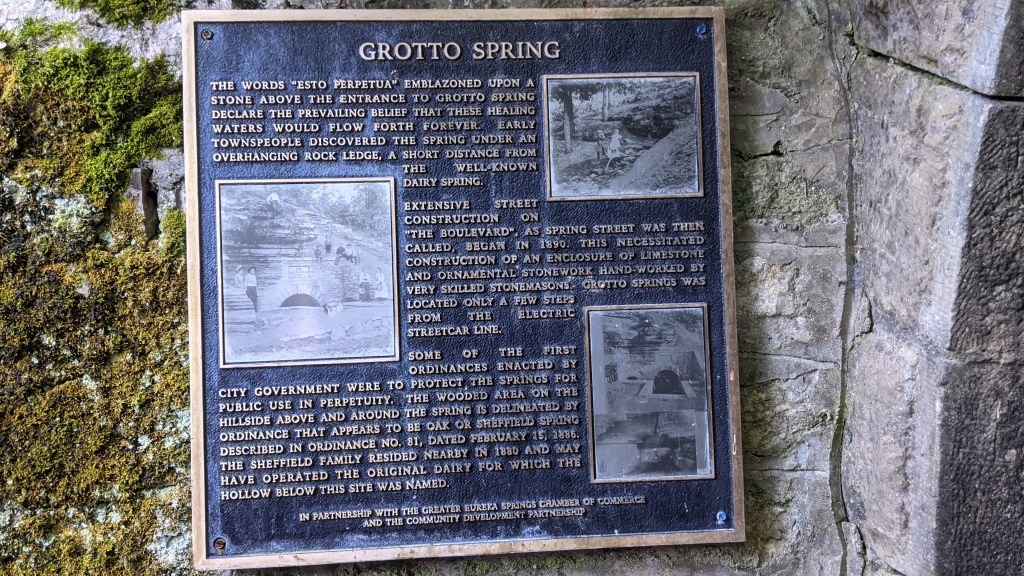
On the labyrinthian streets, you’ll find historic buildings housing trinket and t-shirt shops, underground grottos from which the “healing waters” once flowed freely, an old-time photo parlor that proclaims “Weddings Performed” and distinctive hotels and eateries. Street art and street musicians coexist in the small downtown. Public sculpture and old memorials are much in evidence, as are the public buildings and hotels with historical plaques.
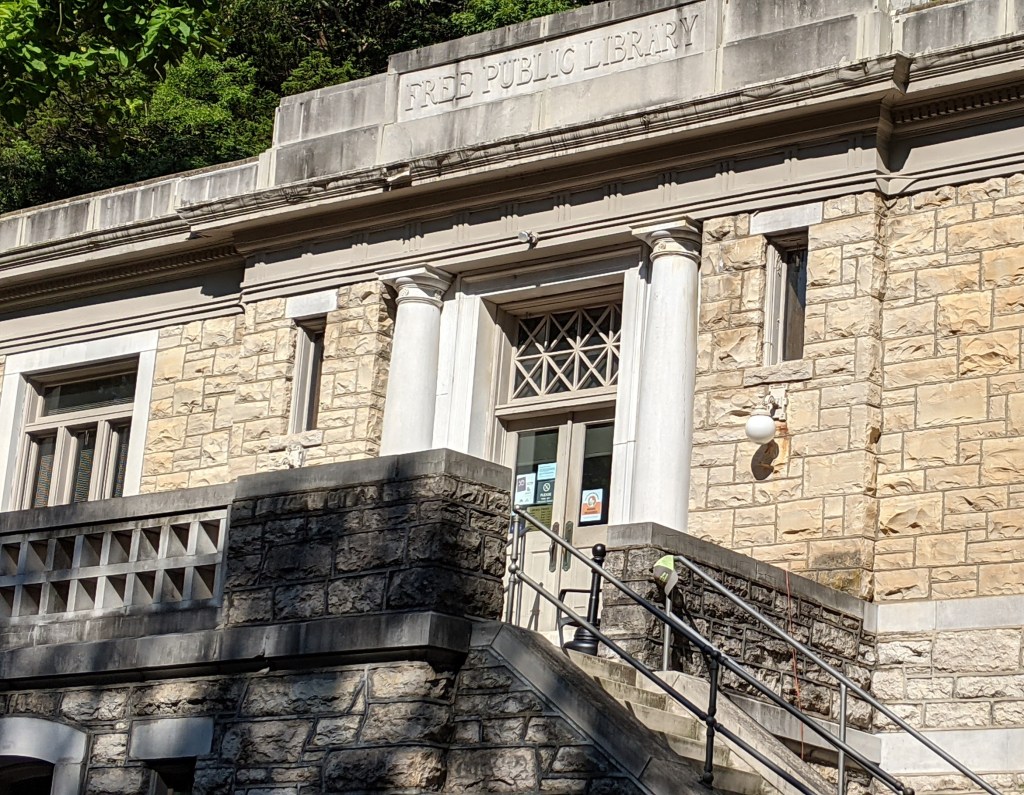
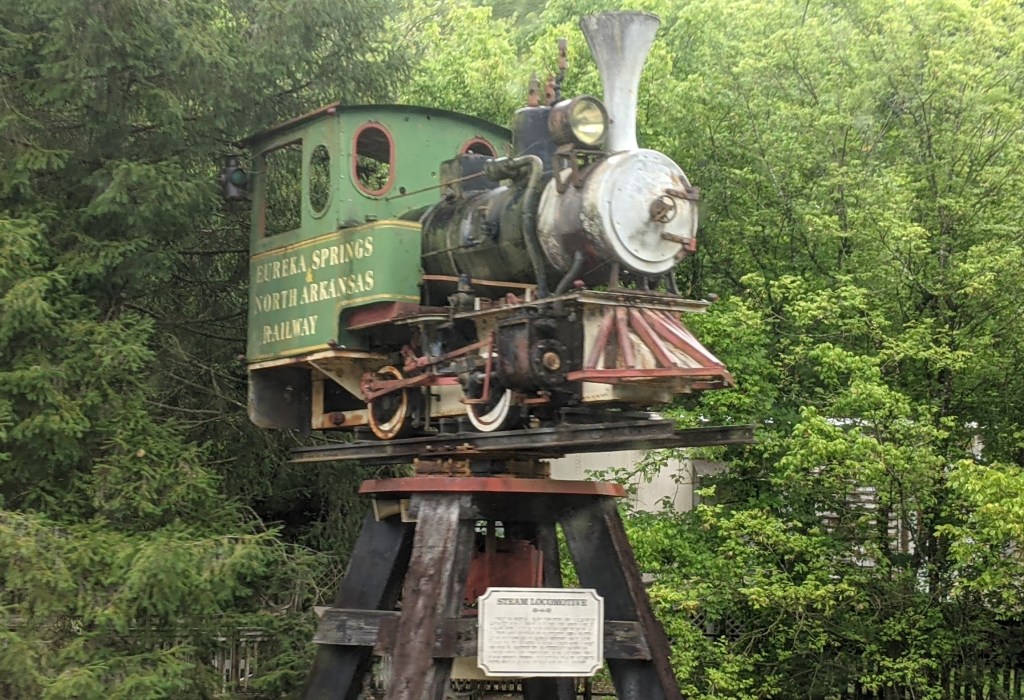
A well-preserved Carnegie Free Library is a commanding presence on one of the main streets, and it’s still in use. The old depot and railroad roundhouse are attractions at the edge of town; a popular excursion takes visitors on a four-and-a-half-hour trip over restored Eureka Springs and North Arkansas track. You can also book a lunch or dinner expedition ride to enjoy a trip into the past in a restored dining car. Along the way are extraordinary scenic vistas.
For a first-time visitor, an orientation ride on the “hop on-hop off” Eureka Springs Transit is a must. Ride the four different routes for an overview of Eureka Springs. It’s as much a local public transportation staple as tourist aid, taking passengers almost anywhere in, and out of, town. Its price is more than reasonable at $6 a day for unlimited time and distance. You’ll rub shoulders with local residents toting grocery bags, and others on their way to work or heading home after a long day.
The varied routes are perfect for exploring at your own pace, and it certainly beats walking up and down steep hills on foot, or trudging long distances in unfamiliar territory.
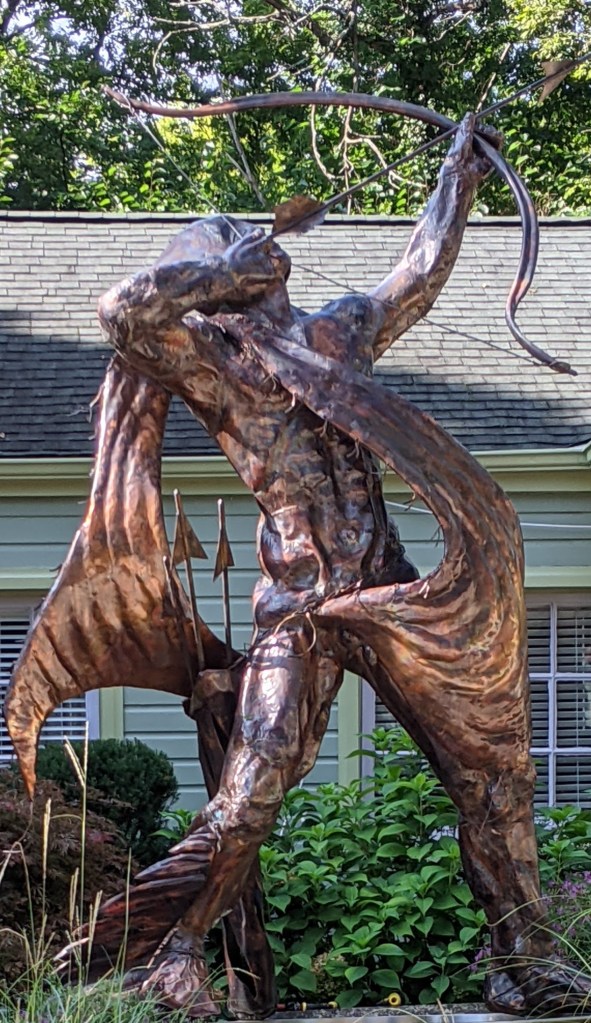
Drivers are helpful and knowledgeable, even willing to “bend” the schedule a bit so a rider can hop off and grab a free paper, or snap a cell phone photo of a giant sculpture from just the right angle! Stops are plentiful along each route and trams run every 20 to 30 minutes all day long, so there’s ample time to explore a site — or several — should you choose to do so.
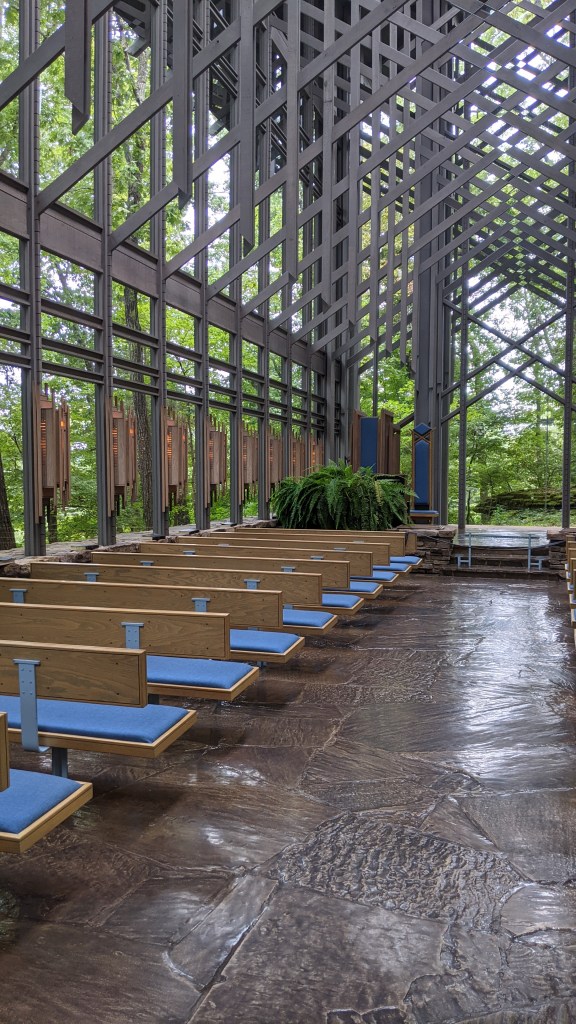
We drove to Eureka Springs — it’s a pleasant four hour trip from our home. We traveled through pretty country on curving two-lane state highways. But, once there, we parked the car and rode the tram. It brought us to Thorncrown Chapel, where we were entranced with the architecture and the story of this inspiring place. The soaring wood and glass structure is perfectly integrated with its natural surroundings. The tram also brought us to the famed Passion Play site, with its recreated ancient Jerusalem stageset and other themed attractions. The 65-foot high Christ of the Ozarks statue, reminiscent of similar works in Rio de Janeiro, Lisbon and Havana, towers above the surrounding forest, but is perhaps more impressive from a distance than it is up close.
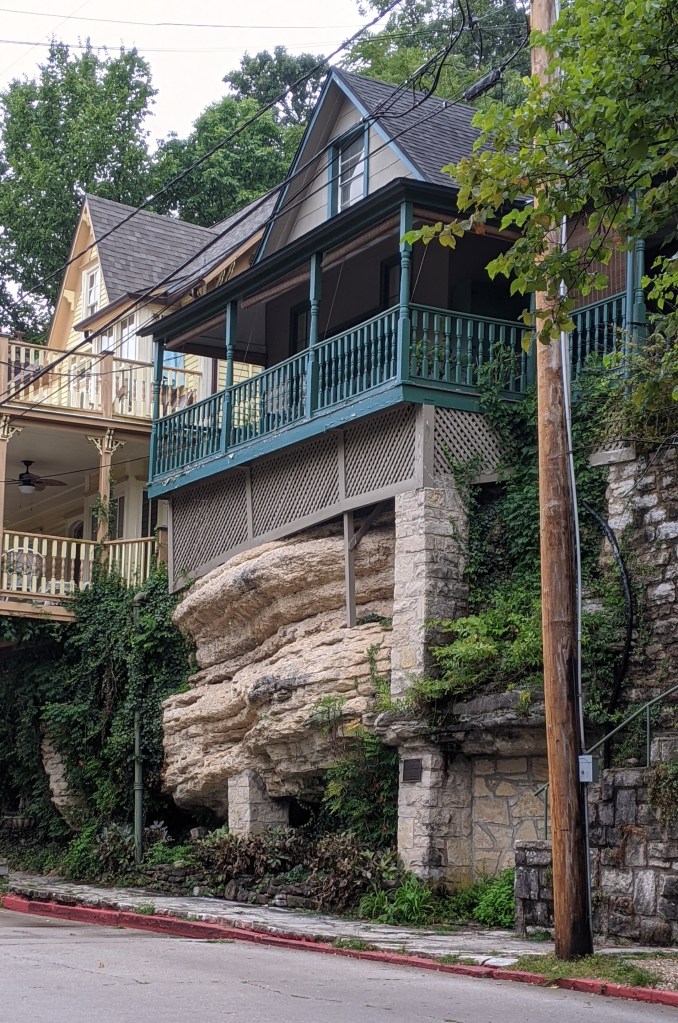
The downtown trolley station is well-situated for a walk around town. Visitors can enjoy lunch, browse funky shops, visit the historical museum or simply admire wall murals and interesting architecture. Spend as long as you like, knowing that another tram will arrive within just minutes. On a walk about town or in any neighborhood, you’ll find something wonderful around almost every corner: a grotto carved into a hillside, an iron fence dripping with flowering vines, the suggestion of a face in a towering old oak, a lush garden with a bubbling fountain, whimsical yard art decorated with strings of lights, or a house clinging to a cliffside over a massive boulder. There is beautiful statuary and whimsical signage.
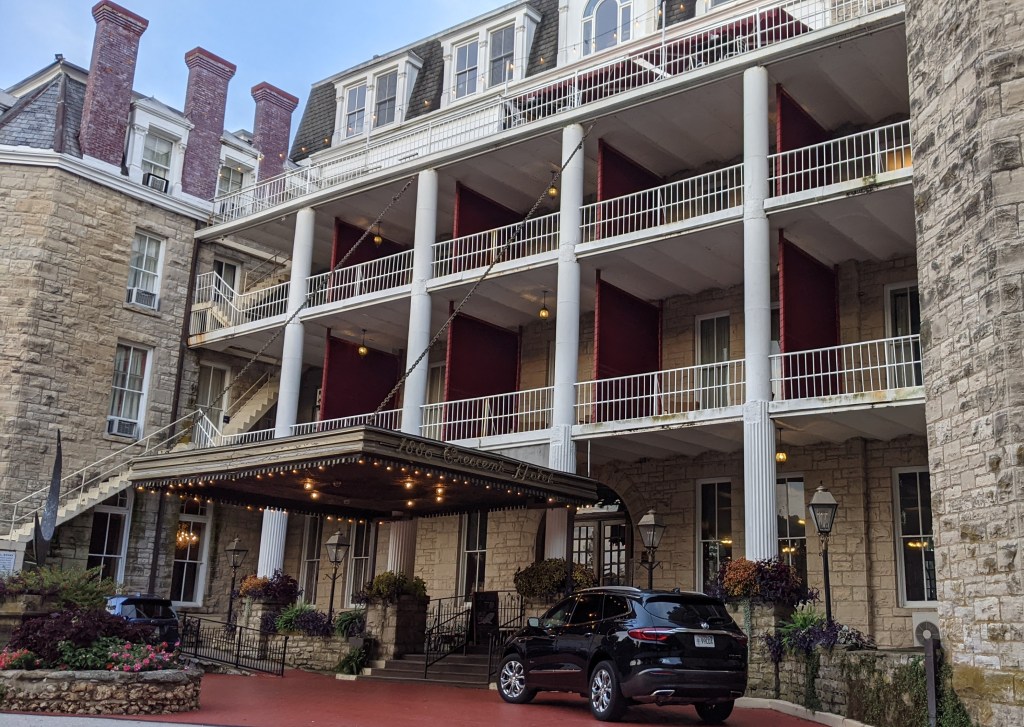
We could have disembarked for a visit to the Crescent Hotel, built in 1884 and known for its resident ghosts and always-fully-booked ghost tours. Its site, at the crest of the highest hill in Eureka Springs, is reason enough to want to spend some time there (which we did, later the same day, when we returned for pizza at the fourth-floor Sky Bar.) The view was mystical, with a haunting landscape of moving mist that shrouded the mountains all about us. Gleaming white in the distance, the Christ of the Ozarks watched over the setting with outstretched arms.
Although experiencing Eureka Springs can feel a bit like entering a time warp, being thrust into the long-ago culture of a small town is magical, if a bit disorienting. Residents insist that everybody knows everyone else, and that no one bothers to lock their doors. We stayed just two nights at The Bridgeford House, a charming B&B conveniently located on Spring Street. Its location put us only a few steps from the trolley stop, and we were greeted by waves from friendly passengers as we enjoyed breakfast on the front porch, served with a smile by Innkeeper Will Lawlor, who is himself a relative newcomer to Eureka Springs. We enjoyed chatting with him, and sharing our impressions of this interesting historic destination.
Is Eureka Springs worth a visit? Absolutely. It’s nothing if not unique!
It’s called the Natural State, or sometimes the Diamond State. After moving to Arkansas in the midst of the pandemic, my husband and I have now been residents of this state for a full year. We have settled into a new routine, and now we’re more than ready to venture out to see what prompted those labels for Arkansas. Within minutes of our home are both a national park and a national forest. Numerous state parks, mountains, lakes, rivers and historical sites are not much further afield. Getting to them is easy by car, and we have already enjoyed quick road trips on back roads to learn the lay of the land, as they say.
We like what we see.
We also just acquired a “new to us” vehicle, purchased with the sole intent of having fun as we explore some of the interesting highways and byways of our adopted home state. It’s a convertible, so we can feel the wind in our hair on pleasant drives when weather permits. As anyone who knows me knows, I typically try to avoid interstate highways, much preferring back roads and curvy lanes where it’s easy to catch a glimpse of wildlife, wildflowers in the fields, odd signs and old buildings.
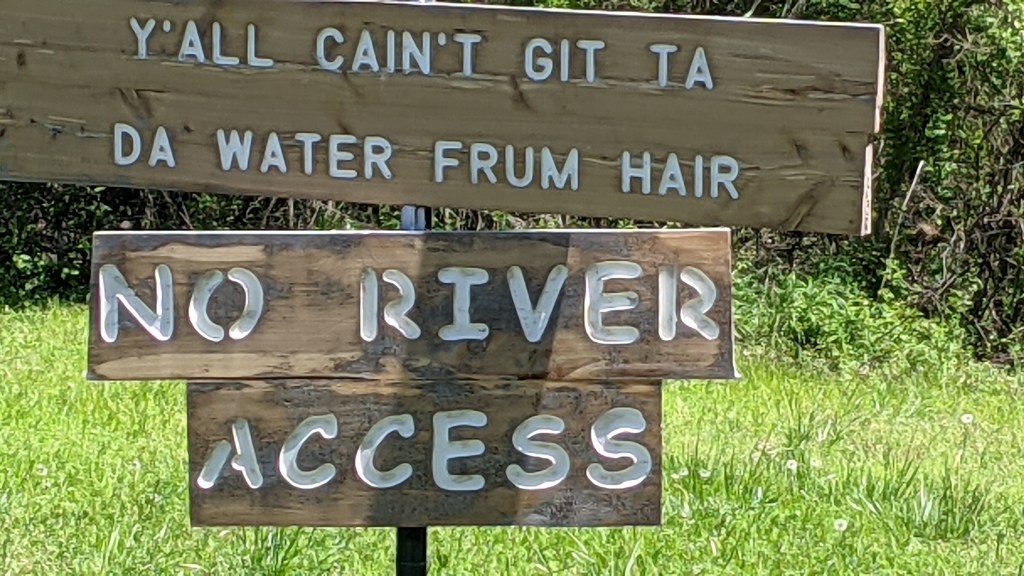
We like pulling off the road to have a closer look if we see something interesting, and we have been known to follow hand-lettered signs to classic car shows, country stores, out-of-the-way fudge shops, charming churchyards and old battlefields. Bear that in mind as I take you to some unique destinations. We have found also that there are plenty of friendly folks in smaller towns, folks who, for the most part, are only too willing to stop whatever it is they’re doing and tell us about what we’re about to discover.
Sometimes we pack a picnic, or we’ll stop for a quick bite and a cool drink anyplace that seems a little quirky. We might look for a quaint B&B or a rustic cabin, but many of our jaunts don’t require an overnight away from home. Most of the time we don’t make reservations. We are footloose and fancy free at this point in our lives. Until we are free to travel globally again without restrictions, warnings (or masks) we will probably stay closer to home. We have decided that’s okay for now, so we’re busy planning more regular getaways. I hope you’ll come along.
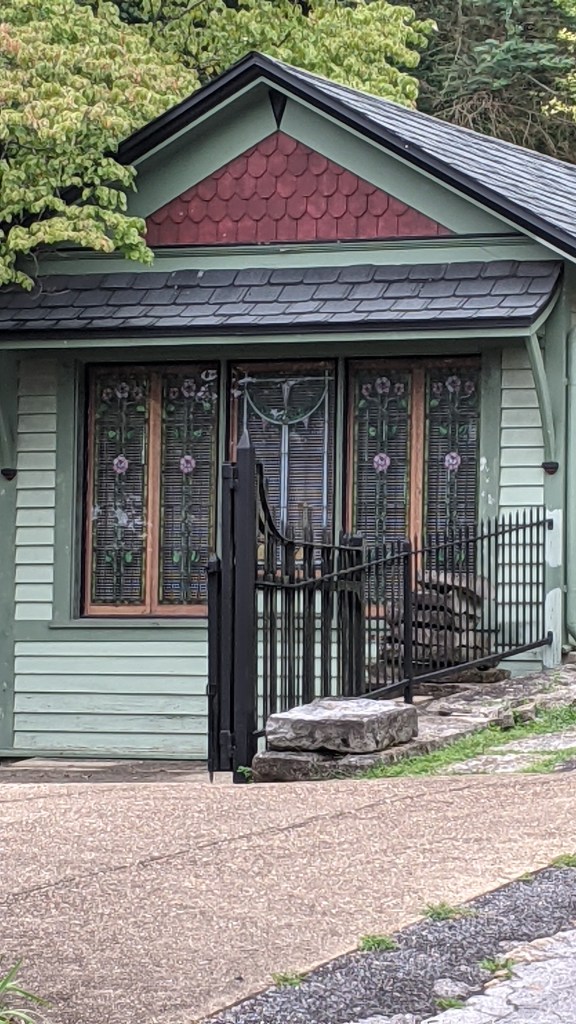
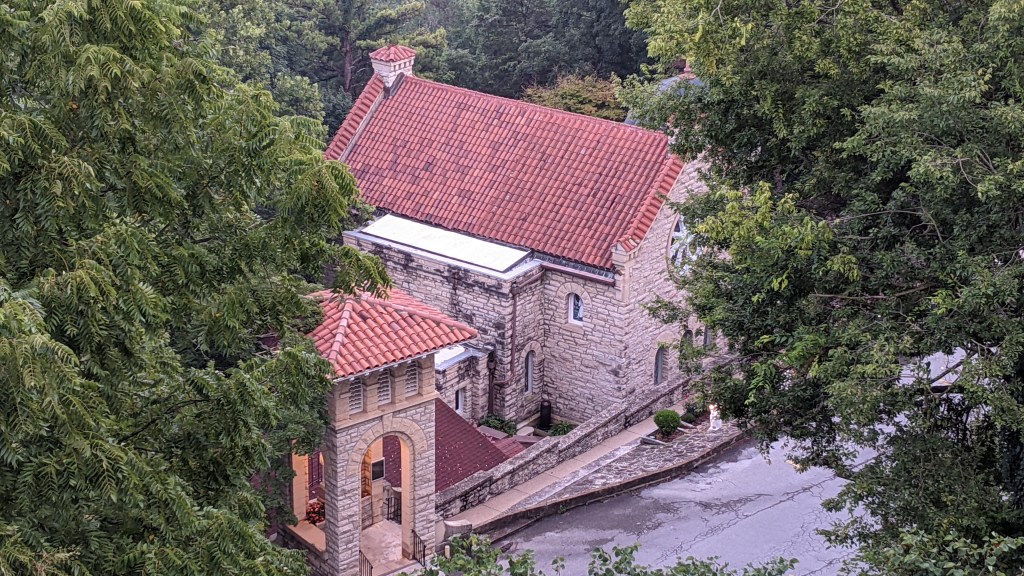
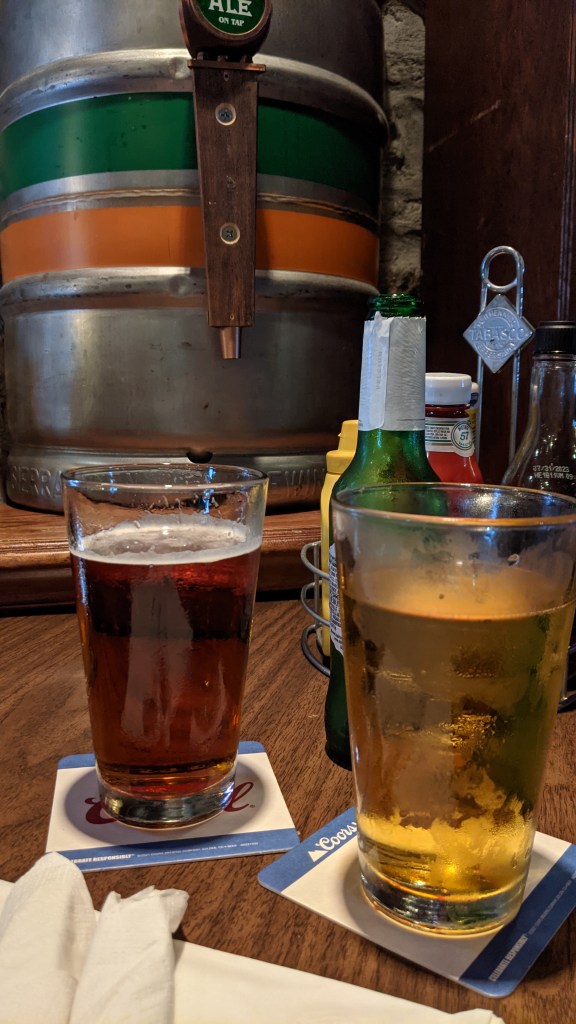
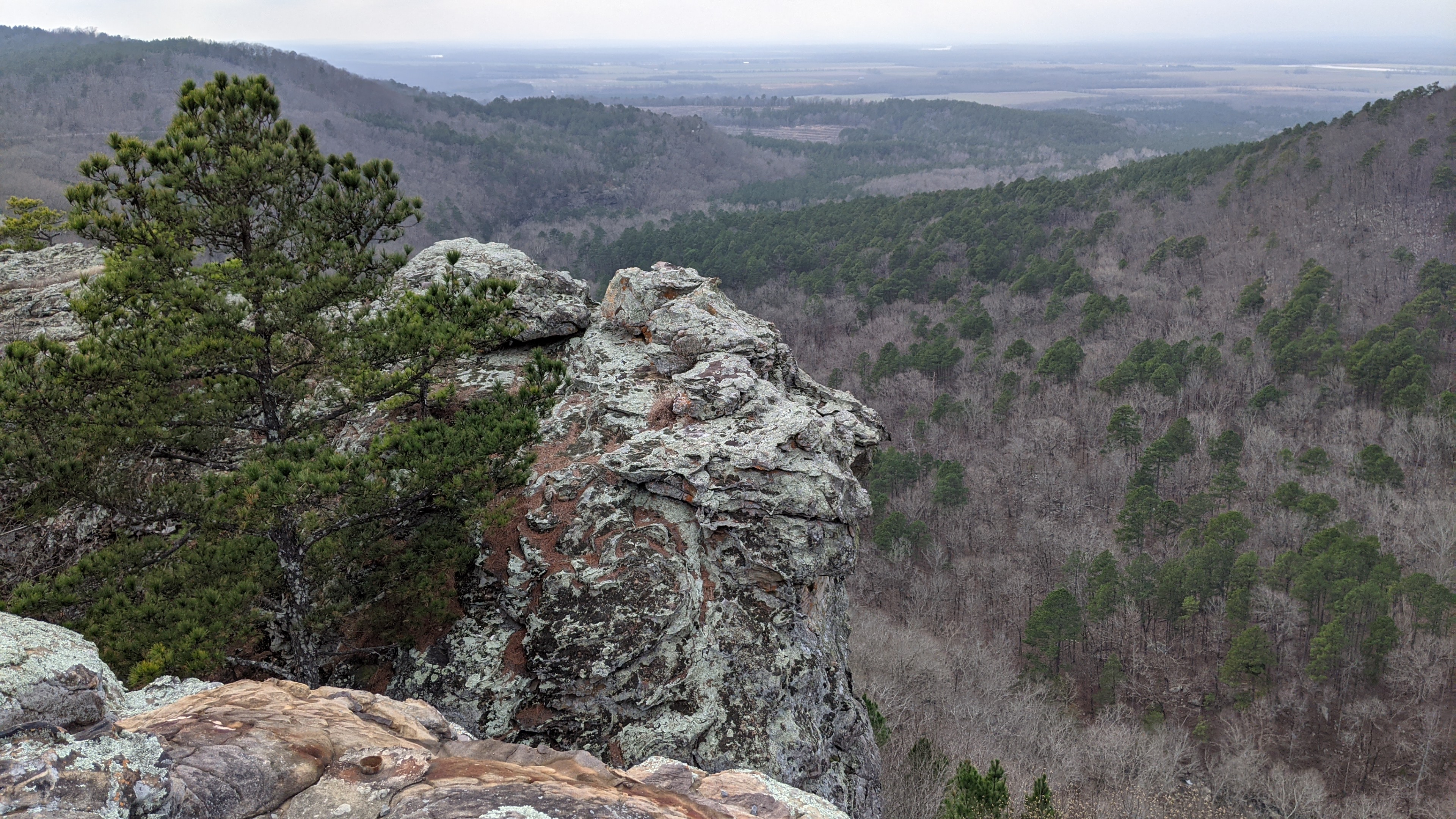
Here’s a peek just to whet your appetite for what’s to come. I take lots of pictures, so they’re the focus right now — the stories will come later; I’m saving my words for later and longer trips. For now, I’ll just share some Hot Springs sights, beginning with random shots around Hot Springs and the home turf that we have come to love.
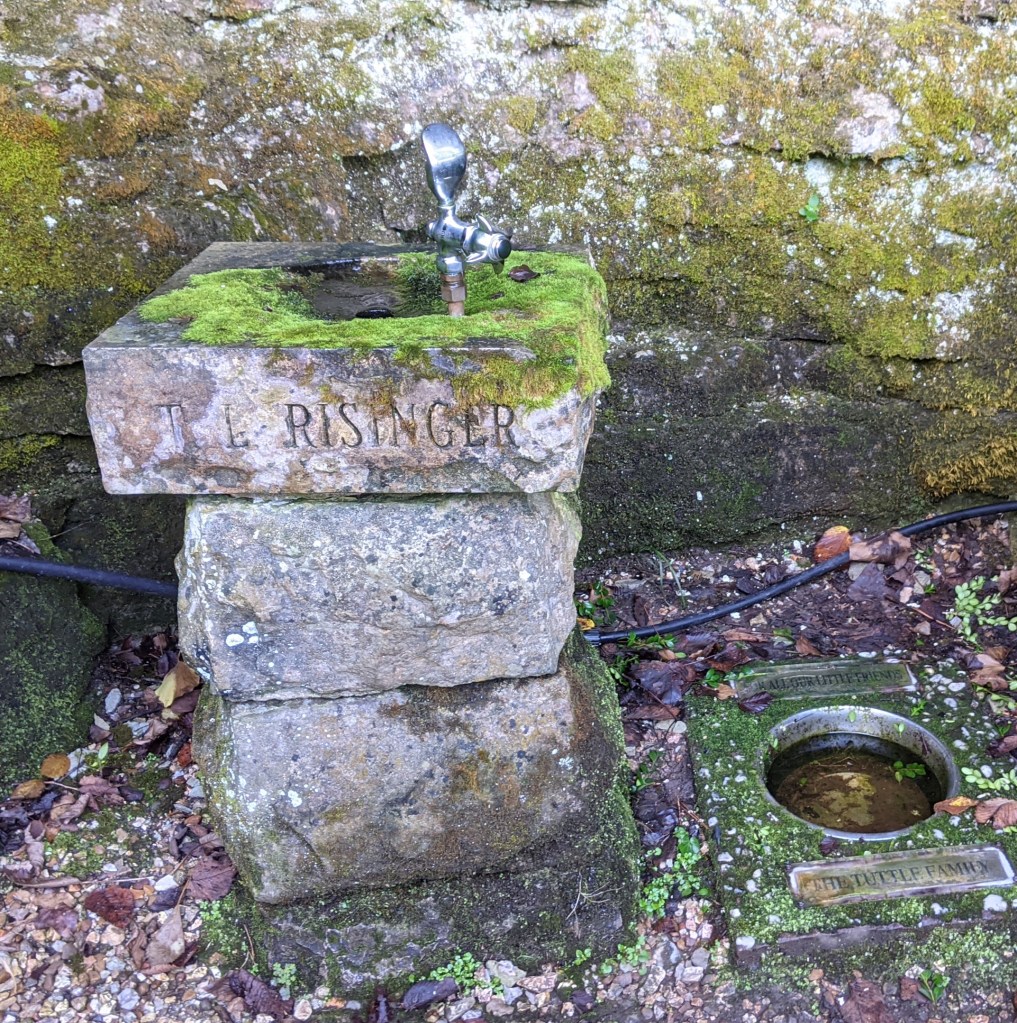
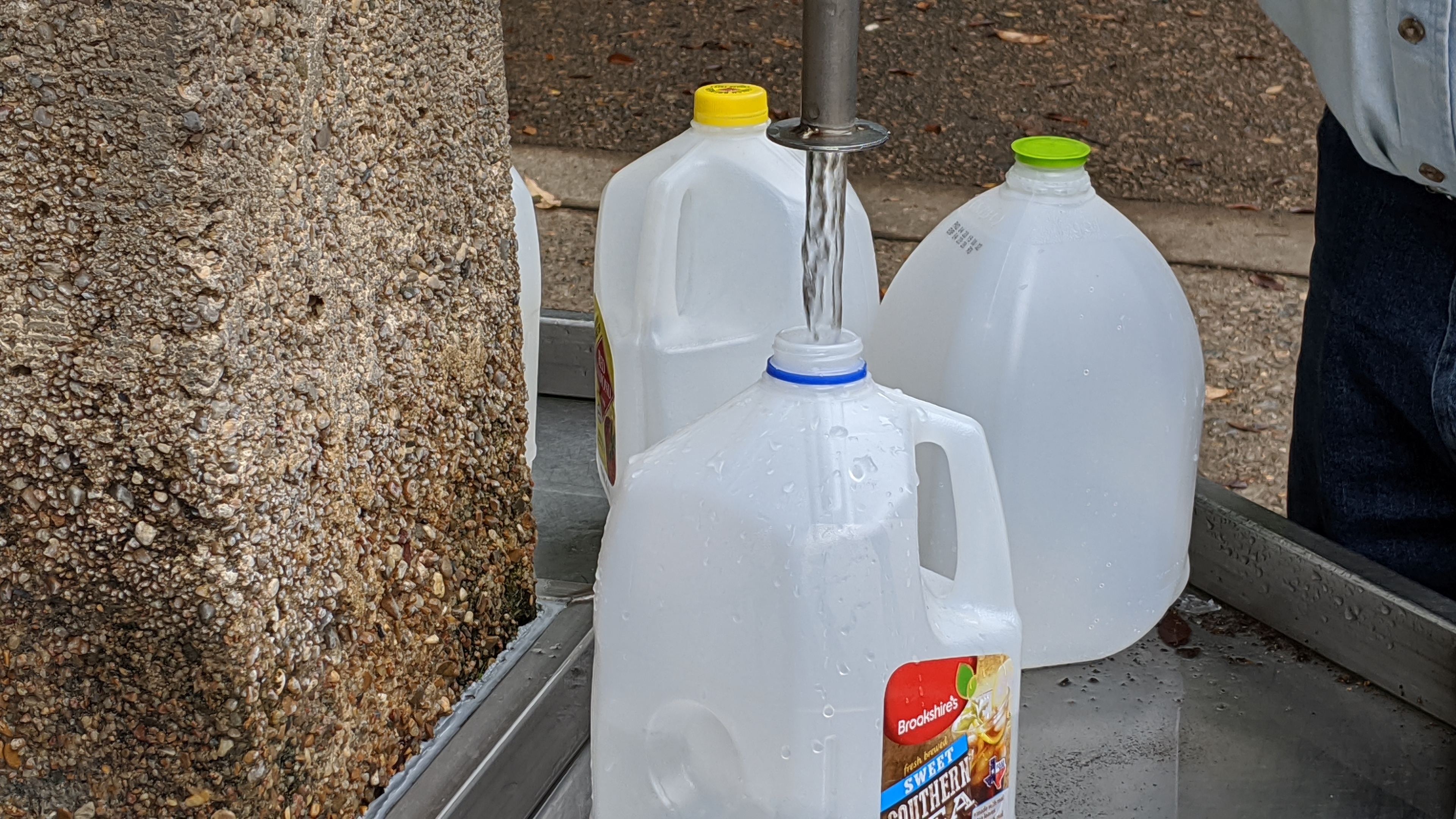
In case you’re wondering, the hot springs still flow . . . and, like many other locals, we make a weekly trip to the city’s free spigots to fill our water bottles. It’s nature’s gift to us, and it’s really good water!
We want to explore Hot Springs more fully, and we will do that this winter, when it becomes somewhat quiet again after summer tourists leave. The National Park that encompasses the city just celebrated its centennial. Land that contains the natural thermal springs was set aside as Hot Springs Reservation in 1832, but the area was mapped initially under an order to explore the southern Louisiana purchase, issued by President Thomas Jefferson in 1804.
The sprawling Ouachita National Forest extends westward from the Hot Springs area throughout much of Arkansas and into eastern Oklahoma, and it too is only minutes away, with all its natural beauty. We want to get out to the forest more as well. And Arkansas state parks, judging by Petit Jean where we spent a wonderful couple of hours not long ago, is not only delightful, but it’s an easy day trip!
The mention of Port Wine has always, for me, prompted a vision of wood-paneled rooms filled with leather settees and impeccably-groomed men holding a glass in one hand and a cigar in the other. It’s a movie-set vision, I know.
Port still seems a bit mysterious. Like sherry, it has never really been a mainstream experience for most Americans. I was aware that port was produced in Portugal, while sherry is associated with Spain, but I knew little else. So, when my traveling companions and I had the opportunity to take part in a port tasting on a rainy day, we seized it. We were in Cascais, a delightful seaside city not far from Lisbon.
Port is produced only in a specific region in the country, and its designation is strictly regulated. Bottled in several varieties, there are expensive aged ports and sought-after vintages, but surprisingly smooth, rich and reasonably-priced options are also available. Stringent standards govern a port’s bottling and labeling. But all true port wine comes from the Douro Valley of northern Portugal. It bears what is termed a “controlled” appellation. Although other regions produce liqueurs and similar fortified wines, true port is distinctive and distinctively satisfying.
My brief experience in the tasting room certainly does not bestow expert status, but I feel confident that I would not embarrass myself by ordering an after-dinner port in a restaurant. For me, that’s a triumph. I also know now why so many people enjoy sipping port. I have a favorite, but the four different varieties we sampled were all pleasant. To my surprise, I learned that there is white port; and that it is, indeed, very good.
The cool, drizzly day presented us an opportunity to cozy up in a wine bar in the all-but-deserted marina area of Cascais. The proprietor beckoned us in, offering temporary shelter from approaching dark clouds. Within minutes, places were set, bottles arranged, and the learning commenced.
The tasting became a highlight of our two-week driving trip through Portugal. When we returned home, one of our first purchases was a bottle of Tawny Port. We savored it, both for its taste and for the memories it evoked.
A European trip the previous year filled in some gaps in my knowledge about sherry during a tasting and cooking class in the Spanish city of Jerez. I remember that experience fondly as well. Today, bottles of the two unique fortified wines share space in my home’s cocktail bar, offered as complements to good food and good times shared regularly with friends.
One of the best reasons for traveling, of course, has always been to experience new things. The tastes of new and previously unfamiliar food and drink rank every bit as high on my list as visual adventures. Even though, today, there is a temporary hold on my travel plans, the enjoyment lingers, the memories are sweet and fresh, and sharing past experiences keeps every recollection alive.
I had never developed an appreciation for raw oysters; nor for oyster stew or oyster stuffing at Thanksgiving, for that matter.
I have been known to order Oysters Rockefeller because that seems a “classy” choice at an upscale restaurant, on the same culinary level as escargot or whole artichokes. I love showy foods, and I admit that I enjoy demonstrating that I know how to deal with such dishes. I have, on occasion, skewered a salty, smoked oyster for a cracker.
But as for raw oysters. No, thank you. I do not love oysters.
My husband, on the other hand, enjoys oysters any way they’re served, but preferably right in the shell, cold, salty and fresh from the sea.
It was a preference he worked hard to cultivate, ordering oysters on the half shell several times in his early 20s. He initially discovered that the slippery oysters didn’t slide so easily down his throat, no matter how much he tried to disguise them with cocktail sauce and and Tabasco. Those first few times, he admits, were less than pleasant experiences.
But he persevered. At a tiny cafe in Brittany, with a view of the oyster fields just out the window, he ordered an oyster. One fresh-from-the-Atlantic oyster. The lone half shell on ice, accompanied by lemon and course sea salt, was brought to the table with a flourish by an ever-so-proper French waiter. It prompted curious smiles from those seated at nearby tables.
The waiter stood by expectantly, awaiting a reaction.
I was there, cheering him on.
Other diners also waited, and nodded approval as he downed that first cool slippery oyster. It was a personal triumph. And it started a trend. He has since ordered oysters in Maine, in numerous Gulf Coast eateries, and in fine restaurants in cities across the globe. He does, you see, love oysters.
After many years, we returned to that same restaurant in Cancale, France. It had changed a bit over the years, but the oyster fields are still the same, and this time my husband ordered a half dozen and enjoyed every one. In fact, he considered ordering another half dozen.
Today, he rarely passes on the opportunity to order oysters on the half shell when we’re near an ocean that allows them to be delivered fresh and cold from their habitat. He still asks for extra horseradish and hot sauce.
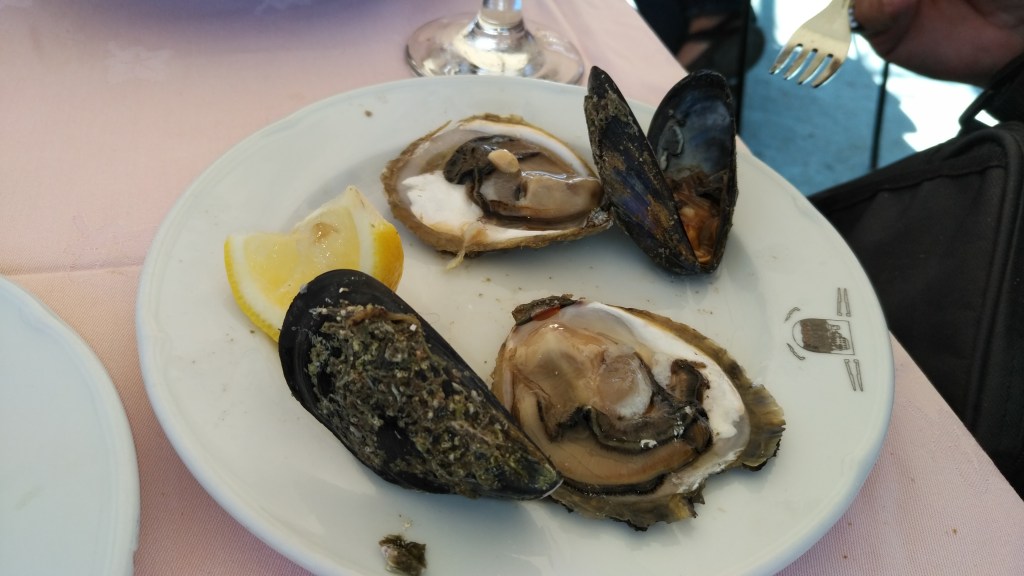
I resisted for the longest time, until we visited the Adriatic three years ago. Sitting on the open deck of a vessel anchored only feet from the oyster beds, I was prepared to enjoy the local fare along with the white wine promised as part of a half-day excursion from Dubrovnik, Croatia.
I had planned to say no to the oysters. But I was curiously enthralled as I watched the servers expertly open the shells and plate up the briny treats. Before I took much time to think about it, I was repeating “I can do this” to myself. I accepted my plate with a bit of trepidation, but I knew my mate would help me out if I couldn’t finish my share.
I sprinkled the smallest oyster with lemon juice, added just a drop of Tabasco, and closed my eyes. My first sensation was memorable. I sensed the cold, and tasted the sea. Then I swallowed. It was a whole new reality.
I actually liked the sensation. I was pleasantly surprised by the silky texture, the intense fresh flavor, and the saltiness. I felt close to the sea and its bounty in profound ways.
It was a lesson. It was delicious. It was unforgettable. Not only was it an eye-opening confirmation of the bounties of the sea, but it was the beginning of a love affair with Croatia. The time we spent there was all too short. Last November we returned to see more of the country.
I did not sample any more oysters, but I did partake, willingly, of other Croatian treats! The food is special, as are the people. To say we loved our two short visits to Croatia is an understatement. I still have no great love for oysters, but Croatia captured our hearts. This Thanksgiving I cannot help but think again of those trips.
I am thankful that we took those trips when we did. When the world is once again healed, we will return. I look forward to it.
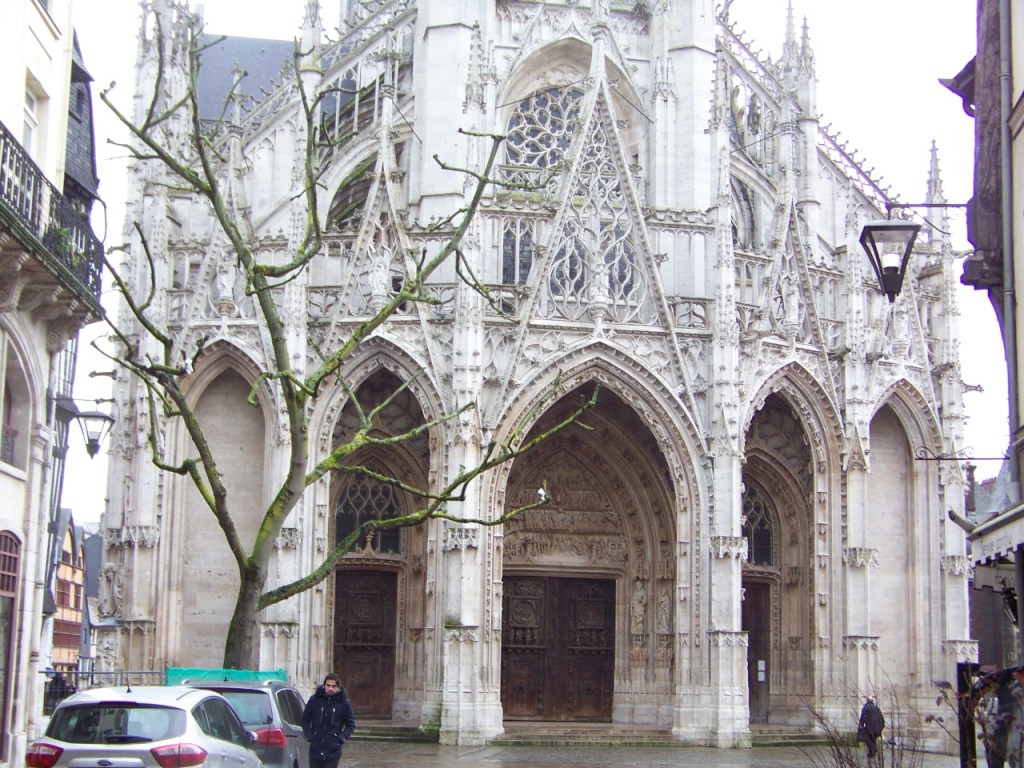
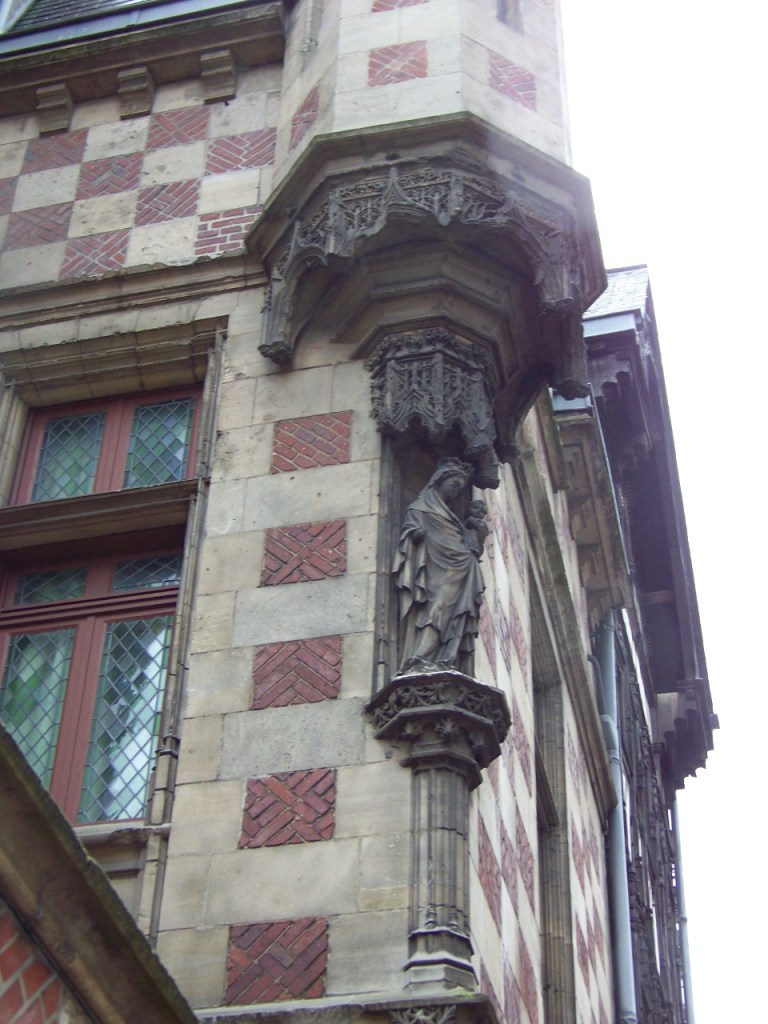
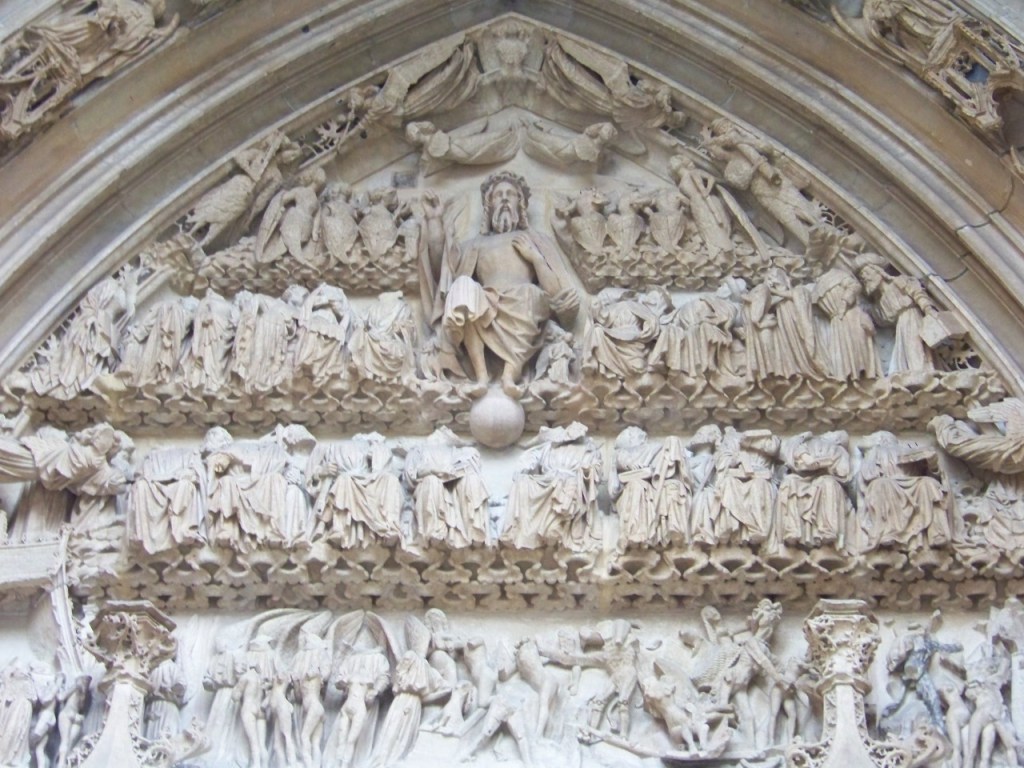
Last May I wrote about a 2018 visit to this city in Normandy against the backdrop of the 75th anniversary of the D-Day landing. We were still in the early days of the pandemic. Two months ago, the world marked the 75th anniversary of the end of World War II. Today we are engaged in another battle against a formidable virus. On November 11, we honored those who serve or have served in our military. Today, we still await a definitive answer to the question of who will be our next president. Through all of this, I cannot help but remember my visit to Rouen. It serves as a reminder that generations of our forebears survived wars, devastating plagues and years of civil unrest. They endured. And so will we. Rouen adds new perspective to contemporary history. Perhaps we should learn from it.
The heart of a great city
William, Duke of Normandy, became King of England in 1066 following his victory at the Battle of Hastings, and the course of history was forever altered for two nations, if not for the entire world. Known today as William the Conqueror, his coronation was held at Westminster Abbey on Christmas Day, but soon after his investiture, he returned to the capital of Normandy.
Considered a military genius, he was a descendant of the Viking Rollo, was uneducated, lacked culture, and spoke little English. He returned to England to quell periodic uprisings, but he spent most of his reign on the continent. He died near Rouen at the age of 60, in 1087, and is buried near the coast, at Caen, France, in the The Abbey of Saint-Étienne which was founded in 1063.
Another Duke of Normandy, who also held the titles of Duke of Aquitaine and Gascony, and Count of Anjou, was born in England, the fifth son of King Henry II and Duchess Eleanor of Aquitaine. He led a turbulent life, rebelled against his father the king, and formed an alliance with the king of France, along with two of his brothers.
Richard I was crowned King of England in 1189, but spent little time there. Like William the Conqueror, he may not even have spoken the language, but he was educated, enjoyed music and the arts, was personable but temperamental and quick to anger. He was also obsessed by the Crusades. He reigned for less than 10 years, and is best remembered for his exploits in the Holy Land, fighting Saladin and the Saracens during the Third Crusade.
Richard the Lionheart, not quite 42 years old, died of an infected arrow wound in 1199. History recounts that he had always “held Rouen in his heart,” and his embalmed heart rests in Rouen’s Cathedral, while his body is entombed “at the feet of his father” at Fontevraud Abbey in Anjou. His younger brother John succeeded him on the English Throne, and Phillip II of France gained control over Rouen, assuring that Normandy and Brittany would remain under French control.
I knew of the historical ties Rouen has with these renowned English kings, but it was yet another historical figure that beckoned me to Rouen. The Maid of Orleans met her destiny in Rouen in 1431. She was tried for heresy, witchcraft and other offenses ranging from horse theft to sorcery. She was burned at the stake by the English in a square that still serves as the site of the city’s public market. Her bones and ashes were gathered and thrown into the river.
History recounts that Joan of Arc did indeed hear voices and see visions. She believed they were signs, but modern authorities suspect she suffered from a medical disorder, something akin to epilepsy or perhaps schizophrenia.
Although characterized as a warrior, she actually never fought in battle, choosing to simply accompany the troops carrying a banner to urge them on. Nonetheless, she is credited with turning the tide of battle and securing a French victory over English forces in Orleans in 1429.
Joan was originally charged with 70 crimes which were later narrowed to 12; it is said that she signed an admission of guilt in exchange for life imprisonment, but days later violated the terms of that agreement by, among other things, once again donning men’s clothing and admitting that “the voice” had returned to guide her. She was subsequently sentenced as a “relapsed heretic,” according to historical records.
Joan of Arc — the name stems from her father’s surname d’Arc, even though she was simply known as Jehanne or Jehannette. During her trial, she referred to herself simply as Jehanne la Pucelle (translated as Joan “the maid”).
The young peasant girl became a national symbol, a uniting influence on French forces during the latter part of the bitter 100 Year’s War that lasted from 1337 to 1453. There actually was no victor in the war; the English simply retreated, finally realizing that the cost was too great, and the conflict ended.
Twenty years after the war ended, Charles VII, the French king who owed his position to Joan, held a posthumous retrial to clear her name, and she became not only a folk heroine, but also a mythic symbol of French nationalism.
As a child I was fascinated by her exploits, and by her brazen defiance of existing norms. I am still fascinated, and I wanted to see for myself the place where she met her fate.
For centuries, there was no monument to mark the spot of her demise in Rouen, just a simple cross in commemoration of the 19-year-old’s martyrdom. Today, a large modern Catholic church stands to honor Saint Joan; it was completed adjacent to the square in 1979.
Joan, by all accounts, never doubted that she had been chosen by God for her role in history, but it was not until 1920 that she was canonized as a saint. Today she is revered as the patron saint of France.
Then and now
Rouen is filled with good restaurants, small cafes and local bakeries. It boasts boutique hotels tucked away on narrow streets, within walking distance of major sites, a newly-redesigned and attractive riverbank that beckons river cruisers and bicyclists, picnickers and artists. Prior to the pandemic, visitors from across the globe arrived in the city during every season, seeking their own fulfillment. Rouen’s cultural appeal is catholic, and it resonates on different levels depending on one’s personal interests.
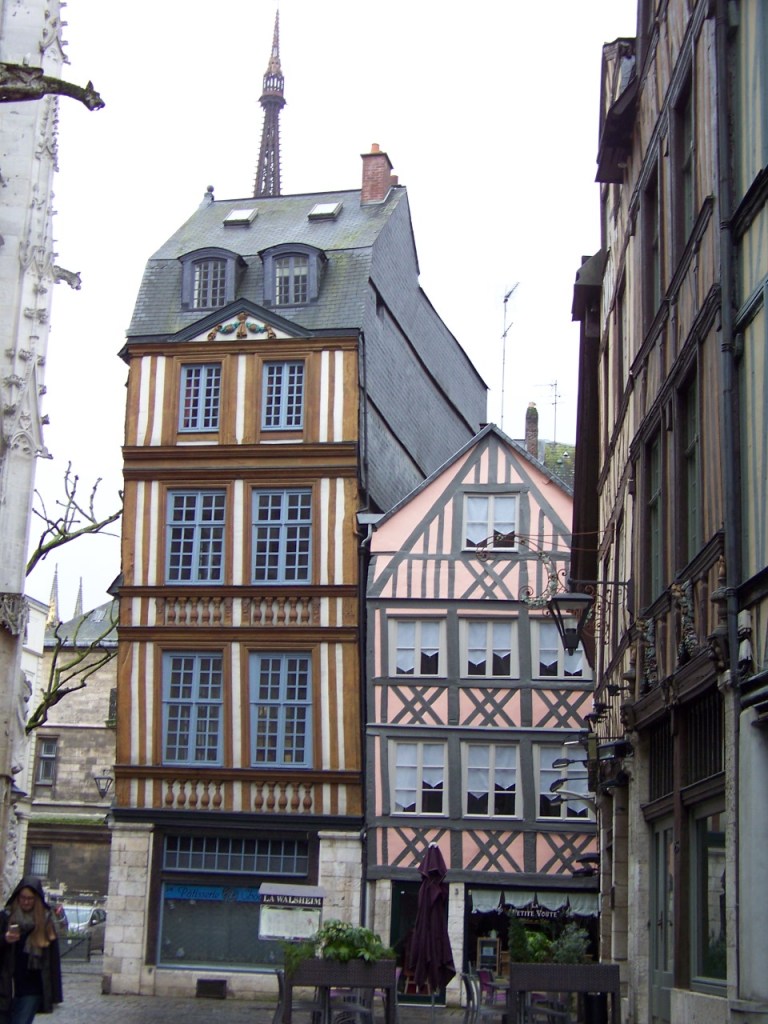
But Rouen offers something else as well. Visit the city during the off-season, and a uniquely personalized view of the city is your reward. The pace of life in this part of France is easy-going and friendly, surprisingly subdued. Indeed, if you stay in the medieval quarter or the university district, the slice of life that presents itself is distinctively “common.” It’s truly delightful, relaxed and unpretentious.
One can walk seemingly endlessly through the narrow cobbled streets of the Medieval quarter. We marveled at the clock, standing under its archway one dismal, chilly late afternoon. We lingered, snapping pictures, studying the artistry of its face and enjoying the music of its chimes. We knew that darkness would soon descend, but we hesitated there, unwilling to break the mood.
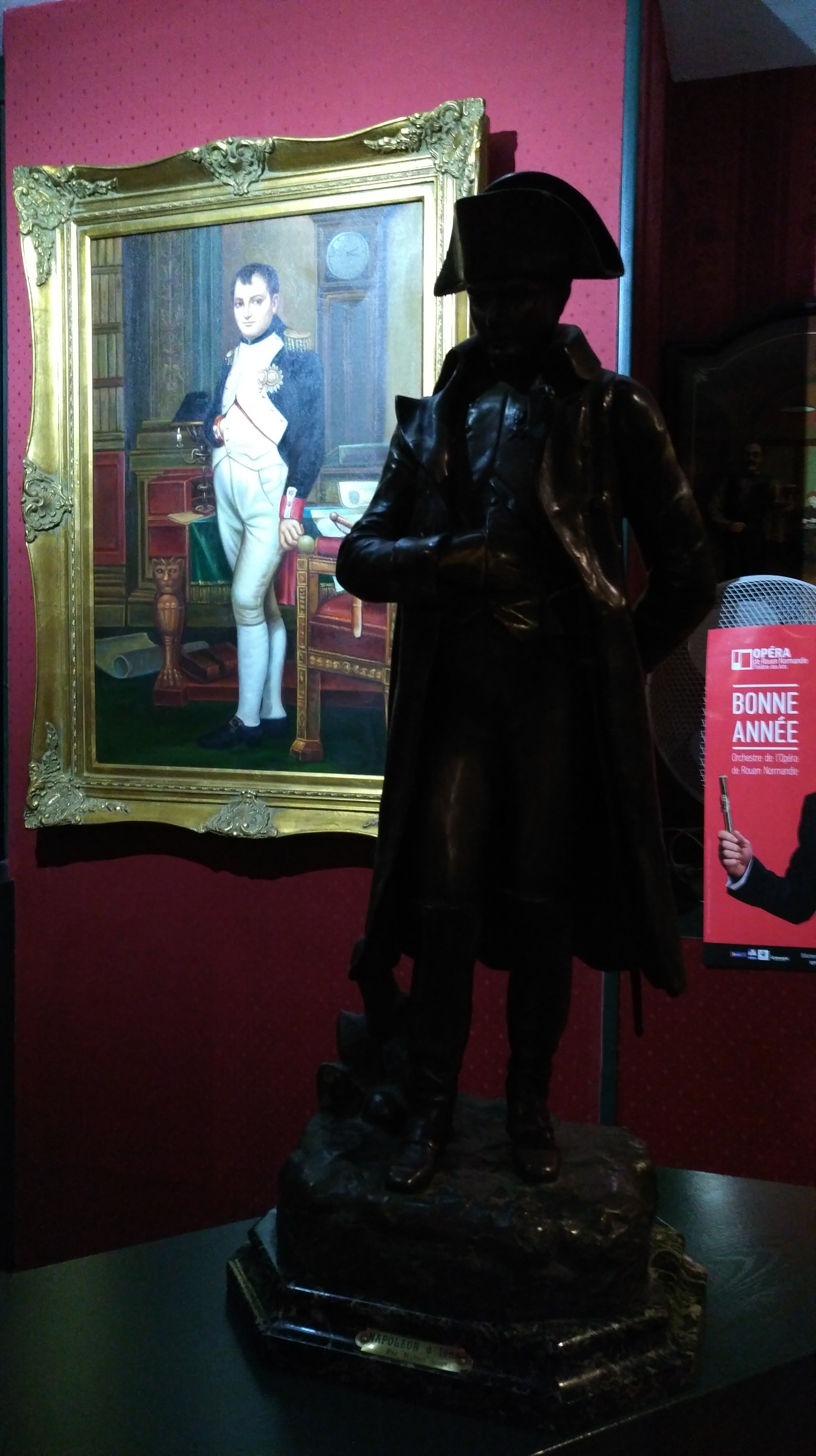
It’s impossible to be in Rouen and ignore its past. Napoleon visited textile factories in the city in 1802, helping to build that industry in the region; he also is credited with commissioning the Corneille Bridge and both Lafayette and Republic Streets. In Rouen, it is impossible to escape the emperor’s historical influence. In numerous ways, the history of France is tied to the history of Rouen.
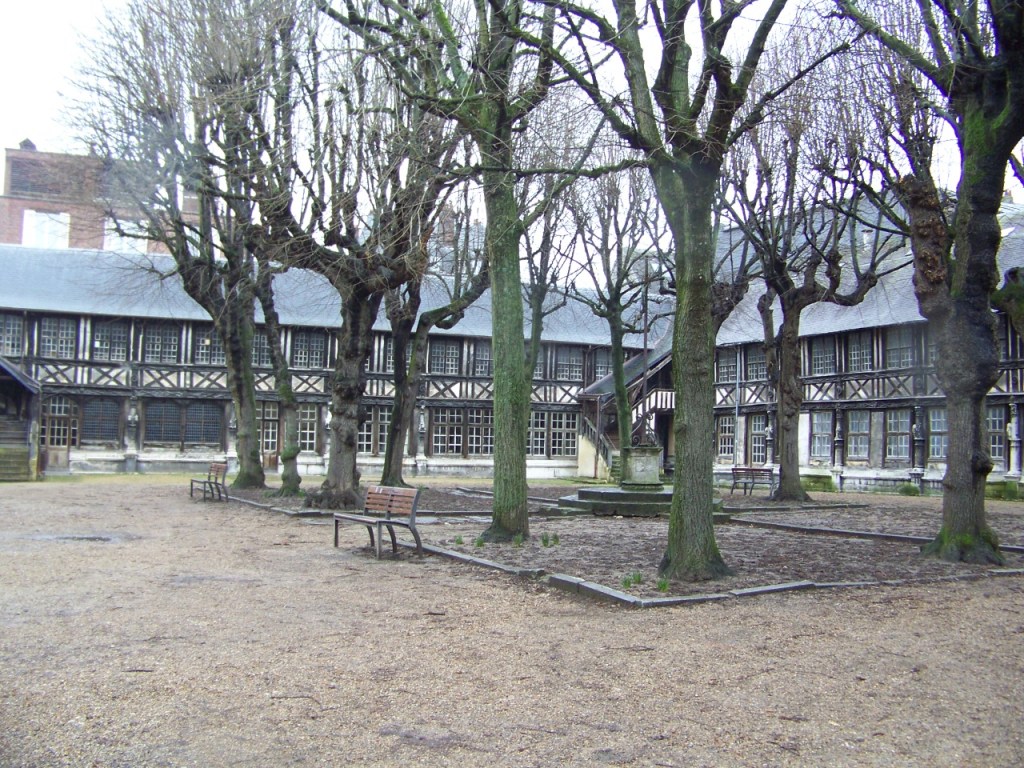
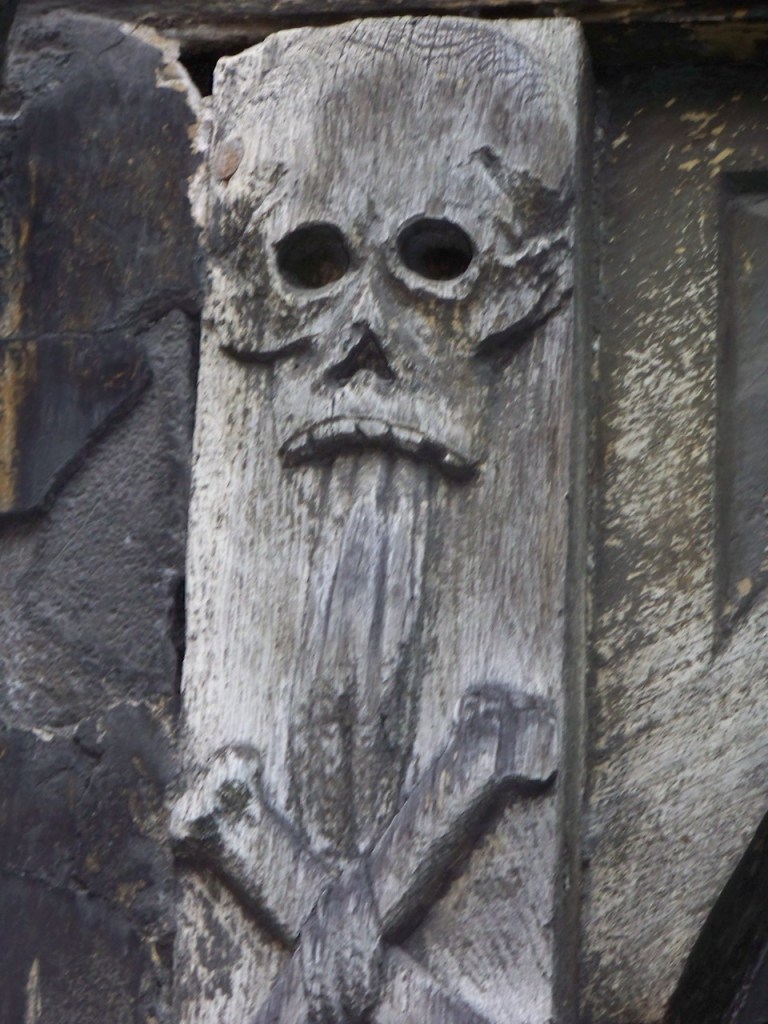
Seeing it all unfold during a walking tour of the city is spellbinding. The most enduring memory, however, is of being alone in the courtyard of Rouen’s ossuary, the “Plague Cemetery.” It is an experience seared into my consciousness, as the world faces an unknown future besieged by a seemingly unstoppable virus.
Later, we ducked into a small brasserie for a cup of hot cafe au lait, and exchanged small talk with the proprietor and two other patrons who were as happy to speak a few words of English as we were to practice our French. We were immediately transported to the present, and we were buoyed by the charm and vivacity of the city’s modern vibe.
We left, strolling the almost deserted streets in search of an informal place to eat. Arriving too early for dinner, we were led upstairs to a warm, cozy nook that suited us perfectly for an early-evening supper. We sipped good red wine, dined on burgers and fries served in true French style, and conversed with the establishment’s friendly proprietor about contemporary life. It was a perfect finale to a day of immersion in the life of Rouen.
We will long remember our visit to Rouen, for a good number of reasons.
































 Good Food and Faraway Places