A special angel at the airport . . .

On the morning of January 17, 2023, we drove to Clinton National Airport in Little Rock. We were filled with anticipation. The skies were clear and the sun was shining. Despite an itinerary that included two plane changes before we would board our international flight in Miami, we believed we were well prepared for all contingencies and that our long-awaited trip to South America would be without incident. We were filled with anticipation.

Little did we realize then just what an experience awaited us. Our long-awaited journey had been on hold since before COVID. The trip itself had morphed from a relatively simple desire to sail around Cape Horn at the southern tip of Argentina — once an itinerary of between 10 and 14 days — to a trip that included not only Chile and Argentina, but also the Falkland Islands. The journey had stretched to 22 days. Our expectations had also become greater!

Travel plans sometimes take on lives of their own — that had certainly happened this time.
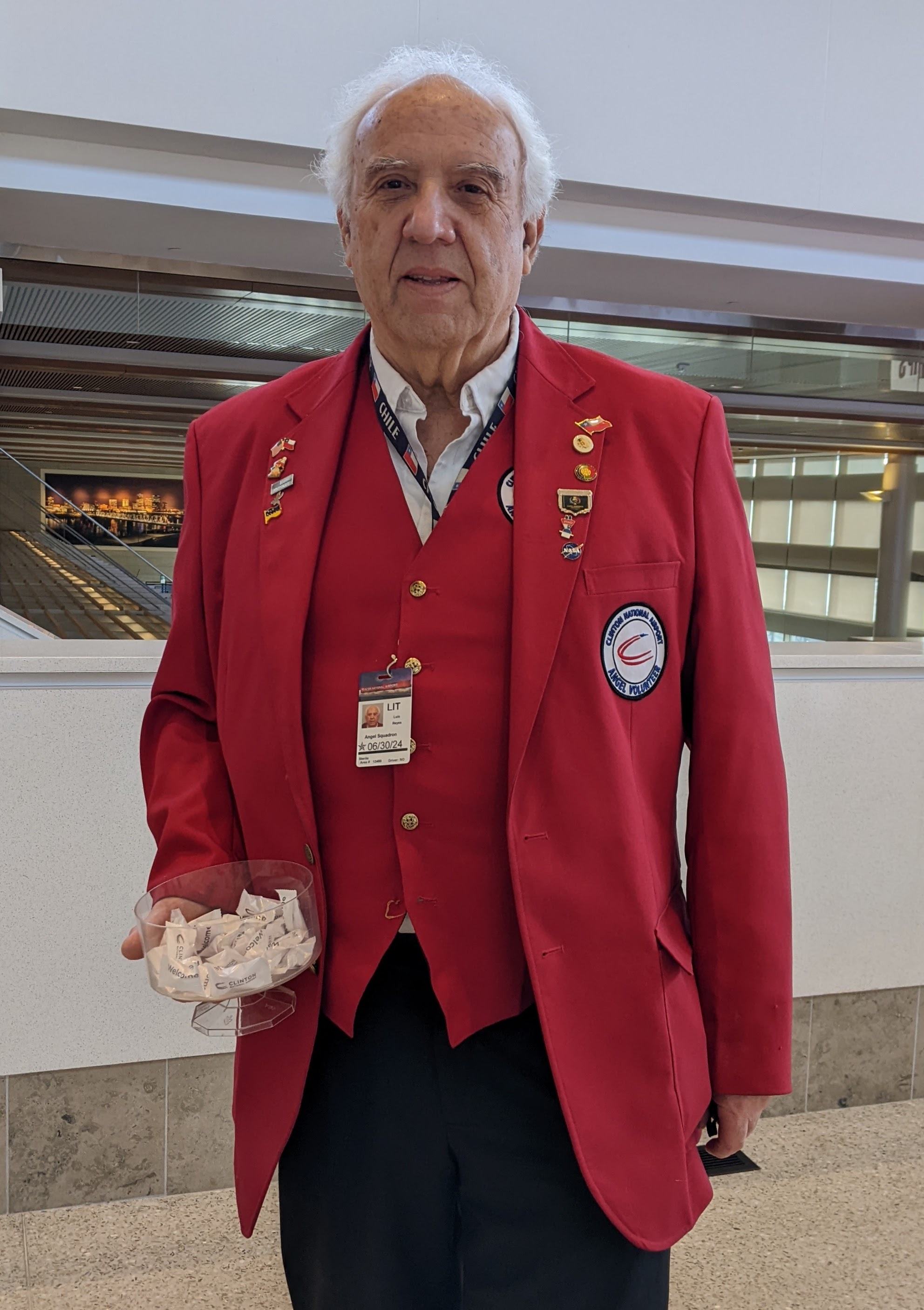
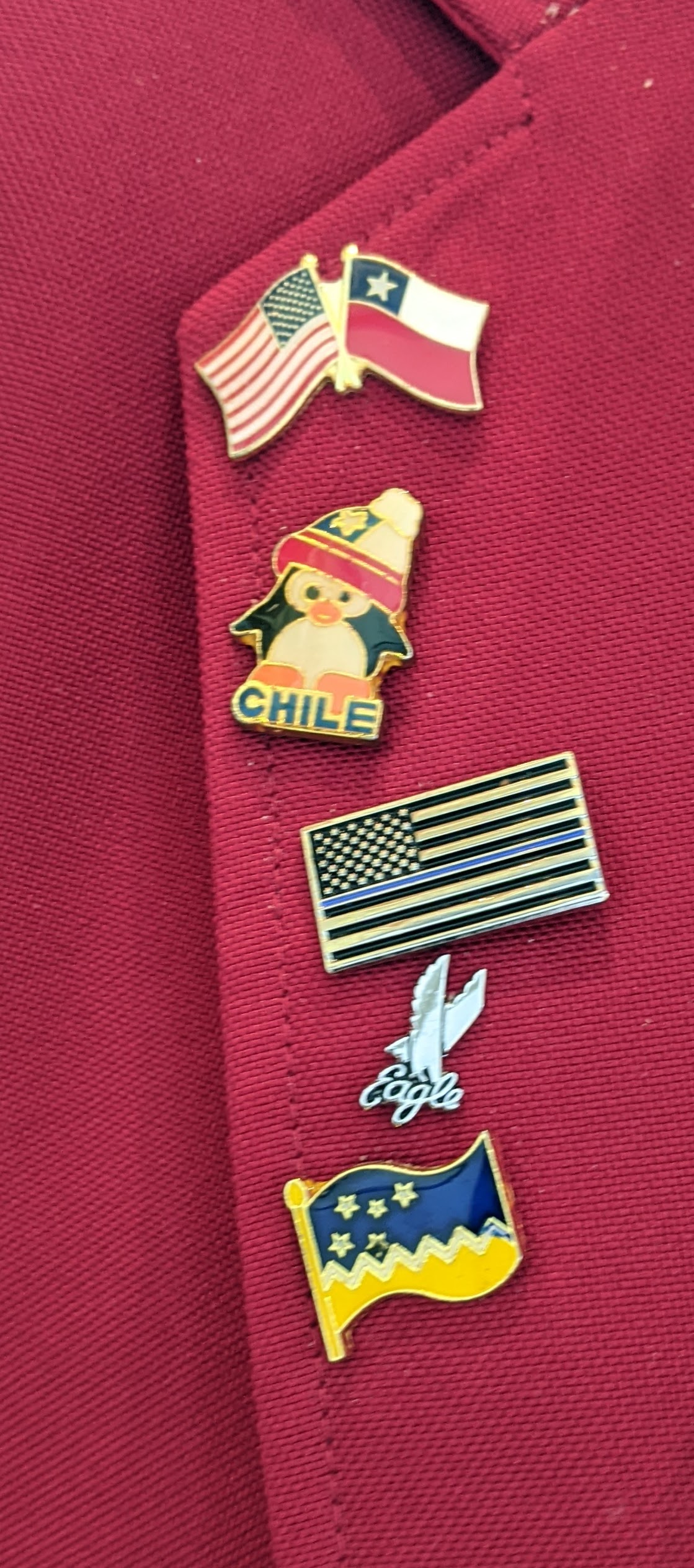
Check- in was swift and painless; a friendly American Airlines agent tagged our bags and placed them on the conveyor belt. We proceeded up the escalator, stopping at the top to chat with an Angel Squadron volunteer at the Airport. His name tag identified him as Luis Reyes. His red vest and a jacket adorned with colorful pins from different states and countries were as welcoming as his smile. I told him that my husband and I were traveling to Santiago, Chile, but would also be visiting Argentina during a 16-day cruise. We talked about the ports we would visit — Punta Arenas as well as Ushuaia at the southern tip of the continent, and then Buenos Aires.

His eyes sparkled and he was more than happy to share information about Chile, his native country. He told us about growing up in Punta Arenas, and how the city overlooked the Strait of Magellan at the southern gateway to Patagonia and Paine Towers National Park. He offered suggestions about where to go, and what to see and do during our short visit there, and he shared his recommendations for local food and drink. He promised that we would want to return.

Reyes also told us about how he and his wife had met, and how he came to be in Arkansas. I asked him if he liked living in Little Rock. He smiled again and said, “Yes, it’s my home now.” And, laughingly, he explained the similarities between the flag of Texas and that of Chile. “We had it first,” he noted. We laughed together.
We considered meeting this unlikely angel a good omen, and we promised to enjoy the delights of his native country and his boyhood home. He wished us a safe journey and we walked on, eager to board our first flight of the day.

Our travel adventures had only just begun! Sadly, our flight plan did not unfold as planned, and we were rerouted through Dallas-Fort Worth instead of Miami. We actually arrived in Chile a bit earlier than planned, and watched a spectacular sunrise over the Andes as our flight landed in Santiago.

After spending two days in that uniquely interesting city, we transferred to Valparaiso, a port city on Chile’s coast, to board our cruise ship bound for Punta Arenas. Again, weather and other circumstances intervened, and that port call was canceled.

Not long ago, returning to Little Rock Airport from another trip, my husband and I once again encountered Luis Reyes at the top of the escalator. He greeted us warmly. We told him how disappointed we were that we had not had an opportunity to visit the city in January. Nonplussed, he didn’t miss a beat! “You’ll just have to return,” he answered. We chatted for a few more minutes, about his summer here in Arkansas, about the trip we had just completed, and about our future travel plans. As we walked on, he called out to us: “I’ll hope to see you again soon,” he said.

Meeting him was one of those chance encounters that served as a prelude to the interesting people we would meet throughout our travels in South America. Once again, it’s the people one meets while traveling, not the places you go, that are the most memorable! Volunteers at major airports throughout the world are there to help travelers. Take advantage of the services if you need help, and get to know the volunteers who give of their time and energy to make travel as pleasant as possible for us all!

As I embark on other travel adventures, I hope this engaging angel will once again be waiting at the top of the escalator in Little Rock. If you happen to meet him, take the hard candy he offers. Ask for his assistance if necessary. Take some time to visit with him. And be sure to tell him hello from me!

And, if you don’t happen to meet Luis Reyes, I hope you meet another angel!

Surprise in a crystal glass . . .

The bottle was not particularly distinctive. I took little note of the winery name and there was no reason to pay attention to the vintage. My husband and I were waiting for friends in the comfortable lobby lounge of our hotel in Santiago, Chile, before venturing out to a nearby casual eatery for dinner.

Our trip, which had begun the morning before in Little Rock, AR, had been long, though exciting, and our arrival in Santiago had not been without an unfortunate attempt at credit card fraud by a cab driver. We had been cautioned, but even advance warnings, unfortunately, do not always protect foreign travelers. (See my related piece about travel precautions.)

However, we had arrived and been welcomed at the charming Hotel Ismael in the vibrant Lastarria District, put the weariness of a long flight, airport lines, and transport frustration behind us, and were planning how to best take advantage of our time in Chile.

A quiet aperitif morphed into a group sampling as we were joined by others in the lobby. I had asked for a glass of a pleasant local red wine, ready to accept what our server chose. My husband ordered a white variety, and we talked about our fresh impressions of the city that we had arrived in only a few hours earlier.

At first sip, I was intrigued by the rich, smooth, deep red of this wine I had never heard of. We quickly learned that the Carmenere is sometimes known as “the lost grape of Bordeaux,” a variety that was nearly destroyed by Phylloxera plague that devastated European vineyards in 1867. It was virtually “extinct” for nearly 100 years. Rediscovered by accident in 1994, the grape had been mistaken for Merlot until a Chilean vintner noticed that some vines took longer to ripen than normal Merlot grapes. Upon investigation, it was determined that they were actually Carmenere, and production in Chile took off.

Our visit to Chile brought us to the heart of the Maipo Valley, not far where the river of the same name flows out of the Andes Mountains. Several of our traveling companions scheduled winery tours during our two days in Santiago. They were captivated by the variety and the quality of local wines produced, the reasonable prices, and the beauty and appeal of the Chilean countryside, seemingly perfectly suited to support a growing winemaking tradition. Participants in one such winery tour brought back a quartet of partially-consumed bottles, which we willingly sampled in the lobby with the blessings of hotel staff.

Today, Chile is home to 90% of the world’s production of Carmenere, and a wide variety of wine is produced along Chile’s sinewy landscape from the far north to the extreme south. Some grapes are exported to other areas, and replantings of Carmenere vines are currently underway in other parts of the world. Wine produced from these grapes may be difficult to find at my home in Arkansas, but the market is growing, and its future is almost assured.

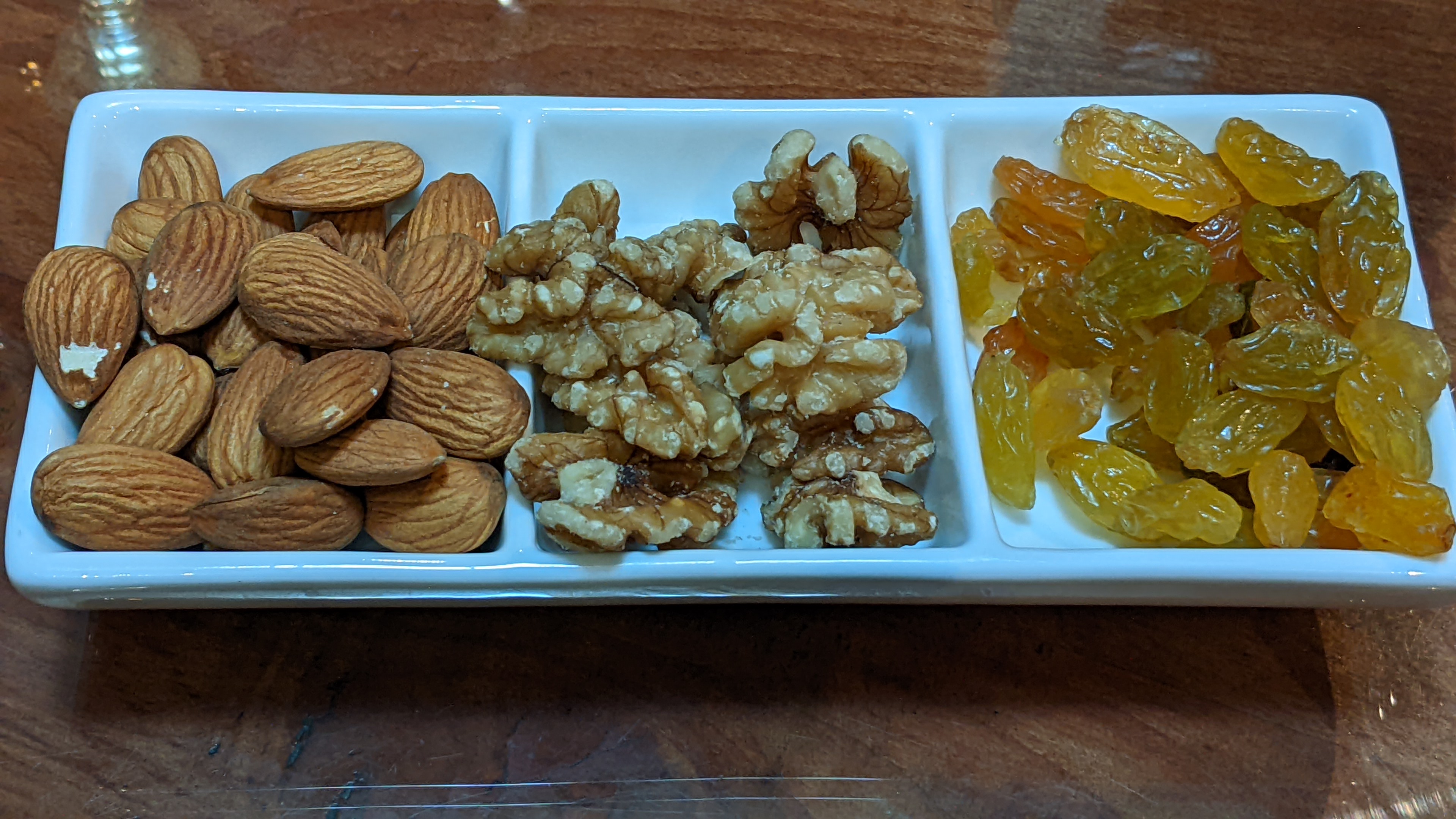
The combination of ripe and spicy fruit flavors, rich texture, soft tannins, and some notes of black or green pepper, herbs and cacao add to its unique character. I must say that is a wine critic’s description; all I can attest to is that I found it very pleasant and I immediately liked it. It is a wine that can hold its own with beef dishes and with vegetables as we learned when we later ordered a bottle with dinner, but we found it an exemplary choice with almonds, walnuts, and raisins — the snacks that appeared in tandem with our glasses that first afternoon in the hotel lobby.

It was a wine I found easy to sip and easy to savor, so much so that we purchased two bottles from the hotel stock to bring aboard our cruise ship when we sailed two days later from Valparaiso. We were pleased as well by the other Chilean and Argentinian wines we sampled in South America. During a port stop in Montevideo, Uruguay, we toured an up-and-coming young vineyard to learn more about production and the demand for fresh, new wines from other regions in South America. The varieties and the vintages are notable and worth sampling.

Sadly, Vines Wine Bar aboard Sapphire Princess had sold out of its stock of Chilean and Argentinian wine halfway through our voyage, proving just how interesting and drinkable these varieties really are! But, one of the onboard activities was a wine tasting that was well attended and highly informative.

Now back home, I will be checking with local wine importers to determine what’s available in my area. I am hoping to find Carmenere, but I will also be on the lookout for other South American wines. My husband and I look forward to sampling some, and we are eager to visit the Argentinian Coffee and Wine Bar in Hot Springs. I can testify that South American wines are a great choice for good times with friends.

Salud!

Want to learn more about Carmenere, the grapes that were misclassified for decades as Merlot? Check out these articles: https://winemakermag.com/article/1142-south-american-grapes; and https://www.winemag.com/2022/09/13/rediscovering-chilean-carmenere/