Santa Fe: What to Know Before You Go

Imbued with a long and multi-faceted history, Santa Fe is a fascinating city characterized by a cultural richness that few other places possess. It offers something of interest to every visitor, in every season. But it’s impossible to see it all in just a few days, and no matter how much time you spend in the city or how many times you return, there is always something new to discover. First-time visitors are typically eager to learn about Santa Fe, but can leave exhausted if they attempt to see, do and “feel” it all.

Don’t let that happen to you.

Instead, prepare for a trip to this 400-year-old city by doing some homework before you leave home. Know that, at an elevation of 7,000 feet, you are likely to tire more quickly than you might at home. Understand that Santa Fe has a delightful downtown square, and the city radiates in all directions from that plaza. In many ways, it’s a city to explore on foot, but distances can be deceiving. Embrace the art, the food, the museums, and the galleries, the restaurants and bars, and the natural beauty that surrounds you, but understand that Santa Fe is not a “bargain” destination. Learn about Santa Fe’s history, and appreciate the cultural differences. It’s that mix of old and new, of “everyday” and “one-of-a-kind” that casts a spell and makes Santa Fe unique.

Plan your trip and your activities wisely. Santa Fe is the capital of New Mexico, a state known for its diverse attractions, from mountains and winter sports to the sprawling desert landscape of White Sands, from ancient cliff dwellings and Native American Pueblos to Old West mining towns and the futuristic Very Large Array National Radio Astronomy Observatory. If possible, take the time to get out of Santa Fe and visit other parts of the state.

Chances are you’ll find something to love no matter what direction you go. Santa Fe is just “up the road” from Albuquerque, New Mexico’s largest city with a major airport. If you fly into Albuquerque, it’s best to rent a car there and drive north. One of your first stops should be at the Tourist Information Center in Santa Fe, near the state capitol. The knowledgeable staff can help you flesh out your plans for the time you’ll spend in “The City Different.”

Where to Stay

Downtown hotels, particularly those within walking distance of the Plaza, are typically expensive and frequently fully booked. If one of these highly desirable options is your choice, make your reservations well in advance. There are also numerous boutique hotels, B&Bs, nearby resort accommodations, chain motels, timeshares, private guest casitas and rental condos in and near Santa Fe.

Use your favorite booking site or ask for recommendations from friends who have recently visited the city. On my recent trip, I stayed two nights at a delightful motel in a location that was convenient for what I planned to do in the city. I was there primarily to visit old friends. I was not looking for luxury, but was pleasantly surprised by the price and the amenities. The included breakfast is worth a shout-out — featuring freshly-prepared plump burritos and a variety of muffins, cereal, juice and yogurt — as is the level of service. The decor at Coyote South is distinctive, fresh and modern, and the staff is friendly and knowledgeable.

You will also find noted resorts and wellness retreats, although some are located quite a distance from downtown Santa Fe. Visitors can book packages that include spa treatments, pools and hot tubs, luxury accommodations, and distinctive meals. Two of the most unique are Ten Thousand Waves and Ojo Santa Fe.

Wherever you choose to stay, I can recommend a visit to La Fonda on the Plaza, for a drink or a meal, or just to look around. One of the city’s oldest landmarks, it occupies the site of the city’s first inn, built in the early 1600s when the city became the northern outpost of Spanish colonization. In the 1800s, La Fonda provided hospitality for anyone traveling west on the Santa Fe Trail. The current structure dates to 1922, and many of its signature features — beams, tin chandeliers and skylights — are original.
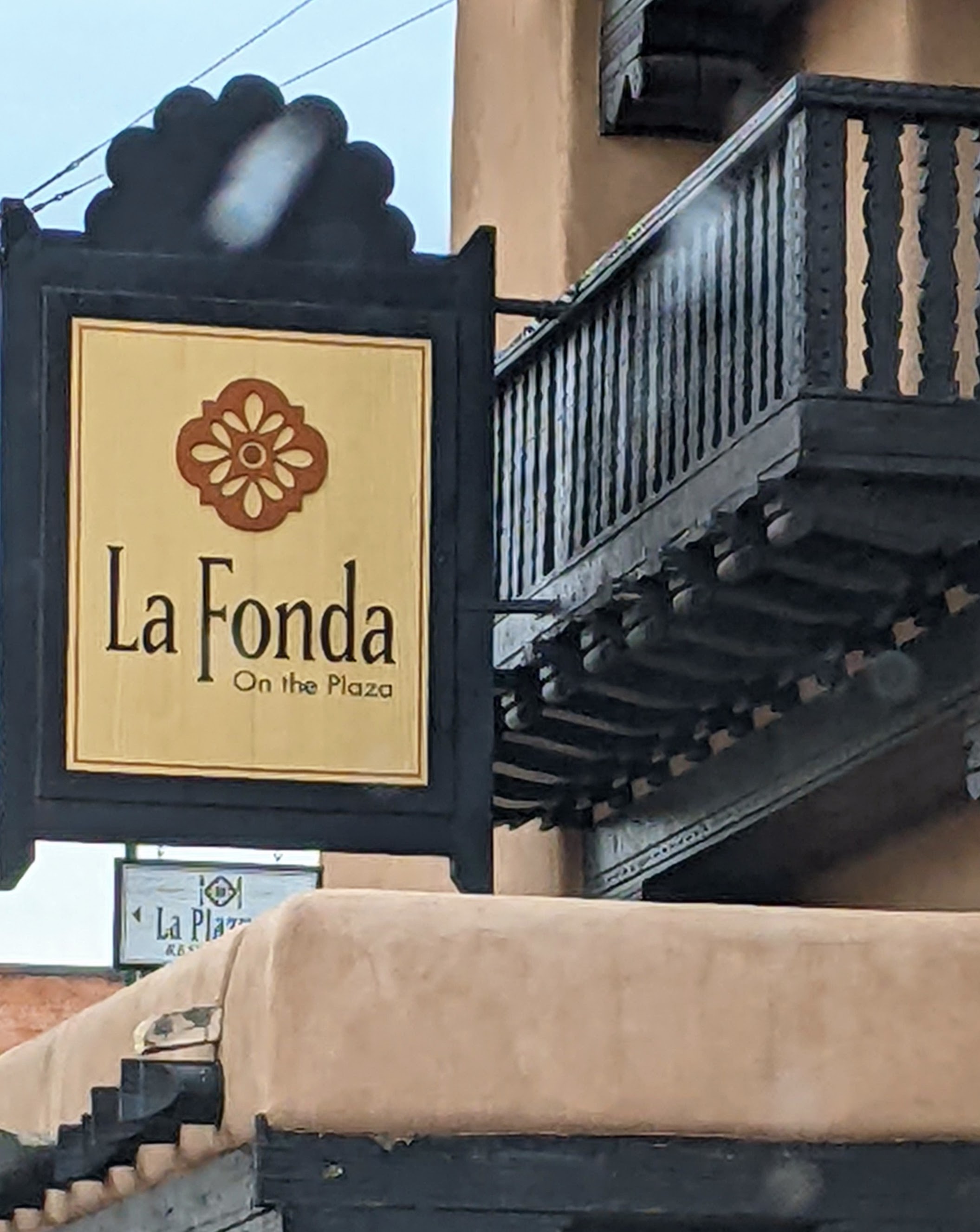
The inn was acquired by the ATSF railroad in 1925 and leased to hotelier Fred Harvey, whose “Harvey Girls” provided travelers great food and service until the hotel was sold in 1968. Today, it continues to serve travelers, with 180 guest rooms, three dining options, luxury amenities and an onsite spa. It is also a popular event venue and business center, renowned because of its period architecture, its history, and its hospitality. Stop in for a drink or a meal, or take a complimentary history and art tour, and you’ll see why.

Ask for assistance from a hotel concierge or your B&B host to help you plan skiing, hiking or fishing excursions, and trips to surrounding pueblos and casinos. Locals are usually only too willing to share information and help visitors,

Where to Eat

Santa Fe is also a noted foodie destination, with almost limitless options for both casual fare and fine dining. Many of the city’s finest restaurants are small, and reservations are recommended. You may encounter lines at popular lunch spots, especially in summer, during the many festivals, or at the height of the ski season. Plan ahead and be patient.

Breakfast is a favorite meal and a long-standing tradition in Santa Fe. Pasqual’s, situated a block off the Plaza, is always crowded, especially for breakfast, but it’s open every day except Tuesday, and it’s worth a wait. When ordering breakfast burritos or any type of egg dish, you may be asked “red, green or Christmas?” The question is to determine your preference of chile toppings. Know that it’s no sin to ask which is hotter; if you’d like to sample the different tastes, ask for Christmas. You’ll get some of each.

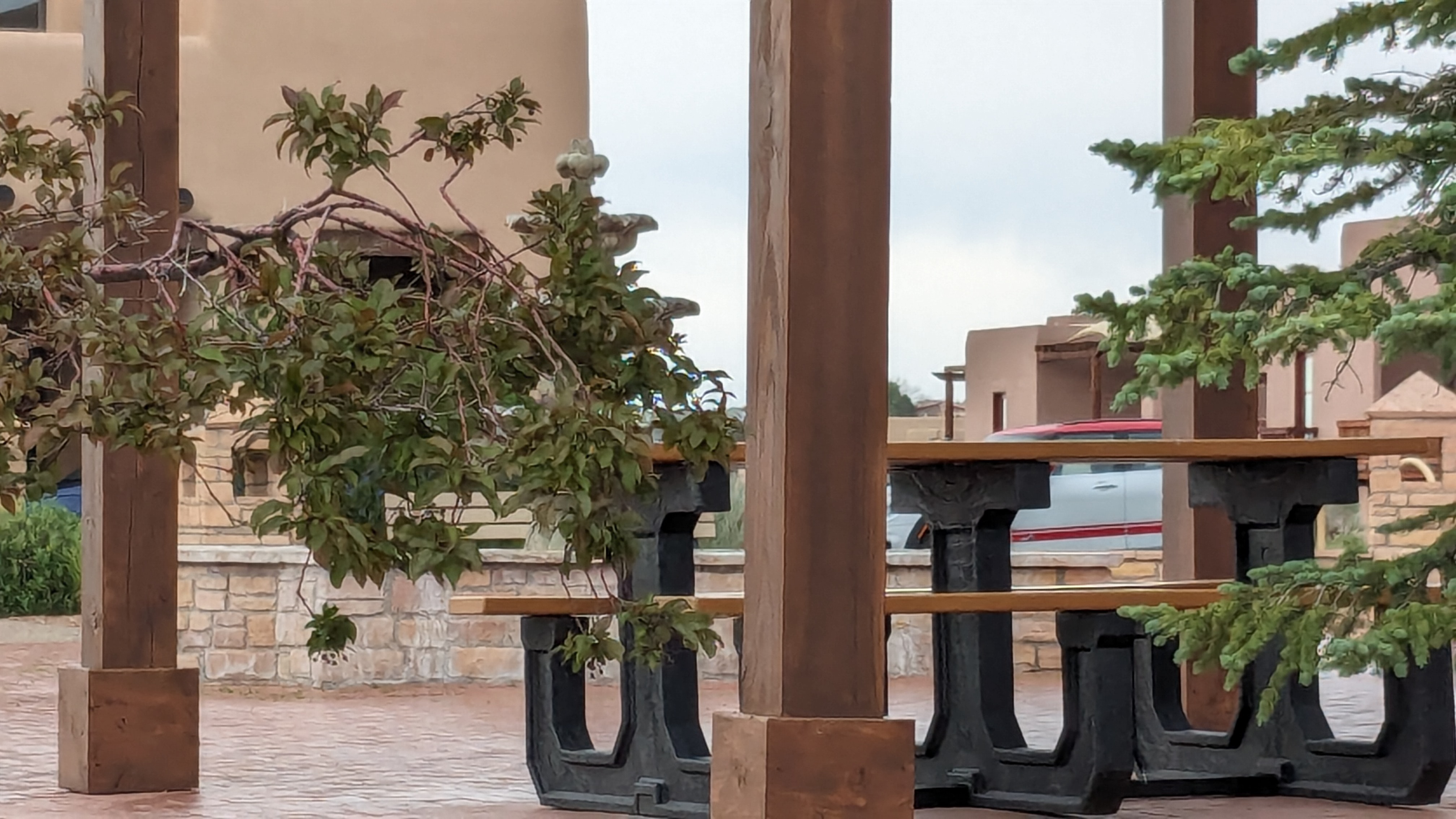
Casual eateries serve a wide variety of tastes, offering food that is fresh, flavorful and fun. Stop to sample local specialties at out-of-the-way cafes with patio seating, or order New Mexican or Native American street food from a vendor during a Santa Fe festival. You won’t be disappointed, and people-watching is a popular pastime. Order take-out from The Burrito Company or the Plaza Cafe to eat on a bench at the Plaza, or spread a blanket on the grass near the river.

If you explore Santa Fe neighborhoods, don’t neglect shopping center eateries and local craft breweries. You’ll find reasonably priced food, prompt service, and friendly people. Joe’s, on the south side of town is one such place, and Santa Fe Brewing Co. has several locations in both Santa Fe and Albuquerque.
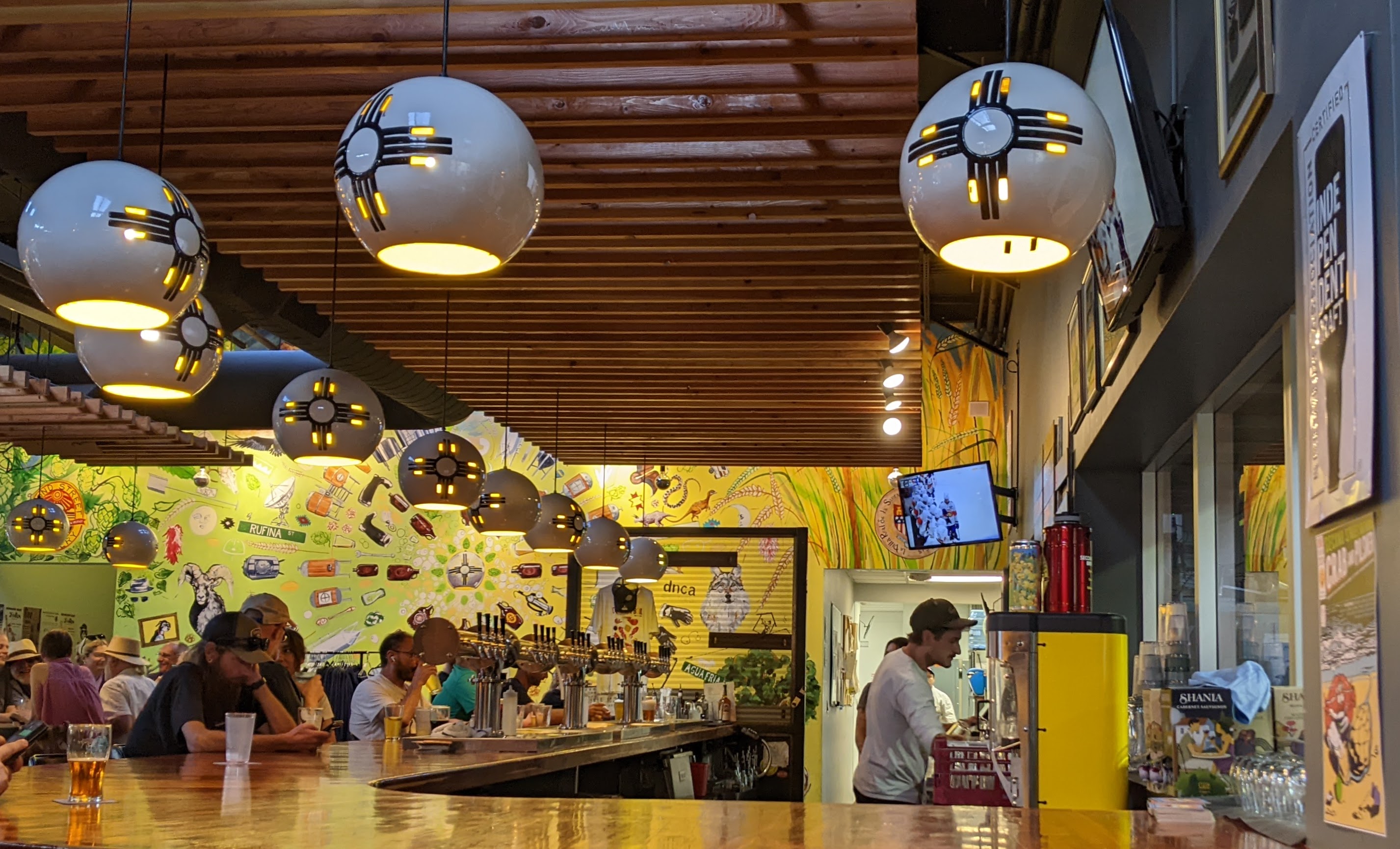
Need more suggestions about where to go? Here’s my short and very random list of personal favorites, but be open to exploring. Try someplace new and find your own favorites.

El Farol on Canyon Road is a classic Santa Fe hot spot located in an adobe building that dates to 1835. Open Wednesday through Sunday from 4 to 9 p.m., the parking situation can be difficult, and the decor is rustic rather than refined, but the live music and flamenco performances make it an experience rather than simply a meal. Daily Happy Hour drink and tapas specialties attract crowds. Dinner choices that include paella, mussels, beef, and salmon as well as New Mexico enchiladas and desserts are legendary. Vegetarian and vegan options are available.

Coyote Cafe at 132 W. Water St. has won awards since it first opened in 1987, and the acclaim continues to this day. Named 1st Place winner in the Best of Santa Fe competition for 2024, Celebrity Chef Mark Miller pioneered the use of strictly regional and native ingredients to develop menus that have stood the test of time. Coyote Cafe attracts an army of repeat visitors. The Rooftop Cantina is a lively casual gathering spot for locals and visitors alike. Order Mama Schutz’ Frito Pie as a nod to tradition. Santacafe, a sister venue, is located at 231 Washington Ave., and is noted equally for its elegant outdoor courtyard dining patio and its delicious food.

El Nido in Tesuque, another of my go-to choices, is especially soothing on a chilly fall afternoon or a cold, snowy winter evening. The heated garden portal is a wonderful gathering spot from spring into fall, but the interior is El Nido’s all-season haven, with the ambience of aged wood, original tin chandeliers and colorful wall murals. Meals are prepared at an open-fire grill center, so diners can watch the action. Order sake and sample starters from El Nido’s companion sushi bar “SU.” Then, your dinner choices — pizza, pasta, steak, seafood, or chicken — will arrive at your table perfectly prepared, well-seasoned and hot off the grill.

After a day of gallery hopping or sightseeing, a restorative Margarita from the 100 or so on the menu at Maria’s may be “just what the doctor ordered!” It’s a long-standing tradition, where Santa Fe friends meet and visitors to the city go to make new friends and exchange stories. It’s lively and loud, usually crowded, exceedingly friendly and welcoming, and totally likeable. I’m not kidding. Don’t hesitate to ask locals for recommendations for a late dinner or an early breakfast.

New bars and restaurants spring up regularly, while others have been open for decades, if not centuries.

What to Do

Excursions from Santa Fe provide a long list of opportunities. Depending on your interests, you can fish clear lakes or swift-running mountain streams. Visit Native American pueblos to learn about the ancient cultures that have existed here for centuries. Visitors are welcome, but respect the traditions of each pueblo, especially if you visit on a feast day or for a special ceremony.

Visit the Bradbury Science Museum in Los Alamos. It explains the history of the Manhattan Project and other research and discoveries during the atomic age, as well as continuing scientific studies. Admission is free, and the museum is open every day except Monday, but check current hours. On the way to Los Alamos, about an hour from Santa Fe, stop at Bandelier National Monument to explore ancient cliff dwellings in the Jemez mountains. Nearby Frijoles Canyon offers spectacular scenery and views.

The award-winning Los Alamos Nature Center is filled with interactive exhibits and displays, including live animals, a topo map of the surrounding plateau, a children’s discovery area, information about the Valles Caldera, and a wonderful planetarium. Evidence of volcanic action is still detected at this dormant, but not extinct caldera, formed by an eruption more than a million years ago. It’s a not-to-be-missed attraction, especially if you’re traveling with kids.

Las Vegas lies an hour or east of Santa Fe. In addition to its historic Old Town, the Las Vegas National Wildlife Refuge boast 8,000 acres of grasslands, wetlands, and forests, where birders and hikers can explore to their heart’s content. Guided tours are available at historic Fort Union that played a pivotal role in both Indian conflicts and the Civil War, and the Rough Rider Museum sheds light on the time that Theodore Roosevelt spent in New Mexico, offering insights into his legacy. Finally, a visit to Montezuma Castle, a pueblo structure built more than 800 years ago, gives visitors a unique glimpse into the history of the area. Las Vegas also has an active modern arts community, and you’ll find galleries, eateries, and plenty to round out a visit to an interesting historic town.

Madrid, pronounced with an emphasis of the “Mad,” is on the back road to Albuquerque, and if you’re driving, it’s worth your time to explore this funky old coal mining town turned artist’s colony. Madrid is pretty much the midpoint of The Turquoise Trail, the designated scenic byway between Tijeras, east of Albuquerque, and Santa Fe. It passes through the small towns of Cedar Crest, Sandia Park, Golden, Madrid, Cerrillos, and Lone Butte/San Marcos on its way to “the top of the trail,” and Santa Fe. The Mine Shaft Tavern in Madrid is worth a visit, whether you make it a lunch excursion from Santa Fe, or a stop along the Turquoise Trail.

Finding Enchantment in The City Different

New Mexico is termed the Land of Enchantment. I was first introduced to this enchantment in the mid-7o’s when I visited as a tourist from Dallas. Then, I moved to Santa Fe in 1991, and spent nearly 20 years there. During my tenure, the city changed in many ways, and I moved on. But my love for Santa Fe never waned. In some ways, I still miss the city, the culture, and the lifestyle. I have not returned often enough over the decade or so since I left. But each time I do, I fall in love with the city all over again. It tugs at my heartstrings.
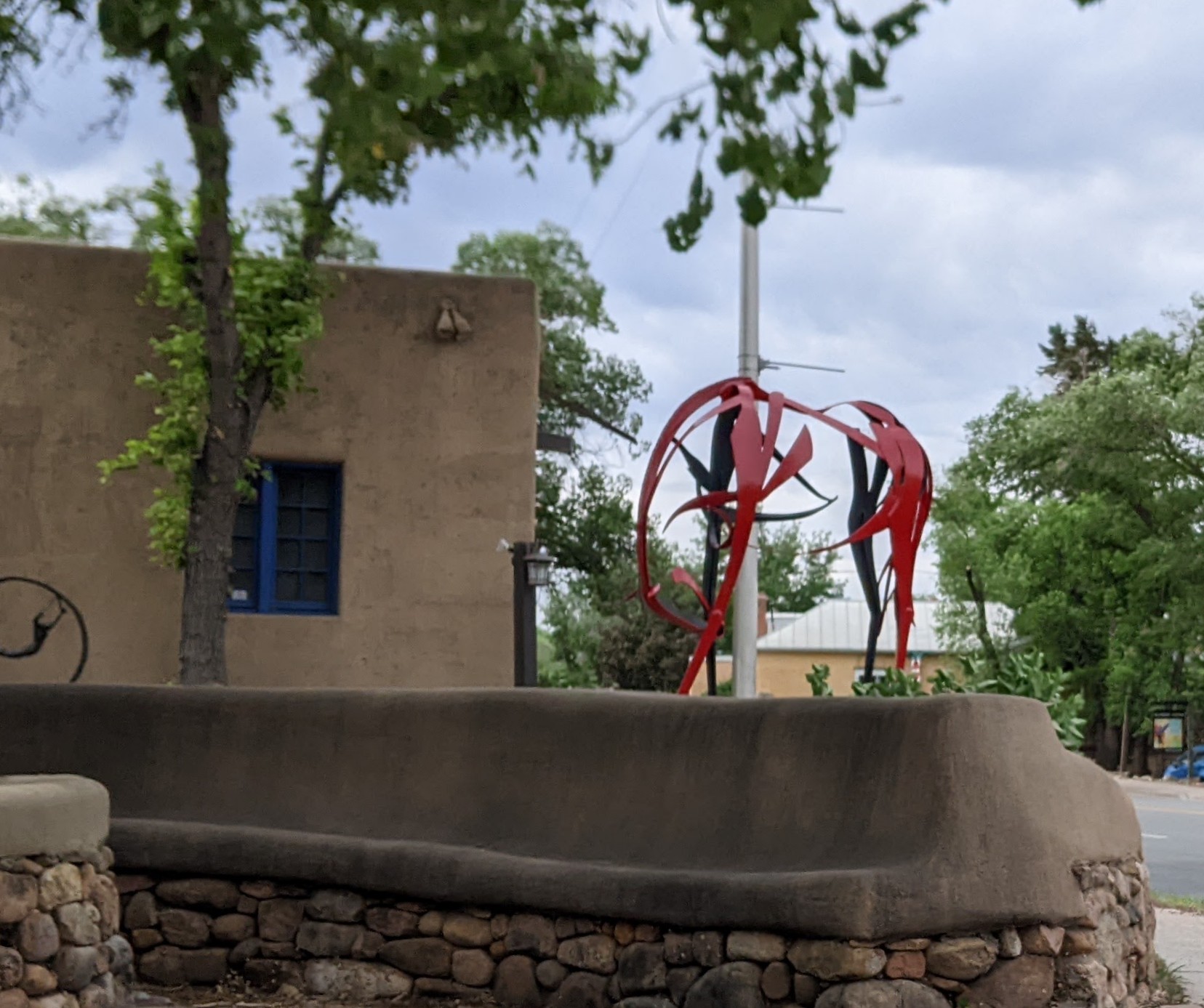
If you haven’t previously visited this magical place, perhaps you too will be captivated as I was. Try not to draw comparisons with other places. Just enjoy it because it is The City Different.

In Santa Fe, you can eat the food of many different cultures, gaze at stars in the sky so bright you’d swear you could reach up and touch them. Breathe in the fresh mountain air — it will be pinon-scented in the winter from the wood that burns in local fireplaces. Smell the lilacs in the spring and savor the scent of roasting chiles in the fall. Bask in the warm sun all summer and don your boots to hear the crunch of fresh snow on crisp winter days. The sun will shine most days, no matter what the season. Hopefully, no matter how long you stay, you’ll leave wanting to return.

Pick and choose from the seemingly unending buffet of treats that Santa Fe offers. Stop to enjoy its quiet beauty. A traveler’s best resource is the Official Visitors Guide. It provides a great introduction to the City Different. View it online or request a copy delivered right to your home.

Note: The recommendations I have made are all based on personal knowledge gained during the years I was a resident of Santa Fe or my travels in New Mexico over the years. I have not been compensated, financially or otherwise, based on opinions I have shared.
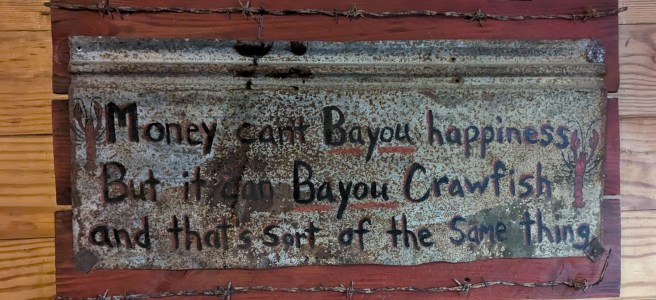
Alexandria Adventure: Savor the Flavor of Cajun Country

Daylight lasts longer in the summer and weather is typically more predictable, even if it’s predictably hot. Close-to-home day trips or spur-of-the-moment, loosely-organized one or two-night excursions, are a welcome treat. Getting away, particularly to someplace new just seems easier, not to mention more fun. The goal, of course, is to choose a destination that promises captivating sights, provocative activities, stimulating people, and, of course, a local food adventure.

My husband and I found all that and more just a few hours from our home. Our destination — Alexandria, Louisiana — is a relatively small city in a state just to the south of Arkansas. We planned our route along a scenic highway. No interstates to navigate. Minimum traffic to contend with. As much as we enjoy road trips, we wanted this drive to be easy. The bonus? Close friends had recently relocated to Alexandria from our community in Arkansas. We missed them. After helping them pack boxes before their departure, we wanted to see them settling into their new home. We were curious.

Although we were happy to accept the offer of a guest room, we stipulated only hot coffee in the morning. We wanted to sample local eateries, and requested no homemade meals.

Finding Distinctive Local Food

Our first impression, as we drove into town, was positive, but our first decision involved food. We had skipped breakfast that morning, opting instead for take-along coffee and a relatively early start to our journey. When we arrived, we were ready to quell our growing hunger pangs, so the priority became food over friendship.

A quick online search yielded a convenient address and favorable customer reviews.

Spirits Food & Friends

The dining area was far from filled in the early afternoon, but our initial impressions of Alexandria were boosted immeasurably by the “look and feel” of this eatery. Other diners seemed to be having a good time. An amiable and informative waiter greeted us warmly and seated us promptly.

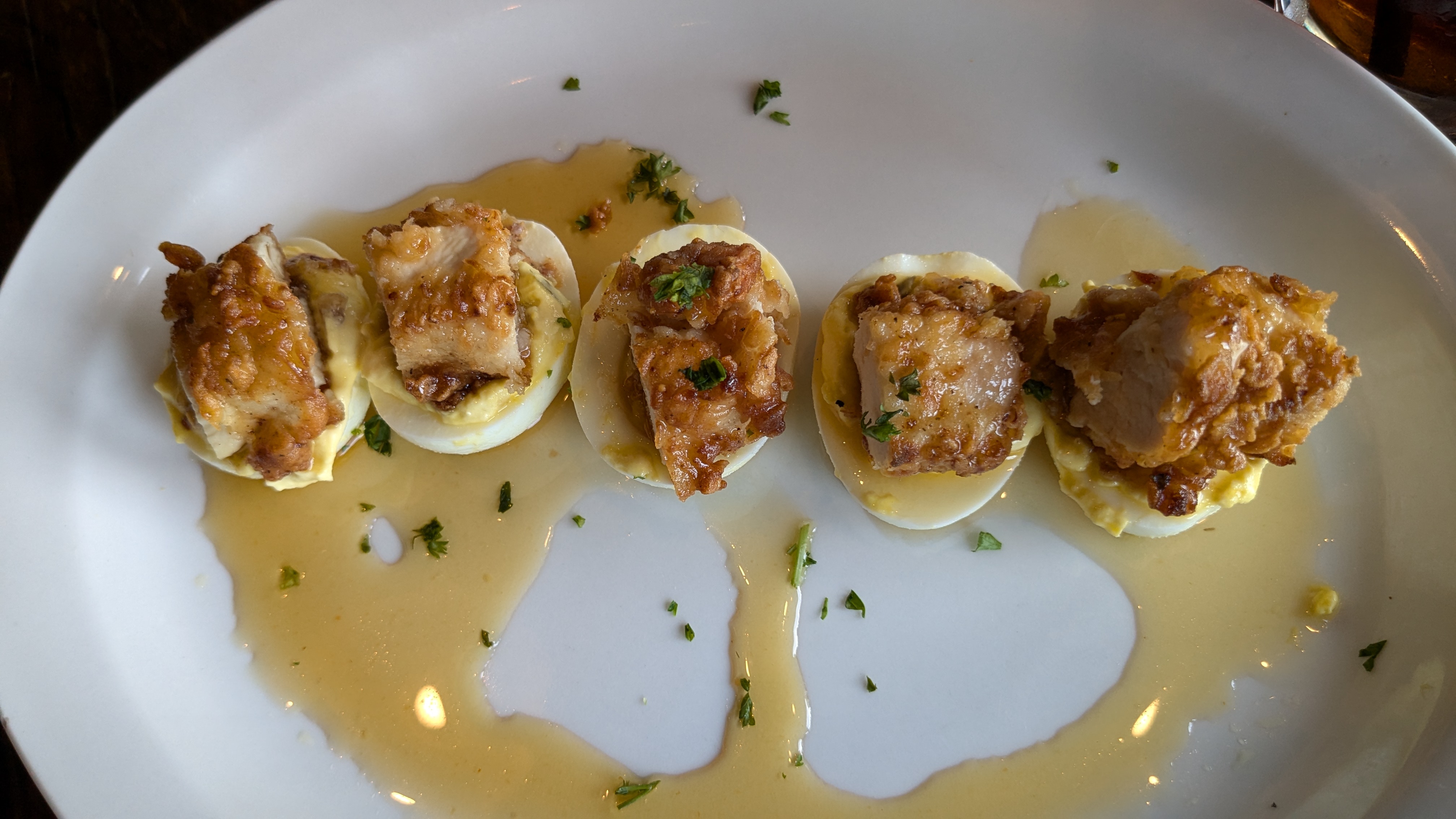
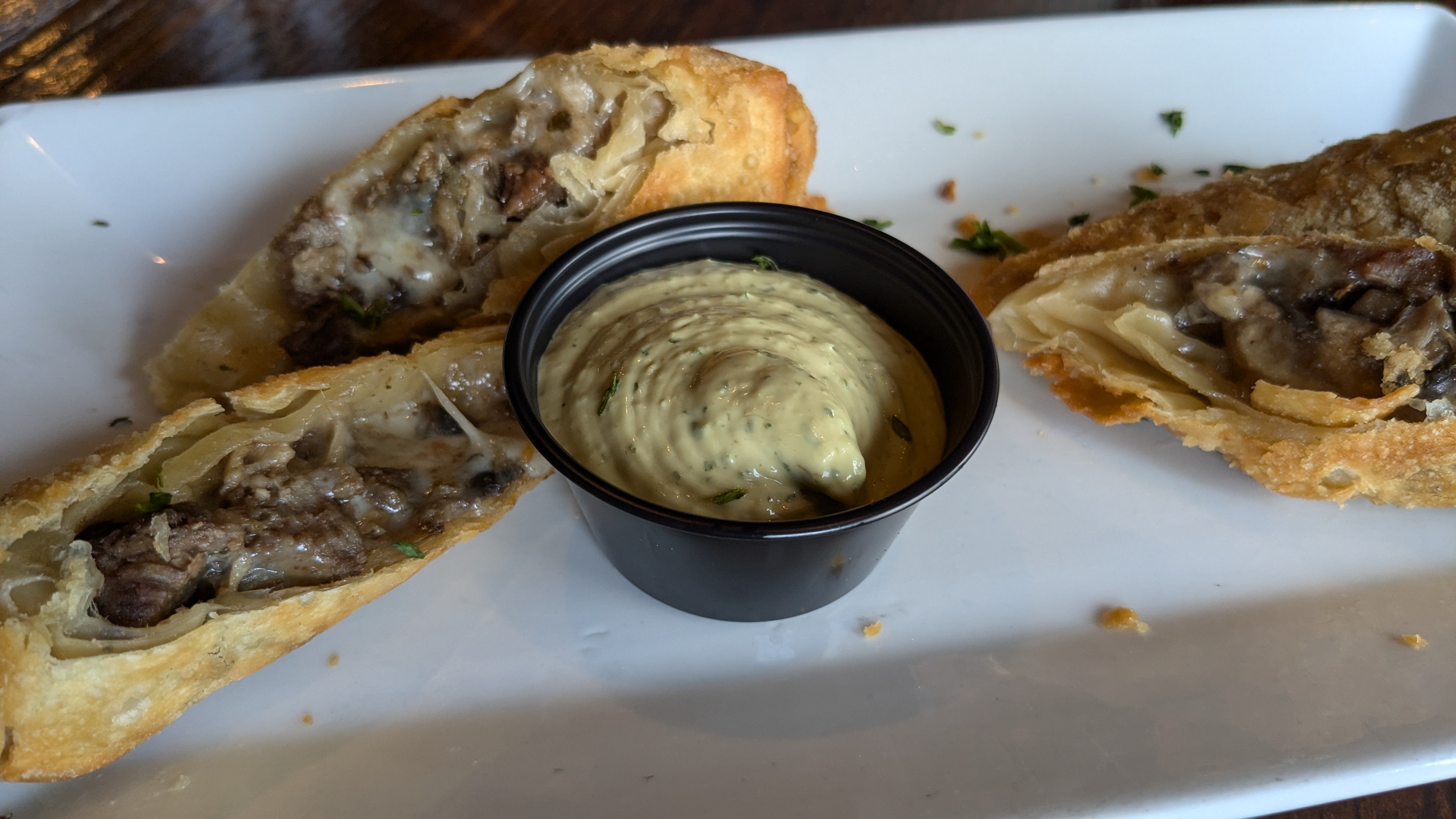
We chose not to order a complete meal, but instead selected appetizers to share from the extensive menu. An order of “Which Came First” Deviled Eggs, topped with fried chicken bites, bacon jam and sweet chili sauce, combined both breakfast and lunch in a unique way, and unusually good Philly Cheesesteak Eggrolls with creamy avocado ranch dressing more than satisfied our hunger.

Our server kept our glasses of iced tea and lemonade full, and he answered all our questions about things to do and places to go in the city. We chatted about the history and growth of the “family-owned, Alexandria-grown” establishment.

We were captivated by our first taste of local food and hospitality and more than pleased with our choices. We also asked for suggestions about where to dine that evening, and were treated to a “mini-course” in local culture and history.

Our visit to Alexandria was off to a great start. We were beginning to understand the reasons our friends had chosen this city on the banks of the Red River as their new home. Cajun food and culture are certainly part of the appeal. But, as we discovered, there’s much more to savor about Alexandria.

The Cottage

Another day — another lunch. The Cottage proved to be another delightful surprise.

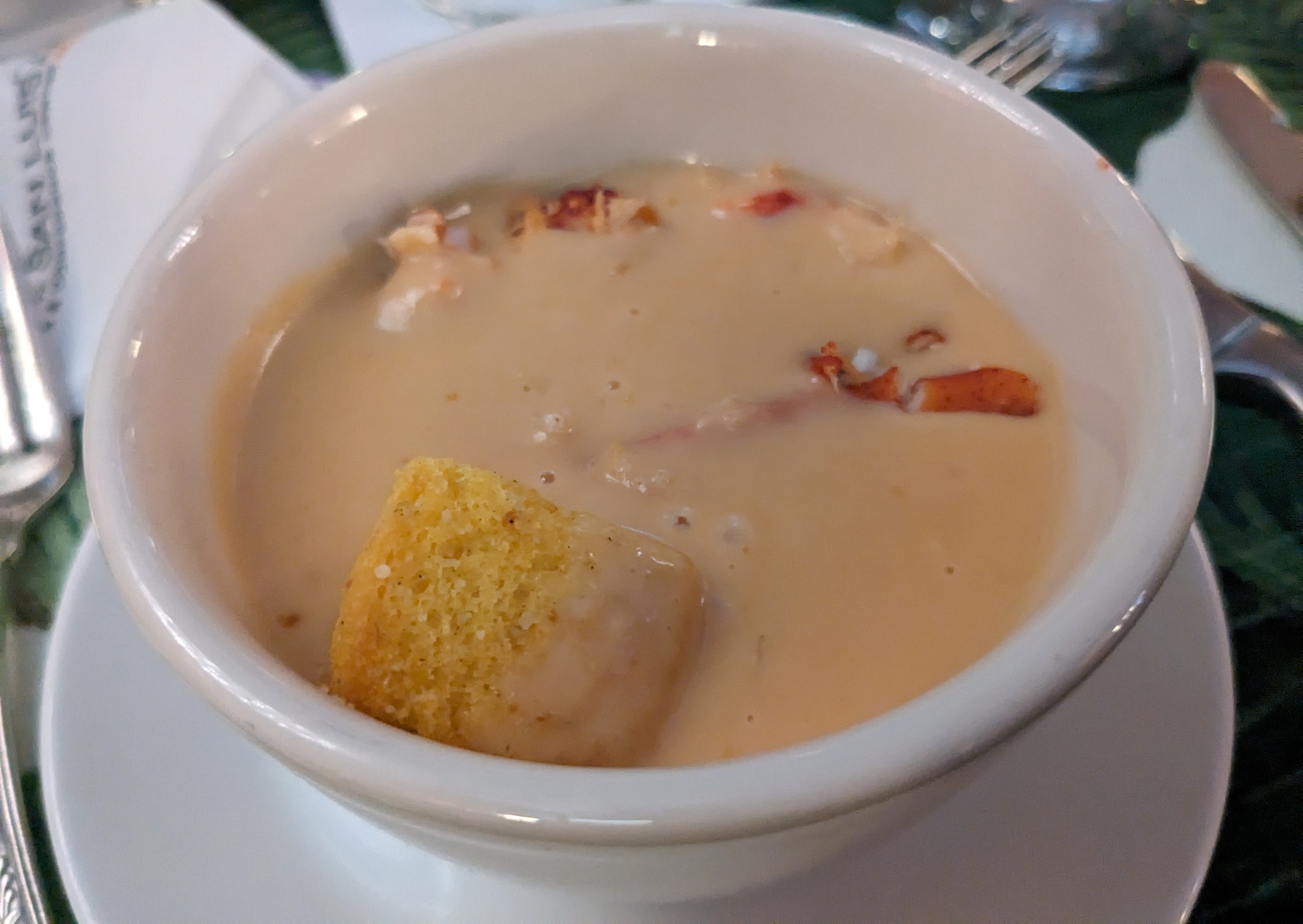
Renowned for its specialty cream of shrimp soup available in sizes from a “demi” cup to a large bowl, The Cottage features daily luncheon specials. Although the compact lunch-only spot looks somewhat like a ladies’ tea room, its clientele runs the gamut from suited businessmen to golfing foursomes to families with children. Personalized service is one key to its popularity, but the food lives up to the reputation it has built. Dishes are full of fresh flavor and served with flair.

Just one note of caution. A special of fresh fish with spinach salad and cottage potatoes had been listed online at a price substantially lower than the price that was charged. We noted the discrepancy with great surprise when the bill was presented. Although restaurant staff honored the lower (and incorrect) online price, it is probably always a good idea to confirm special prices before ordering.

Beer and wine are available, but the specialty almond iced tea was exceptional. We didn’t try any of the homemade dessert offerings, but I’m willing to bet they’re wonderful as well. Next time, I’ll have a hard time deciding between a Strawberry Crepe and the P-Nutty Oreo Pie.

Know that The Cottage is only open from 11 a.m. to 2 p.m. Monday through Saturday. Would we return? Absolutely!

Tunk’s Cypress Inn

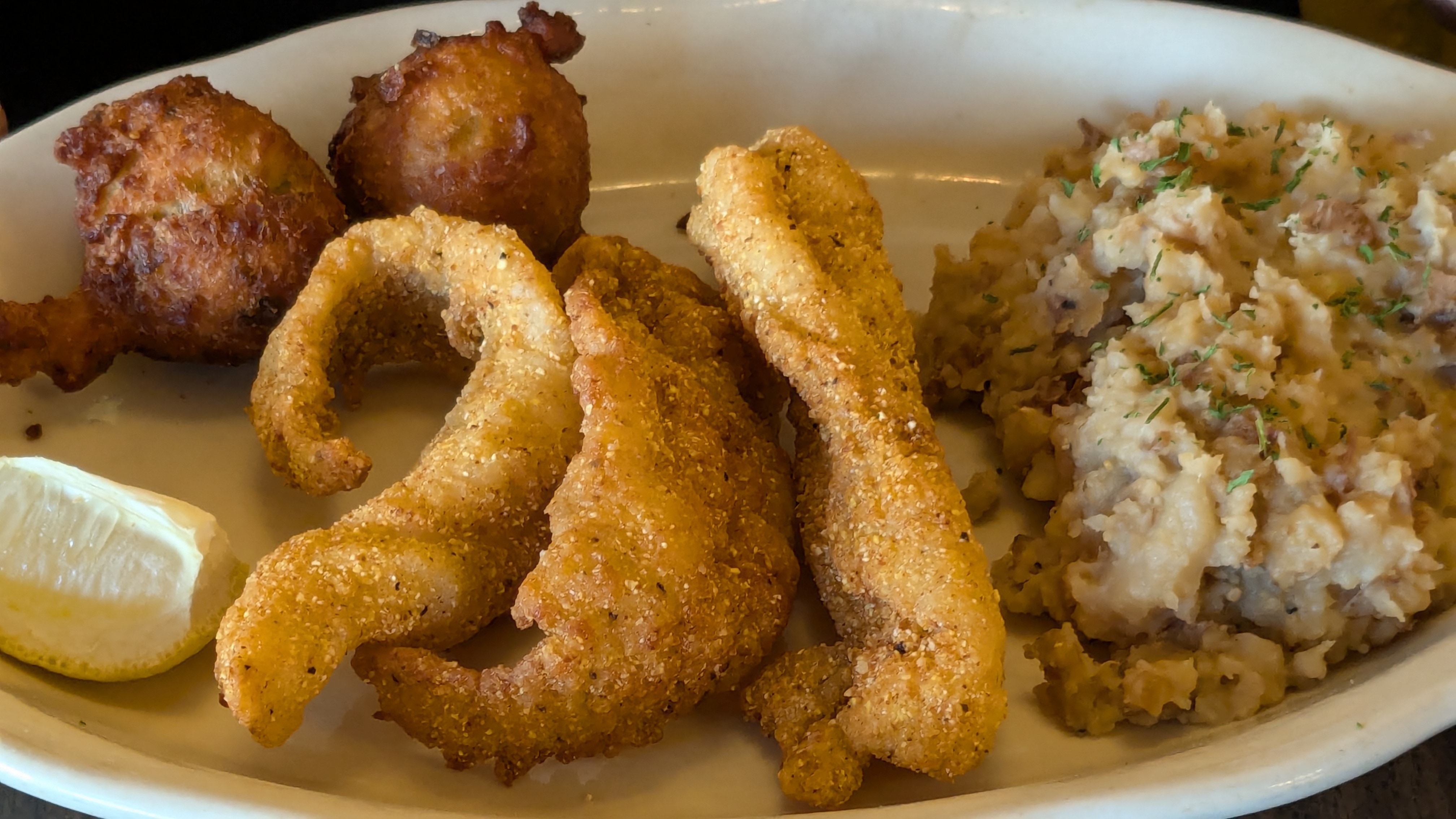
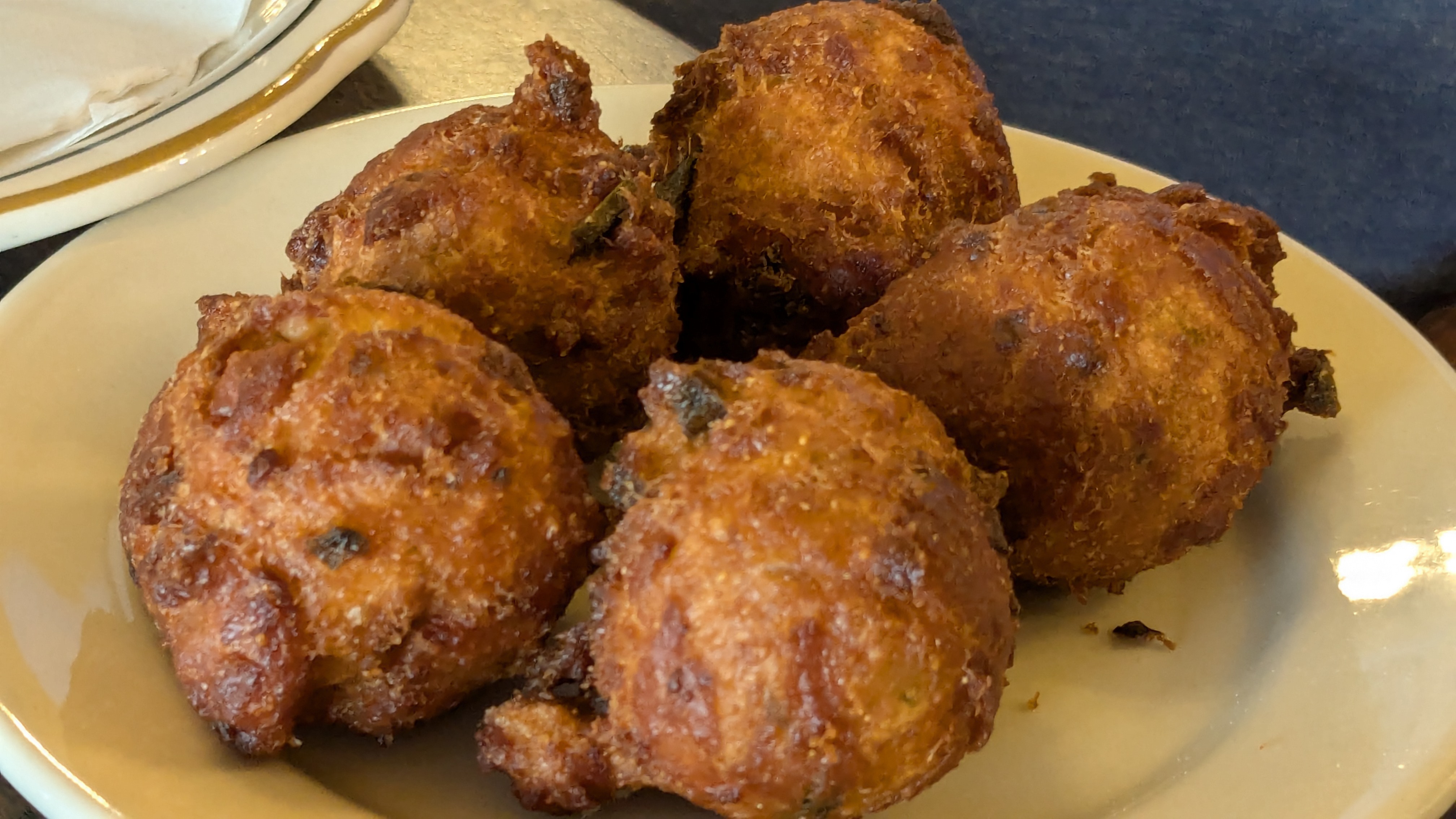
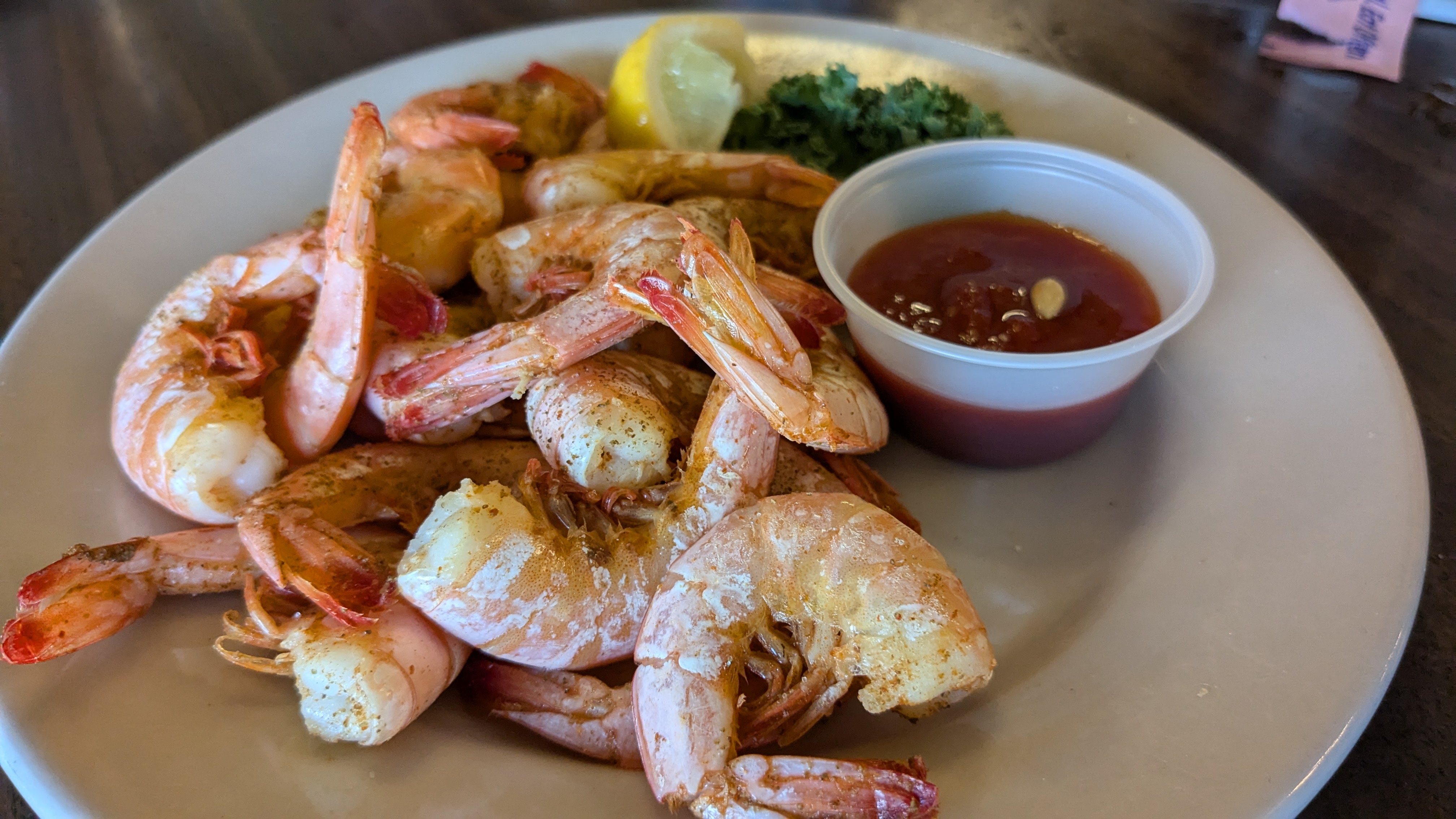
It would be worth visiting Tunk’s Cypress Inn & Oyster Bar just to sit on the deck with a cool drink while gazing at the serene view. However, to miss the food would be almost criminal. The Oyster Bar, right at water level, even features a choice of Po-boys as a Thursday night special. We missed that, but what we had — shrimp-topped fried green tomatoes with basil pesto cream sauce, boiled shrimp, fried catfish, seafood gumbo, and hush puppies — more than compensated for any disappointment we felt about missing the Poboy Special.

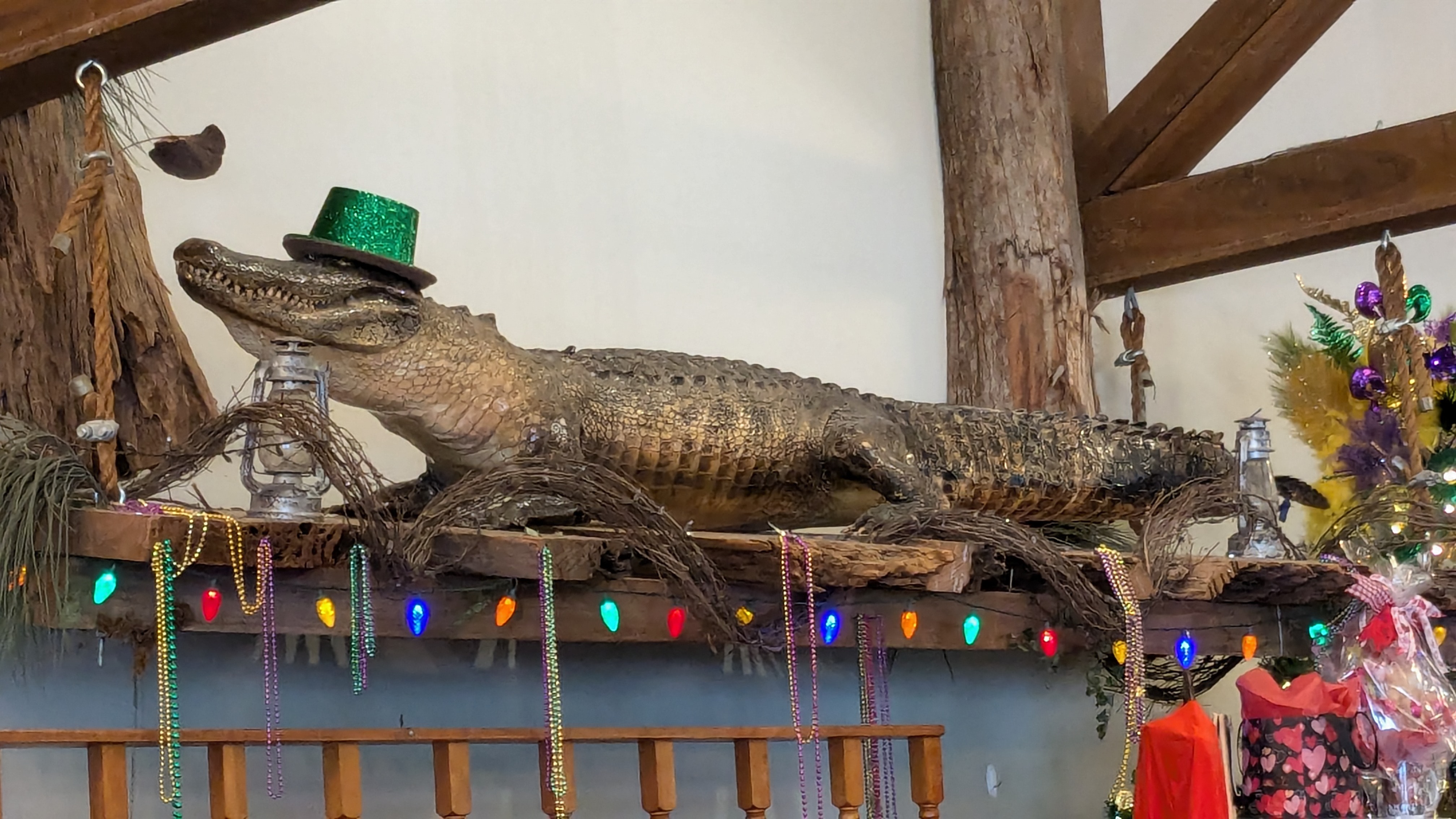
In case you’re wondering, the alligator, dressed in Mardi Gras finery, oversees the dining room on a perch adjacent to a pine tree trimmed in traditional purple, green and gold. And “the good times roll” here, we’re sure, all year long.

Mardi Gras colors, along with beads and memorabilia, are not necessarily limited to Tunk’s. You’ll find reminders of the “good times” throughout Alexandria. It’s part of Louisiana’s mystique, along with Cajun and Creole food and music.

Rosie Jo’s

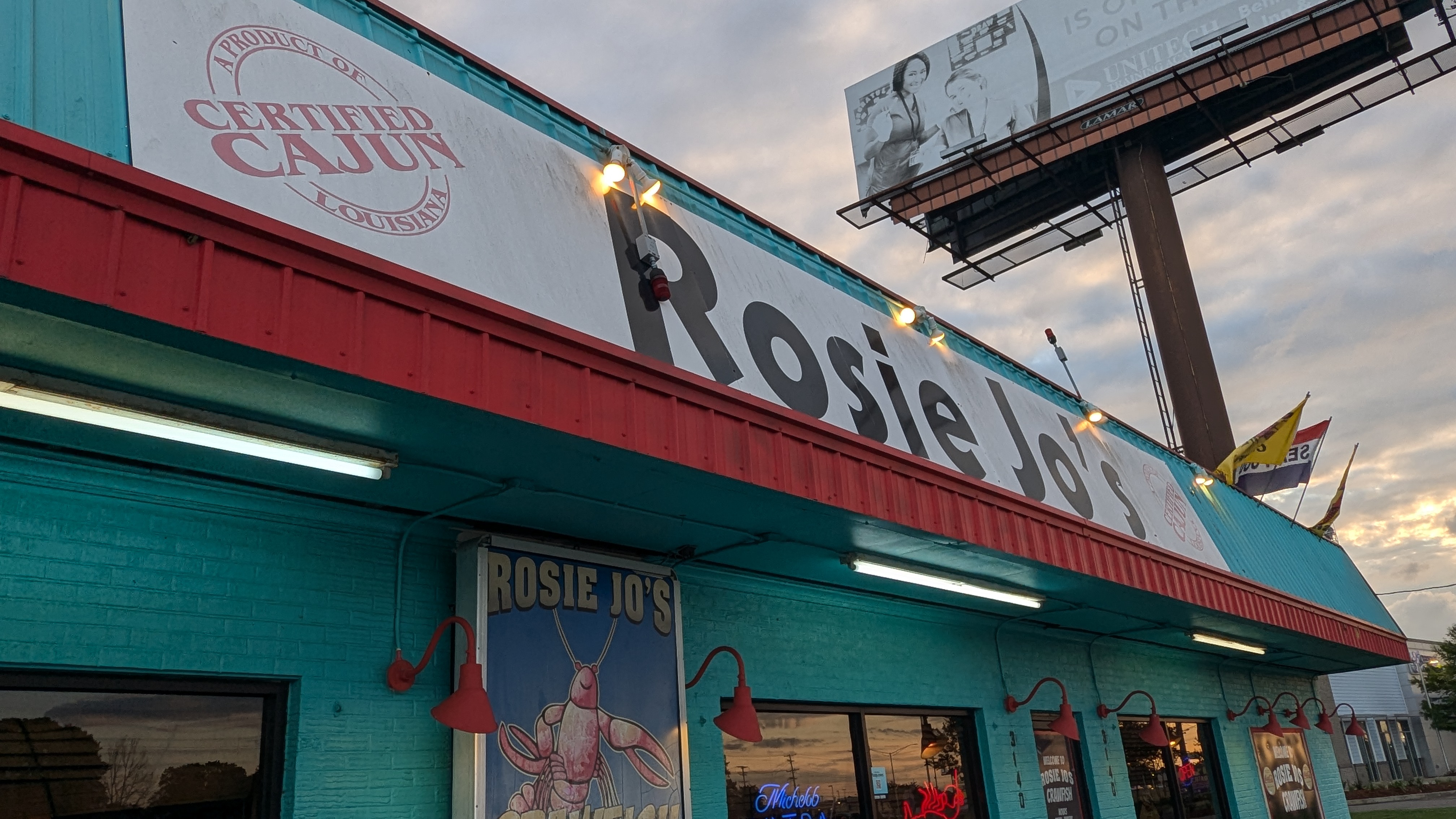
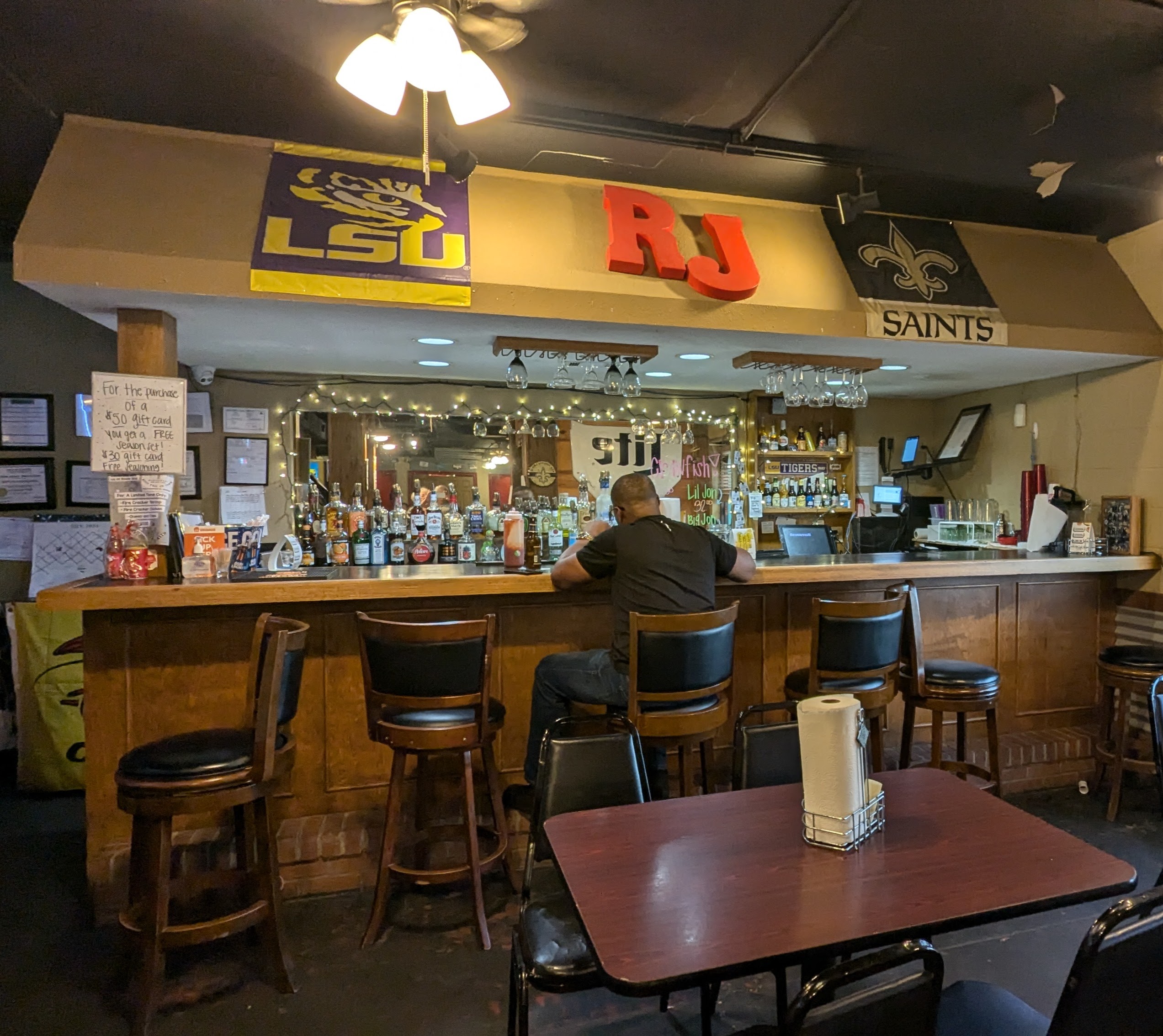
Rosie Jo’s looks like a roadside diner from the outside, and the interior has some of the ambience of an after work watering hole, or a late night honky-tonk. But don’t let that keep you from going. It’s hip, friendly, busy, and fun. And the food — everything we ordered — was well-prepared, hot, and delicious. Service was on point, as well. So, for the pure fun of it, as well as the quality, we heartily add our names to the list of local recommendations we received about Rosie Jo’s.

We visited Rosie Jo’s during crawfish season and and, even though we didn’t order a bucket to share, plenty of other diners did! As I looked around, I realized that not many crawfish go uneaten! If you go, you might want to time your visit so that you can have the experience!

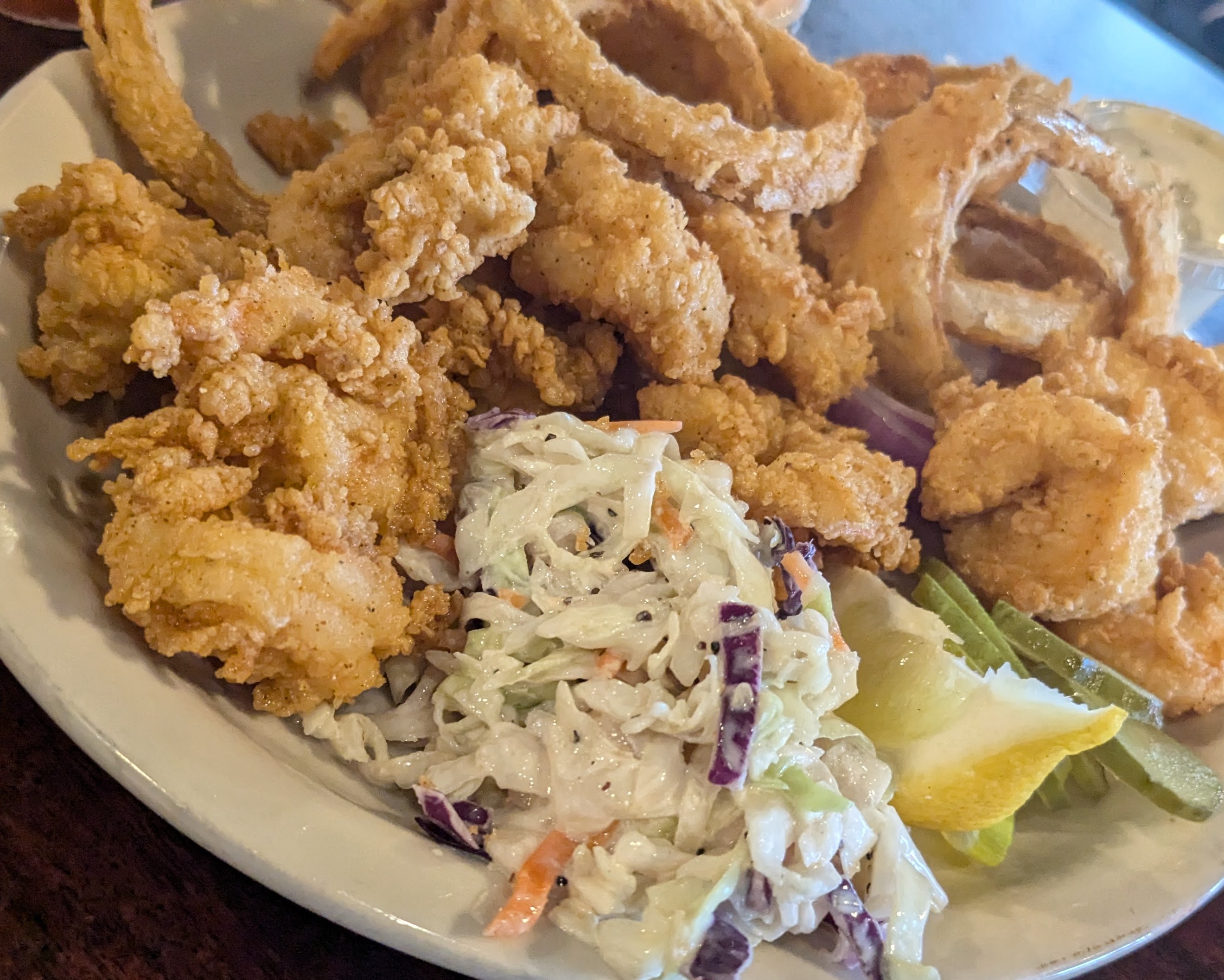
We thoroughly enjoyed what we did order. I’m not sure I wouldn’t choose the hearty Shrimp and Grits again, but it’s a large order, suitable for sharing. Others in our group chose Fried Shrimp, complete with onion rings and coleslaw, and Pistolettes, fried pockets of dough stuffed with boudin and covered in shrimp etouffee.

Needless to say, samples all around were willingly shared.

Even though the city lies to the north of what is considered “Cajun Country,” there’s plenty of good Cajun food to be found. Over the course of the next two days, we sought recommendations from everyone we met and were rewarded with a list of options that would satisfy even the most discerning diners. There are fine, upscale restaurants as well. And we understand that food booths and food trucks are there for the festivals.

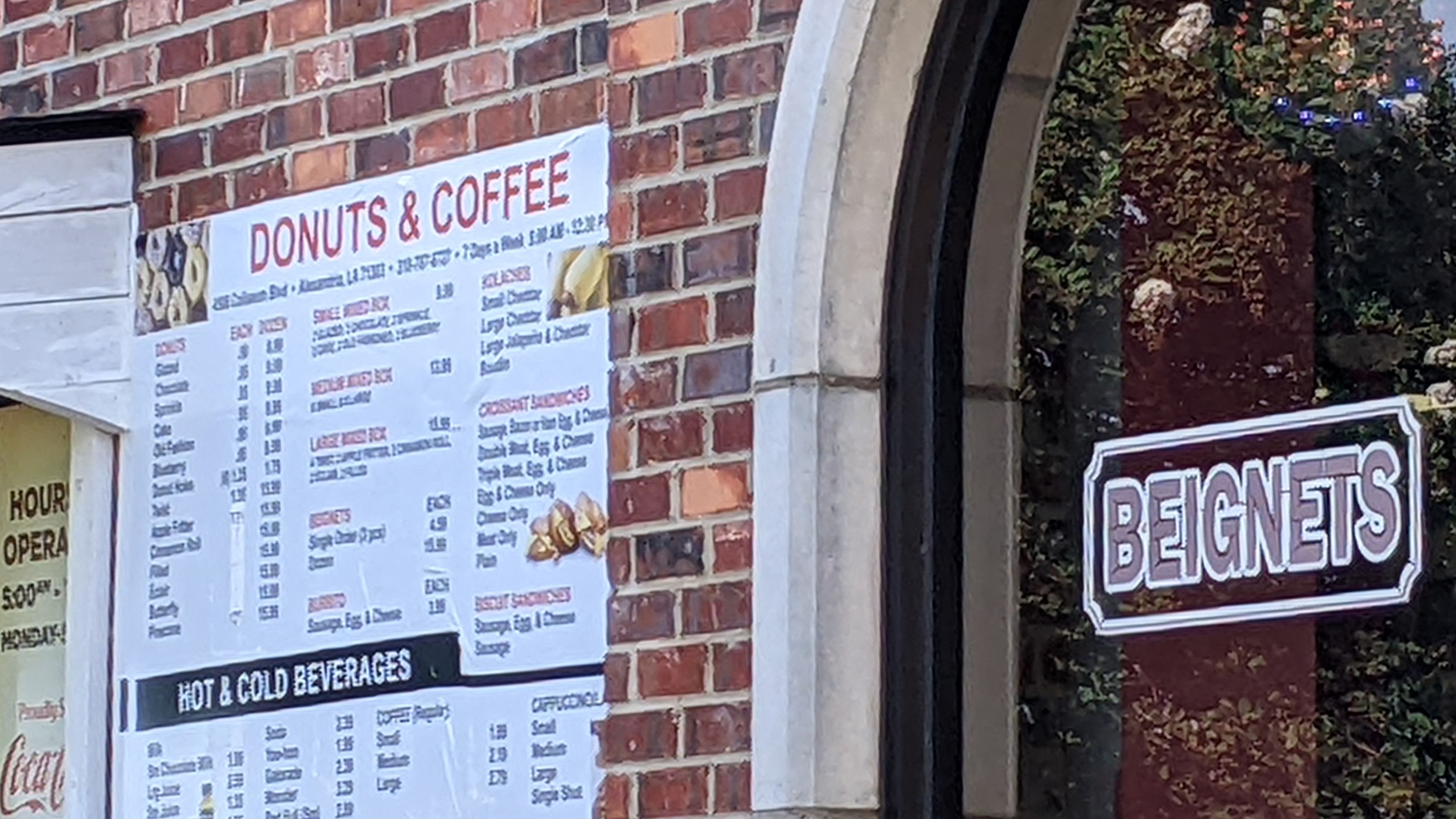
Our final morning came too soon. After leisurely coffee and conversation with our hosts, we made ready to leave. Previously, we had spied a neighborhood Coffee and Donut Shop. We couldn’t resist stopping. Served fresh and piping hot, three to the order, the large beignets drenched in powdered sugar reconfirmed that Louisiana residents definitely know how to enjoy the good things in life. One more reason to return.

On our return trip to Arkansas, we passed through the charming town of Ruston, not quite two hours north of Alexandria. Home to Louisiana Tech University, it seemed a good place to stop for a bite to eat — home was approximately another four hours away. Our friends had recommended Ponchatoulas, with a convenient downtown location. Another chance to sample “the flavor of Louisiana” was tempting, to say the least. We had been forewarned, however, that we might have to wait for a table, and that was the case.

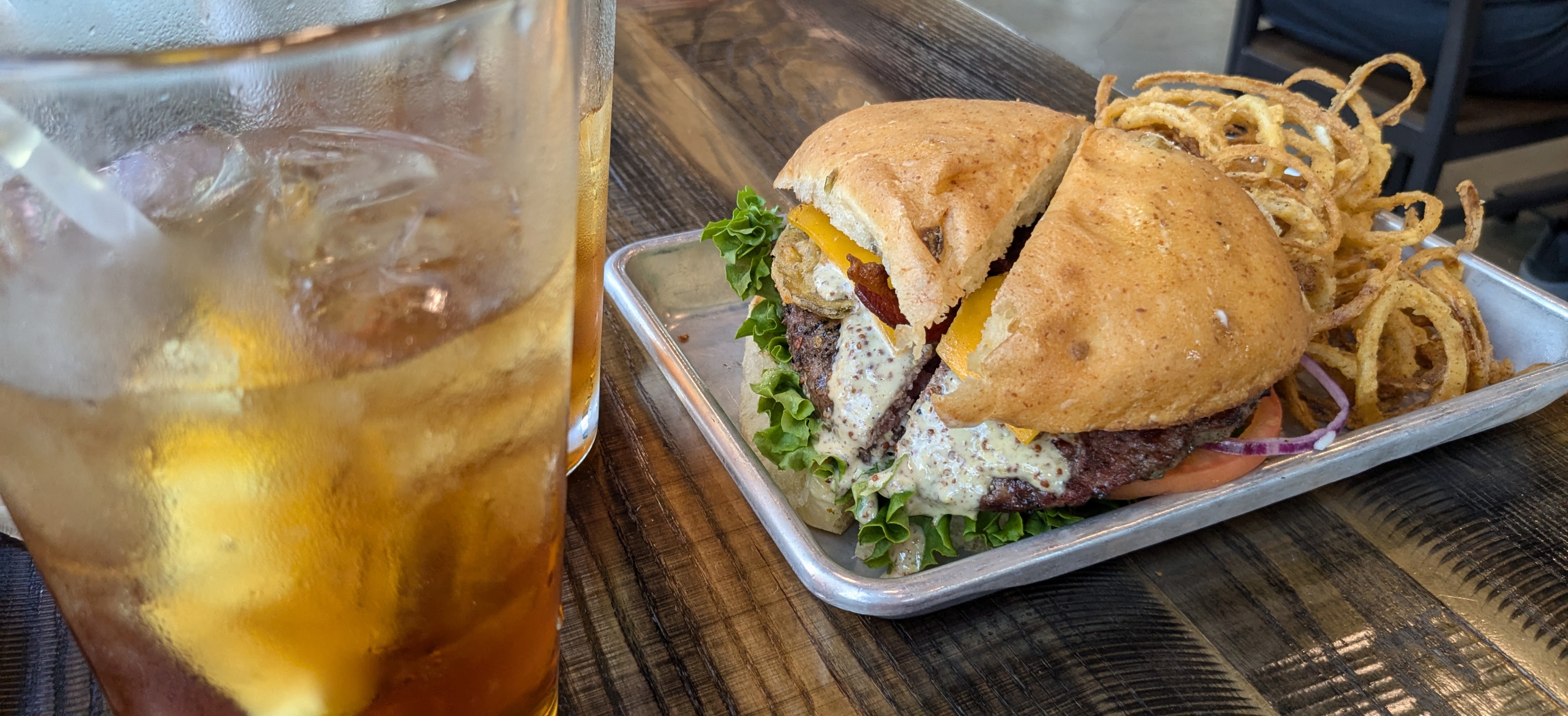
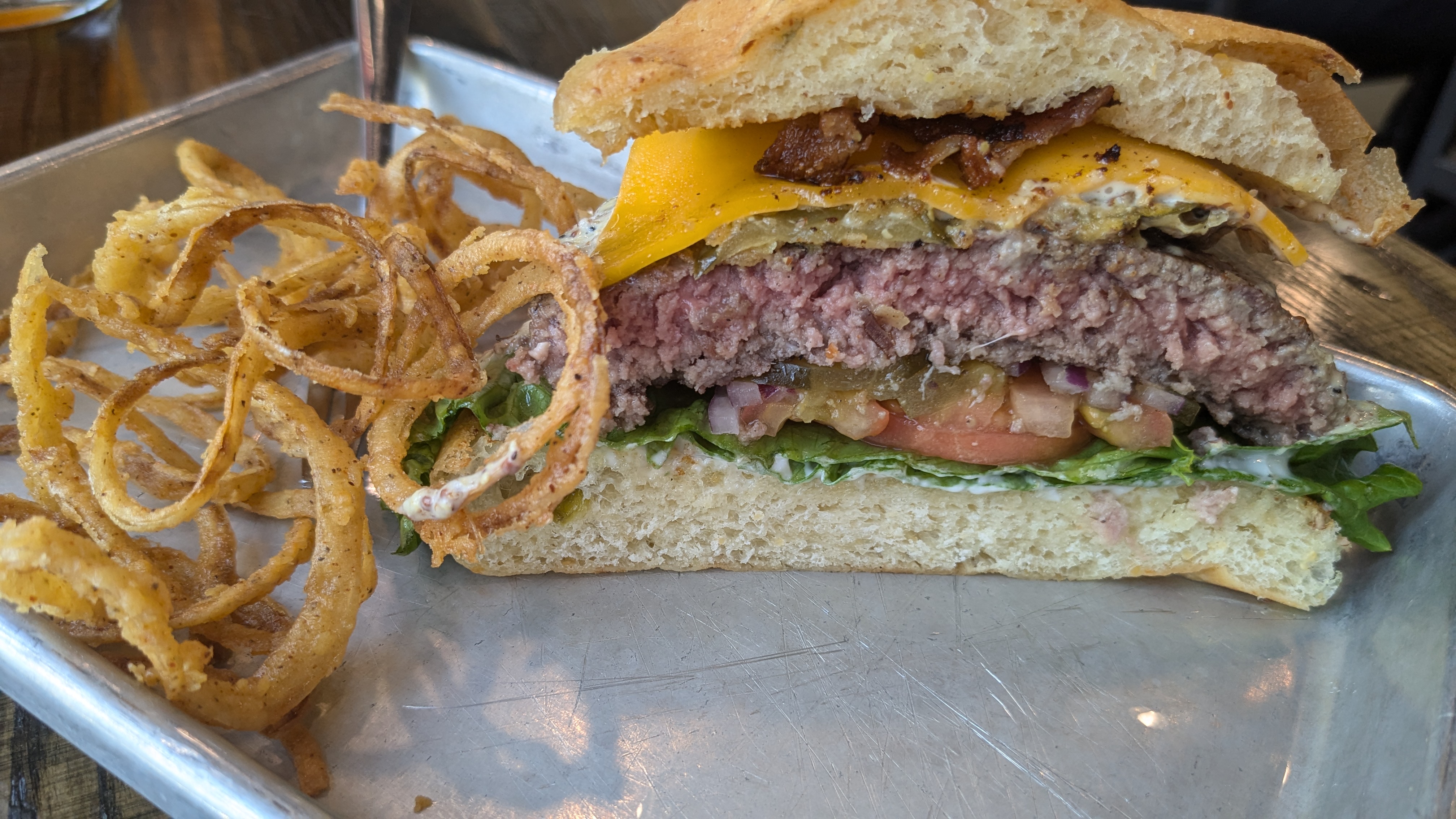
Another quick online search yielded results: Dawg House Sports Grill. It has a tempting menu of burgers and was easy to find. Obviously popular with students and sports fans, there were also a fair number of families there to watch Sunday games. Although tempted by menu items like Boudin Egg Rolls, Fried Green Tomatoes, or a Shrimp Poboy, we settled on a Bulldawg Burger with Onion Strings, after our server’s assurance that it was large enough to share.

It was indeed! We felt confident we would not have to worry about dinner that evening.

“On the Road” Learning

Driving home, we reviewed everything we had packed into the all-too-brief road trip. Importantly, we had learned that there’s more than food to love about Alexandria, but that food is an important aspect of any good travel experience.

We knew our two-day time frame would allow little time to do more than scratch the surface of Alexandria. We had hoped to explore some of the city’s casual eateries, with the goal of finding, at minimum, interesting food options and Cajun flavors. A variety of Poboy choices and local brews would have satisfied us.

What we found was so much better. We hadn’t expected a food dilemma, but there simply are too many good options, it seems, for the time or appetites we had.

We left wanting to know more about this distinctive Louisiana city. There’s a plantation house that dates to pre-Louisiana purchase days, a grand century-old hotel that must have many stories to tell, a highly-rated zoo and art museum, an undergrad campus of Louisiana State University, and several popular annual celebrations, including Mardi Gras. Alexandria also boasts a fascinating military history. It was near here that thousands of soldiers trained prior to World War II and many different types of aircraft flew out of the former England Air Base that has been “recycled” as a regional international airport.

Alexandria seems like a “happening” place to be, any time of year. It’s now certain that we’ll return.

Strengthening the ties of friendship with former neighbors was important to us, and we vowed not to allow much time to pass before doing it again. Getting away for fresh experiences in unfamiliar places is good for the soul.

And sampling new foods definitely adds spice to life.

Galveston — Queen of the Gulf

I can hardly think of Galveston without — at least in the back of my mind — humming the tune that Glen Campbell sang with so much heart back in the 70s.

I was in Galveston in early May to attend the annual conference of the North American Travel Journalists Association. I definitely heard those sea winds blowing and sea waves crashing. It was a stormy time across Texas, and not really beach weather, but Galveston still offered fun, good food and drink, and plenty of things to occupy my time when I wasn’ t in a meeting or attending a special event.

We were kept quite busy, but there was still time to become reacquainted with a city that I had learned to love when my husband and I were Texas residents looking for a rejuvenating beach getaway. Then, too, my son is a graduate of Texas A&M University at Galveston; so, as parents of a Sea Aggie, we have another tie to this unique beach town.

The city has grown, but in many ways it has not changed much since the last time I visited for any reason other than to board a cruise ship. Indeed, there’s a new cruise terminal and the iconic Hotel Galvez has been completely reimagined and is now grander than ever before. A number of new restaurants are flourishing since the days we sought out cheap takeout places for fried shrimp or oyster Po’Boys. The legendary pleasure pier has been rebuilt, modernized, and expanded. Some of my favorite old haunts no longer exist, but new breweries and bars have taken their place. Another favorite bakery and coffee shop has moved, and is now Bronco Burrito. A sister of the coffee shop proprietor now offers one of the biggest, and best, burritos ever. As the old saying goes: “The more things change,” . . . you know.

Familiar, But Always Fresh

My former “must stop at” donut shop, Shipley’s on the causeway as one enters Galveston is still a tradition. And Galveston’s oversize chess board still occupies a prominent location on The Strand, always ready for a crowd of onlookers when someone suggests a match.

Galveston remains a beach town with a welcoming vibe, a young, active population, and a distinctive sense of its own importance. It has moved easily into the 21st Century, and is primed for future growth and development. Throngs of visitors flock to the island when the weather is good, renting beach cottages and filling the island’s hotels and motels. But on this trip I realized once again that this best-known island just south of Houston — just 27 miles long and three miles wide — has a past worth exploring. That past could fill volumes.

Cabeza de Vaca, the first European to come ashore in North America, spent seven years in Galveston beginning in 1528. That led to 300 years of Spanish colonization. Bernardo de Galvez, the viceroy of Northern Mexico and Texas, defeated the British at the Battle of Mobile Bay, and was a witness to the signing of the American Declaration of Independence.

Then came the pirates — Jean Lafitte and his brother Pierre attacked an American ship in 1822. Steven F. Austin obtained a land grant to settle 300 colonists in Texas and, in 1825, was granted permission to form a port.

These are the names of past visitors and residents who envisioned a city on this spot.

Galveston was born.

When the Texas Revolution was begun in 1836, the city was thriving, and it saw the birth of the Republic of Texas in 1846.

A Port of Renown

By the year 1850, the city was the largest port in the United States, with an export to import ratio of 20 to 1.

One of our conference speakers was J.P. Bryan who founded the Bryan Museum in Galveston in 2015. It boasts some 70,000 artifacts, from family letters (his great-great-grandmother was Steven F. Austin’s sister) to rare books, pistols, and saddles. He grew up in Freeport, and his father was president of the Texas State Historical Association.

The museum is housed in a completely refurbished once-abandoned Galveston orphanage. I was enthralled by his stories and I learned more about Galveston history and lore from him in one hour than I had gleaned during repeated past visits spanning nearly three decades.

One of the best things to do in Galveston is to learn about its history. And I learned from one of the best. As Bryan notes, “History is not boring.” In Galveston, history is around every corner.

Galveston Firsts

Once a center for immigration second only to Ellis Island, the small city was once known as the Wall Street of the West, and it boasted the first black high school, the first library, the first electric lights, the first professional baseball team, and the first medical school (It’s medical complex today, including the University of Texas Medical Center and the Shriners Children’s Hospital and Burn Center, a renowned and highly rated group of institutions.

In 1880, the city counted more millionaires than New York City, and there were more Victorian structures than anywhere else in the country. Until, that is, a 1900 hurricane devastated the city. With a death toll of 9,000 citizens, that event represents the worst disaster in U.S. history. Galveston rebuilt, but it never bounced back financially to where it was in the late 1800s. Today, there are 60 buildings included on the National Register of Historic Places. And Galveston is, once again, on the map, so to speak, and is on the way once again to becoming a force to be reckoned with.

Because it was, and is, a port city, Galveston also knew its share of shady characters, gambling and vice, and had a thriving red light district during the first part of the 20th Century. The city fell into decline from the end of World War II until the 1960s, when it began to reinvent itself once again.

Today, it looks forward to a new renaissance. Business is booming; tourism is up. Galveston has rediscovered its past and by so doing, reclaimed a vision of a prosperous future. This is what we saw during our short stay.

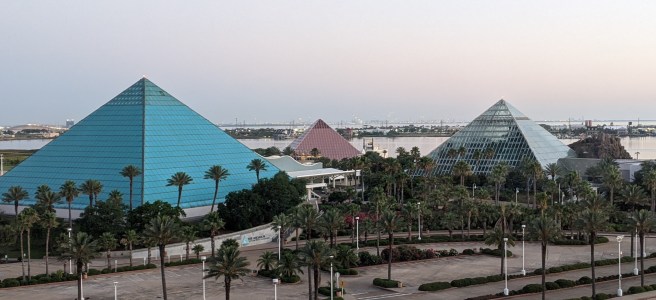
Note: Our conference was held at Moody Gardens. Watch for my future story about this amazing recreational and educational complex that includes a modern hotel and convention center as well as three dramatic pyramids that house an aquarium, a rainforest, and a Discovery pyramid that features rotating exhibits. There’s also a water park, a replica paddlewheeler, a reef rescue virtual reality experience, a ropes course and zipline, a seasonal waterpark, and 3D and 4D theaters.

Juneteenth

June 19th marks another bit of historical relevance for this quirky beach town. It was on June 19th, 1865, that Maj. Gen. Gordon Granger, who had fought for the Union, arrived with a force of soldiers in Galveston to deliver a very important message: The war was finally over, the Union had won, and it now had the manpower to enforce the end of slavery.

President Lincoln had signed the Emancipation Proclamation two and a half years earlier, but the word had not yet reached the Confederate state of Texas.

Read more about Juneteenth history. Believe me, it’s pertinent.

Today, Juneteenth is a National Holiday, and nowhere is it celebrated with more meaning than in Galveston.

The Future Is Bright

Galveston Mayor Craig Brown noted that, beginning in 2025, “every major cruise line sailing U.S. ports will be represented in Galveston,” and the city is slated to become the country’s third busiest port. A new Royal Caribbean Cruise Terminal opened in late 2022 at a cost of $125 million. It provides the utmost in passenger boarding convenience, with time from parking your car to actually boarding a cruise ship reduced to mere minutes, and it will accommodate the largest cruise ships afloat today.

Best Things to Do in Galveston

I could make a long list of things to do and places to go in this unique city, but half the fun of visiting a destination like Galveston is discovering on your own. If you travel there, just be open to new experiences, and you’re bound to enjoy your time. Seek out unusual places, talk to locals, and try new things.

Don’t Miss the Elyssa

Visitors may also tour an 1877 sailing ship, the Elyssa, that occupies a permanent slip at the Galveston historic seaport, amidst the seafood restaurants and wholesale fish markets. Take a tour of the restored vessel, or schedule a harbor tour. It’s quite an experience. Sightseeing tours of the port are also available that take passengers to the tip of the island, where free ferries operated by the Texas Department of Transportation run 24-hours a day to connect Galveston with the Boliver Peninsula, just just a few minutes away.

Adjacent to the Elyssa’s dock, you can become an immigrant. It’s a fascinating journey to “adopt” a persona and make your way through the immigration procedures at the Port of Galveston during that part of its history.

Ride the Ferry

A free ferry connects the Bolivar Peninsula southwest of Beaumont with Galveston Island. Officials have debated the pros and cons of building a bridge there since the 1930s. So far, it has not been done.

The trip spans less than three miles, and takes 18 to 20 minutes. During peak times, wait times can be long, sometimes an hour or more. There are no priority passes, but the ferry service operates around the clock. There are six ferries in the fleet, and during peak traffic times, all may operate as necessary. In the year 2000, the ferry system transported 6.6 million people. Each vessel can transport up to 70 vehicles, and 500 people.

The Pleasure Pier

In 1906, only a few years after the earthquake, Galveston’s original Electric Park that was to become known as the Coney Island of the South opened on a pier jutting out into the bay. A special excursion train at the time connected Houston to the pier, and crowds thronged to enjoy the moving picture shows, a ferris wheel and roller coaster, vaudeville shows and penny arcade, all lit by 6,000 electric lights.

In 1943, the Pleasure Pier was opened for the benefit of servicemen and military families during World War II. Following the war and throughout the 50s, more rides, games, and attractions were added, including a ballroom and outdoor theater for movies under the stars. Then, in 1961, another hurricane damaged much of the pier, and the Flagship Hotel, built over the water, fell into disrepair. Then, in 2008, Hurricane Ike roared through and the tourist industry in Galveston was hard hit until an investor in the person of Galveston native and Landry Corporation proprietor, took a chance and rebuilt the historic entertainment pier.

It opened in 2012, bigger and better than ever before. It is now a “must see, must visit” attraction in Galveston, with something for every visitor from nine to 90. Don’t miss it, if only to watch other people enjoying themselves.

Tour the Railroad Museum

The toy train at Galveston’s Railroad Museum made me feel like a child again!

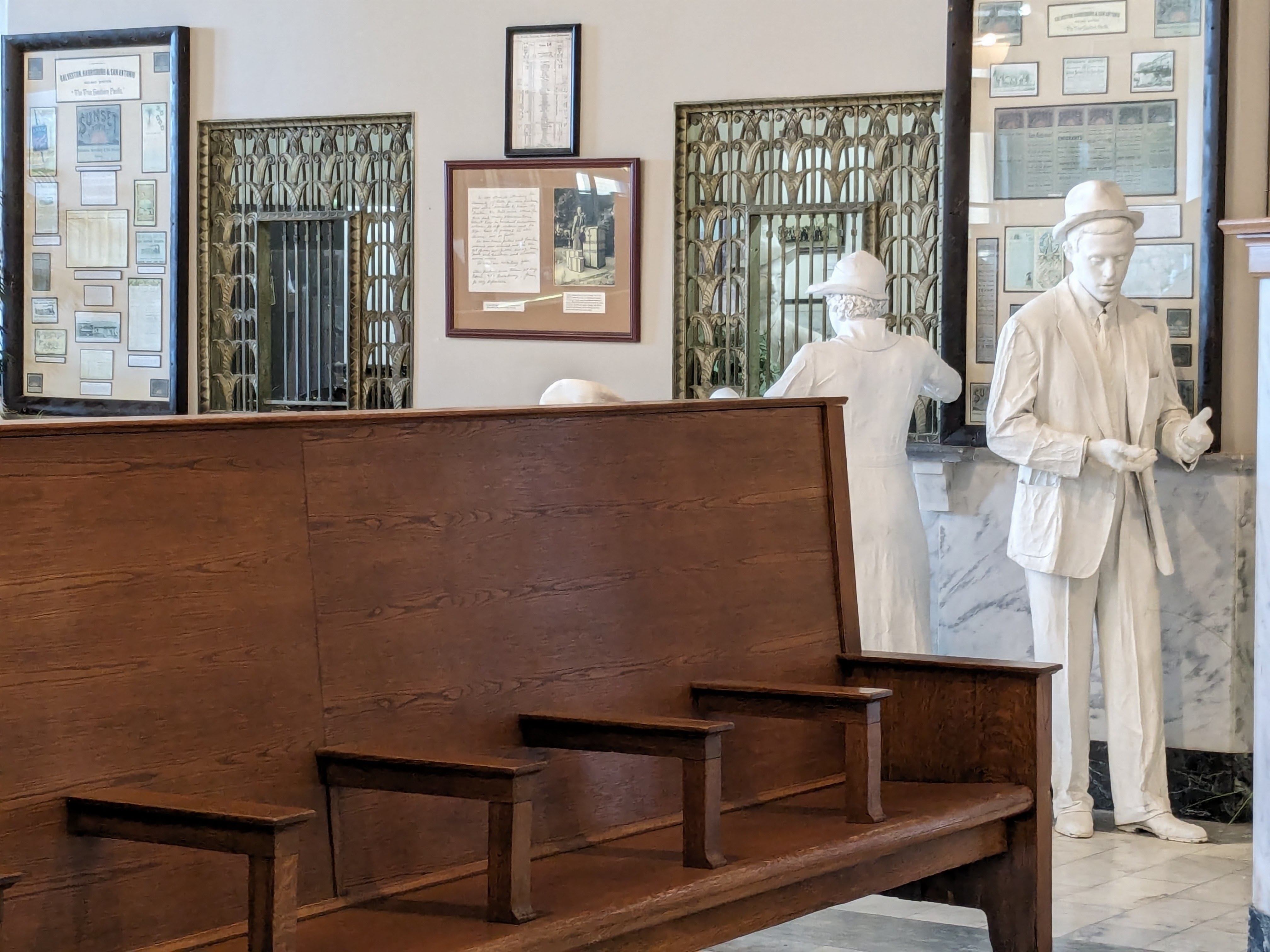
The former Galveston Railroad Station has been reimagined as a museum, complete with original benches, clocks, ticket counters, a bank of pay telephone booths, and a variety of vintage rail cars and engines looking as if they’re fit to leave the station at a moment’s notice. For any railroad buff, it’s a must see — for its architecture and his historical significance. One can almost hear the “All aboard” cry as you open a door that leads to the tracks.

Other displays in the station are captivating as well — especially the stories of children who rode the rails from the east coast to the Midwest and Texas aboard Orphan Trains. Its a history that deserves telling, but one that has not been told completely or enough.

Plan Some Beach Time

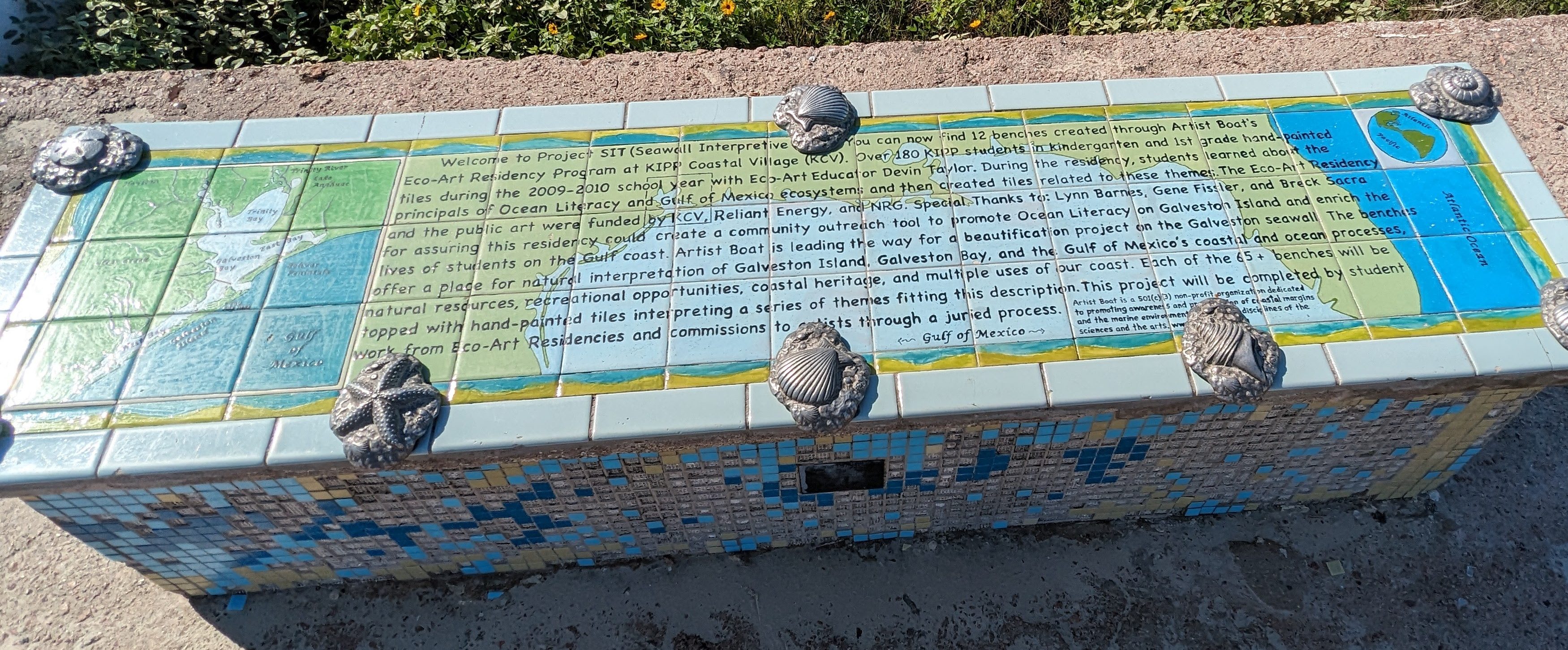
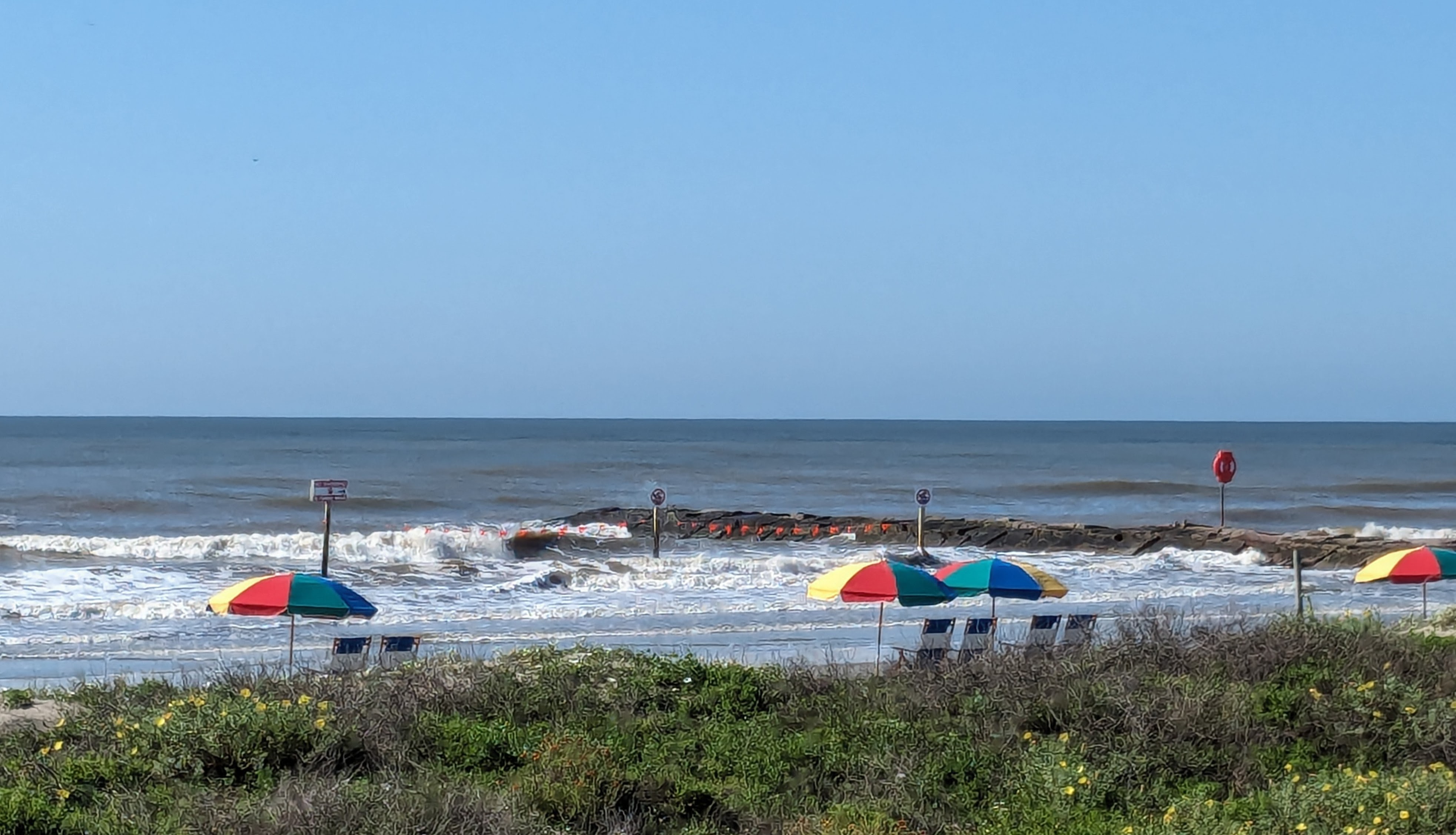
Walk along the Sea Wall and gaze out at the Gulf or take your shoes off and stroll the beach. Spread a towel or a blanket, and have a beach picnic. Stretch out and savor the sun, build a sand castle, or leave the beach for some fun at the historic Pleasure Pier! Galveston has done a marvelous job with its 32 miles of beaches — some areas are now equipped with “paved” paths designed to allow beach access for mobility-challenged beach-goers and visitors in wheelchairs. The city, at the forefront of such user-friendly features, has also installed rest rooms and changing areas with easy beach access. Note: Many Galveston trolleys are also equipped with ramps for mobility-impaired passengers.

You’ll pay to park your car, but Galveston’s beaches and numerous attractions are open to the public at no charge.

Spend a Day at the Tidal Estuary

Galveston boasts a tidal estuary that has national significance because it has not yet been greatly affected by human activity. It is estimated that 75 percent of the bird species in North America spend some time in the local bay, and it is filled with both finfish and blue crab, bordered by coastal plains and marshes. If this is “your thing,” get out and enjoy it.

Go kayaking, rent a canoe, take a nature hike, or simply gaze at and be amazed by the nature that surrounds you.

Seawolf Park

At the very tip of Pelican Island, accessible by a single bridge from the city of Galveston, Seawolf Park boasts the most popular fishing piers in the area, along with picnic tables and a children’s playground. Pelican Island is also home to the Galveston campus of Texas A&M University, with degree programs in marine sciences, marine fisheries, marine biology, maritime engineering and ocean engineering, computer science, maritime transportation and maritime business administration. It also offers an interdisciplinary program in maritime studies, and is home to the Gulf Coast’s only Maritime Academy that offers a licensing program for students who wish to pursue maritime careers.

Seawolf Park currently houses the Galveston Naval Museum that allows visitors to tour both a WWII-vintage submarine and destroyer, and greenspace with a submarine exhibit. Galveston is also the probable new home for the Battleship Texas, currently undergoing repairs and refurbishment in drydock. It has been reported that this sole surviving U.S. battleship that served in both world wars will at some point in the future find its new home at Pier 21 in Galveston.

Visit a Fish Market

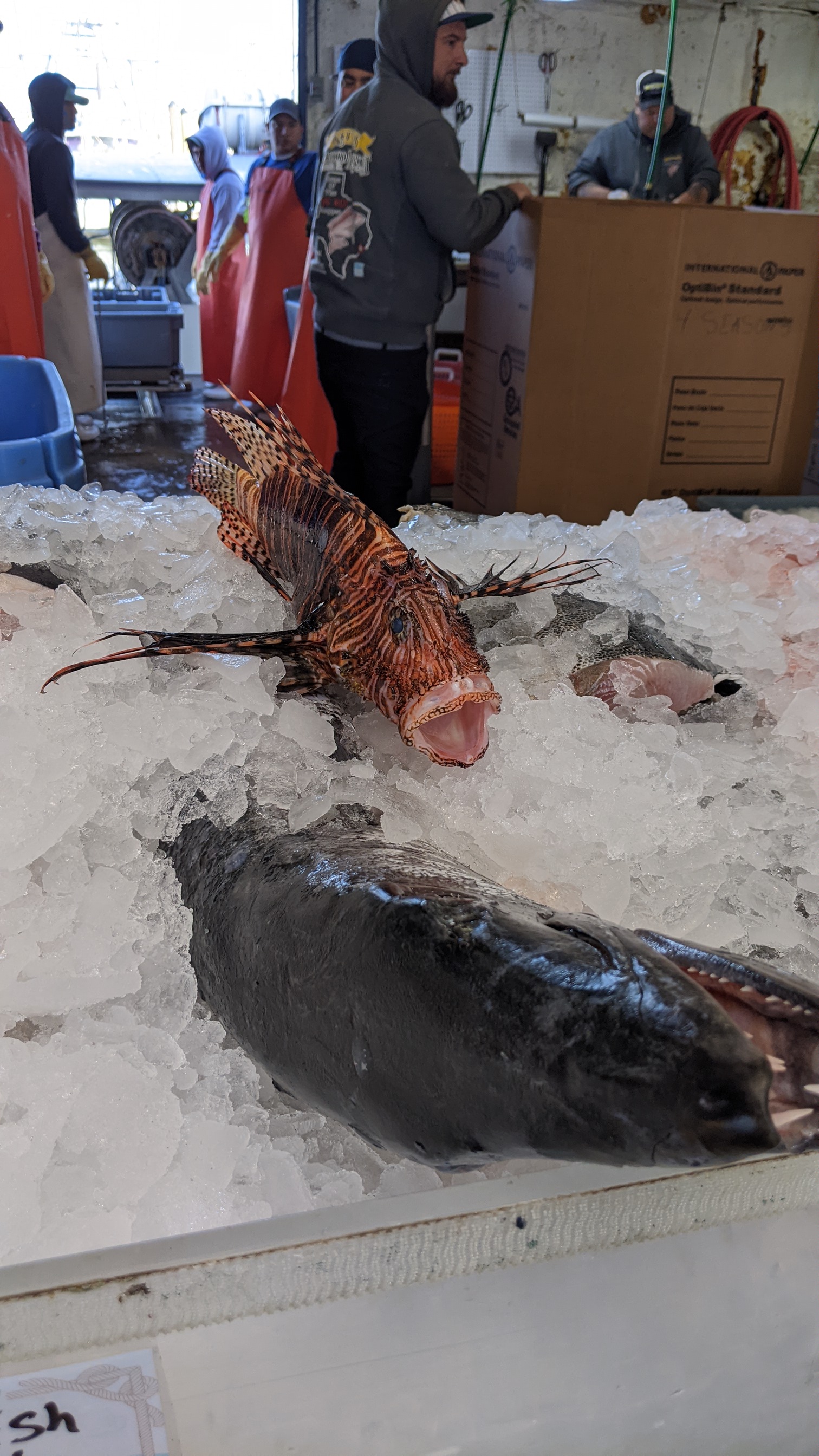
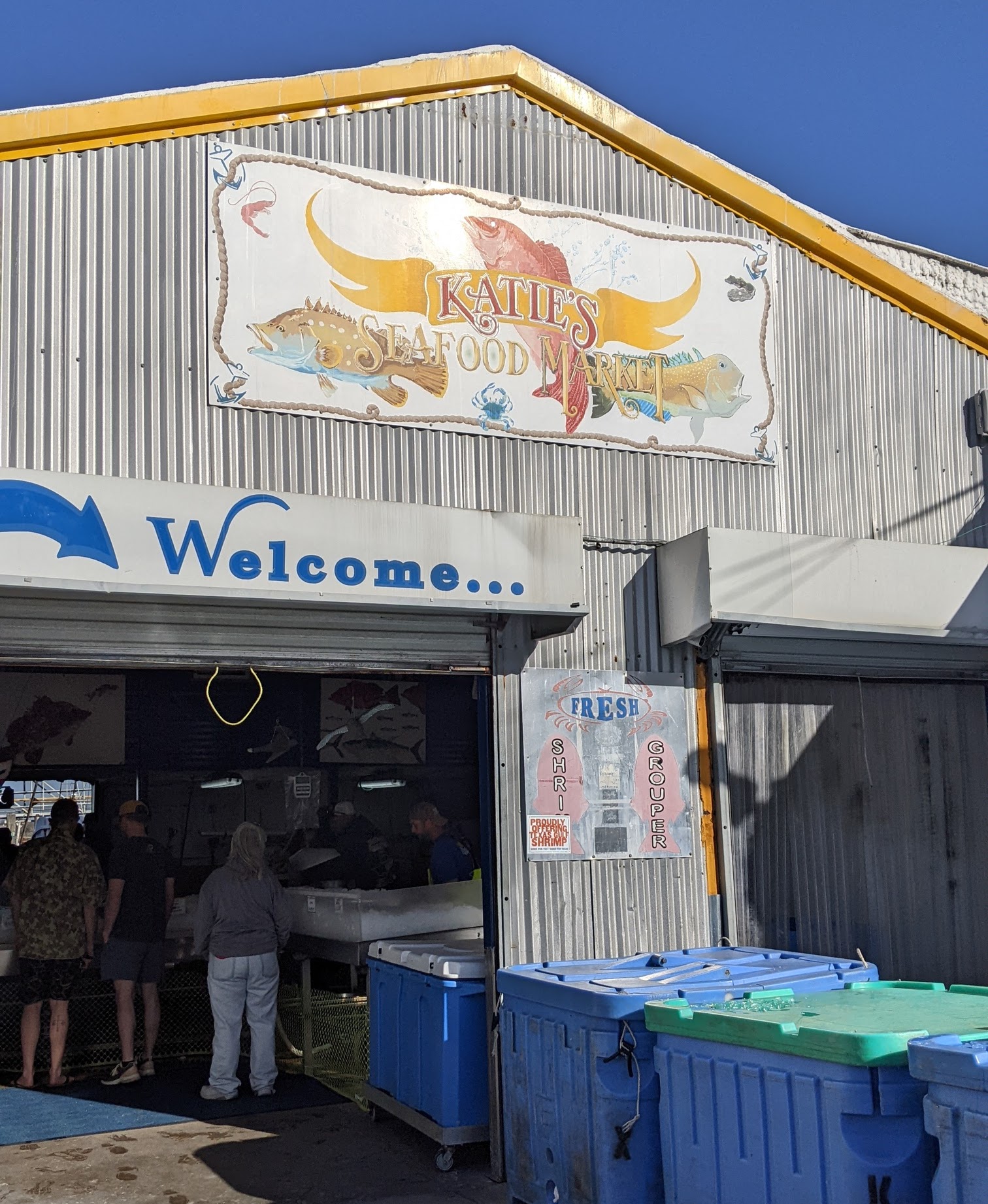
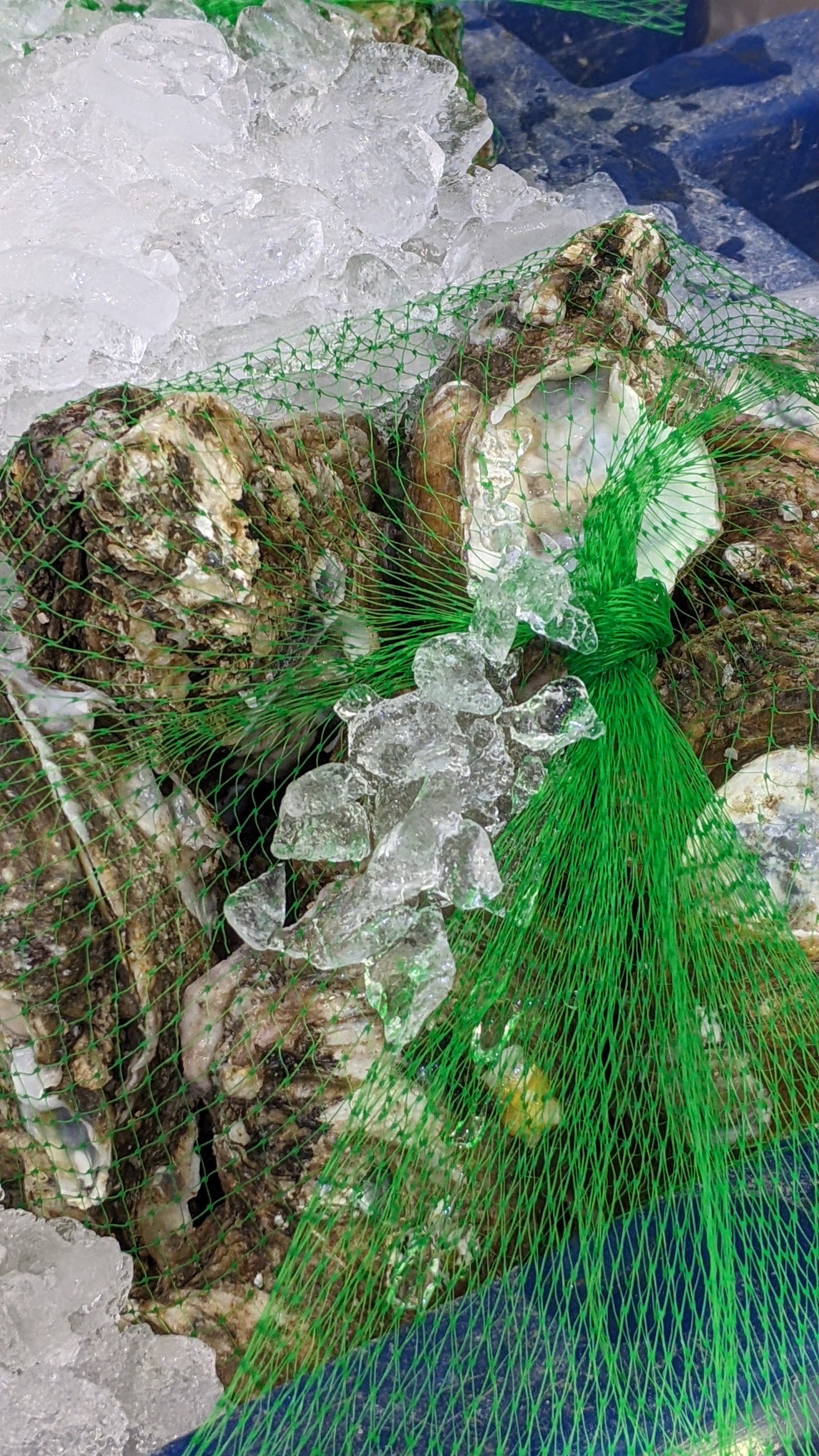
Seeing the wide variety of the catch fresh off the fishing boats is an experience not to be missed when you’re in Galveston. Of course, you can order from a local restaurant menu and you’re likely to get fish that’s just as fresh, but there’s something about seeing fish arrayed in deep tubs of ice that cannot be matched.

A large part of the fun is watching the pelicans who are hoping beyond hope for a handout from the fishmongers. Sometimes they get that gift, and that’s a real show!

Food and Drink

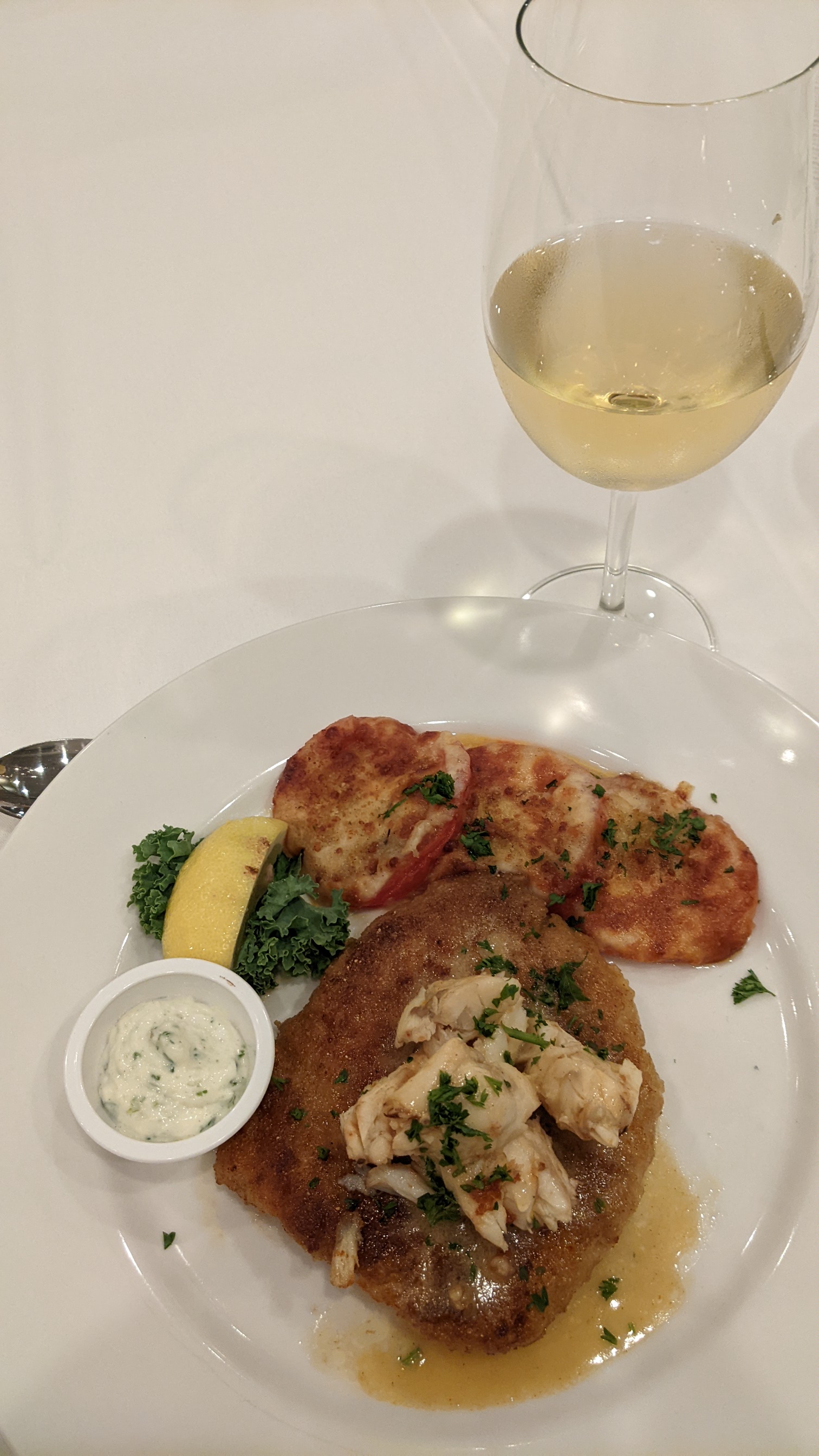
As in any popular vacation area, there a bars, breweries, dives and fine restaurants galore. I’ll just post some pictures of the food and drink I enjoyed in Galveston. You can bet I had my fill of fresh fish and seafood.

Go and discover for yourself all there is to eat and drink in this popular beach community, from Gaido’s on Seawall Blvd., with a 100-year-history of fine dining, to the rooftop bar at Hotel Lucine, a revamped 50s-era motel, to matchless Italian cuisine at Riondo’s Ristorante, in a historic building in the Strand district, to casual walk-up bars and food trucks. Search out your own favorites, and know that the seafood is fresh, the beer will be cold, the margaritas mixed to your liking, with entertainment and music to suit your taste.

Other Reasons to Visit Galveston

Galveston is an island, of course. But it is also the gateway to a string of beach communities in South Texas. Thousands of people head to those beaches every year for short vacation getaways, for the entire winter season, for fishing expeditions, and for business. Gulf Coast cities, including Port Lavaca, Port Aransas, and Corpus Christi, the coastal barrier islands south of Galveston, and the long expanse of Padre Island’s National Seashore, are popular destinations.

Residents of Houston, one of the country’s largest urban areas, routinely “escape” to Galveston for a day at the beach or a romantic dinner by the sea. Once you’ve experienced all that Galveston offers, it’s hard to get it out of your mind. You might never be the same again.

Go ahead, hum the tune.

Uncovering Roatan’s Hidden Treasures

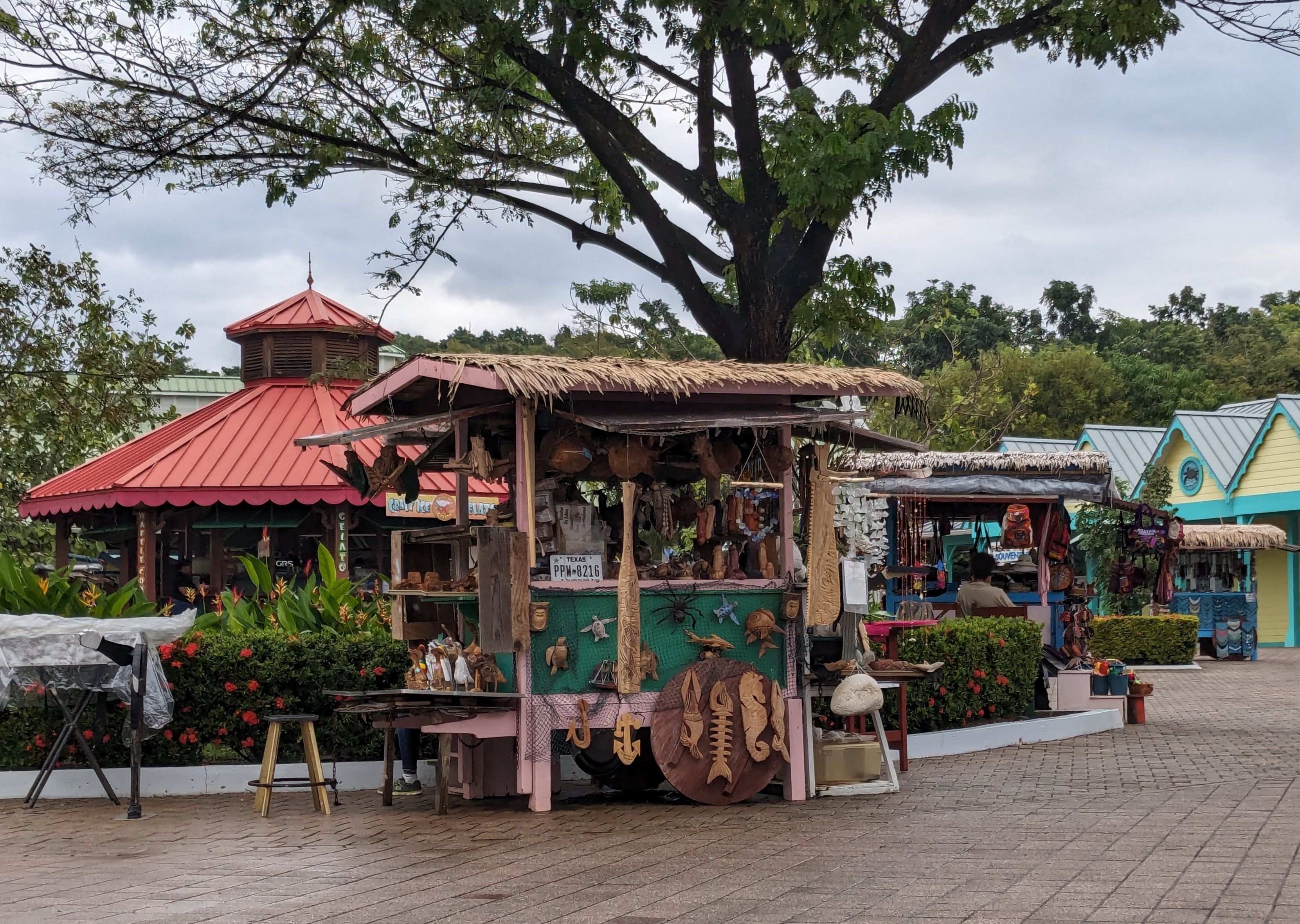
Roatan is a beautiful, small island, with clear water and friendly people. On previous cruise visits to the tiny island of Roatan off the coast of Honduras, my husband and I had seldom ventured far from the port and nearby beaches. We had occasionally talked about returning to the island to spend a week at a local hotel, but that idea had never matured. So, once again, we were on a Gulf of Mexico cruise that included this port call. This time, we were determined to venture beyond the “tourist trap” at the end of the pier. I use that term in the sense of a protected enclave that offers short-term visitors an opportunity to purchase local crafts and souvenirs.
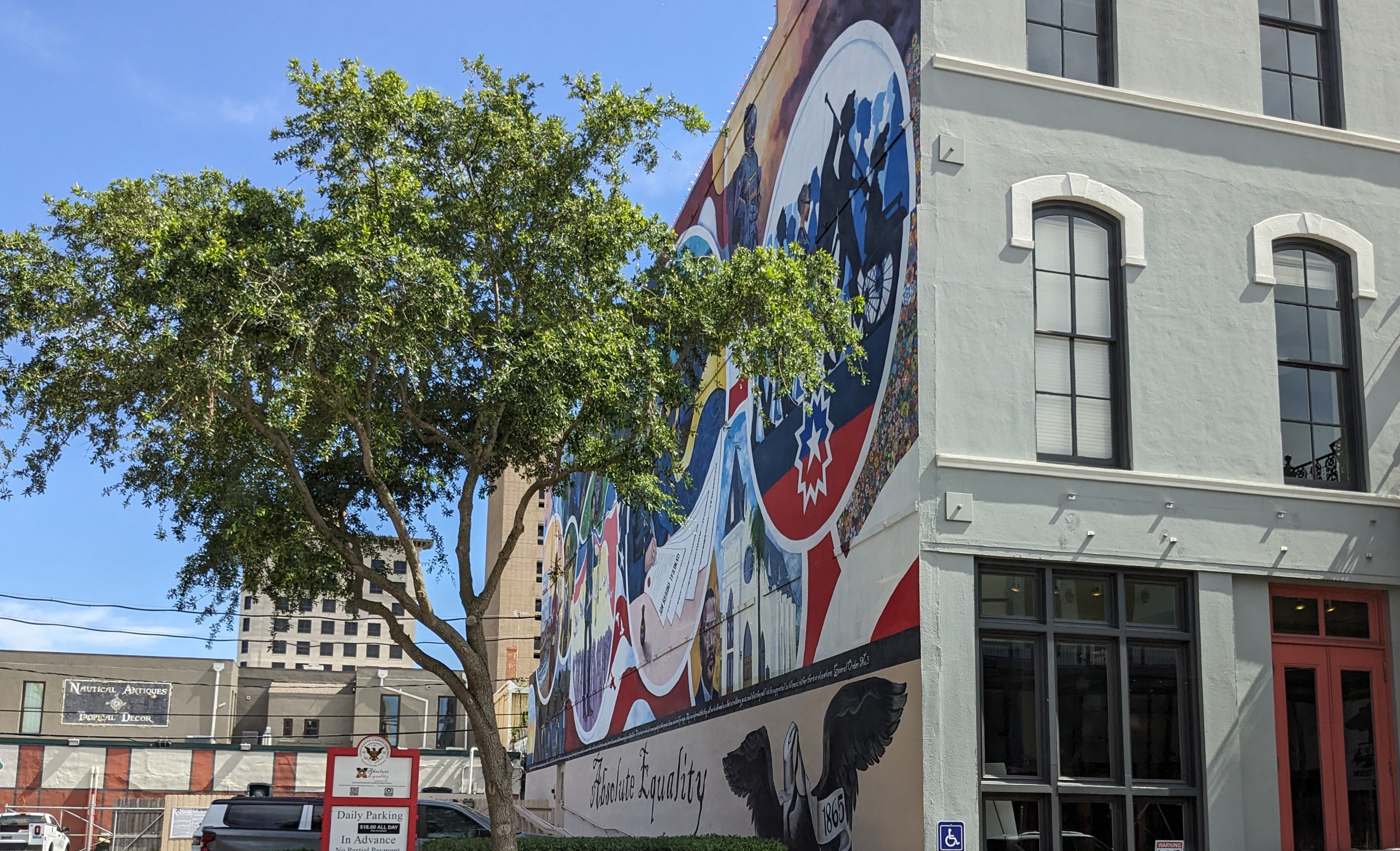
I am sorry this has become the norm in so many cruise ports throughout the world. These shopping and entertainment enclaves offer visitors only a filtered view. They are filled with chain shops and eateries, even though they often feature local entertainment and crafts. They are pleasant enough to visit, but they are in no way the same as visiting the country. Sadly, my husband and I had fallen victim to a skewed vision of Roatan, based on previous short visits. But this trip changed all that. We considered spending the day at a local beach. Instead, I found and booked a private tour of the island through Get Your Guide and its local affiliate, Roatan Trips and Tours.

It was an eye-opening experience, against which I will be likely to judge future tours in other destinations. I may not return to Roatan, but I will hold memories of this experience dear, and I have unique photos of our visit as well as mind pictures etched deep in my consciousness.

That’s the joy of travel — stumbling into situations that alter one’s perceptive, right?

Our four-hour tour stretched beyond the stated time constraints, but we weren’t watching the clock. I found the time spent with Jorge, our personable local guide, invigorating, enriching, and rewarding, and he had promised to return us to the dock before our ship was scheduled to sail. He did just that. The tour more than fulfilled my expectations, and my husband and I left believing that we had made a new friend who would welcome us back to Roatan should we choose to return. It pinpoints what is missing from many shore tours — the personal connection.

Let me explain.

Exploring Local Culture

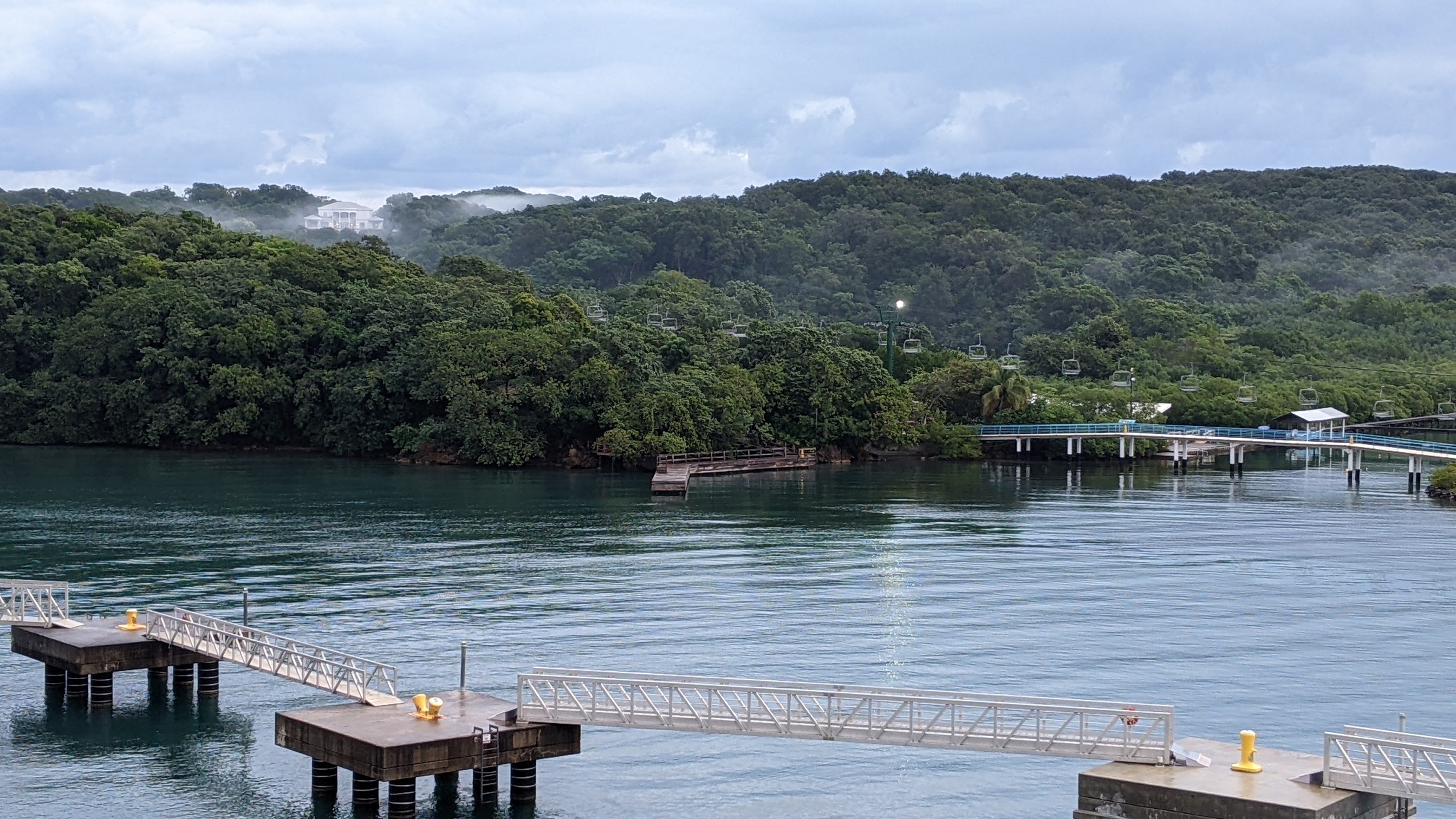
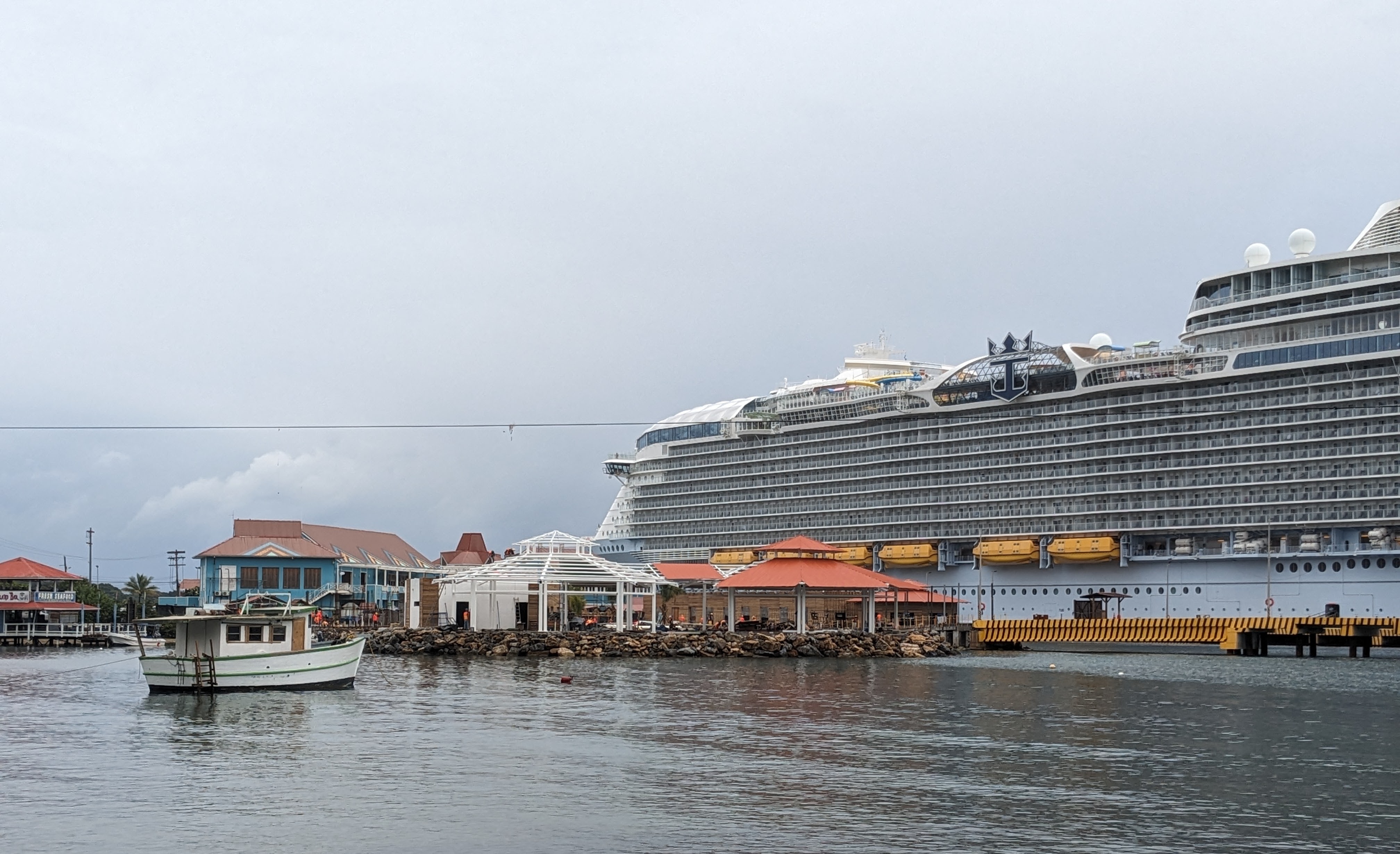
We docked early the morning of February 1 at Mahogany Bay, while the mist was still clinging to the folds in the forested slopes that extend down to the sea.

Used almost exclusively by Carnival Corporation, Mahogany Bay boasts an aerial tram that runs from the port to a nearby beach for a nominal fee. We disembarked in time to stroll leisurely through the port enclosure. Even though our ship, the Regal Princess, was the only one in port that day, the area already seemed alive with both locals and visitors.

The island’s larger dock is known as the Port at Town Center, situated further west along the coast, adjacent to Coxen Hole, Roatan’s major city. It is used by almost all other cruise lines and can accommodate three large ships at a time, one alongside the dock and two at anchor. The port area is currently being enlarged and improved; construction activity is expected to continue through 2024; perhaps longer. Royal Caribbean’s Wonder of the Seas was alongside the dock at Town Center.

Icon of the Seas, Royal Caribbean’s newest vessel and the largest cruise ship currently sailing, was scheduled to make an inaugural call there on March 4. It officially entered service on January 27, 2024, with the ability to carry 7,600 passengers and more than 2,500 crew members. I found myself wondering if tiny Roatan could handle that many additional cruise passengers, particularly if other ships were also in port.

On the day we visited, it is probable that cruise visitors numbered upwards of 5,000.

We typically disembark and explore port cities on our own, walking or riding local buses. We sometimes hire a cab driver for an hour or two. Less often, we join a planned excursion. Before this trip, we had debated whether we would disembark at all in Roatan. I could have canceled our excursion at the eleventh hour, but we’re happy we chose to take the tour. We count the time we spent with our guide as one of the highlights of our cruise, and I readily admit that Roatan has much to offer beyond the port facilities.

When we disembarked, we walked to the far side of the port compound and then took a brief jitney ride to the designated meeting point outside the port area. The fee was minimal. Guides from multiple companies waited there to ferry passengers to local beaches or other island destinations. We visited with local tour operators and fellow cruise passengers as we awaited our driver/guide.

He arrived, apologetic that he had been delayed by traffic. The excursion had been billed as a “design your own” tour, offering options to visit local beaches, go snorkeling or sailboarding, shop if we wished to do so, spend some time at a chocolate factory or a monkey or sloth sanctuary, and several other possibilities. We told our guide, Jorge (or George), that we wanted him to show us his island, and asked only if there might be a restaurant with a water view where we could stop for a simple lunch.

Jorge agreed, and we set off.

Learning About “Jorge’s Island”

Like many islands, Roatan is a land of contrasts. The island has a rich history, some of it very different from the history of mainland Honduras. Once a British colony, 17th Century Roatan boasted a population of about 2,000 pirates with more than 500 houses in the northern city of Port Royal. That city is now in ruins, and the island’s resorts exist primarily at the other end of the skinny, curving island, congregated in West End and West Bay. The first language of native islanders is English, although in recent decades, increasing numbers of Spanish-speaking residents have made their homes on Roatan.

During the next several hours, we saw much of Roatan, including some areas where day visitors do not normally venture. Roatan is the largest of a group of seven islands located about 40 miles off the northern coast of Honduras. But it is a small island, measuring approximately 48 miles long and varying from one to five miles wide.

The Meso-American Barrier Reef, the second-largest in the world, surrounds Roatan and is known for its biodiversity and extraordinary reef diving. Daily flights arrive from Miami, Houston, and Phoenix at the airport that lies between the two cruise ports. It is estimated that upwards of 1.6 million tourists visit Roatan annually.

We drove past tony all-inclusive resorts on this beautiful spit of land, many with private beaches and over-the-water bungalows, some hidden behind iron gates and lush greenery. There are no high-rises, but inland some new multi-story condos and rental apartments are under construction, some with incredible views.

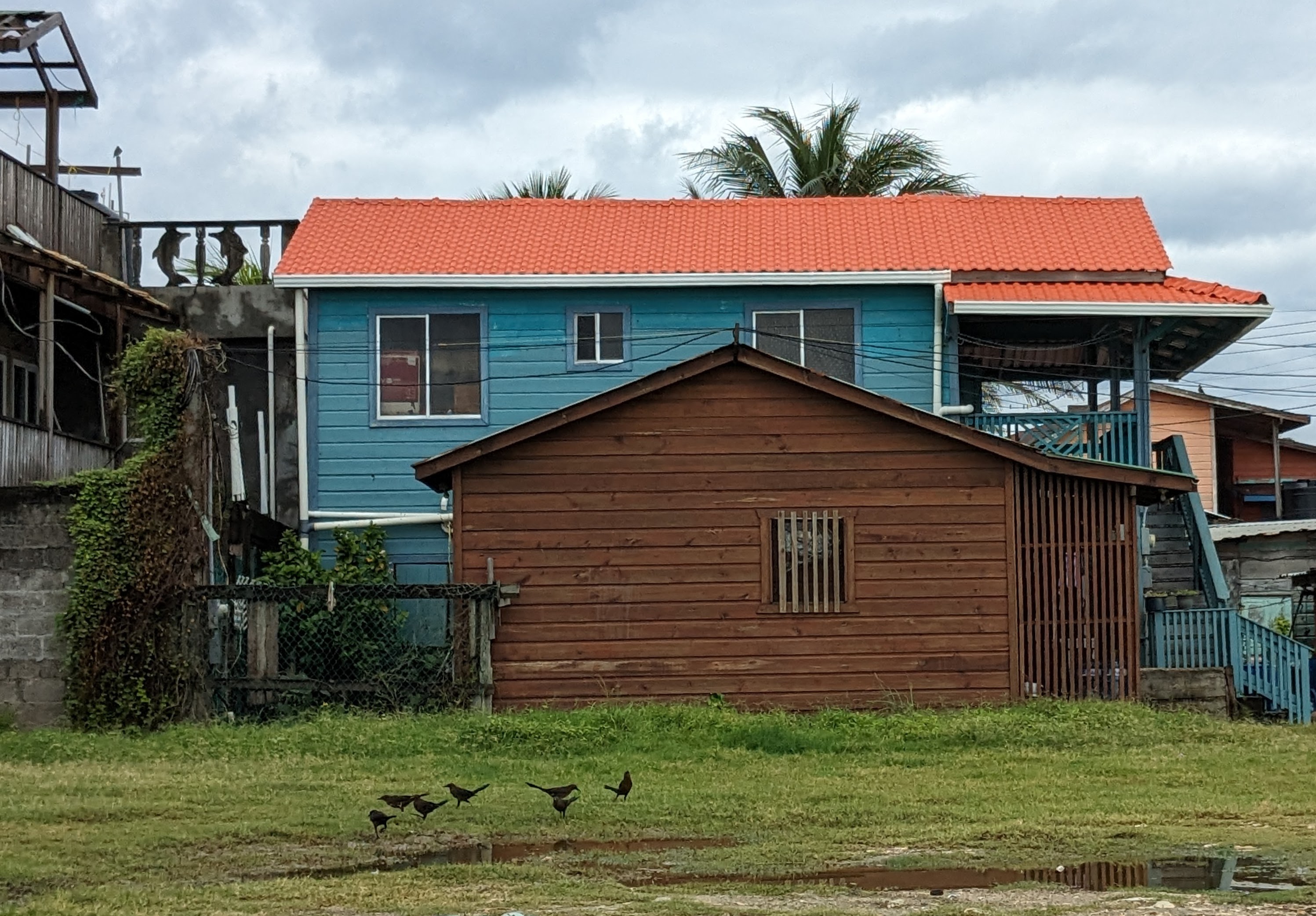
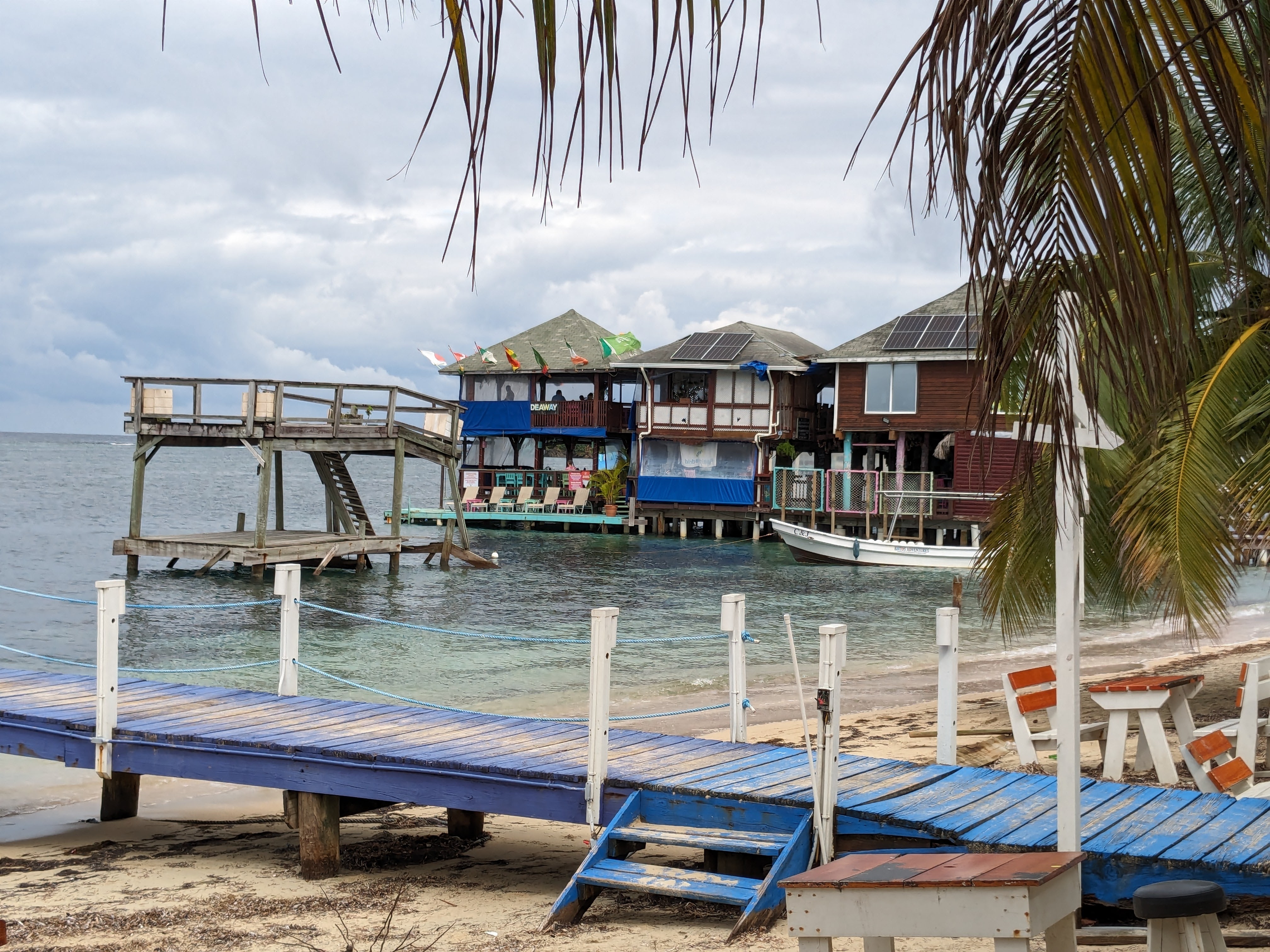
We passed waterside restaurants and bars, and numerous piers boasting fishing, diving, or snorkeling expeditions. Roatan boasts some of the clearest water and best beaches in the Gulf, and it is renowned for its diving and snorkeling possibilities. We saw local homes, both large and small, in small communities and near the water.

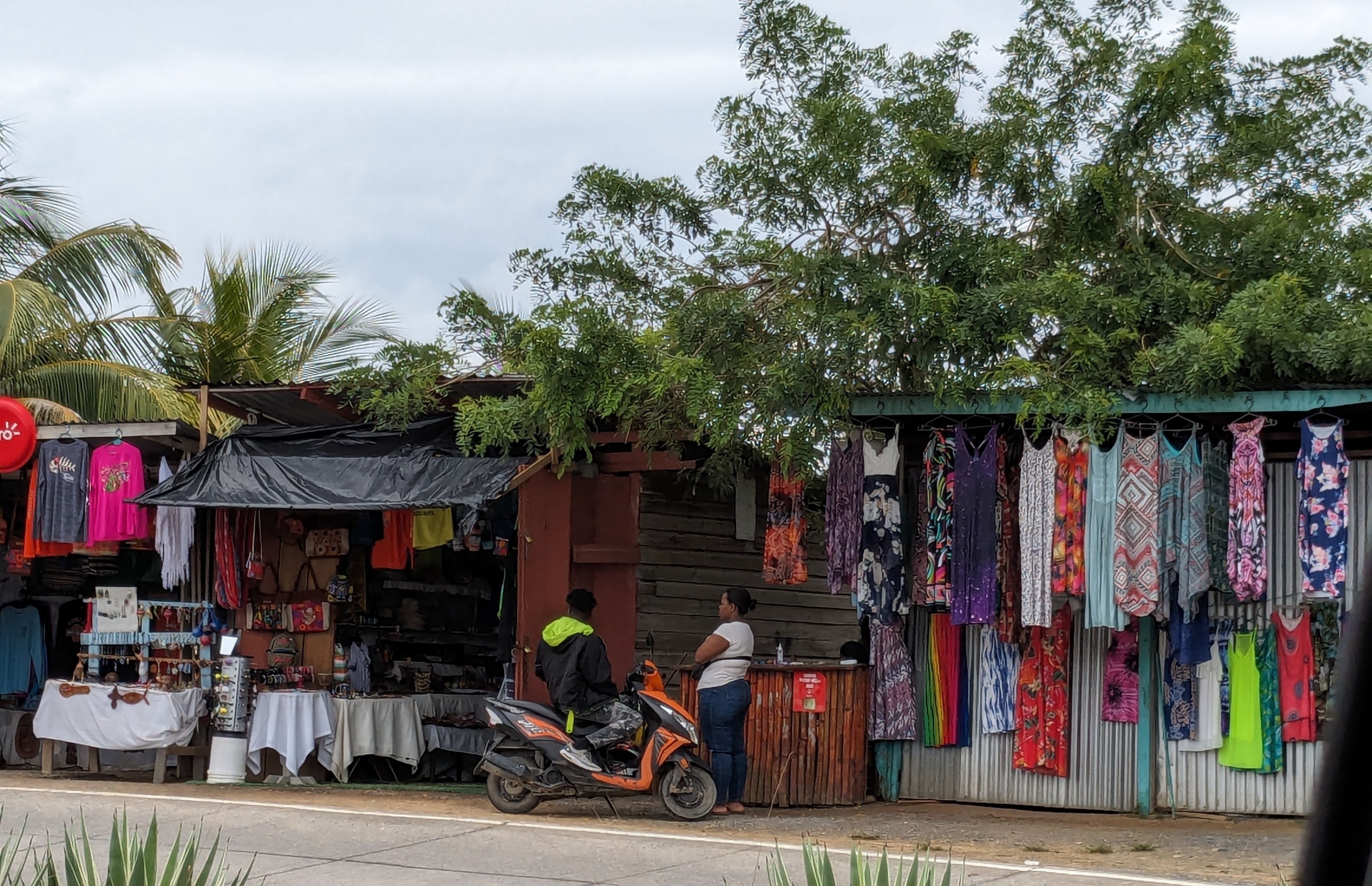
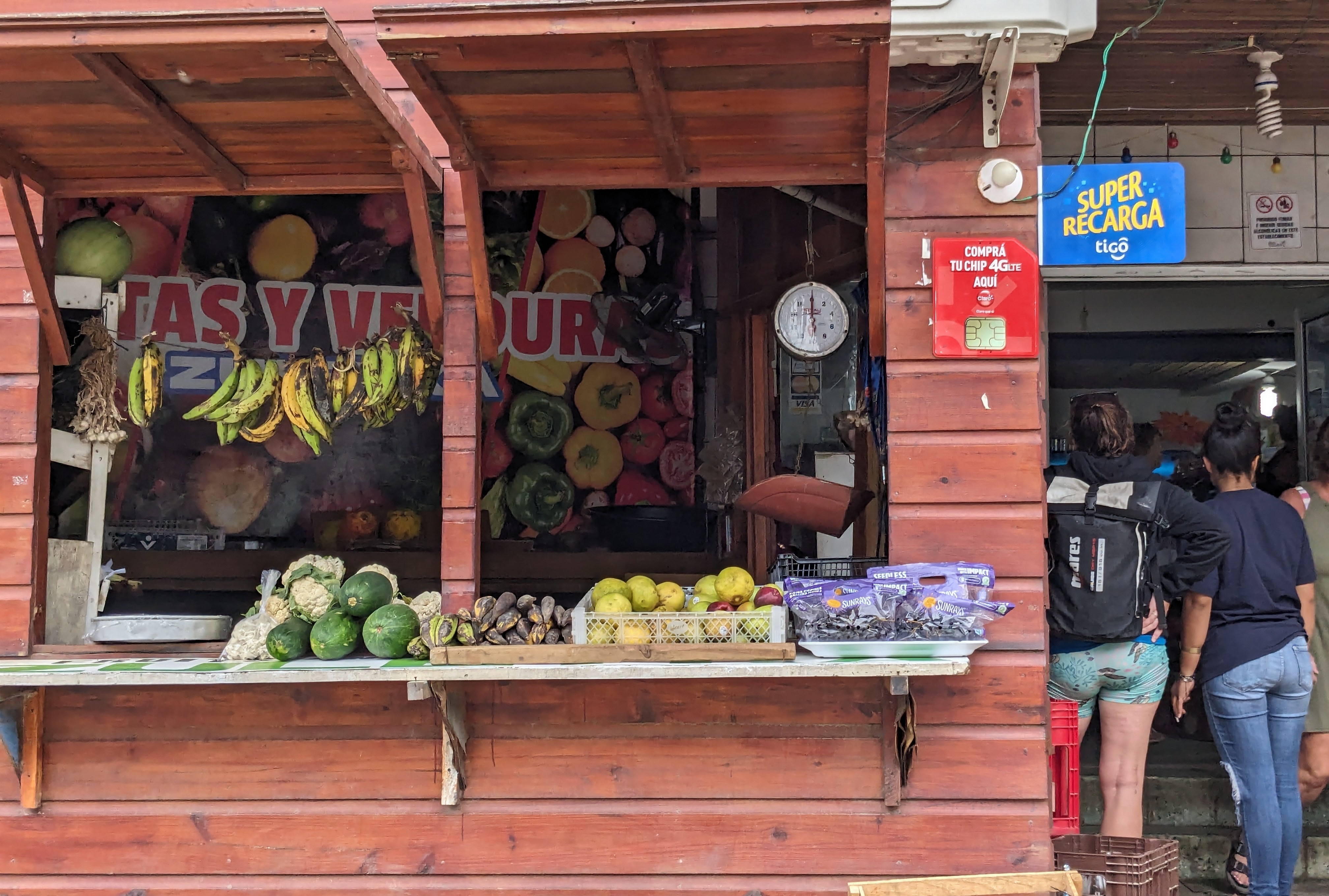
We encountered roadside vendors selling fresh fruit and other wares, and we saw local shopping centers, and even a casino!

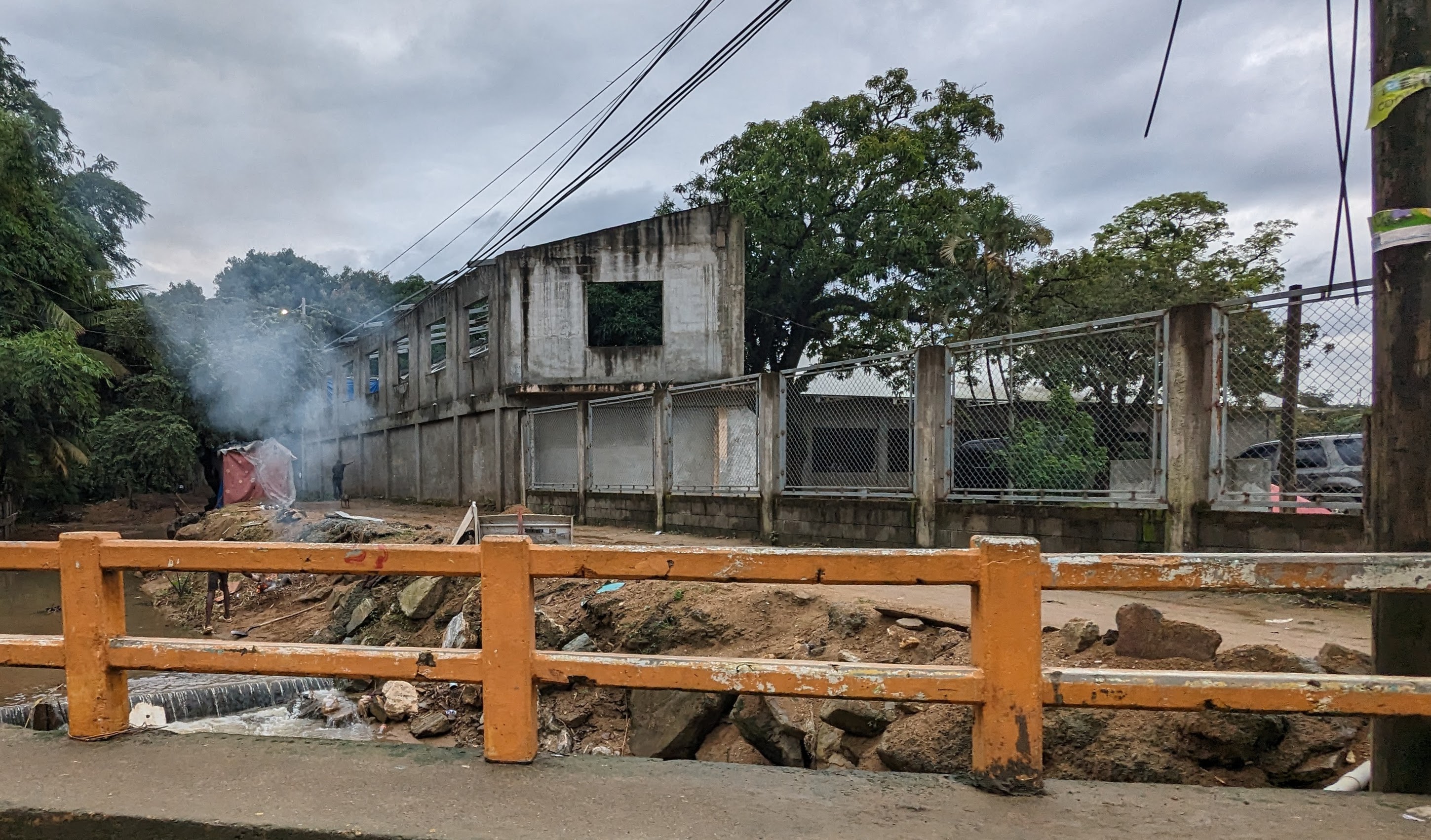
We turned off the main highway and followed dirt roads to shorelines devastated by recent storms. Some buildings and playgrounds have not been rebuilt since the last hurricane passed through. We drove through small local communities and slowed to allow groups of young children to move out of our path. They smiled, and we waved.
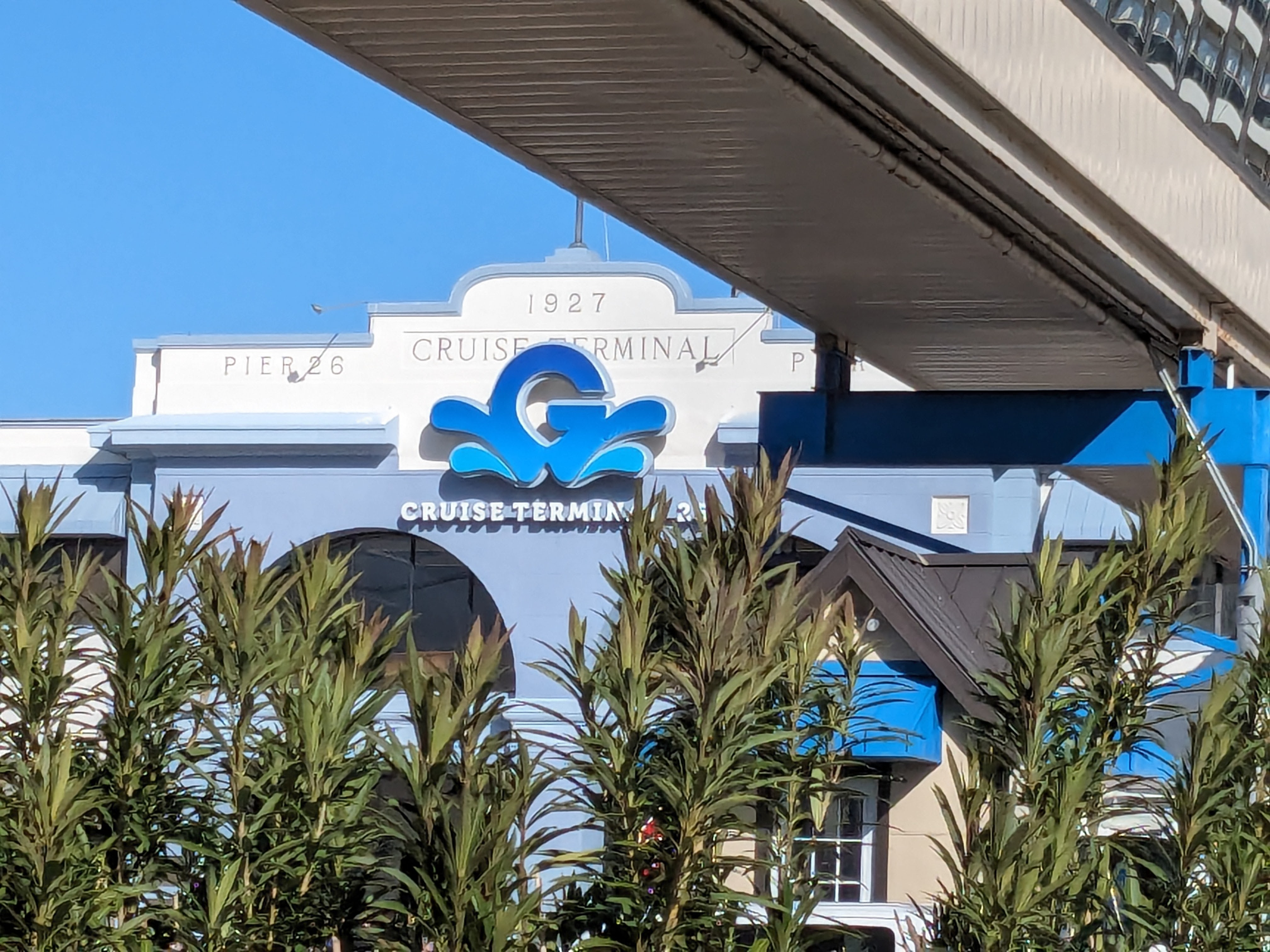
A Story of Growth and Development

There is evidence of growth and development everywhere, from road building and infrastructure to modern offices, warehouses, shopping areas, and condos. But much of the island is old, and many of its residents are poor. Many homes and buildings are in need of repair.

Jorge pointed out an impressive columned mansion that belonged to Roatan’s former Mayor Dale Jackson, an island native who amassed a fortune from his fishing business. He also showed us grocery stores and shopping centers, factories, homes and apartments, and tumbling-down old structures that seem beyond repair. He showed us schools and children at play, and we drove through neighborhoods and business districts where people invariably greeted us with smiles.

We drove past modern “mini-malls,” and stopped at a small shopping center to visit a chocolate factory. I was enthralled to see how cacao beans are processed. I followed the multi-step process from bean to chocolate bar, and watched as cocoa butter was processed in a blender. The scent alone made me want to taste the chocolate. We were offered samples and could not resist purchasing several different varieties of Honduran chocolate to take home.

Jorge told us about his family, about the realities of life on a small island, about the Honduran economy, taxes, government, medical care, education, and business. We asked how life on Roatan differs from life on the mainland. He smiled and explained that living on the island is good, despite the hardships. Life on the mainland, he said, is “not so good.” We asked about his past and his hopes for the future. Although medical care is available on the island, he noted, residents must travel to the mainland for a complete physical exam. He told us he had just been to the mainland for his annual physical, and he was happy to be home with a clean bill of health.

He gave us each a paper bill — Un Lempira — each worth about four U.S. cents, explaining that Honduras recently phased out its coins. Today all the currency is paper. I bought a keepsake magnet that shows some of the now retired coins.

We asked about local housing and food. Jorge pointed out some newer condos and vacation homes under construction. We wondered about the pricing. Suffice it to say that waterfront properties are expensive, as in any prime vacation market, and larger homes on waterfront property can range into the millions in U.S. dollars.

Jorge answered all our questions, and we gained a better understanding of the Honduran economy, local issues, and island culture than we could have learned from a guidebook or a printed brochure. We tried to answer his questions about our life in the United States as honestly as he had shared information about his homeland.

Feasting on Island Specialties

Then, Jorge steered us to a beachside cabana with a rustic bar and a few picnic tables. We sat looking out at the gentle waves and watched children and adults play in the surf while we sipped cooling drinks and asked more questions about life in Roatan. Jorge talked about his family, his wife, and his sons who work in the construction field.

It was a peaceful interlude. I had not realized that there is so much for tourists to see and do on the island. I was more than pleased that we had this relaxing time to share with Jorge.

I asked about restaurants and his food favorites, and a few minutes later, he stopped his car outside a bustling food bazaar. Jorge left us for a few moments, quickly returning with what he called the “Honduran cheeseburger.” It’s delicious! A soft warm tortilla filled with beans, cheese, and a dollop of sour cream. The humble baleada may also be filled with additional ingredients — scrambled eggs, grilled meat, onions, or avocado, upon request — to make this simple street food a hearty breakfast or a tasty lunch treat.

The next time you visit a foreign destination, take the time to interact with local people. All-inclusive resorts, luxury hotels, fine dining, and secluded beaches certainly have their place, but it’s frequently the unexpected encounters with ordinary residents that leave the most indelible impressions on the heart and mind. That’s the gift that Jorge gave us on this tour.

Now, About Lunch

Jorge had not forgotten our earlier request for a simple lunch. After confirming that we had little interest in cuddling a sloth or interacting with parrots, he steered us toward French Harbor, a well-known and popular part of the island. He promised us a view, and a meal, that we would remember. After only a little coaxing, he agreed to join us.

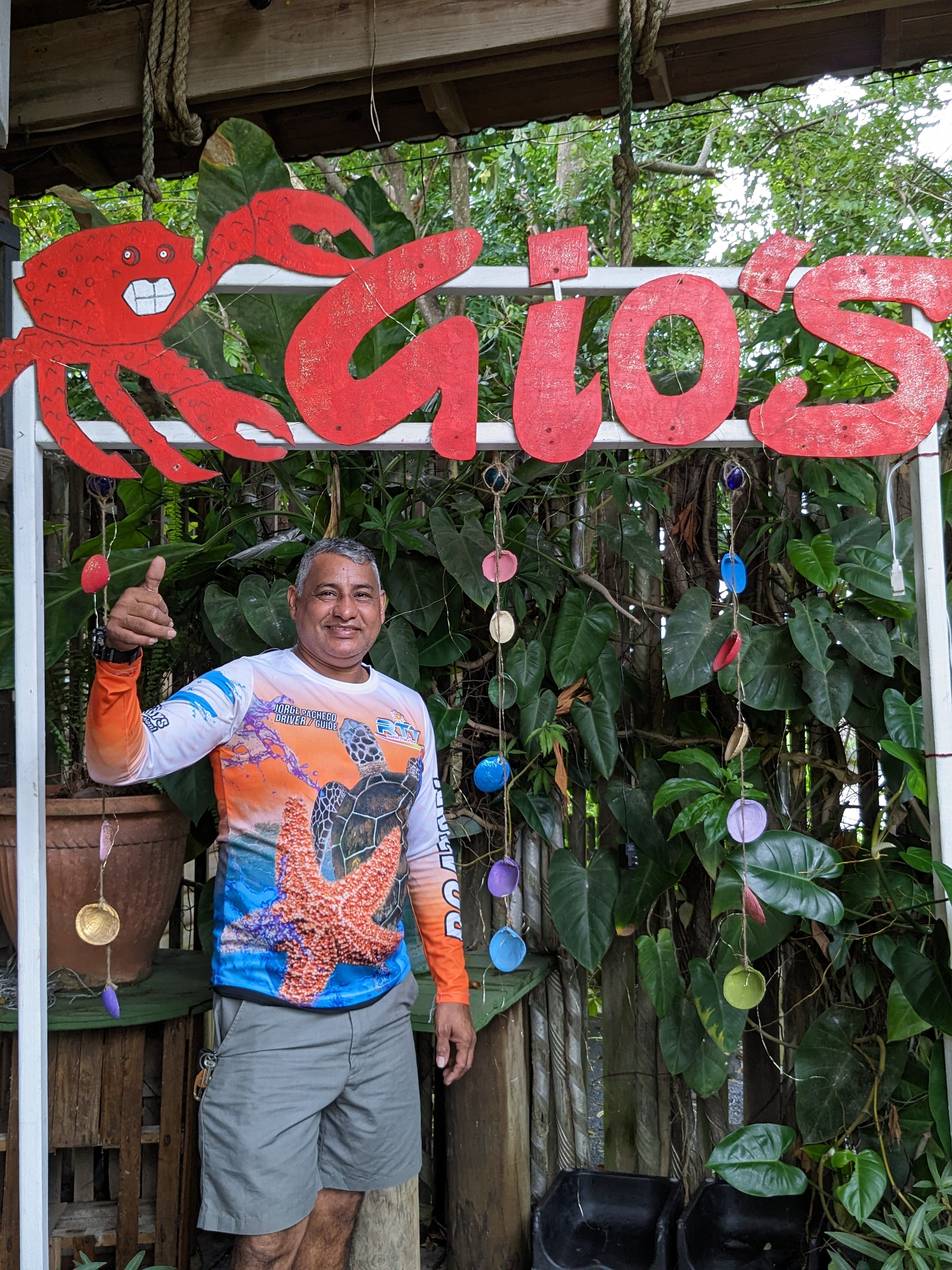
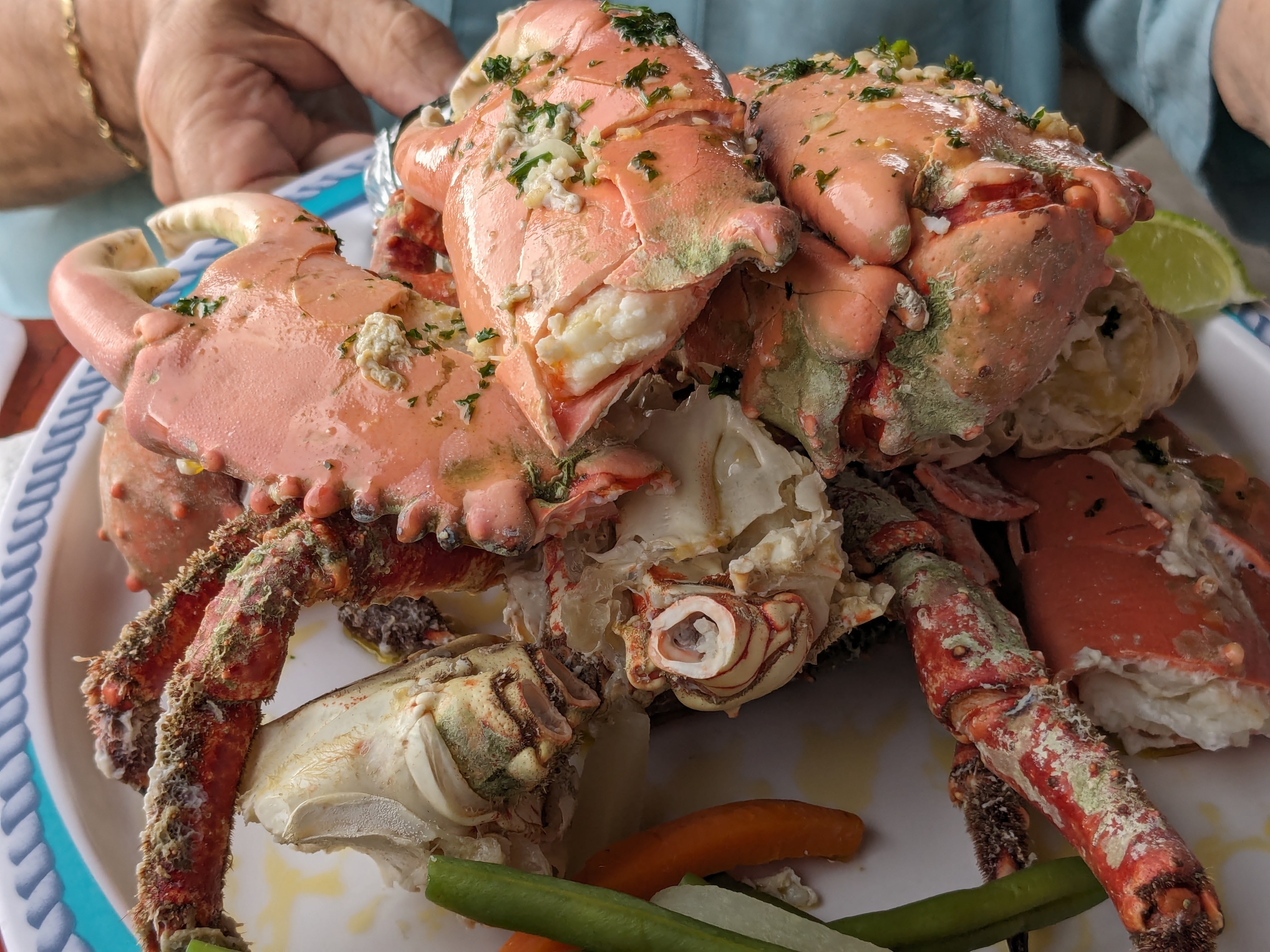
Gio’s is a popular and well-known Roatan establishment that has operated in the same location since 1994. Tourists and islanders alike tout it for the friendly service, the food, the panoramic views, and the laid-back atmosphere. The specialty of the house is Spiny Caribbean King Crab, so that’s what my husband ordered. I ordered what I thought would be a sampler plate of fried plantains and other appetizers. We planned to share. Jorge chose beef and vegetables (perhaps, because he lives on the island, he has his fill of seafood and fish?) In any case, we all were happy!

The meal served as a memorable conclusion to our day on the island. With full bellies and more-than-satisfying memories of time spent on an island we now know and understand a little better, we were saddened at the thought of saying goodbye to a new friend. He dropped us back at Mahogany Bay. We could not say goodbye, however, without snapping a few pictures and exchanging heartfelt hugs.

We carry the memory of a few hours spent in Roatan with Jorge as one of the true pleasures to be found through travel.

Lafayette: A Feast for Spirit & Soul

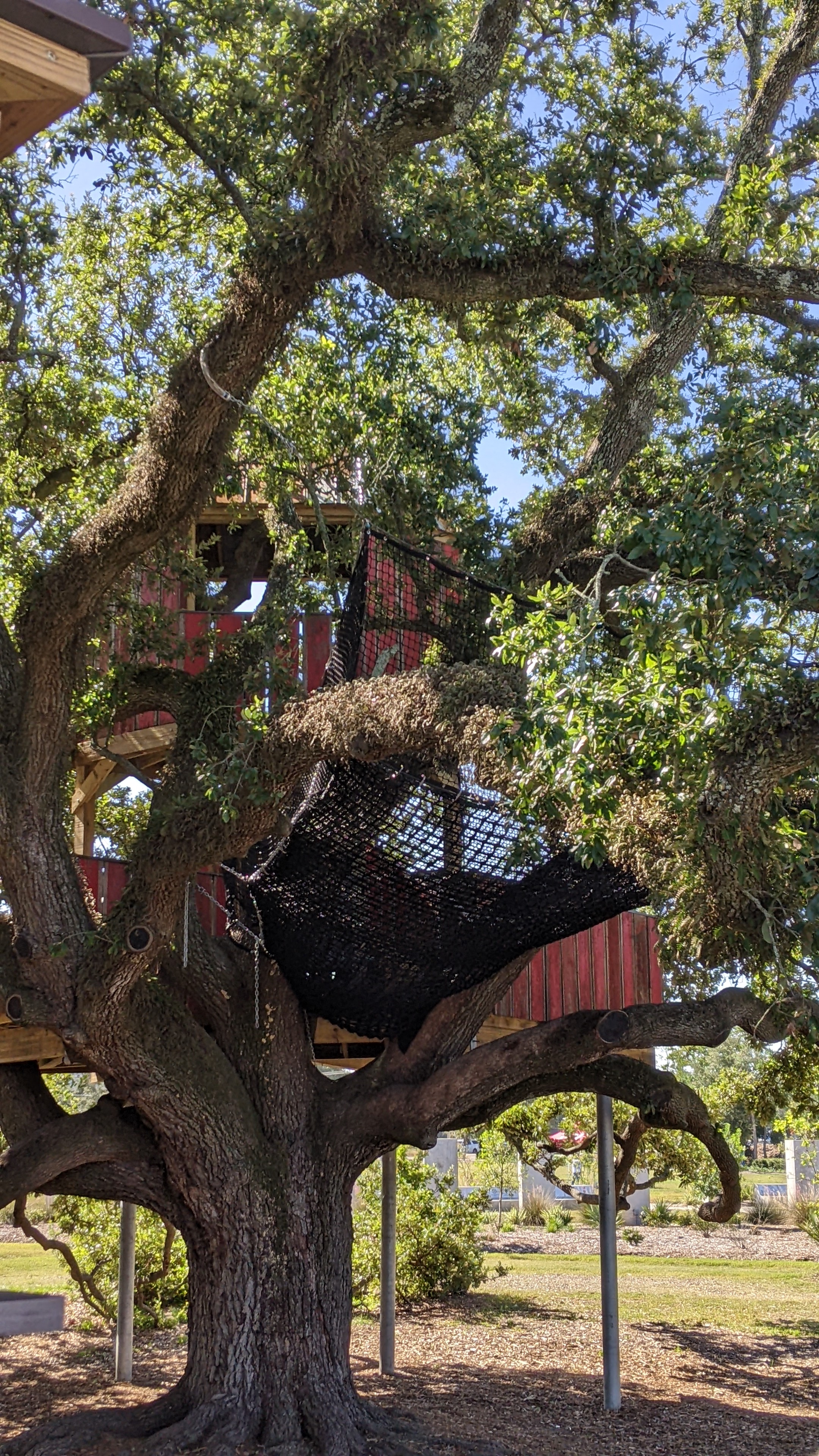
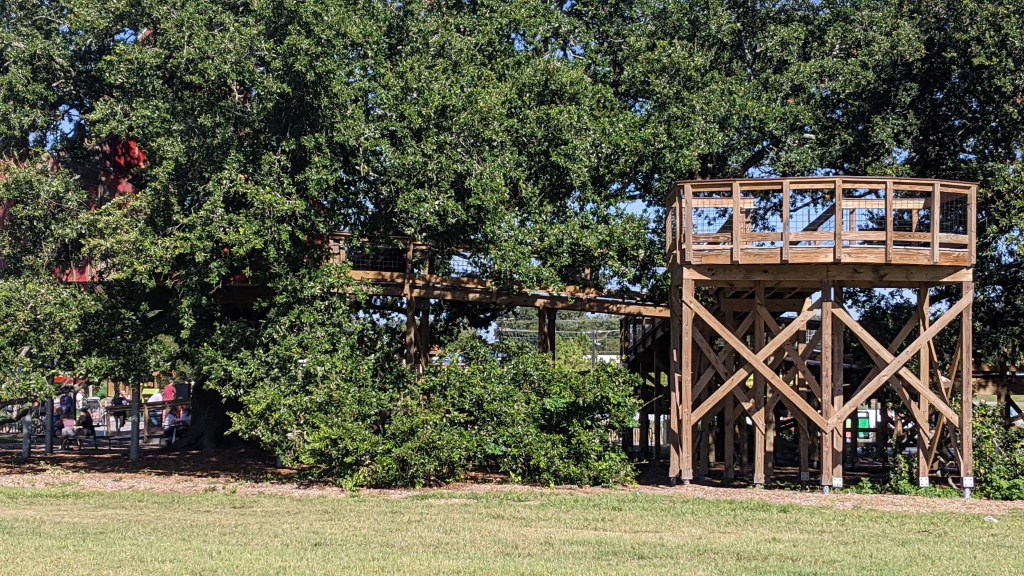
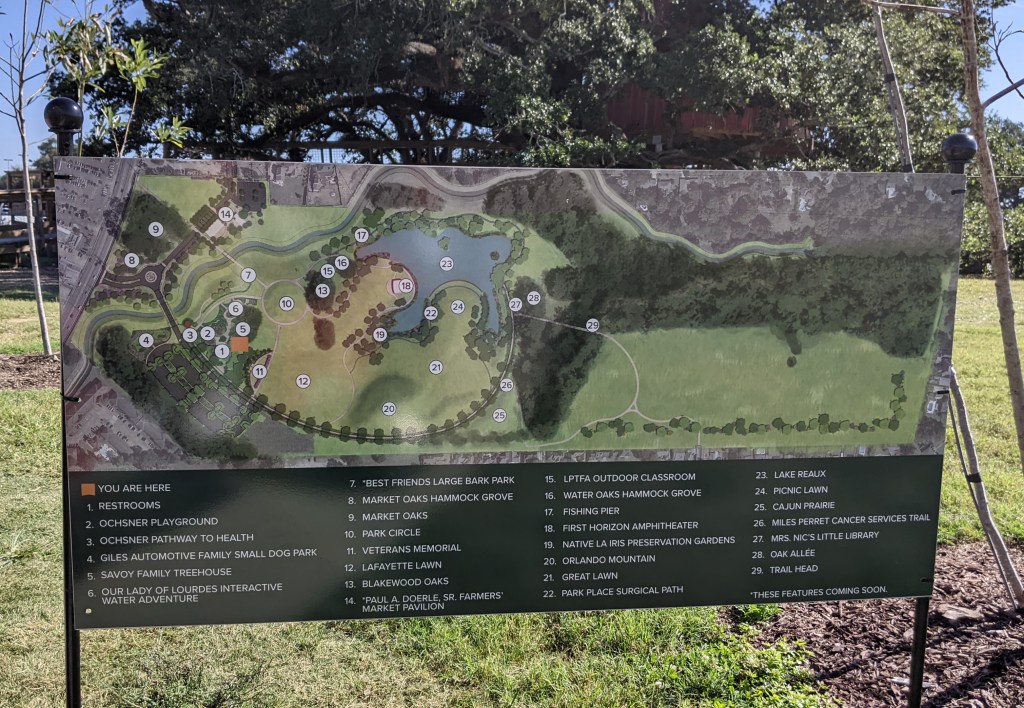
Hidden in the trees of Moncus Park in Lafayette, Louisiana, is a faded red treehouse constructed with lumber salvaged from a former horse barn on the property. It adjoins a children’s play area, but it’s almost hidden from view along the

paved walking path that meanders through the property. I’m sure that makes it all the more enticing for the children who choose to climb the ladder and walk the swinging elevated course to reach it.

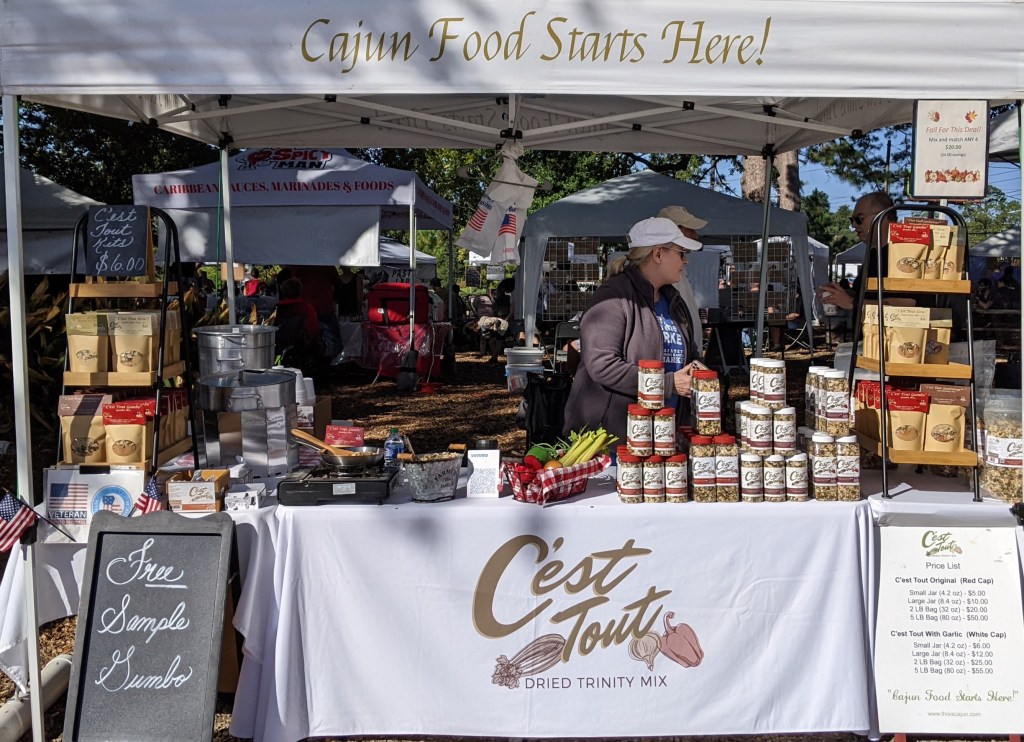
On the day we visited, the park was filled with people. Some, like our group of travel writers from diverse locations, had first visited the thriving adjacent outdoor Saturday Market, overflowing with food and crafts vendors every week throughout the year. This past summer, the market celebrated its 10th anniversary with the ringing of the Durel Bell.

The sun shown brightly on this mid-October day, and the park was alive with activities to attract young and old alike.

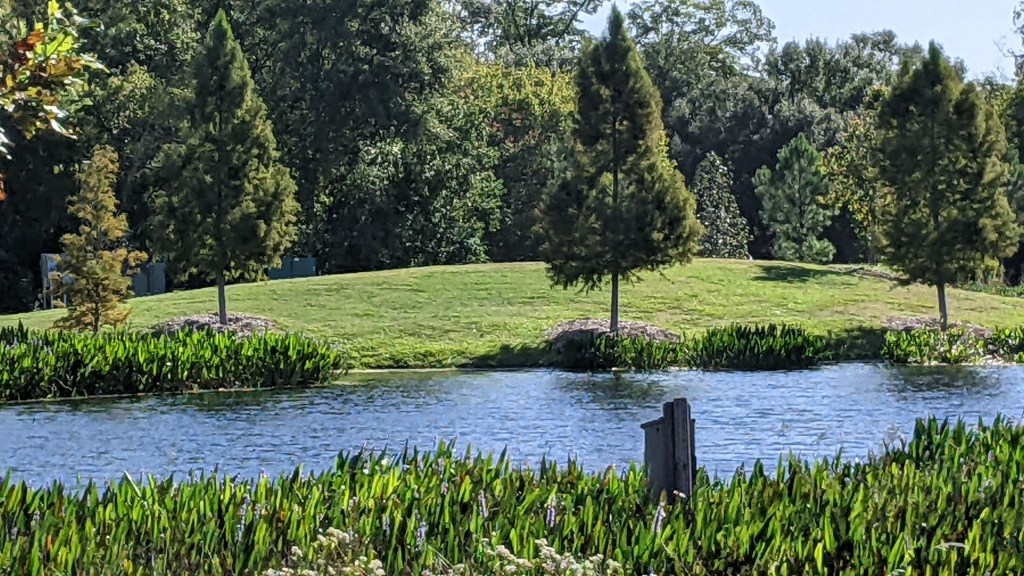
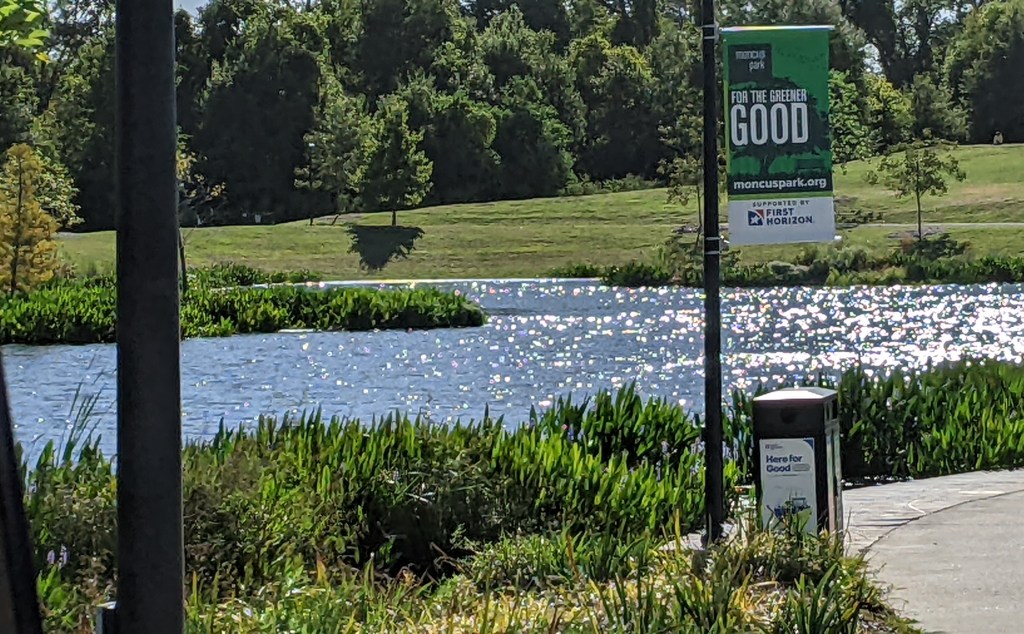
Some, accompanied by leashed dogs, were out for serious exercise in the beautiful surroundings while others simply enjoyed the various trees and plants on the rolling hills of a well-planned natural enclave that was once a horse farm. The park, operated now by a non-profit organization, was designed and built “by the community, for the community,” according to Kaylie LeBlanc, assistant vice president for communications of Lafayette Travel. One of the unique features is a 63-foot high hill, the highest point in Lafayette Parish! Development was begun in 2018, fueled by an initial $6 million grant. Now, a membership program funds ongoing park development and programming.

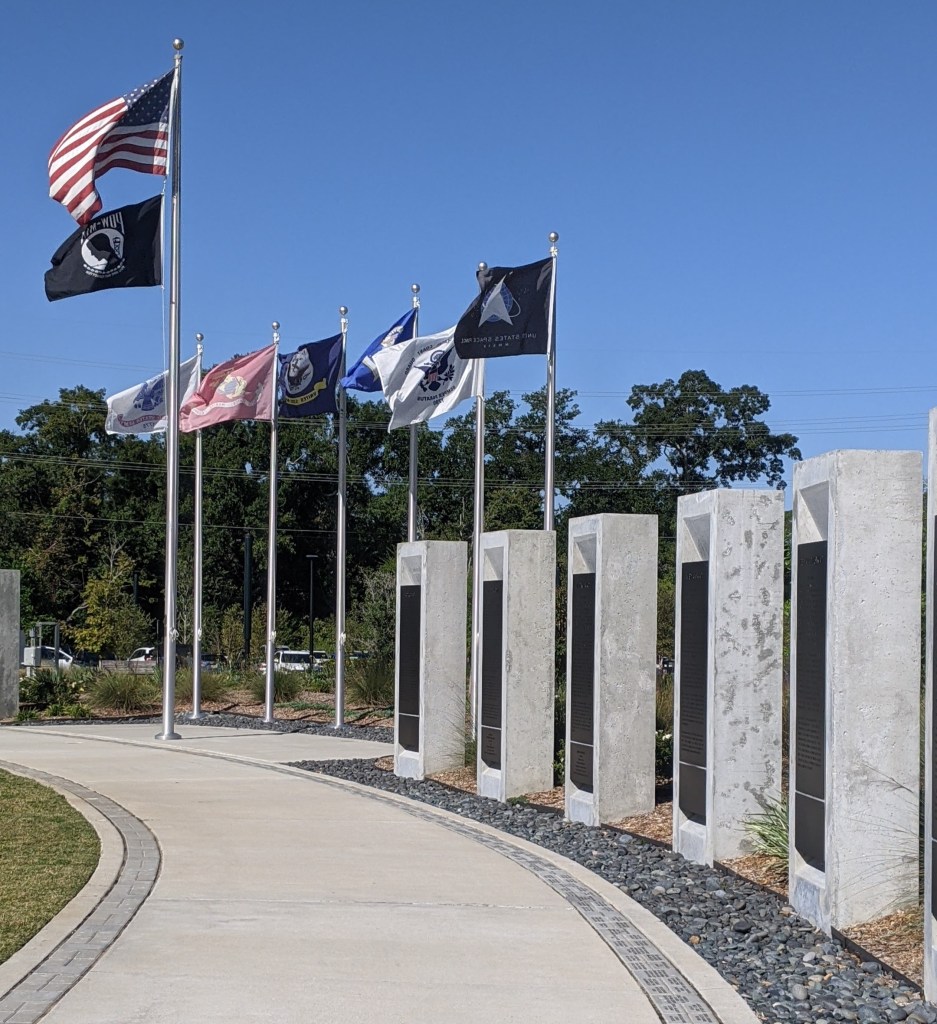
Also on the grounds is a striking Veterans Memorial that pays tribute to local residents who served their country in the various military forces throughout history. Memorial bricks line the path leading to the serene site with its polished granite plaques describing each war that U.S. troops have fought. It’s worth stopping to read each somber account, from a young country’s battle for independence to “Indian Wars — Circa 1600-1924” and the Global War on Terror — 2002-2021.

Moncus Park is one good reason to visit Lafayette, a city known as the “happiest city in America,” at the heart of Louisiana’s Cajun and Creole country. But there are many more.

I was in Lafayette for three days of whirlwind activity during this year’s Festival Acadiens et Creoles, a celebration of food, art, music, history and distinctive culture. What a celebration it was! Lafayette boasts great food and lively music, to be sure, but learning the history of a people who left their homeland and resettled in faraway places was what I found intriguing, somewhat disturbing, and totally fascinating. I had not previously known that Cajun and Creole were and are so intertwined.

The Acadians who came to Louisiana from France by way of the Canadian Maritimes (primarily Nova Scotia, New Brunswick and Prince Edward Island) have retained a distinctive cultural identity that is remarkable and celebratory. Eventually, Acadian morphed into Cajun and Acadian/Creole/Cajun culture is the result. Although we did not visit it, the Acadian Cultural Center in Lafayette is one of six locations of Louisiana’s Jean Lafitte National Historical Park and Preserve. Admission is free, and the center is open Tuesday through Saturday year-round, except on national holidays.

An Ongoing Celebration

Lafayette is known for its festivals throughout the year, and this one certainly did not disappoint. What’s not to love about live bands that encourage complete strangers to “dance to the music” together? Add the enticing flavors of gumbo, jambalaya, etouffee and boudin sausage served fresh and hot from food trucks in the park, or the refreshing abundance of cold beer, spicy bloody Marys, flavored daiquiris, and other refreshments close at hand.

Girard Park in Lafayette takes on a carnival atmosphere that’s equally appealing for young and old alike, with food treats from beignets to soft ice cream, loaded hot dogs to boiled crawfish, fried gator bites and chicken wings to cheese-smothered grilled oysters! There is face-painting and bubble-blowing for the children, crafting demonstrations to watch and souvenirs to buy.

The performance stage is at the center of the activity, and many festival goers bring camp chairs or blankets. Picnic tables and benches are scattered about the park, and various tents offer seating for food and cooking demonstrations, musical lectures, and cultural programs.

From the ceremony of “cutting the boudin” to open the festival to the closing strains of music performed by an all-woman band as darkness fell on the festival’s last day, it was a great experience.

Traditionally held on the first full weekend in October, this celebration has been a Lafayette highlight since 1974. With a focus on the local sounds of Cajun and Zydeco music and local food specialties, the festival atmosphere extends not only throughout the park, but throughout the city. During festival weekend, shops are open late, visitors stroll the compact downtown area, marvel at the street art and local murals, enjoy crafts shows and outdoor exhibits, attend wine tastings and local business open houses, and snap souvenir photos at the Lafayette sign in a local park or selfies at the picturesque downtown arches.

Smiles and high spirits dominate the scene. It is truly a celebration that encourages active participation.

Beyond the Festival

The Festival Acadiens et Creoles is not, however, the largest celebration on Lafayette’s calendar. Held in April, the Festival International de Louisiane spills over into nearby cities and parishes and attracts visitors from throughout the world for the distinctly French-flavored celebration.

Lafayette also celebrates New Year’s Eve in a big way, and goes all out for Mardi Gras. Visit Lafayettetravel.com for up-to-date information on what’s happening when in this “happiest town” so you won’t miss out on any of the events that interest you. I don’t want to leave the impression, however, that visiting Lafayette, is simply one big party. As much fun as it can be, there is also a serious side to Lafayette’s personality

Cultural unity is pervasive and community spirit is inclusive. Informal, spontaneous musical jam sessions seem to be the norm and, more often than not, members of the public are invited to attend, join in, or sing along. Roots run deep here and pride of place and heritage is evident among young and old alike. Lafayette residents are intent on preserving their traditions. A conversation with a local resident can be equal parts history lesson and hope for the future, interspersed with family stories.

The Beginnings

Originally founded as Vermilionville in the 1820’s, the city was renamed Lafayette in 1884. Its population in 2023 is reported to be slightly more than 121,000, a slight decline from 2020 when it was just under 122,000. But the population of metropolitan Lafayette Parish exceeds 376,000.

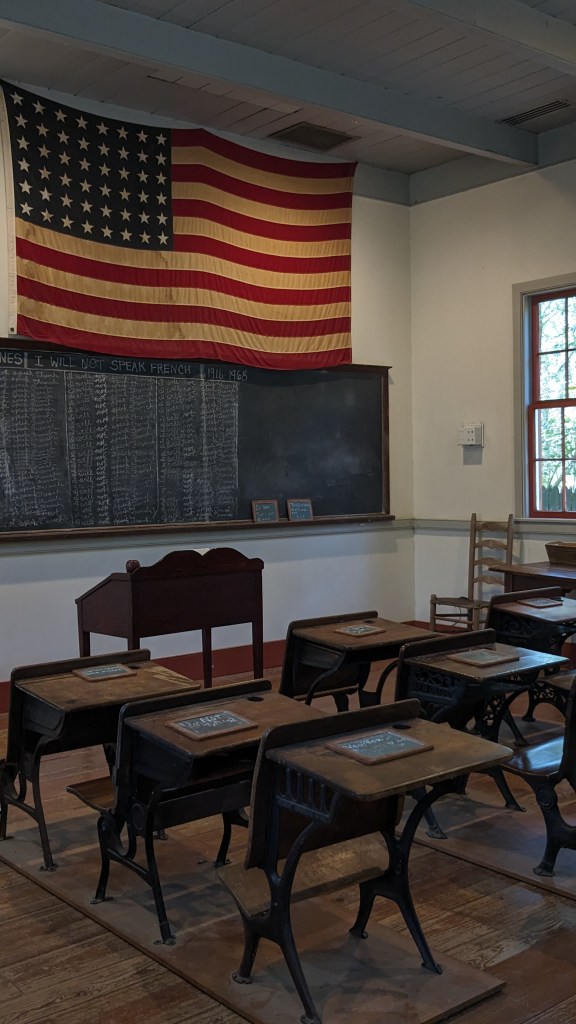
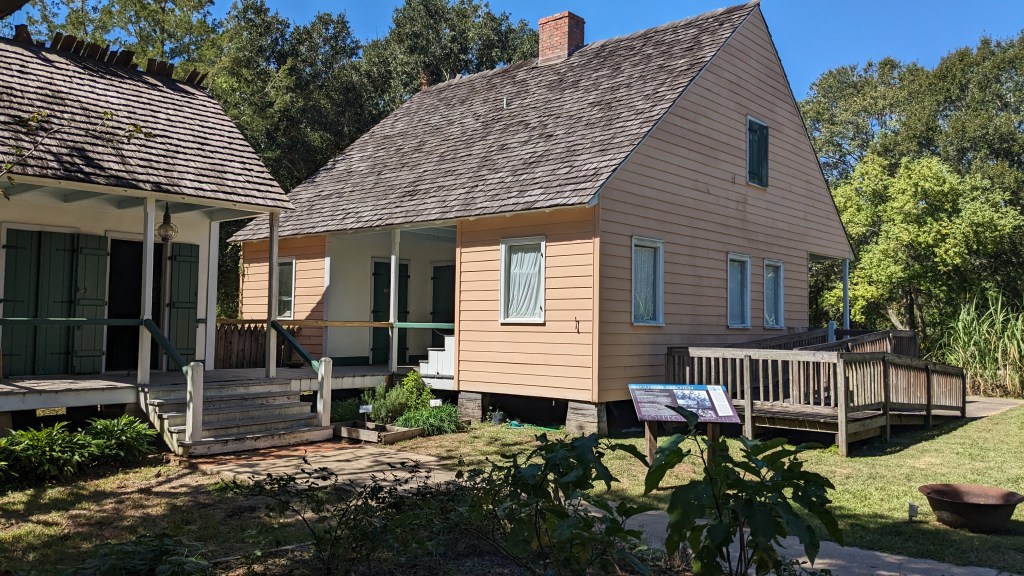
We visited the historical re-creation of Vermilionville, now a living history museum that takes visitors back to the early settlement. Signs along the paths chronicle how Acadian and Creole settlers interacted with native peoples and those of African descent through the late 1800s, and the buildings display a wealth of artifacts. It’s much better than a museum depiction. Walking along the paths offers a uniquely personalized insight into how lives were lived during those times.

Visit Vermilionville.com for information about events, programs and performances, including a 2nd Saturday French Table, a free gathering that allows visitors to “hear, speak and practice” the unique Acadian language. Other programs offer insight into the lifestyle and traditions of early Acadian settlers who sought to preserve their French-speaking culture on the American frontier.

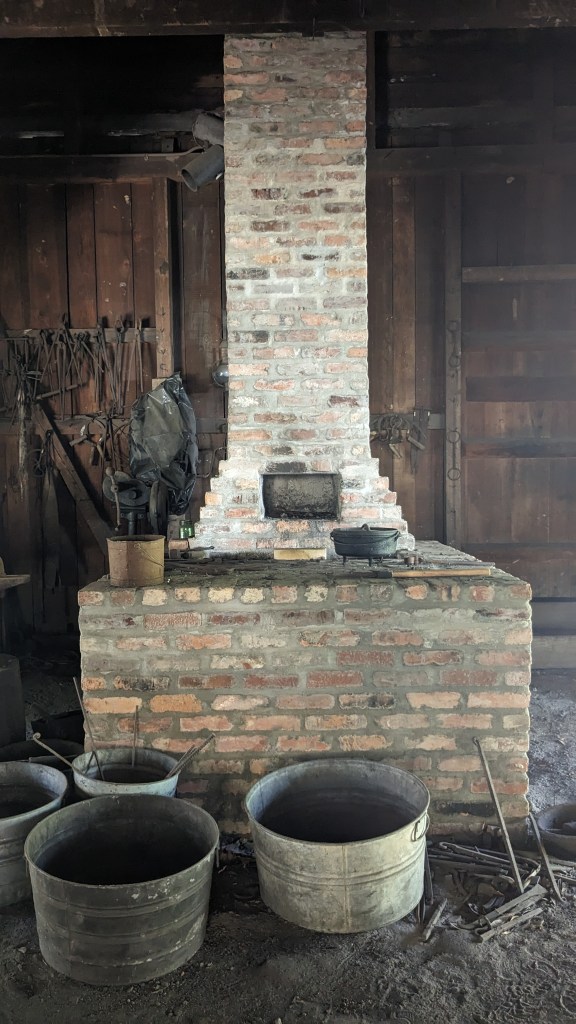
Among the buildings and various dwellings situated at the site are a schoolhouse, church, parsonage, carriage house and other utility buildings, as well as early “shotgun” houses and a wide variety of home styles that were popular through the decades. Traditional crops are still cultivated, and the historical village even has a resident donkey, a couple of sheep, and a working iron forge. This historical village offers a perfect opportunity to explore the history of Cajun culture and it’s impossible to leave without a profound respect for the early Acadian lifestyle, the Native American, Creole, and African influences, and Cajun traditions. We even learned some often-used words in Cajun French!

Our young guide, herself a proud Cajun, was clothed in traditional dress of the time, and she spoke with candor about growing up in this distinctive culture. I was awed as she sat down at a spinning wheel to demonstrate how yarn is spun from raw cotton, but then she apologized for not being very adept at spinning! We also were treated to an explanation of traditional, hand-sewn quilting skills by an older woman intent on preserving the skills that her ancestors possessed. We were duly impressed by the number, the quality and the variety of the quilts she has completed.

Building on Tradition

Our group was treated to a bountiful lunch at La Cuisine de Maman, where we feasted on traditional favorites prepared and served in a circa-1800 home at the site. Suffice it to say that no one left hungry!

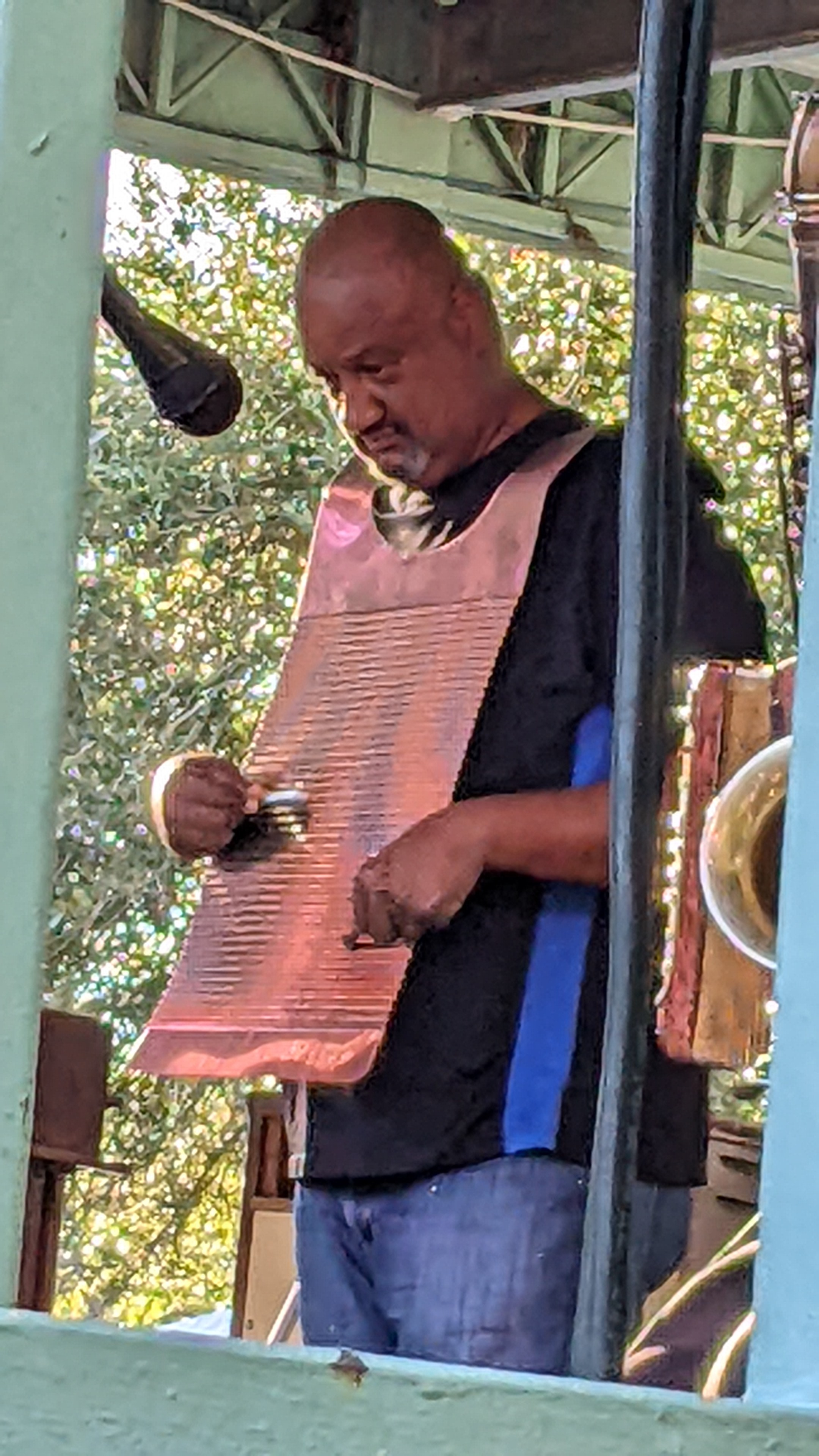
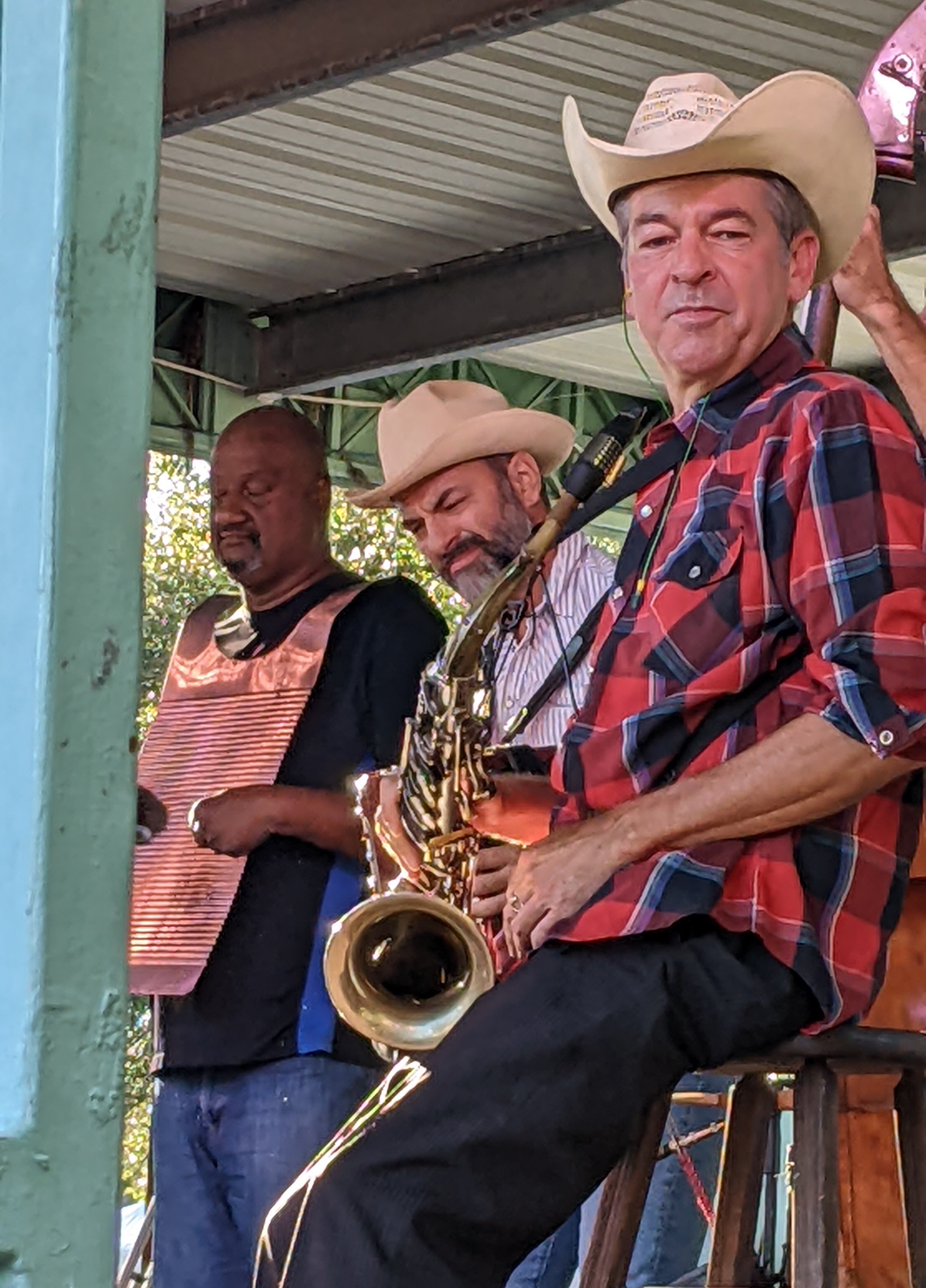
Before leaving Vermilionville, we stopped in at the Saturday music jam, held in a performance hall just across the courtyard from the restaurant. That became a fond memory of my short time in Lafayette, one that I will savor for a long time to come. That strangers come together to make music is impressive enough; that the music is well-played, sung with gusto, performed with no rehearsals and at no charge to the public, and enjoyed by all is truly special!

The music is one of the fondest memories of my time in Lafayette!

Yet to come is my account of an eye-opening and thrilling flat-bottomed boat trip through the Atchafalaya Swamp, along with a visit to nearby Avery Island with its jungle gardens and Tabasco factory, as well as more pictures and commentary about the people, the food and drink, the sights and the music scene in this distinctive Louisiana city. I’ll leave you with at least five good reasons to add Lafayette to your own travel plans for the coming year!

An Unknown Alaska

The 20th annual conference of the North American Travel Journalists Association, held in Fairbanks, Alaska, in May 2023, ended on a high note, indeed. It represented the culmination of a 16-day journey that included travel by air, cruise ship, bus, and train. The route took me from my home in Arkansas to Vancouver, British Columbia, then north along the inland passage to Alaska’s port cities, and on to Anchorage, Denali National Park and inland Alaska.

At the conclusion of the conference, I was off on another type of adventure — a grueling ride along the Dalton Highway, a mostly unpaved roadway that loosely follows the route of the Trans-Alaska pipeline from just north of Fairbanks to Deadhorse, Alaska, on the Arctic Ocean. It is barren, uninhabited land.

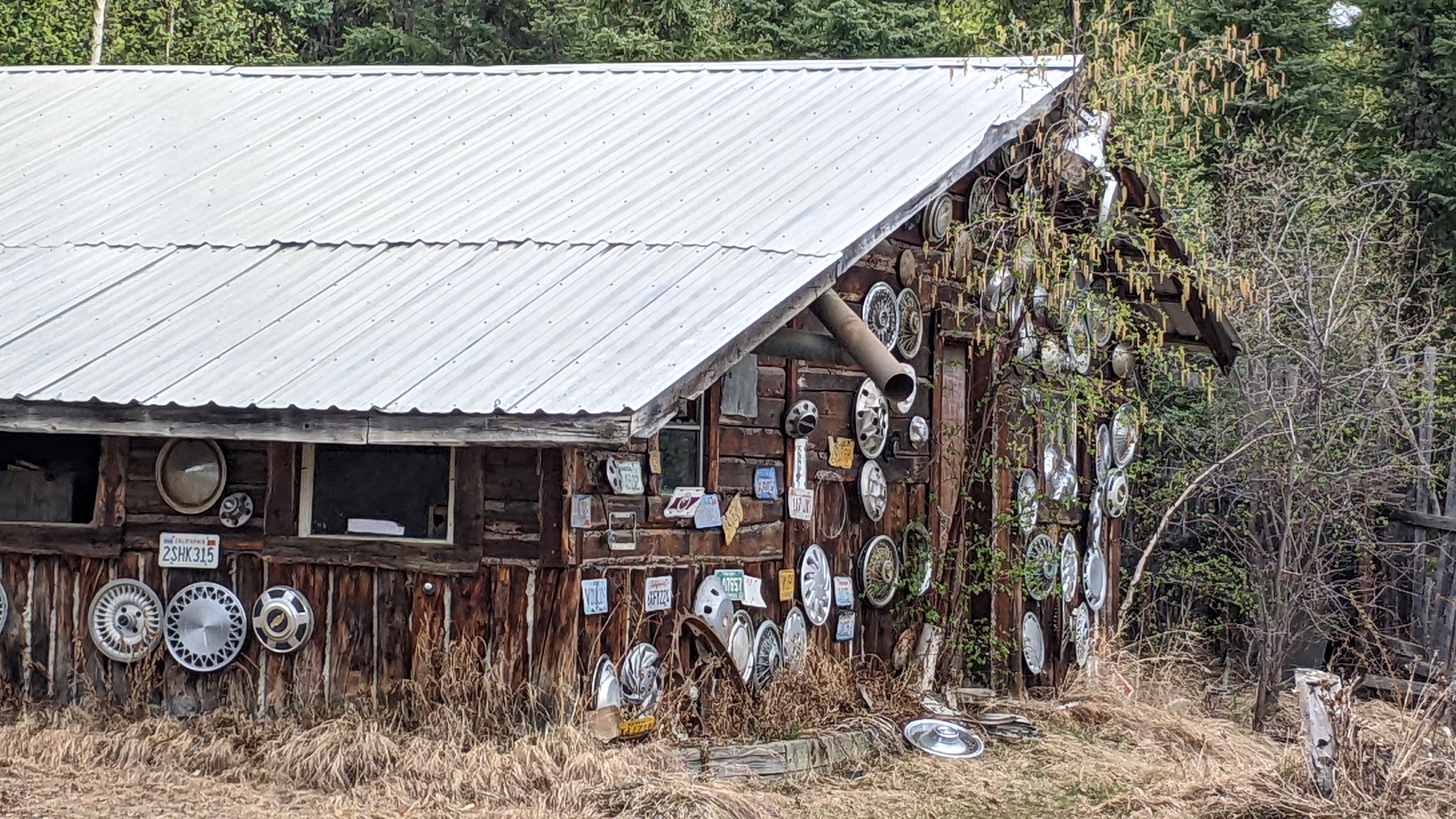
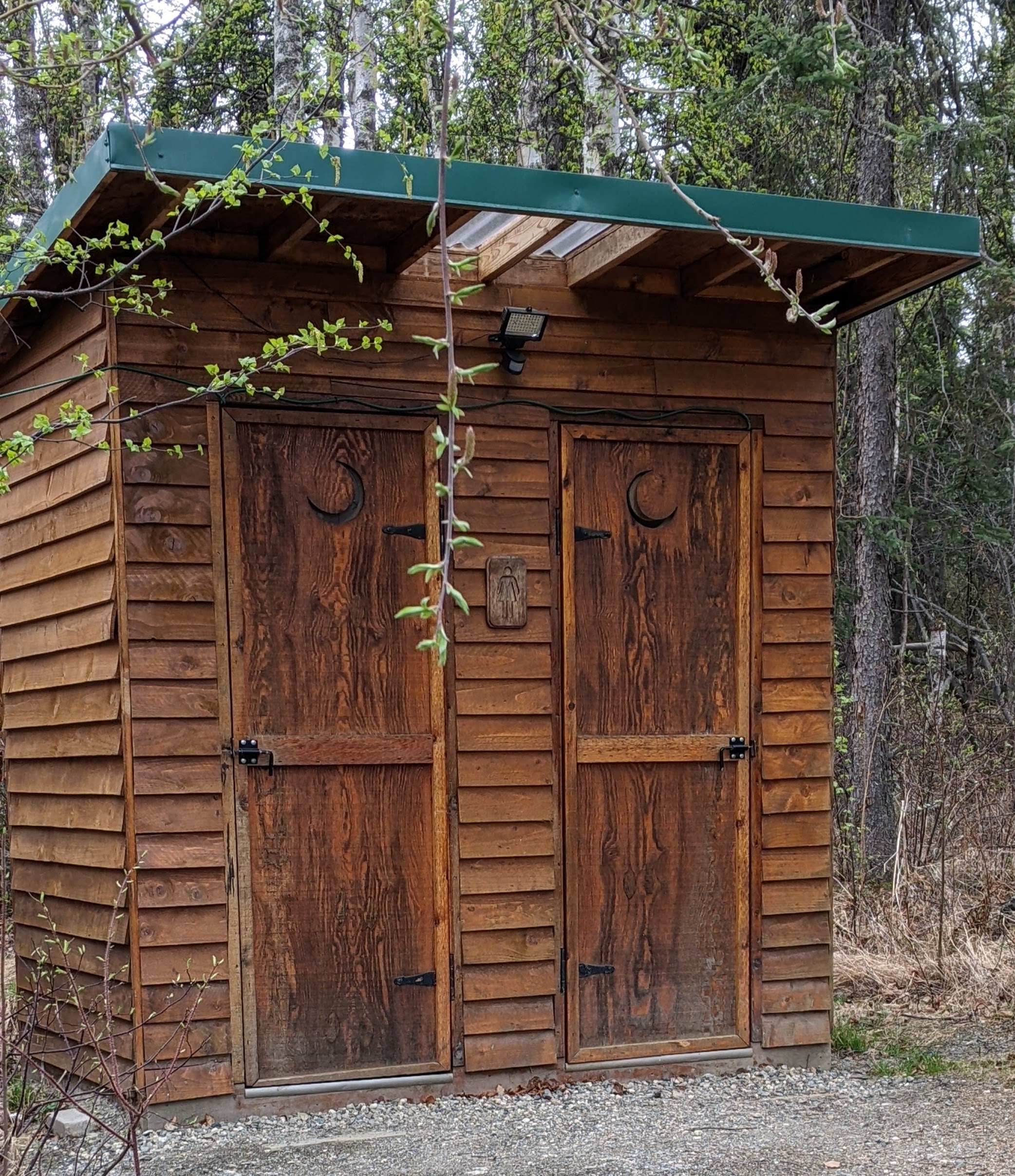
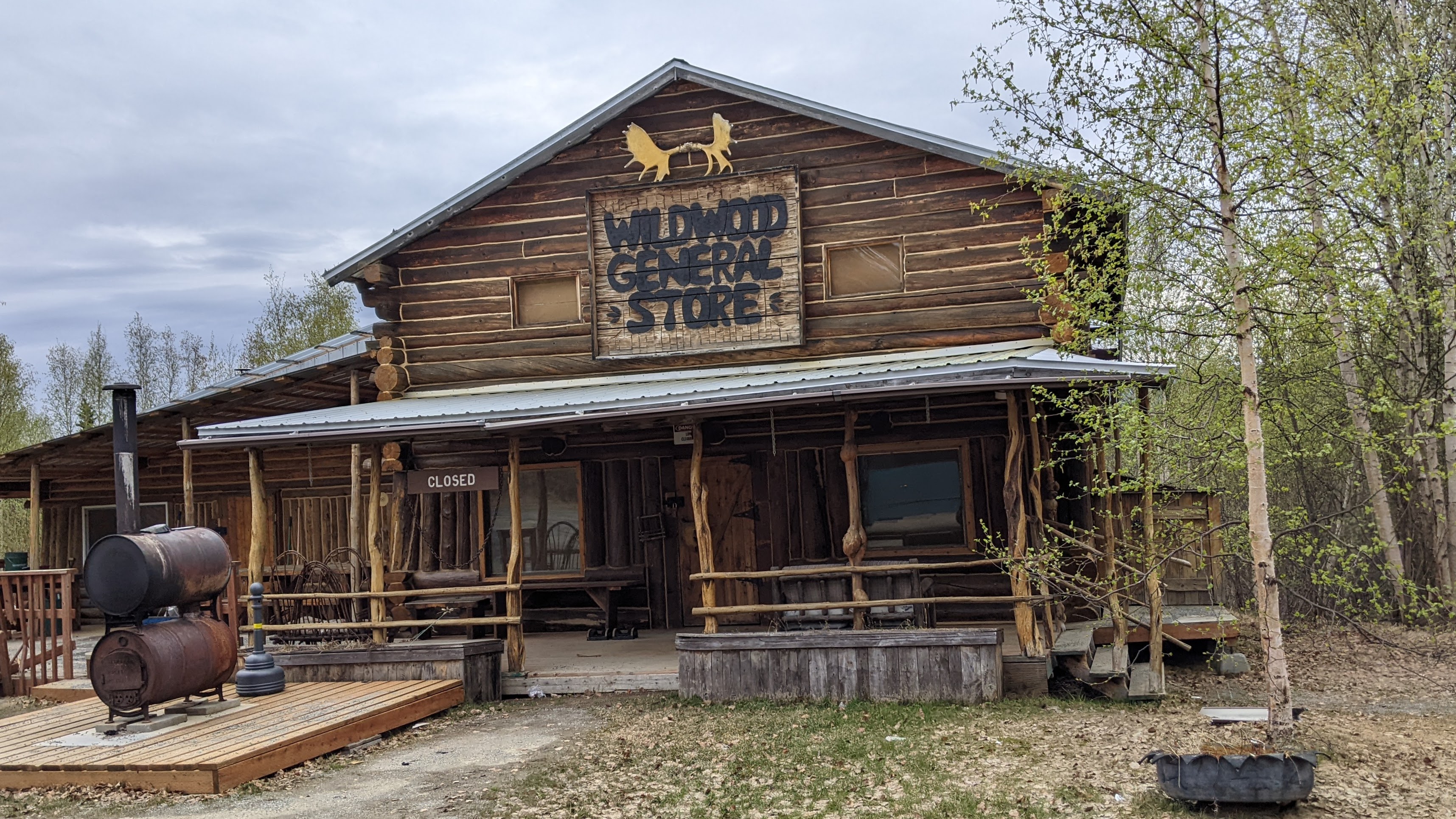
Our guide and driver told us that in the 1980s, a group of homesteaders had formed a small community in an “off-the-grid” location along the route. Today, even they have moved on, with only a handful of buildings as testimony to their former lifestyle. We stopped at what was once the general store in the area, now owned and maintained by the tour company as a convenience stop for participants on the Highway excursions. The site’s several buildings stand empty and unused, but there are clean, well-maintained outhouses, complete with lighting and framed art on the walls. It was not only a welcome rest stop, but the site offered numerous photo ops as well!

Leaving Fairbanks, we traveled along the Stease Highway, then joined the Elliott Highway (roadways in Alaska have names rather than numbers) until we reached the Dalton Highway, made famous by the television show, “Ice Road Truckers,” for the long-haul drivers who bring food and supplies to oil field workers and support crews along Prudhoe Bay.

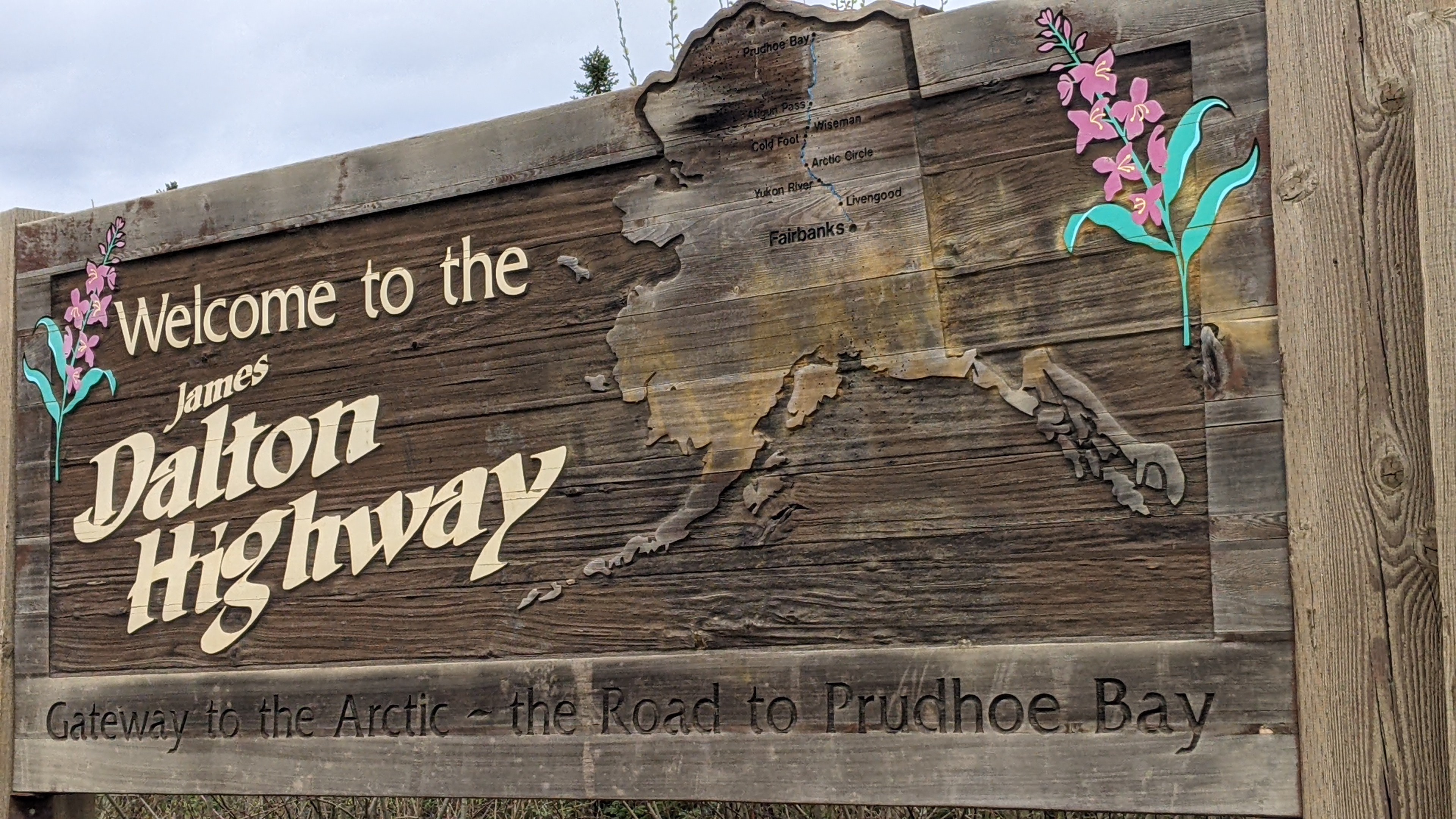
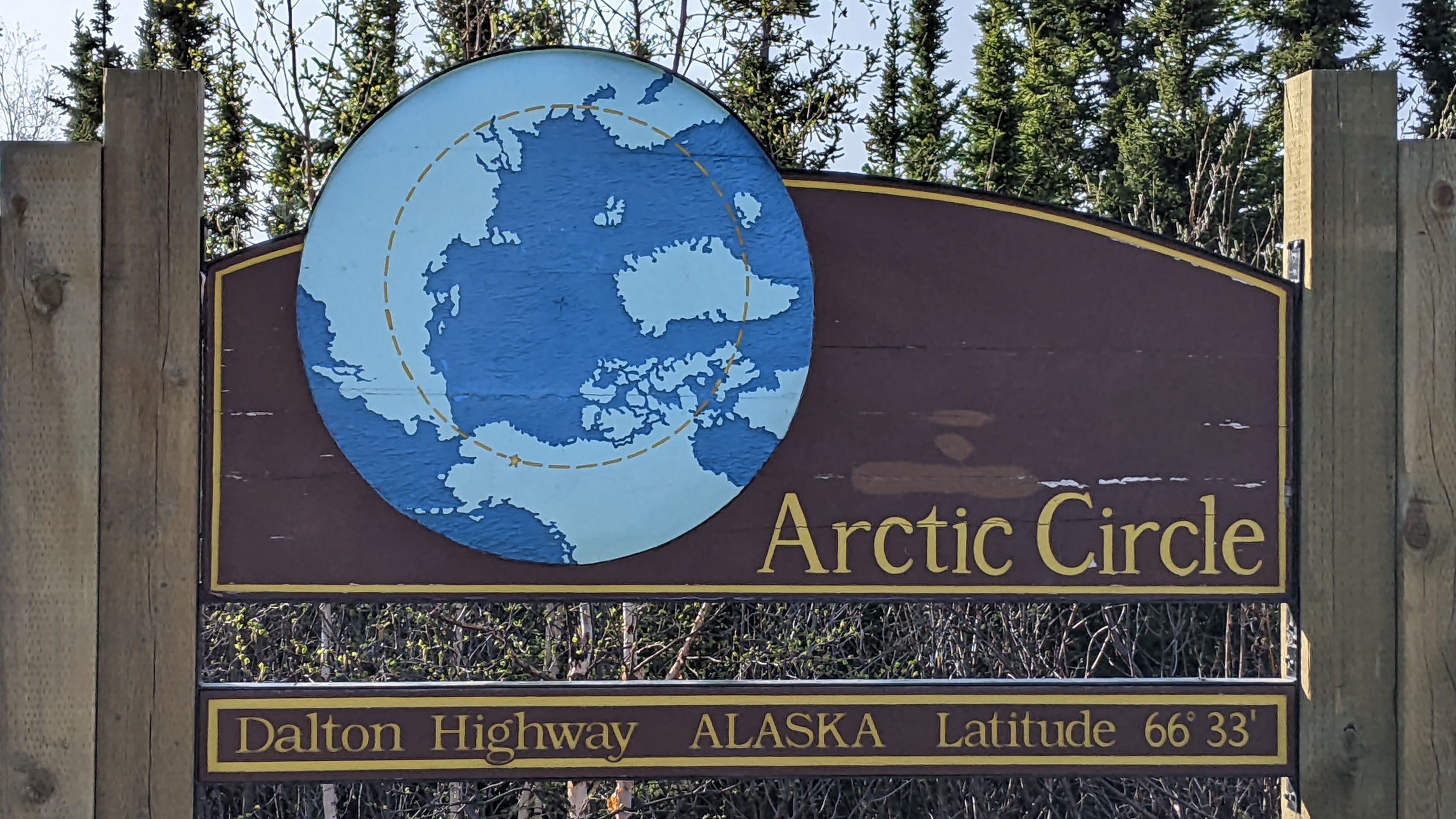
There is a welcome sign where the Dalton Highway begins. At a stop there to take photos, we met a couple of motorcyclists traveling north from California to Deadhorse!

The Dalton Highway stretches 414 miles north from Livengood, a former gold mining town approximately 80 miles north of Fairbanks to Deadhorse, Alaska., at the Arctic Ocean. Originally known as the North Slope Haul Road, it was begun in 1974 and completed in just five months to facilitate pipeline installation. The pipeline itself stretches approximately 800 miles from Prudhoe Bay to its terminus at the ice-free port of Valdez in Prince William Sound. Still a marvel of engineering, the Trans-Alaska pipeline was operational in just 20 months, and began pumping oil in 1977.

The highest mountain in this northern region is just over 3,200 feet (in contrast to Denali’s height of more than 20,000 feet only a few hours to the southwest). The high point on the Dalton Highway is 2,200 feet, but much of this land is above the tree line, and it appears stark, nude, and forbidding in its solitude.

Hilltop Gas Station, 15 miles outside of Fairbanks, is the northernmost source of fuel until drivers reach Coldfoot, on the Yukon River, or the northern terminus of Deadhorse. The power line also ends not too far north of Fairbanks. In a very real sense, this is “the end of civilization.” Pedro Dome, situated northeast of Fairbanks, provides the only Doppler weather radar tracking for the entire state. If it goes down, weather forecasts for Alaska are only guesses.

Our second stop was at Yukon River Camp, where pipeline workers, roadway maintenance crews, and truckers gather. It serves as rest stop, information and communications center, local store, no-frills eatery and is a welcome sight for the few tourists along the lonely road. There is a small village of support personnel, with overnight accommodations available.

Visitors can check the weather, make phone calls, grab a hot cup of coffee, even purchase sweatshirts, postcards, and souvenir magnets. It was here that we once again met the cyclists and wished them well on their continued journey north.

Cities in this northern inland portion of the state are non-existent; even primitive settlements are few and far between. Water, power and fuel do not exist, and travel is treacherous.

Although our excursion traversed not quite half the length of the Dalton highway, we traveled far enough north to literally leave civilization behind. It was a unique experience.

Later, our group stepped across the latitude line (66 degrees, 33 minutes) that marks the Arctic Circle, and we celebrated with “Alaska mud cake” and whipped topping at a picnic table in the forest — under the watchful eyes of curious squirrels and hopeful “thieving birds” perched just above us in the trees. It was there that we picked up a handful of southbound travelers, adventurous souls who had previously ventured further north and would be returning with us to Fairbanks.

On our return south, we stopped again at the Yukon River Camp. But now the kitchen was closed, and the staff had gone to bed. We brought our own sandwiches or microwavable dinners. Water and hot coffee were available to us, but there was little else other than tables, chairs and clean rest rooms. The camaraderie made up for the late-night lack of service.

My colleagues and I — participants in this unique post conference Dalton Highway press trip — discovered the uninhabited, “ungoverned wilderness” of far north inland Alaska. I was overwhelmed by the isolation, and enthralled by the beauty of the land. Only a limited number of participants were chosen for this unique tour offered by the Northern Alaska Tour Company. Another somewhat less-strenuous option offered to Alaska tourists provides an alternative overnight stay near Coldfoot, Alaska, in the Brooks Range, a bumpy hour or so north of the Arctic Circle. On that excursion, travelers can opt to take a morning hike along the Yukon River, followed by a bush-plane flight back to Fairbanks. Fellow journalists who took part in that trip reported that the return flight was spectacular, not to mention a few hours of welcome sleep in a rustic cabin with a comfortable bed!

We traveled through the northern boreal forest that spans the globe from Alaska to Scandinavia. Russia and Asia boast greater biodiversity and life forms; in Alaska, there are only four species of trees that grow in the permafrost: white and black spruce, aspen, and birch trees. Because we were there in spring, we witnessed the aspen and spruce leafing out, even though snow remained on the ground in some areas. We were told that a few weeks earlier, the land was fully blanketed with deep snow. But spring comes quickly to this part of Alaska.

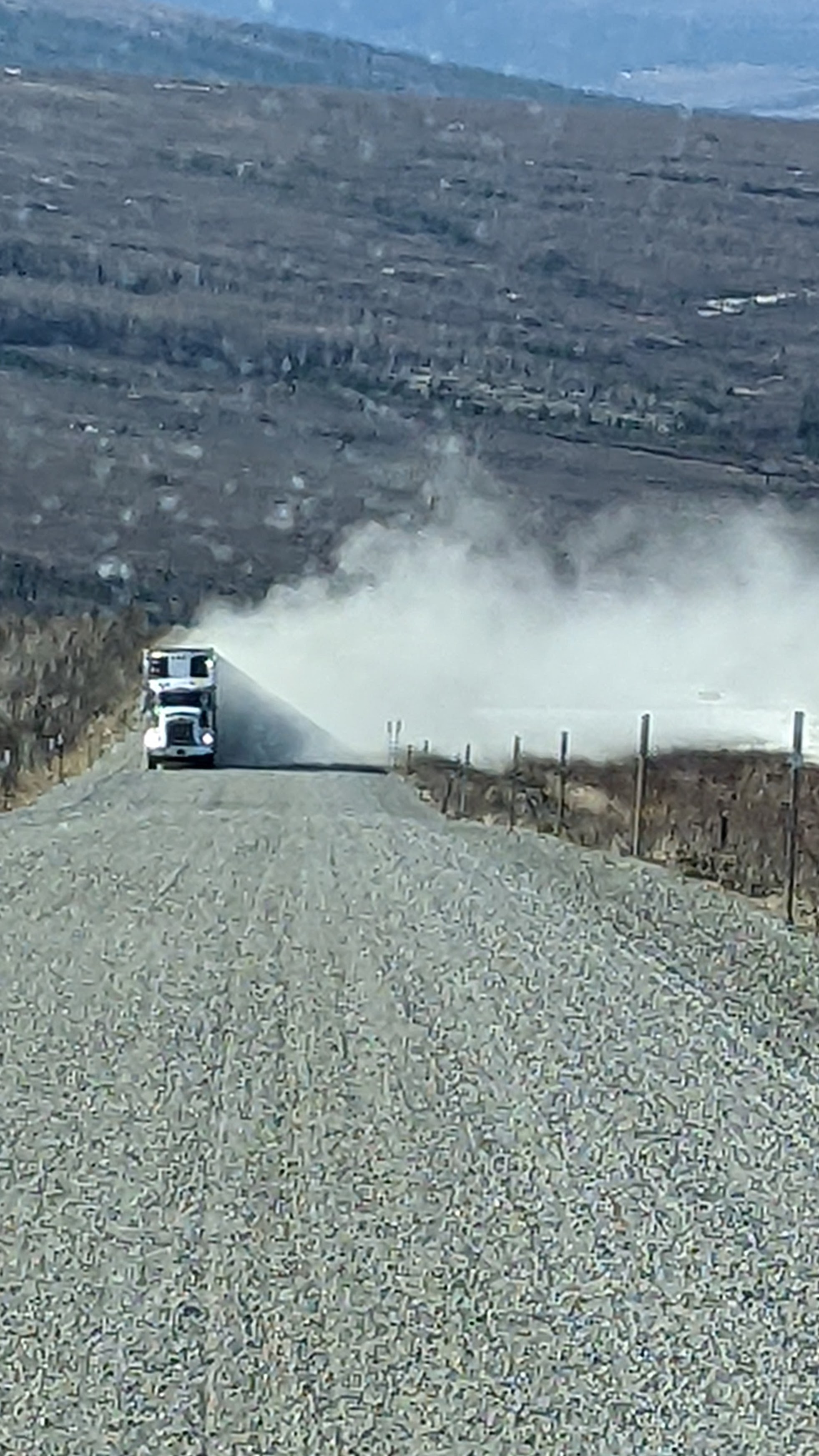
For my part, though, I was grateful for the opportunity to learn from our knowledgeable guide about the history of the Trans-Alaska pipeline and its current upkeep and operation. I was impressed by the ongoing maintenance work along the mostly unpaved roadway, even though construction delays late at night were a bit unnerving! I felt a slight sense of fear, tempered by awe, each time a swirling cloud of dust signaled the approach of a speeding 18-wheeler.

Those long-haul drivers are experienced, professional and, usually, extremely courteous. But it is obvious they operate on an unforgiving timetable, and they simply “keep on trucking.”

I was duly impressed by the sight of the 45-year-old, mostly-elevated oil pipeline as it snakes across the land. For more information about the construction and continuing operation of this engineering marvel, visit TAPS Construction -Alyeska Pipeline.

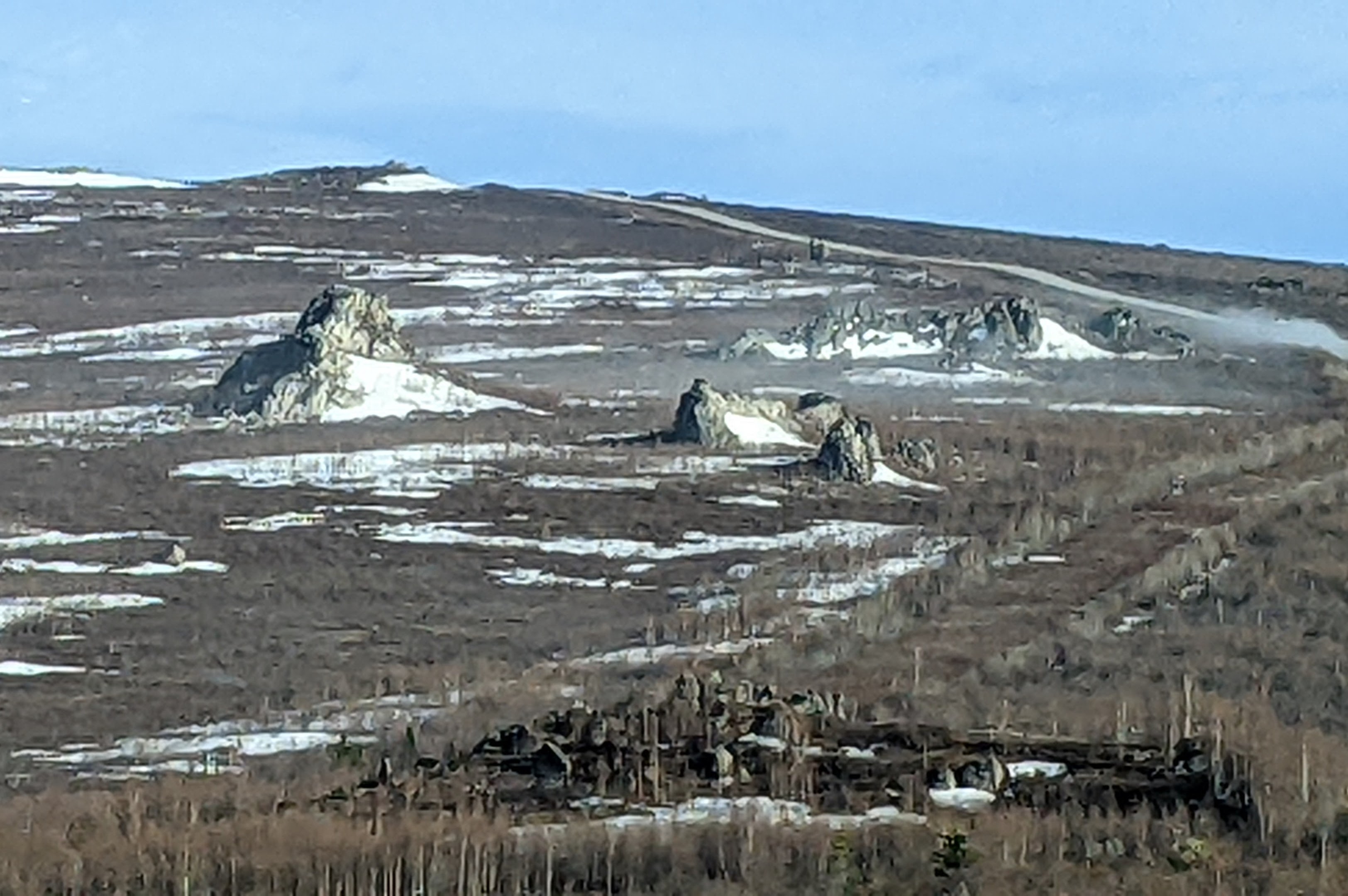
We stopped for a short time at an outcropping of granite tors, huge natural outgrowths that stand like sentinels on the barren land. Much further to the south, there is a 15-mile trail and public campground at another tors site, maintained and administered by the Alaska Division of Parks and Outdoor Recreation.

This trip is by no means an excursion for the faint of heart. But neither was it, as a participant on a tour prior to mine proclaimed, “the worst day of my life.” It was long, yes; cold, drizzly, uncomfortable, and tiring. We returned to our Fairbanks hotel at about 3 a.m. for a few hours of sleep before flying out that afternoon to the Lower 48. Would I do it again? No, but I’m certainly happy to have had the full experience.

It was a ride I will not soon forget! And the changing hues of blues, pinks, and striated yellow and orange that filled the night sky in those late night and early morning hours will forever color my memories of far north Alaska, a land full of wonders and surprises.

The certificate I was presented proclaims that I crossed the Arctic Circle and “survived an adventurous journey through the Alaska wildnerness.” That says it all!

A special angel at the airport . . .

On the morning of January 17, 2023, we drove to Clinton National Airport in Little Rock. We were filled with anticipation. The skies were clear and the sun was shining. Despite an itinerary that included two plane changes before we would board our international flight in Miami, we believed we were well prepared for all contingencies and that our long-awaited trip to South America would be without incident. We were filled with anticipation.

Little did we realize then just what an experience awaited us. Our long-awaited journey had been on hold since before COVID. The trip itself had morphed from a relatively simple desire to sail around Cape Horn at the southern tip of Argentina — once an itinerary of between 10 and 14 days — to a trip that included not only Chile and Argentina, but also the Falkland Islands. The journey had stretched to 22 days. Our expectations had also become greater!

Travel plans sometimes take on lives of their own — that had certainly happened this time.

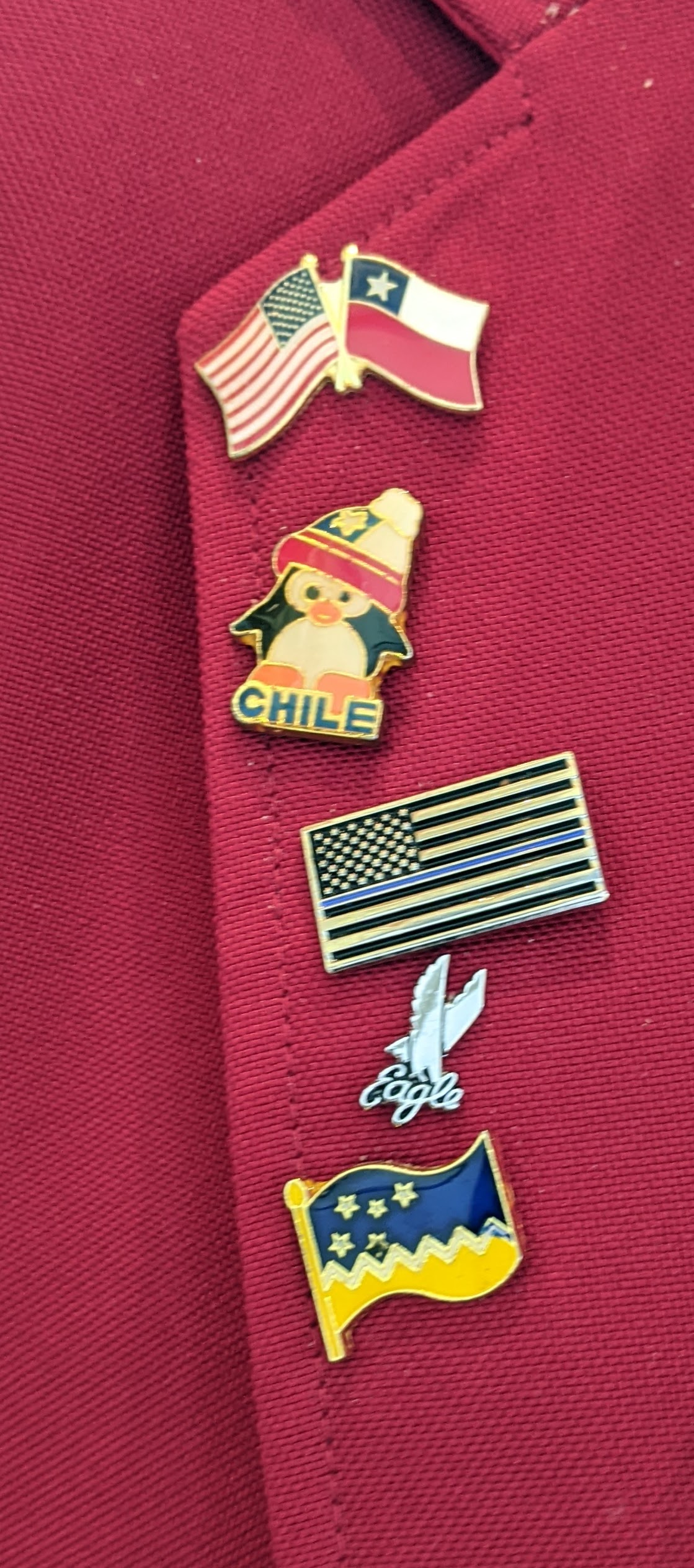
Check- in was swift and painless; a friendly American Airlines agent tagged our bags and placed them on the conveyor belt. We proceeded up the escalator, stopping at the top to chat with an Angel Squadron volunteer at the Airport. His name tag identified him as Luis Reyes. His red vest and a jacket adorned with colorful pins from different states and countries were as welcoming as his smile. I told him that my husband and I were traveling to Santiago, Chile, but would also be visiting Argentina during a 16-day cruise. We talked about the ports we would visit — Punta Arenas as well as Ushuaia at the southern tip of the continent, and then Buenos Aires.

His eyes sparkled and he was more than happy to share information about Chile, his native country. He told us about growing up in Punta Arenas, and how the city overlooked the Strait of Magellan at the southern gateway to Patagonia and Paine Towers National Park. He offered suggestions about where to go, and what to see and do during our short visit there, and he shared his recommendations for local food and drink. He promised that we would want to return.

Reyes also told us about how he and his wife had met, and how he came to be in Arkansas. I asked him if he liked living in Little Rock. He smiled again and said, “Yes, it’s my home now.” And, laughingly, he explained the similarities between the flag of Texas and that of Chile. “We had it first,” he noted. We laughed together.

We considered meeting this unlikely angel a good omen, and we promised to enjoy the delights of his native country and his boyhood home. He wished us a safe journey and we walked on, eager to board our first flight of the day.

Our travel adventures had only just begun! Sadly, our flight plan did not unfold as planned, and we were rerouted through Dallas-Fort Worth instead of Miami. We actually arrived in Chile a bit earlier than planned, and watched a spectacular sunrise over the Andes as our flight landed in Santiago.

After spending two days in that uniquely interesting city, we transferred to Valparaiso, a port city on Chile’s coast, to board our cruise ship bound for Punta Arenas. Again, weather and other circumstances intervened, and that port call was canceled.

Not long ago, returning to Little Rock Airport from another trip, my husband and I once again encountered Luis Reyes at the top of the escalator. He greeted us warmly. We told him how disappointed we were that we had not had an opportunity to visit the city in January. Nonplussed, he didn’t miss a beat! “You’ll just have to return,” he answered. We chatted for a few more minutes, about his summer here in Arkansas, about the trip we had just completed, and about our future travel plans. As we walked on, he called out to us: “I’ll hope to see you again soon,” he said.

Meeting him was one of those chance encounters that served as a prelude to the interesting people we would meet throughout our travels in South America. Once again, it’s the people one meets while traveling, not the places you go, that are the most memorable! Volunteers at major airports throughout the world are there to help travelers. Take advantage of the services if you need help, and get to know the volunteers who give of their time and energy to make travel as pleasant as possible for us all!

As I embark on other travel adventures, I hope this engaging angel will once again be waiting at the top of the escalator in Little Rock. If you happen to meet him, take the hard candy he offers. Ask for his assistance if necessary. Take some time to visit with him. And be sure to tell him hello from me!

And, if you don’t happen to meet Luis Reyes, I hope you meet another angel!

Wanderlust — Montenegro Dreams

As a child, I was captivated by people who lived lives very different from my own, and by the sounds of words spoken to a different cadence. The pull of the unfamiliar was strong. I do not remember a time when I didn’t want to experience far away places.  I never outgrew the wanderlust. Today, the rhythm of a foreign language is music to my ears and the promise of a trip is reason enough to pack up.

And those strange-sounding names; oh, yes!

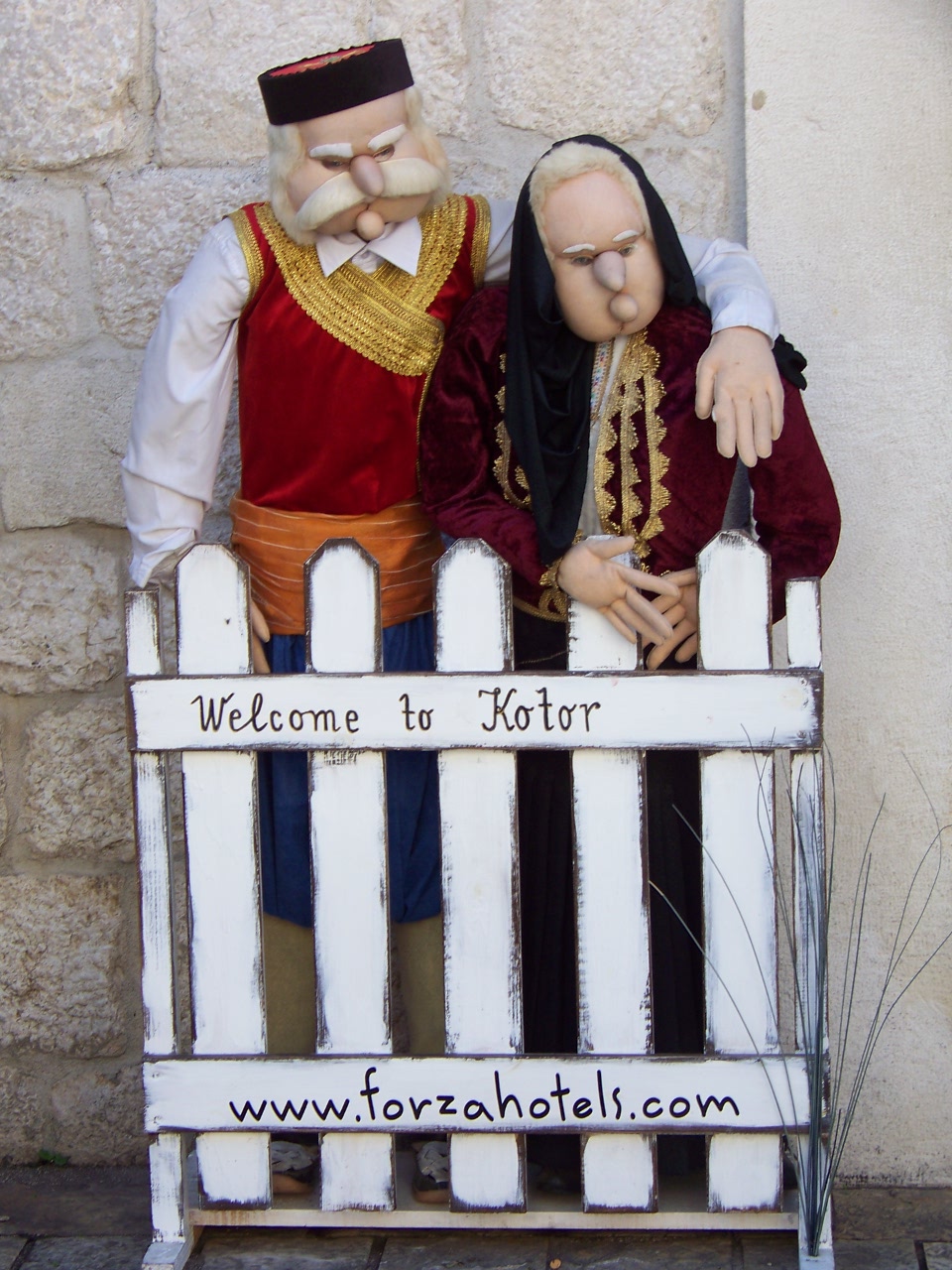
The pull of unknown places is strong. So, when Kotor, Montenegro, was one of the ports on a Princess cruise itinerary, it was almost impossible to resist. I knew next to nothing about Montenegro; in fact, I had to pull out my atlas to locate it.

We were in port for only one day. That was 2017, in the fall. Today, as I think about that visit, I find it hard to believe that all those good memories were formed in the course of one afternoon. Now I want to return again!

The place, the people, the history speak loudly of life well-lived and fine experiences just waiting to be had. Even more seems promised on a second visit than I experienced during the original. But that first visit could hardly have been better! The scenery, both the ancient city buildings and the surrounding limestone cliffs, is stunning, with hand-built stone walls stretching for more than three miles above the town. The scene is both awesome and forbidding.

Arriving in the City

Our day began with a quick tender ride between our ship and the city dock. Once on land, we were efficiently directed to a guide who was to accompany us on a stroll through Kotor’s marketplace prior to joining a local chef to hear about traditional Montenegrin dishes. We were to sample a variety of regional favorites.

We don’t normally sign up for ship’s tours — we don’t do groups well, preferring instead to walk at our own pace and make our own discoveries. But this one was different.

The stroll turned out to be more of a brisk walk as our group skirted the walls of the ancient city before arriving at the

market. Stalls were filled with olives and cheeses, figs and dried apricots, colorful produce, plump breads, pastries and chocolates, sausages, ham and fresh fish – vendors offered samples, encouraging us to try unfamiliar fruits, to sample various figs and olives, to buy spices and olive oil. It was tempting, to be sure.

Welcome Freely Offered

But, we had a schedule to keep, and we pushed on to the end of the harborside thoroughfare before taking a turn onto a tree-lined lane bookended with private gardens. While our group had envisioned gathering in a local café, we were delighted to be ushered through a courtyard and into a cozy home, greeted by a vivacious blonde who wore pearls with her casual slacks and tee.

She greeted us warmly in only-slightly accented English, and introduced her husband, a former sea captain, who stood ready to pour each of us our choice of strong aperitif even though it was not quite 10 a.m. But, when one is on vacation and a guest in someone’s home . . .

Each of us accepted a glass, then followed our hostess’s lead and raised our glasses in a mutual toast — to new friendships, good food and good times. She encouraged us to feel at home in her home. Each of us found a comfortable seat in the art and antique-filled sitting room. I chose a spot around a diminutive lace-draped round table.

We learned about the life experiences of this lady and her husband. Her many-faceted career, as author, cook, lecturer, tour guide, and who knows what else, was a bit of a surprise, proving that reinventing oneself knows no cultural or geographic boundaries. We also learned about her husband’s exploits at sea and of his ancestors whose portraits hung on the walls.

After a bit, she disappeared for a few moments into the kitchen. We were invited to take seats at a long banquet table that nearly overfilled a well-proportioned dining room with a view of the garden.

Sharing Food, Building Bridges

Treated like honored guests, we sampled plate after plate of appetizers, a delicious soup, a traditional entree, and, finally, a rich dessert, all accompanied by a parade of local wines. We listened with rapt attention as she demonstrated how to prepare a traditional Montenegrin recipe.

We were not really prepared for Montenegro. Yes, we knew some of the history: Kotor is a unique medieval fortress town, with an array of buildings that span from the 12th through the 16th Centuries. It’s impossible to walk through the old town without visualizing pirates along with priests, noblemen and beggars, monks and blacksmiths, painters and writers, physicians and printers.

The small city, with a population of approximately 13,000, is situated in a secluded portion of the long Bay of Kotor on Montenegro’s Adriatic Coast. Less than 1,000 people actually live within Kotor’s historic walls, and its earliest history is a bit muddied; it is first mentioned in ancient literature in about 168 BC, but some authorities believe it was founded as early as the 5th Century BC. It was known at one point in history as Acruvium, part of the Roman province of Dalmatia. No matter the date, Kotor now holds the status of a UNESCO World Heritage Site, and the city’s fortifications testify to a succession of foreign occupations and battles. Once allied with Dubrovnik, it gained independence from Byzantium until it was later occupied successively, and repeatedly, by the Serbian Empire, the Republic of Venice and the Ottoman Empire, the Hapsburg Monarchy and, finally, the Napoleonic Kingdom of Italy. It played significant roles in both World Wars.

After 1918, the city that saw some of the fiercest battles of the war became part of Yugoslavia, and gained its new name of Kotor. It was not until 2006, however, that Montenegro, part of the former Yugoslav Republic, become truly independent

With that much turmoil and turnover in its history, it may be surprising that Kotor endured. But endure it did, and today it boasts one of the best-preserved old towns in the region, along with its impressive fortified old city walls and its stunning Cathedral, built in 1166.

The Cathedral of Saint Tryphon is a major tourist site, one of two cathedrals in this unique small city that was formerly known as Cattaro. Saint Tryphon has a collection of beautiful art and artifacts, in addition to its notable architecture.

What else sets Kotor apart from its neighbors? There is a distinguished maritime museum and the Kotor Festival of Theater for Children has attracted throngs of visitors from throughout Europe for the 30 years it has been held. Citizens of Kotor are also protective of their cats, symbols of the city. Food and water, along with boxes that serve as shelter, are left throughout the city. Kotor Kitties is a chartable services that provides spay and neutering services in an attempt to limit the population, but the cats are as much a part of the city as the smiles of its citizens. Don’t miss Cats’ Square if you visit, and be sure to take home a cat-themed souvenir.

I hold fading memories of the cats, the cathedral, the city walls, and the sparkling sea. But I have a clear recollection of the taste of fresh olives and figs from a vendor in the city’s market, and of the stories told and the laughter shared around a dining table in the home of a charming couple in Kotor!