A Trifecta of Shore Excursions

My husband and I chose to celebrate our late January anniversary this year aboard ship. Our itinerary, sailing from Galveston, was to ports we had previously visited, but we were eager to warm our bodies and refresh our spirits during a brief seven-day getaway.

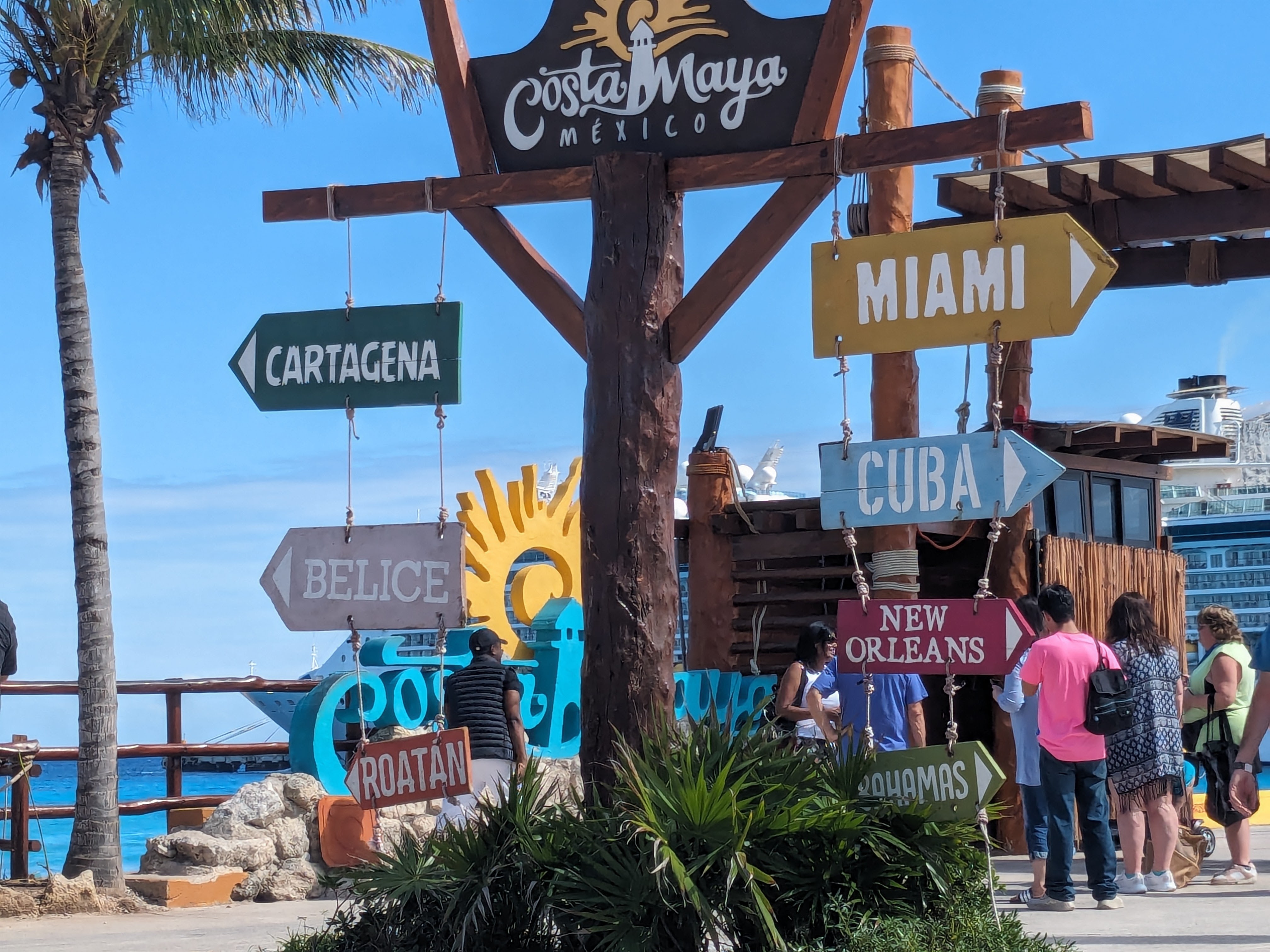
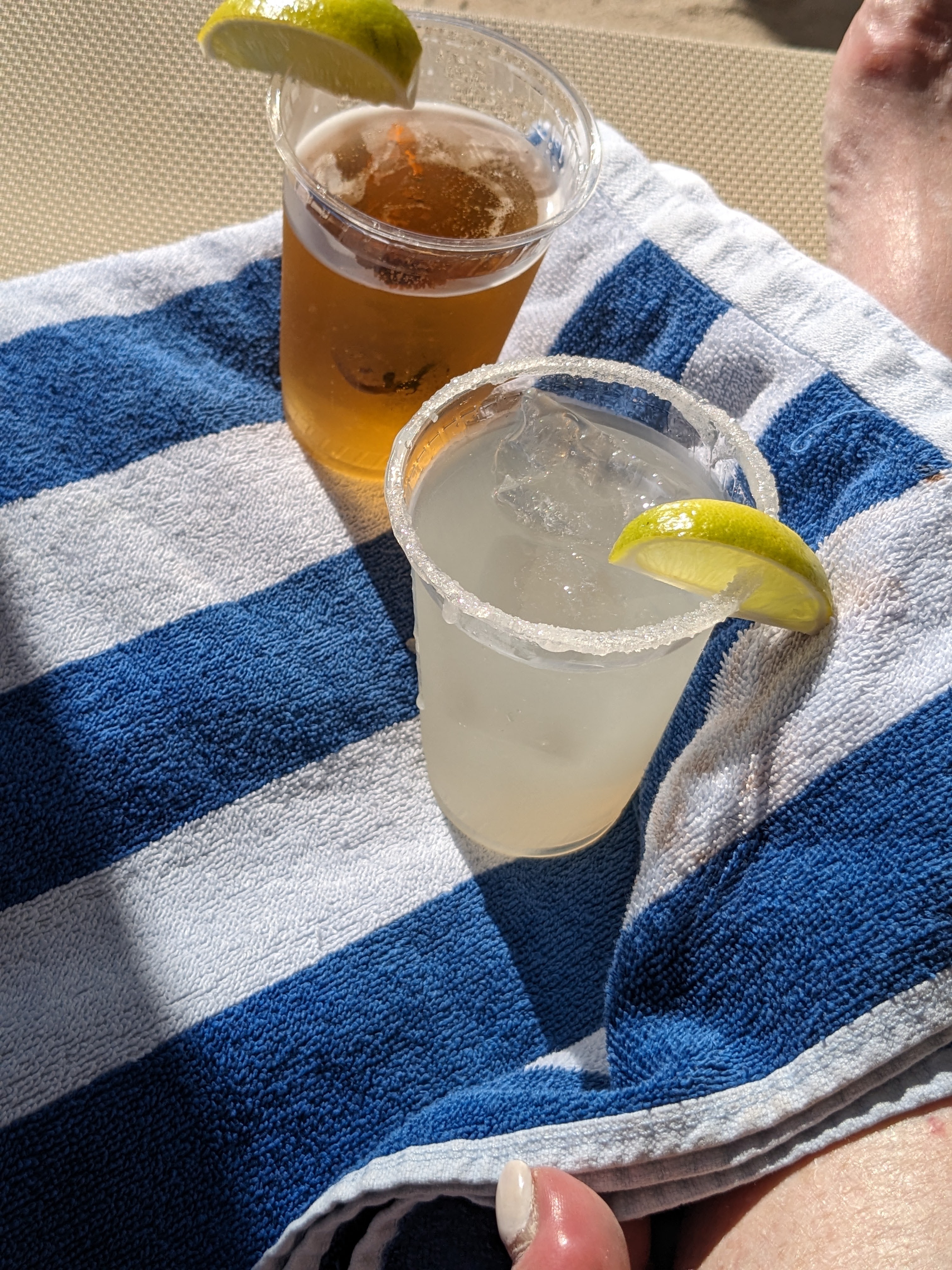
On this voyage, we enjoyed beach time, beach cocktails, and beach vendors in Costa Maya, the first port we visited in the Gulf of Mexico. It was a perfect day, and it fulfilled our need to dip our toes in the water and feel the sand beneath our feet. We spent our hours ashore doing exactly that. We snagged comfortable loungers, enjoyed a few cool libations, and watched people having fun. That was our brand of enjoyment — doing nothing other than enjoying the people around us, and savoring every moment of sun and warmth. I even succumbed to the temptation of a henna tatoo!

Then, we returned to our floating resort hotel for dinner and evening entertainment.
Tabasco: How Hot Is It?

Earlier, in October 2023, I toured the Tabasco plant, home of the world’s best-known hot sauce. The history of The McIlhenny Company which produces the Tabasco brand is fascinating. Still a family-owned business after more than 150 years, the company ships its products from a small factory on tiny Avery Island, Louisiana to 195 countries worldwide.

Cozumel was the final port of our seven-day itinerary. There, I once again encountered Tabasco, this time in the form of a culinary adventure I couldn’t resist.

I had booked the “Chef Maestro Tabasco” excursion, a culinary adventure I couldn’t resist, through Princess. Following my visit to Avery Island, the “home” of Tabasco, I was eager to learn more about cooking with the hot sauce.

This excursion did not disappoint!

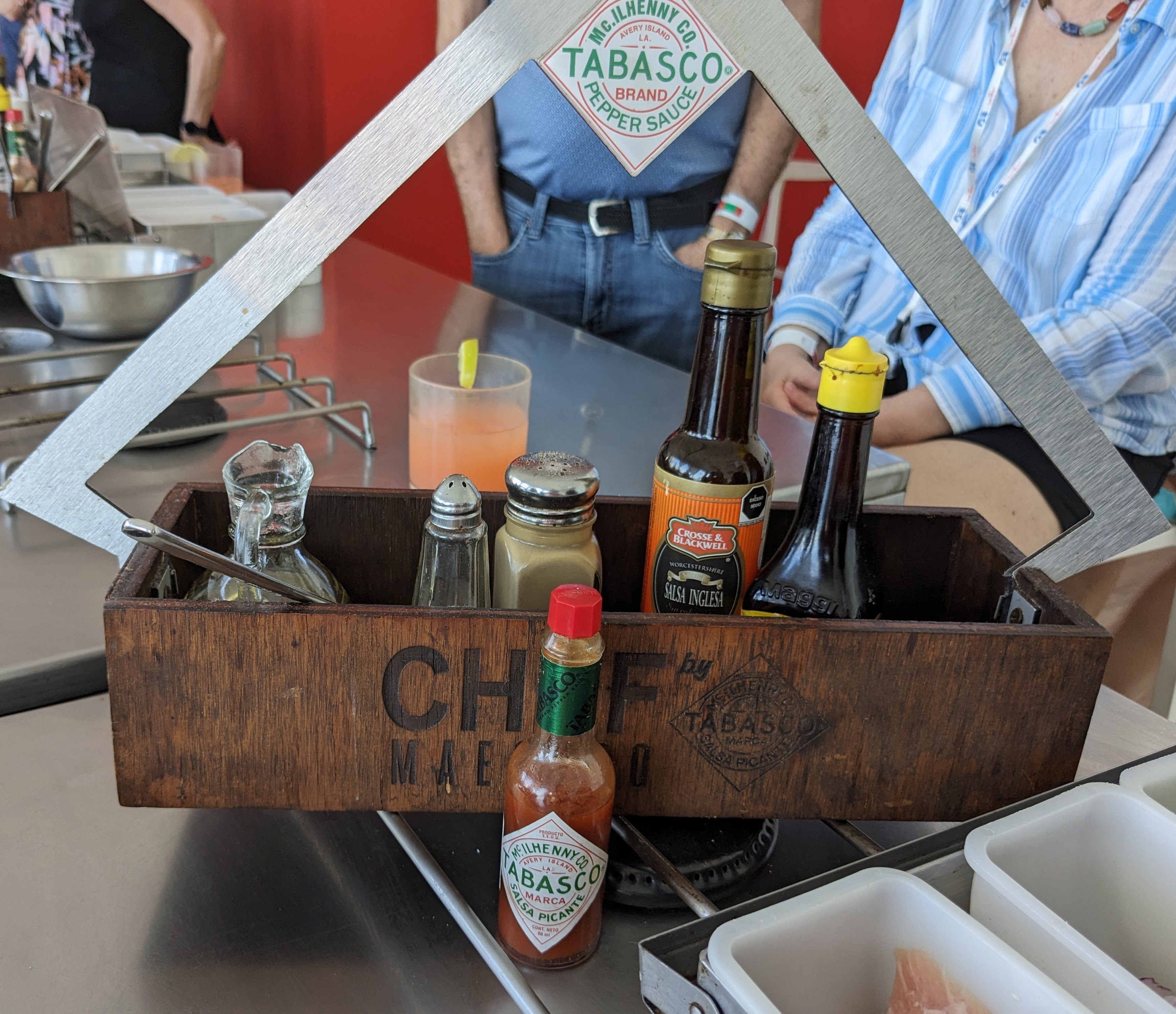
That little bottle of red pepper sauce has been a staple in my kitchen for many years, but I have seldom used Tabasco for food preparation in my home. Instead, I have typically placed it on the table at casual gatherings, allowing guests to ramp up the “hot” to their own preferences. We were somewhat surprised that on this Gulf of Mexico sailing, there was also a bottle of Tabasco on each dining table, along with the salt and pepper shakers!

During my Louisiana trip, I was able to sample food specialties associated with Cajun history, culture, and tradition. I learned how the flavors of simple foods are enhanced by various herbs, spices, peppers, and sauces. I learned that hot sauce can be flavorful as well as fiery, and that spice can elevate common ingredients to levels of haute cuisine.

Feasting on Entertainment

I also realized that the hot red peppers used to create Tabasco sauce had most likely been brought back to Texas and Louisiana by soldiers who fought on the nearby Mexican mainland during the Mexican-American war. Cozumel is not far from the Mexican state of Tabasco.

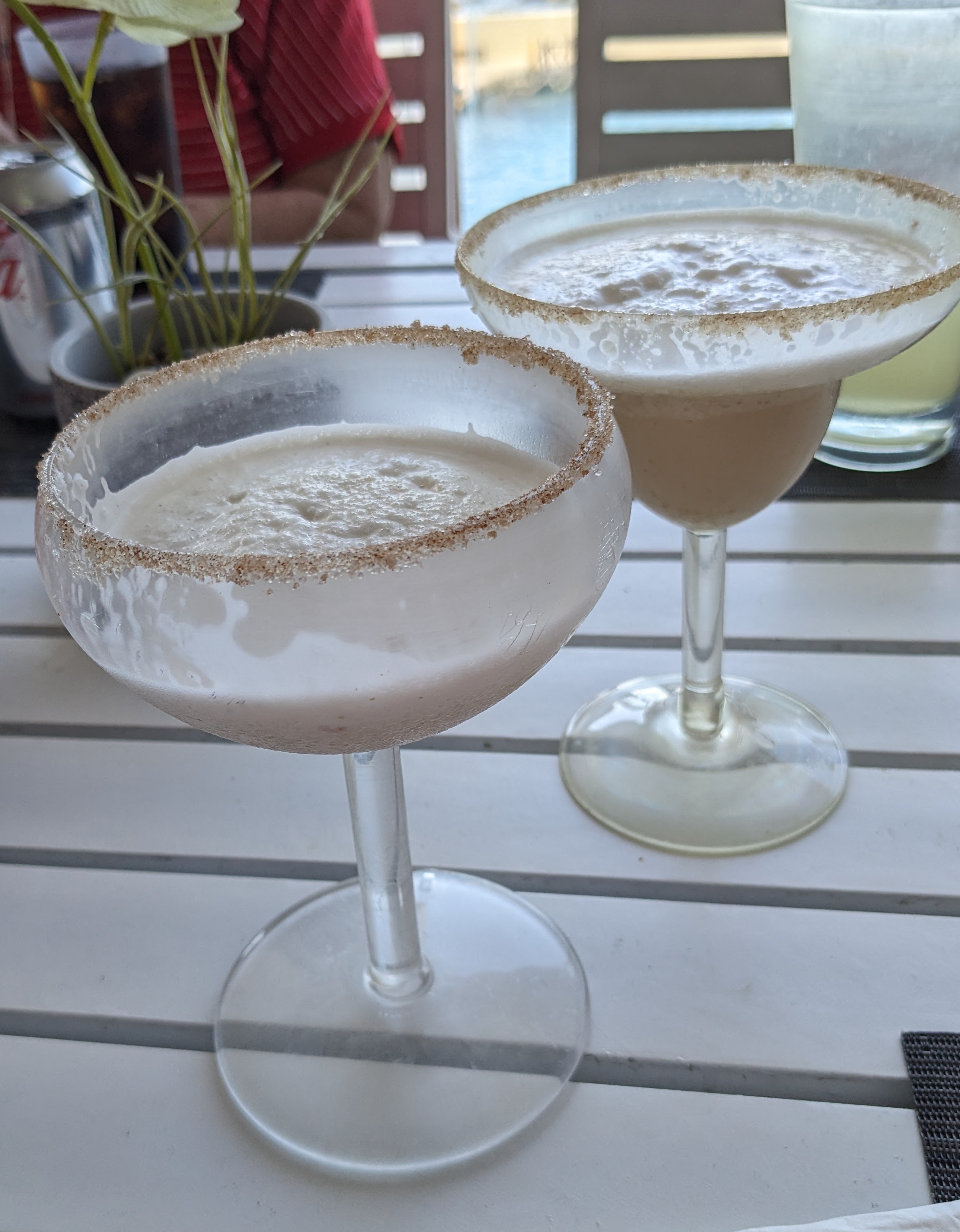
As it turned out, this cooking excursion was one of the highlights of the voyage, both for the foodie experience and for the pure fun of it. Who would pass up a culinary adventure that includes Margaritas as well as tips for cooking with Tabasco?

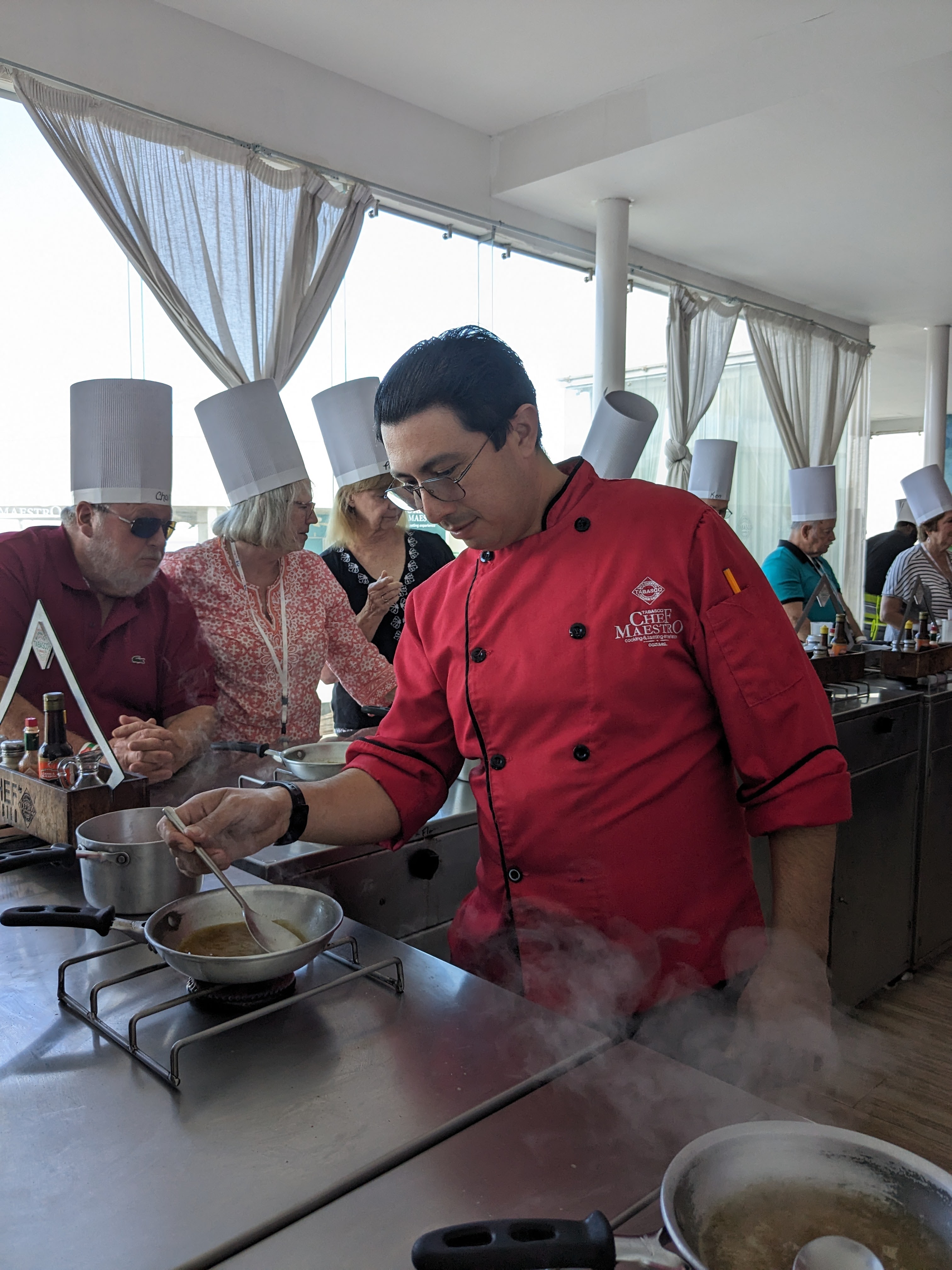
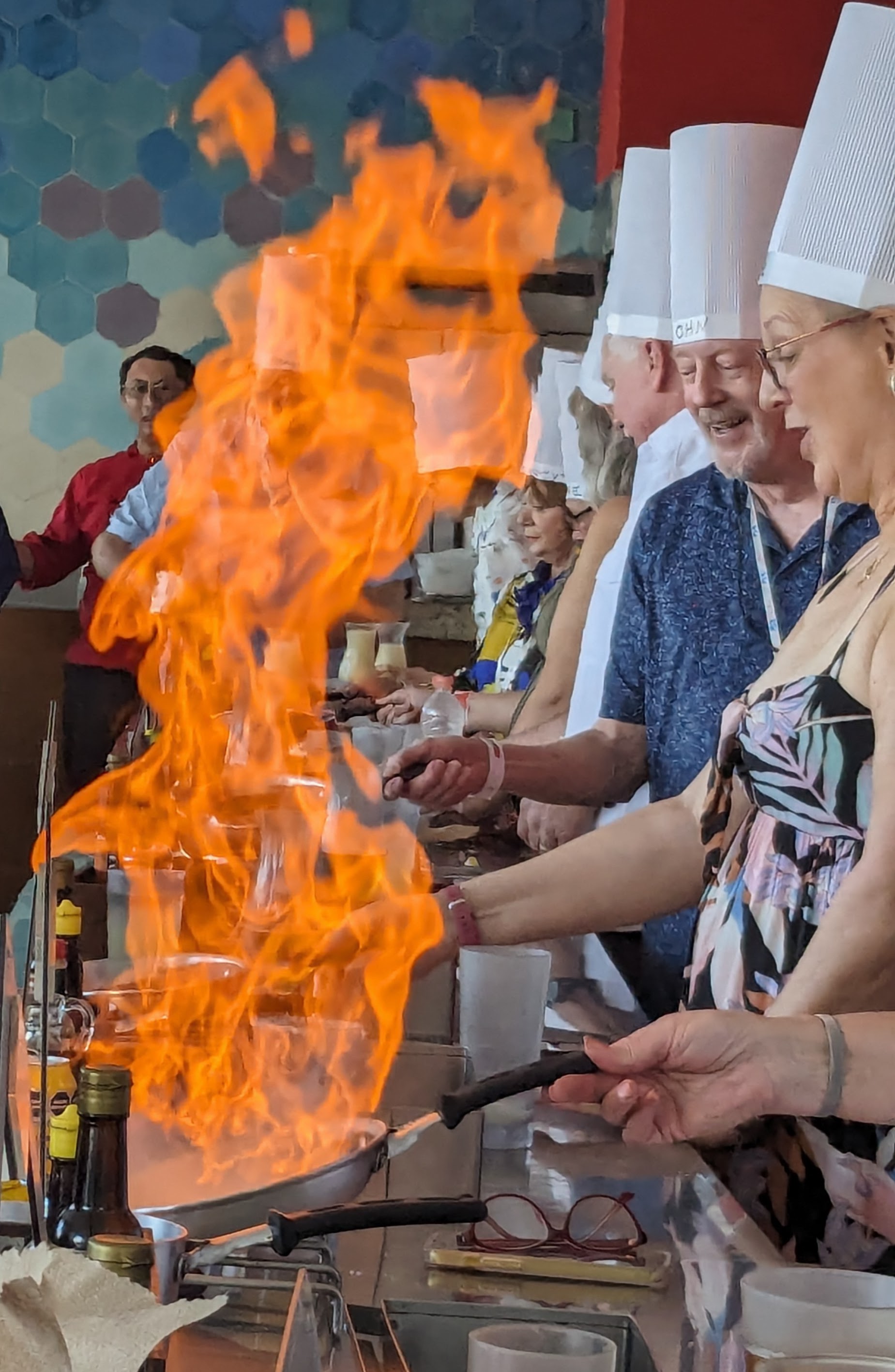
We were entertained from the time we entered the second-floor demonstration kitchen at Cozumel’s Hotel Blu until the moment we were ushered into a waiting cab for our return trip to the pier. At the outset, we donned tall, white, pleated-paper chef’s hats as we awaited further instructions.

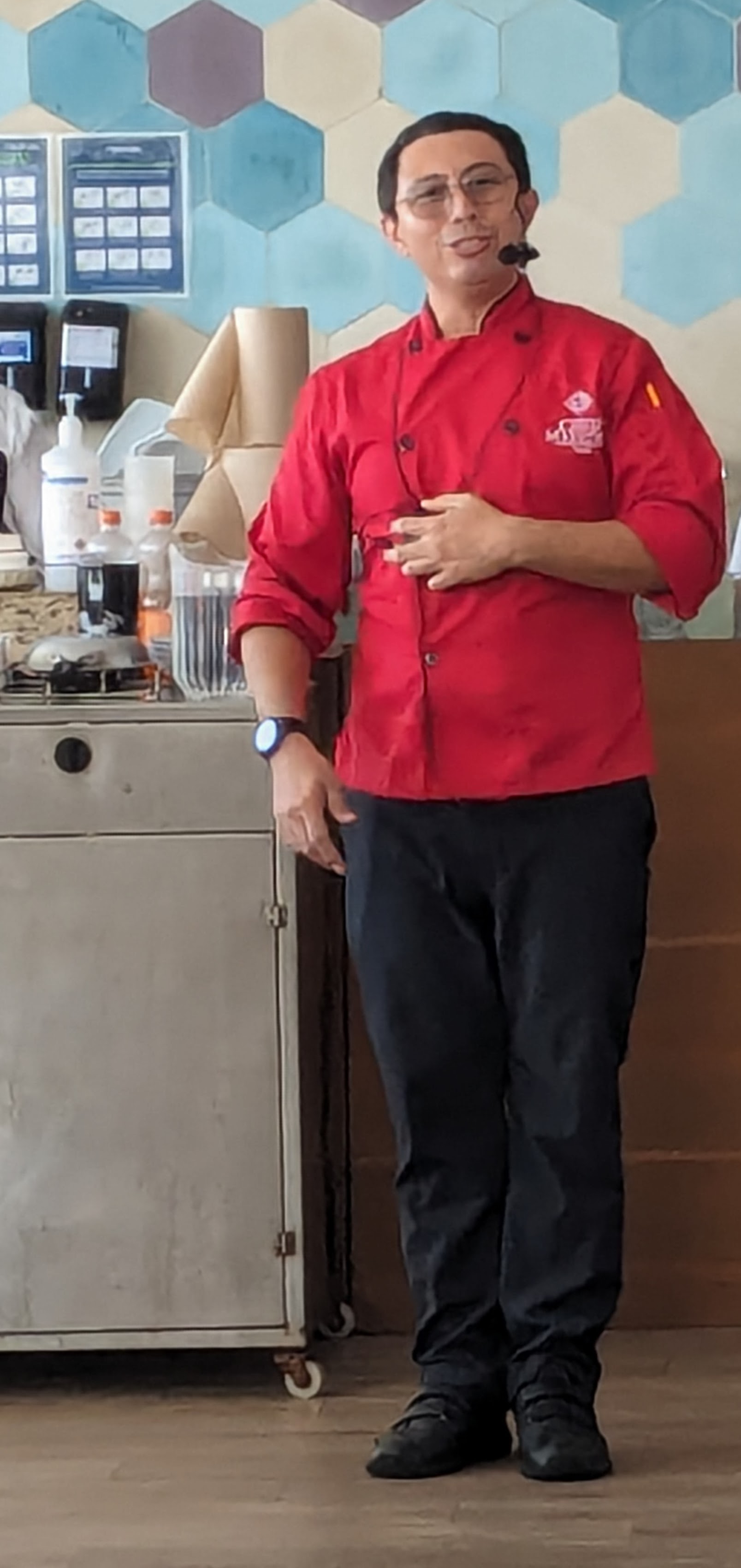
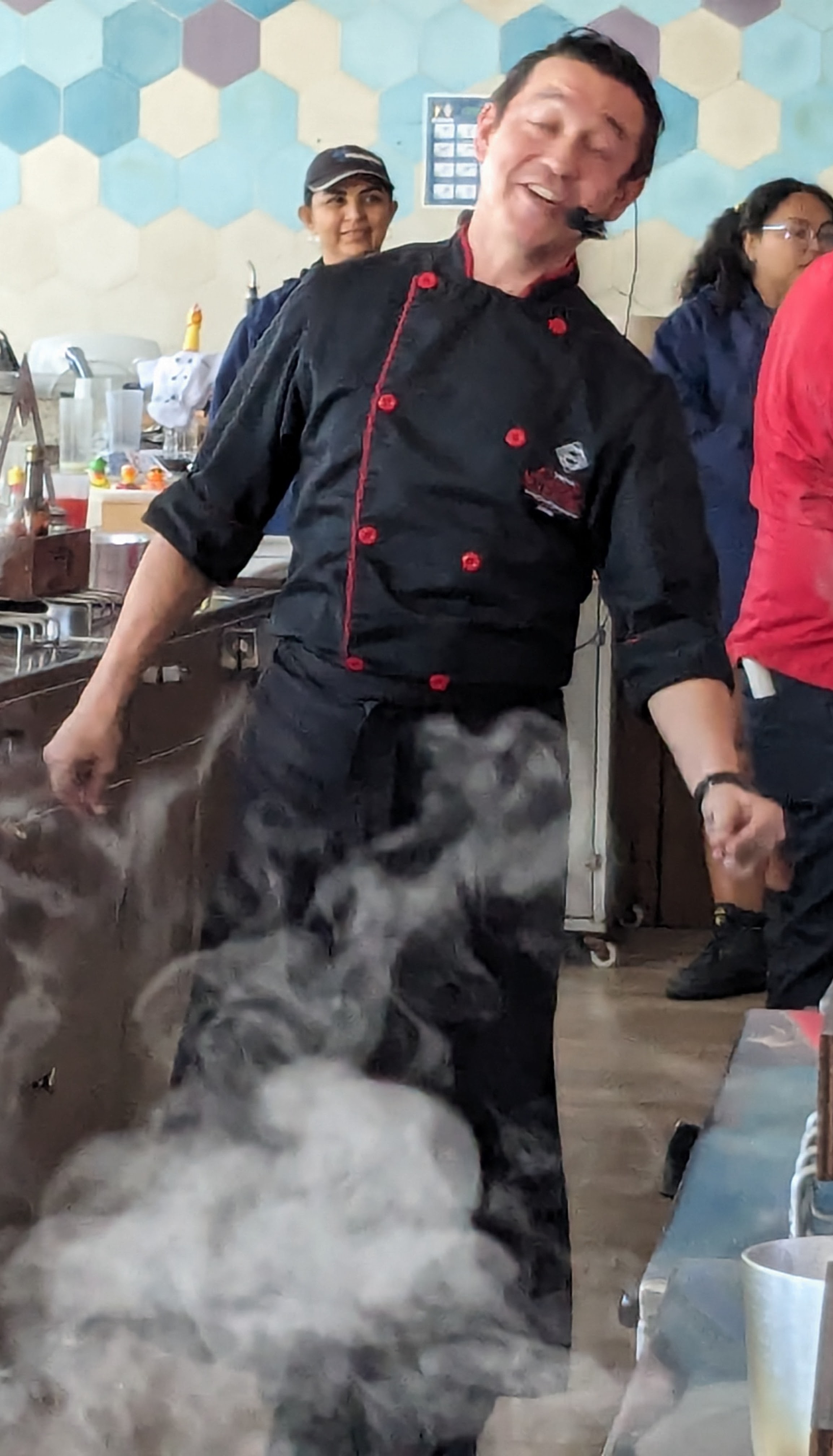
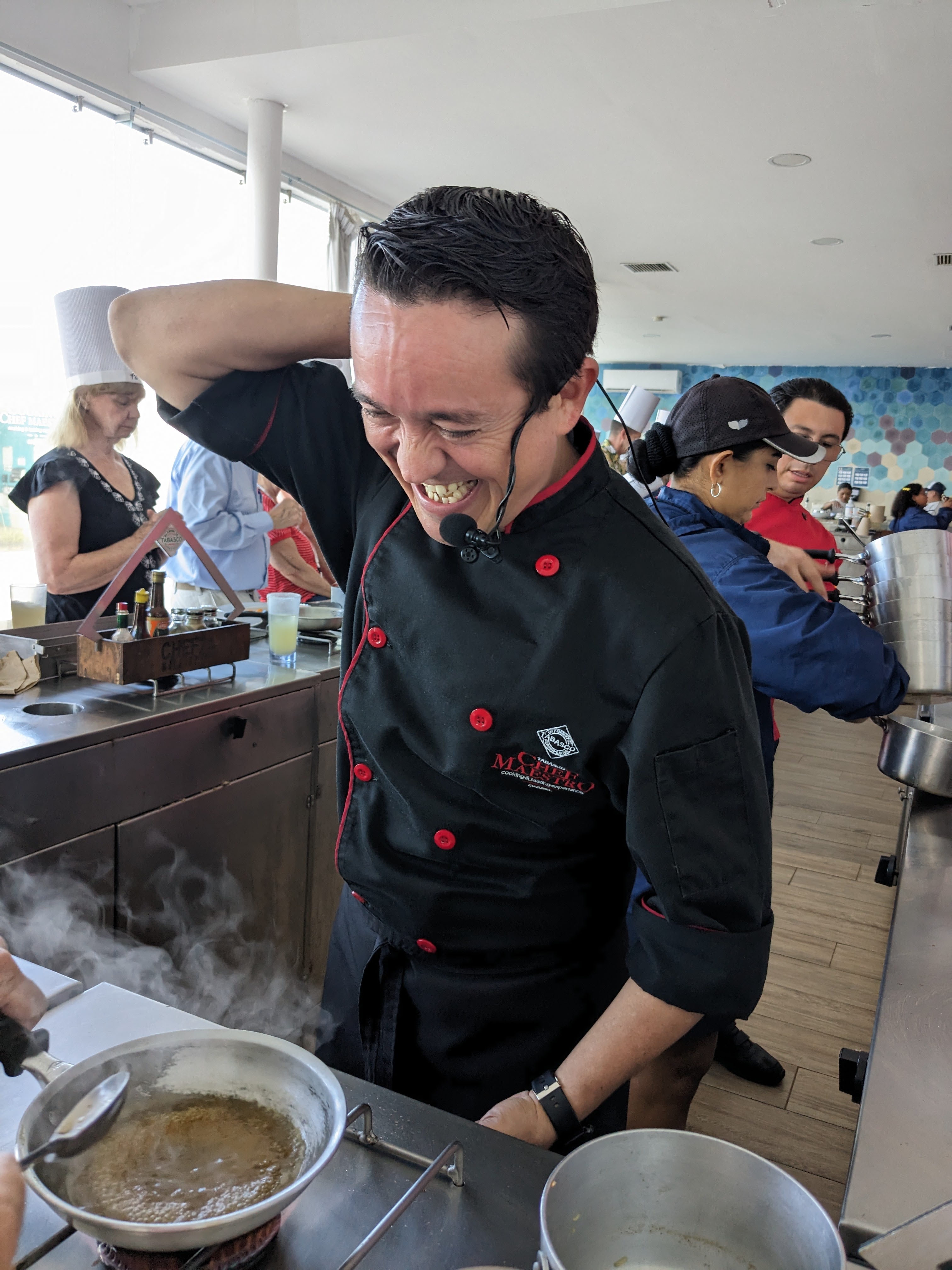
Our chef for the day, Luis Esquivel, was personable and enormously engaging — full of energy, wit, talent, and knowledge.

Let the Cooking Begin

The class may have been two-thirds “show biz” to one-third serious food preparation, but it was nonetheless informative. Chef Luis introduced us to his assistant, Antonio, and to the distinctive flavors of Mexico with an island twist. We learned how to adjust the spice to our personal preferences, and we learned that hot, spicy dishes can be tempered with cool or creamy sauces and tamed by accompanying drinks. These lessons returned with me to my kitchen.

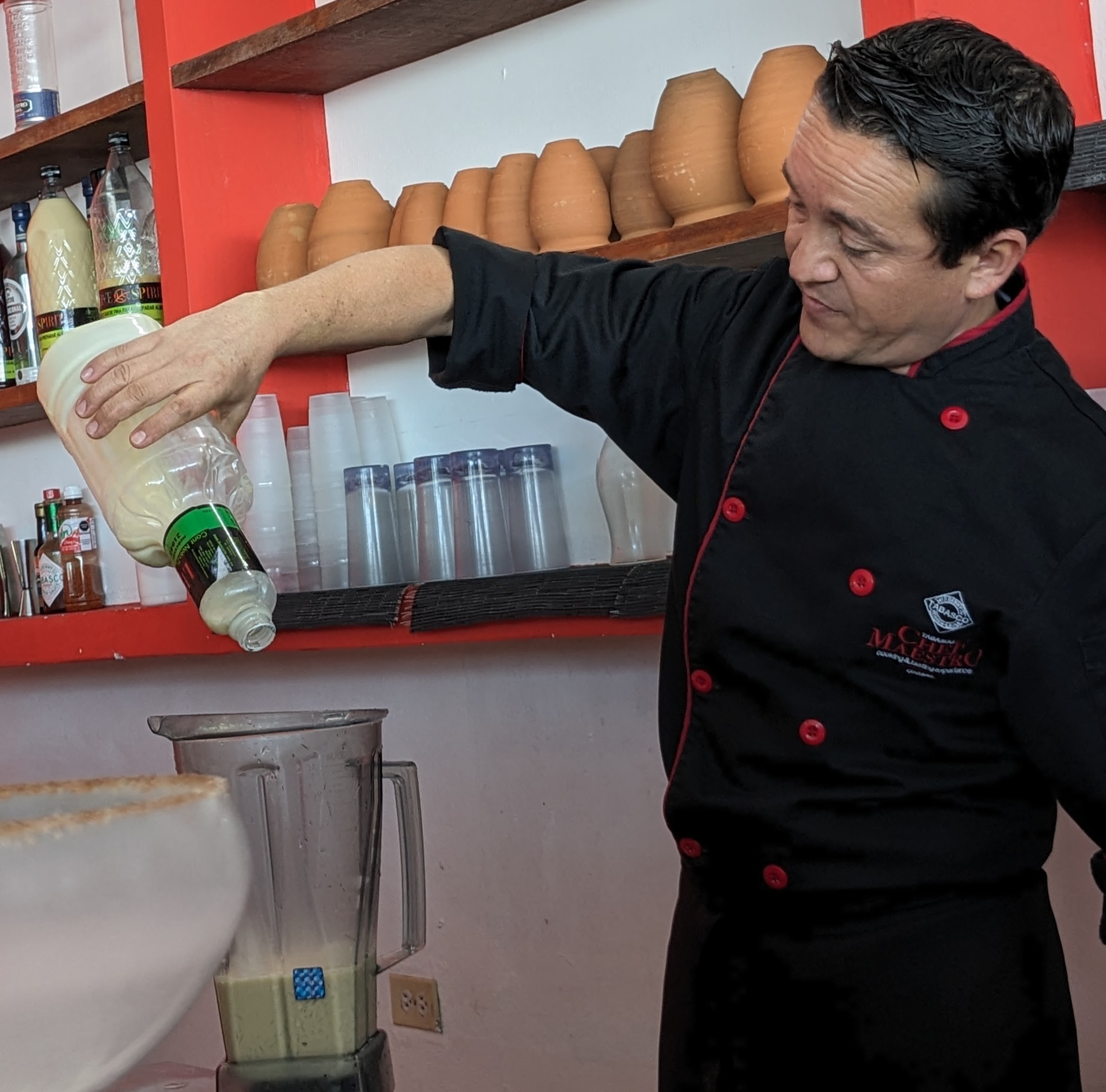
Drinks flowed freely throughout this lighthearted cooking demonstration. The first question put to each of us was “Margarita or Pina Colada?” With that, we took our places at our assigned cooking stations where ingredients had been laid out for the dishes we would prepare.
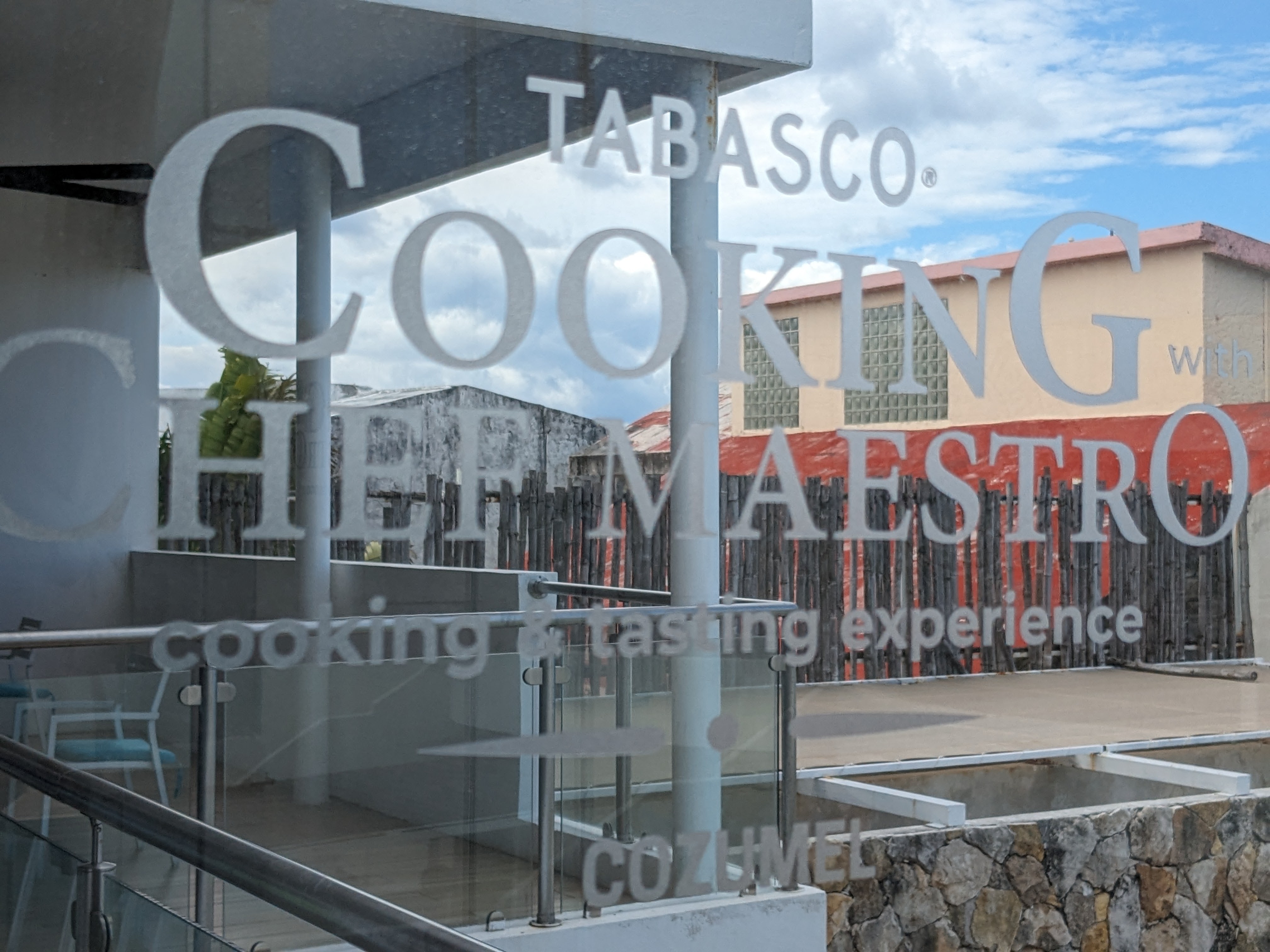
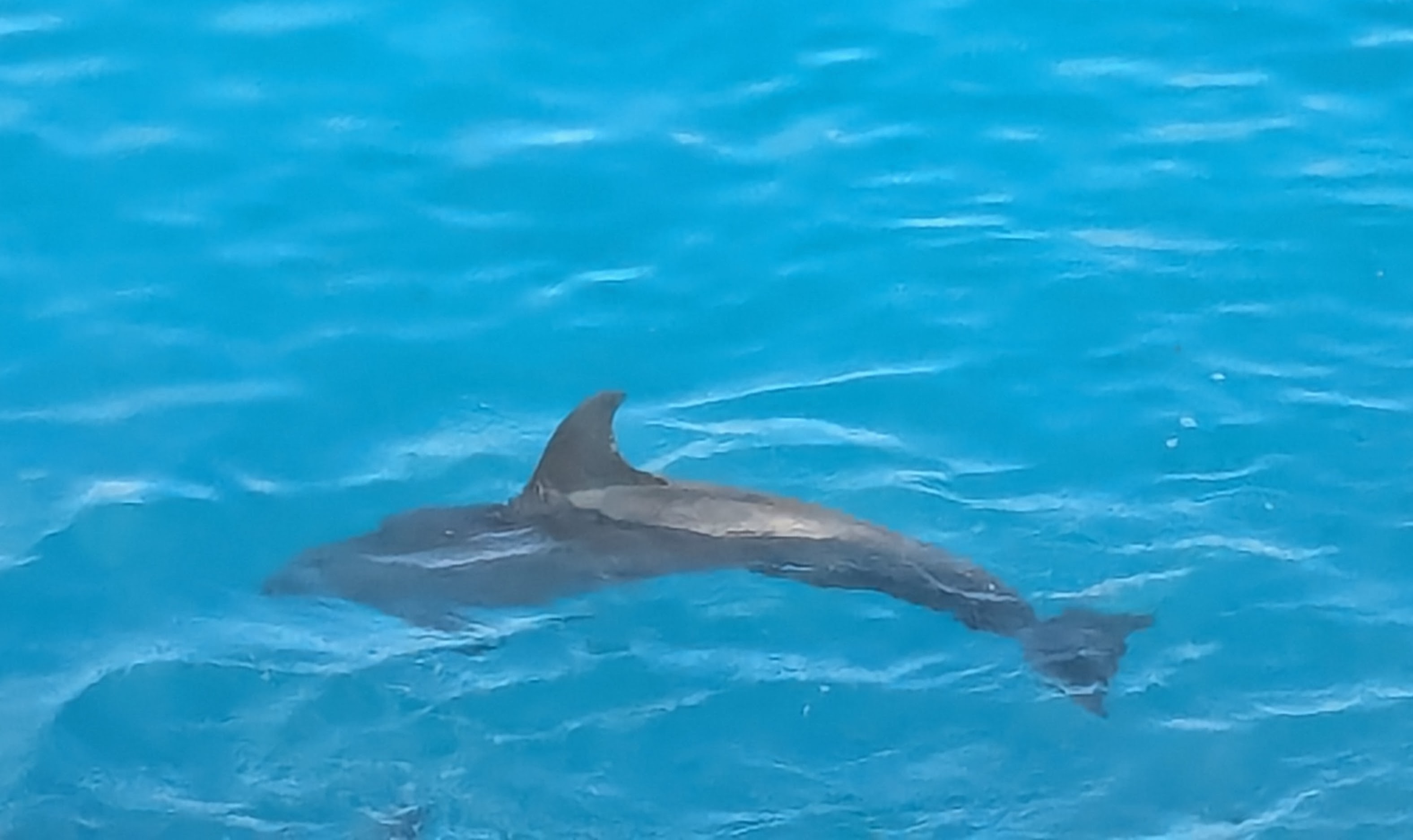
Floor-to-ceiling windows framed a view of the blue sea beyond and the hotel’s dolphin pool just below. We were tempted to simply sip on our Margaritas and watch the dolphins frolic, but there was serious food prep to be completed. Chef Luis and his sous chefs tried their best to keep us on track.

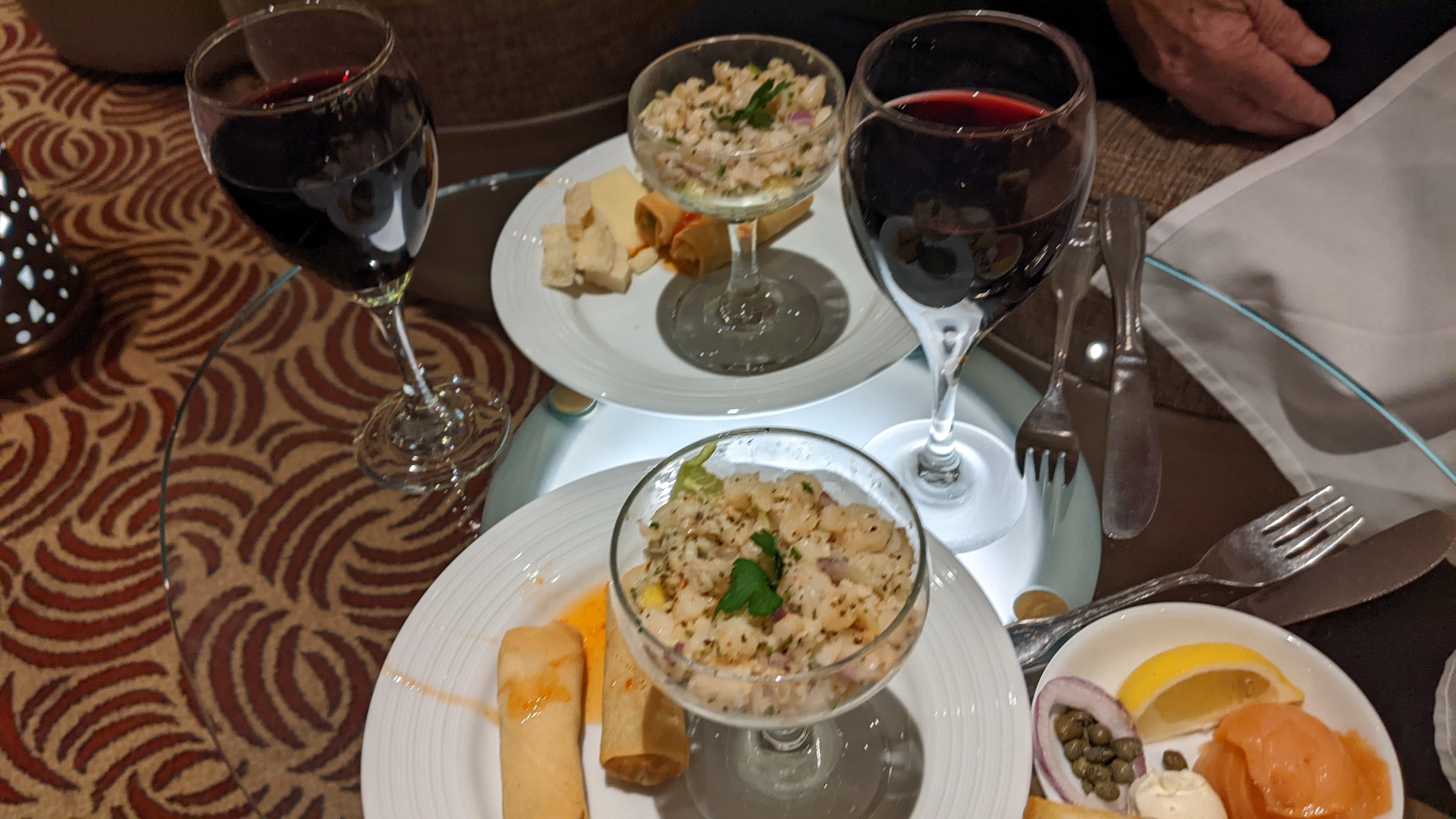
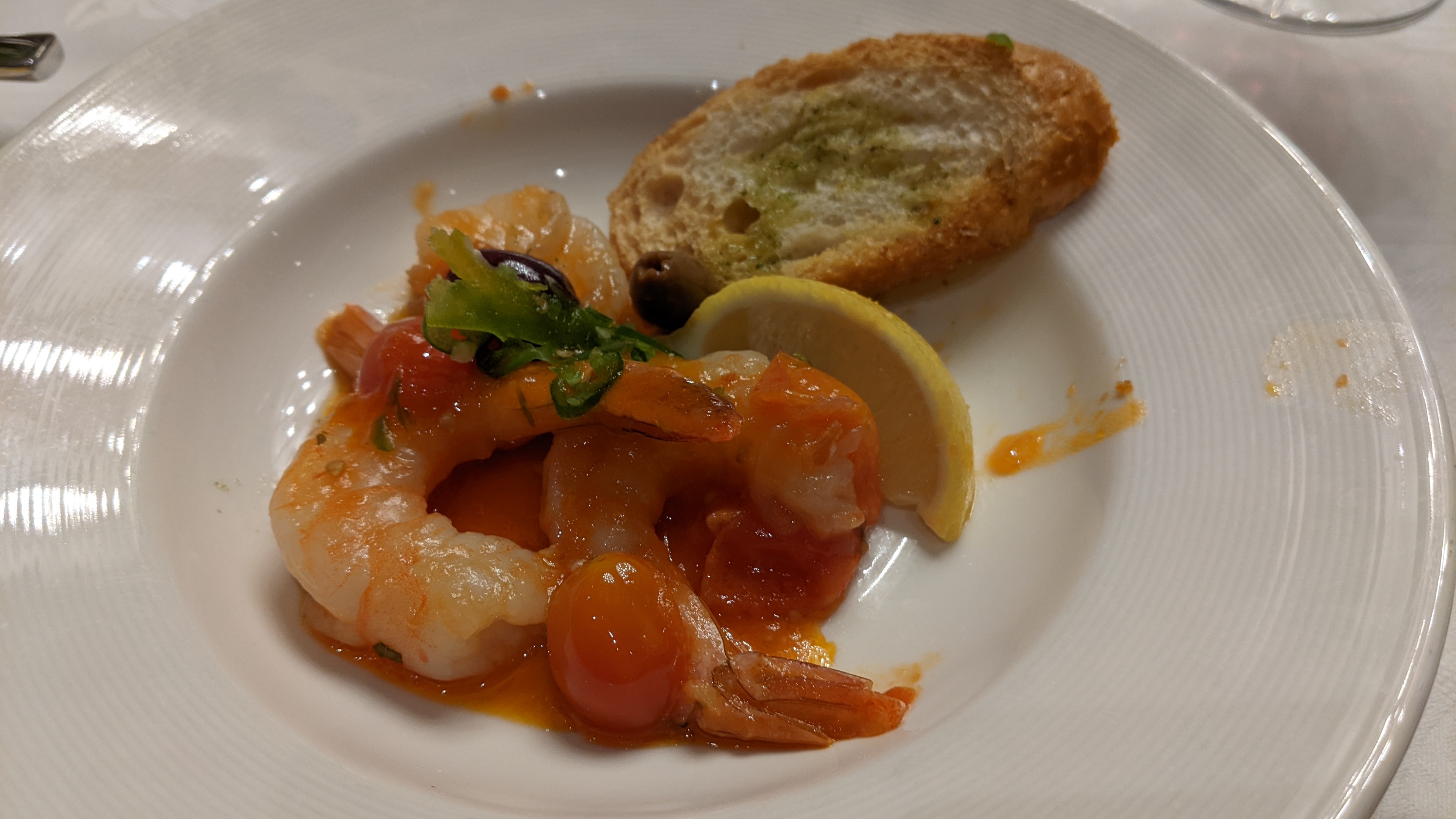
We first prepared a simple shrimp cocktail, with fresh greens, boiled shrimp, lime juice, cocktail sauce, and Tabasco to taste. It was to become the first course of our dinner, so it was put aside to chill.

The learning experience was underway.

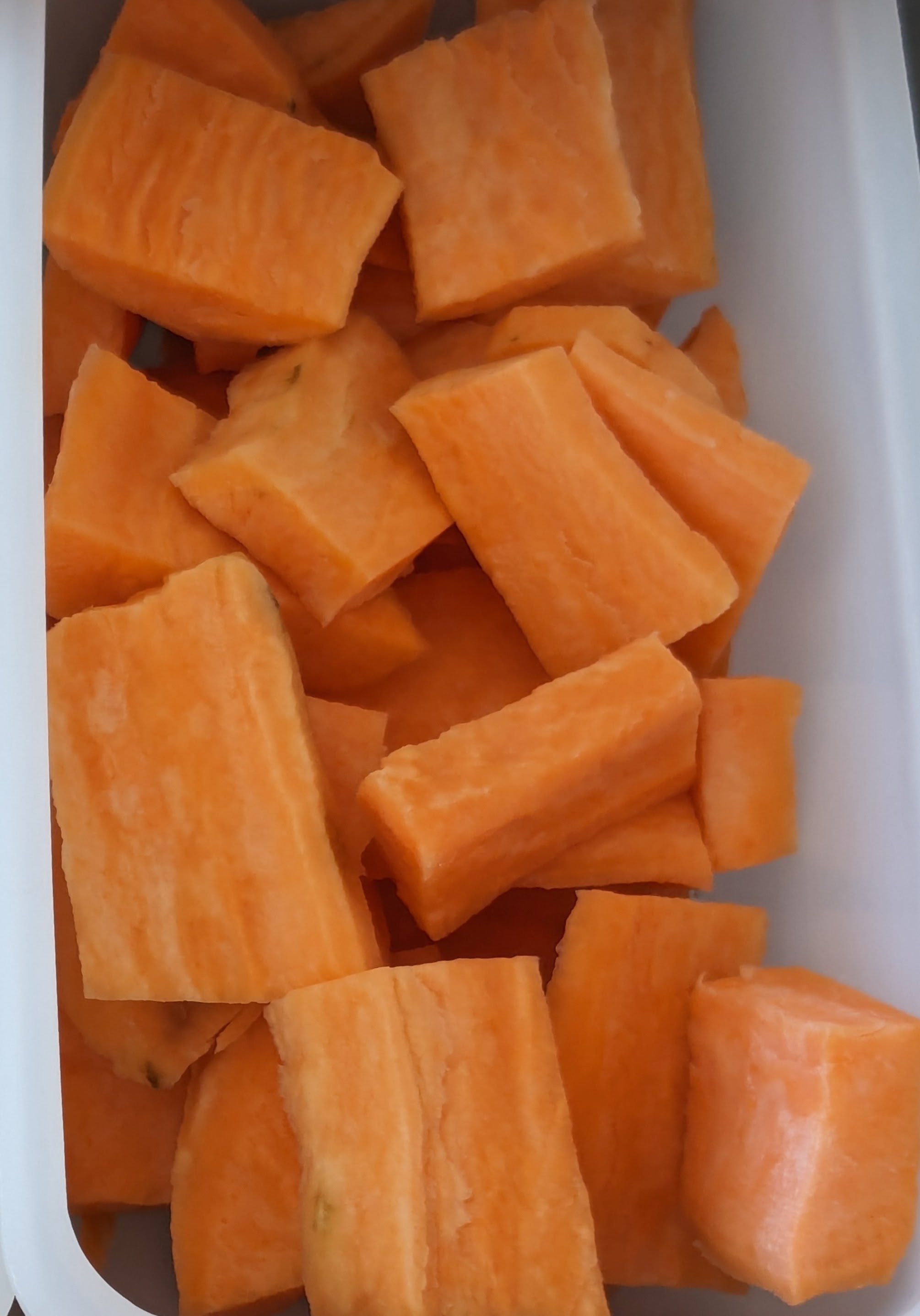
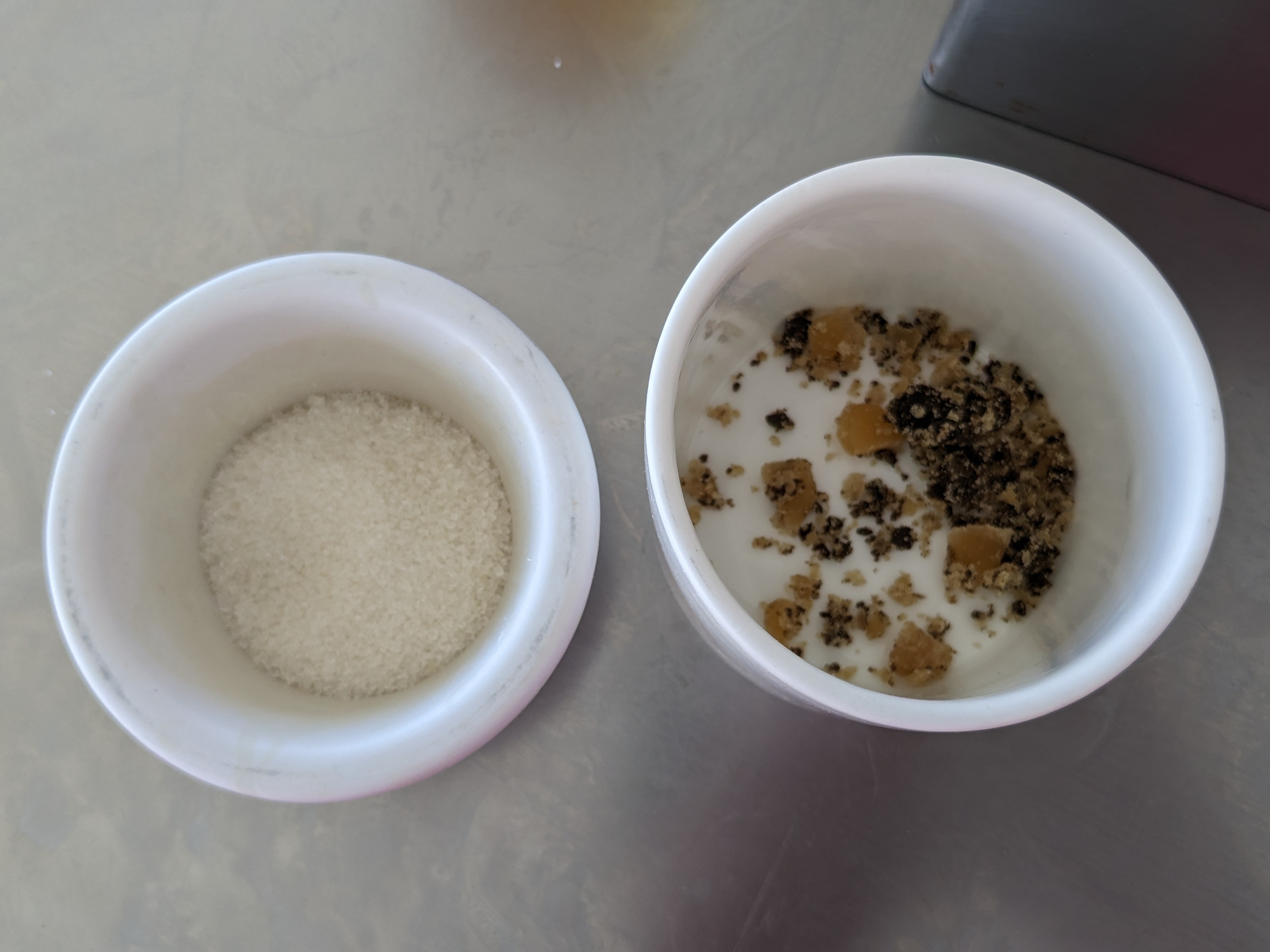
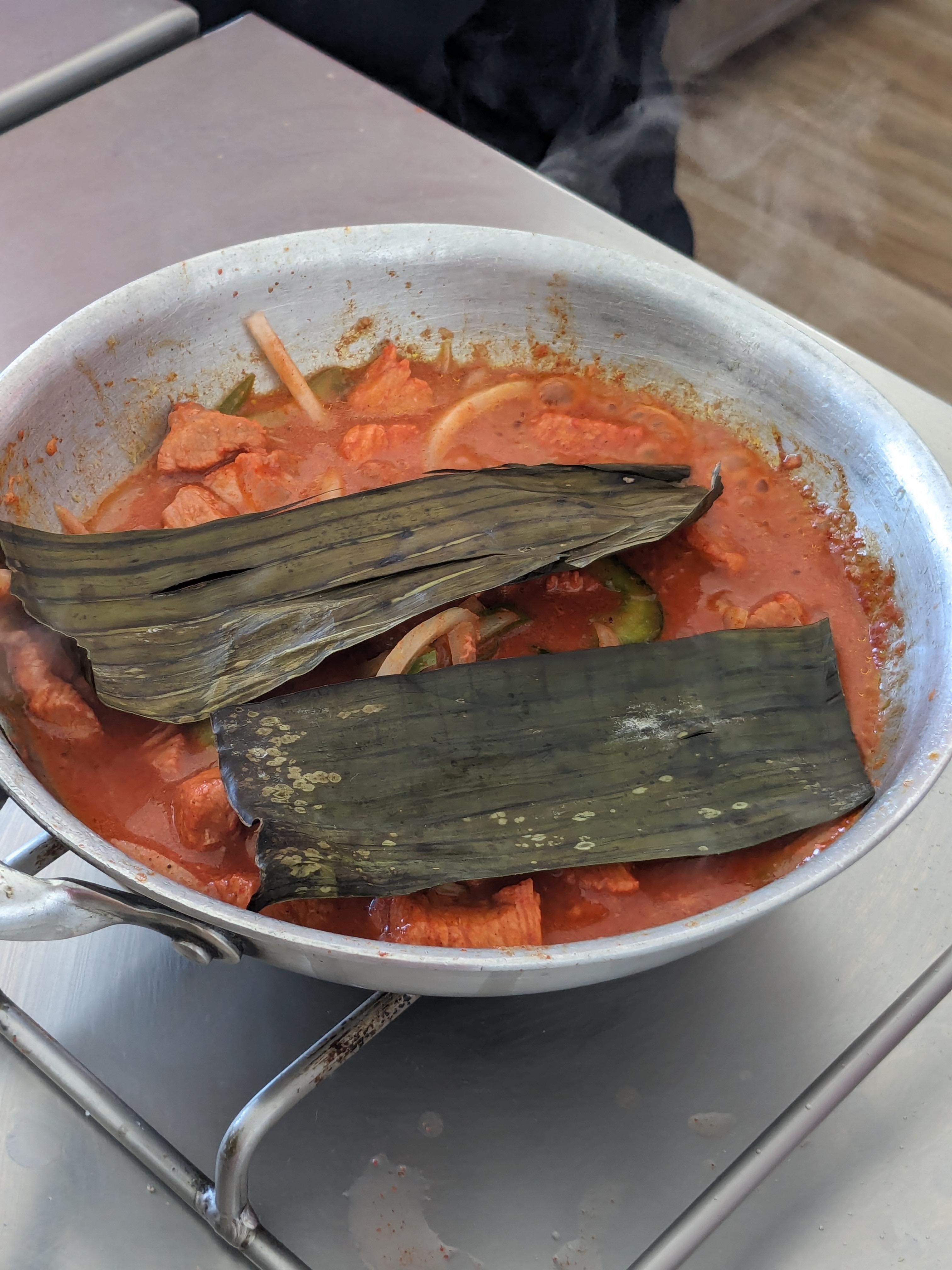
The first order of business was to identify the ingredients and discuss the flavors — cubed pork, sliced red onion, slivered bell pepper, Tabasco sauce, Worcestershire sauce, peppercorns and a clove, vinegar, catchup, cubed sweet potatoes (for dessert), shrimp, fresh lemon, raw sugar, freshly ground peppers, and other spices. We did not yet have any idea of the dishes we would be preparing, and we had little time to relax before the chef and his assistants lit the fires under our personal gas burners.
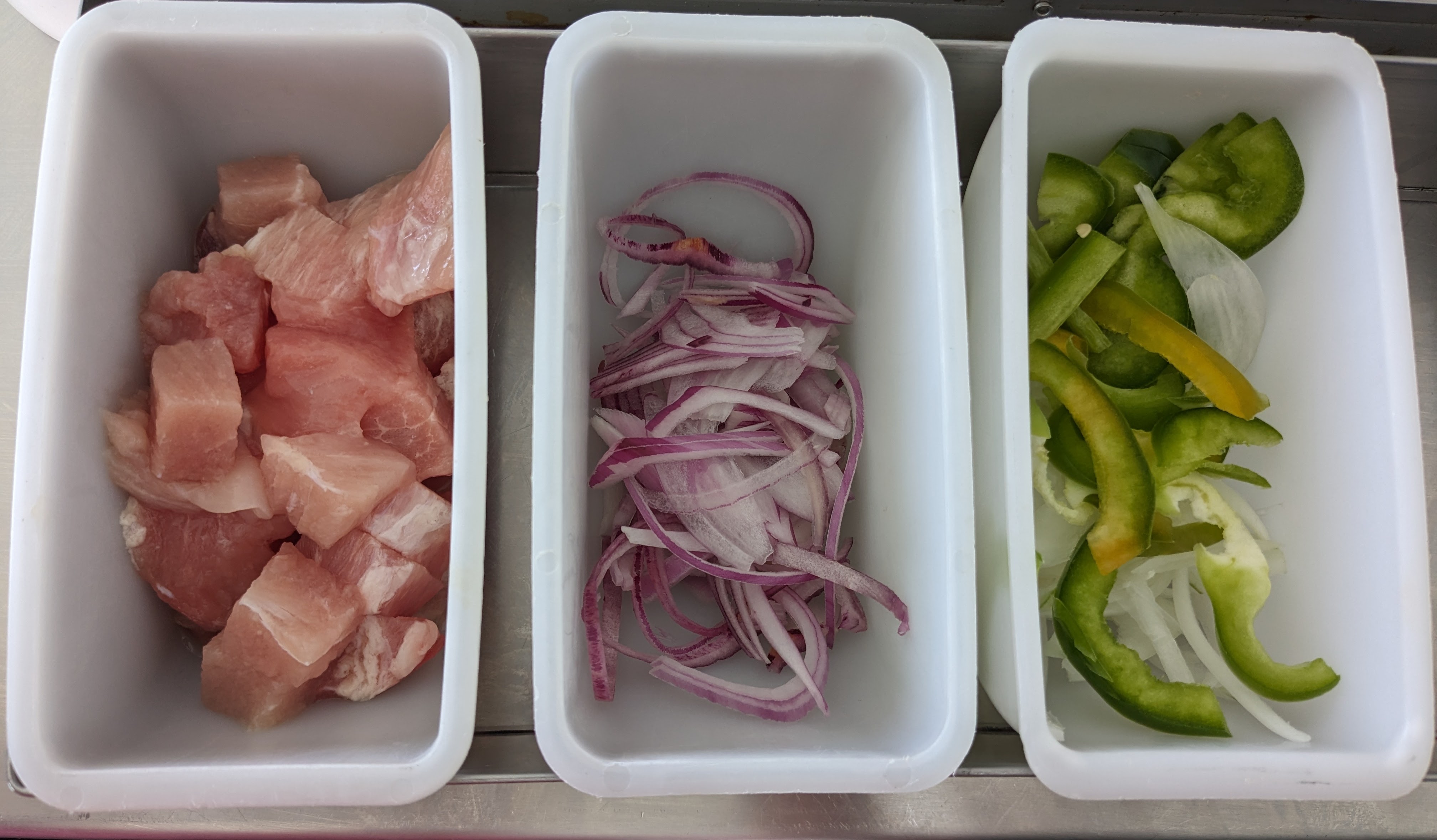
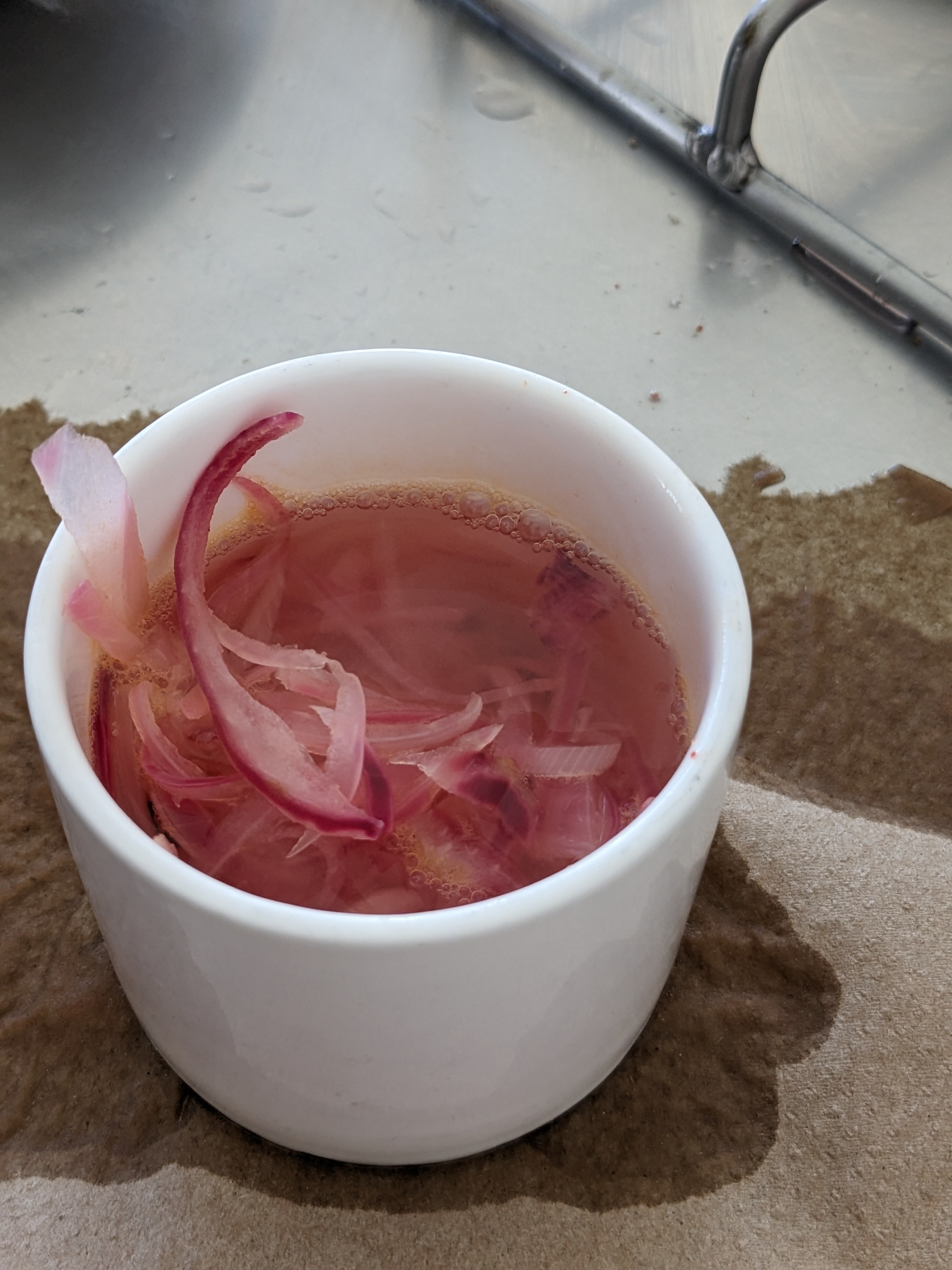
After another sip of Margarita, we set to work under the watchful eyes of Antonio and Chef Luis, who kept up a running commentary about how to do what we needed to do. We learned a technique to “quick pickle” onions that would accompany the pork dish, and we were instructed about easy ways to combine common ingredients to produce unusual flavors. We learned to use intense flavors and hot sauces judiciously.

A Frivolous Approach to Serious Cooking

We prepared simple, no-fuss dishes, perfectly suited for recreating at home. We were supposed to receive the recipes and ingredient lists by email. Alas, ours never arrived, although we have the photos and the memories. We might not be able to reproduce the menu exactly, but we feel relatively confident about how to recreate the savory flavors of the meal we enjoyed. It all begins with fresh ingredients. And, of course, Tabasco!
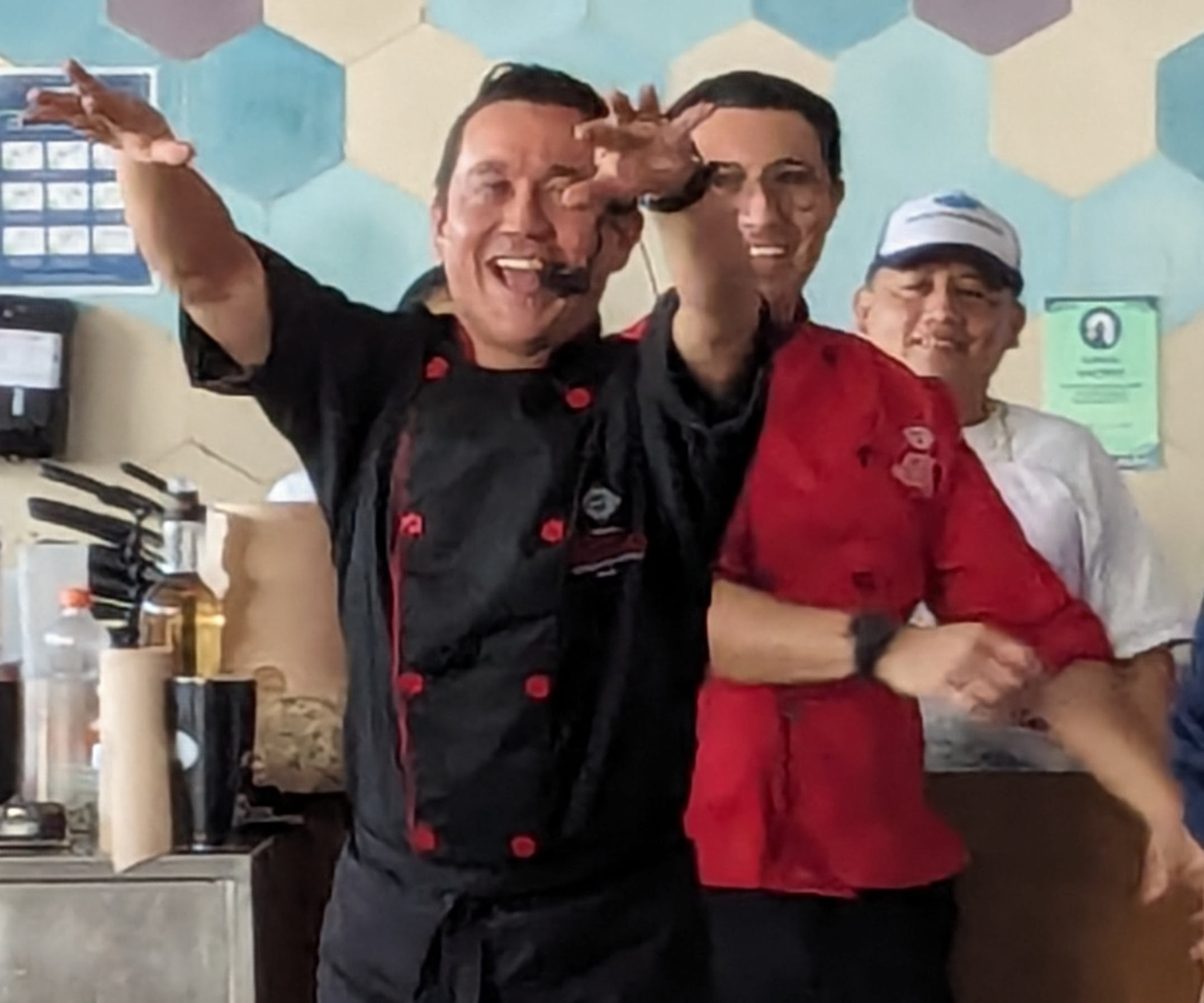
Not only did this cooking interlude provide us with an introduction to Mexican-flavored dishes, but it was high-level entertainment. It was one of the most informative and enjoyable cooking experiences we can remember. We prepared and plated a shrimp cocktail, a pork entree, and a yam dessert with sweet syrup. We consumed our fill of tasty alcoholic or non-alcoholic beverages as well. Plus, we were picked up and returned to the ship’s pier, all for a reasonable fee.

Then we moved to an adjacent dining room to consume what we had created and thoroughly enjoyed getting to know our fellow students. We drank a final toast to our accomplishment with a frothy after-dinner cocktail, prepared by Chef Luis.

The Tabasco cooking experience provided us a memorable day ashore. We gained a new appreciation for hot peppers and flavorful cooking in the region where those hot peppers originated. We left with a desire to recreate the experience for our friends and neighbors at home. And we have put some of the tips we brought home to good use.

This pampering “getaway” cruise was focused on food and relaxation. My next post, however, is about a much different excursion during our port call in Roatan, the small island off the coast of Honduras. Roatan is known for its reef diving and its remarkable clear water. We discovered much more during our island tour with a private guide.

I explain what was so special about our day on Roatan in Uncovering an Island‘s Hidden Treasures, scheduled for publication next week.

Follow me to receive email notifications about that experience and about future travels. I hope you’ll continue to join me for good food and memorable times in faraway places.
Time to Refresh and Renew

Cruising vacations are all about what you make them.

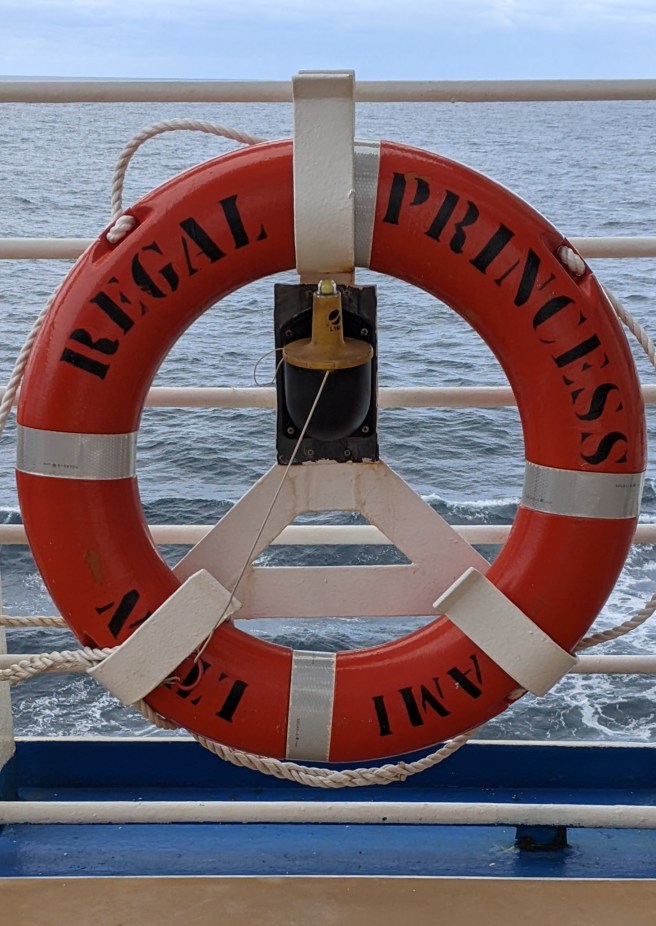
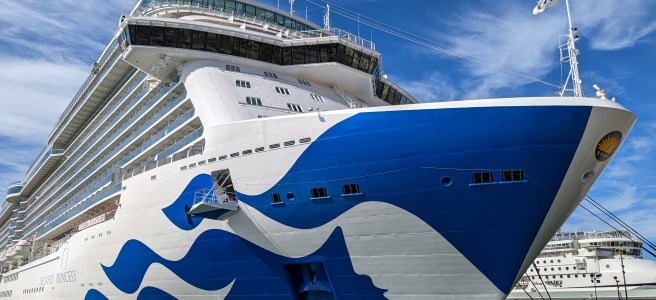
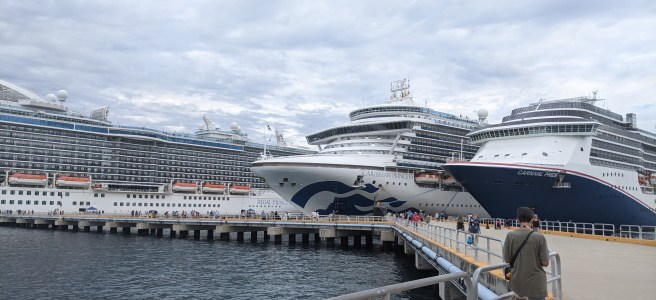
Early in 2024, my husband and I booked a week-long cruise aboard Regal Princess, sailing out of Galveston, Texas. At the end of January we were looking for sun and warmth, a day or two of beach time, and serious relaxation. We found all that and more. Much more, in fact. In addition to bounteous food and entertainment aboard the ship, we booked three port excursions. Two of them were distinctive because they involved both food and cultural insights.

We went to escape the cold days and dreary skies of home; and we returned home with “adjusted attitudes,” looking forward to the early signs of spring . We knew it would be a while till longer, warmer days were upon us, but we felt ready to await the change of seasons after our brief hiatus.

I’ll be writing about all three of the ports — Costa Maya, Roatan, and Cozumel — over the next two weeks. Follow me now to receive a notification about those posts.

As much as we enjoy all types of travel, there is little that trumps an opportunity to spend a few days at sea. It’s not about the destinations. We are “old salts,” who for many years spent as much time as possible aboard our personal cruising motoryacht. The world’s seas still call to us. But now, we let other captains take the helms.

And the Regal? Oh, Yes

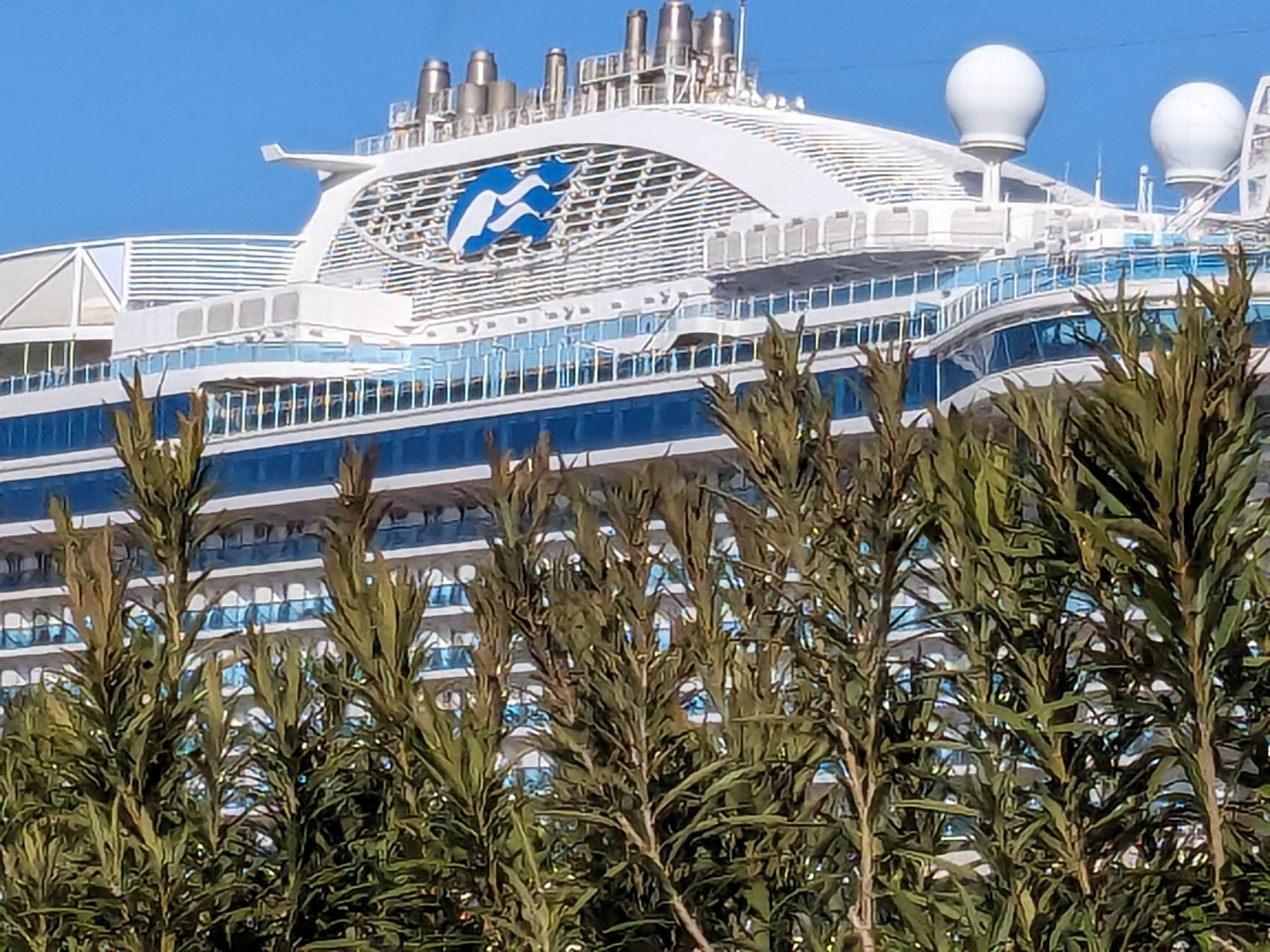
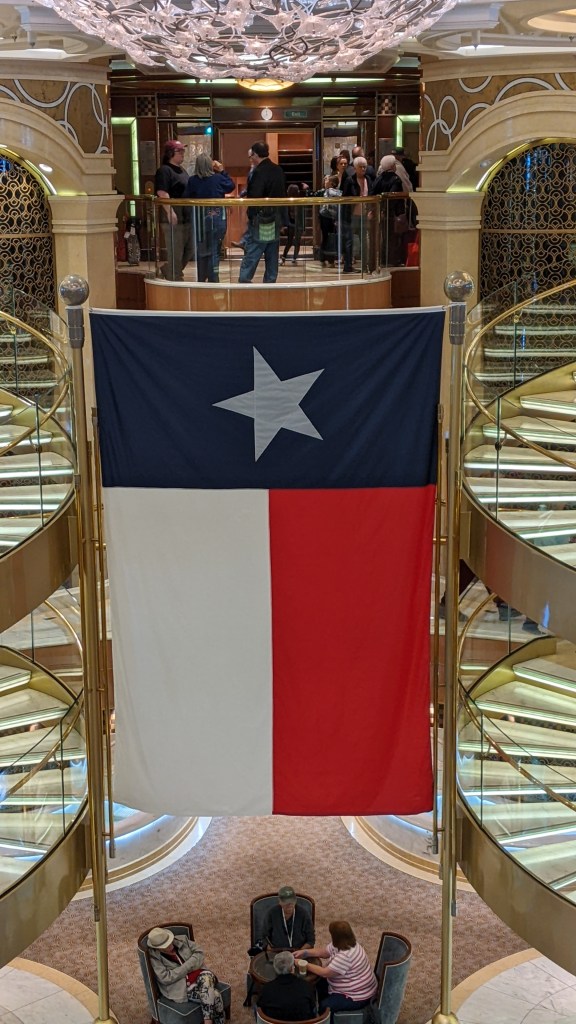
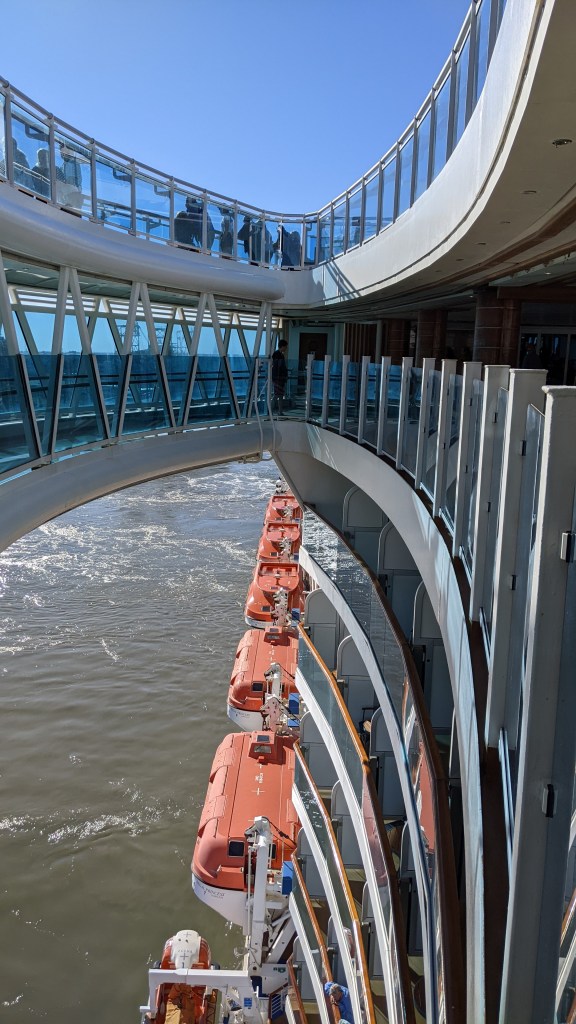
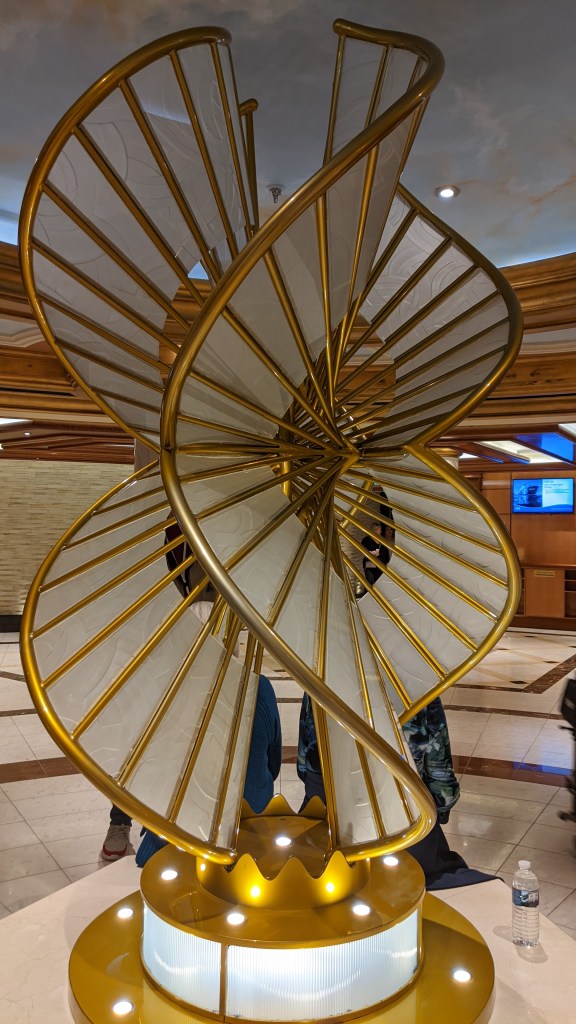
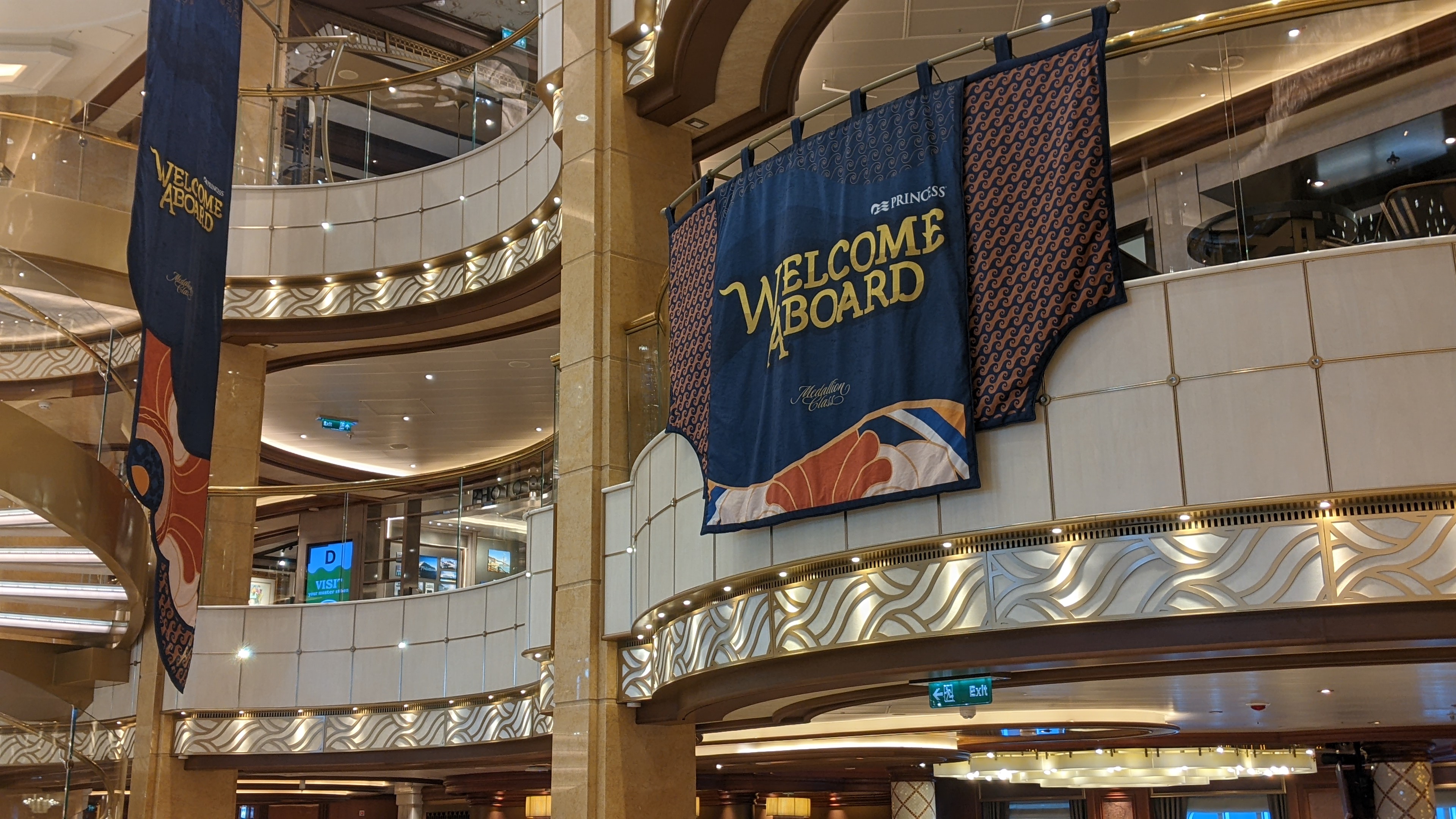
Regal Princess is an elegant vessel, christened in 2014 by the original cast of “The Love Boat.” She is large and impressive with a maximum passenger capacity of 3560, a crew of 1346, and 19 decks. But, because of the design, there are intimate spaces both on deck and indoors where one can find comfortable seating and quiet surroundings. Public spaces are well-proportioned; in our experience, the ship never felt uncomfortably loud or crowded. We, however, could retreat to our private balcony had we wanted time to relax, read, or simply watch the sea drift by. As with all modern cruise ships, there are multiple pool areas, restaurants, lounges, gathering spaces, and enough activities to keep people busy from early morning to late at night.

Ours was a short cruise, on an itinerary we had traveled previously. We disembarked at each port, but we thoroughly enjoy the sea days, and have, on previous cruises, remained aboard even while in port. We appreciate the classic lines on the ship, and the familiar public spaces that characterize the ships of the fleet. Princess is one of our favorite cruise lines, so we are familiar with most of the line’s standard offerings, but the Regal has at least a couple of unique features. One is the interior balcony overlooking the casino — it’s possible to watch the action without actually being a part of it!

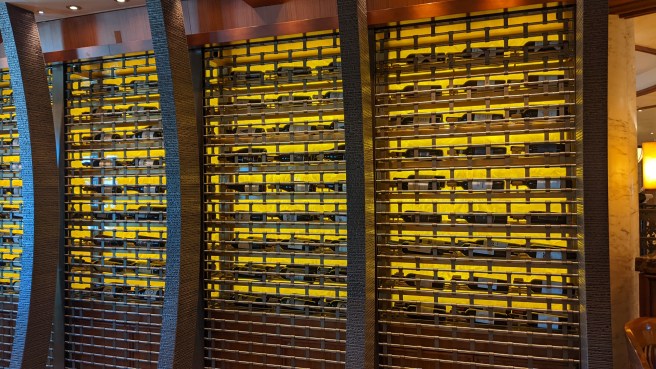
Food, Wine, Spirits, and Entertainment

As on all Princess cruises, the food is an experience, whether you choose to eat every meal in one of the dining rooms or opt for the World Marketplace Buffet. You can also eat and snack your way through the day at multiple other onboard venues like Alfredo’s Pizza, the International Cafe, Gelato, or the Ocean Terrace Seafood Bar. Superb specialty restaurants — Crown Grill Steakhouse or Sabatini’s — are also available.

We chose one of the three main dining rooms for each of our dinners, and some of our lunches, aboard Regal Princess, but we also visited the extensive Deck 16 buffet several times for brunch or lunch — and we sometimes snagged cookies and fruit to consume later in our cabin — I find the oatmeal cookies irresistible!

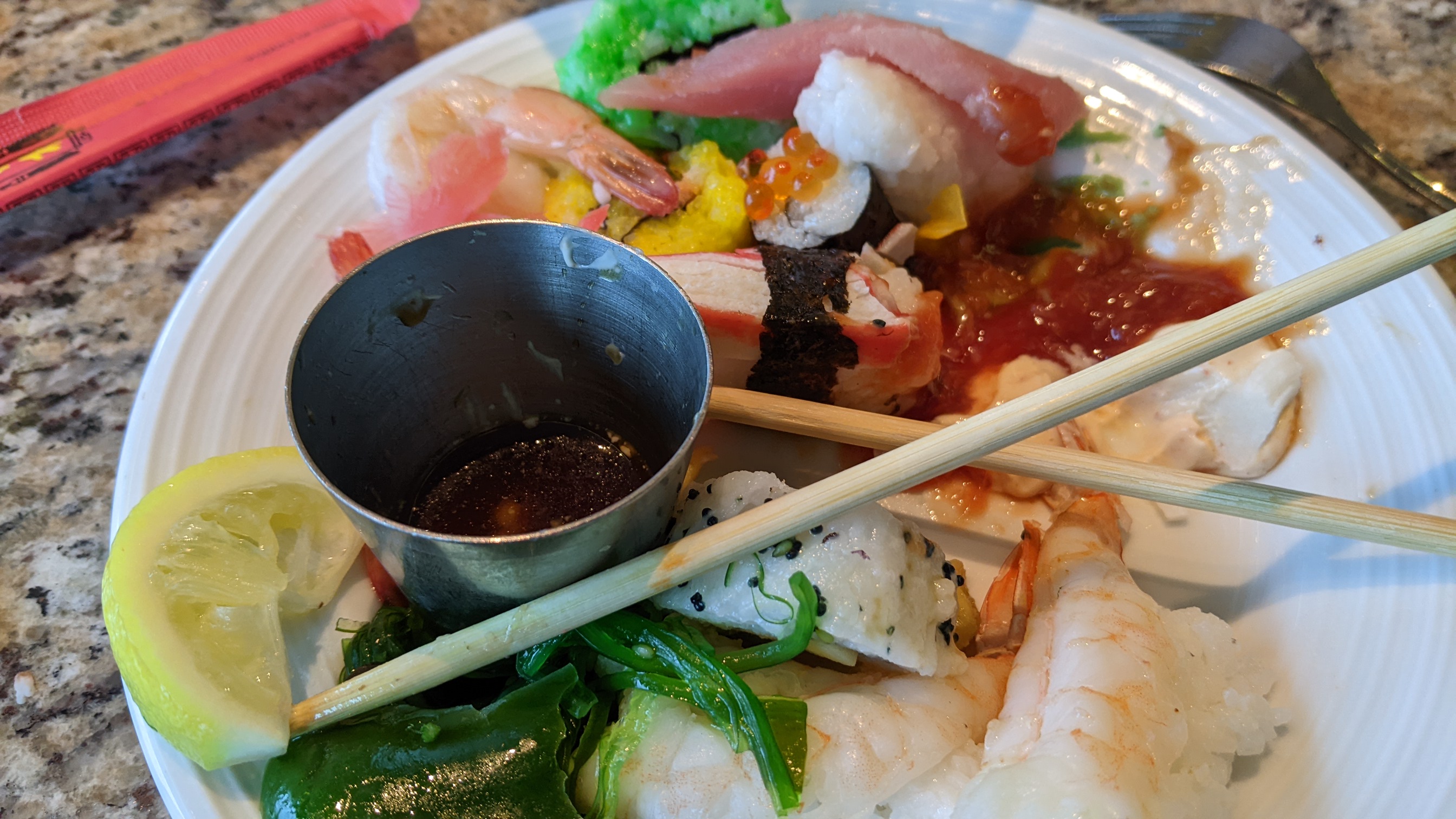
A spectacular feature aboard Regal one day on this cruise was a midday sushi buffet — What a feast!

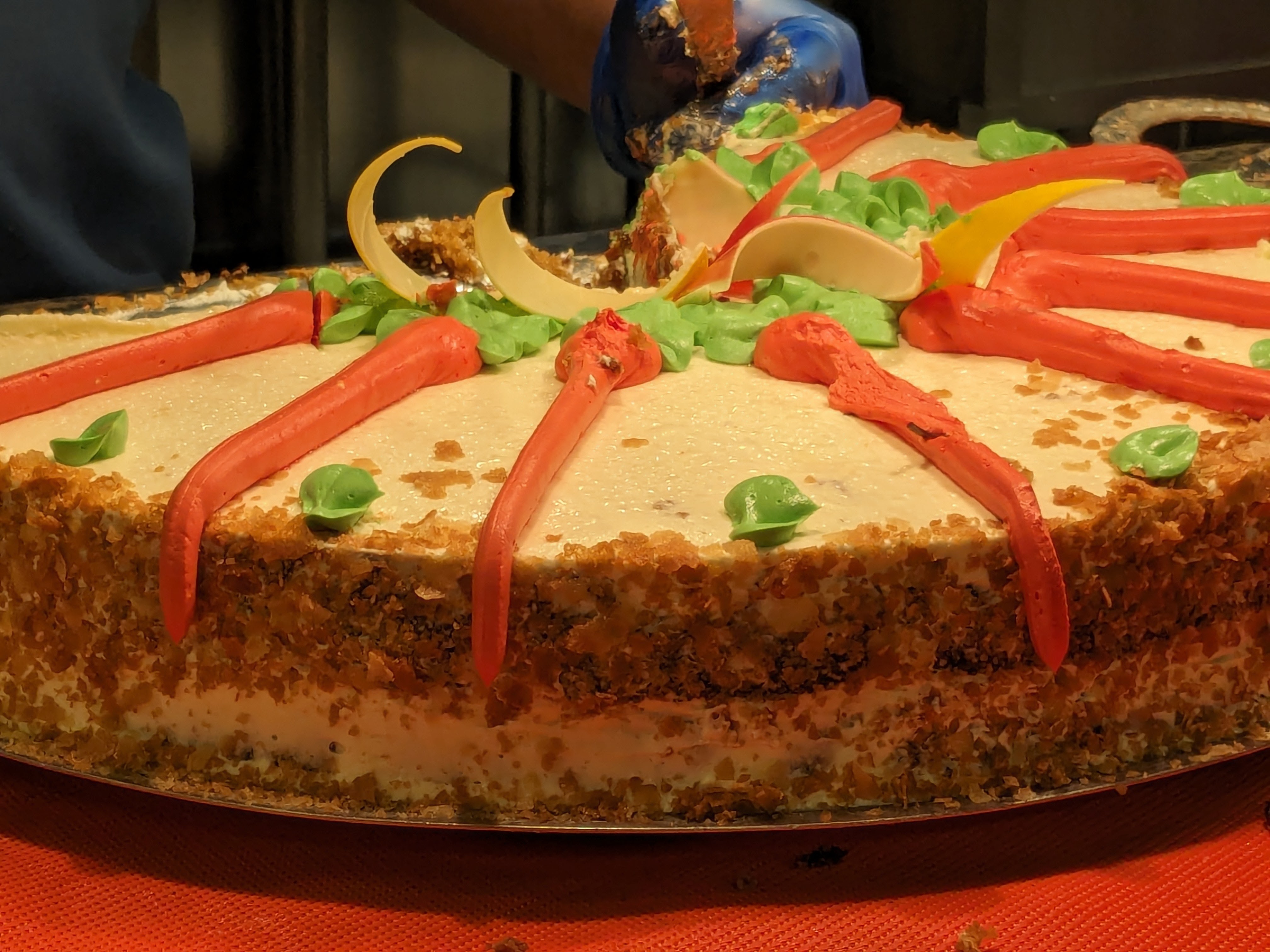
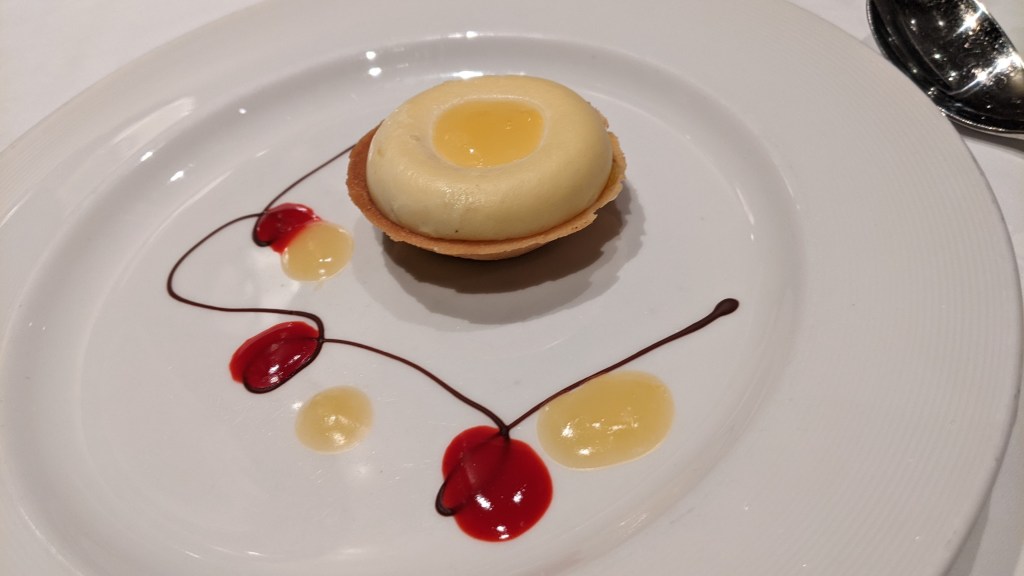
And the desserts! Need we say more?

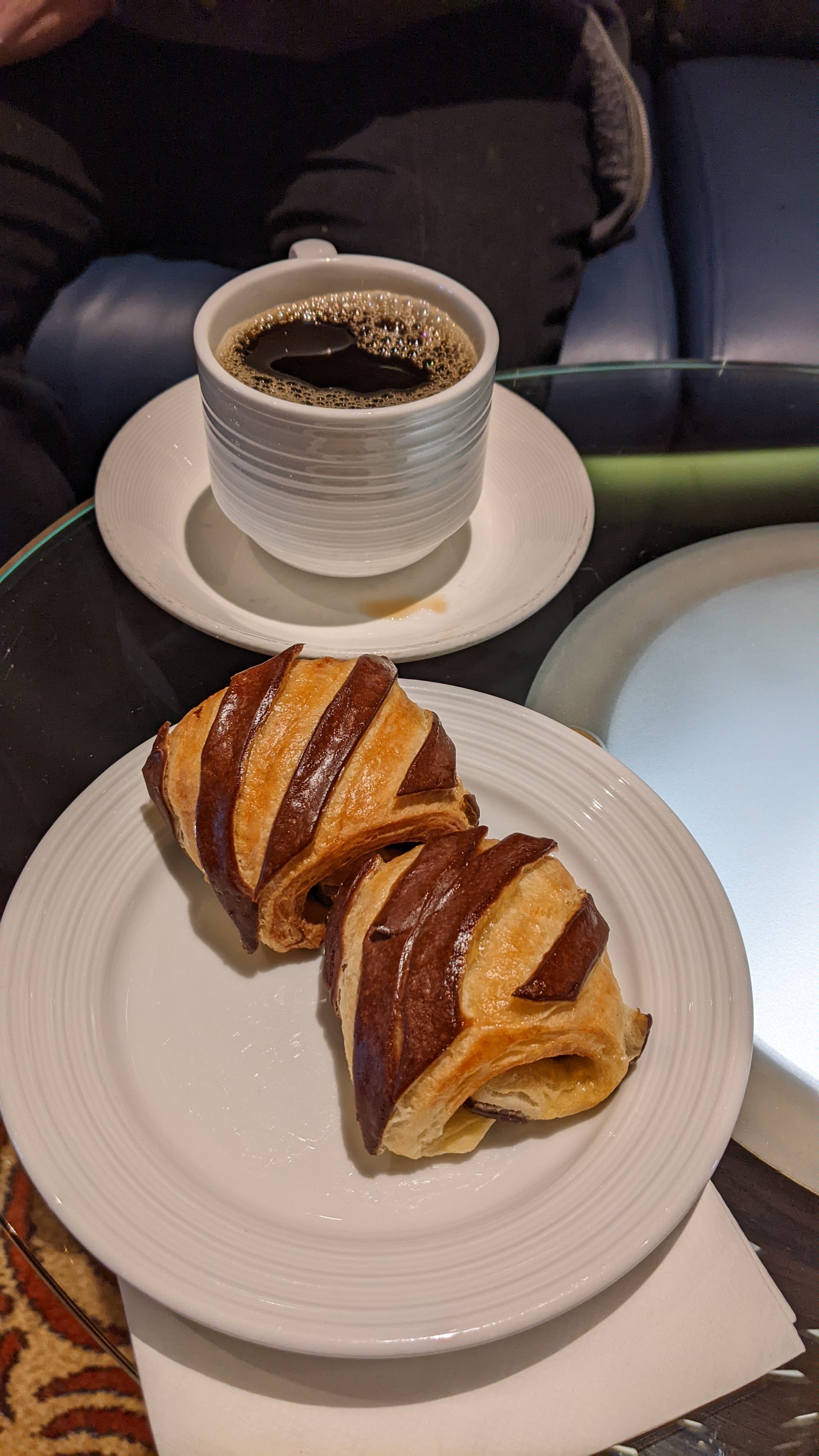
One of our favorite cruise traditions is to order a light breakfast, usually croissants, fruit, and coffee, delivered to our stateroom each morning. It’s a pampering, relaxing way to begin the day and a tradition we can’t seem to break. But why would we want to? But that didn’t mean we didn’t find other places aboard to enjoy breakfast and coffee.

We visited the International Cafe in the Piazza for occasional snacks and specialty coffees. We also enjoyed meeting other passengers, sharing stories, and listening to music in several distinctive cocktail lounges aboard this ship.

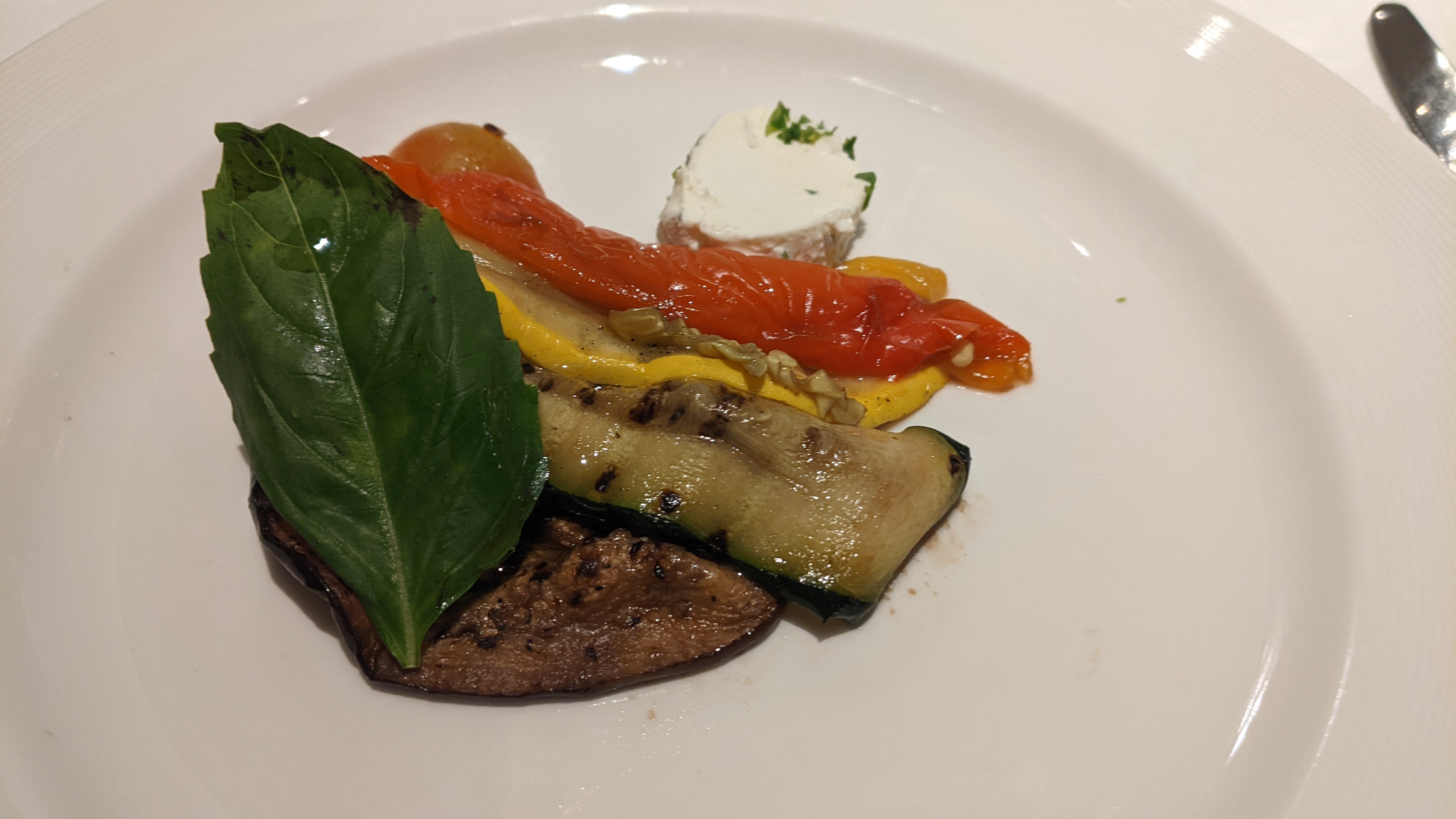
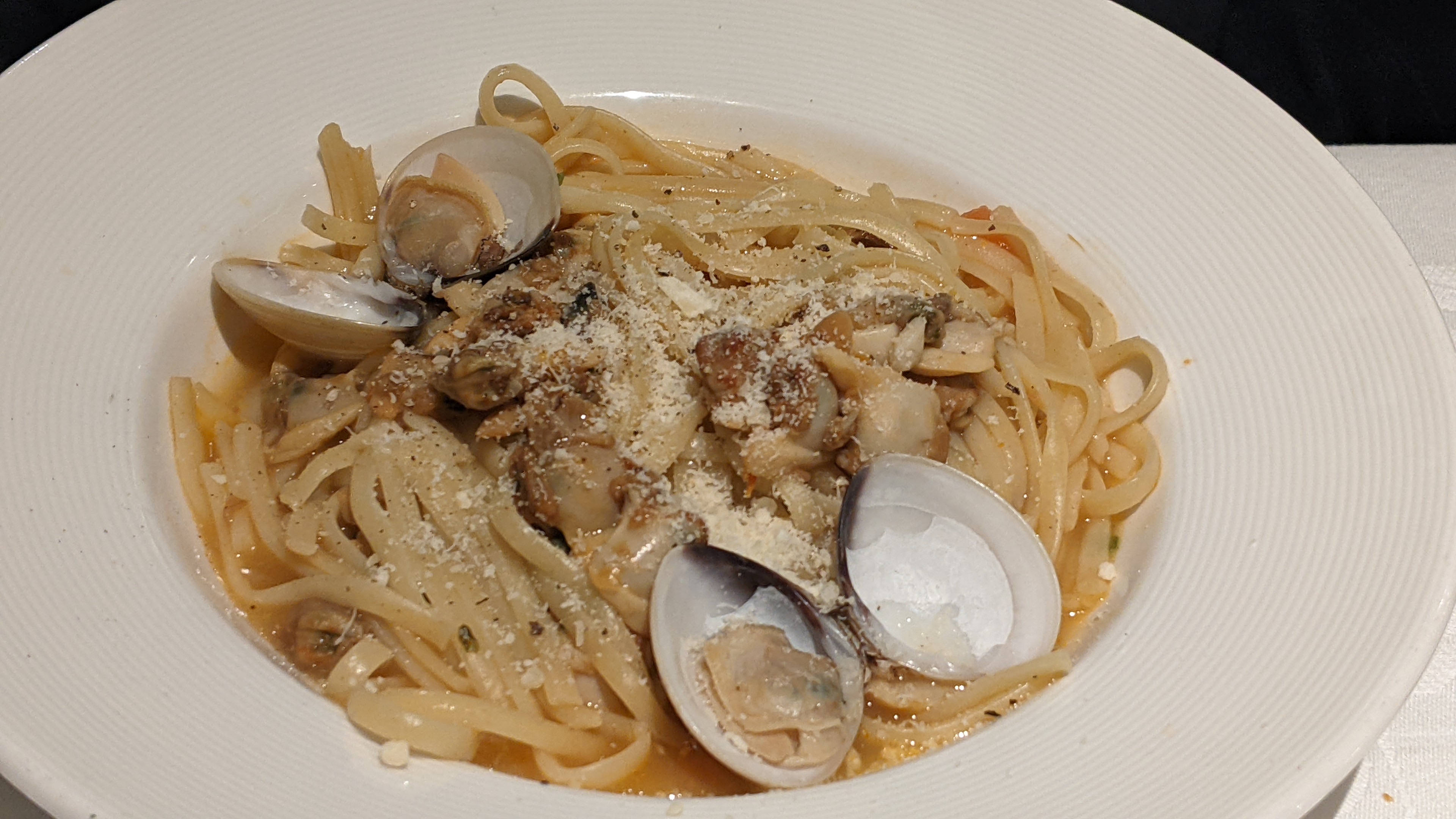
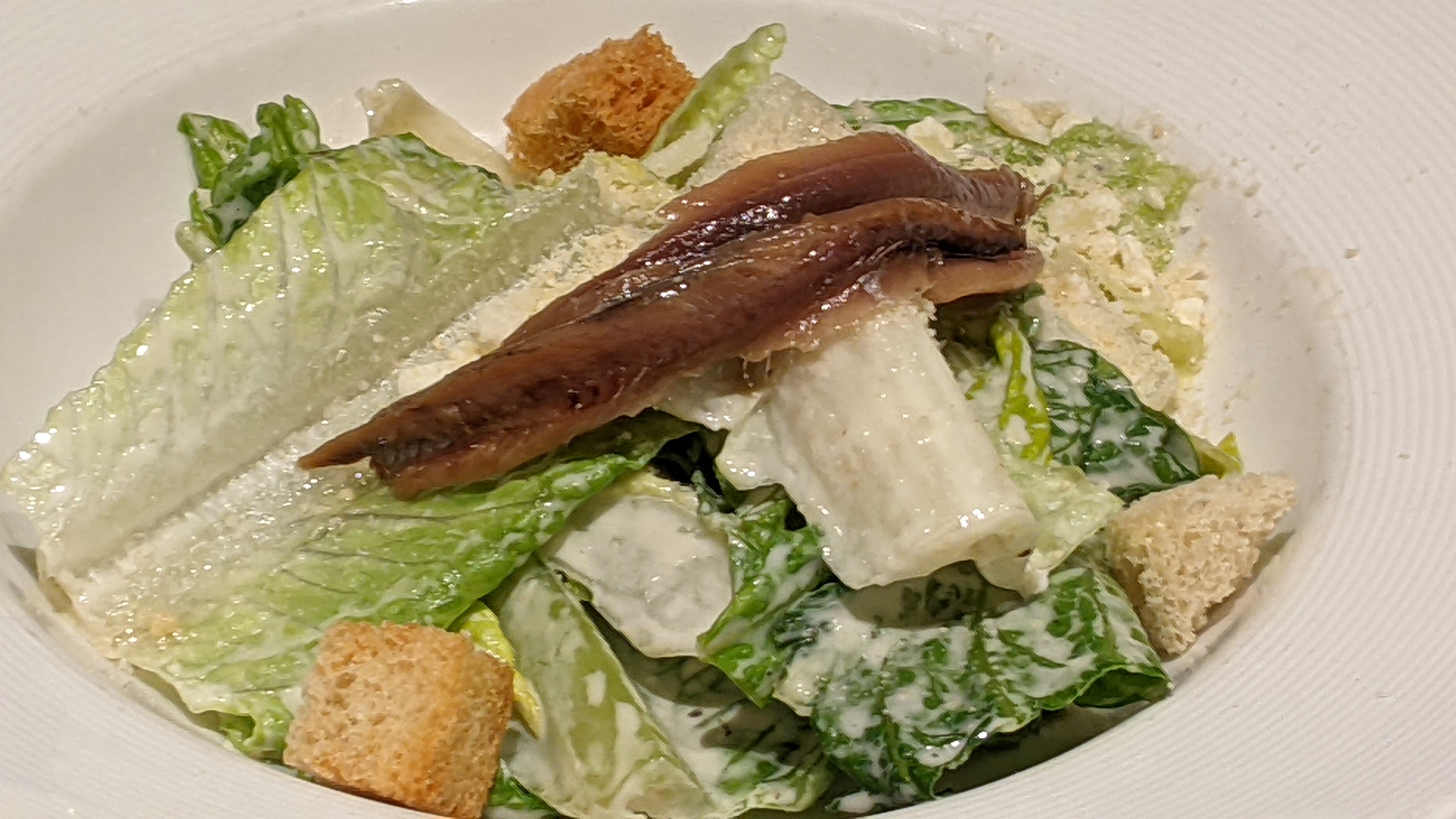
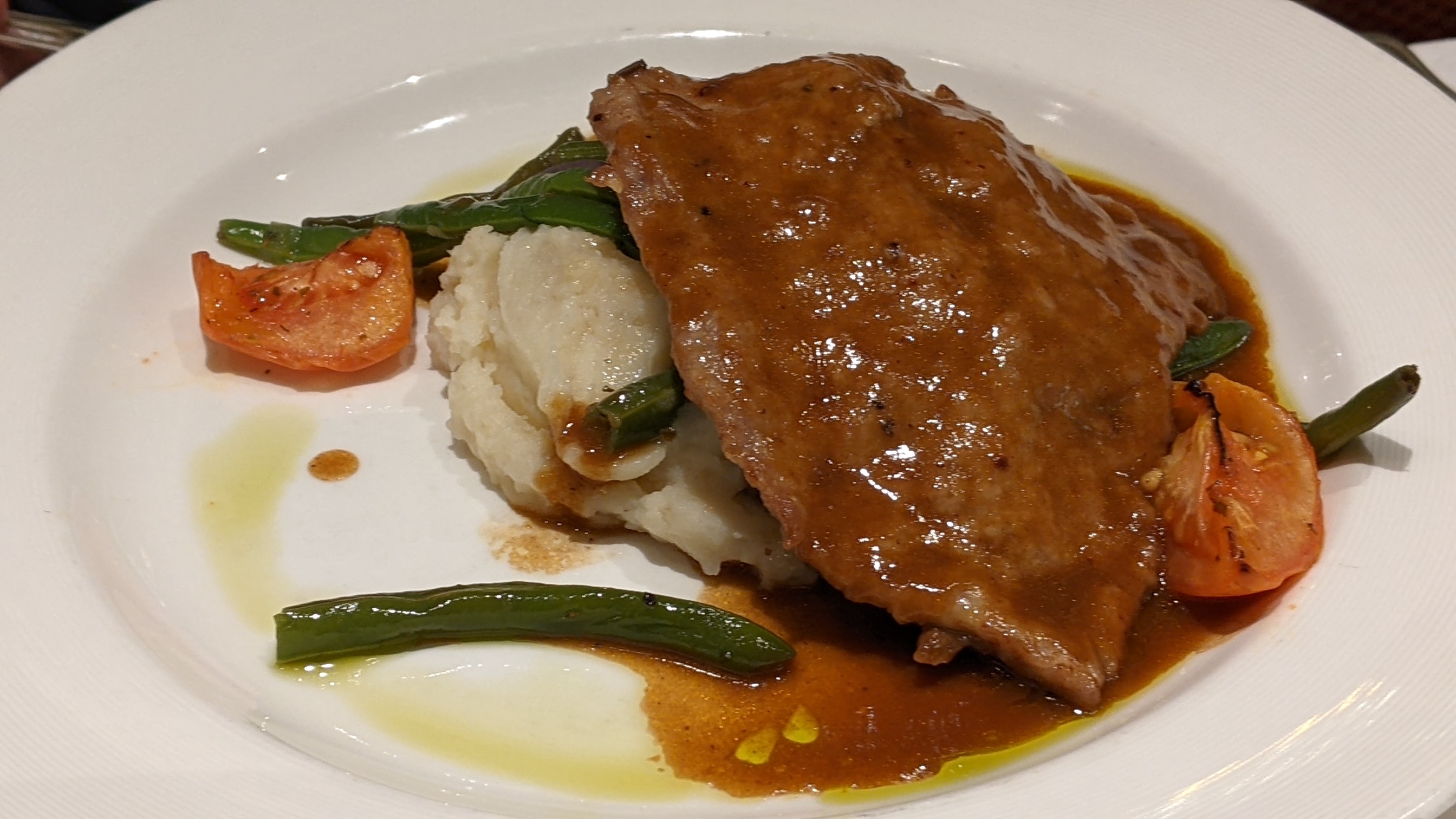
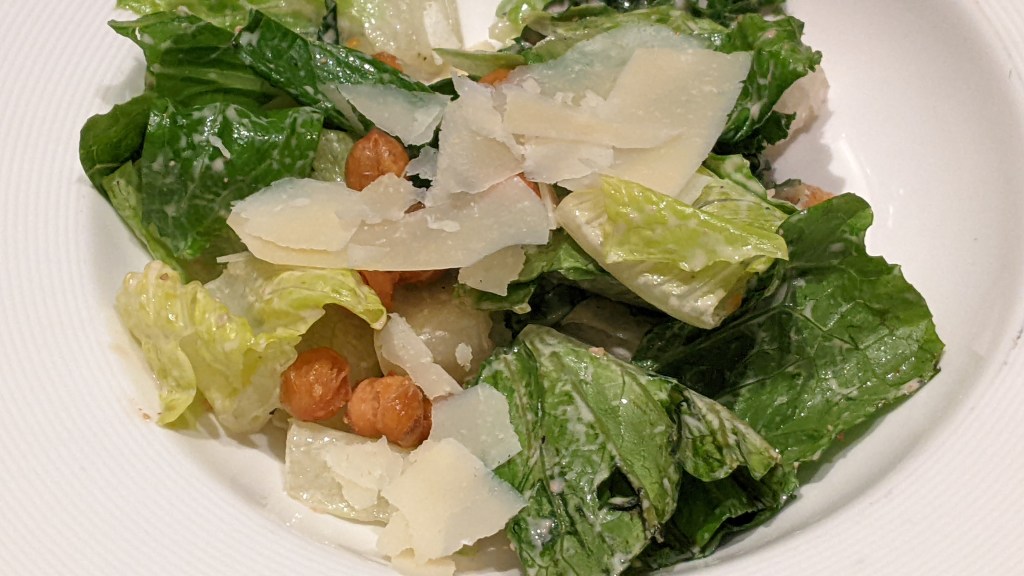
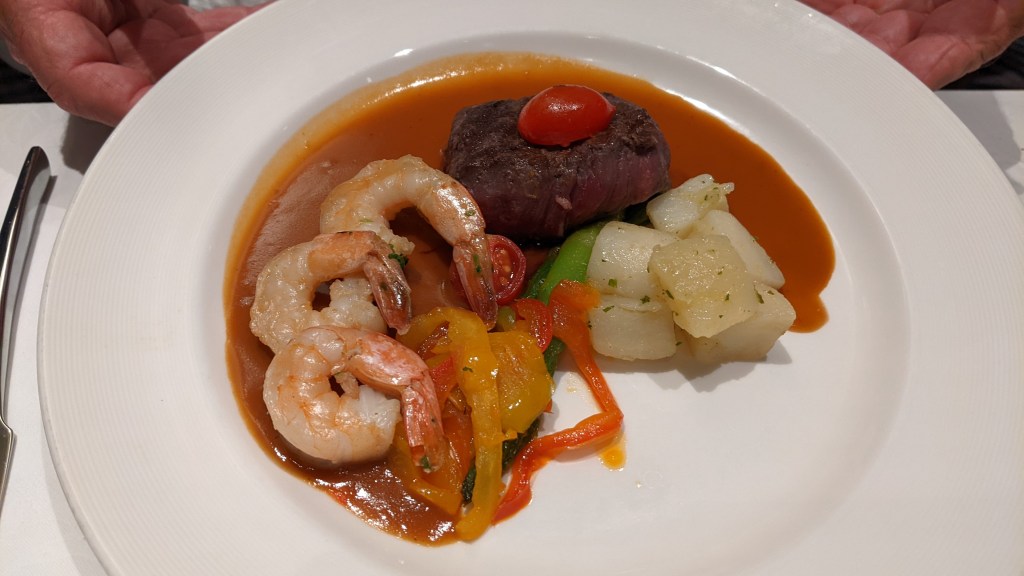
On this voyage, for some reason, dinner menu options were a bit “thinner” than we had expected but choices and portions were certainly ample. Service at times seemed slightly disorganized or rushed, and the visual presentation of some dishes was below the standard we have come to expect and appreciate from our times aboard other ships in the fleet. However, that’s a passing observation and certainly did not measurably detract from our onboard experience. We ate very well in each of the main dining rooms, whether for lunch or dinner.

Just one downside note: On other ships in the fleet, my husband has enjoyed visiting the ship’s sauna without a specific reservation or an extra fee. On the Regal, unfortunately, that was not an available option for him.

As always, onboard entertainment is plentiful — game shows, music, shopping, port lectures, dance and exercise classes and evening shows in the theater. And, of course, the casino. My husband picked up the daily Sudoku from the library and puzzled over it as well. And then there are the movies “under the stars” on the open deck, or on stateroom TV.

But, on sea days, just watching the ocean waves and the changing cloud patterns can be entertainment enough, from a lounge on deck, adjacent to one of the open-air bars, or on a private balcony. There was also plenty of opportunity to engage with other passengers in one of the cocktail lounges, enjoy the eclectic musical selections played throughout the ship, or attend one of the special programs scheduled throughout the day. I cannot imagine how anyone could characterize cruising as boring!

Renewing a Previous Acquaintance

We have traveled with Princess enough to have earned loyalty perks, and we enjoy those bonuses. A truly memorable event on this sailing was the Captain’s reception for upper-tier loyalty passengers at which the three “most traveled passengers” aboard were recognized.

On another Princess cruise several years ago, sailing out of the Port of Houston, I was privileged to meet and interview a lady who, at that time, spent much of each year aboard ship. It was a different ship, but even then she was a “most traveled” and much-loved passenger. I noted that the crew was particularly solicitous and always saved her same table in her favorite lounge for a pre-dinner glass of wine.

During our interview, I learned that she and her husband had cruised extensively together. Following his death, it seemed only natural that she should continue cruising. She told me that she treasured her shipboard life, saying that she was grateful to have the health, the opportunity, and the means to travel, adding that one of her joys was meeting and talking with other passengers. She explained that she returned to her home in Houston, “for tax season and for Christmas!”

During the ensuing years, I thought about her occasionally, wondering if perhaps she was still cruising. On this voyage, my question was answered. At the Captain’s Circle Cocktail Party on February 1, Thelma Middleton was honored as the “most traveled passenger” on Regal Princess for this sailing, with 252 cruises and more than 1,850 days aboard Princess ships.

After the ship’s photographer snapped her photo with Captain Gavin Pears and senior staff, I once again spoke a few words with her. I was genuinely surprised when she told me that she recalled our previous meeting. What a pleasure it is to know she is still traveling, and still enjoying herself!

Wanderlust — Montenegro Dreams

As a child, I was captivated by people who lived lives very different from my own, and by the sounds of words spoken to a different cadence. The pull of the unfamiliar was strong. I do not remember a time when I didn’t want to experience far away places.  I never outgrew the wanderlust. Today, the rhythm of a foreign language is music to my ears and the promise of a trip is reason enough to pack up.
And those strange-sounding names; oh, yes!

The pull of unknown places is strong. So, when Kotor, Montenegro, was one of the ports on a Princess cruise itinerary, it was almost impossible to resist. I knew next to nothing about Montenegro; in fact, I had to pull out my atlas to locate it.

We were in port for only one day. That was 2017, in the fall. Today, as I think about that visit, I find it hard to believe that all those good memories were formed in the course of one afternoon. Now I want to return again!

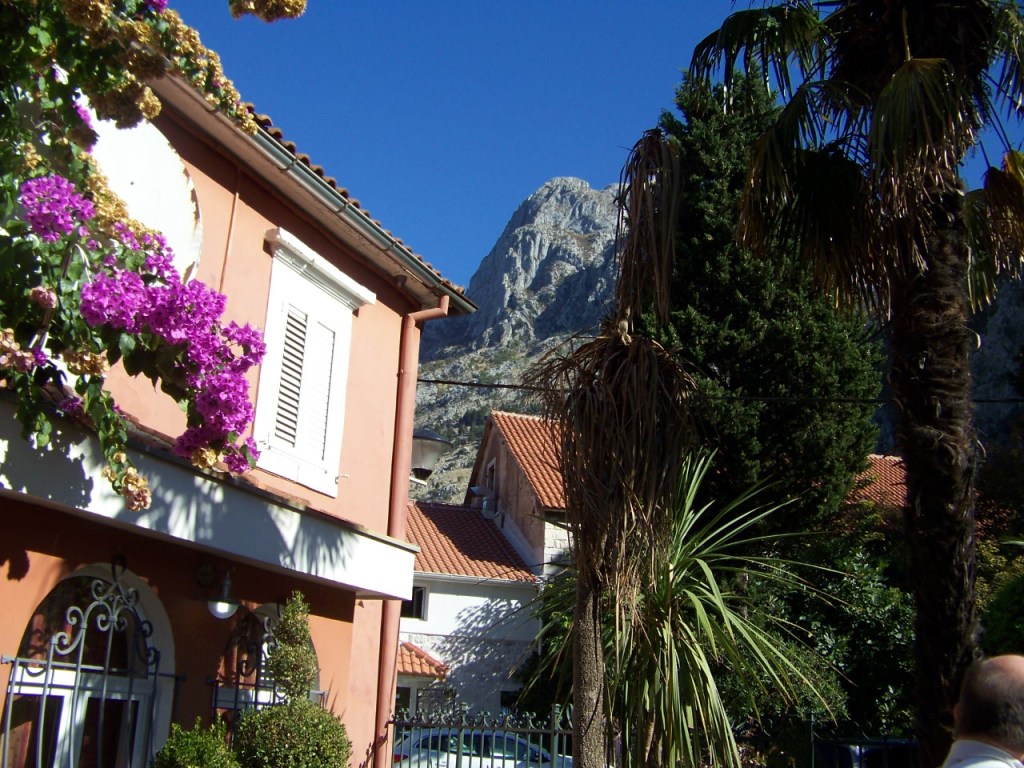
The place, the people, the history speak loudly of life well-lived and fine experiences just waiting to be had. Even more seems promised on a second visit than I experienced during the original. But that first visit could hardly have been better! The scenery, both the ancient city buildings and the surrounding limestone cliffs, is stunning, with hand-built stone walls stretching for more than three miles above the town. The scene is both awesome and forbidding.

Arriving in the City

Our day began with a quick tender ride between our ship and the city dock. Once on land, we were efficiently directed to a guide who was to accompany us on a stroll through Kotor’s marketplace prior to joining a local chef to hear about traditional Montenegrin dishes. We were to sample a variety of regional favorites.

We don’t normally sign up for ship’s tours — we don’t do groups well, preferring instead to walk at our own pace and make our own discoveries. But this one was different.

The stroll turned out to be more of a brisk walk as our group skirted the walls of the ancient city before arriving at the

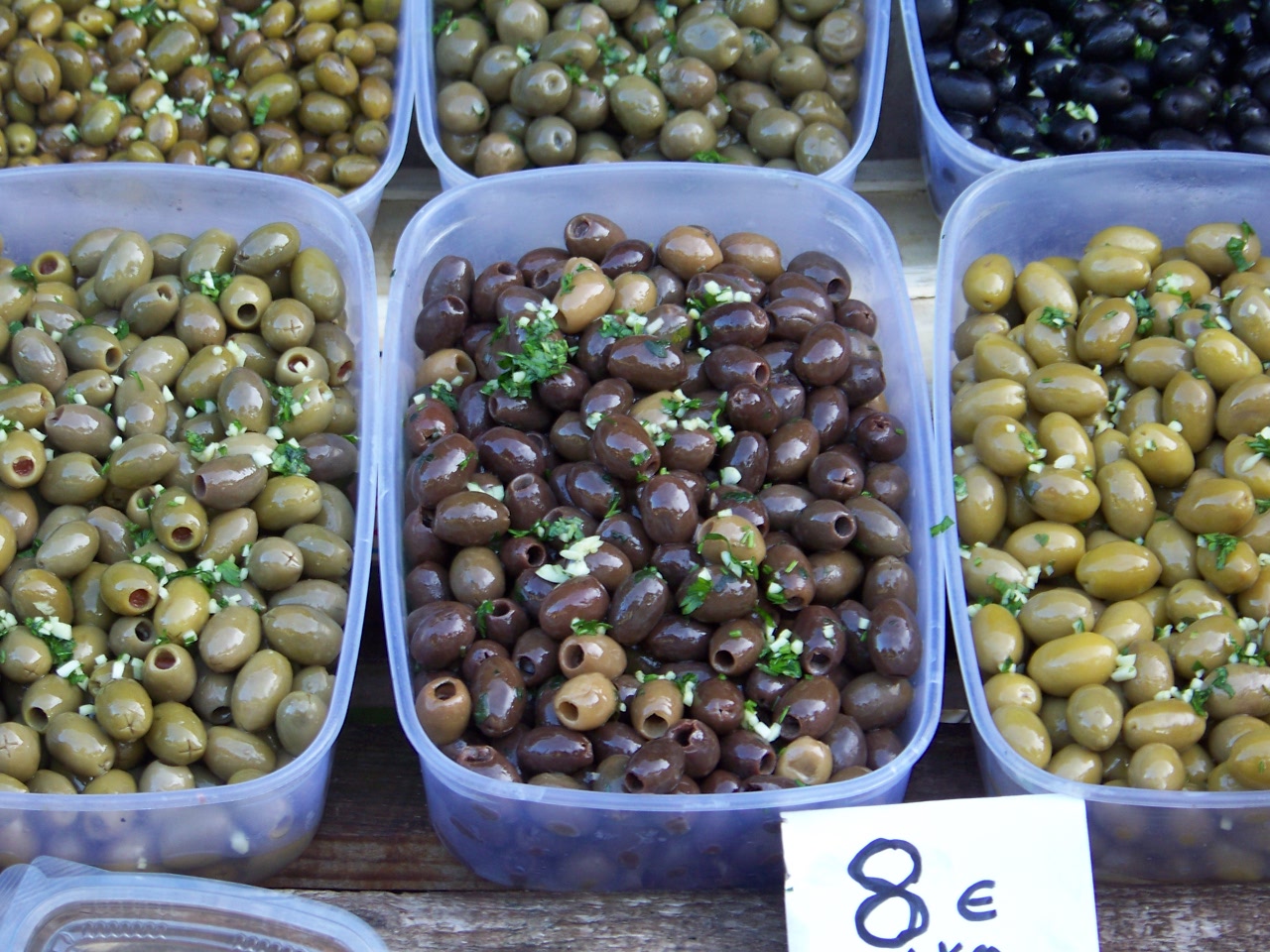
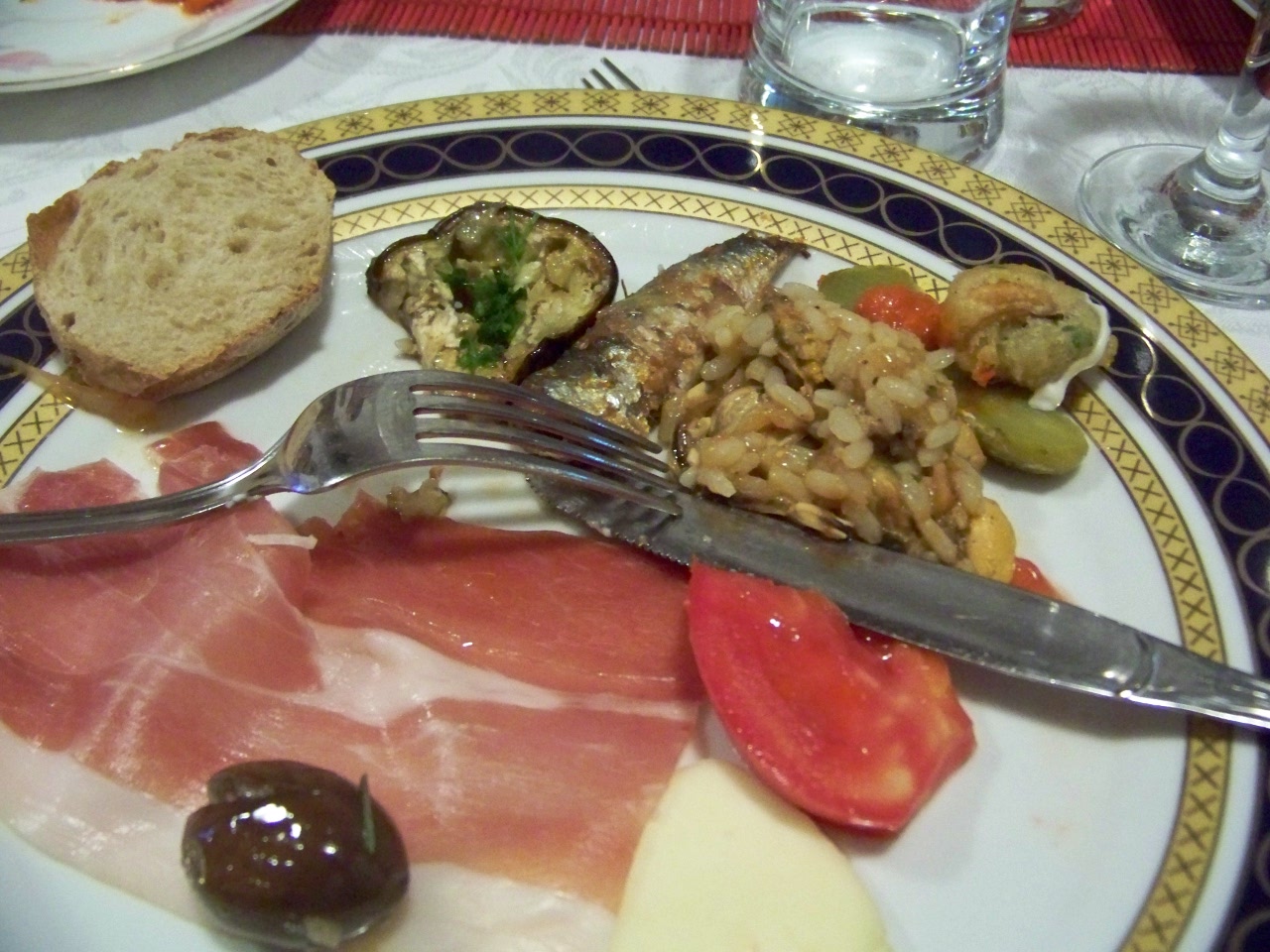
market. Stalls were filled with olives and cheeses, figs and dried apricots, colorful produce, plump breads, pastries and chocolates, sausages, ham and fresh fish – vendors offered samples, encouraging us to try unfamiliar fruits, to sample various figs and olives, to buy spices and olive oil. It was tempting, to be sure.

Welcome Freely Offered

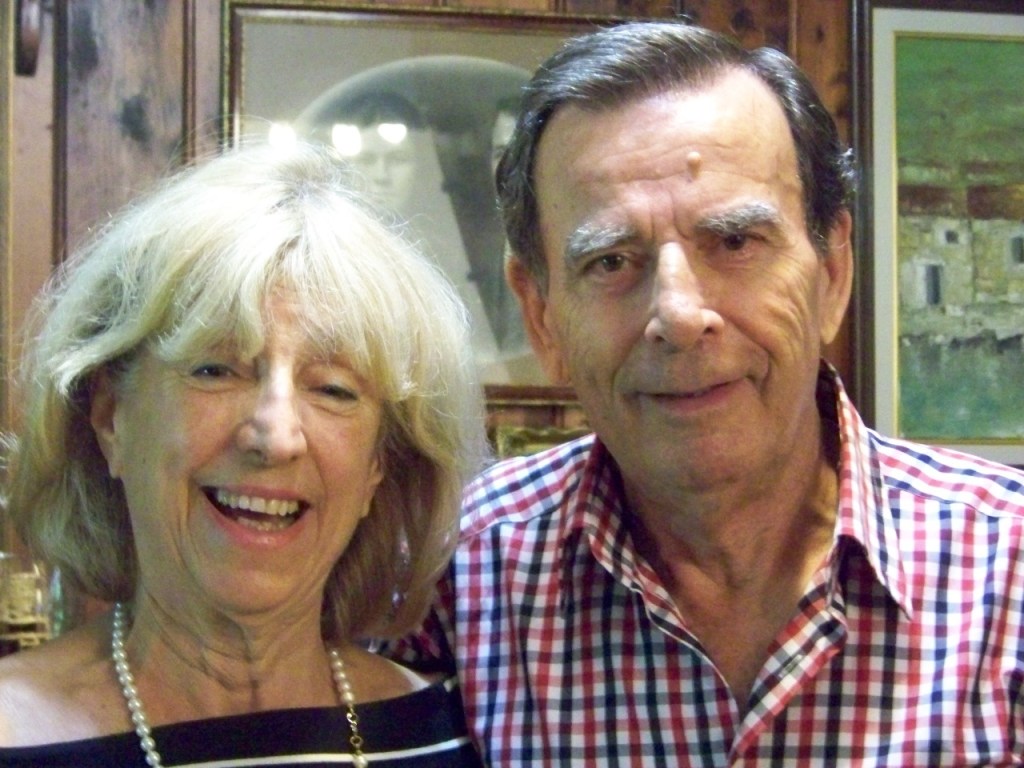
But, we had a schedule to keep, and we pushed on to the end of the harborside thoroughfare before taking a turn onto a tree-lined lane bookended with private gardens. While our group had envisioned gathering in a local café, we were delighted to be ushered through a courtyard and into a cozy home, greeted by a vivacious blonde who wore pearls with her casual slacks and tee.

She greeted us warmly in only-slightly accented English, and introduced her husband, a former sea captain, who stood ready to pour each of us our choice of strong aperitif even though it was not quite 10 a.m. But, when one is on vacation and a guest in someone’s home . . .

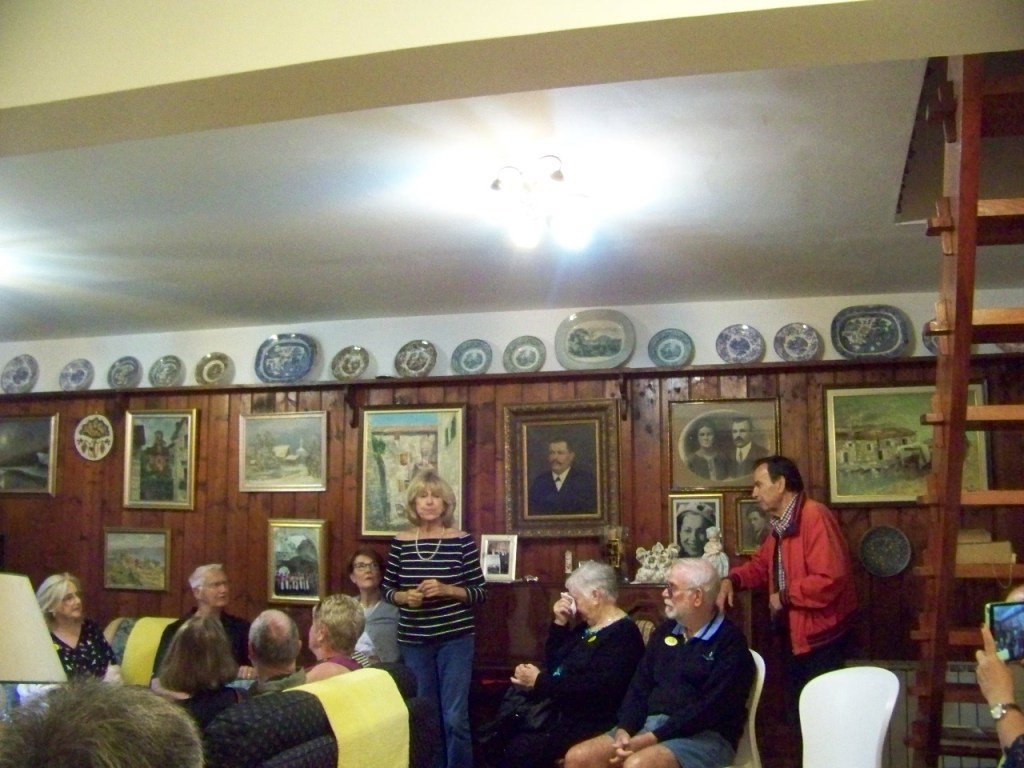
Each of us accepted a glass, then followed our hostess’s lead and raised our glasses in a mutual toast — to new friendships, good food and good times. She encouraged us to feel at home in her home. Each of us found a comfortable seat in the art and antique-filled sitting room. I chose a spot around a diminutive lace-draped round table.

We learned about the life experiences of this lady and her husband. Her many-faceted career, as author, cook, lecturer, tour guide, and who knows what else, was a bit of a surprise, proving that reinventing oneself knows no cultural or geographic boundaries. We also learned about her husband’s exploits at sea and of his ancestors whose portraits hung on the walls.

After a bit, she disappeared for a few moments into the kitchen. We were invited to take seats at a long banquet table that nearly overfilled a well-proportioned dining room with a view of the garden.

Sharing Food, Building Bridges

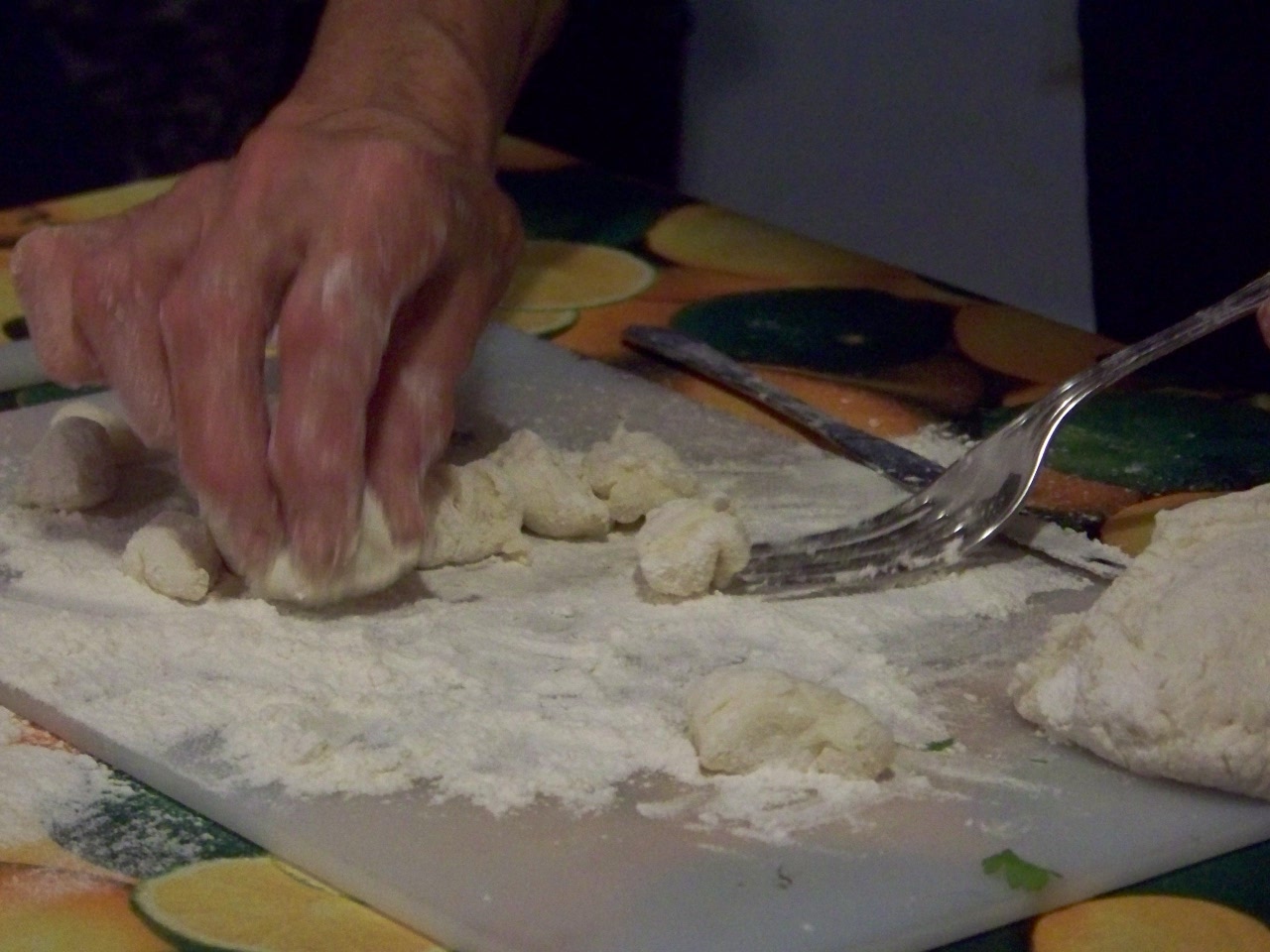
Treated like honored guests, we sampled plate after plate of appetizers, a delicious soup, a traditional entree, and, finally, a rich dessert, all accompanied by a parade of local wines. We listened with rapt attention as she demonstrated how to prepare a traditional Montenegrin recipe.

We were not really prepared for Montenegro. Yes, we knew some of the history: Kotor is a unique medieval fortress town, with an array of buildings that span from the 12th through the 16th Centuries. It’s impossible to walk through the old town without visualizing pirates along with priests, noblemen and beggars, monks and blacksmiths, painters and writers, physicians and printers.

The small city, with a population of approximately 13,000, is situated in a secluded portion of the long Bay of Kotor on Montenegro’s Adriatic Coast. Less than 1,000 people actually live within Kotor’s historic walls, and its earliest history is a bit muddied; it is first mentioned in ancient literature in about 168 BC, but some authorities believe it was founded as early as the 5th Century BC. It was known at one point in history as Acruvium, part of the Roman province of Dalmatia. No matter the date, Kotor now holds the status of a UNESCO World Heritage Site, and the city’s fortifications testify to a succession of foreign occupations and battles. Once allied with Dubrovnik, it gained independence from Byzantium until it was later occupied successively, and repeatedly, by the Serbian Empire, the Republic of Venice and the Ottoman Empire, the Hapsburg Monarchy and, finally, the Napoleonic Kingdom of Italy. It played significant roles in both World Wars.

After 1918, the city that saw some of the fiercest battles of the war became part of Yugoslavia, and gained its new name of Kotor. It was not until 2006, however, that Montenegro, part of the former Yugoslav Republic, become truly independent

With that much turmoil and turnover in its history, it may be surprising that Kotor endured. But endure it did, and today it boasts one of the best-preserved old towns in the region, along with its impressive fortified old city walls and its stunning Cathedral, built in 1166.

The Cathedral of Saint Tryphon is a major tourist site, one of two cathedrals in this unique small city that was formerly known as Cattaro. Saint Tryphon has a collection of beautiful art and artifacts, in addition to its notable architecture.

What else sets Kotor apart from its neighbors? There is a distinguished maritime museum and the Kotor Festival of Theater for Children has attracted throngs of visitors from throughout Europe for the 30 years it has been held. Citizens of Kotor are also protective of their cats, symbols of the city. Food and water, along with boxes that serve as shelter, are left throughout the city. Kotor Kitties is a chartable services that provides spay and neutering services in an attempt to limit the population, but the cats are as much a part of the city as the smiles of its citizens. Don’t miss Cats’ Square if you visit, and be sure to take home a cat-themed souvenir.

I hold fading memories of the cats, the cathedral, the city walls, and the sparkling sea. But I have a clear recollection of the taste of fresh olives and figs from a vendor in the city’s market, and of the stories told and the laughter shared around a dining table in the home of a charming couple in Kotor!

Traveling solo can be fun when you’re old enough to be somebody’s grandmother!

I recently had an opportunity to be on the road alone — partly for pleasure, to be sure, but with a business connection. I had a professional conference to attend in Fairbanks, Alaska. Instead of booking a round-trip flight from my home in Arkansas to the conference city I opted to cruise north to Alaska from Vancouver, British Columbia. I then spent a few days sightseeing near Denali National Park, finally arriving in Fairbanks the evening before my conference began.

After many years of marriage, my husband and I are well aware that our interests, priorities, enthusiasms, and commitments sometimes differ. That’s all good, and on several occasions over the years, we have kissed each other goodbye and wished one another safe travels. It’s just the way we do things. This was one of those times.

I simply could not resist the appeal of a seven-day cruise followed by a three-day land tour to Denali National Park. My husband, for his part, was not ready to embark on another cruise so soon after our epic Antarctic adventure earlier this year. So, for 16 days, my husband and I led separate lives. In addition to a memorable vacation experience, I told myself that this particular journey could be counted as a business trip, providing valuable background for future posts about traveling solo as a senior woman. And, yes, those planned posts are in their early stages as I write this.

The cruise was truly enjoyable, made even better by spending two days in Vancouver to visit with old friends — my own superb tour guides! I found solo cruising to be totally enjoyable, and not at all intimidating. In fact, I look forward to another solo travel experience should an opportunity arise. The land portion of the trip was almost exactly as I expected. Travel arrangements for the land portion of the trip were part of the cruise package, well-planned and executed by Princess Cruise Line. Even though May is the beginning of the season in Alaska, and local staff members were still learning their specific duties, transfers, tours and accommodations were perfectly choreographed.

We disembarked in a grey drizzle in the port city of Whittier and boarded a bus for the trip north to the mountains and the national park, stopping briefly in Anchorage. On the way north, the scenery becomes more dramatic and our driver was happy to point out our first view of Denali in the distance. We passed through small towns, including Wasilla and Talkeetna, and viewed the still-snow-covered terrain and ice-clogged rivers. Originally named for President McKinley in 1897, the name of this largest mountain in North America was changed in 2015 to Denali. In the indigenous language of early tribes in the area, the name means “the tall one,” or “the high one.”

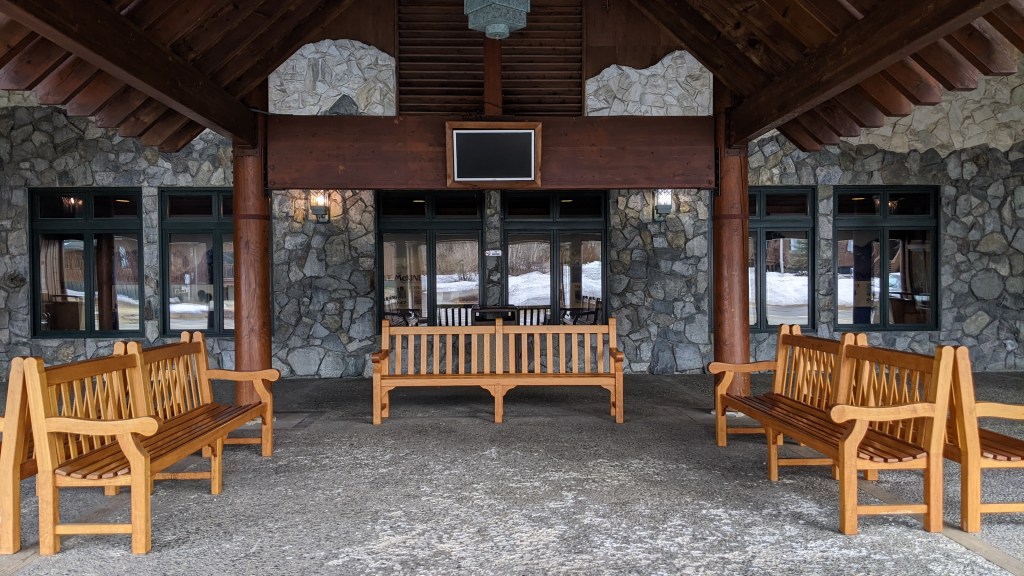
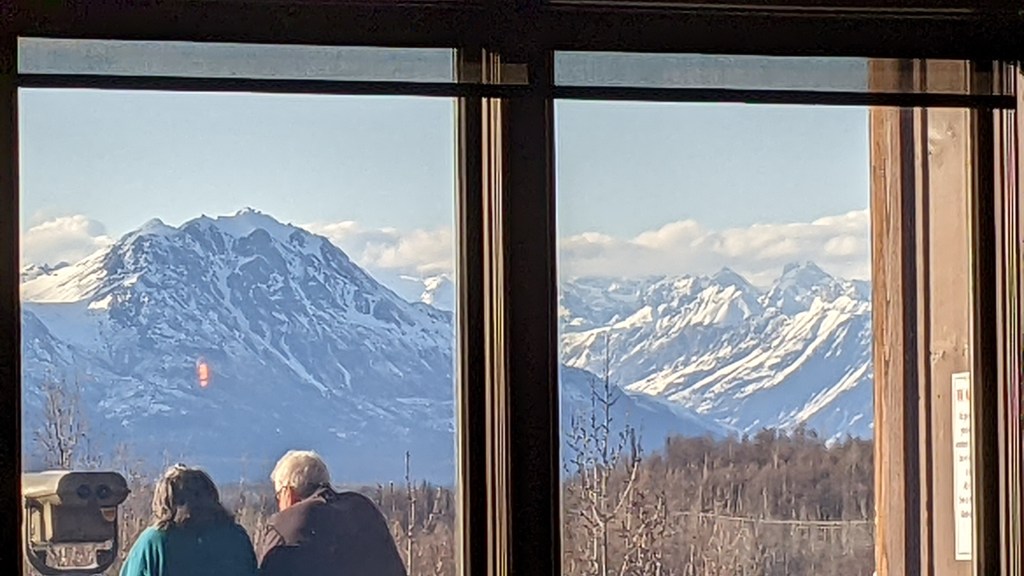
Once we arrived at the Princess Mount McKinley Lodge, a beautiful facility with a “knock-your-socks off” view, I spent my first few hours warmed by the sun on the lodge’s wraparound deck. I was enthralled by the drama of clouds which parted only periodically to provide breathtaking views of the mountain known as “the great one.” It truly is.

I snapped far too many photographs of the changing vista as the late afternoon sun sank lower on the horizon. Denali, at an elevation of 20,310 feet, dwarfs surrounding peaks, but they are not mere foothills, and they have their own allure. Finally, when the clouds seemed to be massing to surround the mountain for the evening, I decided to make my way inside.

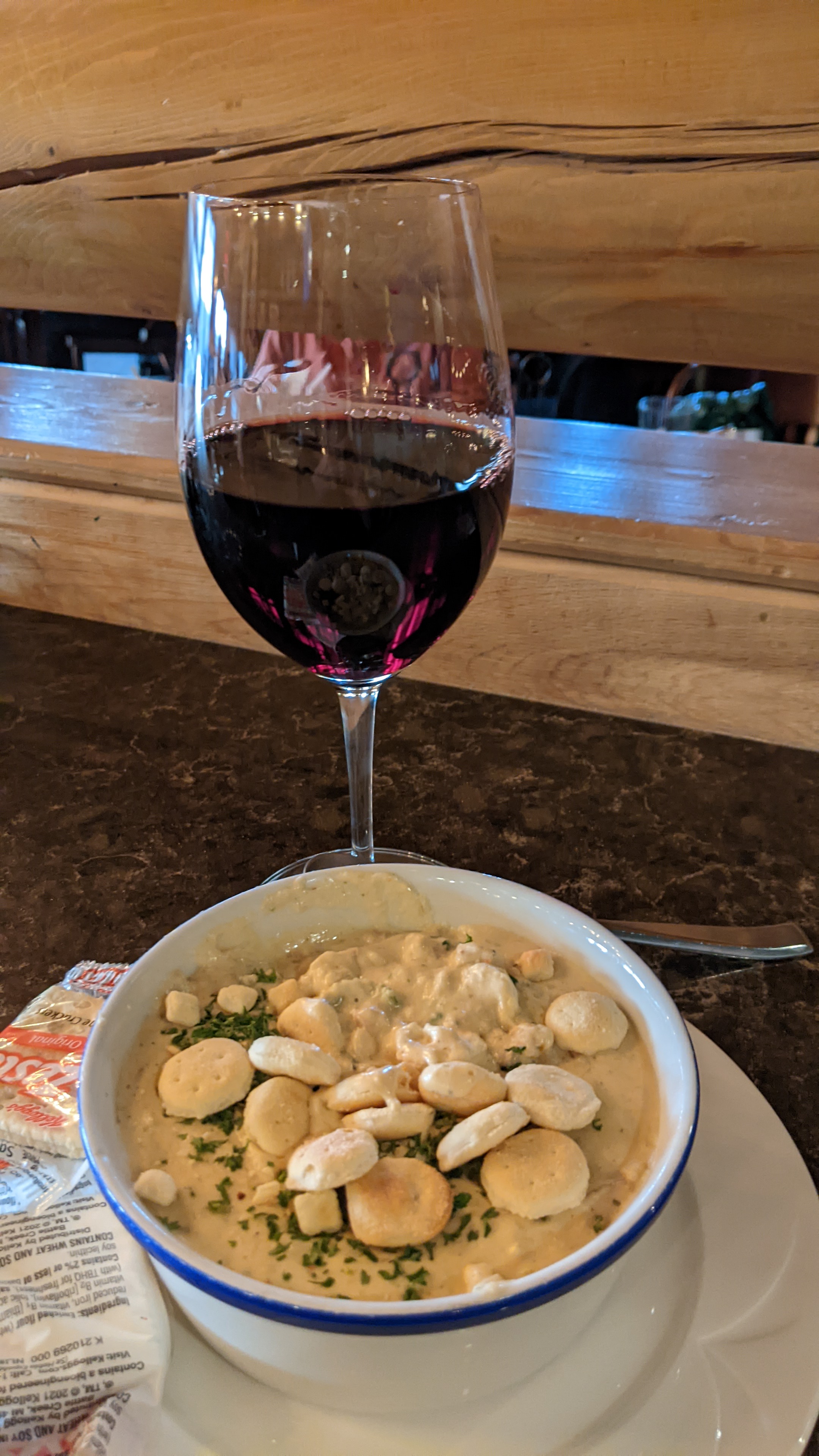
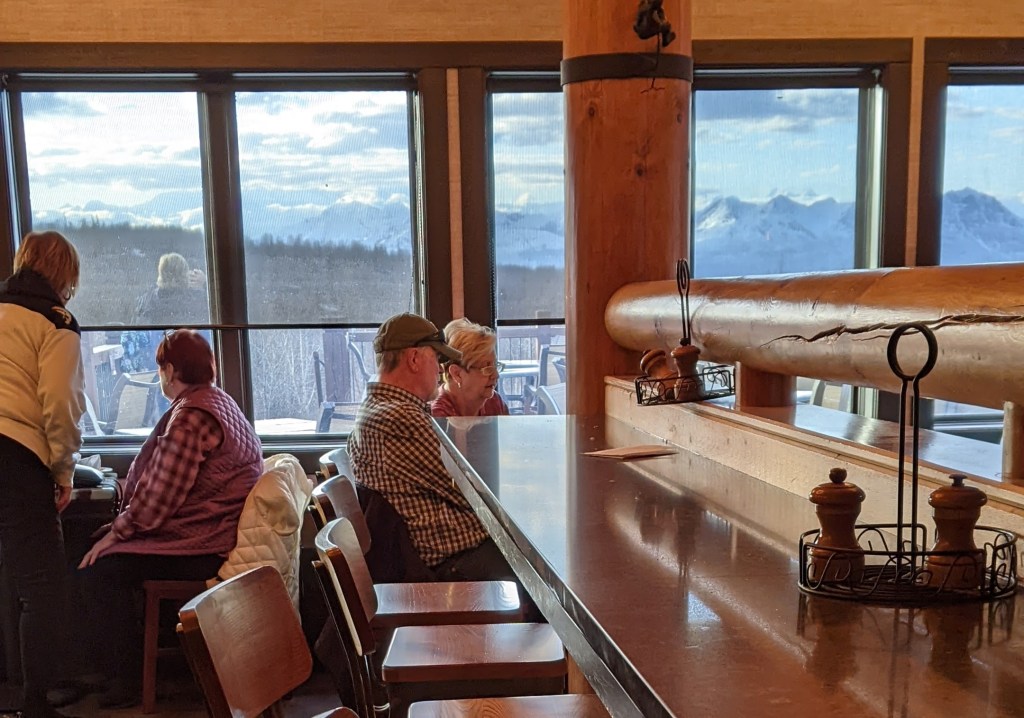
I found an unoccupied seat at a bar counter in the casual lounge. My seat still offered a commanding view of the faraway mountain ranges through the great room’s wall-to-wall windows. Tired from a day of traveling, I ordered a glass of wine, content to simply relax in comfortable surroundings.

My attentive server asked if I wanted to order dinner and suggested I begin with a bowl of hot fish chowder. Happy to not have to make a decision, I agreed that would be good. We chatted a bit as I waited.

He had returned to Alaska the previous week to work at this lodge for a second summer. A university student in the lower 48, he said that his experience the previous year hadn’t seemed quite long enough. This year, his girlfriend had signed on for summer work as well.

This was the first of many conversations I would have over the next few days with the summer employees who arrive in Alaska eager for adventure. Must of the seasonal employees are U.S. or Canadian students. All are happy to have the opportunity to earn money working in one of the top vacation destinations on the globe. Many have returned year after year. Most try to save the bulk of their earnings for the coming school year. Not a one complained about the hours or the work load. And every one admitted to seizing every possible opportunity to hike or camp in the adjacent national and state parks or to explore nearby towns and villages. Almost all planned to return to the lower 48 at the end of the summer to continue their schooling.

I listened willingly to the stories of other servers and staff. I joked with the bartender, and I exchanged smiles with other guests. When my chowder arrived, they all gave me “space” to enjoy my light meal. Suddenly hungry, I ate, sipped my wine, and thought how lucky I was to be in this place at that time. But, in that moment, sitting in a crowded bar in the shadow of a great mountain, I also had to admit that I missed my husband. It was an experience I would have enjoyed sharing with him.

In Alaska, in May, it’s light late into the evening and as I finished my chowder, Denali’s snow-covered summit was once again visible. Despite the many previous pictures I had taken, I wanted just a few more in the twilight of the day.

I was eager to make my way out to the deck once again, and I signaled for my check. As we settled up, this young server and I agreed that getting to know one another was a highlight of the evening. As I stood to leave, he looked at me and asked if he could give me a hug. Somewhat taken aback, I hesitated for just a moment.

He confessed, “You remind me of my grandmother, and I miss her.”

Of course we hugged, and I believe we both treasured that brief connection in a place far away. This time, the human connection was more memorable than the food. And this brief encounter with a stranger was at least equal to my last view of Denali on that day.

Food — the primary reason to cruise?

Okay, so taking a cruise isn’t all about the food — sunsets, entertainment, and destinations play a large part in the selection of itineraries. Luxury service, creature comforts, pools and hot tubs, spa treatments, and a variety of tantalizing activities appeal to young and old alike, But unlimited drink packages and specialty dining venues clinch the deal for a growing legion of cruise-ship passengers each season. Major cruise lines are quick to recognize that they must cater to the diverse needs and preferences of both veteran cruisers and first-timers, so options vary considerably from one line to another. They also may be quite different from the choices that existed just a few years ago.

Recent passenger statistics point to a cruising resurgence. Numbers are back to pre-pandemic levels, and passenger volume for 2023 is expected to reach 106% of the 2019 level, to a total of 31.5 million passengers, according to Cruise Lines International Association (CLIA), and some ships now report sailing routinely at 100% capacity. Passenger totals dropped to less than five million in 2021 at the height of the pandemic, but 2024 numbers are projected to reach 36 million! That’s good for the cruise lines, and for the economy, but it means that travelers must make their plans earlier, particularly if they’re seeking bargain fares and any offered perks.

If you step back in time, transatlantic voyages were a means of getting from one continent to another, albeit in luxurious fashion. Today, a cruise is about a great deal more than getting somewhere. Trans-ocean itineraries now whisk cruise passengers in high style not only to and from Europe and America but from the West Coast to the Orient, from Asia to Africa, or to circle the globe on itineraries that stretch across months and seasons. The onboard experience is all-important.

One can traverse the Panama Canal as well as the Suez, cross the equator or the International date line, or drift lazily along the rivers in a score of different countries, sometimes even captaining your own vessel. Expedition cruises that package sightseeing with high-adventure experiences are growing in popularity.

It all makes me a little envious — how about you?

What about the food?

Yes, there certainly have been changes — but, for the most part, the elegance of cruise ship menu choices and the excellence of the food offerings remain! Even though midnight dessert buffets have almost universally disappeared, there is no shortage of food options on contemporary cruise ships. And lavish buffets offer a visual treat as well as wonderful food. Most offer the availability of food and drink from early morning to late at night — sometimes on a 24-hour basis!

Choose to take all your meals in your ship’s main dining rooms, or opt instead for lavish upper-deck buffets, specialty restaurants, or room service. For the most part, traditional dinner “seatings” are no longer specified. It’s all about choice, and the choices are extensive. Ships are getting larger, and on larger ships, passengers may not even have time to sample all the options! Early reports are that a new Royal Caribbean ship expected to debut in 2024 will feature at least 40 different dining venues.

Personalize your cruising experience

Last fall, on a brief round-trip sailing from Los Angeles to San Diego and Baja California aboard Discovery Princess, we enjoyed an abundance of tasty treats — from made-to-order hand-tossed pizza at Gigi’s Pizzeria at the heart of the ship’s three-level piazza, to loaded hot dogs and fries from the Salty Dog Grill adjacent to Deck 16’s pools. We even ordered a selection of street tacos via room service to consume on our private balcony!

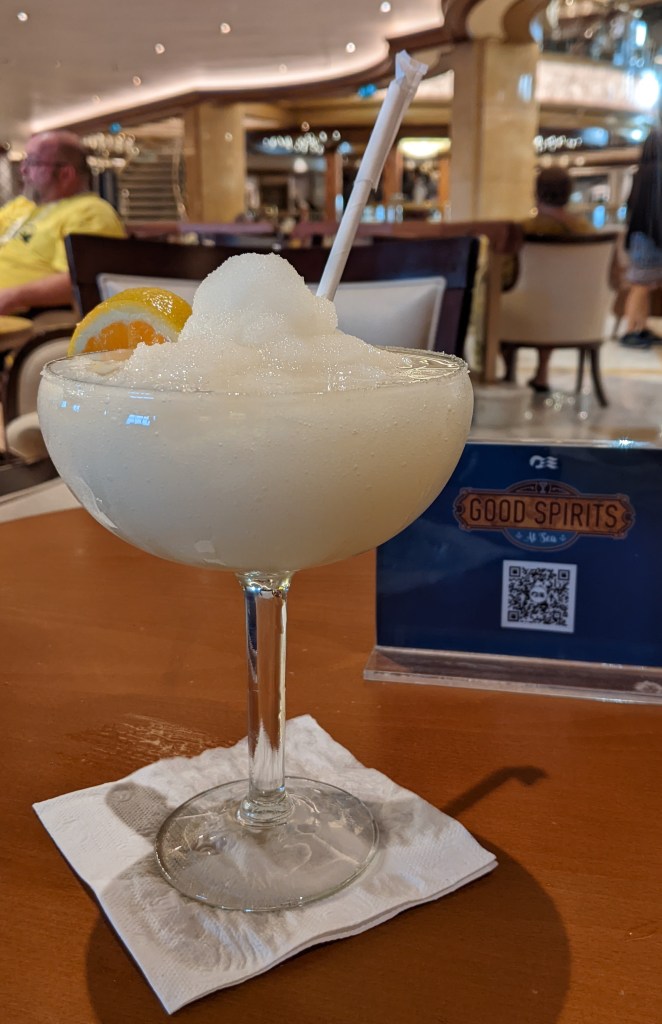
We did not make it to the Salty Dog Gastropub that features gourmet burgers on Deck 5, but we met friends and enjoyed pre-dinner cocktails at Good Spirits at Sea, a lively bar and favorite gathering spot just across the Piazza. The International Cafe is just next door, and it was hard to resist sampling a sandwich with a cocktail. It became even more difficult to refuse a pastry treat with a mid-morning latte or a late-night espresso. As is our tradition aboard ship, we were awakened each morning — at a time of our choosing — by a knock on our stateroom door signaling the arrival of a pot of coffee, sometimes accompanied by a selection of croissants and pastries! Isn’t that the height of personal pampering? On Princess Line ships, it’s just one of the complimentary amenities.

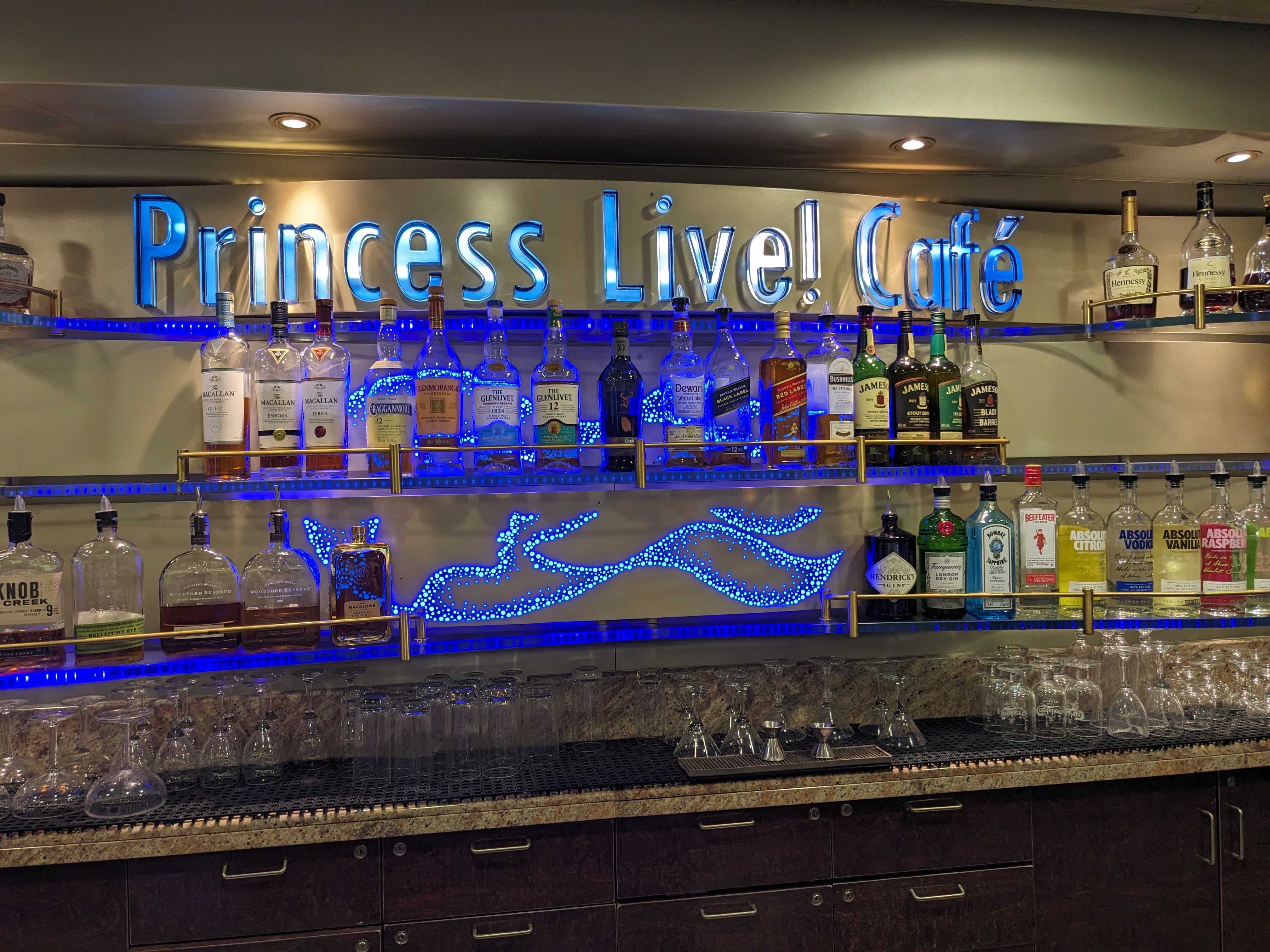
While we chose to enjoy a leisurely dinner in one of the ship’s superb dining rooms most evenings, after a busy day of sightseeing in San Diego, we opted for lighter fare when we returned so we could watch our sailaway from the upper deck. Another evening, we indulged in a multi-course dinner at the Crown Grill before moving on for evening entertainment at the nearby Princess Live! lounge. With all the different options available, we did not want for food at any time of day!

What to expect on your cruise vacation?

The dizzying number of options means that you must do some initial homework even before you shop for a ship. The increased popularity of river cruising adds another dimension. Today, you can opt for a laid-back, relatively casual three-day excursion out of Florida to a Caribbean island, a week-long cruise in the Mediterranean or a cruise that circles Australia, Japan, or the Hawaiian Islands. Alternatively, you can explore Alaska, Antarctica, the South Sea Islands, or the great rivers of Europe and the Americas, including the Nile, the Amazon, or the Mississippi. Combine a pre-or-post cruise land tour, and your choices are multiplied.

Choosing to cruise typically means that you pay for your vacation in advance, often including the port excursions that interest you. You unpack when you arrive at your port of embarkation with no need to pack up again for the duration of the cruise, be it seven days, three weeks, or more. Still, cruising is not for everybody. If you haven’t cruised before, it’s wise to dip your toes in the water, so to speak, on a three or four-day sailing combined with a visit to the port or a nearby beach. Also, be sure to investigate thoroughly the options and packages available from the various international cruise lines.

Not only have itineraries and destinations changed over the decades but so have cruising traditions. Where, in the past, formal attire — even ball gowns and tuxedos on occasion — were proper for dinner — the emphasis today is on informal. Some lines recommend “country club casual” with slightly upscale dress expected in the evening, and many ships still specify a formal night or theme party as part of each itinerary, usually with advance notice. Most travelers, however, don’t even pack multiple bags; sometimes a carry-on and a backpack will suffice, even for a week or longer, with laundry services available to passengers.

If you choose to join the millions of people who plan to cruise in 2023 and 2024, whether you cruise as a solo passenger, as a couple, or as part of a larger group of family or friends, Bon Voyage! Enjoy both sea days and port visits to the fullest, and don’t forget to take plenty of pictures! Most of all, savor the food!

Surprise in a crystal glass . . .

The bottle was not particularly distinctive. I took little note of the winery name and there was no reason to pay attention to the vintage. My husband and I were waiting for friends in the comfortable lobby lounge of our hotel in Santiago, Chile, before venturing out to a nearby casual eatery for dinner.

Our trip, which had begun the morning before in Little Rock, AR, had been long, though exciting, and our arrival in Santiago had not been without an unfortunate attempt at credit card fraud by a cab driver. We had been cautioned, but even advance warnings, unfortunately, do not always protect foreign travelers. (See my related piece about travel precautions.)

However, we had arrived and been welcomed at the charming Hotel Ismael in the vibrant Lastarria District, put the weariness of a long flight, airport lines, and transport frustration behind us, and were planning how to best take advantage of our time in Chile.

A quiet aperitif morphed into a group sampling as we were joined by others in the lobby. I had asked for a glass of a pleasant local red wine, ready to accept what our server chose. My husband ordered a white variety, and we talked about our fresh impressions of the city that we had arrived in only a few hours earlier.

At first sip, I was intrigued by the rich, smooth, deep red of this wine I had never heard of. We quickly learned that the Carmenere is sometimes known as “the lost grape of Bordeaux,” a variety that was nearly destroyed by Phylloxera plague that devastated European vineyards in 1867. It was virtually “extinct” for nearly 100 years. Rediscovered by accident in 1994, the grape had been mistaken for Merlot until a Chilean vintner noticed that some vines took longer to ripen than normal Merlot grapes. Upon investigation, it was determined that they were actually Carmenere, and production in Chile took off.

Our visit to Chile brought us to the heart of the Maipo Valley, not far where the river of the same name flows out of the Andes Mountains. Several of our traveling companions scheduled winery tours during our two days in Santiago. They were captivated by the variety and the quality of local wines produced, the reasonable prices, and the beauty and appeal of the Chilean countryside, seemingly perfectly suited to support a growing winemaking tradition. Participants in one such winery tour brought back a quartet of partially-consumed bottles, which we willingly sampled in the lobby with the blessings of hotel staff.

Today, Chile is home to 90% of the world’s production of Carmenere, and a wide variety of wine is produced along Chile’s sinewy landscape from the far north to the extreme south. Some grapes are exported to other areas, and replantings of Carmenere vines are currently underway in other parts of the world. Wine produced from these grapes may be difficult to find at my home in Arkansas, but the market is growing, and its future is almost assured.

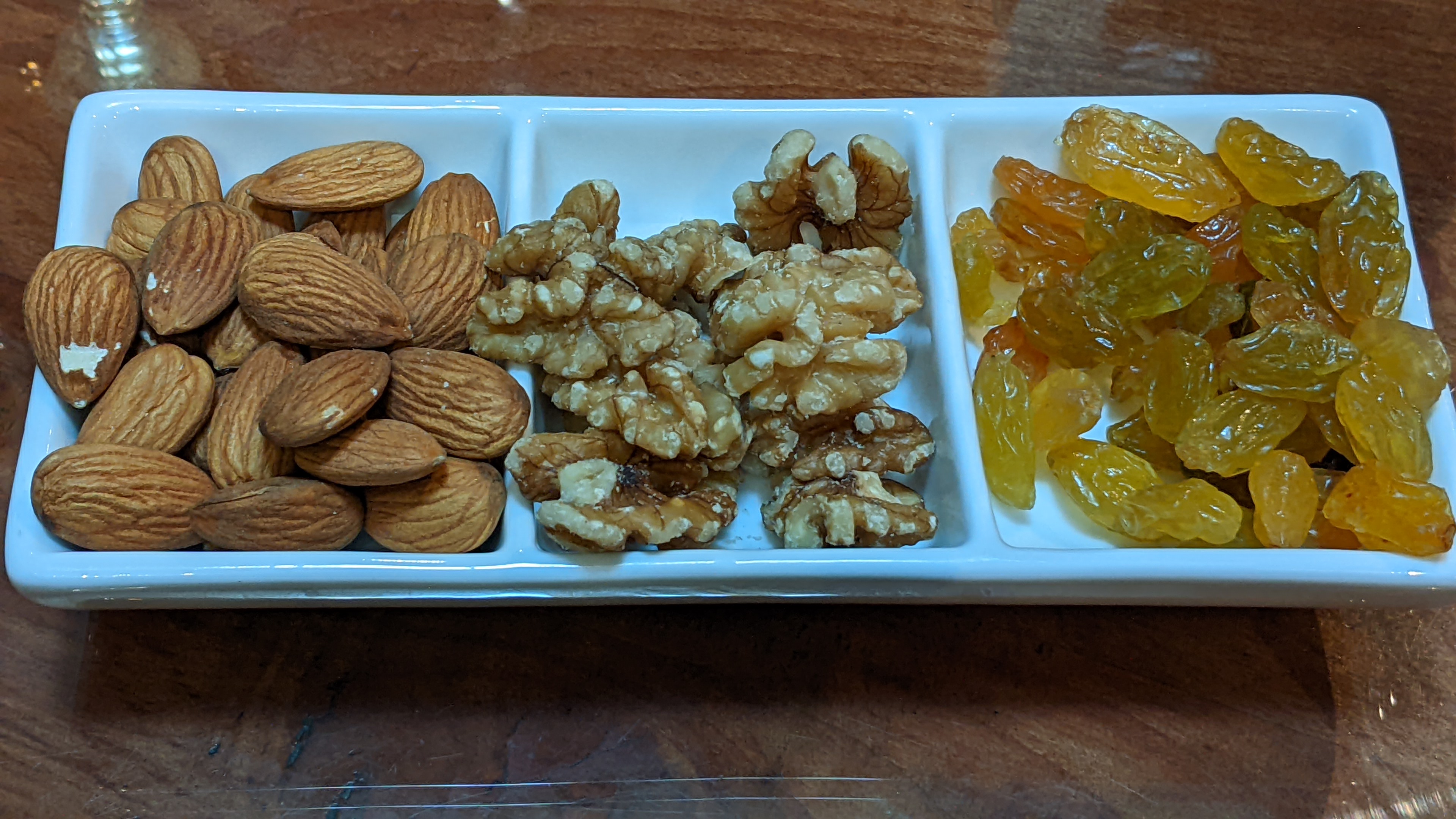
The combination of ripe and spicy fruit flavors, rich texture, soft tannins, and some notes of black or green pepper, herbs and cacao add to its unique character. I must say that is a wine critic’s description; all I can attest to is that I found it very pleasant and I immediately liked it. It is a wine that can hold its own with beef dishes and with vegetables as we learned when we later ordered a bottle with dinner, but we found it an exemplary choice with almonds, walnuts, and raisins — the snacks that appeared in tandem with our glasses that first afternoon in the hotel lobby.

It was a wine I found easy to sip and easy to savor, so much so that we purchased two bottles from the hotel stock to bring aboard our cruise ship when we sailed two days later from Valparaiso. We were pleased as well by the other Chilean and Argentinian wines we sampled in South America. During a port stop in Montevideo, Uruguay, we toured an up-and-coming young vineyard to learn more about production and the demand for fresh, new wines from other regions in South America. The varieties and the vintages are notable and worth sampling.

Sadly, Vines Wine Bar aboard Sapphire Princess had sold out of its stock of Chilean and Argentinian wine halfway through our voyage, proving just how interesting and drinkable these varieties really are! But, one of the onboard activities was a wine tasting that was well attended and highly informative.

Now back home, I will be checking with local wine importers to determine what’s available in my area. I am hoping to find Carmenere, but I will also be on the lookout for other South American wines. My husband and I look forward to sampling some, and we are eager to visit the Argentinian Coffee and Wine Bar in Hot Springs. I can testify that South American wines are a great choice for good times with friends.

Salud!

Want to learn more about Carmenere, the grapes that were misclassified for decades as Merlot? Check out these articles: https://winemakermag.com/article/1142-south-american-grapes; and https://www.winemag.com/2022/09/13/rediscovering-chilean-carmenere/

71 10 21– and other points on the globe

Magnetic North, the point on the globe where all other locations lie to the south, is commonly known as the North Pole. But it’s moving, sometimes pretty rapidly, according to scientists.

Despite romantic notions to the contrary, the North Pole is not a physical point on the planet, but it’s also not a figment of the imagination.

It’s not where Santa Claus hangs out. It’s not a very hospitable place. And, no, I have not been there. In fact, I haven’t been even close. But, last summer I crossed into the Arctic Circle as a passenger aboard a lavish modern cruise ship, Princess Cruise lines Island Princess. It was a unique adventure, and the trip is spectacular. My husband and I were there during “polar day,” which lasts from about the time of the Spring Equinox in late March through late September. During those days the sun never completely falls beneath the horizon and one can read at midnight with no need for a lamp.

At 66 (plus a little bit) degrees north latitude, the Arctic Circle forms a ring around what is known as the Earth’s North Pole. The certificates we received to commemorate the crossing, signed by Ship’s Captain Paul Slight, attest that on “Friday, June 17, 2022 at 12:12 am,” we crossed that fabled line. In our minds, we had become Arctic explorers.

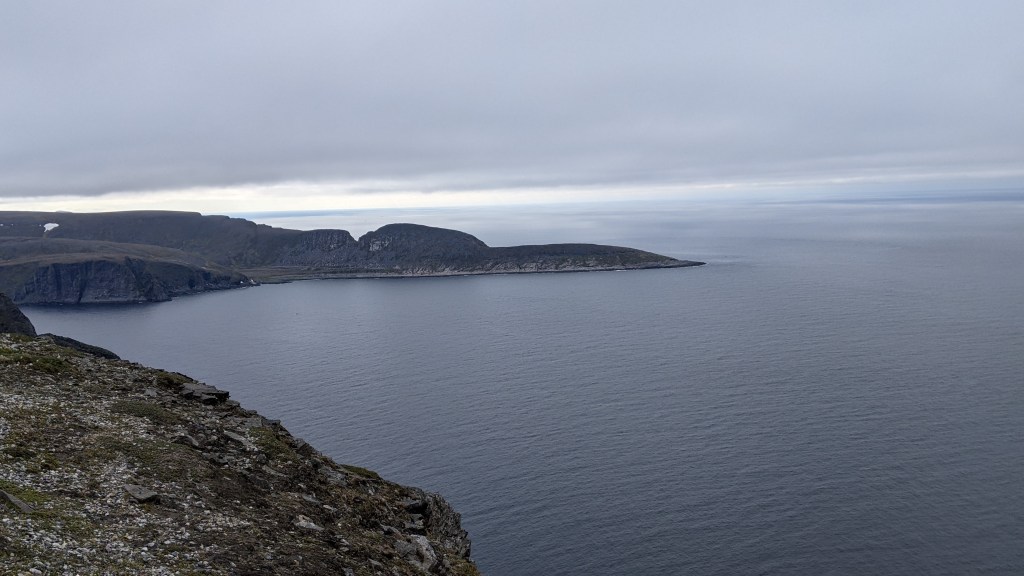
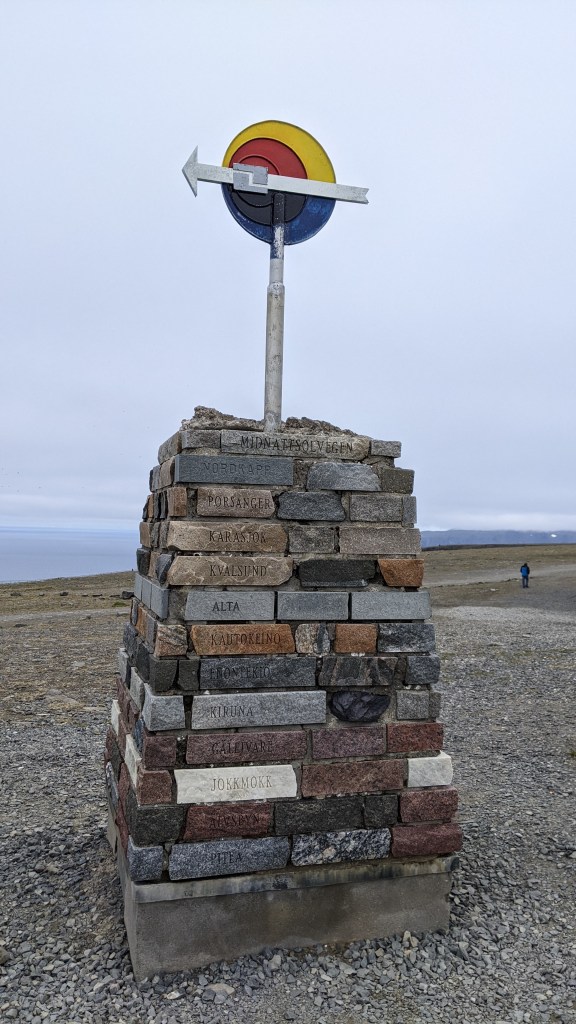
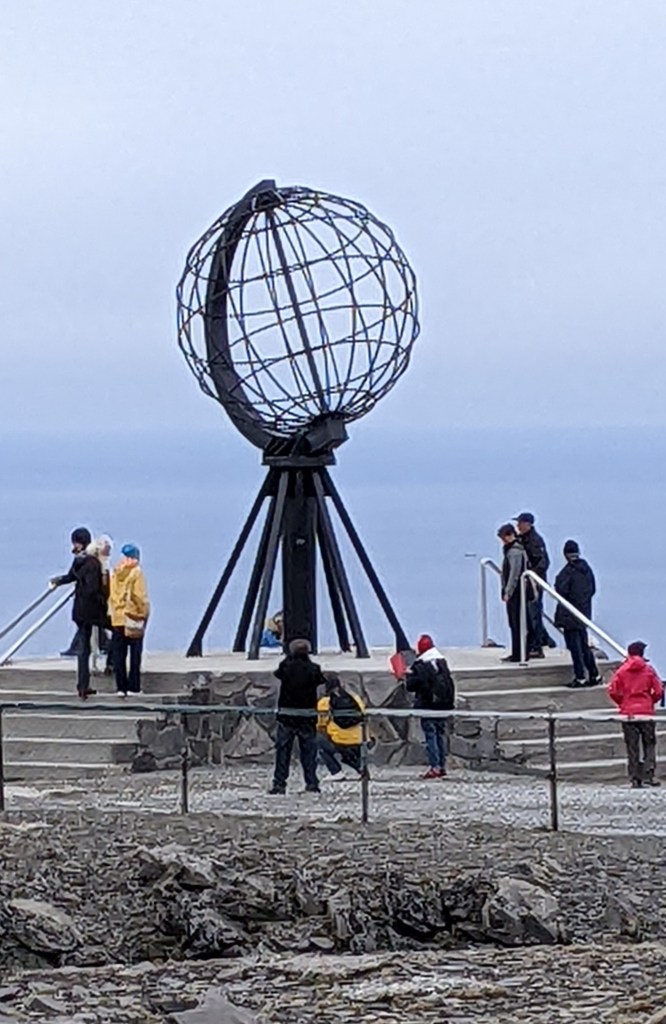
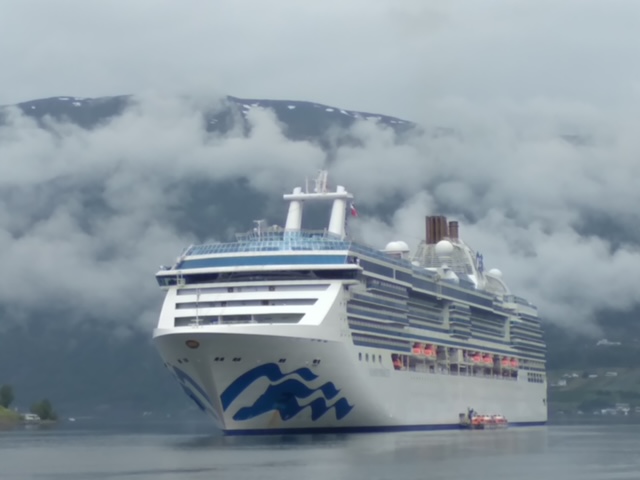
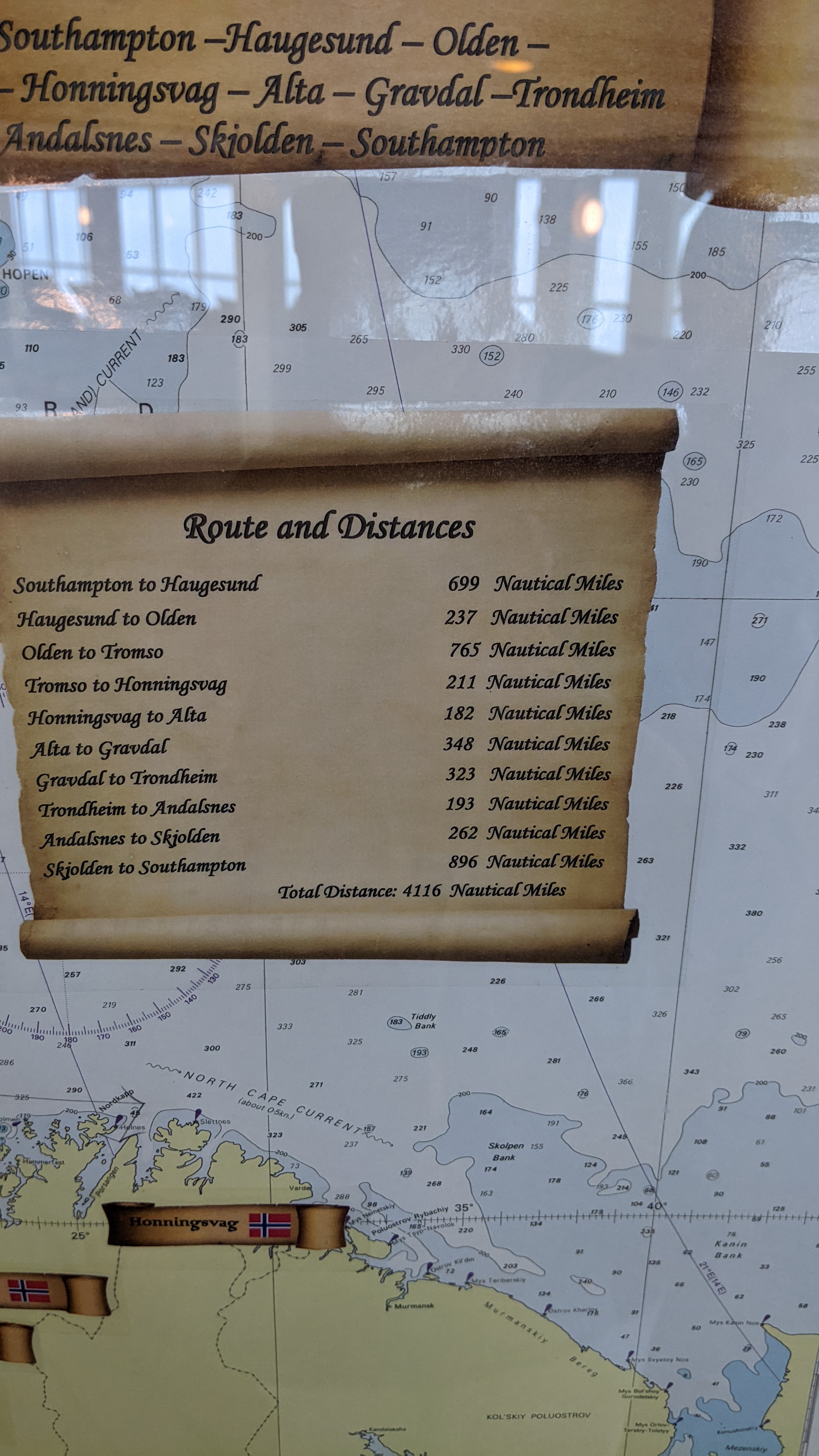
We traveled further north. Nordkapp lies at Latitude 71°10′21″ N, a high plateau on a spit of land that rises almost 400 feet above the swirling Arctic Ocean below. It is cold, windy and forbidding on the best of days. In the winter, the road to Nordkapp is often impassable, and not even reindeer remain on the surrounding fields.

The nearest town is approximately 22 kilometers distant. Oslo, Norway’s capital, lies about 2000 kilometers to the south, and the North Pole is about the same distance further north. At the easternmost end of the virtually uninhabited land, there is a 121.6-mile land border with Russia, established by treaty in 1826. But few travelers cross at the single border station, and the boundary between the two countries continues through the Barents Sea and the Arctic Ocean. As the furthest north point of land in continental Europe, Nordkapp attracts visitors who harbor the same dreams that have lured explorers to points unknown over the centuries. Their stories are captivating.

Early visitors had to arrive by boat on the sea below. They scaled steep, rocky cliffs to reach the point above. There was no visitor center then, and the path back down the cliff had to be even more difficult than the climb up.

Today, the draw of this stunning promontory is so powerful that tourist buses sometimes follow snowplows to bring visitors to the point. Our trip in June, however, entailed a pleasant drive along modern roadways, punctuated by native Sami settlements and the sight of reindeer grazing on the barren windswept land. They and their Sami masters invariably return to the mainland in the fall, prior to “polar night,” when the sun does not rise above the horizon for a period of months. We also visited a northern fishing village, which must feel terribly isolated during the winter.

Another northern port, sadly, was canceled. We had been scheduled to call at Svalbard, the island that houses the Svalbard Global Seed Vault, an underground facility that stores millions of crop seeds from throughout the globe, protecting them against disasters of all kinds, including global warming. We had anticipated visiting Longyearbyen, the largest settlement with a population exceeding 1,000 in the Arctic region, but the visit was canceled at the 11th hour.

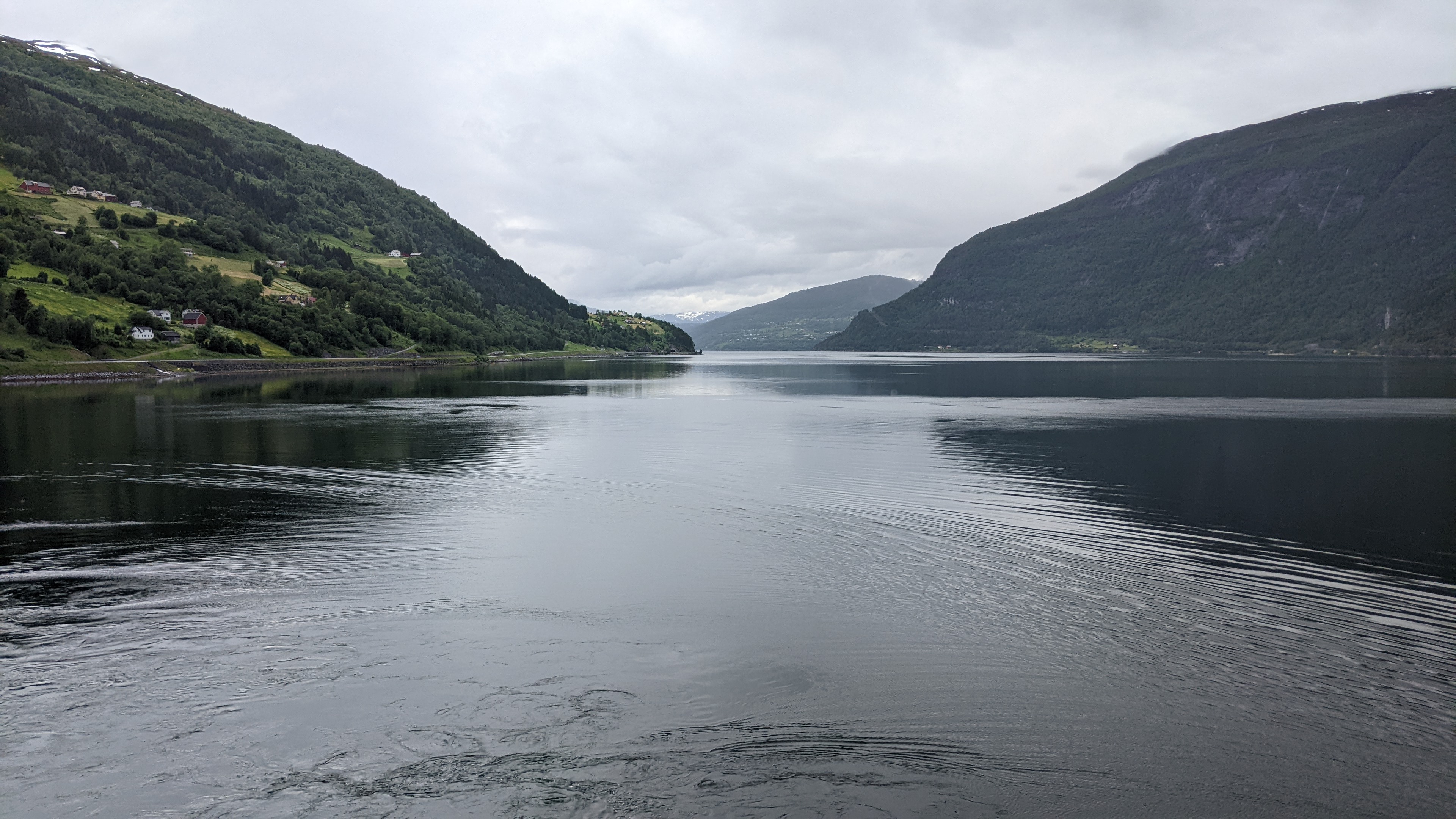
Our trip through the coastal fjords was spectacular, relaxing and enlightening. We are grateful to have had the opportunity to visit a far-away landscape that is awesomely beautiful, to drink in the natural beauty of the far North, and to meet the people who inhabit this extraordinary landscape. Those who live here are accustomed to strangers, but no one remains a stranger for long!

Now, another adventure awaits . . .

In January 2023, my husband and I — barring unforeseen circumstances — will experience another polar day. We will reach approximately 65 degrees south of the Equator and cruise among the ice shelves and along the shoreline of this unique continent. Our 16-day itinerary with the Sapphire Princess promises to be a unique adventure. We are not likely, given the size of our ship and current regulations, to cross Latitude 66°33′49.3″ which is the official Antarctic Circle. Only smaller expedition ships and scientific teams routinely venture further into this ice-covered environment.

We are scheduled to fly into Santiago, Chile, and embark from the port of Valparaiso for a journey that will take us to the southern reaches of Patagonia, and to Ushuaia, “the southernmost outpost in the world” at the tip of Argentina. We expect to sail in Beagle channel, as did Charles Darwin, and round Cape Horn just as previous generations of seafarers did on their voyages to the new world. Then, we look forward to spending four full days cruising the waters of the Antarctic Peninsula, leaving Ushuaia at the southern tip of Argentina and traversing Drake Passage, hopefully without incident, and with minimal turbulence from notoriously rough waters where the currents of three oceans collide. It’s a voyage I have long envisioned!

Just days ago, however, on December 2, 2022, I learned of the rogue wave that struck the Viking Polaris in nearby waters, resulting in the death of a passenger, injuries to four others, and damage to a well-equipped modern cruise ship. I realized once again that we humans have little control over the forces of nature, much as we would like to be the “powers that be.”

Does it concern me? Not enough to change our existing plans, but I cannot claim it didn’t give me pause. This trip to the bottom of the world, just as our trip to the Arctic Circle, will be during a polar day (or summer season) due to the inclination of the earth in relation to the sun. When my husband and I travel in late January to the southern reaches of the globe, will it be calmer in those waters? I do not know.

There are no permanent settlements in Antarctica, and the various research stations are located further south than our journey will take us. We will not set foot on Antarctica, the seventh of earth’s continents, but to gaze out at the barren expanses of snow-covered terrain and cruise past glistening icebergs, larger even than the ones we encountered in Alaska, will be enough. I, for one, am enthralled by the thought of being (relatively) close to another of earth’s legendary places — the South Pole. Like the North Pole, it is not a fixed point — it, too, shifts, even though there is a land mass below. If we are fortunate enough to spy seabirds, seals, penguins, albatross, and other wildlife in their natural habitat, we will count it as a bonus.

And, if our travel through Drake Passage is a calm one, I am certain we will be forever grateful. This trip to the “bottom of the world” is not only the culmination of a long-held dream, it also seems a fitting “second act” to last summer’s Arctic adventure.

Out in the world again . . .

Once again, each day dawns with new reports about Coronavirus mutations, infections and restrictions. Just a few weeks ago it seemed as if all that was in our past. Today, once again, COVID-19 is big news, at the top of the list of concerns for those of us who delight in travel and for others with holiday travel plans. COVID has had a personal impact for me and my family this year as well. Our holiday travel plans were altered because a member of our family tested positive. We experienced some anxious moments about his health and, although his symptoms were relatively mild, quarantine was the order of the day — or, more precisely, quarantine for 10 days, tests for members of his immediate family and, of course, no guests for the holidays.

Flexibility is today’s reality, for sure!

Still, it’s time to think about past and future destinations, and the differences we can expect.

In late September, we had the opportunity to “dip our toes in the water,” literally and figuratively, on a four-night cruise out of Galveston. We were more than eager to experience new travel protocols, and this seemed the perfect opportunity, with a single port call at popular Cozumel on the Mexican coast. Passengers were free to disembark and to explore freely. Shops and restaurants were open and taxis were abundant, but masks were required of all citizens and visitors.

Our Royal Caribbean ship, Independence of the Seas, sailed at less than 30% capacity: 1,260 passengers, with probably close to the same number of crew. It was quiet, but it was a wonderful experience. It whet our appetites for more and longer itineraries, held so long in check by the pandemic.

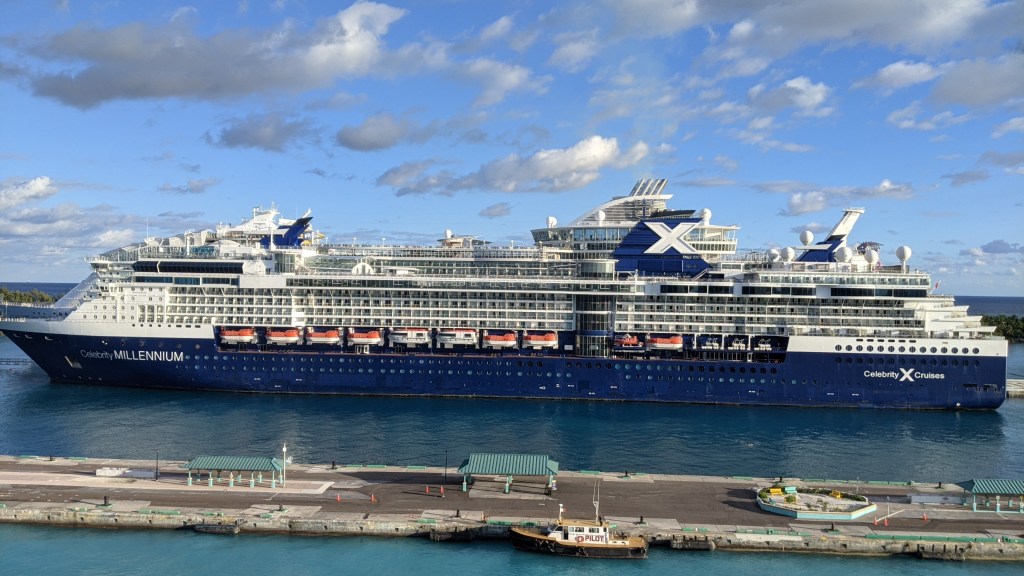
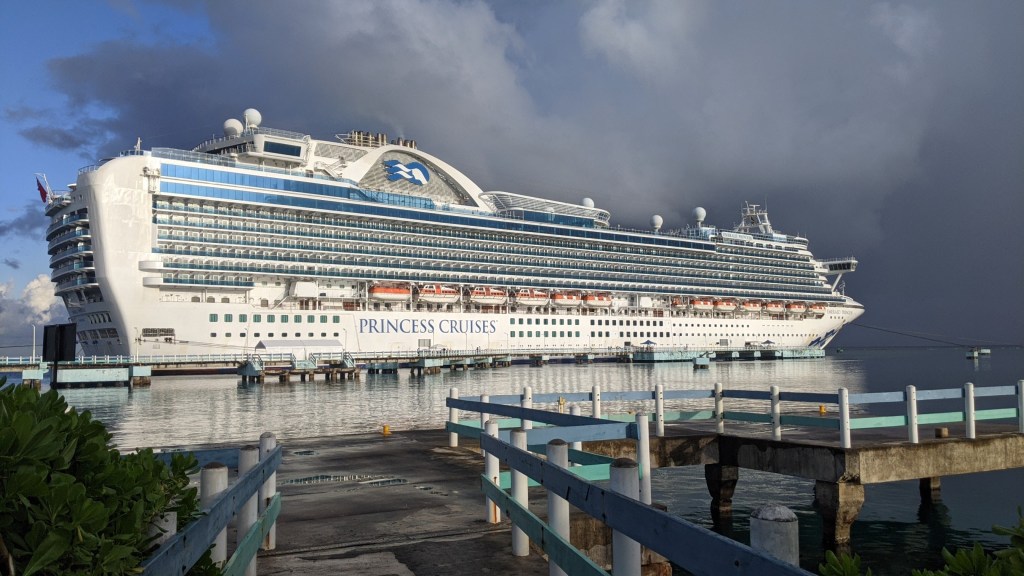
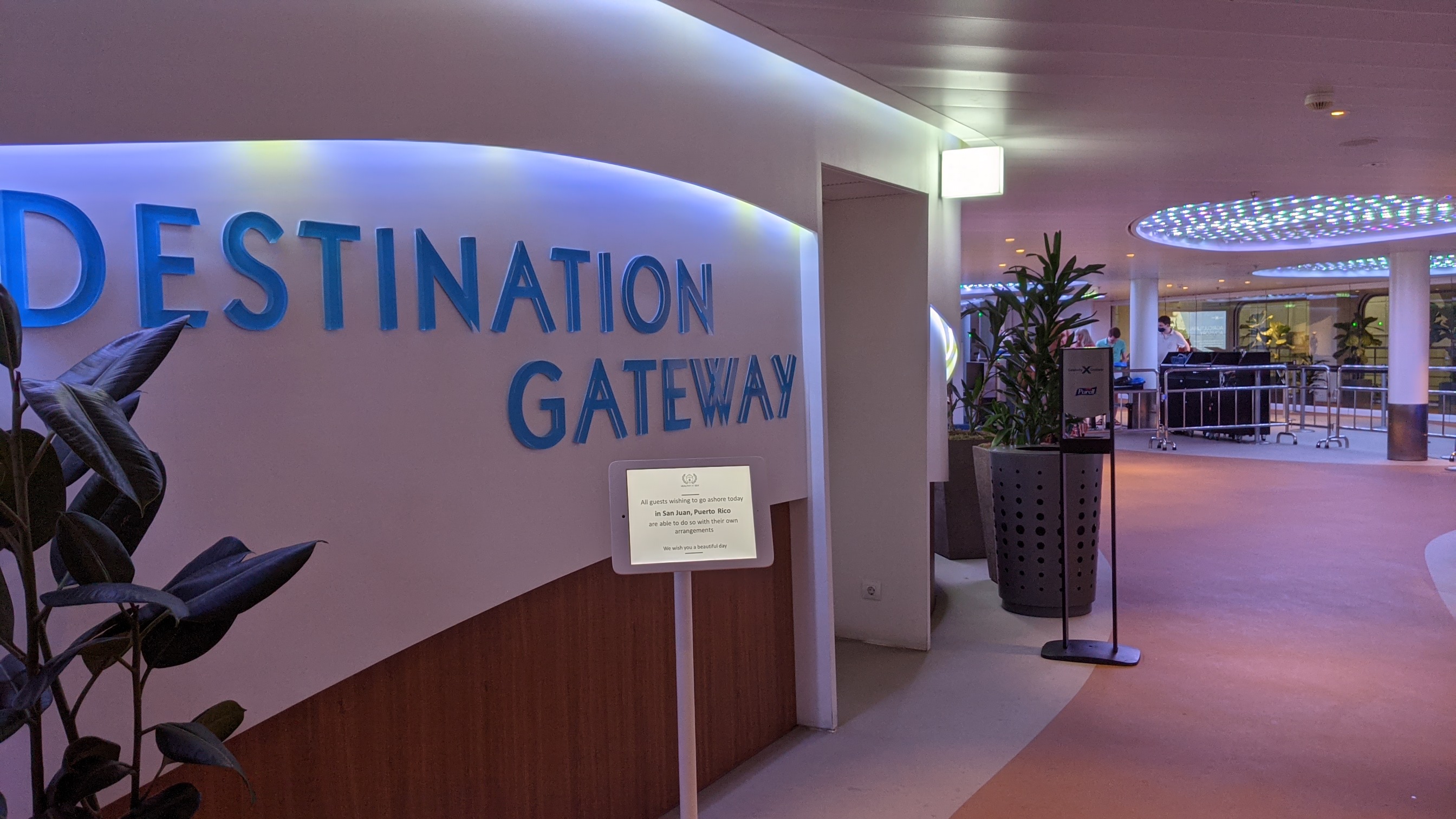
So, in mid-November, we flew to Fort Lauderdale to embark on three distinctive bookings on two different cruise lines. First, we visited the Caribbean ports of San Juan, Puerto Rico, Phillipsburg, Sint Maarten, and the beautiful island of Tortola in the British Virgin Islands. We sailed on the impressive Celebrity Edge, a modern ship designed to carry 2,908 passengers, but during our seven days on board, there were not quite 1,300 passengers. Then, after a few days in Florida, we set sail again on Emerald Princess, bound for the cruise line’s private beach resort on the island of Eleuthera. We sailed with fewer than 900 passengers. It was quiet and restful. That three-day excursion ended once again in Fort Lauderdale where, following a negative result to yet another COVID test administered by the ship’s medical team, we were authorized to remain aboard for another 10 days.

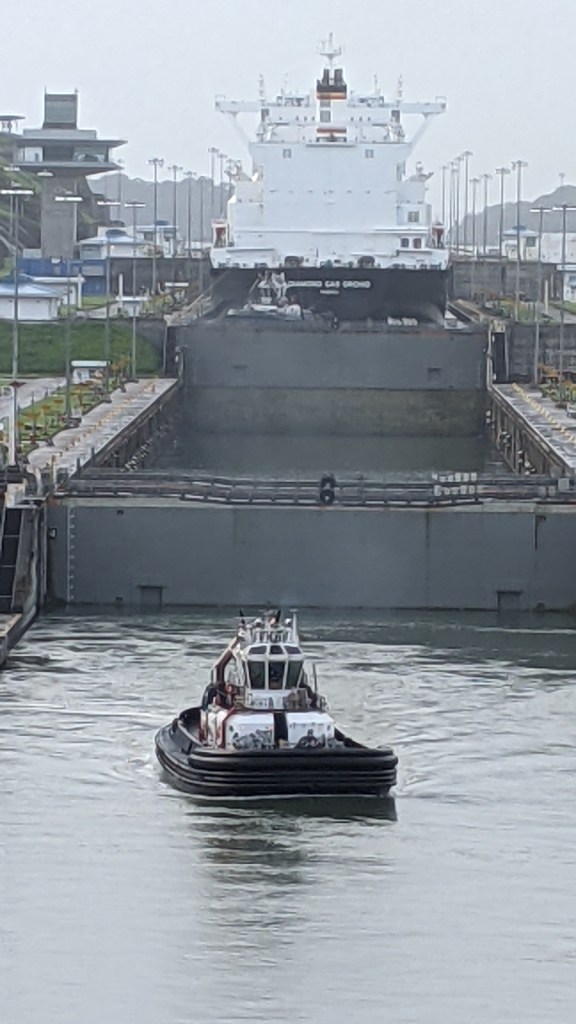
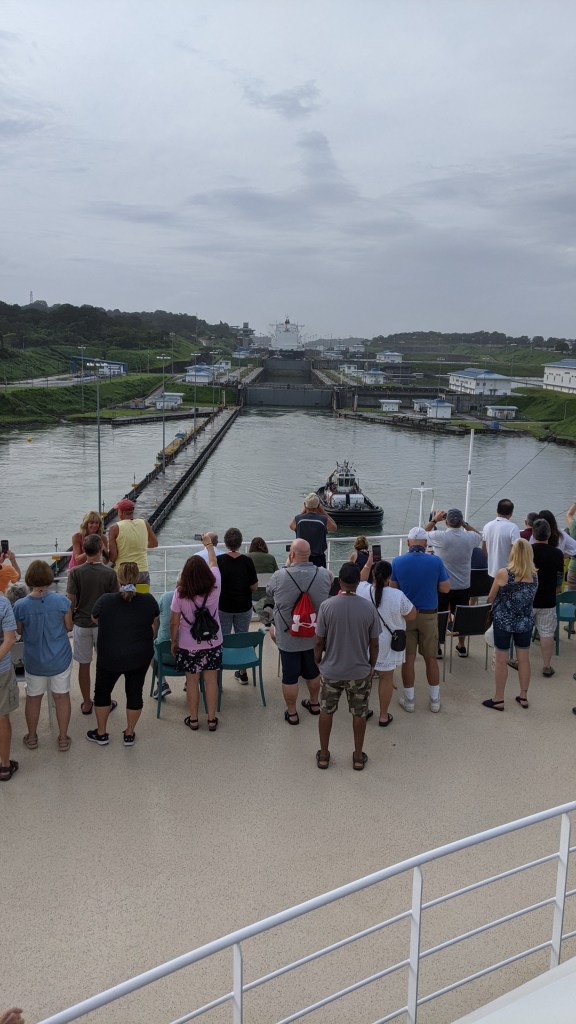
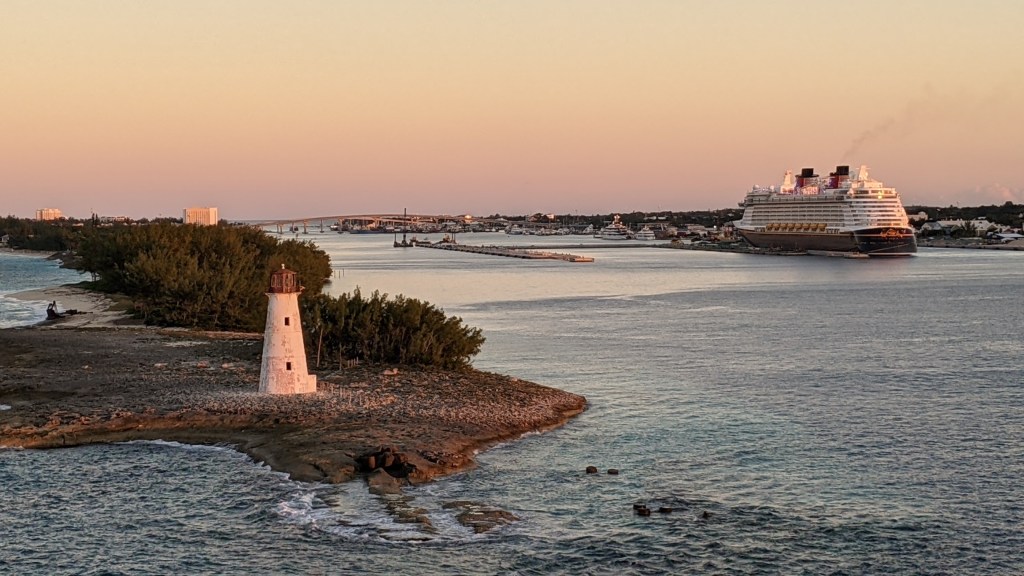
Our itinerary included passage through the Aqua Clara Locks of the Panama Canal, and our ship, designed for 3,080 passengers and more than 1,200 crew members, sailed with 1,374 passengers. Following an initial stop in Nassau where three other ships were in port, our captain set a course for Cartagena, Columbia, on the way to the Canal. Following our day spent traversing the locks and once again being awed by the marvel of the century-old engineering feat that changed the face of global commerce, our final port calls were in Costa Rica, and Jamaica, prior to returning to Fort Lauderdale to disembark.

It was quite an experience! We had previously visited five years ago, entering Gatun Lake through the old two-chamber locks which still operate perfectly, as they have since 1914. The new locks can accommodate much larger ships, of course, more than doubling the ability of the canal to facilitate shipping. It’s fascinating and impressive. Panama has changed during the intervening years, but despite the economic boost from the new locks, Panama and other Central American countries have suffered during the pandemic.

We agreed with other passengers that, as much as we have missed traveling, our disappointments do not compare with the hardships of crew members, some of whom were literally stranded at sea for up to four months prior to being transported back to their home countries. Nor did our “stay at home” time compare to the economic hardships faced by residents of these port cities that depend on tourism for their livelihoods.

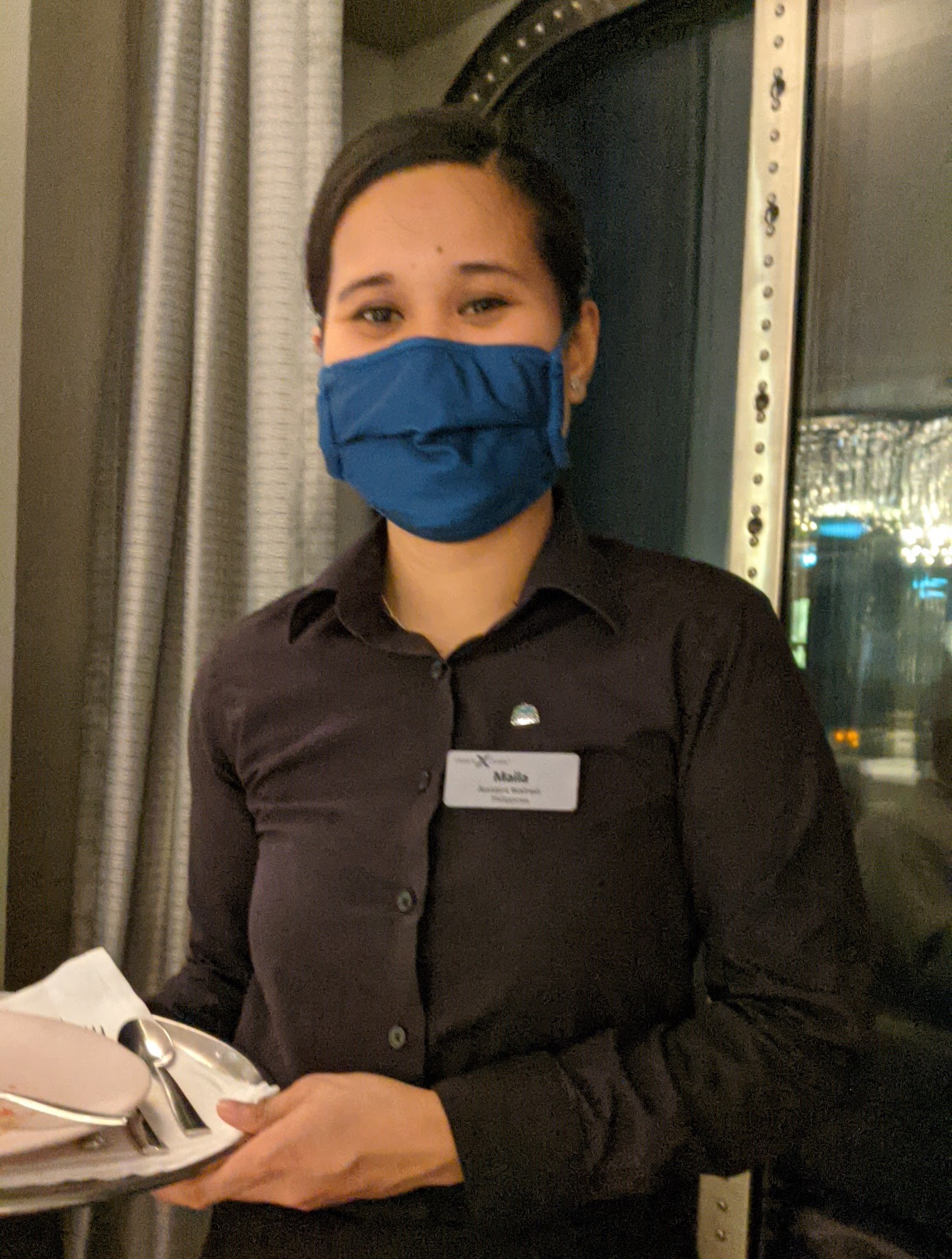
Sharing pandemic experiences and future dreams with the staff and crew, and with residents of the countries we visited, became the most important takeaway from these trips. Each ship sailed at far less than full capacity, making it easy to get to know bartenders, cabin stewards and dining room servers. To a person, we found all crew members, including senior officers and maintenance personnel, more than accommmodating, and eager to interact with passengers. To be sure, everyone we met was happy to be back at sea. And those we met on shore during our excursions were delighted to once again welcome us to their countries.

If you’re planning a trip — sooner or later — we would urge you to go. But be smart about it: Get your vaccinations, submit willingly to the tests, abide by the rules (and know that the rules can change quickly), talk to the people you encounter, and enjoy every moment.

The world is different, but it’s still welcoming, and there are good reasons to get out and experience it!

We found that talk about our collective pandemic experiences, our fears and our heartaches, brought us together. Ask people about their families, about how the pandemic affected them and about their hopes for the future. Connect on a personal level. We have always found that to be the best part about traveling. It’s especially true now.  

At the same time, however, I cannot help but be disturbed by the news that European countries are again closing borders and that more stringent rules are in effect for travelers arriving in the U.S. from foreign cities. I am appalled — and worried — by the rising numbers of positive tests throughout our country and around the world, and by daily reports of rising numbers of positive tests on cruise ships, and of cruise ships and passengers being turned away from world ports.

If you have recently been on a cruise or taken a trip abroad, I’d be interested in hearing your thoughts, not only about your experiences, but about any future plans you may be considering.

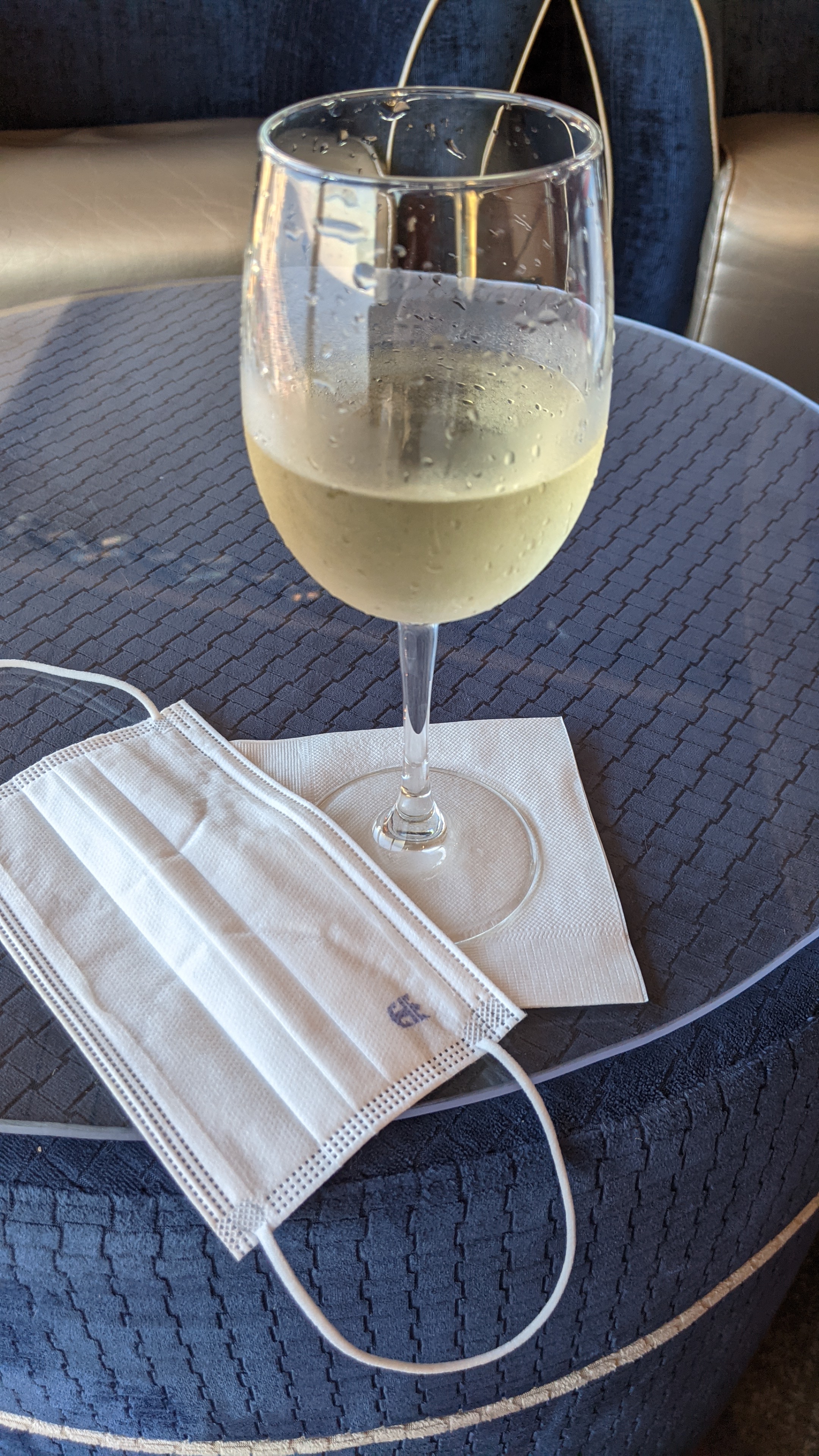
We felt perfectly safe as vaccinated travelers; we fell naturally into the routine of masks in public places, limited passengers in an elevator, social distancing and constant handwashing and sanitizing, although we sometimes did it all with wry smiles and perfunctory observance. We also appreciated (and took advantage of) every opportunity to shed our masks, even if only for a few breaths of fresh outdoor air, or when nursing a cool drink in the company of others.

One final thought: I have to hope that none of us will easily abandon our travel plans. Travel is the single most valuable step we can take to learn about this world we all inhabit, the best way to forge understanding of different cultures and ideas, and the only way to become truly educated citizens of the world we all share. Travel enriches us all.

Let’s don’t give up on that idea. If you’re thinking of a cruise, a guided tour, a flight to an exotic destination, even a cozy stay at a B&B across the state line, go for it. Plan it, do it, enjoy every moment and return home safe, refreshed and full of the wonder of it all.

I do not know what the future holds. Perhaps, as 2022 dawns, what we must all hold onto is hope. May the new year be better for all.

To echo the words of Rick Steves: “Keep on travelin’.”