Santa Fe: What to Know Before You Go

Imbued with a long and multi-faceted history, Santa Fe is a fascinating city characterized by a cultural richness that few other places possess. It offers something of interest to every visitor, in every season. But it’s impossible to see it all in just a few days, and no matter how much time you spend in the city or how many times you return, there is always something new to discover. First-time visitors are typically eager to learn about Santa Fe, but can leave exhausted if they attempt to see, do and “feel” it all.

Don’t let that happen to you.

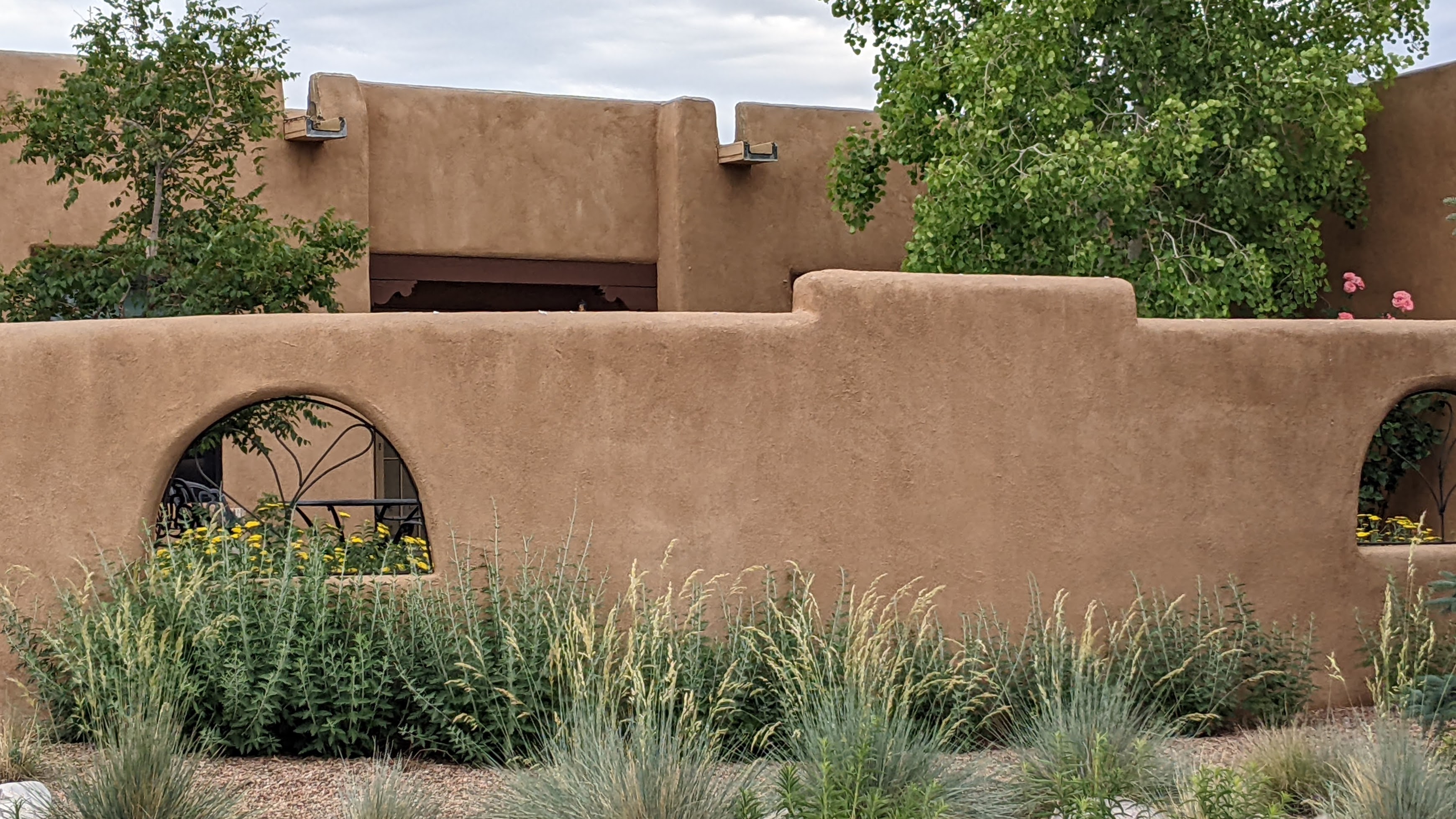
Instead, prepare for a trip to this 400-year-old city by doing some homework before you leave home. Know that, at an elevation of 7,000 feet, you are likely to tire more quickly than you might at home. Understand that Santa Fe has a delightful downtown square, and the city radiates in all directions from that plaza. In many ways, it’s a city to explore on foot, but distances can be deceiving. Embrace the art, the food, the museums, and the galleries, the restaurants and bars, and the natural beauty that surrounds you, but understand that Santa Fe is not a “bargain” destination. Learn about Santa Fe’s history, and appreciate the cultural differences. It’s that mix of old and new, of “everyday” and “one-of-a-kind” that casts a spell and makes Santa Fe unique.

Plan your trip and your activities wisely. Santa Fe is the capital of New Mexico, a state known for its diverse attractions, from mountains and winter sports to the sprawling desert landscape of White Sands, from ancient cliff dwellings and Native American Pueblos to Old West mining towns and the futuristic Very Large Array National Radio Astronomy Observatory. If possible, take the time to get out of Santa Fe and visit other parts of the state.

Chances are you’ll find something to love no matter what direction you go. Santa Fe is just “up the road” from Albuquerque, New Mexico’s largest city with a major airport. If you fly into Albuquerque, it’s best to rent a car there and drive north. One of your first stops should be at the Tourist Information Center in Santa Fe, near the state capitol. The knowledgeable staff can help you flesh out your plans for the time you’ll spend in “The City Different.”

Where to Stay

Downtown hotels, particularly those within walking distance of the Plaza, are typically expensive and frequently fully booked. If one of these highly desirable options is your choice, make your reservations well in advance. There are also numerous boutique hotels, B&Bs, nearby resort accommodations, chain motels, timeshares, private guest casitas and rental condos in and near Santa Fe.

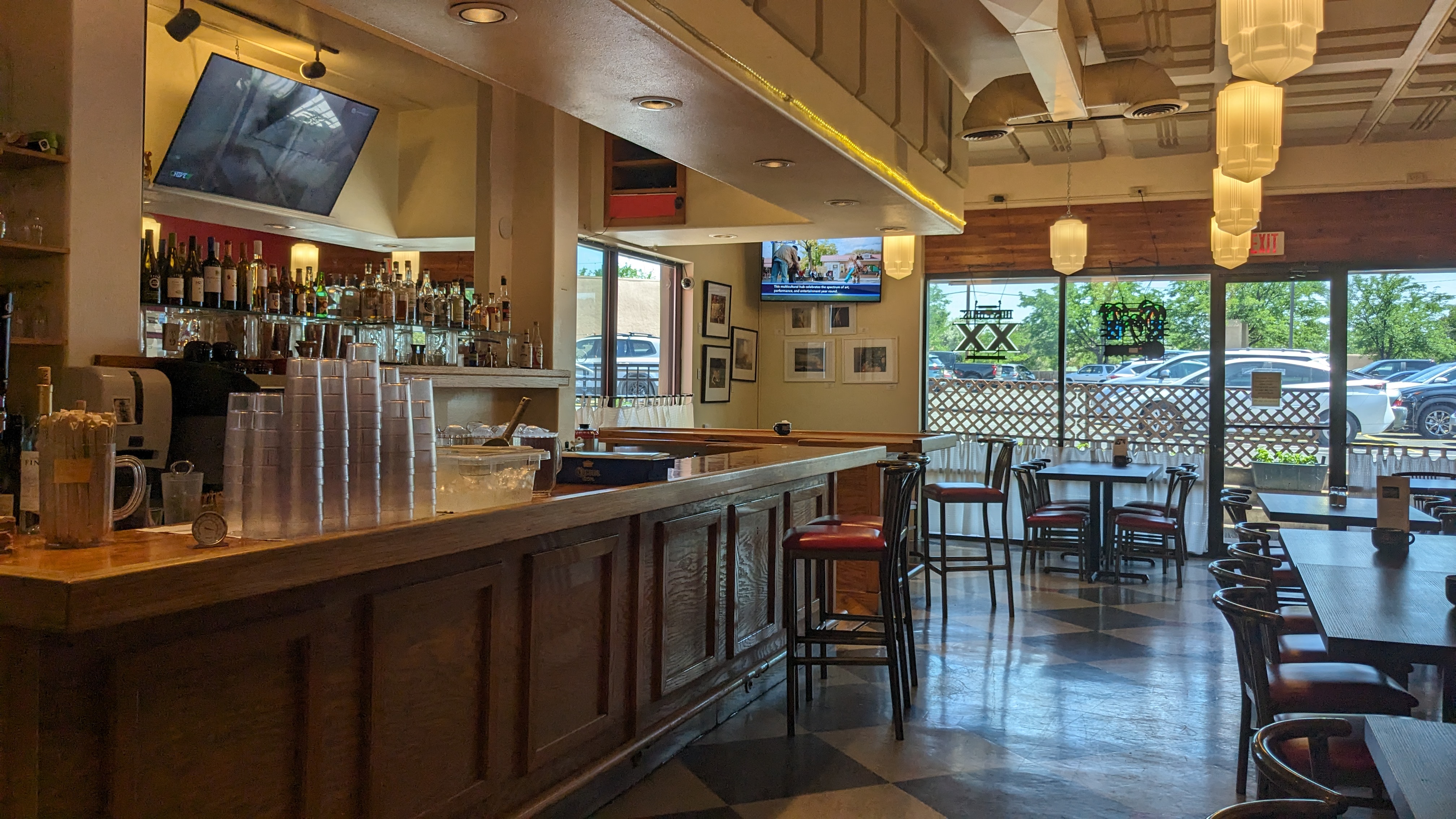
Use your favorite booking site or ask for recommendations from friends who have recently visited the city. On my recent trip, I stayed two nights at a delightful motel in a location that was convenient for what I planned to do in the city. I was there primarily to visit old friends. I was not looking for luxury, but was pleasantly surprised by the price and the amenities. The included breakfast is worth a shout-out — featuring freshly-prepared plump burritos and a variety of muffins, cereal, juice and yogurt — as is the level of service. The decor at Coyote South is distinctive, fresh and modern, and the staff is friendly and knowledgeable.

You will also find noted resorts and wellness retreats, although some are located quite a distance from downtown Santa Fe. Visitors can book packages that include spa treatments, pools and hot tubs, luxury accommodations, and distinctive meals. Two of the most unique are Ten Thousand Waves and Ojo Santa Fe.

Wherever you choose to stay, I can recommend a visit to La Fonda on the Plaza, for a drink or a meal, or just to look around. One of the city’s oldest landmarks, it occupies the site of the city’s first inn, built in the early 1600s when the city became the northern outpost of Spanish colonization. In the 1800s, La Fonda provided hospitality for anyone traveling west on the Santa Fe Trail. The current structure dates to 1922, and many of its signature features — beams, tin chandeliers and skylights — are original.
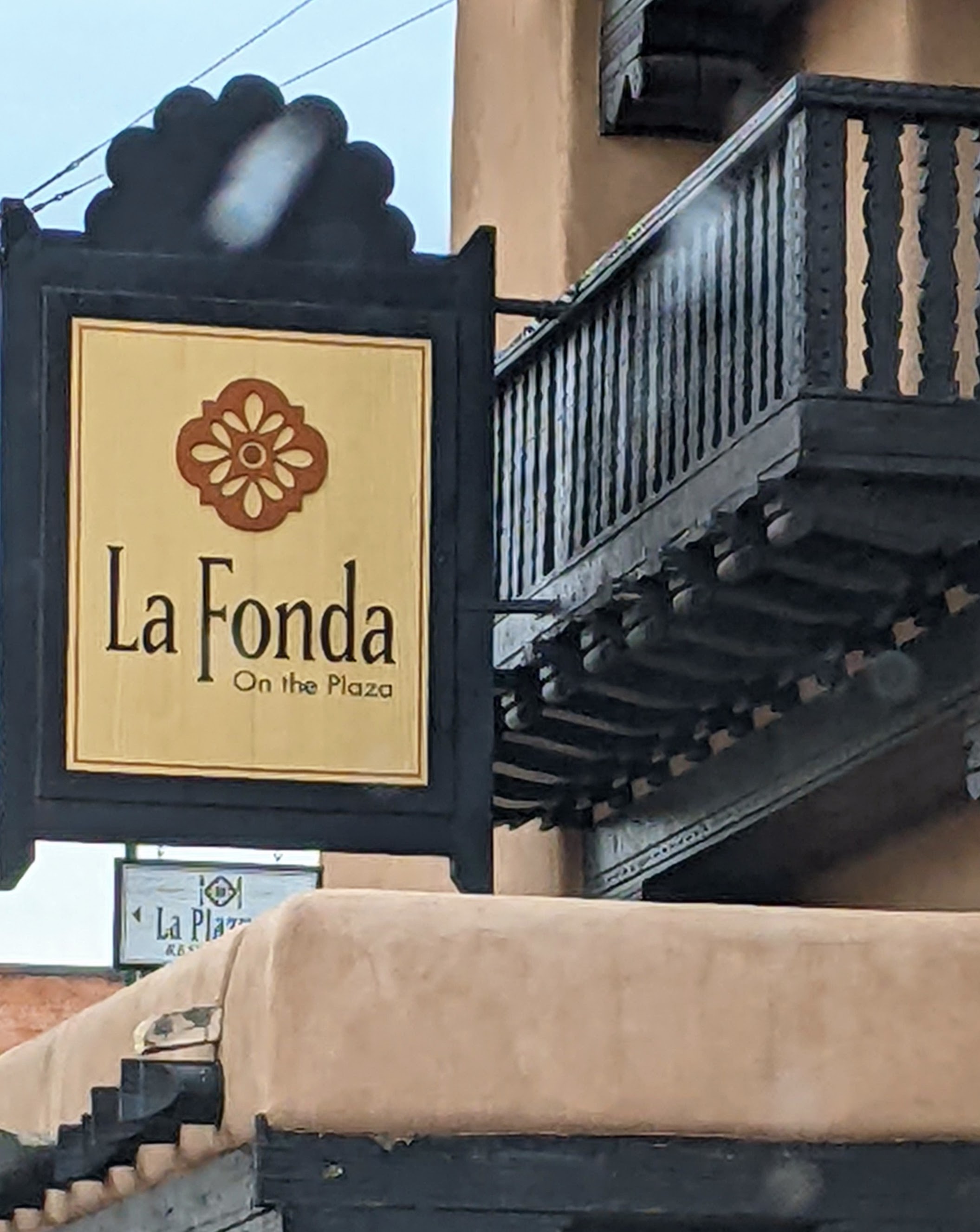
The inn was acquired by the ATSF railroad in 1925 and leased to hotelier Fred Harvey, whose “Harvey Girls” provided travelers great food and service until the hotel was sold in 1968. Today, it continues to serve travelers, with 180 guest rooms, three dining options, luxury amenities and an onsite spa. It is also a popular event venue and business center, renowned because of its period architecture, its history, and its hospitality. Stop in for a drink or a meal, or take a complimentary history and art tour, and you’ll see why.

Ask for assistance from a hotel concierge or your B&B host to help you plan skiing, hiking or fishing excursions, and trips to surrounding pueblos and casinos. Locals are usually only too willing to share information and help visitors,

Where to Eat

Santa Fe is also a noted foodie destination, with almost limitless options for both casual fare and fine dining. Many of the city’s finest restaurants are small, and reservations are recommended. You may encounter lines at popular lunch spots, especially in summer, during the many festivals, or at the height of the ski season. Plan ahead and be patient.

Breakfast is a favorite meal and a long-standing tradition in Santa Fe. Pasqual’s, situated a block off the Plaza, is always crowded, especially for breakfast, but it’s open every day except Tuesday, and it’s worth a wait. When ordering breakfast burritos or any type of egg dish, you may be asked “red, green or Christmas?” The question is to determine your preference of chile toppings. Know that it’s no sin to ask which is hotter; if you’d like to sample the different tastes, ask for Christmas. You’ll get some of each.

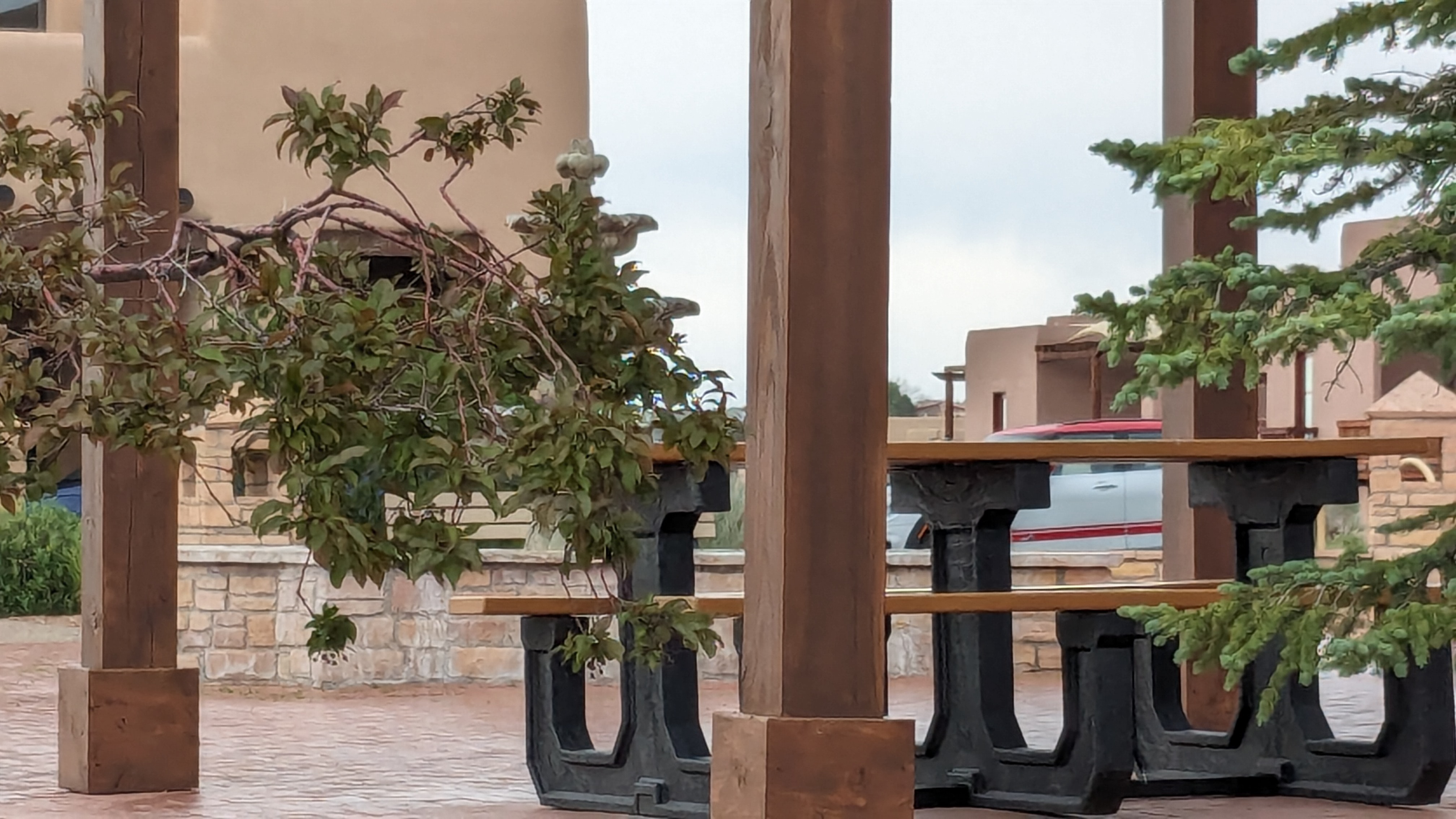
Casual eateries serve a wide variety of tastes, offering food that is fresh, flavorful and fun. Stop to sample local specialties at out-of-the-way cafes with patio seating, or order New Mexican or Native American street food from a vendor during a Santa Fe festival. You won’t be disappointed, and people-watching is a popular pastime. Order take-out from The Burrito Company or the Plaza Cafe to eat on a bench at the Plaza, or spread a blanket on the grass near the river.

If you explore Santa Fe neighborhoods, don’t neglect shopping center eateries and local craft breweries. You’ll find reasonably priced food, prompt service, and friendly people. Joe’s, on the south side of town is one such place, and Santa Fe Brewing Co. has several locations in both Santa Fe and Albuquerque.
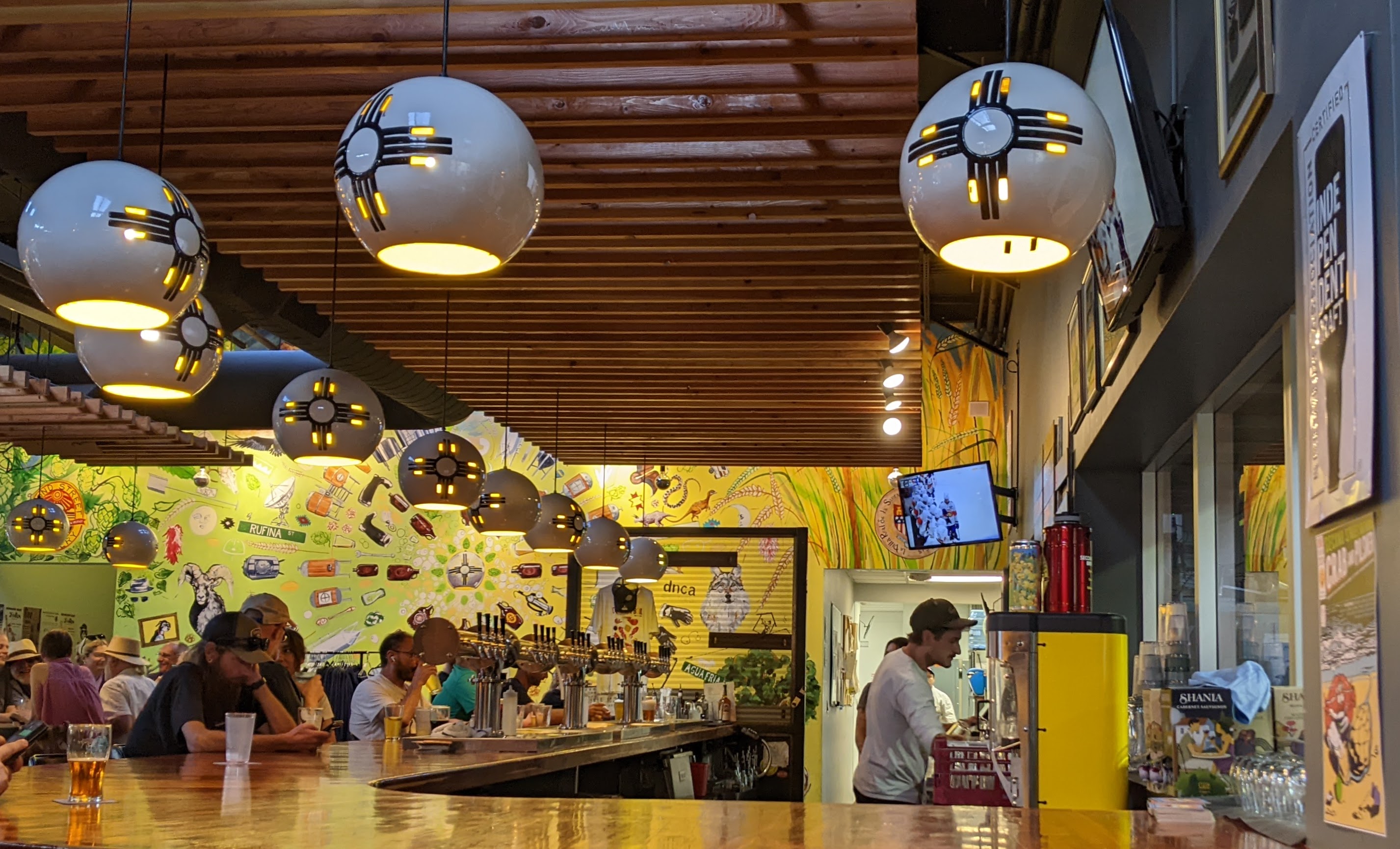
Need more suggestions about where to go? Here’s my short and very random list of personal favorites, but be open to exploring. Try someplace new and find your own favorites.

El Farol on Canyon Road is a classic Santa Fe hot spot located in an adobe building that dates to 1835. Open Wednesday through Sunday from 4 to 9 p.m., the parking situation can be difficult, and the decor is rustic rather than refined, but the live music and flamenco performances make it an experience rather than simply a meal. Daily Happy Hour drink and tapas specialties attract crowds. Dinner choices that include paella, mussels, beef, and salmon as well as New Mexico enchiladas and desserts are legendary. Vegetarian and vegan options are available.

Coyote Cafe at 132 W. Water St. has won awards since it first opened in 1987, and the acclaim continues to this day. Named 1st Place winner in the Best of Santa Fe competition for 2024, Celebrity Chef Mark Miller pioneered the use of strictly regional and native ingredients to develop menus that have stood the test of time. Coyote Cafe attracts an army of repeat visitors. The Rooftop Cantina is a lively casual gathering spot for locals and visitors alike. Order Mama Schutz’ Frito Pie as a nod to tradition. Santacafe, a sister venue, is located at 231 Washington Ave., and is noted equally for its elegant outdoor courtyard dining patio and its delicious food.

El Nido in Tesuque, another of my go-to choices, is especially soothing on a chilly fall afternoon or a cold, snowy winter evening. The heated garden portal is a wonderful gathering spot from spring into fall, but the interior is El Nido’s all-season haven, with the ambience of aged wood, original tin chandeliers and colorful wall murals. Meals are prepared at an open-fire grill center, so diners can watch the action. Order sake and sample starters from El Nido’s companion sushi bar “SU.” Then, your dinner choices — pizza, pasta, steak, seafood, or chicken — will arrive at your table perfectly prepared, well-seasoned and hot off the grill.

After a day of gallery hopping or sightseeing, a restorative Margarita from the 100 or so on the menu at Maria’s may be “just what the doctor ordered!” It’s a long-standing tradition, where Santa Fe friends meet and visitors to the city go to make new friends and exchange stories. It’s lively and loud, usually crowded, exceedingly friendly and welcoming, and totally likeable. I’m not kidding. Don’t hesitate to ask locals for recommendations for a late dinner or an early breakfast.

New bars and restaurants spring up regularly, while others have been open for decades, if not centuries.

What to Do

Excursions from Santa Fe provide a long list of opportunities. Depending on your interests, you can fish clear lakes or swift-running mountain streams. Visit Native American pueblos to learn about the ancient cultures that have existed here for centuries. Visitors are welcome, but respect the traditions of each pueblo, especially if you visit on a feast day or for a special ceremony.

Visit the Bradbury Science Museum in Los Alamos. It explains the history of the Manhattan Project and other research and discoveries during the atomic age, as well as continuing scientific studies. Admission is free, and the museum is open every day except Monday, but check current hours. On the way to Los Alamos, about an hour from Santa Fe, stop at Bandelier National Monument to explore ancient cliff dwellings in the Jemez mountains. Nearby Frijoles Canyon offers spectacular scenery and views.

The award-winning Los Alamos Nature Center is filled with interactive exhibits and displays, including live animals, a topo map of the surrounding plateau, a children’s discovery area, information about the Valles Caldera, and a wonderful planetarium. Evidence of volcanic action is still detected at this dormant, but not extinct caldera, formed by an eruption more than a million years ago. It’s a not-to-be-missed attraction, especially if you’re traveling with kids.

Las Vegas lies an hour or east of Santa Fe. In addition to its historic Old Town, the Las Vegas National Wildlife Refuge boast 8,000 acres of grasslands, wetlands, and forests, where birders and hikers can explore to their heart’s content. Guided tours are available at historic Fort Union that played a pivotal role in both Indian conflicts and the Civil War, and the Rough Rider Museum sheds light on the time that Theodore Roosevelt spent in New Mexico, offering insights into his legacy. Finally, a visit to Montezuma Castle, a pueblo structure built more than 800 years ago, gives visitors a unique glimpse into the history of the area. Las Vegas also has an active modern arts community, and you’ll find galleries, eateries, and plenty to round out a visit to an interesting historic town.

Madrid, pronounced with an emphasis of the “Mad,” is on the back road to Albuquerque, and if you’re driving, it’s worth your time to explore this funky old coal mining town turned artist’s colony. Madrid is pretty much the midpoint of The Turquoise Trail, the designated scenic byway between Tijeras, east of Albuquerque, and Santa Fe. It passes through the small towns of Cedar Crest, Sandia Park, Golden, Madrid, Cerrillos, and Lone Butte/San Marcos on its way to “the top of the trail,” and Santa Fe. The Mine Shaft Tavern in Madrid is worth a visit, whether you make it a lunch excursion from Santa Fe, or a stop along the Turquoise Trail.

Finding Enchantment in The City Different

New Mexico is termed the Land of Enchantment. I was first introduced to this enchantment in the mid-7o’s when I visited as a tourist from Dallas. Then, I moved to Santa Fe in 1991, and spent nearly 20 years there. During my tenure, the city changed in many ways, and I moved on. But my love for Santa Fe never waned. In some ways, I still miss the city, the culture, and the lifestyle. I have not returned often enough over the decade or so since I left. But each time I do, I fall in love with the city all over again. It tugs at my heartstrings.
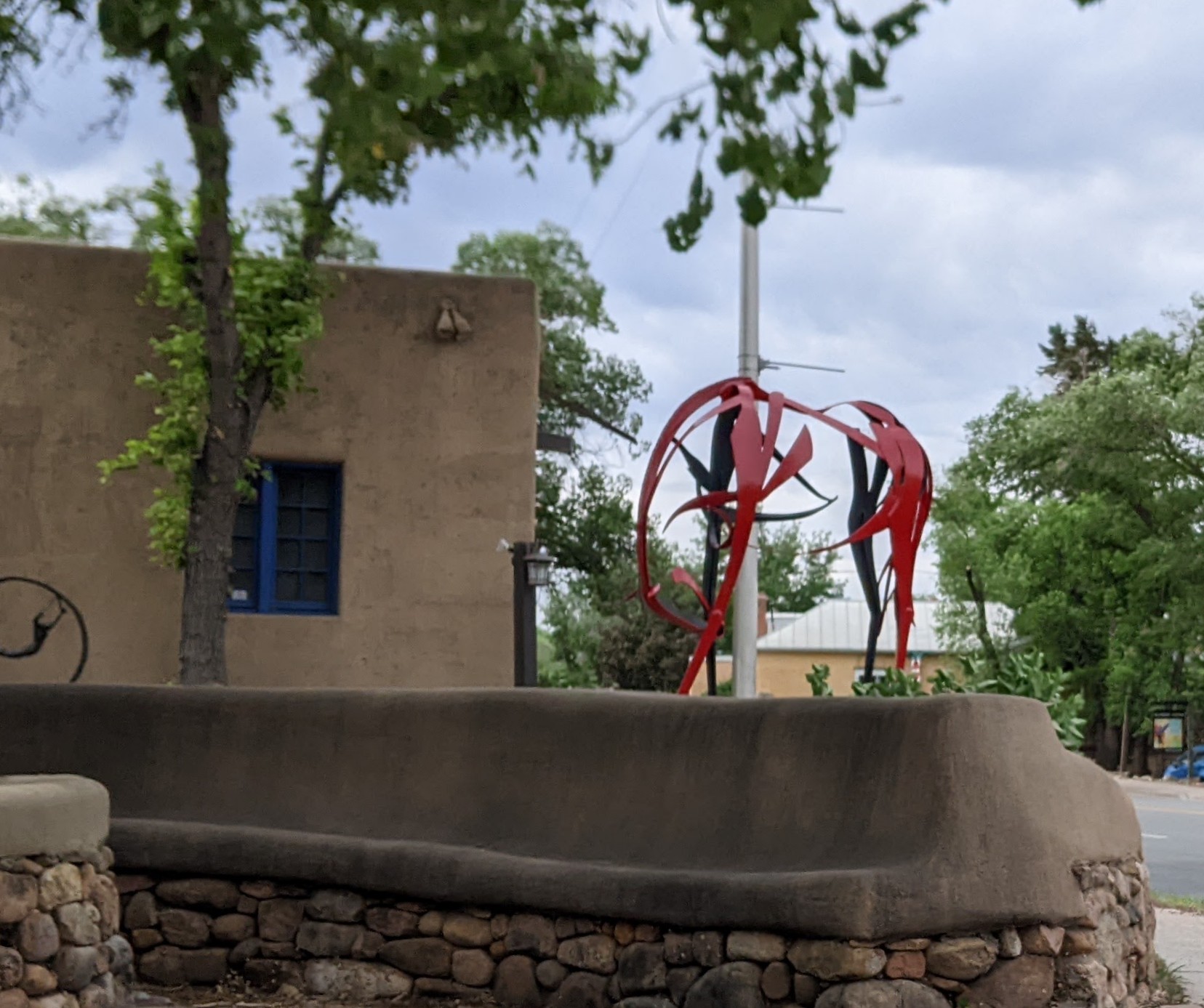
If you haven’t previously visited this magical place, perhaps you too will be captivated as I was. Try not to draw comparisons with other places. Just enjoy it because it is The City Different.

In Santa Fe, you can eat the food of many different cultures, gaze at stars in the sky so bright you’d swear you could reach up and touch them. Breathe in the fresh mountain air — it will be pinon-scented in the winter from the wood that burns in local fireplaces. Smell the lilacs in the spring and savor the scent of roasting chiles in the fall. Bask in the warm sun all summer and don your boots to hear the crunch of fresh snow on crisp winter days. The sun will shine most days, no matter what the season. Hopefully, no matter how long you stay, you’ll leave wanting to return.

Pick and choose from the seemingly unending buffet of treats that Santa Fe offers. Stop to enjoy its quiet beauty. A traveler’s best resource is the Official Visitors Guide. It provides a great introduction to the City Different. View it online or request a copy delivered right to your home.

Note: The recommendations I have made are all based on personal knowledge gained during the years I was a resident of Santa Fe or my travels in New Mexico over the years. I have not been compensated, financially or otherwise, based on opinions I have shared.

Escape the Bounds of Earth: Visit Space Center Houston

On April 12, 1961, Soviet Cosmonaut Yuri Gagarin became the first person to fly in space. The event not only made world news, but it reinforced American fears about being left behind in the technological competition with the Soviet Union.

Two and a half years earlier, the Soviet satellite Sputnik 1 had circled the planet for approximately three months before burning up as it re-entered Earth’s atmosphere. That was followed by dogs in space, a fly-by of the moon, a crash of the Soviet Luna 2 probe onto the surface of the moon, and the first photos of the dark side of the moon. All were Soviet accomplishments.

John F. Kennedy was elected President in November 1960. At the time, it seemed as if the Soviet Union had beat the U.S. into space before the term “space race” had even been voiced.

Then, in an address to Congress and the Nation on May 25, 1961, President Kennedy proclaimed: “I believe that this nation should commit itself to achieving the goal, before this decade is out, of landing a man on the moon and returning him safely to the earth.” 

At the time, it seemed an audacious, if not impossible, dream. But the mood of the nation was energized and hopeful.

Plans were made for two new rocket launch complexes north of Cape Canaveral in Florida, although construction of the enlarged Launch Operations Center wouldn’t begin until November 1962. Land was set aside near Houston for what was to become NASA’s Mission Control Center. The new president wasn’t about to let the other side gain further advantage. The National Aeronautics and Space Administration had already established the Marshall Space Flight Center (MSFC) in Huntsville, Alabama.

The Race to Space Had Begun

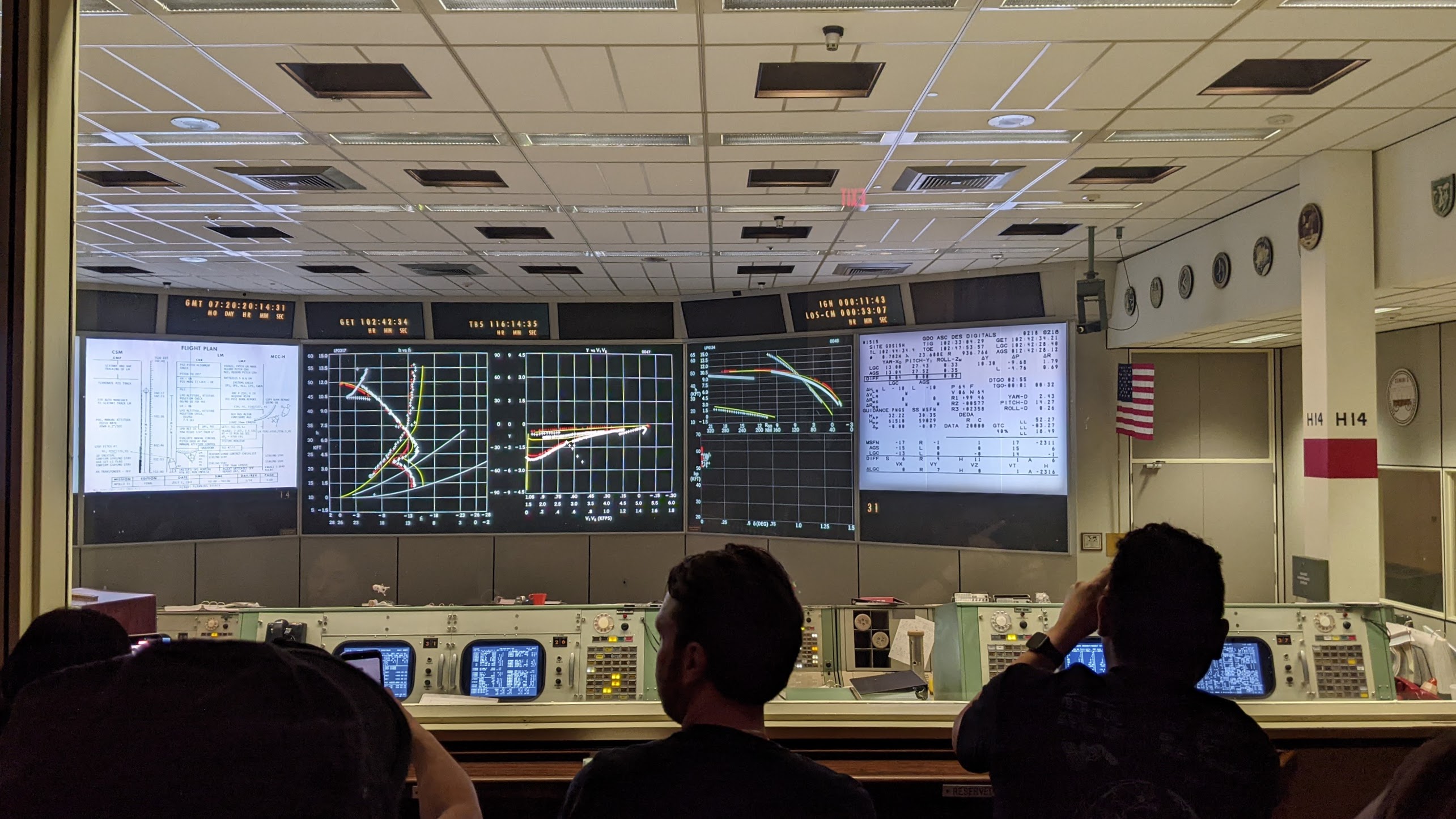
My visit to Space Center Houston included a tour of the Mission Control Center in use for most of the country’s early space flights, including the first moon landing in 1969. It has been preserved as it was then — down to cigarette butts in ashtrays, Styrofoam coffee cups amidst the banks of monitors and scattered about on the floor, a few black desktop telephones with curly cords, and bulky vintage computers.

Today, the room looks somewhat like a movie set. Stadium seating behind a wall of glass allows visitors to see the array of desktops and equipment. For those of us who watched that first landing in real time, it was eerily familiar.

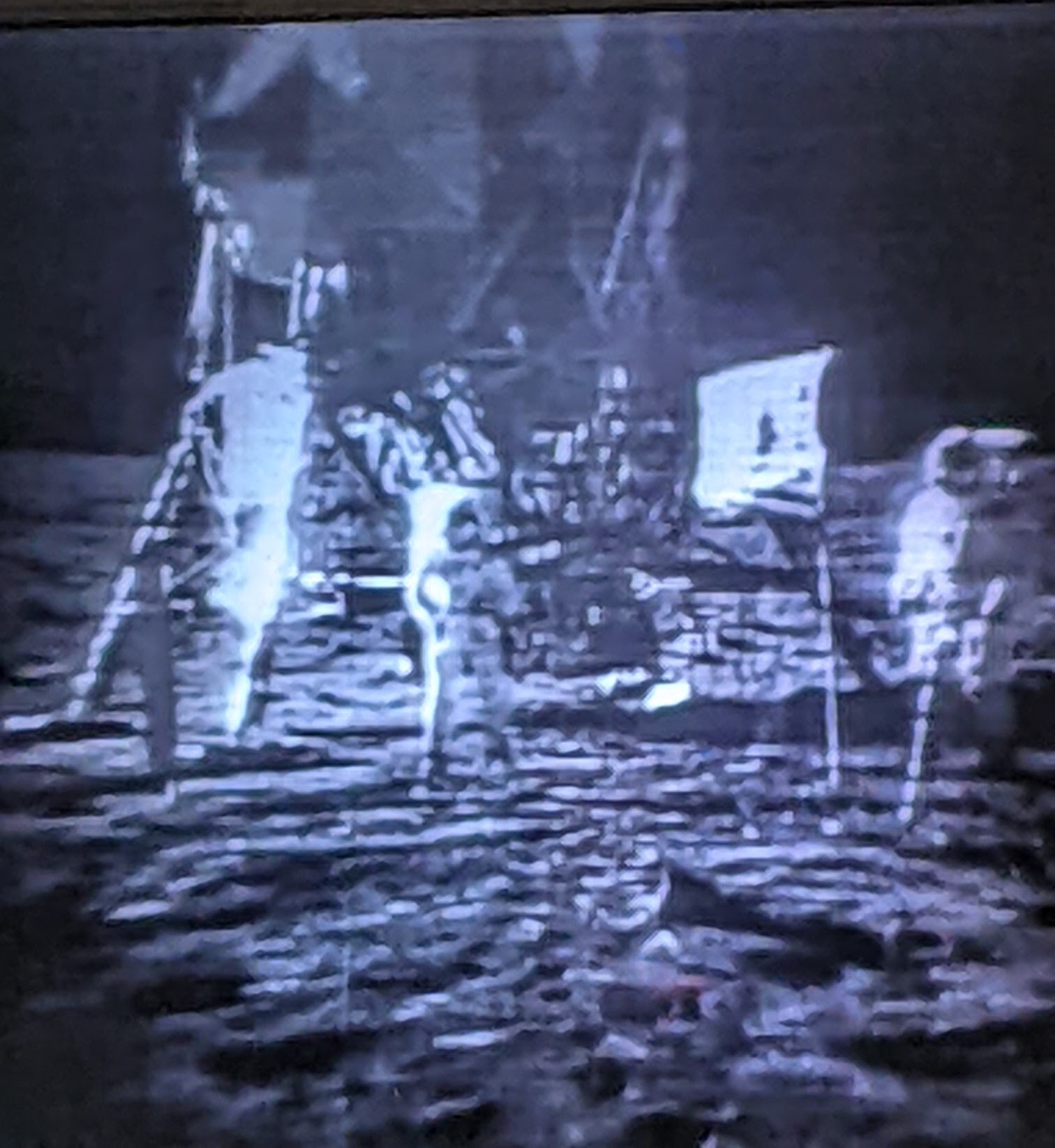
Visitors watch the broadcast tape from July 20-21, 1969, replayed on a wall-mounted TV screen. Listening to the raspy voices of mission control directors and news reporters, I was transported back to that time. I nearly teared up once more as veteran television commentator Walter Cronkite appeared overcome with emotion. I couldn’t resist mouthing the words: “The Eagle has landed.”

First Men on the Moon

In quick sequence, I relived the disbelief, the awe, and then the jubilation of that July day. I almost forgot that it had happened 55 years ago.

The first words spoken by Neil Armstrong were unclear: “One small step for . . .”  Did he say man or a man? And then, “One giant leap for mankind.”

Astronaut Buzz Aldrin followed Armstrong, stepping out of the lunar lander onto the moon’s surface approximately 20 minutes later. The lander itself was an odd sort of taxi from the orbiting Apollo spacecraft to the moon’s surface. With spindly “toothpick” legs, it seemed held together by aluminum foil and chewing gum. Pilot Michael Collins remained aboard the Apollo command module Columbia in orbit around the moon.

The lunar lander was on the surface of the moon for about 21 hours, and the two astronauts didn’t venture far from the landing site, dubbed “Tranquility Base” by Armstrong. They did, however, plant the first American flag on the surface and they collected more than 45 pounds of moon rocks before reboarding Eagle.  When they returned to Columbia with their payload, the lander was jettisoned to fall back onto the surface of the moon.

The Apollo 11 mission that brought these first humans to the moon was just the fifth crewed mission of the Apollo program.  Six Apollo missions actually included moon landings, and Armstrong and Aldrin were the first of only 12 men to step onto the moon’s surface.

Ever!

The final moon landing was a 12-day Apollo 17 mission in December 1972, just a little over three years after Apollo 11.

NASA Today

The current mission control center is still located in the same building at Johnson Space Center, just a floor or two below the original. Our group did not visit, but I expect it is sleekly outfitted with an updated array of wireless communication technology necessary to monitor today’s space launches and landings.

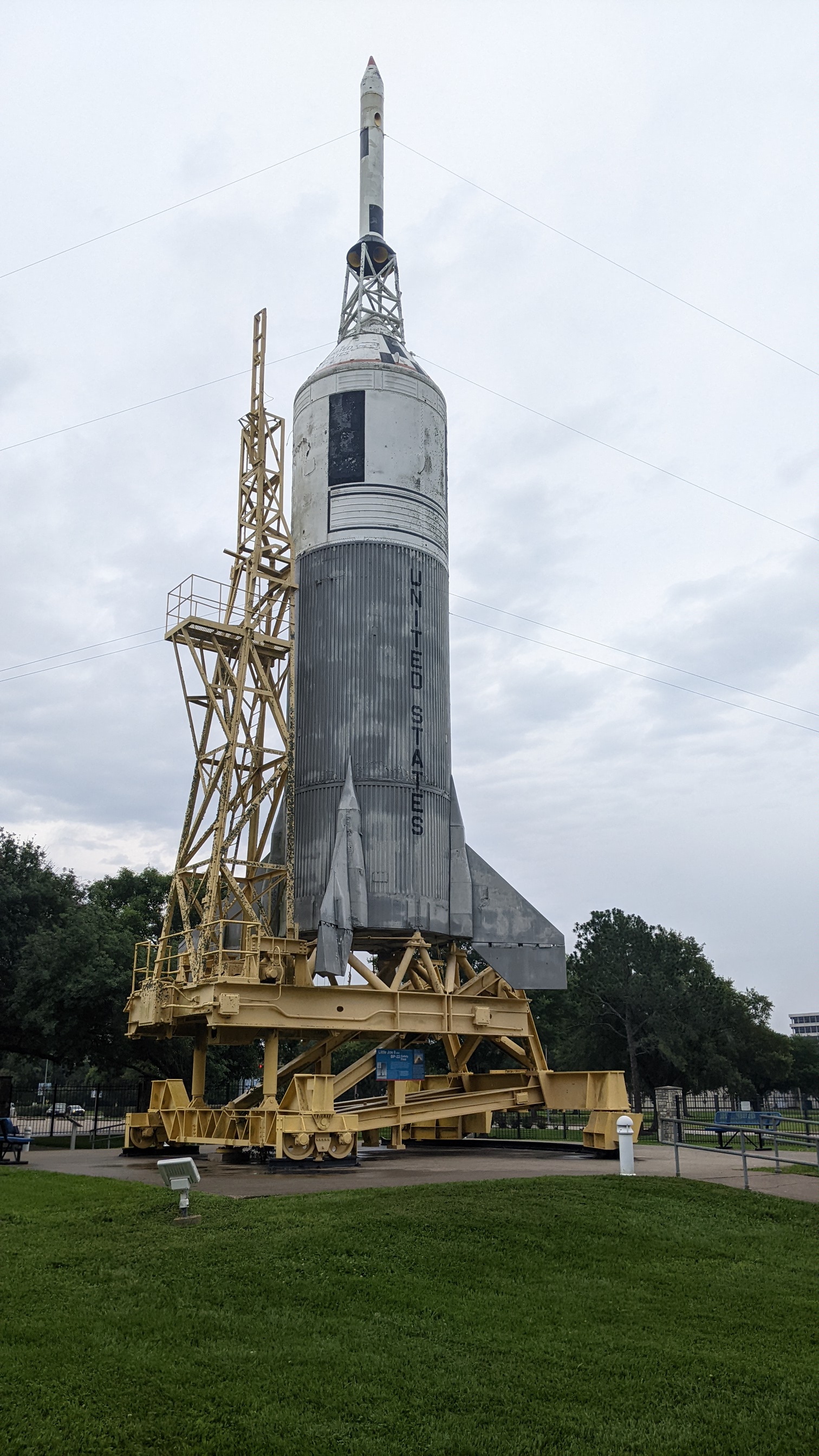
The grounds of Johnson Space Center, however, are “littered” with reminders of early American space exploration.

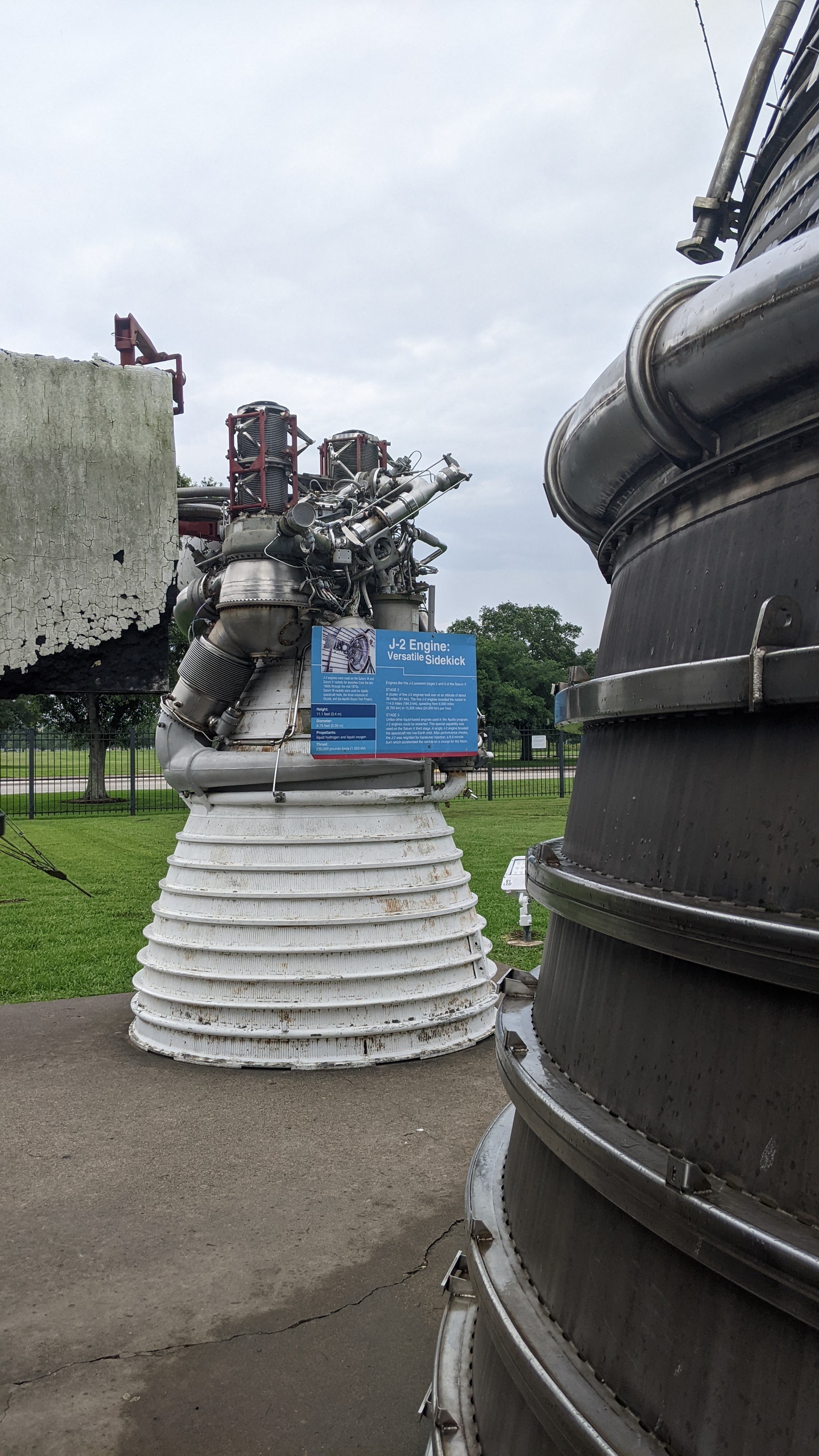
Marvel at the immense Saturn rocket that carried Apollo astronauts into space. The 30-story tall rocket was displayed outside and upright for two decades, but it suffered “weather abuse,” so it has been restored and is now displayed horizontally in a specially constructed building.

I gasped at the size of the five immense thrusters on the Saturn V. It is one of three intact Saturn V rockets that still exist, and it stretches for what seems like blocks, while flags and story boards chronicle NASA’s 17 Apollo missions, both the successes and the tragic failures. It’s a sobering experience.

Learn the history, from initial pre-orbital flights through later missions used to transport men and supplies to the orbiting Skylab, launched into orbit in 1973.

Then, move on to the space shuttle era. 

Between 1981 and 2011, American shuttles successfully completed 135 missions and carried 355 astronauts from 16 countries. My husband and I were observers twice for shuttle launches, including the last flight of Space Shuttle Discovery in February 2011. Discovery was the third of five shuttles built, and the first to be retired.  The U.S. shuttle program was discontinued later in 2011, with the final flight of Shuttle Atlantis.
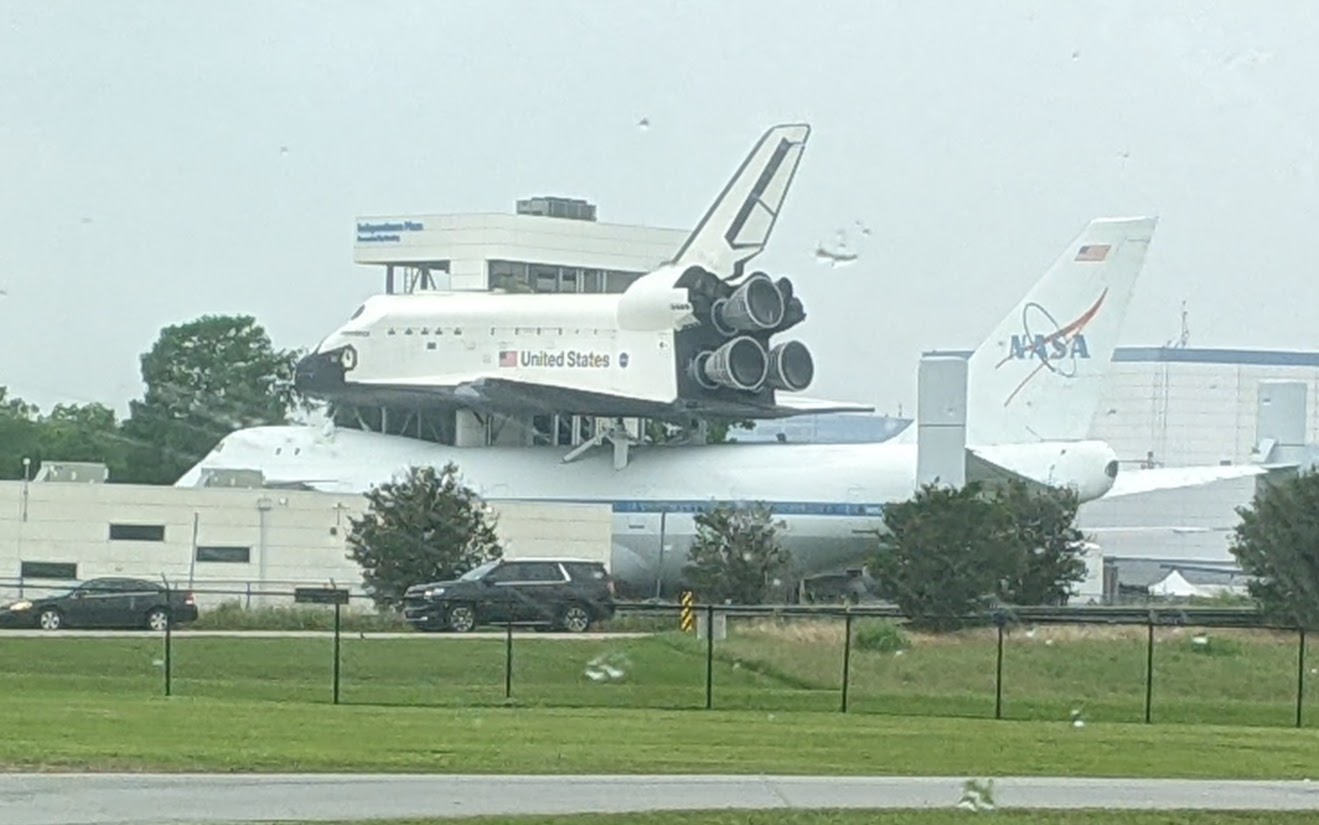
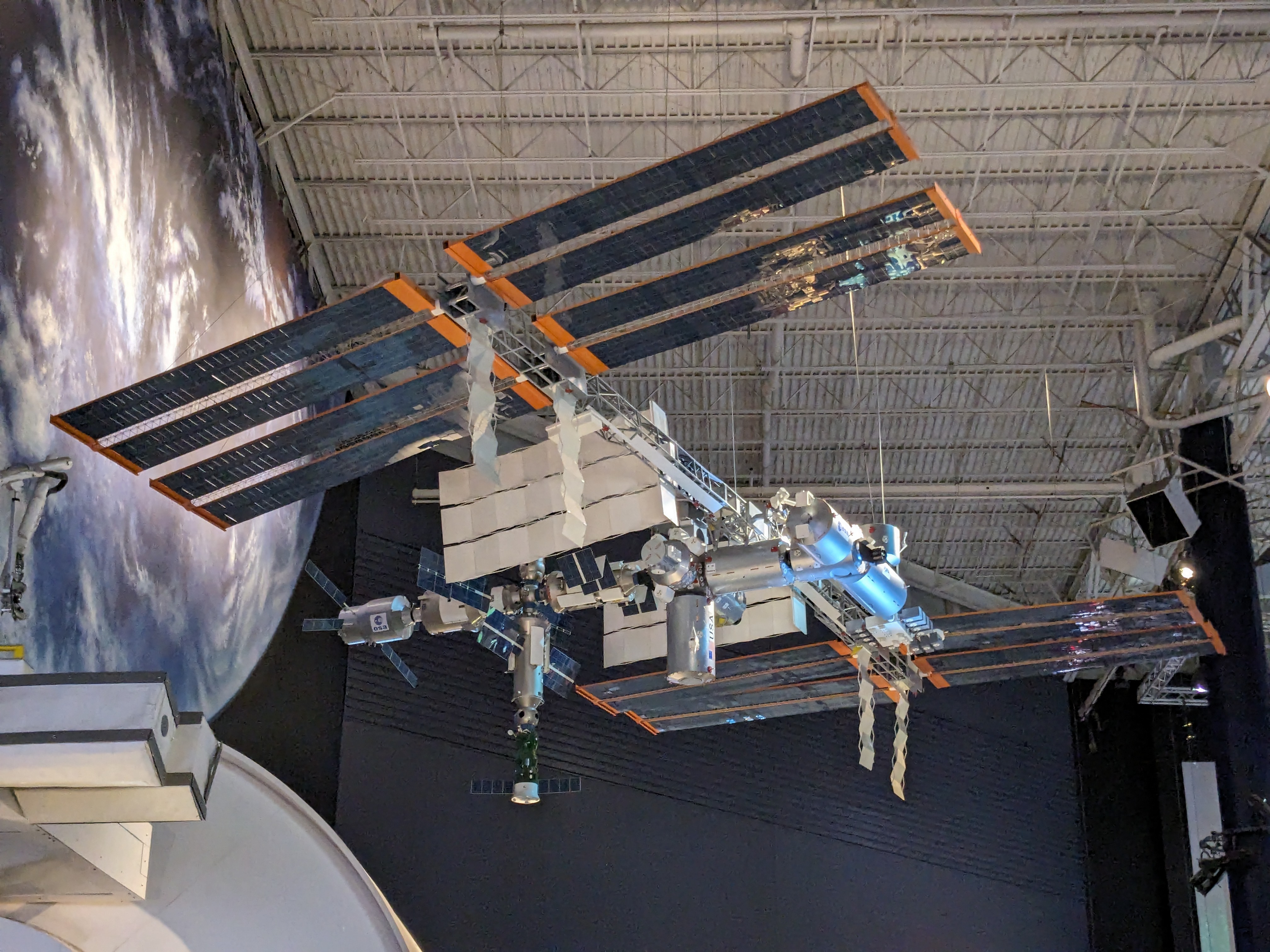
Get close to a full-size Boeing 747 aircraft with a sleek white space shuttle on its back. It rests in a peaceful field, adjacent to a herd of grazing Longhorn cattle. The reusable, winged spacecraft was designed to carry large payloads and crew into orbit. It was instrumental in the development, initial outfitting, and staffing of the International Space Station (ISS). Crews have lived and worked aboard the ISS continuously since the year 2000. Today, however, NASA cooperates with other nations and private companies to transport crews and supplies to the space station.

Walk through the outdoor “rocket garden,” then spend as much time as you wish in the Space Center Museum to learn about NASA’s past and future missions. Make time to visit interactive exhibits or to attend a lecture. I found it interesting to learn about meal preparation in space.

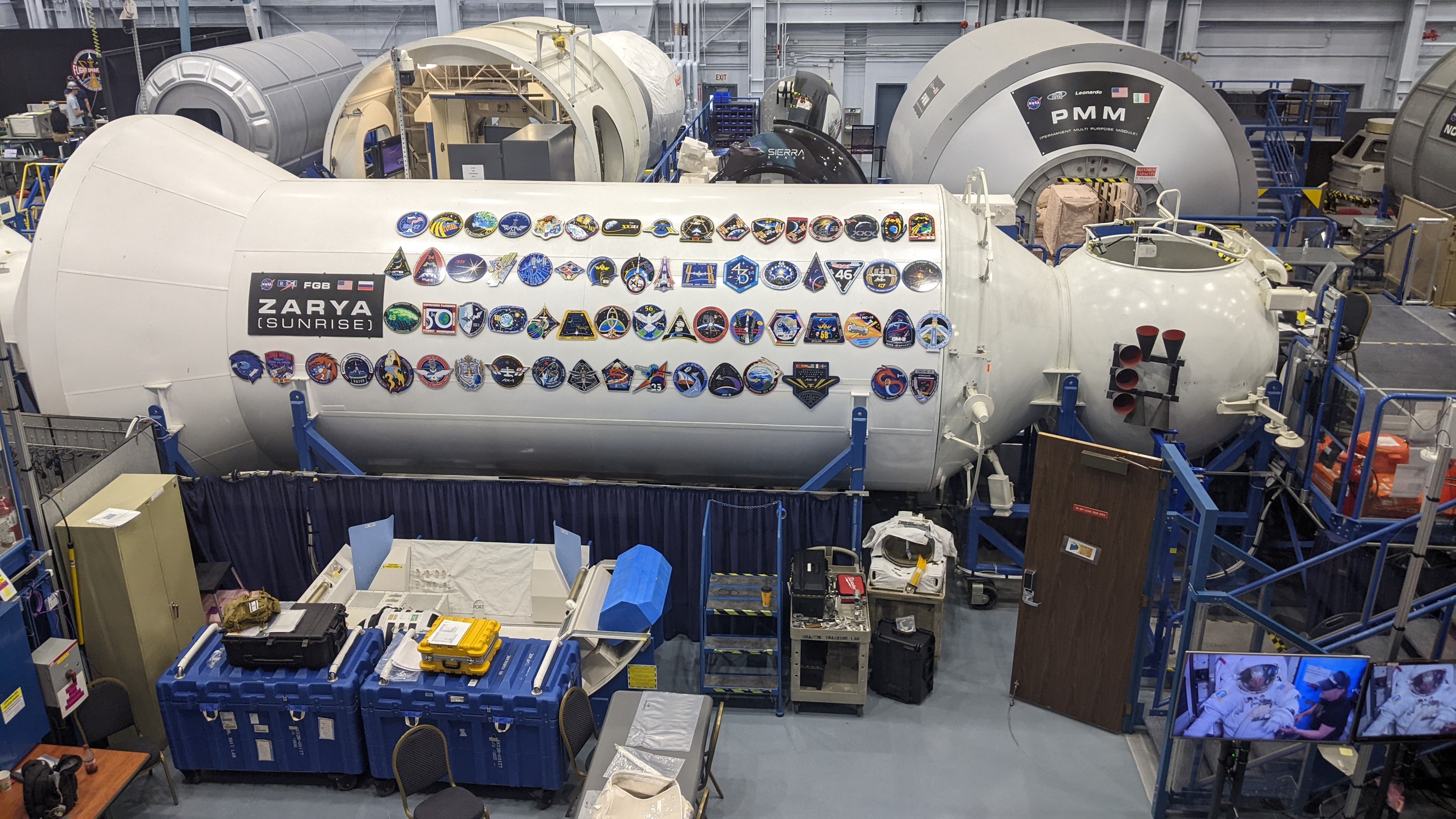
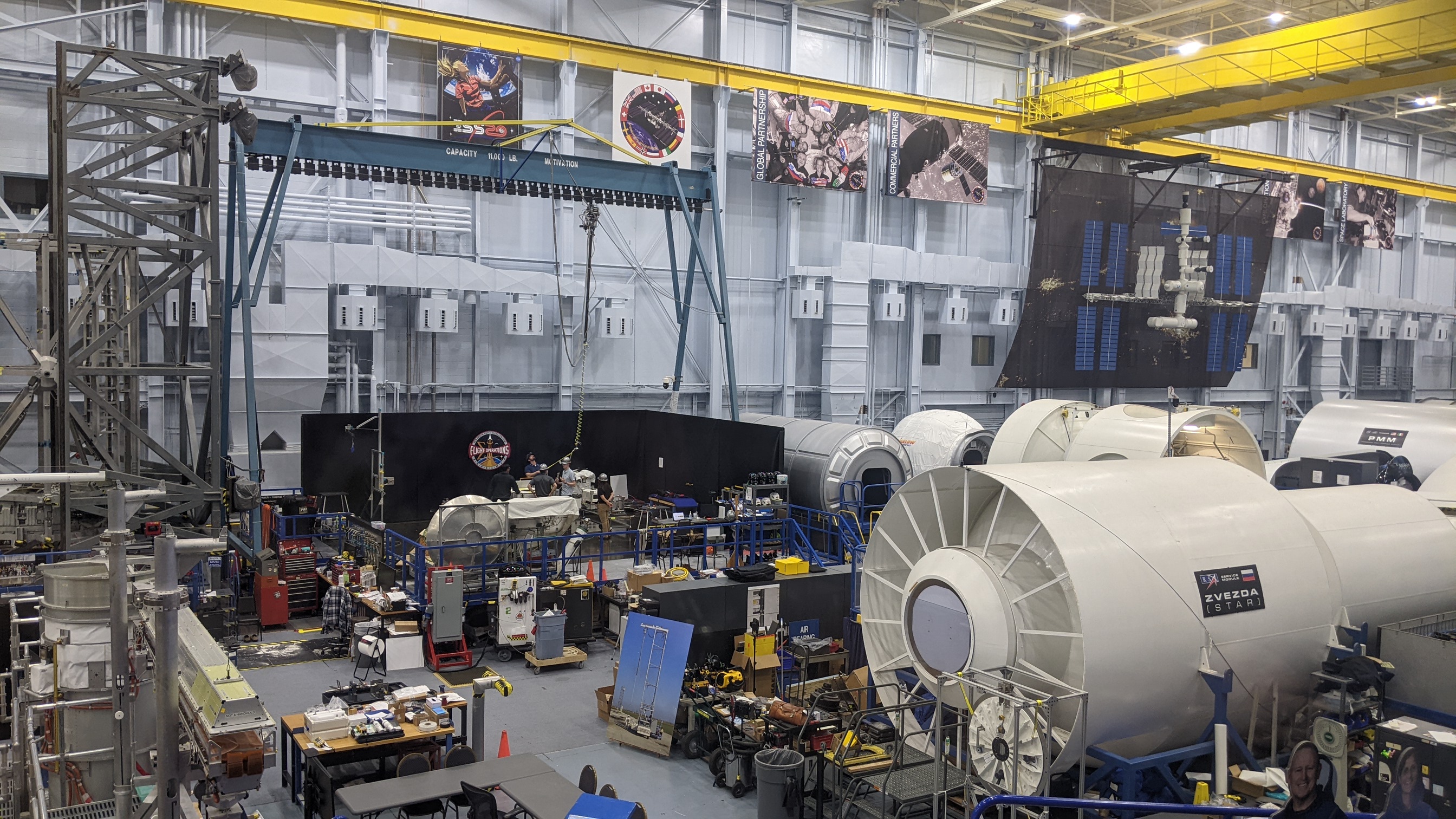
My tour also included a walk along a raised catwalk to peer down at the floor of a huge astronaut training center with full-size replicas of space station modules and transport capsules that journey to and from the space station. Although I am certain it can become a hub of activity at time, it appeared quiet and relaxed the day we visited.

Anticipate Future Exploration

Many more space missions are planned, but they will be very different.

First, according to NASA, the United States will return to the moon, perhaps as early as 2026. The ISS is set to be “retired” and dismantled by 2030, replaced by two or more international orbiting space stations, likely to be commercial or privately financed ventures. Then, American astronauts and the international community will turn their sights towards Mars and beyond.

The Artemis Accords, a set of principles designed to foster international partnerships for space exploration, were conceived and signed by representatives of eight nations, led by the United States, in 2020. To date, 42 countries have signed the voluntary agreements.
At Home on the Prairie

The NASA site is well-integrated with its Texas prairie roots. The agency has been working on sustainability projects in one form or another for more than 20 years. In addition to the Longhorns that share the 1,600-acre campus, the Johnson Space Center hosts a Houston Zoo program dedicated to increasing the population of endangered Attawater Prairie Chickens. The birds are bred in onsite field pens in an area that resembles their native habitat.

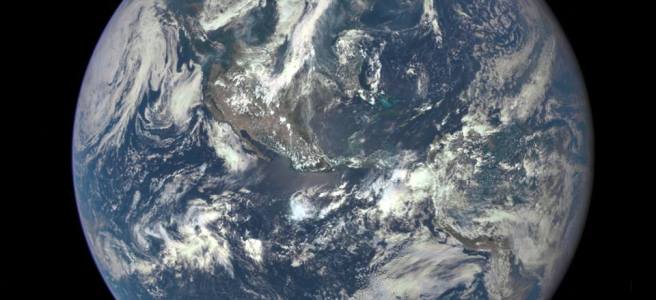
Another unique feature offers employees free access to more than 300 bicycles while on site to provide emission-free alternatives to driving while on the campus that’s adjacent to Clear Lake, which flows into Galveston Bay. During heavy rain, flooding and associated pollution can occur, so the space center has installed mitigation measures to alleviate potential problems and avoid disruption of operations. While NASA continues to have its sights set on space missions, it is also serious about protecting the home planet.

Visiting the Space Center

Space Center Houston is said to be the Number 1 attraction for foreign visitors to the Houston area. Leave plenty of time for your visit. There is much to see. One could easily spend an entire day in the exhibit hall, and tram tours of the 1,600-acre campus are offered. 

The center brings alive the history of American space efforts, from the first sub-orbital flight of Alan Shepard in 1961 and John Glenn’s three orbits around the Earth in 1962, to future planned Mars missions.

It is affiliated with the nation’s Smithsonian Institution and is one of several locations where visitors can learn about the U.S. space program. Visitor centers are located throughout the country, including Kennedy Space Center in Florida and the Marshall Space Flight Center in Alabama. A Space Camp is also held at Marshall.

If you’re interested in the full story of flight, the National Air and Space Museum in Washington, D.C, should be on your list. And, if you’re visiting the Midwest, a side trip to the Cosmosphere in Hutchinson, Kansas, is well worth a visit. There, you can see a full-size Blackbird spy plane and “Liberty Bell 7,” the Mercury capsule that sank in the Atlantic upon splashdown after a successful 15-minute sub-orbital flight in 1961. The accident almost killed Astronaut Gus Grissom, the second man in space. The account of its retrieval and restoration is legendary.

Lafayette: A Feast for Spirit & Soul

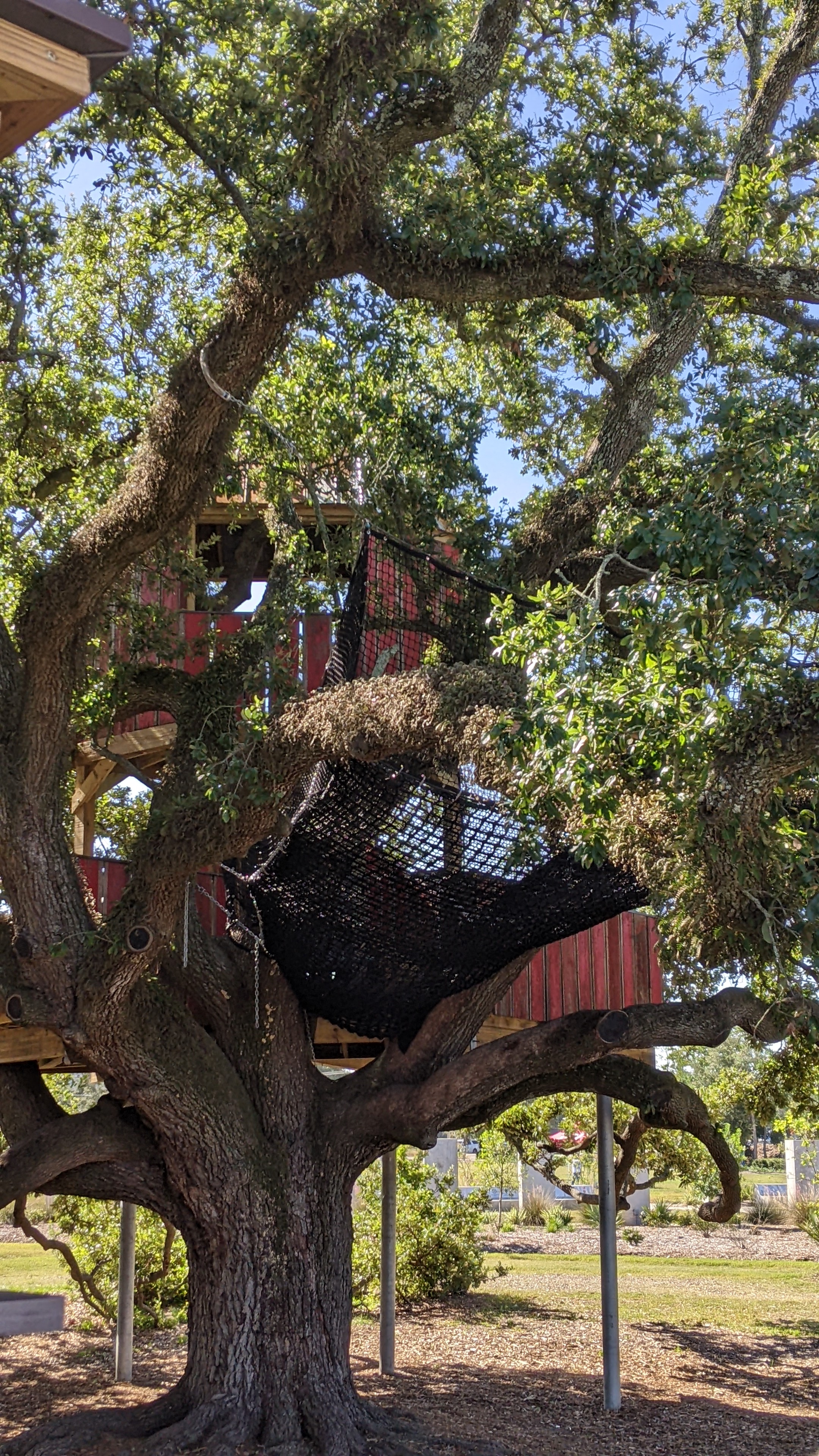
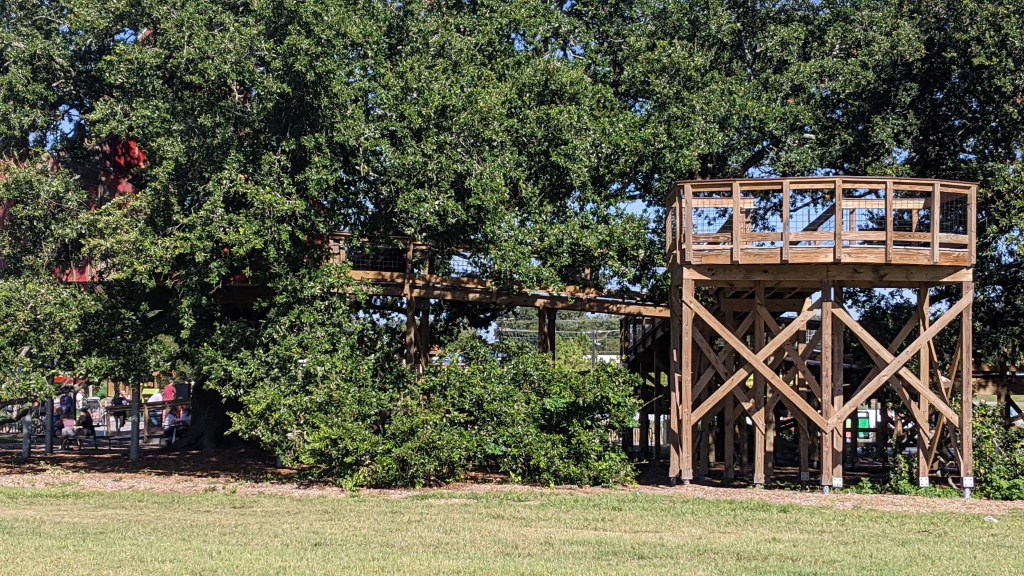
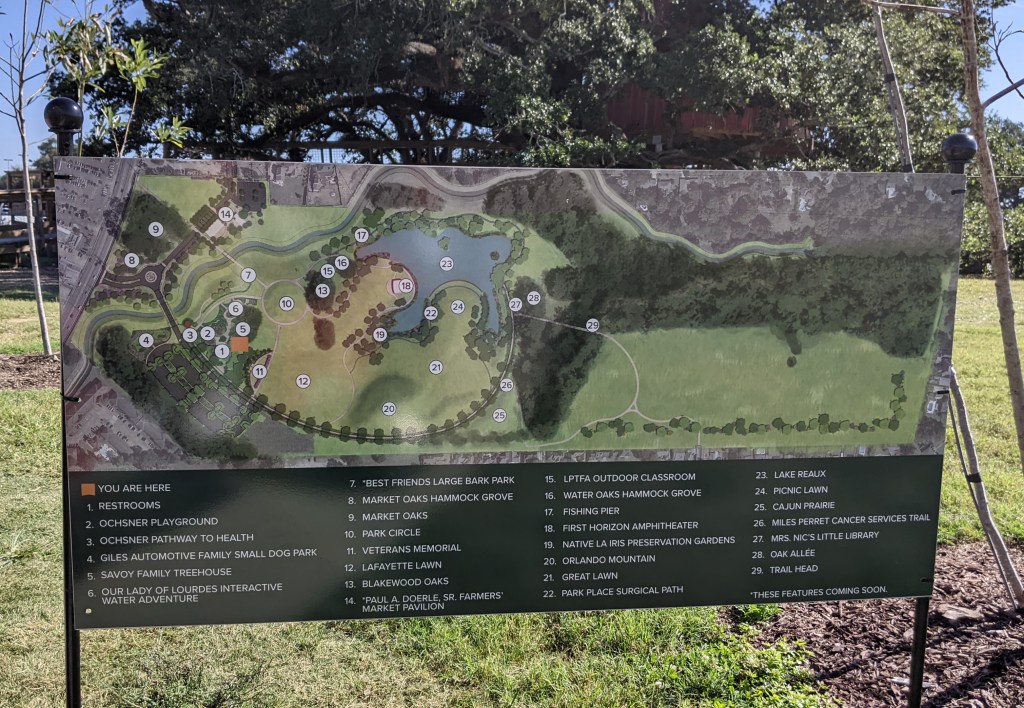
Hidden in the trees of Moncus Park in Lafayette, Louisiana, is a faded red treehouse constructed with lumber salvaged from a former horse barn on the property. It adjoins a children’s play area, but it’s almost hidden from view along the

paved walking path that meanders through the property. I’m sure that makes it all the more enticing for the children who choose to climb the ladder and walk the swinging elevated course to reach it.

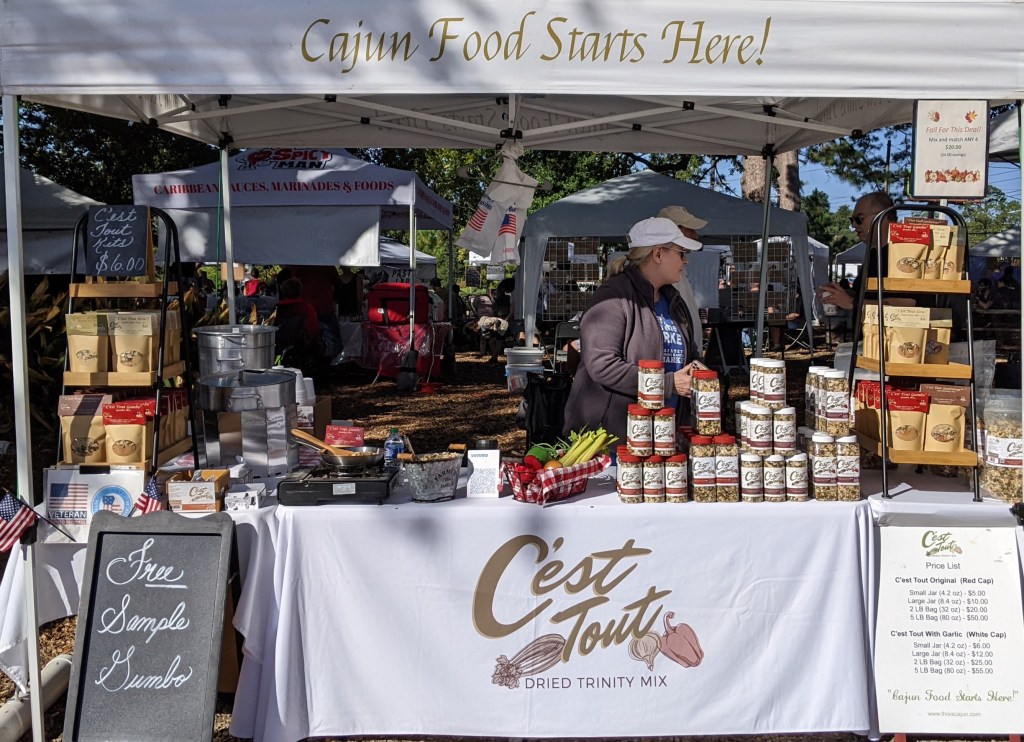
On the day we visited, the park was filled with people. Some, like our group of travel writers from diverse locations, had first visited the thriving adjacent outdoor Saturday Market, overflowing with food and crafts vendors every week throughout the year. This past summer, the market celebrated its 10th anniversary with the ringing of the Durel Bell.

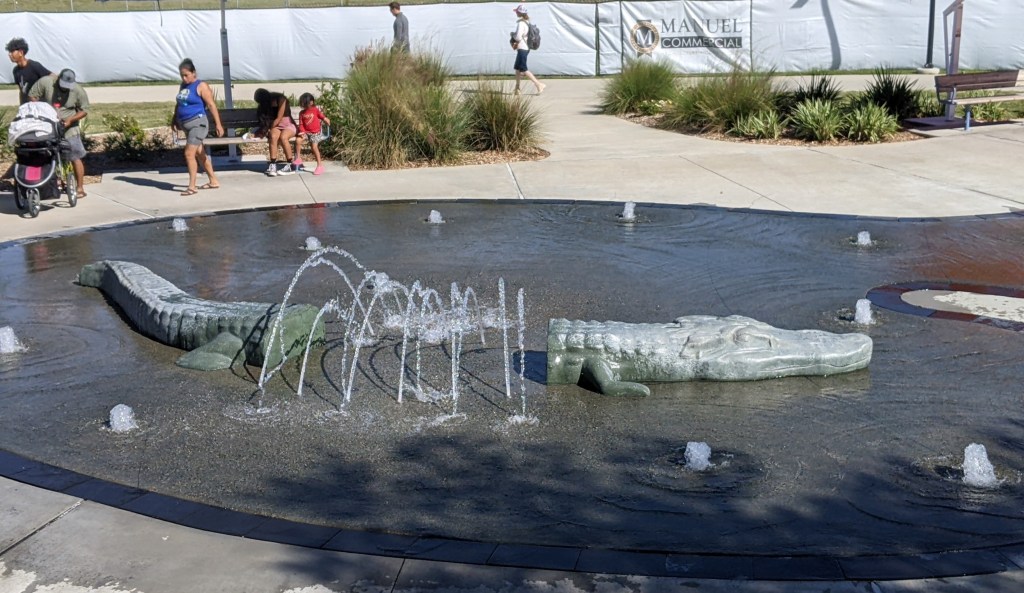
The sun shown brightly on this mid-October day, and the park was alive with activities to attract young and old alike.

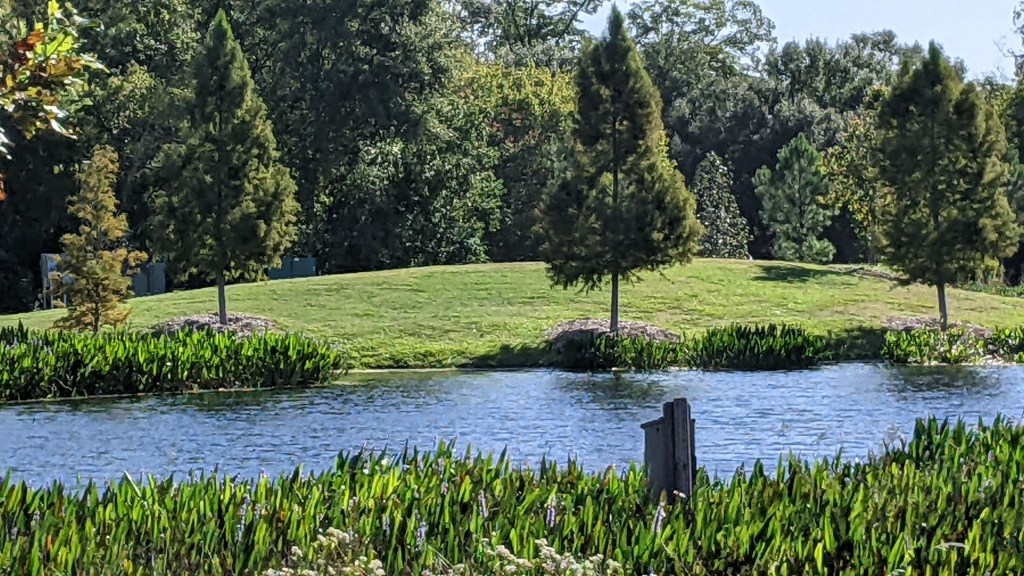
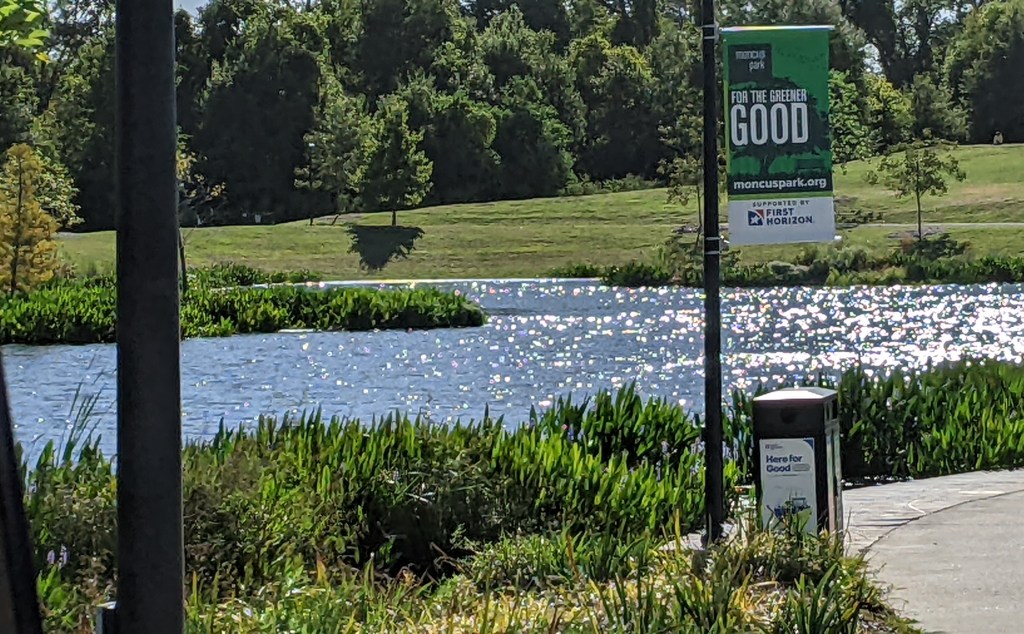
Some, accompanied by leashed dogs, were out for serious exercise in the beautiful surroundings while others simply enjoyed the various trees and plants on the rolling hills of a well-planned natural enclave that was once a horse farm. The park, operated now by a non-profit organization, was designed and built “by the community, for the community,” according to Kaylie LeBlanc, assistant vice president for communications of Lafayette Travel. One of the unique features is a 63-foot high hill, the highest point in Lafayette Parish! Development was begun in 2018, fueled by an initial $6 million grant. Now, a membership program funds ongoing park development and programming.

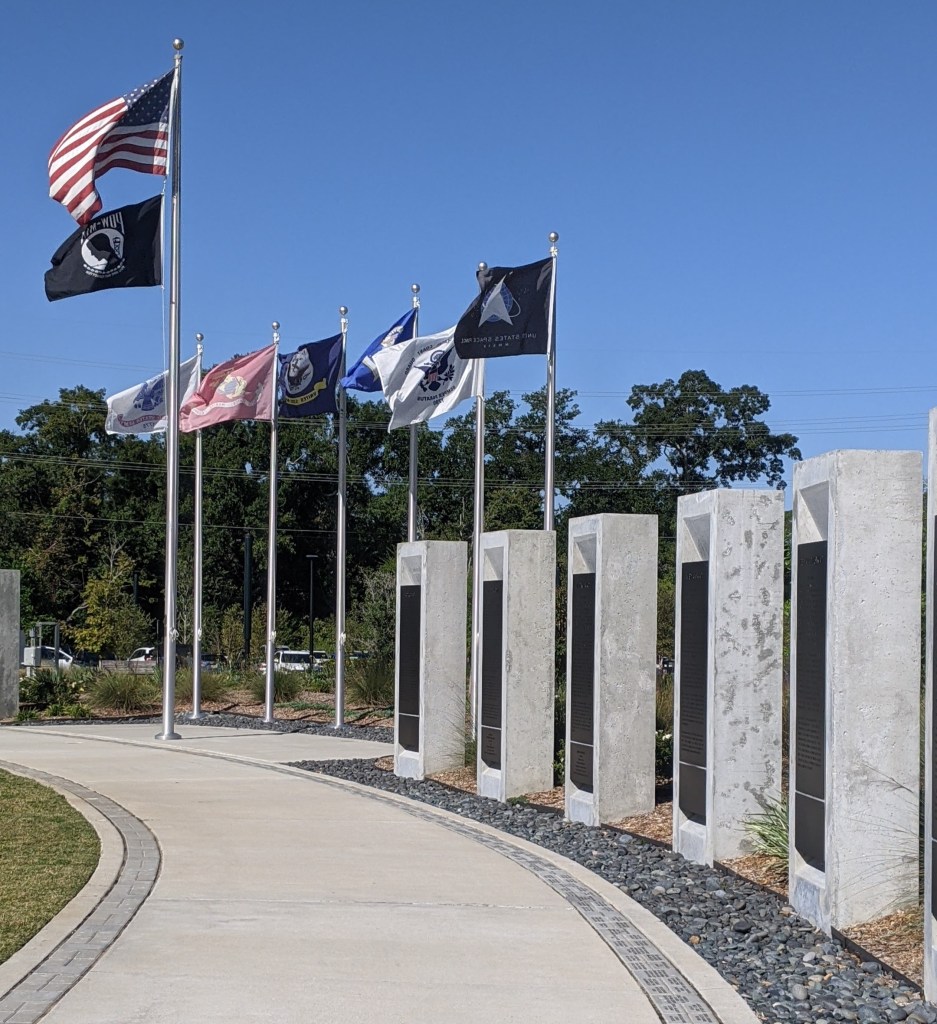
Also on the grounds is a striking Veterans Memorial that pays tribute to local residents who served their country in the various military forces throughout history. Memorial bricks line the path leading to the serene site with its polished granite plaques describing each war that U.S. troops have fought. It’s worth stopping to read each somber account, from a young country’s battle for independence to “Indian Wars — Circa 1600-1924” and the Global War on Terror — 2002-2021.

Moncus Park is one good reason to visit Lafayette, a city known as the “happiest city in America,” at the heart of Louisiana’s Cajun and Creole country. But there are many more.

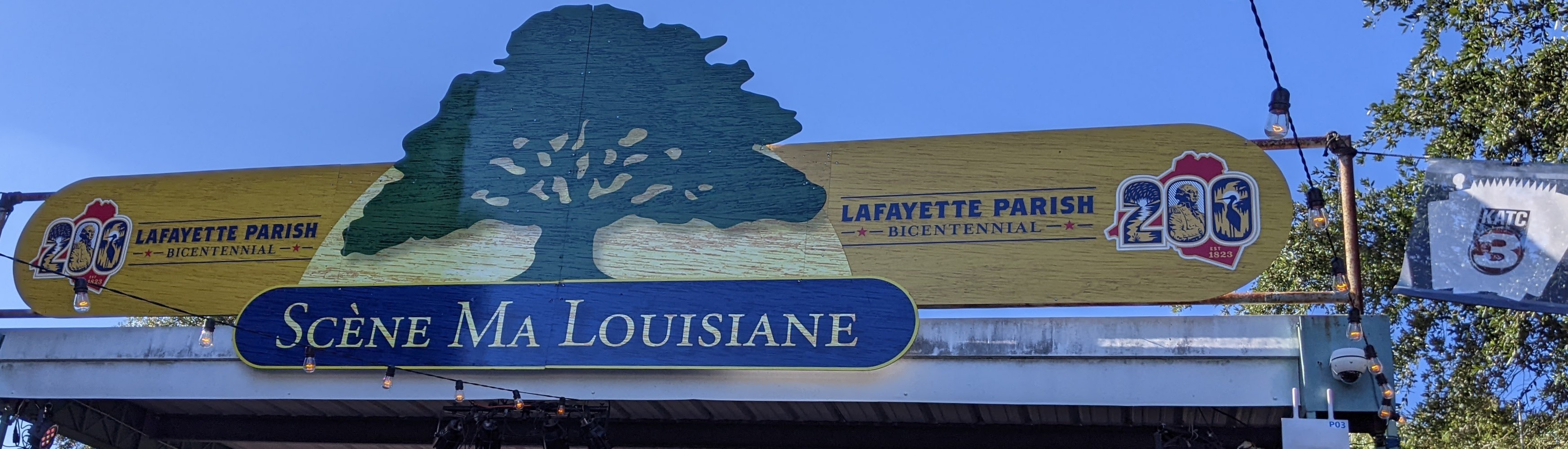
I was in Lafayette for three days of whirlwind activity during this year’s Festival Acadiens et Creoles, a celebration of food, art, music, history and distinctive culture. What a celebration it was! Lafayette boasts great food and lively music, to be sure, but learning the history of a people who left their homeland and resettled in faraway places was what I found intriguing, somewhat disturbing, and totally fascinating. I had not previously known that Cajun and Creole were and are so intertwined.

The Acadians who came to Louisiana from France by way of the Canadian Maritimes (primarily Nova Scotia, New Brunswick and Prince Edward Island) have retained a distinctive cultural identity that is remarkable and celebratory. Eventually, Acadian morphed into Cajun and Acadian/Creole/Cajun culture is the result. Although we did not visit it, the Acadian Cultural Center in Lafayette is one of six locations of Louisiana’s Jean Lafitte National Historical Park and Preserve. Admission is free, and the center is open Tuesday through Saturday year-round, except on national holidays.

An Ongoing Celebration

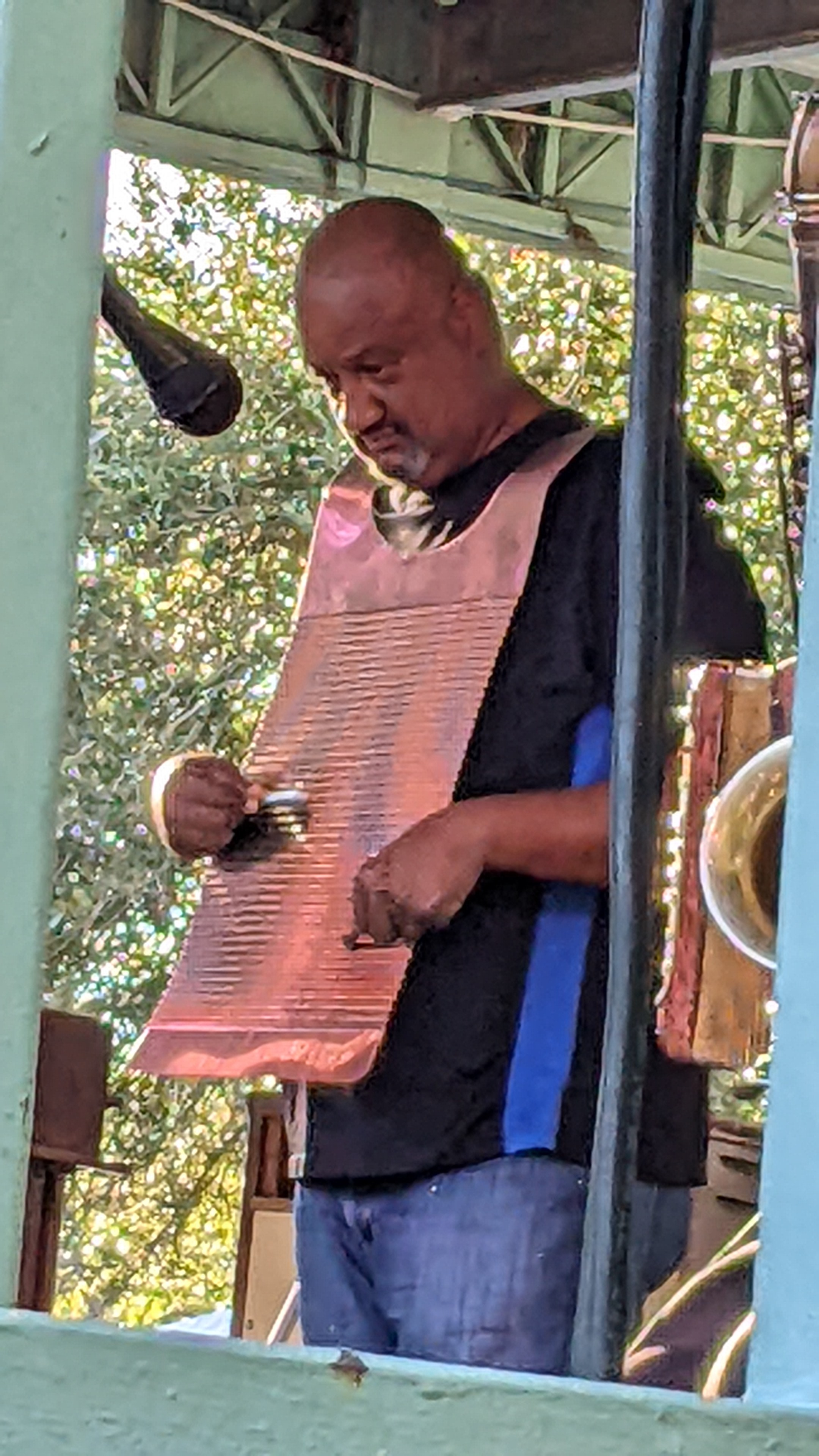
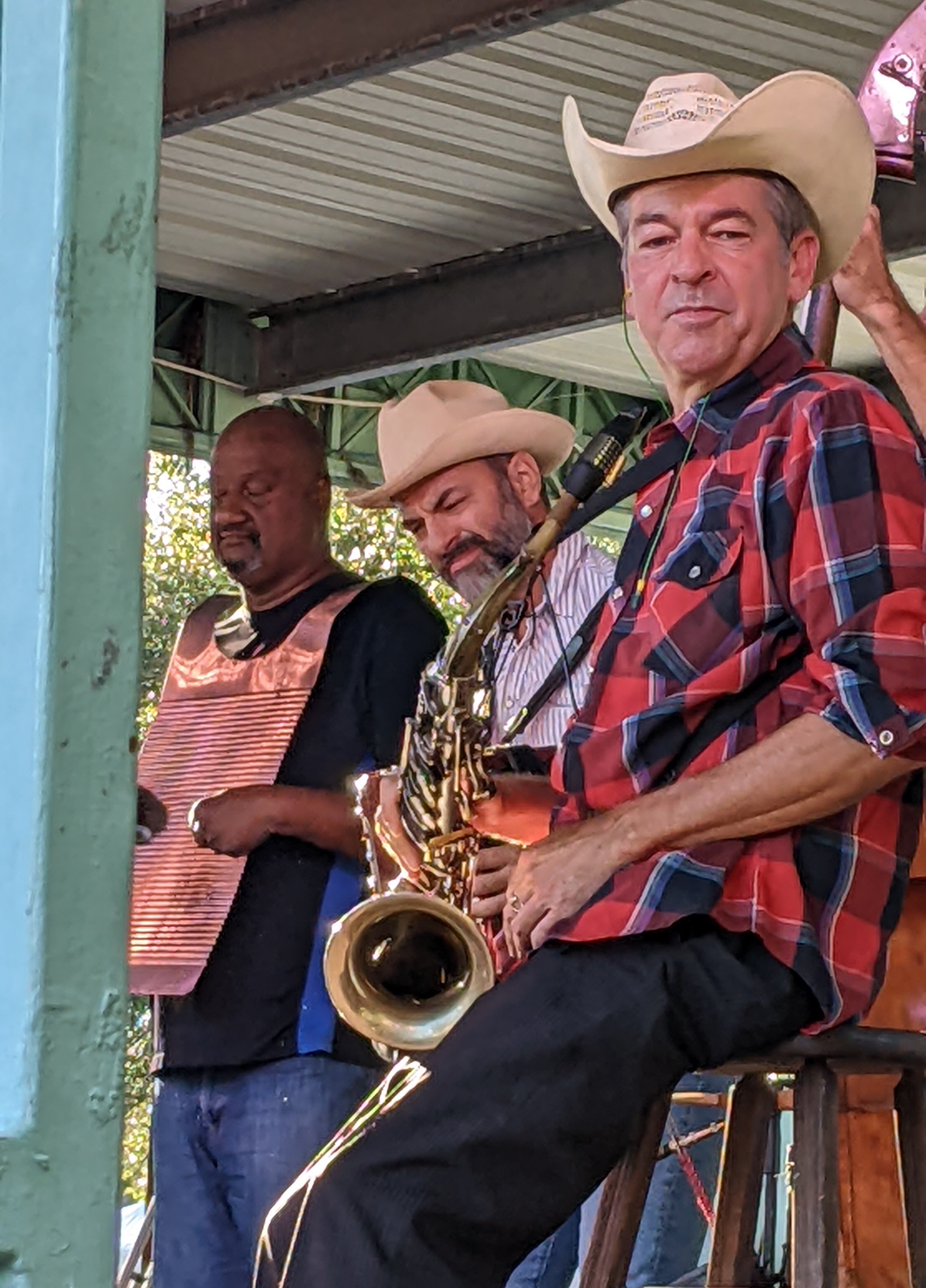
Lafayette is known for its festivals throughout the year, and this one certainly did not disappoint. What’s not to love about live bands that encourage complete strangers to “dance to the music” together? Add the enticing flavors of gumbo, jambalaya, etouffee and boudin sausage served fresh and hot from food trucks in the park, or the refreshing abundance of cold beer, spicy bloody Marys, flavored daiquiris, and other refreshments close at hand.

Girard Park in Lafayette takes on a carnival atmosphere that’s equally appealing for young and old alike, with food treats from beignets to soft ice cream, loaded hot dogs to boiled crawfish, fried gator bites and chicken wings to cheese-smothered grilled oysters! There is face-painting and bubble-blowing for the children, crafting demonstrations to watch and souvenirs to buy.

The performance stage is at the center of the activity, and many festival goers bring camp chairs or blankets. Picnic tables and benches are scattered about the park, and various tents offer seating for food and cooking demonstrations, musical lectures, and cultural programs.

From the ceremony of “cutting the boudin” to open the festival to the closing strains of music performed by an all-woman band as darkness fell on the festival’s last day, it was a great experience.

Traditionally held on the first full weekend in October, this celebration has been a Lafayette highlight since 1974. With a focus on the local sounds of Cajun and Zydeco music and local food specialties, the festival atmosphere extends not only throughout the park, but throughout the city. During festival weekend, shops are open late, visitors stroll the compact downtown area, marvel at the street art and local murals, enjoy crafts shows and outdoor exhibits, attend wine tastings and local business open houses, and snap souvenir photos at the Lafayette sign in a local park or selfies at the picturesque downtown arches.

Smiles and high spirits dominate the scene. It is truly a celebration that encourages active participation.

Beyond the Festival

The Festival Acadiens et Creoles is not, however, the largest celebration on Lafayette’s calendar. Held in April, the Festival International de Louisiane spills over into nearby cities and parishes and attracts visitors from throughout the world for the distinctly French-flavored celebration.

Lafayette also celebrates New Year’s Eve in a big way, and goes all out for Mardi Gras. Visit Lafayettetravel.com for up-to-date information on what’s happening when in this “happiest town” so you won’t miss out on any of the events that interest you. I don’t want to leave the impression, however, that visiting Lafayette, is simply one big party. As much fun as it can be, there is also a serious side to Lafayette’s personality

Cultural unity is pervasive and community spirit is inclusive. Informal, spontaneous musical jam sessions seem to be the norm and, more often than not, members of the public are invited to attend, join in, or sing along. Roots run deep here and pride of place and heritage is evident among young and old alike. Lafayette residents are intent on preserving their traditions. A conversation with a local resident can be equal parts history lesson and hope for the future, interspersed with family stories.

The Beginnings

Originally founded as Vermilionville in the 1820’s, the city was renamed Lafayette in 1884. Its population in 2023 is reported to be slightly more than 121,000, a slight decline from 2020 when it was just under 122,000. But the population of metropolitan Lafayette Parish exceeds 376,000.

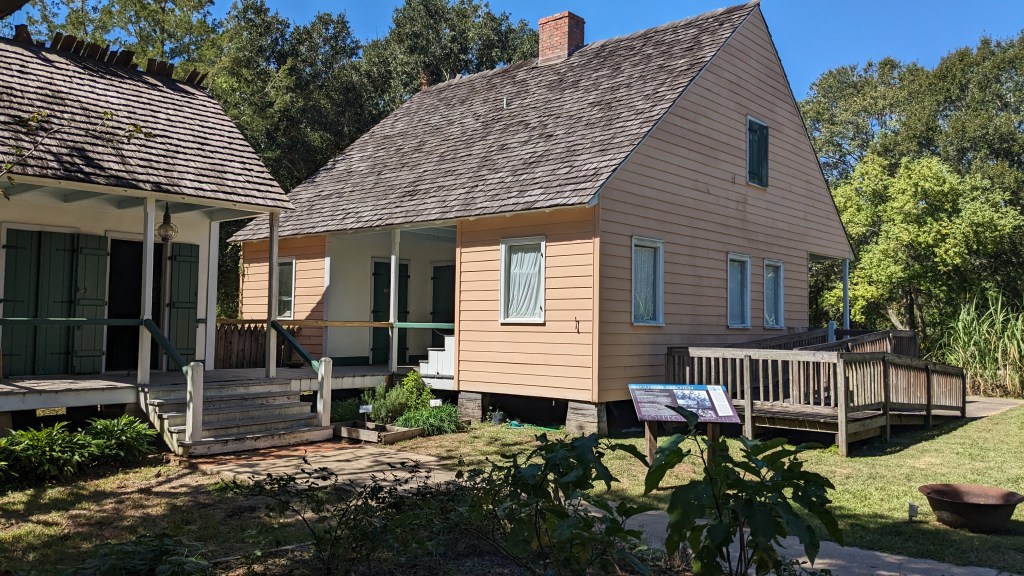
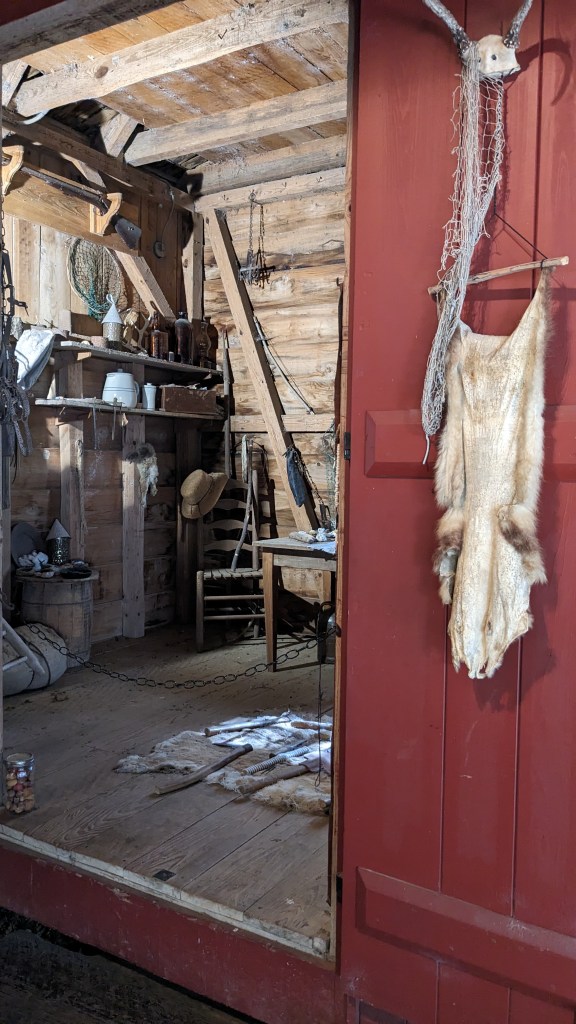
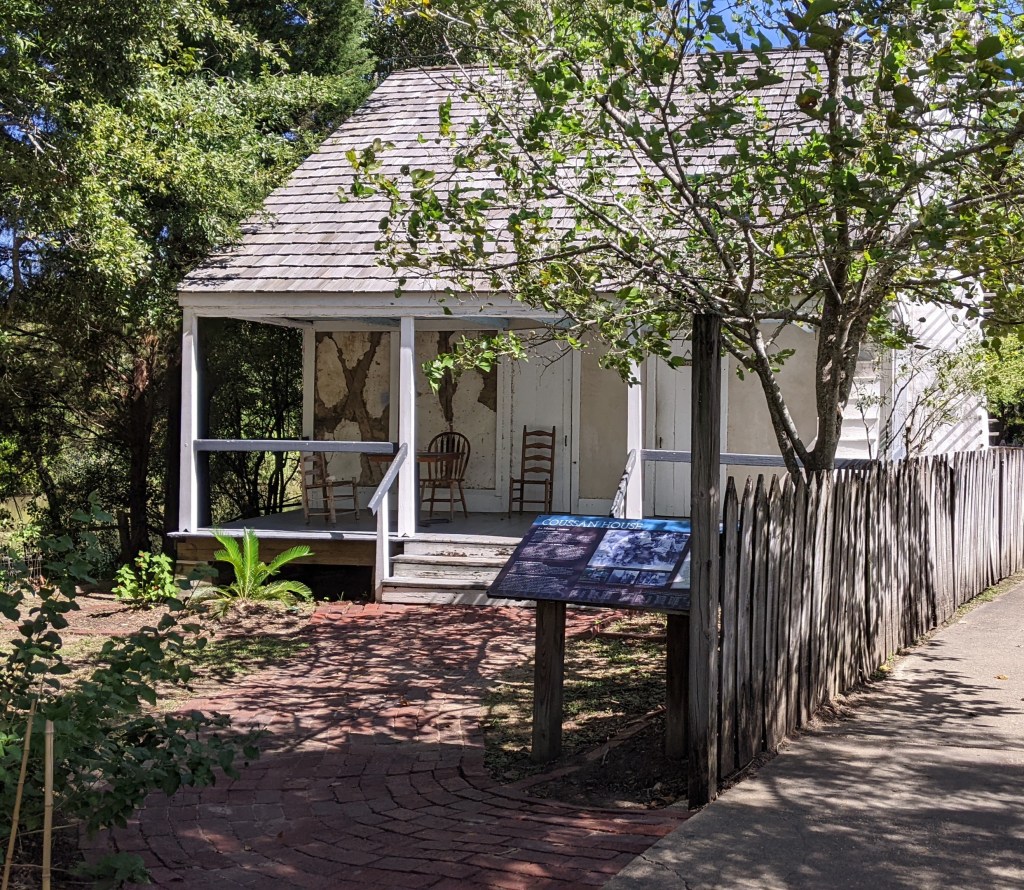
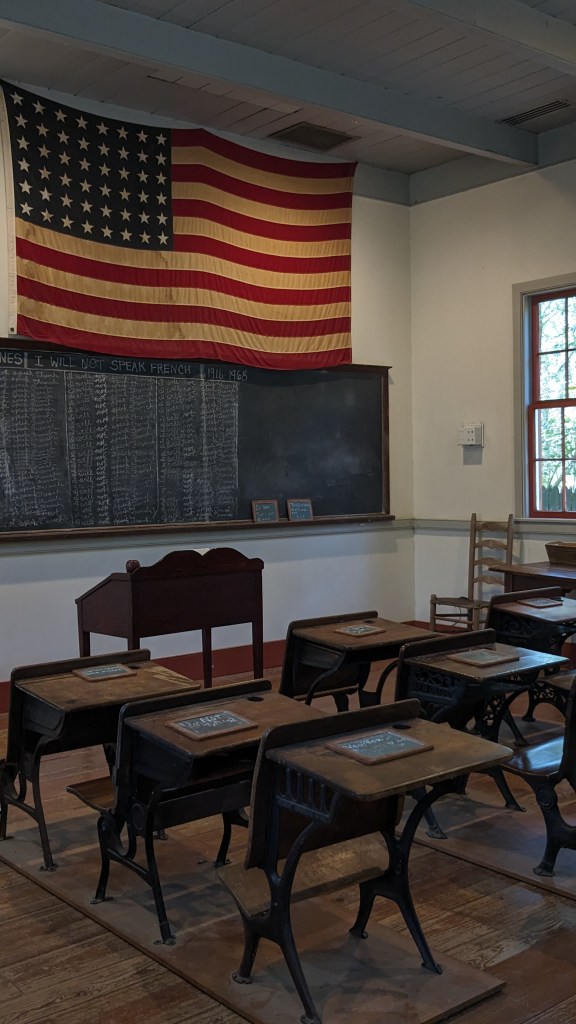
We visited the historical re-creation of Vermilionville, now a living history museum that takes visitors back to the early settlement. Signs along the paths chronicle how Acadian and Creole settlers interacted with native peoples and those of African descent through the late 1800s, and the buildings display a wealth of artifacts. It’s much better than a museum depiction. Walking along the paths offers a uniquely personalized insight into how lives were lived during those times.

Visit Vermilionville.com for information about events, programs and performances, including a 2nd Saturday French Table, a free gathering that allows visitors to “hear, speak and practice” the unique Acadian language. Other programs offer insight into the lifestyle and traditions of early Acadian settlers who sought to preserve their French-speaking culture on the American frontier.

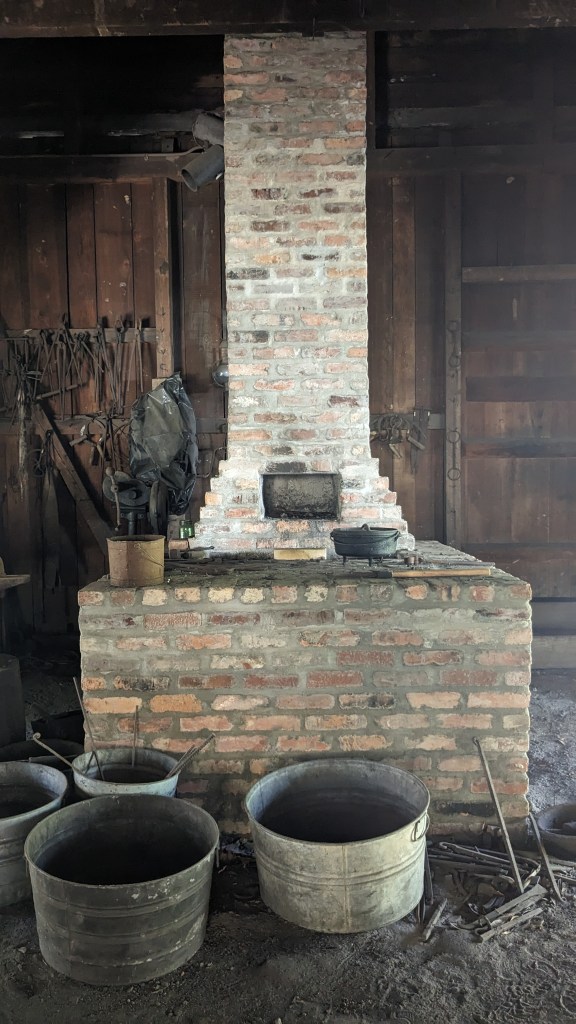
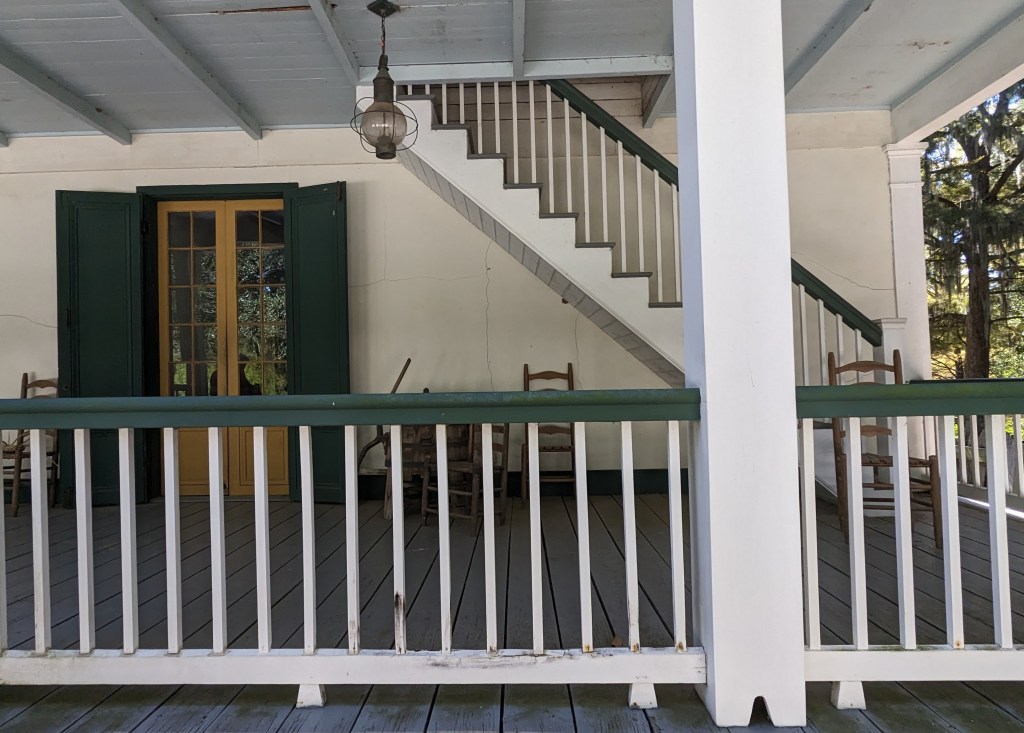
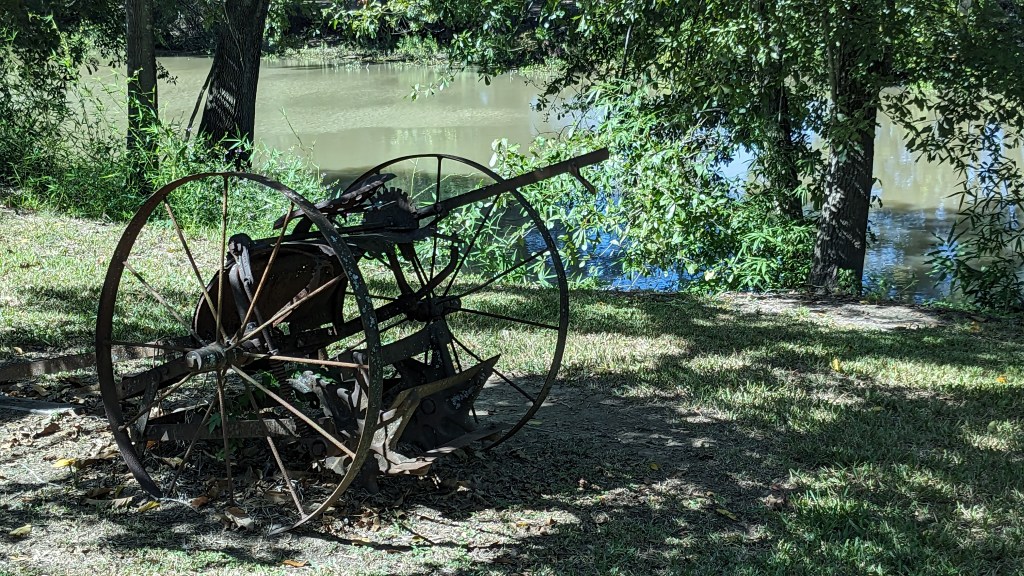
Among the buildings and various dwellings situated at the site are a schoolhouse, church, parsonage, carriage house and other utility buildings, as well as early “shotgun” houses and a wide variety of home styles that were popular through the decades. Traditional crops are still cultivated, and the historical village even has a resident donkey, a couple of sheep, and a working iron forge. This historical village offers a perfect opportunity to explore the history of Cajun culture and it’s impossible to leave without a profound respect for the early Acadian lifestyle, the Native American, Creole, and African influences, and Cajun traditions. We even learned some often-used words in Cajun French!

Our young guide, herself a proud Cajun, was clothed in traditional dress of the time, and she spoke with candor about growing up in this distinctive culture. I was awed as she sat down at a spinning wheel to demonstrate how yarn is spun from raw cotton, but then she apologized for not being very adept at spinning! We also were treated to an explanation of traditional, hand-sewn quilting skills by an older woman intent on preserving the skills that her ancestors possessed. We were duly impressed by the number, the quality and the variety of the quilts she has completed.

Building on Tradition

Our group was treated to a bountiful lunch at La Cuisine de Maman, where we feasted on traditional favorites prepared and served in a circa-1800 home at the site. Suffice it to say that no one left hungry!

Before leaving Vermilionville, we stopped in at the Saturday music jam, held in a performance hall just across the courtyard from the restaurant. That became a fond memory of my short time in Lafayette, one that I will savor for a long time to come. That strangers come together to make music is impressive enough; that the music is well-played, sung with gusto, performed with no rehearsals and at no charge to the public, and enjoyed by all is truly special!

The music is one of the fondest memories of my time in Lafayette!

Yet to come is my account of an eye-opening and thrilling flat-bottomed boat trip through the Atchafalaya Swamp, along with a visit to nearby Avery Island with its jungle gardens and Tabasco factory, as well as more pictures and commentary about the people, the food and drink, the sights and the music scene in this distinctive Louisiana city. I’ll leave you with at least five good reasons to add Lafayette to your own travel plans for the coming year!

Capturing a vision of future travel

There are as many travel styles as there are schools of art expression, but rarely does anyone speak of travel as an art form. I have been thinking of that these past few months, as I have left home several times for both business and pleasure, and as the reality of travel has almost returned to the norm of pre-pandemic times.

What strikes me is that taking to the skies and seas and roadways of our globe — just for the fun of it — has indeed become a lost art. In the wake of governmental restrictions and health recommendations, travel requires more thought and planning than it once did. I don’t know if I will ever again feel completely free to set foot out in the world without some serious advance arrangements and a good bit of thought about the details of a trip.

Will vaccination updates, masks, hand sanitizers and health screenings continue? Will we be required to pay heed to worldwide travel advisories as the earth becomes more divided based on nationalities and dogma? Have restrictions become accepted? Just what are the acceptable guidelines for travel? Will health requirements and some form of social distancing become even more stringent? Have we seen an end to overcrowded buses and packed elevators? (I know, some of that may be a good thing!)

What kind of traveler you are has to do with personality, inclination and DNA. There are cautious planners, those who will only travel with a group and a well-planned itinerary, the Jack Kerouac types who prefer to set out for adventure with no destination in mind. There are those who thrive on the sense of freedom that unplanned itineraries provide, and purposeful travelers who have specific goals and seek meaning from every experience. And there are also those who have pretty much given up on travel except when it’s absolutely necessary. Do you know your type? Or do you let the destination dictate the type of journey? Do you agonize over the right degree of preparedness?

Even if you’re a no-fear rambler, it doesn’t hurt to have a game plan before setting out.

New outbreaks of Coronavirus makes it timely to review some basic travel precautions, not all of them health-related. While mandatory quarantine lasting two weeks or longer is certainly unusual anymore, accidents and delays can result in extended time away from home, and incidents, unfortunately, are not that unusual.

The Goal is to Stay Well and Enjoy Life

Staying well while traveling is a primary goal, and following recommended practices should never be optional. But I believe that traveling the world is truly no more hazardous to one’s health or sanity than staying on home turf.

We are all exposed to innumerable unknown viruses every time we venture out in public — to the supermarket, a shopping center, a restaurant or the gas station. If you attend church or visit your child’s school, you are probably at risk. Unfortunately, even the best masks are not 100% effective. Nor will they protect us from all ills. Common colds and flu-like symptoms can, under the right circumstances, become as deadly as COVID-19. Remember the names that plagued us in the past — Legionnaires Disease, norovirus and hepatitis. And before that, there were others — malaria, typhoid, typhus, yellow fever and other mosquito-borne disease, as well as polio, TB, measles and chicken pox.

Humans have been a breeding ground for disease for millennia.

And about the risks travelers face:

Stepping off a curb can result in a sprain and any number of minor mishaps can keep you away from your office, or cut into your fun. Bending over to pick something up can be the cause of a charleyhorse, a cramp or worse.

Those things happen whether you’re at home or out in the world. And that actually might be one of the better reasons to get away as often as possible. A spur-of-the-moment excursion helps keep us all balanced. Even an impromptu picnic in the park is sometimes enough to lift us out of the doldrums and give us a new lease on life when it has become too routine or too tedious.

This is by way of affirming that I will continue to be on the road routinely, in an airplane or on the seas, going where and when I can, for whatever reasons I choose. I will follow any mandated directives in place at the time but I will not stay home simply because I cannot travel in the same manner that I was able to travel yesterday — or five years ago, or when I was 20!

Read the Current Regulations

Governments and healthcare providers are only too willing to recommend “best practices” for future travel. Pay attention. Get those shots, stock up on masks if need be, travel with sanitizers and sterilizers if you must and follow all the guidelines, not only for the next outbreak of a contagious illness, but also to lessen common health risks in the areas you intend to visit. Know before you go if additional vaccinations are required. Ask your medical provider about potential treatments for any situations you anticipate, whether they are motion sickness, sunburn or stomach upset. Travel with the preventive aids that will help keep you fit and well, or make you feel better when necessary.

Prescription Medications

Always travel with an ample supply of those pills and medical aids that you regularly use, even if you only plan to be away overnight. Take extras. For longer, planned getaways, bring copies of actual prescriptions, have your pharmacist or physician prepare a list for you on official letterhead, and keep your pharmacy name and prescribing physician’s name and telephone number handy.

Don’t forget prescription eyeglasses and hearing aid batteries, or spare earpieces, if necessary. A second pair of reading glasses or sunglasses, along with your vision prescription, and an eyeglass repair kit are always handy.

Physical Aids and Implements

Even if you use them only rarely, bring those medical aids that make your life easier. If you use a CPAP machine at night, don’t travel without it. Other items that can be invaluable when traveling include:

  • A folding or telescoping cane; or an umbrella that can double as a walking stick;
  • Compression socks;
  • An emergency tooth repair kit. Speaking from experience, losing a crown in a foreign country is no fun!
  • Band-Aids, eye drops and digestive aids;
  • An all-purpose antiseptic cream.
  • Lemon drops and candied ginger strips — my personal favorites for sudden nausea.

You might have other items that you consider vital, but know that you can always purchase grooming aids, shampoo, or toothpaste anywhere in the world you find yourself. Don’t use valuable space to bring those items from home.

Additional Conveniences

Aside from health needs, there are some other things that can make every trip easier and more pleasant. Whether you plan a long road trip or a long flight, and no matter what season it might be, the following items will serve you well:

  • A lightweight scarf or shawl that can double as a blanket;
  • sunglasses or an eye mask for grabbing quick naps;
  • slipper socks and/or a pair of flip flops;
  • Head covering: A straw hat, a baseball cap or a scarf that be used as a neckband;
  • A plastic poncho or lightweight rain jacket;
  • A tote that folds to the size of a slim wallet, or a mesh bag that can accompany you to an open market or for souvenir shopping.

With the above items tucked into a shoulder bag, and one wheeled carry-on bag, you can get by for days or even weeks on the road. If you’re packing for a cruise, you might want a larger suitcase — but these days, that’s a personal choice as well.If you plan to do a lot of walking, always include at least one extra pair of shoes or lightweight boots. And, give your feet and legs a break by taking regular breaks. Sit with your feet elevated when you have a chance! Don compression socks for long flights or during extended rail or bus trips.

Cultivate Adaptability

Taking flight or taking to the open road means checking the weather so that you have some idea of what to expect. I agree that it’s no fun to sit on the tarmac, but responsible planning allows for weather delays, missed connections, traffic snarls and last-minute route changes. Know your options before the trip begins, and know that well-laid plans sometimes go awry or must be adjusted. It may not always be fun, but don’t let it become disastrous. Practice deep breathing, and simply consider your alternatives.

Old school traveler that I am, I always like to have a paper map of my route or destination city tucked in my carry-on bag. I know that digital connectivity is not always reliable. Maps serve a dual purpose: Even if you don’t speak the language, you can always communicate by pointing to a spot on the map. Trust me, it works!

Create a ‘Most Dreaded’ List

Then plan what you would do, if . . . You might be surprised how confronting your worst fears and considering your options in advance can remove the dread of traveling. Sometimes, acknowledging your fears will help keep them in check.

For instance, if you’re concerned about getting separated from your partner or travel group, arrange in advance to meet in a convenient place at a specific time. Then, if the fear becomes a reality, simply resort to your fallback plan. You may have a great story to tell when you meet up with your companions.

Other travel occurrences can lead to more serious consequences. So, here’s an additional list of wise habits. Not that they cover every contingency, but they might help.

  • Travel with a photocopy of your passport. Include a list of the U.S. embassy or consulate addresses and telephone numbers in the major cities you plan to visit. Snap a photo of the written information and save it to your smart phone. With such information, you can easily replace a lost or stolen passport.
  • If you’re traveling internationally, check your cell phone service for the countries you plan to visit. Pay supplemental fees if necessary to ensure you’ll have basic emergency service, at minimum. Always keep your phone charged, and carry it with you. Investigate other means of communication, like WhatsApp.
  • Try to learn at least a few phrases in the language of the places you’re visiting. Don’t worry about being fluent! Native speakers appreciate your efforts and are more likely to help if you can say please, thank you, or “Where is the toilet?” in their language.
  • Always consider travel insurance. Although you may never submit a claim, the fee you pay will be more than worth it if you become ill, if you have to arrange for emergency repatriation, if you miss a connection and must make new arrangements for lodging, food and travel, or if your luggage is lost and you need to purchase a new wardrobe.

I believe that getting away should always be enjoyable! It’s partly a matter of attitude, but confidence comes from planning. Dedicated homebodies and adventurous souls alike should take the time to consider, in advance, how to eliminate the stress of travel. More than anything else, resolve to cultivate your curiosity. Approach every trip as a learning experience. Strike up conversations with strangers, especially if you face travel delays. Sharing helps make the time pass more pleasantly.

All too often, an unintended travel glitch will become one of your favorite travel stories.

Think of travel as an art form, and explore the different ways it will enrich your life. You’ll arrive home with beautiful memories. Believe it!

A special angel at the airport . . .

On the morning of January 17, 2023, we drove to Clinton National Airport in Little Rock. We were filled with anticipation. The skies were clear and the sun was shining. Despite an itinerary that included two plane changes before we would board our international flight in Miami, we believed we were well prepared for all contingencies and that our long-awaited trip to South America would be without incident. We were filled with anticipation.

Little did we realize then just what an experience awaited us. Our long-awaited journey had been on hold since before COVID. The trip itself had morphed from a relatively simple desire to sail around Cape Horn at the southern tip of Argentina — once an itinerary of between 10 and 14 days — to a trip that included not only Chile and Argentina, but also the Falkland Islands. The journey had stretched to 22 days. Our expectations had also become greater!

Travel plans sometimes take on lives of their own — that had certainly happened this time.

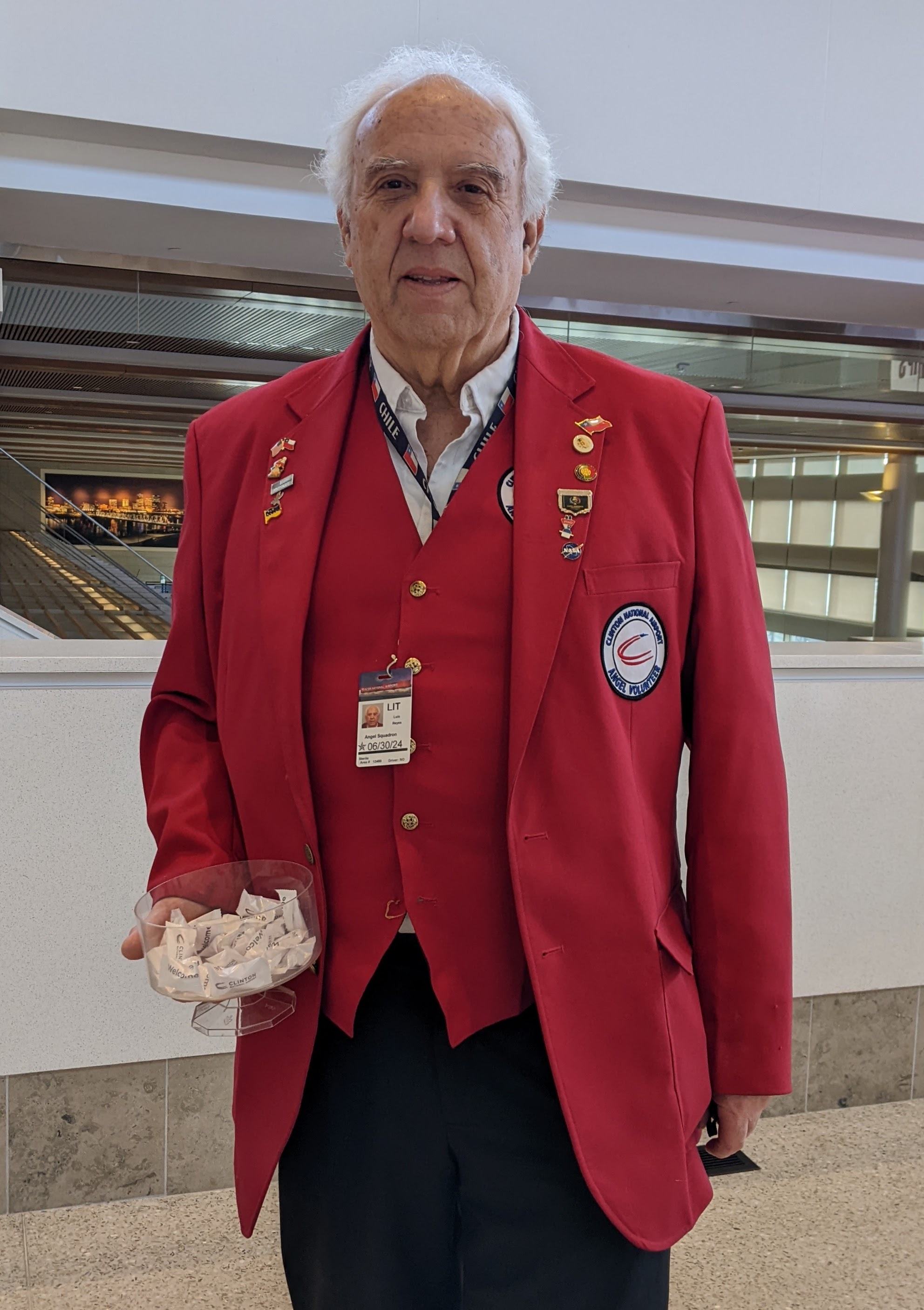
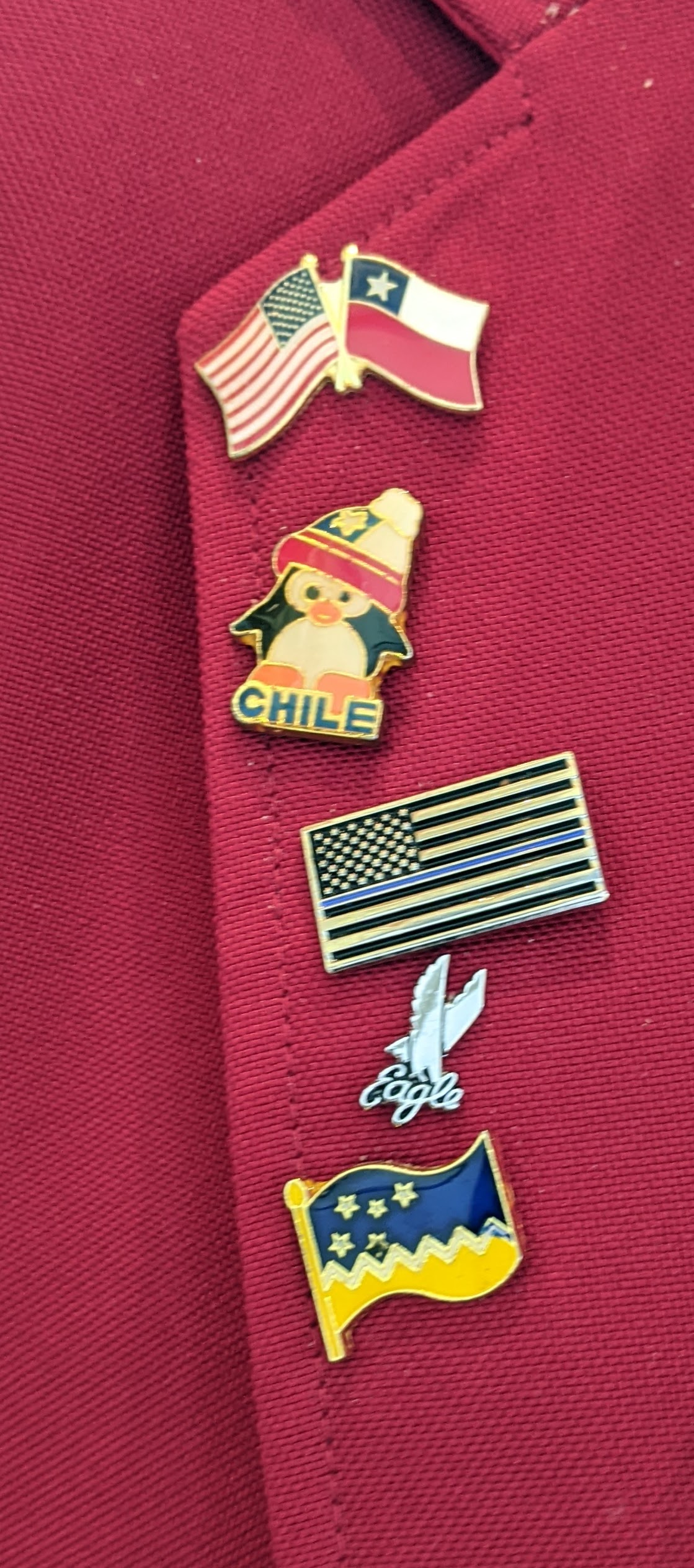
Check- in was swift and painless; a friendly American Airlines agent tagged our bags and placed them on the conveyor belt. We proceeded up the escalator, stopping at the top to chat with an Angel Squadron volunteer at the Airport. His name tag identified him as Luis Reyes. His red vest and a jacket adorned with colorful pins from different states and countries were as welcoming as his smile. I told him that my husband and I were traveling to Santiago, Chile, but would also be visiting Argentina during a 16-day cruise. We talked about the ports we would visit — Punta Arenas as well as Ushuaia at the southern tip of the continent, and then Buenos Aires.

His eyes sparkled and he was more than happy to share information about Chile, his native country. He told us about growing up in Punta Arenas, and how the city overlooked the Strait of Magellan at the southern gateway to Patagonia and Paine Towers National Park. He offered suggestions about where to go, and what to see and do during our short visit there, and he shared his recommendations for local food and drink. He promised that we would want to return.

Reyes also told us about how he and his wife had met, and how he came to be in Arkansas. I asked him if he liked living in Little Rock. He smiled again and said, “Yes, it’s my home now.” And, laughingly, he explained the similarities between the flag of Texas and that of Chile. “We had it first,” he noted. We laughed together.

We considered meeting this unlikely angel a good omen, and we promised to enjoy the delights of his native country and his boyhood home. He wished us a safe journey and we walked on, eager to board our first flight of the day.

Our travel adventures had only just begun! Sadly, our flight plan did not unfold as planned, and we were rerouted through Dallas-Fort Worth instead of Miami. We actually arrived in Chile a bit earlier than planned, and watched a spectacular sunrise over the Andes as our flight landed in Santiago.

After spending two days in that uniquely interesting city, we transferred to Valparaiso, a port city on Chile’s coast, to board our cruise ship bound for Punta Arenas. Again, weather and other circumstances intervened, and that port call was canceled.

Not long ago, returning to Little Rock Airport from another trip, my husband and I once again encountered Luis Reyes at the top of the escalator. He greeted us warmly. We told him how disappointed we were that we had not had an opportunity to visit the city in January. Nonplussed, he didn’t miss a beat! “You’ll just have to return,” he answered. We chatted for a few more minutes, about his summer here in Arkansas, about the trip we had just completed, and about our future travel plans. As we walked on, he called out to us: “I’ll hope to see you again soon,” he said.

Meeting him was one of those chance encounters that served as a prelude to the interesting people we would meet throughout our travels in South America. Once again, it’s the people one meets while traveling, not the places you go, that are the most memorable! Volunteers at major airports throughout the world are there to help travelers. Take advantage of the services if you need help, and get to know the volunteers who give of their time and energy to make travel as pleasant as possible for us all!

As I embark on other travel adventures, I hope this engaging angel will once again be waiting at the top of the escalator in Little Rock. If you happen to meet him, take the hard candy he offers. Ask for his assistance if necessary. Take some time to visit with him. And be sure to tell him hello from me!

And, if you don’t happen to meet Luis Reyes, I hope you meet another angel!

Times beyond forgetting . . .

Striking up a conversation with a stranger, especially when one is away from home turf — in another state or halfway across the globe — always leads to new insights. Somehow, sharing seems easier, and there is a double-edged desire to understand one another. Talking about history and the past, hopes and dreams for the future, life, expectations, favorite places, fears and hardships, war and peace, children and ancestors, puppies and good food — it seems easy to cross cultural borders in those times. Such encounters happen quite naturally while waiting for a flight, browsing a bazaar, standing on a cruise ship deck, or sitting in a crowded cafe almost anyplace in the world. It’s real, easy, and spontaneous.

The truth is that people throughout the world are eager to talk about all of these things — to me and to you. And we’re all eager to talk about our homes and our families. We form quick friendships with others we have just met. Sometimes they are short, quick encounters, and they end just as quickly. Occasionally, those chance meetings lead to lasting memories. They can also foster new friendships that easily survive decades and distances. There is promise in that fact.

So, because travel has once again become a welcome reality, I look at the empty pages of my desk calendar for the coming year, thinking about the destinations that will be penciled into those pages. I cannot help but think of the people I might meet in those faraway places. And I think of the trip from which I recently returned. For nearly three weeks, I was a solo traveler. It was not my first trip alone, but it was a uniquely fresh adventure. For many years, I have enjoyed the company of a willing travel partner. When my spouse and I each had busy and fulfilling careers, we were not infrequently apart due to work schedules and business trips. We sometimes enjoyed the company of individual friends and family members on our travels, but we traveled as a couple for most of our most memorable vacations.

Booking a solo cruise for May of 2023, followed by attendance at a professional conference, was in many ways new territory for me at this stage of my life. And, I must report that it was better than I had hoped. I also have to say that, for me at least, it was nice to return home and resume my by-now-familiar pattern of life. Will I leave again as a solo traveler? At this point, I am not certain that I will, but I would not hesitate should the right opportunity present itself.

That’s the joy of traveling. The art and the architecture, the vistas and the crowded piazzas, the food and the wine, the excursions and the unexpected experiences all may be the stuff of dreams, but nothing beats the privilege of sharing “quality time” with real people, no matter how fleeting that time might be.

That’s what I missed most during the pandemic. Interacting with real people is the one thing that makes travel so enjoyable, so unforgettable, so necessary, to my mind. That’s what I anticipate most with each trip I take. My recent journey seemed almost like too much frosting on the cake. It included another chance to step across the latitude line in northern Alaska that allows me to say that I have been north of the Arctic Circle once again. The first time was a Nordic cruise to “the top of the world” last September. Coupled with a trip to Antarctica in January of this year, this time was a new thrill.

Where to next? At this point, I have no idea. Much to our disappointment, a planned February 2024 cruise that we had booked with a sizable group of friends and family was just canceled by the cruise line due to ship redeployment. But, I am sure we will find another journey that lures us to “take flight.” Once again, it will mean a potential to meet and interact with interesting people in addition to a distinctive itinerary, that will lead us to book another trip.

Looking forward also entails looking back.

Several years ago, my husband and I had a free afternoon in a Mediterranean port city. We had seen enough churches and museums, eaten enough lunch, walked too much. We found a cabbie near the port who, for a set fee, was willing to take us on a drive around “his” city. We wanted to visit a market to buy some fresh fruit, perhaps some cheese and olives, and a local bottle of wine. We wanted to see the view from the bluffs above the city. Most of all, we wanted to relax and hear about life in a unique and beautiful part of the world.

We got all of that and more. Our congenial driver spoke in halting English about his family, his wife, his life. He told us how proud he was of his children, a son studying medicine in London; a daughter pursuing dreams of her own in America. He told us how much he missed them, and what he wished for them in the future. We practiced our Italian, asking about the cost of living, about the political situation in his country and throughout the EU, about the past and the future, about the weather, and about the cost of gasoline and the price of olives.

He brought us to a favorite lookout with an incredible view of the sea, where we stood in the wind and drank in the beauty of the setting. And then he brought us to a small cafe where we drank small cups of strong coffee as a fitting end to our excursion. He dropped us back at the dock and we re-boarded our ship, knowing that we would never see him again but that we would never forget him. The world grew just a bit smaller that afternoon, and our hearts were full.

It is experiences like that that will keep me on the road as long as I am able.

Follow me here @goodfoodandfarwayplaces.com to learn more about strangers I have met and befriended across the globe and through the years. Read more stories about travel, history and my random musings about life in today’s world @rightoffmain.com, follow me at facebook.com/cohenadrienne/ and on Instagram @adriennecohen221.

Polar Opposites

71-10-21 and 64-89-??

Points on a compass have little meaning to most people. Schoolchildren learn about the north and south poles, that the earth is tilted on its axis as it travels around the sun, and that the globe is divided into latitude and longitude lines. Most come to know that the equator separates northern and southern hemispheres, and that the latitude lines defining Arctic and Antarctic circles are set at 66 degrees thirty minutes north and south of the equator which is at zero. But it’s a fact long forgotten by most adults. In truth, there’s little reason to know exactly where one is on the globe at any given point in time, unless you have a precise need to navigate to a destination. Airline pilots and ship captains need that knowledge, but casual travelers really do not.

For what it’s worth, however, the coordinates of Hot Springs Village are 34.6720 degrees N, 92.9988 W. It won’t replace a street address, but if you’re interested in little-known facts, make a note! I once was tempted to have the coordinates of the tiny train depot in my favorite little village in Maine printed on a t-shirt, just to see if anyone would ask what the numbers meant. I didn’t.

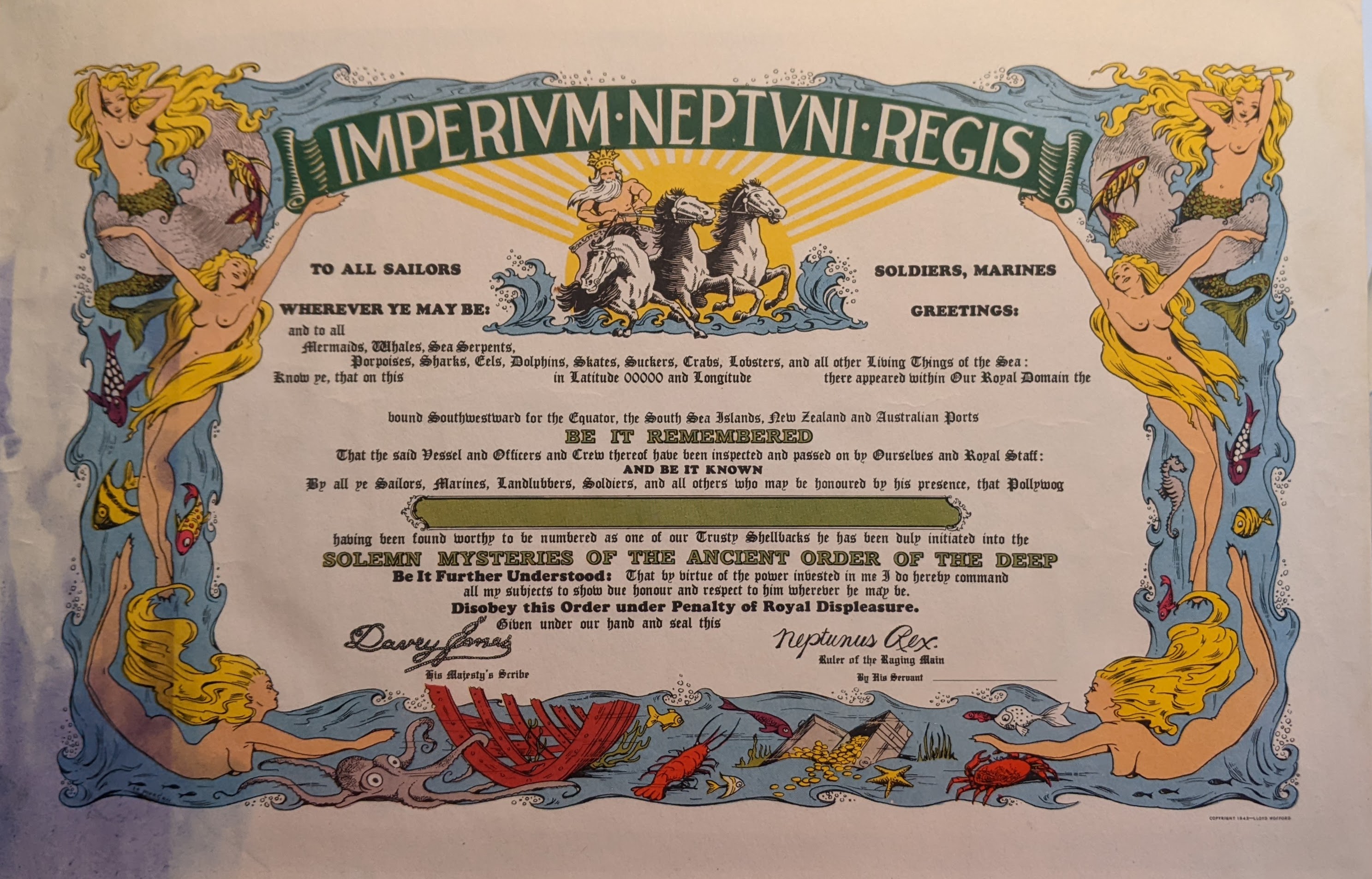
Ancient mariners noted the crossing of that zero latitude line regularly, and it is an honored tradition still practiced by sailors today. If you have been lucky enough to sail across the equator, you may know about the good-natured and sometimes raucous festivities that mark that passage. Read about the Royal Navy’s Crossing the Line ceremony aboard the aircraft carrier HMS Queen Elizabeth on the ship’s first equator crossing in 2021. I also have a certificate of passage across the equator. It is colorful and ornate, and it is not mine, but it is part of my family history.

The latitude is noted as 0000 — the equator. The longitude is left blank, as are other blanks for the name of the ship, the name of the sailor, and the date and time. On the back, however, is this handwritten note:

Longitude “Secret.” USS Admiral Benson. Destination: “On a Mission of War” Date: “Secret 1945.”

I find it fascinating that some traditions were kept even during wartime. Celebrations take place aboard modern cruise ships, to the delight of most passengers. And crossing the International Date Line can be a bit disorienting. At basically 180 degrees longitude, or half the globe away from Greenwich, England, at Longitude 0, the date line was only designated as such in 1884, to make timekeeping more consistent. The line, which designates the change of calendar dates, sometimes follows a zigzag path around political boundaries, as between eastern Russia and the Aleutian Islands of Alaska. Gaining or losing an entire day in an instant while crossing the International Date Line must be disorienting as well as exciting. Crossing from east to west means that travelers “lose” an entire day! You can gain that day back if you return later to your starting point. That must be disorienting as well as exciting. I don’t know if a certificate exists for that or not!

Some airline pilots will also announce the crossing of the equator, or the time-altering effects of crossing the International date line.

Breaking the Barriers

Tourists can easily venture north of the Arctic Circle on Scandinavian itineraries, whether on land, sea or in the air. Travel to Antarctica typically requires a sea voyage, and is only possible during the height of the southern hemisphere summer. A commemorative certificate is commonly awarded to passengers, denoting the actual southern latitude a vessel reached, but traditions vary. Most visitors to Antarctica do not actually cross into the Antarctic Circle. Most don’t get even to 65 degrees south latitude — the passages are too treacherous for all but sturdy scientific vessels with ice-breaking ability. There are no scheduled flights to the seventh continent from either South America or Australia. Scientists and researchers most often arrive by air at their remote research stations in late spring and depart the same way prior to the onset of the long Antarctic winter.

The earth’s magnetic poles continue to shift slightly, and the imaginary lines that describe the polar regions also vary somewhat. The boundaries of the polar circles are typically noted as 66-33-39 degrees North or South latitude. They are sometimes said to be situated at 66.5 degrees. There are only about 69 miles between degrees of latitude, so the difference is truly miniscule.

When my husband and I cruised along the coast of Norway in 2022, we entered into the Arctic Circle, according to our certificate, at 12:12 a.m. on June 17, at Latitude 66-30.1 N Latitude and Longitude 009-26.3 E. We continued north to Nordkapp, or the North Cape, at 71-10-21, the northernmost point of the European continent, and also to Skarsvag, a Norwegian fishing village with a population of 60, at latitude 71-06-47 N.

Approximately seven months later, we sailed from Ushuaia at the southern tip of Argentina across Drake Passage and along the Antarctic Peninsula, achieving a “most southerly latitude of 64 degrees 58 minutes.” The date and time are not noted on that certificate.

Next month, I will travel along the Dalton Highway, which runs north from just outside of Fairbanks to end at Deadhorse, Alaska, close to the Arctic Ocean. There’s a simple wood sign at about milepost 115 on the roadway, at which vehicles traditionally stop for photos. The sign, depicting the earth as viewed from the North Pole, simply reads “Latitude 66 33”. The 414-mile highway, some of it still only hard-packed gravel, was built to facilitate construction of the Trans-Alaska Pipeline. The pipeline itself stretches for 800 miles, from Prudhoe Bay in the north to Port Valdez, where the oil is loaded onto tankers for shipment to market.

Why do I do these things?

Well, for one reason, like Captain Kirk, I like to go where few other people have been. Secondly, I am especially fond of quirky destinations, and I will go out of my way for the photo ops and the unique experiences they provide. I like to stand at points where the land ends and the sea begins, and imagine what lies beyond. Many of these “furtherest” points fill me with a sense of wonder that past explorers, sailors, and adventurers stepped out into the unknown not knowing where exactly their journeys would take them, when they would end, or if they would ever return.

Just for the fun of it while we were boating in Maine, my husband and I visited Lubec, Maine, the easternmost point of the continental United States. Nearby are the distinctive red and white striped West Quoddy Head Light in Maine, and the historic East Quoddy Head Lightstation which stands at the most northern point of Campobello Island, New Brunswick, Canada. The names confused us until we consulted our navigational chart and realized that they designate opposite sides of Quoddy Narrows, and make perfect sense to local mariners, as they have for nearly two centuries.

We have returned to Key West many times to stand at the southernmost point buoy. Just for reference, latitude and longitude readings there are 24.5465 N, 81.7975 W. The northwesternmost and most western points of the contiguous 48 states are near Cape Flattery on the Olympic Peninsula in Washington state. Despite living in Washington for many years and boating in the waters around Puget Sound and the peninsula, I have not been there. Maybe someday.

Trips to Gibraltar give us reason to look longingly across the Staight that separates Africa from Europe — a mere eight miles. A trip to Portugal several years ago found us enthralled with the lighthouse at Cabo Sao Vicente, the southwesternmost point of Europe. It is said that it can be seen from 60 miles out to sea. And, yes, I have an ongoing fascination with lighthouses!

It is at these times, as I stand in these faraway places, I realize anew just how vast and beguiling this earth we call home truly is, and just how many places remain for me to discover.

Note: If you’re interested in random facts, have time on your hands that invites mindless armchair exploration, or are in need of trivial conversation starters, visit Wikipedia’s List of extreme points of the United States.

A dose of good cheer . . .

There’s something about Americans.

They are everywhere, it seems. Sometimes by choice; sometimes by happenstance, often on orders and sometimes unwillingly. Americans travel the globe. Occasionally, they’re “ugly.” Almost always, when Americans “discover” a place, it is changed. And many would argue that change, though inevitable, is less than desirable.

There are other nationalities that also travel the globe; many of them English-speaking — Brits, Canadians, Australians. But there are French-speakers, Spanish-speakers, Scandinavians, Asians, and Africans. In fact, today, all nationalities travel extensively. Most travel rather inconspicuously.  Americans tend to stand out and are occasionally the brunt of jokes and the subject of pervasive and less-than-flattering stereotypes. 

But, there’s something about Americans.

On Christmas Day morning, on a beach in Puerto Vallarta, Jalisco, Mexico, a group of Americans gathers to hang stuffed animals, matchbox cars, soccer balls, footballs, Barbie dolls, and an assortment of other toys from the palapas and beach umbrellas of a local hotel. They wear Santa hats, blinking reindeer noses and silly, floppy reindeer antlers, candy cane shirts, and an assortment of other red and green attire with their swimsuits and shorts.

The beach chairs and lounges are circled to keep the public at a distance. No one really seems to be in charge. At 8:30 am on Christmas Day, it is quiet on the beach. And then more people arrive, some with armloads of stuffed animals, some with plastic bags from the Walmart on the other side of the Mexican city. Some come with one or two toys. Many dropped off their “goodies” earlier in the week. Word spread about the event, and the crowd steadily grew larger.

Volunteers bring ribbons and scissors. There is a festive spirit. Onlookers gather.

Soon, a group of children begin to form a line, off to one side. Quiet, and well-behaved, they stand with their parents and older siblings. They watch. They wait.

This ritual began more than 20 years ago. On Christmas Day 2004, I was on that beach that Christmas Day. A woman named Marge from Nashville, TN, one of the original group of Santa’s helpers, asked volunteers to walk down the beach to find more children. “This is the best year ever,” she said, “and I’m not sure we have enough children for all the gifts.”

There is no publicity. This is not an organized effort. There is no tax deduction attached to these gifts. There were lots of pictures taken. There are big smiles on the faces of the adults. The children look on with wide-eyed wonder. There are tears. There are hugs. There is a sense of excitement. There are cookies and soft drinks and music on a beach in Puerto Vallarta on Christmas Day. And there is a sense of community.

Even though most of the children speak no English, and most of the adults speak little Spanish, there is no language barrier.

One man with a distinctively British accent and a camera pauses to ask what is happening. When it is explained, he makes no comment. But he remains to take pictures, staying on the fringes but joining in the palpable spirit of goodwill.

At precisely 11 am, four Mexican children are allowed to enter the “garden” of hanging toys, each one accompanied by an adult American volunteer with a small pair of scissors. As each child walks through, he is allowed to take his time to look, and then his selection is snipped from its ribbon hanger and handed to him. It is almost silent. There is no screaming, no running. There is a sense of reverence as the child clutches his selection to his chest and then is escorted to the other edge of the toy-filled enclosure.

Children of hotel employees, youngsters whose parents are beach vendors, and children who have come to the beach for a day near the water and the sun with their extended families are the honored guests. They are all Mexican children. That is the only requirement.

It is not their tradition. Christmas, in Mexico, is a deeply religious holiday, with a family-oriented emphasis. Santa Claus does not visit most Mexican children.

But where there are Americans, there are some traditions that are hard to break. In the United States, there are toys for children. So, where Americans gather at Christmas, there will invariably be toys.

There is something about Americans.

Note: I first wrote this nearly two decades ago for an online publication that no longer exists. I was thinking today about that long ago Christmas on the beach, and it seemed appropriate to repost this piece this year, at a time when the world seems to need a large dose of goodness and cheer. I don’t know if the tradition continues in Puerto Vallarta. I hope it does. But, whether the beach party is still held or not, it is a wonderful memory. I wish Happy Holidays to all, no matter what holidays you celebrate or where you celebrate them. And may 2023 be a good year for us all!