Galveston — Queen of the Gulf

I can hardly think of Galveston without — at least in the back of my mind — humming the tune that Glen Campbell sang with so much heart back in the 70s.

I was in Galveston in early May to attend the annual conference of the North American Travel Journalists Association. I definitely heard those sea winds blowing and sea waves crashing. It was a stormy time across Texas, and not really beach weather, but Galveston still offered fun, good food and drink, and plenty of things to occupy my time when I wasn’ t in a meeting or attending a special event.

We were kept quite busy, but there was still time to become reacquainted with a city that I had learned to love when my husband and I were Texas residents looking for a rejuvenating beach getaway. Then, too, my son is a graduate of Texas A&M University at Galveston; so, as parents of a Sea Aggie, we have another tie to this unique beach town.

The city has grown, but in many ways it has not changed much since the last time I visited for any reason other than to board a cruise ship. Indeed, there’s a new cruise terminal and the iconic Hotel Galvez has been completely reimagined and is now grander than ever before. A number of new restaurants are flourishing since the days we sought out cheap takeout places for fried shrimp or oyster Po’Boys. The legendary pleasure pier has been rebuilt, modernized, and expanded. Some of my favorite old haunts no longer exist, but new breweries and bars have taken their place. Another favorite bakery and coffee shop has moved, and is now Bronco Burrito. A sister of the coffee shop proprietor now offers one of the biggest, and best, burritos ever. As the old saying goes: “The more things change,” . . . you know.

Familiar, But Always Fresh

My former “must stop at” donut shop, Shipley’s on the causeway as one enters Galveston is still a tradition. And Galveston’s oversize chess board still occupies a prominent location on The Strand, always ready for a crowd of onlookers when someone suggests a match.

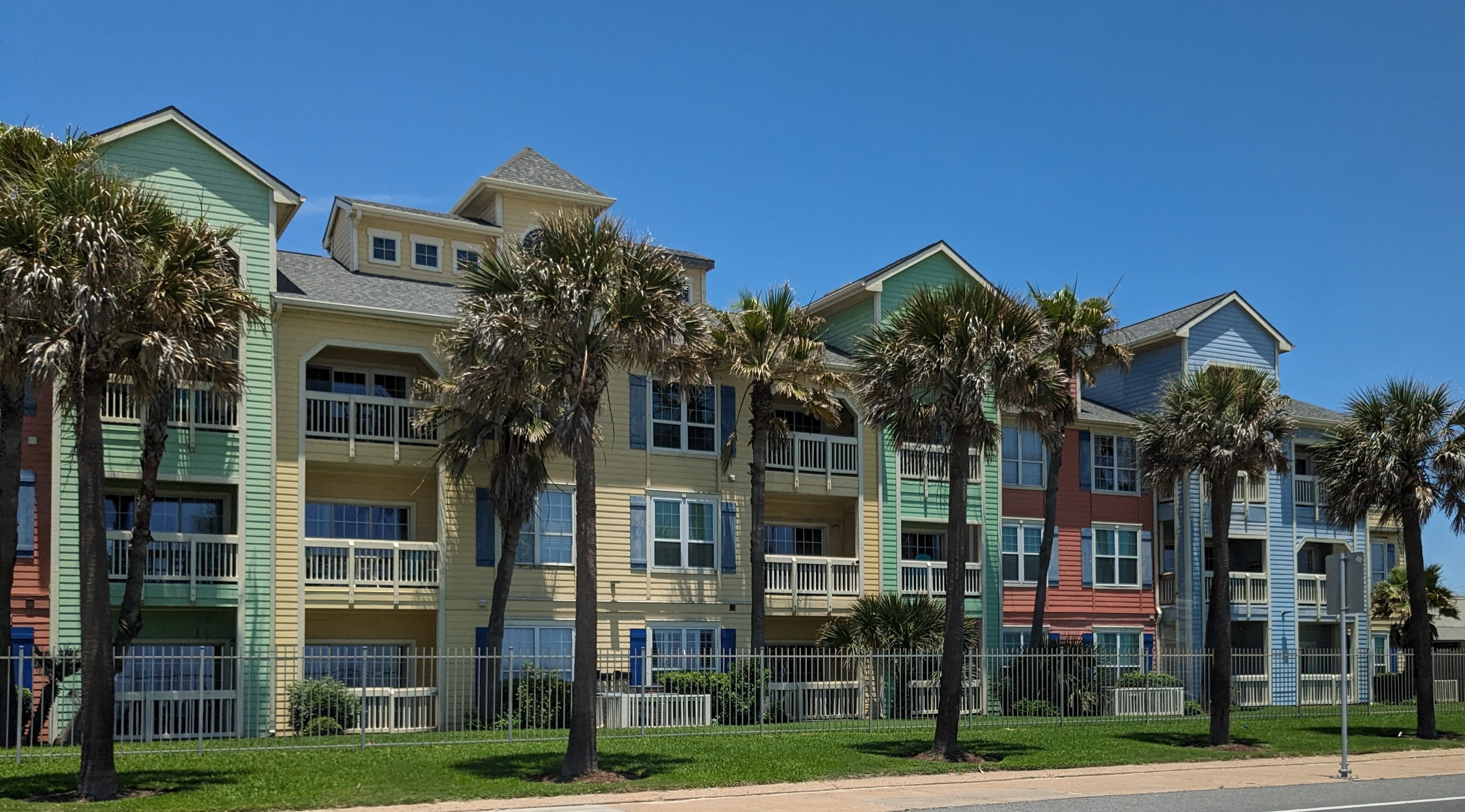
Galveston remains a beach town with a welcoming vibe, a young, active population, and a distinctive sense of its own importance. It has moved easily into the 21st Century, and is primed for future growth and development. Throngs of visitors flock to the island when the weather is good, renting beach cottages and filling the island’s hotels and motels. But on this trip I realized once again that this best-known island just south of Houston — just 27 miles long and three miles wide — has a past worth exploring. That past could fill volumes.

Cabeza de Vaca, the first European to come ashore in North America, spent seven years in Galveston beginning in 1528. That led to 300 years of Spanish colonization. Bernardo de Galvez, the viceroy of Northern Mexico and Texas, defeated the British at the Battle of Mobile Bay, and was a witness to the signing of the American Declaration of Independence.

Then came the pirates — Jean Lafitte and his brother Pierre attacked an American ship in 1822. Steven F. Austin obtained a land grant to settle 300 colonists in Texas and, in 1825, was granted permission to form a port.

These are the names of past visitors and residents who envisioned a city on this spot.

Galveston was born.

When the Texas Revolution was begun in 1836, the city was thriving, and it saw the birth of the Republic of Texas in 1846.
A Port of Renown

By the year 1850, the city was the largest port in the United States, with an export to import ratio of 20 to 1.

One of our conference speakers was J.P. Bryan who founded the Bryan Museum in Galveston in 2015. It boasts some 70,000 artifacts, from family letters (his great-great-grandmother was Steven F. Austin’s sister) to rare books, pistols, and saddles. He grew up in Freeport, and his father was president of the Texas State Historical Association.

The museum is housed in a completely refurbished once-abandoned Galveston orphanage. I was enthralled by his stories and I learned more about Galveston history and lore from him in one hour than I had gleaned during repeated past visits spanning nearly three decades.

One of the best things to do in Galveston is to learn about its history. And I learned from one of the best. As Bryan notes, “History is not boring.” In Galveston, history is around every corner.

Galveston Firsts

Once a center for immigration second only to Ellis Island, the small city was once known as the Wall Street of the West, and it boasted the first black high school, the first library, the first electric lights, the first professional baseball team, and the first medical school (It’s medical complex today, including the University of Texas Medical Center and the Shriners Children’s Hospital and Burn Center, a renowned and highly rated group of institutions.

In 1880, the city counted more millionaires than New York City, and there were more Victorian structures than anywhere else in the country. Until, that is, a 1900 hurricane devastated the city. With a death toll of 9,000 citizens, that event represents the worst disaster in U.S. history. Galveston rebuilt, but it never bounced back financially to where it was in the late 1800s. Today, there are 60 buildings included on the National Register of Historic Places. And Galveston is, once again, on the map, so to speak, and is on the way once again to becoming a force to be reckoned with.

Because it was, and is, a port city, Galveston also knew its share of shady characters, gambling and vice, and had a thriving red light district during the first part of the 20th Century. The city fell into decline from the end of World War II until the 1960s, when it began to reinvent itself once again.

Today, it looks forward to a new renaissance. Business is booming; tourism is up. Galveston has rediscovered its past and by so doing, reclaimed a vision of a prosperous future. This is what we saw during our short stay.

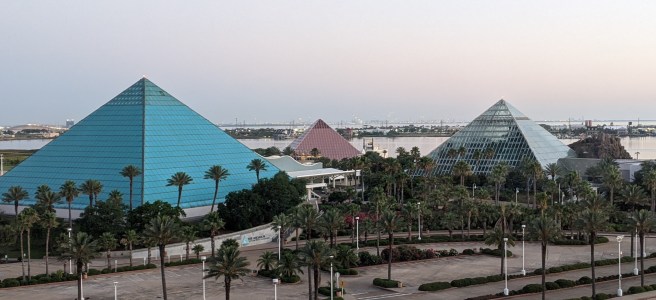
Note: Our conference was held at Moody Gardens. Watch for my future story about this amazing recreational and educational complex that includes a modern hotel and convention center as well as three dramatic pyramids that house an aquarium, a rainforest, and a Discovery pyramid that features rotating exhibits. There’s also a water park, a replica paddlewheeler, a reef rescue virtual reality experience, a ropes course and zipline, a seasonal waterpark, and 3D and 4D theaters.

Juneteenth

June 19th marks another bit of historical relevance for this quirky beach town. It was on June 19th, 1865, that Maj. Gen. Gordon Granger, who had fought for the Union, arrived with a force of soldiers in Galveston to deliver a very important message: The war was finally over, the Union had won, and it now had the manpower to enforce the end of slavery.

President Lincoln had signed the Emancipation Proclamation two and a half years earlier, but the word had not yet reached the Confederate state of Texas.

Read more about Juneteenth history. Believe me, it’s pertinent.

Today, Juneteenth is a National Holiday, and nowhere is it celebrated with more meaning than in Galveston.

The Future Is Bright

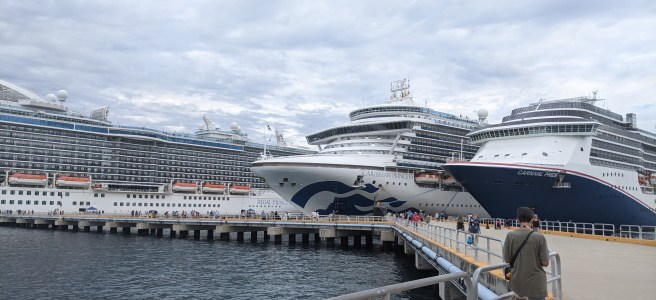
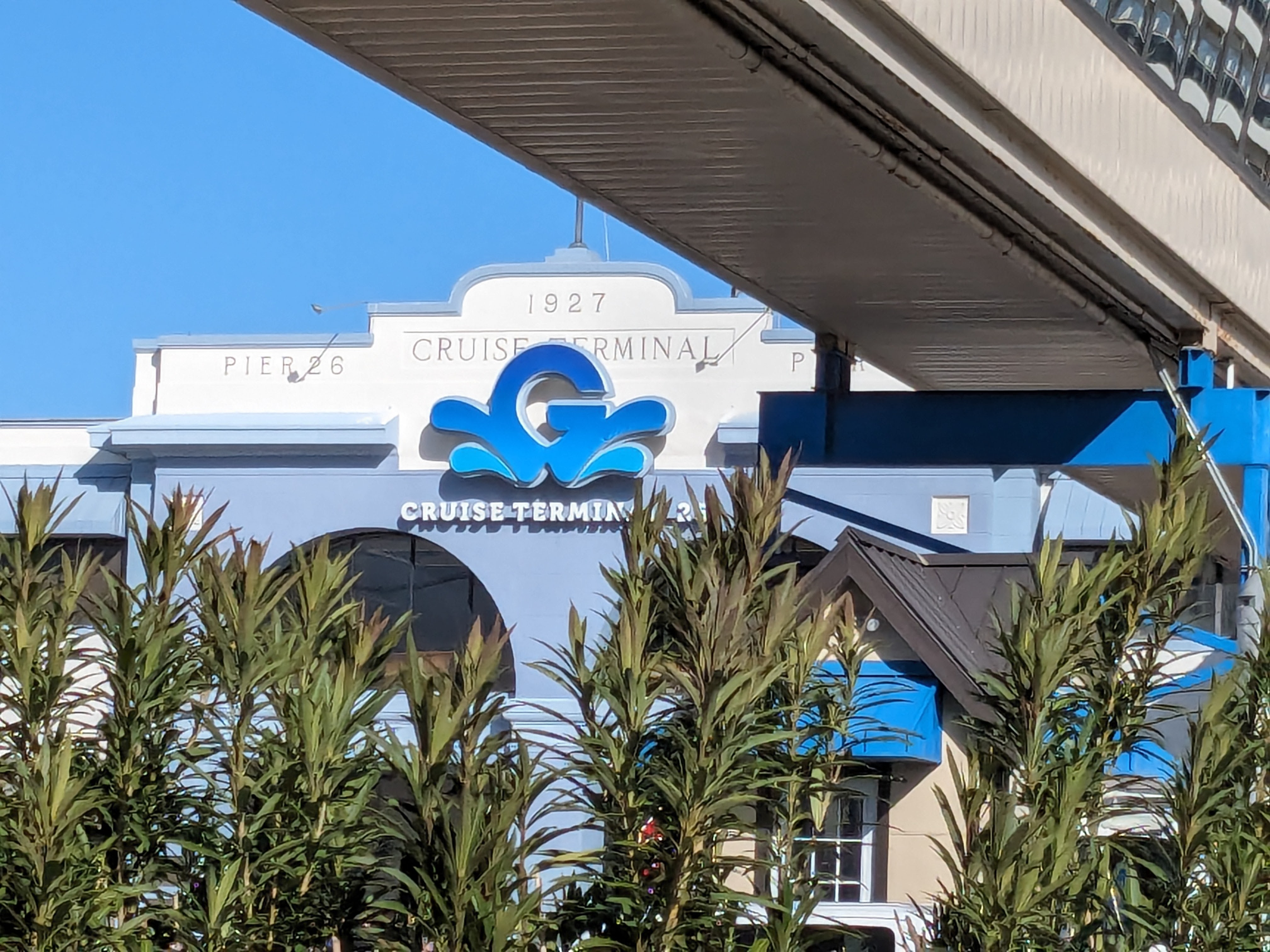
Galveston Mayor Craig Brown noted that, beginning in 2025, “every major cruise line sailing U.S. ports will be represented in Galveston,” and the city is slated to become the country’s third busiest port. A new Royal Caribbean Cruise Terminal opened in late 2022 at a cost of $125 million. It provides the utmost in passenger boarding convenience, with time from parking your car to actually boarding a cruise ship reduced to mere minutes, and it will accommodate the largest cruise ships afloat today.

Best Things to Do in Galveston

I could make a long list of things to do and places to go in this unique city, but half the fun of visiting a destination like Galveston is discovering on your own. If you travel there, just be open to new experiences, and you’re bound to enjoy your time. Seek out unusual places, talk to locals, and try new things.

Don’t Miss the Elyssa

Visitors may also tour an 1877 sailing ship, the Elyssa, that occupies a permanent slip at the Galveston historic seaport, amidst the seafood restaurants and wholesale fish markets. Take a tour of the restored vessel, or schedule a harbor tour. It’s quite an experience. Sightseeing tours of the port are also available that take passengers to the tip of the island, where free ferries operated by the Texas Department of Transportation run 24-hours a day to connect Galveston with the Boliver Peninsula, just just a few minutes away.

Adjacent to the Elyssa’s dock, you can become an immigrant. It’s a fascinating journey to “adopt” a persona and make your way through the immigration procedures at the Port of Galveston during that part of its history.

Ride the Ferry

A free ferry connects the Bolivar Peninsula southwest of Beaumont with Galveston Island. Officials have debated the pros and cons of building a bridge there since the 1930s. So far, it has not been done.

The trip spans less than three miles, and takes 18 to 20 minutes. During peak times, wait times can be long, sometimes an hour or more. There are no priority passes, but the ferry service operates around the clock. There are six ferries in the fleet, and during peak traffic times, all may operate as necessary. In the year 2000, the ferry system transported 6.6 million people. Each vessel can transport up to 70 vehicles, and 500 people.

The Pleasure Pier

In 1906, only a few years after the earthquake, Galveston’s original Electric Park that was to become known as the Coney Island of the South opened on a pier jutting out into the bay. A special excursion train at the time connected Houston to the pier, and crowds thronged to enjoy the moving picture shows, a ferris wheel and roller coaster, vaudeville shows and penny arcade, all lit by 6,000 electric lights.

In 1943, the Pleasure Pier was opened for the benefit of servicemen and military families during World War II. Following the war and throughout the 50s, more rides, games, and attractions were added, including a ballroom and outdoor theater for movies under the stars. Then, in 1961, another hurricane damaged much of the pier, and the Flagship Hotel, built over the water, fell into disrepair. Then, in 2008, Hurricane Ike roared through and the tourist industry in Galveston was hard hit until an investor in the person of Galveston native and Landry Corporation proprietor, took a chance and rebuilt the historic entertainment pier.

It opened in 2012, bigger and better than ever before. It is now a “must see, must visit” attraction in Galveston, with something for every visitor from nine to 90. Don’t miss it, if only to watch other people enjoying themselves.

Tour the Railroad Museum

The toy train at Galveston’s Railroad Museum made me feel like a child again!

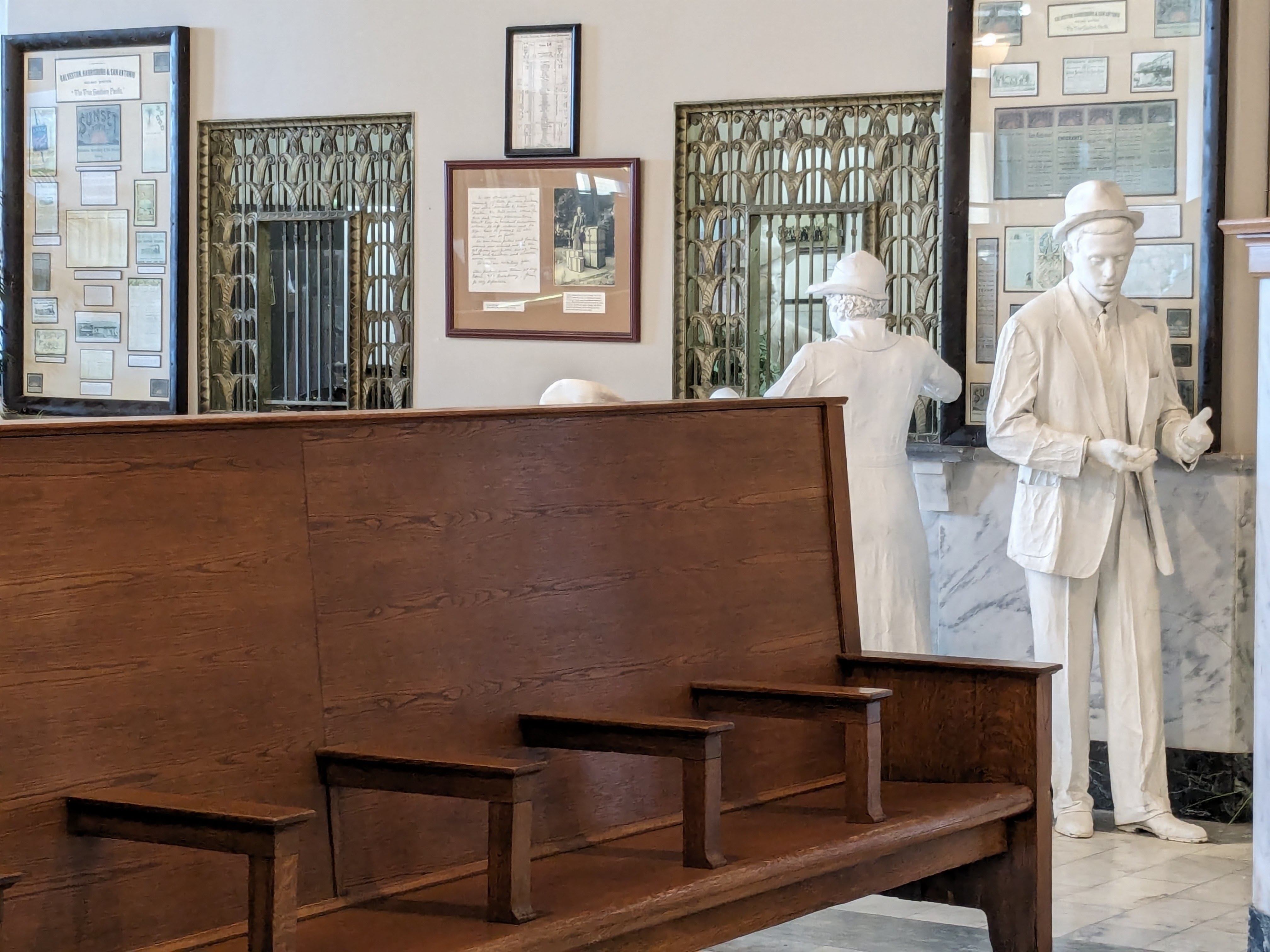
The former Galveston Railroad Station has been reimagined as a museum, complete with original benches, clocks, ticket counters, a bank of pay telephone booths, and a variety of vintage rail cars and engines looking as if they’re fit to leave the station at a moment’s notice. For any railroad buff, it’s a must see — for its architecture and his historical significance. One can almost hear the “All aboard” cry as you open a door that leads to the tracks.

Other displays in the station are captivating as well — especially the stories of children who rode the rails from the east coast to the Midwest and Texas aboard Orphan Trains. Its a history that deserves telling, but one that has not been told completely or enough.

Plan Some Beach Time
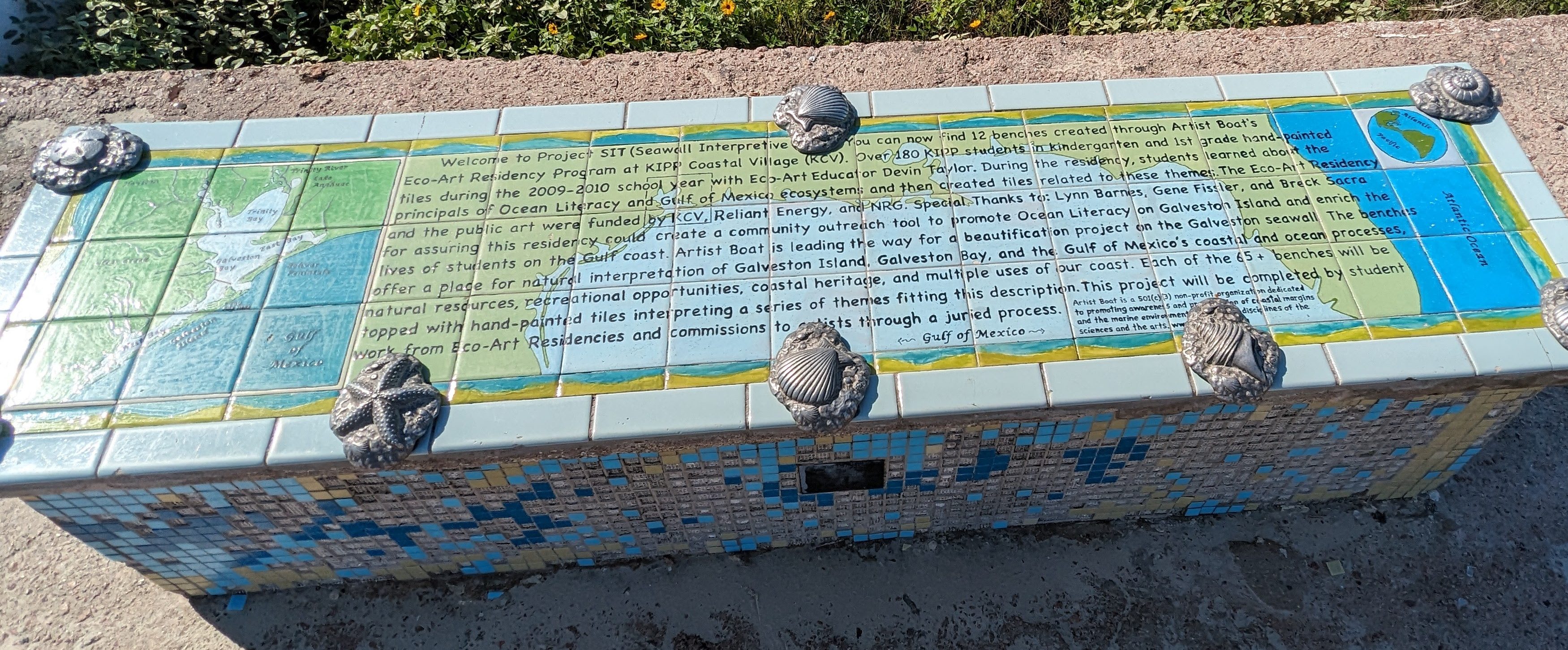
Walk along the Sea Wall and gaze out at the Gulf or take your shoes off and stroll the beach. Spread a towel or a blanket, and have a beach picnic. Stretch out and savor the sun, build a sand castle, or leave the beach for some fun at the historic Pleasure Pier! Galveston has done a marvelous job with its 32 miles of beaches — some areas are now equipped with “paved” paths designed to allow beach access for mobility-challenged beach-goers and visitors in wheelchairs. The city, at the forefront of such user-friendly features, has also installed rest rooms and changing areas with easy beach access. Note: Many Galveston trolleys are also equipped with ramps for mobility-impaired passengers.
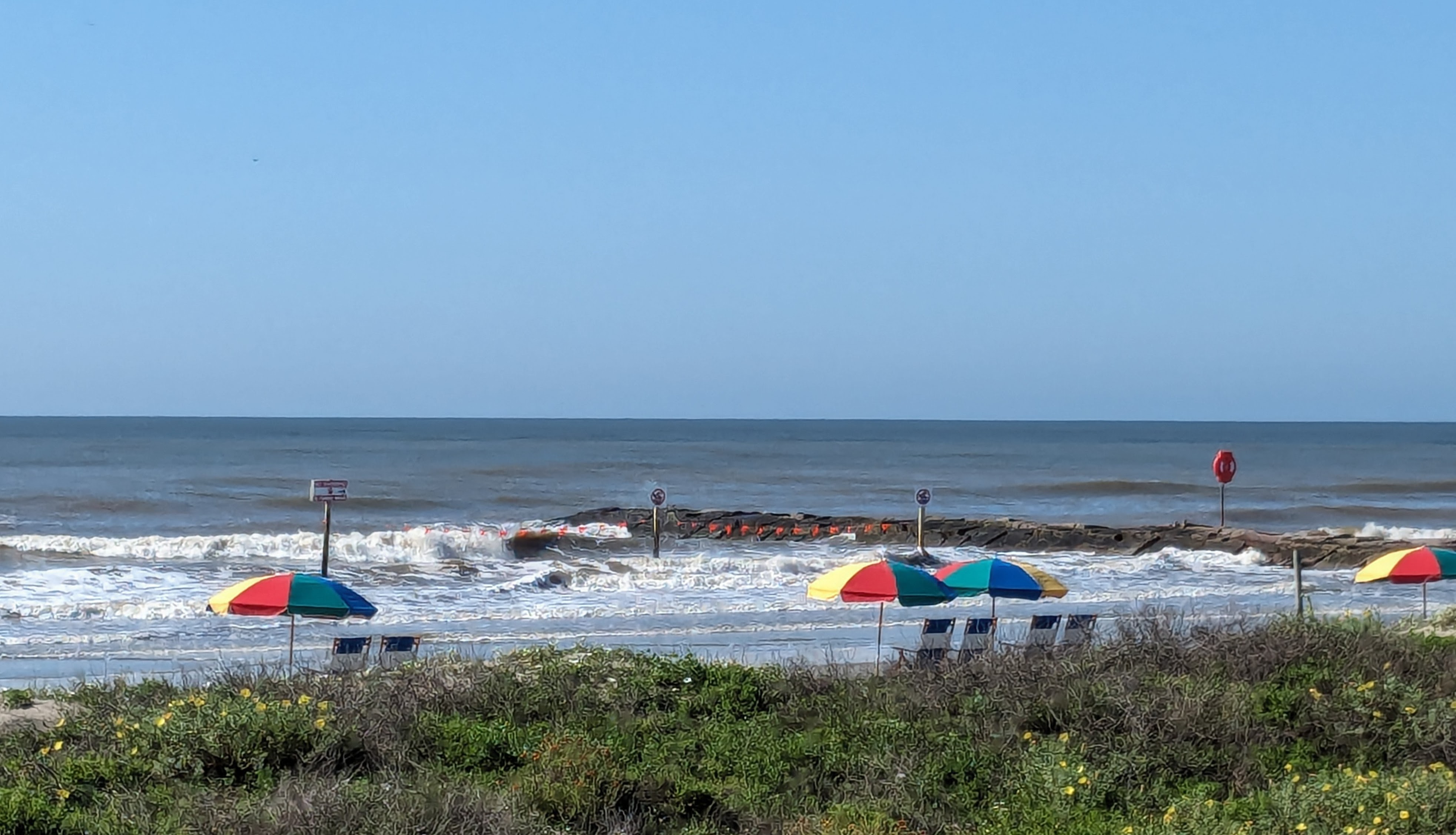
You’ll pay to park your car, but Galveston’s beaches and numerous attractions are open to the public at no charge.

Spend a Day at the Tidal Estuary

Galveston boasts a tidal estuary that has national significance because it has not yet been greatly affected by human activity. It is estimated that 75 percent of the bird species in North America spend some time in the local bay, and it is filled with both finfish and blue crab, bordered by coastal plains and marshes. If this is “your thing,” get out and enjoy it.

Go kayaking, rent a canoe, take a nature hike, or simply gaze at and be amazed by the nature that surrounds you.

Seawolf Park

At the very tip of Pelican Island, accessible by a single bridge from the city of Galveston, Seawolf Park boasts the most popular fishing piers in the area, along with picnic tables and a children’s playground. Pelican Island is also home to the Galveston campus of Texas A&M University, with degree programs in marine sciences, marine fisheries, marine biology, maritime engineering and ocean engineering, computer science, maritime transportation and maritime business administration. It also offers an interdisciplinary program in maritime studies, and is home to the Gulf Coast’s only Maritime Academy that offers a licensing program for students who wish to pursue maritime careers.

Seawolf Park currently houses the Galveston Naval Museum that allows visitors to tour both a WWII-vintage submarine and destroyer, and greenspace with a submarine exhibit. Galveston is also the probable new home for the Battleship Texas, currently undergoing repairs and refurbishment in drydock. It has been reported that this sole surviving U.S. battleship that served in both world wars will at some point in the future find its new home at Pier 21 in Galveston.

Visit a Fish Market

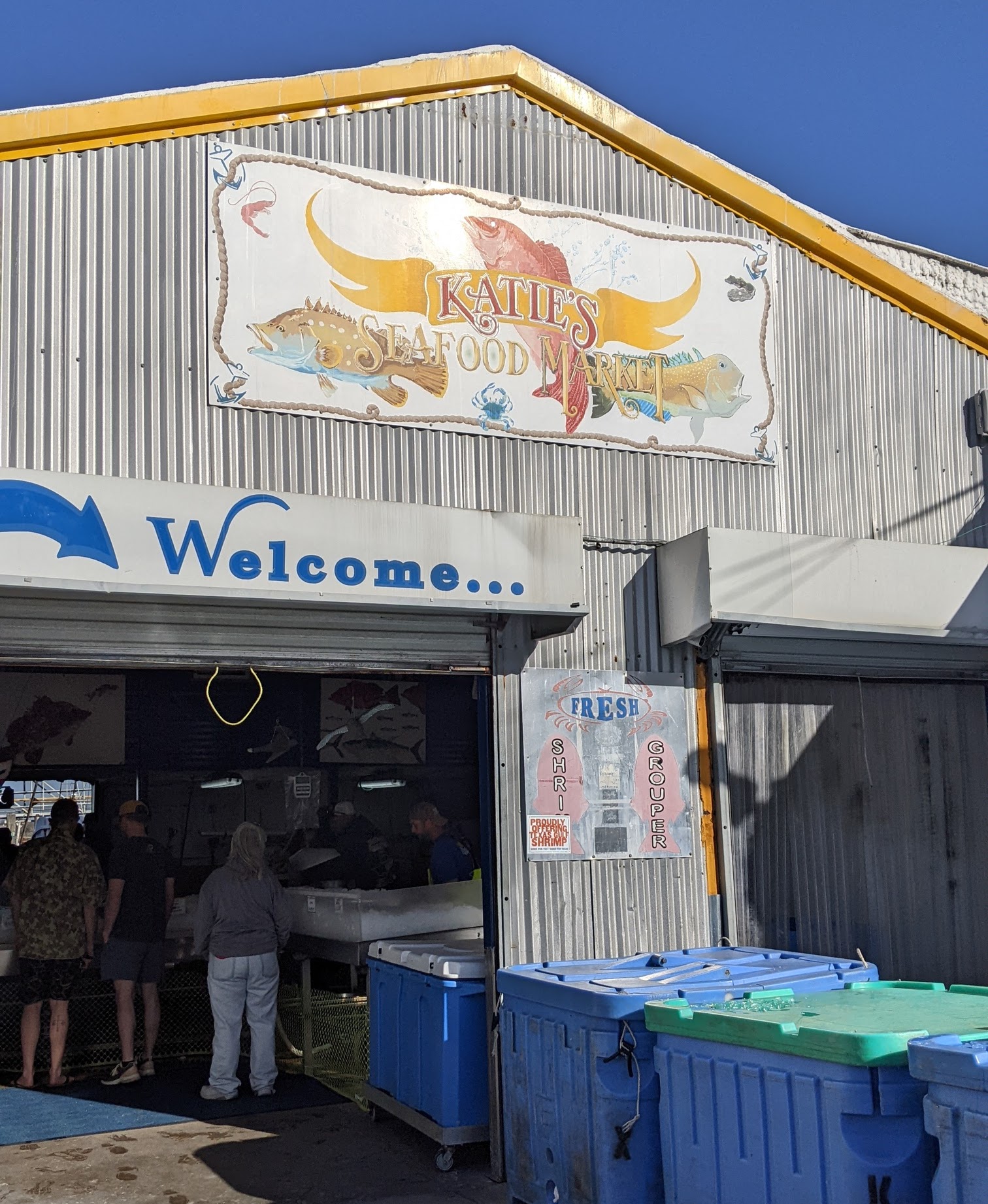
Seeing the wide variety of the catch fresh off the fishing boats is an experience not to be missed when you’re in Galveston. Of course, you can order from a local restaurant menu and you’re likely to get fish that’s just as fresh, but there’s something about seeing fish arrayed in deep tubs of ice that cannot be matched.

A large part of the fun is watching the pelicans who are hoping beyond hope for a handout from the fishmongers. Sometimes they get that gift, and that’s a real show!

Food and Drink

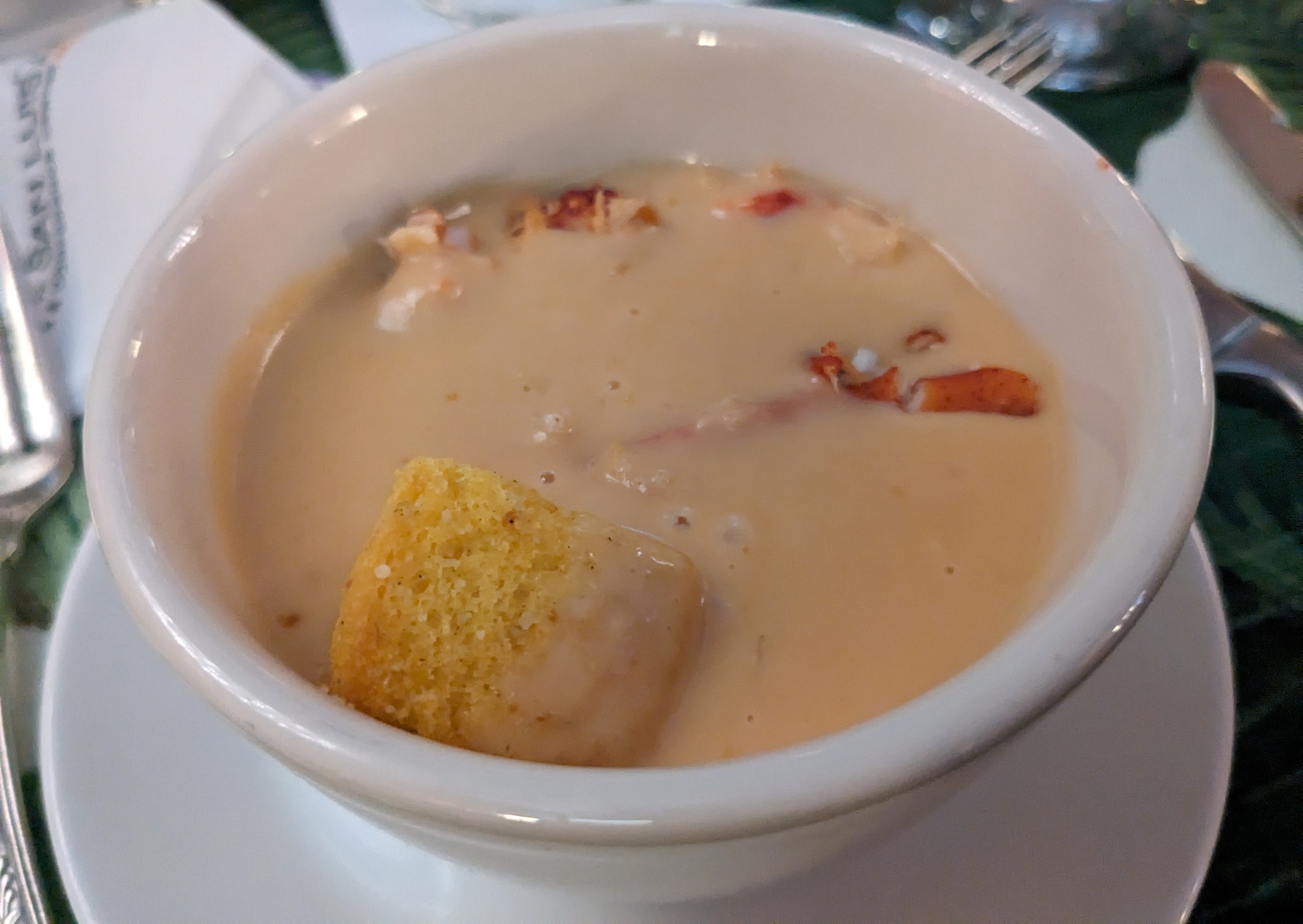
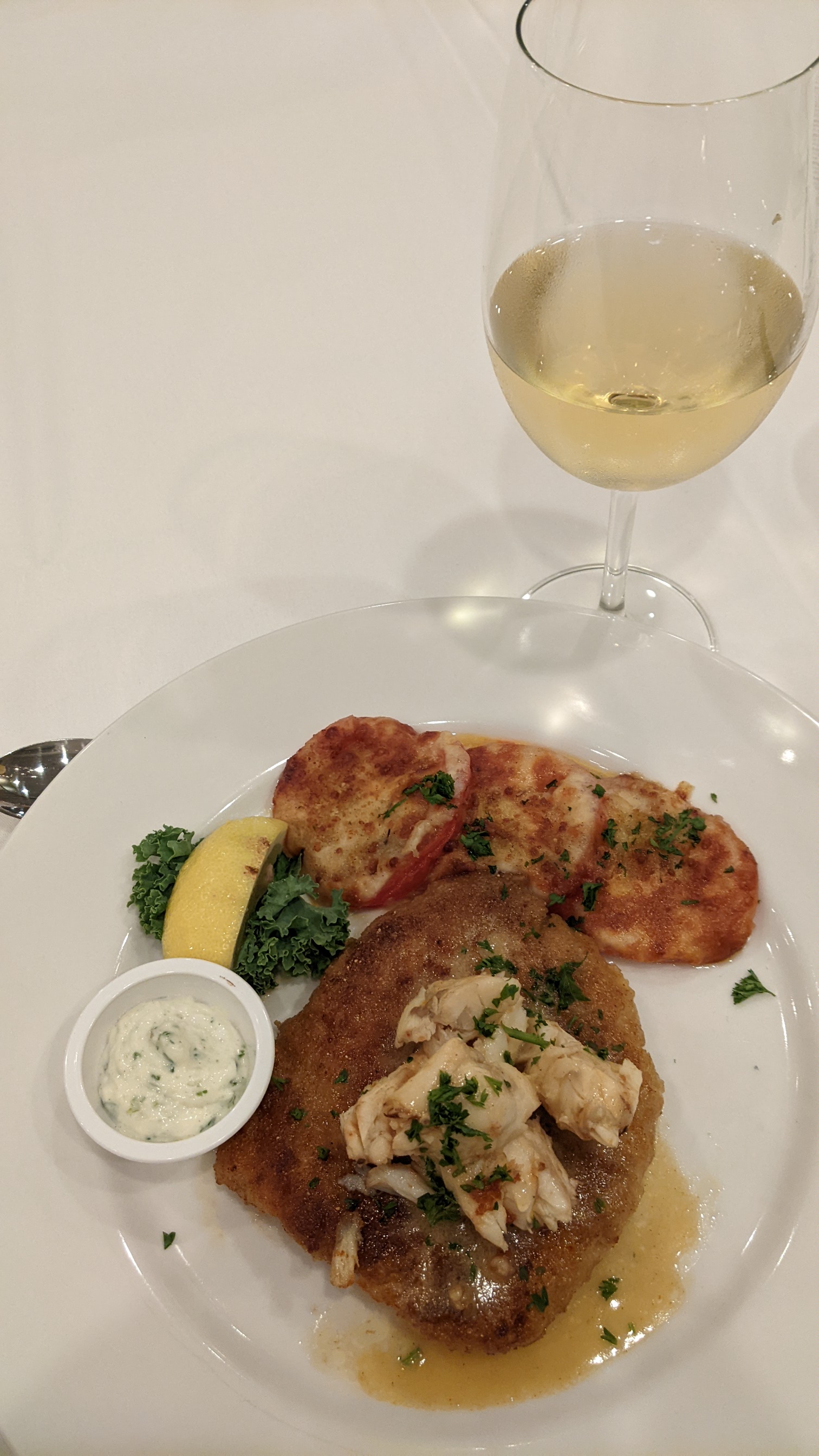
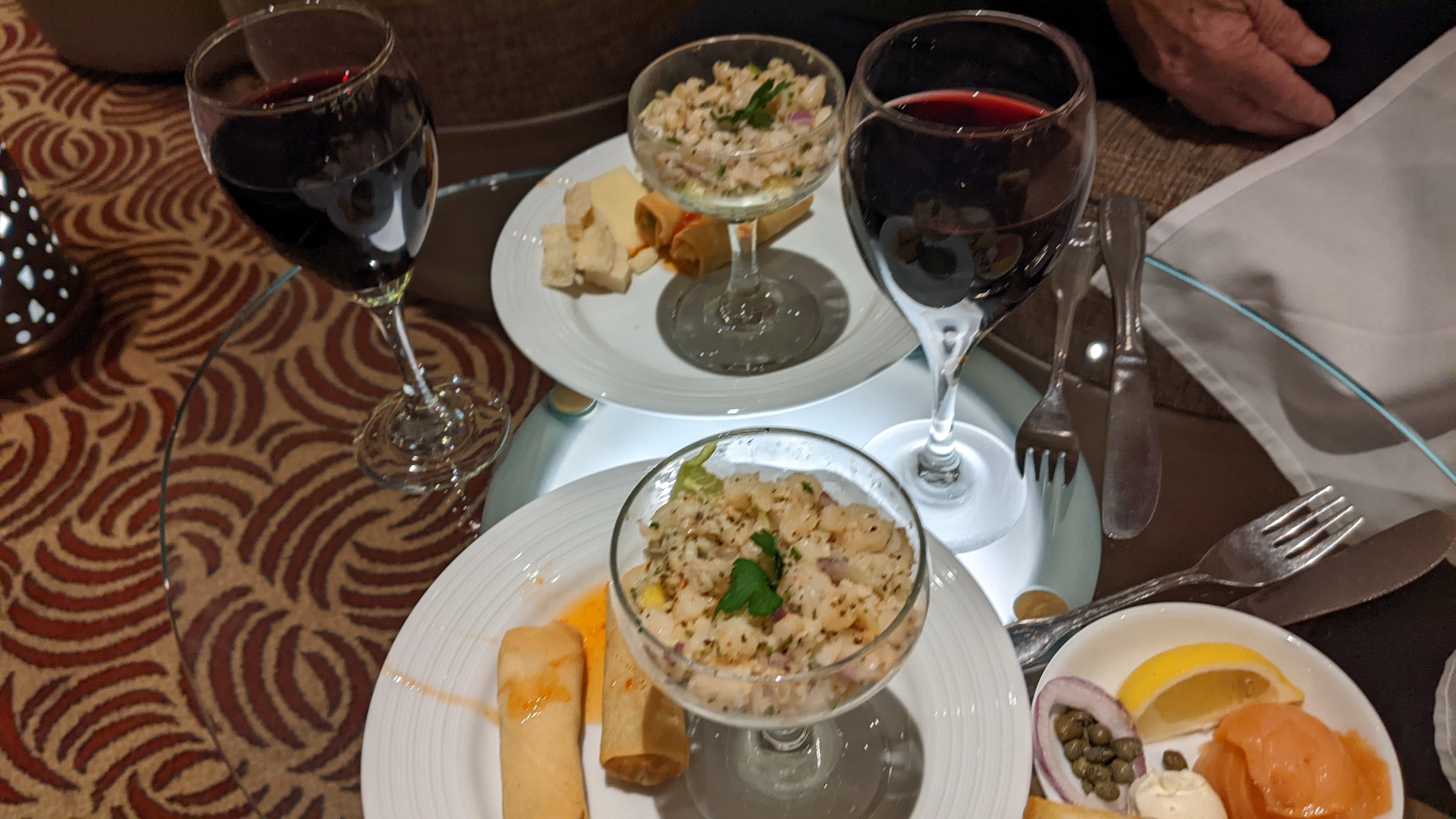
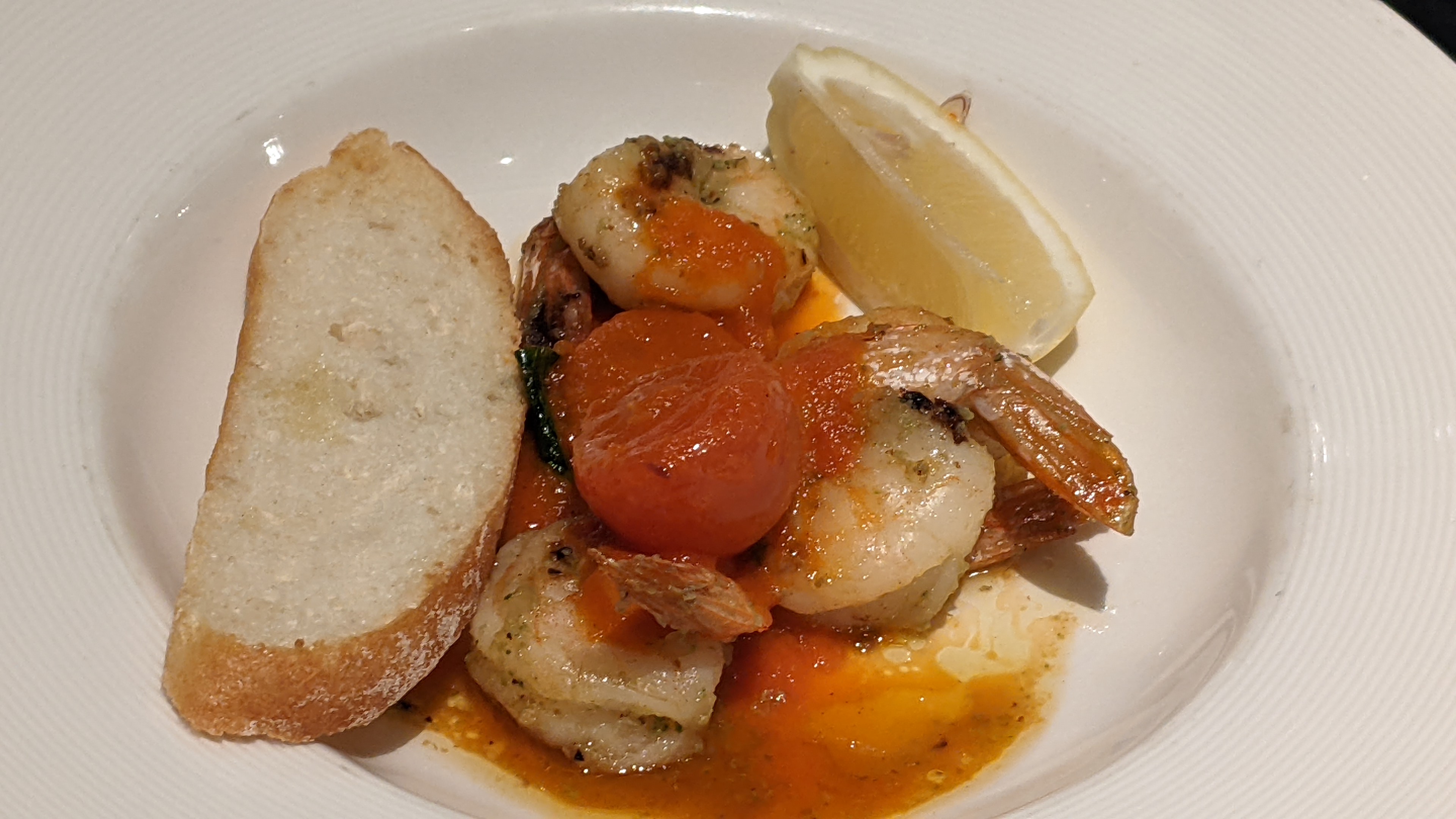
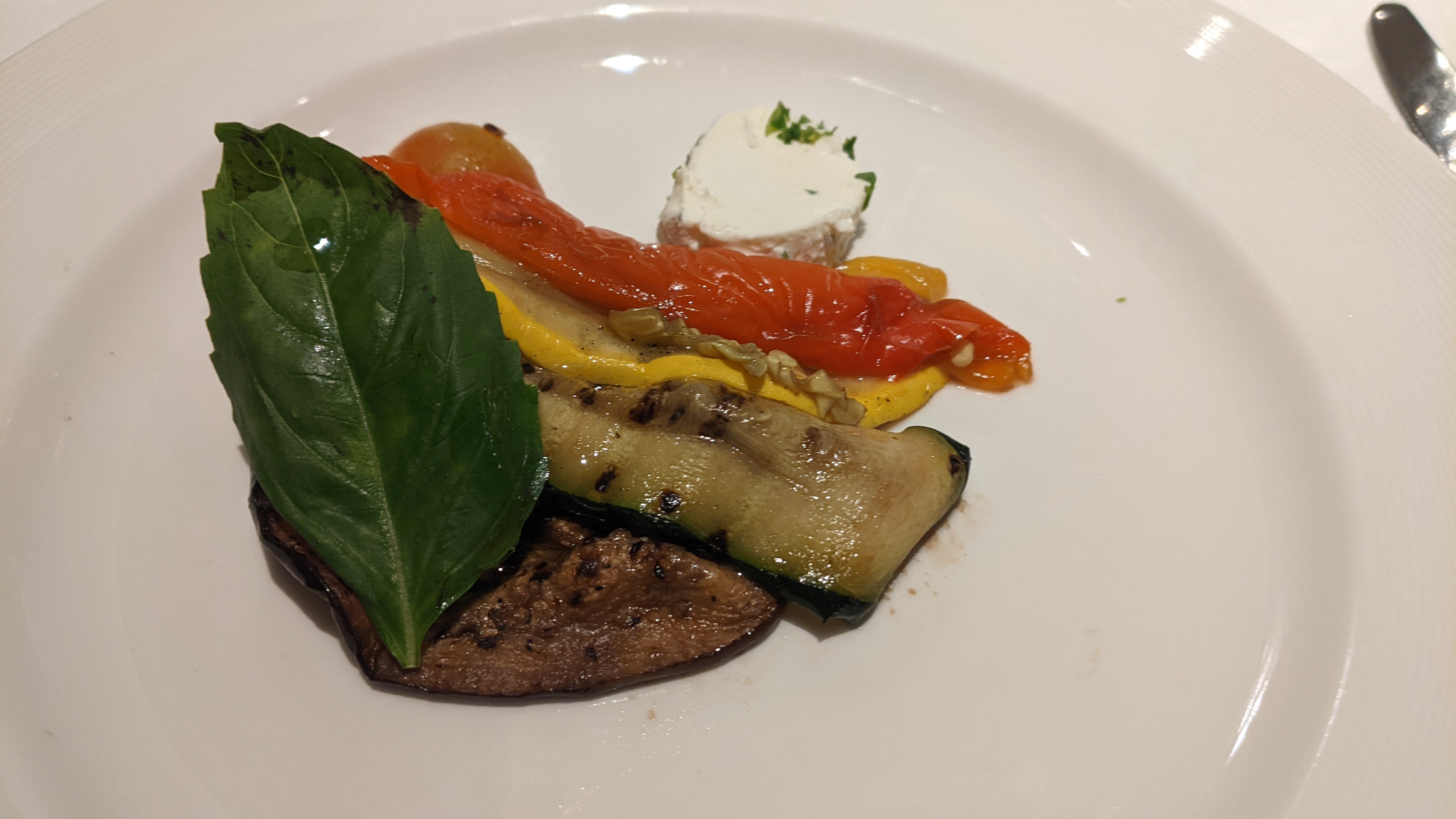
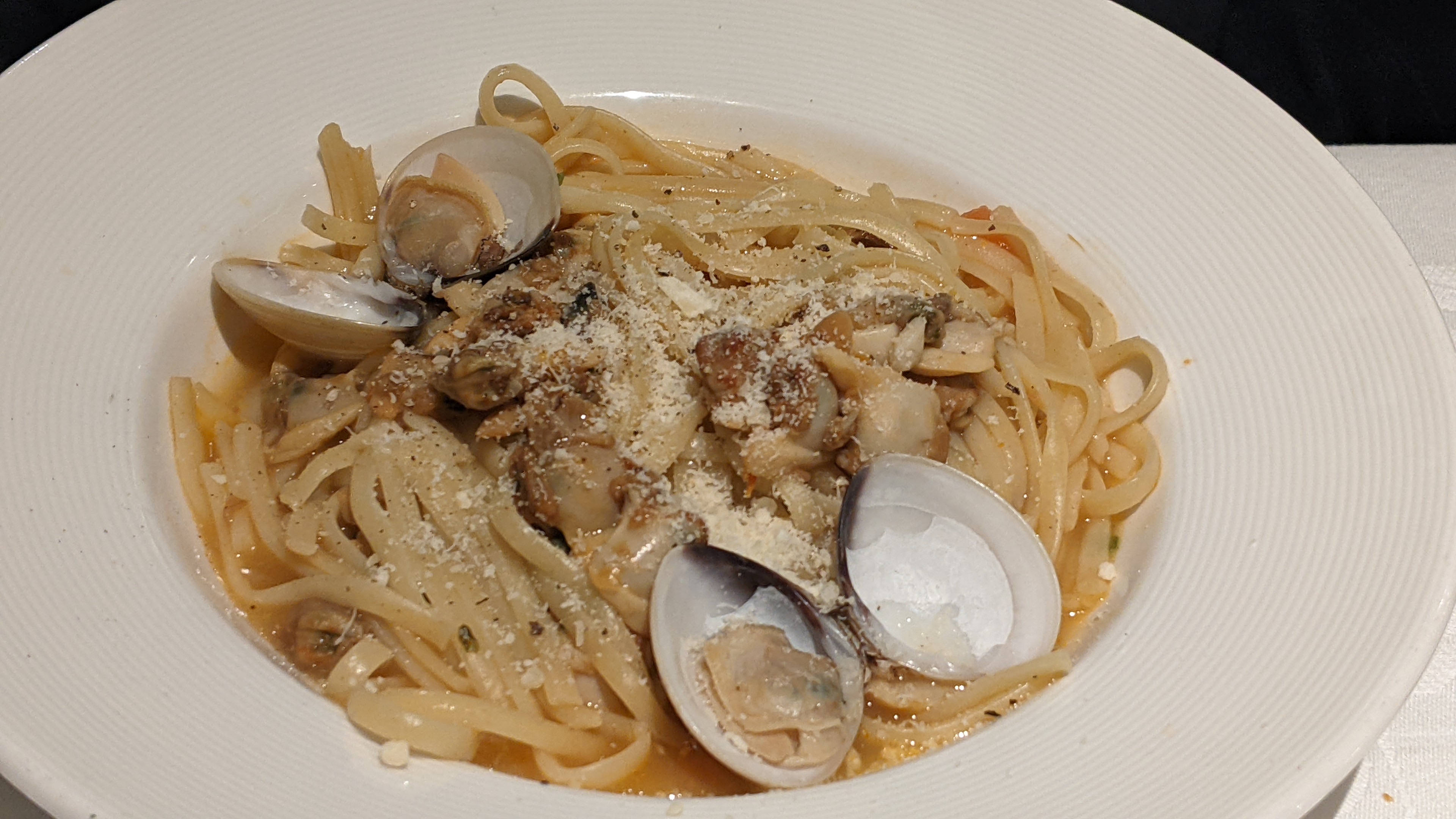
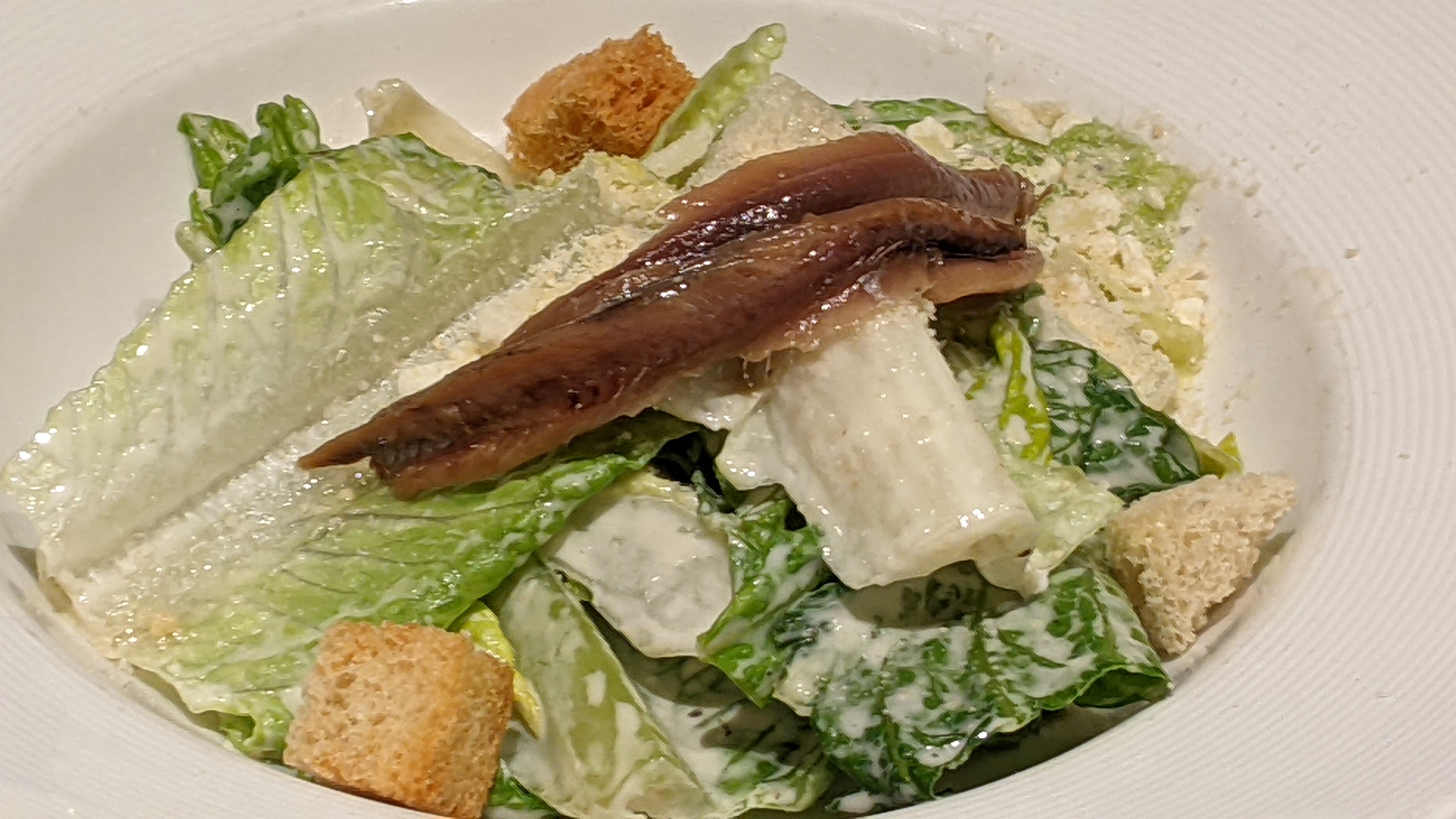
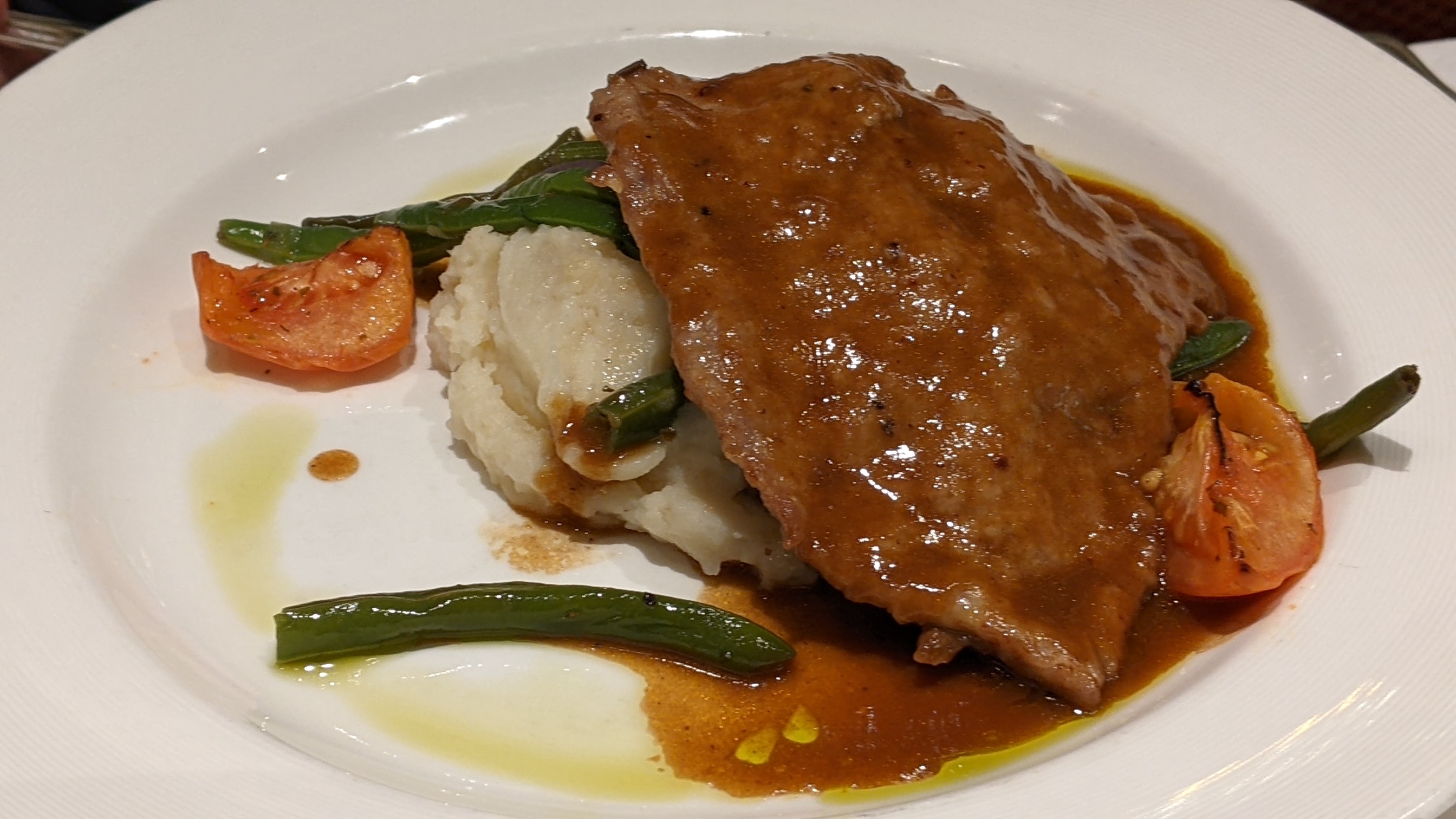
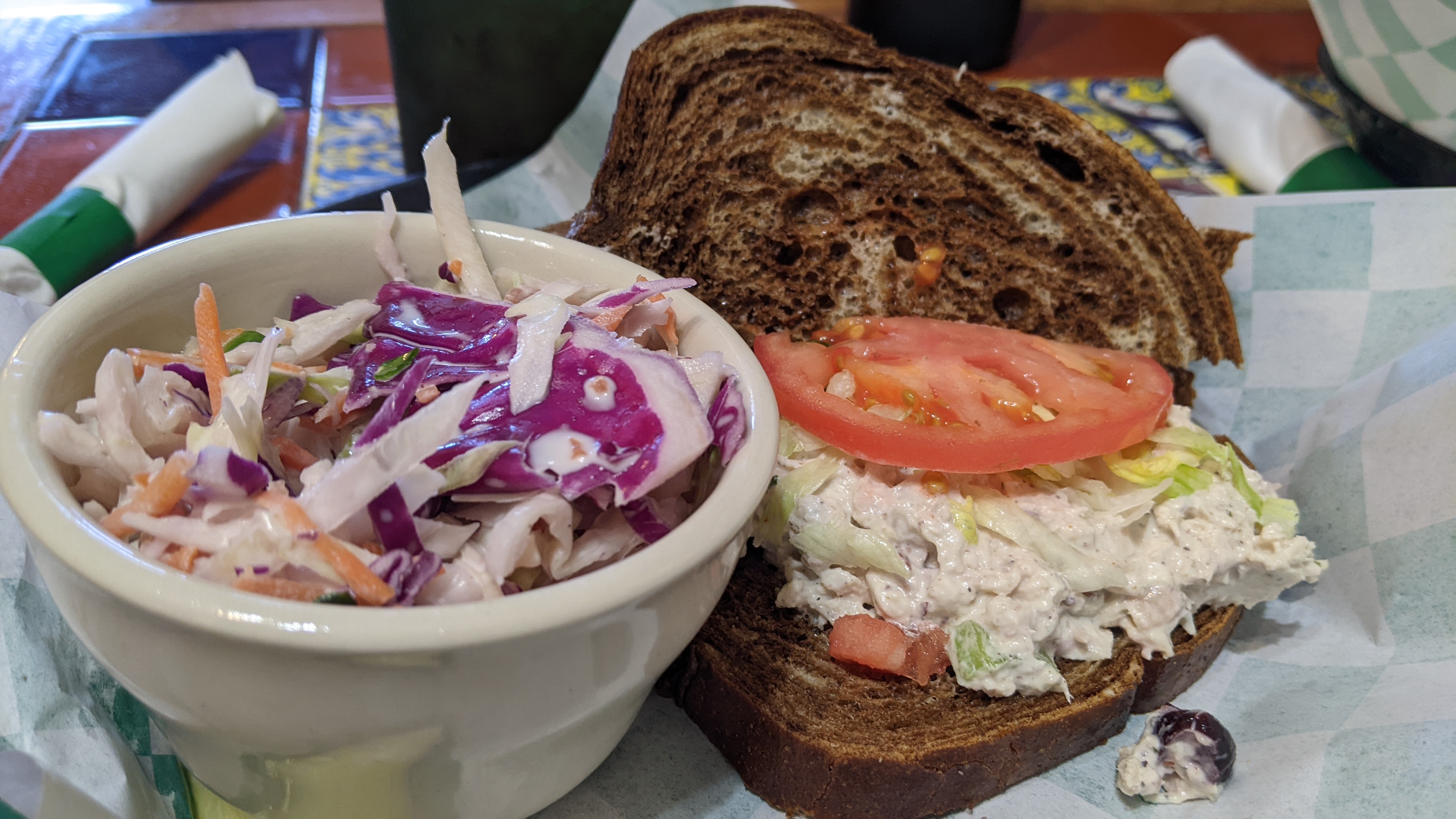
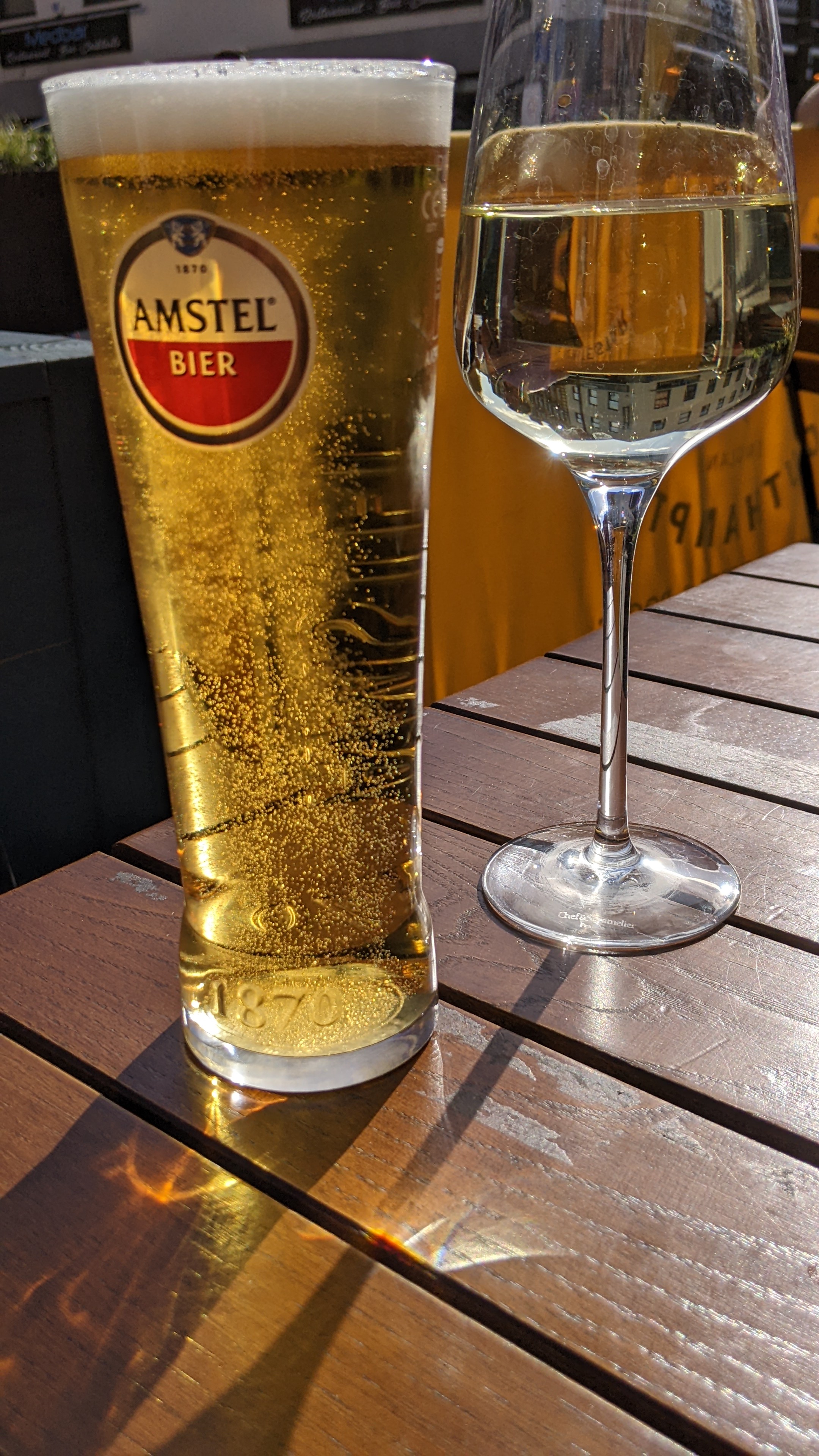
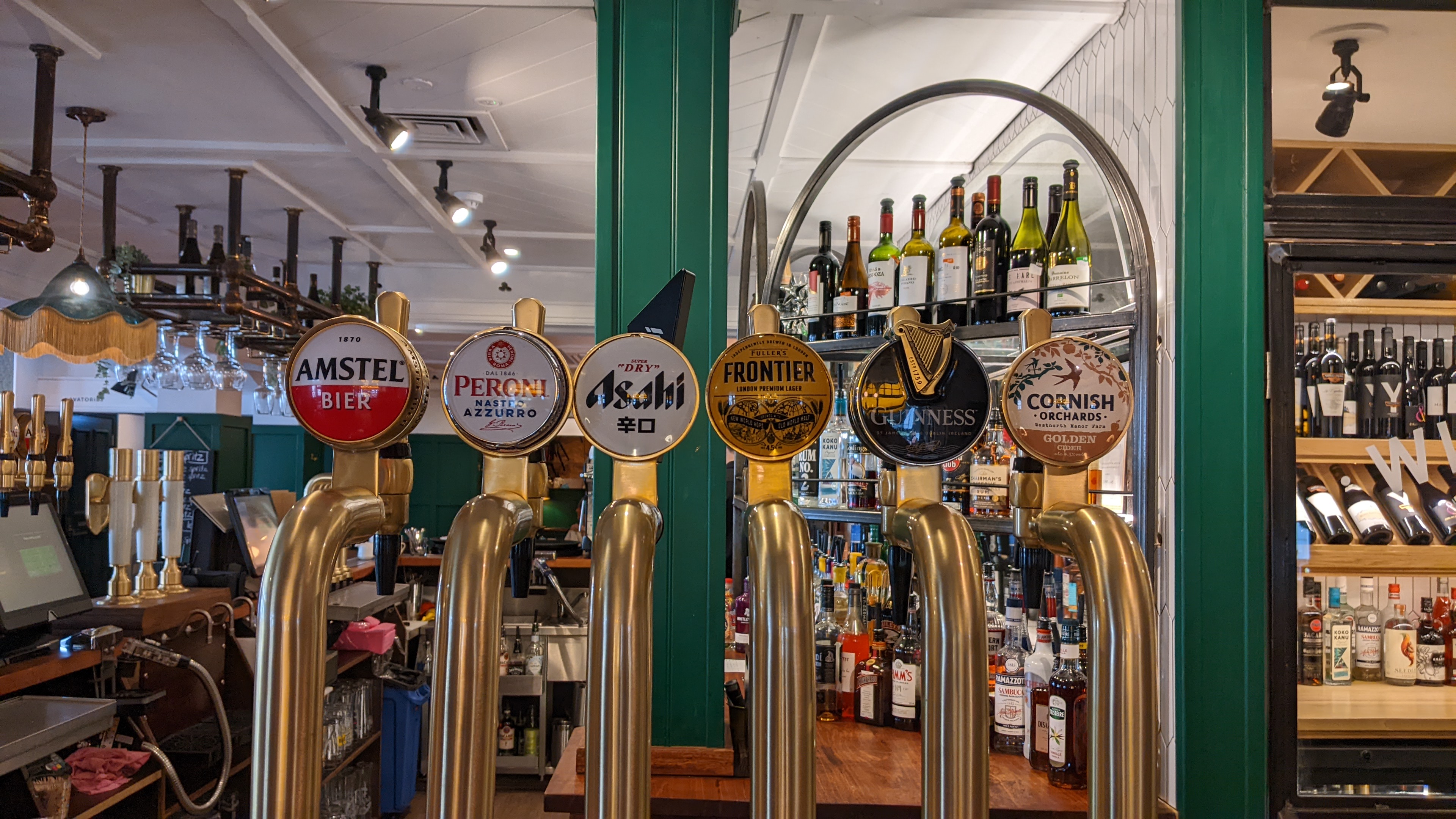
As in any popular vacation area, there a bars, breweries, dives and fine restaurants galore. I’ll just post some pictures of the food and drink I enjoyed in Galveston. You can bet I had my fill of fresh fish and seafood.

Go and discover for yourself all there is to eat and drink in this popular beach community, from Gaido’s on Seawall Blvd., with a 100-year-history of fine dining, to the rooftop bar at Hotel Lucine, a revamped 50s-era motel, to matchless Italian cuisine at Riondo’s Ristorante, in a historic building in the Strand district, to casual walk-up bars and food trucks. Search out your own favorites, and know that the seafood is fresh, the beer will be cold, the margaritas mixed to your liking, with entertainment and music to suit your taste.

Other Reasons to Visit Galveston

Galveston is an island, of course. But it is also the gateway to a string of beach communities in South Texas. Thousands of people head to those beaches every year for short vacation getaways, for the entire winter season, for fishing expeditions, and for business. Gulf Coast cities, including Port Lavaca, Port Aransas, and Corpus Christi, the coastal barrier islands south of Galveston, and the long expanse of Padre Island’s National Seashore, are popular destinations.

Residents of Houston, one of the country’s largest urban areas, routinely “escape” to Galveston for a day at the beach or a romantic dinner by the sea. Once you’ve experienced all that Galveston offers, it’s hard to get it out of your mind. You might never be the same again.

Go ahead, hum the tune.

Once Upon a Frontier

In December 2023, Old West Magazine published a list of the “The Top 10 True Western Towns of 2024,” as it has annually for nearly two decades.

Cody, Wyoming, topped the list this year, but others include:

  • Miles City, Montana
  • Lubbock, Texas
  • Abilene, Kansas
  • The Dalles, Oregon
  • San Angelo, Texas
  • Deadwood, South Dakota
  • Tombstone, Arizona
  • Fort Smith, Arkansas, and
  • Prescott, Arizona

Some of these Old West towns have made repeated appearances on the magazine’s annual list. I have lived in several of these legendary locations — Santa Fe, NM, Fort Worth, TX, and Miles City, Montana. And I have visited many more.

Many towns across America claim to be throwbacks to earlier times, dripping with the romance and spirit of discovery that characterized a new and uncharted land.

Most have become thoroughly integrated with modern life. The best, however, retain and celebrate their history as towns on the frontier of a fresh and growing America. Their residents may no longer subscribe to the lively lifestyles of the past, but they are also unwilling to completely put the past behind them. I find that refreshing.

The West Lives On

Last month, I visited an Arkansas frontier town, Fort Smith, for the first time.

Fort Smith has also made True West’s list more than once, and its past may be more colorful than most. The facts testify to its importance on the edge of the American frontier.

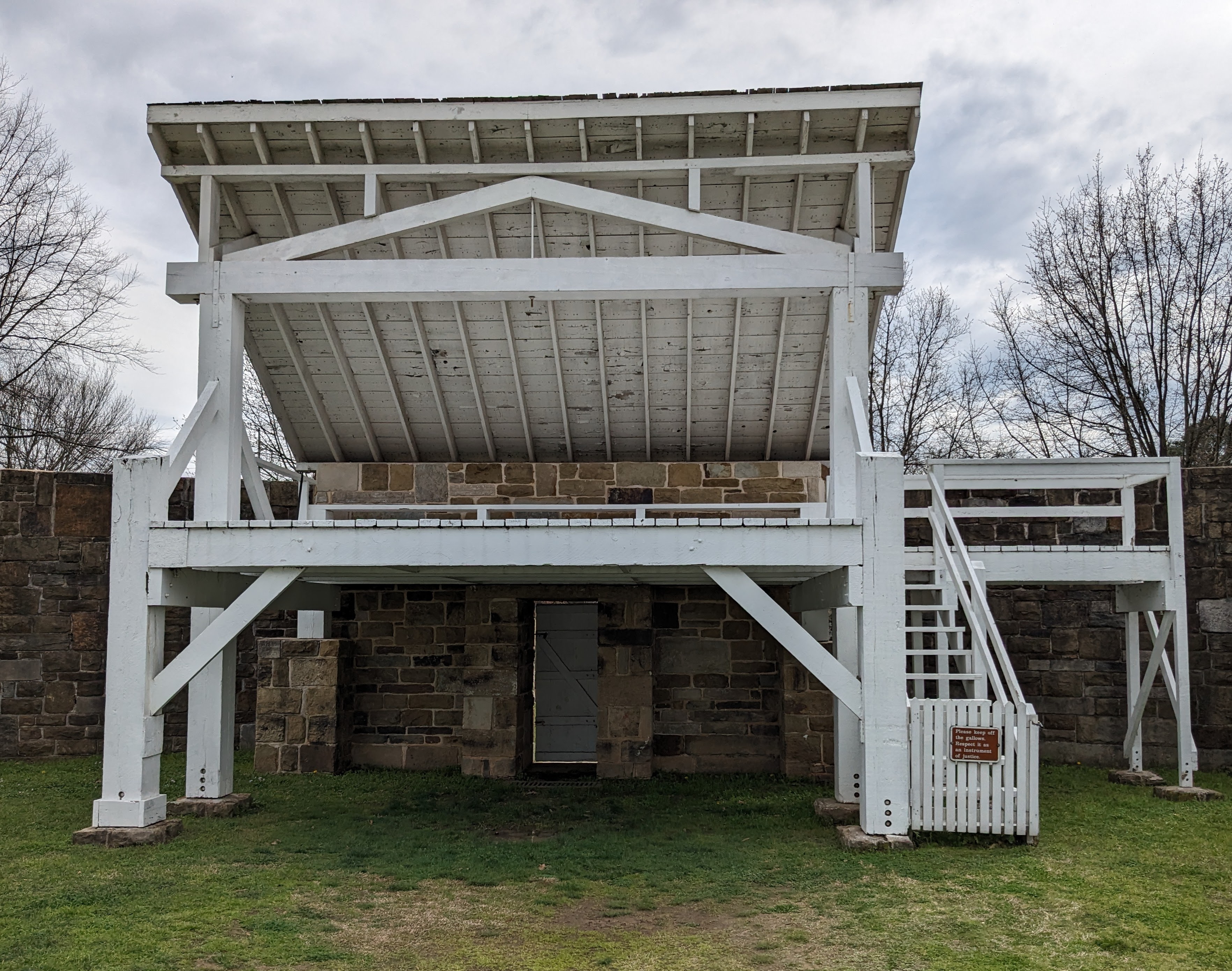
Situated on the banks of the Arkansas River and just a bridge away from Oklahoma, Fort Smith is a small town by any standard, but its history is long and varied. It was where “the Hanging Judge” of Old West renown held court — 83 men were hanged on the orders of Judge Isaac Parker between 1873-1896, and reconstructed gallows now occupy a prominent position at Fort Smith’s National Historic Site. Displays are housed in a former military barracks and the city’s impressive historical museum occupies a one-time Army commissary.

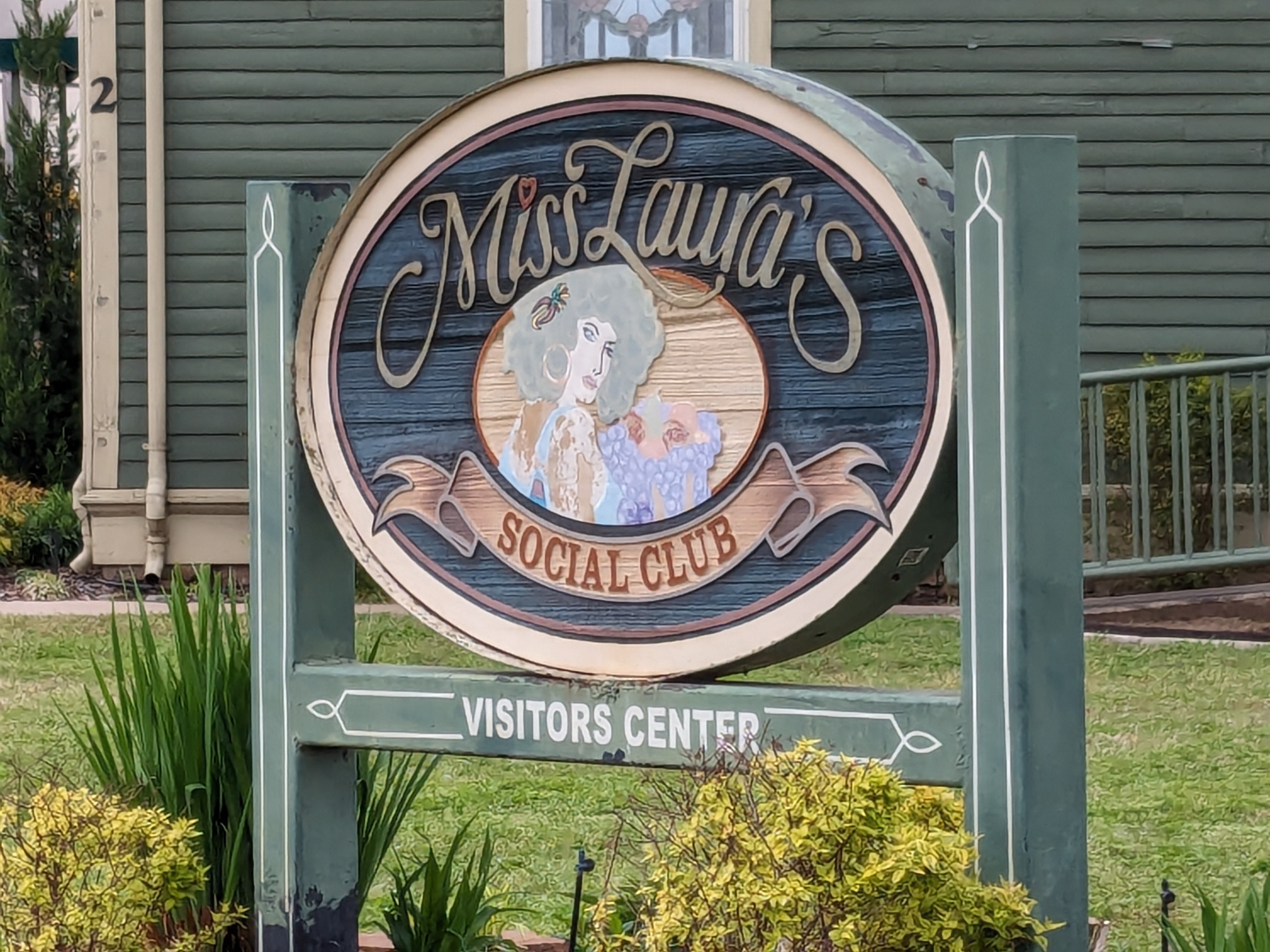
The city’s Visitors Center is currently in a former brothel, Miss Laura’s Social Club, and tours of the restored house are offered to the public on a regular schedule. A modern Visitors Center, however, is slated to open in 2025.

Despite its status as the third most populous city in Arkansas, with approximately 90,000 residents, Fort Smith retains its small-town appeal. Its boundaries encircle an area of about 63 square miles, but its downtown core consists of only a few easily walkable blocks.

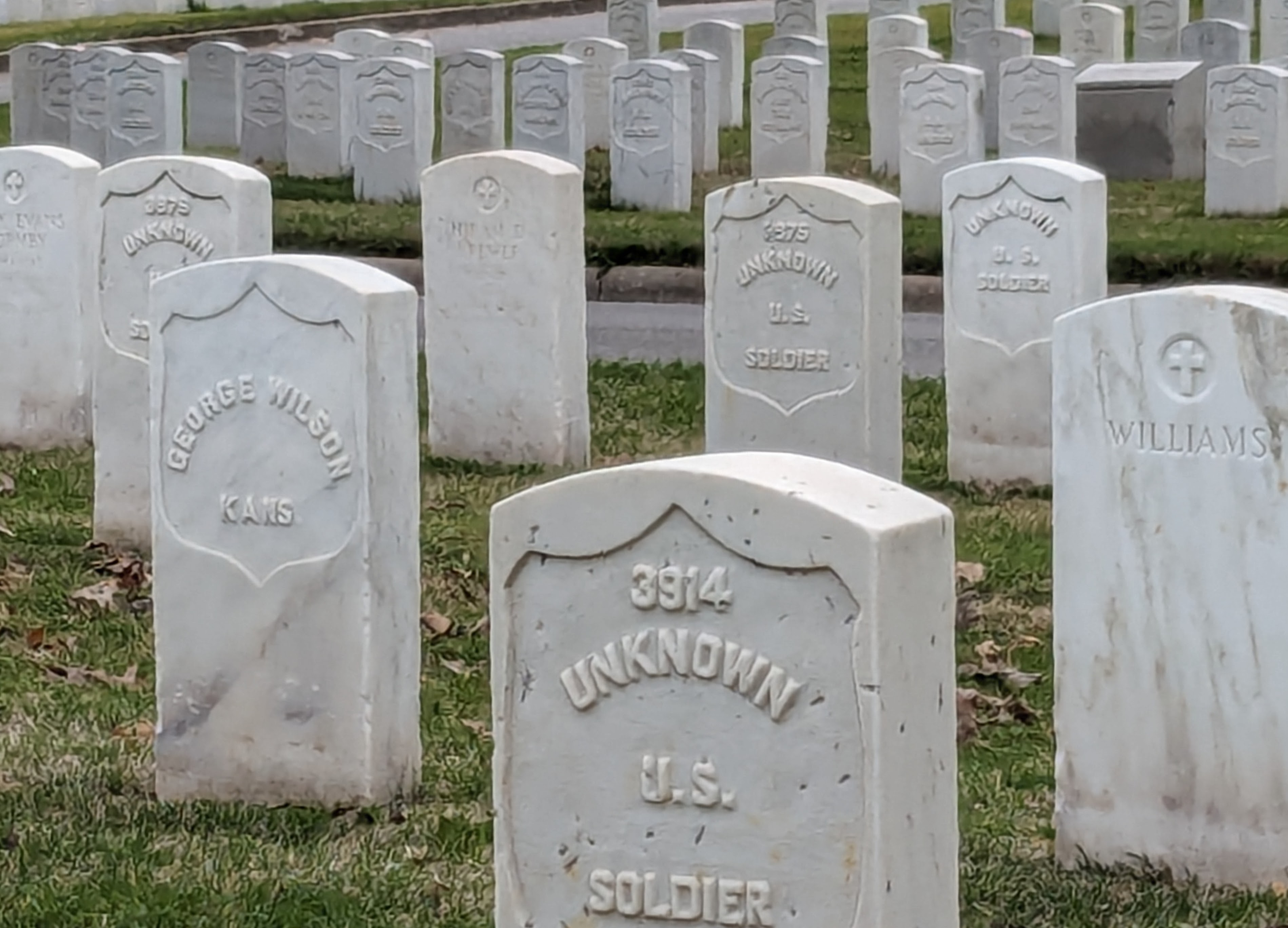
The city played a contested role in the Civil War and fell under the control of both the Confederacy and the Union at different times. Today a National Cemetery is located near the center of Fort Smith’s historic downtown district. Walking among the headstones is an eye-opening lesson in American history.

Building a New History

Present-day Fort Smith also has much to recommend it, not the least of which is the United States Marshals Museum that opened July 1, 2023, after a decade of planning. It occupies a dramatic riverbank site only a mile or so from the city’s historic downtown.

If, like me, most of what you know about U.S. marshals has been gleaned from television and movies, visiting this museum is akin to a refresher course in reality. The modern building at first seems a bit incongruous on the river, sandwiched between a bridge that leads to Oklahoma and an RV campground. One wonders initially what this architecturally stunning building, set starkly between large boulders and clumps of prairie grass, can be. Closer to the bank, a horse and rider seem to stand watch.

Upon approach, however, the steel and glass building morphs into a stylized star – the badge of the U.S. Marshal. A single American flag directs visitors to the building’s entrance.

The museum tells the story of a small band of legendary men and women charged since 1789 with “keeping the peace and carrying out justice” in the United States. And it tells that story in an unparalleled way.

The Trail of Tears

Also in Fort Smith, there is a viewing platform on the river, not far from the city’s modern convention center, that marks the spot where the trail ended for native tribes who were forcibly removed from their lands east of the Mississippi. Although there were several routes to the designated “Indian Lands” in the West, the years-long relocation of thousands of indigenous tribal members is known as the “Trail of Tears.”

For some, that trail ended at Fort Smith. Indian Territory lay just across the Arkansas River, in what was to become Oklahoma. Last year, I stood near the bank of the Mississippi River not far from St. Louis, at a point where a marker now designates a beginning point of the Trail of Tears. Seeing both the beginning and end of that trail was a sobering experience.

My recent travels have opened my mind to the variety and wealth of Arkansas history, and to the reasons for its nickname as the Natural State. One need not travel far afield to learn more about this unique region.

The City That Holds My Heart

Old West towns beckon to me. To this day, each retains a kind of defiant swagger that sets it apart from other historic American cities, and each one has a distinctive mystique.

Some years of my early childhood were spent in Miles City, along with many summer vacations to visit grandparents. Miles City was then, and in some ways still remains a quintessential frontier town. Founded in 1877, the year after the Battle of the Little Big Horn, it was adjacent to Fort Keogh, at the confluence of the Powder and Yellowstone Rivers in eastern Montana. The fort’s reason for being was as a military outpost to urge local tribes — the Lakota and Crow — to resettle on the state’s designated reservations.

As an active military installation, the fort had a storied history up to and including World War II. Miles City in its early days supplied liquor and services for the troops. Allow your imagination free rein; Miles City began life as a rowdy town.

The fort was deactivated in 1924 to become an agricultural research station. Miles City was an early railroad hub, with both the Milwaukee Road and the Great Northern Railway running through the town. And, for decades, motorists on both U.S. Highways 10 and 12 passed through Miles City. But in the latter part of the 20th Century, Interstate 90 and its I94 spur from Billings to North Dakota were constructed. The interstate bypassed Miles City, and it fell into decline as passenger train travel also diminished. The city’s airport had insufficient runway to handle jets, and most reasons for visiting disappeared.

However, to this day, Miles City clings to the pride that perpetuates its rowdy past. Some of that raucous past manifests each spring, during the third full weekend of May, at the legendary Bucking Horse Festival, held since 1951. The weekend celebration is a spirited event that includes horse races, rodeo events, and visits to Miles City’s throwback saloons. It is grounded in the history of the military and westward expansion, and characterized by high spirits and daring antics by contemporary cowboys. It is still a primary source of rodeo stock for the entire country and the annual rodeo and sale is one of those American “folk festivals” that one really must experience in person to believe.

More West to Explore

In just a few days, I will embark on another journey that will take me through several Old West towns in Kansas on the way to a week of R&R at a mountain cabin in Estes Park, CO. 

Kansas is another state with a rich frontier history, and I look forward to exploring a bit more on this quick journey west, visiting Fort Scott, Wichita, and Dodge City along the way. On this road trip, my husband and I will drive a few miles along Route 66 in eastern Kansas, and then return to the past further west as we follow part of what was once the Santa Fe Trail. I wrote before about Kansas in 2022 when I visited several of the small towns in the southeastern corner of the state that we will pass through again on our way west.

On the way back to Arkansas, we plan to revisit Santa Fe, which we called home for nearly two decades, then will see friends in Lubbock and the Dallas/Fort Worth area before returning home. My plan is to return and write more about these legendary Old West towns that are now redefining themselves as unique places in the modern world.

I hope you’ll join me as I continue to travel and find interesting and unusual places to visit. I urge you to venture out on your own as you have time — to your state’s parks, historic sites, regional festivals and the many small towns, lakes, streams, mountains or shores that surround you, wherever you may live.

Uncovering Roatan’s Hidden Treasures

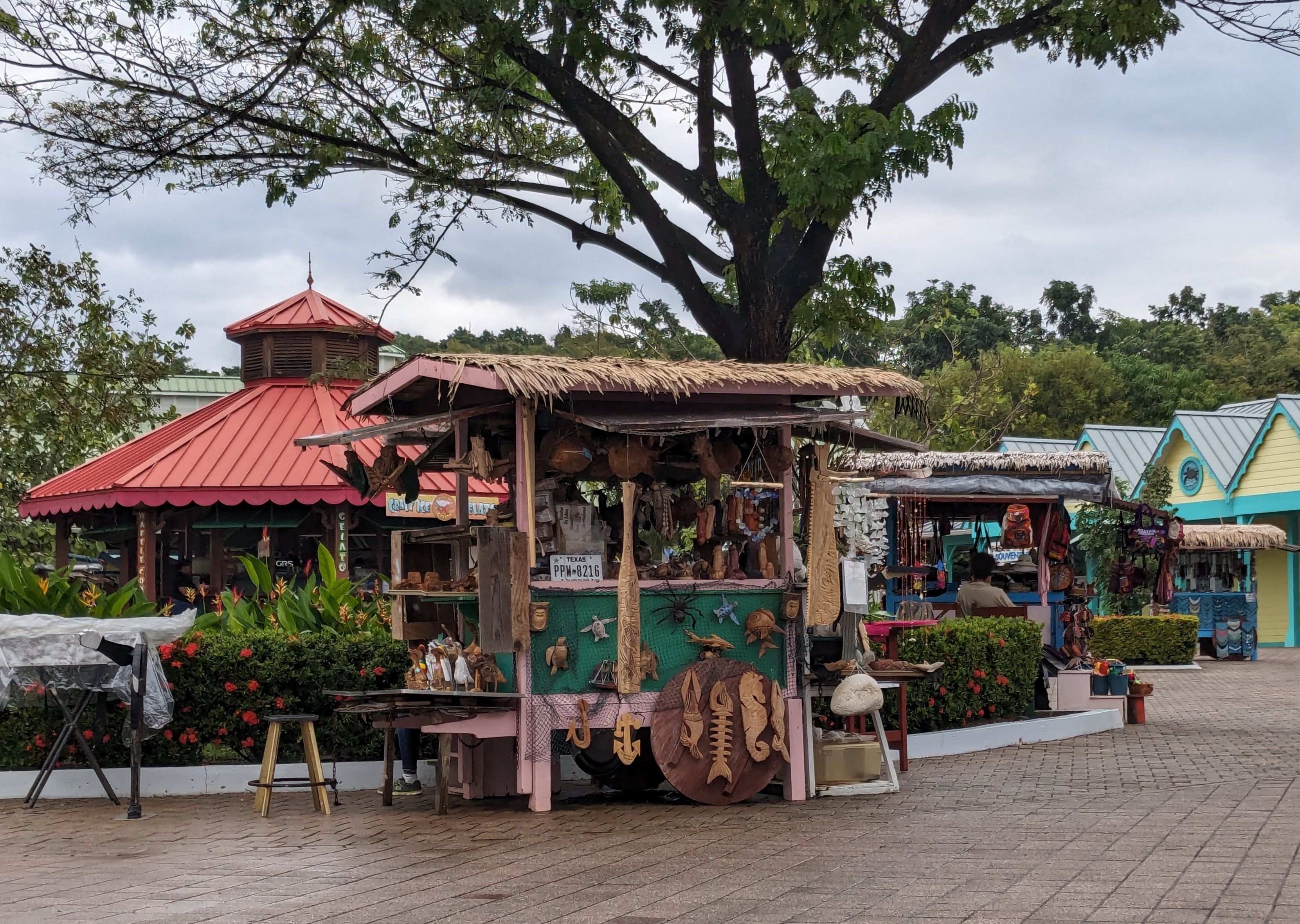
Roatan is a beautiful, small island, with clear water and friendly people. On previous cruise visits to the tiny island of Roatan off the coast of Honduras, my husband and I had seldom ventured far from the port and nearby beaches. We had occasionally talked about returning to the island to spend a week at a local hotel, but that idea had never matured. So, once again, we were on a Gulf of Mexico cruise that included this port call. This time, we were determined to venture beyond the “tourist trap” at the end of the pier. I use that term in the sense of a protected enclave that offers short-term visitors an opportunity to purchase local crafts and souvenirs.

I am sorry this has become the norm in so many cruise ports throughout the world. These shopping and entertainment enclaves offer visitors only a filtered view. They are filled with chain shops and eateries, even though they often feature local entertainment and crafts. They are pleasant enough to visit, but they are in no way the same as visiting the country. Sadly, my husband and I had fallen victim to a skewed vision of Roatan, based on previous short visits. But this trip changed all that. We considered spending the day at a local beach. Instead, I found and booked a private tour of the island through Get Your Guide and its local affiliate, Roatan Trips and Tours.

It was an eye-opening experience, against which I will be likely to judge future tours in other destinations. I may not return to Roatan, but I will hold memories of this experience dear, and I have unique photos of our visit as well as mind pictures etched deep in my consciousness.

That’s the joy of travel — stumbling into situations that alter one’s perceptive, right?

Our four-hour tour stretched beyond the stated time constraints, but we weren’t watching the clock. I found the time spent with Jorge, our personable local guide, invigorating, enriching, and rewarding, and he had promised to return us to the dock before our ship was scheduled to sail. He did just that. The tour more than fulfilled my expectations, and my husband and I left believing that we had made a new friend who would welcome us back to Roatan should we choose to return. It pinpoints what is missing from many shore tours — the personal connection.

Let me explain.

Exploring Local Culture

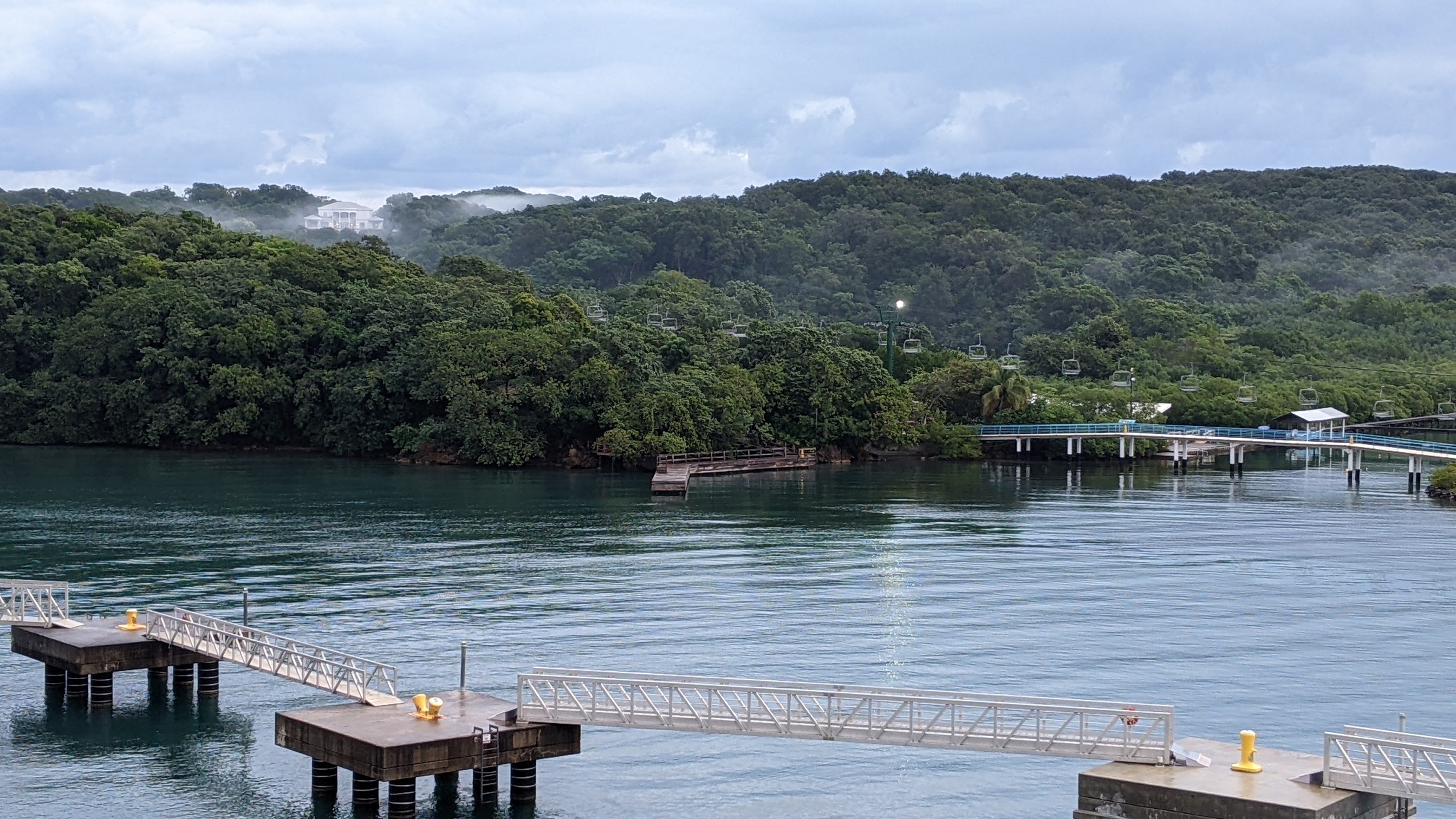
We docked early the morning of February 1 at Mahogany Bay, while the mist was still clinging to the folds in the forested slopes that extend down to the sea.

Used almost exclusively by Carnival Corporation, Mahogany Bay boasts an aerial tram that runs from the port to a nearby beach for a nominal fee. We disembarked in time to stroll leisurely through the port enclosure. Even though our ship, the Regal Princess, was the only one in port that day, the area already seemed alive with both locals and visitors.

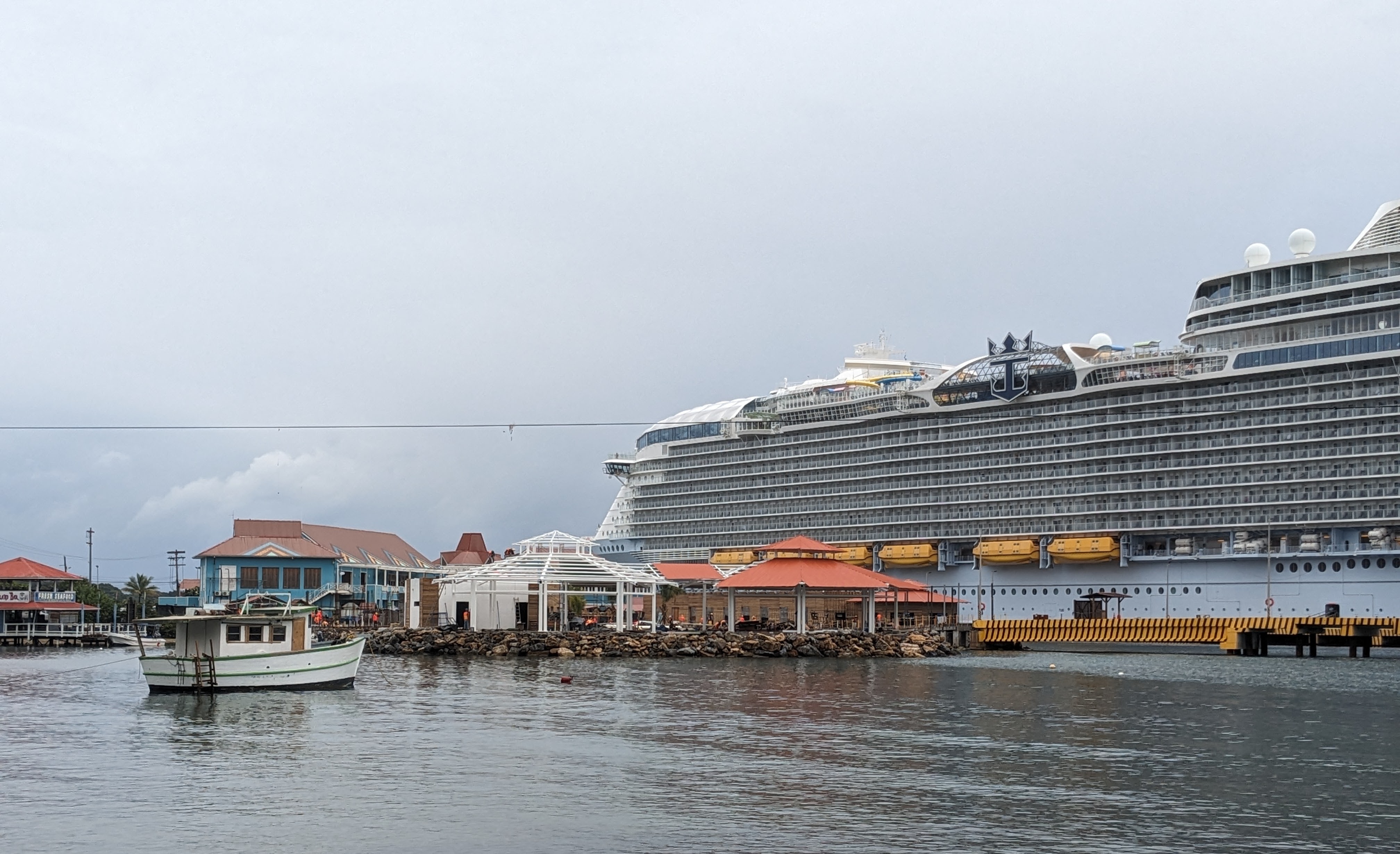
The island’s larger dock is known as the Port at Town Center, situated further west along the coast, adjacent to Coxen Hole, Roatan’s major city. It is used by almost all other cruise lines and can accommodate three large ships at a time, one alongside the dock and two at anchor. The port area is currently being enlarged and improved; construction activity is expected to continue through 2024; perhaps longer. Royal Caribbean’s Wonder of the Seas was alongside the dock at Town Center.

Icon of the Seas, Royal Caribbean’s newest vessel and the largest cruise ship currently sailing, was scheduled to make an inaugural call there on March 4. It officially entered service on January 27, 2024, with the ability to carry 7,600 passengers and more than 2,500 crew members. I found myself wondering if tiny Roatan could handle that many additional cruise passengers, particularly if other ships were also in port.

On the day we visited, it is probable that cruise visitors numbered upwards of 5,000.

We typically disembark and explore port cities on our own, walking or riding local buses. We sometimes hire a cab driver for an hour or two. Less often, we join a planned excursion. Before this trip, we had debated whether we would disembark at all in Roatan. I could have canceled our excursion at the eleventh hour, but we’re happy we chose to take the tour. We count the time we spent with our guide as one of the highlights of our cruise, and I readily admit that Roatan has much to offer beyond the port facilities.

When we disembarked, we walked to the far side of the port compound and then took a brief jitney ride to the designated meeting point outside the port area. The fee was minimal. Guides from multiple companies waited there to ferry passengers to local beaches or other island destinations. We visited with local tour operators and fellow cruise passengers as we awaited our driver/guide.

He arrived, apologetic that he had been delayed by traffic. The excursion had been billed as a “design your own” tour, offering options to visit local beaches, go snorkeling or sailboarding, shop if we wished to do so, spend some time at a chocolate factory or a monkey or sloth sanctuary, and several other possibilities. We told our guide, Jorge (or George), that we wanted him to show us his island, and asked only if there might be a restaurant with a water view where we could stop for a simple lunch.

Jorge agreed, and we set off.

Learning About “Jorge’s Island”

Like many islands, Roatan is a land of contrasts. The island has a rich history, some of it very different from the history of mainland Honduras. Once a British colony, 17th Century Roatan boasted a population of about 2,000 pirates with more than 500 houses in the northern city of Port Royal. That city is now in ruins, and the island’s resorts exist primarily at the other end of the skinny, curving island, congregated in West End and West Bay. The first language of native islanders is English, although in recent decades, increasing numbers of Spanish-speaking residents have made their homes on Roatan.

During the next several hours, we saw much of Roatan, including some areas where day visitors do not normally venture. Roatan is the largest of a group of seven islands located about 40 miles off the northern coast of Honduras. But it is a small island, measuring approximately 48 miles long and varying from one to five miles wide.

The Meso-American Barrier Reef, the second-largest in the world, surrounds Roatan and is known for its biodiversity and extraordinary reef diving. Daily flights arrive from Miami, Houston, and Phoenix at the airport that lies between the two cruise ports. It is estimated that upwards of 1.6 million tourists visit Roatan annually.

We drove past tony all-inclusive resorts on this beautiful spit of land, many with private beaches and over-the-water bungalows, some hidden behind iron gates and lush greenery. There are no high-rises, but inland some new multi-story condos and rental apartments are under construction, some with incredible views.

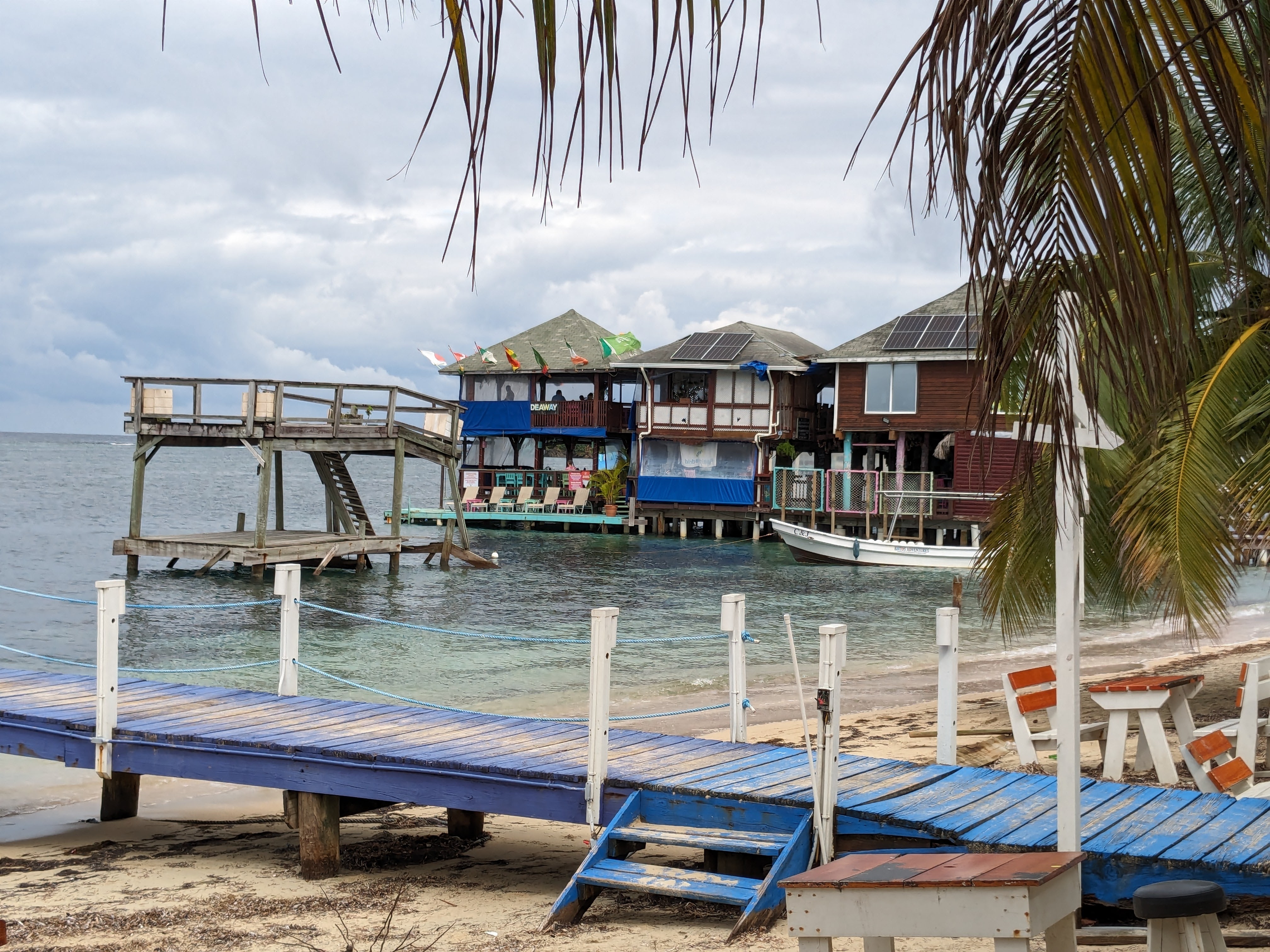
We passed waterside restaurants and bars, and numerous piers boasting fishing, diving, or snorkeling expeditions. Roatan boasts some of the clearest water and best beaches in the Gulf, and it is renowned for its diving and snorkeling possibilities. We saw local homes, both large and small, in small communities and near the water.

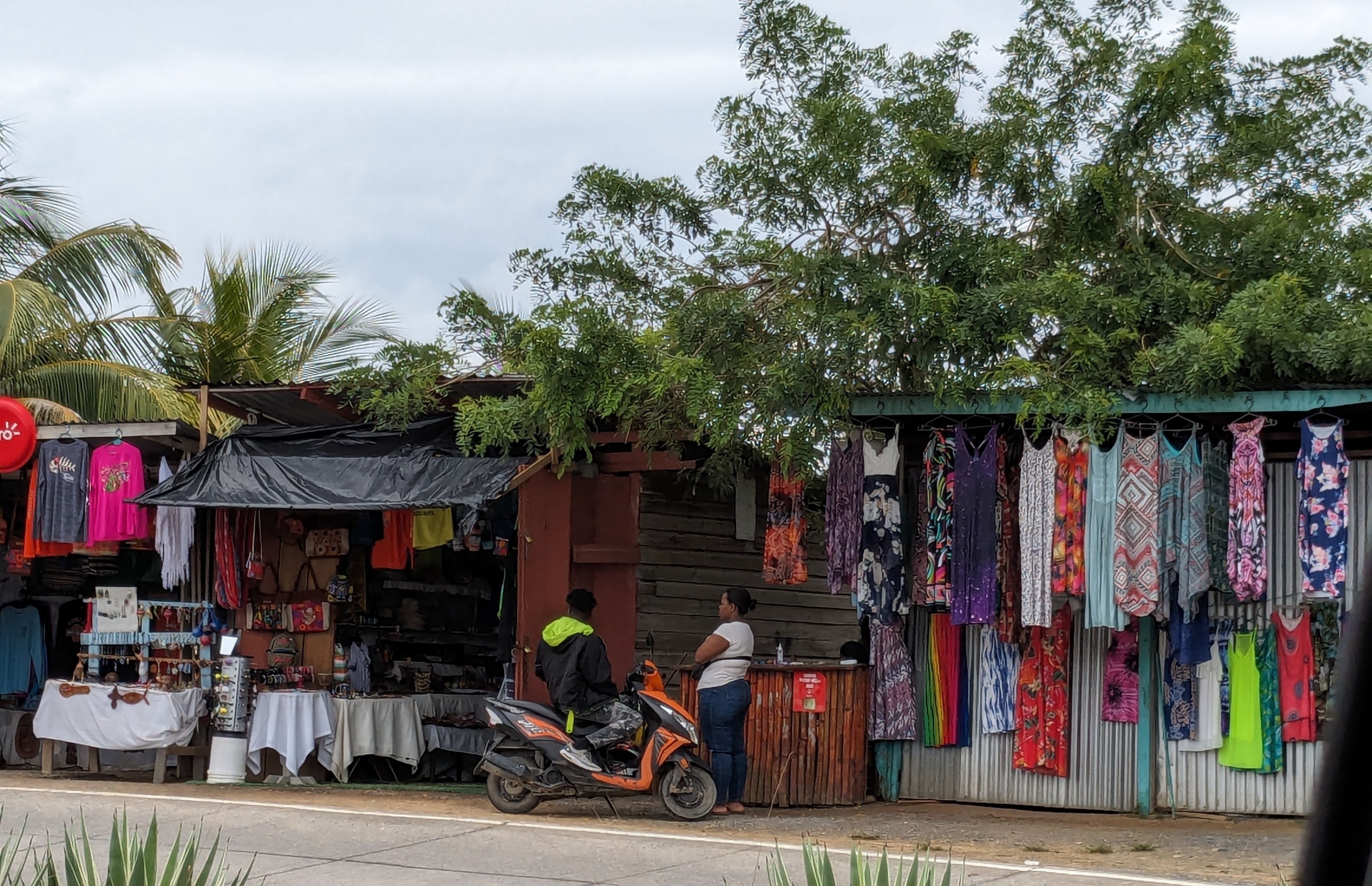
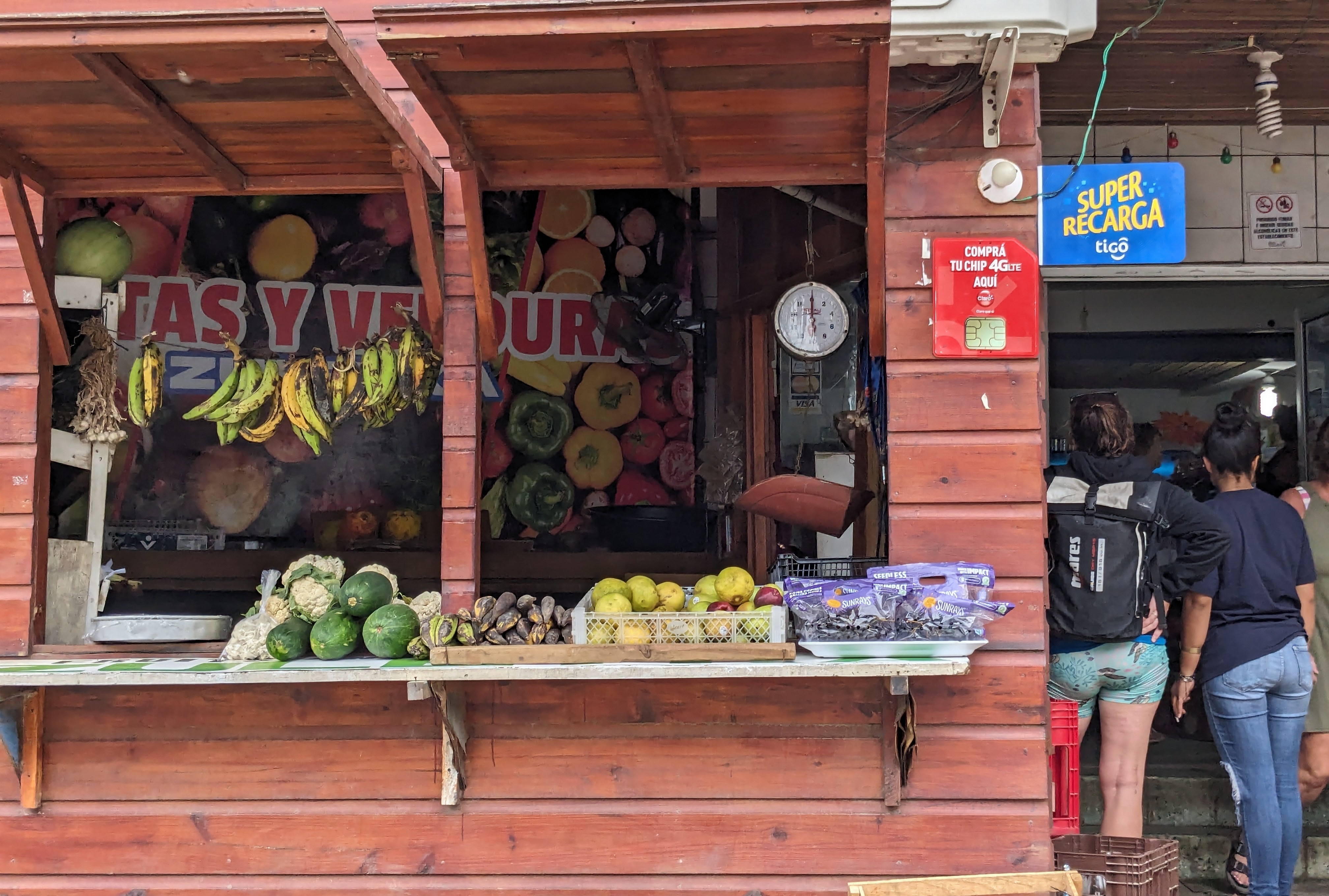
We encountered roadside vendors selling fresh fruit and other wares, and we saw local shopping centers, and even a casino!

We turned off the main highway and followed dirt roads to shorelines devastated by recent storms. Some buildings and playgrounds have not been rebuilt since the last hurricane passed through. We drove through small local communities and slowed to allow groups of young children to move out of our path. They smiled, and we waved.

A Story of Growth and Development

There is evidence of growth and development everywhere, from road building and infrastructure to modern offices, warehouses, shopping areas, and condos. But much of the island is old, and many of its residents are poor. Many homes and buildings are in need of repair.

Jorge pointed out an impressive columned mansion that belonged to Roatan’s former Mayor Dale Jackson, an island native who amassed a fortune from his fishing business. He also showed us grocery stores and shopping centers, factories, homes and apartments, and tumbling-down old structures that seem beyond repair. He showed us schools and children at play, and we drove through neighborhoods and business districts where people invariably greeted us with smiles.

We drove past modern “mini-malls,” and stopped at a small shopping center to visit a chocolate factory. I was enthralled to see how cacao beans are processed. I followed the multi-step process from bean to chocolate bar, and watched as cocoa butter was processed in a blender. The scent alone made me want to taste the chocolate. We were offered samples and could not resist purchasing several different varieties of Honduran chocolate to take home.

Jorge told us about his family, about the realities of life on a small island, about the Honduran economy, taxes, government, medical care, education, and business. We asked how life on Roatan differs from life on the mainland. He smiled and explained that living on the island is good, despite the hardships. Life on the mainland, he said, is “not so good.” We asked about his past and his hopes for the future. Although medical care is available on the island, he noted, residents must travel to the mainland for a complete physical exam. He told us he had just been to the mainland for his annual physical, and he was happy to be home with a clean bill of health.

He gave us each a paper bill — Un Lempira — each worth about four U.S. cents, explaining that Honduras recently phased out its coins. Today all the currency is paper. I bought a keepsake magnet that shows some of the now retired coins.

We asked about local housing and food. Jorge pointed out some newer condos and vacation homes under construction. We wondered about the pricing. Suffice it to say that waterfront properties are expensive, as in any prime vacation market, and larger homes on waterfront property can range into the millions in U.S. dollars.

Jorge answered all our questions, and we gained a better understanding of the Honduran economy, local issues, and island culture than we could have learned from a guidebook or a printed brochure. We tried to answer his questions about our life in the United States as honestly as he had shared information about his homeland.

Feasting on Island Specialties

Then, Jorge steered us to a beachside cabana with a rustic bar and a few picnic tables. We sat looking out at the gentle waves and watched children and adults play in the surf while we sipped cooling drinks and asked more questions about life in Roatan. Jorge talked about his family, his wife, and his sons who work in the construction field.

It was a peaceful interlude. I had not realized that there is so much for tourists to see and do on the island. I was more than pleased that we had this relaxing time to share with Jorge.

I asked about restaurants and his food favorites, and a few minutes later, he stopped his car outside a bustling food bazaar. Jorge left us for a few moments, quickly returning with what he called the “Honduran cheeseburger.” It’s delicious! A soft warm tortilla filled with beans, cheese, and a dollop of sour cream. The humble baleada may also be filled with additional ingredients — scrambled eggs, grilled meat, onions, or avocado, upon request — to make this simple street food a hearty breakfast or a tasty lunch treat.

The next time you visit a foreign destination, take the time to interact with local people. All-inclusive resorts, luxury hotels, fine dining, and secluded beaches certainly have their place, but it’s frequently the unexpected encounters with ordinary residents that leave the most indelible impressions on the heart and mind. That’s the gift that Jorge gave us on this tour.

Now, About Lunch

Jorge had not forgotten our earlier request for a simple lunch. After confirming that we had little interest in cuddling a sloth or interacting with parrots, he steered us toward French Harbor, a well-known and popular part of the island. He promised us a view, and a meal, that we would remember. After only a little coaxing, he agreed to join us.

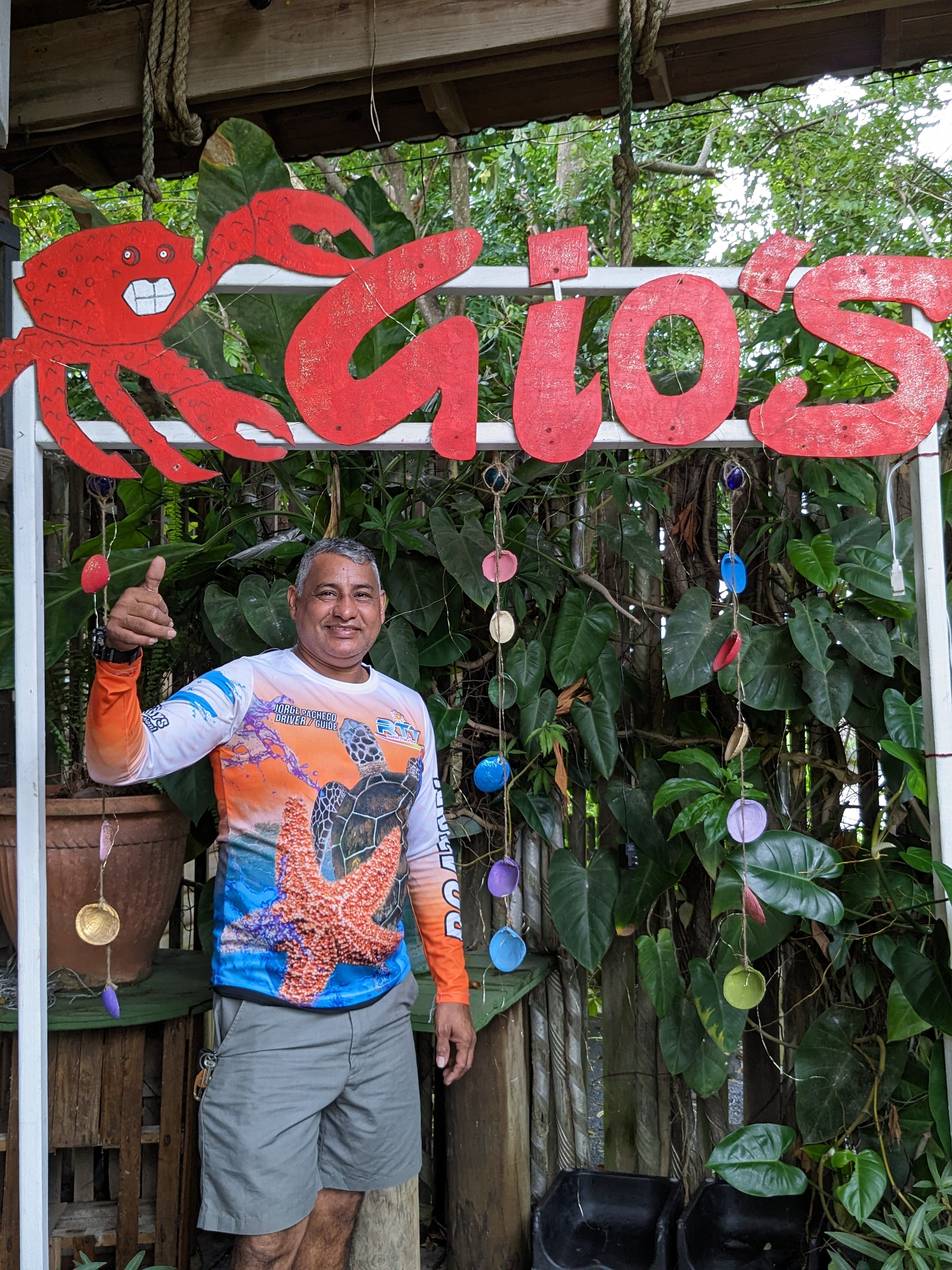
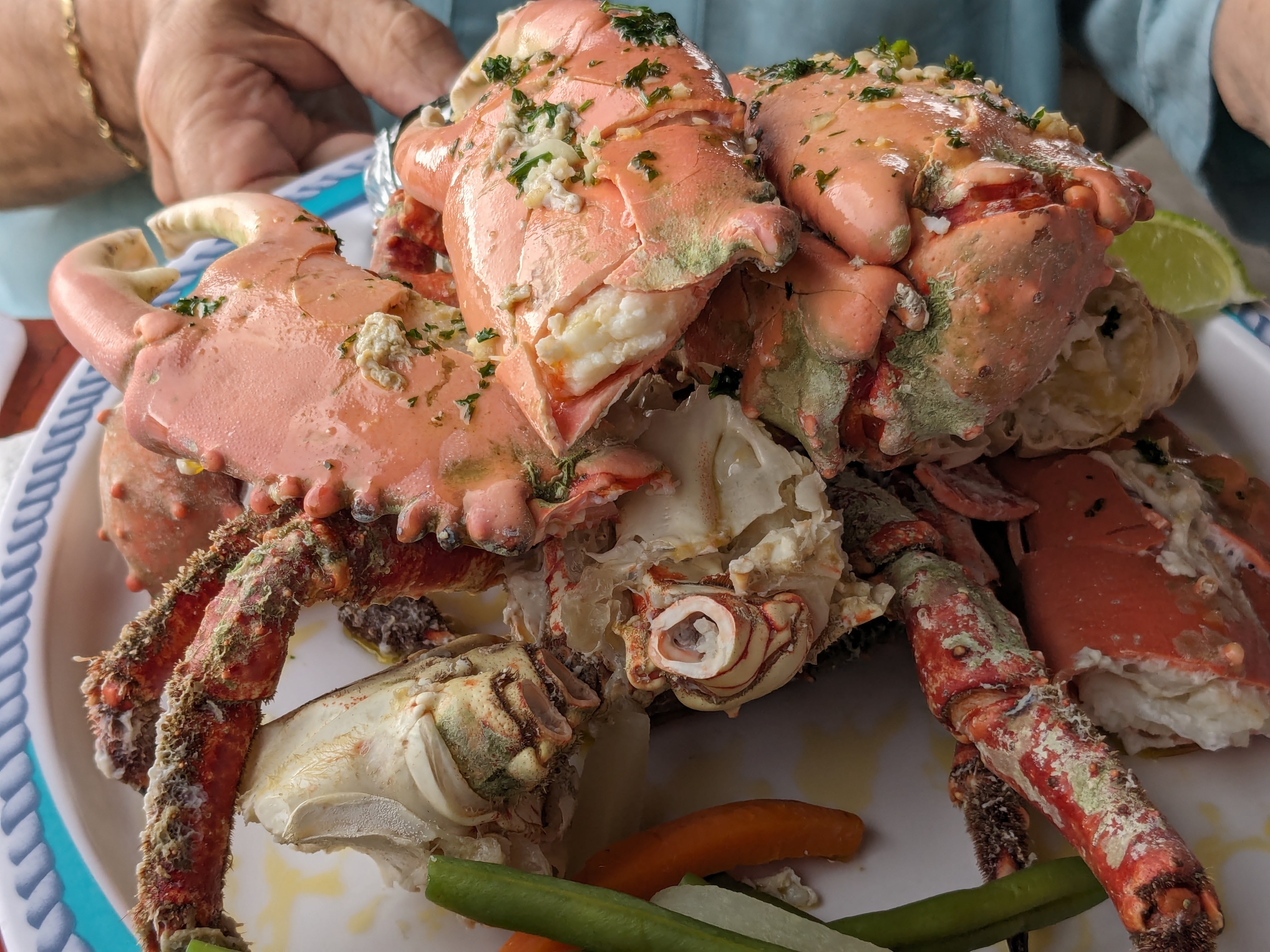
Gio’s is a popular and well-known Roatan establishment that has operated in the same location since 1994. Tourists and islanders alike tout it for the friendly service, the food, the panoramic views, and the laid-back atmosphere. The specialty of the house is Spiny Caribbean King Crab, so that’s what my husband ordered. I ordered what I thought would be a sampler plate of fried plantains and other appetizers. We planned to share. Jorge chose beef and vegetables (perhaps, because he lives on the island, he has his fill of seafood and fish?) In any case, we all were happy!

The meal served as a memorable conclusion to our day on the island. With full bellies and more-than-satisfying memories of time spent on an island we now know and understand a little better, we were saddened at the thought of saying goodbye to a new friend. He dropped us back at Mahogany Bay. We could not say goodbye, however, without snapping a few pictures and exchanging heartfelt hugs.

We carry the memory of a few hours spent in Roatan with Jorge as one of the true pleasures to be found through travel.

A Trifecta of Shore Excursions

My husband and I chose to celebrate our late January anniversary this year aboard ship. Our itinerary, sailing from Galveston, was to ports we had previously visited, but we were eager to warm our bodies and refresh our spirits during a brief seven-day getaway.

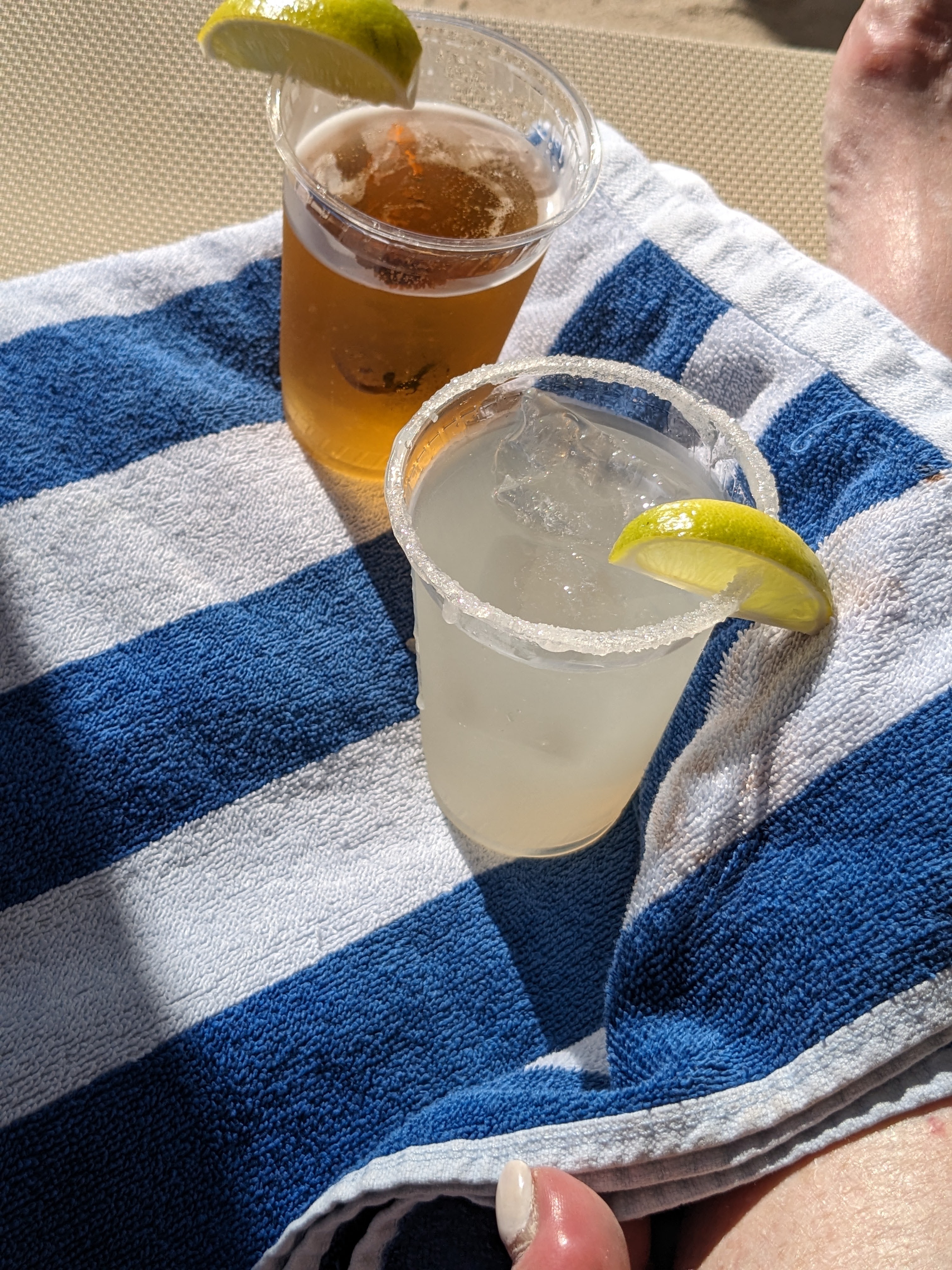
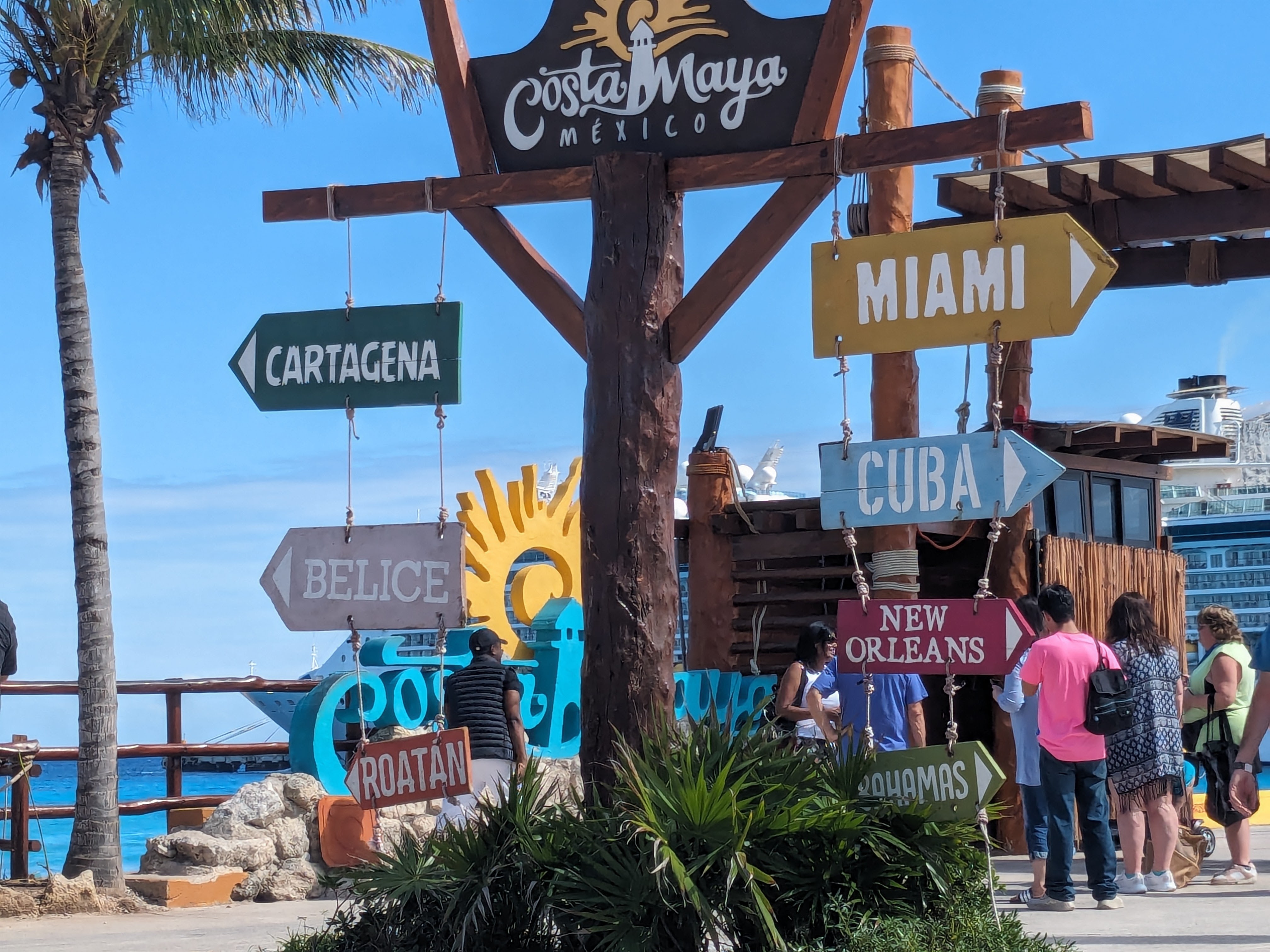
On this voyage, we enjoyed beach time, beach cocktails, and beach vendors in Costa Maya, the first port we visited in the Gulf of Mexico. It was a perfect day, and it fulfilled our need to dip our toes in the water and feel the sand beneath our feet. We spent our hours ashore doing exactly that. We snagged comfortable loungers, enjoyed a few cool libations, and watched people having fun. That was our brand of enjoyment — doing nothing other than enjoying the people around us, and savoring every moment of sun and warmth. I even succumbed to the temptation of a henna tatoo!

Then, we returned to our floating resort hotel for dinner and evening entertainment.

Tabasco: How Hot Is It?

Earlier, in October 2023, I toured the Tabasco plant, home of the world’s best-known hot sauce. The history of The McIlhenny Company which produces the Tabasco brand is fascinating. Still a family-owned business after more than 150 years, the company ships its products from a small factory on tiny Avery Island, Louisiana to 195 countries worldwide.

Cozumel was the final port of our seven-day itinerary. There, I once again encountered Tabasco, this time in the form of a culinary adventure I couldn’t resist.

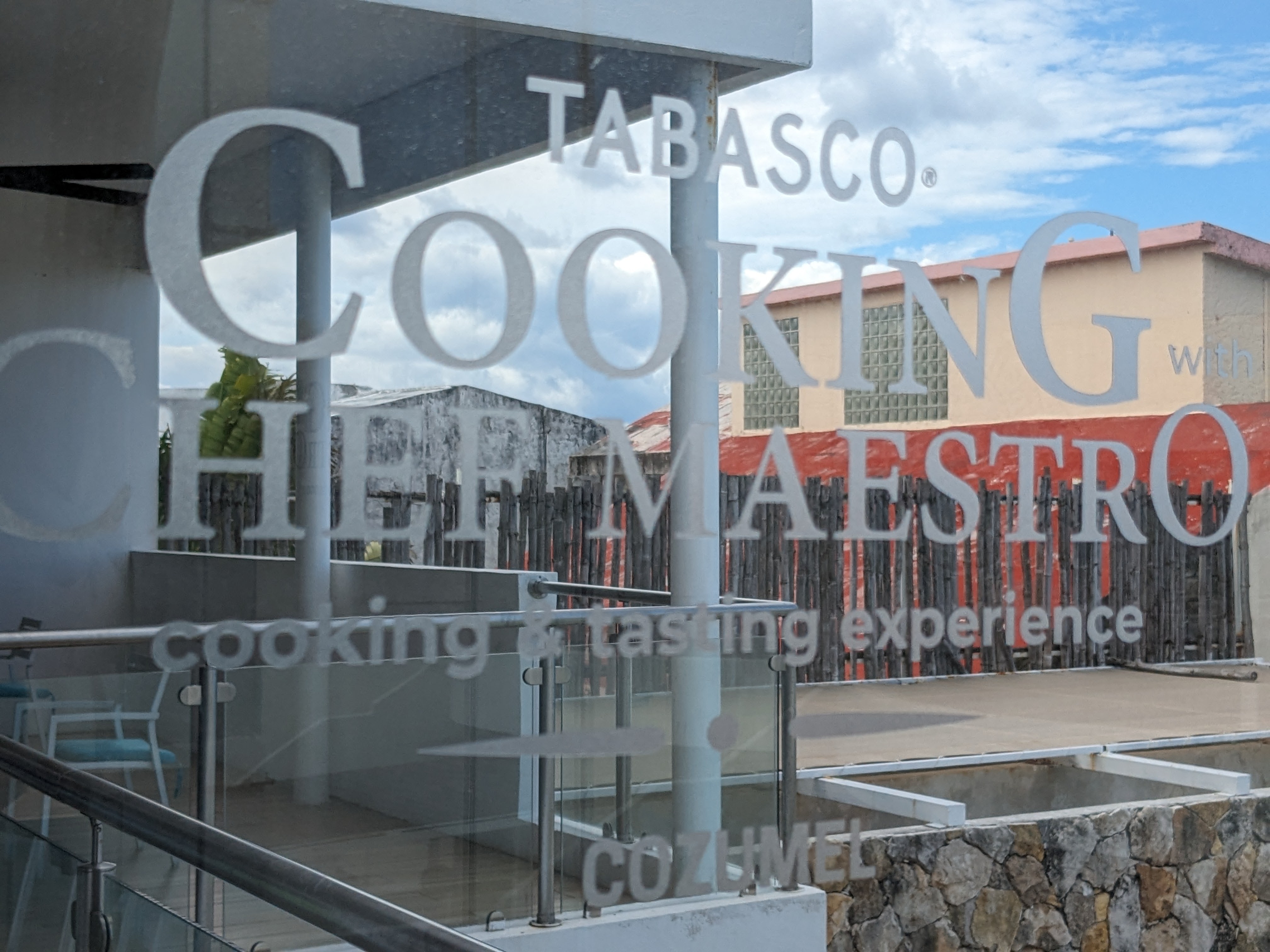
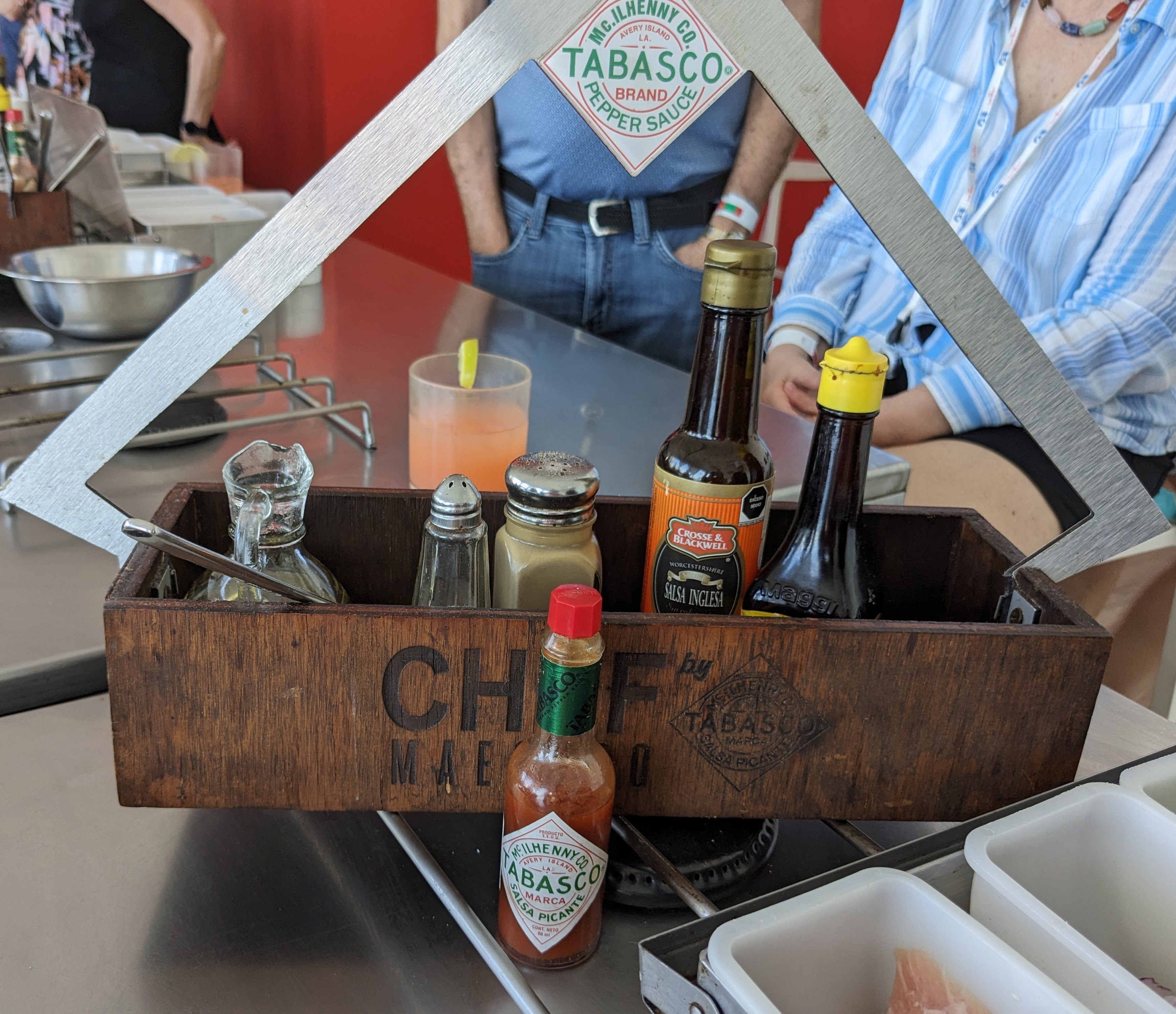
I had booked the “Chef Maestro Tabasco” excursion, a culinary adventure I couldn’t resist, through Princess. Following my visit to Avery Island, the “home” of Tabasco, I was eager to learn more about cooking with the hot sauce.

This excursion did not disappoint!

That little bottle of red pepper sauce has been a staple in my kitchen for many years, but I have seldom used Tabasco for food preparation in my home. Instead, I have typically placed it on the table at casual gatherings, allowing guests to ramp up the “hot” to their own preferences. We were somewhat surprised that on this Gulf of Mexico sailing, there was also a bottle of Tabasco on each dining table, along with the salt and pepper shakers!

During my Louisiana trip, I was able to sample food specialties associated with Cajun history, culture, and tradition. I learned how the flavors of simple foods are enhanced by various herbs, spices, peppers, and sauces. I learned that hot sauce can be flavorful as well as fiery, and that spice can elevate common ingredients to levels of haute cuisine.

Feasting on Entertainment

I also realized that the hot red peppers used to create Tabasco sauce had most likely been brought back to Texas and Louisiana by soldiers who fought on the nearby Mexican mainland during the Mexican-American war. Cozumel is not far from the Mexican state of Tabasco.

As it turned out, this cooking excursion was one of the highlights of the voyage, both for the foodie experience and for the pure fun of it. Who would pass up a culinary adventure that includes Margaritas as well as tips for cooking with Tabasco?

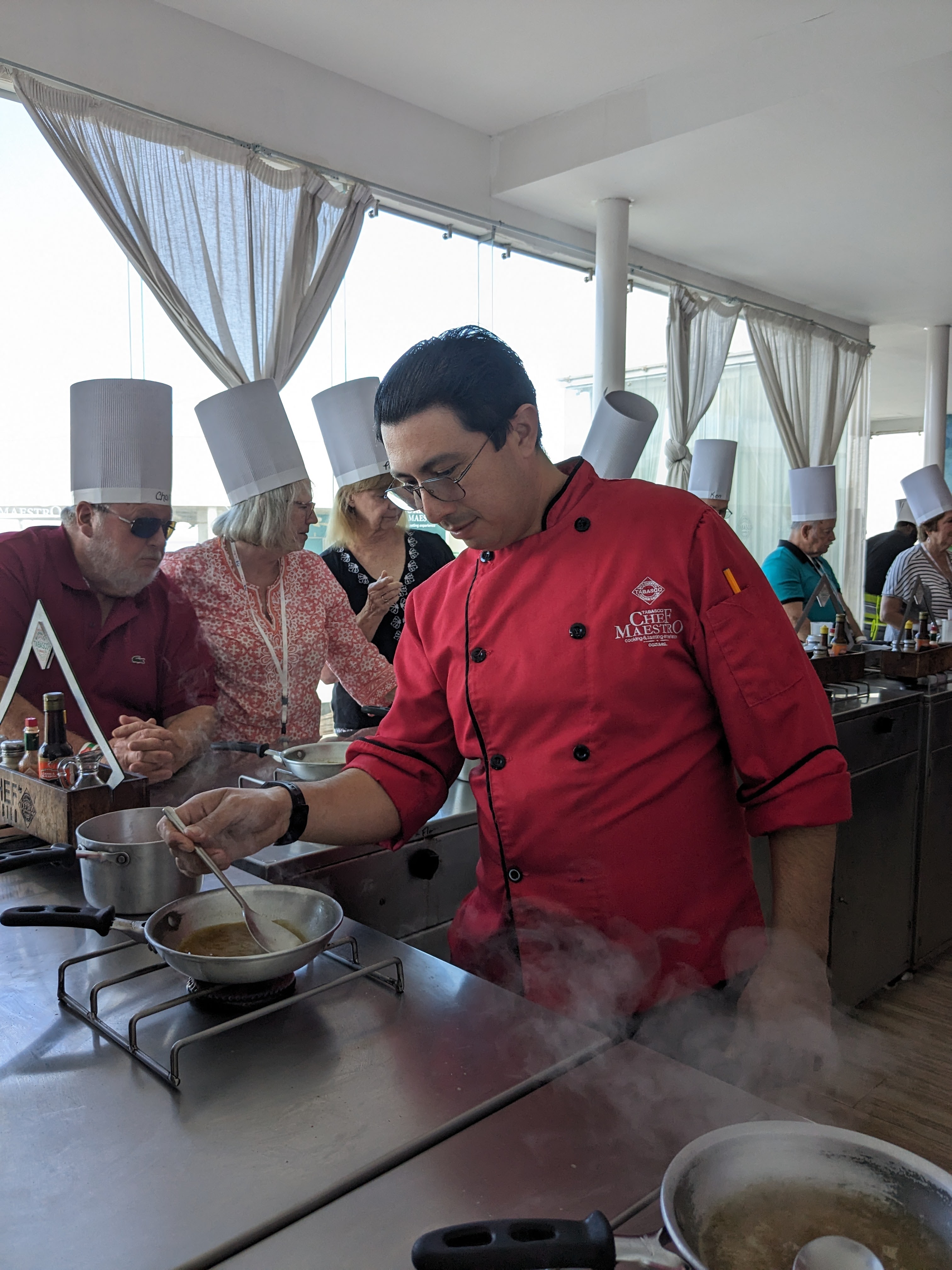
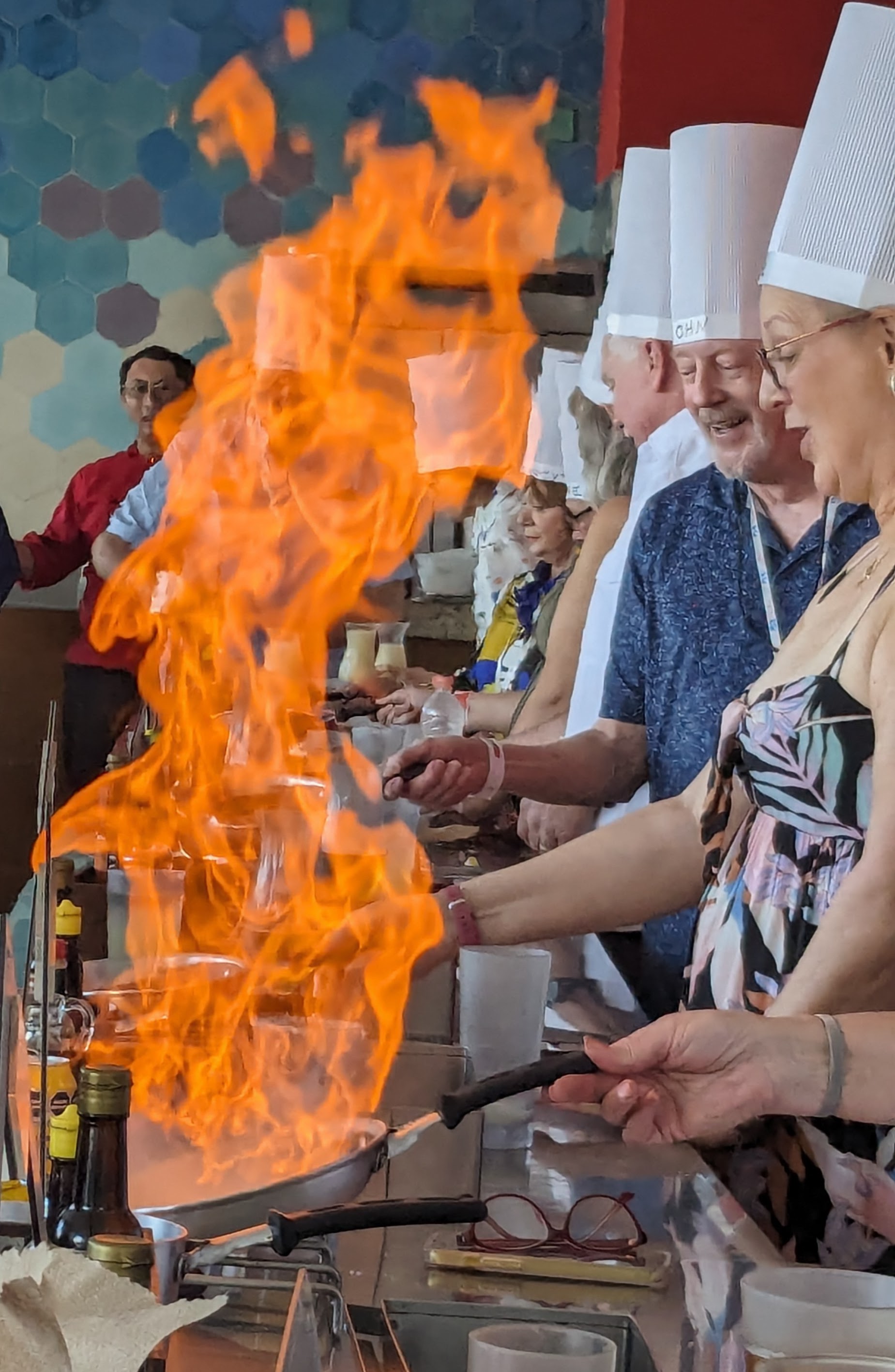
We were entertained from the time we entered the second-floor demonstration kitchen at Cozumel’s Hotel Blu until the moment we were ushered into a waiting cab for our return trip to the pier. At the outset, we donned tall, white, pleated-paper chef’s hats as we awaited further instructions.

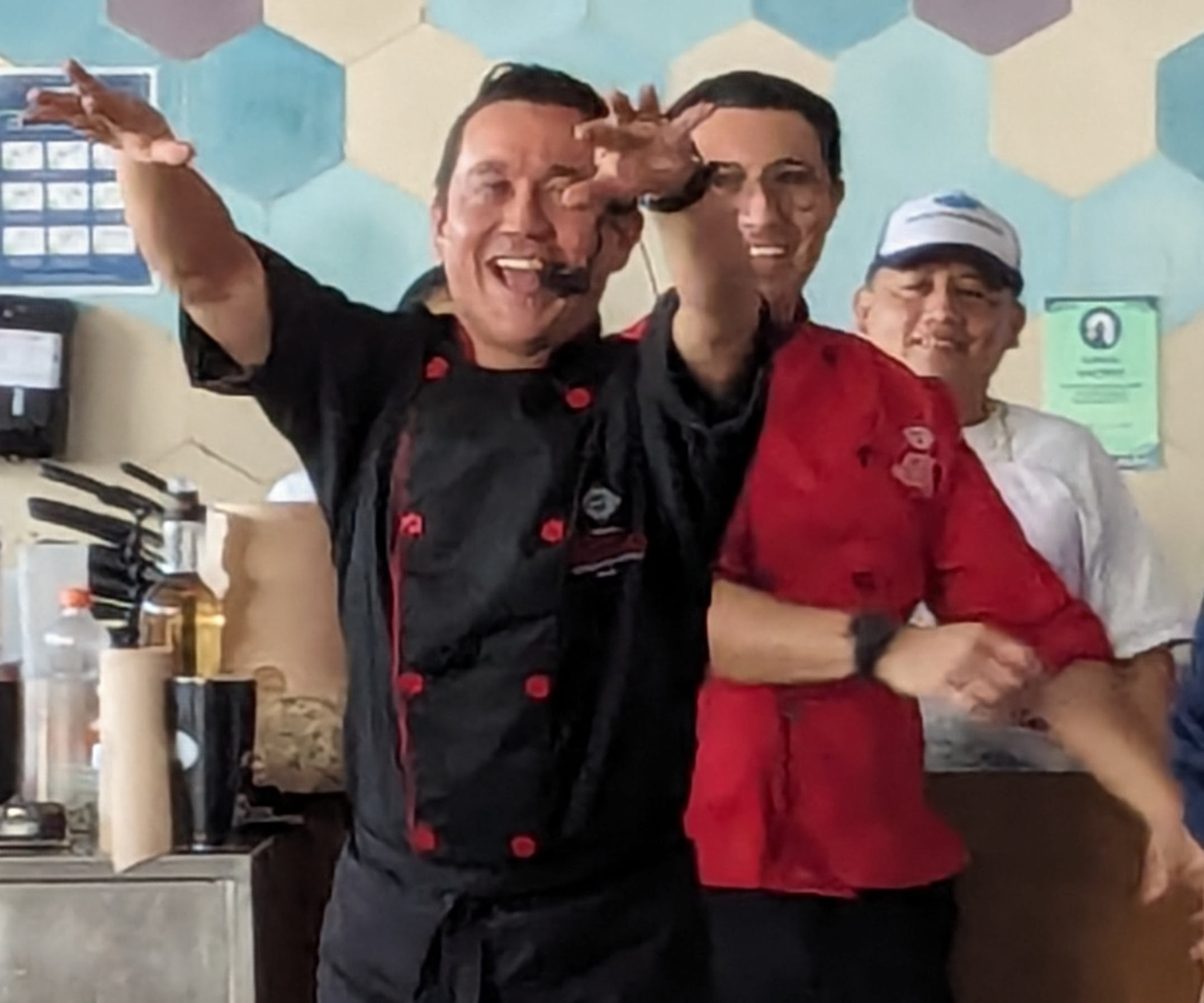
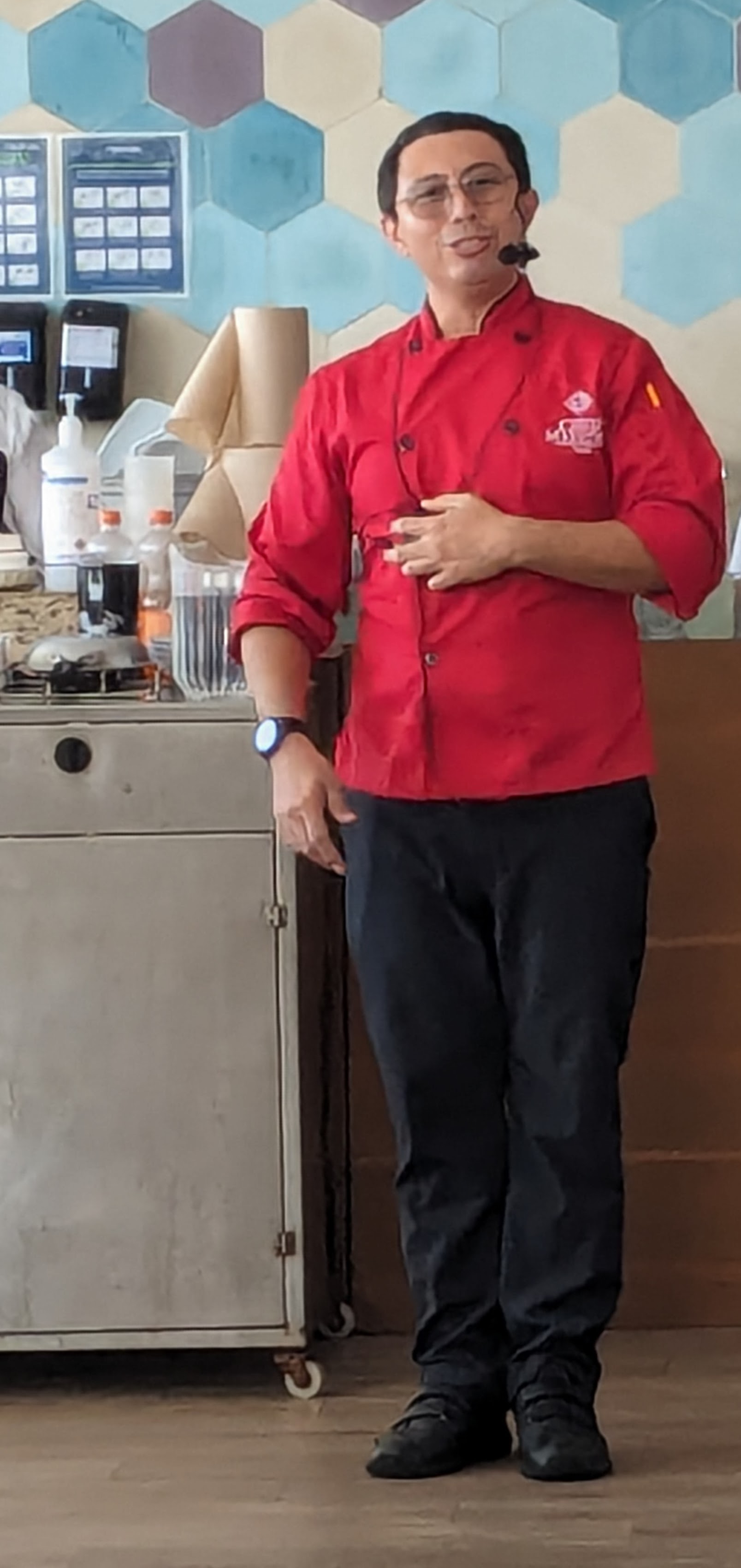
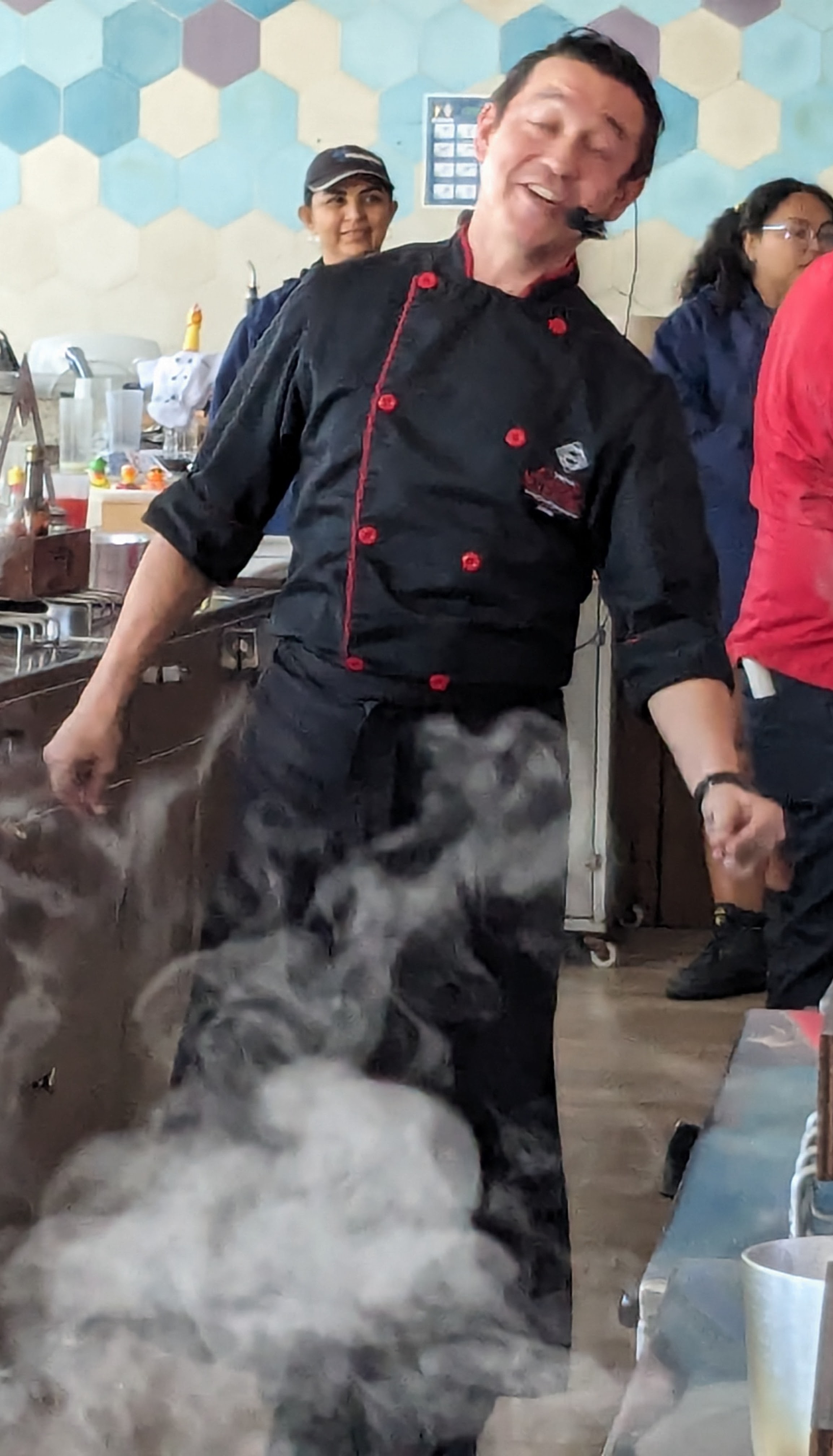
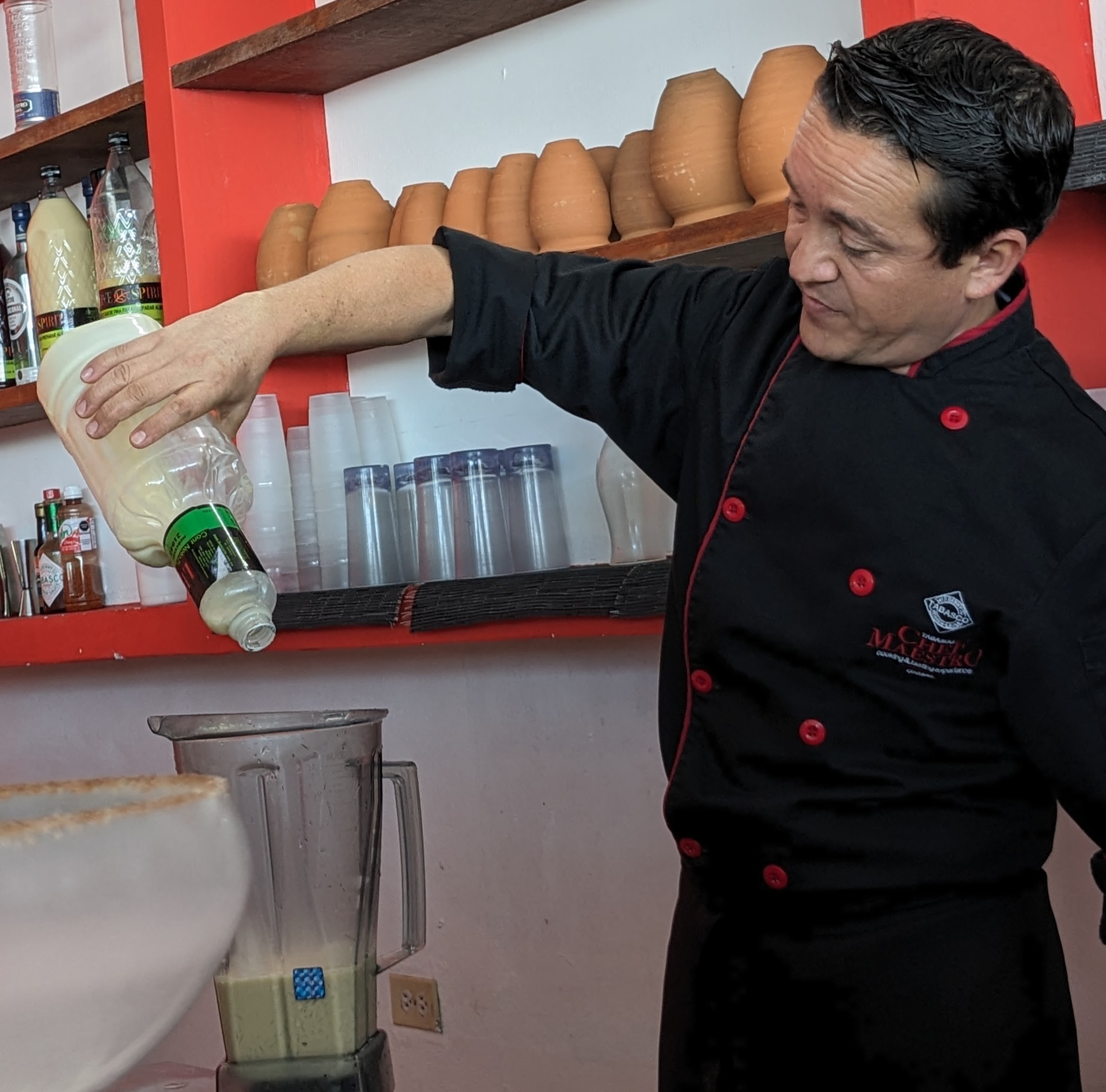
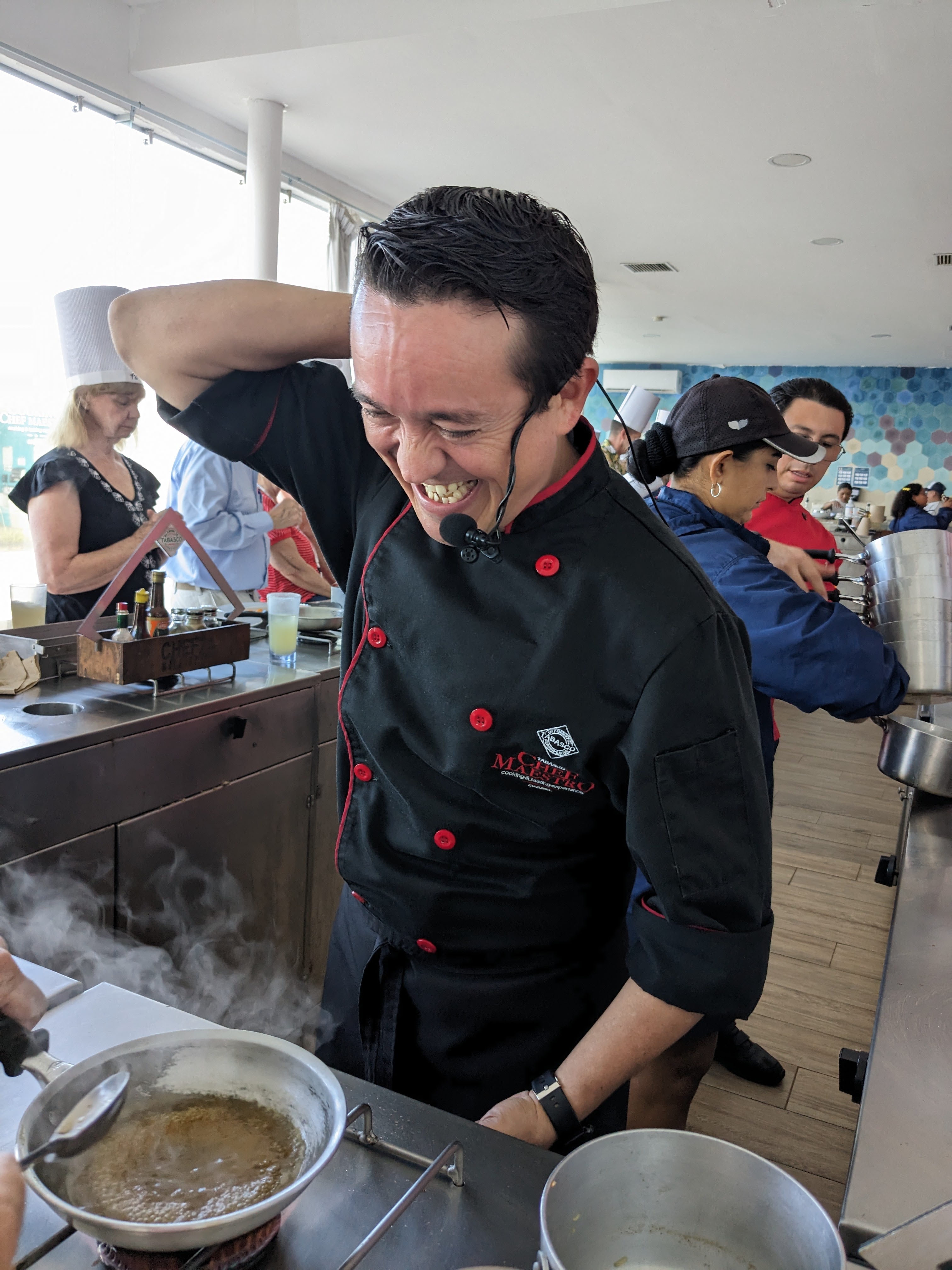
Our chef for the day, Luis Esquivel, was personable and enormously engaging — full of energy, wit, talent, and knowledge.
Let the Cooking Begin

The class may have been two-thirds “show biz” to one-third serious food preparation, but it was nonetheless informative. Chef Luis introduced us to his assistant, Antonio, and to the distinctive flavors of Mexico with an island twist. We learned how to adjust the spice to our personal preferences, and we learned that hot, spicy dishes can be tempered with cool or creamy sauces and tamed by accompanying drinks. These lessons returned with me to my kitchen.

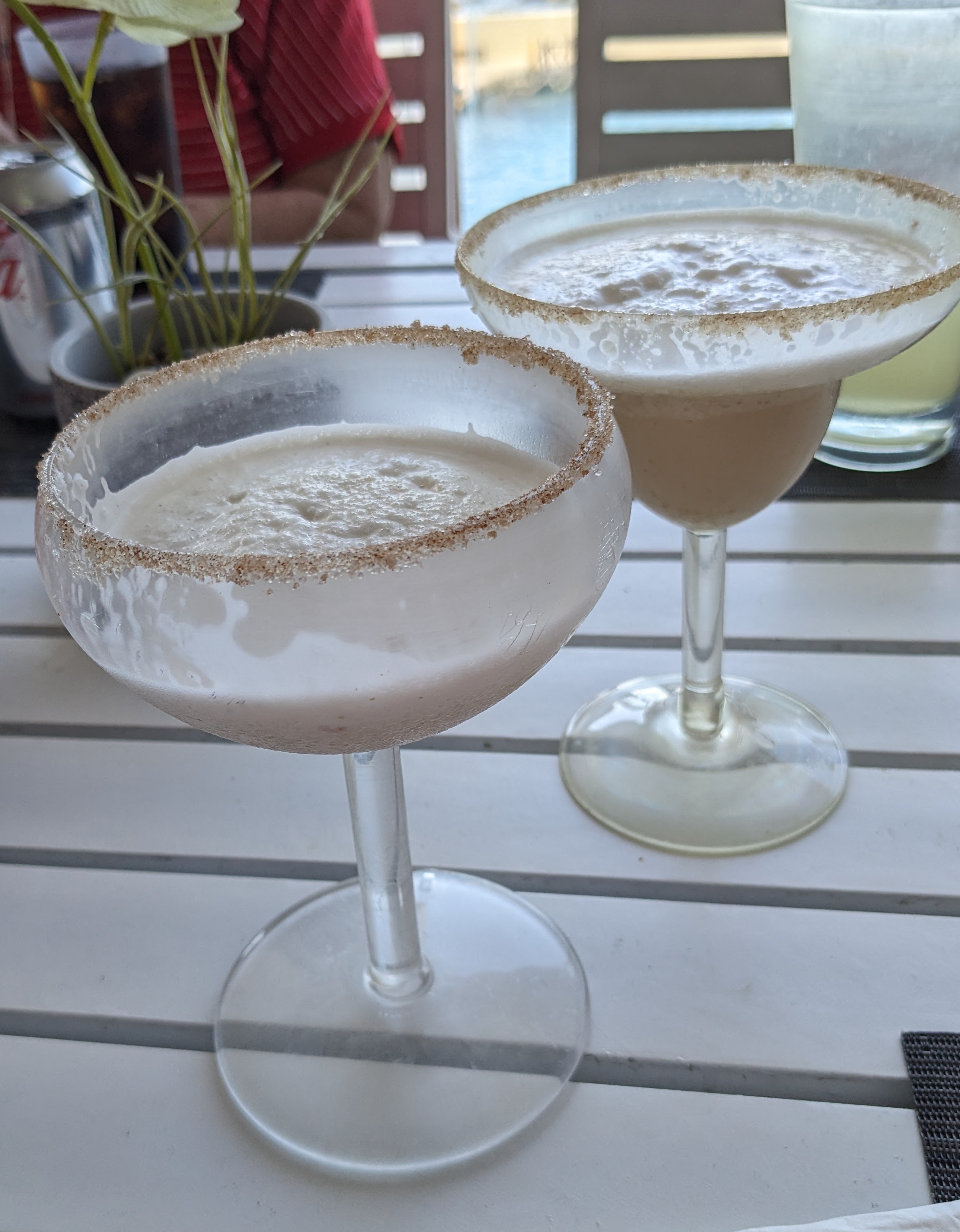
Drinks flowed freely throughout this lighthearted cooking demonstration. The first question put to each of us was “Margarita or Pina Colada?” With that, we took our places at our assigned cooking stations where ingredients had been laid out for the dishes we would prepare.

Floor-to-ceiling windows framed a view of the blue sea beyond and the hotel’s dolphin pool just below. We were tempted to simply sip on our Margaritas and watch the dolphins frolic, but there was serious food prep to be completed. Chef Luis and his sous chefs tried their best to keep us on track.

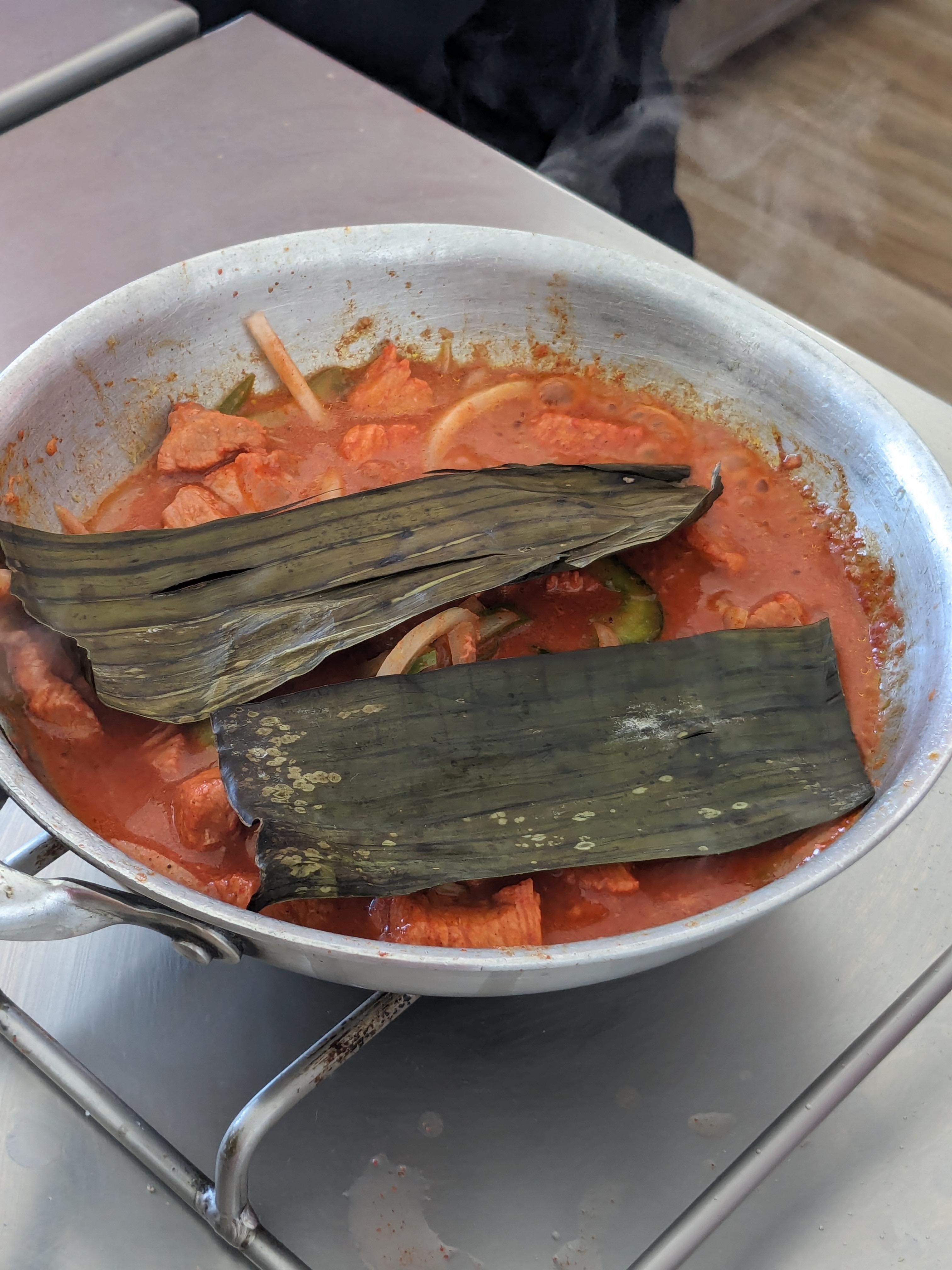
We first prepared a simple shrimp cocktail, with fresh greens, boiled shrimp, lime juice, cocktail sauce, and Tabasco to taste. It was to become the first course of our dinner, so it was put aside to chill.

The learning experience was underway.

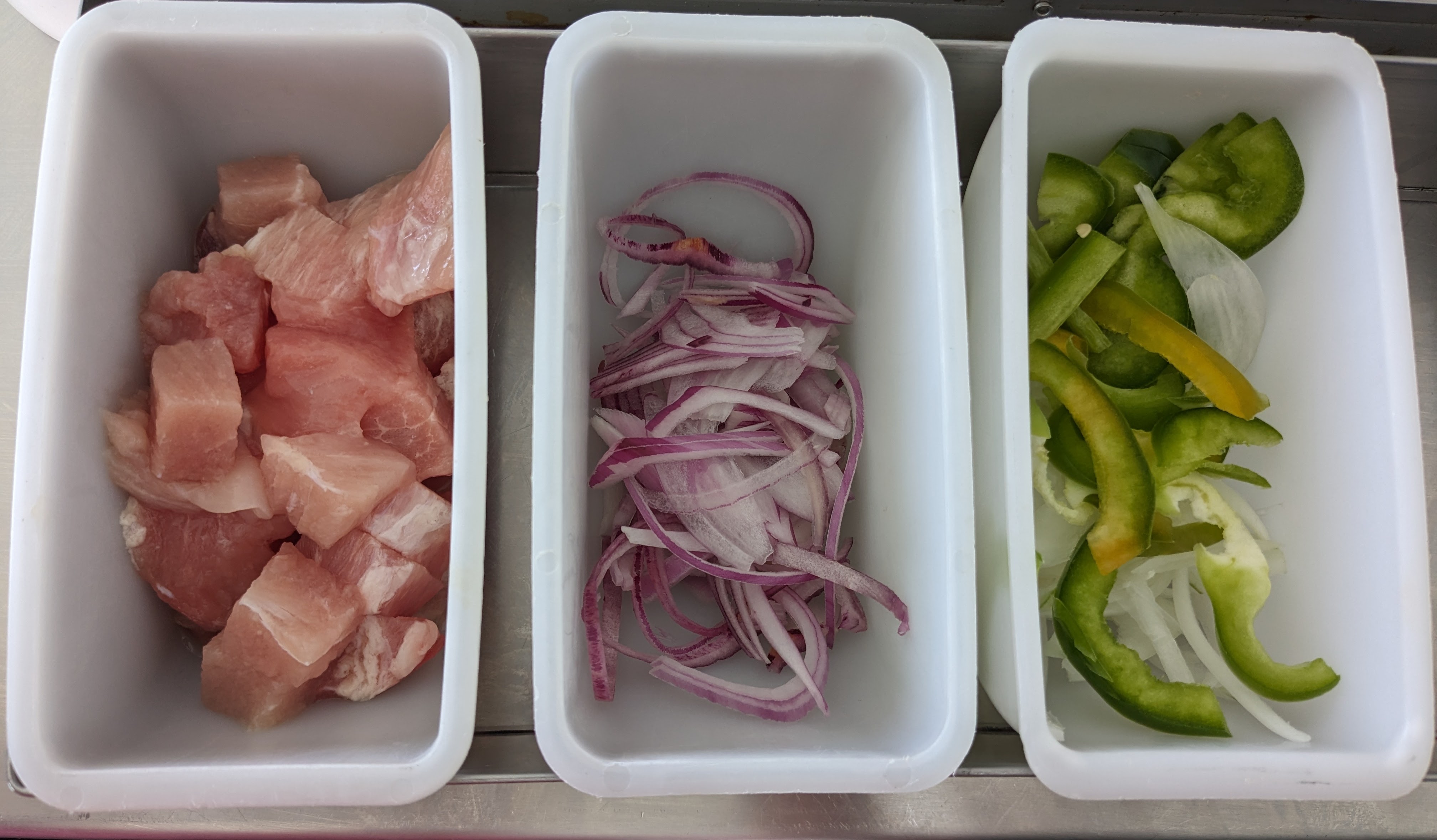
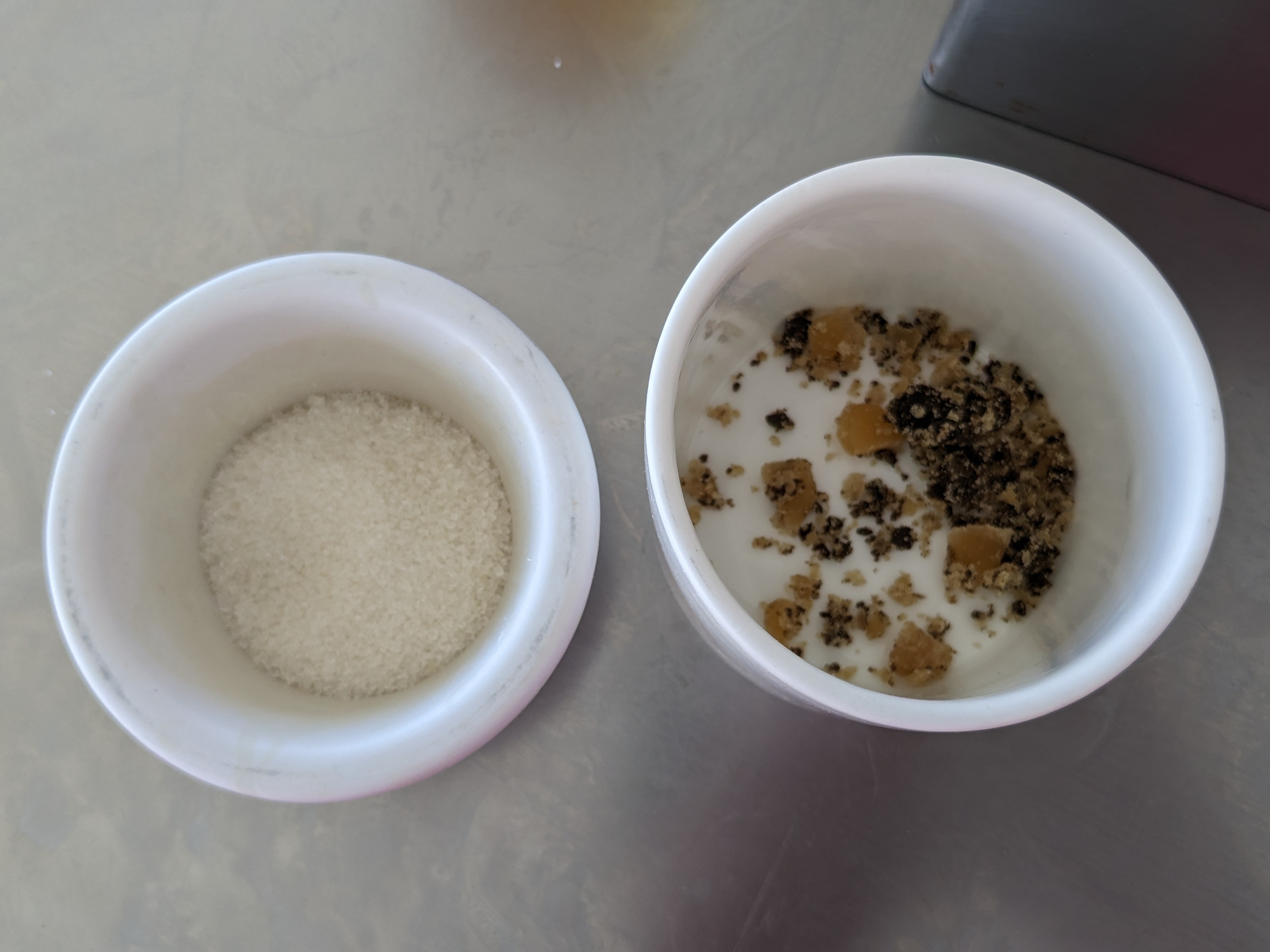
The first order of business was to identify the ingredients and discuss the flavors — cubed pork, sliced red onion, slivered bell pepper, Tabasco sauce, Worcestershire sauce, peppercorns and a clove, vinegar, catchup, cubed sweet potatoes (for dessert), shrimp, fresh lemon, raw sugar, freshly ground peppers, and other spices. We did not yet have any idea of the dishes we would be preparing, and we had little time to relax before the chef and his assistants lit the fires under our personal gas burners.

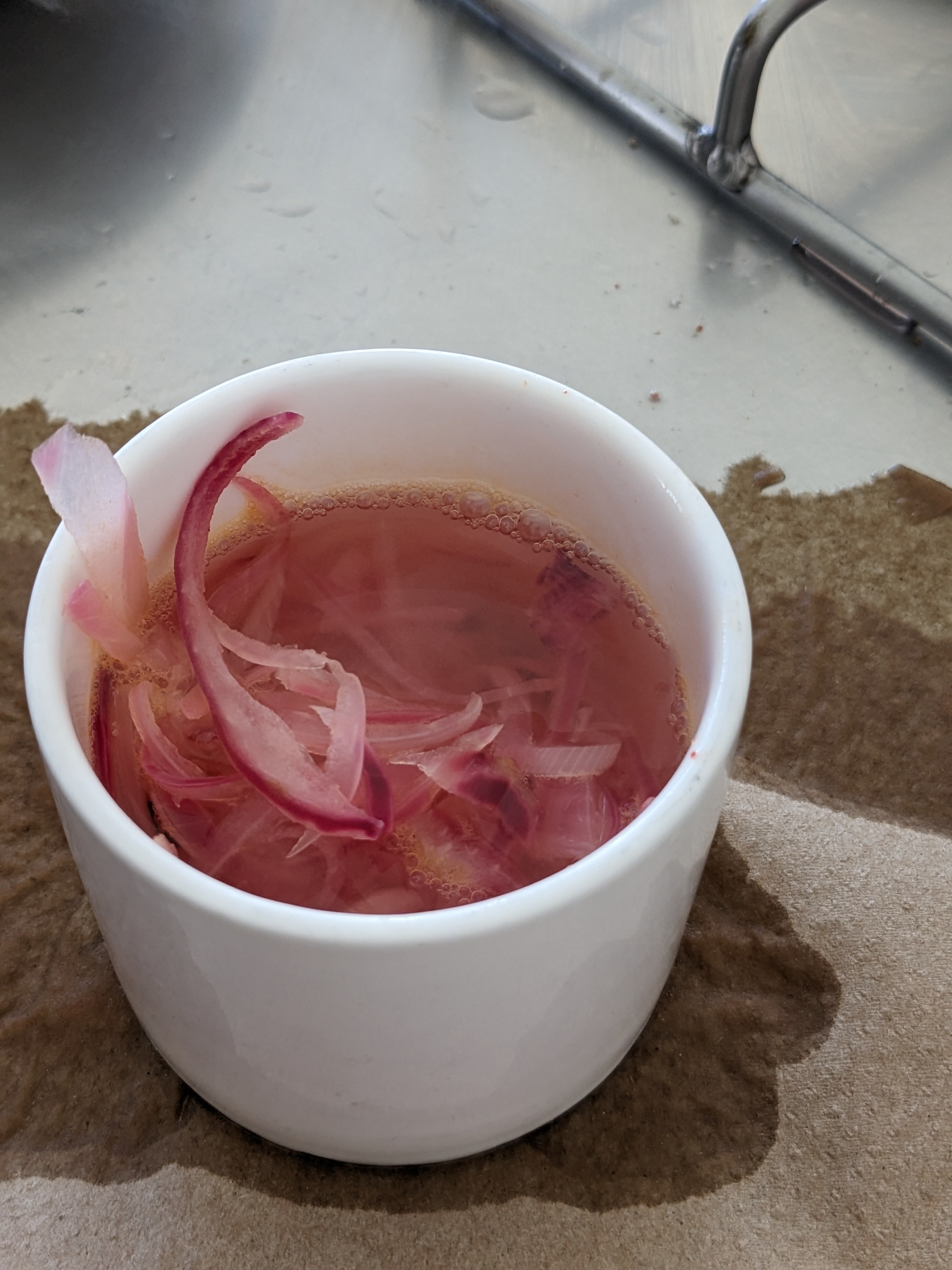
After another sip of Margarita, we set to work under the watchful eyes of Antonio and Chef Luis, who kept up a running commentary about how to do what we needed to do. We learned a technique to “quick pickle” onions that would accompany the pork dish, and we were instructed about easy ways to combine common ingredients to produce unusual flavors. We learned to use intense flavors and hot sauces judiciously.

A Frivolous Approach to Serious Cooking

We prepared simple, no-fuss dishes, perfectly suited for recreating at home. We were supposed to receive the recipes and ingredient lists by email. Alas, ours never arrived, although we have the photos and the memories. We might not be able to reproduce the menu exactly, but we feel relatively confident about how to recreate the savory flavors of the meal we enjoyed. It all begins with fresh ingredients. And, of course, Tabasco!

Not only did this cooking interlude provide us with an introduction to Mexican-flavored dishes, but it was high-level entertainment. It was one of the most informative and enjoyable cooking experiences we can remember. We prepared and plated a shrimp cocktail, a pork entree, and a yam dessert with sweet syrup. We consumed our fill of tasty alcoholic or non-alcoholic beverages as well. Plus, we were picked up and returned to the ship’s pier, all for a reasonable fee.

Then we moved to an adjacent dining room to consume what we had created and thoroughly enjoyed getting to know our fellow students. We drank a final toast to our accomplishment with a frothy after-dinner cocktail, prepared by Chef Luis.

The Tabasco cooking experience provided us a memorable day ashore. We gained a new appreciation for hot peppers and flavorful cooking in the region where those hot peppers originated. We left with a desire to recreate the experience for our friends and neighbors at home. And we have put some of the tips we brought home to good use.

This pampering “getaway” cruise was focused on food and relaxation. My next post, however, is about a much different excursion during our port call in Roatan, the small island off the coast of Honduras. Roatan is known for its reef diving and its remarkable clear water. We discovered much more during our island tour with a private guide.

I explain what was so special about our day on Roatan in Uncovering an Island‘s Hidden Treasures, scheduled for publication next week.

Follow me to receive email notifications about that experience and about future travels. I hope you’ll continue to join me for good food and memorable times in faraway places.

Time to Refresh and Renew

Cruising vacations are all about what you make them.

Early in 2024, my husband and I booked a week-long cruise aboard Regal Princess, sailing out of Galveston, Texas. At the end of January we were looking for sun and warmth, a day or two of beach time, and serious relaxation. We found all that and more. Much more, in fact. In addition to bounteous food and entertainment aboard the ship, we booked three port excursions. Two of them were distinctive because they involved both food and cultural insights.

We went to escape the cold days and dreary skies of home; and we returned home with “adjusted attitudes,” looking forward to the early signs of spring . We knew it would be a while till longer, warmer days were upon us, but we felt ready to await the change of seasons after our brief hiatus.

I’ll be writing about all three of the ports — Costa Maya, Roatan, and Cozumel — over the next two weeks. Follow me now to receive a notification about those posts.

As much as we enjoy all types of travel, there is little that trumps an opportunity to spend a few days at sea. It’s not about the destinations. We are “old salts,” who for many years spent as much time as possible aboard our personal cruising motoryacht. The world’s seas still call to us. But now, we let other captains take the helms.

And the Regal? Oh, Yes

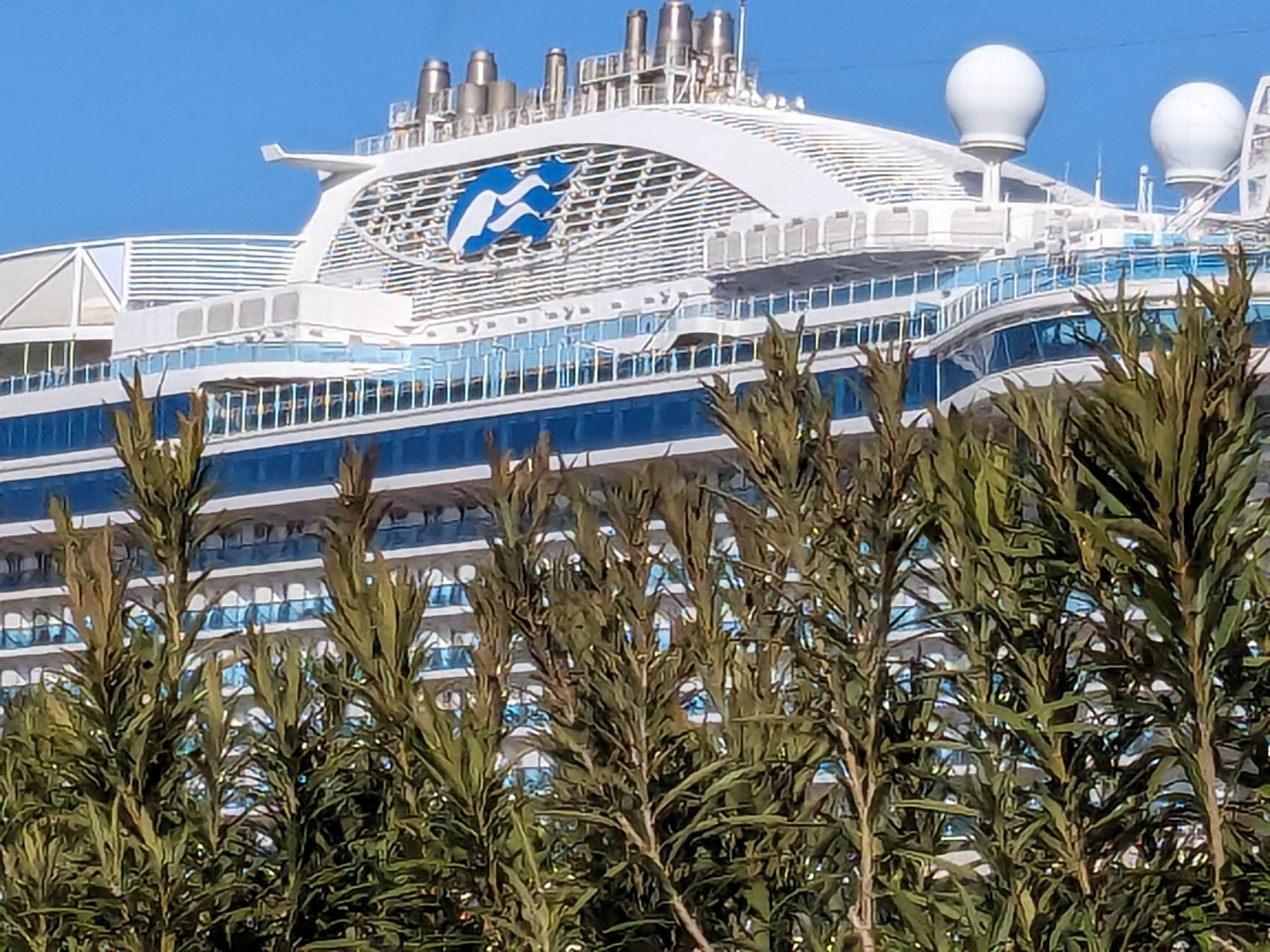
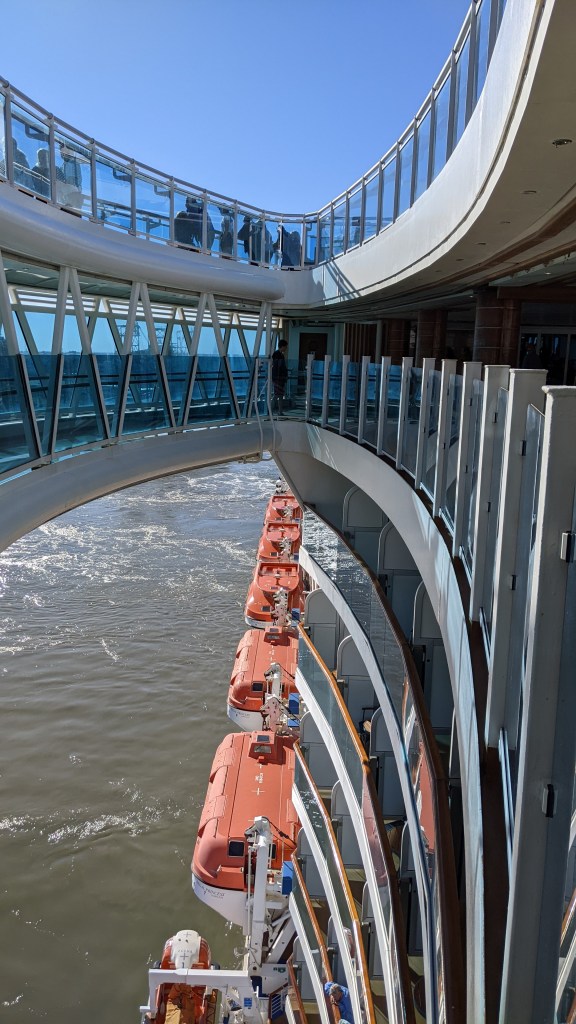
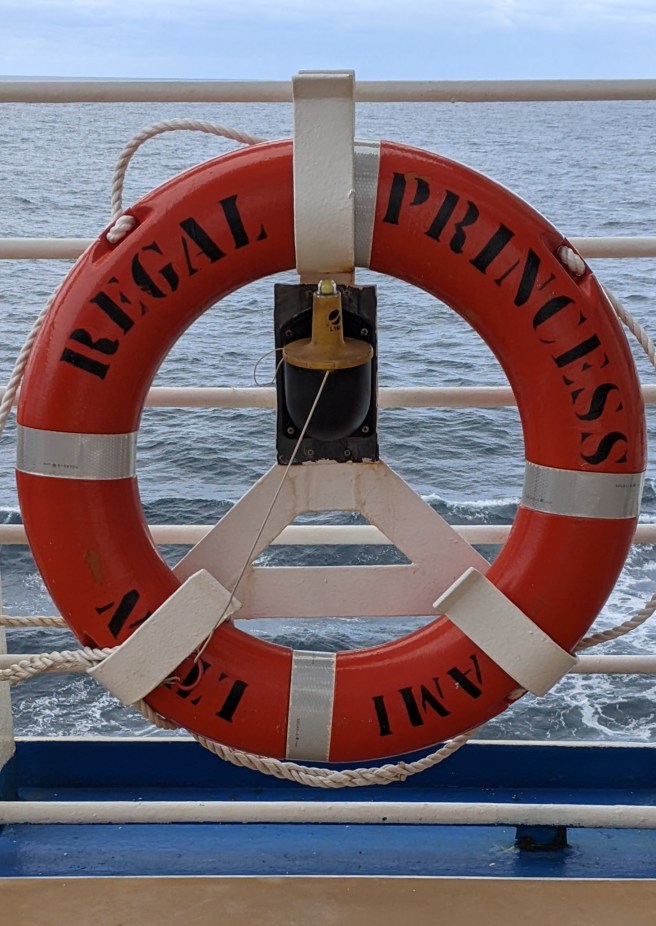
Regal Princess is an elegant vessel, christened in 2014 by the original cast of “The Love Boat.” She is large and impressive with a maximum passenger capacity of 3560, a crew of 1346, and 19 decks. But, because of the design, there are intimate spaces both on deck and indoors where one can find comfortable seating and quiet surroundings. Public spaces are well-proportioned; in our experience, the ship never felt uncomfortably loud or crowded. We, however, could retreat to our private balcony had we wanted time to relax, read, or simply watch the sea drift by. As with all modern cruise ships, there are multiple pool areas, restaurants, lounges, gathering spaces, and enough activities to keep people busy from early morning to late at night.

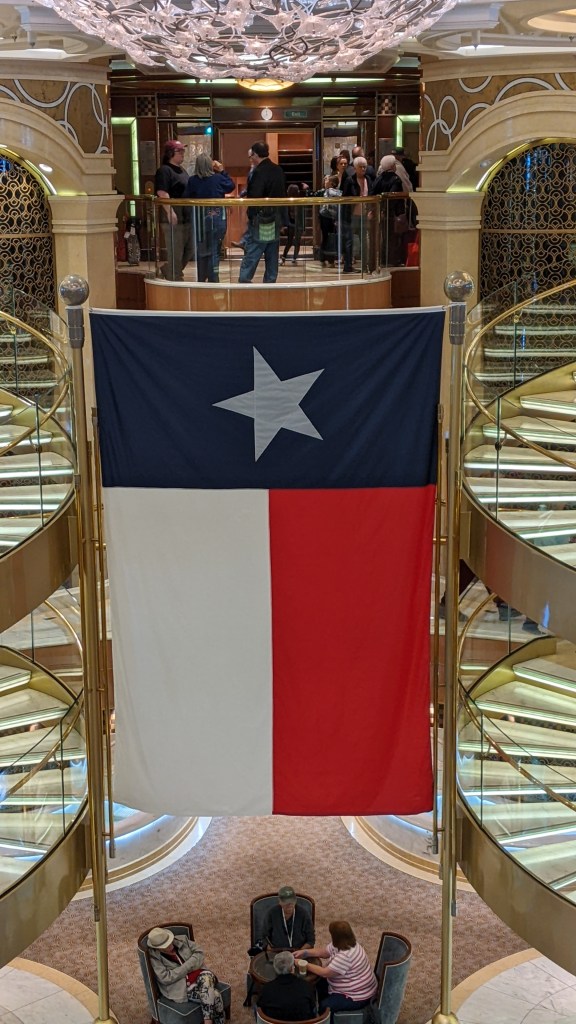
Ours was a short cruise, on an itinerary we had traveled previously. We disembarked at each port, but we thoroughly enjoy the sea days, and have, on previous cruises, remained aboard even while in port. We appreciate the classic lines on the ship, and the familiar public spaces that characterize the ships of the fleet. Princess is one of our favorite cruise lines, so we are familiar with most of the line’s standard offerings, but the Regal has at least a couple of unique features. One is the interior balcony overlooking the casino — it’s possible to watch the action without actually being a part of it!

Food, Wine, Spirits, and Entertainment

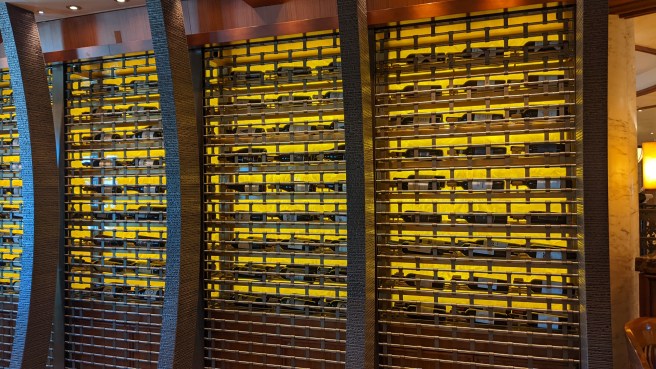
As on all Princess cruises, the food is an experience, whether you choose to eat every meal in one of the dining rooms or opt for the World Marketplace Buffet. You can also eat and snack your way through the day at multiple other onboard venues like Alfredo’s Pizza, the International Cafe, Gelato, or the Ocean Terrace Seafood Bar. Superb specialty restaurants — Crown Grill Steakhouse or Sabatini’s — are also available.

We chose one of the three main dining rooms for each of our dinners, and some of our lunches, aboard Regal Princess, but we also visited the extensive Deck 16 buffet several times for brunch or lunch — and we sometimes snagged cookies and fruit to consume later in our cabin — I find the oatmeal cookies irresistible!

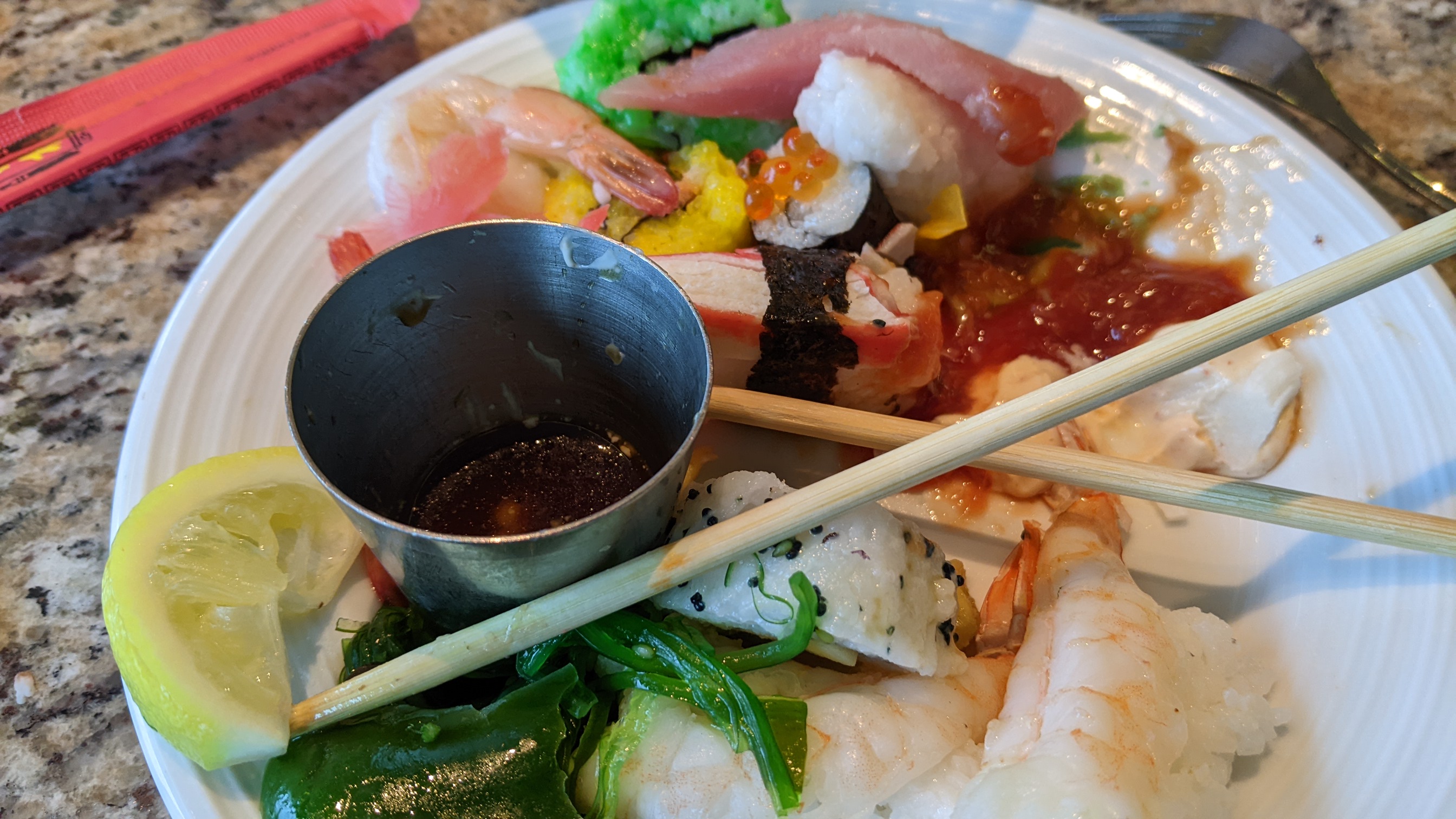
A spectacular feature aboard Regal one day on this cruise was a midday sushi buffet — What a feast!

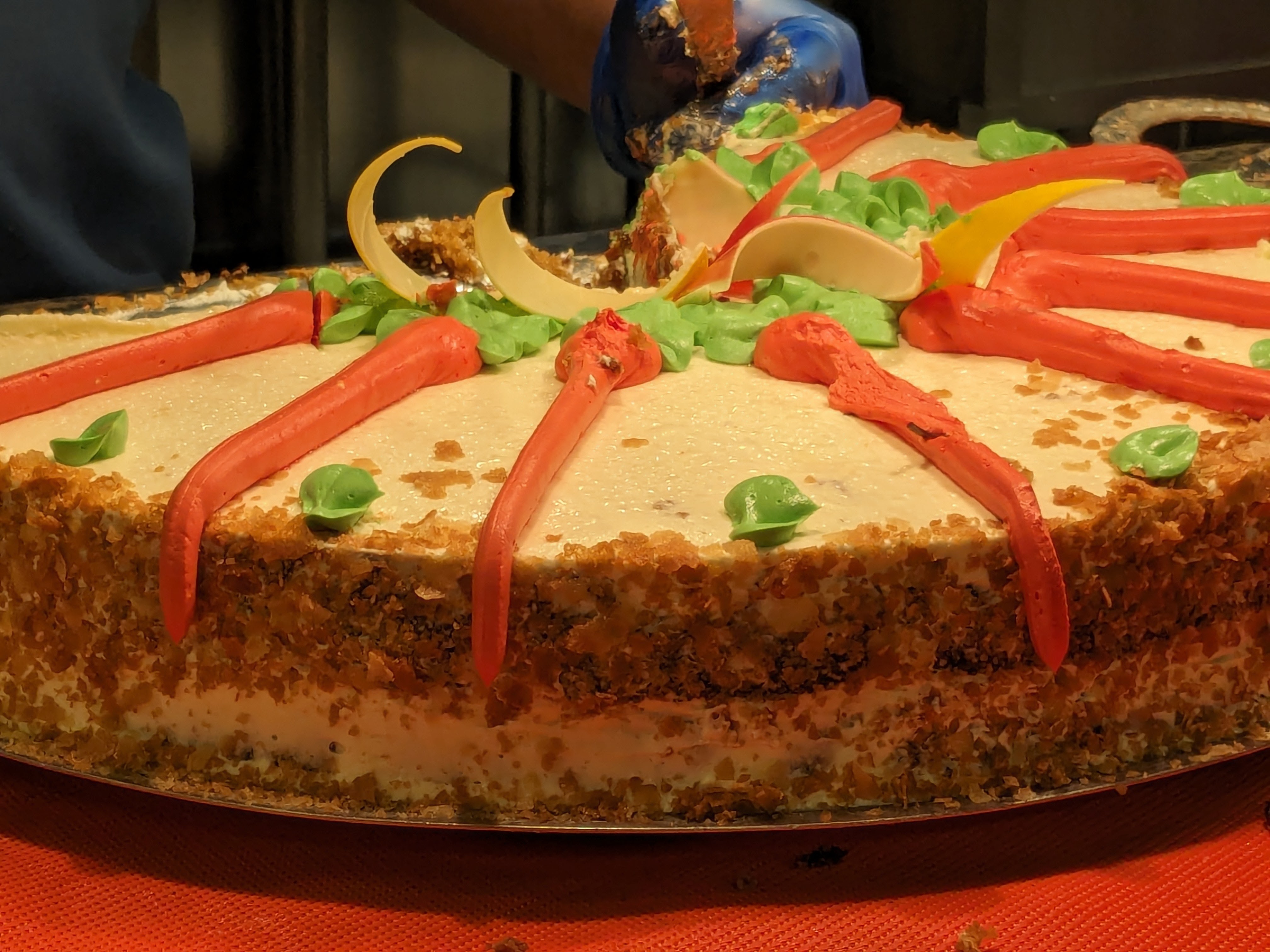
And the desserts! Need we say more?

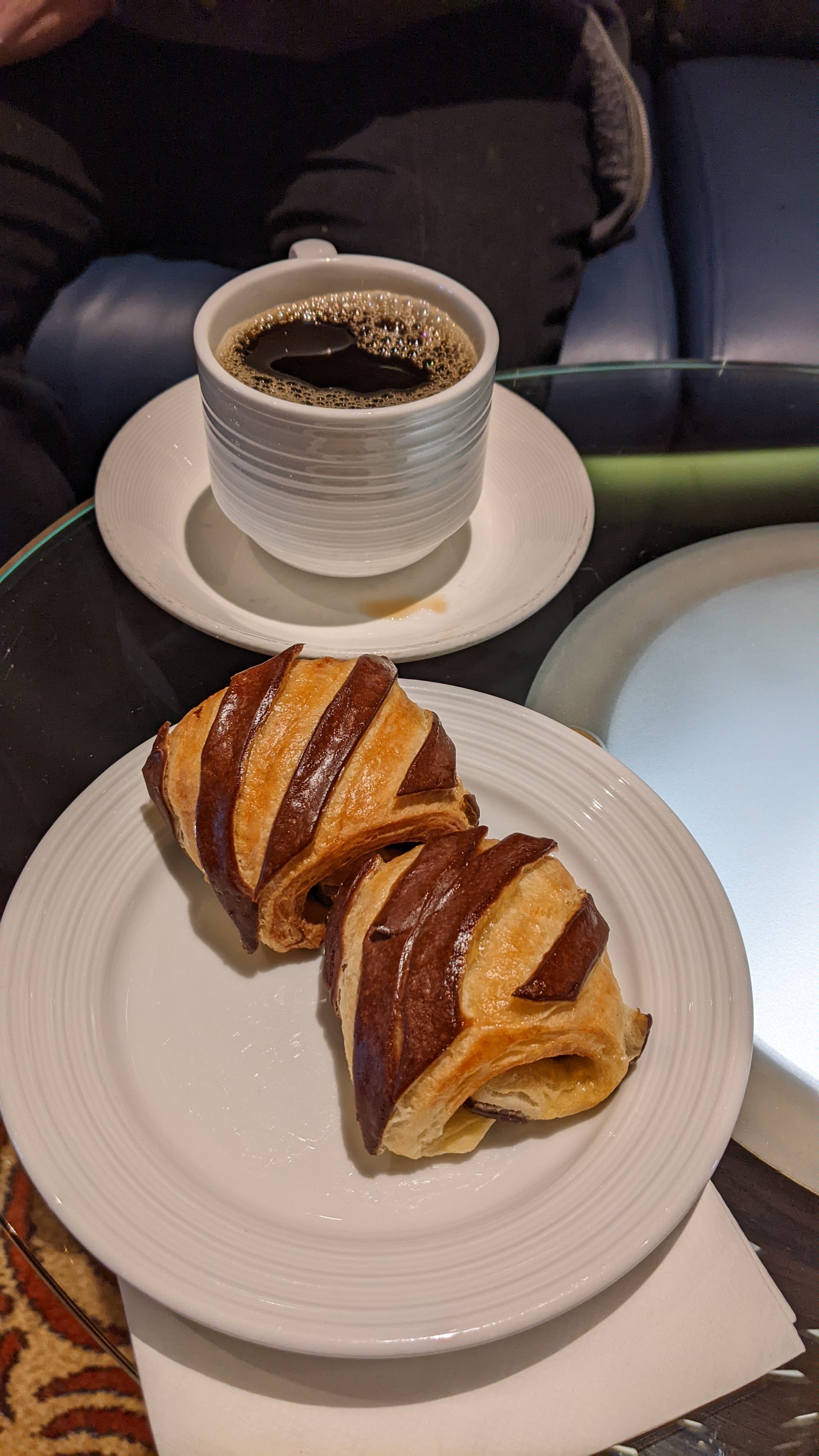
One of our favorite cruise traditions is to order a light breakfast, usually croissants, fruit, and coffee, delivered to our stateroom each morning. It’s a pampering, relaxing way to begin the day and a tradition we can’t seem to break. But why would we want to? But that didn’t mean we didn’t find other places aboard to enjoy breakfast and coffee.

We visited the International Cafe in the Piazza for occasional snacks and specialty coffees. We also enjoyed meeting other passengers, sharing stories, and listening to music in several distinctive cocktail lounges aboard this ship.

On this voyage, for some reason, dinner menu options were a bit “thinner” than we had expected but choices and portions were certainly ample. Service at times seemed slightly disorganized or rushed, and the visual presentation of some dishes was below the standard we have come to expect and appreciate from our times aboard other ships in the fleet. However, that’s a passing observation and certainly did not measurably detract from our onboard experience. We ate very well in each of the main dining rooms, whether for lunch or dinner.

Just one downside note: On other ships in the fleet, my husband has enjoyed visiting the ship’s sauna without a specific reservation or an extra fee. On the Regal, unfortunately, that was not an available option for him.

As always, onboard entertainment is plentiful — game shows, music, shopping, port lectures, dance and exercise classes and evening shows in the theater. And, of course, the casino. My husband picked up the daily Sudoku from the library and puzzled over it as well. And then there are the movies “under the stars” on the open deck, or on stateroom TV.

But, on sea days, just watching the ocean waves and the changing cloud patterns can be entertainment enough, from a lounge on deck, adjacent to one of the open-air bars, or on a private balcony. There was also plenty of opportunity to engage with other passengers in one of the cocktail lounges, enjoy the eclectic musical selections played throughout the ship, or attend one of the special programs scheduled throughout the day. I cannot imagine how anyone could characterize cruising as boring!

Renewing a Previous Acquaintance

We have traveled with Princess enough to have earned loyalty perks, and we enjoy those bonuses. A truly memorable event on this sailing was the Captain’s reception for upper-tier loyalty passengers at which the three “most traveled passengers” aboard were recognized.

On another Princess cruise several years ago, sailing out of the Port of Houston, I was privileged to meet and interview a lady who, at that time, spent much of each year aboard ship. It was a different ship, but even then she was a “most traveled” and much-loved passenger. I noted that the crew was particularly solicitous and always saved her same table in her favorite lounge for a pre-dinner glass of wine.

During our interview, I learned that she and her husband had cruised extensively together. Following his death, it seemed only natural that she should continue cruising. She told me that she treasured her shipboard life, saying that she was grateful to have the health, the opportunity, and the means to travel, adding that one of her joys was meeting and talking with other passengers. She explained that she returned to her home in Houston, “for tax season and for Christmas!”

During the ensuing years, I thought about her occasionally, wondering if perhaps she was still cruising. On this voyage, my question was answered. At the Captain’s Circle Cocktail Party on February 1, Thelma Middleton was honored as the “most traveled passenger” on Regal Princess for this sailing, with 252 cruises and more than 1,850 days aboard Princess ships.

After the ship’s photographer snapped her photo with Captain Gavin Pears and senior staff, I once again spoke a few words with her. I was genuinely surprised when she told me that she recalled our previous meeting. What a pleasure it is to know she is still traveling, and still enjoying herself!

Just For the Fun of It . . .

Stoby’s, known as the home of a much-loved cheese dip known well by residents of Russellville, Arkansas, was the destination for a caravan of approximately 15 convertibles on Thursday, April 11.

The lovingly polished convertibles, all with tops down, arrived for lunch in Russellville after a scenic drive along “steep and curvy” Arkansas scenic byways. At times, workers, residents, and forestry crews along the route stopped what they were doing to wave as the caravan passed, and vehicles traveling on intersecting roadways usually did the same. It was the first “Escape the Gate” excursion of 2024 for a loosely organized group of convertible owners from Hot Springs Village, a planned community approximately 50 miles south of Russellville.
Many of the convertibles gathered at the designated meeting place outside the Village’s West gate at 10 a.m. with their tops up, drivers and passengers wearing fleece hoodies or quilted vests over sweaters and sweatshirts. Even though the day had dawned clear with a bright sun shining, the temperature was still a breezy 49 degrees as the time neared for departure. But depart we did, most of the vehicles with tops down, windows rolled up, and heat on. However, spirits were high, spring was in the air, and the fun of an hour-long drive through rural Arkansas was on the agenda.

No Age Limit on Good Times

This is a purely social group, with no regularly-scheduled meetings, no dues, and no participation requirements. There is little planning involved in scheduling an outing away from our gated community, and there are no regularly scheduled events. It is more a “looks like Thursday might be a good day for a road trip” kind of effort — the word for this excursion was spread by telephone with only four days’ notice. Excursions over the past couple of years typically include lunch at a destination not more than a couple of hours from the Village. After lunch, participants may continue to explore a new area or find their own way home via a route and on a timetable that is theirs alone.

Lunch is “Dutch treat,” and sometimes it’s as simple and old-fashioned as a picnic in a park.

Highways in the area are typically two-lane paved roads with little traffic. The routes are invariably scenic, sometimes winding through national forest land, skirting nearby streams and rivers, passing former CCC-improved picnic areas and campgrounds, or with views of local dams, locks, and spillways. Last year, the convertible club made two well-attended trips to nearby state parks. Once, the group made a scheduled stop at the Rockefeller Museum of Automobiles on the way, before proceeding on to Petit Jean State Park for lunch in a rustic lodge with a view of the surrounding valley beyond. Another time, the destination was a distinctive diner with the unlikely name of Toad Suck Buck’s, situated along the shore of the Arkansas River. The eatery is renowned for its steaks, and the owner, Ted Buck, had agreed to open his establishment to specially accommodate our group!

Let’s be clear, this is not a road rally or a race. Drivers are not off-road enthusiasts or backwoods explorers. Most are middle-aged or older gentlemen and their partners who simply like to put the tops down on their well-kept BMWs, Mustangs, Corvettes, or beloved motorized “toys” that run the gamut from aging Chevys and Toyotas to classic European sports cars.

And, yes, there are female owners and drivers in the group. With tops down and hair flying, women are perfectly able to put the pedal to the metal with skill and purpose.

It’s all for fun — did I already say that?

The most common comment when the group arrives at each destination is “What fun! We ought to do this more often.”

Now, About Stoby’s

The history of this eatery reads somewhat like fiction. But it’s all true!

This time, the attraction was a diner that started out in a single rail car. It has now grown to encompass a new “train station-sized” compound with several dining rooms the size of the original rail car. Stoby’s story is unique, and the hometown sensation celebrates its 40th anniversary in business this year! David Stobaugh (nickname Stoby) has a history, to be sure!

Retro decor and old photographs lend period charm to the eatery, and patrons are invited to sound a train whistle as they arrive at the diner. The food is worth the drive, both for quality and price! And the story is worth repeating!

Stoby’s is known for its Cheese Dip. It was sold at Walmart between 1992 and 2012. The diner is acclaimed for its sandwiches, made with a choice of breads, an option to choose two or three meats, and to select two cheeses from six options, all served with lettuce and tomato, and Stoby’s special sauce.

The menu also offers extensive additional food options, and all portions are more than amply-sized. There are salads and soups, burgers and fries, quesadillas, chicken tenders, a variety of pastas, and a month’s worth selection of cold and grilled sandwiches. To-go boxes are readily provided along with each order, and most diners happily take leftovers home for another meal from this legendary diner. We certainly did!

Stoby’s serves lunch from 11 – 9, but opens for breakfast at 6 a.m. daily

The appeal of Stoby’s goes beyond its good food, its prompt and friendly service, and its “small town boy made good” success story, however. Did we mention the desserts?

Although we had no room for pie or cake after our meal, we noted that others skipped the sandwiches and went straight for the sweets. Maybe next time. The display case certainly makes desserts look tempting.

Hotels I’ve loved — and why I’d return . . .

I don’t consider myself a lodging snob when I travel. Although I opt for style, I don’t require luxury. I’ll search for an atypical option rather than settle for a familiar name. I appreciate individuality over chain “sameness.”

A chain hotel offers few surprises. That is not a negative. A recognizable name testifies that travelers should expect a specific known quality. Those who prefer predictability will, without a doubt, book stays at the chains that tick off the greatest number of personal boxes for location, service, quality, and comfort. I empathize with that mindset. I understand those people. On occasion, I am one of those travelers.

But not always. Typically, I am more enterprising. I appreciate comfort, charm, history, character, and a certain quirky ambience. I gravitate toward the unusual.

I would rather have a private balcony than a beautiful lobby. A private bath is important, but classic charm will trump sleek modernity any day. Included breakfast is not necessarily vital, but a complimentary chocolate on my pillow will win me over. A friendly wine bar or a well-stocked library are bonuses, and I appreciate them more than an onsite restaurant.

I readily admit that I search for bargains, and I consider it a personal victory when I find a hotel that offers a low price and at the same time scores high across the board on my personal rating system. I read guest ratings, and high marks for cleanliness are vital. For a single night, I will sometimes take a chance on an “iffy” booking. I like small rather than supersized facilities. And I scoff at urban hotels that try to be all things to all guests.

I admit that over the years I have made some unfortunate choices, but I have learned from them. I will happily select a location far removed from shopping, and I tend to prioritize walkable neighborhoods or views over hotels that advertise proximity to shopping and business centers.

Now that I’ve explained my criteria and you have an idea about what tickles my fancy, these are the hotels I loved in 2022 and 2023. Some may surprise you.

The White Star Tavern, Southampton, England

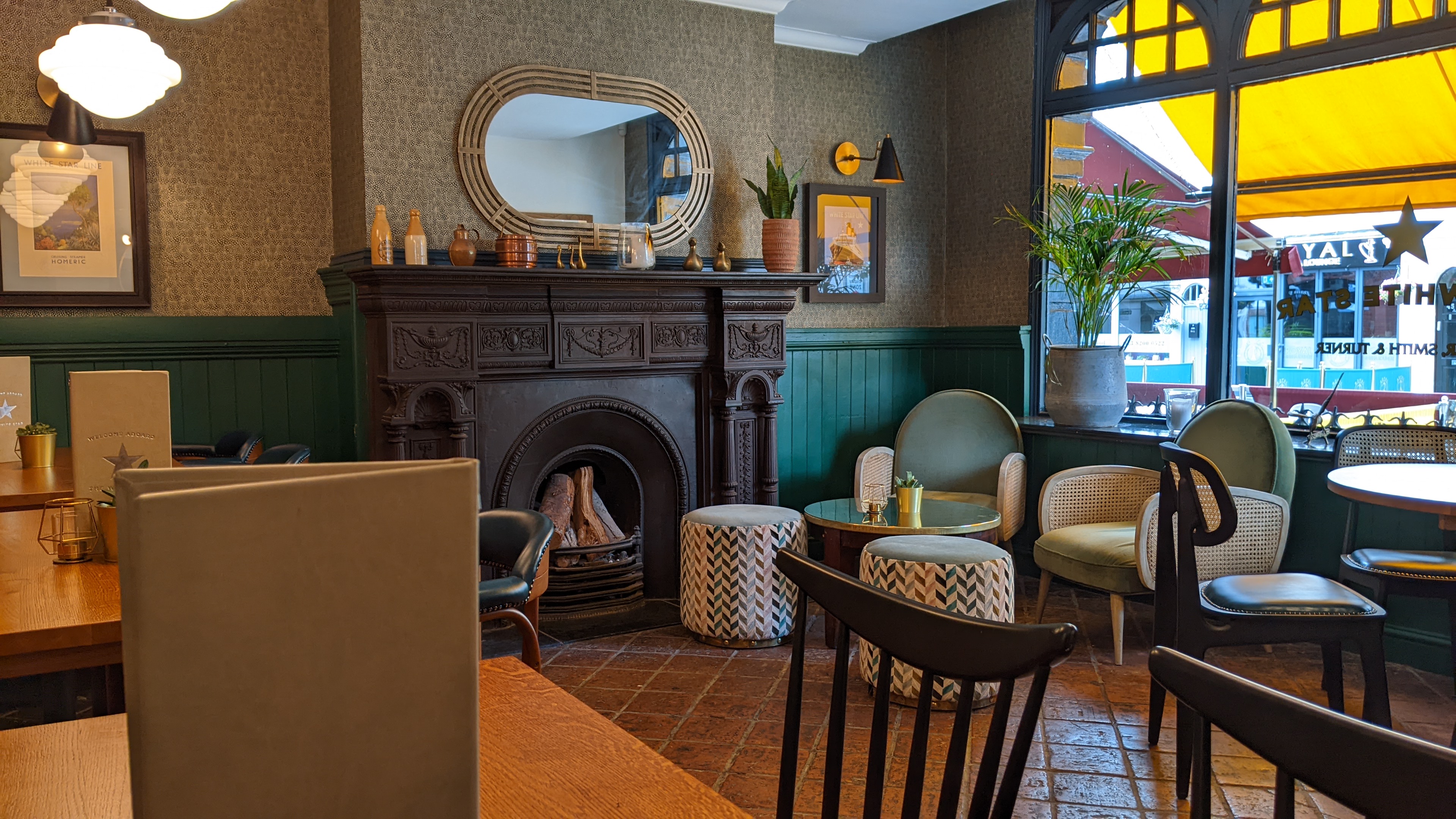
This traditional British inn on one of the most “lively” streets in the city is a real find. Only a short cab ride from the cruise ship pier, it is also not far from Sea City Museum which tells a captivating story of the Titanic. Be sure to make time to visit. There’s a casino just at the end of the street if that appeals to you.

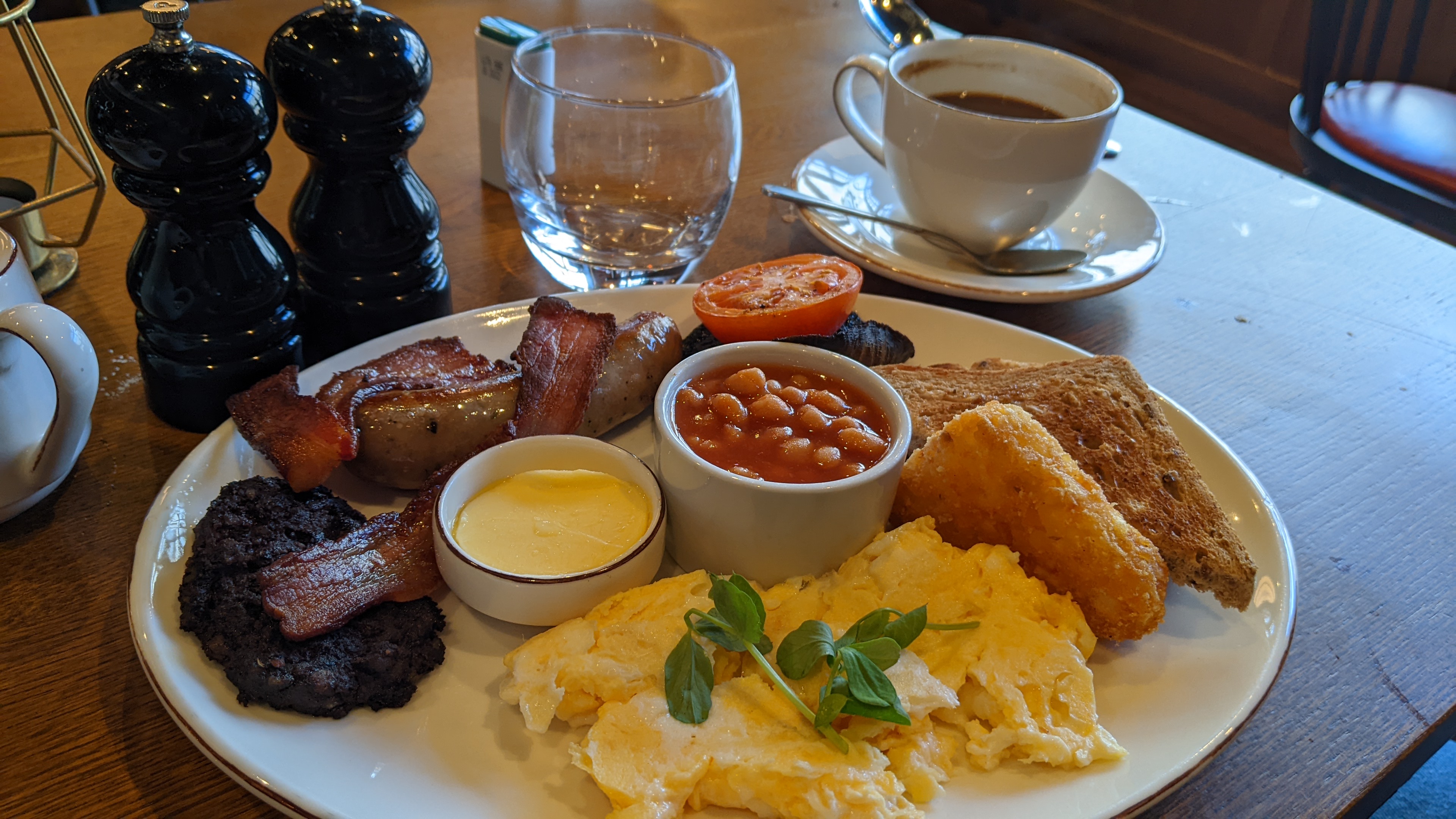
Guests are made to feel like family friends here, the English breakfasts are wonderful, and the pub fare is excellent for both small plates or complete dinners. The outdoor patio at The White Star is a perfect place to watch a passing parade of people. Oxford Street becomes a pedestrian-only avenue each afternoon, attracting throngs to its many pubs and nightspots.  

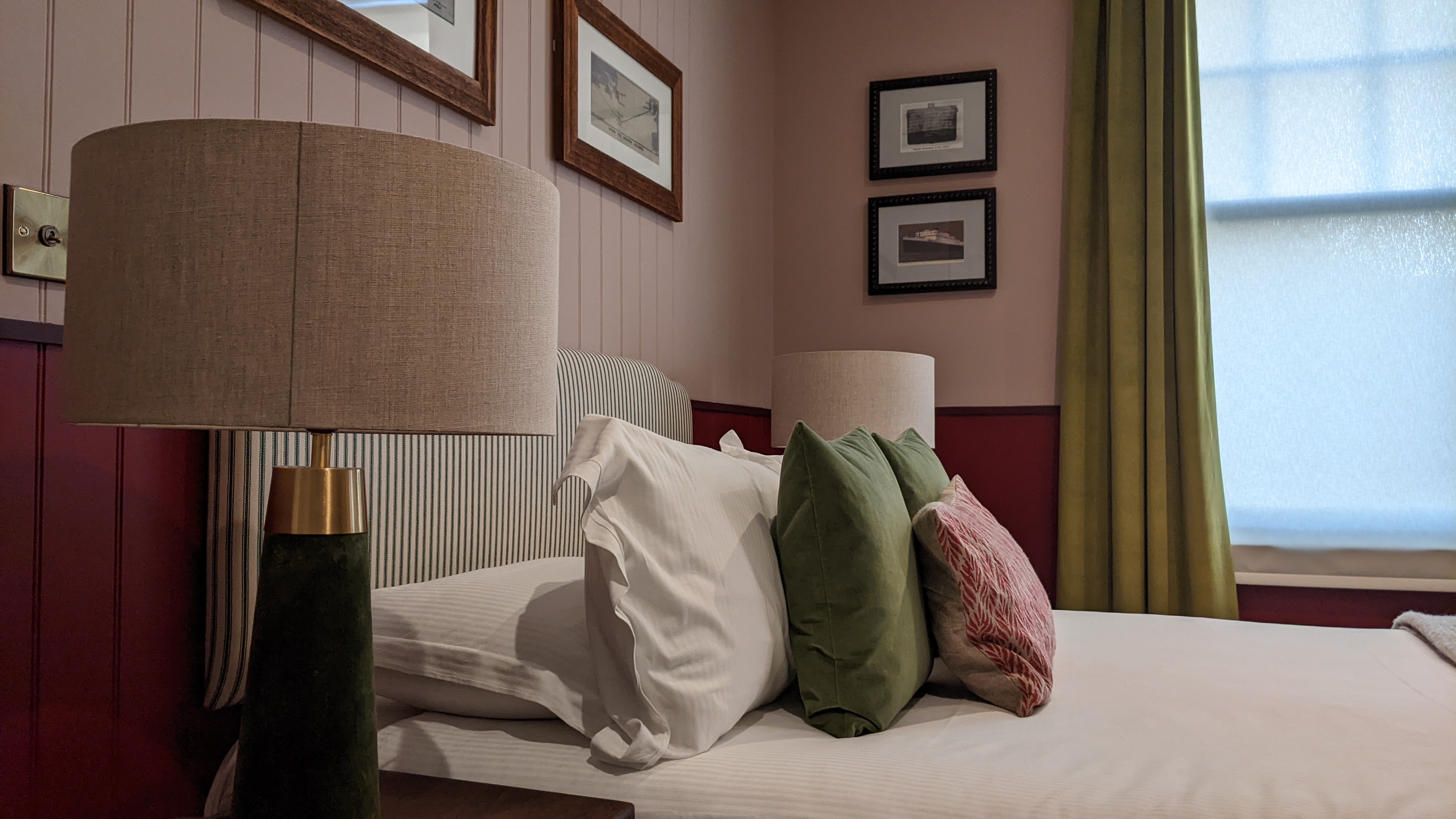
The one drawback – rooms are upstairs and there is no elevator, but attentive staff willingly tote bags up and down. True to its nautical theme, “cabins” are elegantly furnished and decorated, stocked with all necessary amenities and a choice of coffees and teas, along with a sampling of treats. Think biscuits and chocolates. Each floor also features a sitting room, replete with Titanic and seafaring memorabilia.

Hotel Ismael, Santiago, Chile

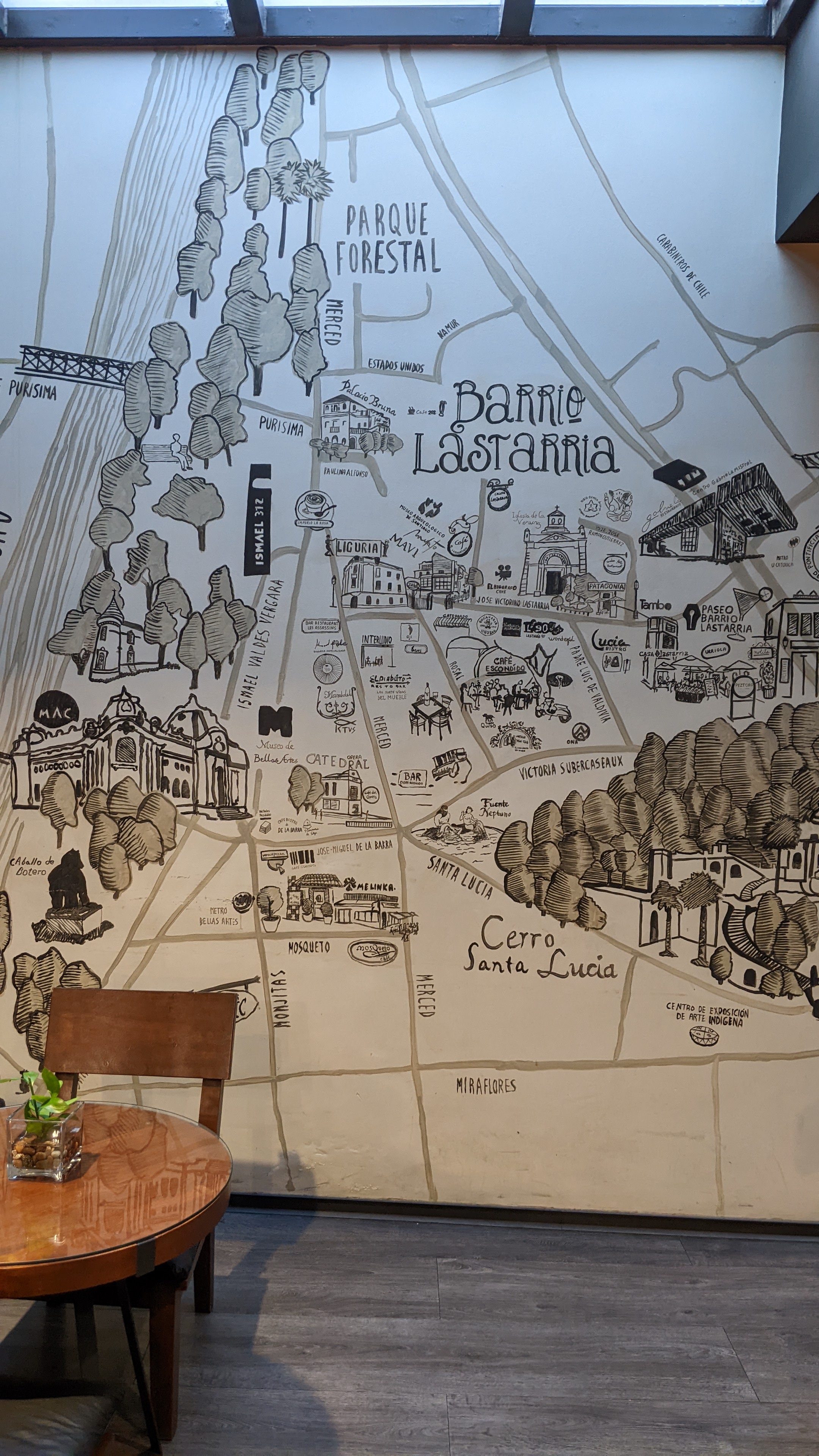
Located in the Lasterria neighborhood, this small contemporary hotel is across the street from Forest Park and near the National Museum of Fine Art, the Contemporary Art Museum, Plaza de Armas, Hidalgo Castle, and the Gabriela Mistral Cultural Center. We even walked to the funicular at Cerro San Cristobal for a ride up the mountain to a scenic overlook and Santiago’s famed mountaintop statue of the Virgin Mary.

I booked our stay via an online site, based only on photos and comments. And I couldn’t have been happier! I loved this hotel from the moment I first walked through the front door.

Hotel staff will recommend nearby eateries – and we especially enjoyed finding a local street bazaar where we could meet vendors and shop for bargains! The neighborhood is safe and charming, and we enjoyed two excellent dinners featuring Chilean specialties during a two-day stay before our scheduled Antarctica cruise.

Guests have access to a top-floor pool, and each room has a small balcony. A superb complimentary breakfast is offered each morning and staff will prepare a “to-go” breakfast for guests with early tours or scheduled transportation to the cruise port or airport. Just make your request the day before.

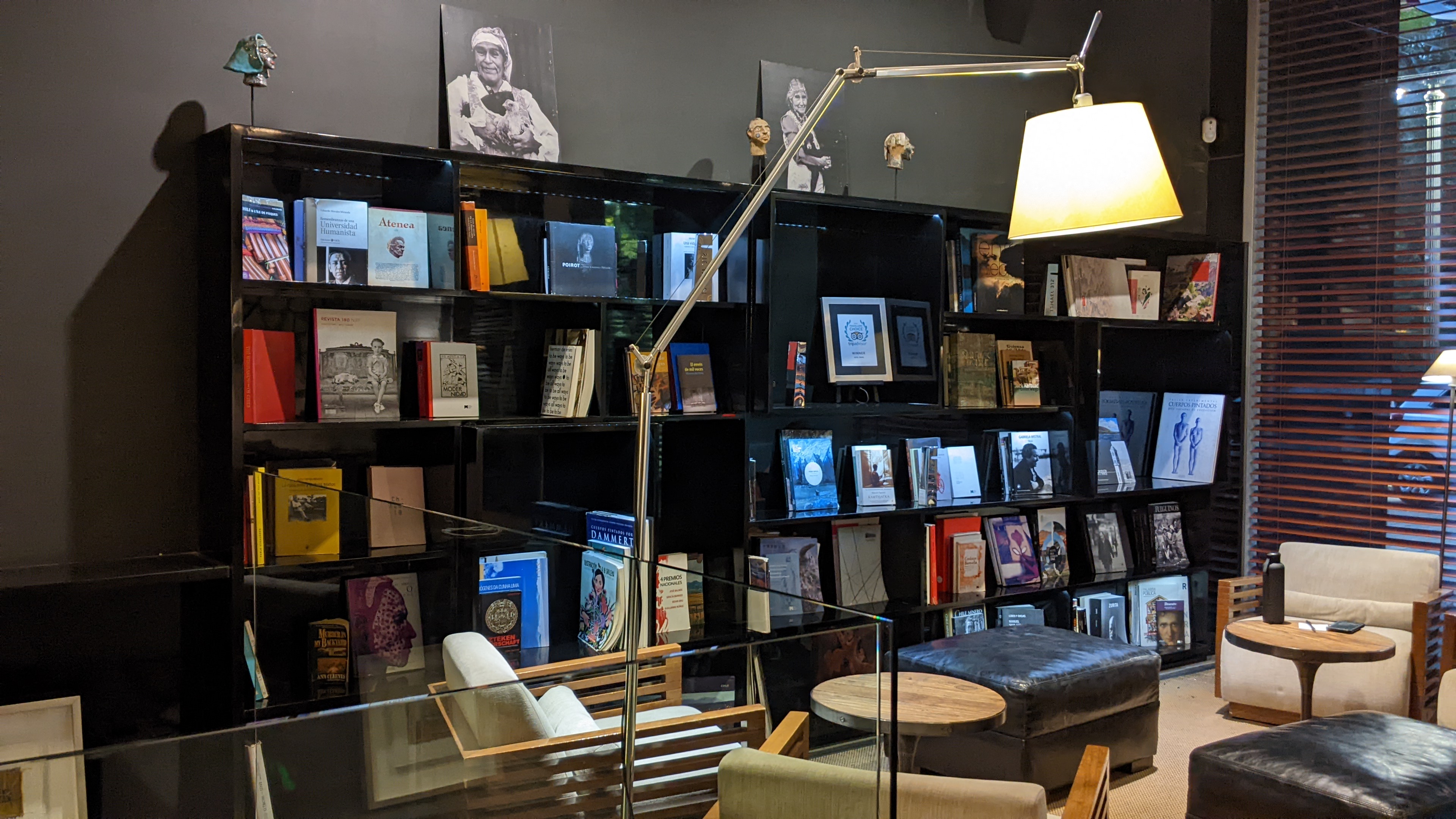
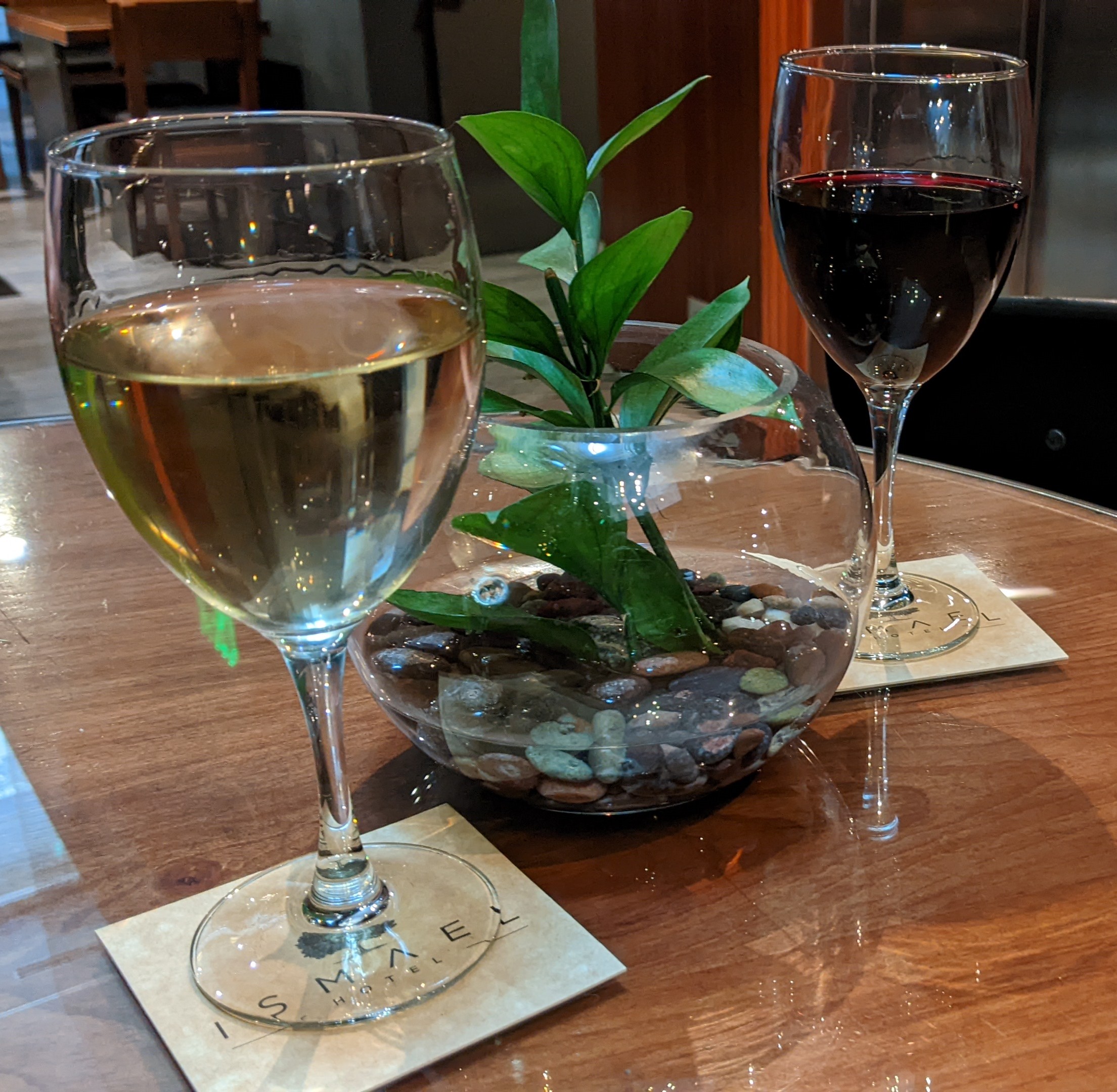
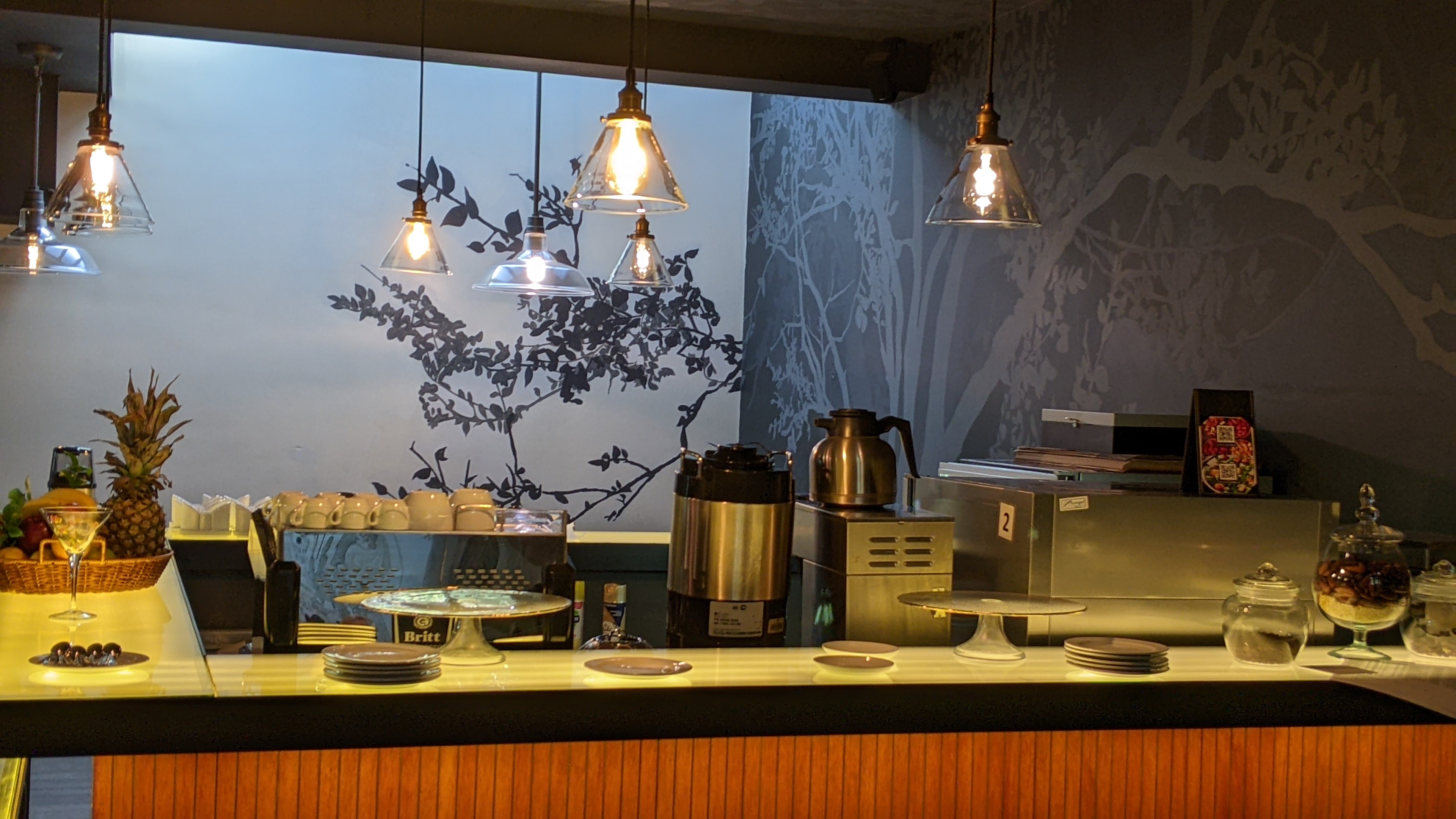
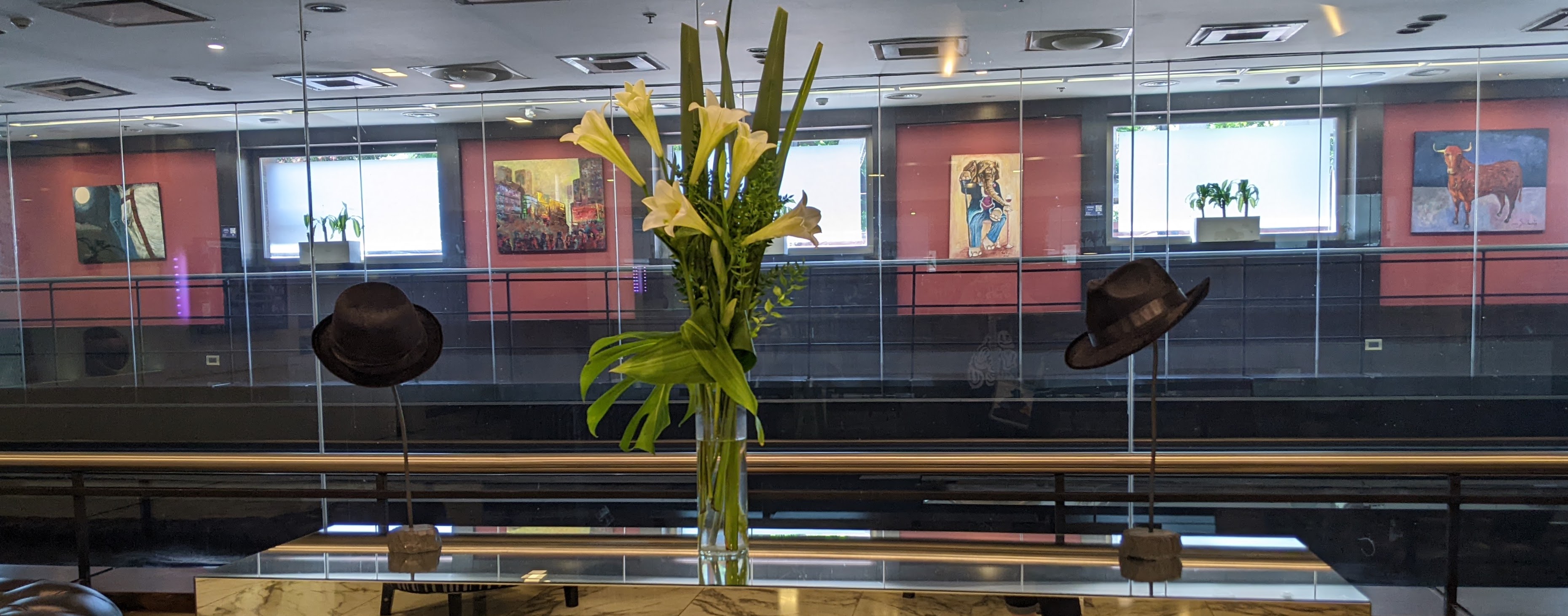
The lower-level breakfast space doubles as a cocktail lounge each afternoon. Simple canapes, served on request, accompany the wines and cocktails prepared by a congenial server. We took advantage of the opportunity to unwind after a busy day in the city, exchange sightseeing tips, or make dinner plans. The main lobby also features comfortable seating, interesting art and books, and is a friendly gathering place during the day.

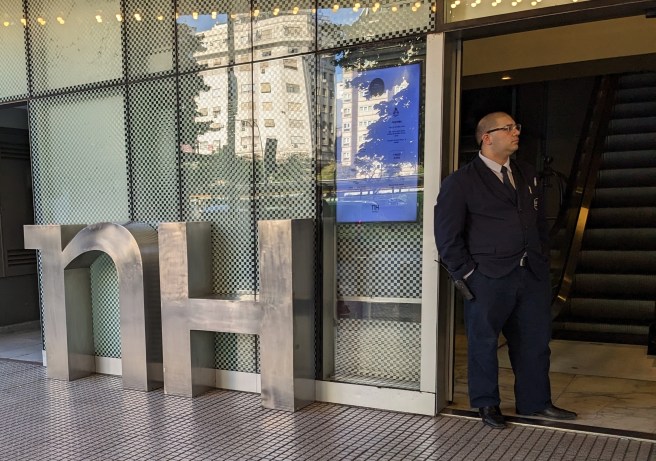
NH Buenos Aires Tango

Book a street-facing room at this sleek city center hotel and you’ll be rewarded with a “knock-your-socks-off” view of the towering obelisk at Plaza Republica just steps away in the heart of the city.

In addition, the location is next door to a lively Tango theater, just a block from the legendary Colon Opera House, and within walking distance of a park, fine shops, and local restaurants. City buses and tour buses, with convenient nearby stops, run regularly, and cabs are readily available.

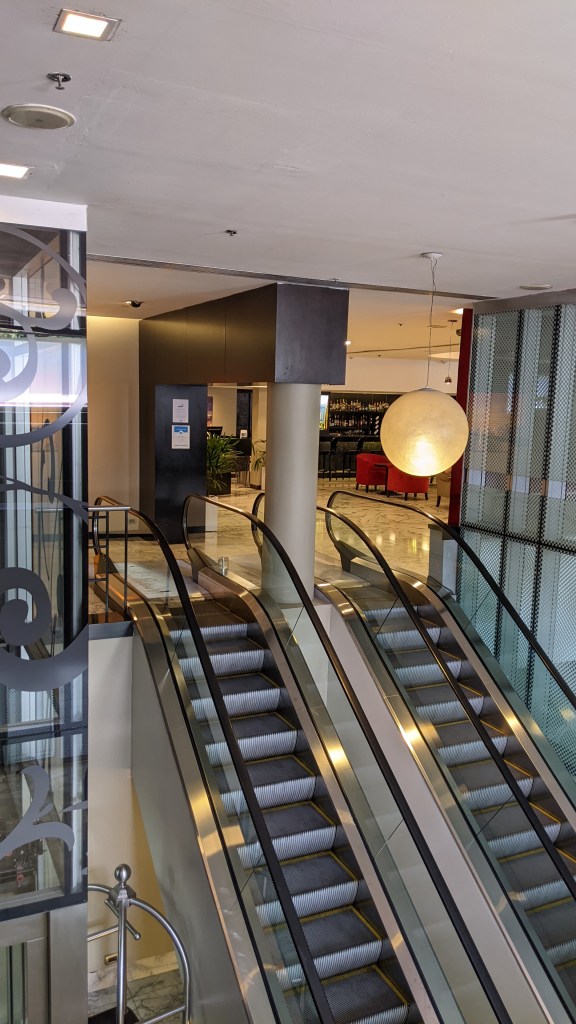
Street-level glass doors open to modern escalators that whisk visitors to the second-floor registration desk. From there, guest rooms are a short elevator ride away. The contemporary art-filled lobby space is a combination sitting room, cocktail lounge, and reading room where guests may order snacks, wine, and bar drinks throughout the day. Business travelers will appreciate available work spaces, meeting rooms, and access to audio-visual aids. The hotel also has a fitness center with multiple machines, and guests have access to a sauna and massage services.

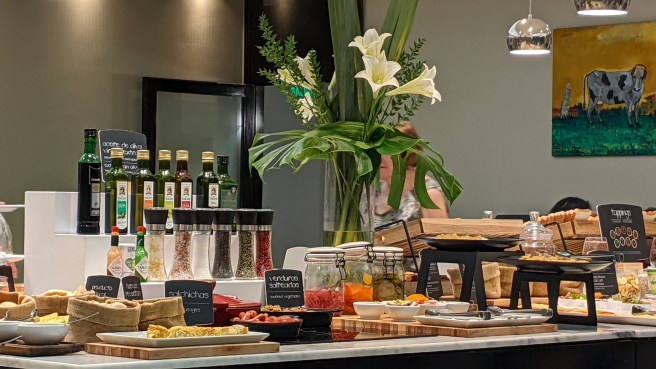
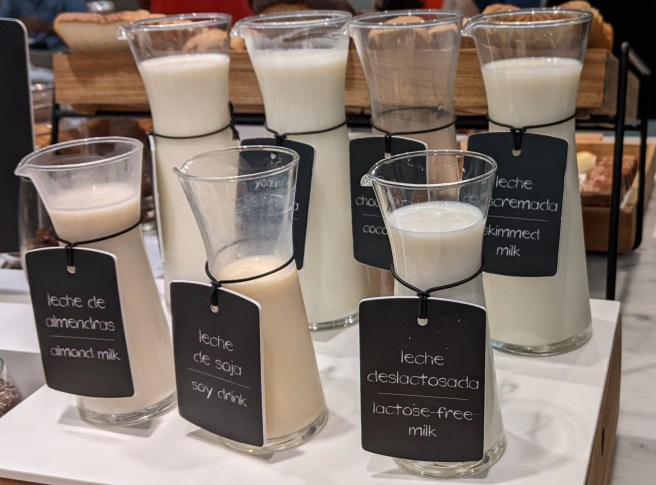
Bountiful breakfast buffets in the full-service dining room include hot and cold options, fresh fruit and juices, breads, baked goods and a variety of yogurts and cheeses, with cooked-to-order omelets also available. In the evening, the room becomes the dinner venue, with choices ranging from pizza and burgers to steaks, seafood and international favorites.

Hotel staff couldn’t be more attentive and will help with directions, call cabs, recommend tours, or book restaurant and show reservations. Just ask.

And that view? Well, it’s mesmerizing day and night. And so is the traffic just below on Ave. 9 de Julio!

Barclay Hotel, Vancouver, British Columbia

This little gem has a striking canopy at the front door, and an elegant set of marble stairs leading to the lobby and reception desk. A retro gem of a building with an address that’s convenient to Stanley Park and Pacific Centre Mall, there is nothing particularly notable about the Barclay aside from its pricing in a city known for high hotel prices.

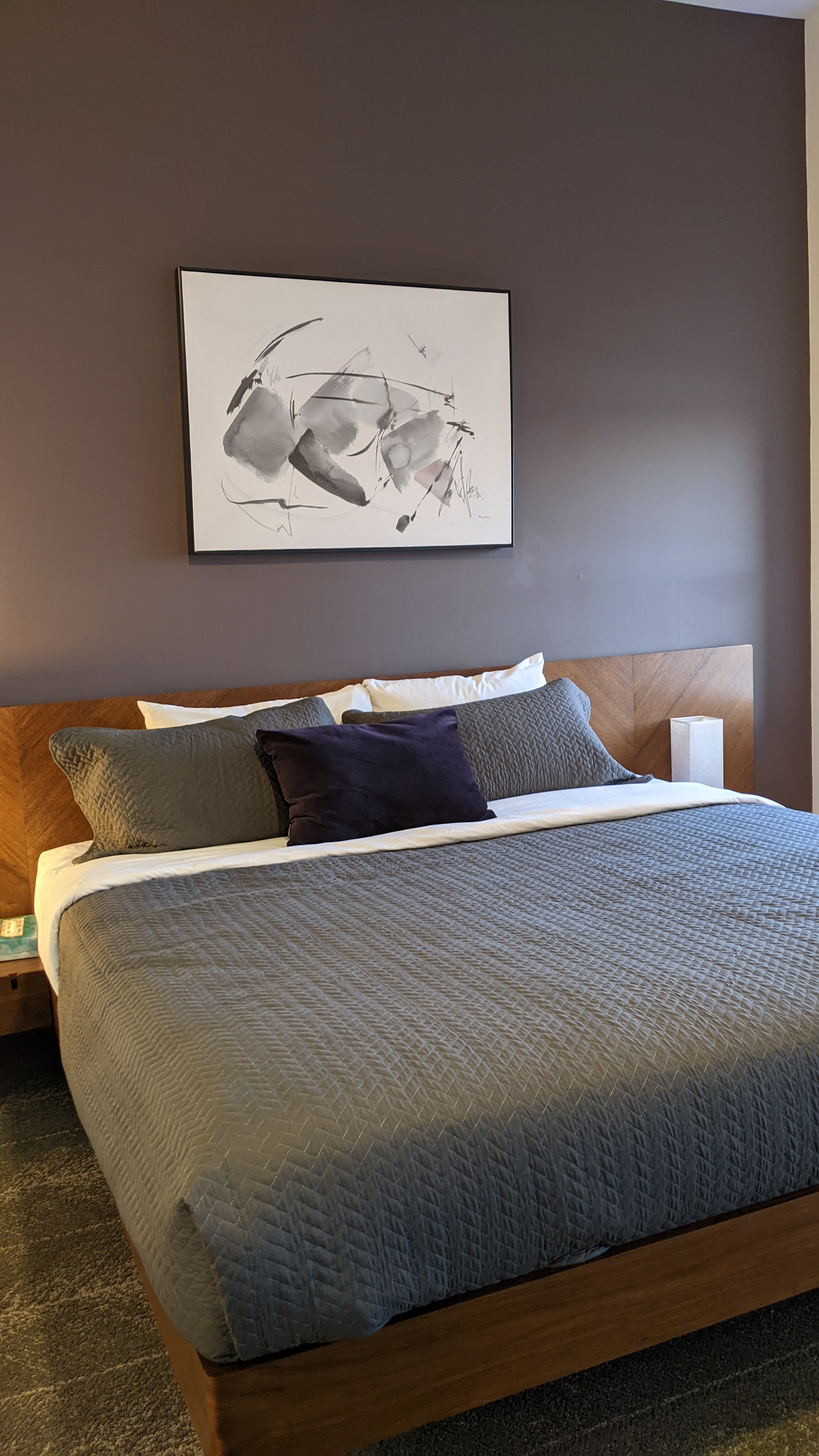
There are no coffee machines in the guest rooms and little seating in the lobby, but the location is superb. It’s a no-frills place, but it’s spotlessly clean, comfortable, and friendly.

Be forewarned, you must navigate the stairs to upper-floor rooms. But book a first-floor accommodation and you’re all set. My stay was for a single night before a cruise, and I enjoyed it immensely. The Uber fare to Vancouver’s Canada Place, the city’s immense and busy convention center and cruise port, was just over $10 including gratuity.

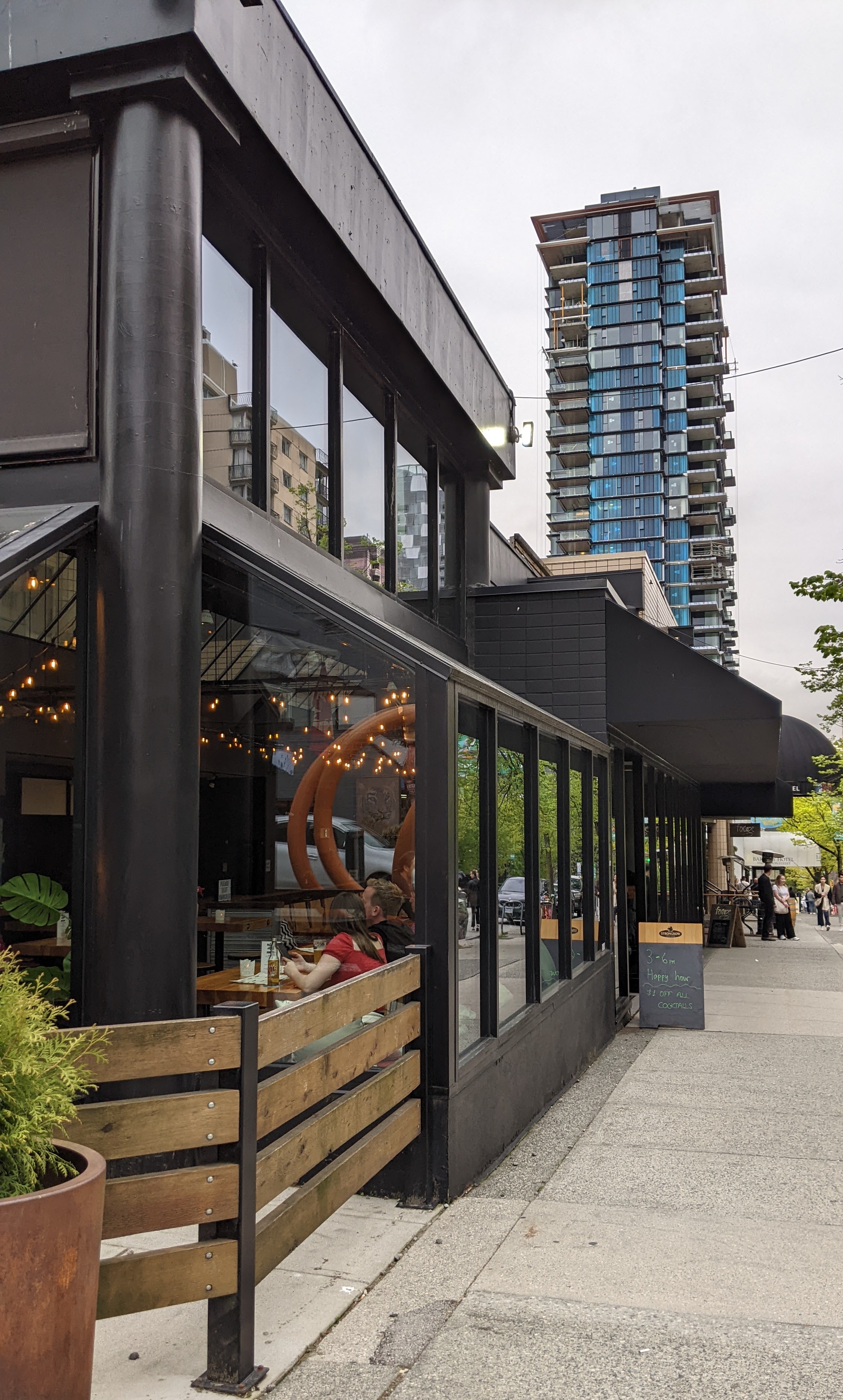
 An informal neighborhood bar and eatery, The Jervis Joint, is just steps away. There I ordered small bites and enjoyed a generous glass of wine while I watched the comings and goings of neighborhood residents. And this is a neighborhood – young professionals stopping in for an after-work drink with friends, couples out for an early date night, young families pushing strollers or walking with toddlers, and others stopping to chat with shopkeepers.

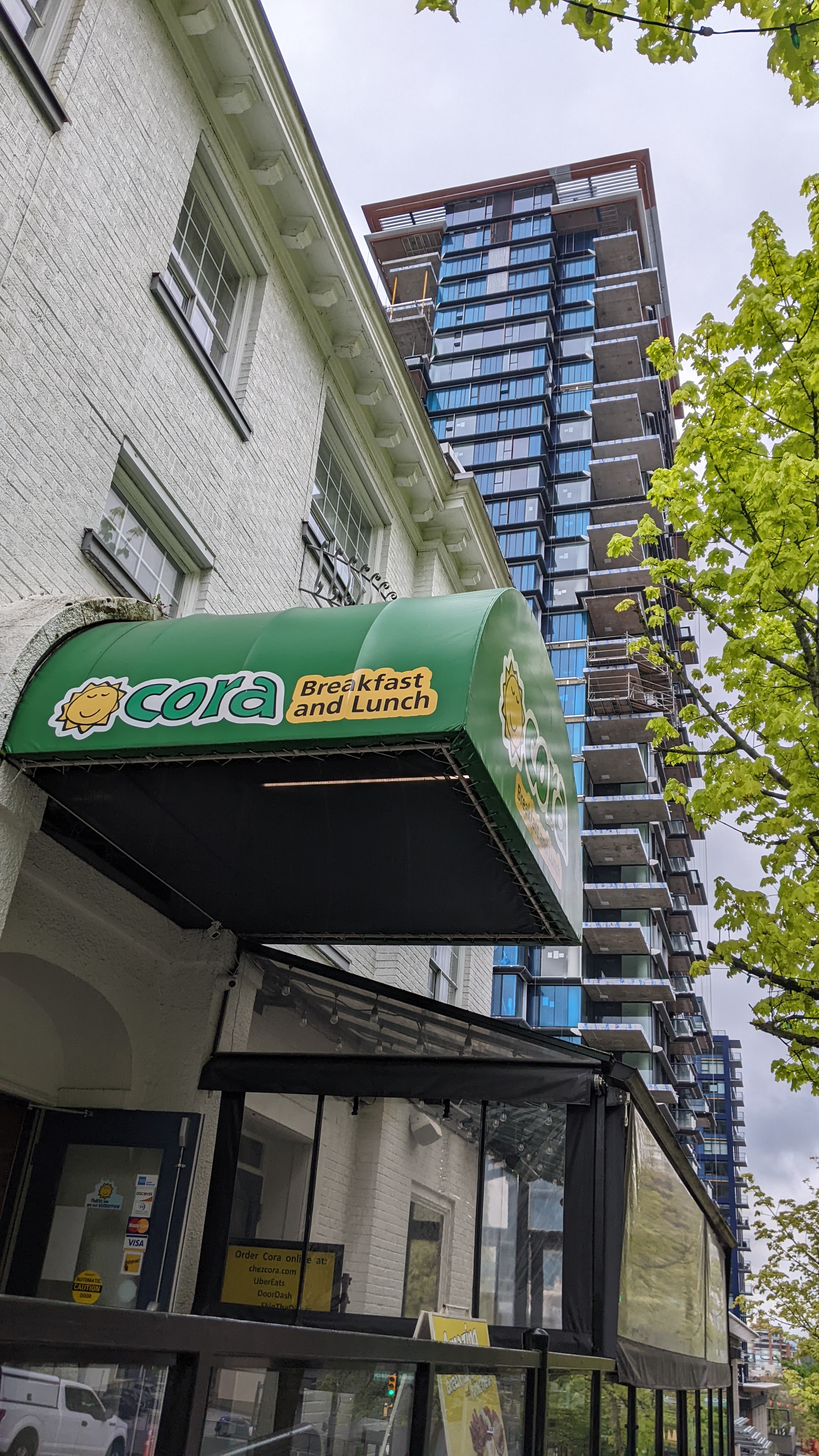
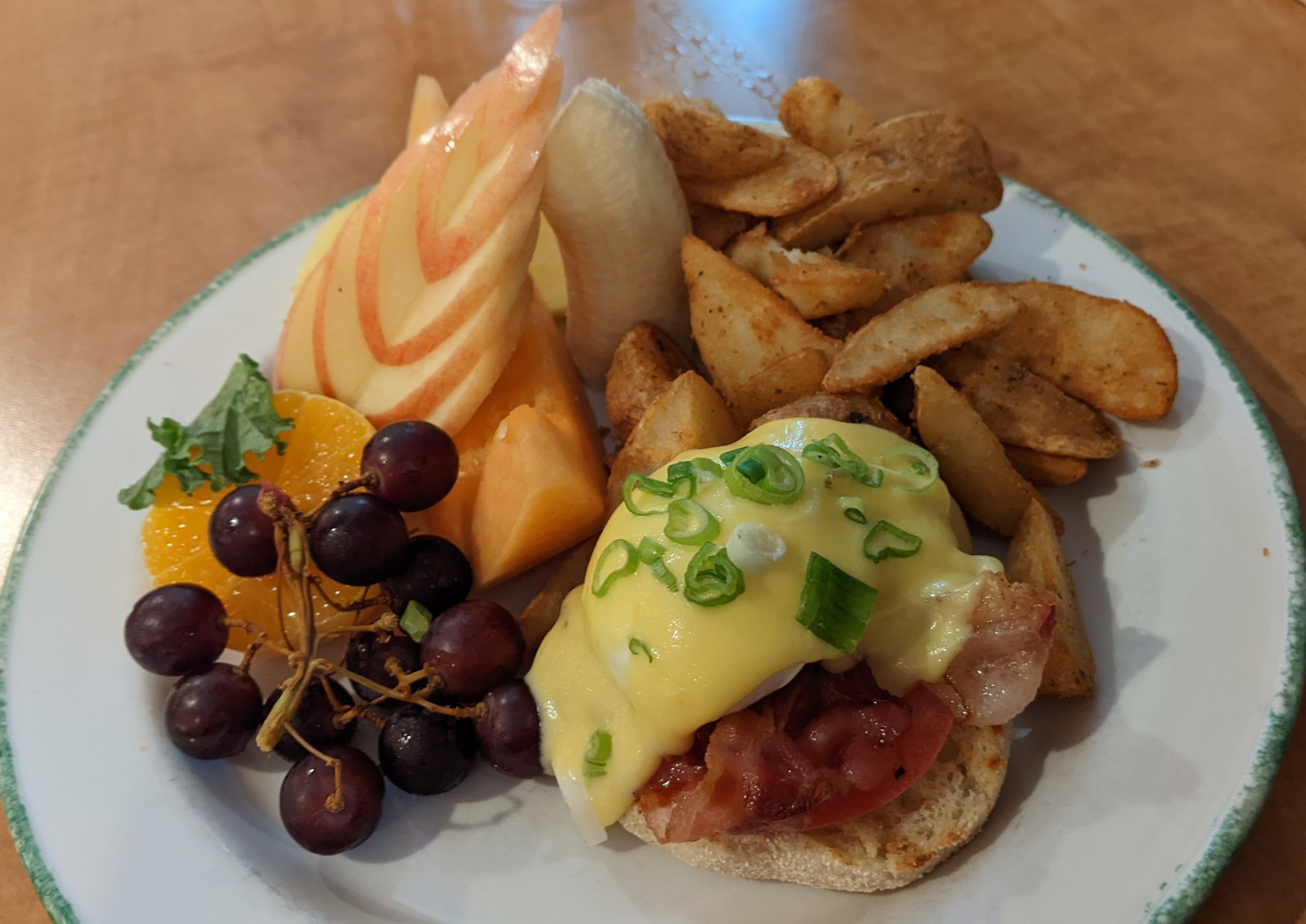
There are also some pricey restaurants nearby, fresh flower stalls across the street, and an Asian grocery that sorely tempted me. The next morning, I enjoyed the best breakfast I have had in years, starting with a fresh fruit smoothie, at Cora on Robson Street, next door to the Barclay. Everyone I asked recommended it, and I heartily endorse it. When I returned to Vancouver several months later, I tried to book a second stay at the Barclay. Alas, there were no vacancies for my required dates. So, my recommendation is to book early.

The Met Hotel, New Westminster, British Columbia

Did you know that New Westminster was once the capital of British Columbia? If you’re a history buff, you’ll want to explore this riverfront village with a history that dates to 1858, when it was the outfitting point for prospectors arriving to the Fraser Gold Rush. They set out from there to seek their fortunes upriver.

New Westminster was designed to be “a second England on the shores of the Pacific.” Richard Clement Moody attempted to build “a city of beauty in the wilderness” and New Westminster was styled to reflect British domination. Now part of greater Vancouver, it was once known as “The Royal City.”

Although this was my second choice for a second overnight stay in Vancouver, there is nothing “second-rate” about The Met! The hotel is charming and comfortable, particularly pleasant for a single traveler. Because there is no main-floor lobby, The Met boasts sitting areas with comfortable seating to serve the handful of guest rooms on each floor. As comfortable as the guest rooms are, it’s nice to have that extra space to meet and talk with other guests. Besides all that, the price is right. Adjacent to the hotel on street level are a pub/restaurant and a liquor store. How convenient is that?

The terrible fire of 1898 destroyed the downtown area, and the city had a hard time recovering from the devastation. The Met Hotel is one of the few downtown buildings to survive the fire.

New Westminster Today

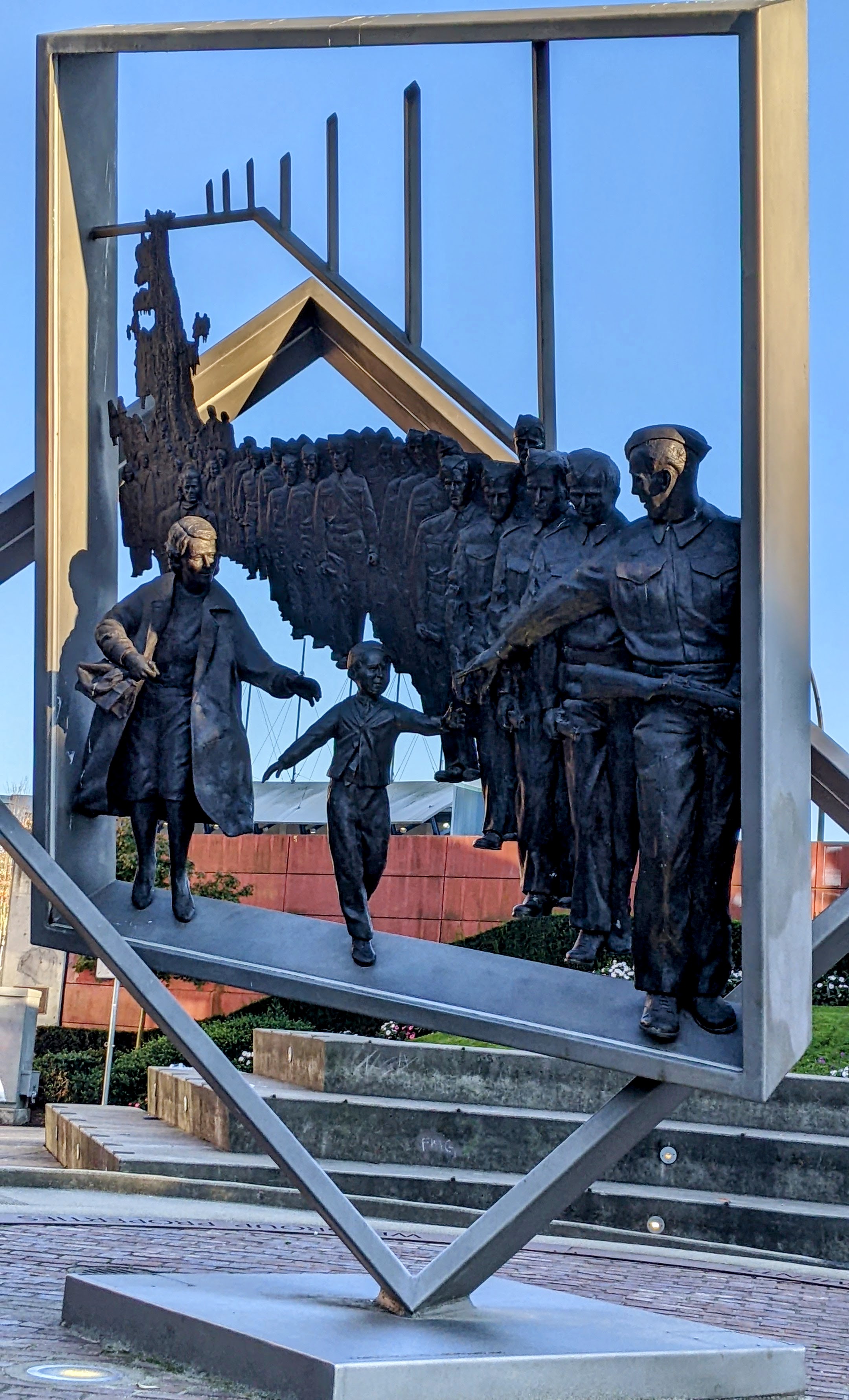
Columbia Street was the former “golden mile” of the city, and the Met Hotel is at its heart.  On a walk about the area, I was enchanted by the juxtaposition of old and new, weathered brick buildings standing proud alongside steel and glass skyscrapers. I spent some time at Westminster Pier Park and was struck by the poignancy of the sculpture that depicts servicemen off to War. “Don’t go, Daddy” is the title of the piece.

A second major fire raged through Columbia Street in 2013, displacing 30 businesses and further damaging the street’s historic character. However, new construction, including the $25 million Westminster Pier Park, a new civic center and an office tower named The Anvil Centre have breathed new life into the area.

New Westminster lies 15 miles south of Vancouver, adjacent to Burnaby and Coquitlam, on the north bank of the Fraser River. It was the largest city in Mainland British Columbia until Vancouver’s population grew during the first decade of the 20th Century. Surrey is on the other side of the river. The city has changed greatly over time, but I found the new New Westminster to be a decidedly great place to spend an overnight.

The Brown Hotel, Louisville, Kentucky

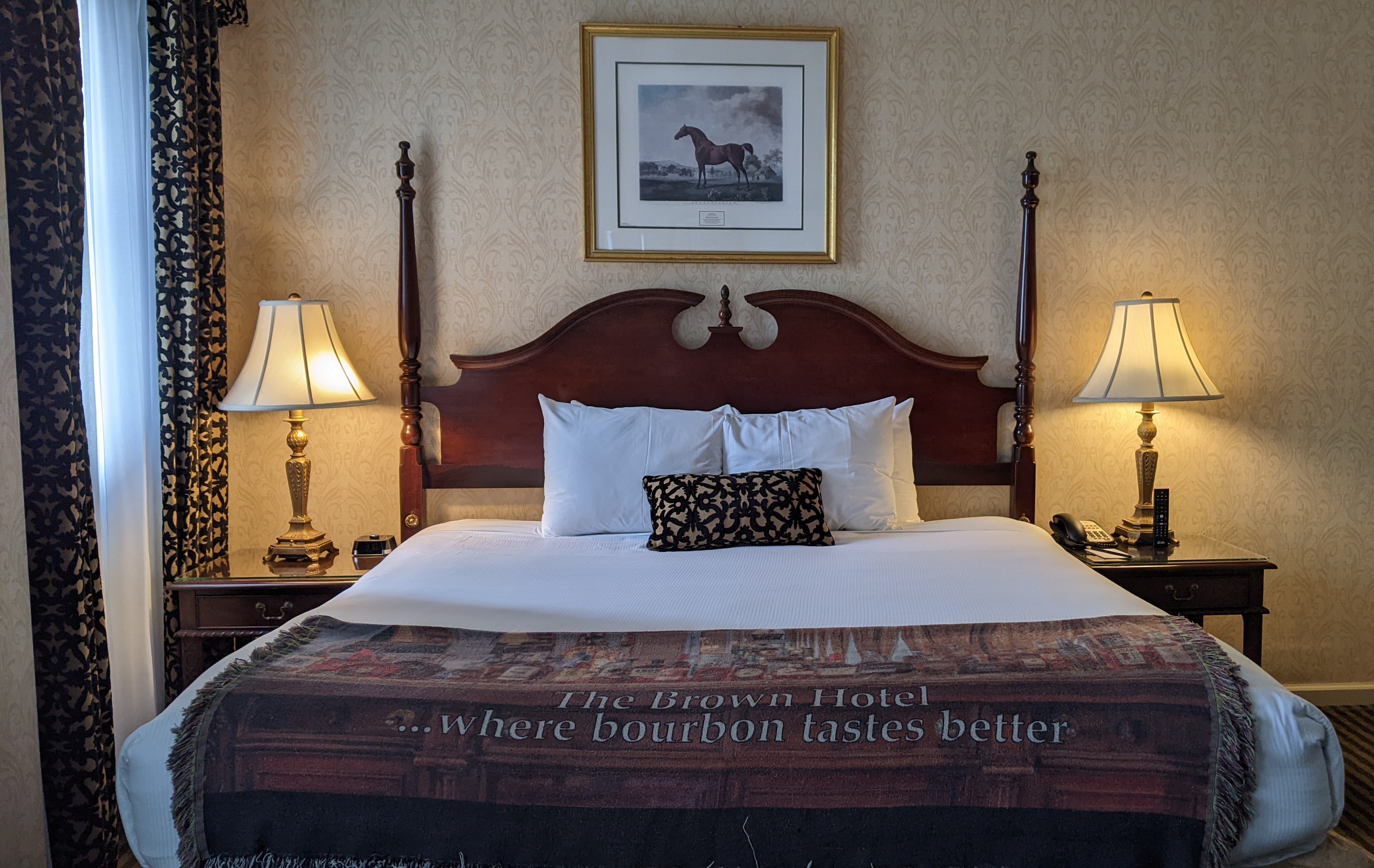
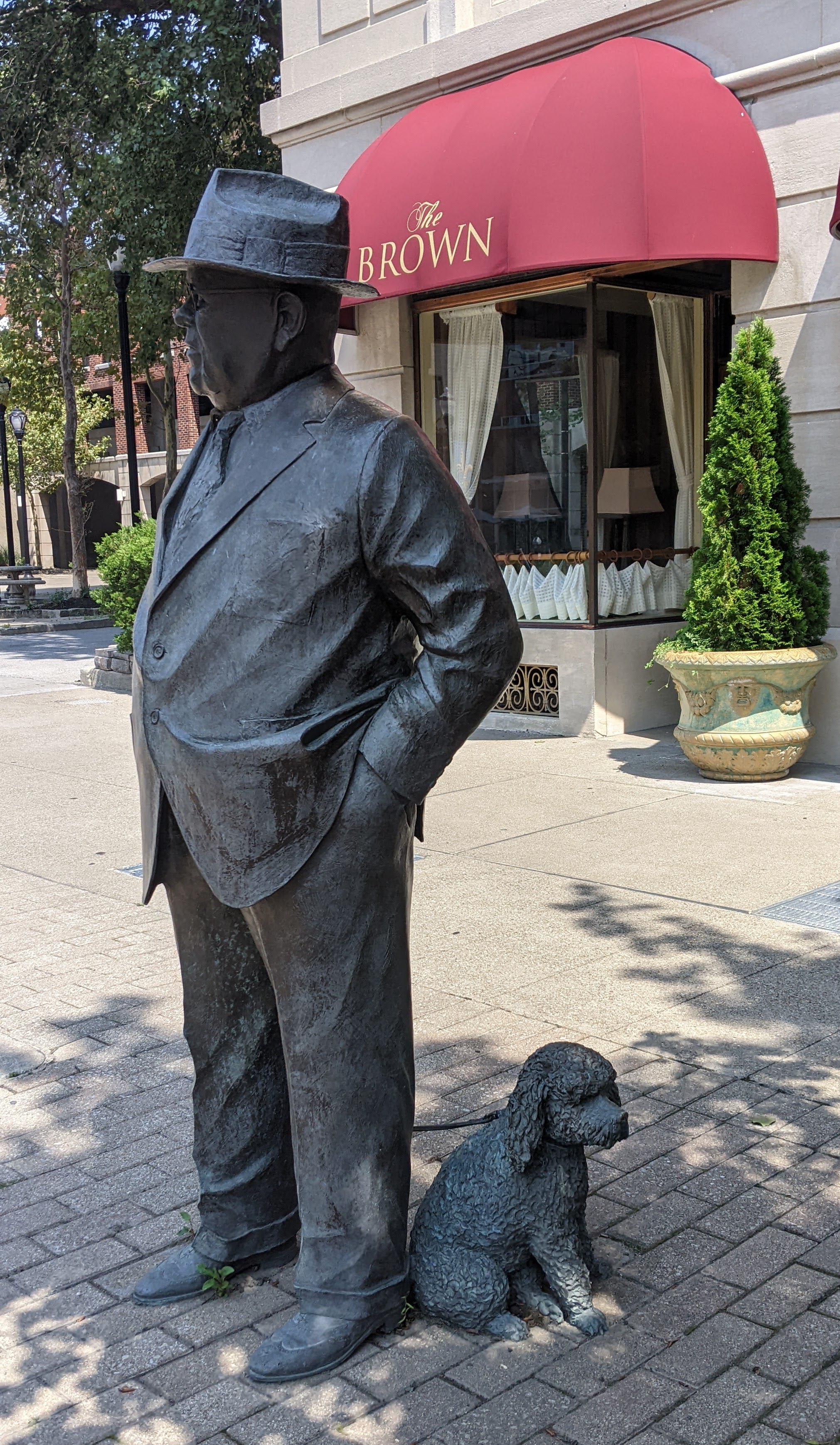
This is a traditional hotel that is quite out of character for me. It was selected by American Cruise Voyages as the location for complimentary pre-cruise stays included with passage on a riverboat itinerary from Louisville to St. Louis. My one-night stay at The Brown was an exceptional experience, from the service to the breakfast to the bar drinks, including seamless check-in and speedy checkout.

I now understand how The Brown Hotel has maintained its popularity for the century it has been in operation. It’s on par with other top names in the hospitality world: The Peabody in Memphis, the Biltmore in Coral Gables, Adolphus and Melrose Hotels in Dallas, and Hotel Galvez, now the Grand Galvez, in Galveston. These grand hotels, and others of this caliber worldwide, are worth a visit, if only to enjoy a drink at the bar!

Yes, The Brown is that good. It’s grand, to be sure, but it’s also comfortable and inviting, a calm place for a restful night’s sleep, with inviting spaces to enjoy a cocktail or a meal. There is plenty of comfortable seating for conversation or quiet time with a book, and its location is superb for exploring the city.

This is what a classic hotel should be. The Brown is nothing if not classic, and I hope it lives on for another 100 years, doing exactly what it does best: pleasing its guests.

IBIS Hotels

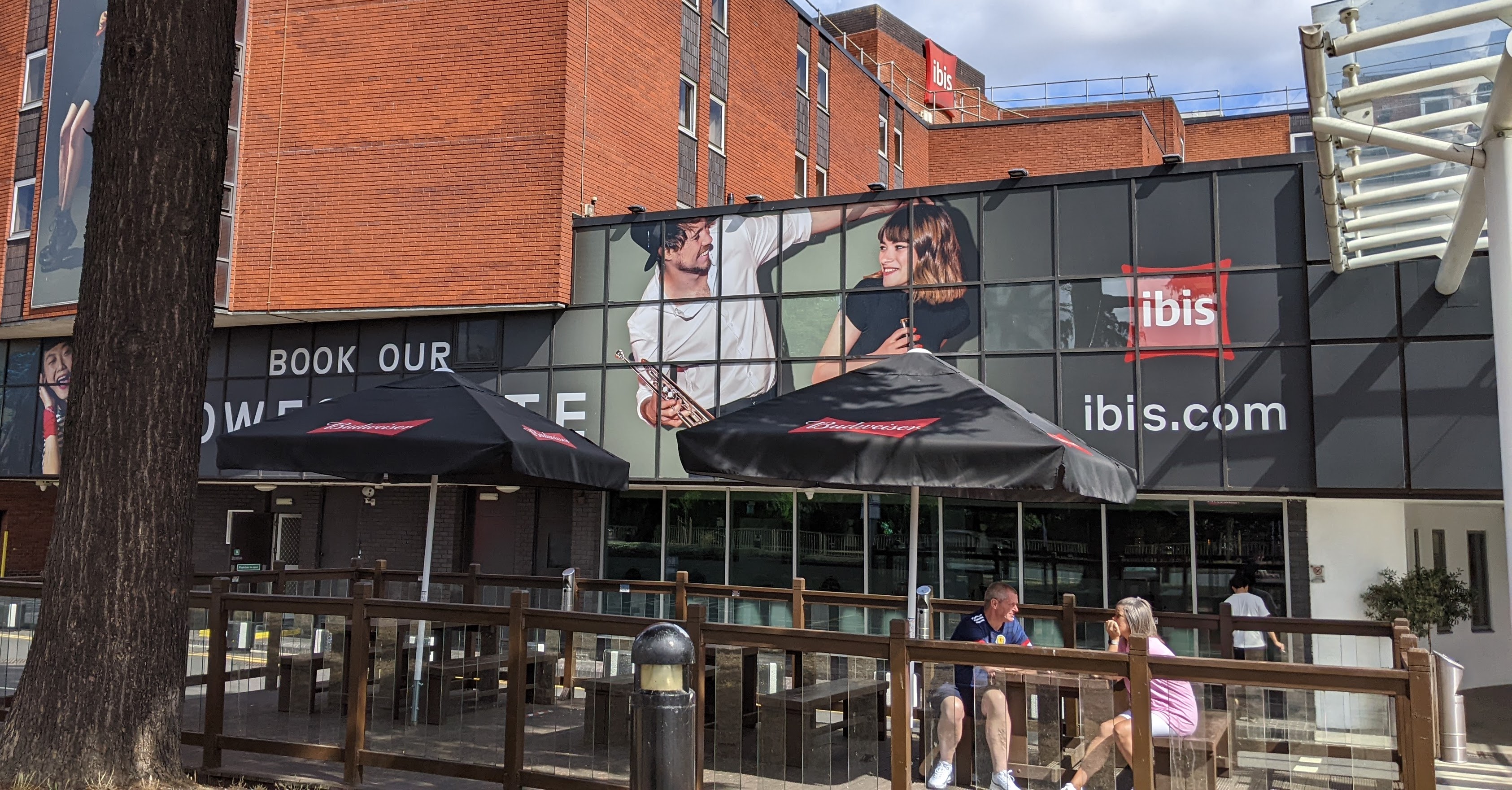
The final entry on my current roster of hotels to love breaks many of my own rules. Owned and managed by the French hospitality chain Accor, the Ibis brand is found across the globe.

Conveniently located, sustainable, and eco-friendly, with bright contemporary spaces and edgy, modern décor, the simple red and white sign is easy to spot. Ibis Hotels are consistent in terms of accommodations, service, and amenities.

Efficient Wi-Fi and 24-hour front desk staffing are bonuses that I appreciate, along with extended breakfast hours. In most locations, cocktails and snacks are available throughout the day. Other perks: Expedited check-in/check-out and the ability to securely store luggage, if necessary, before check-in and after check-out — a boon to the business traveler.

Rooms are small and spare, modern, uncluttered, clean, and comfortable. Service, whether at London’s busy Heathrow Airport or when arriving late at night in Setubal, Portugal, is always cordial and efficient. Breakfast buffets are bountiful, to say the least, with American favorites and local options, and unlimited coffee.

If travel is on your horizon, do some initial homework to find a hotel that will surprise and delight you. In an unfamiliar city, a wonderful hotel becomes your retreat, even if your stay is only for a single night. Just know that the time and effort spent to find a hotel that you will not only love but one that beckons you to return is always worthwhile.

Lafayette: A Feast for Spirit & Soul

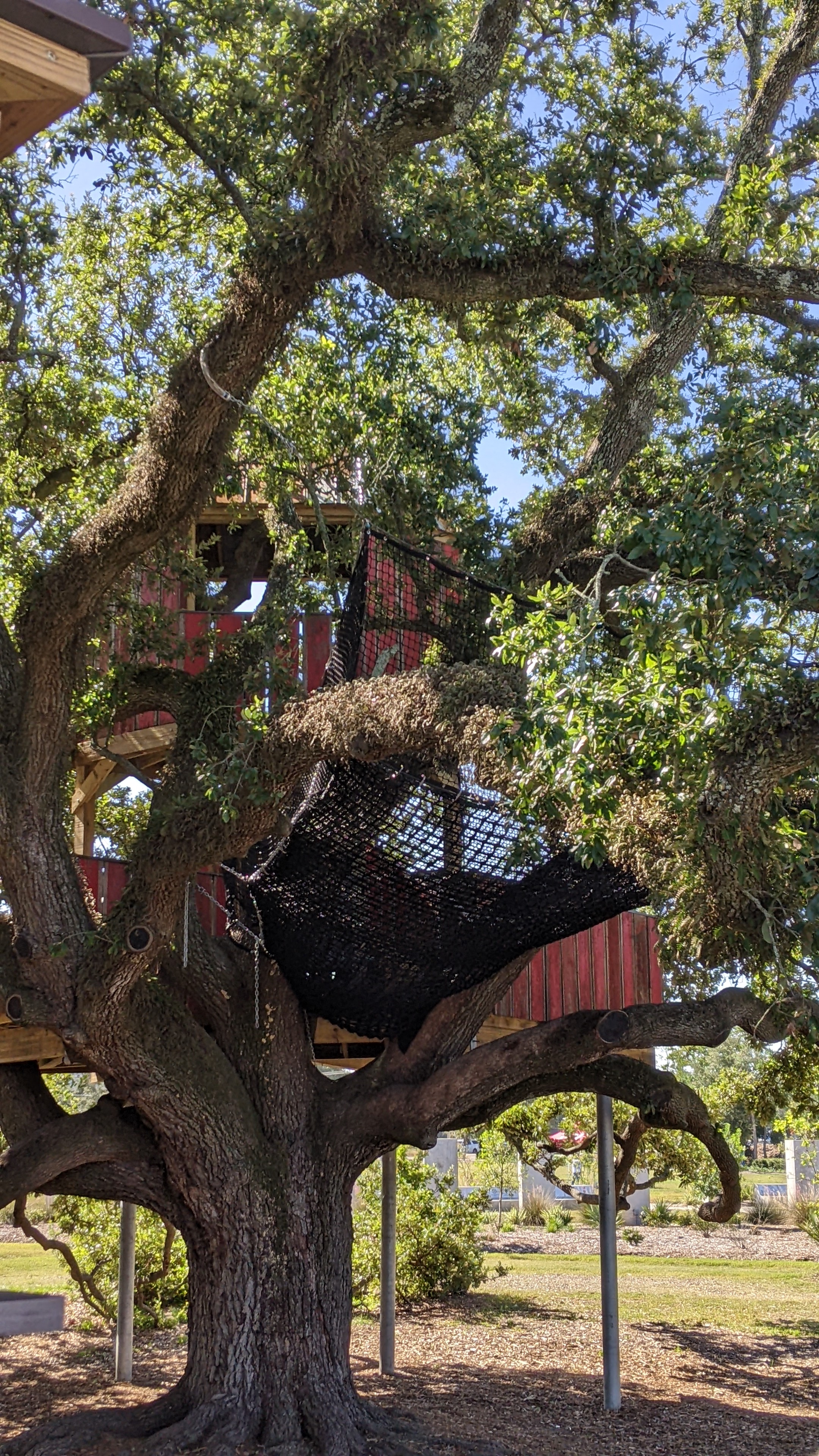
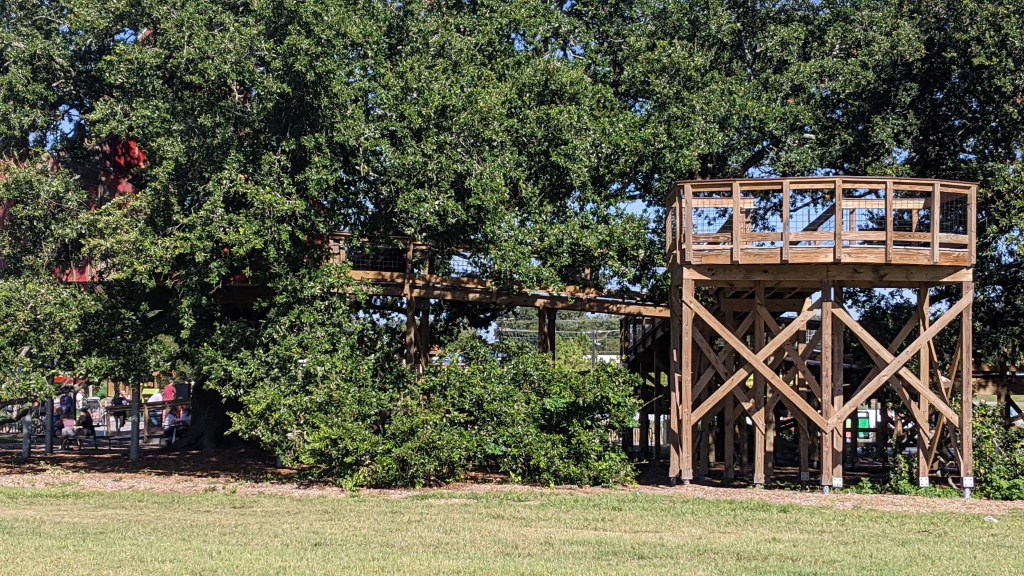
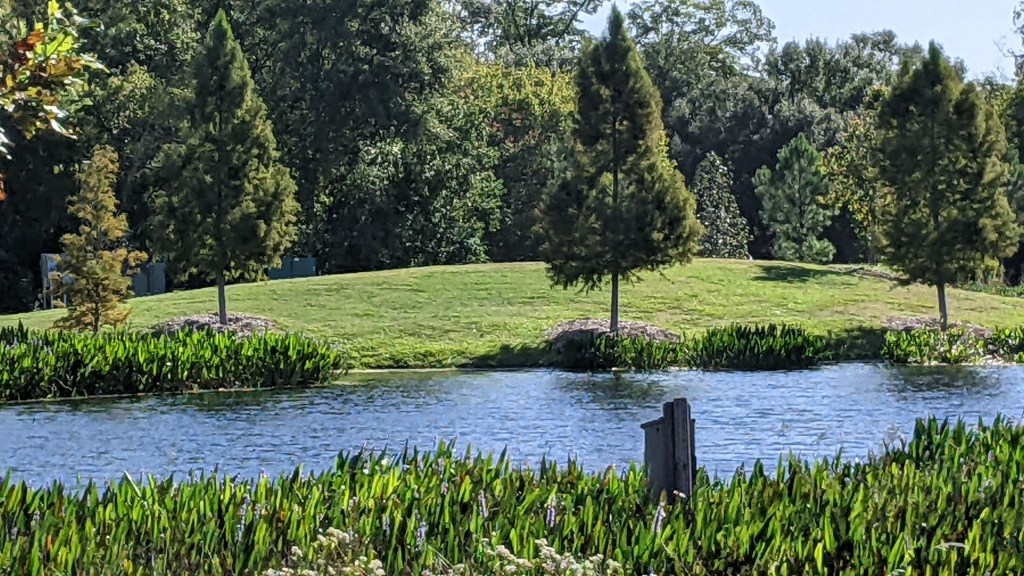
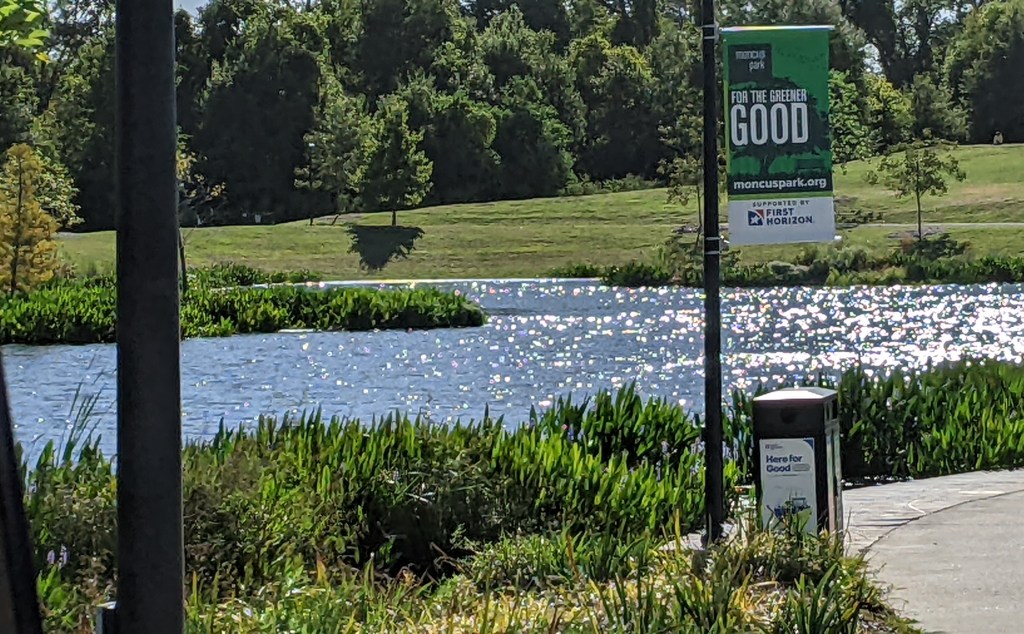
Hidden in the trees of Moncus Park in Lafayette, Louisiana, is a faded red treehouse constructed with lumber salvaged from a former horse barn on the property. It adjoins a children’s play area, but it’s almost hidden from view along the

paved walking path that meanders through the property. I’m sure that makes it all the more enticing for the children who choose to climb the ladder and walk the swinging elevated course to reach it.

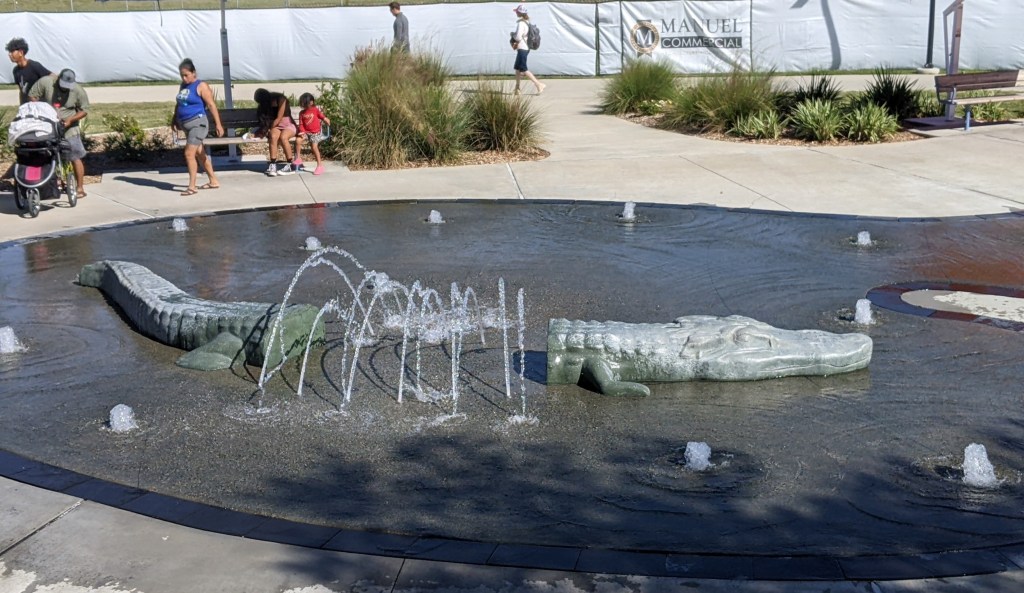
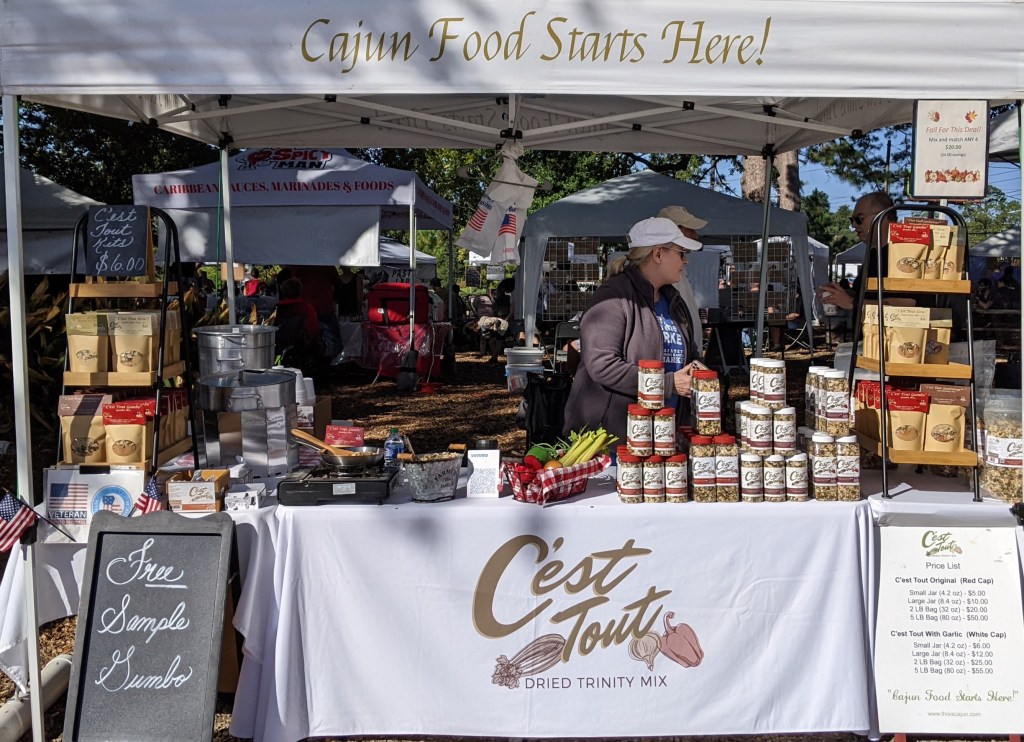
On the day we visited, the park was filled with people. Some, like our group of travel writers from diverse locations, had first visited the thriving adjacent outdoor Saturday Market, overflowing with food and crafts vendors every week throughout the year. This past summer, the market celebrated its 10th anniversary with the ringing of the Durel Bell.

The sun shown brightly on this mid-October day, and the park was alive with activities to attract young and old alike.

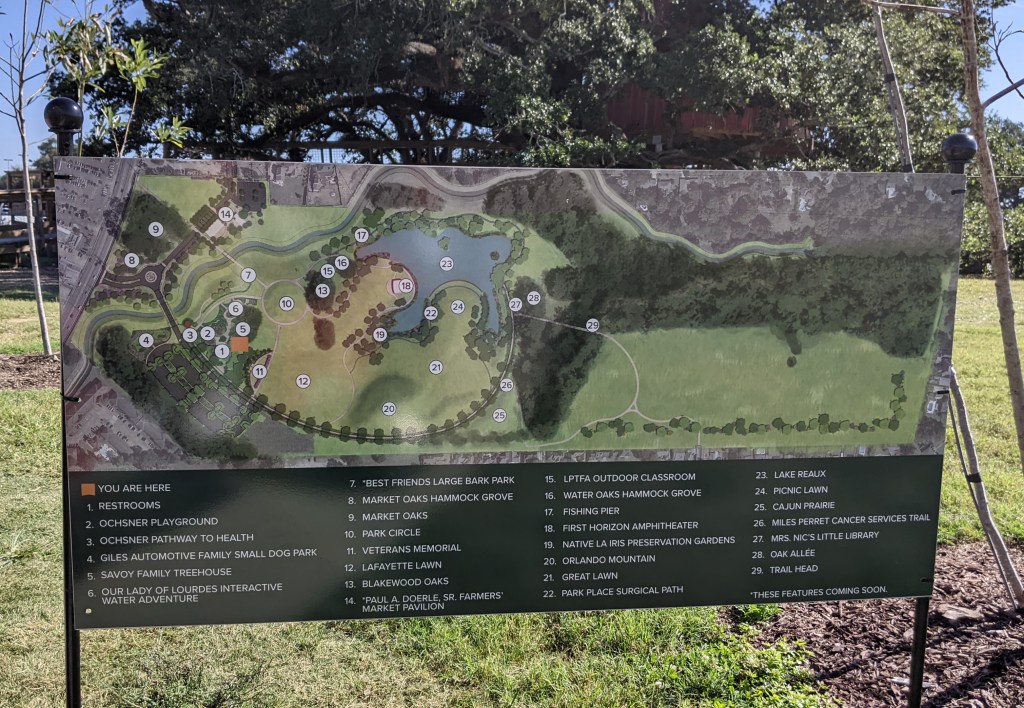
Some, accompanied by leashed dogs, were out for serious exercise in the beautiful surroundings while others simply enjoyed the various trees and plants on the rolling hills of a well-planned natural enclave that was once a horse farm. The park, operated now by a non-profit organization, was designed and built “by the community, for the community,” according to Kaylie LeBlanc, assistant vice president for communications of Lafayette Travel. One of the unique features is a 63-foot high hill, the highest point in Lafayette Parish! Development was begun in 2018, fueled by an initial $6 million grant. Now, a membership program funds ongoing park development and programming.

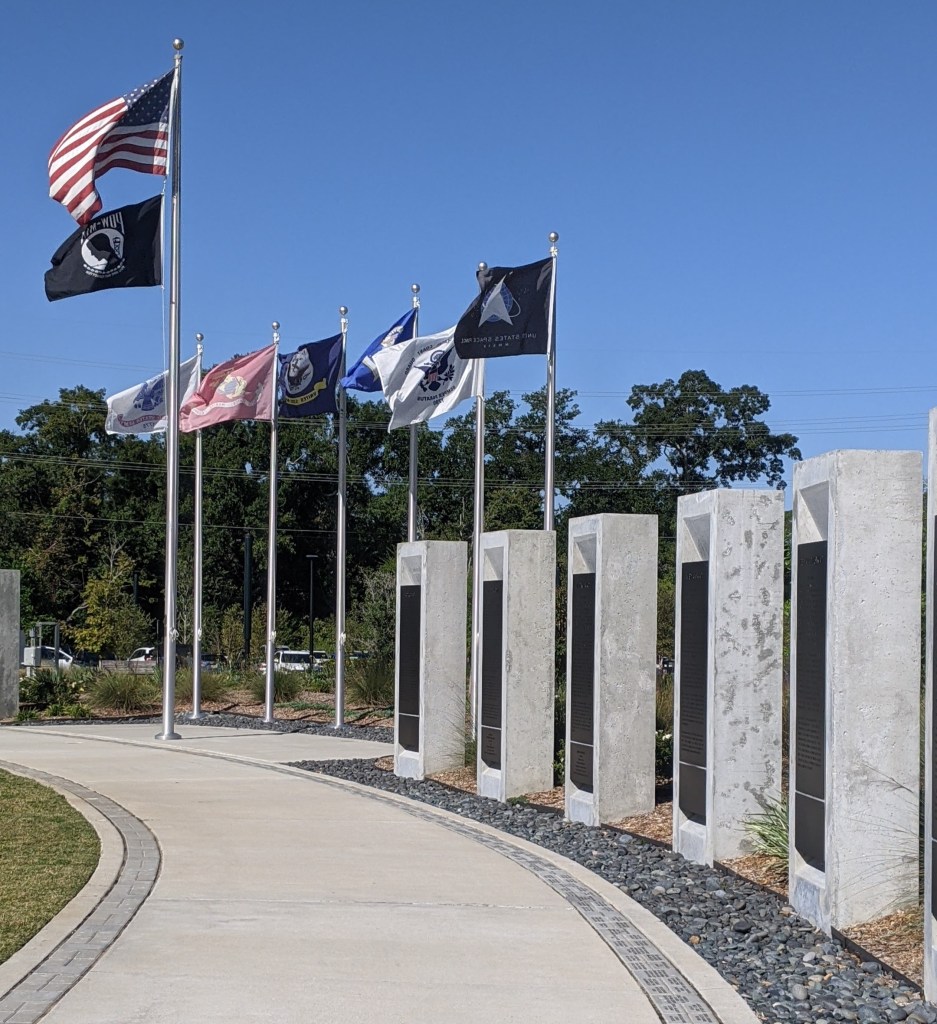
Also on the grounds is a striking Veterans Memorial that pays tribute to local residents who served their country in the various military forces throughout history. Memorial bricks line the path leading to the serene site with its polished granite plaques describing each war that U.S. troops have fought. It’s worth stopping to read each somber account, from a young country’s battle for independence to “Indian Wars — Circa 1600-1924” and the Global War on Terror — 2002-2021.

Moncus Park is one good reason to visit Lafayette, a city known as the “happiest city in America,” at the heart of Louisiana’s Cajun and Creole country. But there are many more.

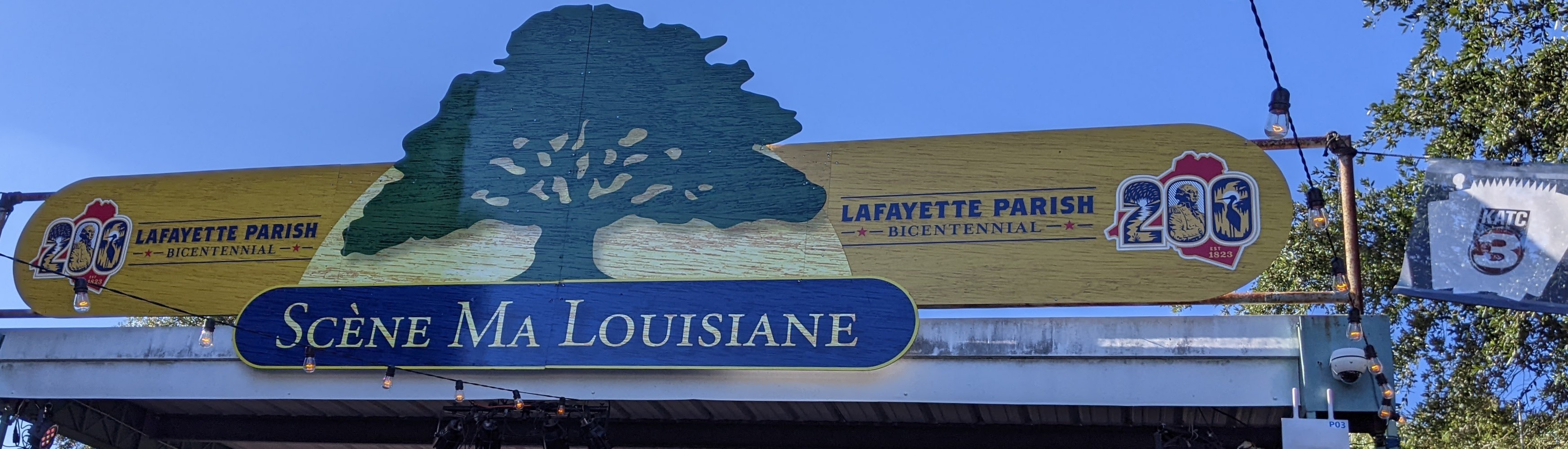
I was in Lafayette for three days of whirlwind activity during this year’s Festival Acadiens et Creoles, a celebration of food, art, music, history and distinctive culture. What a celebration it was! Lafayette boasts great food and lively music, to be sure, but learning the history of a people who left their homeland and resettled in faraway places was what I found intriguing, somewhat disturbing, and totally fascinating. I had not previously known that Cajun and Creole were and are so intertwined.

The Acadians who came to Louisiana from France by way of the Canadian Maritimes (primarily Nova Scotia, New Brunswick and Prince Edward Island) have retained a distinctive cultural identity that is remarkable and celebratory. Eventually, Acadian morphed into Cajun and Acadian/Creole/Cajun culture is the result. Although we did not visit it, the Acadian Cultural Center in Lafayette is one of six locations of Louisiana’s Jean Lafitte National Historical Park and Preserve. Admission is free, and the center is open Tuesday through Saturday year-round, except on national holidays.

An Ongoing Celebration

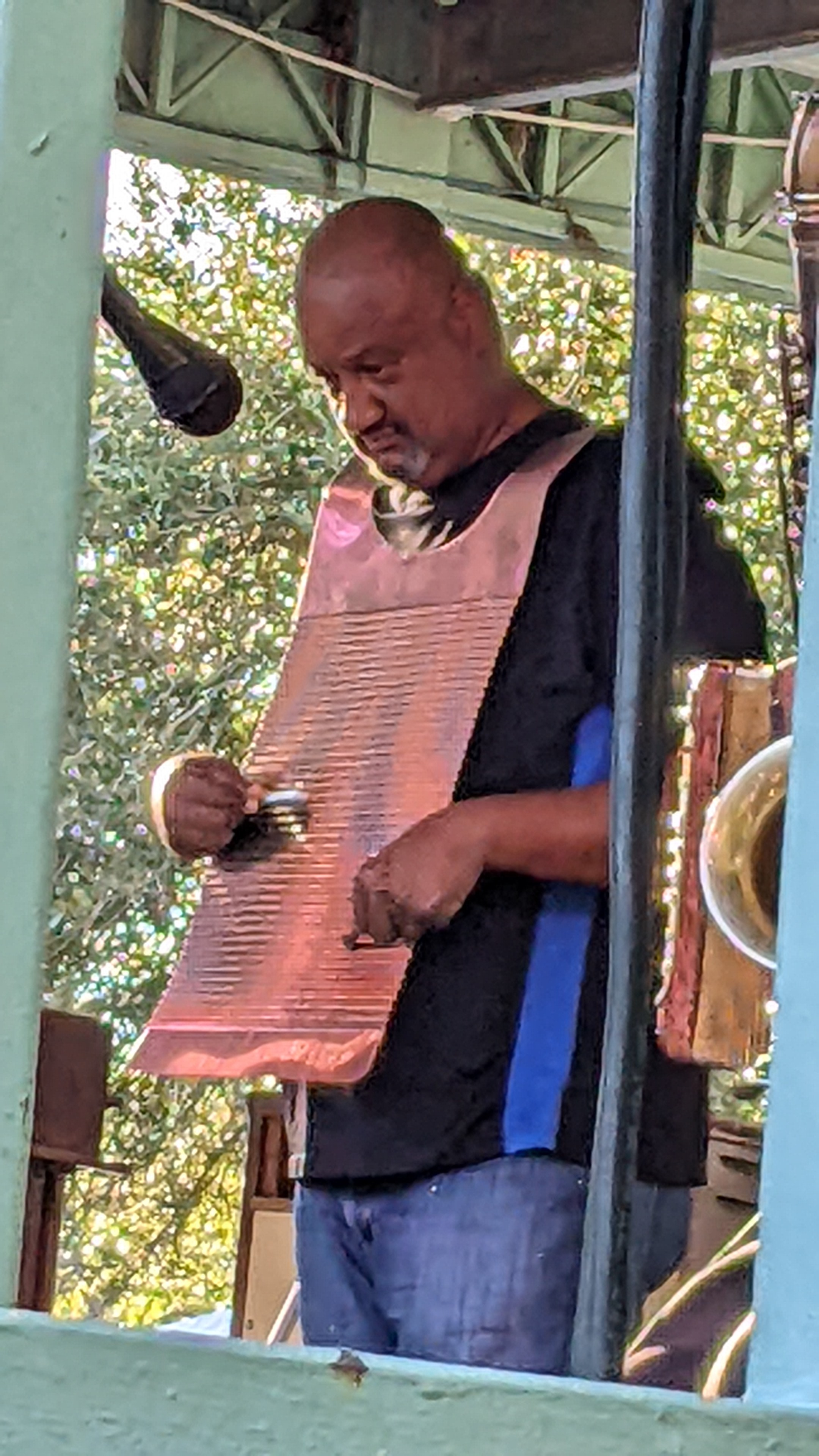
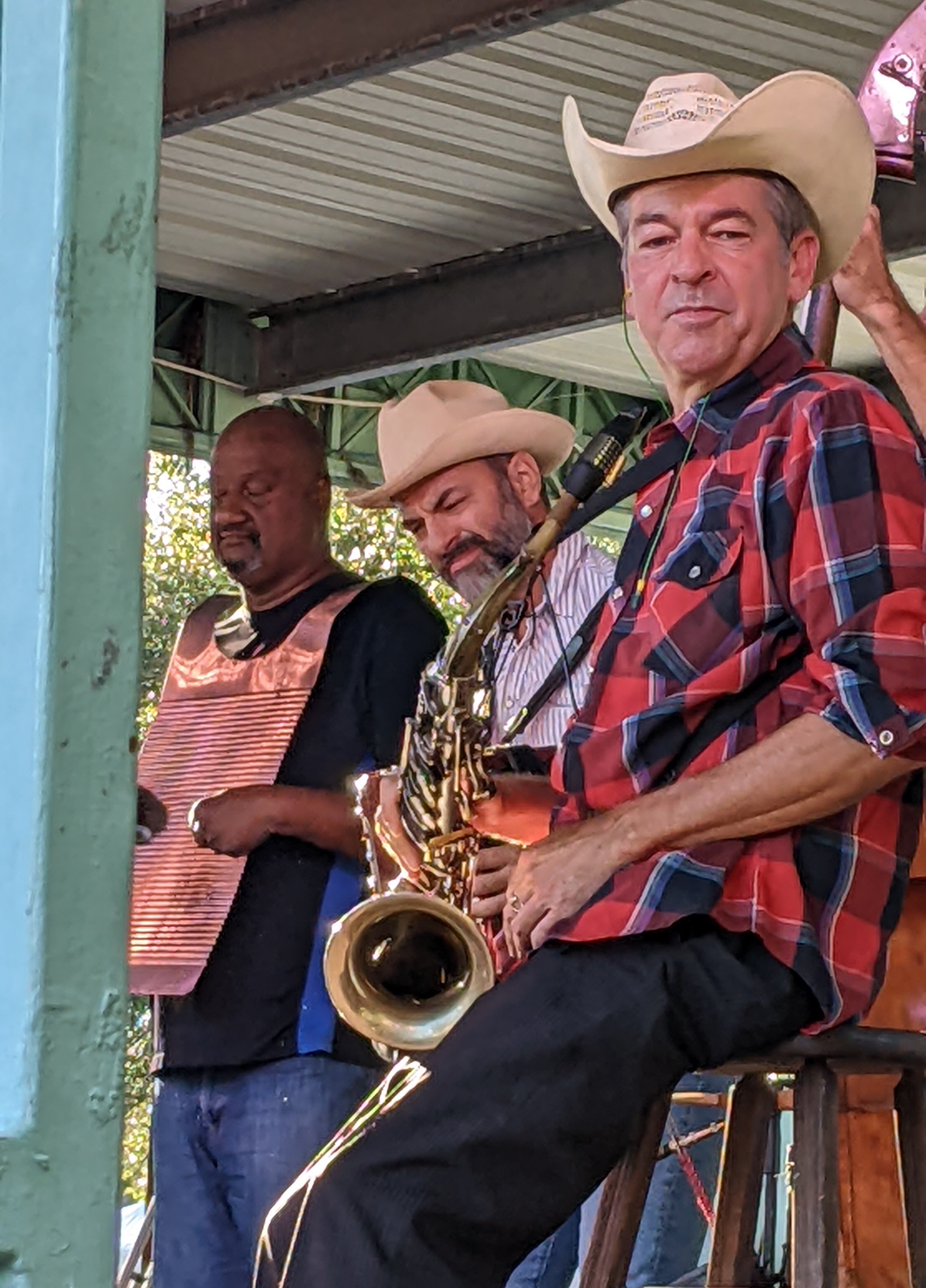
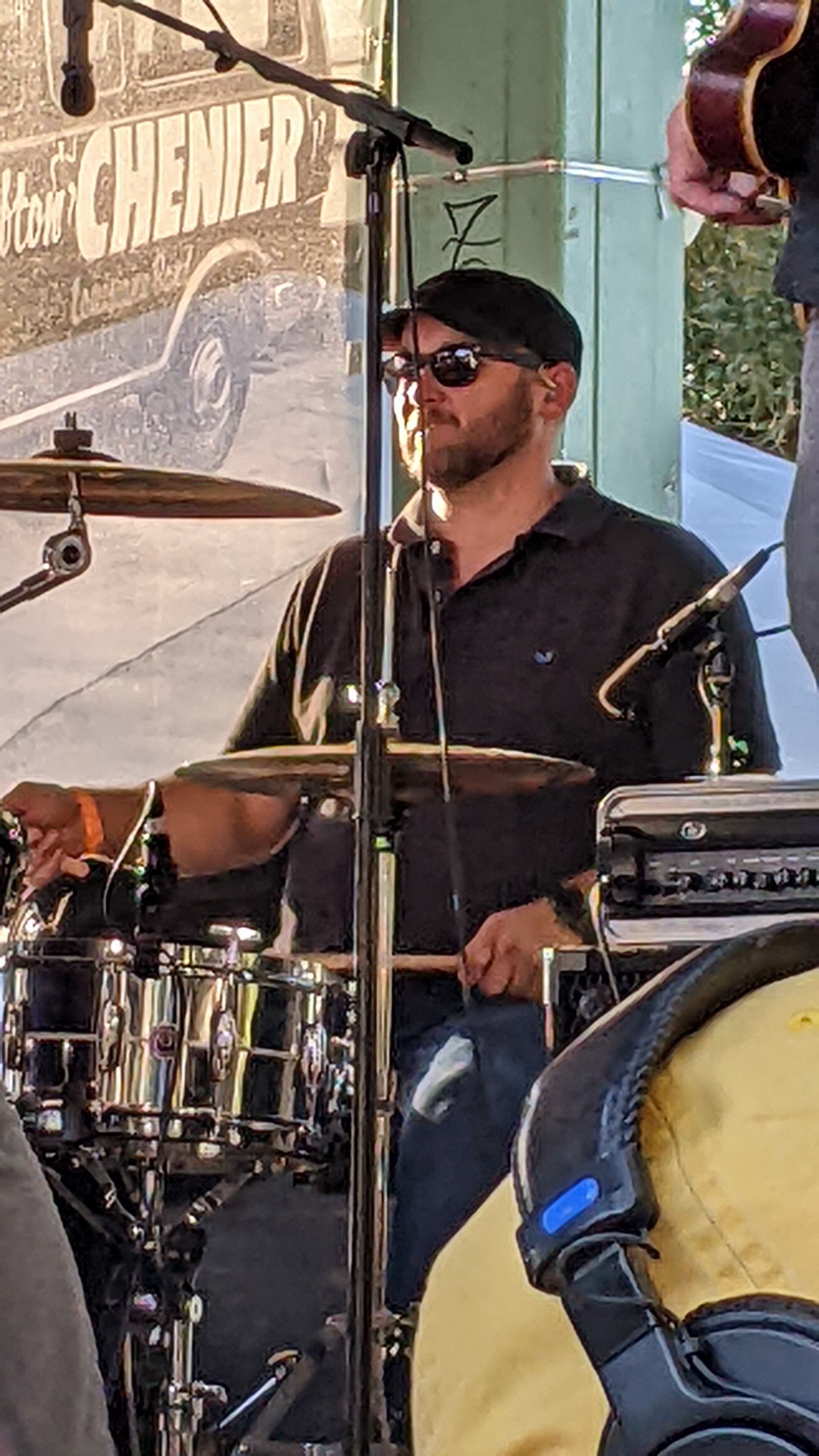
Lafayette is known for its festivals throughout the year, and this one certainly did not disappoint. What’s not to love about live bands that encourage complete strangers to “dance to the music” together? Add the enticing flavors of gumbo, jambalaya, etouffee and boudin sausage served fresh and hot from food trucks in the park, or the refreshing abundance of cold beer, spicy bloody Marys, flavored daiquiris, and other refreshments close at hand.

Girard Park in Lafayette takes on a carnival atmosphere that’s equally appealing for young and old alike, with food treats from beignets to soft ice cream, loaded hot dogs to boiled crawfish, fried gator bites and chicken wings to cheese-smothered grilled oysters! There is face-painting and bubble-blowing for the children, crafting demonstrations to watch and souvenirs to buy.

The performance stage is at the center of the activity, and many festival goers bring camp chairs or blankets. Picnic tables and benches are scattered about the park, and various tents offer seating for food and cooking demonstrations, musical lectures, and cultural programs.

From the ceremony of “cutting the boudin” to open the festival to the closing strains of music performed by an all-woman band as darkness fell on the festival’s last day, it was a great experience.

Traditionally held on the first full weekend in October, this celebration has been a Lafayette highlight since 1974. With a focus on the local sounds of Cajun and Zydeco music and local food specialties, the festival atmosphere extends not only throughout the park, but throughout the city. During festival weekend, shops are open late, visitors stroll the compact downtown area, marvel at the street art and local murals, enjoy crafts shows and outdoor exhibits, attend wine tastings and local business open houses, and snap souvenir photos at the Lafayette sign in a local park or selfies at the picturesque downtown arches.

Smiles and high spirits dominate the scene. It is truly a celebration that encourages active participation.

Beyond the Festival

The Festival Acadiens et Creoles is not, however, the largest celebration on Lafayette’s calendar. Held in April, the Festival International de Louisiane spills over into nearby cities and parishes and attracts visitors from throughout the world for the distinctly French-flavored celebration.

Lafayette also celebrates New Year’s Eve in a big way, and goes all out for Mardi Gras. Visit Lafayettetravel.com for up-to-date information on what’s happening when in this “happiest town” so you won’t miss out on any of the events that interest you. I don’t want to leave the impression, however, that visiting Lafayette, is simply one big party. As much fun as it can be, there is also a serious side to Lafayette’s personality

Cultural unity is pervasive and community spirit is inclusive. Informal, spontaneous musical jam sessions seem to be the norm and, more often than not, members of the public are invited to attend, join in, or sing along. Roots run deep here and pride of place and heritage is evident among young and old alike. Lafayette residents are intent on preserving their traditions. A conversation with a local resident can be equal parts history lesson and hope for the future, interspersed with family stories.

The Beginnings

Originally founded as Vermilionville in the 1820’s, the city was renamed Lafayette in 1884. Its population in 2023 is reported to be slightly more than 121,000, a slight decline from 2020 when it was just under 122,000. But the population of metropolitan Lafayette Parish exceeds 376,000.

We visited the historical re-creation of Vermilionville, now a living history museum that takes visitors back to the early settlement. Signs along the paths chronicle how Acadian and Creole settlers interacted with native peoples and those of African descent through the late 1800s, and the buildings display a wealth of artifacts. It’s much better than a museum depiction. Walking along the paths offers a uniquely personalized insight into how lives were lived during those times.

Visit Vermilionville.com for information about events, programs and performances, including a 2nd Saturday French Table, a free gathering that allows visitors to “hear, speak and practice” the unique Acadian language. Other programs offer insight into the lifestyle and traditions of early Acadian settlers who sought to preserve their French-speaking culture on the American frontier.

Among the buildings and various dwellings situated at the site are a schoolhouse, church, parsonage, carriage house and other utility buildings, as well as early “shotgun” houses and a wide variety of home styles that were popular through the decades. Traditional crops are still cultivated, and the historical village even has a resident donkey, a couple of sheep, and a working iron forge. This historical village offers a perfect opportunity to explore the history of Cajun culture and it’s impossible to leave without a profound respect for the early Acadian lifestyle, the Native American, Creole, and African influences, and Cajun traditions. We even learned some often-used words in Cajun French!

Our young guide, herself a proud Cajun, was clothed in traditional dress of the time, and she spoke with candor about growing up in this distinctive culture. I was awed as she sat down at a spinning wheel to demonstrate how yarn is spun from raw cotton, but then she apologized for not being very adept at spinning! We also were treated to an explanation of traditional, hand-sewn quilting skills by an older woman intent on preserving the skills that her ancestors possessed. We were duly impressed by the number, the quality and the variety of the quilts she has completed.

Building on Tradition

Our group was treated to a bountiful lunch at La Cuisine de Maman, where we feasted on traditional favorites prepared and served in a circa-1800 home at the site. Suffice it to say that no one left hungry!

Before leaving Vermilionville, we stopped in at the Saturday music jam, held in a performance hall just across the courtyard from the restaurant. That became a fond memory of my short time in Lafayette, one that I will savor for a long time to come. That strangers come together to make music is impressive enough; that the music is well-played, sung with gusto, performed with no rehearsals and at no charge to the public, and enjoyed by all is truly special!

The music is one of the fondest memories of my time in Lafayette!

Yet to come is my account of an eye-opening and thrilling flat-bottomed boat trip through the Atchafalaya Swamp, along with a visit to nearby Avery Island with its jungle gardens and Tabasco factory, as well as more pictures and commentary about the people, the food and drink, the sights and the music scene in this distinctive Louisiana city. I’ll leave you with at least five good reasons to add Lafayette to your own travel plans for the coming year!